You budgeted for 500 seats. Finance is paying for 720. Nobody knows who has the other 220, whether they log in, or when the contract renews. Then a vendor audit notice lands, and someone spends three weeks rebuilding entitlement records from a spreadsheet, four email threads, and a purchase order from 2022.
That gap between what you own, what you use, and what you can prove is the reason software license management software exists. And it is not a niche problem. Around 85% of organizations do not fully adhere to their software license agreements, and 64% still do not use automated tools for license management, according to Market.us (2024). The result is duplicate spend, audit exposure, and license reconciliation that happens under deadline pressure instead of on a schedule.
The market has noticed. The software license management market was worth $3.30 billion in 2024 and is forecast to reach $7.91 billion by 2030, growing at a 16.2% CAGR, per Grand View Research (2024). More teams are treating license tracking, software license compliance, and audit readiness as continuous operations rather than annual fire drills.
This guide is built as a decision tool, not a generic roundup. Different license problems need different tool architectures. An engineering shop drowning in floating licenses needs something very different from a SaaS-heavy company fighting app sprawl. If your work also touches adjacent governance systems, resources on audit management software and contract lifecycle management map cleanly onto the same buying logic.
What's inside
This guide covers seven software license management tools that handle inventory, compliance, renewals, and cost recovery across different environments. We selected them based on four criteria: discovery depth (how well the tool finds and identifies installed and cloud software), compliance and audit workflows (entitlement matching and reporting), automation (renewal alerts, reclamation, usage thresholds), and integration fit with the rest of your stack.
We deliberately mixed tool types: specialty engineering license managers, enterprise software asset management platforms, hybrid ITAM suites, SaaS management tools, and endpoint-first systems. The right pick depends less on a feature checklist and more on the environment you actually run.
TL;DR
- Best for engineering and floating licenses: OpenLM, built to monitor named, node-locked, floating, and dongle licenses with usage and denial reporting.
- Best for enterprise SAM and complex estates: Flexera, for license optimization across on-premises, SaaS, cloud, and containers.
- Best for governance-heavy, platform-consolidated orgs: ServiceNow Software Asset Management, if you already run on the Now platform.
- Best for endpoint-heavy IT teams: ManageEngine Endpoint Central, pairing inventory and metering with patching and remediation.
- Best for SaaS license management: Zluri, for app discovery, spend visibility, and unused-license reduction.
- Best for lifecycle-tied provisioning: Rippling IT, when license management follows onboarding and offboarding.
- Best for Apple-first environments: Jamf, where device and app oversight matter as much as licensing.
What is software license management software?
Software license management software is a category of tools that tracks software entitlements, installations, and usage so an organization can stay compliant, control cost, and prove what it owns during an audit.
It sits inside the broader discipline of software asset management (SAM), which is itself part of IT asset management (ITAM). SAM governs the full software lifecycle from procurement through retirement. License management is the compliance and cost engine inside that lifecycle.
A capable platform typically handles:
- License types: named user, node-locked, floating or concurrent, subscription, and SaaS seat models. Each has different compliance math.
- Software inventory: automated discovery of installed applications, cloud services, and SaaS subscriptions through discovery agents, connectors, and integrations.
- License reconciliation: matching entitlements you purchased against what is actually deployed and used, then flagging shortfalls or surplus.
- Compliance reporting: structured evidence for internal reviews and vendor audits, including product use rights.
- Renewals: renewal alerts, contract dates, and vendor renewals tracking so nothing auto-renews unnoticed.
- Reclamation: identifying unused or underused licenses and harvesting them for reassignment.
The distinction that trips people up: ITAM tracks everything, hardware and software. SAM narrows to software. License management focuses specifically on entitlement compliance and spend. If governance workflows and approvals sit alongside your license data, the same principles apply to contract management and marketing resource management systems.
When to use software license management software
Centralize scattered license records
Spreadsheets work until they do not. One person owns the master file, another keeps a private copy, procurement has the contracts, and IT has the install data. None of it reconciles. At scale, this breaks completely: you cannot answer a simple question like "how many seats of this app are we paying for versus using?" without a week of manual work. A dedicated tool makes the record continuous and shared instead of fragmented across inboxes.
Prepare for audits and compliance checks
Vendor audits are not hypothetical. When entitlement tracking, license reconciliation, and alerts run continuously, an audit becomes a report you export rather than a project you scramble to assemble. Audit readiness means you already know your compliance position before the notice arrives, and you can defend it with evidence rather than guesses.
Reclaim unused spend
Usage data is where the money is. When a tool shows that 220 of your 720 seats have not logged in for 90 days, reclamation becomes obvious. Renewal workflows surface the same waste at contract time, so you renew for what you use instead of what you bought two years ago. This is often the fastest payback in the entire category.
Comparison table
The table below sorts the seven tools by environment fit. Read it against three questions: what environment are you managing, how complex is your licensing, and how heavy are your compliance needs. Engineering-heavy estates, SaaS-heavy estates, and endpoint-heavy estates pull toward different rows.
| # | Product | Intent | Key differentiation | Pricing | G2 rating |
|---|---|---|---|---|---|
| 1 | OpenLM | Engineering and specialty license management | Monitors named, node-locked, floating, and dongle licenses with usage and denial reporting | From $1/user/month, billed annually | Not verified |
| 2 | Flexera | Enterprise SAM and hybrid spend optimization | License optimization across on-prem, SaaS, cloud, and containers | Custom quote | 4.3/5 |
| 3 | ServiceNow SAM | Enterprise workflow and governance | Native automation on the Now platform | Custom quote | 4.4/5 |
| 4 | ManageEngine Endpoint Central | Endpoint-heavy IT teams | Inventory and metering alongside patching and remediation | From $795/year for 50 endpoints | Not verified |
| 5 | Zluri | SaaS license management | App discovery, spend visibility, and license forecasting | Custom quote | 4.6/5 |
| 6 | Rippling IT | Lifecycle-tied provisioning | License management wired to onboarding and offboarding | Custom quote | 4.7/5 |
| 7 | Jamf | Apple-first environments | Device and app oversight for macOS, iOS, and iPadOS | From $4/device/month | 4.7/5 |
The takeaway: no single tool wins for every environment. Match the architecture to your reality, then pressure-test discovery depth and audit workflows before you commit.
1. OpenLM
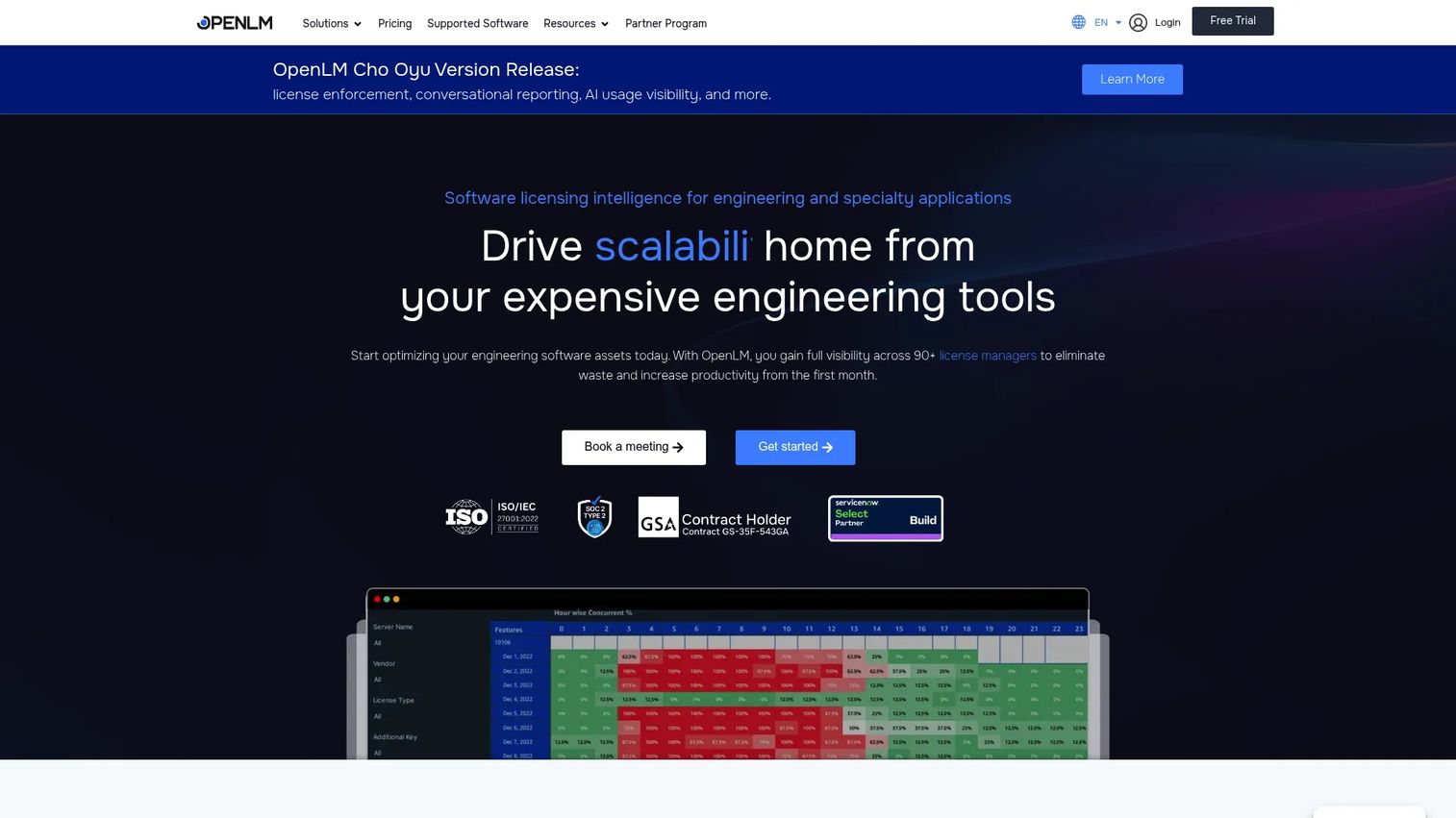
OpenLM is a software license management and SAM platform built for engineering, scientific, and technical environments. If your organization runs CAD, simulation, or specialty applications that lean on license servers, this is the tool designed for exactly that world. It monitors a wide range of license models and gives engineering teams visibility they rarely get from general-purpose SAM tools.
Best for: Engineering organizations that need usage visibility, optimization, and enforcement across many license managers.
Key strengths
- Broad license model support: Monitors named user, node-locked, floating, web/SaaS, and dongle licenses in one place.
- Usage and denial reporting: Surfaces usage, denials, inventory, and license-harvesting data so you see who is blocked and what sits idle.
- Directory and agent monitoring: Supports directory synchronization and workstation agent-based monitoring for accurate license tracking.
Why choose OpenLM: Floating and concurrent licenses are hard to manage with generic software inventory tools. When engineers get denied a license mid-project, that is lost productivity and a signal you may need more seats or better scheduling. OpenLM turns that noise into data, showing real utilization so you can right-size expensive engineering licenses instead of guessing. For open source license management and mixed specialty estates, it covers ground that broad SAM suites often skip.
OpenLM pricing: Public pricing is listed per product and billed annually. License Access Control starts at $1/user/month, Monitoring is $2/user/month, and Automation is $3/user/month. The pricing page also lists add-ons and some contact-sales items such as its academic program. That modular structure lets you start with monitoring and add automation as your needs grow.
2. Flexera
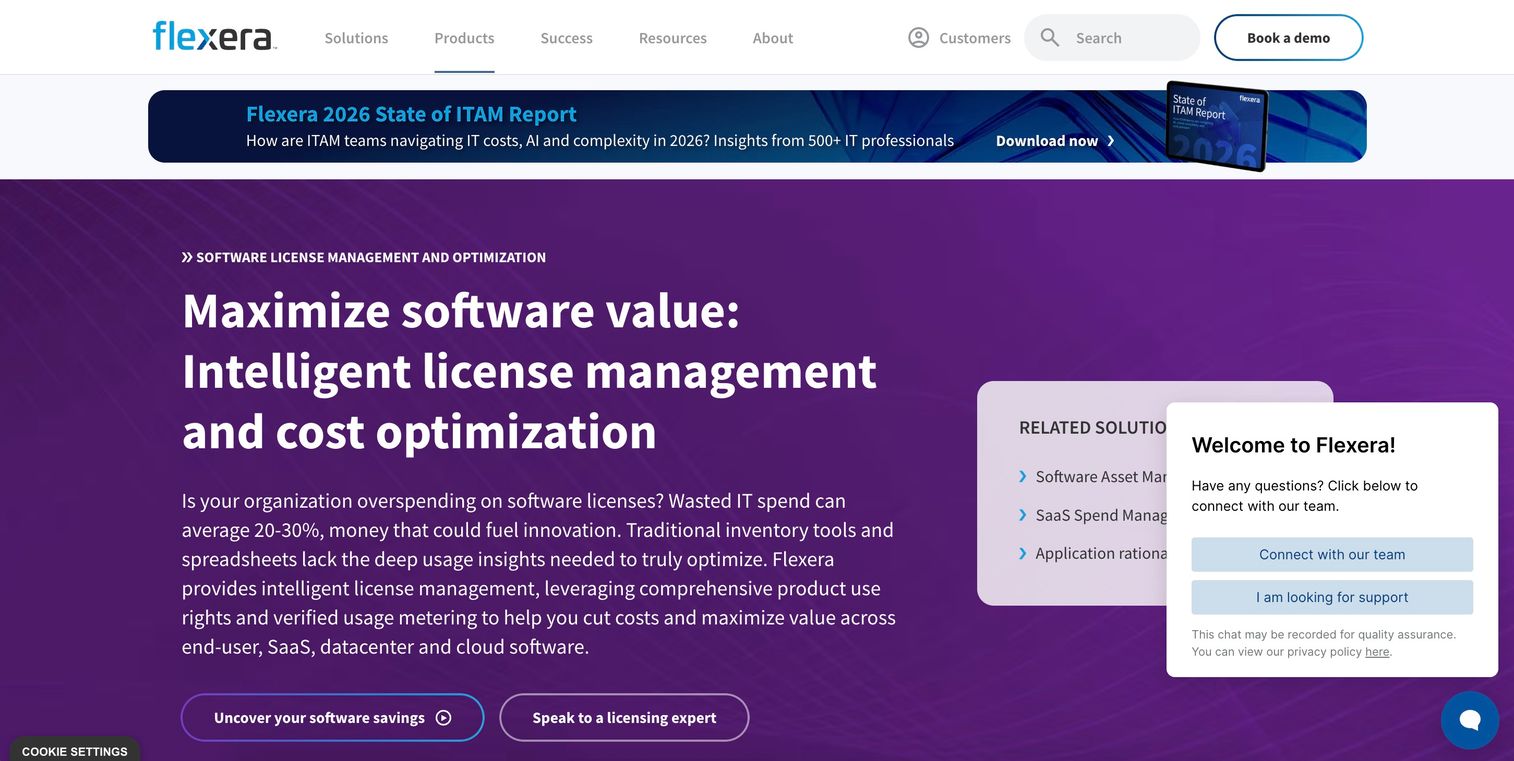
Flexera is enterprise software asset management software built for visibility, license optimization, compliance, and audit defense across large, complicated estates. If you run thousands of applications from dozens of vendors across on-premises, SaaS, cloud, and containers, Flexera is designed to make sense of that sprawl and hold up under vendor scrutiny.
Best for: Large enterprises managing complex, multivendor software estates and demanding license compliance requirements.
Key strengths
- Broad discovery: Software inventory and discovery across on-premises, SaaS, cloud, and container environments.
- License optimization: Applies product use rights and usage data to reduce license exposure and cost.
- Audit defense: Compliance reporting and audit readiness built for high-stakes vendor negotiations.
Why choose Flexera: Enterprise software license management is where the money and the risk concentrate. A single misread license metric on a major vendor contract can turn into a seven-figure true-up. Flexera's depth in product use rights and normalization is what large IT teams lean on when the licensing model is genuinely complicated. It is heavier than a SaaS-only tool, which is exactly the point for estates that span everything.
Flexera pricing: Flexera does not publish a public price for its SAM solution, so expect a custom quote based on the size and complexity of your estate. On G2, Flexera One holds a 4.3/5 rating. For enterprise buyers, pricing conversations typically track the number of managed devices and the breadth of environments you need discovered.
3. ServiceNow Software Asset Management
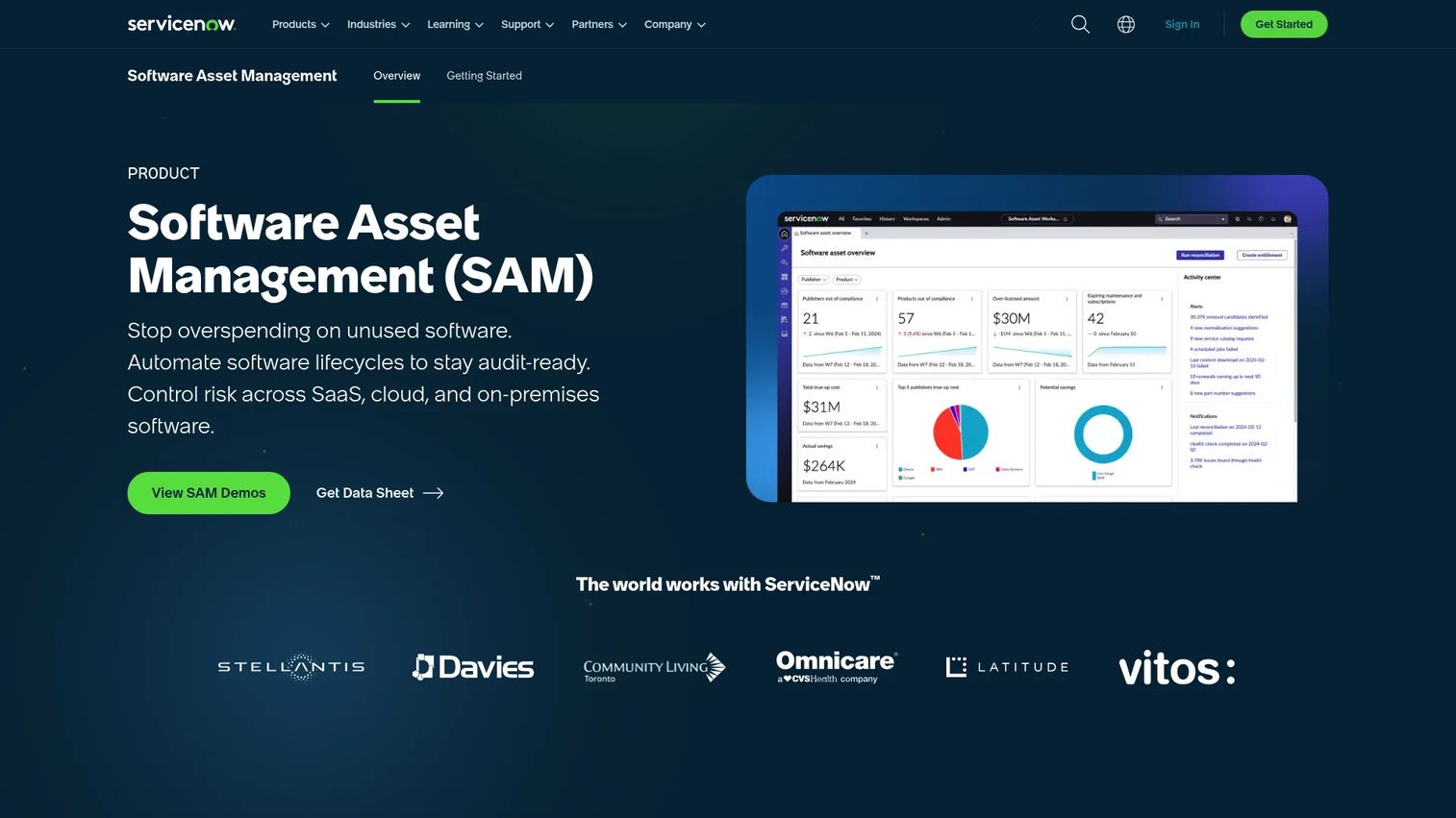
ServiceNow Software Asset Management runs on the ServiceNow AI Platform and delivers license compliance, optimization, and audit readiness inside the same system your IT service management already lives in. For governance-heavy organizations that have standardized on the Now platform, this is the play for consolidation rather than adding another standalone tool.
Best for: Enterprises that want centralized software asset compliance and optimization native to ServiceNow.
Key strengths
- Automated lifecycles: Automates software lifecycles and compliance workflows end to end.
- License reclamation: Reclaims unused or underutilized licenses to cut waste.
- Cross-environment coverage: Supports SaaS, cloud, and on-premises software in one model.
Why choose ServiceNow SAM: The value here is not just license tracking, it is that license data lives next to your CMDB, incidents, and change management. When SAM shares the same discovery agents and workflow engine as the rest of IT, governance stops being a separate silo. For SaaS license management inside a broader platform, that integration is the differentiator. If you are not already on ServiceNow, the calculus changes, but for those who are, consolidation is the whole argument.
ServiceNow SAM pricing: ServiceNow uses custom-quote pricing with no public price listed on its pricing page. On G2, the product holds a 4.4/5 rating. Expect pricing to reflect your platform footprint and the number of software products under management, and to be negotiated as part of a broader ServiceNow relationship.
4. ManageEngine Endpoint Central
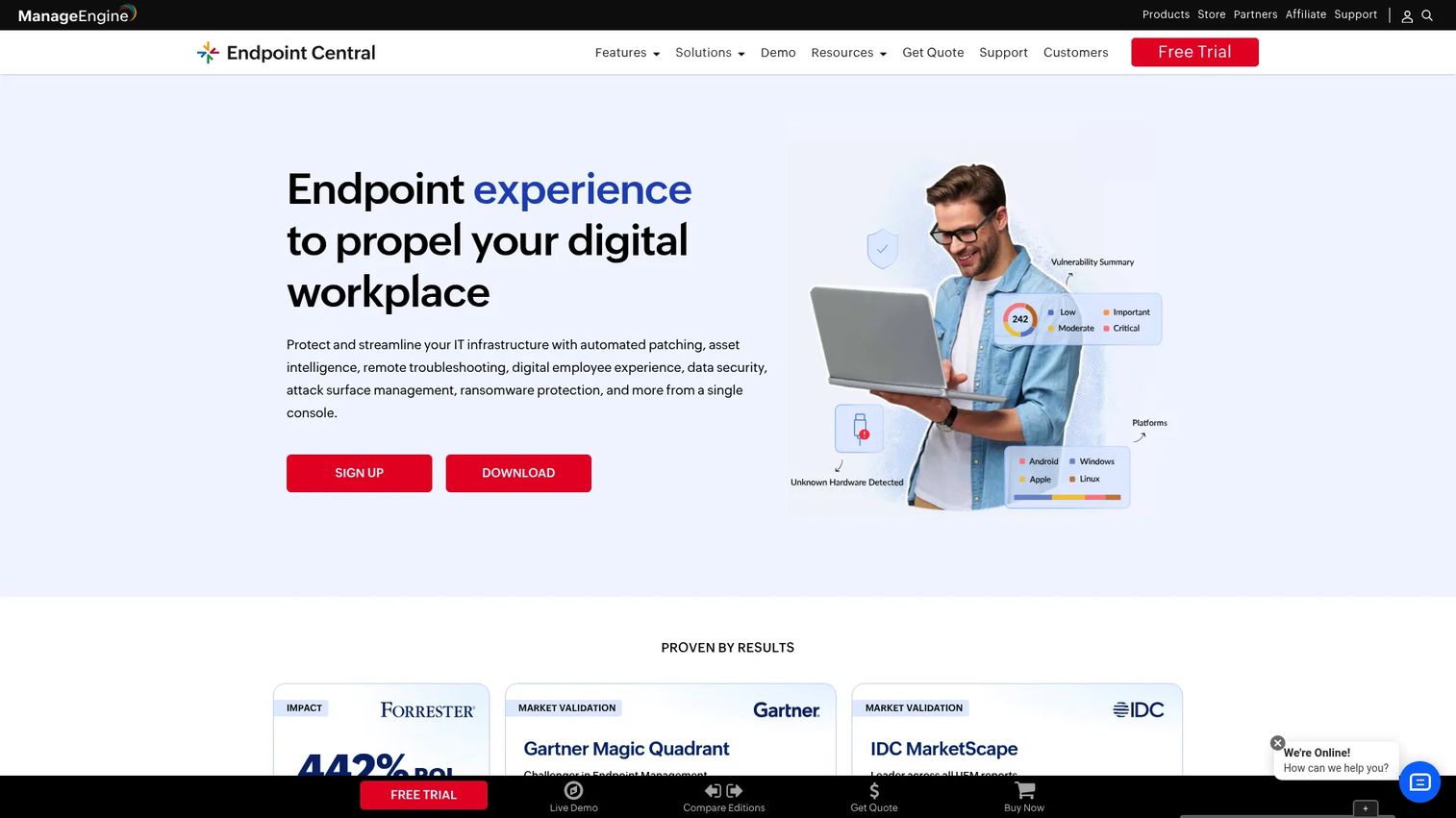
ManageEngine Endpoint Central is a unified endpoint management and security platform that folds software inventory, metering, and compliance into the same console you use to patch and secure devices. For IT teams already running the Endpoint Central stack, license oversight becomes one more thing you manage from a familiar place instead of a separate purchase.
Best for: IT teams that need centralized endpoint patching, software deployment, and license visibility from one platform.
Key strengths
- Practical discovery: Asset management and software metering surface what is installed and how often it runs.
- Remediation built in: Patch management, application distribution, and vulnerability remediation live alongside inventory.
- Endpoint control: OS deployment, remote troubleshooting, and browser security round out the endpoint picture.
Why choose ManageEngine Endpoint Central: License management does not exist in isolation for endpoint-heavy organizations. Knowing an app is installed on 400 machines is only useful if you can also meter usage, uninstall where unused, and stay patched. Endpoint Central ties audit readiness and cost control to the endpoints themselves, which is efficient when you are already living in that console daily.
ManageEngine Endpoint Central pricing: Pricing is public and billed annually per 50-endpoint block. The Professional Edition starts at $795/year, Enterprise at $945/year, UEM at $1,095/year, and Security at $1,695/year, each priced at 50 endpoints. There is no free tier, but the transparent per-endpoint model makes budgeting straightforward compared with custom-quote-only vendors.
5. Zluri
Zluri is a SaaS management and identity governance platform focused on discovering apps, controlling access, and optimizing software spend. If your license problem is less about installed engineering software and more about the 200 SaaS subscriptions scattered across departments, Zluri is built for that exact sprawl.
Best for: Mid-market and enterprise teams that need SaaS discovery, access governance, and spend control.
Key strengths
- App discovery: Finds apps across SaaS and installed software, including shadow IT nobody registered.
- Contract management: Smart Contract AI centralizes renewal dates, terms, and vendor renewals.
- Spend optimization: Spend visibility, cost optimization, and license forecasting surface waste before renewal.
Why choose Zluri: SaaS license management is a different problem than traditional SAM. Subscriptions get bought on credit cards, licenses go unused after someone leaves, and nobody sees the total until finance adds it up. Zluri's discovery reaches the apps that never touched procurement, then ties usage analytics to renewal alerts so you cancel or downgrade before auto-renewal. For SaaS-heavy organizations, that reclamation is where the fastest savings live.
Zluri pricing: Zluri does not publish public pricing, so plan on a custom quote scoped to your app count and modules. On G2, Zluri holds a 4.6/5 rating. Pricing conversations typically factor in the number of SaaS applications discovered and whether you need the identity governance and access management modules alongside spend management.
6. Rippling IT
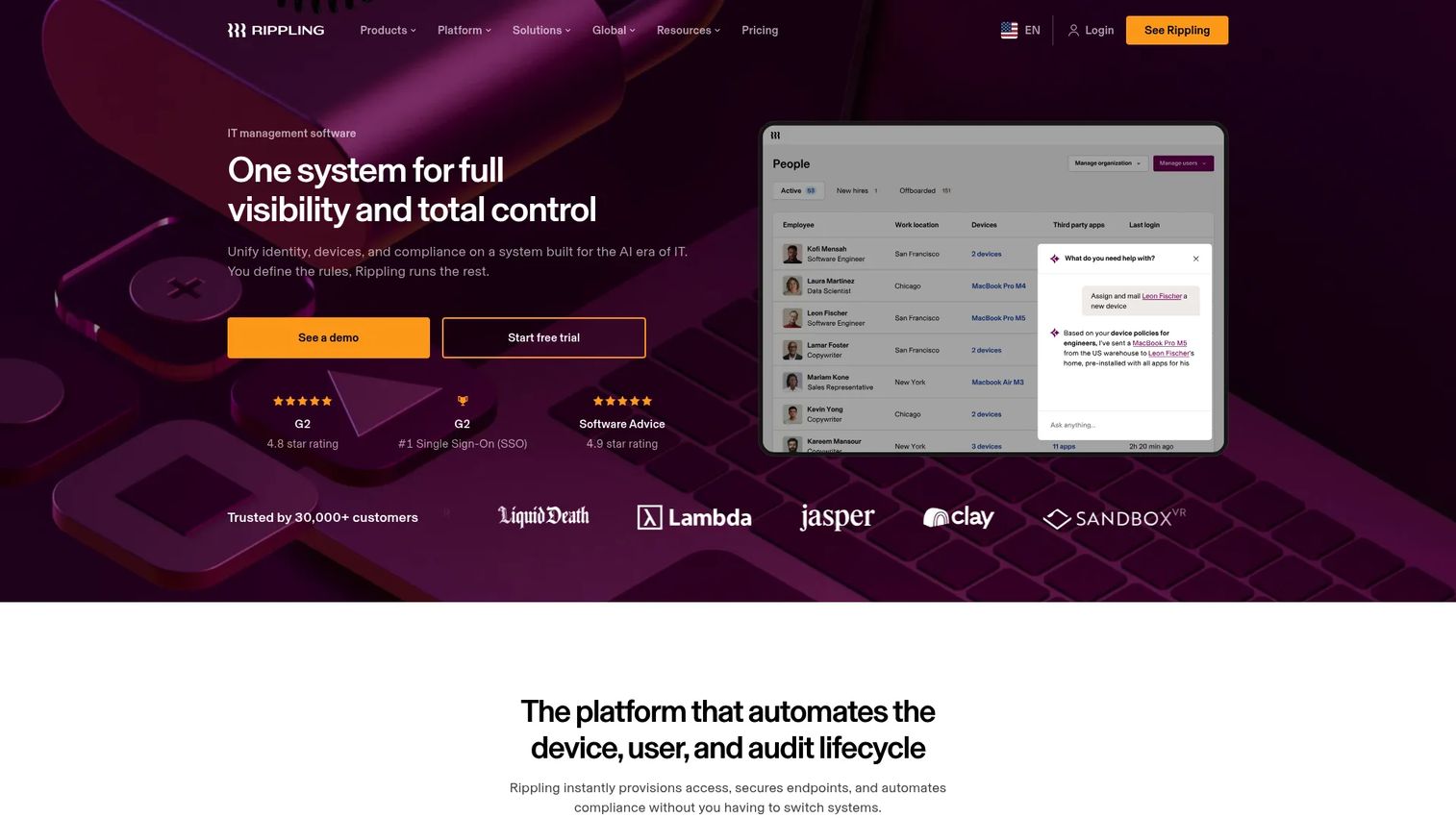
Rippling IT is unified IT management software that connects identity, access, device, and inventory lifecycle management on one platform. The angle here is different from a pure SAM tool: Rippling ties license and app access directly to the employee lifecycle, so provisioning and deprovisioning drive your license state automatically.
Best for: Companies that want one platform to manage employee access, devices, and IT inventory together.
Key strengths
- Identity and access: SSO, provisioning, deprovisioning, MFA, and audit logs in one identity layer.
- Device management: Zero-touch deployment, remote updates, and clean offboarding.
- Inventory lifecycle: Tracks devices across purchase, shipping, storage, and retrieval.
Why choose Rippling IT: The most common source of wasted license spend is offboarding that never fully happens. Someone leaves, HR closes their record, but their app licenses keep billing. When license access is wired to onboarding and offboarding, that leak closes automatically. Rippling reframes license tracking as a lifecycle problem rather than an inventory problem, which resonates with teams whose waste comes from access drift, not shelfware.
Rippling IT pricing: Rippling does not list a public IT price; its pricing page provides custom quotes, and IT products are purchased alongside the required Rippling platform. On G2, Rippling IT holds a 4.7/5 rating. Because IT modules attach to the broader platform, budget for both the platform and the specific IT products you need rather than a standalone license.
7. Jamf
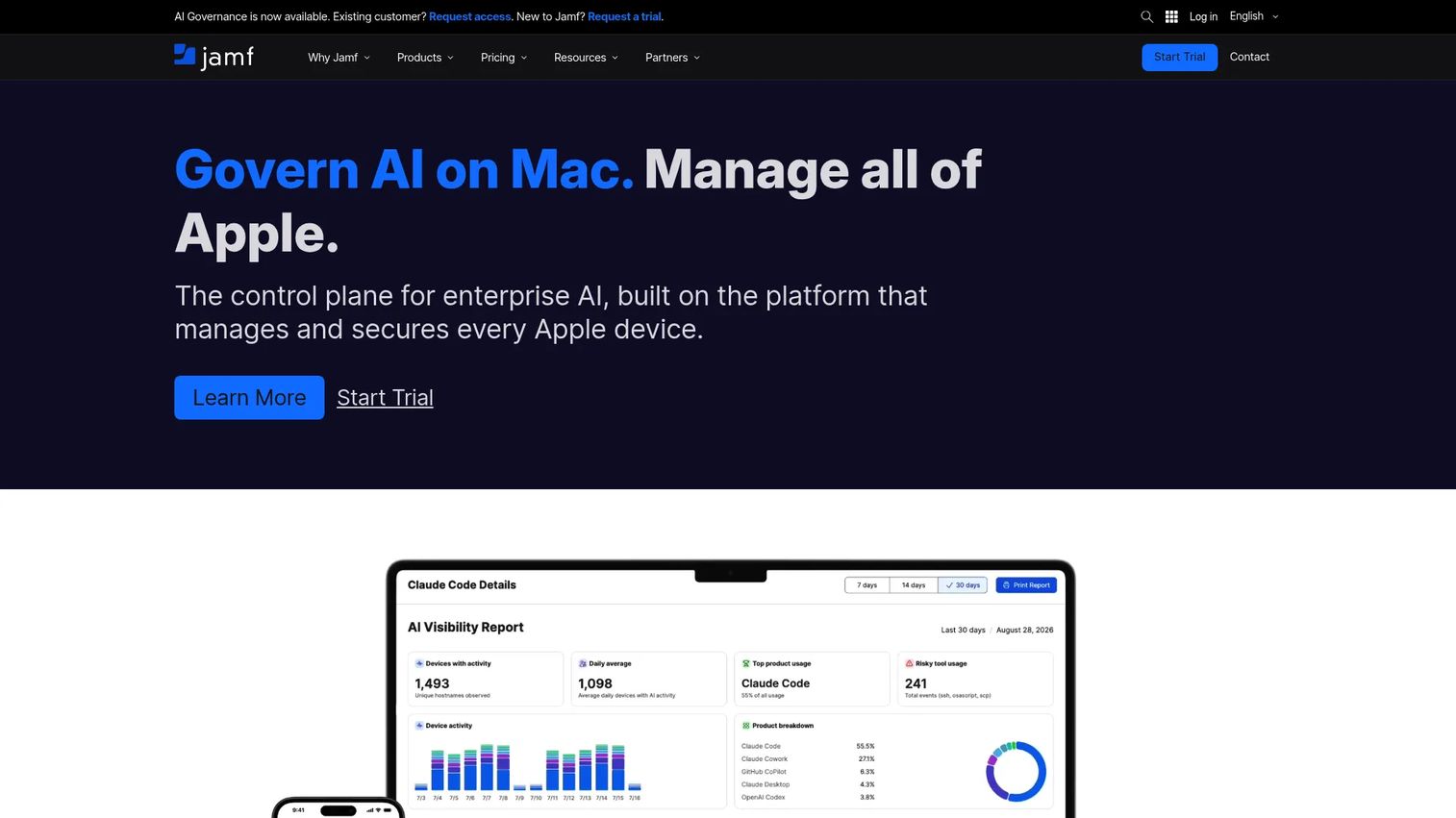
Jamf is Apple device management and security software for organizations that run macOS, iOS, and iPadOS at scale. It is not a general-purpose SAM tool, and that is the point: for Apple-first environments, software oversight and app deployment matter as much as license counting, and Jamf is purpose-built for that ecosystem.
Best for: Organizations managing and securing Apple devices at scale where app deployment and endpoint control are central.
Key strengths
- Apple device management: Purpose-built management for business, SMB, and education Apple fleets.
- Endpoint security: Threat defense, web content filtering, and identity and access management.
- App deployment: Controlled software distribution across managed Apple devices.
Why choose Jamf: In Apple-heavy organizations, license oversight is inseparable from how apps get deployed and secured on managed devices. Jamf gives you control over what is installed, on which devices, and under what security posture. It is most relevant where the endpoint ecosystem and app deployment carry as much weight as pure license reconciliation, which is a common reality for design, media, and education teams standardized on Apple.
Jamf pricing: Jamf publishes public per-device pricing. Jamf Now starts at $4/device/month, Jamf for Mobile is $5.75/mobile device/month billed annually with a 25-device minimum, and Jamf for Mac is $12.50/macOS device/month billed annually with a 25-device minimum. A free 14-day trial is available, and the per-device model keeps budgeting predictable for Apple fleets.
Considerations
Define your environment first
Before comparing features, name your environment. Engineering estates full of floating licenses, SaaS-heavy companies fighting app sprawl, and endpoint-heavy IT shops all have different centers of gravity. The wrong tool architecture is the most common expensive mistake in this category, so start with your reality and work backward to the tool.
Verify discovery depth
Discovery is the foundation. Ask exactly how the tool finds software: discovery agents, network connectors, SCCM integration, API-based SaaS connectors, or native endpoint agents. A tool that misses cloud subscriptions or shadow SaaS gives you a false compliance picture. Test discovery against a slice of your real estate before you trust the numbers.
Check audit and reconciliation workflows
Audit readiness lives or dies on reconciliation. Look at how the tool matches entitlements against deployments, how it handles product use rights, and how it manages exceptions. The best systems produce audit evidence as a standing report, not a scramble. Ask to see a sample compliance report before you buy.
Validate renewal and reclamation automation
Renewal alerts and usage thresholds are where the savings compound. Confirm the tool tracks contract dates, warns you ahead of vendor renewals, and flags unused licenses for reclamation automatically. Manual renewal tracking is exactly what breaks down at scale, so automation here is not optional for larger estates.
Confirm ownership and governance
Someone has to own the data. Check how the tool handles workflows, permissions, and record updates. Who approves a reclamation, who edits entitlement records, and how are changes logged? Governance is what keeps the system trustworthy six months after rollout, when the initial enthusiasm has faded and the data still needs to be right.
Conclusion
The right software license management software depends entirely on what you are managing. If you run engineering and specialty tools with floating licenses, OpenLM is built for that world. For sprawling enterprise estates that demand license optimization and audit defense, Flexera earns its weight. Teams standardized on the Now platform get consolidation from ServiceNow Software Asset Management, while endpoint-heavy IT shops get practical inventory and remediation from ManageEngine Endpoint Central.
On the SaaS side, Zluri is the clearest fit for discovering app sprawl and cutting wasted subscriptions. Rippling IT wins when license state should follow onboarding and offboarding automatically, and Jamf is the natural choice for Apple-first fleets where deployment and licensing overlap.
Your practical next step: define your environment first, then shortlist the two tools that match its architecture. Run a discovery test against a real slice of your estate and ask each vendor for a sample compliance report. The tool that surfaces waste and audit gaps fastest in your own data is the one worth buying.
FAQs
It tracks software entitlements, installations, and usage so an organization stays compliant, controls cost, and can prove what it owns during a vendor audit. In practice, teams use it to centralize license records, automate renewal alerts, reconcile purchases against deployments, and reclaim unused licenses to reduce spend.
Software asset management (SAM) governs the full software lifecycle from procurement through retirement, including contracts, deployment, and retirement. License management is the compliance and cost engine inside SAM, focused specifically on entitlement tracking, reconciliation, and spend. SAM is broader; license management is the piece that keeps you compliant and audit-ready.
At minimum: named user, node-locked, floating or concurrent, subscription, and SaaS seat licenses. Each has different compliance rules, so a tool that only understands one model leaves gaps. Engineering environments especially need floating and concurrent license tracking, which general SAM tools sometimes handle poorly.
Reconciliation matches the entitlements you purchased against what is actually installed and used. The tool pulls discovery data, applies product use rights, and flags where you are over-deployed (a compliance risk) or under-deployed (wasted spend). Done continuously, it turns audits into an export rather than a project.
Continuous discovery, accurate entitlement matching, product use rights handling, and standing compliance reporting. The goal is to know your compliance position before an audit notice arrives, with exportable evidence to back it. Exception handling and change logging matter too, since auditors want to see how records are maintained.
OpenLM is purpose-built for engineering and specialty environments, monitoring named, node-locked, floating, web/SaaS, and dongle licenses with usage and denial reporting. That breadth of license model support, plus license harvesting, is what makes it the strong fit for CAD, simulation, and technical software estates where general SAM tools fall short.
Zluri is designed for SaaS discovery, access governance, and spend control, including shadow IT that never touched procurement. It ties usage analytics to renewal alerts so you cancel or downgrade before auto-renewal. For platform-consolidated enterprises, ServiceNow Software Asset Management also covers SaaS alongside cloud and on-premises software.
By combining usage analytics with renewal automation. Usage data exposes licenses nobody logs into, reclamation harvests them for reassignment, and renewal alerts stop auto-renewals for tools you have outgrown. Offboarding automation, as Rippling IT provides, closes the most common leak: licenses that keep billing after someone leaves.