A missed pickup on Tuesday. A billing dispute on Wednesday. A driver who ran the wrong sequence because dispatch texted him the route. By Friday, three of your accounts are frustrated and nobody can tell you exactly what went wrong or why.
That is the reality when routing, dispatch, invoicing, and customer communication live in spreadsheets, group texts, and a legacy system nobody trusts. Each disconnected piece hides the real operating picture, and the cost compounds quietly: labor spent reconciling data, revenue leaking through invoicing errors, and leadership stuck approving decisions that should never reach their desk.
The category is growing because operators feel this every day. The global waste management software market was valued at USD 4.2 billion in 2025 and is forecast to reach USD 9.8 billion by 2034 at a 9.8% CAGR, according to Dataintelo (2025). Cloud deployment already represents 61% of smart waste management solutions and is the fastest-growing model at 21.12% CAGR through 2030, per Mordor Intelligence (2024). The shift is not about buying more tools. It is about consolidating the ones you have into a single operating layer that gives you real-time visibility without a stack of dashboards.
If you run hauling, recycling, municipal, or billing-heavy operations, the right software for waste management should make your business more repeatable, not just your dispatch board tidier. The same discipline that turns marketing automation into a predictable engine, or a customer data platform into a single source of truth, applies here: fewer manual handoffs, cleaner data, faster decisions.
What's inside
This guide compares 5 waste management software solutions built for haulers, commercial operators, recyclers, and municipal teams. We selected platforms based on routing and dispatch depth, billing and invoicing automation, driver execution tools, customer portals, integrations, and reporting that gives leadership real-time visibility.
The list prioritizes platforms that reduce manual work and consolidate operations, not point tools that solve one narrow task. Each entry covers who it fits, its verified strengths, and what we could confirm about pricing. Whether you run a single-truck operation or a multi-region fleet, the goal is the same: find the platform that earns its place in your stack.
TL;DR
- Best overall for haulers: CurbWaste, a hauler-native platform covering dispatch, invoicing, driver app, and online ordering.
- Best for broader connected and public-sector operations: Routeware, an integrated fleet platform with route optimization, in-cab tools, and open APIs.
- Best for municipalities and citizen self-service: WasteHero, a cloud operations platform with citizen ticketing and asset management.
- Best for portable sanitation and service operators: ServiceCore, built for portable toilet, septic, and dumpster businesses.
- Best for recycling and materials traceability: Wastebits, with waste profiles, manifests, and EPA e-Manifest integration.
- Best for compliance-heavy back offices: Waste Logics, covering operations, routing, weighbridge, and compliance tracking.
- Best for AI-assisted document workflows: Basestation, for teams handling form-heavy processes.
What waste management software is
Waste management software is a platform that connects route planning, dispatch, billing, driver execution, customer communication, and compliance reporting into a single system for haulers, recyclers, and municipal waste operations.
Modern waste management platforms move operators away from spreadsheets and disconnected tools toward an integrated operations platform where dispatch, invoicing, and field data share one source of truth. Waste collection software often refers to the narrower slice that handles pickups and routing, while a full waste industry software suite covers the entire operational stack from order to invoice.
Common capabilities buyers expect:
- Routing and dispatch: Route optimization, live assignment, and exception handling in one board.
- Driver mobile apps: In-cab guidance, proof of service, and real-time status updates.
- Billing and invoicing automation: Recurring billing, on-demand charges, and payment processing.
- Customer portals and online ordering: Self-service scheduling, account access, and requests.
- Integrations and APIs: Accounting, telematics, and third-party system connections.
- Reporting and compliance: Operational dashboards, weighbridge records, and regulatory tracking.
Why the category matters now
Fragmented operations are expensive in ways that never show up on a single invoice. When routing lives in one tool, billing in another, and driver notes in a text thread, leadership loses the ability to see what is actually happening. Software platforms now account for 41% of the smart waste management market and are forecast to grow at 20.11% CAGR through 2030, according to Mordor Intelligence (2024), because operators are consolidating to protect margin and visibility.
For a leadership team, the value of solid waste management software is not the dispatch board. It is repeatability. A single system means a new operations hire can run a week without you in the room, billing closes without manual reconciliation, and the numbers hold up when a lender or buyer asks to see them. That is the difference between a business that scales and one that depends on the founder answering the radio.
When to use waste management software
Not every operator needs a full platform on day one. These are the moments when the switch pays for itself.
Replace spreadsheets and manual dispatching
When coordination starts breaking, you feel it before you can name it. Missed pickups because a route was texted instead of assigned. Billing delays because someone forgot to log an extra haul. Drivers calling dispatch to ask where they are going next. If your dispatcher spends more time reconstructing the day than planning it, spreadsheets have hit their ceiling. Routing and dispatch software replaces the guesswork with a live board everyone shares.
Consolidate route, billing, and customer data
Multiple disconnected tools hide the real operating picture. Revenue looks fine until you cross-check the routing log against the invoices and find hauls that never got billed. A single source of truth means one record from order to payment. When route, billing, and customer data live together, you stop reconciling and start managing.
Improve visibility for field and back office teams
Drivers, dispatch, and customer support need shared context to move fast. When a customer calls about a pickup, support should see live status without pinging the driver. When an exception happens in the field, dispatch should catch it in real time, not at end of day. Real-time visibility turns a chain of phone calls into a single screen everyone can trust.
Comparison table
These 5 tools differ mainly by operator size, customer segment, and how much of the operational stack they cover. Hauler-native platforms lead on dispatch and driver execution. Municipal platforms lead on citizen portals and asset management. Materials-focused tools lead on traceability and manifests. Use this table to shortlist, then read the sections below for fit.
| # | Product | Intent | Key use case | Pricing | G2 rating |
|---|---|---|---|---|---|
| 1 | CurbWaste | Hauler operations | All-in-one dispatch, billing, driver app, online ordering | Core, Pro, Enterprise (custom quote) | Not yet rated |
| 2 | Routeware | Connected fleet operations | Route optimization, in-cab tools, billing, customer self-service | Custom quote | 4.0/5 |
| 3 | WasteHero | Municipal and utility operations | Route planning, citizen self-service, asset management | Contact sales | Not listed |
| 4 | ServiceCore | Portable sanitation and service | Scheduling, routing, billing, customer portal | START, Pro (custom quote) | Not listed |
| 5 | Waste Logics | Compliance-heavy operations | Order processing, routing, weighbridge, compliance | Usage-based quote | Not yet rated |
1. CurbWaste
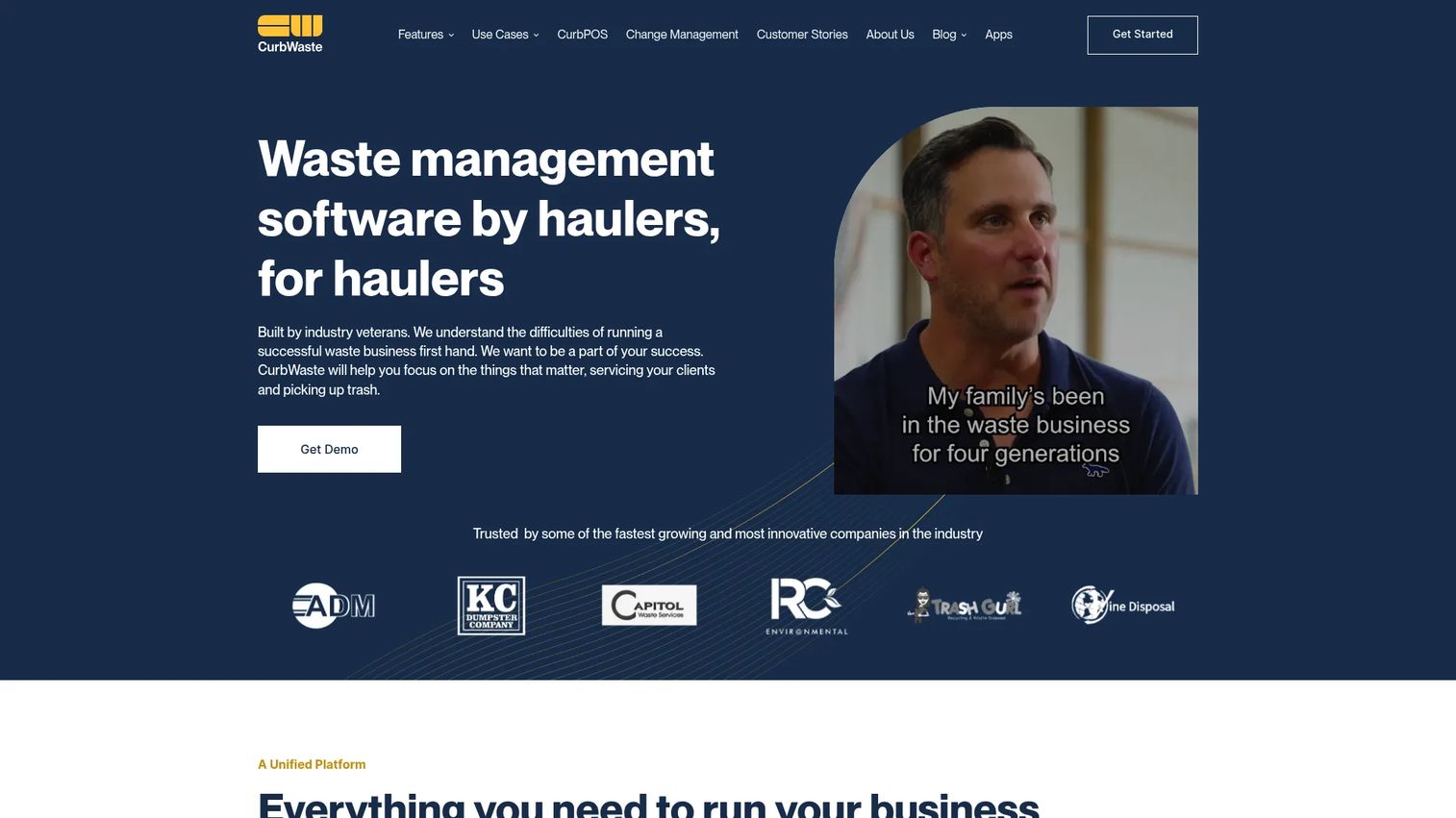
CurbWaste is cloud-based software built by haulers, for haulers. It pulls order management, real-time dispatch, automated invoicing, inventory, and a driver app into one platform, so operators stop stitching together separate tools for each part of the day. The embedded online ordering and customer portal push routine requests to self-service, which takes pressure off the office.
Best for: Waste haulers who want one purpose-built operations platform instead of a patchwork of point tools.
Key strengths
- Real-time dispatch: A live board that assigns, tracks, and adjusts routes as the day changes.
- Automated invoicing: Billing and invoicing automation that closes the loop from haul to payment without manual re-entry.
- Driver mobile app: iOS and Android app for in-cab guidance, proof of service, and status updates.
Why choose CurbWaste: If you run commercial or roll-off hauling and want a single system that speaks your operational language, CurbWaste is the strongest fit on this list. The hauler-native design means less configuration to force a generic tool into waste workflows, and features like embedded online ordering and a customer portal reduce the manual back-and-forth that eats dispatcher time.
CurbWaste pricing: CurbWaste offers three public plan tiers: Core, Pro, and Enterprise. The pricing page shows feature differences and payment processing rate bands across tiers, but it does not publish subscription prices, so you request a quote based on your operation. There is no published free tier.
2. Routeware
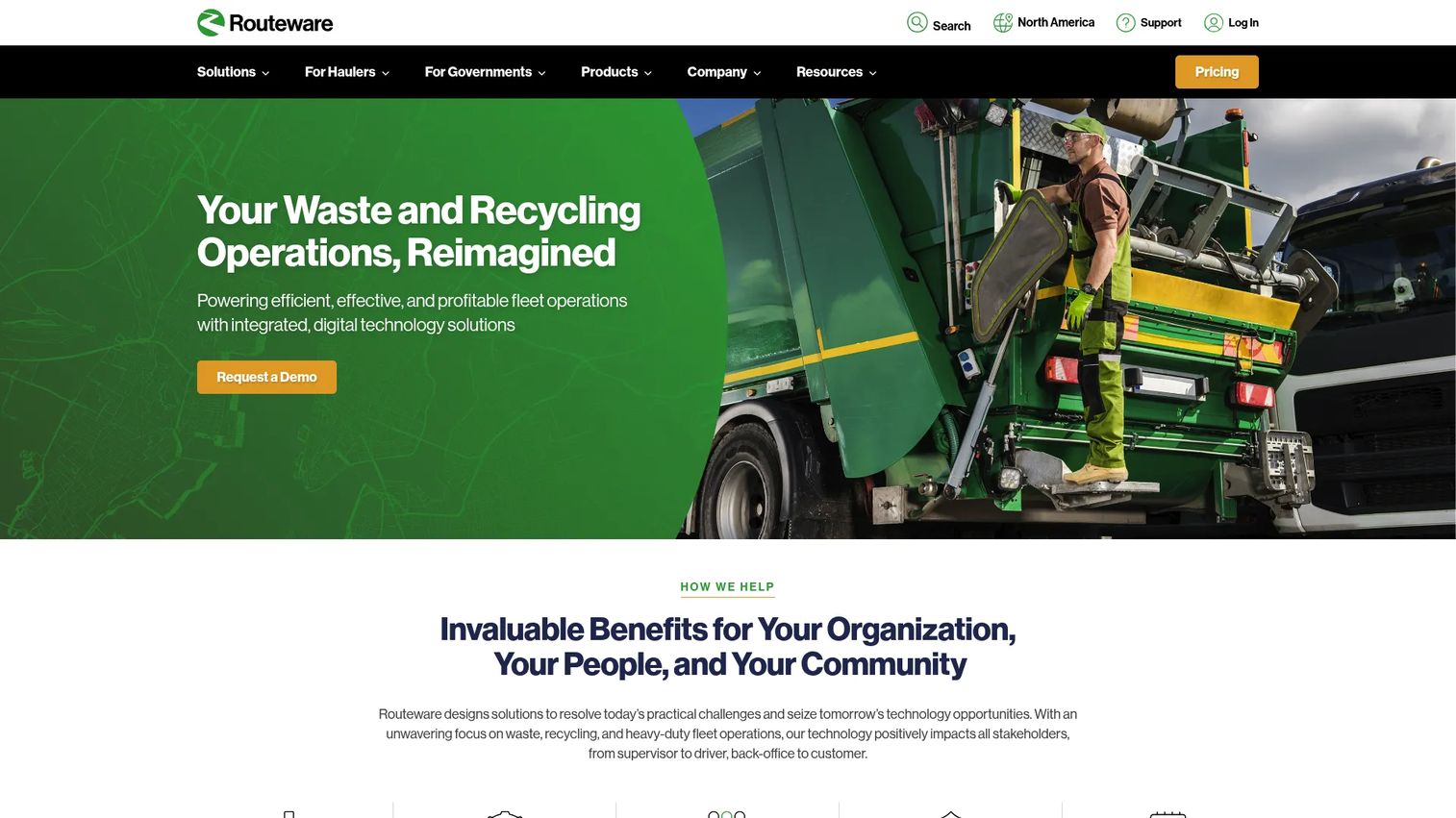
Routeware is a connected waste and recycling fleet platform covering route optimization, dispatch, in-cab operations, billing, and customer self-service. It positions itself as an integrated operations platform with an open ecosystem, so operators can connect the software to telematics, accounting, and third-party systems rather than run each in isolation. That makes it a strong fit for operators who want fleet management for haulers and public-sector workflows under one roof.
Best for: Waste and recycling operators who need an integrated fleet operations platform with room to connect other systems.
Key strengths
- Route optimization: Plans and sequences routes to cut miles and improve on-time service.
- Dispatch and live fleet visibility: Real-time view of where trucks are and how the day is tracking.
- In-cab tools and DVIR: Driver-facing apps, digital vehicle inspection reports, and fleet reporting.
Why choose Routeware: Routeware suits operators who have outgrown single-purpose tools and want a platform that scales across routing, billing, customer service, and compliance reporting. The open API approach matters if you already run telematics or accounting systems you do not want to rip out. For municipal and larger commercial fleets, the breadth is the draw.
Routeware pricing: Routeware does not publish a starting price. Pricing is custom quoted based on fleet size, services, and operational needs, so you contact the team for a tailored figure. Routeware holds a 4.0/5 rating on G2.
3. ServiceCore
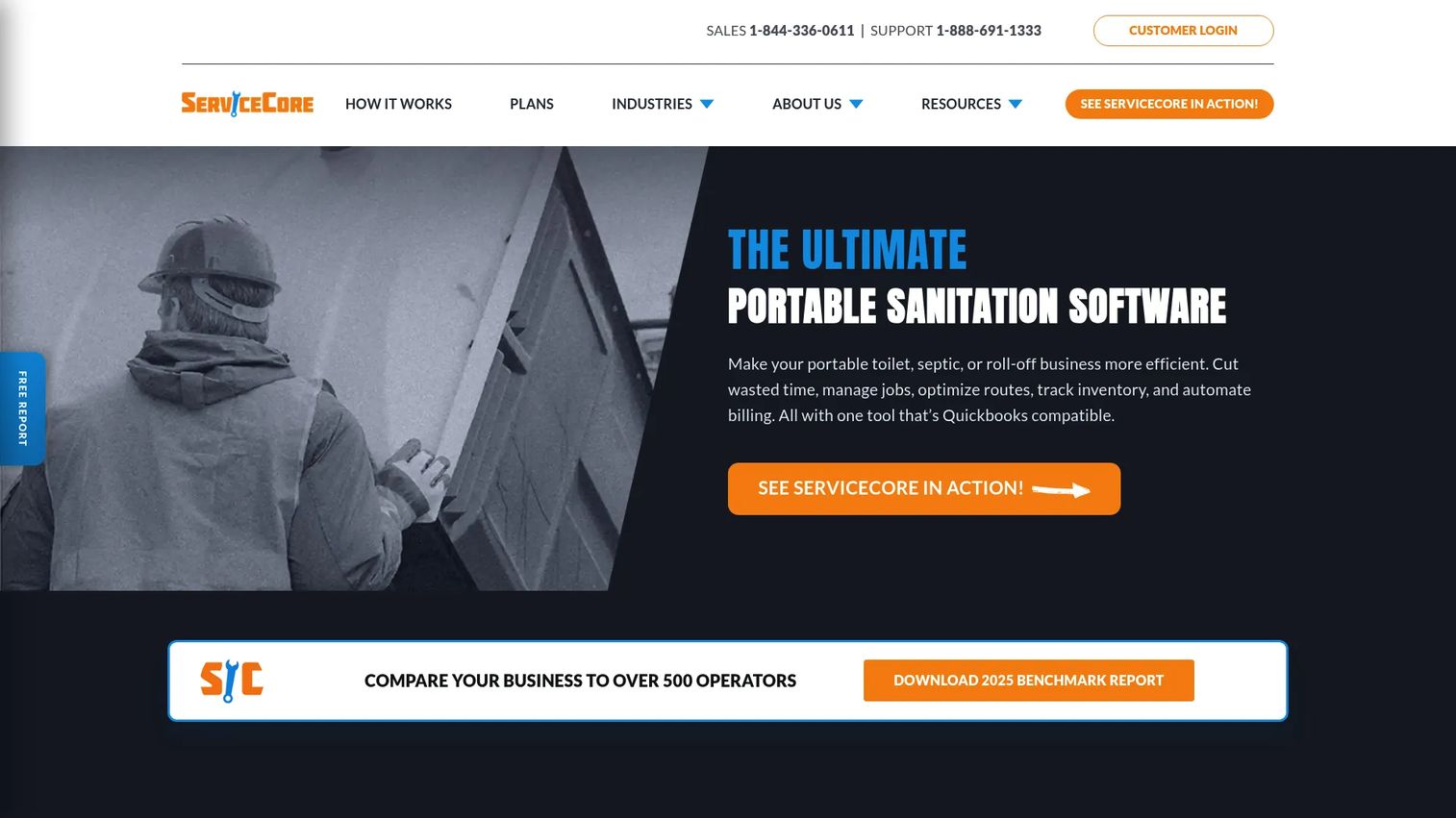
ServiceCore is software for portable toilet, septic, and dumpster businesses. It brings customer and job management, route optimization, and a customer portal together for operators whose day is defined by scheduling, routing, billing, and inventory across many small jobs. That specialization is its edge: the workflows match how portable sanitation and specialty service businesses actually run.
Best for: Portable sanitation, septic, and dumpster operators who need scheduling, routing, billing, and inventory in one place.
Key strengths
- Customer and job management: Tracks accounts, jobs, and service history in one system.
- Route optimization: Sequences service stops to keep trucks efficient across a full day.
- Customer portal: Gives account holders self-service access to requests and information.
Why choose ServiceCore: If you run a service business with recurring stops, inventory to track, and collections to manage, ServiceCore gives you an operational backbone tuned to that model. Commercial waste management software built for general hauling often forces workarounds for portable sanitation workflows; ServiceCore avoids that by targeting the segment directly.
ServiceCore pricing: ServiceCore publishes plan names, START and Pro, both billed monthly with an annual contract, but it does not list public prices. The pricing page directs you to schedule a personalized demo to see pricing for your business.
4. Wastebits
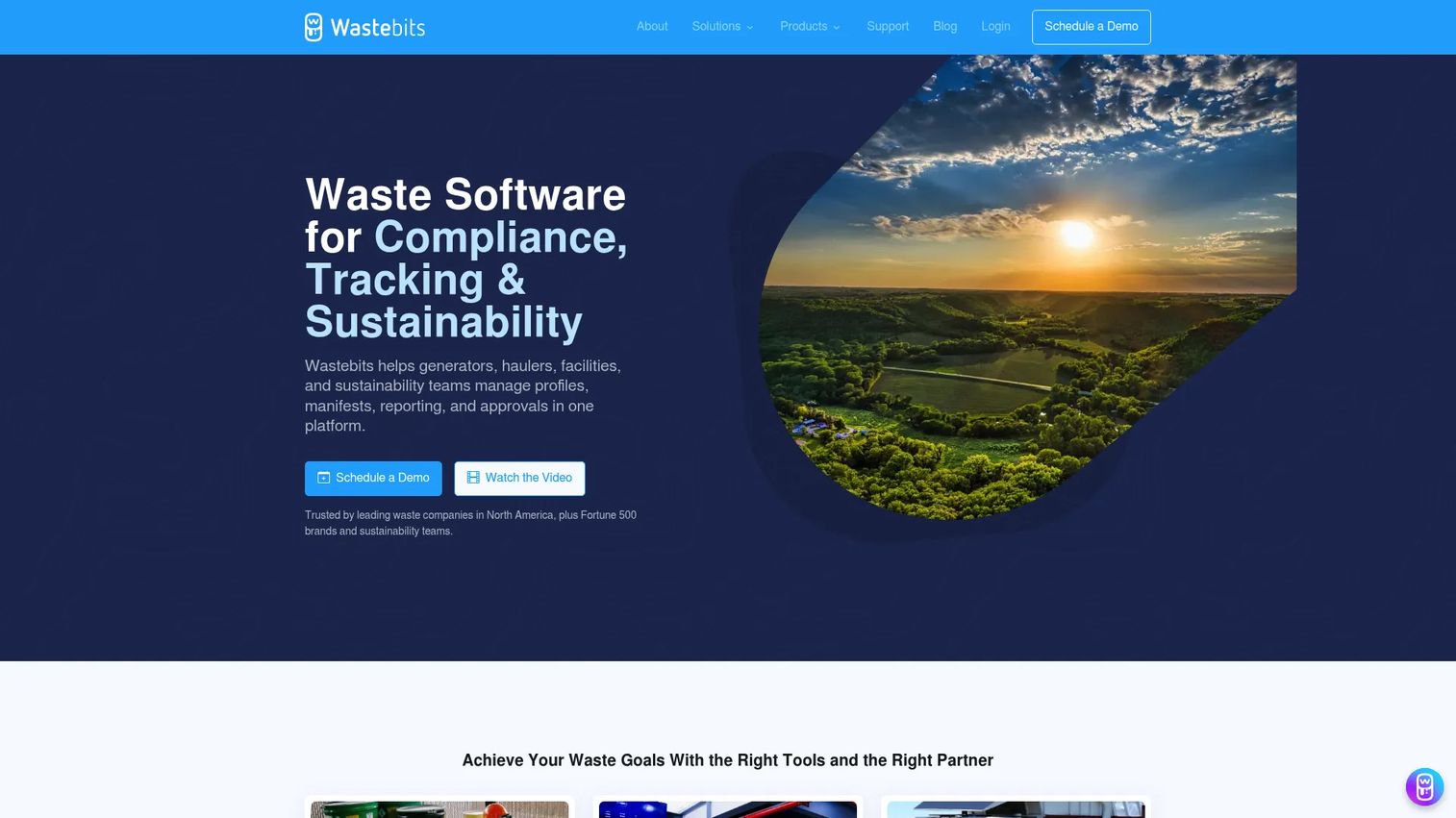
Wastebits is a waste management software and analytics platform focused on tracking waste profiles, manifests, scale tickets, and industry activity. It fits recycling and environmental operations where traceability and regulatory documentation matter as much as routing. The EPA e-Manifest integration and scale house software make it a natural choice for materials-focused teams that live and die by accurate records.
Best for: Waste and environmental operations that need digital waste tracking, approvals, and compliance reporting.
Key strengths
- Waste profiles and approvals: Structured profiles and approval workflows for incoming materials.
- Manifests and EPA e-Manifest integration: Digital manifests that connect to federal tracking.
- Scale house software and analytics: Weighing workflows plus Wastebits Insights for reporting.
Why choose Wastebits: For recyclers and environmental operators, the value is traceability. When you have to prove what came in, where it went, and that every manifest is clean, Wastebits handles that documentation layer directly. The analytics side surfaces activity trends that generalist hauling tools rarely capture.
Wastebits pricing: Wastebits Insights offers a Free plan at no charge. The Premium plan is priced per user, at $199 per user per month paid annually or $249 per user per month paid monthly. Enterprise pricing is custom, available by contacting sales.
5. Waste Logics
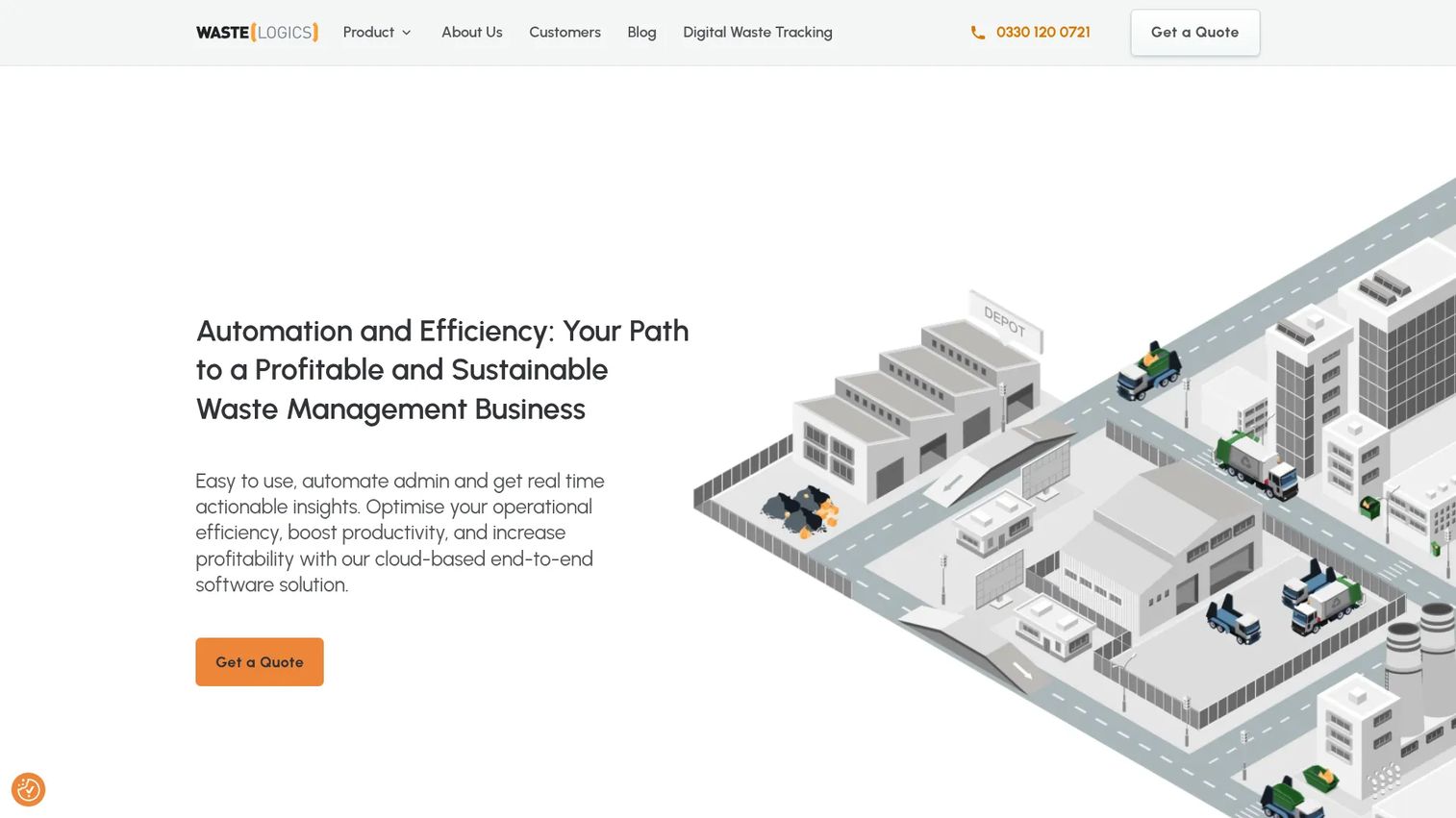
Waste Logics is cloud-based waste management software for handling operations, compliance, routing, reporting, and customer service. It leans toward operators who need strong back-office structure, with real-time order processing, route planning, and weighbridge management tied to compliance tracking. If your business runs on recurring accounts and tight billing and invoicing automation, this is where it fits.
Best for: Waste management businesses that need an all-in-one operational and compliance platform.
Key strengths
- Real-time order processing: Job entry and order handling that keeps the back office current.
- Route planning and optimization: Efficient route building alongside the operational workflow.
- Weighbridge and compliance tracking: Weighbridge management with built-in compliance records.
Why choose Waste Logics: Operators who prioritize invoicing accuracy, recurring account management, and clean compliance records get a platform organized around those needs. The weighbridge and compliance tracking are especially useful for businesses where regulatory reporting is a daily requirement rather than an occasional task.
Waste Logics pricing: Waste Logics does not display public pricing. The company states that pricing is usage-based and requests a quote through its site, so the figure depends on your volume and modules.
What to evaluate before you buy
The right platform depends on your operation, not on a feature count. Run every shortlisted tool through these criteria.
Workflow fit for your segment
A hauler platform and a municipal platform solve different problems. Match the tool to how your business actually runs: commercial hauling, portable sanitation, recycling, or public service. A tool built for your segment needs less configuration and forces fewer workarounds.
Billing and cash-flow automation
Manual invoicing is where revenue leaks. Look for recurring billing, on-demand charges, and payment processing that close the loop from service to payment without re-entry. The faster billing closes, the healthier your cash flow.
Driver execution and field visibility
Your drivers are your operation. A strong driver mobile app with proof of service and live status keeps the field and office in sync. Evaluate how easy the app is to use in a truck, not just how it looks in a demo.
Integrations and single source of truth
The point of a platform is to reduce tools, not add one more. Check that it connects to your accounting, telematics, and customer systems so route, billing, and customer data live together. Fragmented data is the problem you are trying to solve.
Reporting for leadership
You need numbers that survive scrutiny. Confirm the reporting gives real-time visibility into routes, revenue, and exceptions, so leadership can run weekly decisions without stitching dashboards together.
Conclusion
The best waste management software depends entirely on what you run. CurbWaste is the strongest all-in-one for haulers who want dispatch, billing, and a driver app in one place. Routeware fits operators who need a broader connected platform with open integrations. WasteHero suits municipalities and utilities that need citizen self-service. ServiceCore is built for portable sanitation and specialty service businesses. Wastebits leads on recycling and materials traceability. Waste Logics is organized around compliance and recurring accounts. Basestation targets the document-heavy paperwork burden.
The next step is simple: shortlist your top two fit options based on segment, then book demos and compare route, billing, and portal workflows side by side. Watch how each handles a real day, not a scripted one. The platform that reduces manual handoffs and gives you a single source of truth is the one that earns its place in your stack and makes the business run without you in every decision.
FAQs
Waste management software is a platform that connects routing, dispatch, billing, driver execution, customer communication, and compliance reporting into one system. Core modules typically include route optimization, a driver mobile app, invoicing and payments, a customer portal, and operational reporting. It replaces spreadsheets and disconnected tools with a single source of truth for haulers, recyclers, and municipal operations.
Waste hauling software should cover routing and dispatch, a reliable driver mobile app, billing and invoicing automation, a customer portal, and integrations with accounting and telematics. Real-time visibility across field and office is what separates a true platform from a point tool. Prioritize the workflows that eat the most manual time in your current operation.
Yes. Smaller operators benefit most from removing manual handoffs, because a single missed billing entry or texted route hurts more when the team is lean. Even a two-truck operation gains from automated invoicing, live dispatch, and self-service ordering. The right tool lets a small team run like a larger one without adding headcount.
It replaces phone calls and texts with a live dispatch board that assigns routes, tracks trucks in real time, and flags exceptions as they happen. Drivers get their sequence in an app instead of a message thread, and dispatch sees status without calling. That shared context cuts missed pickups and shortens the time between a problem and a fix.
Waste collection software usually refers to the narrower slice that handles pickups, routing, and scheduling. Waste management software and full waste disposal software cover the entire operational stack, adding billing, customer portals, compliance reporting, and back-office workflows. Collection software optimizes the route; a management platform runs the whole business around it.
Often, yes. Municipal workflows center on citizen self-service, service requests, and asset management across a public service area, while commercial haulers focus on account billing and recurring routes. Municipal-focused platforms lead with citizen portals and ticketing; hauler platforms lead with dispatch and invoicing. Match the tool to whether your customer is a resident or a paying account.
Pricing varies widely by team size, deployment model, modules, and support needs. Some platforms publish tiers, such as Wastebits Premium at $199 per user per month paid annually, while most hauler and municipal platforms quote custom pricing based on fleet size and services. Expect a tailored quote for full operational suites, and confirm what each tier includes before comparing figures.