Your dashboards are full. Your decisions are not getting better.
That gap is the real problem with retail data today. Most teams have POS exports, ecommerce events, loyalty records, and ad platform reports, all living in separate systems that never agree on who the customer is. The result is fragmented shopper data, personalization that fires the wrong message, and pricing or inventory calls made on a hunch.
The market is responding fast. The retail intelligence software market is valued at USD 11.44 billion in 2026 and is projected to reach USD 19.65 billion by 2030 at a 14.5% CAGR, according to Research and Markets (2026). In parallel, over 71% of top U.S. retailers reported integrating real-time analytics to improve store operations and personalized marketing, per Coherent Market Insights (2025). The spend is moving toward platforms that turn shopper signals into action, not just charts.
If you lead growth, marketing, or merchandising, you have lived this. You own a number you only partly control, and the tooling rarely closes the loop between insight and revenue. This guide is built for that problem. The same instinct drives buyers comparing a best customer data platform or evaluating best business intelligence software: consolidate the stack, trust the data, and prove the impact. For teams blending prediction into the stack, the shift mirrors what is happening across agentic ai platforms and modern analytics platforms that drive ROI.
What's inside
This is a buyer-first shortlist of retail intelligence software for marketers, growth leaders, and retail teams. It is not an abstract category definition. We selected and ordered entries by the factors that decide real outcomes: data integration depth, predictive analytics, omnichannel visibility, evidence of ROI, and implementation fit. The list spans use cases across merchandising, pricing, inventory, and personalization, and it covers the full range of buyer needs, from a retail intelligence platform built for shopper data unification to enterprise retail AI transformation to category research. Pricing and ratings shift, so verify the latest figures on each vendor's site before you commit.
TL;DR
- Best for shopper data unification and lifecycle marketing: Bluecore, which ties identity, behavior, and product signals to cross-channel campaigns.
- Best for enterprise retail AI transformation: BCG X, for teams running multi-year change across pricing, merchandising, and operations.
- Best for a customer intelligence platform and 360-degree view: EY, which leads with data harmonization, identity resolution, and implementation strategy.
- Best for buyer research and category benchmarking: G2, the place to compare vendors, read peer reviews, and shortlist before you buy.
- Best for a packaged retail AI suite: Retail AI by BCG X, spanning pricing, assortment, marketing, and operations.
- Best as a category lens: the broader retail intelligence software definition, useful for scoring any stack against the criteria that matter.
What is retail intelligence software?
Retail intelligence software is a category of tools that unifies retail data across shopper, product, and channel sources, then turns it into predictive, actionable decisions for merchandising, pricing, inventory, and personalization.
It sits a step beyond plain reporting. A strong retail intelligence platform does not just show what happened. It connects signals, predicts what will happen, and recommends or triggers the next action. That is the difference between retail business intelligence as a rear-view mirror and retail data intelligence as a decision engine.
What the category typically does:
- Unified customer view: Resolve identities across digital and physical touchpoints into a single shopper profile.
- Predictive analytics: Apply retail analytics AI to forecast demand, churn, product affinity, and lifetime value.
- Omnichannel insights: Connect online, in-store, and paid media behavior into one view for omnichannel retail analytics.
- Pricing and inventory intelligence: Support markdown, promotion, assortment, and allocation decisions with demand signals.
- Personalization analytics: Power segmentation, lifecycle targeting, and offer optimization with ai retail customer analytics.
- Action and orchestration: Push recommendations into campaigns, store ops, or merchandising workflows, not just dashboards.
The retail intelligence solutions that matter in 2026 share one trait: they close the loop between data and decision. That is the lens this guide uses to rank every entry.
When to use retail intelligence software
Not every team needs the same capability first. Match the tool to the problem you are solving right now.
Unify shopper, product, and channel data
When a customer buys in-store, browses on mobile, and clicks an email, most stacks treat that as three strangers. You need a single view when fragmented identity is distorting your segments and wasting spend on people you already converted. Unified shopper data is the foundation for personalization and lifecycle targeting, because you cannot tailor an offer to a profile you cannot see. This is the entry point for most retail data intelligence projects.
Improve pricing, merchandising, and inventory decisions
When markdowns are guesswork and allocation is reactive, retail intelligence supports better forecasting and product placement. Demand sensing, price elasticity modeling, and assortment localization tie directly to margin and efficiency. The payoff shows up as fewer stockouts, tighter markdown timing, and inventory that matches real demand. This is where retail pricing intelligence and inventory intelligence earn their keep.
Personalize campaigns across the customer journey
When generic blasts stop converting, marketers use retail intelligence for segmentation, lifecycle targeting, and offer optimization. Behavioral signals and product affinity let you trigger the right message at the right moment. The goal is measurable: higher conversion, stronger repeat purchase rate, and better email engagement. For growth marketers, this is the use case that ties retail personalization analytics straight to pipeline and revenue.
Comparison table
Use this table as a fast filter. Read the Intent column to find the entry that matches your problem, then check Key differentiation for the capability that sets it apart. Pricing and ratings move often, so confirm current figures on each vendor's site before deciding.
| # | Product | Intent | Key differentiation | Pricing | G2 rating |
|---|---|---|---|---|---|
| 1 | Bluecore | Shopper data unification and lifecycle marketing | Identity, behavior, and product signals tied to cross-channel campaigns | Custom (talk to sales) | 4.3/5 |
| 2 | BCG X | Enterprise retail AI transformation | Custom-built AI, design, and digital product transformation | Custom (contact) | Not listed |
| 3 | EY | Customer intelligence platform and advisory | 360-degree view, data harmonization, identity resolution | Custom (contact) | Not listed |
| 4 | G2 | Buyer research and category discovery | Peer reviews, product profiles, buyer intent data | Free; Starter $2,999/yr | 4.6/5 |
| 5 | Retail AI by BCG X | Packaged retail AI suite | Pricing, assortment, marketing, and operations AI | Custom (request demo) | Not listed |
| 6 | Retail intelligence software | Category synthesis and buyer fit | Decision criteria that apply to any strong stack | Varies by vendor | Varies |
1. Bluecore
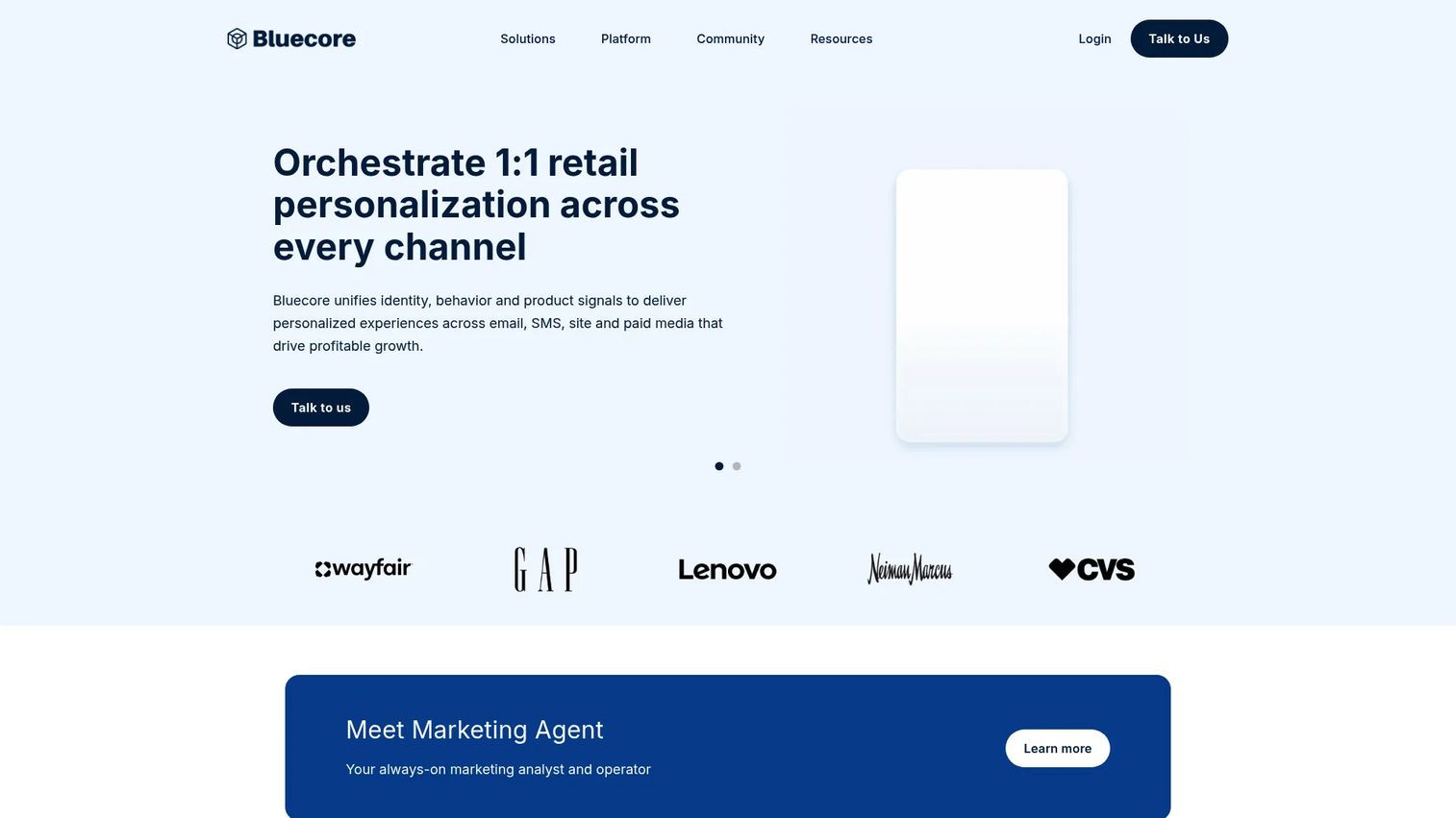
Bluecore is a retail marketing platform built for personalized experiences across email, SMS, site, and paid media. It is the closest exact-match fit for buyers who define retail intelligence as the ability to unify shopper data and act on it in real time. Where many platforms stop at reporting, Bluecore ties identity, behavior, and product signals directly into campaign workflows so the insight becomes a triggered action.
That positioning matters for a growth marketer who owns conversion, retention, and lifetime value. Bluecore resolves who the shopper is, what they have done, and what they are likely to buy next, then orchestrates the message across channels. It leans hard into predictive AI and shopping agents, so the system does not just segment, it anticipates. For ecommerce and omnichannel retailers, that closes the loop between a behavioral signal and a profitable campaign.
Best for: Enterprise retail teams that need personalized lifecycle marketing and cross-channel automation grounded in unified shopper data.
Key strengths
- Signal unification: Combines identity, behavior, and product data into a single shopper profile for ai retail customer analytics.
- Cross-channel orchestration: Triggers coordinated campaigns across email, SMS, site, and paid media from one system.
- Predictive models and AI agents: Builds predictive AI and AI shopping agents into campaign workflows, not separate dashboards.
Why choose Bluecore: Pick it when your bottleneck is turning shopper data into revenue-generating campaigns, not just understanding it. It fits retailers who already have channel volume and want personalization that reflects real behavior. The platform is built around action, which suits teams measured on conversion and repeat purchase rather than report volume.
Bluecore pricing: Bluecore does not publish a numeric self-serve price on its site and directs buyers to talk to sales. It describes a shared-success pricing model, but no public figure was visible at the time of writing. Confirm current terms directly with Bluecore. On G2, Bluecore holds a 4.3/5 rating.
2. BCG X
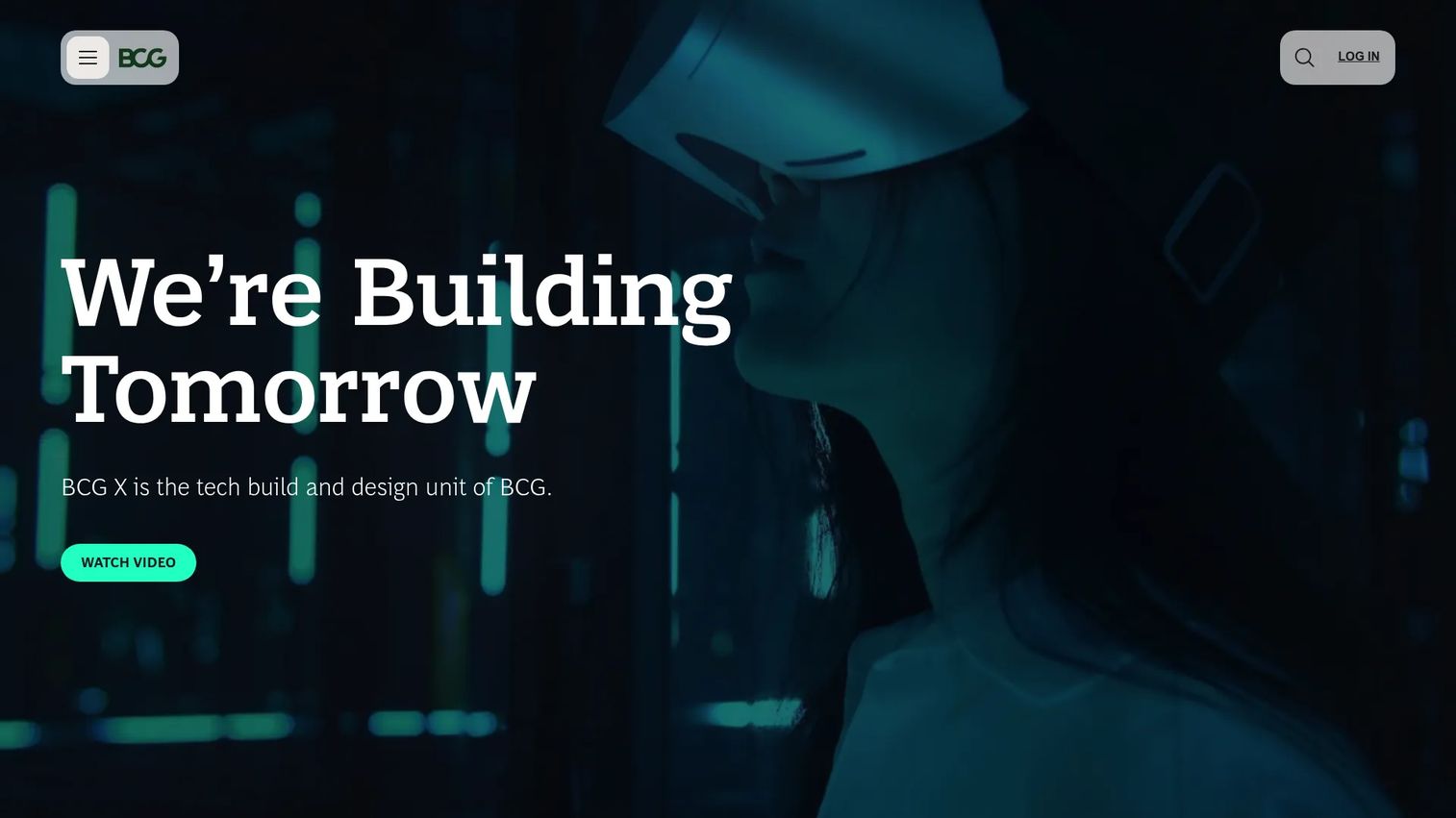
BCG X is BCG's tech build and design unit, focused on building digital products, AI solutions, and new businesses. It is not a self-serve product. It is the enterprise retail AI and transformation option for organizations that need custom-built capability paired with strategy and change management. If your retail intelligence goal is a multi-year shift across the value chain rather than a single tool deployment, this is the consultative end of the market.
For large retailers, the appeal is breadth. BCG X works across pricing, category management, personalization, operations, and cost optimization, and it pairs the AI build with the organizational change required to make it stick. That value-chain framing is the difference between buying analytics and rebuilding how decisions get made. Enterprise teams with executive sponsorship and a transformation mandate tend to find the most value here.
Best for: Enterprises seeking custom-built AI, design, and digital transformation services across the full retail value chain.
Key strengths
- Custom AI and GenAI builds: Develops tailored AI and GenAI solutions rather than packaged software.
- Transformation and change management: Pairs technology with the operating-model change needed to adopt it.
- Value-chain breadth: Covers pricing, merchandising, personalization, and operations as connected workstreams.
Why choose BCG X: Choose it when the problem is organizational, not just analytical, and when you need a partner to build and embed AI across multiple functions. It suits enterprises with the budget and timeline for transformation rather than teams looking for a quick self-serve win. The strength is integration across the whole value chain, which standalone tools rarely match.
BCG X pricing: BCG X is a consulting and build unit, not a self-serve platform, so no public price or plan table is available. The site uses contact-us language, and engagements are scoped per client. Confirm scope and cost directly with BCG X.
3. EY

EY is a global professional services firm offering assurance, consulting, tax, and strategy and transactions services, with a strong line in retail intelligence as a customer intelligence platform and transformation program. Its approach frames retail intelligence around a 360-degree customer view: harmonize the data, resolve identities, then build the decision layer on top. For buyers who want strategy and implementation fundamentals as much as technology, EY is the consultative, advisory-led choice.
The work spans use cases across forecasting, inventory, loyalty, pricing, and merchandising, with EY.ai and data-enabled delivery underpinning the service model. EY operates across more than 150 countries and territories, which matters for global retailers that need consistent data harmonization and identity resolution across markets. The tone is strategy-first: define the customer view, fix the data foundation, then layer intelligence and action.
Best for: Enterprises seeking large-scale professional services and advisory support to stand up a customer intelligence platform.
Key strengths
- 360-degree customer view: Harmonizes fragmented data into a single, resolvable customer profile.
- Identity resolution and data foundations: Treats clean, connected data as the prerequisite for any retail intelligence.
- Global delivery: Operates across 150+ countries for consistent execution in complex retail footprints.
Why choose EY: Choose it when the data foundation itself is the problem and you need advisory depth to design the customer view before tooling. It suits global retailers managing identity and harmonization across many markets. The value is in strategy and implementation fundamentals, not a packaged product you switch on.
EY pricing: EY does not publish public pricing for its core advisory services. Its site uses contact and quote-style service pages, and engagements are scoped per client. Request a tailored quote directly from EY.
4. G2
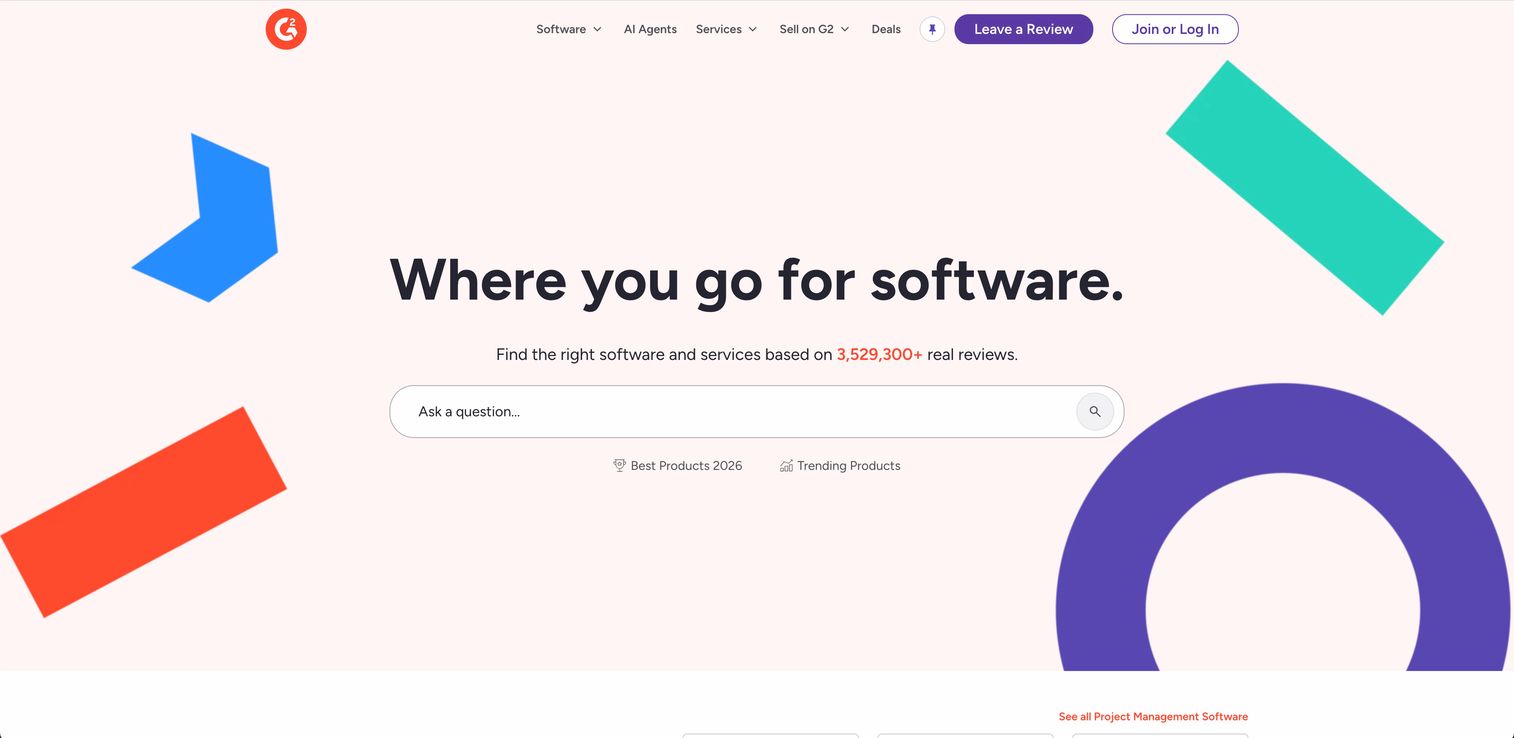
G2 is a B2B software review and marketplace platform that helps buyers compare products and vendors build demand. It belongs on this list as a research step, not a final answer. When you are shortlisting retail intelligence solutions, G2 is where you compare capabilities, read peer reviews, and validate category fit before you book a single demo. Treat it as the map, not the destination.
For a growth marketer drowning in vendor claims, that neutrality is the value. G2 organizes products into categories, surfaces badges and ratings, and layers in buyer intent and market intelligence so you can see what real users say and which tools are gaining traction. Use it to build your shortlist, then verify pricing and fit directly with each vendor. It is the discovery layer that makes the rest of your evaluation faster.
Best for: Teams researching or marketing B2B software who want a neutral, review-driven marketplace to compare and shortlist vendors.
Key strengths
- Peer reviews and ratings: Surfaces verified user reviews so you evaluate tools on real experience.
- Product profiles and badges: Standardizes comparison with profiles, media, and category grids.
- Buyer intent and market intelligence: Adds signal on which vendors are gaining momentum in a category.
Why choose G2: Choose it early in the buying process, when you need to map the landscape and shortlist before committing time to demos. It is not a retail intelligence platform itself, so do not expect it to unify your shopper data. Use it to research, compare, and narrow, then take the shortlist to the vendors.
G2 pricing: G2 publishes vendor packages: a Free plan at $0, a Starter plan listed at $2,999 for year one, and Professional and Enterprise plans priced contact-sales. There is a free tier available. As a research destination, browsing reviews is free for buyers. G2 itself holds a 4.6/5 rating.
5. Retail AI by BCG X
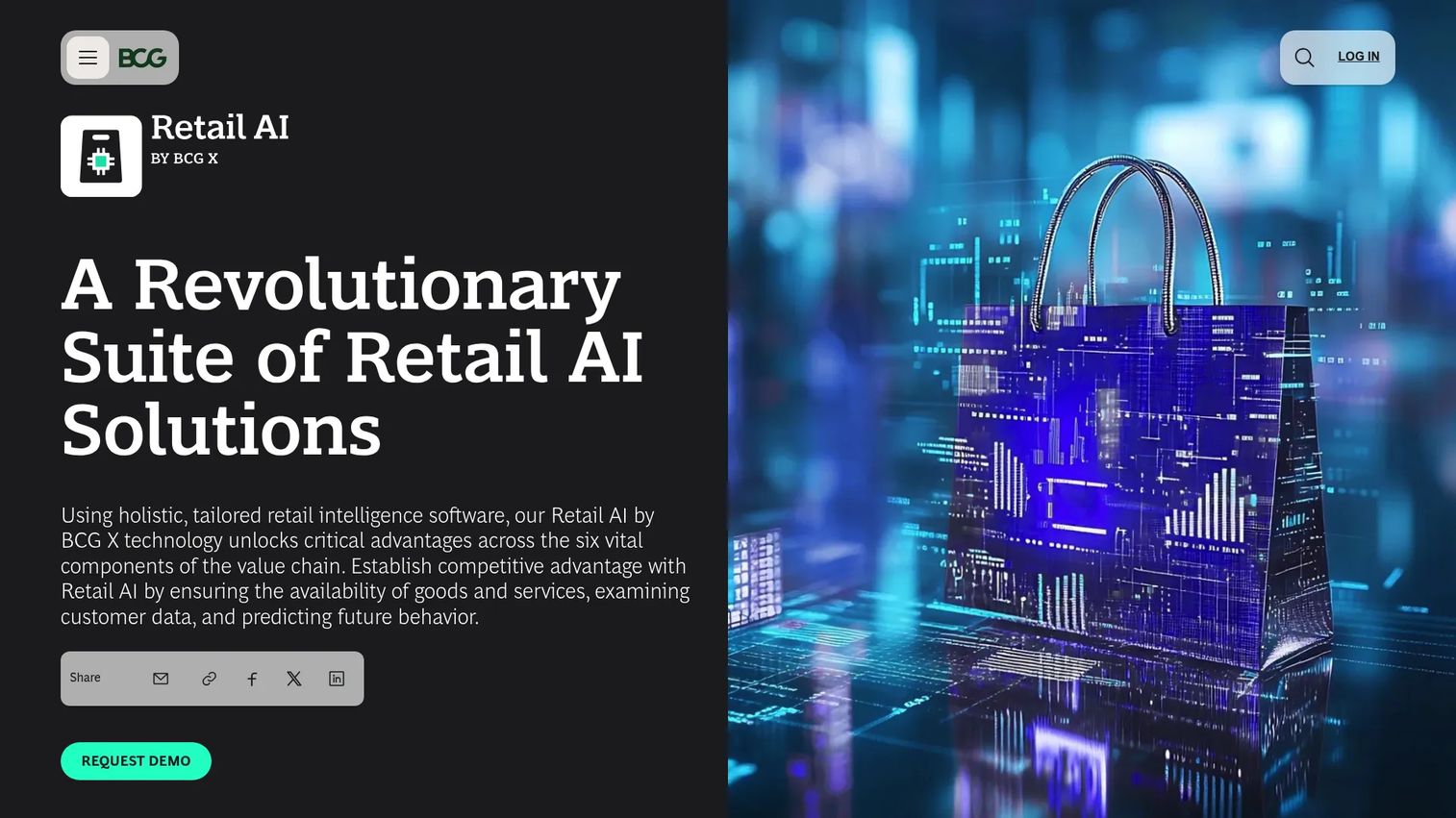
Retail AI by BCG X is the named retail intelligence suite inside the broader BCG X offering, built for AI-driven pricing, assortment, marketing, operations, channels, cost optimization, and data and tech transformation. Where the parent BCG X section covers the full transformation relationship, this is the packaged product layer that shows the enterprise breadth in concrete modules. It is the choice for large retailers who want a structured AI suite mapped to the retail value chain.
The suite organizes capability into clear components. Pricing and Value AI handles pricing, promotion, and markdowns. Category Management and Merch AI drives assortment and localization. Precision Marketing and Personalization powers customer engagement. For a retail team, that modular structure makes it easier to see where AI plugs into existing decisions, from the shelf to the campaign. It is best understood as the productized expression of BCG X's retail intelligence work, not a separate self-serve tool.
Best for: Large retailers seeking custom AI transformation support delivered through a structured, value-chain-aligned suite.
Key strengths
- Pricing and Value AI: Targets pricing, promotion, and markdown decisions with retail pricing intelligence.
- Category Management and Merch AI: Drives assortment and localization for merchandising teams.
- Precision Marketing and Personalization: Powers customer engagement with retail personalization analytics.
Why choose Retail AI by BCG X: Choose it when you want the breadth of BCG X's retail expertise expressed as defined AI modules across pricing, merchandising, and marketing. It suits enterprise teams that prefer a value-chain map over a single point tool. Because it sits within the BCG X relationship, expect a partnership engagement rather than a self-serve subscription.
Retail AI by BCG X pricing: The product library page presents a request-demo model and does not show public pricing. Engagements are scoped as part of a BCG X relationship. Request a demo and a tailored scope directly from BCG X.
6. Retail intelligence software (the category lens)
This final entry is not a single vendor. It is the category lens you should hold up against every option above and any others you evaluate. Reading retail intelligence software as a capability set, rather than a brand, keeps your decision anchored to outcomes instead of feature density. Use it as a scorecard.
A strong retail intelligence platform, regardless of name, should deliver a few non-negotiables. It connects shopper, product, and channel data into a unified view. It applies retail analytics AI to predict demand, affinity, and value, not just report on the past. It supports omnichannel retail analytics so online and in-store decisions share one source of truth. And it pushes intelligence into action, whether that is a triggered campaign, a markdown recommendation, or an allocation decision.
For marketers and retail teams, the criteria that decide ROI are practical. Integration depth determines whether the data is trustworthy. Predictive capability determines whether you are reacting or anticipating. And measurable lift, in conversion, margin, or forecast accuracy, determines whether the platform earns its place in the stack. Score every candidate against those, and the right fit becomes clear regardless of brand. The same discipline applies whether you are evaluating a customer data platform layer, a business intelligence backbone, or an agentic analytics engine on top.
Considerations before you buy
Before signing anything, run every candidate through this checklist. The differences that matter rarely show up in a sales deck.
Integration depth
Verify exactly which sources the platform connects to: POS, ecommerce, CRM, loyalty, marketing, inventory, and third-party data. More connected data usually means better decision quality. Ask how identity is resolved across those sources, because a partial connection produces partial insight. Shallow integrations are the most common reason retail data intelligence projects underdeliver.
Predictive capability
Distinguish reporting from prediction. A dashboard tells you what happened; retail analytics AI tells you what is likely next. Ask which models are included, how they are trained on your data, and whether predictions feed directly into actions like campaigns, pricing, or allocation. Prediction without action is just a prettier report.
Omnichannel and identity resolution
Confirm the platform unifies online, in-store, and paid media into a single customer view. Ask how it handles identity resolution when the same shopper appears across devices and channels. For omnichannel retail analytics, this is the make-or-break capability, because broken identity quietly corrupts every downstream segment and forecast.
Reporting and measurable ROI
Decide upfront how you will measure return. Tie ROI to decisions, not dashboard logins: conversion lift, repeat purchase rate, margin improvement, forecast accuracy, and operational efficiency. Ask the vendor for evidence of these outcomes with comparable retailers, and make sure the reporting maps to metrics your finance team already trusts.
Implementation fit
Be honest about your timeline and resources. A packaged platform suits teams that need value fast; an enterprise transformation suits organizations rebuilding how decisions get made. Match the implementation effort to your appetite, and clarify what change management the vendor supports so adoption does not stall after launch.
Conclusion
The right retail intelligence software depends entirely on what you are solving and how mature your data foundation is.
If your priority is shopper data unification and lifecycle marketing, Bluecore is the most direct fit, tying identity and behavior straight to cross-channel campaigns. If you are running enterprise retail AI transformation, BCG X and its Retail AI suite bring custom-built capability across the full value chain. If the data foundation itself is the problem, EY leads with the 360-degree view and identity resolution. And if you are still mapping the landscape, G2 is the research step that sharpens your shortlist before you commit.
Whatever the brand, score every candidate against the same three criteria: integration quality, predictive capability, and measurable ROI tied to real decisions. Get those right and the platform earns its place in the stack instead of adding to the sprawl. The teams that win in 2026 are not the ones with the most dashboards. They are the ones whose data actually changes what they do next.
Start your journey with Guideflow today!
FAQs
Retail intelligence software unifies retail data across shopper, product, and channel sources and turns it into actionable, predictive decisions. It goes beyond standard reporting by recommending or triggering the next best action for merchandising, pricing, inventory, and personalization. The category is built to close the loop between data and decision.
Retail analytics is broader and largely descriptive: it tells you what happened across sales, traffic, and behavior. Retail intelligence usually adds decision support, prediction, and actionability on top of that visibility. The distinction shows up in how the tool handles shopper, product, and channel data, anticipating outcomes rather than only reporting them.
At minimum, look for POS, ecommerce, CRM, loyalty, marketing, and inventory systems, plus relevant third-party data. The more sources the platform connects and resolves into a single view, the higher the decision quality. Coverage alone is not enough; ask how identity is matched across those sources so the unified profile is accurate.
Yes. Unified shopper data and behavioral signals let you build precise segments and trigger lifecycle targeting at the right moment. That powers ai retail customer analytics for offer optimization, product affinity, and timing. The practical payoff is higher conversion, stronger repeat purchase rate, and campaigns that reflect what each shopper actually does.
Yes, especially when the platform supports predictive and cross-channel decisioning. Retail pricing intelligence guides markdowns, promotions, and elasticity, while inventory intelligence supports demand sensing and allocation. Tied to merchandising, these capabilities protect margin and reduce both stockouts and overstock.
Tie ROI to decisions, not dashboard usage. Track conversion lift, repeat purchase rate, margin improvement, forecast accuracy, and operational efficiency against a clear baseline. Ask vendors for evidence of these outcomes with comparable retailers, and make sure the metrics map to numbers your finance team already trusts.
Focus on integration depth, identity resolution, predictive capabilities, reporting quality, and implementation effort. Verify which data sources connect and how shoppers are resolved across them. Then match the implementation model to your timeline and resources, and confirm the platform reports the metrics that prove measurable impact.