A customer returns a $120 jacket. Your cashier issues store credit. Three weeks later that customer walks into your second location, tries to redeem it, and the register shows a zero balance.
That gap is where store credit quietly bleeds trust and margin. Returns feed one system. Loyalty lives in another. Inventory counts drift. Reconciliation becomes a month-end scavenger hunt no one wants to run.
Most generic retail POS software pages sell you on checkout speed and hardware bundles. They rarely explain how store credit gets issued, tracked, redeemed, and reconciled across returns, exchanges, and multiple stores. That is the actual daily problem.
The store credit management platform market hit $4.2 billion in 2025 and is projected to reach $9.8 billion by 2034, according to MarketIntelo (2025). Adoption is climbing because manual credit tracking does not scale past a few locations.
This guide treats store credit as a workflow problem, not a checkbox feature. We compare 7 retail point of sale systems on how cleanly they handle credit, sync inventory, and report on profitability.
What's inside
This guide is for retail operators, founders, and multi-store teams who need store credit to stay accurate across every return and register.
We chose tools based on four criteria that matter for store credit management:
- Store credit handling: how credit is issued, tracked, and redeemed
- Inventory sync: whether returns update stock and balances correctly
- Reporting: visibility into credit liability and profitability analytics
- Integrations and checkout: e-commerce sync, hardware fit, and register speed
No fluff, no generic "all-in-one" claims. Just how each tool holds up when refunds and exchanges pile up.
TL;DR
- Best overall for broad retail operations: Square, with an integrated POS, inventory, and omnichannel selling.
- Best for specialty retail and inventory control: RetailEdge, a one-time-purchase POS with deep inventory and customer tracking.
- Best for TCG and hobby stores: Storepass, built around buylist, catalog, and pricing automation.
- Best for B2C integration and fulfillment: CAP Retail Software POS Integration, with configurable checkout and reporting.
- Best for multi-location retail software needs: Lightspeed Retail, with strong inventory and reporting across stores.
- Best for e-commerce plus in-store sync: Shopify POS, unifying online and offline order history.
- Best for value-conscious buyers: POS Nation, an affordable POS with inventory, loyalty, and gift cards.
What is store credit software?
Store credit software is retail software that tracks customer credit issued from returns, exchanges, or refunds and applies it at checkout. It records a balance tied to a customer, then redeems that balance when they buy again.
In practice, store credit rarely lives alone. It overlaps with your retail POS software, your inventory management for retail, your returns and exchanges software, and your loyalty and gift cards programs. When those systems share one customer record, credit stays accurate. When they don't, you get the zero-balance surprise at the register.
The best tools treat store credit as a ledger, not a sticky note. Every issue, redemption, and adjustment leaves an audit trail you can reconcile.
Core capabilities to expect:
- Store credit balances: a customer-linked ledger that survives across visits
- Refunds and exchange workflows: issue credit instead of cash at the point of return
- Checkout and redemption: apply credit fast at the register or online
- Inventory synchronization: returned items update stock counts automatically
- Reporting and reconciliation: track outstanding credit liability and profitability analytics
- Multi-location support: shared balances across every store
- Loyalty and gift card handling: manage adjacent value systems in one place
That last point matters for reporting. Outstanding store credit is a liability on your books. If your software cannot show total credit issued versus redeemed, finance finds out the hard way.
When to use store credit software
Handle returns without losing margin
A cash refund walks money out the door. Store credit keeps it inside your business. The customer already decided to buy from you once, and credit gives them a reason to come back and spend, often more than the original amount.
Use store credit when protecting margin matters more than a fast cash-out. Retailers with tight margins and frequent returns see the biggest gain from converting refunds into future purchases.
Support multi-location retail credit
A credit issued at store A should redeem at store B. That only works when balances live in one central ledger, not in each register's local memory.
Fragmented systems create the classic problem: a customer holds credit your second location cannot see. Shared balances plus clean reconciliation across branches fix it. If you run more than one store, this is the feature that decides everything.
Connect store credit to e-commerce and loyalty
Buyers do not think in channels. They return online and expect that credit in store, or the reverse. When your POS and e-commerce sync share one customer profile, credit follows the customer everywhere.
Tie store credit to loyalty and gift cards under a single profile and the experience feels consistent. That consistency is what turns a one-time refund into a repeat relationship.
Comparison table
This table compares each tool by store credit readiness, not just checkout speed. Look at how each handles inventory sync, multi-location balances, and reporting alongside pricing and ratings. Pricing and G2 figures reflect verified values at generation time.
| # | Product | Best for | Key differentiator | Pricing | G2 rating |
|---|---|---|---|---|---|
| 1 | Square | Integrated POS with inventory and omnichannel selling | Free tier plus omnichannel credit and checkout | Free, Plus $89/mo per location | 4.4/5 |
| 2 | RetailEdge | One-time-purchase POS with inventory and customer tracking | Own-your-license model, deep inventory control | $495 one-time + optional support | 4.0/5 |
| 3 | Storepass | Specialty TCG and hobby retail | Buylist, catalog, and price automation | From $99/mo + 2% on connected products | Not listed |
| 4 | CAP Retail Software POS Integration | Configurable small-business retail POS | Flexible checkout, inventory, reporting | From $99/mo | Not listed |
| 5 | Lightspeed Retail | Multi-location retailers needing inventory depth | Strong multi-store inventory and analytics | From $89/mo | 4.0/5 |
| 6 | Shopify POS | Retailers selling in person and online | Unified in-store and online order history | From $39/mo, POS Pro $89/mo per location | 4.4/5 |
| 7 | POS Nation | Value-conscious small retailers | Industry-specific POS with hardware bundles | From $39/mo | 4.7/5 |
Best 7 store credit software for 2026
1. Square

Square is retail point-of-sale and commerce software for selling in-store and online. It bundles payments, inventory, and omnichannel selling into one account, so store credit issued at the register can follow a customer across channels. For operators who want credit, checkout, and reporting under one roof without stitching tools together, Square covers the basics well.
Best for: retailers that want an integrated POS with inventory and omnichannel selling, plus straightforward credit handling.
Key features
- Take payments across in-store and online
- Manage inventory in one place
- Sell everywhere with omnichannel sync
- Customer profiles that carry balances
- Reporting on sales and refunds
Why choose Square: if you want a free starting point and room to grow into paid tiers, Square fits small to mid-market retailers who need checkout speed and refund handling without a big upfront commitment.
Square pricing: the Free plan is $0/mo for a single location plus processing fees. Plus is $89/mo per location plus processing fees. Premium is custom and requires meeting eligibility requirements.
2. RetailEdge
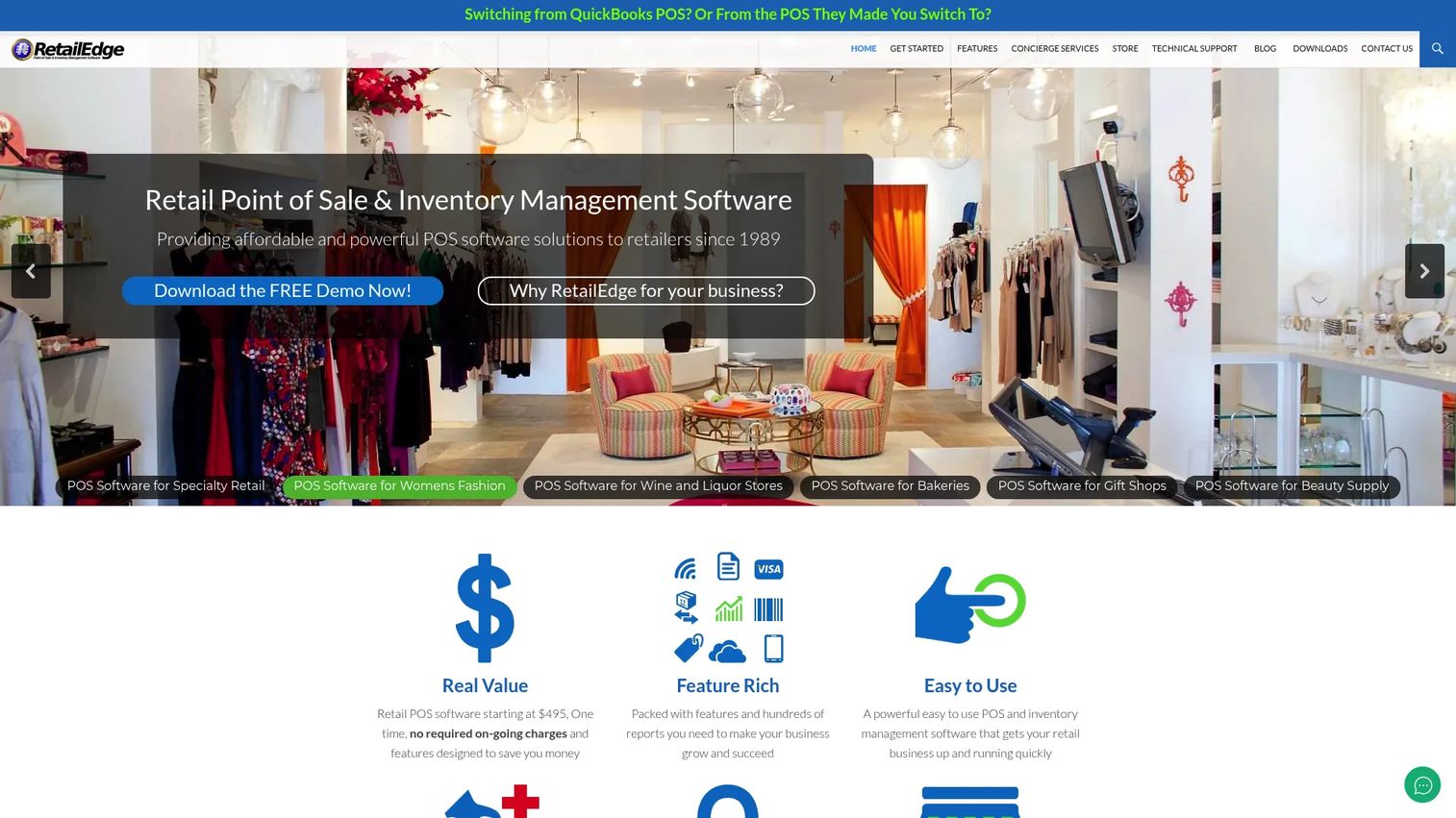
RetailEdge is retail POS and inventory management software for single- and multi-location retailers. It leans into inventory depth and customer tracking, which is exactly where store credit accuracy lives. Because credit ties to a tracked customer record, returns and exchanges stay reconciled against real stock counts.
Best for: retailers wanting a one-time-purchase POS with inventory and customer tracking, especially specialty stores.
Key features
- Point of sale with fast checkout
- Inventory management across locations
- Customer and order tracking
- Returns and exchange handling
- Reporting on sales and stock
Why choose RetailEdge: the one-time-license model suits owners who prefer owning software over an ongoing subscription. It fits inventory-heavy specialty retail where profitability tracking matters as much as the sale.
RetailEdge pricing: the main license is a one-time $495 USD. A client workstation is $225 USD one-time, and an island workstation is $450 USD one-time. Optional support runs $45/mo (Gold) or $5/mo per workstation (Silver maintenance).
3. Storepass

Storepass is TCG and hobby store software for buylist, POS, catalog, search, and pricing automation. Card and hobby shops handle a specific credit problem: customers trade in inventory for store credit constantly. Storepass builds buylist and trade-in management directly into the POS, so credit from a buylist transaction applies cleanly at checkout.
Best for: specialty TCG and hobby retailers needing integrated buylist, POS, and pricing automation.
Key features
- Buylist and trade-in management
- Point of sale across devices and locations
- Product catalog and day-one set creation
- Price automation with rules and approvals
- Search with product filters
Why choose Storepass: if trade-in credit is the heart of your business, generic POS tools miss the workflow entirely. Storepass handles buylist and catalog management for enterprise-scale specialty retail.
Storepass pricing: plans start with a free two-week trial. Scaling is $99 USD/mo plus 2% of sales on connected products. Starter is $499 USD/mo, Growth is $999 USD/mo, Pro is $1,999 USD/mo, and Enterprise is $4,999 USD/mo.
4. CAP Retail Software POS Integration

CAP Retail Software POS Integration is retail point-of-sale software for small business retailers. It focuses on configurable checkout, inventory, and reporting, with fulfillment workflows that suit retailers balancing in-store credit against online sales. For teams running Ship From Store, BOPIS, curbside pickup, and local delivery, that integration keeps credit consistent across pickup channels.
Best for: small retailers wanting a configurable POS with inventory and reporting.
Key features
- Basic sales and checkout with barcode scanning and hotkeys
- Inventory, vendor, and employee management
- Reporting, integrations, and loss-prevention tools
- Fulfillment routing across pickup options
- API access for multi-system sync
Why choose CAP Retail Software POS Integration: it fits retailers who want configurable checkout and reporting without paying for enterprise complexity. The fulfillment and API angle suits stores blending physical and online sales.
CAP Retail Software POS Integration pricing: Flex Monthly is $99/mo. Freedom is $1,038 upfront one-time. Custom Build is a quoted price based on your setup.
5. Lightspeed Retail
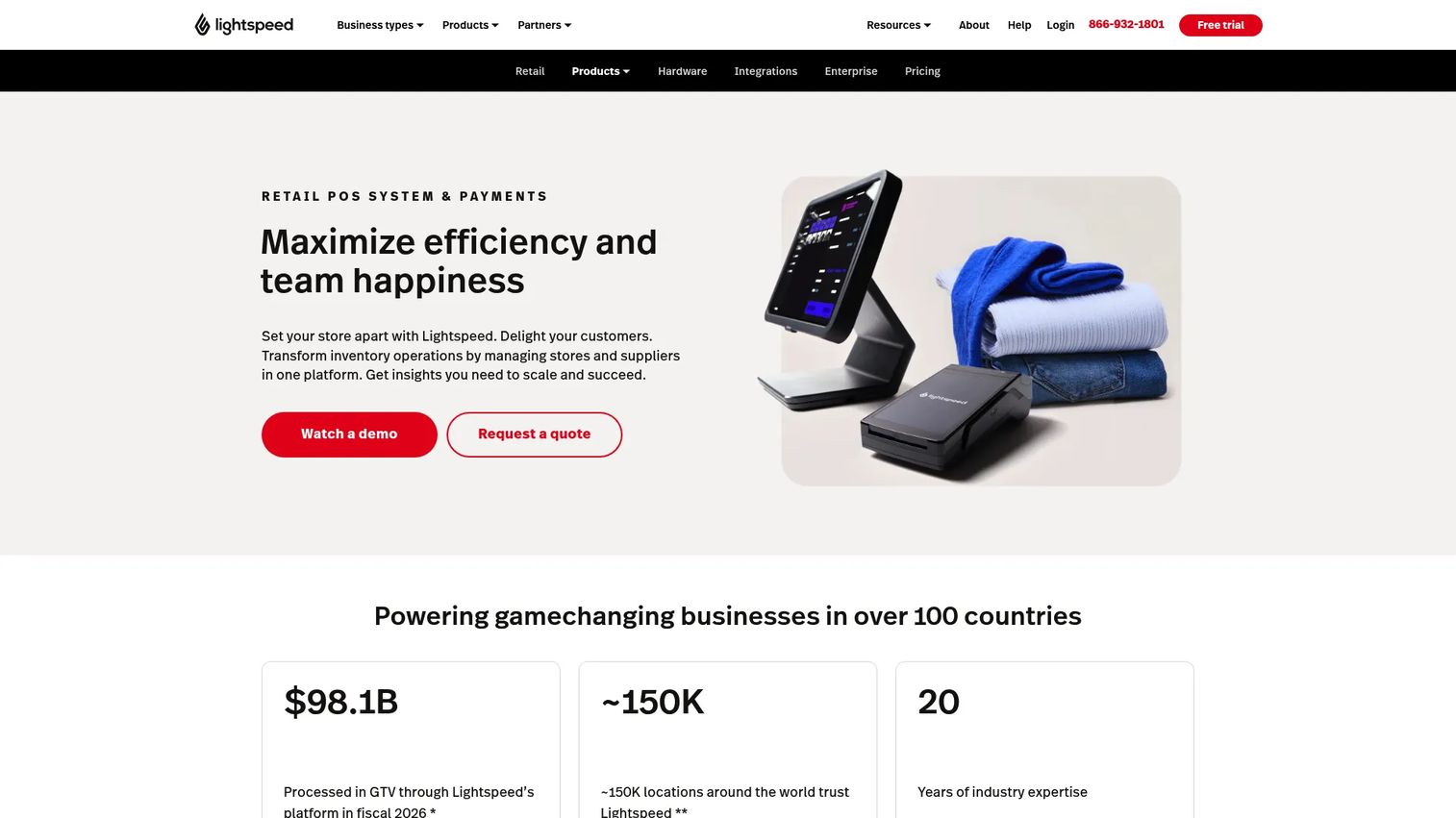
Lightspeed Retail is cloud-based retail POS software for managing sales, inventory, ecommerce, payments, and reporting. Multi-store operators feel the store credit problem most, and Lightspeed centralizes inventory and reporting across locations. That makes shared credit balances and cross-store reconciliation practical rather than painful.
Best for: multi-location retailers that need strong inventory control and omnichannel POS.
Key features
- Inventory management across locations
- Omnichannel selling and ecommerce integration
- Reporting and analytics
- Multi-location pricing controls
- Hardware compatibility for registers and scanners
Why choose Lightspeed Retail: if you run several stores and need reporting and profitability analytics that hold up under scrutiny, Lightspeed handles multi-location complexity better than single-store tools.
Lightspeed Retail pricing: First-party pages list a starting price of $89 USD a month. Plan names found include Lean at $69.00/mo and Standard at $119.00/mo. Confirm the current tier that fits your location count before you commit.
6. Shopify POS
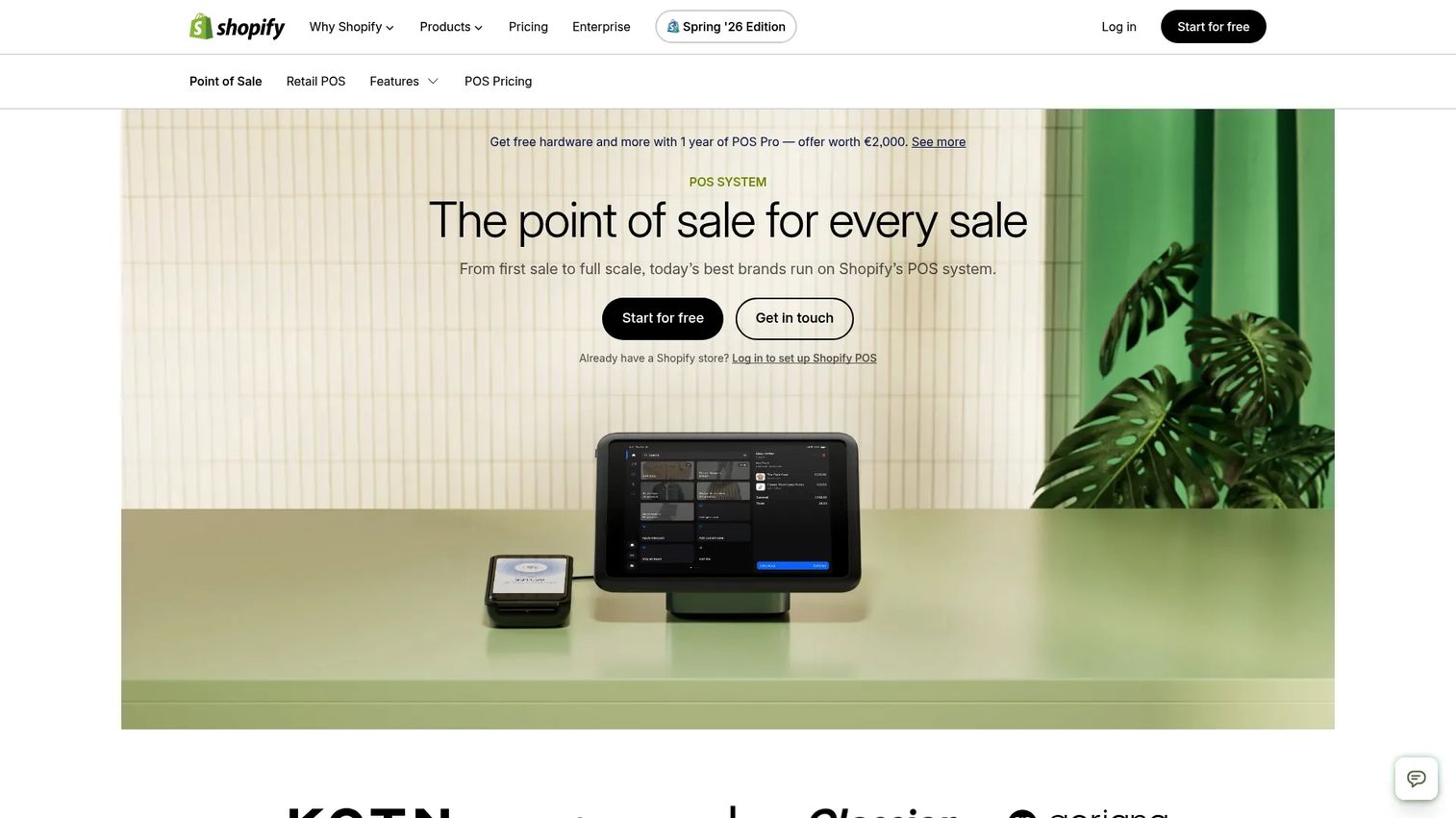
Shopify POS is a retail point-of-sale system for selling in person and syncing with Shopify's online commerce platform. If you already sell online, credit tracking across channels is the payoff. A return online and a redemption in store share one customer profile, so store credit stays unified across every order.
Best for: retailers that need a single system for in-store and online commerce.
Key features
- Unified in-store and online selling
- Inventory, order, and customer syncing
- Staff permissions and roles
- Omnichannel selling across channels
- POS hardware and payments integration
Why choose Shopify POS: brands that live on Shopify online get the tightest e-commerce sync here. Customer profiles carry order history and credit across both worlds, which keeps the experience consistent.
Shopify POS pricing: Basic is $39 USD/month, Grow is $105 USD/month, and Advanced is $399 USD/month. Plus starts at $2,300 USD/month on a 3-year term. POS Pro is an $89 USD/month per location add-on. You can try Shopify free for 3 days, then $1/month for 3 months.
7. POS Nation
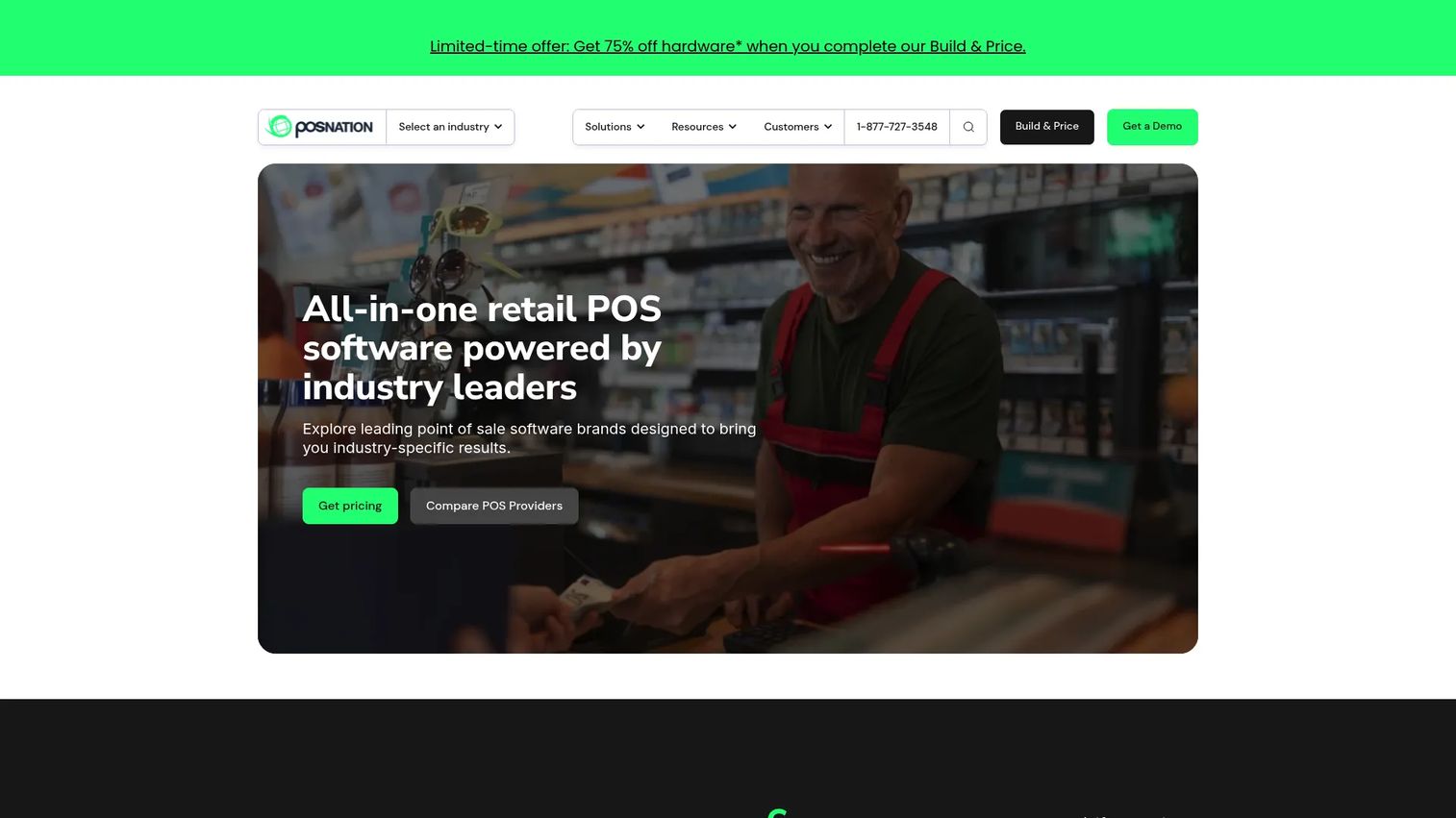
POS Nation is a specialty POS software and hardware provider for small retailers. It targets value-conscious operators who still need store credit basics, gift cards, and loyalty without enterprise pricing. For a straightforward single-store or small-chain setup, POS Nation covers checkout, refunds, and customer tracking affordably.
Best for: small retailers needing an industry-specific POS system with inventory and employee tools.
Key features
- Inventory management and tracking
- Employee management
- Sales tracking and reports
- Gift card and loyalty handling
- Hardware bundles for registers and scanners
Why choose POS Nation: budget-conscious owners get the essentials of store credit management, loyalty, and gift cards without paying for features a large chain would need. The hardware bundling simplifies setup.
POS Nation pricing: Starter is $39/month billed monthly, or $59/mo billed annually. Growth is $99 monthly, or $79/mo billed annually. Premium is $149/mo billed annually.
Considerations
Store credit accounting and reconciliation
Store credit is a liability until it is redeemed or expires. Evaluate whether the platform keeps a clean credit ledger with an audit trail for every issue, redemption, and adjustment. Ask how refunds are recorded and whether you can pull a report showing total outstanding credit. Hidden reconciliation gaps become finance problems at quarter close, not before.
Inventory synchronization
A return should do two things at once: restock the item and update the customer balance. If those steps live in separate systems, counts drift and credit gets miscounted. Confirm that returns and exchanges update inventory management for retail automatically, especially across multi-location and omnichannel setups where one mismatch multiplies fast.
Checkout, refunds, and exchange workflows
At the register, a cashier should issue or redeem store credit in under a minute. Test the actual flow before you buy. Speed and consistency at checkout and refunds decide whether staff use the system correctly or work around it. A clunky refund screen trains cashiers to make mistakes.
Loyalty, gift cards, and customer profiles
Store credit, gift cards, and loyalty points are three different value systems. Some platforms treat them as one unified balance; others keep them separate. Neither is wrong, but you need to know which. Check whether loyalty and gift cards tie to the same customer profile as store credit, so the experience stays coherent.
Hardware, devices, and integrations
Confirm compatibility with your registers, tablets, barcode scanners, and payment hardware before committing. Then check API integrations and e-commerce sync. If your online store and physical POS cannot share customer data, cross-channel store credit will never work cleanly.
Conclusion
The right store credit software depends on three things: how many returns you process, how many locations you run, and whether online sales matter.
Square fits retailers who want an integrated POS with omnichannel credit and a free starting point. RetailEdge suits specialty stores that prefer owning a license with deep inventory tracking. Storepass owns the TCG and hobby niche with buylist-driven credit. CAP Retail Software POS Integration works for configurable small-business setups with fulfillment needs. Lightspeed Retail handles multi-location complexity. Shopify POS unifies online and in-store credit. POS Nation delivers the essentials affordably.
Do not pick on features alone. Take your top two candidates from this shortlist and run your actual refund and exchange workflows through each. Watch how store credit gets issued, how it redeems across locations, and how it reports as a liability. The tool that handles your messiest return cleanly is the one to buy.
FAQs
It tracks credit issued from returns, exchanges, and refunds, then applies that balance at checkout. The practical goal is retention: instead of handing back cash, you keep the money inside your business and give the customer a reason to return. Good software also reports on outstanding credit so finance can see the liability.
A gift card is usually a prepaid, transferable value that anyone can redeem. Store credit is typically tied to a specific customer, issued from a return or refund rather than purchased. Some platforms unify both under one customer profile, while others keep them as separate balances with different redemption rules.
Yes, when the platform supports centralized balances and cross-store reconciliation. A credit issued at one store then redeems at any other because the ledger lives in one place. This matters for multi-location retail because fragmented, register-local balances create the classic zero-balance surprise for customers.
Effectively yes. A return should restock the item and update the customer credit balance in the same step. Without inventory sync, stock counts and credit records drift apart, which creates mismatched returns and reconciliation headaches. In multi-store or omnichannel retail, that drift compounds quickly.
Yes, when your POS and e-commerce stack share a single customer profile. A customer can return an item online and redeem the credit in store, or the reverse, without losing the balance. Omnichannel platforms sync order history and credit across channels so the experience stays consistent.
Prioritize clean reconciliation with a full audit trail, automatic inventory sync on returns, reporting on outstanding credit liability, and integrations with your e-commerce and hardware. Then test checkout speed at the register. The best choice handles your real refund and exchange workflows cleanly, not just the demo scenario.