Your lease data is probably split across at least three places: A spreadsheet someone owns, a shared drive where PDFs go to die, and one finance team member who holds the actual context in their head. That works until it doesn't. A missed renewal window, an audit request for supporting schedules, or a board question about total lease commitments can surface the gap overnight.
The global lease management software market reached $2.8 billion in 2025 and is projected to grow to $7.4 billion by 2035 at a 10.2% CAGR, according to Statifacts (2025). The pressure behind that growth is real: ASC 842 and IFRS 16 moved lease obligations onto balance sheets, which means your lease data is now a finance problem whether your team treats it like one or not.
This guide gives you a ranked shortlist of 15 lease administration software platforms so your Head of Finance or COO can walk into vendor demos with a clear picture of what fits.
What's inside
This guide compares 15 lease administration and lease accounting platforms for 2026. It is written for finance, operations, real estate, and founder-led teams managing lease risk across real estate, equipment, and vehicle portfolios.
Tools were selected based on:
- Lease tracking depth and critical-date management
- Accounting compliance support for ASC 842, IFRS 16, and GASB 87
- Reporting quality and portfolio visibility
- Integration capabilities with ERP, AP, and accounting systems
- Fit across portfolio sizes, from growing operators to large enterprises
Pricing and G2 ratings reflect verified figures sourced from each vendor's official pricing page and G2 listing.
TL;DR
- Best overall for multi-location operators: Leasecake combines lease administration, AI abstraction, and ASC 842 support for franchise groups, healthcare operators, and growing companies replacing spreadsheets
- Best for accounting-led compliance: FinQuery is built for finance teams that need amortization schedules, journal entries, and audit-ready disclosure reports
- Best for enterprise controls and reporting: Visual Lease covers ASC 842, IFRS 16, GASB 87, and GASB 96 with ERP integrations and approval workflows suited to large, multi-entity portfolios
- Best for real estate teams: Occupier tracks deals from site selection through lease administration, with critical-date alerts and portfolio dashboards for commercial tenants
- Best free starting point: Netlease offers a free tier supporting lease accounting, compliance reporting, and automated calculations
- Before booking demos: Map your lease count, accounting standards, renewal-risk exposure, and integration requirements; the right tool depends on whether you need administration, accounting compliance, or both
What is lease administration software?
Lease administration software is a system for centralizing lease data, tracking critical dates, managing obligations, and reporting on lease portfolios across real estate, equipment, vehicles, and other leased assets.
Core jobs lease administration software handles
- Lease record centralization across entities and asset types
- Critical-date tracking for renewals, options, and notice windows
- Rent schedule and escalation management
- Document storage and clause-level visibility
- Lease accounting support, including amortization schedules and journal entries
- Portfolio dashboards and cost reporting
- Audit trails and approval workflows
- ERP, accounting, and AP integrations
- Role-based permissions and access controls
How lease administration differs from lease accounting software
Lease administration manages the operational life of a lease: Documents, dates, obligations, and amendments. Lease accounting handles the compliance layer: Calculations, journal entries, disclosure reports, right-of-use asset schedules, and lease liability tracking under ASC 842, IFRS 16, or GASB 87.
Many modern platforms handle both. Buyers should confirm whether they need administration only, accounting compliance only, or a combined platform before evaluating vendors. Pairing accounting software with dedicated lease administration is an option too, though integrated platforms reduce reconciliation effort.
Why this matters in 2026
ASC 842 and IFRS 16 put lease data on the balance sheet. That made lease records a finance issue for companies that historically treated lease management as a real estate or ops task. Add board-level scrutiny of committed cash flows and audit requests for supporting schedules, and spreadsheet-driven lease tracking becomes a liability. AI-assisted lease abstraction is also accelerating adoption: 46.3% of U.S. real estate managers reported implementing AI or machine learning in 2024, with lease abstraction among the top applications, according to IREM Proptech Insights (2025).
When to use lease administration software
Replace spreadsheet-based lease tracking
Use this when lease data lives across spreadsheets, PDFs, email threads, and shared drives. For founders, the real risk is dependency: If one person owns the lease spreadsheet, the business cannot scale around that single point of failure. Renewal dates, rent escalations, amendments, and notice windows all belong in a system that any authorized team member can query without asking that one person.
Prepare for ASC 842 and audit review
Use this when finance needs reliable lease data, calculations, and audit trails. ASC 842, IFRS 16, and GASB 87 each require different treatment of lease liabilities and right-of-use assets. Audit readiness depends on clean, repeatable data and consistent reporting schedules, not last-minute spreadsheet cleanup. Choosing a platform with built-in disclosure reporting removes a large manual burden from your accounts payable software and close process.
Manage a growing real estate or equipment portfolio
Use this when the company adds offices, retail units, clinics, warehouses, vehicles, or equipment leases faster than your current process can track. Portfolio dashboards, entity-level reporting, cost visibility, and expiry calendars let finance and operations answer leadership questions without stitching together five data sources.
Lease administration software comparison
The table below is a shortlist for evaluation, not a procurement decision. Pricing and G2 ratings change, so verify them directly with each vendor before advancing any deal. The Key differentiator column highlights the primary capability that separates each tool from the rest of this list.
| # | Product | Best for | Key differentiator | Pricing | G2 rating |
|---|---|---|---|---|---|
| 1 | Leasecake | Multi-location operators | AI abstraction plus ASC 842 and IFRS 16 | Quote-based | 4.6/5 |
| 2 | FinQuery | Accounting-led compliance | Amortization schedules, journal entries, disclosures | Quote-based | 4.6/5 |
| 3 | Visual Lease | Enterprise finance teams | ASC 842, IFRS 16, GASB 87, GASB 96 with ERP integrations | Quote-based | 4.4/5 |
| 4 | Occupier | Real estate portfolio teams | Deal-to-lease workflow with accounting add-on | Quote-based | 4.5/5 |
| 5 | Lucernex | Complex enterprise portfolios | Lease accounting and administration via Accruent/Lx Contracts | Quote-based | 4.0/5 |
| 6 | MRI ProLease | Corporate real estate and finance | Enterprise, Central, and Direct editions within MRI stack | Quote-based | 4.1/5 |
| 7 | CoStar Real Estate Manager | Enterprise lease administration | Lease accounting plus rent payment and renewal workflows | Quote-based | 4.4/5 |
| 8 | Property Works | Franchise and multi-unit operators | Managed lease administration services plus software | Quote-based | 5.0/5 |
| 9 | Nakisa Lease Accounting | Global accounting teams | SAP, Oracle, and Workday integrations with multi-GAAP support | Quote-based | Not rated |
| 10 | EZLease | Finance teams needing fast compliance | ASC 842, IFRS 16, FRS 102, and GASB 87/96 via insightsoftware | Quote-based | 4.5/5 |
| 11 | LeaseAccelerator | Global equipment and real estate leases | Lease lifecycle and lease-versus-buy analysis | Quote-based | 4.1/5 |
| 12 | Nakisa IWMS | Enterprise workplace portfolios | Capital projects, facilities, and lease on one platform | Quote-based | Not rated |
| 13 | Netlease | Accounting teams, especially NetSuite users | Free tier available; automated calculations and AI CoPilot | Free tier; Enterprise quote-based | 4.8/5 |
| 14 | Spacebase | Finance and real estate teams | AI abstraction plus lease accounting for commercial portfolios | Quote-based | 4.5/5 |
| 15 | Trullion | Audit and accounting automation teams | AI-powered contract extraction and financial workflow automation | Quote-based | 4.7/5 |
Best 15 lease administration software tools for 2026
1. Leasecake
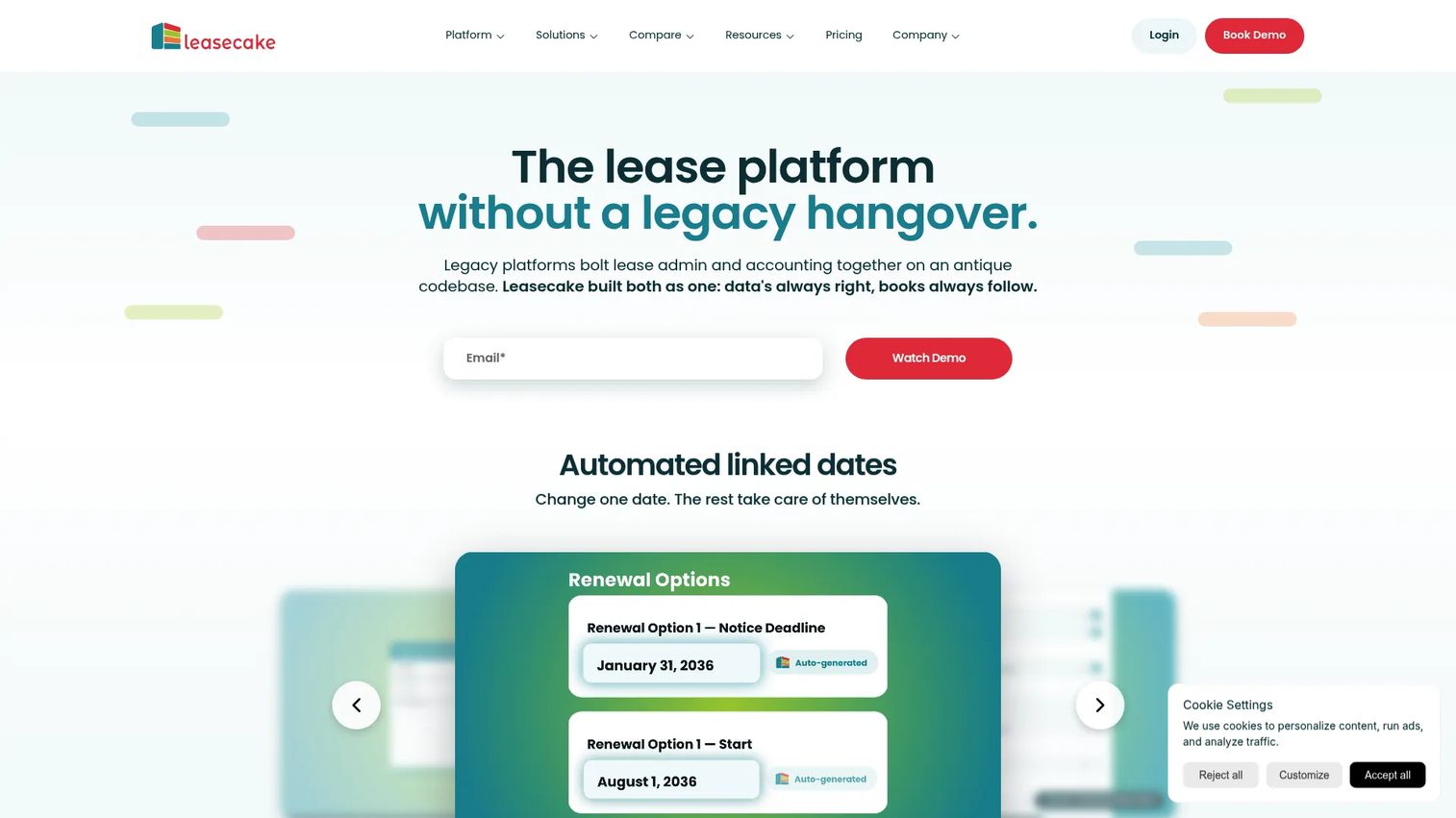
Leasecake is a lease administration, lease accounting, and portfolio intelligence platform built for multi-unit operators. It centralizes lease records, tracks critical dates, and supports ASC 842 and IFRS 16 compliance, with AI-powered lease abstraction and an AI lease Q&A tool that lets teams ask questions about their portfolio without pulling raw documents. The platform serves franchise groups, restaurant chains, healthcare operators, and growing companies that have outgrown spreadsheet-based tracking.
Best for: Multi-location tenants, franchise operators, and accounting or real estate teams managing complex lease portfolios.
Key features
- Critical date and event management with automated reminders
- AI-powered lease abstraction and Q&A across the portfolio
- ASC 842 and IFRS 16 lease accounting
- Renewals and amendments management with audit trail
- Rent, NNN, and financial schedule tracking
Why choose Leasecake: If you run 20 or more locations and need one place where real estate, finance, and operations can all see lease status without chasing each other, Leasecake is built specifically for that operator profile. It also covers lease accounting so you are not buying a separate compliance tool.
Leasecake pricing: Leasecake routes all pricing through a sales conversation. Cost typically scales with portfolio size, modules selected, and implementation scope. Contact the team directly to get a quote.
G2 rating: 4.6/5
2. FinQuery
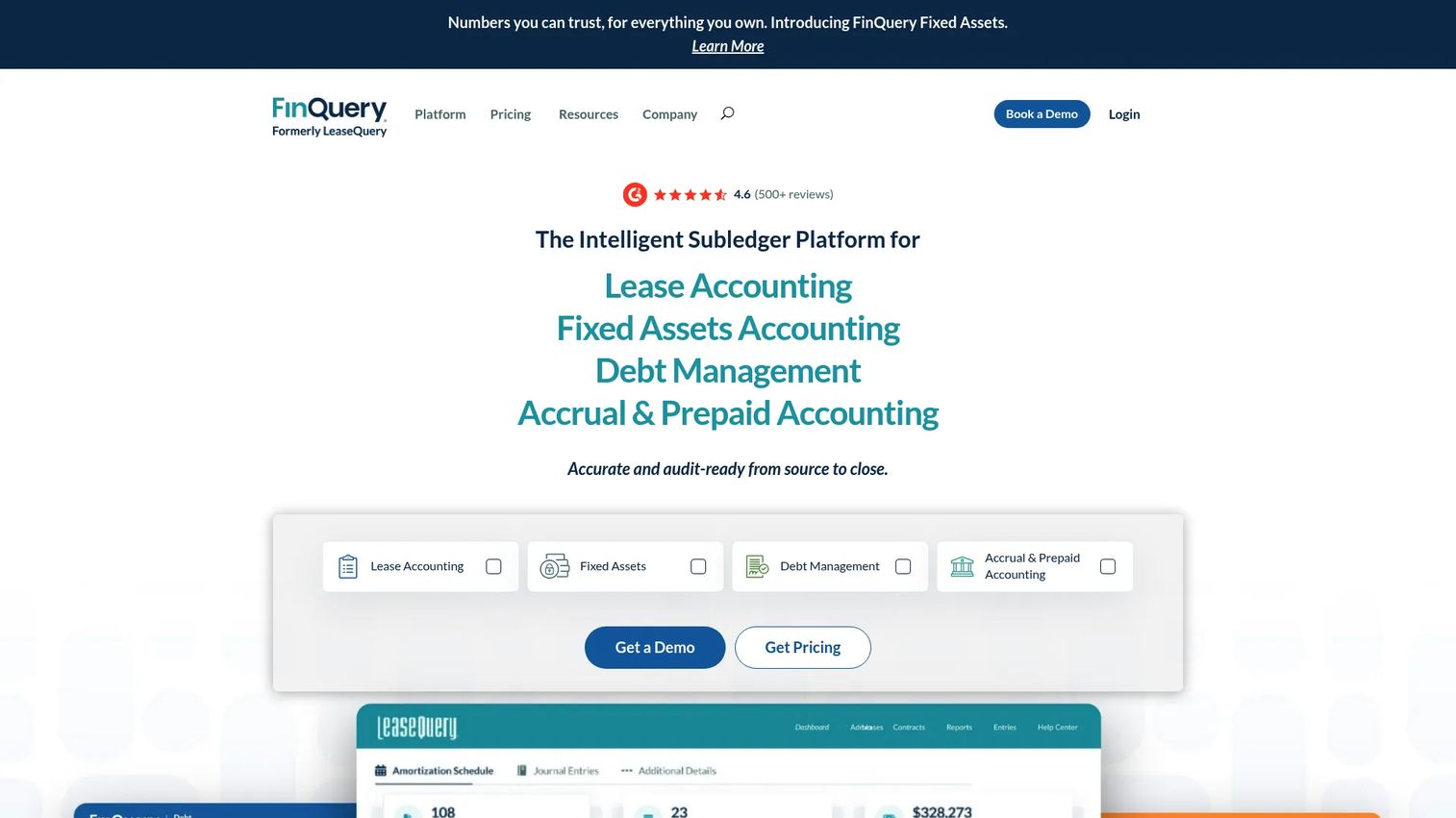
FinQuery is accounting software covering lease accounting, fixed assets, debt management, and accrual and prepaid accounting. For lease-focused buyers, it handles amortization schedules, journal entry automation, disclosure reports, and multi-standard support including ASC 842 and IFRS 16. It is built for accounting and finance teams that need audit-ready outputs, not just lease tracking.
Best for: Accounting and finance teams needing audit-ready automation for lease, asset, debt, and accrual accounting.
Key features
- Lease accounting with amortization schedules and journal entries
- ASC 842 and IFRS 16 disclosure reporting
- Fixed-asset depreciation with multi-book support
- Debt covenant monitoring and FASB automation
- Audit-ready report exports
Why choose FinQuery: This is the right call when the primary driver is accounting compliance and reporting quality, not lease administration workflows. Finance teams that need clean close packages and audit evidence will find FinQuery's output more useful than a general lease tracker.
FinQuery pricing: FinQuery routes all pricing through a request-pricing form. Quote pricing applies, with cost driven by product modules, entity count, and support scope.
G2 rating: 4.6/5
3. Visual Lease
Visual Lease is enterprise lease management and accounting software covering real estate, equipment, sustainability reporting, and compliance workflows. It supports ASC 842, IFRS 16, GASB 87, and GASB 96, which makes it one of the few platforms covering the full range of standards relevant to public companies, nonprofits, and government entities. ERP integrations, approval workflows, audit trails, and AI-powered lease abstraction are all included.
Best for: Enterprise organizations managing complex, multi-entity lease portfolios requiring strong governance and accounting compliance.
Key features
- Lease accounting and compliance for ASC 842, IFRS 16, GASB 87, and GASB 96
- Financial reporting, disclosures, journal entries, and roll-forward reports
- ERP, business intelligence, and API integrations
- Audit trails, approval workflows, and role-based access controls
- AI-powered lease abstraction and sustainability reporting
Why choose Visual Lease: Enterprise finance teams that need a defensible audit trail, ERP connectivity, and multi-standard compliance in one platform will find Visual Lease covers more accounting ground than most competitors on this list. It suits teams where governance and internal controls matter as much as the data itself.
Visual Lease pricing: Pricing requires a personalized consultation. Cost is driven by entity count, modules, and implementation services.
G2 rating: 4.4/5
4. Occupier
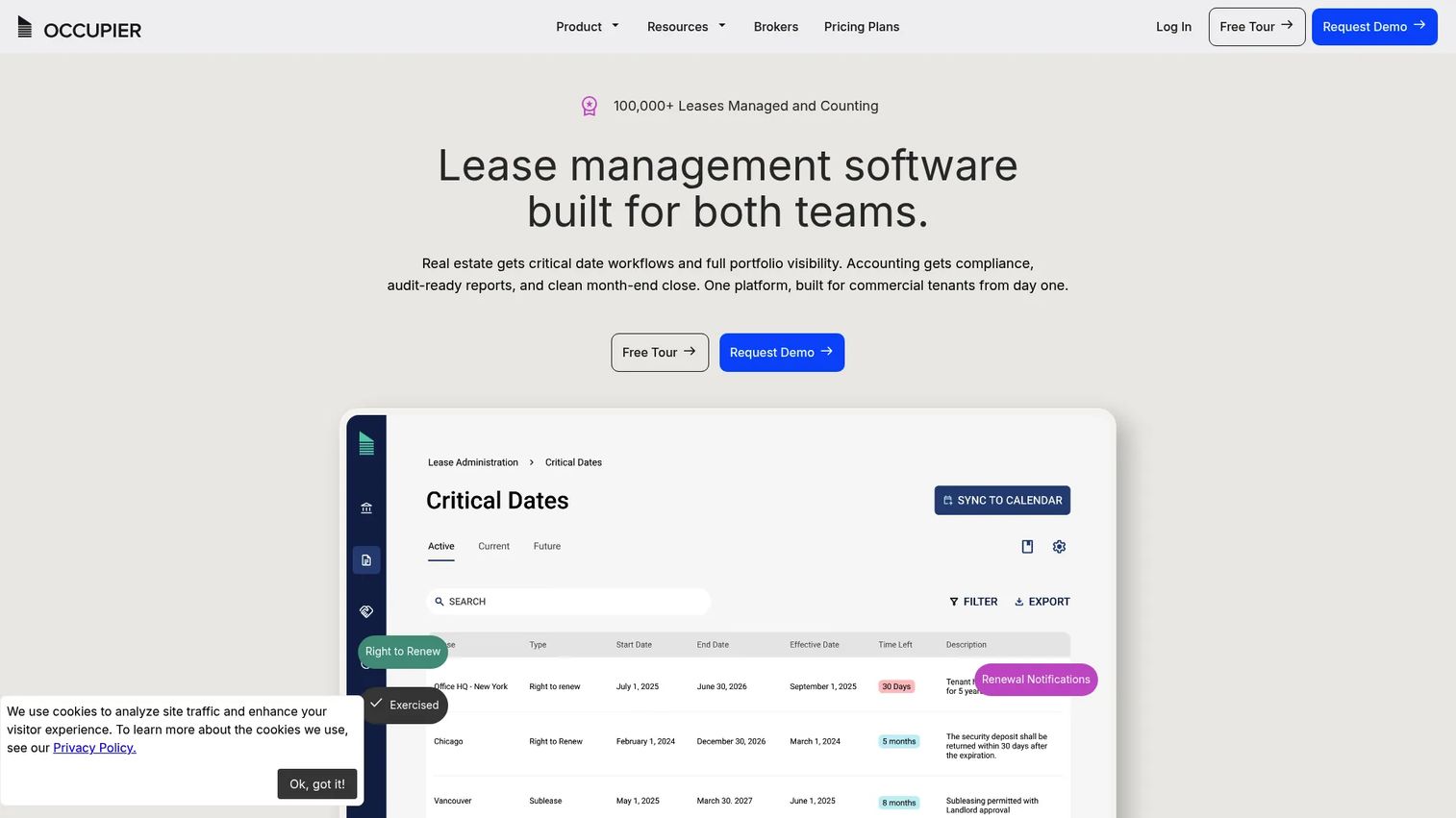
Occupier is lease management software for commercial tenants. It covers the full cycle from deal pipeline and site selection through lease administration, critical-date workflows, and lease accounting, with collaboration tools for real estate, finance, and legal teams. It supports ASC 842, IFRS 16, GASB 87, and FRS 102, with lease accounting available as an add-on module on top of the administration foundation.
Best for: Commercial tenants managing multi-location lease portfolios and coordinating across real estate and finance teams.
Key features
- Deal pipeline tracking and site evaluation
- Critical-date alerts and clause management with searchable lease data
- Lease abstraction and document centralization
- ASC 842, IFRS 16, GASB 87, and FRS 102 compliance
- Portfolio dashboards with team collaboration
Why choose Occupier: If the team managing leases spans real estate, legal, and finance and you need a shared workflow from deal origination through ongoing administration, Occupier's pipeline-to-portfolio structure fits that motion well. Lease accounting is available but is an add-on, so confirm whether accounting depth or administration workflow is the primary need.
Occupier pricing: Quote-based across Basic, Professional, and Enterprise tiers. Lease accounting is available as an additional module. Contact Occupier for pricing details.
G2 rating: 4.5/5
5. Lucernex
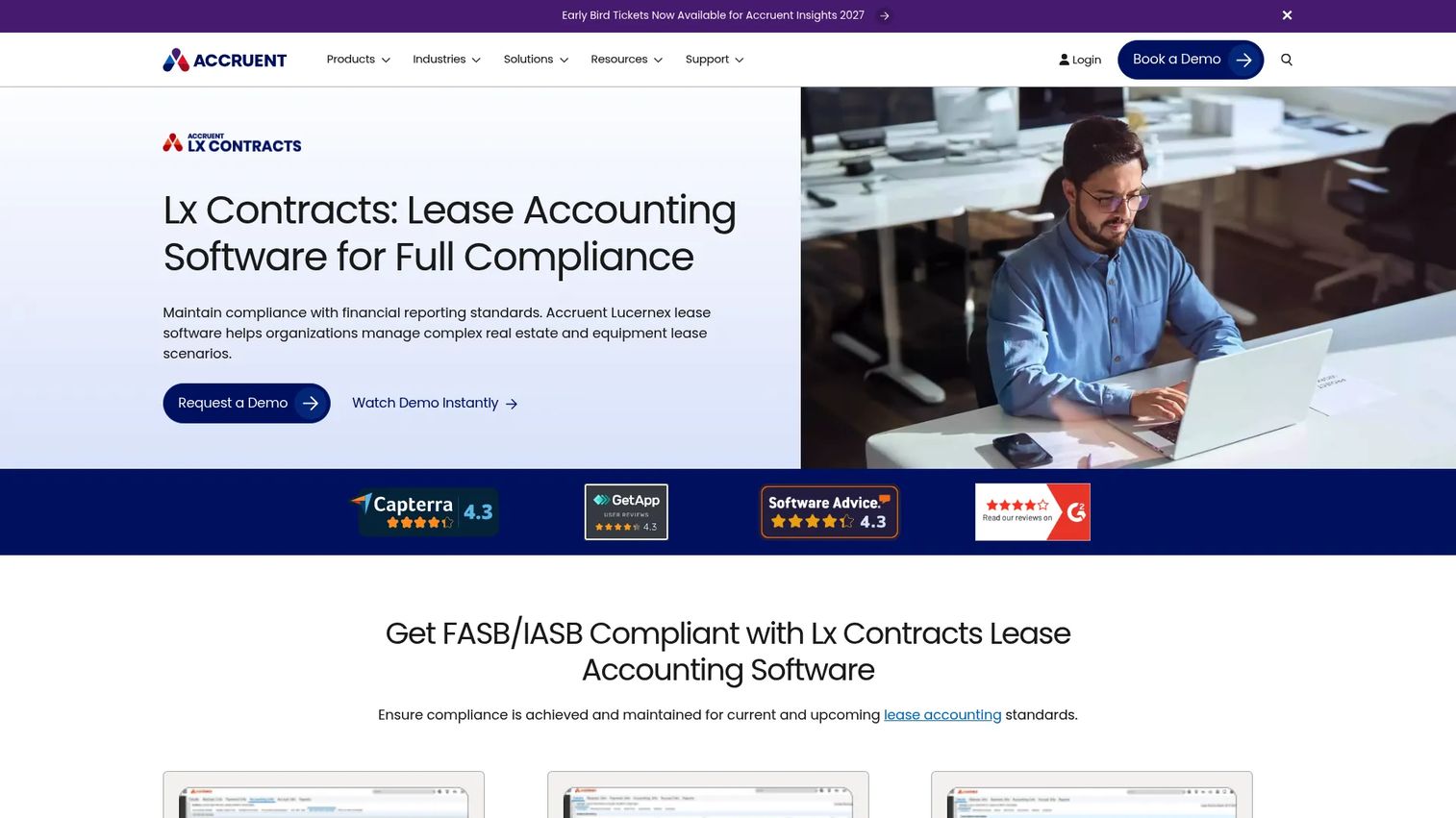
Lucernex, now presented by Accruent as Lx Contracts, is lease accounting and administration software for real estate and equipment portfolios. It covers the full compliance range for ASC 842, IFRS 16, and GASB 87, with ERP integrations, audit logs, role-based access controls, and centralized document management. Accruent positions it as an enterprise-grade platform for organizations with large, complex lease operations.
Best for: Organizations managing large real estate and equipment lease portfolios that need accounting compliance, reporting, and ERP integrations.
Key features
- Lease accounting and administration for real estate and equipment
- ASC 842, IFRS 16, and GASB 87 compliance support
- ERP and business-system integrations
- Audit logs and role-based access controls
- Centralized lease data and document management
Why choose Lucernex: Organizations already in the Accruent ecosystem or managing very large portfolios with complex compliance and integration requirements will find Lx Contracts a strong fit. The platform is heavy on enterprise controls, which may be more than a smaller portfolio needs.
Lucernex pricing: Contact Accruent sales for a personalized quote. Cost is driven by modules, users, entities, and implementation scope.
G2 rating: 4.0/5
6. MRI ProLease
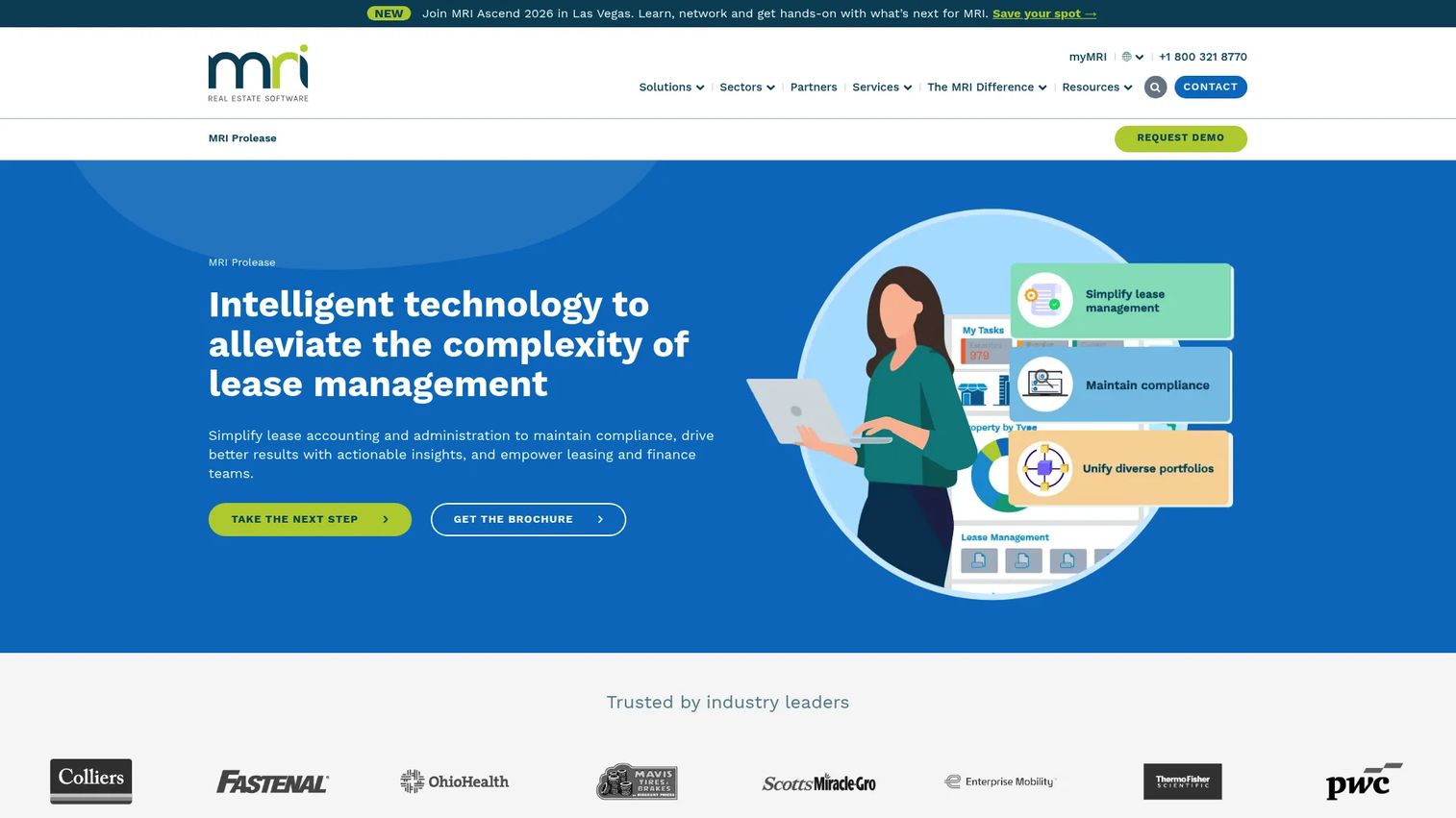
MRI ProLease is end-to-end lease management and accounting software for real estate and equipment portfolios within the MRI Software ecosystem. It covers lease administration, lease accounting, document management, critical-date tracking, and portfolio reporting, with AI-powered lease abstraction. Three editions, ProLease Enterprise, ProLease Central, and ProLease Direct, serve different organizational scales.
Best for: Organizations managing complex real estate and equipment lease portfolios within or considering the MRI Software stack.
Key features
- Lease administration and lease accounting for real estate and equipment
- ASC 842, GASB 87, IFRS 16, and FRS 102 compliance with automated journal entries
- AI-powered lease abstraction
- Transaction management with workflows and alerts
- Document management and accounting-system integrations
Why choose MRI ProLease: Teams already using MRI Software for real estate operations will find ProLease a natural fit because the data stays within a shared platform. For teams outside the MRI ecosystem, it is worth comparing ProLease's accounting depth against purpose-built lease accounting tools.
MRI ProLease pricing: All three editions require contacting MRI Software for a demo and pricing discussion. Quote-based, with cost driven by edition, user count, and implementation complexity.
G2 rating: 4.1/5
7. CoStar Real Estate Manager
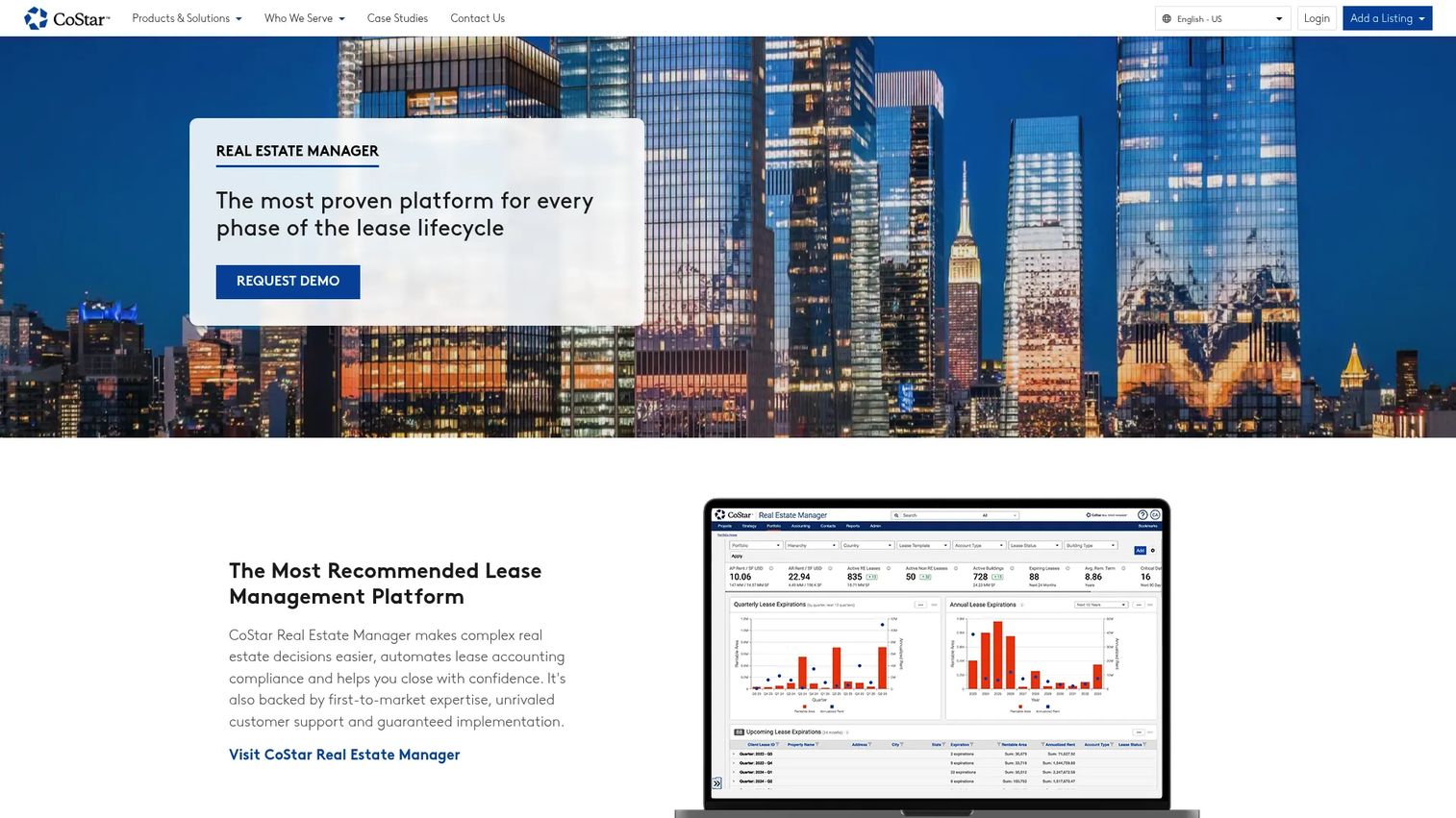
CoStar Real Estate Manager is a lease management platform covering lease accounting compliance, lease administration, rent payment workflows, critical-date management, and portfolio reporting. It supports ASC 842 and IFRS 16 for both real estate and equipment leases. For enterprise teams, it combines compliance reporting with lease payment processing and renewal management in one system.
Best for: Organizations managing complex real estate and equipment lease portfolios that need lease administration and accounting compliance together.
Key features
- ASC 842 and IFRS 16 lease accounting compliance
- Real estate and equipment lease administration
- Rent-payment administration and renewal management
- Change-process management and portfolio reporting
- Reporting for occupancy and cost decisions
Why choose CoStar Real Estate Manager: Teams that need lease payment processing, accounting compliance, and critical-date workflows in a single platform will find CoStar Real Estate Manager covers that combination well. Its connection to CoStar's broader real estate data is a differentiator for teams making location and portfolio decisions alongside lease administration.
CoStar Real Estate Manager pricing: Quote-based. A demo is required to receive pricing details. Cost is driven by portfolio size, modules, and data needs.
G2 rating: 4.4/5
8. Property Works

Property Works provides lease administration, location management, and related services and software for multi-unit operators and their real estate teams. It combines centralized lease and portfolio data with critical-date alerts, custom reporting, and ASC 842 support. Property Works positions itself as a managed service as much as a software platform, meaning buyers can also outsource lease abstraction and administration tasks alongside using the tool.
Best for: Multi-unit operators and organizations managing complex lease and location portfolios that want software plus managed service support.
Key features
- Centralized lease and portfolio data
- Critical-date alerts and tracking
- Custom reporting and ASC 842 support
- Lease document storage and version management
- Managed lease administration services available
Why choose Property Works: Franchise groups, retail operators, and organizations that do not have dedicated internal lease administration staff will find Property Works useful because it combines the software with optional managed services. For teams that want full in-house control, a pure-software platform may offer more configuration depth.
Property Works pricing: Pricing is flexible and based on services and portfolio scope. Property Works provides a proposal after an initial consultation.
G2 rating: 5.0/5 (based on 1 review)
9. Nakisa Lease Accounting
Nakisa Lease Accounting is cloud-native enterprise lease accounting software for lessees and lessors. It covers the full lease lifecycle, from abstraction and data entry through accounting, compliance, reporting, and audit support. It natively integrates with SAP, Oracle, and Workday, which makes it a strong choice for large enterprises running one of those ERP platforms. It supports IFRS 16, ASC 842, and local GAAP.
Best for: Large enterprises managing complex, multi-standard lease portfolios and requiring ERP-integrated lease accounting and compliance.
Key features
- Lease accounting across the full lease lifecycle
- IFRS 16, ASC 842, and local GAAP compliance
- AI-powered document abstraction and workflow automation
- Native integrations with SAP, Oracle, and Workday
- Mass operations, audit trails, and configurable disclosure reporting
Why choose Nakisa Lease Accounting: If your ERP is SAP, Oracle, or Workday and you need lease accounting data to flow directly into existing financial systems without manual exports, Nakisa's native integration is a significant operational advantage. Implementations are typically enterprise-scale, so budget accordingly for setup time.
Nakisa Lease Accounting pricing: Contact Nakisa sales for a quote. Pricing is not displayed and is driven by portfolio size, ERP environment, and implementation services.
10. EZLease
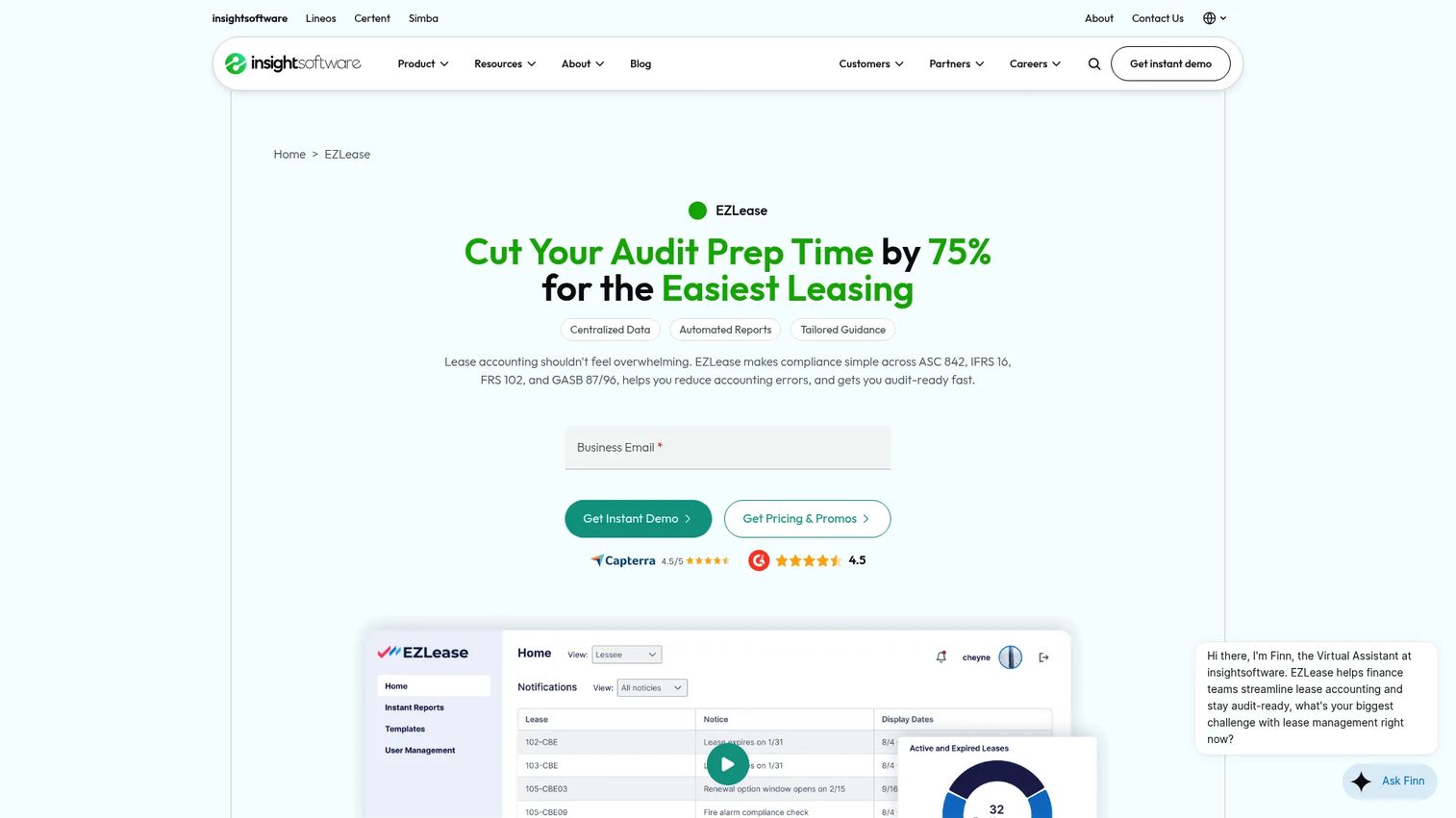
EZLease is lease accounting software focused on compliance, reporting, and audit readiness, now part of the insightsoftware portfolio. It supports ASC 842, IFRS 16, FRS 102, and GASB 87/96, covering all major standards in one platform. The platform is designed for finance and accounting teams that need compliance workflows without the broader real estate operations features found in IWMS-style tools.
Best for: Accounting and finance teams managing lease portfolios and compliance reporting who want focused lease accounting without enterprise IWMS complexity.
Key features
- Lease accounting compliance for ASC 842, IFRS 16, FRS 102, and GASB 87/96
- Centralized lease data with automated reports
- Journal entries and disclosure schedules
- Audit-ready report exports
- Compliance workflow management
Why choose EZLease: For teams that need accounting compliance across multiple standards without the overhead of a full real estate platform, EZLease covers the compliance surface without demanding a large implementation. It is worth comparing directly with FinQuery and Netlease to see which reporting format fits your close process.
EZLease pricing: Pricing requires submitting a request via insightsoftware's site. Quote-based, with cost driven by lease count, standards required, and support tier.
G2 rating: 4.5/5
11. LeaseAccelerator
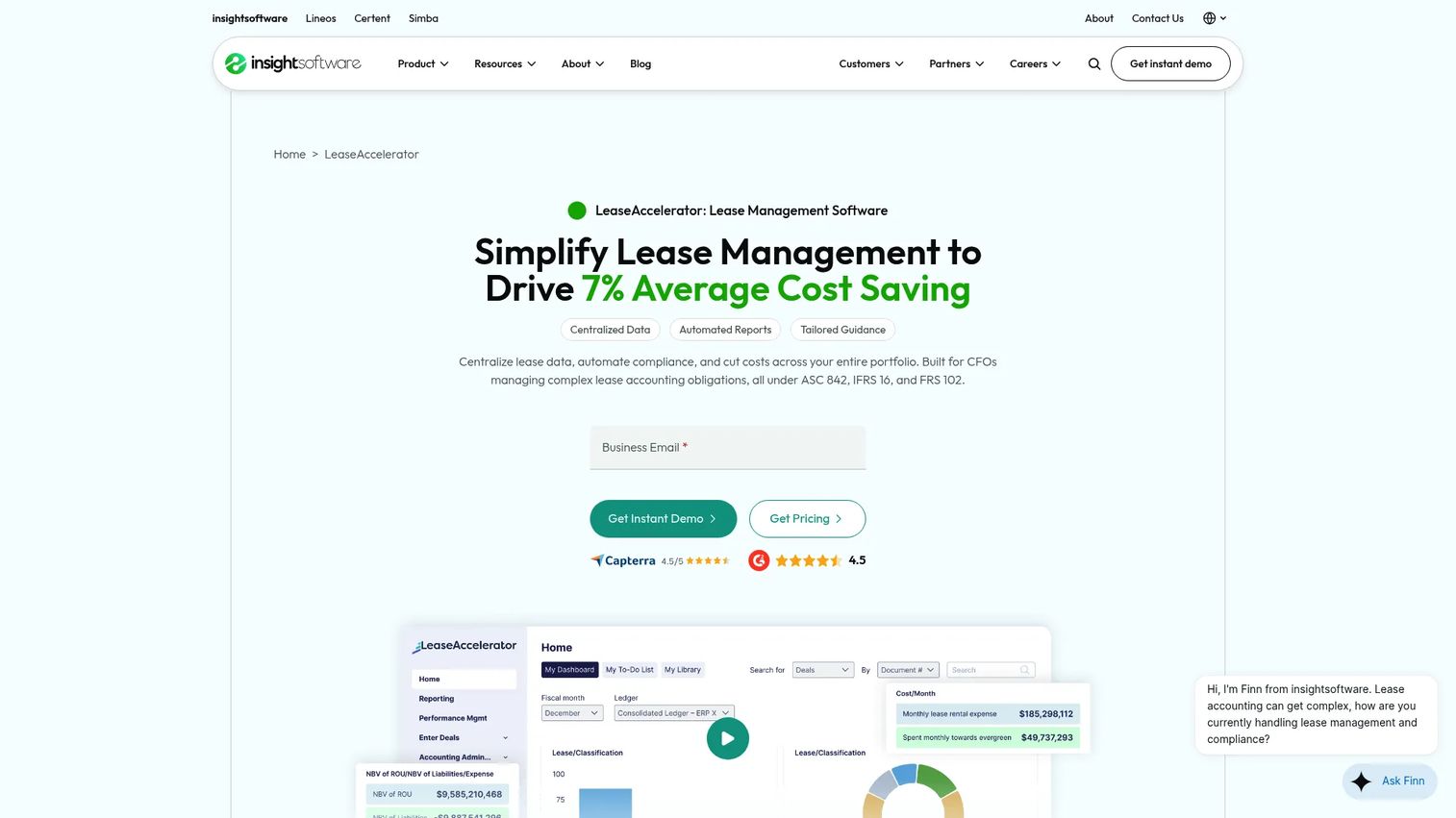
LeaseAccelerator is lease management software for centralized lease data, automated compliance, administration, procurement, and asset lifecycle management. It is also part of the insightsoftware portfolio. It covers real estate and equipment leases with ASC 842 and IFRS 16 compliance, end-of-term management, and lease-versus-buy analysis. It serves enterprise teams with large, distributed lease portfolios.
Best for: Enterprise finance teams managing complex real estate and equipment lease portfolios requiring lifecycle tracking and compliance.
Key features
- Lease accounting and ASC 842/IFRS 16 compliance
- Centralized lease administration with asset-level visibility
- Lease-versus-buy analysis and scenario modeling
- End-of-term and renewal workflow management
- Global portfolio support across entities and currencies
Why choose LeaseAccelerator: Organizations with a high volume of equipment leases alongside real estate, or those needing lease-versus-buy analysis built into their administration workflow, will find LeaseAccelerator covers that full lifecycle in a way that purpose-built real estate tools often do not. The platform is enterprise-scale, so it fits organizations with dedicated finance operations teams.
LeaseAccelerator pricing: Quote-based. Contact insightsoftware for pricing. Cost is driven by lease volume, asset types, entities, and implementation services.
G2 rating: 4.1/5
12. Nakisa IWMS
Nakisa IWMS is AI-powered enterprise integrated workplace management software covering capital projects, portfolio management, lease accounting, compliance, and facility management in one platform. It supports IFRS 16, ASC 842, and local GAAP for lease accounting alongside space management, energy tracking, and asset maintenance. It is the broader Nakisa platform for organizations that need lease data connected to workplace and facilities operations.
Best for: Large enterprises managing complex real estate, capital projects, leases, and facilities operations on a single platform.
Key features
- Capital project planning, budgeting, and site selection
- Portfolio and lease management with IFRS 16, ASC 842, and local GAAP compliance
- Facility management including asset tracking, maintenance, and work orders
- Energy and sustainability management
- Enterprise workflows, audit trails, and integrations
Why choose Nakisa IWMS: Nakisa IWMS earns its place when the organization needs lease data sitting inside a broader IWMS context, connected to space planning, capital projects, and facility maintenance. If the primary driver is lease accounting alone, Nakisa Lease Accounting is a more focused starting point.
Nakisa IWMS pricing: Contact Nakisa sales for pricing. No figures are displayed; cost is driven by modules, users, and implementation scope.
13. Netlease
Netlease, by Netgain, is lease accounting software that automates lease calculations, compliance, reporting, and lease lifecycle management. It has a notable differentiator among the tools on this list: A free tier exists. That free option supports lease accounting, automated amortization schedules, and compliance reporting, making it accessible for teams earlier in their compliance journey. An Enterprise tier is available for larger portfolios.
Best for: Accounting teams needing automated lease accounting and compliance reporting, especially those running NetSuite.
Key features
- Automated lease calculations and amortization schedules
- ASC 842, IFRS 16, and GASB 87/96 compliance
- Lease modifications, reassessments, and early terminations
- Disclosure, journal-entry, and reconciliation reporting
- AI-powered lease abstraction and CoPilot features
Why choose Netlease: Netlease is particularly strong for NetSuite environments because it integrates directly into that ecosystem. The free starting point also makes it worth testing for smaller teams before committing to an enterprise contract elsewhere.
Netlease pricing: A free tier is available at $0/year. Enterprise pricing requires contacting Netgain for a quote. Note that the official site presents some inconsistency on lease limits at the free tier, so confirm current terms directly with the vendor.
G2 rating: 4.8/5
14. Spacebase

Spacebase is lease accounting and lease management software for finance and real estate teams managing commercial lease portfolios. Despite its name suggesting workspace booking, the product at spacebaseapp.com is a dedicated lease accounting and administration platform. It covers ASC 842, IFRS 16, and GASB 87 with AI-assisted lease abstraction, OCR-based clause extraction, and critical-date alerts alongside portfolio reporting.
Best for: Finance and real estate teams managing complex commercial lease portfolios and needing lease accounting compliance with AI abstraction.
Key features
- ASC 842, IFRS 16, and GASB 87 compliance with automated journal entries and disclosures
- AI-assisted lease abstraction with OCR and clause extraction
- Lease administration with critical-date alerts and document management
- Portfolio reporting and occupancy tracking
- Accounting integrations
Why choose Spacebase: Finance teams that spend significant time manually abstracting lease data from contracts will find Spacebase's AI extraction useful for reducing that burden. The platform combines administration and accounting, so teams that currently use separate tools may find it consolidates their workflow.
Spacebase pricing: Custom pricing based on portfolio size and features. Contact Spacebase for a demo and quote.
G2 rating: 4.5/5
15. Trullion
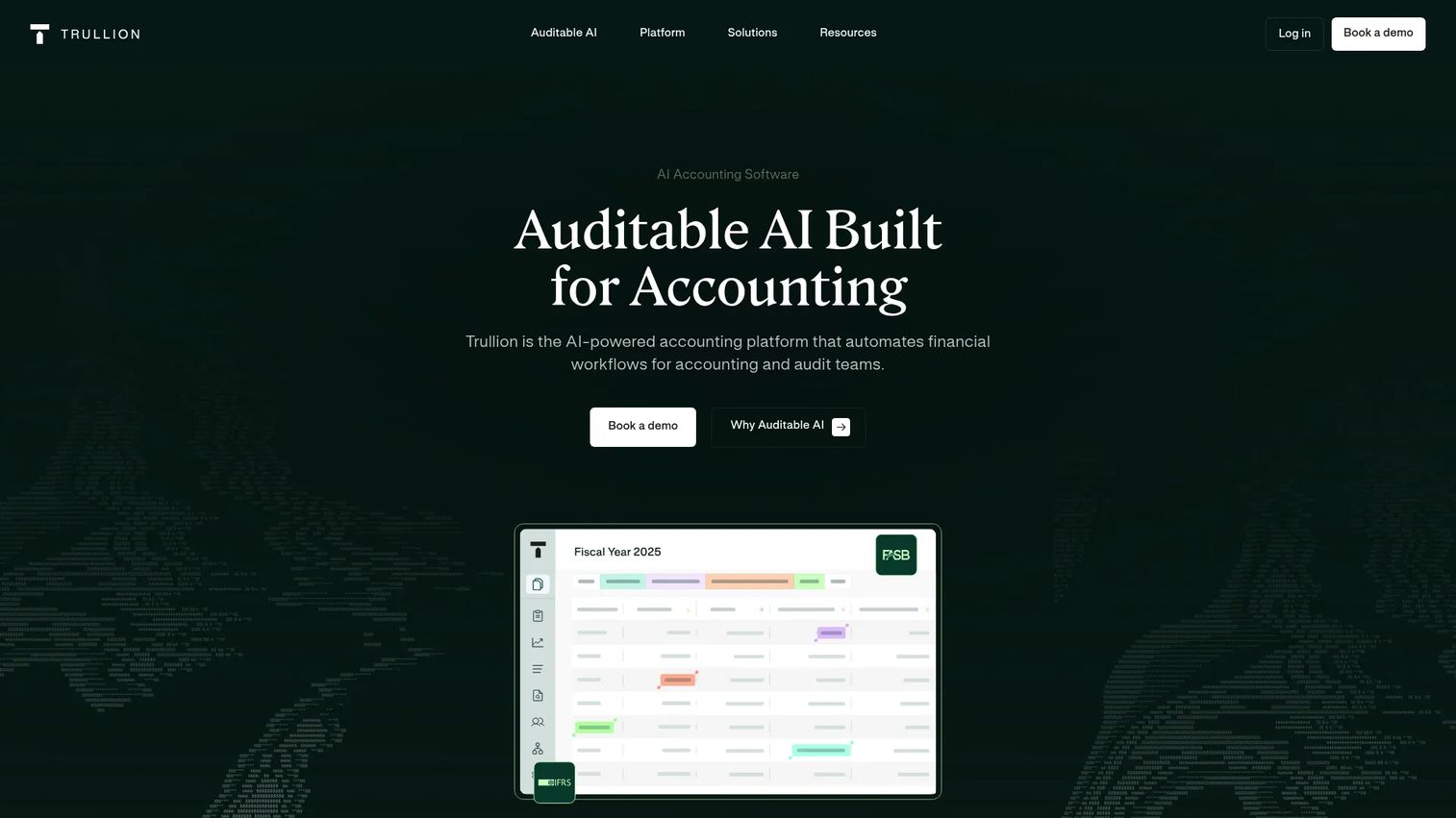
Trullion is an AI-powered accounting platform that automates financial workflows for accounting, finance, and audit teams. For lease-focused buyers, it handles ASC 842 and IFRS 16 compliance alongside AI-powered data extraction from PDFs and contracts, data matching for vouching and reconciliation, and financial statement validation. Its Trulli AI assistant provides source-cited answers, which audit teams specifically value for traceability.
Best for: Accounting, finance, and audit teams automating document-heavy workflows, lease accounting, and audit testing.
Key features
- AI-powered data extraction from PDFs and contracts
- ASC 842 and IFRS 16 lease accounting
- Data matching for vouching, tracing, and reconciliation
- Financial statement validation across documents and reporting periods
- Revenue assurance and recognition workflows alongside lease accounting
Why choose Trullion: If your team's bottleneck is the manual work of extracting lease data from contracts and then reconciling that data for audit evidence, Trullion's AI-first approach addresses that specific pain. It is broader than a pure lease administration tool, covering revenue recognition and audit automation too, which suits accounting teams that want a platform across multiple financial workflows.
Trullion pricing: Contact Trullion's team or book a demo for pricing. Cost is driven by document volume, modules, and accounting requirements.
G2 rating: 4.7/5
Considerations when choosing lease administration software
Start with the lease problem you need to solve first
Separate administration from accounting compliance, real estate workflows, and workplace planning before evaluating vendors. A founder forwarding this guide to their Head of Finance should ask: Which team owns the pain today, and what KPI changes in the first quarter if that pain is removed? The answer usually narrows the shortlist by half.
Confirm compliance depth before buying
ASC 842, IFRS 16, GASB 87, and local GAAP support vary meaningfully across platforms. Finance teams should test calculations, journal entry outputs, disclosure report formats, and audit export quality before signing. Claiming "ASC 842 support" covers a wide range of implementation depth. Using dedicated audit management software alongside a lighter lease tool is a viable combination for some teams.
Check critical-date and renewal workflows
Renewal reminders, notice windows, option tracking, rent escalations, and amendment history all belong in one place. Missed renewal dates create cash exposure and weaken your negotiating position. Ask each vendor to show you how a renewal alert reaches the right person, not just that the system generates one.
Test reporting against real questions
The tool should answer: What do we owe, which leases renew this quarter, where are costs rising, and which amendments changed our obligations. Run a dashboard test with three or four sample leases from your own portfolio before committing. Review sites like G2 frequently cite reporting quality as a differentiator between platforms that look similar on feature lists.
Validate integrations and implementation effort
ERP, accounts payable software, document storage, SSO, and data migration all matter. For a Series B company, the more important question is time-to-value in the first quarter, not theoretical integration breadth. Ask vendors for a realistic week-one and month-one timeline, and get references from companies at a similar scale.
Conclusion
Lease administration software is not one category. Some platforms are built for accounting compliance teams. Others are built for real estate and multi-location operators. A few connect lease data to broader IWMS or workplace operations. The right choice depends on where the biggest risk sits today.
For multi-location operators replacing spreadsheets, Leasecake is the strongest starting point. FinQuery suits finance teams whose primary driver is audit-ready accounting outputs. Visual Lease fits enterprise portfolios that need multi-standard compliance, ERP integrations, and governance controls in one place.
If the team managing leases spans real estate and finance, Occupier's deal-to-portfolio workflow is worth evaluating. CoStar Real Estate Manager adds lease payment processing for enterprise administrators. EZLease and Trullion serve accounting teams that want focused compliance automation without a full real estate platform. Netlease is the only tool on this list with a free starting tier, which makes it worth testing before committing to a larger contract.
Start by mapping your lease count, accounting standards, renewal-risk exposure, and integration requirements. That mapping takes an afternoon and eliminates most of the shortlist before the first vendor demo.
FAQs
Lease administration software centralizes lease records, documents, and obligation data so teams can track critical dates, manage renewals and amendments, maintain rent schedules, and report on portfolio commitments. Many platforms also support accounting compliance for standards like ASC 842, IFRS 16, and GASB 87, though the depth varies. The core job is giving finance, real estate, and operations teams a single source of truth for lease data instead of fragmented spreadsheets and shared drives.
Lease administration manages the operational life of a lease: Documents, dates, clauses, rent schedules, and amendment tracking. Lease accounting handles the compliance layer: Calculating lease liabilities, right-of-use asset schedules, amortization, journal entries, and disclosure reports under accounting standards. Many modern platforms do both, but some specialize in one area. Buyers should confirm which capability is the primary driver before narrowing the shortlist.
Finance teams should evaluate FinQuery, Visual Lease, EZLease, Nakisa Lease Accounting, LeaseAccelerator, and Trullion for ASC 842 depth, based on verified current capabilities. Each supports ASC 842 compliance, but implementation depth, journal entry automation, disclosure format, and audit export quality vary. Have your finance team and external auditor review sample outputs from at least two platforms before selecting.
Signs include missed renewal dates, multiple people owning parts of the lease data, audit questions that take days to answer, inconsistent rent schedules across entities, and unclear total commitment exposure. For founders, the switch typically becomes urgent when one person's spreadsheet becomes a business dependency. The right time is before a missed date or an audit finding makes the problem visible to the board.
Most vendors on this list use quote-based pricing. Cost is driven by lease count, modules selected, user seats, entity count, integration requirements, and implementation services. Netlease is an exception with a free starting tier. When comparing costs, account for first-year implementation fees alongside the subscription price, since implementation can be as large as the first-year license for complex portfolios.
Most platforms on this list support both, but depth varies. Visual Lease, Lucernex, MRI ProLease, CoStar Real Estate Manager, LeaseAccelerator, and Nakisa Lease Accounting explicitly cover real estate and equipment. Property Works focuses on real estate and location management for multi-unit operators. Spacebase focuses on commercial real estate leases. Test each vendor with examples from your own portfolio before assuming coverage.
The highest-value features are central lease records with document storage, critical-date reminders with configurable notice windows, amendment and modification tracking, rent and escalation schedule management, and audit-ready reporting. Integrations with ERP or accounting systems matter once the data is clean. For teams managing more than 20 leases, portfolio dashboards that show upcoming renewals, total commitments, and cost by entity save meaningful time on a weekly basis.
Ask which team owns the system day-to-day after implementation, how the tool replaces the current spreadsheet process rather than sitting alongside it, which specific reports the board or auditor will pull from it, what week one looks like including data migration, and what value is visible within the first quarter. If the tool does not reduce renewal risk or decision time within the first quarter, it will function as another system to maintain rather than a real operational improvement.