The board asks how much downside the company can absorb. The answer is spread across a cash forecast, a CRM report, a bank portal, and a spreadsheet someone updates the morning before every meeting. That is not a risk management process. It is a reconstruction exercise.
Financial risk management software exists to close that gap: Making risk tracking repeatable, auditable, and connected to the decisions that move money. According to Fortune Business Insights (2026), the global financial risk management software market was valued at USD 4.19 billion in 2025, and a SAS and FT Longitude survey (2025) found that 75% of banks intend to increase investment in risk technology. The pressure is not coming from risk teams alone. It comes from boards, lenders, auditors, and enterprise customers who want a defensible record.
The harder question is which type of platform matches the risks your company actually needs to control. A market risk analytics stack and a treasury management system and a governance platform solve different jobs. Picking the wrong category costs more than the software license.
What's inside
This guide covers nine financial risk management software tools for 2026, spanning enterprise risk analytics, capital-markets platforms, treasury management, governance, and derivatives valuation. It is written for founders, CFOs, treasury leaders, and finance teams evaluating their first serious risk infrastructure purchase.
Items were selected and evaluated against four criteria:
- Coverage of material risk types (credit, market, liquidity, operational, regulatory)
- Data integration depth and reporting quality
- Governance controls, audit trails, and workflow ownership
- Implementation fit and pricing transparency
TL;DR
- Best for large financial institutions: Oracle Financial Services Risk Management offers the broadest integrated coverage of credit, market, liquidity, and regulatory risk analytics
- Best for advanced modeling and stress testing: SAS Risk Management suits analytics-heavy risk teams that need governed model operations and enterprise scenario analysis
- Best for capital-markets workflows: Nasdaq Calypso covers front-to-back trading, collateral, and counterparty risk; Murex MX.3 handles cross-asset derivatives and XVA risk for institutions with complex trading books
- Best for treasury and liquidity risk: Kyriba handles corporate cash visibility, FX exposure, and payments; 3V Finance titanTreasury goes deeper on market-risk analytics and hedge accounting
- Best for governance and compliance programs: Ncontracts fits banks and credit unions managing examiner-ready assessments; MetricStream ConnectedGRC handles enterprise risk registers, controls, and audit workflows across multiple business units
- Best for derivatives valuation: FINCAD Analytics Suite serves quantitative teams that need precise pricing and risk analytics for fixed income and derivatives
The right choice depends on whether your first problem is trading exposure, cash risk, credit risk, compliance controls, or enterprise governance.
What is financial risk management software?
Financial risk management software helps organizations identify, measure, monitor, report, and control financial exposures such as credit, market, liquidity, counterparty, operational, and regulatory risk.
The category spans several distinct platform types. Knowing which type matches your problem prevents a common and expensive mistake: Buying a governance platform when you need a treasury system, or buying a capital-markets suite for a finance team that needs cash forecasting.
| Platform type | Typical risk problem | Typical buyer |
|---|---|---|
| Enterprise financial risk analytics | Stress testing, credit, market, liquidity, regulatory reporting | Banks, insurers, large financial institutions |
| Capital-markets risk platform | Trading, derivatives, valuation, collateral, counterparty exposure | Banks, brokerages, investment firms |
| Treasury risk platform | Cash forecasting, FX exposure, debt, liquidity, hedge programs | Corporate treasury and finance teams |
| Enterprise risk management platform | Risk assessments, controls, KRIs, audit trails, reporting | Risk, compliance, internal audit, finance leaders |
| Valuation and analytics platform | Pricing models, derivatives analytics, model validation | Quantitative finance and risk teams |
Key capabilities to look for across all platform types:
- Risk data aggregation from ERP, trading, banking, and treasury systems
- Scenario analysis and stress testing across material exposures
- Exposure monitoring with threshold alerts
- Key risk indicator (KRI) dashboards and heat maps
- Full audit trails, approval workflows, and evidence capture
- Regulatory and management reporting
- Integrations with the systems your finance team already operates
A few terms worth defining plainly. Value at Risk (VaR) estimates the maximum loss over a defined period at a given confidence level. Cash Flow at Risk (CFaR) applies similar logic to operating cash flows rather than traded positions. Stress testing models performance under extreme but plausible scenarios. Counterparty risk is the exposure created when a trading or credit partner fails to meet its obligations.
When to use financial risk management software
Build a board-ready view of financial exposure
The trigger here is a recurring board or investor question that takes longer than it should to answer: What is the company's runway under a 15% collections shortfall, what covenant headroom remains if interest rates move, or which customer concentrations create material credit risk? A financial risk management platform creates a common taxonomy, assigns owners to each exposure, sets thresholds, and produces recurring reports the board can trust. Rebuilding that answer from spreadsheets before every meeting is a governance problem, not just an efficiency one.
Manage liquidity, FX, debt, and hedging at scale
Spreadsheets stop being sufficient when the finance team operates across multiple legal entities, currencies, or banking relationships. A treasury risk platform connects bank accounts, ERP data, and debt schedules into a single cash position. FX exposures become visible before they move the income statement. Hedge programs require mark-to-market tracking, accounting entries, and effectiveness testing. Manual assembly of that picture creates lag, errors, and audit exposure.
Meet financial-institution governance and regulatory requirements
Banks, credit unions, lenders, and regulated fintechs face a specific set of requirements: Formal risk assessments across operational and compliance areas, KRIs with defined thresholds, examiner-ready documentation, stress testing under regulatory scenarios, and model governance frameworks. A risk register nobody updates is not a control. Dedicated platforms enforce the workflow, the evidence trail, and the reporting cadence that examiners and auditors expect.
Financial risk management software comparison
No single platform leads across every risk category. Start with the decision you need to improve, test the data fit, and then evaluate governance and implementation requirements. The table below reflects verified pricing and G2 ratings current at the time of publication.
| # | Product | Best for | Key differentiator | Pricing | G2 rating |
|---|---|---|---|---|---|
| 1 | Oracle Financial Services Risk Management | Large financial institutions | Integrated credit, market, liquidity, and regulatory analytics | Contact Oracle for a quote | Not listed on G2 |
| 2 | SAS Risk Management | Enterprise risk analytics and modeling | Governed stress testing, scenario analysis, and model risk management | Contact SAS for a quote | 4.3/5 |
| 3 | Nasdaq Calypso | Capital-markets and treasury operations | Front-to-back trading, collateral, and integrated risk workflows | Contact Nasdaq for a quote | 4.5/5 |
| 4 | Murex MX.3 | Cross-asset trading and derivatives risk | Integrated trading, valuation, and XVA risk management | Contact Murex for a quote | 4.3/5 |
| 5 | Kyriba | Corporate treasury and liquidity risk | Cash visibility, FX risk management, and bank connectivity | Contact Kyriba for a quote | 4.5/5 |
| 6 | Ncontracts | Banks and credit unions | Financial-institution risk assessments and examiner-ready governance | Contact Ncontracts for a quote | 4.7/5 |
| 7 | MetricStream ConnectedGRC | Enterprise governance and controls | Connected risk, compliance, audit, and issue management | Contact MetricStream for a quote | 3.8/5 |
| 8 | FINCAD Analytics Suite | Derivatives valuation and quantitative analytics | Cross-asset pricing, risk analytics, and model validation | Contact FINCAD for a quote | 5.0/5 |
| 9 | 3V Finance titanTreasury | Treasury risk and hedge management | Cash Flow at Risk, market exposure analytics, and hedge workflows | Contact 3V Finance for a quote | No reviews on G2 |
Best 9 financial risk management software tools for 2026
1. Oracle Financial Services Risk Management

Oracle Financial Services Risk Management is a broad enterprise suite designed for banks, insurers, and other regulated financial institutions that need to measure and report risk across multiple domains from a single integrated data model. The platform covers credit risk, market risk, liquidity risk, interest-rate risk, and business risk, connecting risk and finance data so that reporting does not require a manual reconciliation step.
Best for: Large financial institutions that need integrated coverage of multiple regulated risk domains under a shared data foundation.
Key features
- Credit risk analytics for retail, wholesale, and counterparty exposures
- Market risk measurement with valuation models for complex instruments
- Liquidity risk management with jurisdiction-specific regulatory rules
- Stress testing, scenario analysis, and reverse stress testing workflows
- Model governance and sensitivity analysis capabilities
Why choose Oracle Financial Services Risk Management: Choose it when your institution needs credit, market, and liquidity risk data to live in the same operating model rather than separate systems. It is a poor fit for a small SaaS finance team that primarily needs cash forecasting or a lightweight risk assessment program.
Oracle Financial Services Risk Management pricing: Oracle sells this suite through enterprise contracts structured around modules, deployment model, and data scope. You engage their financial-services sales team directly to get a quote sized to your regulatory perimeter and user base.
2. SAS Risk Management
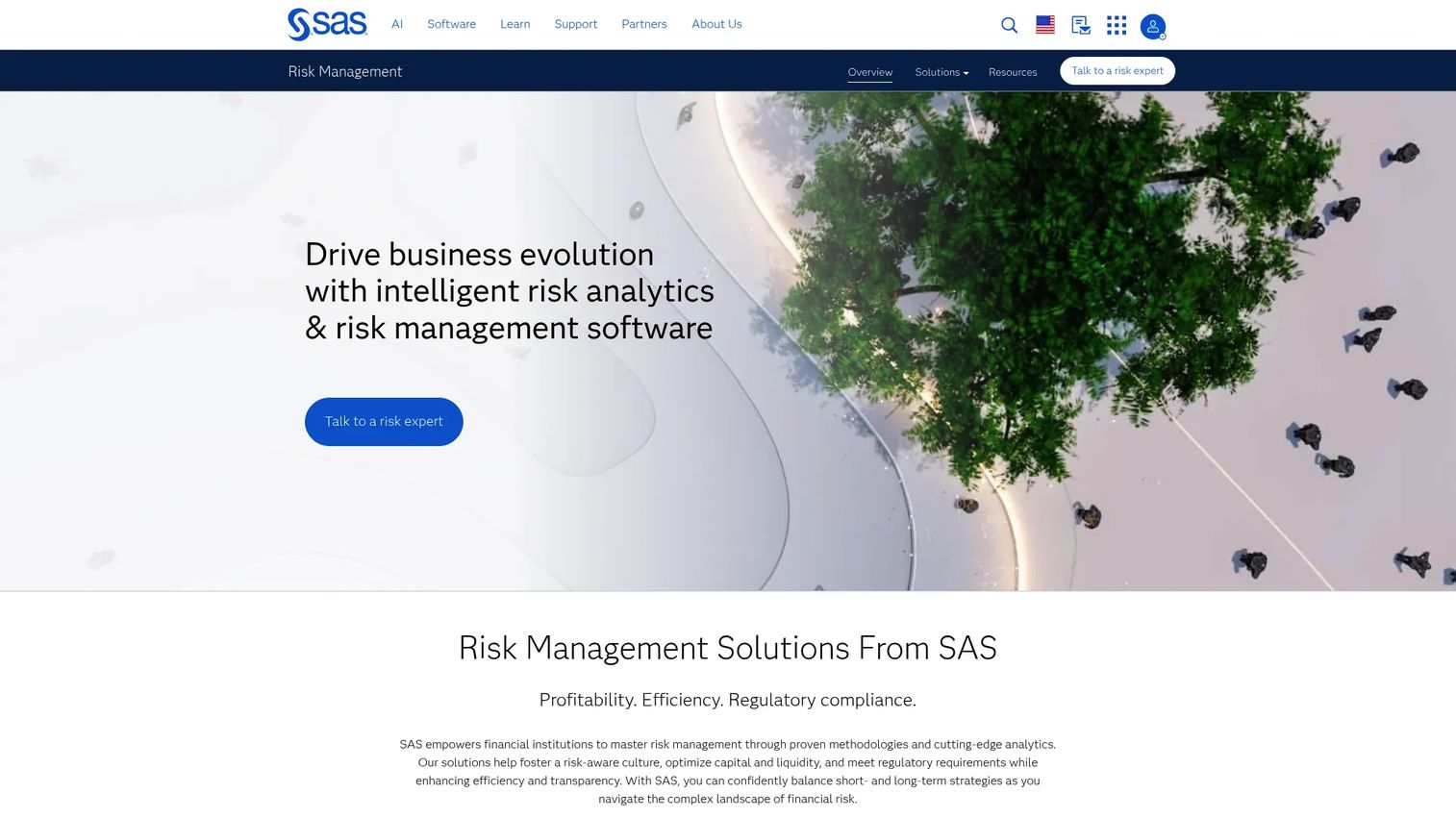
SAS Risk Management is an enterprise analytics platform for financial institutions that need rigorous, governed risk modeling across credit, market, liquidity, and regulatory domains. It is distinctly an analytics-first tool: The value comes from the depth of modeling capabilities, the ability to run enterprise stress tests, and the governance framework that controls how models are built, validated, and used. If your primary need is a workflow tool for risk assessments or treasury operations, this is the wrong category. If you need a modeled view of expected credit losses, scenario-driven capital projections, or asset-liability management analytics, SAS is a serious option.
Best for: Risk analytics teams with complex models, large data estates, and formal governance requirements around model risk and regulatory stress testing.
Key features
- Credit risk management covering retail and wholesale portfolios
- Enterprise stress testing and multi-scenario analysis
- Expected credit loss (ECL) management for IFRS 9 and CECL compliance
- Asset and liability management and interest-rate risk
- Model risk governance and control frameworks
Why choose SAS Risk Management: The analytics depth is the differentiating factor. Teams that need governed model operations, audit trails on calculations, and scenario-driven regulatory reporting will find the investment justified. Buyers need skilled internal owners who can configure the models, manage data pipelines, and support ongoing maintenance after implementation.
SAS Risk Management pricing: SAS provides pricing through a request-pricing process and does not display figures on its product pages. Cost drivers typically include the analytics modules selected, deployment model, compute requirements, and the number of users across risk and finance functions.
G2 rating: 4.3/5 based on 95 reviews.
3. Nasdaq Calypso
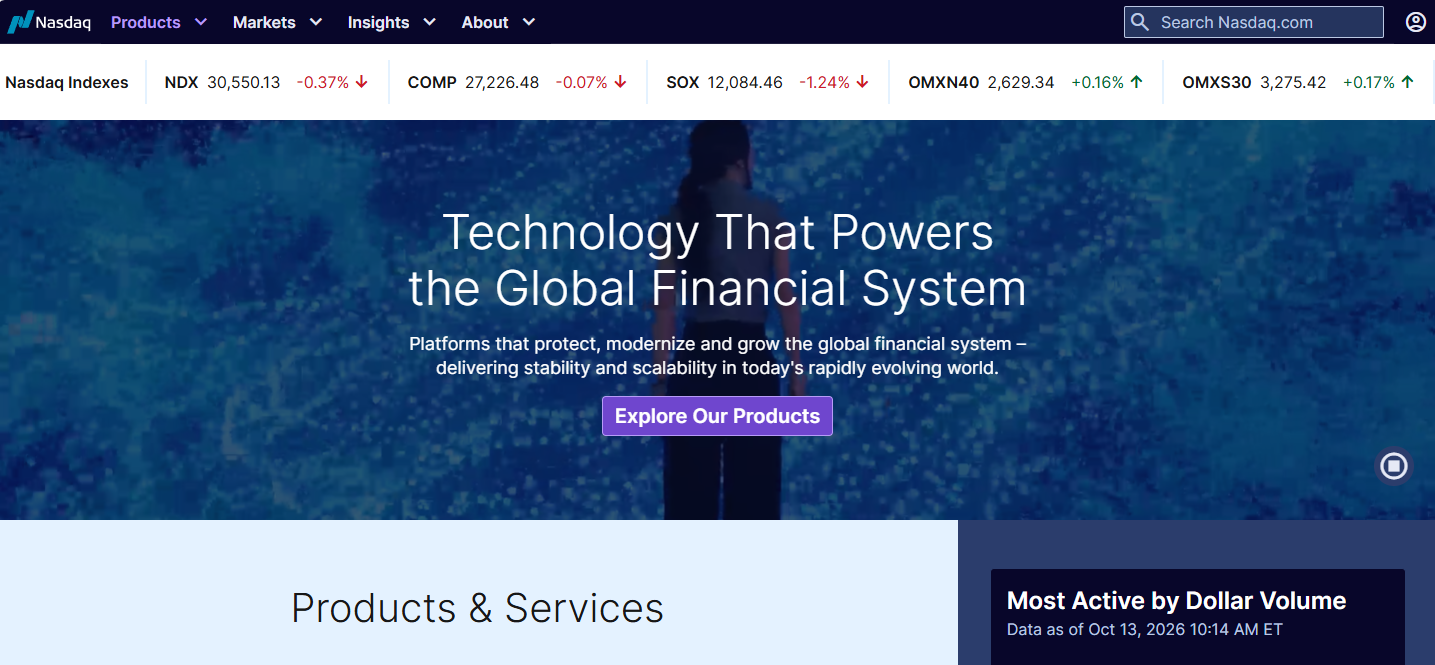
Nasdaq Calypso is a unified capital-markets and treasury platform connecting front-, middle-, and back-office functions across the full trade lifecycle. Rather than treating risk as a separate reporting layer, Calypso integrates market risk, counterparty credit risk, liquidity risk, and collateral management directly into the operating workflows where trading and treasury decisions happen. That integration matters when position data, exposure calculations, and settlement instructions need to move without manual handoffs.
Best for: Banks, brokerages, asset managers, and financial institutions running complex capital-markets operations that require integrated risk and post-trade workflows.
Key features
- Multi-asset trading and portfolio management with real-time P&L and risk
- Integrated market, counterparty, liquidity, collateral, and treasury risk management
- OTC and exchange-traded derivatives clearing and reconciliation
- Automated margining, connectivity, and workflow management
- Position, risk, and operations data in a unified book of record
Why choose Nasdaq Calypso: Use it when risk management cannot be separated from trading and post-trade operations. A founder-led finance team evaluating cash forecasting tools will not need what Calypso provides. It earns its place in institutions where the cost of fragmented risk data across trading and operations is measurable in capital, collateral, or regulatory exposure.
Nasdaq Calypso pricing: Nasdaq sells Calypso through enterprise contracts. Contact their financial technology sales team for a quote structured around your asset-class scope, deployment preference, and volume.
G2 rating: 4.5/5.
4. Murex MX.3
Murex MX.3 is a cross-asset capital-markets platform covering trading, treasury, investment management, risk, collateral, and post-trade operations from a unified book of record. Its defining capability is the integration of trading and risk in one operating model: Market risk, liquidity risk, counterparty credit risk, and XVA (credit, funding, and capital valuation adjustments) all run against the same position data, with no reconciliation required between siloed systems. For institutions whose risk profile is driven by derivatives complexity, that integration is the core business case.
Best for: Large banks, asset managers, insurers, and corporates that need an integrated enterprise capital-markets platform with cross-asset risk and valuation capabilities.
Key features
- Cross-asset trading and investment-management workflows
- Integrated market, liquidity, counterparty credit, and XVA risk management
- Front-to-back book of record with portfolio, compliance, and accounting
- Derivatives valuation and collateral workflows
- REST APIs, third-party connectivity, and SaaS or on-premises deployment
Why choose Murex MX.3: It fits firms whose risk profile is tied to trading and valuation complexity. This is specialized infrastructure, not general enterprise risk software. Institutions without a meaningful derivatives book or cross-asset trading operation are unlikely to use the capabilities that justify the implementation investment.
Murex MX.3 pricing: Murex does not publish pricing on its website. Enterprise contracts are sized by scope, deployment, and asset-class coverage. Contact Murex directly for commercial terms.
G2 rating: 4.3/5 based on 5 reviews.
5. Kyriba

Kyriba is a cloud-based treasury management platform built for organizations that need visibility across cash positions, liquidity forecasts, payments, and financial risk exposures. It is one of the more relevant options for a growing SaaS company that has reached the point where multiple bank accounts, legal entities, currencies, or debt facilities make manual cash management genuinely risky. The platform connects directly to banks, aggregates cash data, runs liquidity forecasts, and provides FX, interest-rate, and commodity risk management alongside working capital tools.
Best for: Corporate finance and treasury teams at mid-market and enterprise companies managing complex global cash positions, payments, and financial risk.
Key features
- Cash management and multi-entity cash visibility
- Liquidity planning and rolling forecast analytics
- FX, interest-rate, and commodity risk management
- Bank account management and payments workflows
- Treasury analytics, reporting, and ERP connectivity
Why choose Kyriba: Kyriba earns its place when the finance team needs a system of record for treasury operations, not another dashboard patched together from bank portals and spreadsheets. For a Series B company with international operations, material FX exposure, or several debt facilities, the visibility Kyriba creates pays for itself in better cash decisions alone. Teams without that complexity may find the implementation scope larger than the immediate problem.
Kyriba pricing: Kyriba prices through enterprise contracts. Cost depends on the modules selected (cash, risk, payments, working capital), the number of legal entities, bank connectivity scope, and implementation services. Contact Kyriba for a quote.
G2 rating: 4.5/5 based on 125 reviews.
6. Ncontracts

Ncontracts provides integrated risk management and compliance software designed specifically for banks, credit unions, mortgage companies, and regulated fintechs. Its differentiating position in this list is focus: Rather than covering every possible enterprise risk domain, it builds its product around the assessment, control, and reporting workflows that financial institutions actually use to manage regulatory examination. Prebuilt templates cover areas like BSA, AML, OFAC, information security, and asset-liability management, reducing the configuration effort that slows down most GRC implementations at smaller institutions.
Best for: Banks and credit unions that need structured risk assessments, KRI dashboards, examiner-ready reporting, and compliance management in a single purpose-built platform.
Key features
- Compliance management with regulatory research, alerts, and policy management
- Enterprise and operational risk assessments, controls, and heat maps
- KRI and KPI dashboards with threshold monitoring
- Vendor and third-party risk management with due diligence workflows
- Examiner-ready reporting and audit trail management
Why choose Ncontracts: The strongest fit is an institution that needs to operationalize its examination readiness program without building from scratch. Ncontracts has done the category mapping work so the bank does not have to. Make clear what it is not designed to do: It does not replace a capital-markets platform, a treasury management system, or a quantitative credit risk engine.
Ncontracts pricing: Ncontracts does not display pricing on its website. Contact their team for a quote; contract scope typically reflects the number of users, modules, and the institution's asset size.
G2 rating: 4.7/5.
7. MetricStream ConnectedGRC
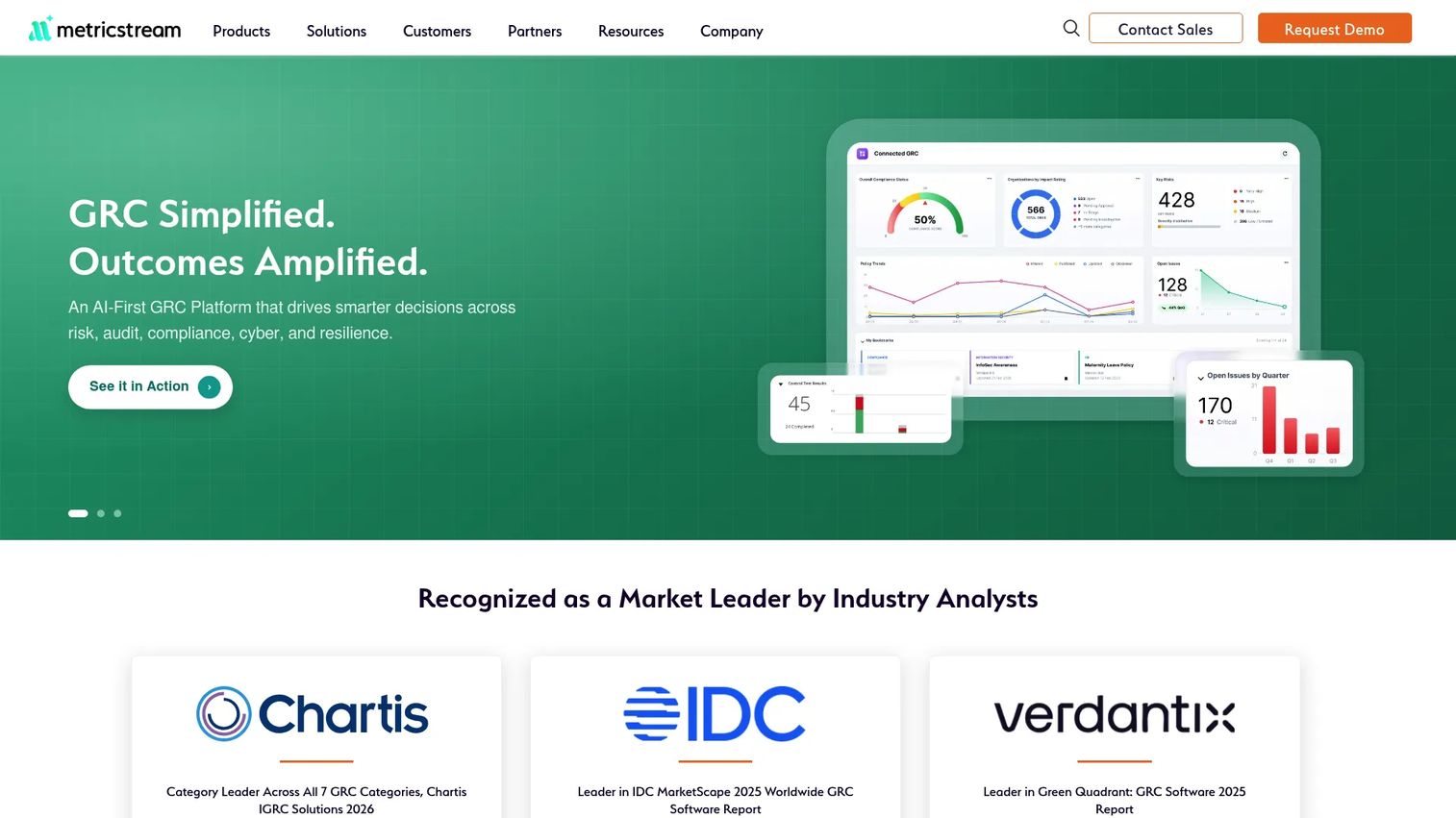
MetricStream ConnectedGRC is an enterprise GRC platform that integrates risk management, compliance, audit, cybersecurity, third-party risk, and ESG management across business units and regulatory jurisdictions. Its value case is coordination: Large organizations managing risk programs across multiple departments, geographies, and regulatory frameworks get a single system where issues, controls, assessments, and audit findings connect to each other rather than sitting in separate trackers. The platform includes AI-powered risk intelligence and automated regulatory intelligence workflows.
Best for: Large enterprises that need to coordinate risk, compliance, audit, and operational controls across multiple business units with consistent evidence and escalation management.
Key features
- Enterprise risk registers with integrated controls and issue management
- Automated regulatory intelligence, control testing, and compliance workflows
- Audit workflows from planning through finding remediation
- Cybersecurity and third-party risk management modules
- AI-powered risk analytics and reporting
Why choose MetricStream ConnectedGRC: Choose it when the job is operationalizing risk ownership across a large, complex organization rather than running specialized financial calculations. It works best where governance, evidence capture, cross-functional reporting, and issue remediation matter as much as the underlying financial models. Teams that primarily need treasury analytics or trading risk measurement will find it addresses a different layer of the problem.
MetricStream ConnectedGRC pricing: MetricStream does not display pricing on its public pages. Prospects submit a pricing inquiry directly; commercial terms depend on modules, users, business units, and deployment scope.
G2 rating: 3.8/5.
8. FINCAD Analytics Suite
FINCAD Analytics Suite is financial analytics software for valuing, pricing, and managing risk across cross-asset derivatives and fixed-income instruments. The use case is specific: Quantitative finance teams that need to answer "can we price and measure this instrument correctly?" with auditable, model-validated outputs. FINCAD covers curve construction, valuation, scenario analysis, and stress testing for a broad range of asset classes, and provides Excel-based pre-built models and workbooks that reduce the time from analytical question to working output.
Best for: Banks, asset managers, hedge funds, insurers, and pension organizations that need robust derivatives and fixed-income valuation and risk analytics.
Key features
- Cross-asset coverage of fixed income and derivatives instruments
- Valuation, pricing, scenario analysis, and stress testing
- Excel-based pre-built models, workbooks, and Analytics Finder
- Curve construction and model validation support
- Risk analytics for complex financial instruments
Why choose FINCAD Analytics Suite: FINCAD is the right tool when the risk question is about instrument-level accuracy and model validation, not enterprise governance workflows or treasury cash positions. Teams building or validating pricing models for structured products, interest-rate derivatives, or fixed-income portfolios will find the analytical coverage directly relevant. Teams that need risk registers, controls, or audit evidence should look elsewhere in this list.
FINCAD Analytics Suite pricing: FINCAD does not display pricing on its public materials. Contact FINCAD directly for a quote; scope typically varies by analytics coverage, asset-class access, and deployment model.
G2 rating: 5.0/5
9. 3V Finance titanTreasury

3V Finance titanTreasury is a treasury management system built for corporate treasury and finance teams managing market exposure, liquidity risk, counterparty risk, and hedge accounting. Where Kyriba leads on cash visibility and payments breadth, titanTreasury goes deeper on market-risk analytics: Cash Flow at Risk, Value at Risk, mark-to-market valuation, sensitivity analysis, and hedge relationship management under IFRS 9, IFRS 13, and IFRS 16. The platform supports multi-currency, multi-entity, and multi-user deployments and runs as SaaS or on-premises.
Best for: Treasury teams managing FX, interest-rate, commodity, liquidity, or hedge-accounting exposure and requiring continuous market-risk measurement and financial reporting.
Key features
- Treasury and cash-flow forecasting with multi-entity support
- Market-risk management for interest rates, foreign exchange, and commodities
- Cash Flow at Risk and Value at Risk analytics
- Valuation, mark-to-market analysis, and scenario simulation
- IFRS 9, IFRS 13, and IFRS 16 reporting and accounting workflows
- Workflow approvals, alerts, notifications, and audit trails
Why choose 3V Finance titanTreasury: Use it when treasury exposure needs continuous measurement and formal reporting, especially across cash, FX, rates, and hedge programs. It is more specialized than a broad enterprise GRC platform and more analytically deep than a general cash-management tool. Finance teams at growing companies with material derivatives or hedge programs will find the IFRS reporting workflows particularly relevant.
3V Finance titanTreasury pricing: 3V Finance does not publish pricing on its website. Contact their team for a quote; cost drivers typically include the number of entities, users, modules, and connectivity scope.
Considerations when choosing financial risk management software
Start with the risk decision you need to improve
Do not start with a feature checklist. Identify the specific decision that currently takes too long or produces weak evidence. That might be cash allocation before a board meeting, hedge coverage during an FX move, credit approval for a large customer, or audit response to an examiner finding. The platform that improves that decision fastest is the one to evaluate first.
Separate calculation engines from governance workflows
Market and derivatives analytics require different technology from risk registers, control testing, and audit evidence workflows. Many organizations need both categories eventually. Few need both in the same procurement cycle. Buying a governance platform when you need a treasury model will leave the real risk unaddressed. Confirm which problem is more urgent before issuing an RFP.
Audit the data before committing to the platform
The most capable dashboard cannot compensate for fragmented source data. Before evaluating platforms, ask which systems will feed risk data into the tool, who owns the field mappings, how often data refreshes, and how exceptions get resolved. Data readiness determines whether implementation succeeds or stalls after go-live.
Price implementation alongside the license
First-year cost at enterprise platforms is frequently driven by services, not software access. Include implementation consulting, historical data migration, model configuration, integration development, training, and change management in the business case. A platform that looks affordable at license cost may carry substantial professional services requirements before it is operational.
Assign ownership before launch
Risk platforms work when thresholds have named owners and a breach triggers a documented action. Before selecting a tool, agree on the governance model: Who owns each material risk, who approves threshold changes, what the review cadence is, and what the escalation path looks like. Software enforces process; it does not create process where none exists.
Conclusion
Financial risk management software is not a single category. The nine tools in this list serve distinct problems, and choosing requires clarity about which problem matters most now.
For cash flow management software and liquidity visibility, start with Kyriba or titanTreasury. For capital-markets risk across trading and derivatives, Nasdaq Calypso and Murex MX.3 provide the integrated workflows that specialized institutions need. Oracle Financial Services Risk Management and SAS Risk Management suit large institutions with broad credit, market, and regulatory analytics requirements. Ncontracts and MetricStream ConnectedGRC address governance, assessments, and controls. FINCAD Analytics Suite belongs in quantitative teams where instrument-level valuation accuracy is the constraint.
For founders evaluating finance infrastructure: Start with the financial risk that has the clearest cost of delay. Most Series B companies need better cash flow forecasting software and board-ready reporting before they need a capital-markets risk engine. Buy the system your finance team can operate after the consultants leave, and match platform complexity to your current implementation capacity.
Start your journey with Guideflow today!
FAQs
Financial risk management software helps organizations identify, quantify, monitor, report, and control financial exposures across areas such as credit, market, liquidity, operational, and regulatory risk. The category spans multiple platform types, from quantitative analytics engines used by banks to treasury management systems used by corporate finance teams to governance platforms used by compliance and internal audit functions.
Enterprise risk management software typically covers governance, controls, assessments, audit workflows, compliance tracking, and operational risks. Financial risk management software may add specialized calculations for liquidity, credit, market exposure, derivatives valuation, or stress testing. Many organizations need both, but they address different layers of the problem. A governance platform manages who owns a risk and what the evidence trail looks like. A financial risk platform measures the exposure itself.
Banks with broad regulatory, credit, liquidity, and stress-testing requirements should evaluate Oracle Financial Services Risk Management or SAS Risk Management. Banks focused on operational risk assessments, examiner readiness, and compliance controls should evaluate Ncontracts. Capital-markets-oriented banks with derivatives and trading operations should evaluate Nasdaq Calypso or Murex MX.3. The right answer depends on which risk domain creates the most regulatory or operational pressure.
A SaaS company with multiple legal entities, currencies, debt facilities, or material cash balances may need a treasury-focused platform like Kyriba. Earlier-stage companies may first need stronger accounting software and cash forecasting workflows before adopting a full treasury platform. The trigger is usually the point where reconstructing the consolidated cash position manually before each board meeting becomes a governance risk in itself.
It can eliminate spreadsheet dependence for recurring calculations, reporting, approval workflows, threshold alerts, and audit trails. It will not fix unclear risk ownership or poor source data without parallel process design. A company that installs risk software without agreeing on who owns each material risk and what action a breach triggers will find the dashboards informative but not operational.
Core capabilities include risk data aggregation, scenario analysis, stress testing, exposure dashboards, alerts, management and regulatory reporting, approval workflows, and full audit trails. Specialist needs add derivatives valuation, hedge accounting, collateral management, KRI monitoring, examiner-ready assessment templates, or regulatory reporting modules. The right feature set depends on the platform type and the regulatory context the organization operates in.
Most enterprise platforms in this category sell through quote-based contracts. Total cost depends on the modules selected, the number of users and legal entities, data volume, integration complexity, deployment model, and implementation services. First-year cost is frequently driven by implementation and configuration scope as much as software access. Contact each vendor directly for a quote sized to your environment.
Implementation timelines vary significantly based on the number of source systems that need to feed the platform, the volume of historical data required, model complexity, regulatory reporting scope, governance design, and the internal team available to own the project. Treasury platforms at a company with a small number of bank relationships and one ERP can go live faster than enterprise credit-risk analytics platforms at institutions with complex data estates. Confirm realistic timelines with reference customers at your scale before signing a contract.
Treasury risk software focuses on cash positions, liquidity forecasting, FX and commodity exposure, payments, and debt management for corporate finance teams. Market risk software, in the context of capital-markets platforms like Calypso and Murex, covers trading positions, derivatives valuation, VaR, counterparty exposure, and regulatory capital calculations for financial institutions with trading books. Some platforms like titanTreasury serve corporate treasury teams with market-risk analytics for hedging programs, sitting between the two categories.