Your vans plug in at three depots. Some drivers charge at home. A few use public fast chargers on long routes. And nobody can tell you what a single kilowatt-hour actually cost last month.
That gap is where fleet electrification stops being a sustainability story and starts being an operations problem. Chargers, vehicles, routes, and electricity bills do not manage themselves. Without one place to monitor charging, control load, and track cost, fleet teams end up reconciling spreadsheets and guessing at demand spikes.
Fleet charging software closes that gap. EV charging management systems centralize charger control, scheduling, reporting, and hardware control, so a team running mixed sites and mixed charger brands works from one dashboard instead of ten.
The category is growing fast because the problem is. The EV charging management software platform market was valued at USD 2.41B in 2025 and is projected to reach USD 8.26B by 2030 at a 27.95% CAGR, according to Mordor Intelligence (2025). Electric vehicle charging software matters now because fleets are past the pilot stage and into scaled, multi-depot rollouts where demand charge control and load management decide whether the numbers work.
This guide compares the fleet charging solutions worth shortlisting, and how to evaluate them before you talk to a vendor.
What's inside
This guide is for fleet operators, product managers, and technology buyers evaluating fleet EV charging software for centralized charge management. We picked platforms that serve real fleet operations, not just consumer charging apps.
We selected and ranked tools on:
- Fleet fit: built for depot, mixed-site, and multi-vehicle operations
- Hardware interoperability: OCPP and multi-vendor charger support
- Load management: smart charging and demand charge control
- Reporting and integrations: telematics, APIs, and cost visibility
- Rollout and support depth: deployment, migration, and ongoing operations
TL;DR
- Best overall for enterprise fleet control: ChargePoint
- Best for telematics, plug and charge, and multi-depot fleets: Epic Charging
- Best for fleet electrification plus public charging access: EVgo
- Best for charge management and mixed fueling visibility: AssetWorks FuelFocusEV
- Best for hardware-agnostic cloud charge management: ChargeLab
- Best for charging hardware plus software operations: EV Connect
- Best for open, standards-based charger control: Powerfill
If you run a single depot with one charger brand, most of these will work. The differences show up when you scale across sites, mix hardware, and need reimbursement logic for home and public sessions.
What is fleet charging software?
Fleet charging software is an EV charging management system that centralizes charger control, scheduling, load management, reporting, and cost visibility for a fleet of electric vehicles. Instead of managing each charger or site on its own, a fleet team runs everything from one platform.
The point is control at scale. When you have 40 vans across three depots plugging in overnight, you need to sequence charging so you do not trip your electrical service or trigger a demand charge that wipes out your fuel savings.
Good ev charge management platforms cover a consistent set of capabilities:
- Centralized monitoring and control across every charger and site
- Smart charging and load management to sequence sessions and cap peak draw
- Hardware interoperability, usually through OCPP, so you are not locked to one charger vendor
- Telematics and API integrations that tie charging data to vehicle and route data
- Driver access, pricing, and cost allocation for depot, home, and public sessions
- Reporting across depots and charger types, down to kilowatt-hour cost
Here is how fleet charging software differs from adjacent categories buyers often confuse it with:
| Category | Primary job | Who it serves |
|---|---|---|
| Fleet charging software | Centralize EV charger control, load management, and cost allocation across depots | Fleet operators running EVs |
| Generic EV charging software | Manage individual chargers or public networks, often driver-facing | Site hosts, public network operators |
| Fleet management software | Track vehicles, routes, maintenance, and drivers | Fleet managers across fuel types |
The overlap is real, which is why telematics integrations matter. The strongest fleet EV charging software connects charging data to the fleet management system you already run.
When to use fleet charging software
Manage multiple depots without spreadsheet chaos
Once vehicles charge at more than one site, manual tracking breaks. You lose visibility into which chargers are down, which sessions failed, and what each site spent. Centralized fleet charge management gives you a single view across every depot, so a regional ops lead sees all sites at once instead of logging into separate portals. A parcel fleet running five distribution centers, for example, can compare cost per mile across sites from one screen.
Control energy costs and avoid demand spikes
Electricity is not billed like gas. Utilities charge for peak demand, so 30 vans charging at once can cost far more than the same energy spread out. Load management sequences and throttles charging to stay under your site's capacity and off the demand-charge ceiling. Smart charging shifts sessions to off-peak windows when rates drop. Done well, this keeps a fleet inside its electrical service without expensive upgrades.
Track charging across depot, home, and public sessions
Drivers who take vehicles home need reimbursement. Vehicles on long routes use public chargers you get billed for separately. Without one system, cost allocation turns into a monthly reconciliation headache. Fleet charging solutions with mixed-location tracking pull depot, home, and public charging into one report, so finance sees true cost per vehicle and reimbursement workflows run without manual math.
Comparison table
Sorted by relevance to fleet charging software. Pricing reflects what each vendor publishes; several sell through custom quotes, noted below. Ratings come from each tool's current G2 listing where available.
| # | Product | Best for | Key differentiator | Pricing | G2 rating |
|---|---|---|---|---|---|
| 1 | ChargePoint | Enterprise fleet and multi-site control | Unified platform with pricing controls and open API | Custom quote | 5.0/5 |
| 2 | Epic Charging | Telematics, plug and charge, multi-depot | Vendor-neutral management across mixed charger estates | Custom quote | Not rated |
| 3 | EVgo | Electrification plus public charging reach | Public fast-charging network plus fleet services | From $0/mo | Not rated |
| 4 | AssetWorks FuelFocusEV | Mixed fueling and cost visibility | EV charge management inside broader fleet ops | Custom quote | 4.2/5 |
| 5 | ChargeLab | Hardware-agnostic cloud management | Connects with 200+ OCPP hardware models | From $25/port/mo | Not rated |
| 6 | EV Connect | Charging hardware plus software ops | OCPP software with driver app and monetization | Custom quote | Not rated |
| 7 | Powerfill | Open, standards-based charger control | Free tier plus open-standards charger management | Free to custom | Not rated |
1. ChargePoint
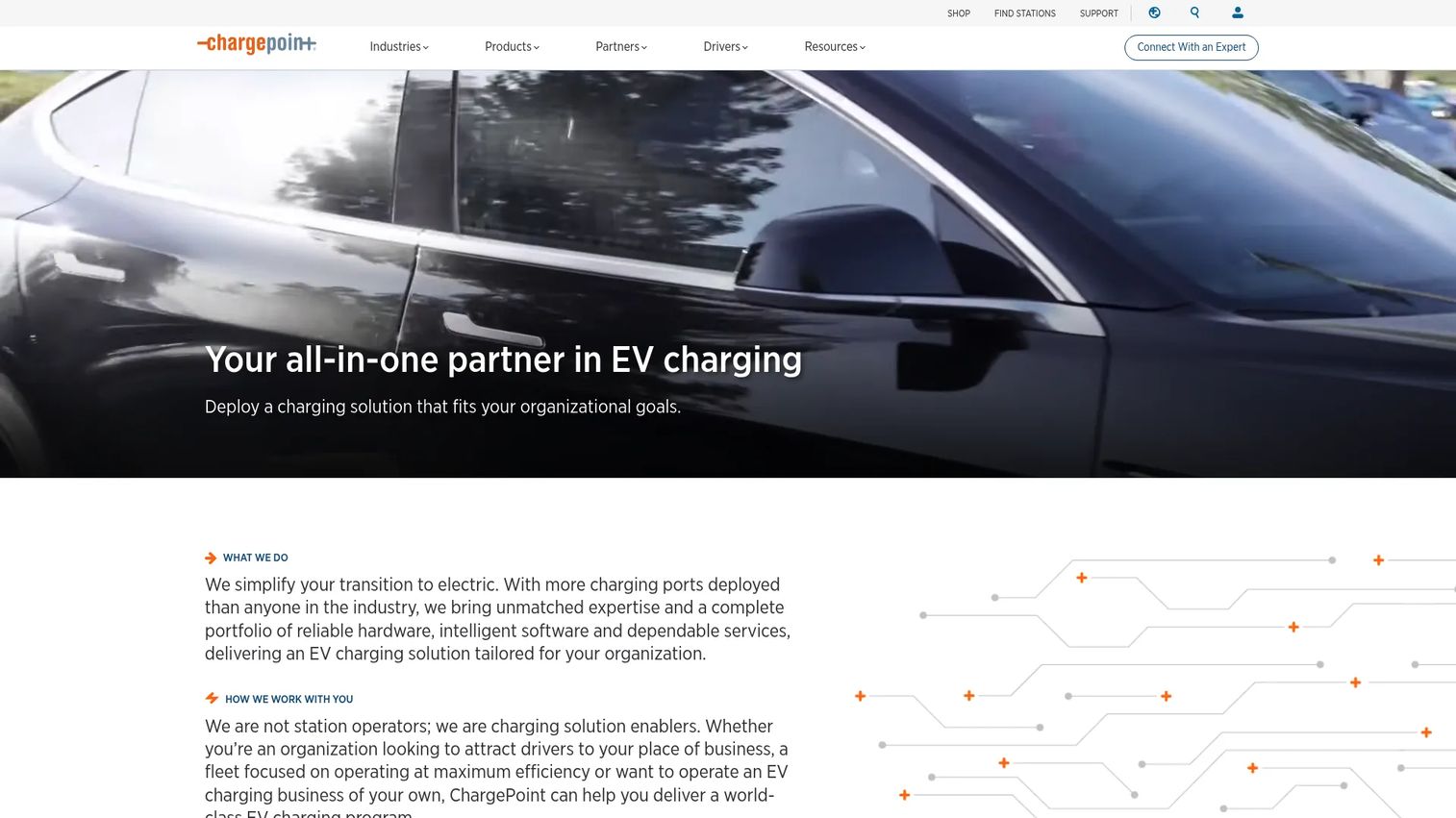
ChargePoint runs one of the broadest EV charging management platforms for organizations managing charging across workplaces, fleets, and public sites. For fleet teams, the draw is a unified platform that handles station visibility, pricing controls, and load management from a single dashboard. It fits larger fleets that want operational depth and an open API to connect charging into the rest of their stack.
Best for: Enterprise and multi-site fleets that need a broad platform with strong operational visibility.
Key features
- Unified EV charging management software across sites
- Real-time station visibility and analytics
- Custom pricing controls by driver group and time of use
- Dynamic load management to cap peak draw
- Open API and integration support
Why choose ChargePoint: If you run a large, mixed fleet and want one platform to standardize control across sites, ChargePoint gives you the reporting and pricing granularity to manage it. It suits teams that value platform breadth over a lightweight single-site tool.
ChargePoint pricing: ChargePoint sells its fleet software through custom quotes rather than a published price. You will need to talk to their team to scope pricing to your charger count and sites.
ChargePoint holds a 5.0/5 rating on G2, based on a small number of reviews at the time of writing.
2. Epic Charging
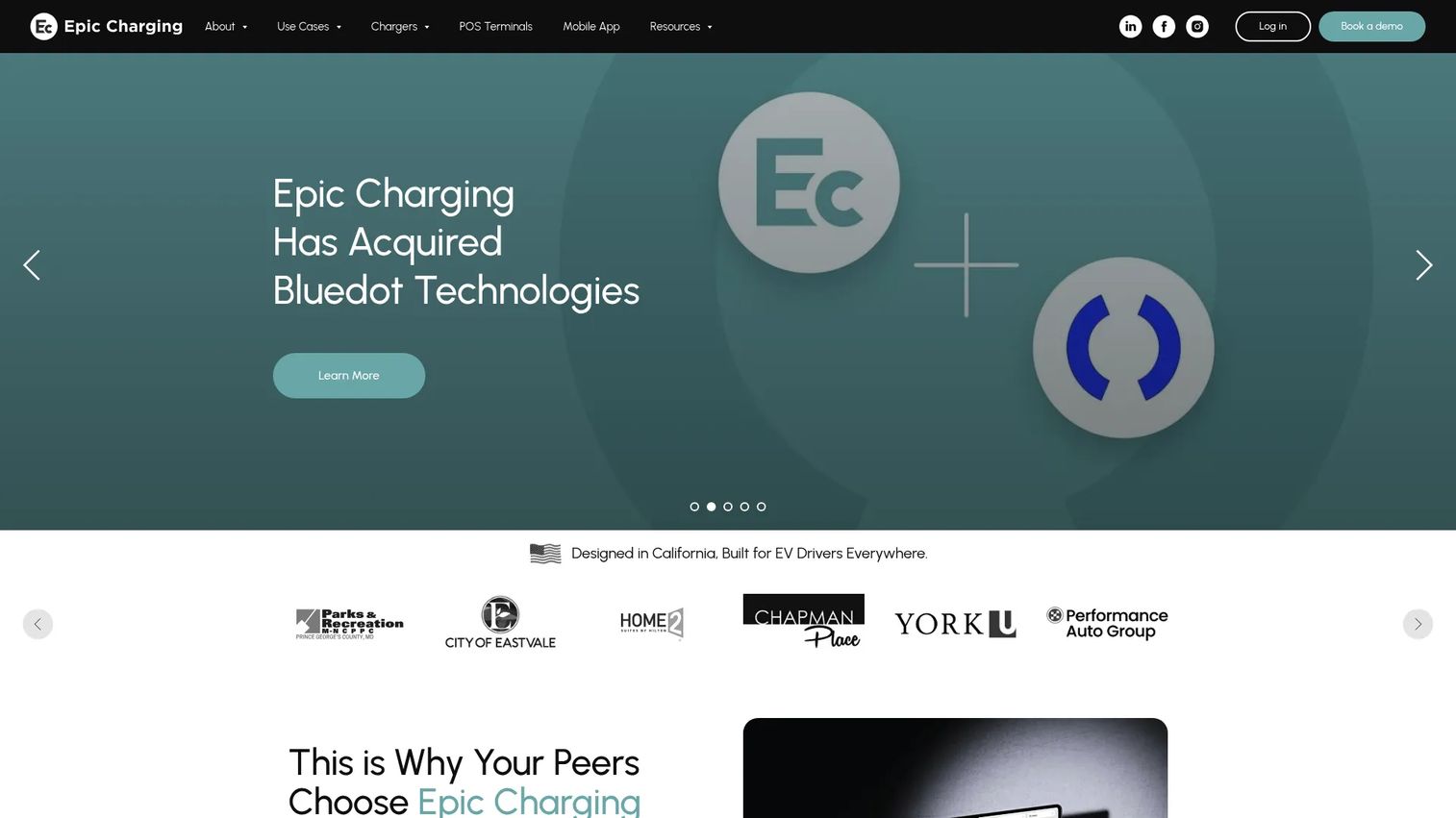
Epic Charging is EV charging software built for operators running public, fleet, multifamily, workplace, and municipal networks. Its fleet strength is vendor neutrality: OCPP interoperability lets you manage mixed charger brands from one place, which matters when a fleet inherits a patchwork of Level 2 and DC fast chargers across depots. Plug and charge, tiered pricing, and telematics integrations round out a platform aimed at multi-depot operations.
Best for: Fleets managing mixed charger estates plus public and depot charging together.
Key features
- OCPP interoperability across charger brands
- White-label app and dashboard
- Tiered and time-of-use pricing
- Idle and overstay fees
- Multi-depot portfolio management
Why choose Epic Charging: When your charger estate is a mix of brands and your vehicles charge at both depots and public stations, vendor-neutral management removes the lock-in. Epic Charging suits teams that want one dashboard over a fragmented hardware setup.
Epic Charging pricing: Epic Charging provides customized quotes rather than public plan prices. The site notes that platform fees may apply and that charging fees are set by station operators.
A current G2 rating for Epic Charging was not available at the time of writing.
3. EVgo
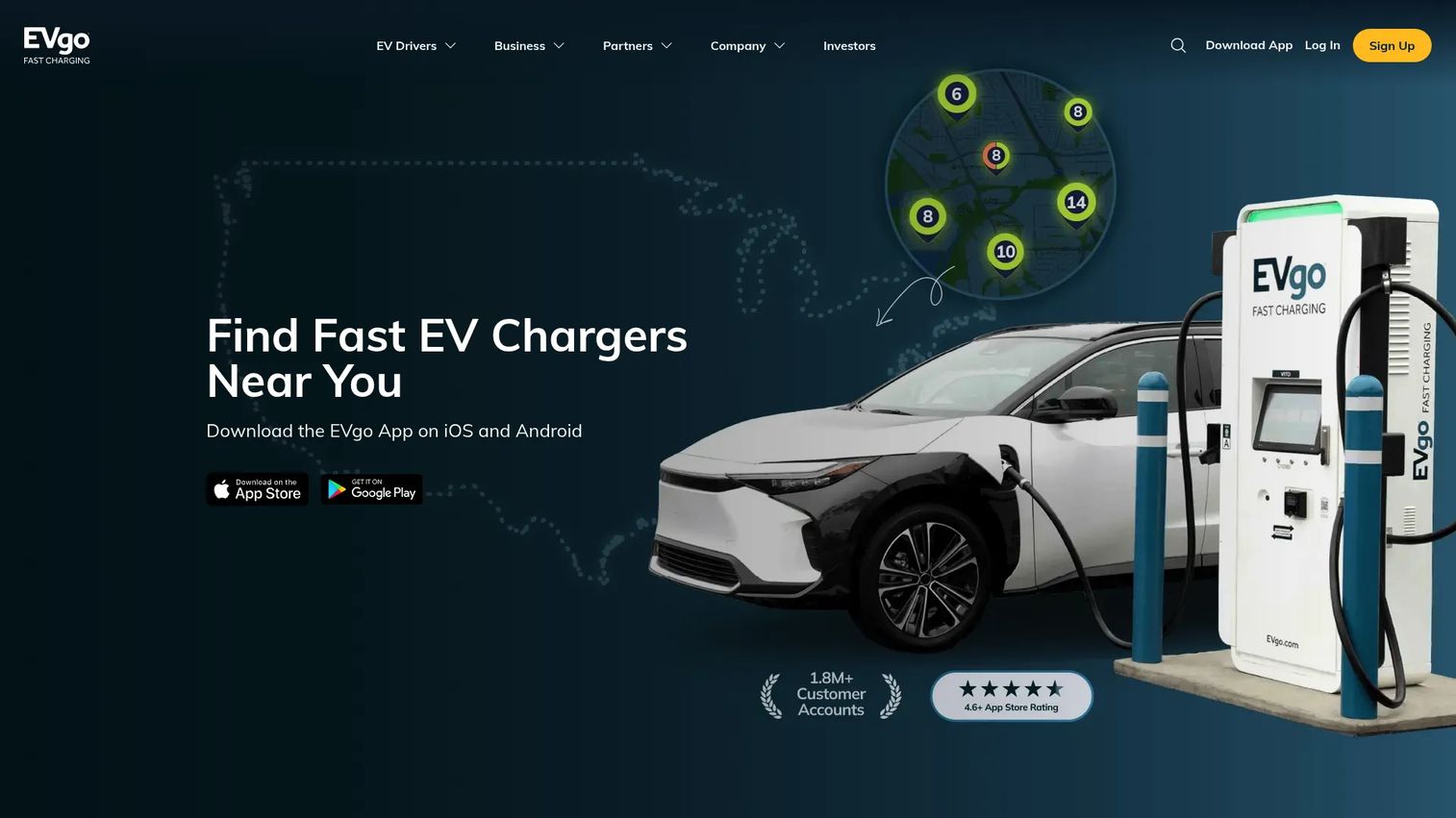
EVgo runs a public EV fast-charging network across 47 states, paired with fleet-focused charging services. It fits fleets that need charging beyond the depot, especially vehicles on long routes that cannot wait for slower Level 2 sessions. Beyond the network, EVgo supports fleet electrification with deployment and transition planning, so software and public charging access come together in one relationship.
Best for: Fleets that need public fast charging alongside depot charging and electrification support.
Key features
- Public fast-charging network across 47 states
- Autocharge+ plug-in-and-charge feature
- App-based station availability and pricing lookup
- Fleet electrification and transition planning
- Charging plans with monthly options
Why choose EVgo: If your vehicles cover long routes or you lack depot charging capacity, public network access changes what electrification looks like. EVgo suits fleets that value network reach and hands-on deployment support over a pure software play.
EVgo pricing: EVgo publishes consumer charging plans. Pay As You Go is $0 per month with per-session fees, EVgo Plus is $6.99 per month, and EVgo PlusMax is $12.99 per month. Fleet services are scoped separately with their team.
A G2 rating for EVgo was not available at the time of writing.
4. AssetWorks FuelFocusEV

AssetWorks FuelFocusEV is EV charge management software for fleets, built by a company with deep roots in broader fleet operations. Its edge is cost visibility across both electric and conventional fueling, which matters for fleets running a mixed motor pool mid-transition. Real-time monitoring, intelligent load management, and integration with fleet management systems let finance track true cost per vehicle across fuel types.
Best for: Fleets that want charging cost visibility alongside conventional fueling data during electrification.
Key features
- Real-time monitoring and reporting
- Intelligent load management
- Data integration with fleet management systems
- Kilowatt-hour cost tracking
- Mixed fueling visibility across the motor pool
Why choose AssetWorks FuelFocusEV: If you are electrifying a fleet gradually and still run gas and diesel vehicles, seeing all fuel costs in one system beats stitching reports together. It suits public sector and motor pool fleets managing a phased transition.
AssetWorks FuelFocusEV pricing: AssetWorks handles FuelFocusEV pricing through direct sales rather than published plans. Reach their team to scope it to your fleet.
AssetWorks holds a 4.2/5 rating on G2.
5. ChargeLab
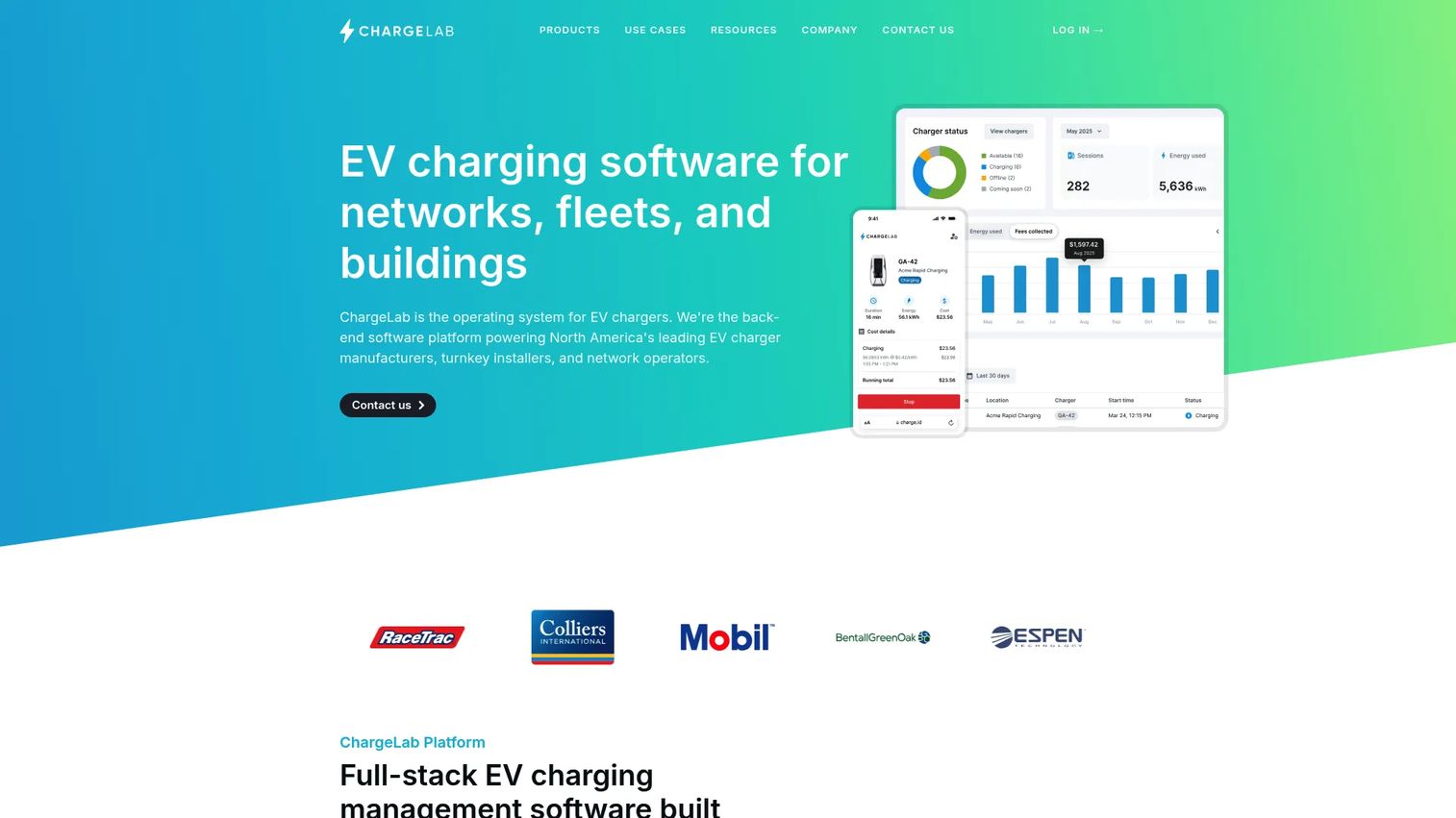
ChargeLab is a cloud-based EV charging management system (CSMS) for networks, fleets, site hosts, and resellers. Its defining trait is hardware flexibility: the platform connects with 200+ OCPP hardware models, so fleets can standardize software across whatever chargers they already own. Dynamic power management, white-labeling, and API access make it a modular fit for teams that want control without hardware lock-in.
Best for: Fleets and operators that want hardware-agnostic charge management across many charger models.
Key features
- Connects with 200+ OCPP hardware models
- Dynamic power management
- White-labeling
- API access
- 24/7 customer support
Why choose ChargeLab: If your priority is a software layer that works with almost any OCPP charger, ChargeLab's breadth of hardware support is the reason to look. It suits teams building a scalable deployment across mixed hardware.
ChargeLab pricing: ChargeLab lists network plans from $25 per port per month. White-labeling and connectivity add-ons start at $1.5K per month. Pricing is publicly shown on its reseller page.
A substantive G2 rating for ChargeLab was not available at the time of writing.
6. EV Connect
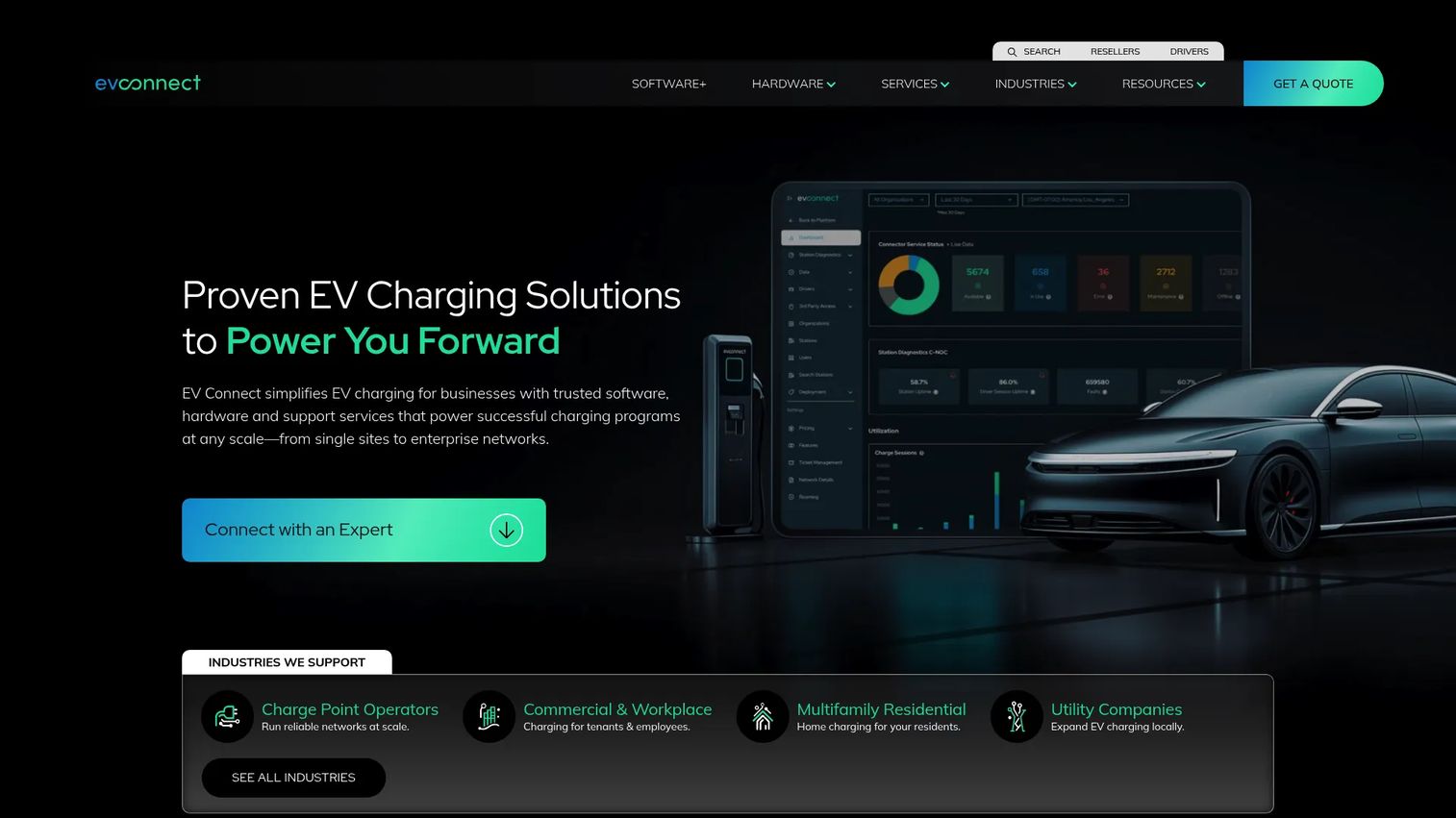
EV Connect pairs OCPP-compatible charging management software with hardware and support services for businesses and network operators. For fleets, that means charger management, driver access controls, and session tracking backed by a team that supports deployment. Monetization tools like pricing, subscriptions, and loyalty programs also make it a fit for fleets that host chargers others use.
Best for: Businesses and fleets that want charging software plus hardware and support in one relationship.
Key features
- OCPP-compatible charging management software
- Driver app with station search and reservations
- Session tracking and access control
- Monetization tools: pricing, subscriptions, discounts
- Deployment and support services
Why choose EV Connect: If you want a partner handling both the software and the operational support around it, EV Connect bundles them. It suits fleets that also act as charging site hosts and need access control and monetization.
EV Connect pricing: EV Connect does not publish public pricing. The site directs buyers to request a quote so pricing can be scoped to your deployment.
A substantive G2 rating for EV Connect was not available at the time of writing.
7. Powerfill
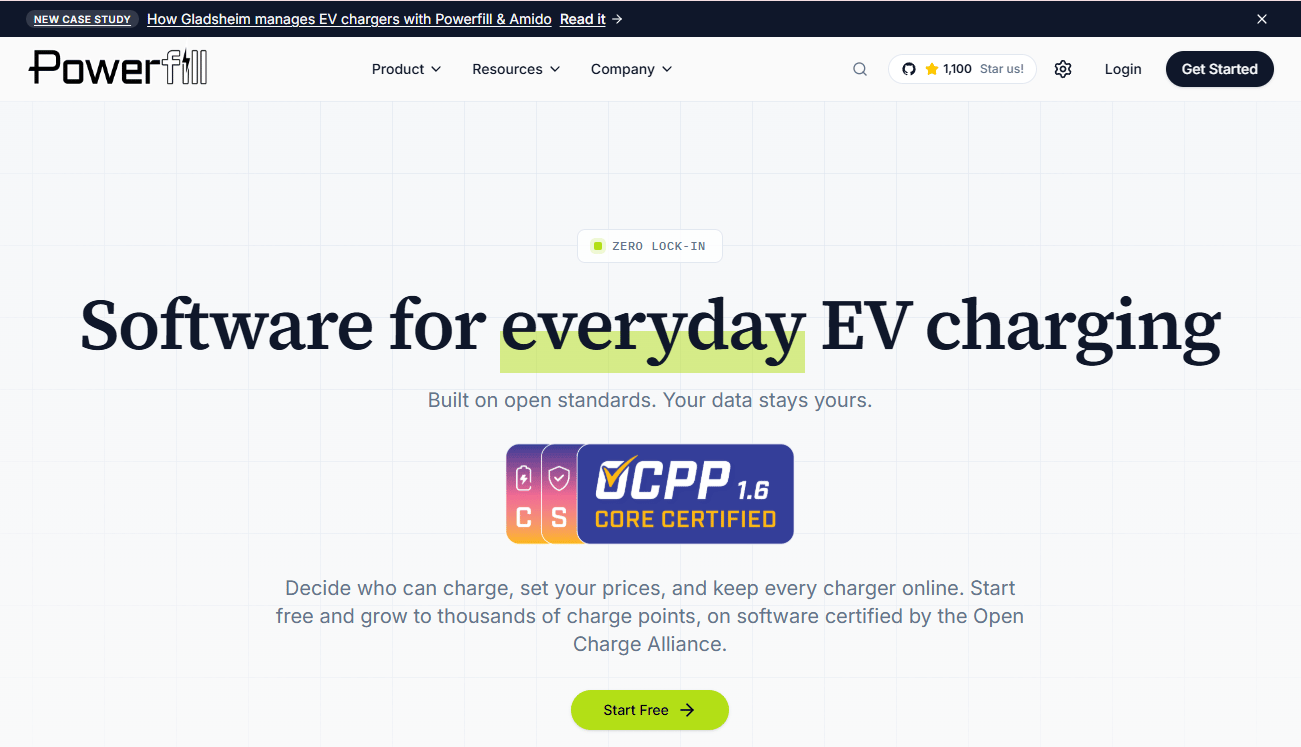
Powerfill is EV charging management software built on open standards, aimed at operators who want charger control without proprietary lock-in. It stands out with a genuinely accessible entry point: a free tier covers up to two chargers, which makes it easy to test before scaling. Smart charging, scheduling, transaction history, and an API round out a platform that scales from a pilot to a larger deployment.
Best for: Fleets and operators wanting open, OCPP-based charger management with a low-cost entry point.
Key features
- Free tier for up to 2 chargers
- Smart charging and scheduling
- Transaction and session history
- API and integrations
- Open-standards charger management
Why choose Powerfill: If you want to start small and prove the model before committing budget, the free tier and open-standards approach make Powerfill easy to trial. It suits teams that value flexibility and standards over a bundled hardware relationship.
Powerfill pricing: Powerfill offers a Free plan, a Startup plan at $40 per month, a Production plan at $499 per month, and a custom Enterprise plan. Annual billing options are shown for the paid tiers.
A substantive G2 rating for Powerfill was not available at the time of writing.
Considerations
Before you sign with any vendor, verify these against your actual fleet, not the demo.
Load management and demand charge control
Software has to fit your site's electrical capacity, not the other way around. Confirm the platform can sequence and throttle sessions to stay under your service limit and off peak demand windows. Ask how it handles a scenario where every vehicle plugs in at once. Weak load management here is where demand charges quietly erase your fuel savings.
Hardware interoperability
If your chargers come from more than one vendor, OCPP support is not optional. Verify which OCPP versions the platform supports and ask for a list of tested charger models. A fleet that inherits mixed hardware needs a system that manages all of it, not just one brand's chargers.
Telematics and systems integrations
Charging data is more useful tied to vehicle and route data. Check which telematics providers integrate, whether an open API exists, and how the platform connects to your fleet management and enterprise systems. Without integration, you get another isolated dashboard instead of a unified view.
Multi-site reporting and cost allocation
Depot, home, and public charging each need separate visibility and reimbursement logic. Confirm the platform can allocate cost per vehicle, per driver, and per site, and that it handles home-charging reimbursement. Finance will need this to report true cost per mile across the fleet.
Deployment support and ongoing operations
Features matter less if the rollout stalls. Ask about implementation timelines, charger migration support, and what ongoing support looks like once you are live. For multi-depot fleets, deployment and migration quality often decide whether the software delivers on its promise.
Conclusion
The right fleet charging software depends on your fleet size, charger mix, and deployment model.
ChargePoint fits enterprise fleets that want broad platform control across many sites. Epic Charging is the pick for vendor-neutral, multi-depot operations with mixed charger estates. EVgo works when public fast charging and electrification support matter as much as software. AssetWorks FuelFocusEV suits fleets managing electric and conventional fueling together during a phased transition. ChargeLab, EV Connect, and Powerfill cover modular, hardware-agnostic, and open-standards needs for teams that want flexibility.
To shortlist, start with three questions. How many sites and charger brands are you running? Do vehicles charge only at depots, or at home and public stations too? Are you looking for pure software, or software plus deployment and hardware support? Answer those, then run a demo against your real load profile and reporting needs before committing.
FAQs
Fleet charging software is an EV charging management system that centralizes charger control, scheduling, load management, reporting, and cost tracking for a fleet of electric vehicles. It lets a team manage chargers across multiple depots from one dashboard instead of site by site. The goal is control at scale, from sequencing overnight charging to allocating cost per vehicle.
Utilities bill commercial fleets partly on peak demand, so many vehicles charging at once can spike costs. Fleet charging software uses load management to sequence and throttle sessions, keeping draw under your site's capacity and off the demand-charge ceiling. Smart charging also shifts sessions to off-peak windows when electricity rates are lower.
They overlap heavily. EV charging management software is the broader category covering any charger or network, including public and driver-facing systems. Fleet charging software is the fleet-specific slice, focused on depot operations, telematics integrations, cost allocation across vehicles, and multi-site control for an operator running EVs.
For most multi-vehicle fleets, yes. Telematics integrations connect charging data to vehicle location, state of charge, and route data, so you can see true cost per mile and plan charging around routes. Without it, charging sits in one silo and vehicle data in another, which makes cost allocation and route planning harder.
OCPP is an open protocol that lets charging software talk to chargers from different manufacturers. OCPP compatibility means you can manage mixed charger brands from one platform instead of being locked to a single vendor's hardware. For fleets that inherit or expand charger estates over time, that flexibility protects your investment.
The stronger platforms can. Look for tools that pull depot sessions, home-charging reimbursement, and public network billing into one report. That gives finance a single view of cost per vehicle and driver, and it runs reimbursement workflows without manual reconciliation across separate systems.
Score each vendor on load management and demand charge control, hardware interoperability through OCPP, telematics and API integrations, multi-site reporting with cost allocation, and deployment support. Then run a demo against your real load profile, charger mix, and reporting needs. Verified fit against your operations matters more than a feature checklist.
Centralized control across sites, load management tuned to each site's electrical capacity, OCPP support for mixed hardware, and cost allocation per site and per vehicle. Deployment and migration support also weigh heavily, since rolling out across several depots is where projects tend to stall without a vendor that handles it well.