Your certification program started with a spreadsheet. Then it became two spreadsheets. Now it's a folder of forms, a shared inbox, an LMS export, a testing vendor report, and a renewal reminder someone set up in Mailchimp two years ago that still fires even though the logic is wrong.
This is the moment most programs break. Not from lack of demand. From the operational weight of tracking who is eligible, certified, expired, pending a continuing education review, or due for recertification. According to Accredible's 2025 State of Credentialing report, 91% of employers actively look for digital credentials when reviewing candidates. The demand for credentialing programs is real. The gap is on the operations side.
For a Series B founder evaluating certification infrastructure, the actual risk is not choosing the wrong badge tool. The risk is building a certification function that requires the founder, the COO, or an overworked ops lead to keep it running. The right certification management software hands that ownership to a program leader without engineering involvement.
What's inside
This guide covers nine certification management software options for 2026, ranked and evaluated for certification boards, associations, and organizations running professional or partner certification programs. We chose tools based on the following criteria:
- Certification lifecycle coverage: Applications, eligibility, renewals, CE tracking, and recertification
- Integration fit: LMS, testing providers, CRM, payment, and digital credential tools
- Reporting depth: Dashboards, audit trails, and board-ready exports
- Operational ownership: Can a program lead run this without engineering support?
Pricing and G2 ratings reflect verified sources. Treat the table as a starting point, not a substitute for a vendor demo.
TL;DR
- Best end-to-end lifecycle platform: LearningBuilder for complex credentialing rules, multi-step eligibility, and renewal workflows
- Best for Microsoft-first organizations: Cobalt Engagement Dynamics when the program needs to live inside a Dynamics 365 data model
- Best for assessment-centered programs: BrightLink when credentialing and exam operations cannot run separately
- Best for digital credential issuance: BadgeCert for scalable badge issuance at a known per-recipient price, or Credly for enterprise credential networks
- Best for exam delivery: Pearson VUE or Prometric when secure, large-scale testing is the primary operational constraint
What is certification management software?
Certification management software is a platform that manages the full lifecycle of a professional, organizational, product, or competency certification, from application and eligibility through assessment, credential issuance, renewal, continuing education, and verification.
It is distinct from two commonly confused categories. Certificate management software handles digital security certificates such as SSL/TLS and PKI. An LMS issues course-completion certificates but does not manage the credentialing rules, eligibility logic, renewal workflows, or continuing education records that sit around them. Certification management software handles the program, not just the content.
Key capabilities to evaluate:
- Application intake and eligibility review
- Candidate and certificant profiles with status history
- Workflow rules, approval steps, and decision tracking
- Exam and assessment result integrations
- Continuing education and professional development tracking
- Renewal, expiration, and recertification management
- Digital certificates, badges, and public credential verification
- Compliance records, audit trails, and reporting dashboards
- Integrations with LMS, testing providers, CRM, finance, and business intelligence tools
Where it shows up in the buying process:
Programs that have outgrown spreadsheets are the clearest buyer signal. So are organizations preparing for accreditation reviews under frameworks such as ISO/IEC 17024 or NCCA standards, where audit-ready documentation is not optional. For SaaS founders running partner or professional certification programs, the trigger is often simpler: The ops lead is spending two days a month on renewal reminders that should be automated.
When to use certification management software
Manage certification decisions without manual coordination
Certification management software becomes necessary when your eligibility rules, approval steps, and status decisions require repeatable logic. A spreadsheet works for 50 certificants. At 500, every exception becomes a manual conversation, and the program's credibility depends on whoever happens to know the rules that week.
Track renewals and continuing education at scale
Renewal revenue is often the most predictable line in a certification program's budget. Missing it means contacting lapsed certificants manually, re-enrolling them on case-by-case terms, and explaining the gap to your board. Good renewal and continuing education tracking software automates expiration reminders, CE credit accumulation, and recertification workflows so the team focuses on program growth rather than renewal recovery.
Prepare for audits, board reporting, and accreditation reviews
When a board member, auditor, or accreditation body asks who holds an active credential, what CE they completed, and when their last renewal was processed, the answer should take seconds. Certification tracking software with audit trails and dashboard reporting makes that possible without a week of spreadsheet cleanup before every review.
Certification management software comparison
The table below maps nine tools by their primary fit, pricing model, and G2 rating. Pricing is verified against vendor sources. Several tools in this category use quote-based pricing, so the table notes that where applicable.
| # | Product | Best for | Key differentiator | Pricing | G2 rating |
|---|---|---|---|---|---|
| 1 | LearningBuilder | Complex credentialing programs | Deep certification lifecycle workflow management | Contact for quote | N/A |
| 2 | Cobalt Engagement Dynamics | Microsoft-centric organizations | Dynamics 365 foundation with reporting and portals | Contact for quote | 4.7/5 |
| 3 | BrightLink | Assessment-driven programs | Certification management with integrated assessment ops | Contact for quote | N/A |
| 4 | Credicycle | Candidate registration and payments | Credential lifecycle tracking with PCI-compliant portal | Contact for quote | N/A |
| 5 | ROC-P | Professional certification bodies | Configurable credentialing workflows and CE tracking | Contact for quote | N/A |
| 6 | BadgeCert | Digital badge issuance at scale | Recipient-based pricing, Open Badge 3.0, blockchain verification | From $1.29/recipient/yr | 4.5/5 |
| 7 | Credly | Enterprise digital credential networks | Large-scale credential issuance, analytics, and Talent Directory | Contact for quote | 4.8/5 |
| 8 | Pearson VUE | High-stakes exam delivery | Global test-center network, online proctoring | Program-specific pricing | 3.1/5 (OnVUE) |
| 9 | Prometric | Secure credentialing exam delivery | In-center, remote, and hybrid exam delivery with AI-enhanced proctoring | Contact for quote | 1.8/5 |
Best certification management software for 2026
1. LearningBuilder
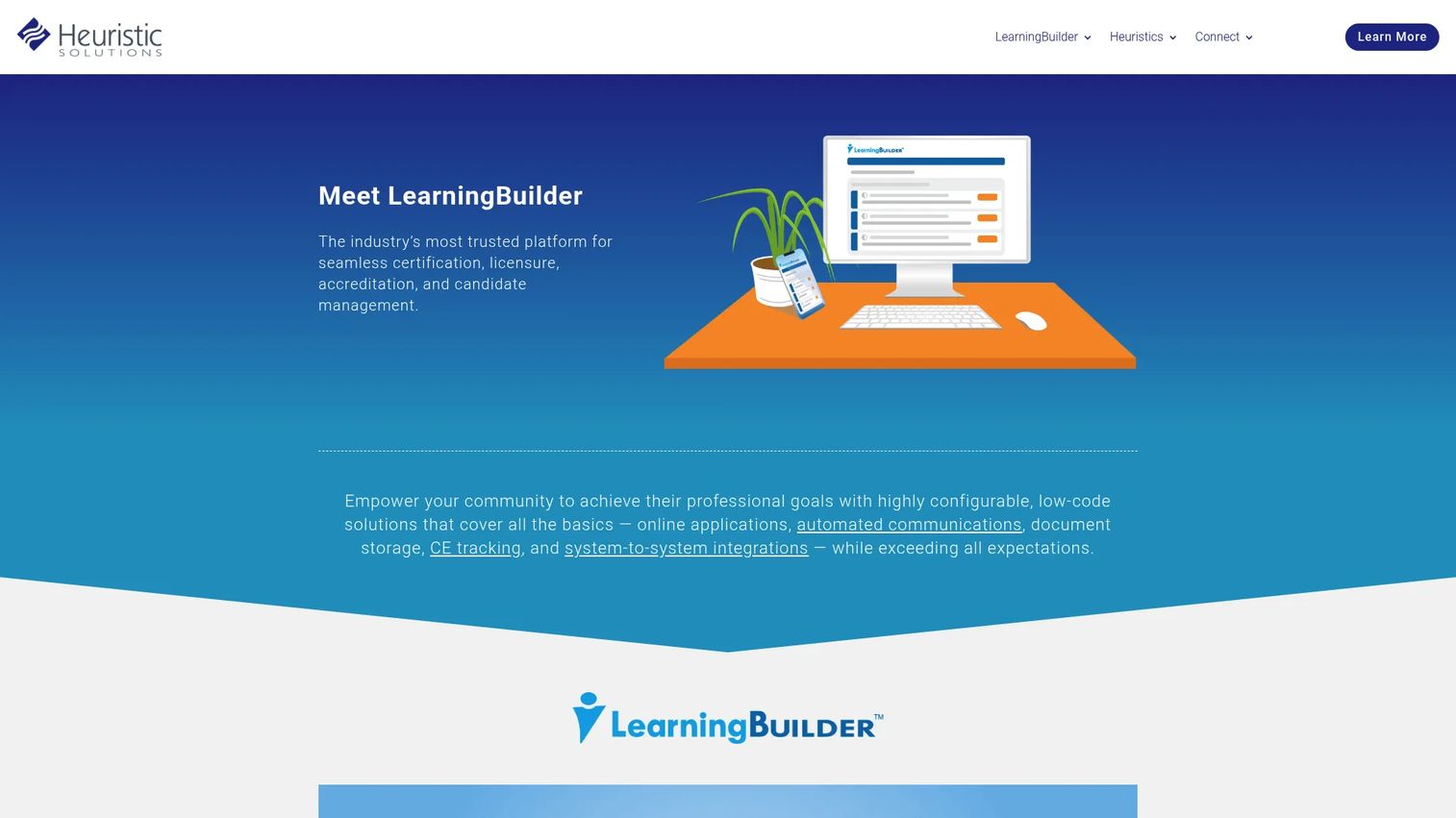
LearningBuilder is a configurable low-code platform built for organizations managing professional certification, licensure, accreditation, and continuing education programs. It covers the full certification lifecycle from application intake and eligibility review through credential decisions, renewals, and recertification. The platform supports automated communications, payment processing, document storage, and integrations with external systems.
Best for: Certification boards, associations, and credentialing bodies with multi-step eligibility rules and high renewal volumes.
Key features
- Application workflow management and eligibility review
- Certification status tracking and decision records
- Renewal and recertification workflow automation
- Continuing education records and learning plans
- Automated email and SMS communications with payment processing
Why choose LearningBuilder: Choose LearningBuilder when certification logic is the core operational problem. It handles the rules, exceptions, and audit trail that a general-purpose tool cannot replicate, and a program lead can operate it without ongoing engineering support.
LearningBuilder pricing: Request a quote and ask specifically about implementation costs, applicant portal configuration, renewal workflow setup, and integration with your testing or LMS provider.
2. Cobalt Engagement Dynamics
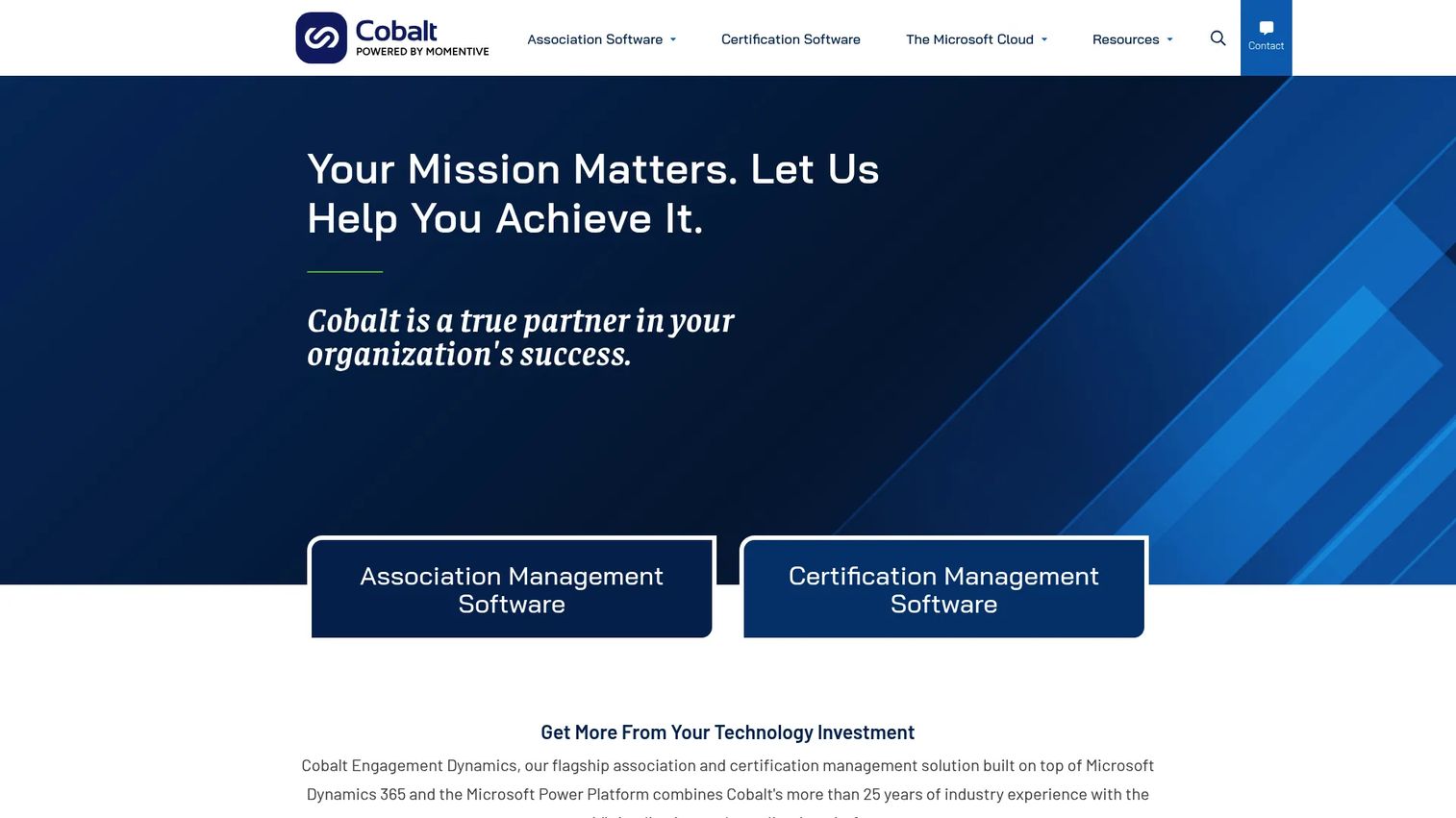
Cobalt Engagement Dynamics is association and certification management software built on Microsoft Dynamics 365 and the Microsoft Power Platform. It supports certification management, membership, events, eCommerce, and applicant portals within a single Dynamics-based data model. Organizations already committed to the Microsoft stack benefit from native reporting, Power BI integrations, and familiar administrative interfaces.
Best for: Associations and certification organizations operating on Microsoft Dynamics 365 that want certification, membership, and reporting in one data model.
Key features
- Certification management on Dynamics 365
- Applicant and certificant self-service portals
- eCommerce, membership, and subscription management
- Event management and engagement tracking
- Microsoft Power Platform reporting and dashboards
Why choose Cobalt Engagement Dynamics: This is the right fit when the board already lives in Microsoft and wants certification data in the same place as membership, events, and finance. For founders, the value is fewer disconnected reports at board review time.
Cobalt pricing: Pricing covers Dynamics 365 licensing, implementation, and configuration. Contact Cobalt directly and ask what drives the quote: User count, modules selected, data migration, and reporting requirements all affect the total.
G2 rating: 4.7/5 on G2.
3. BrightLink
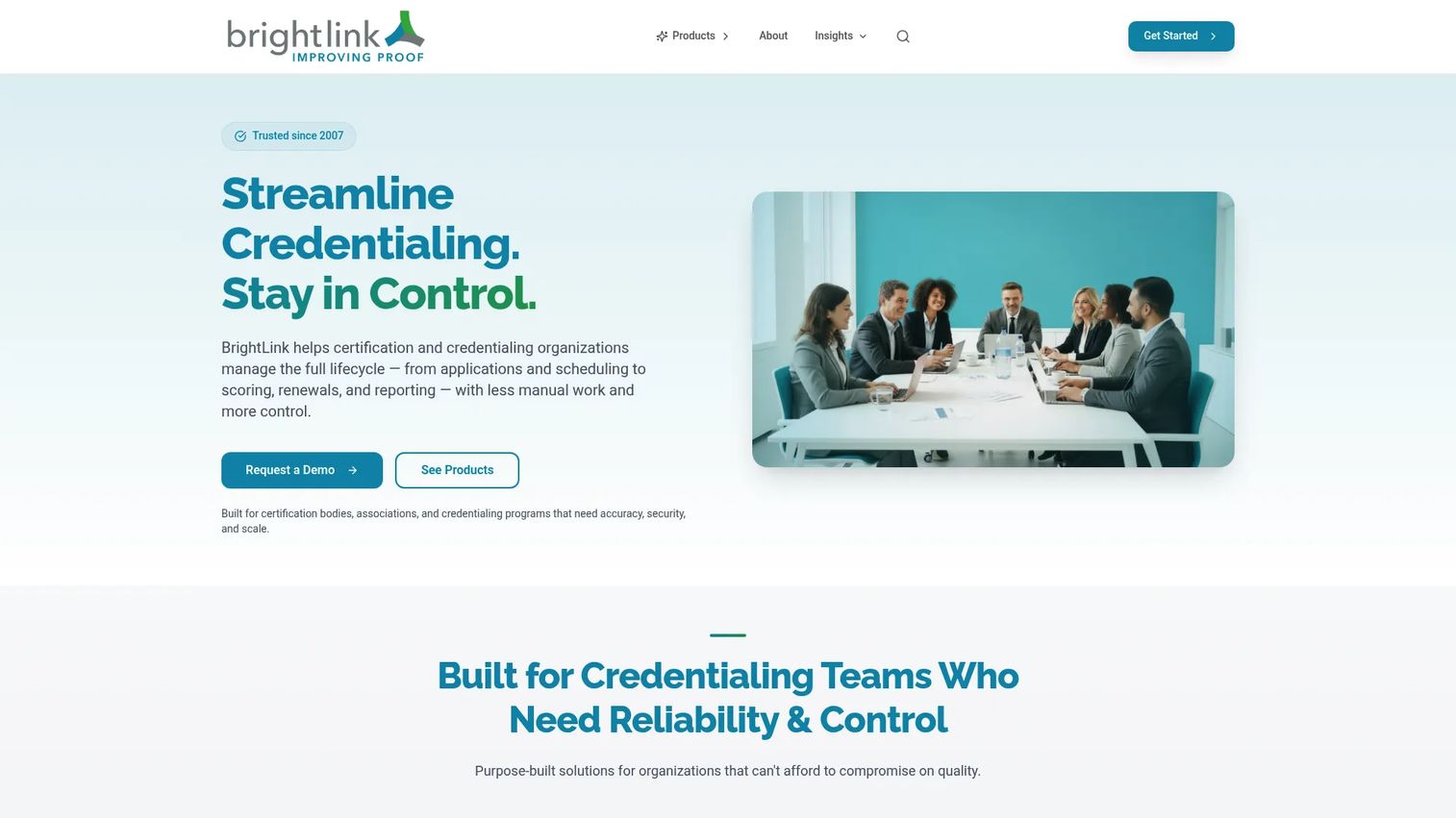
BrightLink provides credentialing software for certification bodies, associations, boards, and high-stakes assessment programs. The platform covers end-to-end certification and credential lifecycle management, including configurable workflows for applications, eligibility, certification, renewals, and continuing education. BrightLink has supported credentialing programs since 2007 and adds AI-powered features including Scout for conversational reporting, Crucible for constructed-response scoring, and Rosie for operational assistance.
Best for: Credentialing organizations where assessment delivery and certification operations need to run from a connected platform.
Key features
- Configurable low-code workflows for the full certification lifecycle
- AI conversational reporting through Scout
- Constructed-response scoring through Crucible
- Digital badging and workforce skill computation
- Integrations with exam delivery, SSO, payment, and badging providers
Why choose BrightLink: Choose BrightLink when separating assessment operations from credentialing management creates coordination overhead. The platform reduces the handoffs between teams and keeps certification status, exam results, and CE records in one place.
BrightLink pricing: BrightLink uses custom pricing. Request a demo and ask about assessment volume, candidate counts, implementation timeline, and integration costs with your existing testing or LMS provider.
4. Credicycle

Credicycle is a certification management system for organizations managing certification exams, licensure, and microcredentials. The platform handles candidate registration, prerequisite document uploads, exam or certification selection, payment submission, and voucher or coupon payments through a PCI-compliant candidate portal. It is focused on the front end of the certification lifecycle: Getting candidates registered, documented, and paid.
Best for: Credentialing teams that need a structured candidate intake and payment portal without stitching together forms, payment processors, and email manually.
Key features
- Candidate profiles and exam or certification selection
- Prerequisite document uploads and review
- PCI-compliant payment submission with voucher support
- Certification status and record management
- Credential lifecycle tracking
Why choose Credicycle: Credicycle fits programs where the primary friction is candidate registration and payment collection. If your larger need is renewal automation, CE tracking, and audit-ready reporting, evaluate whether Credicycle covers those stages or whether you need to pair it with additional tools.
Credicycle pricing: Contact the team and ask about records managed, user roles, portal configuration, and integration with your testing provider.
5. ROC-P
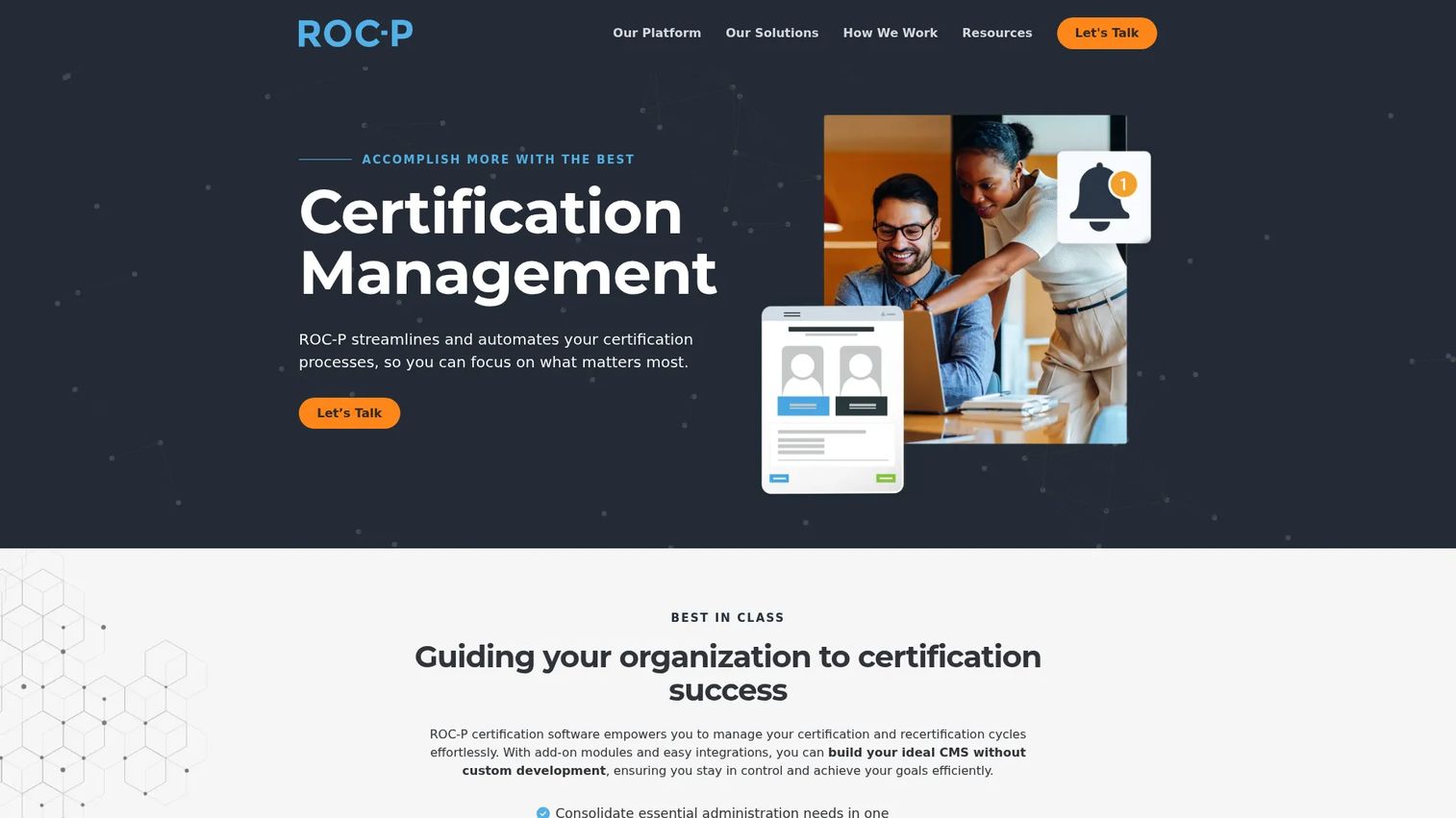
ROC-P is SaaS certification management software for professional associations, certifying organizations, and credentialing bodies. It supports the full certification lifecycle, including application and exam registration, continuing education tracking, payments, automated communications, and configurable workflows. The platform is built for organizations that need a repeatable operational process around certification and recertification without depending on custom development.
Best for: Professional associations and credentialing bodies managing complex certification programs with active continuing education and renewal workflows.
Key features
- Application and exam registration management
- Continuing education tracking and credit accumulation
- Automated payments and communications
- Configurable certification workflows and status tracking
- Integration support for external systems
Why choose ROC-P: ROC-P is a strong candidate when continuing education tracking and renewal automation are the primary operational gaps. For a program owner taking over a manual process, it provides enough configurability to match existing rules without engineering work.
ROC-P pricing: ROC-P directs prospects to request a demo for pricing. Ask about program size, CE tracking volume, communication automation, and integration with your testing and LMS providers.
6. BadgeCert
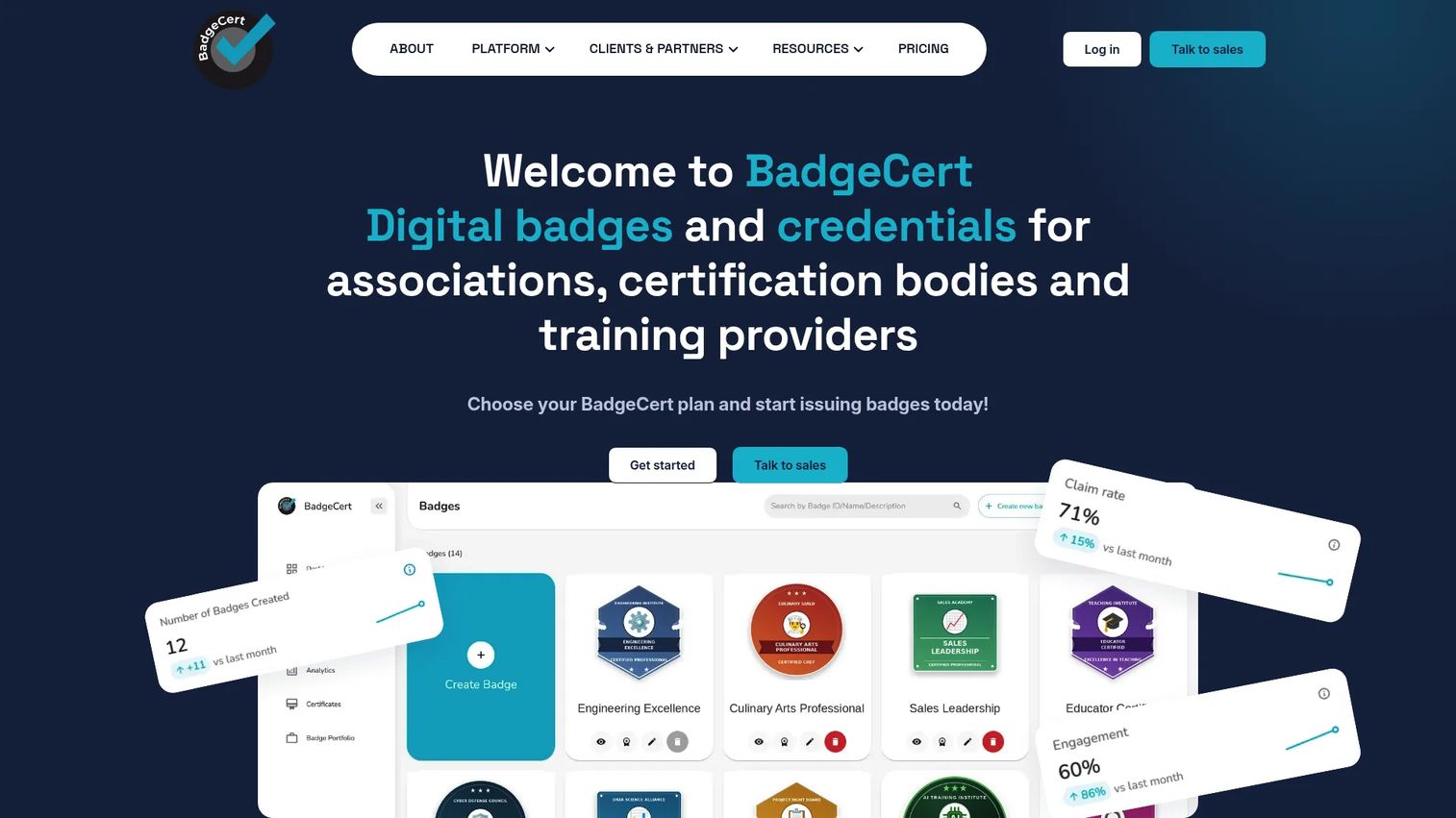
BadgeCert is a digital credentialing platform for issuing, storing, verifying, tracking, and sharing digital badges and certificates. It supports Open Badge 3.0 and blockchain verification, public verification pages with social sharing, Apple Wallet and Google Wallet support, and analytics with API and LTI integrations. BadgeCert serves associations, certification bodies, training providers, universities, enterprises, and nonprofits issuing verifiable credentials at scale.
Best for: Organizations that need to issue, verify, and track digital badges after certification decisions are made elsewhere, or those building a credential issuance layer on top of an existing program.
Key features
- Digital badge and custom certificate issuance
- Open Badge 3.0 and blockchain verification
- Public verification pages with social sharing
- Apple Wallet and Google Wallet support
- Analytics, API, and LTI integrations
Why choose BadgeCert: BadgeCert is purpose-built for digital credential issuance and verification. It is not a full certification lifecycle management system. If your program already manages eligibility and renewals in another platform, BadgeCert adds the credential communication and verification layer that candidates and employers actually see.
BadgeCert pricing: BadgeCert prices by recipient. The Basic plan starts at $1.29 per recipient per year (billed annually) for 1,000 to 2,500 recipients, covering credential issuance, verification pages, Open Badge 3.0, blockchain verification, and standard support. The Growth plan starts at $1.69 per recipient per year and adds branding, analytics, API and LTI integrations, wallet cards, and priority support. Enterprise pricing is custom for higher volumes, SAML/SSO, and advanced compliance features.
G2 rating: 4.5/5 on G2.
7. Credly
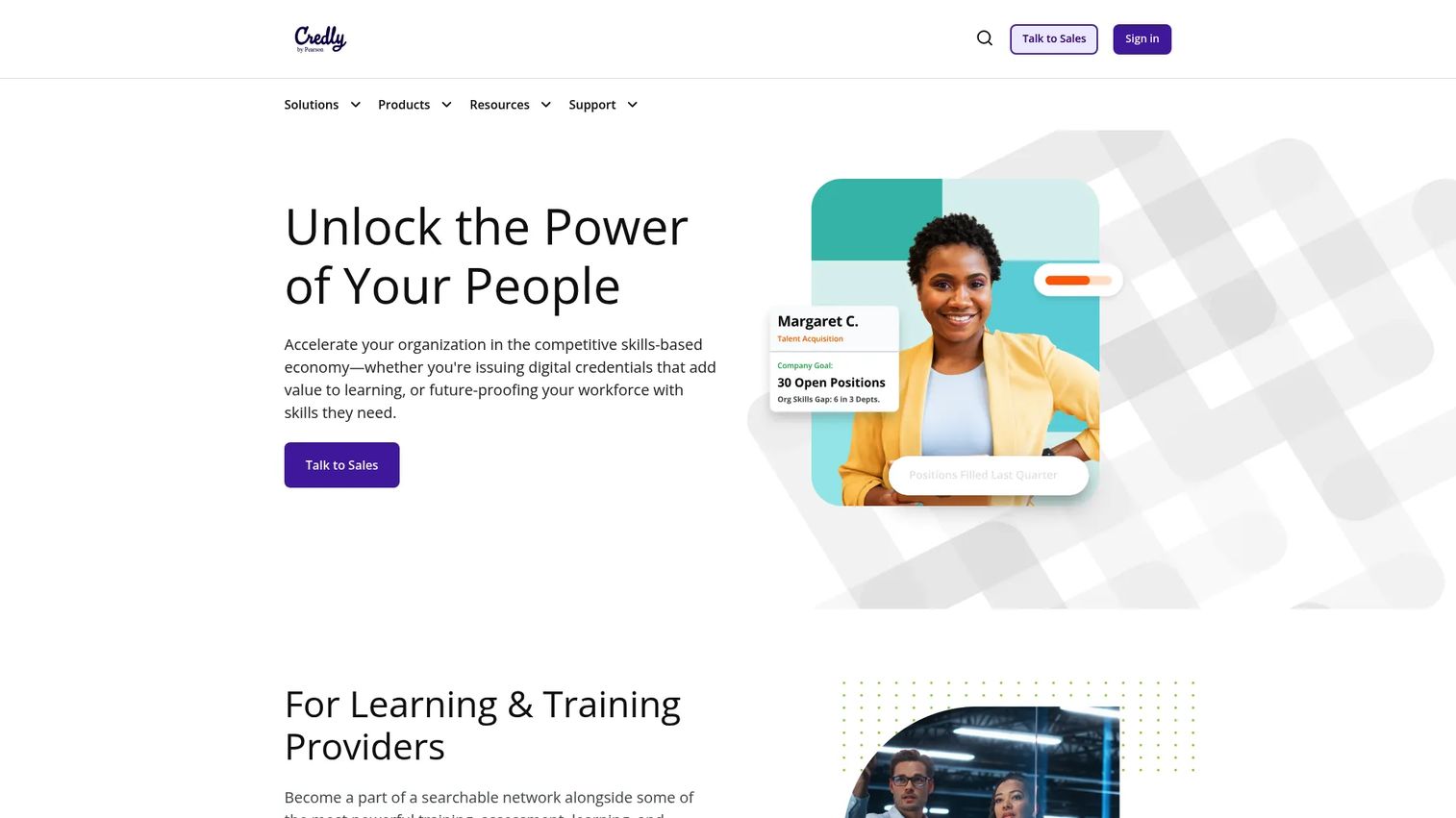
Credly is a digital credentialing platform for creating, issuing, managing, sharing, and analyzing verified digital credentials. The platform supports Open Badges 3.0, blockchain validation, REST API integrations, mobile wallet sharing, learning pathways, and a Talent Directory that connects credential holders with employment opportunities. Credly is used by enterprises, education providers, government agencies, and professional certification programs at scale.
Best for: Enterprises and certification programs that need digital credential visibility across a large credential holder population, with analytics and employer-facing verification built in.
Key features
- Digital credential creation and issuance at scale
- Credential analytics and recipient engagement reporting
- Talent Directory and occupation insights
- Open Badges 3.0 support with blockchain validation
- REST API integrations and mobile wallet sharing
Why choose Credly: Credly is the right choice when the credential needs to travel beyond your organization. The Talent Directory and employer-facing verification layer create external trust and visibility that badge issuance alone does not. For partner or professional certification programs trying to demonstrate credential value to employers, that visibility matters.
Credly pricing: Credly pricing is discussed with their sales team. Request a demo and ask about issuer seats, credential volume, analytics access, API integration requirements, and enterprise support tiers.
G2 rating: 4.8/5 on G2.
8. Pearson VUE

Pearson VUE, now operating as Pearson Professional Assessments, provides high-stakes exam development, credentialing, and secure test delivery through a global network of test centers and the OnVUE online proctoring platform. Capabilities include computer-based testing, live proctored remote exams with identity verification and browser lockdown, exam development and credentialing services, and training resources including courseware and practice tests.
Best for: Certification programs that need established, large-scale exam delivery infrastructure with both in-person and remote proctoring options.
Key features
- Computer-based testing through a global test-center network
- OnVUE online proctoring with live monitoring and identity verification
- Exam development and credentialing services
- Training resources including practice tests and courseware
- Exam result workflows for integration with credentialing systems
Why choose Pearson VUE: Pearson VUE is the exam delivery layer, not the certification management platform. Choose it when the testing infrastructure is the operational constraint. You will still need a separate certification management system for applications, eligibility, renewals, CE tracking, and credential records.
Pearson VUE pricing: Exam pricing varies by sponsoring program. Contact Pearson VUE's program services team and ask about exam delivery model, candidate volume, online versus in-center proctoring, and reporting integration.
G2 rating: 3.1/5 on G2 (based on OnVUE reviews).
9. Prometric
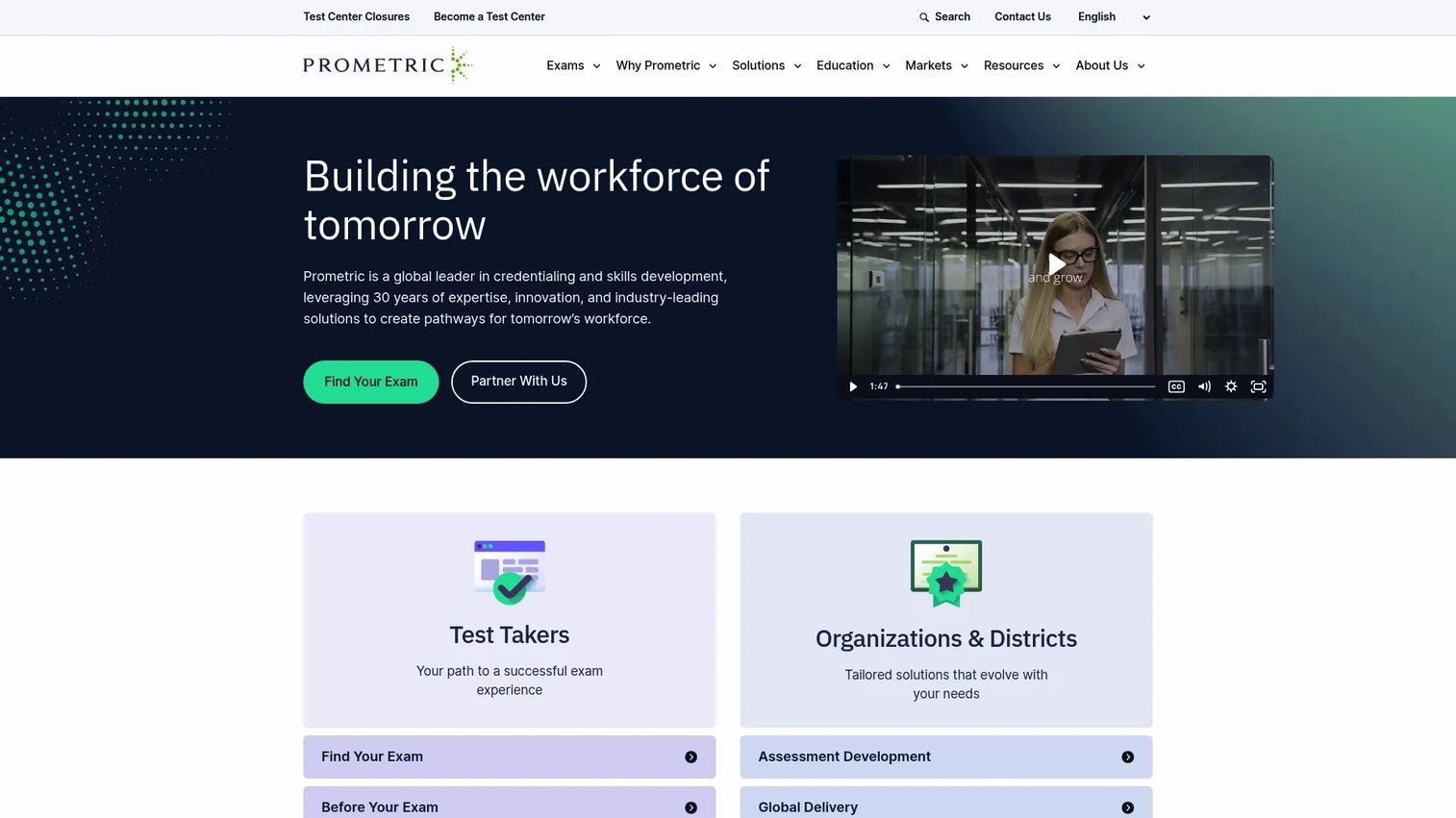
Prometric provides technology-enabled assessment development, secure exam delivery, remote proctoring, and testing services for credentialing and certification programs worldwide. The platform supports in-center testing, remote and hybrid exam delivery with AI-enhanced proctoring, assessment development and psychometric analysis, and global multilingual delivery across its testing-center network.
Best for: Certification bodies and professional programs where secure, scalable exam delivery is the primary operational requirement.
Key features
- In-center, remote, and hybrid exam delivery
- AI-enhanced remote proctoring with identity and environment checks
- Assessment development and psychometric analysis
- Reporting, analytics, and candidate journey insights
- Global testing-center network with multilingual delivery
Why choose Prometric: Prometric fits programs where exam security, delivery scale, and assessment development rigor are non-negotiable. Like Pearson VUE, it is a testing delivery provider, not a full certification lifecycle platform. Organizations that need application workflows, continuing education records, renewal automation, and credential verification will need to pair Prometric with a certification management system.
Prometric pricing: Prometric directs exam pricing through the sponsoring organization. Contact their program services team and ask about exam volume, delivery modality, proctoring model, candidate support requirements, and reporting.
G2 rating: 1.8/5 on G2, based on two reviews.
Considerations when choosing certification management software
Lifecycle coverage
Map the full certification lifecycle before you evaluate any platform. Include application, eligibility review, exam, award, digital badge issuance, renewal, continuing education, expiration, and revocation. A tool that covers applications but not renewals will force you to build that layer elsewhere, and you will end up with the same fragmented stack you started with.
Configuration depth
Certification programs almost always have exceptions: Committee approvals, eligibility waivers, partial credit rules, grandfathered pathways. The right contract lifecycle management lesson applies here too: Software that cannot handle your edge cases pushes every exception into email. Evaluate whether the platform's workflow configuration can match your certification handbook without engineering work.
Integration fit
Ask what this platform replaces, not only what it adds. The ideal shortlist includes your LMS, testing provider, payment processor, and digital credential tool. For founders building a certification function, the goal is a stack that a program lead can operate, not a new integration project for the engineering team. Review how association management software and admissions and enrollment management software tools handle similar integration requirements.
Reporting and audit readiness
Board-level reporting should not require a week of data cleanup before every review. Look for status history, decision records, CE completion logs, and permission-controlled exports. If your program operates under ISO/IEC 17024 or NCCA standards, audit documentation is not a reporting feature. It is a compliance requirement.
Implementation and ongoing ownership
Ask who owns the system after go-live. A strong buying decision gives a program leader control over workflow changes without opening a vendor ticket for every adjustment. Implementation timeline, data migration complexity, and ongoing support model all affect whether the new system actually reduces founder involvement or simply shifts the dependency to a different vendor relationship.
Conclusion
The certification management software market covers meaningfully different tools, and buying the wrong category is a common mistake. Badge tools are not lifecycle platforms. Testing providers are not renewal automation systems. Getting that distinction right before you book demos saves months of evaluation time.
For most certification programs building operational maturity, the right starting point is a full lifecycle platform. LearningBuilder and ROC-P both cover applications through renewal with configurable workflows. BrightLink adds value when assessment operations are central. Cobalt makes sense if the organization is already committed to Dynamics 365.
For digital credentialing, BadgeCert's per-recipient pricing makes it easy to model costs at scale. Credly earns its place when employer-facing visibility and analytics matter more than price per badge.
For exam delivery, Pearson VUE and Prometric are the two established options. Plan to pair whichever you choose with a certification management platform that handles the lifecycle work around the exam.
Before booking demos, map your certification handbook into the lifecycle stages listed in the considerations section above. That exercise will tell you which platforms to prioritize and which questions to ask on the first call.
For tools to manage related operational areas, see our guides on board management software, applicant tracking system software, and assessment software.
Start your journey with Guideflow today!
FAQs
Certification management software is a platform that manages the full lifecycle of a professional, organizational, or competency certification. This includes application intake, eligibility review, exam or assessment integration, credential issuance, renewal workflows, continuing education tracking, and audit-ready record keeping. It stores the rules, decisions, and status history that sit around a credential, not just the credential itself.
Certification management handles credentialing programs and the lifecycle behind professional or organizational certifications. Certificate management typically refers to digital security certificates such as SSL/TLS, PKI, or S/MIME used in IT infrastructure. The two categories share a word but serve entirely different functions. An LMS course-completion certificate sits in a third category: A simple credential tied to content completion, without the eligibility logic, renewal rules, or compliance records that certification management platforms handle.
Certification boards, professional associations, credentialing organizations, education providers, testing programs, and companies running partner or professional certification programs all use certification management software. For SaaS founders, the most common trigger is a partner or professional certification program that has outgrown spreadsheets and needs renewal automation and reporting before the next board review.
Look for application intake and eligibility review, configurable approval workflows, exam or assessment result integrations, continuing education credit tracking, renewal and expiration management, digital credential or badge issuance, public credential verification, audit trails with decision history, and reporting dashboards. Integration with your LMS, testing provider, payment processor, and CRM matters as much as the core feature set.
No. An LMS delivers learning content and records course completion. Certification management software manages the credentialing rules, eligibility decisions, renewal logic, CE credit accumulation, and compliance records that sit around a certification program. Many organizations use both: An LMS for content delivery and a certification management platform for the credential lifecycle. Confusing the two leads to programs that track course completions but cannot answer who holds an active, audit-ready credential.
Most full certification lifecycle platforms use quote-based pricing. The drivers are program size, number of certificants, CE tracking volume, workflow complexity, integration requirements, implementation work, and support tier. BadgeCert publishes recipient-based pricing starting at $1.29 per recipient per year for digital badge issuance. For everything else on this list, request a quote and ask about total cost of ownership including implementation and ongoing configuration.
Some do, and some integrate with dedicated digital credential tools. Platforms like LearningBuilder, BrightLink, and ROC-P support or integrate with badge issuance. BadgeCert and Credly are purpose-built for badge issuance and verification and are typically used after certification decisions are made in a lifecycle platform. The digital credential market reached 1.71 million badge offerings globally in 2025, up from 521,000 in 2022, according to 1EdTech and Credential Engine. Demand for verifiable credentials is real; the question is whether badge issuance belongs inside your lifecycle platform or as a connected layer.
Start by mapping your certification lifecycle from application to renewal. Count your active certificants, renewal volume per year, and CE credit types. Then identify where the current process breaks: Candidate registration, eligibility decisions, CE tracking, renewal reminders, or audit reporting. The platform that covers your highest-friction stage first is usually the right starting point. For programs adding complexity faster than their ops capacity, prioritize workflow configurability and the ability for a program lead to make rule changes without opening an engineering ticket.