Most flower shops are running four or five disconnected systems simultaneously: A POS for counter sales, a spreadsheet for delivery routes, a separate website platform, paper order pads for phone orders, and a folder of Word docs for wedding proposals. When Valentine's Day hits, every gap in that stack becomes a missed delivery or a wrong arrangement.
U.S. spending on flowers, seeds, and potted plants reached $78.1 billion in 2025, according to the Society of American Florists. With 11,744 retail florist shops competing for that spend, the gap between a shop running clean operations and one held together with sticky notes is growing. Florist-specific floral software handles the workflows generic retail tools ignore: Occasion dates, wire orders, stem counts, delivery routing, substitutions, and wedding production sheets. Choosing the right platform starts with knowing which workflow breaks first in your shop.
What's inside
This guide compares 12 florist software options for 2026, covering the full range from florist-specific POS to general ecommerce and inventory platforms. Tools were selected based on:
- Florist workflow coverage: POS, delivery, websites, events, and inventory
- Pricing clarity: Plans, trials, and fee structures from vendor pages
- Ratings and reviews: G2, Capterra, and comparable sources
- Business model fit: Retail shops, ecommerce-first operations, and event florists
The guide suits flower shop owners, studio operators, and anyone evaluating florist management systems before the next peak season.
TL;DR
- Best overall florist software: Floranext, for shops wanting POS, websites, delivery, and wedding workflows together
- Best for retail shop operations: FloristWare, for established shops prioritizing order flow, delivery, payments, and reporting depth
- Best POS with delivery routing: IRIS, for florists that need florist POS, website tools, delivery routing, and offline support
- Best for weddings and events: Details Flowers or Curate, depending on whether the priority is floral design or full event operations
- Best for ecommerce-first shops: Shopify or BloomNation, depending on whether the shop wants a general storefront or florist-oriented marketplace support
- Best general POS: Clover or Epos Now, for shops that mainly need checkout and payment reliability
What is florist software?
Florist software is business management software that helps flower shops sell arrangements, manage orders, process payments, track customers, coordinate delivery, control inventory, and run ecommerce or event workflows.
The category differs from generic retail POS in one practical way: Flower shop orders are time-sensitive, perishable, and occasion-driven. A regular retail system handles checkout but misses the florist-specific layer underneath, which includes:
- Florist POS: Order entry for walk-in, phone, web, and wire channels
- Florist point of sale: Payment processing, receipt printing, and house accounts
- Online ordering and florist websites: Product catalogs, holiday pricing, delivery zones, and pickup scheduling
- Delivery routing and tracking: Route optimization, driver apps, GPS downloads, and proof-of-delivery capture
- Floral inventory management: Stem counts, recipes, substitutions, purchasing, and product pads
- Customer history and loyalty: Occasion reminders, repeat-buyer records, and marketing campaigns
- Wedding proposals and event production: Contracts, e-signatures, recipes, production sheets, and payment schedules
- Reporting: Daily sales, order source, delivery performance, and wedding profitability
The right fit depends on business model. A single-location retail florist running 40 counter and phone orders per day needs different software than a studio doing 60 weddings per year. An ecommerce platform for small business can cover the online storefront but rarely handles florist delivery zones or stem-count production sheets without add-ons. A standalone flower shop POS can handle the counter but may leave the website, deliveries, and events on separate systems.
The five workflow categories that determine fit are counter sales and POS, online ordering and websites, delivery routing, weddings and event production, and inventory reporting. Figure out which one breaks first in your shop, then shortlist accordingly.
When to use florist software
Replace paper order books and disconnected spreadsheets
A shop entering walk-in orders on paper and tracking deliveries in a spreadsheet will start losing details during any peak period. Valentine's Day, Mother's Day, and prom season compress order volume into narrow windows. Florist software centralizes order intake, customer history, payment status, pickup times, and delivery instructions into one place, reducing the chance that an address change or substitution request gets lost between the counter and the driver.
Sell flowers online without breaking shop operations
Adding an online store to a retail florist operation is not just a website decision. The platform needs to handle delivery zones, substitution rules, pickup scheduling, card payments, and order changes in a way that feeds directly into the same order queue the counter uses. A beautiful florist ecommerce site that creates a separate order stream for staff to reconcile manually defeats the purpose.
Manage weddings, events, and production work
Wedding and event florists operate on a different cadence than retail shops. Revenue comes months before execution. Profit lives in stem counts, recipe margins, rental items, and labor. The right wedding florist software handles proposals, contracts, e-signatures, production sheets, payment schedules, and client communication, not just checkout. Teams evaluating event management software for florists should check whether the tool handles floral recipes and stem-level costing specifically.
Florist software comparison
No single tool wins across every florist workflow. The table below maps each option to its primary strength, so you can filter by what your shop actually needs rather than by feature count. Pricing and ratings reflect verified data from vendor pages and live review listings.
| # | Product | Best for | Key differentiator | Pricing | G2 rating |
|---|---|---|---|---|---|
| 1 | Floranext | All-in-one florist operations | POS, websites, delivery, and weddings combined | Contact vendor | 4.7/5 |
| 2 | FloristWare | Retail shop POS and operations | Deep florist workflow: Delivery, production, payments | From $149/month | 4.3/5 |
| 3 | IRIS | POS with delivery routing and offline support | Florist POS, websites, GPS routing, four plan tiers | Contact vendor | Capterra 4.8/5 |
| 4 | Hana POS | All-in-one including weddings and wire services | Stem inventory, wire integrations, 30-day free trial | Contact vendor | Capterra 4.5/5 |
| 5 | BloomNation | Ecommerce and marketplace exposure | Florist marketplace plus POS and marketing tools | Contact vendor | 4.7/5 |
| 6 | Details Flowers | Wedding and event floral design | Proposals, recipes, stem counts, and production planning | From $25/month | 4.8/5 |
| 7 | Curate | Full event operations management | Proposals through production: Contracts, payments, staffing | Contact vendor | Capterra 4.7/5 |
| 8 | HoneyBook | Client and project management for event florists | Clientflow: Leads, proposals, contracts, invoices | From $29/month | 4.5/5 |
| 9 | Clover | General POS and payment processing | Flexible hardware and payments for retail shops | From $9.95/month | 3.8/5 |
| 10 | Epos Now | General retail POS with inventory | Cloud POS with reporting, inventory, and payment integrations | From $349 (hardware bundle) | 4.6/5 |
| 11 | Fishbowl | Complex inventory and warehouse operations | Inventory control, BOM, barcode scanning, multi-warehouse | From $229/month | 4.0/5 |
| 12 | Shopify | Ecommerce-first florist websites | Online storefront with 21,000+ apps and multichannel selling | From $29/month | 4.4/5 |
Best 12 florist software tools for 2026
No single platform wins for every shop. A counter-heavy retail florist, an ecommerce-first studio, and a full-service wedding atelier each have different bottlenecks. The sections below match each tool to the shop type it actually fits.
1. Floranext
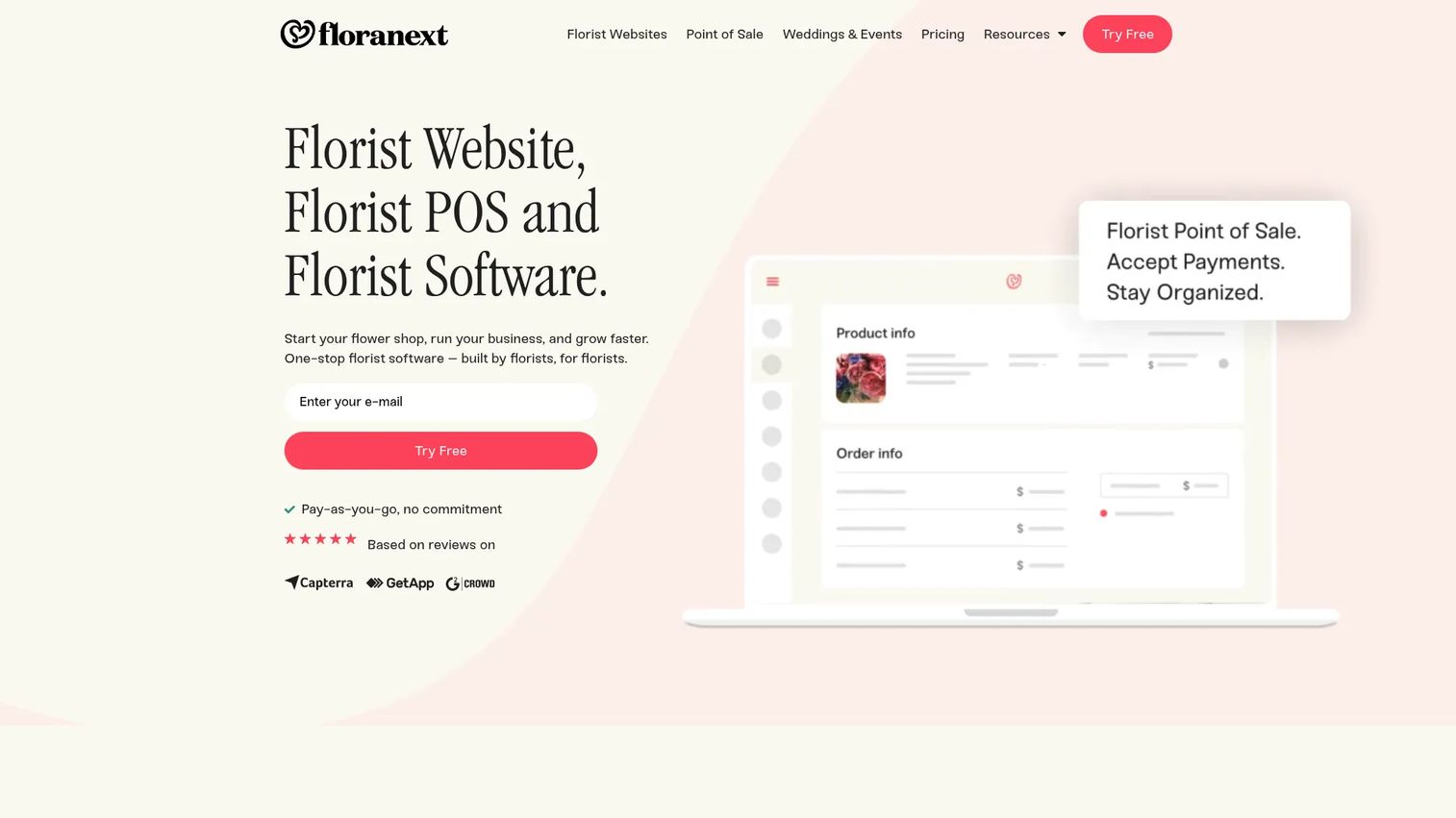
Floranext is a florist-specific platform built to cover shop operations from counter sales to online ordering to wedding proposals without routing between separate systems. Its core products are a florist website with ecommerce, a florist POS for retail and phone orders, and a Wedding Manager for event proposals and production. Shops can run each module individually or use the All in One bundle.
Best for: Small and midsize retail florists that want POS, online ordering, delivery tools, and wedding workflows in one florist-specific stack.
Key features
- Florist POS with credit-card processing, delivery routing, and reporting
- Ecommerce website with SEO, holiday pricing, delivery charges, and tips
- Wedding Manager with proposals, shopping lists, contracts, e-signatures, deposits, and payments
- Subscription and loyalty tools for repeat customers
- All in One bundle combining POS, website, and Wedding Manager
Why choose Floranext: Its strength is breadth. For a shop that currently uses separate tools for the counter, the website, and weddings, consolidating into one florist-native platform reduces the number of systems staff must learn and synchronize. It is a natural first evaluation for any florist replacing a patchwork setup.
Floranext pricing: Floranext offers free trials for its Website, POS, and Wedding Manager products. Contact Floranext directly for current rates or use the trial to assess fit before committing.
G2 rating: 4.7/5
2. FloristWare
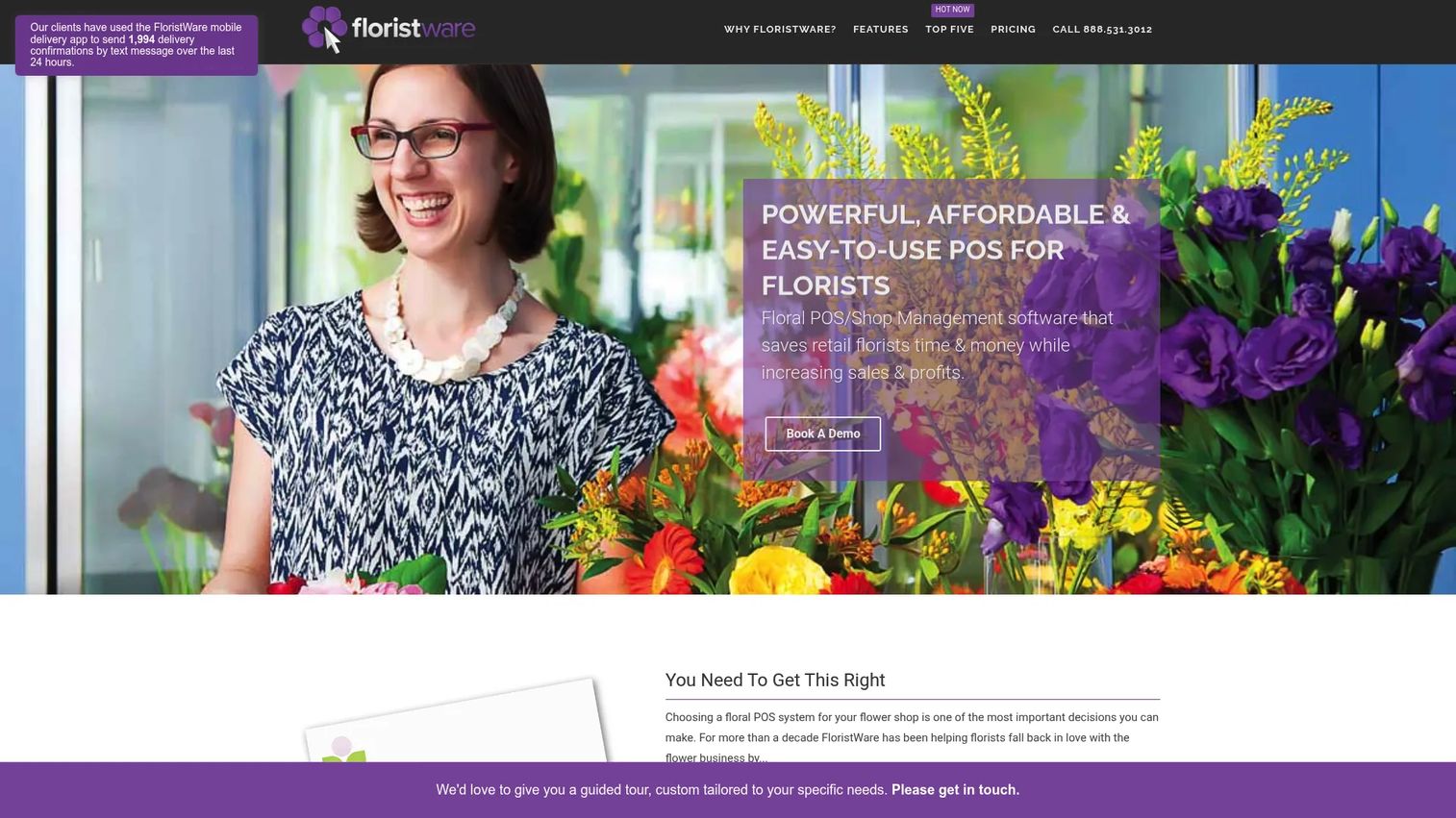
FloristWare is a retail-focused florist POS and flower shop management system built specifically around how a retail flower shop operates day to day. It covers order management, delivery routing, driver tracking with signature capture, payment processing, customer loyalty, production tracking, and business reporting. Wire service integrations, Shopify connectivity, and Flower Shop Network support make it a practical fit for shops already running those channels.
Best for: Established retail flower shops that want deep florist workflow coverage across sales, delivery, production, and reporting.
Key features
- Floral POS with order management and payment processing
- Delivery routing with route optimization and GPS-based driver app
- Mobile delivery app with real-time confirmations and signature capture
- Customer loyalty, marketing tools, and repeat-buyer tracking
- Shopify, Flower Shop Network, and wire-service integrations
Why choose FloristWare: The delivery and production depth is the differentiator. Shops that already know their florist workflow and want software that keeps pace with a busy retail operation will find FloristWare's specificity useful. It is less suited for shops where the primary bottleneck is the website or event proposals.
FloristWare pricing: Plans run monthly or annually. Basic costs $149/month ($1,499/year), Advanced is $199/month ($1,999/year), and Enterprise is $500/month ($5,000/year). Custom plans and paid add-ons are also available. No free tier is listed on the pricing page.
G2 rating: 4.3/5 (verified from G2 listing)
3. IRIS

IRIS is a connected florist software platform covering POS, ecommerce websites, delivery routing, mobile reporting, customer history, house accounts, gift cards, loyalty, and QuickBooks integration. Its POS handles delivery, walk-in, pickup, and wire orders with customizable product pads. Delivery routing exports GPS-optimized routes, and the IRIS Insight mobile app gives owners sales and tax reporting on the go.
Best for: Independent flower shops seeking an integrated florist POS, ecommerce, delivery routing, and reporting platform with implementation support.
Key features
- Floral POS for delivery, walk-in, pickup, and wire orders
- Customizable product pads and touch-friendly checkout
- GPS-optimized delivery routing with mapping downloads
- Florist ecommerce websites built for florist-specific ordering
- Mobile sales reporting via IRIS Insight app
Why choose IRIS: Migration support, training, and four named plan tiers make IRIS worth evaluating for shops worried about switching costs. A 14-day free trial with no credit card or contract requirement lets teams test the system without commitment. Shops already on QuickBooks will find the integration practical.
IRIS pricing: Four plans are available: Amethyst, Sapphire, Emerald, and Ruby. Contact IRIS for current monthly rates. A 14-day free trial is available with no credit card or contract required. Extended support is listed at $40/month per computer.
Capterra rating: 4.8/5
4. Hana POS
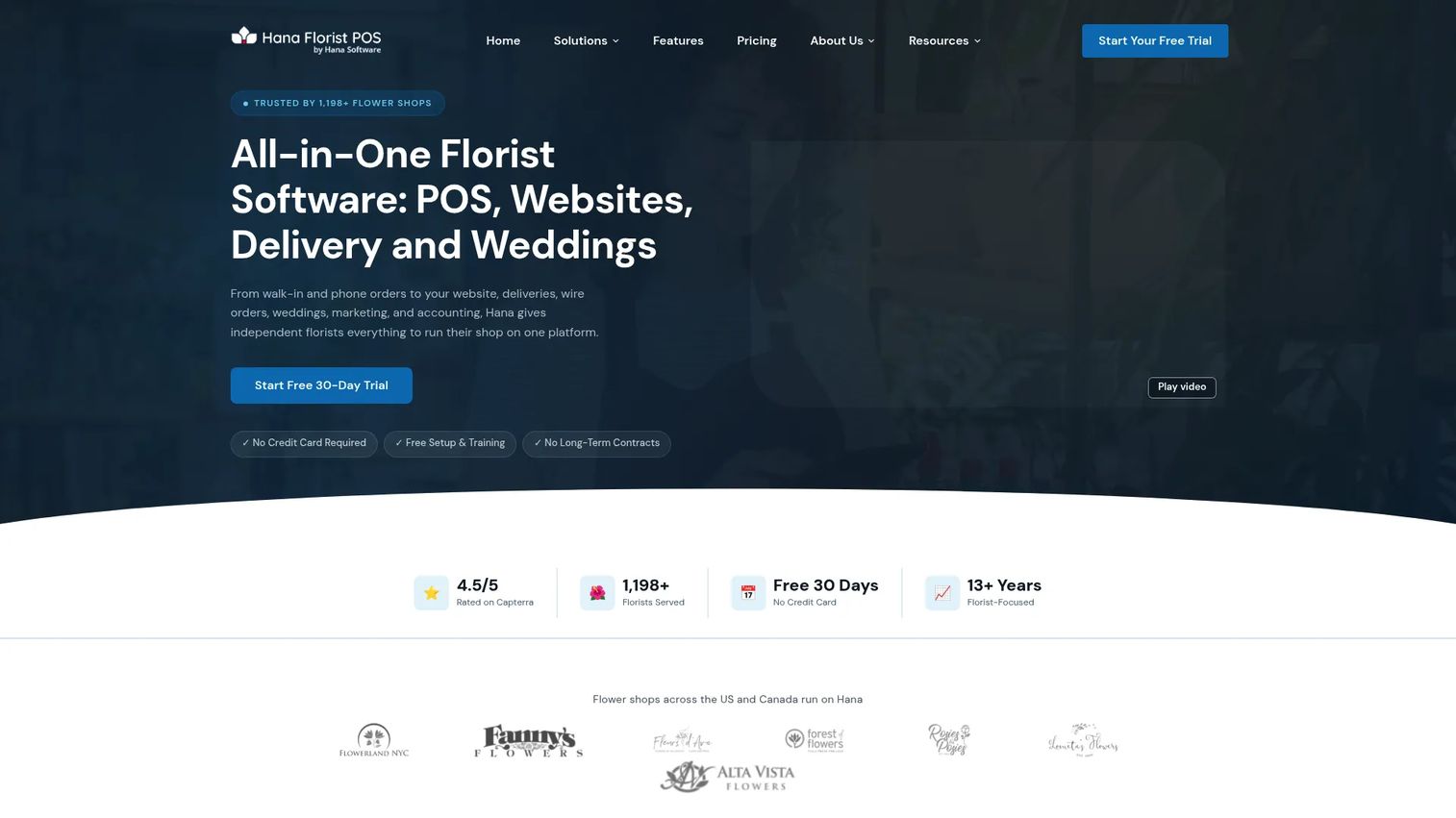
Hana POS is a cloud-based florist software platform combining POS, ecommerce website, delivery routing, wedding and event management, marketing, wire services, and accounting tools. Order management covers walk-in, phone, website, and wire channels. Delivery routing includes a GPS driver app, proof-of-delivery capture, and SMS notifications. The platform also supports stem-level inventory tracking and purchase-order management, which makes it one of the more comprehensive options in the florist-specific category.
Best for: Independent and multi-location florists needing an all-in-one platform that covers retail, delivery, wire services, stem inventory, and weddings.
Key features
- Order management across walk-in, phone, website, and wire channels
- GPS delivery routing with driver app, proof of delivery, and SMS alerts
- Stem-level inventory tracking and purchase-order management
- Wire-service integrations including FTD, Teleflora, BloomNet, FSN, and BloomNation
- Wedding proposals, contracts, e-signatures, deposits, and event management
Why choose Hana POS: For shops running wire orders alongside retail and wedding work, the breadth of channel integrations in a single platform reduces the number of separate logins staff manage. The 30-day free trial provides enough runway to test the delivery routing and order flow under real operating conditions.
Hana POS pricing: Plan tiers (Bud, Blossom, Bouquet, and Enterprise) are listed on the pricing page. A 30-day free trial is available. A performance-based plan with no monthly cost is offered selectively. Contact Hana POS for current pricing by tier.
Capterra rating: 4.5/5
5. BloomNation
BloomNation is a growth platform for florists combining custom ecommerce websites, cloud-based POS, automated marketing, and a florist marketplace. The website and storefront tools are oriented toward online order acquisition. The POS side covers order management, delivery-route optimization, invoicing, proposals, and analytics. BloomNation's marketplace gives independent shops visibility to buyers searching outside their local area.
Best for: Independent florists that want to grow online orders, improve website presence, and reach buyers through the BloomNation marketplace.
Key features
- Custom ecommerce florist websites with SEO and direct online ordering
- Cloud POS with order management, delivery-route optimization, and analytics
- Automated marketing through email, SMS, and social media
- BloomNation florist marketplace for broader customer reach
- Wedding and event tools: Proposals, recipes, contracts, e-signatures, and payment timelines
Why choose BloomNation: The marketplace is the distinctive element. Florists wanting exposure to buyers who search "flowers near me" on a third-party platform gain a channel that most florist-specific POS systems do not offer. The tradeoff is that commission structures and fee models require a direct conversation with BloomNation before committing, since numeric plan prices are not shown on the public pricing page.
BloomNation pricing: Storefront setup and custom sites are described as free for registered florists, but fees may include commissions, hosting, payment processing, and service charges. Contact BloomNation for a full breakdown of applicable costs.
G2 rating: 4.7/5
6. Details Flowers

Details Flowers is an all-in-one platform for wedding and event florists covering proposal creation, recipe building, stem counting, automated pricing, contracts, e-signatures, invoicing, online payments, and supplier marketplace integration. It is built around the floral design workflow, which means the tool's core value is in costing accuracy and presentation quality, not counter sales or delivery routing.
Best for: Wedding and event florists that need proposals, recipes, pricing, contracts, and production management in one platform.
Key features
- Proposal creation with templates and design boards
- Recipe creation and stem counting with automated costing
- Contracts, e-signatures, invoicing, and online payments
- Automated pricing and markup tools
- Inventory and supplier marketplace integration
Why choose Details Flowers: Event florists should evaluate tools by what drives their revenue and margin, not by POS features they rarely use. If proposals, recipes, rental items, and production documents are where mistakes happen, Details Flowers deserves close evaluation. It is a narrower tool than a full florist POS, but it is deeper where event work gets complex.
Details Flowers pricing: A 7-day free trial is available. A Starter Plan is available at $25/month. Contact Details Flowers for current rates across the full tier range.
G2 rating: 4.8/5
7. Curate
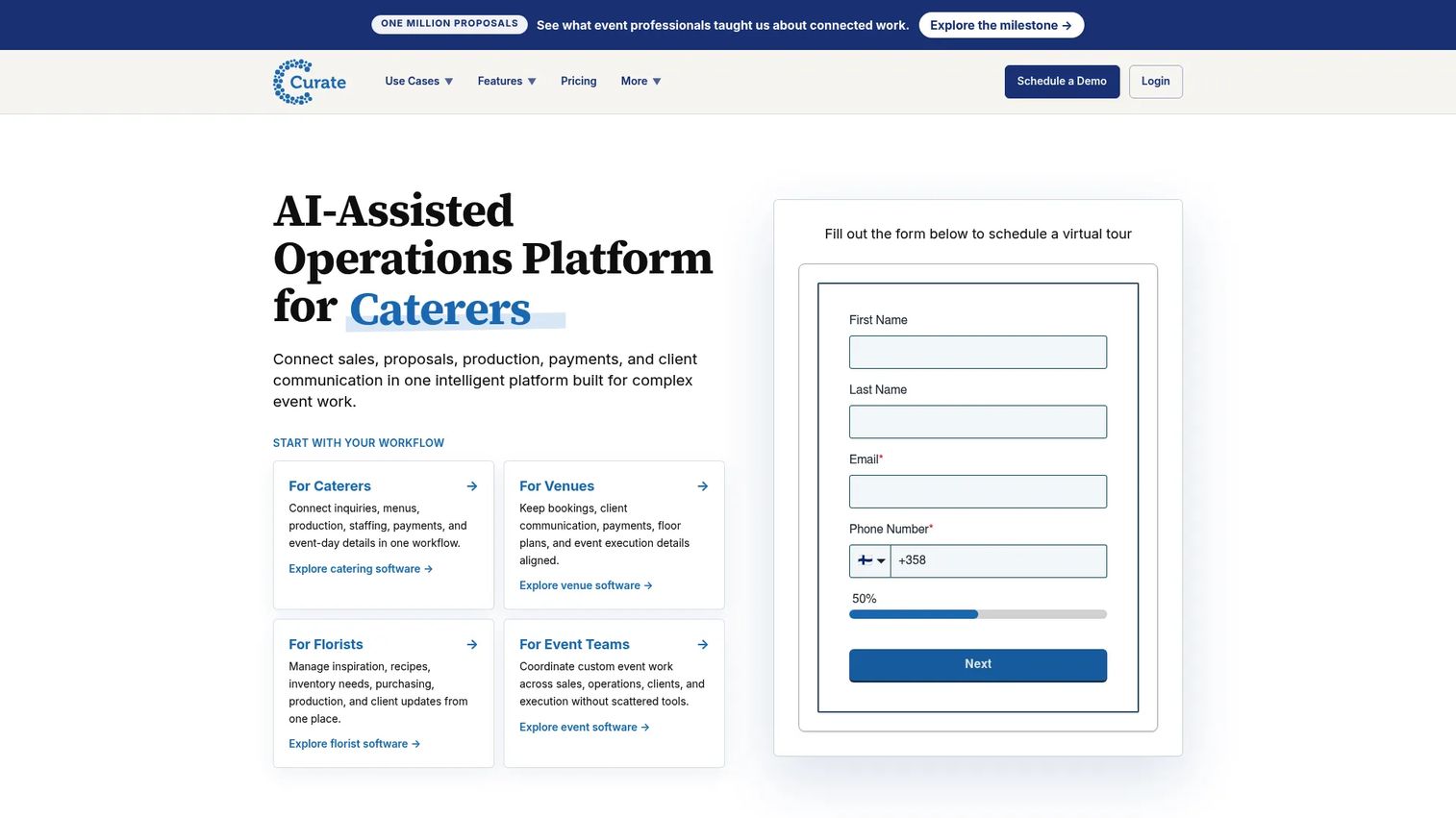
Curate is an event operations platform connecting the full lifecycle from inquiry through execution: Proposals, client portal, contracts, e-signatures, payments, catalog, recipes, packages, rentals, staffing, automations, workflows, production lists, and reporting. It serves florists alongside caterers, venues, and rental companies, which means the tool handles event complexity that extends beyond floral recipes into broader event production.
Best for: Florists with wedding, corporate, or event-heavy revenue streams that need structured quoting, production, and execution workflows.
Key features
- Proposal builder and client portal
- Contracts, e-signatures, and online payments
- Catalog, recipes, packages, rentals, and staffing tools
- Production lists, project prints, and profitability reporting
- Multi-location operations and workflow automations
Why choose Curate: For shops where events require structured quoting, client communication across a long timeline, and production coordination across a team, Curate handles that complexity in a way a standard florist POS does not. It suits operations where the sales cycle for a single event spans months. Retail counter work is not its primary focus.
Curate pricing: Basic, Growth, and Partnership plans are listed. The site uses a "Let's Chat" model for pricing conversations. Contact Curate for monthly or annual rates by plan. Capterra reports a 4.7/5 rating from reviewers who have used the platform.
Capterra rating: 4.7/5
8. HoneyBook
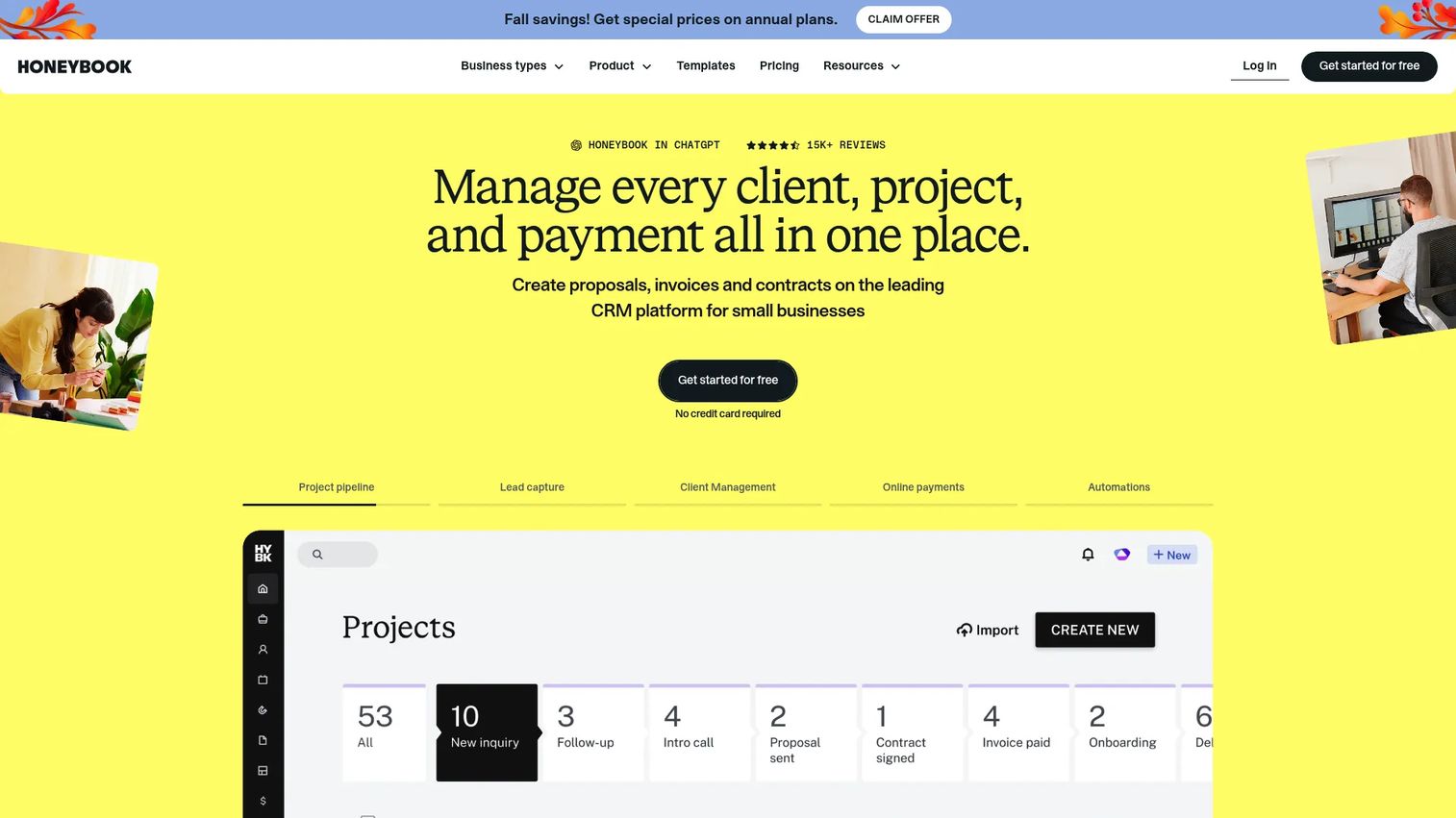
HoneyBook is AI-powered client relationship software for small businesses, covering lead capture, client and project management, proposals, contracts, invoices, online payments, automations, and scheduling. It is not florist-specific POS software. For event florists whose business behaves more like a creative services firm than a retail shop, HoneyBook handles the client side of the operation well.
Best for: Wedding florists and event studios that need client management, proposals, contracts, invoices, and communication organized in one place.
Key features
- Lead capture forms and pipeline management
- Proposals, contracts, and e-signatures
- Invoicing and online payment collection
- Workflow automations and client scheduling
- AI-assisted email drafts and project recaps
Why choose HoneyBook: The tradeoff is clear. HoneyBook does not handle floral POS, stem-count recipes, delivery routing, or florist inventory. It fits when the primary pain is client communication, proposal turnaround, and payment collection rather than shop operations. Florists who already have a POS and want a better client management layer should consider it. Those who need an all-in-one florist system will find it incomplete on the operational side.
HoneyBook pricing: Starter runs $29/month billed annually ($36/month billed monthly). Essentials is $49/month billed annually ($59/month billed monthly). Premium is $109/month billed annually ($129/month billed monthly). A free trial is available.
G2 rating: 4.5/5
9. Clover
Clover is a general-purpose cloud-based POS and payment processing platform for retail, restaurants, and service businesses. It handles card payments, mobile wallets, contactless payments, real-time sales tracking, basic inventory, employee management, and an app marketplace for extending functionality. Florist-specific workflows such as delivery routing, wire orders, stem counts, and occasion-based ordering require add-ons or separate systems.
Best for: Small flower shops that mainly need reliable POS hardware, card payment processing, and basic retail operations.
Key features
- Payment acceptance: Cards, mobile wallets, and contactless
- Real-time sales tracking, reporting, and basic inventory
- Employee management and scheduling tools
- App marketplace for added functionality
- Multiple hardware form factors: Clover Go, Compact, Mini, and station
Why choose Clover: Clover fits when the primary need is payment reliability and fast counter checkout, not florist-specific order management. Shops already embedded in the Fiserv payment infrastructure may find the integration path simpler. For any florist workflow beyond basic checkout, plan on separate tools or app integrations.
Clover pricing: Software starts at $9.95/month for Register Lite. Hardware is sold separately: Clover Go is $199 (one-time), Clover Compact is $349, Clover Mini is $849 (or $45/month over 36 months). Payment processing fees vary by plan and agreement.
G2 rating: 3.8/5
10. Epos Now
Epos Now is a cloud-based retail and hospitality POS platform covering inventory management, real-time reporting, integrated payment processing, staff management, and app integrations. Like Clover, it is not built specifically for florists. It handles general retail operations well, but florist workflows such as delivery routing, wire orders, and production sheets require additional tools.
Best for: Florists that want a general retail POS with inventory tracking and reporting, without florist-specific workflow requirements.
Key features
- Retail POS with inventory management
- Real-time sales reporting and analytics
- Integrated payment processing
- Staff management tools
- App integrations for added functionality
Why choose Epos Now: Shops where the main need is a clean retail checkout experience with solid inventory visibility and reporting will find Epos Now straightforward to deploy. The hardware-bundle pricing model means the initial investment covers both software and hardware together. For florist-specific delivery, occasion management, or event work, plan on separate tools alongside it.
Epos Now pricing: A complete POS system bundle starts at $349 upfront. A Duo Countertop and Air bundle runs $399. Tablet POS bundles start from $549 upfront plus a subscription starting at $54/month. Add-ons and payment processing fees may apply.
G2 rating: 4.6/5
11. Fishbowl
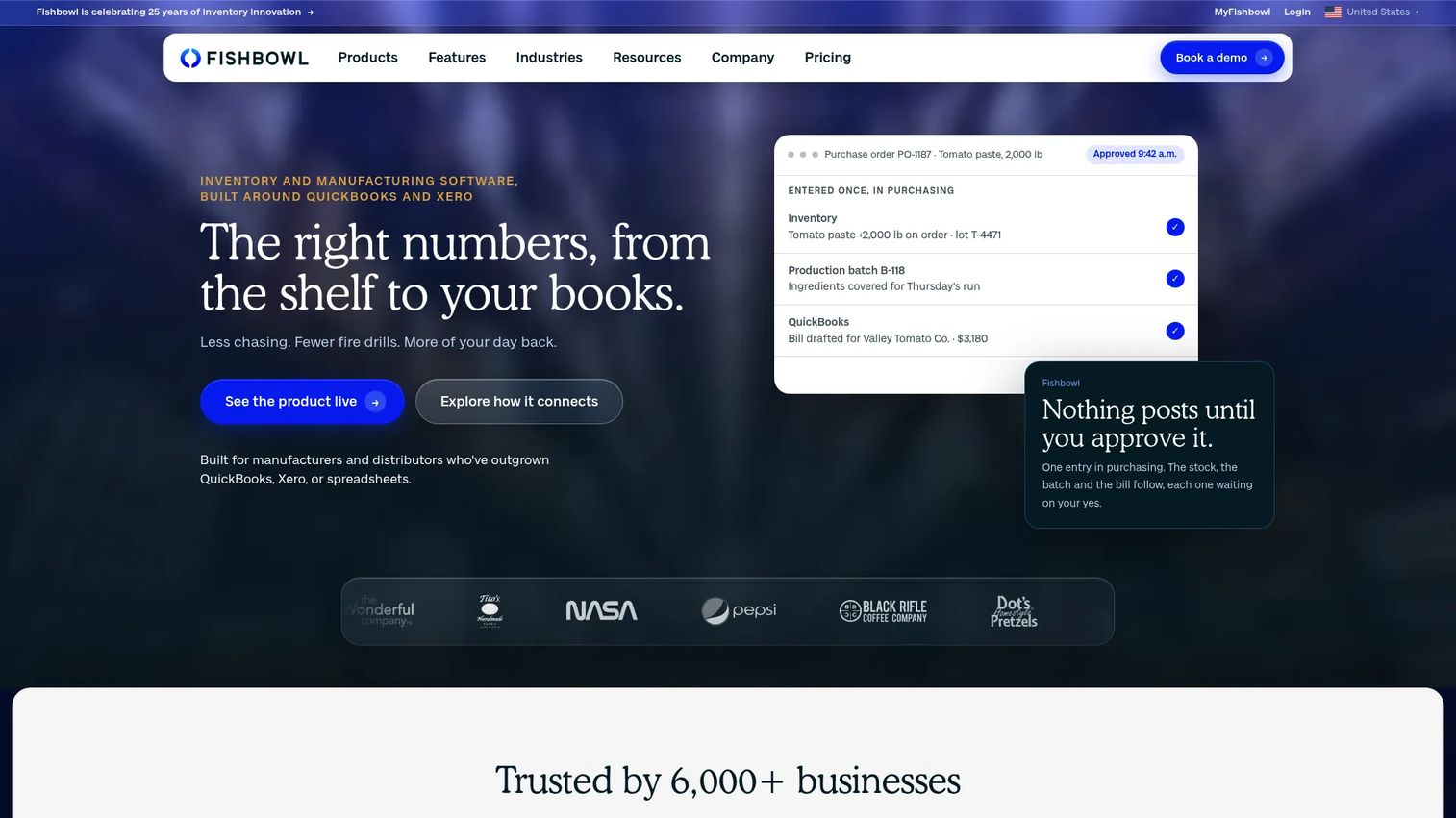
Fishbowl is cloud inventory, warehousing, and manufacturing software for businesses that make, move, and sell physical products. It covers real-time inventory tracking, mobile barcode scanning, order fulfillment, bill of materials, work orders, MRP, and multi-warehouse workflows. For floral businesses, it is relevant when inventory complexity is the actual pain: Multiple locations, wholesale purchasing, kitting arrangements (comparable to recipe workflows), or accounting integrations that a florist POS does not handle at the needed depth.
Best for: Inventory-heavy floral operations that need stronger stock control, purchasing, warehouse management, and manufacturing workflows than a standard florist POS provides.
Key features
- Real-time inventory and SKU tracking
- Mobile barcode scanning
- Bill of materials, work orders, and MRP for production workflows
- Multi-warehouse and 3PL support
- Order fulfillment and multichannel ecommerce
Why choose Fishbowl: Fishbowl is not a florist POS replacement. It sits alongside a POS or ecommerce platform for operations where inventory management is a standalone problem. Florists with significant wholesale operations, complex supply chains, or multi-location inventory needs may find it more capable than the inventory modules inside florist-specific tools. For a typical retail flower shop, the complexity and cost likely exceed the need. For more context on broader accounting software integrations that pair with inventory tools, the linked guide covers adjacent options.
Fishbowl pricing: Essentials starts at $229/month billed annually. Growth is $429/month billed annually. Scale is $729/month billed annually. Advanced Warehouse starts at $595/month and Advanced Manufacturing starts at $675/month, both priced by users and deployment.
G2 rating: 4.0/5
12. Shopify

Shopify is a general commerce platform for online and in-person selling, covering online store creation, multichannel selling, checkout, payments, fulfillment, inventory, catalog management, analytics, and an app store with over 21,000 commerce apps. For florists, it handles the ecommerce side well but needs apps or integrations to manage florist-specific delivery zones, substitution rules, pickup windows, and production workflows. Its strength is online storefront infrastructure and marketing integrations, not florist POS operations.
Best for: Ecommerce-first florists that want a customizable online storefront, strong app ecosystem, and broad multichannel selling capability.
Key features
- Online store with AI-assisted setup and prebuilt themes
- Multichannel selling: Online, in-person, social, and marketplaces
- Built-in Sidekick commerce AI assistant
- Shopify App Store with 21,000+ commerce apps
- Payments, inventory, catalog, and analytics tools
Why choose Shopify: For florists where the primary bottleneck is online conversion, catalog presentation, and marketing integrations, Shopify offers more flexibility and third-party app support than a florist-specific platform. The tradeoff is that florist workflows need to be assembled from apps rather than built in natively. Shops expecting to run significant counter or phone order volume alongside an online store should evaluate whether app integrations cover the florist-specific gaps adequately. As a broader ecommerce reference, the best ecommerce platforms guide covers adjacent options.
Shopify pricing: Basic starts at $29/month billed annually ($39/month billed monthly). Grow is $79/month billed annually. Advanced is $299/month billed annually. Plus starts from $2,300/month. A POS Pro add-on runs $89/month. A 3-day free trial is available, followed by a promotional $1/month for 3 months on select plans.
G2 rating: 4.4/5
Considerations when choosing florist software
Match the software to your main workflow
Start with the bottleneck, not the feature list. POS-heavy shops should prioritize order speed, payment reliability, and delivery routing. Event florists should prioritize proposals, recipes, production, and payment schedules. A shop evaluating tools by which has the longest feature checklist often ends up with the wrong platform for how the business actually operates.
Check florist-specific depth before buying general POS
General POS tools handle checkout and payments. They typically miss occasion dates, delivery instructions, wire orders, substitutions, stem counts, production documents, and floral-specific reporting. If those gaps require separate tools, the total cost and staff learning curve increase. Florist-specific software builds those workflows in natively, which matters most during peak holiday periods when staff do not have time to switch between systems.
Verify ecommerce and delivery fit together
A florist ecommerce website that creates a separate order queue from the shop POS forces staff to reconcile two streams manually. The platform should handle delivery zones, pickup time windows, substitution logic, driver routing, order changes, and confirmation communications in one connected flow. Test a live order through the full cycle, from website checkout to delivery confirmation, before committing.
Understand pricing beyond the monthly fee
Monthly software subscriptions are only part of the cost. Ask about payment processing rates, hardware purchases, website hosting fees, marketplace commissions, setup and migration costs, training fees, and add-on pricing for specific features. Some platforms advertise a low entry price but charge per-transaction or per-location fees that significantly change the total cost at operating volume.
Test reporting before peak season
Verify that the reporting covers what actually drives decisions: Daily sales by channel, delivery performance by route, product category margins, customer retention, order source, wedding event profitability, and inventory movement. Good florist software should give a store owner or operations lead enough data to run a weekly review without exporting to a spreadsheet. Set the reporting up and run it for two weeks before committing to a full migration.
Conclusion
Florist software is not a single category with one right answer. The five workflow areas covered here each point to different tools.
For florist-specific retail operations, Floranext, FloristWare, and IRIS are the strongest starting points. For wedding and event work, Details Flowers and Curate offer the depth that generic POS tools miss. BloomNation and Shopify serve ecommerce-first shops, with BloomNation adding marketplace exposure and Shopify offering the broadest app ecosystem. Clover and Epos Now cover general POS needs for shops where checkout reliability matters more than florist-specific workflows. HoneyBook fits the client management side of event florists. Fishbowl belongs in the shortlist only when inventory complexity is a standalone problem.
The practical next step: Shortlist two or three tools based on where your operation breaks most often, then run the same test through each. Walk in an order at the counter. Take a phone order. Place a website order. Assign a delivery, change the address, and confirm receipt. Enter a wedding proposal. Run the end-of-day report. The tool that handles that sequence without friction is the one worth migrating to.
Pick the workflow that breaks most often, then choose the tool built to fix it.
FAQs
Florist software is business management software designed for flower shops, covering POS, online ordering, delivery coordination, inventory, customer records, payments, and event workflows. Unlike generic retail POS, florist software includes floral-specific features such as occasion-based ordering, delivery routing, stem-count tracking, wire order processing, and wedding proposal management. It is designed to handle the time-sensitive, perishable, and occasion-driven nature of floral order fulfillment.
The answer depends on what type of small florist business is doing the evaluating. For an all-in-one retail and delivery operation, Floranext, FloristWare, and IRIS cover florist-specific POS and flower shop management software in a single platform. For a small wedding or event studio, Details Flowers or Curate handles proposals, stem counts, contracts, and production. For a small shop focused primarily on ecommerce, Shopify offers strong storefront infrastructure with broad app support.
A regular POS system handles checkout and payment processing, which covers basic counter sales. Florist software adds the layers a flower shop actually needs: Delivery dates, occasion types, wire order integration, substitution handling, stem-count recipes, production documents, customer reminder campaigns, and wedding event workflows. Generic POS tools can process a sale but typically miss the order management and delivery coordination that determine whether a florist's customer experience holds up during peak periods.
Florists that sell arrangements online, offer pickup options, manage local delivery zones, or want to reduce phone-order volume benefit from ecommerce software. The key is that the online ordering system must connect directly to the same fulfillment, delivery, and inventory workflow the shop uses for counter and phone orders. A florist ecommerce website that creates a disconnected order stream adds manual reconciliation work rather than reducing it.
A florist POS should handle order entry for walk-in and phone orders, customer records with order history, card and cash payment processing, delivery date and time assignment, driver routing, pickup scheduling, refunds and discounts, end-of-day reporting, and product catalog management. Advanced shops should also check for loyalty programs, subscription order management, wire-service integration, and accounting software connections. Occasion date tracking and substitution handling are florist-specific requirements that separate dedicated floral POS tools from general retail systems.
Details Flowers and Curate are the two strongest options for wedding florist software and floral event software. Details Flowers focuses on the design and costing side: Proposals, recipes, stem counting, automated pricing, and design boards. Curate covers the broader event operations workflow: Proposals through execution, contracts, payments, staffing, production lists, and profitability reporting. HoneyBook covers the client communication and invoicing side but does not handle floral recipes or delivery. The right choice depends on whether the primary gap is design and costing accuracy or broader event operations management.
Florist software cost varies significantly by tool type and business scale. FloristWare starts at $149/month. HoneyBook starts at $29/month. Shopify starts at $29/month. Details Flowers has a Starter Plan at $25/month. Epos Now's hardware bundles start at $349 upfront. Floranext, IRIS, and Hana POS require contacting the vendor for current monthly rates. Total cost includes the monthly subscription, payment processing fees, hardware if applicable, website hosting if separate, setup and migration costs, and any add-on charges. When evaluating florist software pricing, ask vendors to quote the full operating cost at your expected order volume, not just the base plan.
Yes. Florist-specific tools like Floranext, FloristWare, IRIS, and Hana POS include delivery routing features covering route optimization, driver app access, GPS downloads, proof-of-delivery capture, and SMS delivery notifications. The depth of routing capability varies by platform. Before committing, test the routing tool with a realistic day's order volume: Change an address mid-route, add a same-day order, process a failed delivery, and confirm whether the driver app handles all those scenarios without requiring a workaround. For shops with high daily delivery volume, florist delivery routing is one of the most operationally critical features to verify before migrating.