Your emissions data lives in eleven spreadsheets. Three of them are owned by people who left the company. When the board asks for a Scope 3 number, you spend two weeks reconciling supplier invoices, energy bills, and travel logs, then present a figure you privately do not fully trust.
That is the real problem carbon accounting software solves. Not virtue signaling. Operational control over a complex, high-stakes data process that regulators, customers, and investors now scrutinize as hard as your revenue numbers.
The market reflects that shift. The global carbon management software market reached USD 18.3 billion in 2025 and is projected to hit USD 42.2 billion by 2034 at a 9.77% CAGR, according to IMARC Group (2025). Cloud-based deployment already represents about 72.4% of the market, per Maximize Market Research (2025). This is no longer a niche compliance buy. It is core operating infrastructure.
If you have ever wrestled with fragmented reporting, you already understand the appeal of purpose-built carbon tracking software. The same discipline that pushes teams toward proper audit management software and contract lifecycle management applies here: replace manual, error-prone workflows with systems that produce numbers you can defend. We evaluated each tool below on data quality controls, scope coverage, auditability, and how well it moves teams from reporting into actual decarbonization.
What's inside
This guide is for sustainability, finance, and operations leaders comparing vendors in the emissions management software category, plus founders who want board-ready numbers without the manual overhead. We selected the eight platforms based on four criteria that matter most when you are replacing spreadsheets:
- Data quality controls: validation, reconciliation, and audit trails, not just tidy dashboards
- Scope coverage: credible handling of scope 1, scope 2, and scope 3 emissions
- Reporting rigor: support for GHG Protocol and frameworks like CSRD, CDP, and CSRD-aligned disclosures
- Decarbonization execution: target setting, hotspot detection, and progress tracking
The list assumes you already know the category and are narrowing your shortlist.
TL;DR
Short on time? Here are the quick decision shortcuts:
- Best for guided carbon accounting and reduction planning: Plan A
- Best for industrial and energy emissions data control: CERius
- Best for regulated, process-heavy enterprises: Sphera
- Best for governed sustainability data across the value chain: Sweep
- Best for large-scale enterprise reporting and decarbonization: Watershed
- Best for finance-grade, investor-ready carbon accounting: Persefoni
- Best for automated, networked value-chain accounting: Normative
- Best for a simpler climate platform with supplier workflows: Greenly
If your main pain is spreadsheet replacement and audit readiness, prioritize data quality controls and framework coverage over feature breadth.
What is carbon emissions management software?
Carbon emissions management software is a platform that collects activity data, calculates greenhouse gas emissions across scopes, and produces auditable reports that support compliance and decarbonization planning. It replaces manual spreadsheets with a system of record for your carbon footprint.
Most credible platforms in this category share a core set of capabilities. The strongest carbon footprint management software will handle all of the following well, not just one:
- Data collection: automated ingestion from energy bills, ERPs, procurement systems, and suppliers
- Calculations: emissions factors and methodologies aligned to the GHG Protocol
- Scope coverage: scope 1 emissions (direct), scope 2 emissions (purchased energy), and scope 3 emissions (value chain)
- Auditability: data lineage, reconciliation, and defensible audit trails
- Reporting: framework-ready output for CSRD, CDP, SEC-style disclosures, and voluntary reporting
- Target setting: science-based targets, forecasts, and scenario analysis
- Emissions dashboards: near-real-time visibility into hotspots and trends
- Decarbonization planning: reduction actions, tracking, and execution
GHG reporting software sits at the intersection of finance-grade data discipline and environmental science. The best emissions tracking software treats a carbon number the way your finance team treats a revenue number: traceable, reconciled, and ready to survive an audit.
When to use carbon emissions management software
Not every company needs a full platform on day one. Here is how to recognize when spreadsheets stop being enough.
Replace manual spreadsheets and email-based collection
When your emissions data lives across dozens of files owned by different people, every reporting cycle becomes a reconciliation project. You chase down owners, re-key numbers, and hope nobody fat-fingered a conversion factor. At that volume of data and coordination, the audit risk alone justifies software. Carbon emissions tracking software centralizes collection, enforces consistent methodology, and removes the single points of failure that spreadsheets create.
Prepare for audit-ready reporting and compliance
When regulators, customers, or your own board demand defensible numbers, you need traceability, not confidence. Auditors ask how a figure was derived. Customers writing sustainability clauses into contracts want proof. Compliance readiness means repeatable reporting with a clear data lineage from source to disclosure. This is where GHG reporting software earns its keep, producing output that holds up under external scrutiny.
Build a decarbonization operating loop
Reporting is the starting line, not the finish. Once you can measure reliably, the next move is target setting, hotspot detection, and execution tracking. The strongest platforms turn a static annual report into an operating loop: measure, identify the biggest emissions sources, set reduction targets, act, and remeasure. Decarbonization planning becomes a repeatable process rather than a once-a-year scramble.
Comparison table
The eight platforms below differ mainly in who they serve and where they focus. Some lead with carbon accounting rigor and reduction planning, others with industrial data control or enterprise reporting depth. The table sorts by relevance to the core keyword, from guided accounting platforms to broader climate suites.
| # | Product | Intent | Key differentiation | Pricing | G2 rating |
|---|---|---|---|---|---|
| 1 | Plan A | Guided carbon accounting and reduction | CSRD-ready accounting across all three scopes with decarbonization forecasting | Quote-based | Not available |
| 2 | CERius | Industrial emissions data management | GE Vernova emissions data platform with reconciliation and audit support | Quote-based | Not available |
| 3 | Sphera | Enterprise risk and sustainability | Integrated EHS, risk, and sustainability with strong data trails | Quote-based | 4.0/5 |
| 4 | Sweep | Governed sustainability data | Centralized carbon, ESG, and supply-chain data with validation | Quote-based | 4.9/5 |
| 5 | Watershed | Enterprise sustainability platform | Audit-ready reporting with data lineage and AI drafting | Quote-based | 4.5/5 |
| 6 | Persefoni | Finance-grade carbon accounting | Free Pro plan plus investor-ready accounting workflows | Free plan available | Not available |
| 7 | Normative | Automated value-chain accounting | AI-validated accounting with supplier engagement | Quote-based | Not available |
| 8 | Greenly | Accessible climate platform | Carbon accounting with supplier and reporting workflows | Quote-based | 4.7/5 |
Read the table as a starting map, not a verdict. Ratings and pricing shift, and the right pick depends on your data complexity and reporting obligations more than any single score. The sections below add the operational detail founders and sustainability leads actually evaluate.
1. Plan A
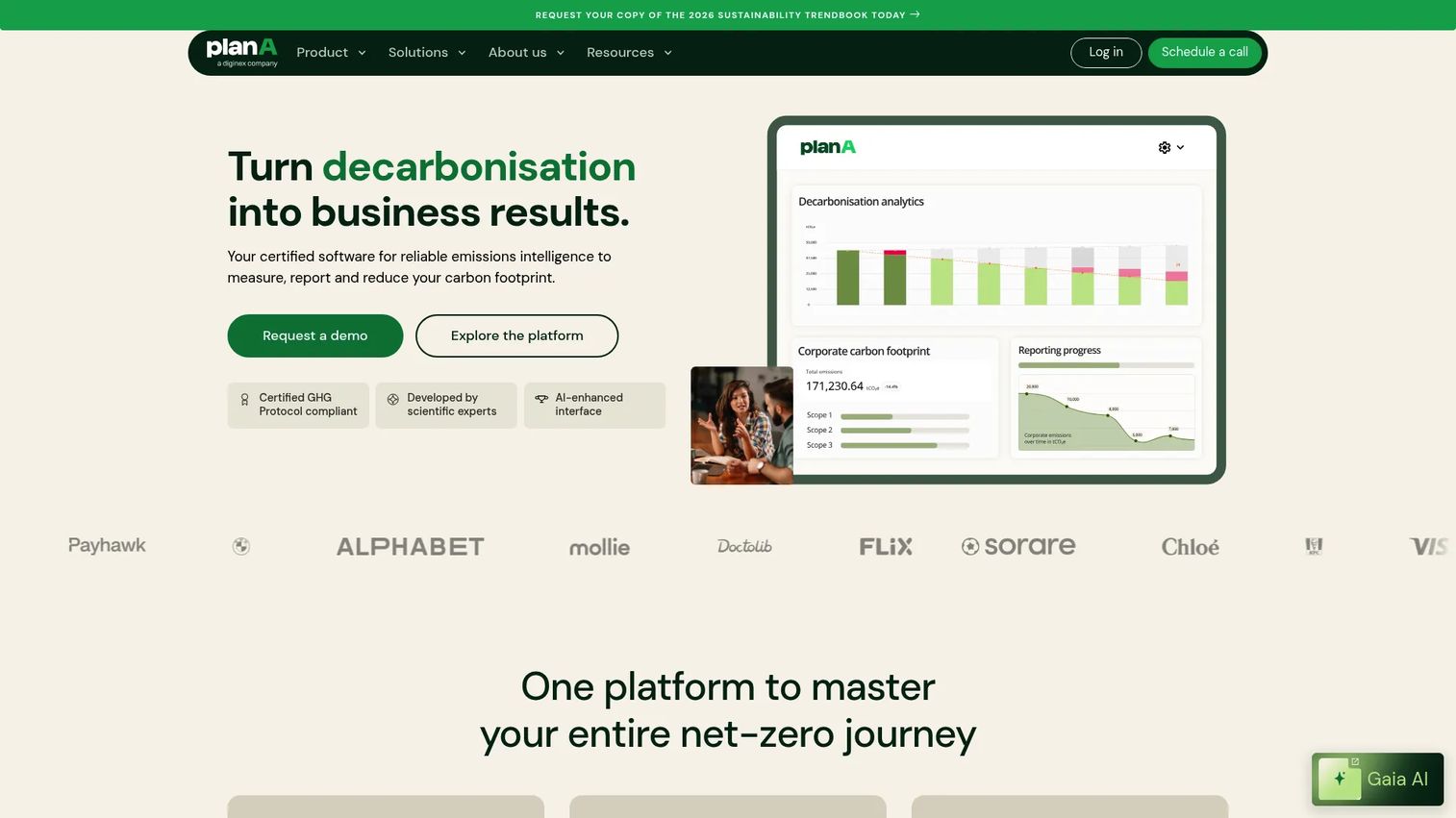
Plan A is carbon accounting and sustainability software built for companies that want to measure, report, and actually reduce corporate emissions. Its positioning is decarbonization-first: the platform handles accounting across scopes 1, 2, and 3, automates calculations and reporting, then pushes teams toward targets, actions, and forecasting. It is a strong fit for teams that treat reporting and reduction as one continuous job rather than two separate projects.
Best for: Companies that need a guided carbon accounting and CSRD-ready sustainability platform.
Key strengths
- Full-scope accounting: Carbon accounting across scopes 1, 2, and 3 with methodology aligned to established standards.
- Automated reporting: Emissions calculations and reporting that reduce manual reconciliation work.
- Decarbonization forecasting: Targets, actions, and forecasting so measurement feeds directly into reduction.
Why choose Plan A: If your obligation is CSRD readiness and your ambition is real reduction, Plan A keeps both in one workflow. The guided approach suits teams that do not have a large in-house sustainability function and want structure rather than a blank canvas. It fits companies moving from a first inventory toward an operating decarbonization plan.
Plan A pricing: Plan A lists plan names including Essential, Pro, and Enterprise, but does not display public numeric pricing on its offerings page. The site routes prospects to schedule a call for a quote. There is no publicly confirmed free tier, so budget for a sales conversation to scope your tier.
2. CERius
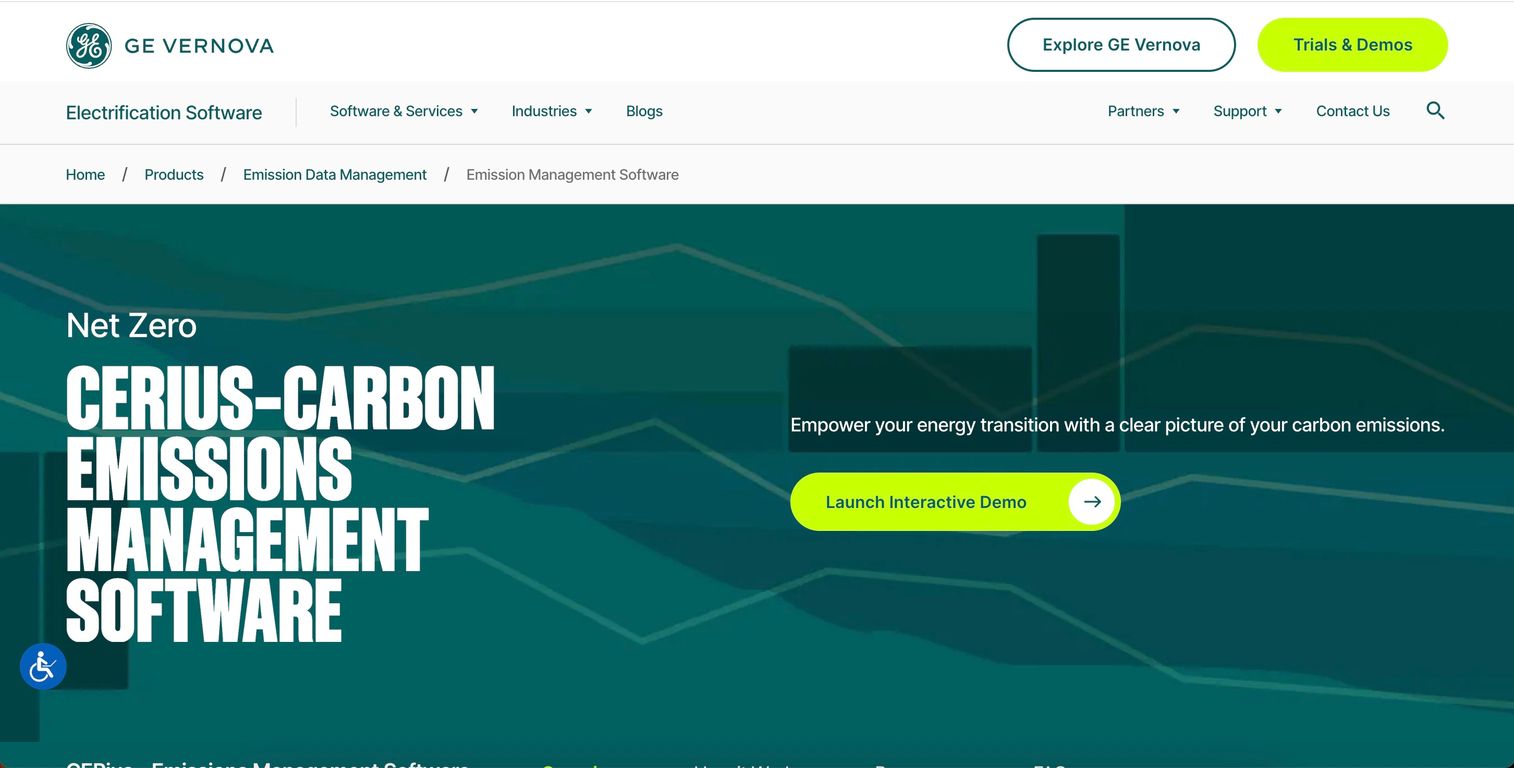
CERius is GE Vernova's emissions management software for measuring, managing, and reporting GHG data. It leans into system-of-record positioning, which is exactly what energy and heavy industrial operators need when emissions data comes from meters, plants, and complex operations. The platform automates GHG data collection across scopes 1, 2, and 3, then layers on dashboards, monitoring, reporting, and strategizing workflows.
Best for: Energy and heavy industrial companies needing emissions data management and decarbonization planning.
Key strengths
- Automated data collection: Pulls GHG data across scopes 1, 2, and 3 to reduce manual entry.
- Operational control: Dashboards, monitoring, reporting, and strategizing workflows in one place.
- Data integrity: Normalization, reconciliation, automated alerts, and audit support built in.
Why choose CERius: For industrial teams, the appeal is control over messy, high-volume operational data. The reconciliation and alerting features mean anomalies surface early instead of during an audit. Its industrial credibility and GE Vernova pedigree make it a serious option where emissions data quality is a hard engineering problem, not a spreadsheet cleanup task.
CERius pricing: CERius does not publish public pricing. The product is sold through GE Vernova's enterprise motion, so expect a scoped quote based on your operational footprint and data sources. Plan for a direct sales conversation to size the deployment.
3. Sphera
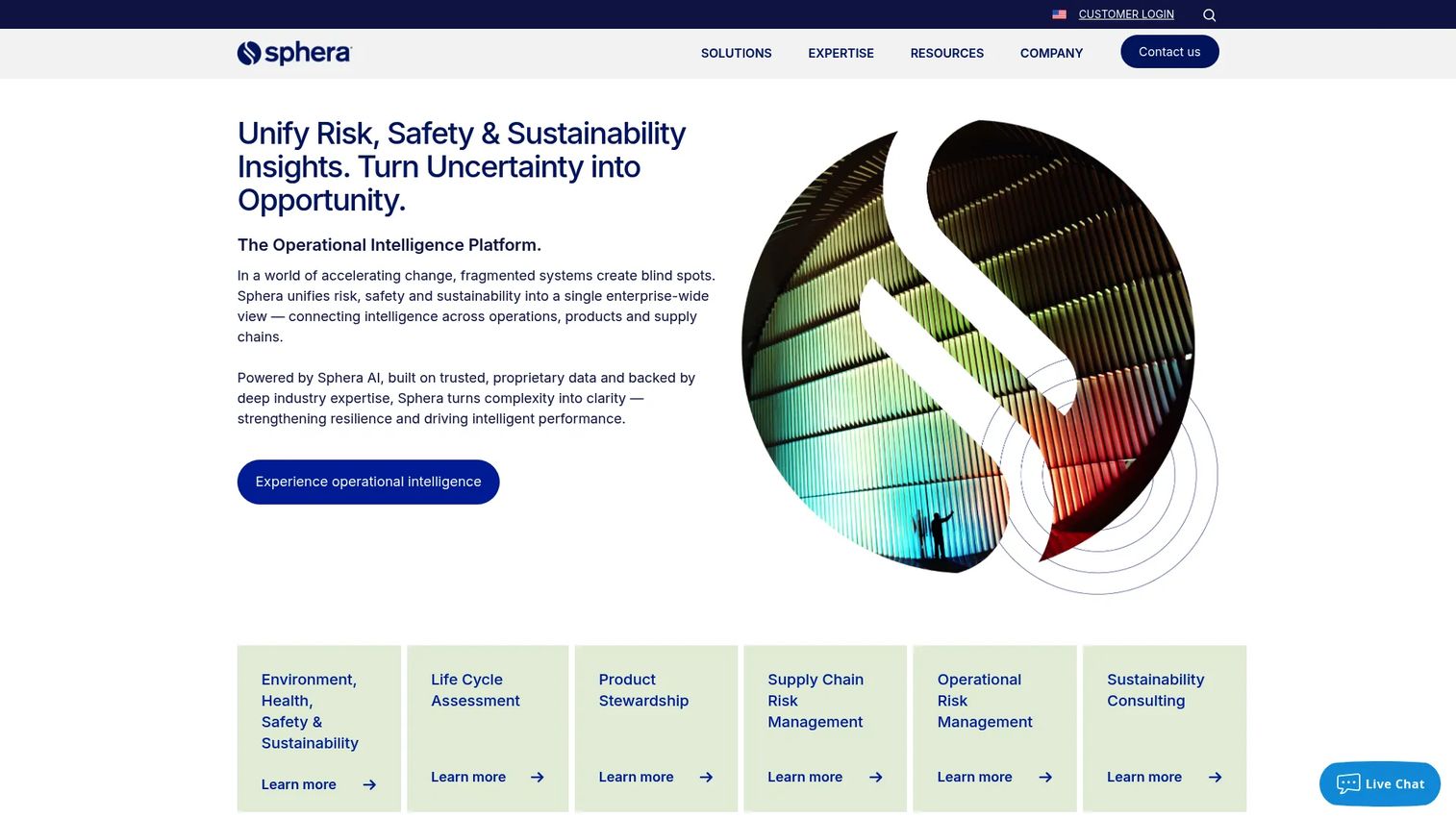
Sphera delivers enterprise software for operational risk, safety, and sustainability management. In an emissions context, that breadth matters: air and GHG emissions management sit alongside EHS, operational risk, and product stewardship. For regulated, process-heavy environments, having emissions data validated inside the same system as safety and compliance data is a genuine advantage.
Best for: Large enterprises needing integrated risk, safety, and sustainability software.
Key strengths
- EHS and ESG management: Emissions data managed within a broader compliance system.
- Operational risk management: Emissions treated as one dimension of enterprise risk.
- Product stewardship: Chemical compliance and product-level environmental tracking.
Why choose Sphera: Sphera fits enterprises where emissions cannot be siloed from safety and risk. The emphasis on data validation, traceability, and a single source of truth appeals to teams that answer to auditors and regulators regularly. It carries a 4.0/5 rating on G2 across a modest review count, reflecting its enterprise, process-heavy user base.
Sphera pricing: Sphera uses request-a-demo messaging and does not expose public pricing. Given its enterprise, multi-module positioning, pricing is scoped per deployment. Budget for an enterprise procurement cycle and a tailored quote.
4. Sweep
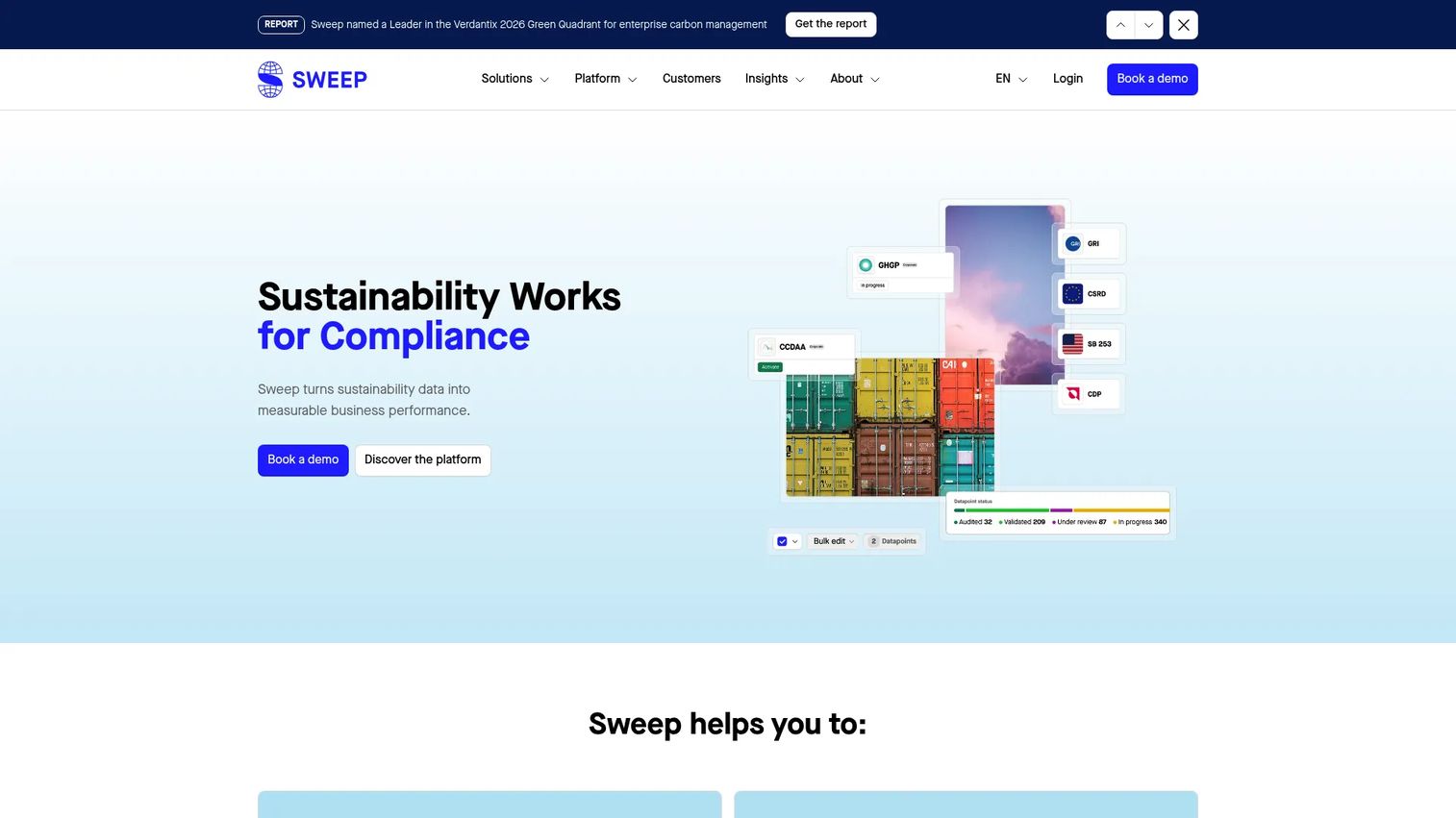
Sweep is an enterprise sustainability data management platform for carbon, ESG, and supply-chain reporting. Its framing is data governance first: it centralizes sustainability data across the organization and value chain, then layers on validation and reporting. That makes it a strong collaborative carbon management layer for large teams that need many contributors working from the same trusted numbers.
Best for: Large enterprises needing governed sustainability and carbon data management.
Key strengths
- Centralized data: Sustainability data unified across the organization and value chain.
- Built-in governance: Validation, governance, and reporting templates reduce error risk.
- Supplier engagement: Supplier data collection and risk identification for scope 3 emissions.
Why choose Sweep: Sweep suits teams whose biggest challenge is coordination across many data owners and suppliers. The validation and governance layer directly addresses the audit-risk problem that spreadsheets create. With a 4.9/5 rating on G2, users report strong satisfaction, particularly around collaborative data management and framework-ready reporting.
Sweep pricing: Sweep does not display public pricing and routes users to book a demo. Pricing is quote-based and scoped to your organization and value-chain complexity. Expect an enterprise sales conversation rather than self-serve signup.
5. Watershed
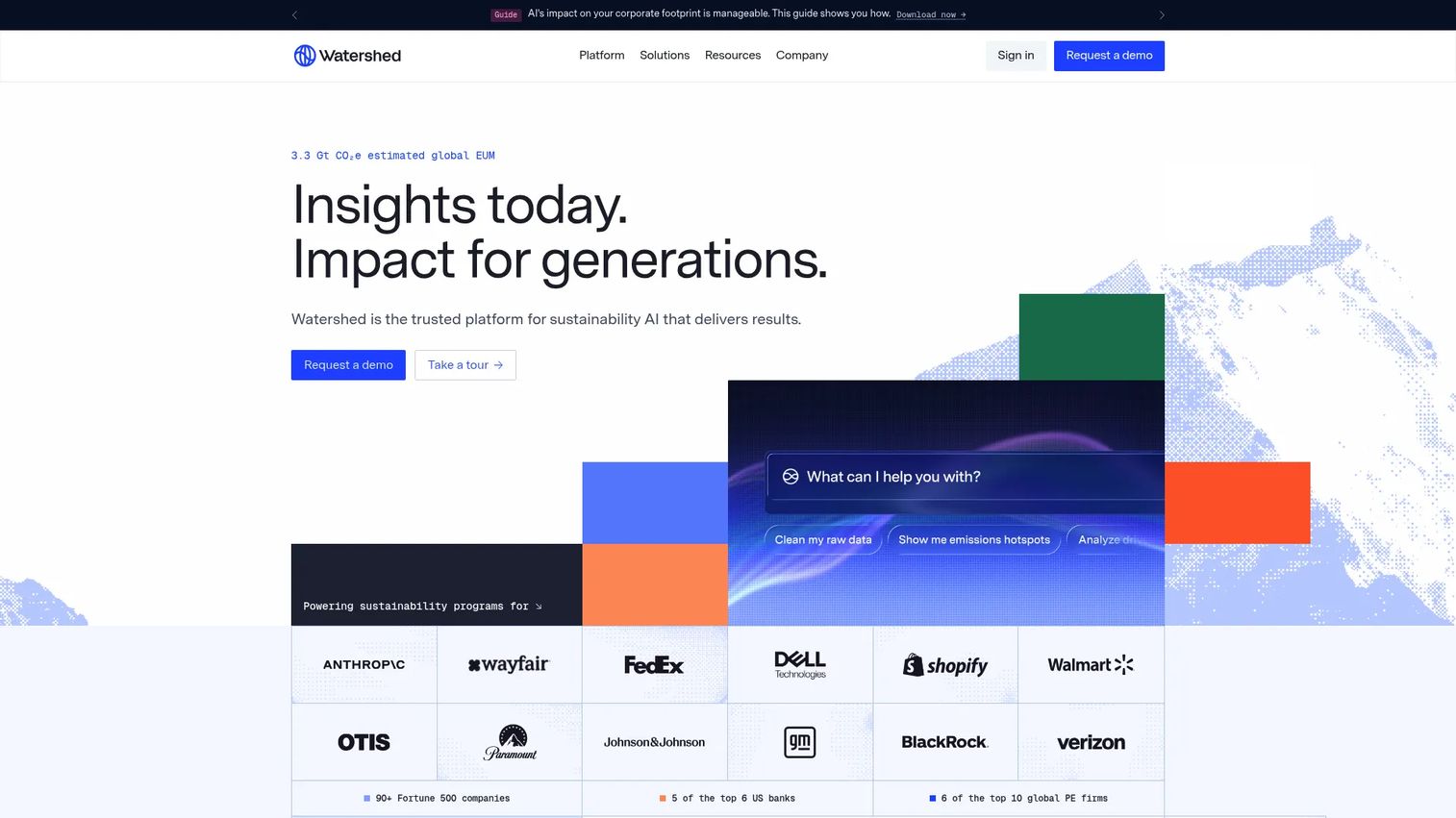
Watershed is an enterprise sustainability AI platform for measuring, reporting, and reducing environmental impact. It goes beyond carbon to cover water and land impact, with emissions factors and methodologies underpinning the measurement. The differentiator many large teams cite is audit-ready reporting with full data lineage, plus AI agents that handle data cleaning, analysis, and reporting drafts.
Best for: Large companies running enterprise sustainability, carbon accounting, and ESG reporting programs.
Key strengths
- Multi-impact measurement: Carbon, water, and land impact with credible methodologies.
- Audit-ready reporting: Data lineage plus AI drafting for defensible disclosures.
- AI-assisted workflows: Agents for data cleaning, analysis, and reporting reduce manual load.
Why choose Watershed: Watershed appeals to large teams that need visibility across complex operations and suppliers without drowning in manual data work. The AI drafting and data-cleaning features speak directly to the founder concern of getting board-ready numbers without heroics. It holds a 4.5/5 rating on G2, reflecting broad enterprise adoption.
Watershed pricing: Watershed does not publish public pricing on its site and directs visitors to request a demo. As an enterprise platform, pricing is scoped per program. Plan for a sales-led evaluation and a custom quote.
6. Persefoni
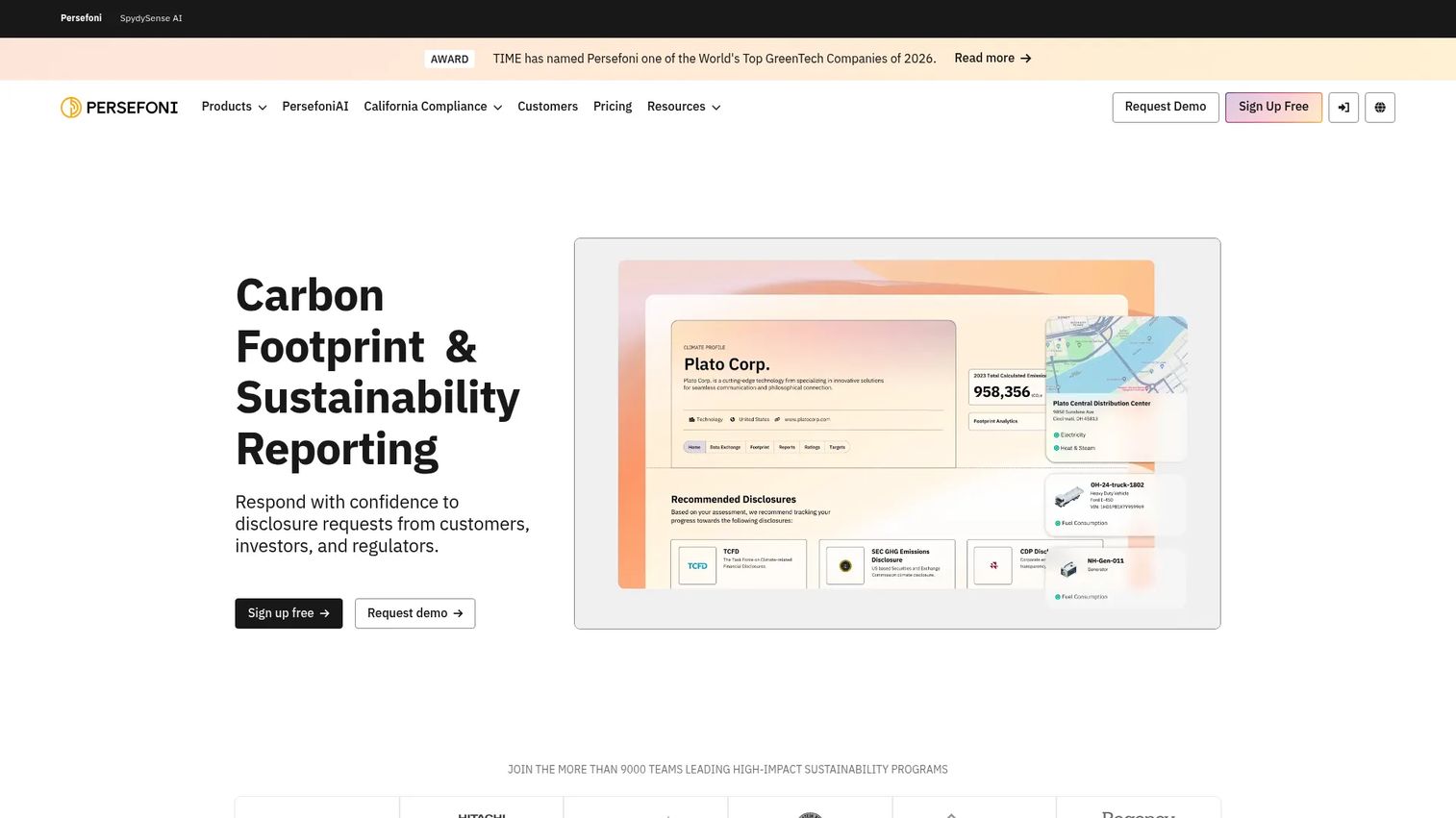
Persefoni is carbon accounting and sustainability management software with a finance-grade reputation. It is frequently compared here by teams with serious reporting requirements because it treats emissions data with the rigor investors expect. Notably, it offers a free Persefoni Pro plan for carbon accounting, plus an Advanced plan with multi-user collaboration and role-based permissions.
Best for: Organizations needing carbon accounting and sustainability reporting software with investor-grade discipline.
Key strengths
- Free entry point: A free Persefoni Pro plan lowers the barrier to serious carbon accounting.
- Collaboration controls: Advanced plan adds multi-user collaboration and role-based permissions.
- AI features: Copilot and analytics tools support faster, more consistent reporting.
Why choose Persefoni: Finance and ESG teams gravitate to Persefoni when investor-grade, defensible reporting is the priority. The free Pro plan is unusual in this category and lets teams start real carbon accounting before committing budget. The role-based permissions matter once multiple stakeholders touch the same numbers.
Persefoni pricing: Persefoni Pro is free and self-service, making it one of the few no-cost entry points in this list. Persefoni Advanced is quote-based and requires a demo, with some capabilities sold as paid add-ons. Start on Pro, then scope Advanced when collaboration and governance needs grow.
7. Normative
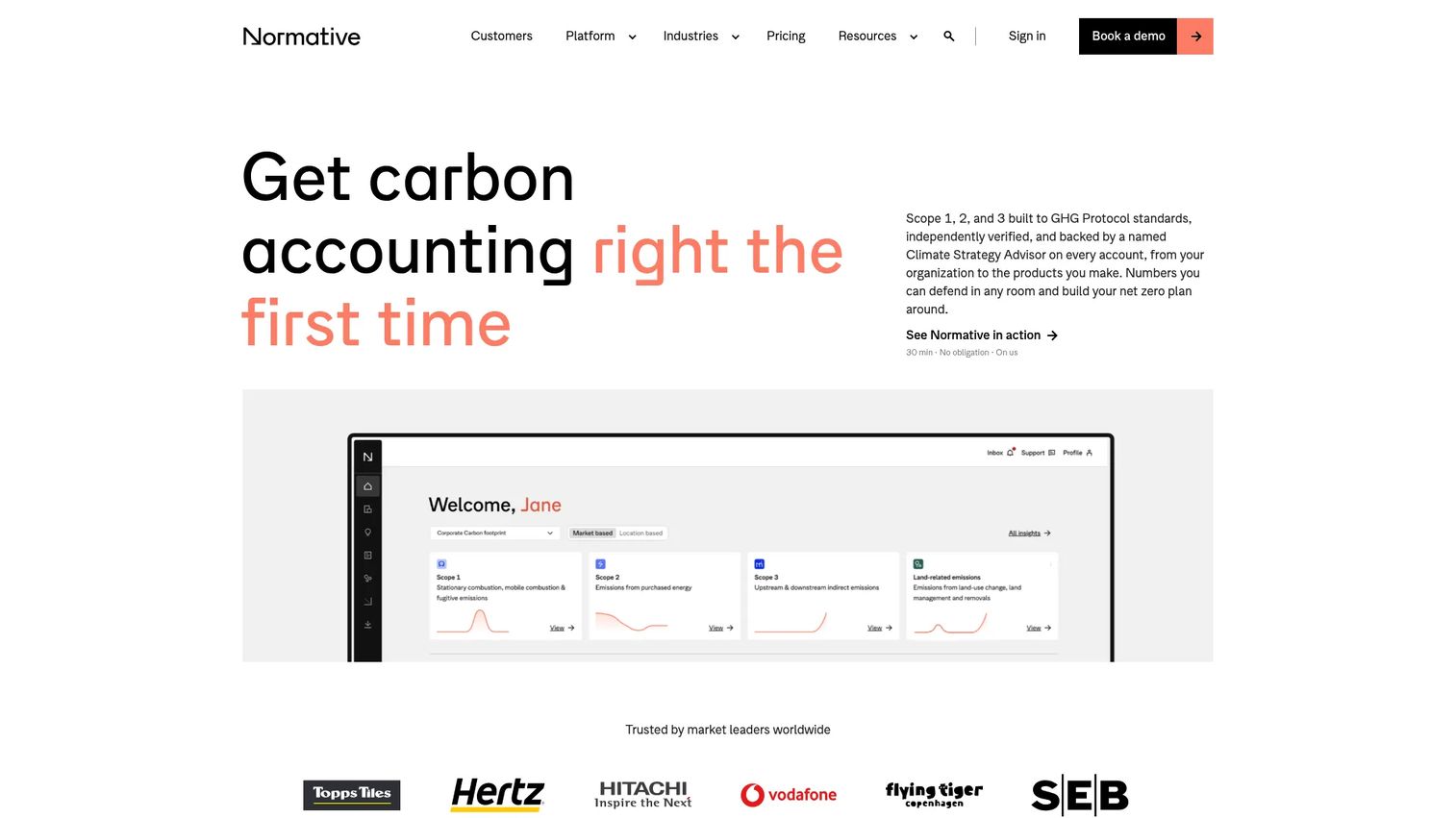
Normative is carbon accounting and emissions management software focused on automation, reporting, and supplier engagement. Its strength is networked, value-chain data collection: automated carbon accounting with AI validation, paired with supplier and value-chain engagement so scope 3 emissions become measurable rather than estimated. Reporting supports frameworks like CSRD and CDP.
Best for: Companies needing audit-ready carbon accounting and sustainability reporting support.
Key strengths
- Automated accounting: AI validation reduces manual errors in emissions calculations.
- Framework coverage: Reporting and compliance for CSRD, CDP, and similar frameworks.
- Value-chain visibility: Supplier engagement and reduction analysis for scope 3 emissions.
Why choose Normative: Normative helps teams that want broader value-chain insight without building supplier data collection from scratch. The AI validation and reduction analysis move teams from a static inventory toward action. It suits companies where scope 3 emissions dominate the footprint and supplier data quality is the bottleneck.
Normative pricing: Normative's pricing page lists Essential and Premium tiers, both quote-based with a "get a quote" motion rather than public numeric pricing. Expect a sales conversation to scope which tier fits your reporting and supplier engagement needs. There is no publicly confirmed free tier.
8. Greenly
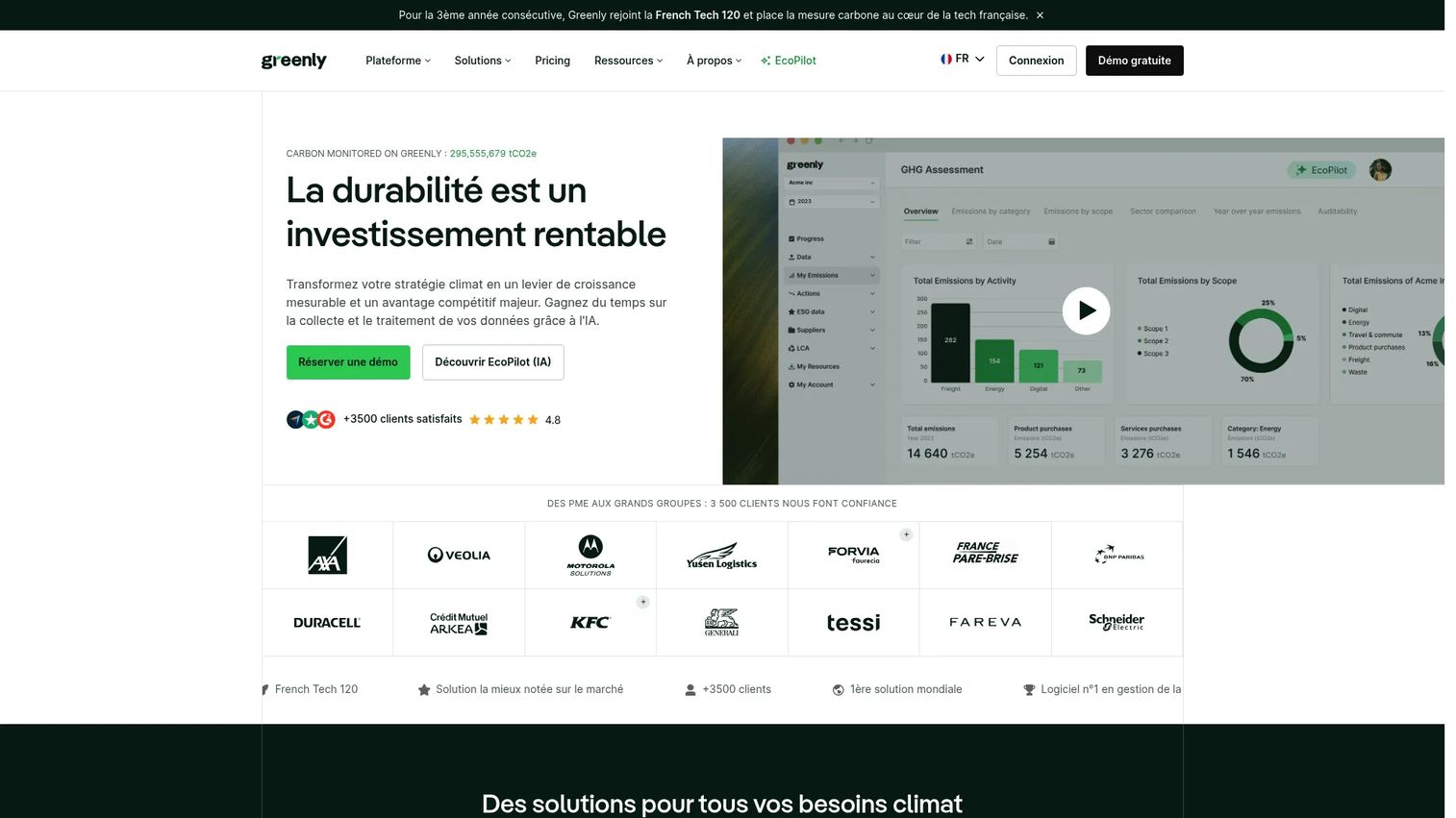
Greenly is an all-in-one sustainability management platform for carbon accounting, supplier engagement, and ESG reporting. Its positioning favors accessibility: carbon footprint measurement and emissions tracking paired with supplier and reporting workflows, delivered in a way that mid-market and enterprise teams can adopt without a heavy lift. It covers decarbonization strategy and compliance support alongside core accounting.
Best for: Mid-market and enterprise teams needing a climate platform with supplier and reporting workflows.
Key strengths
- Carbon footprint measurement: Emissions tracking across the organization's activities.
- Supplier workflows: Supplier engagement and sustainable procurement built in.
- Reporting and strategy: ESG reporting, decarbonization strategy, and compliance support.
Why choose Greenly: Greenly fits teams that want a broad climate platform without the enterprise-heavy setup of some alternatives. It balances carbon accounting with supplier engagement and reporting, which suits mid-market companies building their first structured program. With a 4.7/5 rating on G2, users report a manageable adoption experience.
Greenly pricing: Greenly's public pages confirm that pricing exists and note no setup fees for some offerings, but no public numeric subscription price is displayed. The site uses a demo and contact-led motion for core products. Expect a quote scoped to your company size and scope 3 emissions complexity.
Considerations before you buy
The right platform depends on your data complexity and reporting obligations, not on feature counts. Before you commit, evaluate against a short checklist.
Data quality controls
Ask how each tool validates, reconciles, and traces data. A dashboard that looks clean but cannot show where a number came from will not survive an audit. The same principle that drives disciplined contract management and email tracking applies: you want a defensible source of truth, not a prettier spreadsheet.
Scope coverage and methodology
Confirm the platform handles scope 1, scope 2, and scope 3 emissions with methodology aligned to the GHG Protocol. Scope 3 is where most footprints hide and where estimation quality varies most between vendors.
Reporting and compliance readiness
Check which frameworks each tool supports out of the box, such as CSRD, CDP, and disclosure-ready output. Compliance readiness is a moving target, so favor vendors that update frameworks proactively.
Decarbonization execution
Reporting alone does not reduce emissions. Look for target setting, hotspot detection, and progress tracking so you can build an operating loop, not just an annual report.
Stack fit and adoption
Consider how the tool integrates with your ERP, procurement, and energy systems, and how quickly your team can adopt it. A platform your team abandons is worse than a spreadsheet. If you also manage broader operational programs, tools like event management software and loyalty management software show how much adoption depends on genuine stack fit.
Conclusion
The best carbon emissions software for your team depends on where your complexity lives. For guided carbon accounting that flows into reduction planning, Plan A is a strong pick. For industrial and energy emissions data control, CERius brings serious operational rigor. Sphera fits regulated, process-heavy enterprises, while Sweep excels at governed sustainability data across many contributors. Watershed suits large-scale enterprise reporting and decarbonization, Persefoni brings finance-grade discipline with a rare free entry point, Normative automates value-chain accounting, and Greenly offers an accessible platform for mid-market teams.
Shortlist based on two questions: how complex is your emissions data, and how demanding are your reporting obligations? If you are replacing spreadsheets and chasing audit readiness, prioritize data quality controls and framework coverage. If reduction is the mandate, weight decarbonization planning and target setting more heavily. The right carbon management software earns its place by turning a stressful annual scramble into a repeatable, defensible operating process.
FAQs
Carbon emissions management software is a platform that collects activity data, calculates greenhouse gas emissions across scopes, and produces auditable reports for compliance and decarbonization. It replaces manual spreadsheets with a system of record for your carbon footprint, complete with data lineage and reconciliation.
The terms overlap heavily and are often used interchangeably. Carbon accounting software emphasizes the measurement and calculation of emissions, while carbon emissions management software typically adds reporting, target setting, and decarbonization planning on top. In practice, most leading platforms cover both jobs.
Prioritize data quality controls, meaning validation, reconciliation, and traceable audit trails. Confirm coverage of scope 1, scope 2, and scope 3 emissions with GHG Protocol-aligned methodology, and check which frameworks the tool supports, such as CSRD and CDP. Reporting output should survive external scrutiny without manual rework.
Credible platforms cover all three. Scope 1 emissions are direct, from owned sources. Scope 2 emissions come from purchased energy. Scope 3 emissions span the value chain, including suppliers, and are usually the hardest to measure. Strong tools include supplier engagement features to improve scope 3 data quality.
Yes, and that is often the primary reason teams buy it. Spreadsheets create audit risk through inconsistent methodology, broken formulas, and orphaned ownership. Carbon tracking software centralizes collection, enforces consistent calculations, and maintains a defensible data lineage that spreadsheets cannot.
It maintains a clear data lineage from source to disclosure, so any reported figure can be traced back to its origin. Reconciliation, validation, and audit trails mean auditors, regulators, and customers can verify how a number was derived. That traceability is what turns a confident estimate into a defensible figure.
It depends on your data complexity. Sphera suits regulated, process-heavy enterprises, Watershed fits large-scale reporting and decarbonization programs, Sweep excels at governed data across many contributors, and CERius is built for energy and heavy industrial operations. Shortlist based on your operational footprint and reporting obligations.
Decide what your mandate actually is. If regulators or customers demand defensible disclosures, weight auditability and framework coverage most heavily. If your goal is measurable reduction, prioritize target setting, hotspot detection, and progress tracking. The strongest platforms handle both, so you rarely have to choose one over the other permanently.