Your front desk agent just double-booked a room. Again. The channel manager didn't sync the OTA reservation in time, housekeeping is working off a printed sheet from this morning, and revenue for the weekend is now a guessing game.
That is the daily cost of fragmented hospitality operations. And it compounds fast. Every manual handoff between reservations, housekeeping, distribution, and accounting is a place where money leaks and guest experience degrades.
The category solving this is hotel PMS software, the operational core that ties reservations, front office, housekeeping, distribution, and reporting into one system. The market reflects how central it has become. Global hospitality property management software was estimated at USD 5.77 billion in 2024 and is projected to reach USD 9.99 billion by 2035, a 5.12% CAGR, according to Market Research Future. Over 70% of hospitality businesses have already moved to cloud-based software for these functions, per Technavio.
If you run a scaling hospitality business, choosing a hotel property management system is less like buying a tool and more like choosing an operating system. It decides how repeatable your operations are, how clean your data stays, and whether your team can run a busy weekend without everything routing through you.
This is not the only category where the right platform decides whether operations scale cleanly. The same logic drives buying decisions in event management, loyalty management, and contract lifecycle management software. The pattern is the same: consolidate fragmented workflows, protect data integrity, and remove the founder or owner from the middle of every transaction.
What's inside
This guide is for hospitality operators, owners, and revenue leads comparing hotel PMS systems in 2026. It covers seven platforms spanning independent hotels, boutique properties, resorts, and large multi-property groups.
We selected each platform on four criteria that matter most for scaling operations:
- Operational coverage: reservations, front office, housekeeping, and reporting in one system
- Distribution depth: channel manager, booking engine, and direct booking capability
- Integration quality: open APIs and a healthy partner ecosystem
- Fit by property type: whether the tool suits a small inn, a boutique group, or an enterprise chain
Pricing reflects what each vendor publishes. Where pricing is quote-based, we say so rather than guess.
TL;DR
- Best all-in-one for independents and groups: Cloudbeds bundles PMS, channel manager, and booking engine for operators who want fewer tools.
- Best modern cloud PMS with revenue focus: Mews pairs a product-led interface with strong dynamic pricing and guest journey workflows.
- Best for large chains and complex groups: Oracle OPERA Cloud is the enterprise standard for centralized, configurable operations.
- Best mobile-first operations: Stayntouch runs check-in, front desk, and multi-property reporting from any device.
- Best value for smaller operators: WebRezPro uses transparent per-unit pricing starting at $10/unit/month with no setup fees.
- Best for independent accommodation and B&Bs: eviivo starts at $50/month with an all-in-one suite for OTAs, direct bookings, and invoicing.
What is hotel PMS software?
Hotel PMS software is a property management system that centralizes a hotel's core operations, reservations, front desk check-in and checkout, housekeeping, rate and inventory management, guest profiles, billing, and reporting, into one platform.
Modern hotel management software extends beyond the front office. Most cloud based PMS platforms now bundle or integrate distribution, so a booking on any channel updates availability everywhere in real time. That is the difference between a system that prevents double bookings and one that causes them.
Core capabilities you should expect from any hotel property management software in 2026:
- Front office and reservations: manage arrivals, departures, room assignments, and the reservation calendar or tape chart
- Housekeeping management: live room status so staff work off current data, not a morning printout
- Channel manager: two-way sync with OTAs and metasearch to keep inventory and rates aligned across every channel
- Booking engine: a commission-free direct booking path on your own website
- Rate and revenue management: dynamic pricing, rate plans, and yield controls
- Guest communication: automated confirmations, pre-arrival messages, and post-stay follow-up
- Reporting and analytics: occupancy, ADR, RevPAR, and operational reporting in one place
- Open APIs and integrations: connections to payments, POS, accounting, and CRM
The shift to cloud is decisive. Cloud-based deployment accounts for about 65% of the hospitality PMS market in 2025 and is expanding at a 12.38% CAGR through 2031, according to Mordor Intelligence. A property management system in a hotel used to live on a server in the back office. Today it lives in the browser, accessible from the front desk, a phone, or wherever the manager happens to be.
When to use a hotel PMS
Replace spreadsheets and double bookings
If your reservations live in a spreadsheet and your OTA calendars sync manually, you are one busy weekend away from a double booking. A property management system for hotels centralizes inventory so every channel reads from the same source of truth. This is the first and most common trigger for adopting pms software.
Consolidate a fragmented tool stack
Many operators run separate tools for reservations, distribution, payments, and reporting. Each handoff is a place for data to drift. A unified hotel pms replaces that patchwork, so your team works in one system instead of stitching five together.
Scale from one property to many
Growing from a single inn to a group changes the requirements. You need centralized reporting, shared guest profiles, and consistent operations across locations. This is where multi-property PMS support and a property management system pms with group-level controls becomes non-negotiable.
Comparison of the best hotel PMS software
Here is a side-by-side view of the seven platforms. Pricing reflects each vendor's published information as of mid-2026. Where a vendor uses quote-based pricing, that is noted directly.
| # | Product | Intent | Key use case | Pricing | G2 rating |
|---|---|---|---|---|---|
| 1 | Cloudbeds | All-in-one hospitality platform | Unified PMS, channel manager, and booking engine | Request a quote | 4.3/5 |
| 2 | Mews | Modern cloud PMS | Revenue management and guest journey | Request a quote | 4.5/5 |
| 3 | Oracle OPERA Cloud | Enterprise PMS | Large chains and complex hotel groups | Contact Oracle | Not listed |
| 4 | Stayntouch | Mobile-first cloud PMS | Mobile check-in and multi-property operations | Request pricing | 4.4/5 |
| 5 | Hotelogix | Cloud PMS for independents | Multi-property and channel management | From request-a-quote | 4.3/5 |
| 6 | eviivo | All-in-one for independents | OTAs, direct bookings, and invoicing | From $50/month | 3.9/5 |
| 7 | WebRezPro | Value cloud PMS | Transparent per-unit pricing | From $10/unit/month | 4.3/5 |
The rest of this guide breaks down each platform, who it fits, and what to weigh before you commit.
1. Cloudbeds
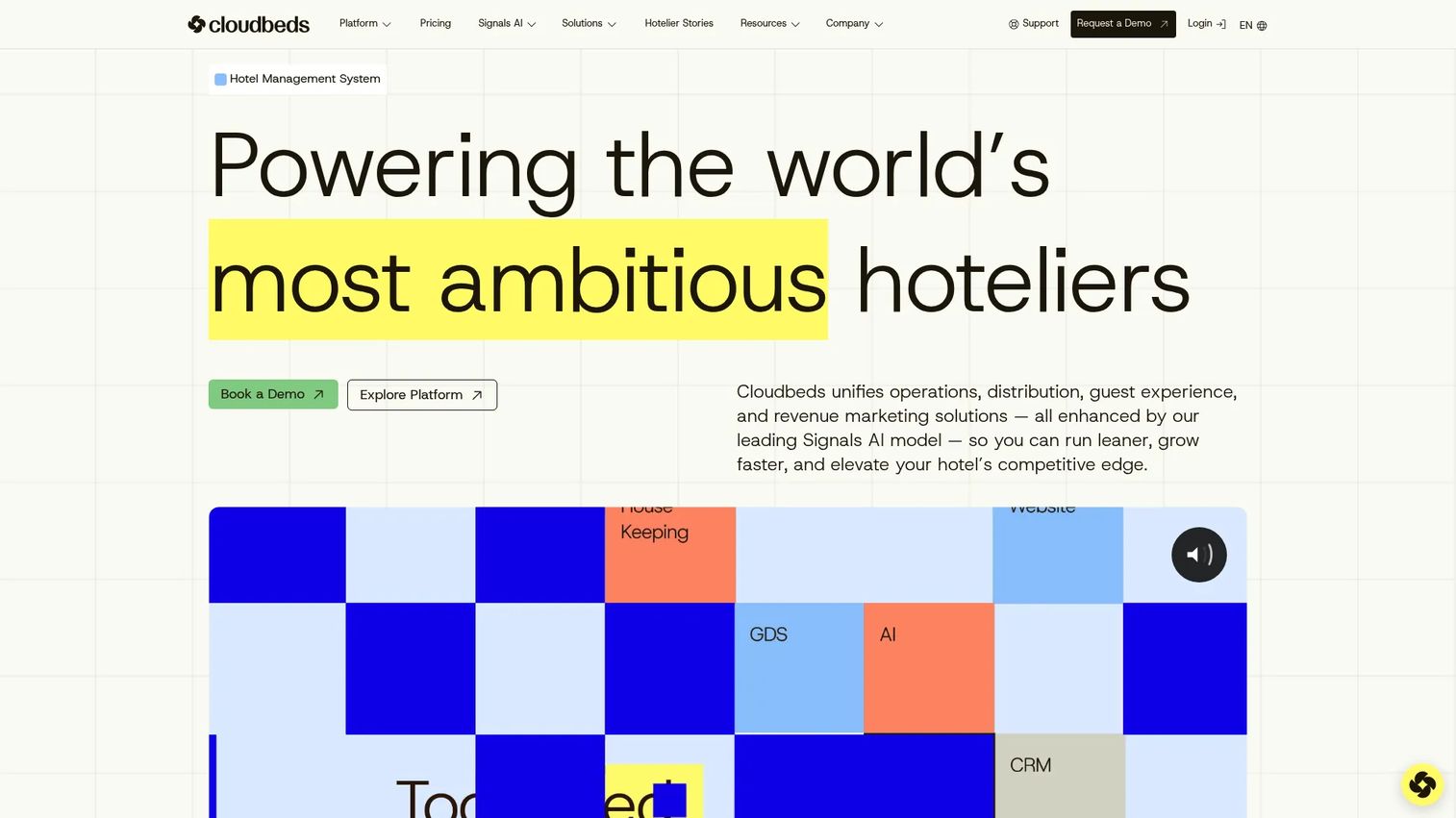
Cloudbeds is an all-in-one hospitality management platform for hotels and other lodging properties. It combines a property management system with distribution, so reservations, front office, channel management, and direct bookings run inside one stack. For operators tired of stitching together separate tools, Cloudbeds is built around consolidation.
The platform suits independent hotels and multi-property operators who want unified operations without managing a dozen integrations. Its channel manager and booking engine sit natively alongside the PMS, which keeps inventory and rates consistent across OTAs and your own website.
Best for: Independent hotels and multi-property hospitality operators needing unified operations and distribution.
Key strengths
- Unified PMS: Reservations, front desk, and operations run in one system, cutting the manual handoffs that cause double bookings.
- Native channel manager: Two-way OTA sync keeps availability and rates aligned across every channel in real time.
- Built-in booking engine: A commission-free direct booking path lets you capture revenue without paying OTA fees on every stay.
Why choose Cloudbeds
Choose Cloudbeds when you want one platform instead of a patchwork. It is a strong fit for operators who value fewer tools, cleaner data, and a distribution layer that ships with the PMS rather than bolting on later. The consolidation story is the core reason to pick it.
Cloudbeds pricing
Cloudbeds lists tiered plans named Flex, One, Experience, and Enterprise. No public numeric prices are shown on the pricing page, so pricing is quote-based and tailored to your property. Contact Cloudbeds for a quote scoped to your room count and feature needs. Cloudbeds holds a 4.3/5 rating on G2.
2. Mews
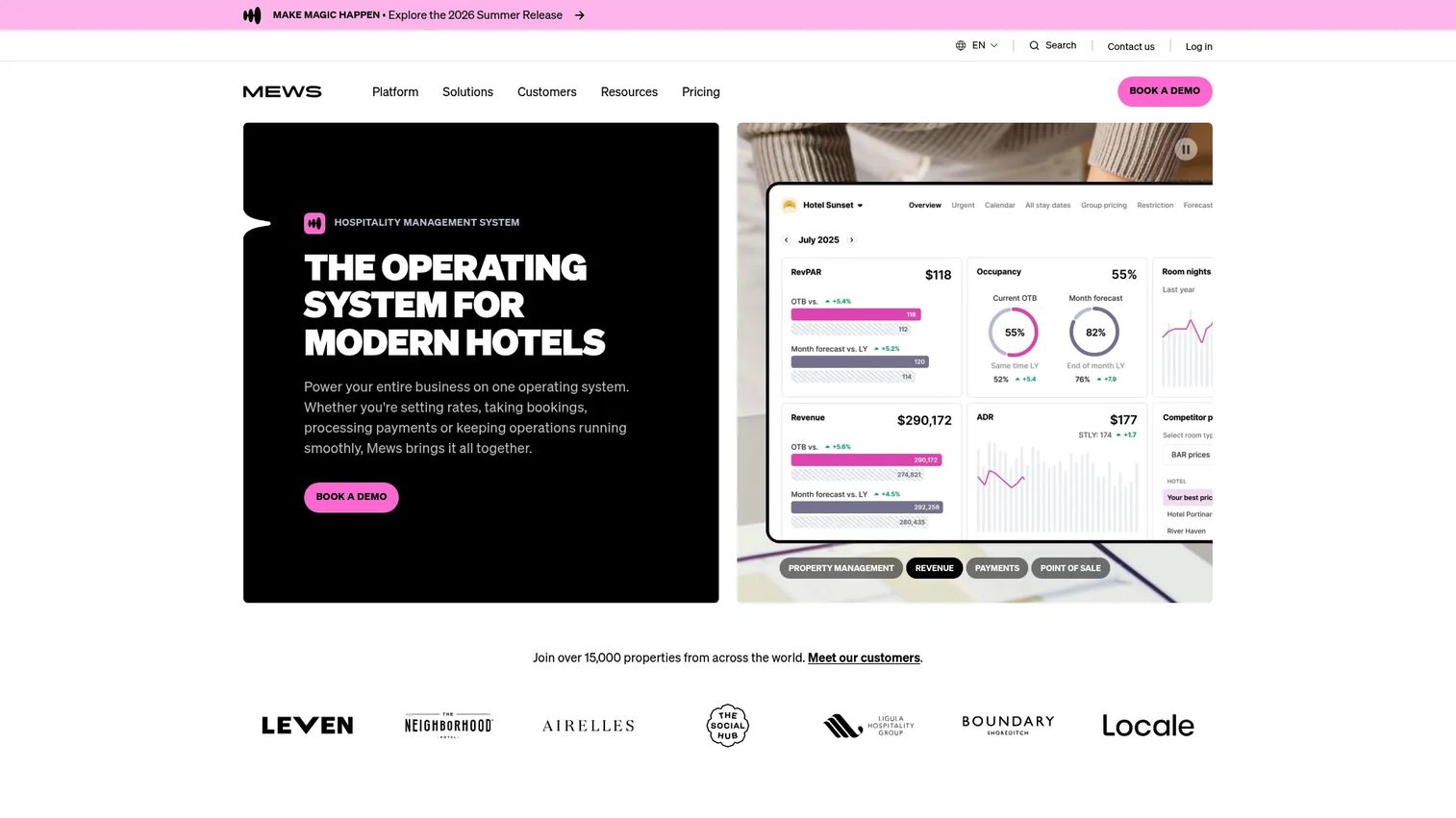
Mews is a cloud-based hospitality operating system and property management platform for hotels and related properties. It is known for a modern, product-led interface and a strong revenue management story. Where legacy systems feel like software from a decade ago, Mews feels current, which matters when you are training front desk staff who churn.
The platform pairs core PMS functionality with a booking engine, upsells, and dynamic pricing. Its guest journey workflows aim to move guests through booking, check-in, stay, and checkout with less manual intervention from staff.
Best for: Hotels and hospitality operators needing an all-in-one PMS and guest journey platform.
Key strengths
- Modern cloud PMS: A clean, product-led interface reduces training time and keeps front desk staff moving quickly.
- Booking engine with upsells: Direct bookings and upsell prompts capture more revenue per reservation.
- Revenue management: Dynamic pricing adjusts rates automatically so you are not leaving yield on the table.
Why choose Mews
Choose Mews if a modern interface and integrated revenue workflows rank high on your list. It fits teams that want cloud architecture, an open integration ecosystem, and pricing tools built into the core rather than bolted on. The product-led feel is the differentiator.
Mews pricing
Mews lists three plans: Essentials, advanced, and enterprise. No public numeric prices appear on its pricing page. Mews states that pricing is tailored to the property and requires a quote. Contact Mews to scope pricing to your property type and size. Mews holds a 4.5/5 rating on G2, the highest in this list.
3. Oracle OPERA Cloud
Oracle OPERA Cloud is Oracle's cloud-based hotel property management platform for managing reservations, guest data, operations, and rates. It is the enterprise-grade standard for large chains and complex hotel groups that need deep configurability and centralized operations across many properties.
OPERA Cloud carries the depth and ecosystem you would expect from Oracle. For hotels and resorts running complex operations, the platform's customizable dashboards, guest profile management, and mobile-enabled staff workflows are built to handle scale that would strain lighter systems.
Best for: Hotels and resorts needing an enterprise property management system.
Key strengths
- Customizable dashboards: Configurable views and drill-down reporting give operators control over what they see and act on.
- Guest profile and reservation management: Centralized profiles support consistent guest experience across properties.
- Mobile-enabled workflows: Staff run operations from mobile devices, freeing them from the front desk terminal.
Why choose Oracle OPERA Cloud
Choose OPERA Cloud when scale and configurability outweigh simplicity. It is built for large groups, brands, and complex properties that need centralized control, deep customization, and Oracle's broad hospitality ecosystem. This is the enterprise pick, not the small-property pick.
Oracle OPERA Cloud pricing
Oracle does not publish pricing for OPERA Cloud. The product pages use contact and demo CTAs rather than listing numeric prices, so pricing is quote-based and scoped to your group's size and requirements. Contact Oracle directly for a tailored quote.
4. Stayntouch
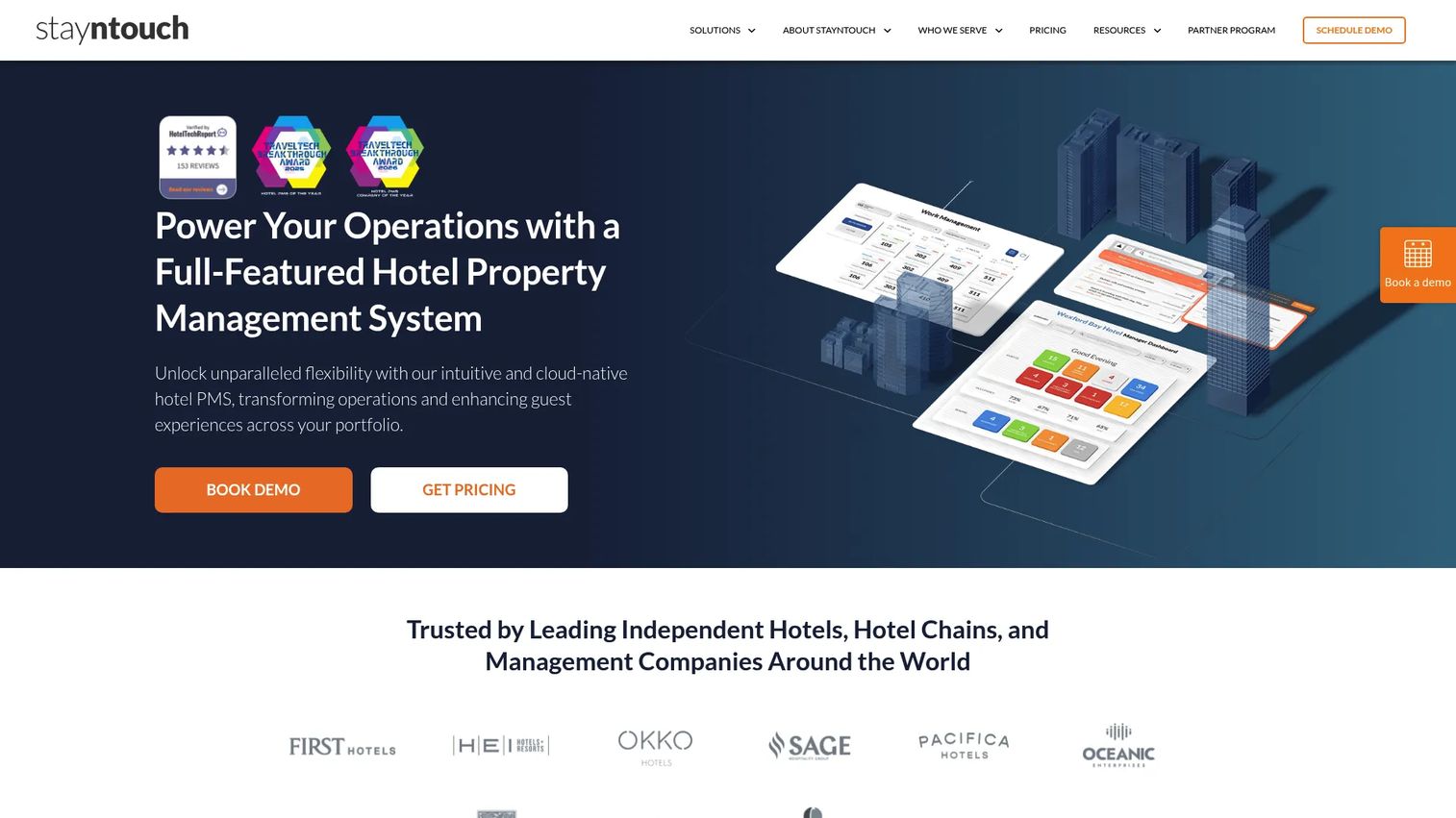
Stayntouch is cloud hotel property management software built mobile-first for hotels and hotel groups. It centers on speed at the front desk, guest mobility, and modern cloud operations. Where legacy PMS ties staff to a terminal, Stayntouch lets them run check-in and front desk tasks from a tablet or phone.
The platform handles reservations, front desk, and guest management, plus multi-property management with centralized reporting. Mobile and kiosk check-in with automated upsell flows aim to move guests through arrival faster while capturing incremental revenue.
Best for: Hotels and hotel groups needing a cloud PMS with mobile check-in and multi-property operations.
Key strengths
- Mobile and kiosk check-in: Guests check in from a kiosk or device, cutting front desk queues at peak arrival times.
- Multi-property management: Centralized reporting gives group operators a single view across locations.
- Automated upsell flows: Upsell prompts during check-in capture extra revenue without staff effort.
Why choose Stayntouch
Choose Stayntouch when front desk speed and guest mobility are priorities. It fits independent hotels and groups that want to modernize the arrival experience and free staff from a fixed terminal. The mobile-first design is the core reason to shortlist it.
Stayntouch pricing
Stayntouch does not publish numeric pricing. The site uses request pricing and book demo CTAs, and states it offers transparent pricing with no hidden fees. Request a quote scoped to your property or group. Stayntouch holds a 4.4/5 rating on G2.
5. Hotelogix
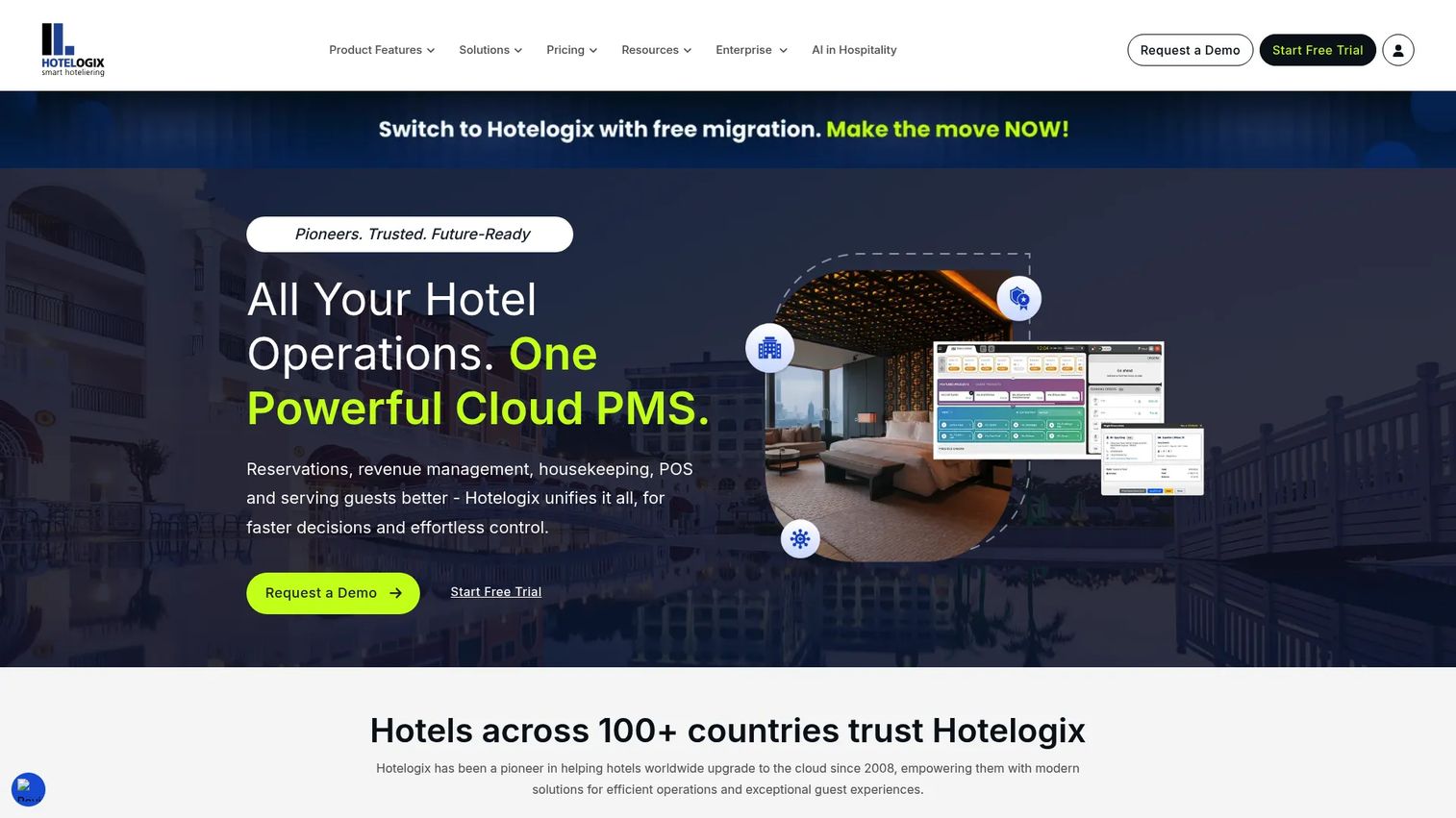
Hotelogix is a cloud-based hotel property management system for managing reservations, front desk, housekeeping, reporting, and distribution. It targets independent hotels, resorts, and multi-property operators who want a cloud PMS with distribution and operational automation built in.
The platform pairs core PMS functions with an integrated channel manager and web booking engine. That combination keeps OTA inventory synced and gives properties a direct booking path, while real-time reporting supports day-to-day operational decisions across one or many properties.
Best for: Hotels and hotel groups wanting a cloud PMS with multi-property and channel management.
Key strengths
- Multi-property management: Operators run and report across multiple properties from one account.
- Integrated channel manager: Two-way OTA sync keeps rates and availability aligned across channels.
- Real-time reporting: Live operational and occupancy data supports faster decisions.
Why choose Hotelogix
Choose Hotelogix when you want channel management and multi-property support in an affordable cloud PMS. It fits independents and small groups that need distribution and automation without enterprise complexity. The integrated distribution layer is the draw.
Hotelogix pricing
Hotelogix publishes plans named Premium, Premium Plus, and Platinum with monthly and yearly billing options. Exact numeric prices are not clearly rendered on the public pricing page, and properties above 100 rooms are directed to request a quote. A free tier is indicated. Contact Hotelogix for current pricing scoped to your room count. Hotelogix holds a 4.3/5 rating on G2.
6. eviivo
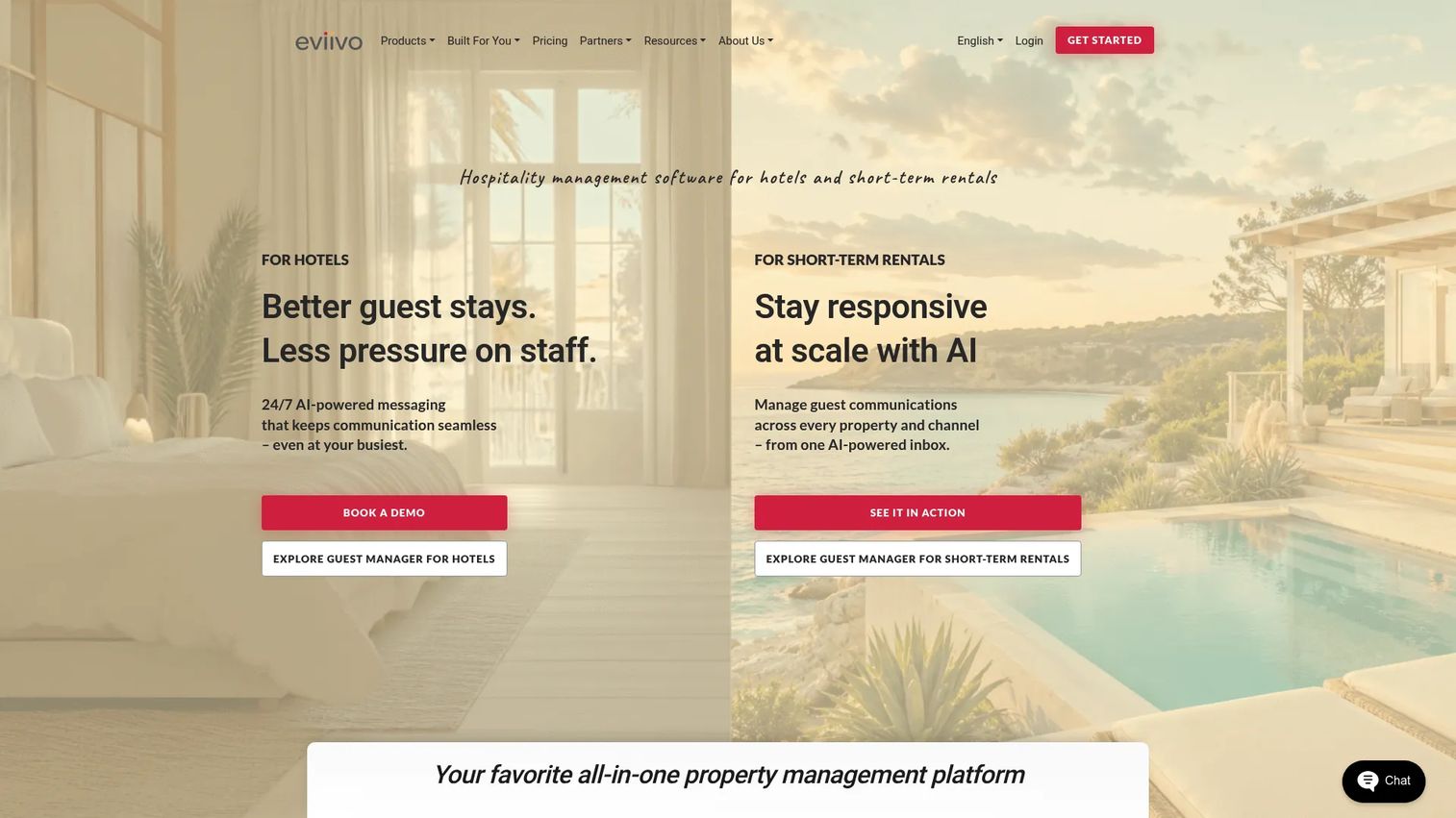
eviivo is cloud-based property management and booking software for accommodations. It is strong in independent hotels, B&Bs, vacation rentals, and small multi-property operators. The all-in-one suite positioning covers the property calendar, distribution, direct bookings, and invoicing in one place.
The platform pairs a property management and booking calendar with a channel manager for OTA integrations and a direct booking website. For smaller operators, that combination handles distribution, direct bookings, and pricing or invoicing without needing separate tools.
Best for: Independent hotels, B&Bs, vacation rentals, and small multi-property operators.
Key strengths
- Property and booking calendar: A single calendar manages availability across all channels.
- Channel manager with OTA integrations: OTA sync keeps inventory aligned across booking sites.
- Direct booking website: A built-in booking engine drives commission-free reservations.
Why choose eviivo
Choose eviivo when you run independent accommodation and want an all-in-one suite with transparent starting pricing. It fits B&Bs, small hotels, and vacation rentals that want OTAs, direct bookings, and invoicing handled together. The published entry price makes budgeting straightforward.
eviivo pricing
eviivo publishes starting prices: single-property plans from $50/month and multi-property configurations from $125/month. Pricing is tailored to inventory capacity and feature set, with volume pricing for properties above a certain room count. There is no free tier. eviivo holds a 3.9/5 rating on G2.
7. WebRezPro
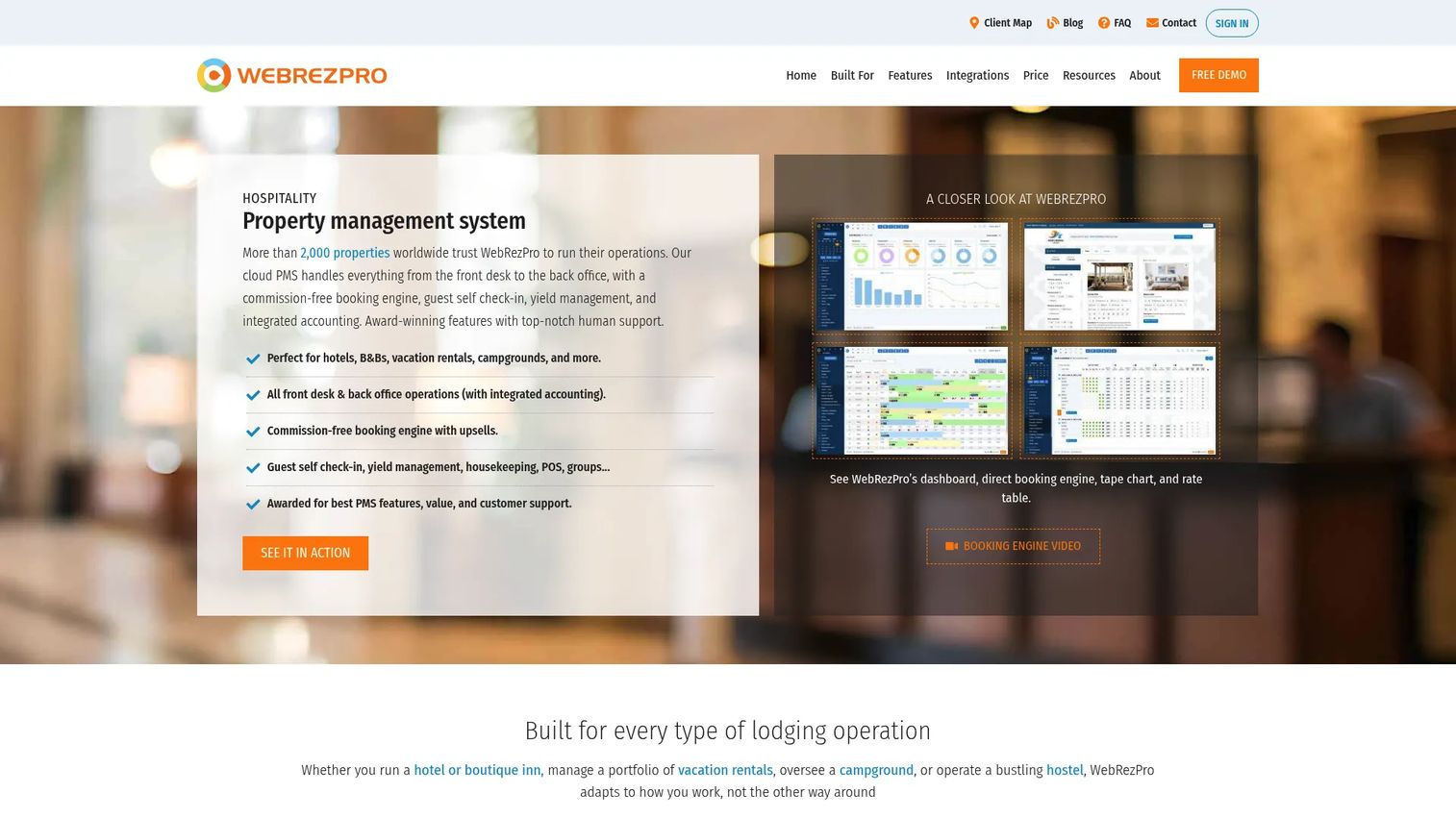
WebRezPro is a cloud property management system for lodging properties, with a straightforward per-unit pricing model and no system setup fees. It fits hotels, inns, vacation rentals, hostels, and campgrounds that want predictable costs without a quote process.
The platform covers the operational essentials: a commission-free booking engine, guest self check-in, and integrated accounting. For smaller operators, the appeal is transparent pricing paired with the core PMS functions needed to run reservations, front desk, and direct bookings.
Best for: Hotels, inns, vacation rentals, hostels, and campgrounds needing a cloud PMS.
Key strengths
- Commission-free booking engine: Direct bookings on your website avoid OTA commissions on every stay.
- Guest self check-in: Guests check themselves in, reducing front desk load at arrival.
- Integrated accounting: Financial data stays connected to operations, cutting manual reconciliation.
Why choose WebRezPro
Choose WebRezPro when transparent pricing and broad lodging fit matter most. It suits smaller operators who want to know the cost upfront and skip setup fees. The per-unit model and published rates make it the practical value play.
WebRezPro pricing
WebRezPro uses a single per-unit monthly fee starting at $10/unit/month, with unit-based minimums and volume discounts. Minimums run from $100/month for 1 to 14 units up to $1,500/month for 150+ units, with larger properties directed to contact WebRezPro. There are no system setup fees and no free tier. WebRezPro holds a 4.3/5 rating on G2.
Considerations before you choose
Picking a hotel PMS is a multi-year decision. Weigh these criteria before you commit.
Property type and size
A boutique inn and a 400-room chain have different needs. Match the platform to your scale. Enterprise systems like OPERA Cloud carry depth a small property will not use, while value-focused tools may not flex to a large group. Buy for where you are, with a clear path to where you are going.
Distribution and direct bookings
A PMS without strong distribution is only half a system. Check that the channel manager syncs two-way with the OTAs you use, and that the booking engine supports commission-free direct bookings on your own site. Direct bookings protect margin.
Integration depth and open APIs
Your PMS sits at the center of a stack that includes payments, POS, accounting, and CRM. Confirm the platform has open APIs and a healthy partner ecosystem. A closed system becomes a bottleneck as you add tools.
Pricing model and total cost
Per-unit, tiered, and quote-based models each carry different cost curves as you grow. Some vendors publish rates; others quote. Factor in setup fees, add-on modules, and the cost of scaling to more rooms or properties before you compare headline prices.
Team readiness and time to value
A powerful system your staff will not use is dead weight. Weigh the learning curve, onboarding support, and how fast the platform delivers a first win. For teams with high front desk turnover, a modern, intuitive interface pays off quickly.
Conclusion
The right hotel PMS software depends on property type, team maturity, and how far you plan to scale.
For operators who want everything in one platform, Cloudbeds leads on consolidation of PMS, channel manager, and booking engine. Mews is the pick for teams that value a modern interface and integrated revenue management. Oracle OPERA Cloud is the enterprise standard for large chains and complex groups. Stayntouch fits properties prioritizing mobile-first, fast front desk operations.
For smaller and independent operators, Hotelogix delivers channel management and multi-property support affordably, eviivo offers an all-in-one suite with transparent entry pricing from $50/month, and WebRezPro provides the clearest value with per-unit pricing from $10/unit/month and no setup fees.
Shortlist two or three based on your property type and integration needs, then run a scoped demo with each. Test the workflows your team touches every day, front desk check-in, channel sync, and reporting, before you sign. The best system is the one your staff will actually use on a busy weekend.
FAQs
A hotel property management system is software that centralizes a hotel's core operations: reservations, front desk check-in and checkout, housekeeping, rate and inventory management, guest profiles, billing, and reporting. Modern systems also connect distribution, so a booking on any channel updates availability everywhere. It is the operational core that keeps a property running without manual handoffs.
Day to day, hotel PMS software manages arrivals and departures, assigns rooms, updates housekeeping status, processes payments, and syncs rates and availability across OTAs and your booking engine. Staff use it to check guests in and out, run occupancy and revenue reports, and automate guest messaging. It replaces the spreadsheets and disconnected tools that cause double bookings and data drift.
A cloud based PMS runs in the browser rather than on an on-site server, so staff can access it from the front desk, a mobile device, or anywhere. Hotels prefer it for lower upfront cost, automatic updates, and remote access. Cloud deployment accounts for about 65% of the hospitality PMS market in 2025 and is growing at a 12.38% CAGR through 2031, per Mordor Intelligence.
A PMS is the central operations system that manages the property. A booking engine is the tool that takes direct reservations on your own website, and a channel manager syncs your inventory and rates across OTAs and metasearch. Many modern hotel PMS platforms bundle all three, but they are distinct functions: the PMS runs operations, while the booking engine and channel manager handle distribution.
Small hotels and boutique properties should prioritize an all-in-one suite that covers reservations, a channel manager, and a direct booking engine without heavy setup. Transparent pricing, ease of use, and low staff training time matter more than enterprise depth. Platforms built for independents, with simple onboarding and published entry pricing, tend to fit best.
Multi-property operators need centralized reporting, shared guest profiles, and consistent operations across every location. Look for group-level controls, a channel manager that scales across properties, and open APIs for connecting payments, POS, and accounting. The goal is one system that gives you a single view across the portfolio rather than separate logins per property.
Hotel PMS pricing usually follows one of three models: per-unit or per-room monthly fees, tiered plans by feature set, or quote-based pricing scoped to your property. Some vendors publish rates, such as per-unit pricing starting around $10 per unit per month, while enterprise platforms typically require a custom quote. Factor in setup fees, add-on modules, and the cost of scaling to more rooms before comparing.
It is worth switching when your current system causes recurring double bookings, cannot sync distribution reliably, lacks the integrations your stack needs, or does not scale as you add properties. Rising manual workarounds and staff frustration are strong signals. If the system is holding back direct bookings, revenue visibility, or multi-property growth, the cost of switching is usually lower than the cost of staying.