API decisions have quietly become product decisions. The platform your team picks shapes how fast integrations ship, whether enterprise customers pass security review, and whether developers can self-serve or need to wait on engineering. According to Postman's 2025 State of the API report, 82% of organizations have adopted an API-first approach, and 65% now generate revenue directly from their APIs. That shift changes what "evaluating an API platform" actually means for a product manager. You are not just picking infrastructure. You are deciding how much of your integration roadmap engineering has to own, how transparent your API surface is to customers, and whether governance will protect release cadence or slow it down.
What's inside
This guide covers the 14 best API platforms across five categories: Design and collaboration, gateway and runtime management, enterprise integration suites, workflow automation, and embedded SaaS integrations. It's built for product managers and platform teams at B2B SaaS companies evaluating where API infrastructure fits their roadmap.
Items were selected based on:
- Lifecycle coverage: How much of design, testing, deployment, and monitoring the platform handles
- Deployment fit: Cloud-native, hybrid, open-source, or managed
- Developer experience: Documentation quality, portals, catalogs, and onboarding
- PM-relevant outcomes: Activation impact, integration backlog reduction, governance support, and engineering opportunity cost
TL;DR
- Best for API development and collaboration: Postman, for design, testing, documentation, and API catalogs in one workspace
- Best cloud-native gateways: AWS API Gateway for AWS-native teams, Azure API Management for Microsoft-centric organizations, and Apigee for enterprises treating APIs as external products
- Best open-source and hybrid management: Kong, Tyk, Gravitee, and WSO2 API Manager, depending on deployment control requirements
- Best enterprise integration suite: MuleSoft Anypoint Platform for organizations standardizing on Salesforce and needing API management plus integration under one umbrella
- Best workflow automation: Zapier for fast no-code internal automation, Workato for enterprise governance requirements
- Best embedded SaaS integrations: Paragon for product teams wanting native in-app integration UI, Nango for developer-led teams who want infrastructure control
What is an API platform
An API platform is software that helps teams design, build, secure, publish, monitor, and connect APIs across internal systems, customer-facing products, and third-party services.
The category is broad. A single label covers at least five distinct platform types, and conflating them leads to buying the wrong tool.
Five API platform types:
- API development platforms: Tools for designing, testing, documenting, and collaborating on APIs before and during development (Postman)
- API management platforms: Tools that govern the full API lifecycle, including policies, analytics, portals, and versioning (Apigee, IBM API Connect, WSO2)
- API gateways: Runtime infrastructure that routes traffic, enforces authentication, manages rate limits, and applies security policies (Kong, AWS API Gateway, Azure API Management, Tyk, Gravitee)
- API integration platforms: Tools that connect applications and automate workflows across business systems (Zapier, Workato, MuleSoft)
- Embedded integration platforms: Infrastructure for SaaS products to expose customer-facing integrations inside the product itself (Paragon, Nango)
Core capabilities to evaluate:
- API design with OpenAPI support and specification management
- Testing, mocking, and documentation generation
- Runtime gateway with traffic routing and throttling
- Authentication, authorization, and rate limiting
- Developer portals and API catalogs for self-service discovery
- Analytics, monitoring, and API observability
- Workflow automation and connector ecosystems
- MCP and AI-agent access controls for 2026 readiness
For product managers, the practical value of a strong API platform is threefold: It reduces integration friction for your engineering team, it gives customers and partners self-serve access to your API surface, and it generates visibility into adoption and reliability that would otherwise require custom instrumentation.
Related: API development tools, API gateway software, API testing tools
When to use an API platform
Standardize API design before engineering debt spreads
When multiple teams ship APIs independently, consistency breaks fast. OpenAPI specs drift, documentation falls out of sync, and the integration backlog grows because consumers cannot self-serve. An API development platform like Postman, or a management layer with governance policies, creates a shared standard before each team invents its own. For PMs, this protects release cadence and reduces the coordination overhead on cross-functional API projects.
Expose APIs to customers or partners safely
A raw API endpoint is not a product. Developer portals, usage plans, authentication, rate limiting, and analytics are what make an API something customers can build on confidently. API management platforms and gateways handle the security and policy layer so your engineering team does not rebuild it per customer. This directly affects activation: Customers who can self-serve through a portal reach value faster than those who need a manual setup call.
Connect product workflows across internal and customer systems
Some teams need APIs to trigger actions across business systems, not just expose endpoints. Workflow automation platforms (Zapier, Workato) cover internal automation. Embedded integration platforms (Paragon, Nango) cover customer-facing integrations inside your product. The distinction matters for roadmap decisions: Building every integration natively has a high engineering opportunity cost, and these platforms shift that burden without giving up control.
API platforms comparison
Picking the right API platform requires mapping the tool to the job. A gateway handles runtime traffic; a development platform handles collaboration; an integration platform handles system connectivity. The table below covers all 14 platforms with verified pricing and ratings.
| # | Product | Best for | Key differentiator | Pricing | G2 rating |
|---|---|---|---|---|---|
| 1 | Postman | API design, testing, and collaboration | API collections, mock servers, and catalogs | Free; paid from $9/user/mo | 4.6/5 |
| 2 | Kong | Cloud-native gateway and AI traffic management | Plugin ecosystem and AI gateway | From $25/mo plus usage | 4.4/5 |
| 3 | Apigee | Enterprise API lifecycle on Google Cloud | Proxies, monetization, governance | From $20/1M API calls | 4.3/5 |
| 4 | AWS API Gateway | Serverless AWS-native APIs | Lambda, IAM, CloudWatch integration | From $0.90/1M requests | 4.3/5 |
| 5 | Azure API Management | Microsoft and hybrid API programs | AI gateway, Entra ID, self-hosted gateway | Consumption tier available | 4.2/5 |
| 6 | MuleSoft Anypoint Platform | Enterprise API-led integration | DataWeave, Flex Gateway, connector library | Custom pricing | 4.4/5 |
| 7 | Tyk | Open-source and hybrid API management | Self-managed and cloud deployment options | Free open-source; paid plans on quote | 4.5/5 |
| 8 | Gravitee | Multi-protocol and event-native APIs | REST, GraphQL, Kafka, WebSocket support | From $1,250/mo | 4.6/5 |
| 9 | WSO2 API Manager | Full lifecycle open-source API management | Gateway, portal, analytics, monetization | Free trial; from $119/mo | N/A on G2 |
| 10 | IBM API Connect | Regulated enterprise API programs | Security, hybrid deployment, lifecycle | Custom pricing | 4.3/5 |
| 11 | Zapier | No-code workflow automation | 9,000+ app connectors | Free; paid from $19.99/mo | 4.5/5 |
| 12 | Workato | Enterprise workflow automation with governance | AI agents, event streams, data orchestration | Free; Pro from $100/mo | 4.7/5 |
| 13 | Paragon | Embedded SaaS integrations | Customer-facing in-app integration UI | Custom pricing | 4.6/5 |
| 14 | Nango | Code-first embedded integration infrastructure | Auth, managed sync, 1,000+ API connections | Free; from $50/mo | 4.5/5 |
Best 14 API platforms for 2026
1. Postman
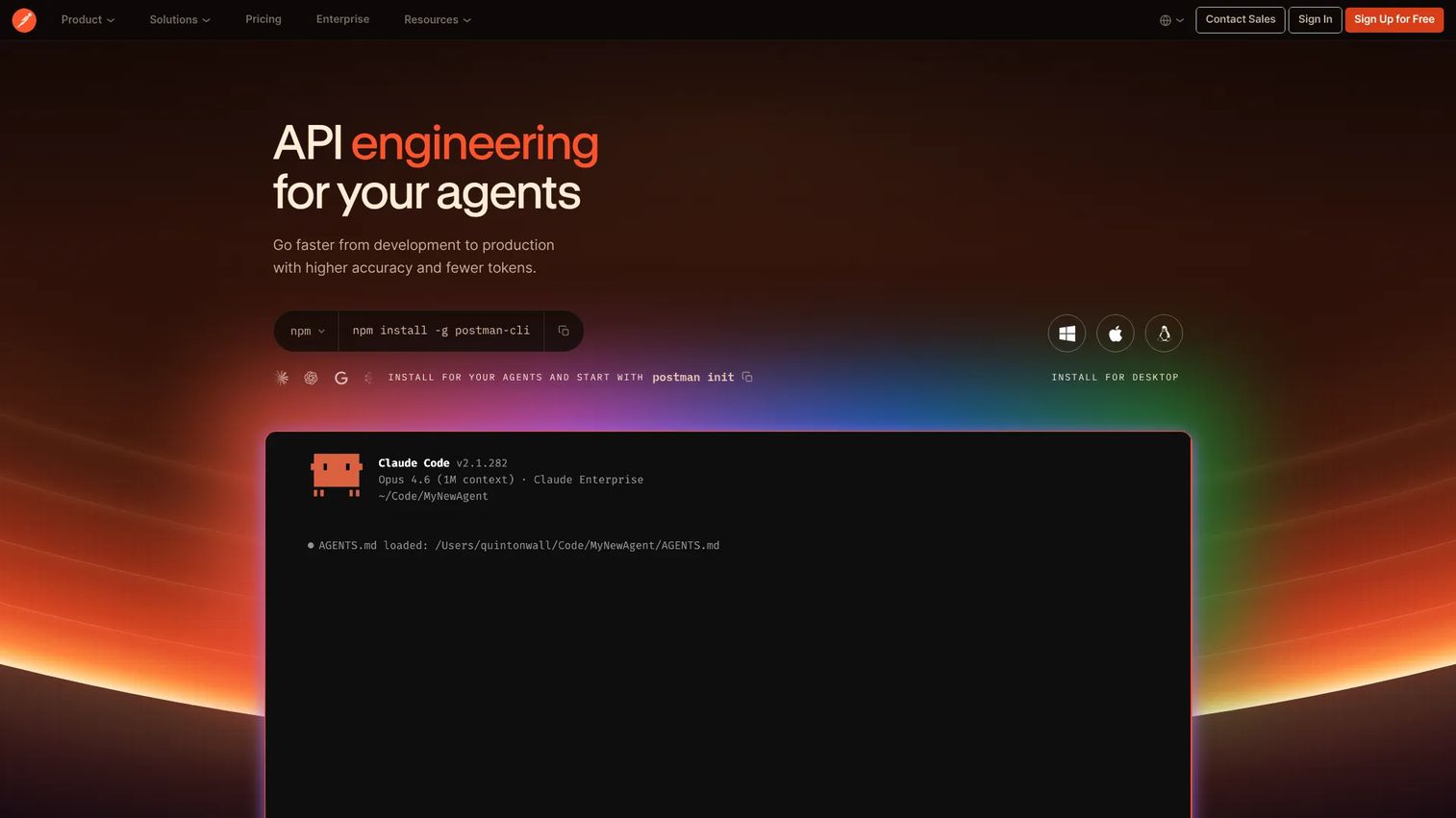
Postman is a unified platform for designing, testing, documenting, and distributing APIs. Teams use it across the full development cycle: Write a spec in the API designer, generate mock servers, run automated test suites, publish documentation, and share collections across the organization. It supports HTTP, GraphQL, gRPC, WebSocket, and MQTT.
Best for: Product and engineering teams that want one shared workspace for API design, testing, and documentation.
Key features
- API collections and collaborative workspaces
- Mock servers for frontend development without a live backend
- Automated testing with CI/CD integration
- API catalogs for internal discovery and reuse
- Traffic monitoring and performance testing
Why choose Postman: For PMs managing API-first roadmaps, Postman reduces the ambiguity gap between product requirements, engineering implementation, and developer-facing documentation. It is the best entry point for teams standardizing API design before the surface grows.
Postman pricing: Free plan available for individuals. Solo plan runs $9 per user per month (billed annually). Team plan is $19 per user per month (billed annually). Enterprise pricing requires contacting sales.
G2 rating: 4.6/5
2. Kong
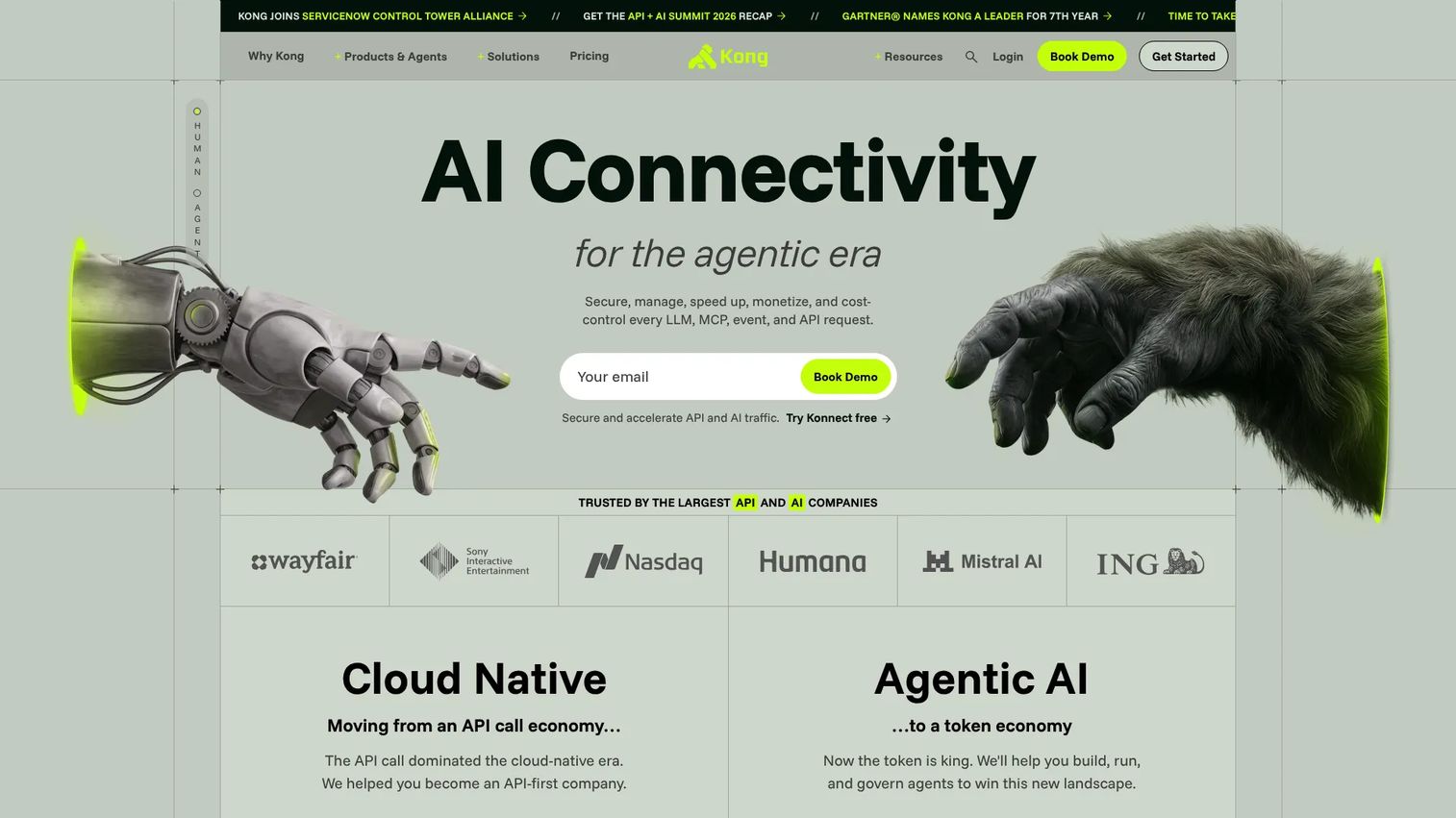
Kong is a cloud-native API gateway and connectivity platform built for teams managing complex service architectures. Kong Konnect provides a control plane for managing gateways across cloud, on-premises, and Kubernetes environments. Its AI gateway capabilities make it relevant for teams routing LLM, MCP, and agent-to-agent traffic alongside traditional API traffic.
Best for: Platform engineering teams that need gateway control, plugin extensibility, and multi-environment deployment across cloud and Kubernetes.
Key features
- API gateway with plugin ecosystem for auth, rate limiting, and transformations
- Kubernetes ingress controller and service mesh support
- AI gateway for LLM and MCP traffic management
- Developer portal for API publishing and self-service
- Usage-based metering and observability
Why choose Kong: Kong fits organizations with platform engineering resources and complex service architectures. The plugin model means teams can extend gateway behavior without forking the core. For PMs, it is most relevant when the engineering team already standardizes on Kubernetes and wants a gateway that scales alongside the product.
Kong pricing: Konnect Plus starts from $25 per month plus usage, billed monthly, with a 30-day free trial. Enterprise pricing requires a custom quote.
G2 rating: 4.4/5
3. Apigee
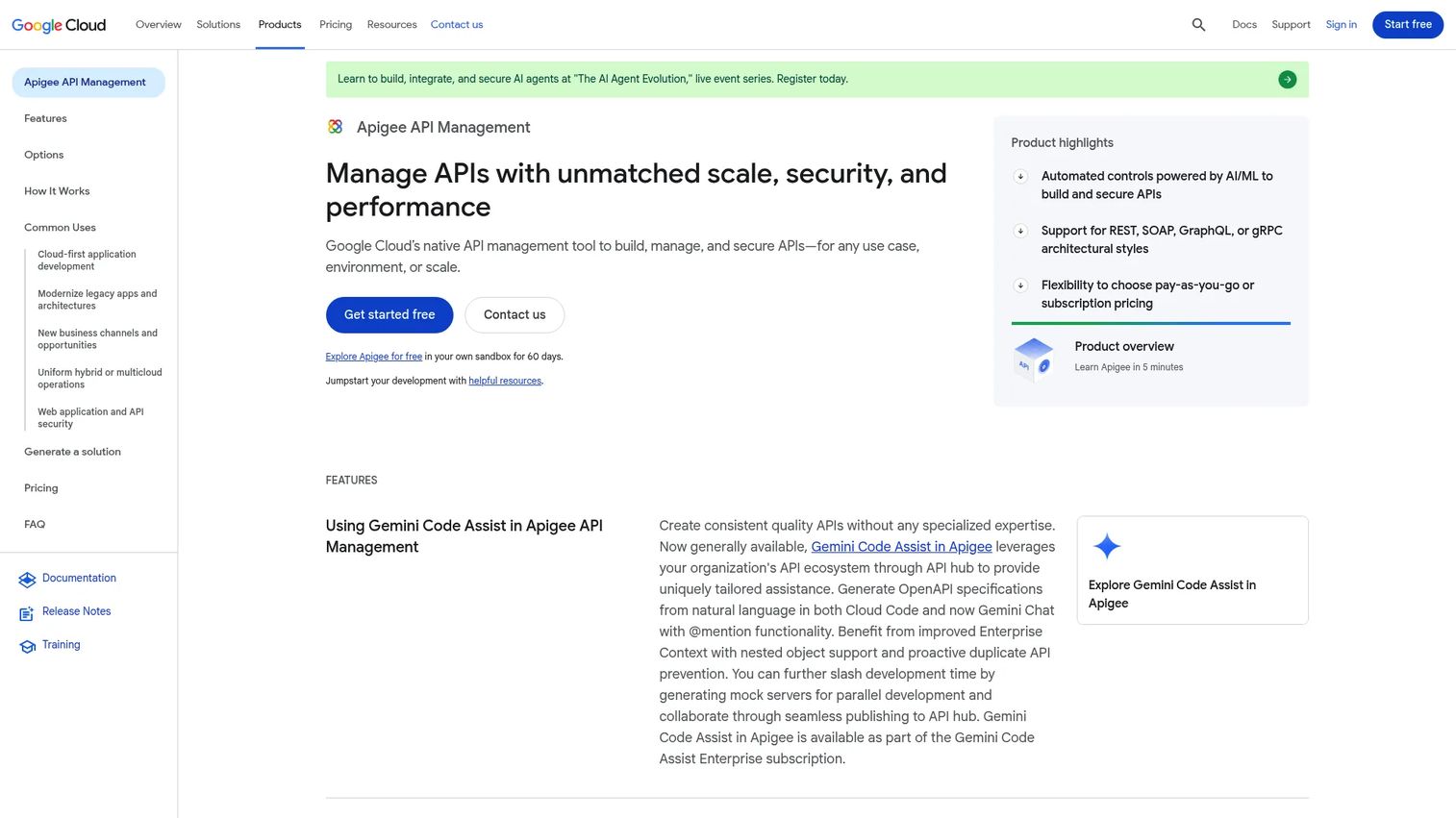
Apigee is Google Cloud's enterprise API management platform. It covers the full lifecycle: Define API proxies, enforce security and traffic policies, publish to a developer portal, run analytics, and monetize API usage. It supports REST, gRPC, SOAP, and GraphQL. Hybrid and multicloud deployment options make it viable for enterprises with mixed infrastructure.
Best for: Enterprises treating APIs as external products that need lifecycle governance, developer portals, and monetization capabilities.
Key features
- API proxies with security, rate limiting, and transformation policies
- Developer portal and API products for partner programs
- Built-in analytics and monitoring
- API monetization with usage plans and billing
- Hybrid and multicloud deployment
Why choose Apigee: Apigee is the right fit when APIs are a revenue line or a core part of a partner program, not just internal infrastructure. For PMs at organizations where the API surface is customer-facing and monetized, Apigee's lifecycle management and analytics connect API performance to business outcomes directly.
Apigee pricing: Pay-as-you-go starts at $20 per 1 million API calls, with a free 60-day evaluation environment. Base environment costs $365 per month per region. Subscription plans require contacting sales.
G2 rating: 4.3/5
4. AWS API Gateway
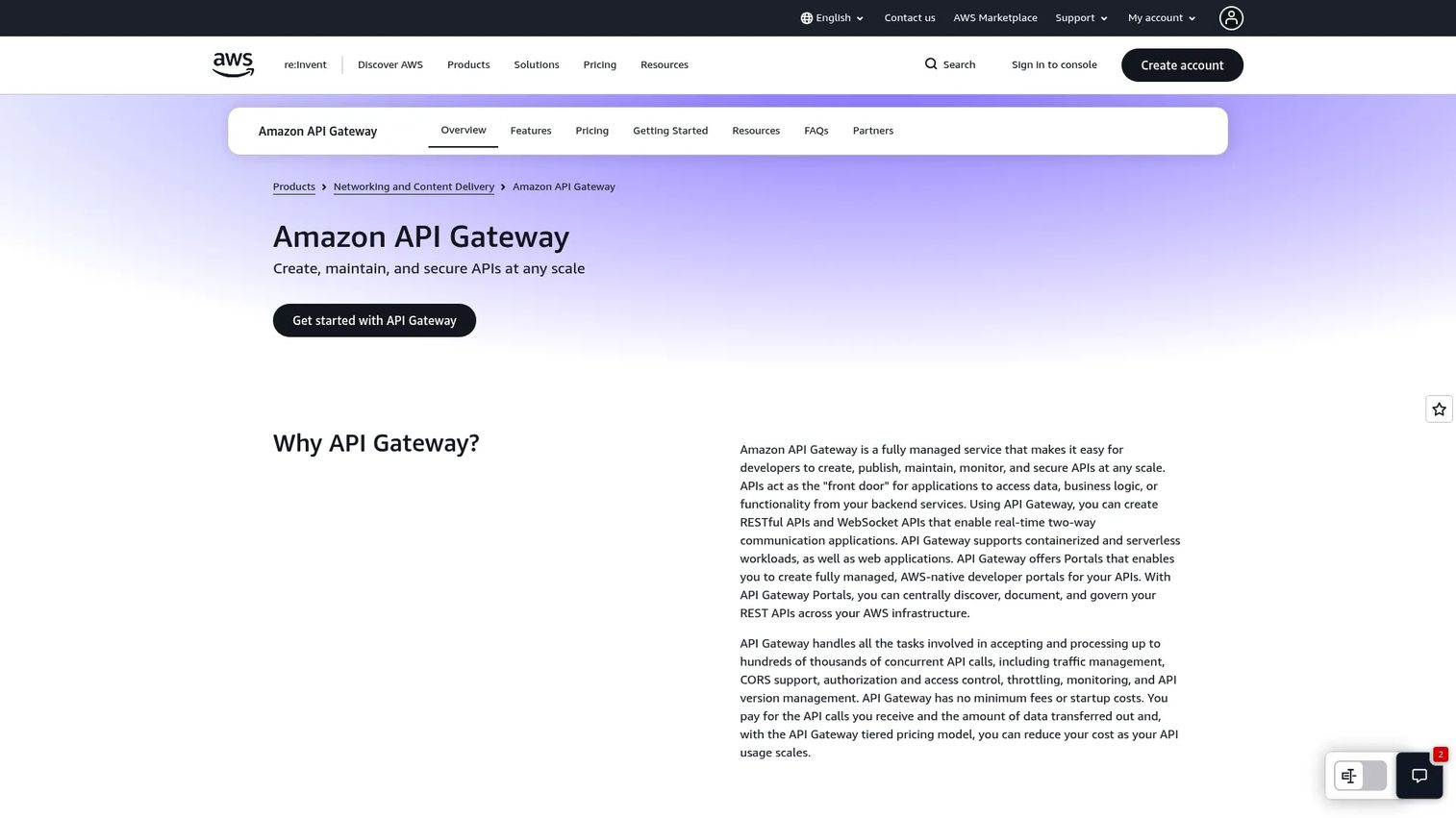
AWS API Gateway is the default API gateway for AWS-native applications. It supports REST APIs, HTTP APIs, and WebSocket APIs, integrating natively with Lambda, IAM, Cognito, and CloudWatch. Teams building serverless or cloud-native products on AWS get throttling, caching, usage plans, and monitoring without standing up separate gateway infrastructure.
Best for: Teams building serverless or cloud-native products on AWS who want a managed gateway with minimal operational overhead.
Key features
- REST, HTTP, and WebSocket API endpoints
- Lambda integration for serverless backends
- IAM and Cognito authentication and authorization
- Request throttling, caching, and usage plans
- CloudWatch metrics and logging
Why choose AWS API Gateway: If the product already runs on AWS, this is the path of least resistance. For PMs, the practical benefit is reduced platform overhead: One less system to provision and maintain when the infrastructure is already there. The pay-as-you-go model also fits early-stage products where traffic is unpredictable.
AWS API Gateway pricing: HTTP APIs start at $1.00 per million requests, scaling to $0.90 per million at higher volumes. REST APIs cost $3.50 per million API calls. WebSocket APIs cost $1.00 per million messages. A 12-month free tier covers 1 million calls per month across API types for new accounts.
G2 rating: 4.3/5
5. Azure API Management
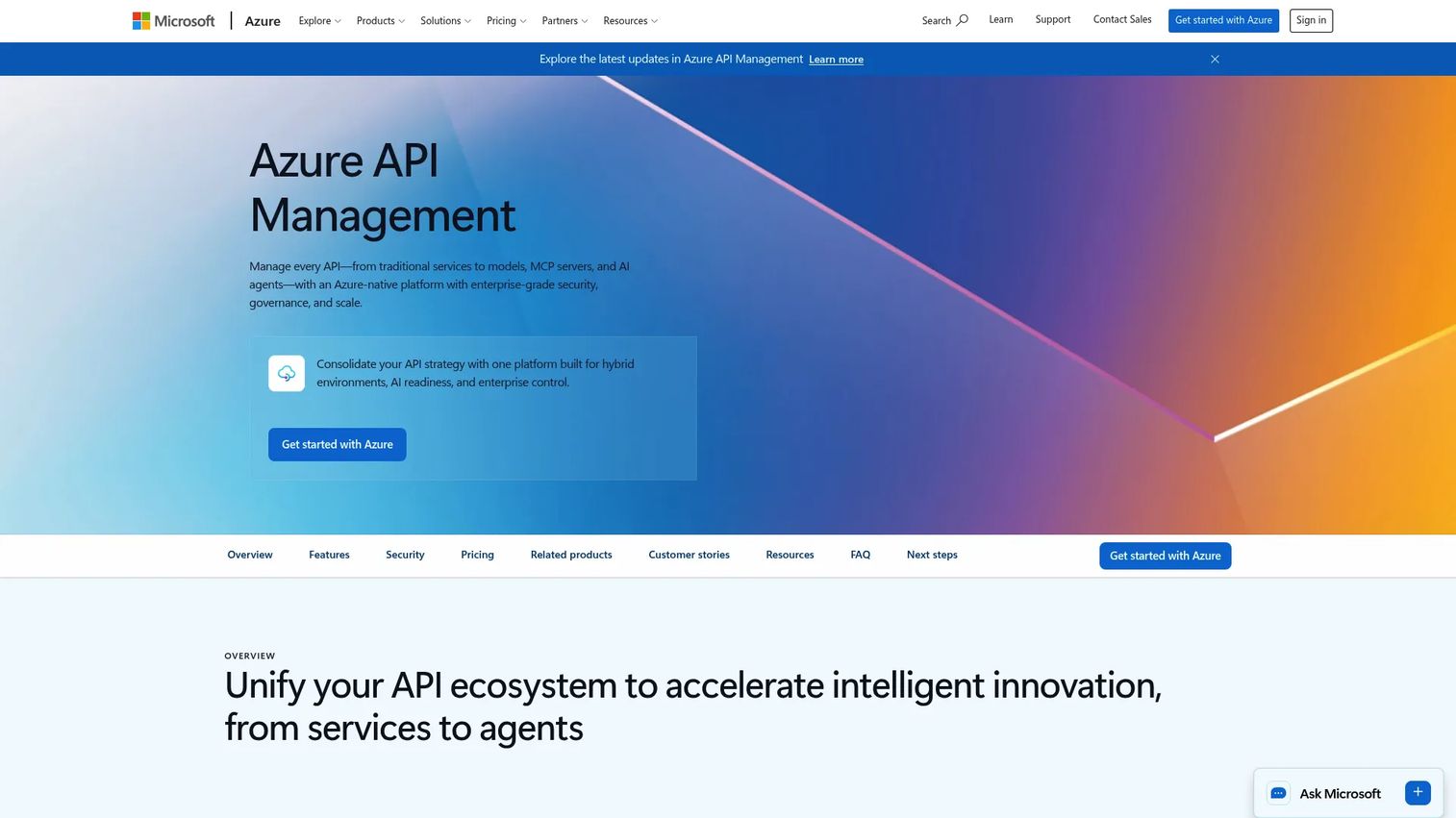
Azure API Management is Microsoft's managed API platform for organizations standardized on Azure. It supports REST, GraphQL, WebSocket, and OData, with a policy engine for authentication, rate limiting, caching, and routing. The self-hosted gateway option extends management to on-premises or other clouds. Azure API Management also includes AI gateway capabilities for token quotas, semantic caching, and content-safety policies on LLM and MCP traffic.
Best for: Microsoft and Azure teams that need managed API security, developer portals, and hybrid or multi-cloud gateway coverage.
Key features
- API gateway with policy engine for auth, routing, and rate limiting
- AI gateway with token quotas and semantic caching
- Self-hosted gateway for hybrid and on-premises deployment
- Developer portal with Entra ID integration
- Centralized observability and analytics
Why choose Azure API Management: It fits organizations that already have an Azure footprint and need governance across partner APIs, internal developer enablement, and regulated deployment requirements. For PMs at Microsoft-centric companies, it reduces the argument for additional gateway tooling by covering AI-agent traffic management alongside traditional API management.
Azure API Management pricing: Tiers include Consumption (per-operation), Developer, Basic, Standard, and Premium. A Consumption tier provides a low-cost entry point. The Azure pricing calculator returns specific monthly figures based on selected tier and region.
G2 rating: 4.2/5
6. MuleSoft Anypoint Platform
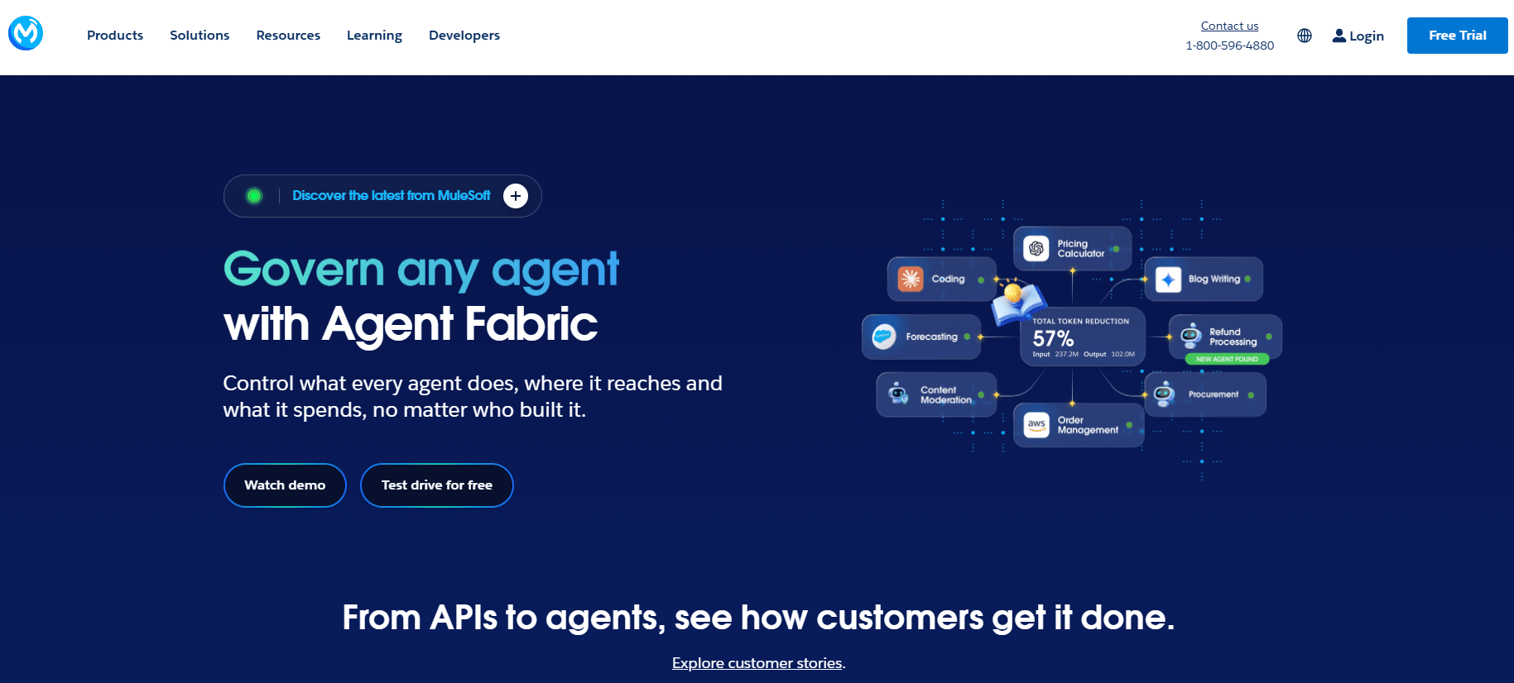
MuleSoft Anypoint Platform is an enterprise integration and API management platform built for organizations connecting many systems. It combines API design, integration development, Flex Gateway, and centralized deployment and monitoring under one umbrella. DataWeave handles data transformation across formats and protocols. The platform has strong Salesforce ecosystem fit and covers API-led connectivity as an architectural pattern.
Best for: Large enterprises that need API management and integration across heterogeneous systems, especially where Salesforce is the system of record.
Key features
- API-led connectivity with Anypoint API Designer and Exchange
- DataWeave for data transformation across systems
- Flex Gateway for cloud-native or on-premises deployment
- Centralized monitoring, alerts, and dependency mapping
- Connector library for common SaaS and on-premises systems
Why choose MuleSoft: MuleSoft suits organizations where the integration surface is large, the stakeholder count is high, and governance is non-negotiable. For PMs, the trade-off is clear: Broader integration coverage comes with a steeper implementation investment. It excels when cross-system workflows are central to product delivery and engineering alone cannot maintain every integration.
MuleSoft Anypoint Platform pricing: Custom pricing. Contact sales for a quote.
G2 rating: 4.4/5
7. Tyk
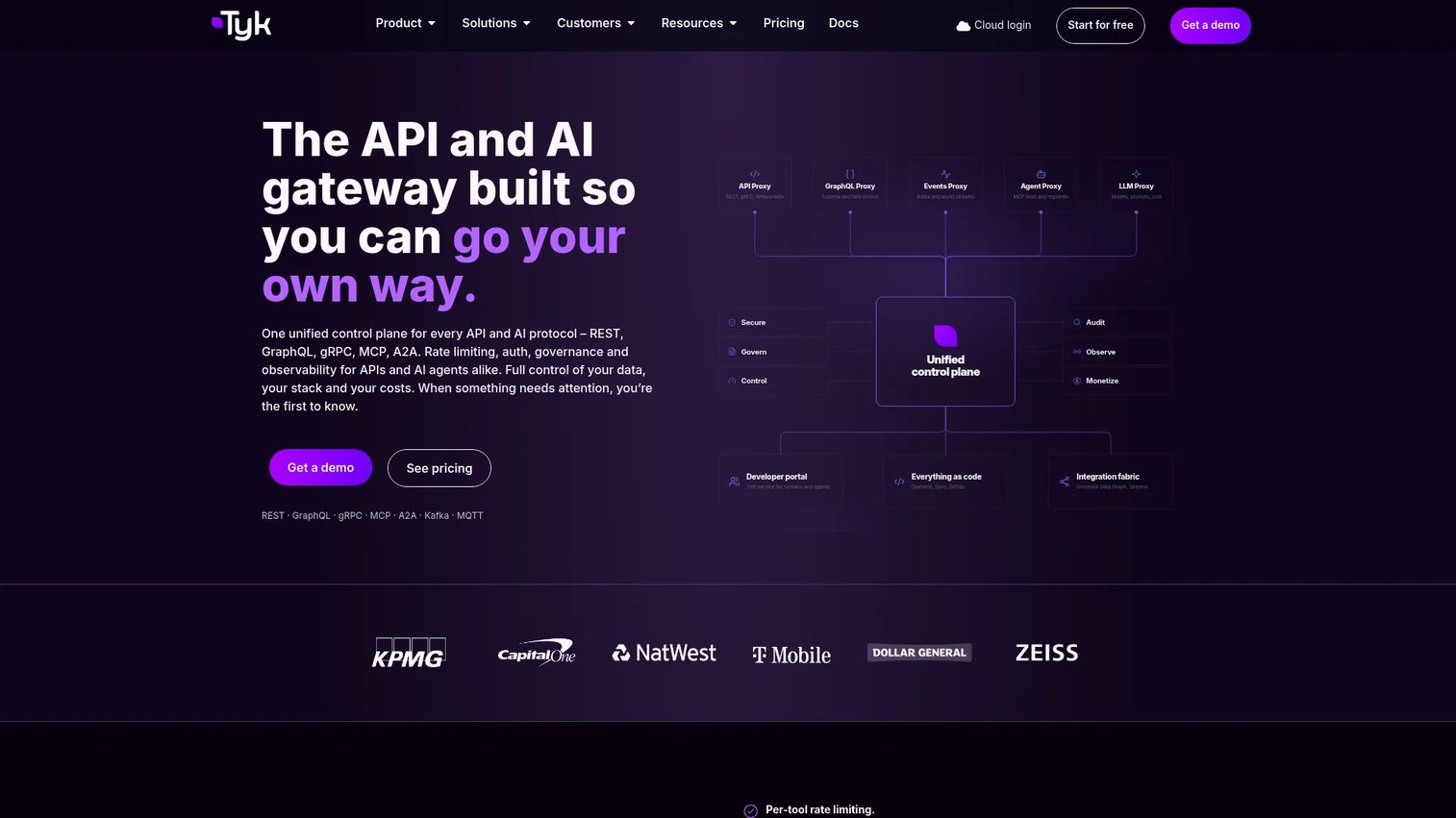
Tyk is an API management platform and gateway with open-source roots and enterprise deployment options. Teams can run Tyk Gateway self-managed, on Tyk Cloud, or in a hybrid configuration. It handles REST, GraphQL, gRPC, SOAP, and asynchronous APIs. The developer portal supports API publishing, credentials management, and subscription workflows.
Best for: Teams that want deployment control and open-source flexibility without giving up API governance, analytics, or portal capabilities.
Key features
- API gateway with authentication, rate limiting, and analytics
- Developer portal for API discovery and subscription management
- Hybrid and self-managed deployment options
- Traffic policies and transformation middleware
- Open-source Tyk Gateway available at no cost
Why choose Tyk: Tyk works well for teams that want to avoid cloud vendor lock-in but need more than a raw open-source gateway. For PMs, it is particularly relevant when compliance or data-residency requirements restrict which clouds APIs can run on. The open-source core also reduces the entry cost for teams evaluating deployment fit before committing to an enterprise contract.
Tyk pricing: Tyk Gateway is free and open source. Paid Core, Professional, and Enterprise plans are quoted based on usage and deployment scale. Contact Tyk for current figures.
G2 rating: 4.5/5
8. Gravitee
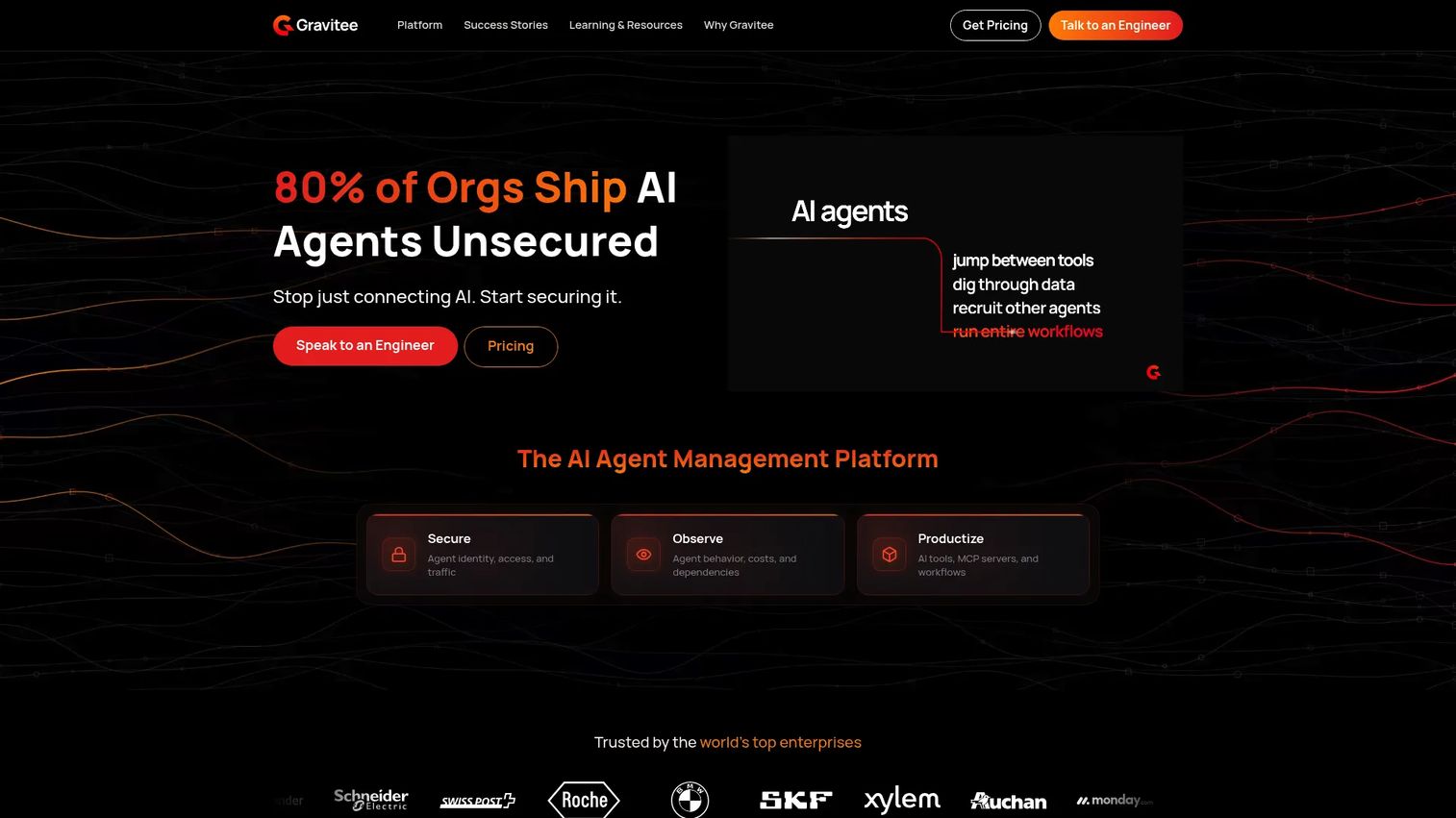
Gravitee is an event-native API and agent management platform that handles REST, GraphQL, gRPC, WebSocket, Kafka, MQTT, and Solace in a single control plane. Its federated governance layer spans third-party gateways and brokers. The 2026 version includes AI-agent management with LLM, MCP, and agent-to-agent proxies, making it one of the most complete options for teams managing both synchronous and asynchronous API traffic.
Best for: Enterprise platform teams managing both synchronous APIs and event streams under one governance model.
Key features
- Multi-protocol gateway: REST, GraphQL, Kafka, WebSocket, and more
- Federated governance across external gateways and brokers
- AI-agent management with MCP and agent-to-agent proxies
- Developer portal with API discovery and subscription analytics
- Security via OAuth 2.0, JWT, mTLS, OIDC, and threat protection
Why choose Gravitee: Gravitee's strength is protocol breadth. If your product handles real-time data, event streams, or AI-agent traffic alongside standard REST APIs, Gravitee prevents fragmentation across specialized tools. For PMs, that means fewer systems to maintain and a single analytics view across all traffic types.
Gravitee pricing: Planet plan (API management) starts at $2,500 per month. Comet plan (event management) starts at $1,250 per month. Galaxy, Universe, Meteor, and Asteroid tiers require a custom quote. An open-source version is available.
G2 rating: 4.6/5
9. WSO2 API Manager
WSO2 API Manager is an open-source full lifecycle API management platform. It combines a gateway, publisher, developer portal, analytics, monetization, and AI gateway support in one deployment. Organizations can run it on-premises, on any cloud, or in a hybrid configuration. The WSO2 API Platform adds a managed SaaS layer on top of the core open-source capabilities.
Best for: Technical teams that want full lifecycle API management without cloud vendor dependency and with open-source extensibility.
Key features
- API gateway with security, routing, and traffic management
- Developer portal for API discovery and credential management
- API analytics and monetization
- AI gateway and MCP support
- Flexible deployment: Cloud, on-premises, or hybrid
Why choose WSO2 API Manager: WSO2 is the right pick when governance requirements preclude locking API infrastructure to a specific cloud vendor. The open-source core keeps extensibility high. For PMs at organizations with strict data-residency or procurement constraints, WSO2 provides full lifecycle management without the vendor risk of a single-cloud solution.
WSO2 API Manager pricing: A 30-day free trial is available. The WSO2 API Platform Growth plan starts from $119 per month. Enterprise pricing is custom. Self-hosted API Manager pricing requires a quote.
10. IBM API Connect
IBM API Connect is an enterprise API management platform for regulated and complex organizations. It covers the full lifecycle: Develop, secure, publish, manage, and analyze APIs across cloud, hybrid, and on-premises environments. Supported protocols include REST, GraphQL, SOAP, WebSocket, and AsyncAPI. Deployment options span SaaS, reserved instance, and self-managed software.
Best for: Regulated enterprises that need governance, security policy enforcement, and hybrid-cloud deployment with IBM ecosystem alignment.
Key features
- Full API lifecycle management from design to retirement
- API gateway with security policies, OAuth, and JWT
- Developer portal for discovery and subscriptions
- Enterprise analytics and monitoring
- Hybrid, multicloud, SaaS, and on-premises deployment
Why choose IBM API Connect: IBM API Connect fits organizations where procurement, security review, and compliance governance are the primary gating factors. For PMs at financial services, healthcare, or government-adjacent companies, the deployment flexibility and regulatory track record reduce friction during enterprise security evaluations.
IBM API Connect pricing: Plans include Pay-as-You-Go, Standard SaaS, Premium SaaS, Reserved Instance, and self-managed Software. Contact IBM for current pricing.
G2 rating: 4.3/5
11. Zapier
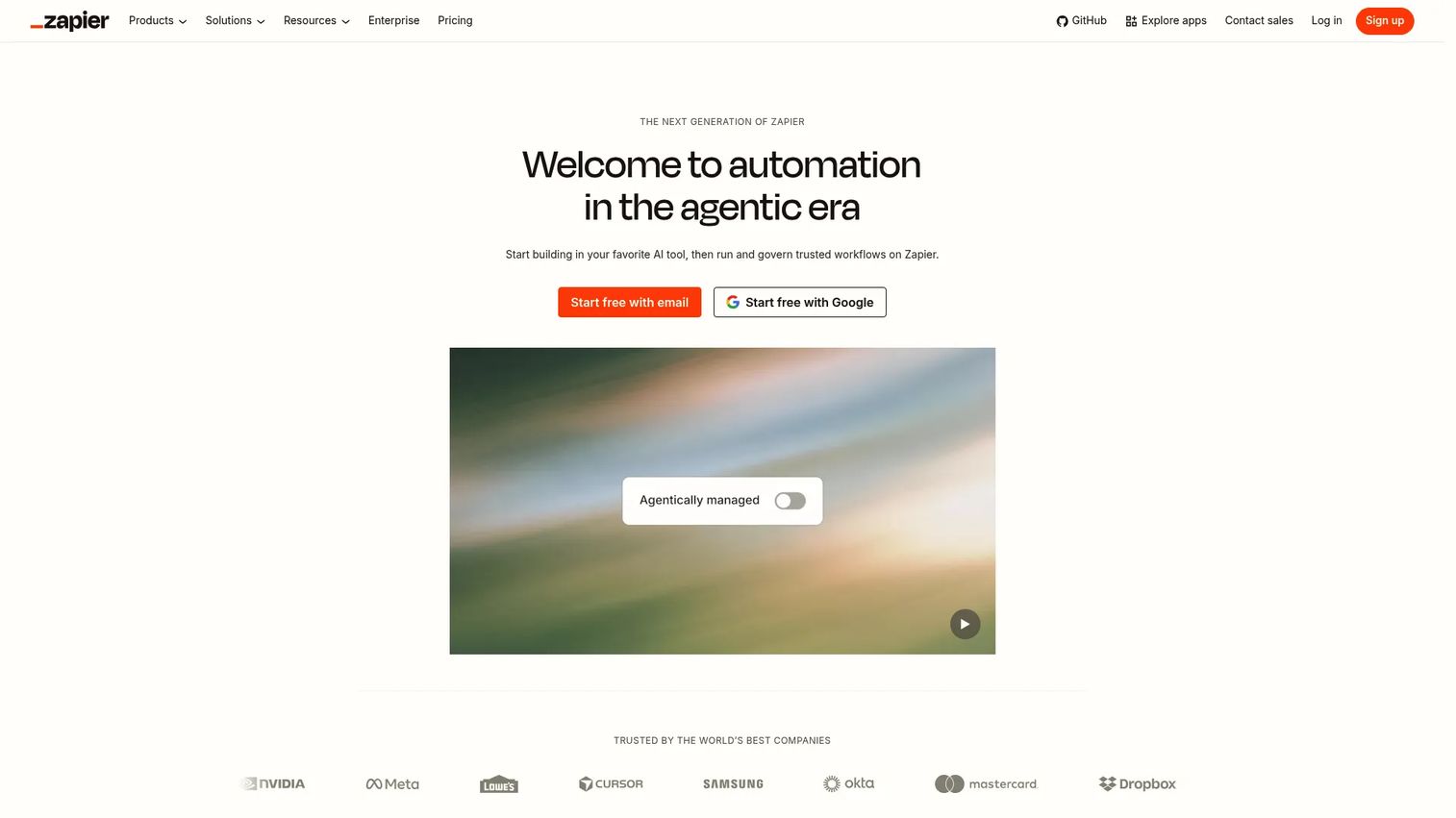
Zapier is a workflow automation platform that connects 9,000+ apps through no-code automation. It covers multi-step workflows with branching logic, webhooks, scheduling, and data formatting. For product teams, Zapier is useful for validating integration demand before committing engineering resources to native integrations.
Best for: Product and operations teams that need fast internal workflow automation across SaaS apps without writing code.
Key features
- 9,000+ pre-built app connectors
- Multi-step Zaps with branching paths and filters
- Webhooks and API actions for custom endpoints
- Scheduling, data formatting, and looping
- AI automation and agent capabilities
Why choose Zapier: Zapier's value for PMs is speed and signal. Before building a native integration, connecting two systems with Zapier lets you measure usage and validate demand. The engineering opportunity cost is near zero, which makes it a strong option for early-stage integration validation or internal operations workflows that do not require custom logic.
Zapier pricing: Free plan includes 100 tasks per month and two-step Zaps. Professional plan starts at $19.99 per month. Team plan starts at $69 per month for up to 25 users. Enterprise pricing requires contacting sales.
G2 rating: 4.5/5
12. Workato
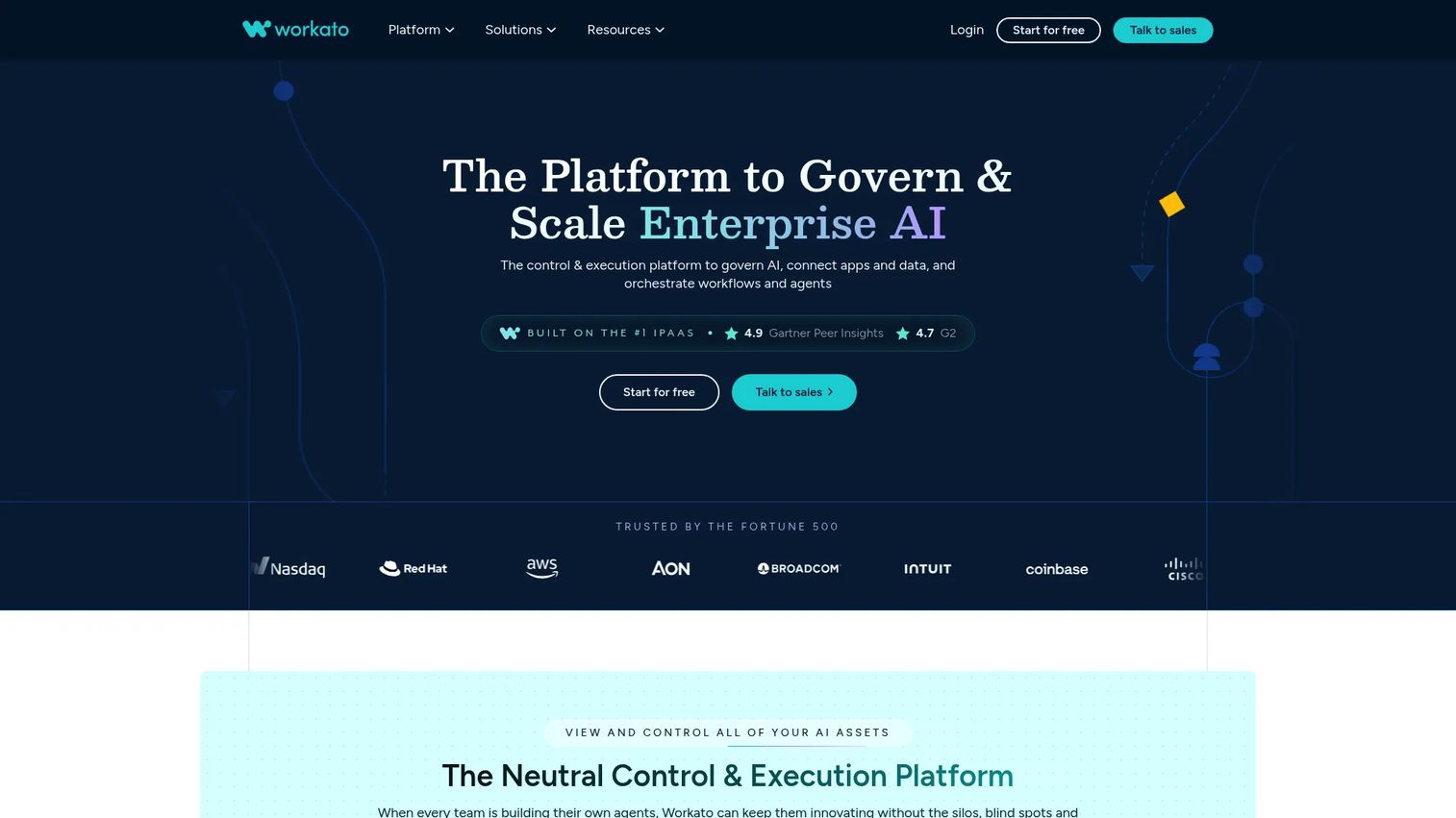
Workato is an enterprise automation platform for integrating applications, orchestrating data, and automating business workflows at scale. It supports AI agents, event streams, and universal connectivity across SaaS, on-premises systems, and LLMs. Workato's governance layer adds approval workflows, role-based access, and audit trails that Zapier does not offer at the same depth.
Best for: Enterprise teams automating cross-functional processes where governance, security, and AI-agent orchestration are requirements.
Key features
- Automation recipes with conditional logic and error handling
- Enterprise connectors for SaaS, databases, and on-premises systems
- AI agents and agent orchestration
- Event streams and data pipeline workflows
- Governance with role-based access and audit logs
Why choose Workato: Workato fits operational workflows around the product rather than replacing a gateway or management layer. For PMs, it covers the space between internal automation and customer-facing integrations, particularly when business teams need to own automation logic without writing code but engineering still needs visibility and control.
Workato pricing: Free self-service plan with 50,000 one-time credits. Pro plan starts at $100 per month for 3,500 credits. Enterprise and platform-edition pricing is custom. Contact sales for usage-based platform packages.
G2 rating: 4.7/5
13. Paragon
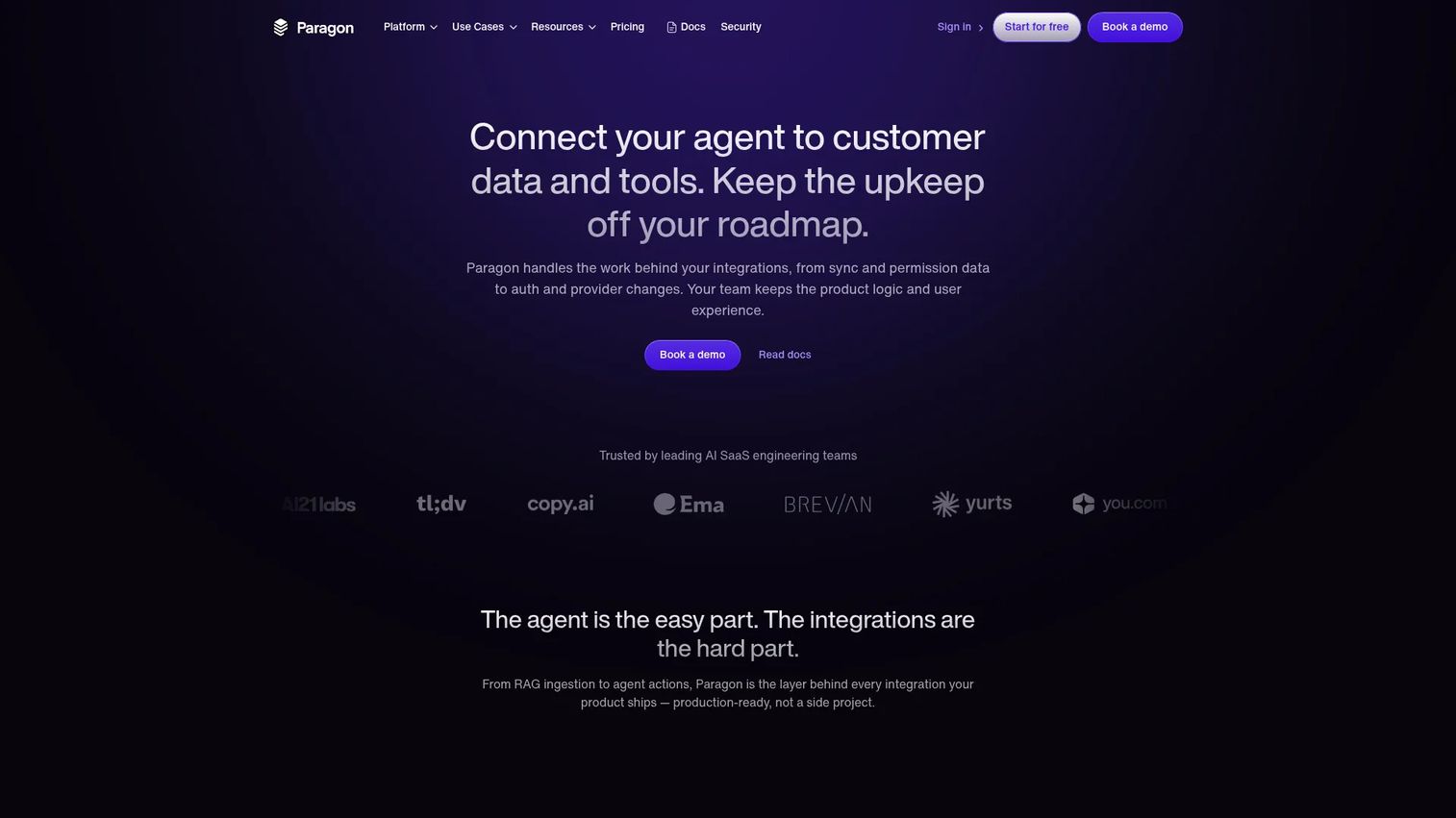
Paragon is an embedded integration platform for B2B SaaS products. It lets product teams ship native, customer-configurable integrations without building and maintaining the integration infrastructure themselves. Key components include 130+ pre-built connectors, managed OAuth authentication, integration UI components, and an ActionKit API and MCP server for integration actions.
Best for: B2B SaaS product teams that want customers to configure integrations inside the product without engineering owning every connection.
Key features
- 130+ pre-built connectors with managed authentication
- In-app integration UI components for customers
- Managed Sync for data ingestion and permissions-aware access
- ActionKit API and MCP server for integration actions
- Workflow builder for customer-facing automation
Why choose Paragon: Paragon reduces the integration backlog problem directly. Instead of engineering building and maintaining every integration, customers configure and manage their own connections through a UI you embed. For PMs, this is particularly relevant for activation: Customers who can self-connect their existing tools to your product reach value faster without a setup call.
Paragon pricing: Custom pricing across Pro and Enterprise plans, based on the number of Connected Users. Enterprise adds self-hosting, dynamic field mapping, SAML SSO, and priority SLAs. Contact Paragon for current figures.
G2 rating: 4.6/5
14. Nango
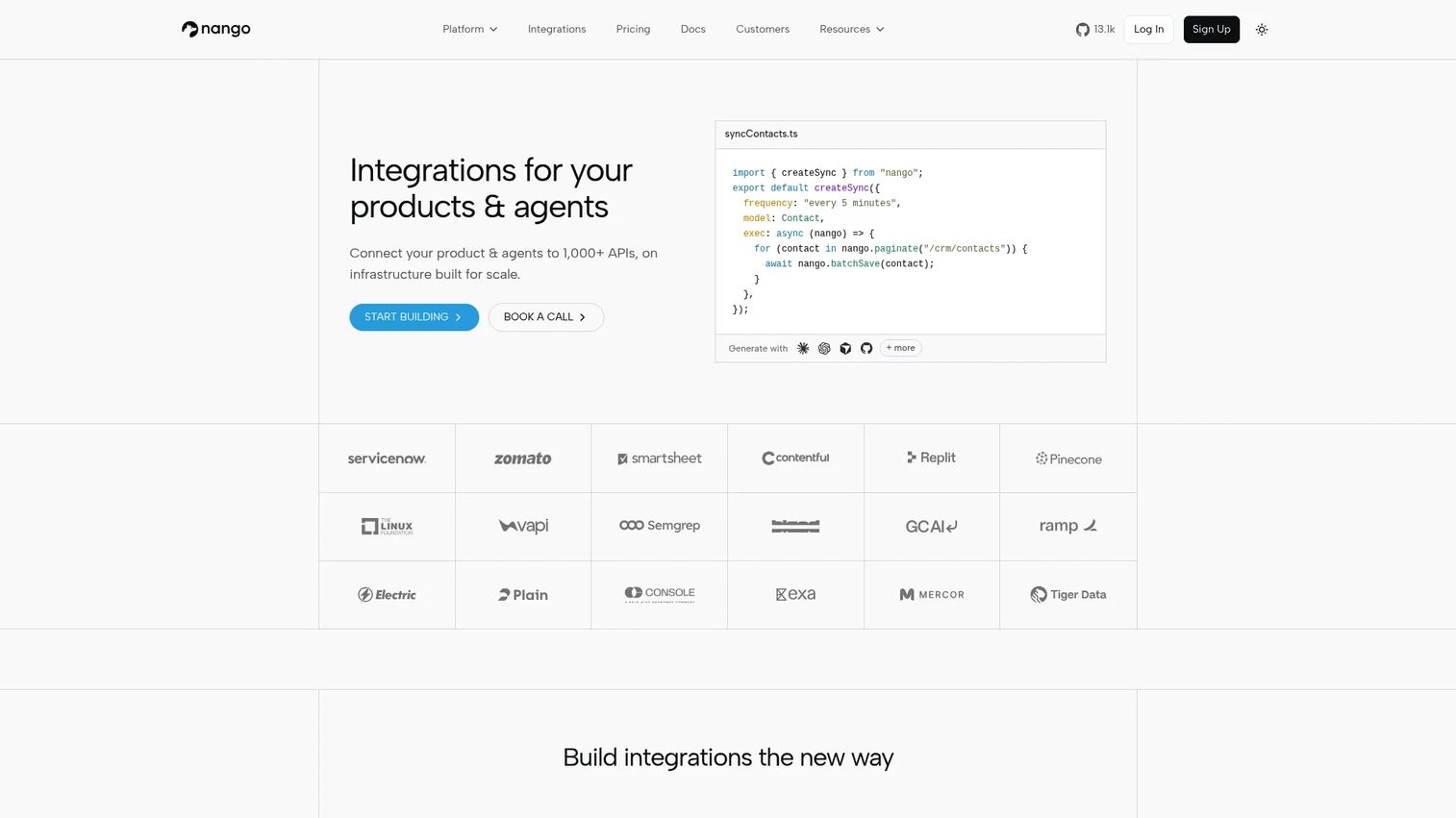
Nango is open-source integration infrastructure for connecting products and AI agents to 1,000+ APIs. It handles OAuth, API authentication, managed sync, real-time webhooks, and custom integration scripts. Product teams with strong engineering involvement use Nango to build customer-facing integrations while retaining full code control rather than using a no-code builder.
Best for: Developer-led SaaS teams that want embedded integration infrastructure without giving up control over integration logic and data flows.
Key features
- Authentication for 1,000+ APIs and MCPs
- 7,000 pre-built tools, triggers, and syncs
- Custom integration scripts in code
- Real-time webhooks with built-in logs and alerting
- Self-hosting and bring-your-own-cloud options
Why choose Nango: Nango is built for engineering teams that want infrastructure, not an abstraction layer. White-label UI components let customers connect their tools inside your product, while the code-first approach keeps integration logic auditable and version-controlled. For PMs managing a long integration roadmap, Nango's $50-per-month starting price makes it accessible earlier than most embedded integration platforms.
Nango pricing: Free plan with capped monthly limits. Pay-as-you-go plan starts at $50 per month, including $50 in monthly credits plus usage rates of $0.29 per connection and $0.72 per compute hour. Enterprise pricing is custom.
G2 rating: 4.5/5
Considerations when choosing an API platform
Match the platform type to the job
A gateway handles runtime traffic enforcement. A development platform handles design and testing collaboration. An embedded integration platform handles customer-facing connections. Buying the wrong category means the team still needs to solve the actual problem. Map the job first, then evaluate tools within that category.
Evaluate governance before the API surface grows
API standards, versioning policies, approval workflows, audit logs, and access controls are much harder to add retroactively. For PMs, governance protects release cadence: Without it, every team invents its own conventions and the integration backlog grows unpredictably. Evaluate whether the platform enforces OpenAPI consistency, tracks breaking changes, and supports role-based access before the surface scales.
Check developer experience, not just feature lists
Documentation quality, API documentation tools, SDK examples, portal usability, and self-serve onboarding determine whether customers and internal developers actually use the API. Poor developer experience shifts support load back to your team. Evaluate the portal and documentation as part of the activation path, not as an afterthought.
Plan for AI, agents, and MCP access
AI-agent traffic changes API security requirements. Agents need tool permissions, identity verification, action logging, and revocation capabilities that differ from human-facing API access. Several platforms on this list (Kong, Azure API Management, Gravitee, WSO2) now include MCP and AI gateway capabilities. Verify what each platform actually supports before claiming readiness in your security review documentation.
Model pricing against usage and growth
Request-based pricing (AWS API Gateway, Apigee) scales with traffic volume. Per-user pricing (Postman) scales with team size. Connector-based and credit-based pricing (Workato, Zapier) scales with automation volume. Embedded integration platforms (Paragon, Nango) price by connected users. Low entry pricing can shift significantly when traffic, governance requirements, or integration count grows. Run the model against your 12-month forecast before signing.
Conclusion
The right API platform depends on which job you need done first. For API design and collaboration, Postman is the clearest starting point. For runtime traffic management, the choice between Kong, AWS API Gateway, Azure API Management, Tyk, Gravitee, and WSO2 follows your cloud strategy and deployment constraints. Apigee and IBM API Connect fit enterprise programs where APIs are external products or face strict governance requirements. MuleSoft covers the space where integration and API management converge at enterprise scale. Zapier and Workato handle workflow automation at different governance levels. Paragon and Nango each address embedded SaaS integrations from different angles: Paragon prioritizes a managed, no-code experience; Nango prioritizes code control and infrastructure flexibility.
Before taking sales calls, build a requirements matrix across platform type, deployment model, governance depth, API monitoring needs, and your 12-month engineering cost forecast. The combination of those factors, not the feature list, is what makes an API platform the right fit for your product roadmap.
If your team needs to explain complex API workflows to non-technical buyers, customers, or internal stakeholders, an interactive demo lets them click through the experience without needing live environment access. Start your journey with Guideflow today!
FAQs
An API platform is software that helps teams design, publish, secure, monitor, and connect APIs across internal systems, customer-facing products, and third-party services. The term covers multiple platform types including development platforms, API gateways, management suites, integration platforms, and embedded integration infrastructure. Choosing the right one requires identifying which job in the API lifecycle your team needs to address first.
An API gateway handles runtime traffic: Routing requests, enforcing authentication, applying rate limits, and executing security policies. An API platform can include gateway functionality plus additional layers for design, testing, documentation, analytics, developer portals, and lifecycle governance. Postman is an API platform without a gateway. AWS API Gateway is primarily a gateway without a full lifecycle platform. Apigee and Azure API Management combine both.
It depends on the job. Postman fits teams standardizing API design and collaboration. Paragon and Nango fit SaaS product teams shipping customer-facing integrations. Cloud-native gateways (AWS API Gateway, Azure API Management) fit teams that need runtime management without building gateway infrastructure. For PMs, the most useful frame is: Does this platform reduce my team's integration backlog, improve activation, or enable enterprise customers to trust the API surface?
Apigee, Azure API Management, MuleSoft Anypoint Platform, IBM API Connect, Kong, and WSO2 API Manager all offer enterprise governance capabilities. The right choice depends on cloud strategy (Google Cloud favors Apigee, Azure teams favor Azure API Management), deployment model (on-premises or hybrid teams may prefer IBM, WSO2, or Tyk), integration scope (MuleSoft for cross-system workflows), and regulatory requirements (IBM API Connect has a strong track record in regulated industries).
Prioritize developer experience (documentation, portals, and self-serve onboarding), API analytics that reveal adoption and reliability, governance that protects release cadence, and pricing that models cleanly against your growth trajectory. Also evaluate API testing tools integration, security policy depth, and whether the platform generates intent signals that improve activation and support deflection. High-maintenance platforms add engineering opportunity cost that compounds over time.
Several platforms now include AI gateway capabilities that manage traffic from AI agents and MCP servers alongside traditional API traffic. Kong, Azure API Management, Gravitee, and WSO2 each support MCP and agent-to-agent routing with varying depth of identity verification, token quotas, and audit logging. Paragon and Nango include MCP server components for integration actions. Verify specific capabilities against each vendor's current documentation before including AI-agent readiness in your security or compliance documentation.
No. API management platforms govern and secure API traffic: They enforce policies, manage developer access, and provide lifecycle tooling. API integration platforms connect systems and automate workflows across those systems. MuleSoft spans both. Zapier and Workato are primarily integration platforms. Apigee and IBM API Connect are primarily management platforms. Some teams need both; most teams need to identify which problem is more urgent before deciding which platform to prioritize.
Model cost against the drivers specific to each platform type. Request-based platforms (AWS API Gateway, Apigee) scale with traffic volume. Per-seat platforms (Postman) scale with team headcount. Credit-based platforms (Workato, Zapier) scale with automation task volume. Embedded integration platforms (Paragon, Nango) scale with connected users. Enterprise contract platforms (MuleSoft, IBM API Connect, Kong Enterprise) typically require annual commitments with pricing tied to usage entitlements. A 12-month usage forecast across each variable is more useful than comparing entry prices alone.