A single vessel program generates millions of data points across design, structure, outfitting, procurement, and sustainment. Most of that data lives in disconnected systems: CAD files here, spreadsheets there, document repositories somewhere else, and a production schedule that nobody trusts by week three. When engineering intent does not carry cleanly into the build, teams rework parts, miss classification checkpoints, and lose traceability the moment a vessel changes hands.
The global shipbuilding software market was valued at USD 972 million in 2024 and is projected to reach USD 1.31 billion by 2031, growing at a 4.4% CAGR, according to QYResearch (2025). The digital shift underneath that number is steeper. Persistence Market Research (2026) reports that more than 68% of global shipbuilders have adopted digital transformation strategies, and MarketIntelo (2024) found that over 68% of greenfield projects above USD 500 million in 2025 run on fully integrated 3D CAD-PLM ecosystems, up from roughly 47% in 2021. The direction is clear: shipbuilding software solutions are moving from isolated design tools toward a connected digital thread that spans concept to sustainment.
This is why the right shipbuilding software choice matters more than any single feature comparison. If you are a shipyard engineering leader, a marine design lead, or a product manager supporting an industrial software decision, the question is not "which tool draws the best hull?" It is "which platform keeps design, production, and lifecycle data continuous across every handoff?" That question shapes rework rates, schedule confidence, and how defensible your vessel data is decades after delivery.
What's inside
This guide covers eight shipbuilding software platforms built for real shipyard work: 3D ship design, production preparation, enterprise integration, and design-to-sustainment continuity. We deliberately kept it focused on shipbuilding software, not adjacent marine tooling like route planning or fleet ops.
We ranked each option against four criteria that matter in a genuine buying scenario:
- Design depth for hull, structure, and outfitting modeling
- Interoperability across CAD, ERP, and PLM systems
- Lifecycle coverage from concept through production and sustainment
- Traceability and proof of shipyard adoption
The list spans three layers: design tools, enterprise coordination platforms, and lifecycle management systems. Read it as a shortlist starting point, not a final verdict.
TL;DR
- Best overall for shipbuilding-first teams: ShipConstructor, for AutoCAD-based marine engineering workflows with tight design-to-production continuity.
- Best for integrated concept-to-production design: FORAN, built as a single environment across disciplines.
- Best for multi-discipline 3D design depth: AVEVA E3D Design, strong on clash detection and cross-discipline coordination.
- Best for structured hull and outfitting execution: AVEVA Hull and Outfitting, purpose-built for vessel modeling and production information.
- Best for enterprise data continuity: SSI EnterprisePlatform for connecting shipyard systems, and ShipbuildingPLM for lifecycle governance.
- Best for production and materials coordination: AVEVA Enterprise Resource Management, connecting engineering intent to procurement and build.
If your priority is shipbuilding-specific depth with lifecycle continuity, start your evaluation with ShipConstructor.
What is shipbuilding software?
Shipbuilding software is a category of engineering and production applications that let shipyards design, model, build, and manage vessels across their full lifecycle, from concept through detailed design, production preparation, and sustainment. It combines 3D ship design, model data management, production planning, and lifecycle governance in workflows tuned to marine engineering rather than generic mechanical CAD.
The category sits at the intersection of several capability buckets. Buyers typically expect a platform, or a connected set of platforms, to cover:
- 3D ship design and modeling for hull, structure, and outfitting disciplines like piping, HVAC, electrical, and equipment
- Model data management so a single source of truth drives drawings, reports, and production outputs
- Production planning and preparation including nesting, weld management, NC-code generation, and assembly sequencing
- Concurrent engineering that lets multiple disciplines work the same model in parallel without overwriting each other
- Collaboration and information sharing across distributed engineering, procurement, and production teams
- Classification support and compliance for structured vessel data that satisfies class societies and regulators
- Lifecycle continuity and traceability so vessel data survives handover, maintenance, refit, and sustainment
The distinction that matters most is the digital thread. Strong shipbuilding design software does not just produce a model; it preserves metadata and relationships so downstream teams inherit engineering intent rather than reconstructing it. That continuity is what separates marine engineering software from a general-purpose drafting tool. It is also why shipbuilding PLM has become central to how modern yards think about vessel lifecycle governance, not just design output.
Here is a simple way to picture the three layers this guide covers:
| Layer | What it does | Example tools |
|---|---|---|
| Design | 3D modeling of hull, structure, outfitting | ShipConstructor, FORAN, AVEVA E3D Design, AVEVA Hull and Outfitting |
| Enterprise coordination | Connect and synchronize data across systems | SSI EnterprisePlatform, AVEVA Enterprise Resource Management |
| Lifecycle management | Govern vessel data from design through sustainment | ShipbuildingPLM |
When to use shipbuilding software
Not every marine team needs a full shipbuilding stack. Here is how to know the fit is right.
Choose it when you need end-to-end vessel visibility
If your design lives in CAD, your quantities live in spreadsheets, and your build status lives in someone's inbox, you are paying a continuity tax. Every disconnect between engineering and production is where rework starts and traceability breaks. Dedicated shipbuilding software solutions tie the model, the production outputs, and the schedule to one data spine, so concurrent engineering across disciplines does not turn into a merge conflict. That continuity is the difference between catching a clash in the model and catching it on the shop floor.
Choose it when your team needs interoperability across enterprise systems
Ship programs rarely run on one tool. You have design, procurement, materials, and production systems that all need to speak. Look for open architecture and clean CAD, ERP, PLM integration as a buying signal, not a nice-to-have. When engineering data flows into procurement and production without manual re-keying, you lose fewer parts to translation errors and keep material tracking honest. Interoperability is what keeps the digital thread intact from the design office to the erection berth.
Choose it when you need compliance and traceability across long asset lifecycles
Vessels outlive the teams that build them, often by decades. Structured vessel data matters at classification, at handover, and every time a ship comes back for maintenance or refit. If your platform cannot answer "why is this part here and what revision is it?" years later, sustainment becomes archaeology. Strong lifecycle management and traceability turn that question into a query rather than a search party.
Comparison table
Below is a side-by-side view of the eight platforms, sorted by relevance to shipbuilding-centric workflows and buyer fit. Pricing across this category is almost entirely quote-based, so treat the pricing column as a signal of packaging, not a fixed number, and confirm ratings against current listings during your own evaluation.
| # | Product | Intent | Key use case | Pricing | G2 rating |
|---|---|---|---|---|---|
| 1 | ShipConstructor | Shipbuilding-first CAD and production | AutoCAD-based hull, structure, and outfitting with production output | Contact sales | Not yet rated |
| 2 | AVEVA E3D Design | Multi-discipline 3D engineering | Clash-aware 3D design across marine and plant projects | Part of AVEVA Unified Engineering | 4.6/5 |
| 3 | FORAN | Integrated ship design | Concept-to-production design in one environment | Contact sales | Not yet rated |
| 4 | AVEVA Hull and Outfitting | Structured hull and outfitting | Detailed vessel modeling and production information | Contact sales | 4.4/5 (AVEVA) |
| 5 | SSI EnterprisePlatform | Enterprise data integration | Connect and sync shipyard systems | Contact sales | 4.4/5 (SSI) |
| 6 | ShipbuildingPLM | Lifecycle governance | Vessel data from design through sustainment | Contact sales | Not listed |
| 7 | AVEVA Enterprise Resource Management | Materials and procurement | Connect engineering intent to production and supply | Contact sales | 3.3/5 |
| 8 | ShipScan | As-is capture and surveying | Shipchecking and update workflows for refit | Contact sales | Not listed |
1. ShipConstructor
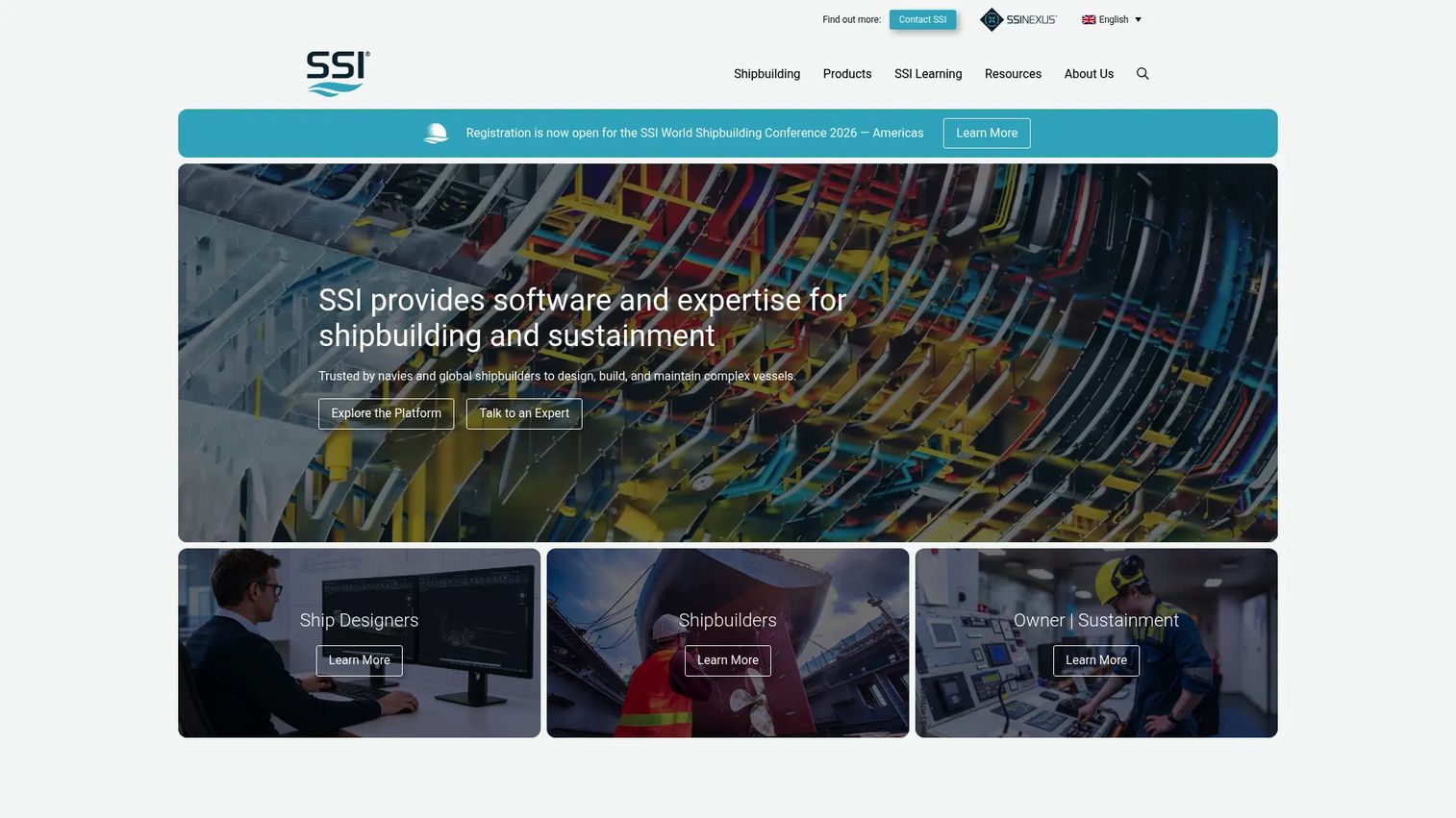
ShipConstructor is shipbuilding-specific 3D design, engineering, and production software for ships and offshore projects, built on the AutoCAD platform. That foundation matters: teams already fluent in AutoCAD get a marine-tuned environment without abandoning familiar tooling, while the Marine Information Model keeps every object connected to a single database that drives drawings, reports, and production output. It is the ship constructor software that most directly maps design intent to what actually gets cut, welded, and installed.
Where it stands out is design-to-build continuity. Because hull, structure, and outfitting all reference the same model, a change upstream ripples cleanly into nesting, weld management, and NC-code rather than forcing manual reconciliation. Paired with SSI EnterprisePlatform, that data extends across the wider shipyard workflow, giving distributed teams a shared, traceable source of truth.
Best for: Shipyards and marine design teams that want integrated shipbuilding CAD and production workflows on a familiar AutoCAD base.
Key strengths
- 3D hull and structure modeling: Full marine-specific modeling of hull forms and structural systems in one connected model.
- Outfitting tools: Piping, HVAC, electrical, equipment, and penetration design that stays coordinated across disciplines.
- Production outputs: Nesting, weld management, NC-code, drawings, and reports generated directly from the model.
Why choose ShipConstructor: If your priority is shipbuilding-first depth with tight traceability from model to shop floor, ShipConstructor is the most direct fit on this list. It rewards teams that value concurrent engineering and metadata preservation over a general-purpose CAD tool retrofitted for marine work.
ShipConstructor pricing: ShipConstructor uses a contact-sales model, and no public pricing is published on the SSI product page as of mid-2026. Expect quote-based packaging scaled to project scope and seat count, which is standard across shipbuilding design software.
2. AVEVA E3D Design
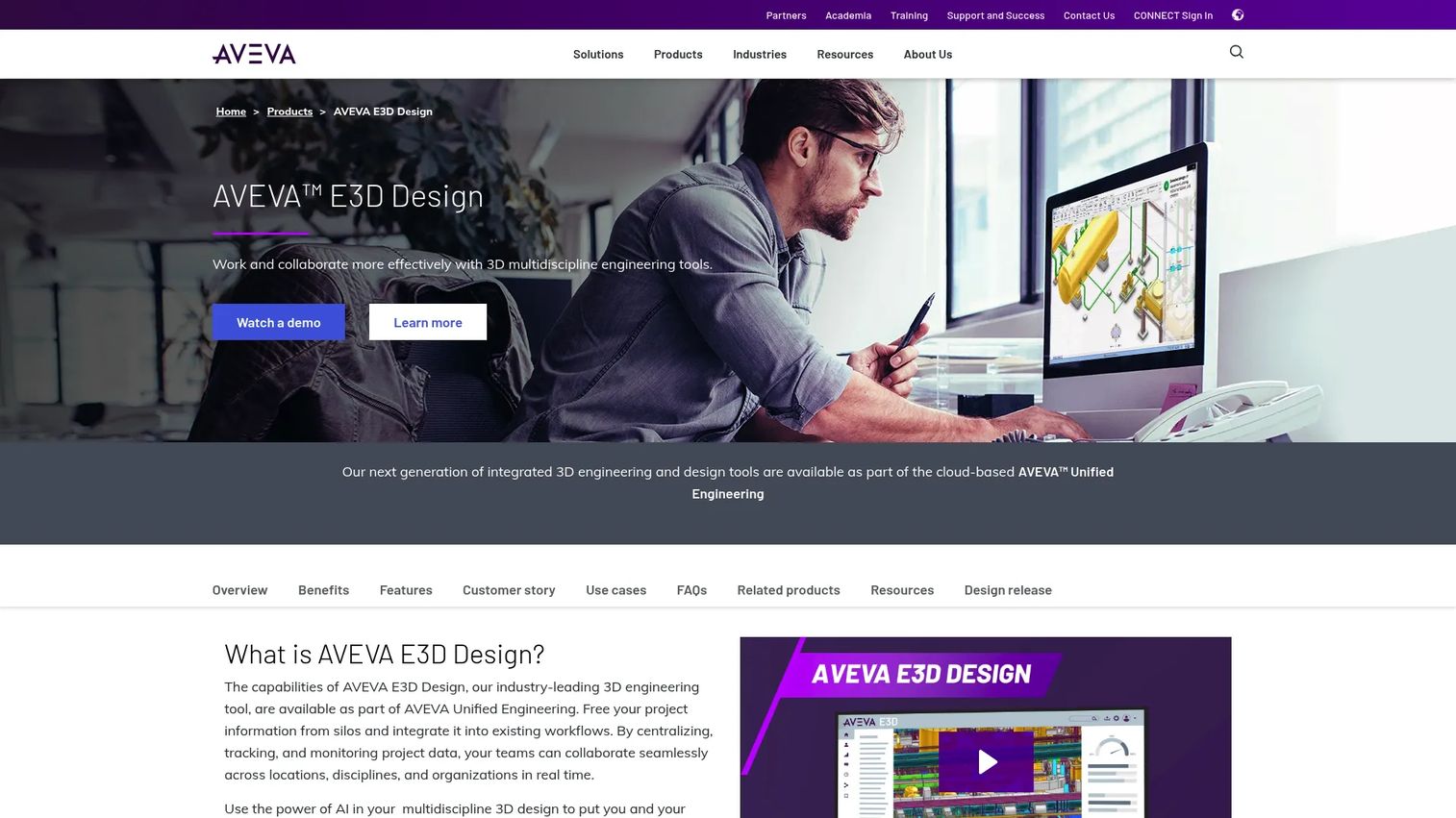
AVEVA E3D Design is 3D engineering design software for process plants, marine, and power projects, now delivered as part of AVEVA Unified Engineering. It is built for multi-discipline environments where the real risk is not drawing a single part but keeping dozens of disciplines coordinated in a dense, evolving model. Automatic cross-discipline updates and clash detection are the headline capabilities, and they earn their place in complex marine and offshore work.
The tool shines in productivity-heavy design offices. When one discipline moves a run of pipe, downstream disciplines see the impact immediately, which cuts the clash-resolution cycles that quietly consume schedule. AI-assisted 3D design further speeds routine modeling, letting engineers spend more time on judgment and less on repetition.
Best for: Industrial engineering teams designing complex plant, marine, or power projects that demand tight cross-discipline coordination.
Key strengths
- Unified engineering: Integrated 3D design within the AVEVA Unified Engineering environment for connected data.
- AI-assisted modeling: Multi-discipline 3D design accelerated by AI for routine tasks.
- Automatic clash detection: Cross-discipline updates and clash checks that surface conflicts before fabrication.
Why choose AVEVA E3D Design: Choose it when your projects span more than pure shipbuilding and you need one design environment that holds up across plant, marine, and power scope. It fits organizations already invested in the AVEVA ecosystem that want depth in concurrent, multi-discipline design.
AVEVA E3D Design pricing: AVEVA states that E3D Design is now part of AVEVA Unified Engineering and is no longer sold as a standalone product, and no public price is shown on the product page. Pricing is handled through AVEVA directly as part of the broader engineering suite. It holds a 4.6/5 rating on G2.
3. FORAN
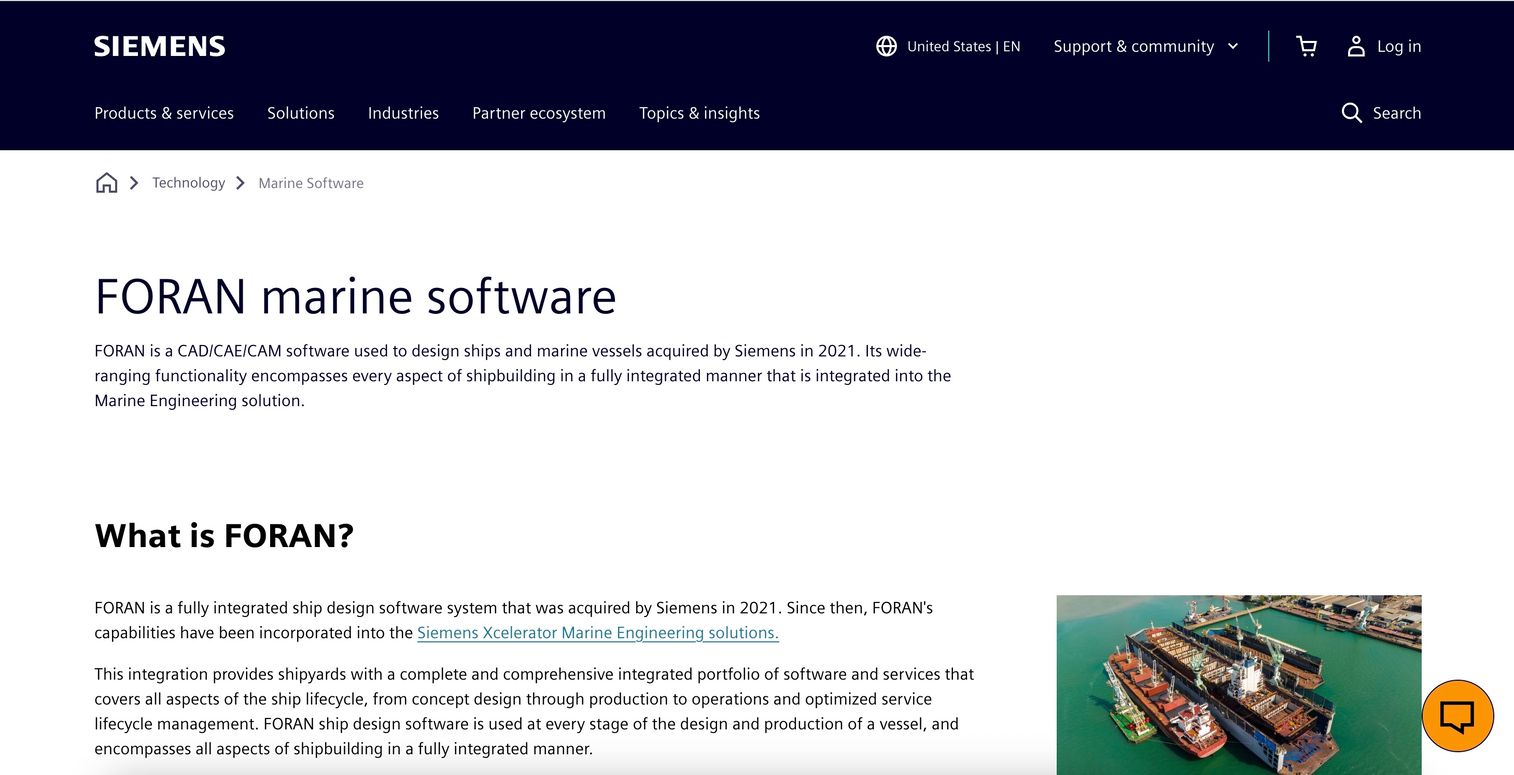
FORAN is a fully integrated ship design system that covers the vessel from concept through detailed design and production. Its defining idea is a single environment: rather than stitching together separate hull, structure, and outfitting tools, FORAN keeps disciplines working against one coherent data model, which is a strong answer to the concurrent engineering problem that plagues fragmented toolchains.
That integration is what makes it compelling for concept-to-production continuity. Design decisions made early carry forward with their context intact, so production preparation inherits engineering intent rather than reinterpreting it. For yards that want a design-organized-by-discipline approach with standards compatibility baked in, FORAN keeps the digital thread coherent across the vessel lifecycle.
Best for: Marine design teams that want one integrated environment spanning concept, detailed design, and production readiness.
Key strengths
- Integrated design environment: A single system across hull, structure, and outfitting disciplines.
- Concept-to-production coverage: Continuity from early design decisions through production preparation.
- Multi-disciplinary collaboration: Concurrent engineering with organized, standards-aware data.
Why choose FORAN: Pick FORAN when integration is the priority and you want to avoid the seams between separate design tools. It suits teams that value a unified, discipline-organized model over assembling best-of-breed point tools.
FORAN pricing: FORAN does not publish public pricing, and packaging is handled directly through SENER on a quote basis. As with most marine engineering software at this depth, expect pricing scaled to modules, disciplines, and seat count.
4. AVEVA Hull and Outfitting
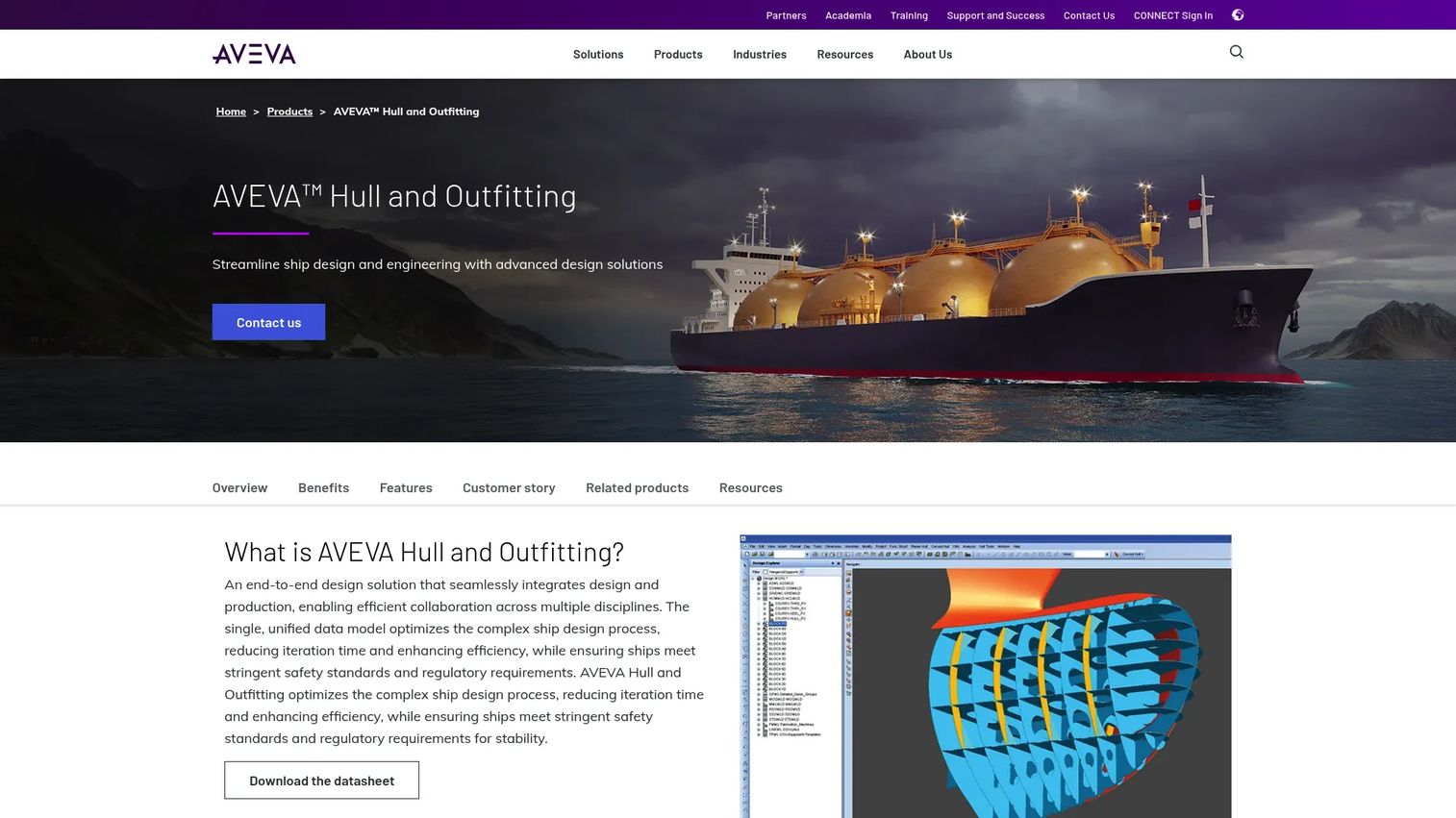
AVEVA Hull and Outfitting is end-to-end ship design software focused specifically on hull and outfitting engineering. Where a general 3D tool spans many industries, this one is tuned to the structured realities of vessel modeling: hull design, outfitting design, production information, and assembly planning as connected stages rather than isolated tasks. That focus makes it a strong fit for teams that want a disciplined, repeatable hull-to-outfitting process.
The value shows up in execution readiness. Production information flows out of the model, and assembly planning connects design to how the vessel actually comes together on the ways. For shipbuilders coordinating structured hull and outfitting work across the yard, that alignment reduces the gap between what was designed and what gets built.
Best for: Shipbuilders that need integrated, structured hull and outfitting design workflows tied to production.
Key strengths
- Hull design: Dedicated hull modeling built for marine structural work.
- Outfitting design: Coordinated outfitting across systems and disciplines.
- Production information and assembly planning: Model-driven outputs and sequencing for the build.
Why choose AVEVA Hull and Outfitting: Choose it when you want shipbuilding-specific structure over a general-purpose design tool, and when tight hull-to-outfitting-to-production flow matters more than multi-industry breadth. It fits yards standardizing a repeatable vessel modeling process. AVEVA as a seller holds a 4.4/5 rating on G2.
AVEVA Hull and Outfitting pricing: No public pricing is published; the product routes to an AVEVA contact flow for a quote. Packaging is handled directly through AVEVA and scaled to project and discipline scope.
5. SSI EnterprisePlatform
SSI EnterprisePlatform is a shipbuilding data-integration platform that connects and synchronizes information across shipyard systems and workflows. It is not a standalone design tool; it is the coordination layer that sits between design, PLM, ERP, MES, and production systems so engineering data moves without manual re-keying. For yards fighting data silos, this is the piece that keeps the digital thread intact.
Its strength is orchestration. EnterprisePlatform manages requests, users, connectors, and publishing modes, and it can generate engineering information in multiple formats for whichever downstream system needs it. That makes it especially useful for distributed teams that need consistent, traceable data across locations and disciplines, giving lifecycle visibility without forcing every team onto one application.
Best for: Shipbuilders that need to integrate engineering, PLM, ERP, MES, and production systems into a coordinated whole.
Key strengths
- System connection and sync: Connects and synchronizes data across shipyard systems automatically.
- Multi-format output: Generates engineering information in the formats downstream systems expect.
- Orchestration control: Manages requests, users, connectors, and publishing modes centrally.
Why choose SSI EnterprisePlatform: Choose it when your bottleneck is integration, not design. It pairs naturally with ShipConstructor and complements a shipbuilding PLM strategy, acting as the connective tissue that keeps distributed shipyard workflow data consistent. SSI as a seller holds a 4.4/5 rating on G2.
SSI EnterprisePlatform pricing: SSI uses a contact-sales model with no public pricing figure published; packaging is quote-based and scaled to systems, connectors, and scope.
6. ShipbuildingPLM
ShipbuildingPLM is a shipbuilding-specific PLM platform from SSI for managing vessel data across design, production, and sustainment. Generic PLM tools were built for discrete manufacturing; this one is shaped around how vessel programs actually run, controlling data from design through the long tail of sustainment. For organizations that need lifecycle governance rather than just design output, this is the system of record.
Its core value is configuration control and traceability. ShipbuildingPLM supports discovery, connection, and visualization of project information, and it ties together internal systems, external design packages, and legacy vessel data. That matters most on long-lived assets, where being able to trace why a part exists and what revision governs it turns sustainment from guesswork into a lookup.
Best for: Shipyards that need a shipbuilding-specific PLM system of record with strong lifecycle governance.
Key strengths
- Lifecycle data control: Governs vessel data from design through production and sustainment.
- Traceability and discovery: Supports traceability, discovery, connection, and visualization of project information.
- Data unification: Connects internal systems, external design packages, and legacy vessel data.
Why choose ShipbuildingPLM: Choose it when configuration control and long-lived vessel data are the priority, not just modeling. It fits organizations that treat traceability across the full vessel lifecycle as a governance requirement rather than an afterthought.
ShipbuildingPLM pricing: No public pricing numbers or plan names are published on the SSI product page, though a trial call-to-action is available. Packaging is quote-based; engage SSI directly for scope-specific pricing.
7. AVEVA Enterprise Resource Management
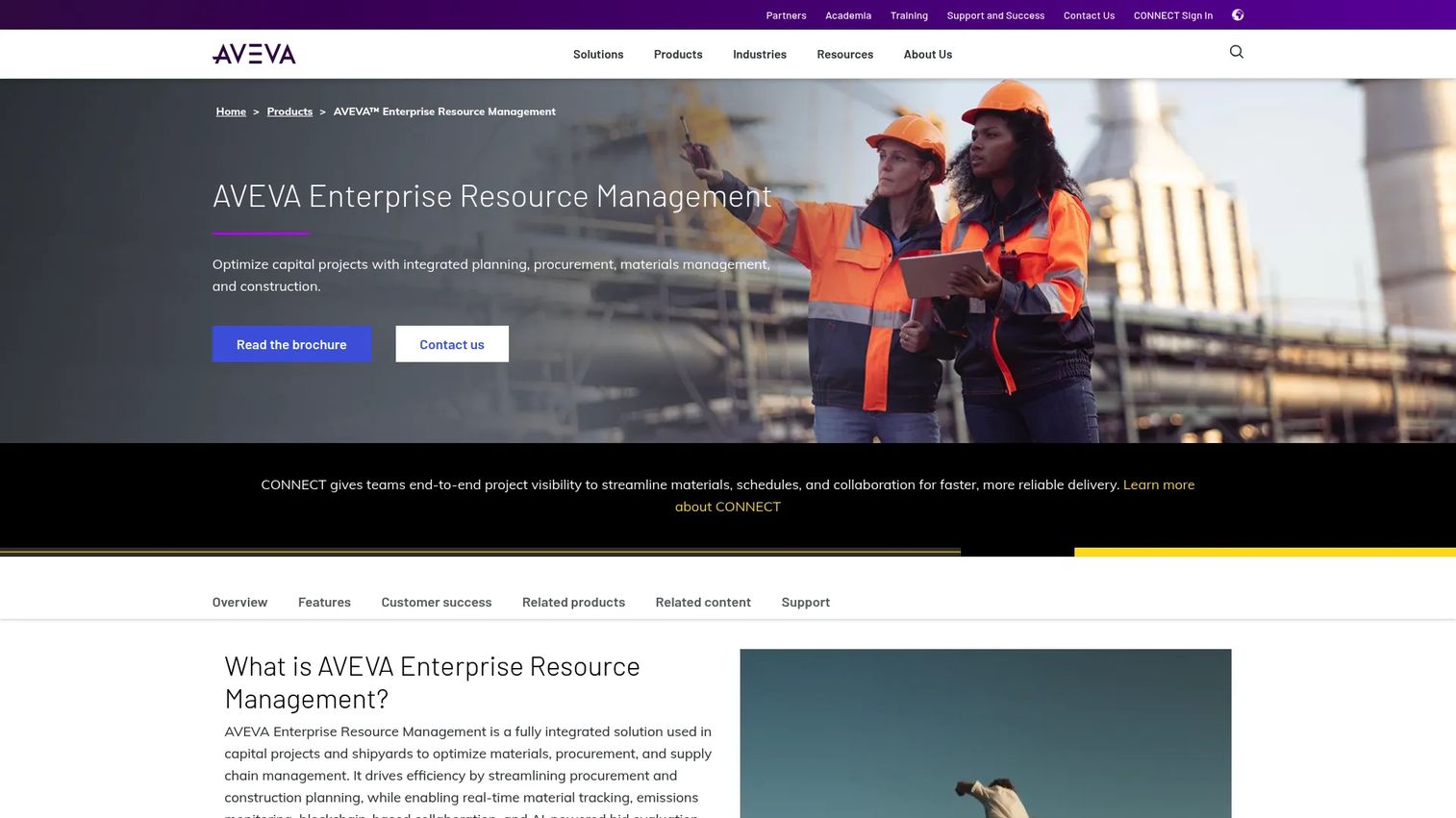
AVEVA Enterprise Resource Management is an integrated solution for capital projects and shipyards to optimize materials, procurement, and supply chain management. It answers a problem design tools do not touch: getting the right material to the right place at the right time. In shipbuilding, where a single missing spool can stall a berth, connecting engineering intent to procurement and production is where schedule confidence is won or lost.
The platform covers procurement automation, end-to-end material management, advanced work packaging, real-time material tracking, and AI vendor management. Together these connect what engineering specified to what actually gets ordered, staged, and installed. For shipyard operations teams, that link between design and execution is the difference between a plan and a prediction.
Best for: Capital project and shipyard teams that need integrated materials and procurement control tied to engineering.
Key strengths
- Material management: End-to-end material management with real-time tracking across the yard.
- Procurement automation: Automated procurement and AI-assisted vendor management.
- Advanced work packaging: Work packaging that ties engineering scope to executable production packages.
Why choose AVEVA Enterprise Resource Management: Choose it when your constraint is execution and materials, not design. It connects engineering output to procurement and build, making it a strong complement to a design tool when the goal is grounded shipyard operations. It holds a 3.3/5 rating on G2 based on a small number of reviews.
AVEVA Enterprise Resource Management pricing: AVEVA does not display public pricing; the product page routes to a contact-us, quote-based flow scaled to project and materials scope.
8. ShipScan
ShipScan addresses a part of the vessel lifecycle that design tools often leave thin: capturing what actually exists today. As-is capture, shipchecking, surveying, and update workflows matter most in maintenance, refit, and sustainment, where the built vessel has drifted from its original drawings after years of service and modification. Accurate as-is data is the foundation for any credible refit plan.
Its role is documentation accuracy. When a ship comes back for work, teams need to know the current state before they can plan changes, and reconciling that reality against legacy models is where refit projects either stay on schedule or unravel. ShipScan fits into that survey-and-update loop, supporting the accuracy that downstream sustainment work depends on.
Best for: Teams working refit, maintenance, and sustainment that need accurate as-is capture and shipchecking.
Key strengths
- As-is capture: Records the current built state of the vessel for planning.
- Shipchecking and surveying: Supports structured survey workflows during refit and maintenance.
- Update workflows: Keeps documentation aligned with the vessel's real condition over time.
Why choose ShipScan: Choose it when your work centers on existing vessels rather than new builds. It complements design and PLM tools by grounding sustainment decisions in accurate current-state data instead of aging drawings.
ShipScan pricing: No public pricing was verifiable from first-party sources; engage the vendor directly for packaging tied to survey scope and workflow needs.
Considerations before you buy
Feature lists close fast in a demo and unravel slowly in production. Weigh these before you commit.
Interoperability and open architecture
The single biggest predictor of long-term pain is how well the tool exchanges data with the rest of your stack. Ask hard questions about CAD, ERP, PLM integration and whether the architecture is open or closed. A platform that traps data behind proprietary formats will cost you at every handoff and every future migration.
Lifecycle coverage versus point strength
Decide honestly whether you need a broad platform or a strong point tool. Some teams get more value from a focused design tool plus a dedicated integration layer than from one system trying to do everything. Map your real requirement across design, production, and sustainment before you weigh options.
Classification and compliance support
Vessel data has to satisfy class societies and regulators, and it has to keep satisfying them for decades. Confirm how the platform structures data for classification support and whether traceability holds through handover and refit. Weak compliance handling surfaces at the worst possible moment.
Adoption and shipyard fit
The most capable tool loses to the one your engineers will actually use. If your team lives in AutoCAD, ship constructor software that builds on that base lowers the adoption curve. Factor training, existing skills, and shipyard workflow reality into the decision, not just the capability matrix.
Total cost and procurement reality
Nearly every option here is quote-based, so budget for more than license fees. Implementation, integration, data migration, and training often dwarf the software line item. Push vendors for a total cost picture across the vessel lifecycle, not a per-seat headline.
Conclusion
The strongest pick depends less on which tool draws the best hull and more on where your continuity breaks today. For shipbuilding-first teams that want depth and tight design-to-production traceability on a familiar base, ShipConstructor is the clearest overall choice. If integration is the priority, FORAN delivers a single concept-to-production environment, while AVEVA E3D Design and AVEVA Hull and Outfitting bring strong multi-discipline and structured hull-and-outfitting design.
For the enterprise layer, SSI EnterprisePlatform connects your systems and ShipbuildingPLM governs vessel data across its life, while AVEVA Enterprise Resource Management ties engineering intent to materials and production. ShipScan rounds out the picture for refit and sustainment.
The honest answer: the best ship construction software is the one that keeps your digital thread intact across the specific handoffs where you lose data now. Shortlist two or three based on whether you prioritize design depth, lifecycle continuity, or production coordination, then run each against your real workflow before signing anything.
FAQs
Shipbuilding software is used to design, model, build, and manage vessels across their lifecycle. It supports 3D ship design of hull, structure, and outfitting, generates production outputs like nesting and NC-code, and manages the data that carries engineering intent from concept through production and sustainment.
The features that matter most are marine-specific 3D modeling, a connected model that drives drawings and production outputs, concurrent engineering across disciplines, and interoperability with ERP and PLM systems. Traceability and classification support are close behind, because vessel data has to stay defensible for decades.
Generic CAD software draws geometry; shipbuilding software understands ships. It carries marine-specific objects, structure, and outfitting relationships, preserves metadata as a digital thread, and produces production outputs like weld management and nesting. Ship design software also handles the scale and discipline coordination that general drafting tools were never built for.
For dedicated lifecycle management, ShipbuildingPLM is purpose-built to govern vessel data from design through sustainment, with configuration control and traceability. SSI EnterprisePlatform complements it by connecting design, PLM, ERP, and production systems so the digital thread stays intact across the vessel lifecycle.
In shipbuilding PLM, prioritize configuration control, traceability, and the ability to unify internal systems, external design packages, and legacy vessel data. The platform should be shaped around how vessel programs run, not retrofitted from discrete manufacturing, and it should keep data discoverable and connected across design, production, and sustainment.
ERP integration is critical because materials and procurement decide whether a schedule holds. When engineering data flows into procurement and production without manual re-keying, you lose fewer parts to translation errors and keep material tracking accurate. Tools like AVEVA Enterprise Resource Management exist specifically to connect engineering intent to execution.
Marine engineering software is the broader category of tools used to design, analyze, and build marine vessels and structures, including shipbuilding design software, structural analysis, and production planning. In practice, the shipbuilding software in this guide represents the design-to-production-to-sustainment slice of that category rather than fleet operations or navigation tools.
Shipyards evaluate against interoperability, lifecycle coverage, classification support, adoption fit, and total cost across the vessel lifecycle. Because nearly all options are quote-based, teams run the tools against real workflows, weigh integration and data-migration effort, and confirm that traceability holds through handover and refit before committing.