
You search "marketplace analyst" and the results split three ways: Job boards, government occupational profiles, and employer role descriptions that expire before you finish reading them. None of it answers the question a Series B founder actually needs answered before opening a headcount: What does this person do, what should they cost, and which tools should they know on day one?
The problem is not finding resumes. It is defining the work precisely enough to hire the right person. Marketplace analyst roles sit at the intersection of ecommerce, operations, and business intelligence, which is why a generic search returns fragmented results. According to the Bureau of Labor Statistics Occupational Outlook Handbook (2026 update), employment of market research analysts is projected to grow 8 percent over the coming decade, faster than the average across occupations. That growth makes the hiring signal meaningful, but it also means competition for qualified candidates is real.
This guide maps 15 resources across job-search tools, government labor data, and analyst technical tools so you can define the role, benchmark compensation, and evaluate the technical stack before the first screen.
What's inside
This guide reviews 15 resources covering analyst marketplace jobs, salary data, skills taxonomies, and technical tools.
Items were selected from the following criteria:
- Helps define or source marketplace analyst roles in 2026
- Provides verified salary, employment, or skills data
- Supports marketplace reporting or technical analysis workflows
- Helps founders evaluate whether a hire fits a Series B operating need
Guideflow does not appear as one of the 15 resources because this category is not in its core positioning. The article closes with a brand CTA only.
TL;DR
- Best job-search starting point: Indeed for live analyst marketplace postings, salary context, and job alerts
- Best salary and outlook source: Bureau of Labor Statistics for authoritative market research analyst pay and employment projections
- Best skills taxonomy: O*NET for a structured breakdown of duties, work activities, and tools tied to the role
- Best founder hiring filter: SQL plus Microsoft Excel reveal execution ability before dashboard polish
- Best BI dashboarding for AWS stacks: Amazon QuickSight for KPI dashboards when marketplace data already lives in AWS
- Best for regional talent planning: Projections Central for state-level employment outlook before opening a location-specific role
What is analyst marketplace?
"Analyst marketplace" covers a cluster of related searches: Marketplace analyst jobs, resources for roles that measure performance inside ecommerce or platform marketplaces, and tools marketplace analysts use day to day.
A marketplace analyst measures performance across sellers, listings, categories, pricing, inventory, and promotions. The role bridges operations, finance, and growth, and it usually sits inside a team running a third-party seller marketplace, a retail platform, or a B2B partner marketplace. Adjacent titles include marketplace performance analyst, marketplace operations analyst, ecommerce analyst, and sales analytics specialist.
Core skill areas the role requires:
- SQL and data extraction from source systems
- Excel modeling and reconciliation
- Dashboard and visualization tooling
- KPI definition and metric governance
- Marketplace operations knowledge (SKU, assortment, pricing, inventory)
- Seller or partner performance tracking
- Executive reporting and business narrative writing
For a Series B founder, the strategic case is straightforward. If the founder is still generating the weekly marketplace performance update, the analyst hire pays back fast. The right person turns raw seller data, SKU performance, and pricing signals into a decision the leadership team can act on before the next operating review. Do not hire for dashboards. Hire for decisions.
When to use analyst marketplace resources
Write a job description before you post
Use occupational databases such as O*NET and CareerOneStop to translate "we need someone in marketplace analytics" into observable role requirements. These resources give you task lists, skills ratings, and work activity breakdowns that turn a vague brief into an interview scorecard.
Benchmark salary before the first offer
Founders who skip wage research either overpay or lose candidates to a counteroffer. The Bureau of Labor Statistics and the Occupational Employment and Wage Statistics program give you national and metro-level wage percentiles for market research analysts, which is the closest official occupational match.
Evaluate the technical stack before interviewing
Knowing whether your environment is AWS-heavy or spreadsheet-heavy changes which candidates fit. Resources like Amazon QuickSight, SQL, Amazon S3, and Microsoft Excel map to specific role shapes. Review the technical stack early so you do not screen out candidates who are strong on the tools you use.
Analyst marketplace resource comparison
The 15 resources below span job boards, government labor data, and technical tools. Career resources are free; AWS tools use usage-based pricing. G2 ratings apply only where a current verified listing exists.
| # | Product | Best for | Key use case | Pricing | G2 rating |
|---|---|---|---|---|---|
| 1 | Indeed | Job-search | Live marketplace analyst listings and alerts | Free for job seekers | 4.3/5 |
| 2 | Amazon Marketplace | Role benchmarking | Understanding large-scale marketplace analyst work | Free to review | N/A |
| 3 | Bureau of Labor Statistics | Salary and outlook | Authoritative market research analyst wage data | Free | N/A |
| 4 | O*NET | Skills taxonomy | Duties, work activities, and tools for role design | Free | N/A |
| 5 | CareerOneStop | Career planning | Salary lookup, training, and job-search guidance | Free | N/A |
| 6 | Projections Central | Regional planning | State-level employment outlook for analyst roles | Free | N/A |
| 7 | Occupational Employment and Wage Statistics | Compensation benchmarking | Wage percentiles by metro area and industry | Free | N/A |
| 8 | Target Job Search | Retail marketplace roles | Tracking retailer marketplace analyst postings | Free for job seekers | N/A |
| 9 | Microsoft Excel | Ad hoc analysis | SKU analysis, pricing changes, board-ready tables | Free tier; paid plans from $99.99/year | 4.7/5 |
| 10 | SQL | Data querying | Querying orders, sellers, listings, and events | Open standard; infrastructure costs vary | N/A |
| 11 | Amazon QuickSight | BI dashboarding | Seller performance and marketplace KPI dashboards | From $3/user/month | 4.3/5 |
| 12 | Amazon S3 | Data storage | Storing marketplace exports and analytical inputs | Usage-based; free tier available | 4.6/5 |
| 13 | AWS Lambda | Workflow automation | Triggering data processing and report refresh | $0.20 per 1M requests; free tier included | 4.6/5 |
| 14 | Amazon DynamoDB | Application data | Seller events and operational records | Usage-based; free tier available | 4.4/5 |
| 15 | Amazon SQS | Event pipelines | Marketplace event queuing and data movement | Usage-based; 1M requests free per month | 4.3/5 |
Best 15 analyst marketplace resources for 2026
1. Indeed

Indeed is one of the largest employment platforms available to job seekers and employers. Search "marketplace analyst" and you get live postings from companies running seller ecosystems, retail platforms, and partner marketplaces. The filters let you slice by pay range, remote status, experience level, and posting date. Job alerts push new listings to your inbox as they appear, which matters because strong postings at large marketplace companies can fill within days.
Best for: Founders and hiring managers who want a real-time read on how companies are titling, scoping, and compensating marketplace analyst roles.
Key features
- Live marketplace analyst listings with pay and remote filters
- Job alerts and resume upload
- Employer salary pages and candidate matching
- AI-assisted recruiting tools for employers
- Applicant tracking, screening, and messaging
Why choose Indeed: The job listings themselves tell you how the market currently shapes this role. Scan 20 live postings before writing your own description and you will catch which skills are becoming standard and which are still differentiators.
Indeed pricing: Free for job seekers. Sponsored job pricing for employers is budget-based with no fixed rate, and costs depend on the job, market, and plan selected.
G2 rating: 4.3/5
2. Amazon Marketplace
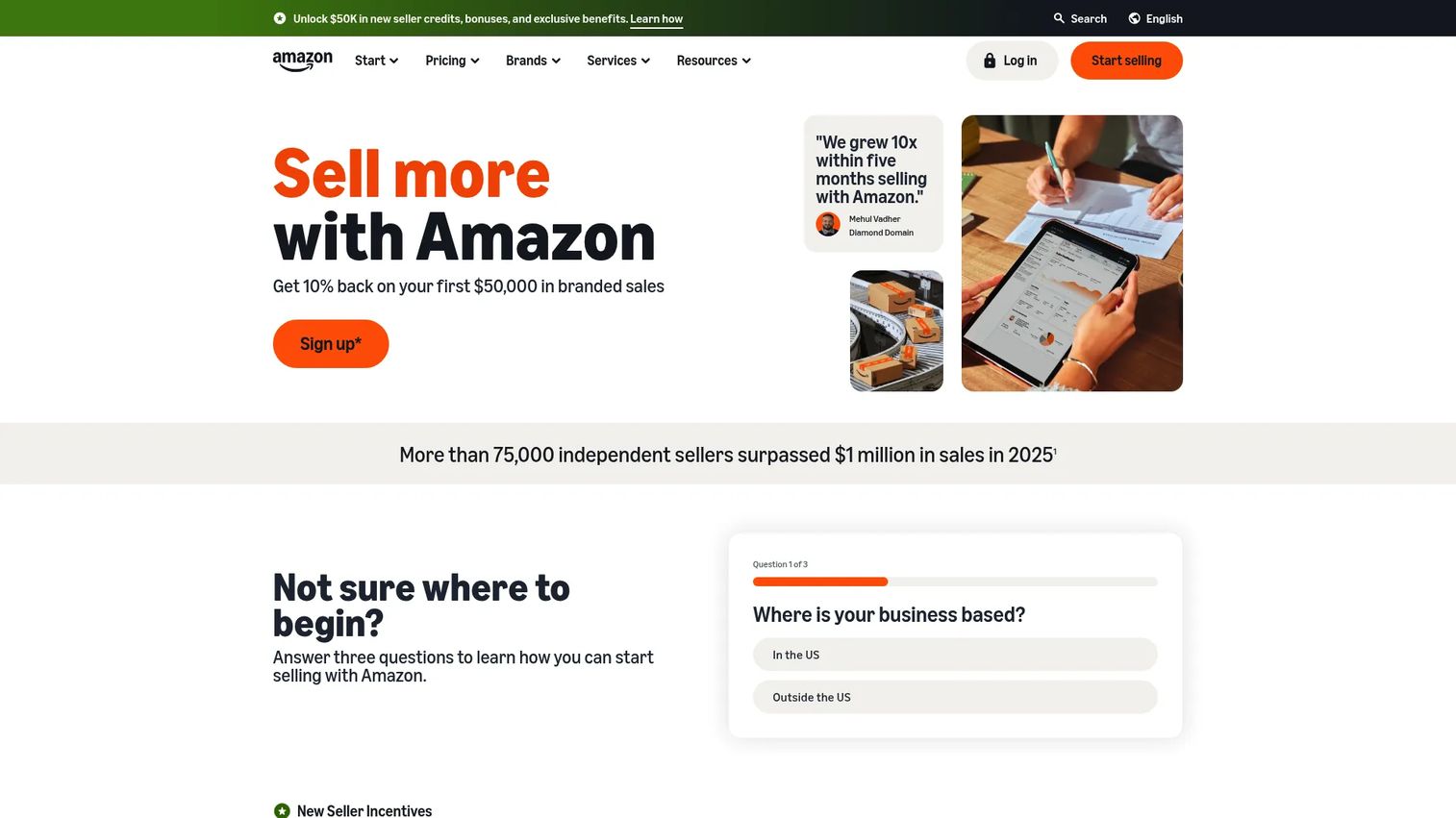
Amazon Marketplace is the commerce platform that gives businesses access to Amazon's customer base, fulfillment infrastructure, advertising tools, and seller management suite. From a hiring standpoint, Amazon's own marketplace analyst and business analyst job descriptions are worth studying. They spell out what large-scale marketplace operations actually demand: SQL fluency, Excel proficiency, dashboarding requirements, root-cause analysis, and seller ecosystem compliance work.
Best for: Founders who want to understand what marketplace analytics looks like inside the environment that defined the category.
Key features
- Seller ecosystem management and KPI tracking expectations
- SQL and Excel requirements at scale
- Compliance and operational reporting context
- Bulk listing, pricing, and inventory operations
- Seller performance and marketplace growth tools
Why choose Amazon Marketplace: Use it as a role design benchmark, not a direct hiring model. It helps you separate the generic analyst from someone who understands marketplace mechanics at the level your business needs. The Individual plan starts at $0.99 per item sold; the Professional plan runs $39.99 per month, plus referral and optional service fees.
Amazon Marketplace pricing: Individual plan at $0.99 per item sold; Professional plan at $39.99 per month.
3. Bureau of Labor Statistics

The Bureau of Labor Statistics publishes the Occupational Outlook Handbook, which is the most authoritative public source for U.S. occupational wage data and employment projections. The market research analyst profile covers duties, education requirements, work environment, annual pay, and ten-year job outlook. It is not marketplace-specific, but it is the best proxy for setting a salary baseline when marketplace-analyst wage surveys are inconsistent.
Best for: Founders and HR leads anchoring compensation discussions in publicly verifiable labor data rather than anecdotal ranges.
Key features
- Occupational role summary with duties breakdown
- Annual pay and wage percentile data
- Job outlook and employment projections
- Education and credential requirements
- Similar occupation comparisons
Why choose Bureau of Labor Statistics: It is free, updated regularly by the federal government, and carries weight in board-level conversations about compensation benchmarks. Start here before layering in market-specific survey data.
Bureau of Labor Statistics pricing: Free.
4. O*NET
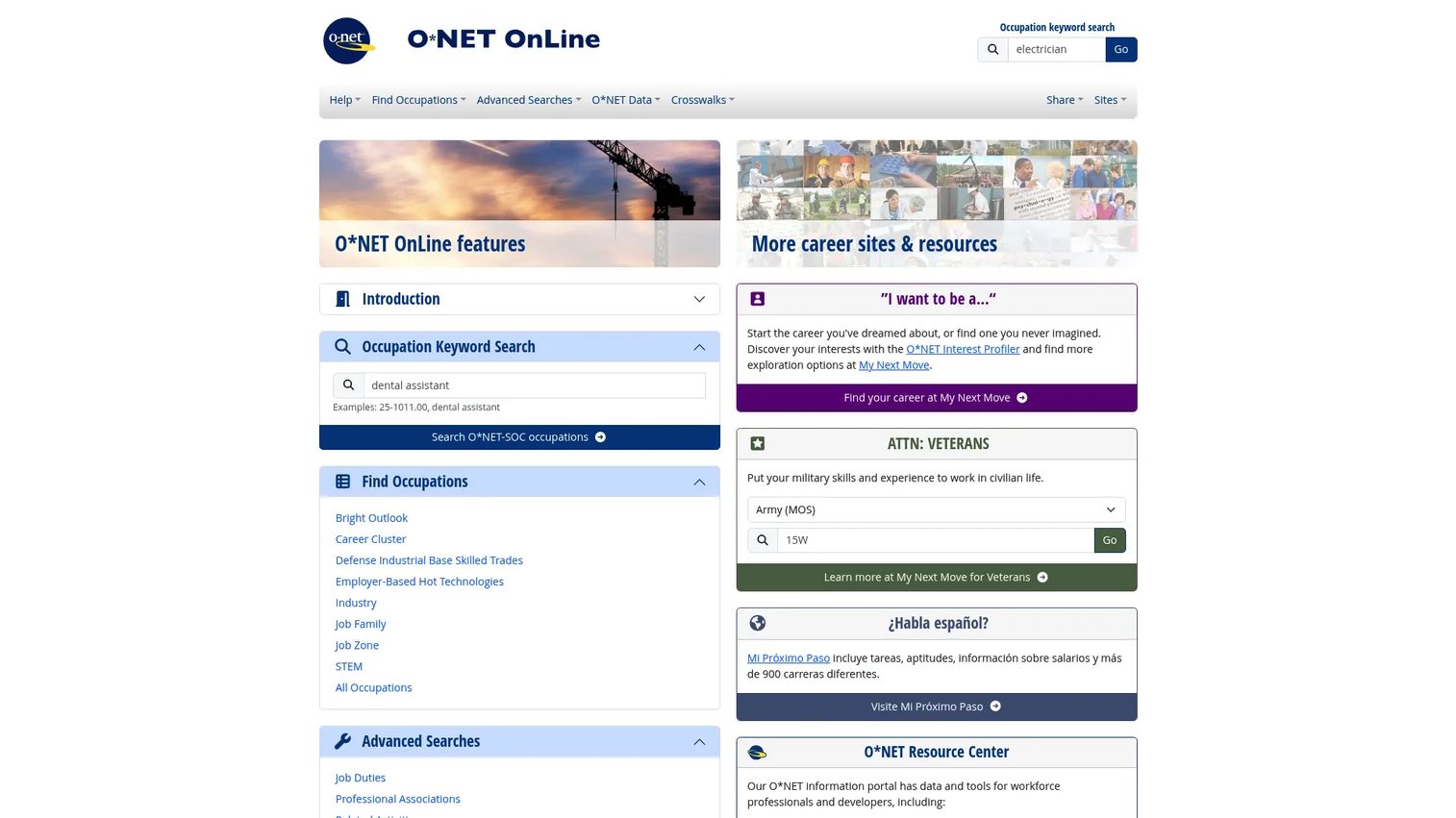
O*NET is a Department of Labor-backed occupational information platform covering more than 900 occupations. The market research analyst entry breaks the role into tasks, skills, abilities, work activities, and technology references. That structure makes it practical for building an interview scorecard without inventing your own competency framework.
Best for: Founders and hiring managers who want a skills-based rubric that separates must-have analytical capabilities from nice-to-have marketplace familiarity.
Key features
- Task taxonomy for market research and analyst roles
- Skills and abilities rated by importance and level
- Work activities and technology references
- Related occupations for adjacent role comparisons
- Free Web Services API for programmatic access
Why choose O*NET: The detailed task list gives you language for the job description. The skills ratings help you decide which competencies to test in an interview exercise versus which ones you can train on the job.
O*NET pricing: Free, including Web Services access.
5. CareerOneStop
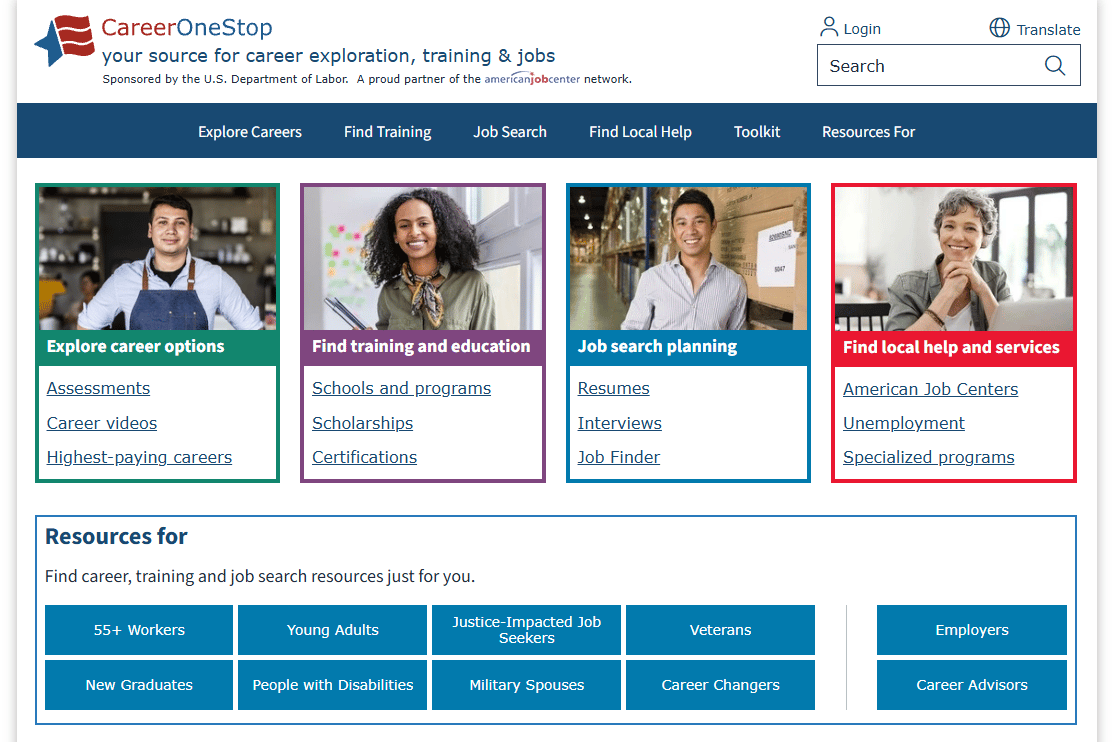
CareerOneStop is a Department of Labor-sponsored platform covering career exploration, salary lookup, training finders, and job-search tools. After BLS and O*NET, it is a strong secondary source for translating official occupational data into practical hiring decisions. The salary finder pulls wage data by occupation and location, which helps when you are benchmarking a remote hire against multiple metro markets.
Best for: Career-path research and salary sanity checks for candidates evaluating the marketplace analyst track.
Key features
- Career profiles with wages and outlook
- Salary and wage lookup by location
- Training and certification finders
- Local labor-market data by state and metro area
- Resume, interview, and networking guidance
Why choose CareerOneStop: It packages BLS data in a more navigable format. Candidates use it to evaluate whether a marketplace analyst role aligns with their career trajectory, so understanding what they see helps you set expectations accurately.
CareerOneStop pricing: Free.
6. Projections Central
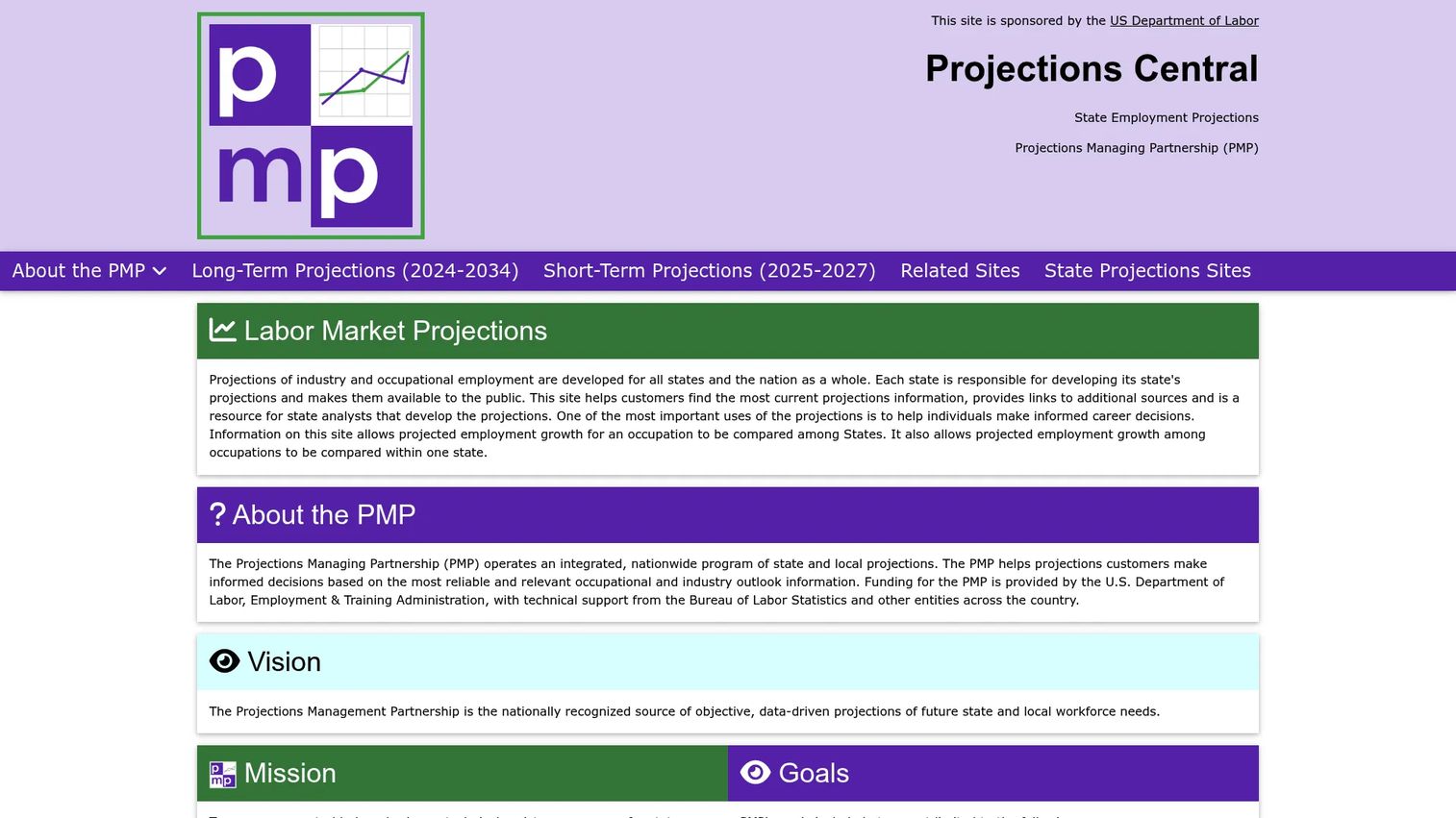
Projections Central provides state-level long-term and short-term employment projections built from the same methodology as BLS national data. If you are hiring in a specific region or comparing talent availability across markets, this resource gives you occupational growth forecasts at the state level.
Best for: Workforce and hiring planning where location matters, particularly for remote-first companies comparing talent pool depth across states.
Key features
- Long-term and short-term state employment projections
- Occupational growth rate data by state
- Downloadable Excel and CSV projection tables
- Public REST endpoints for programmatic access
- Career planning and education path references
Why choose Projections Central: National averages obscure significant regional variation in analyst talent availability. A state-level view matters when you are deciding whether to hire locally or open a role to a specific regional market.
Projections Central pricing: Free public resource.
7. Occupational Employment and Wage Statistics
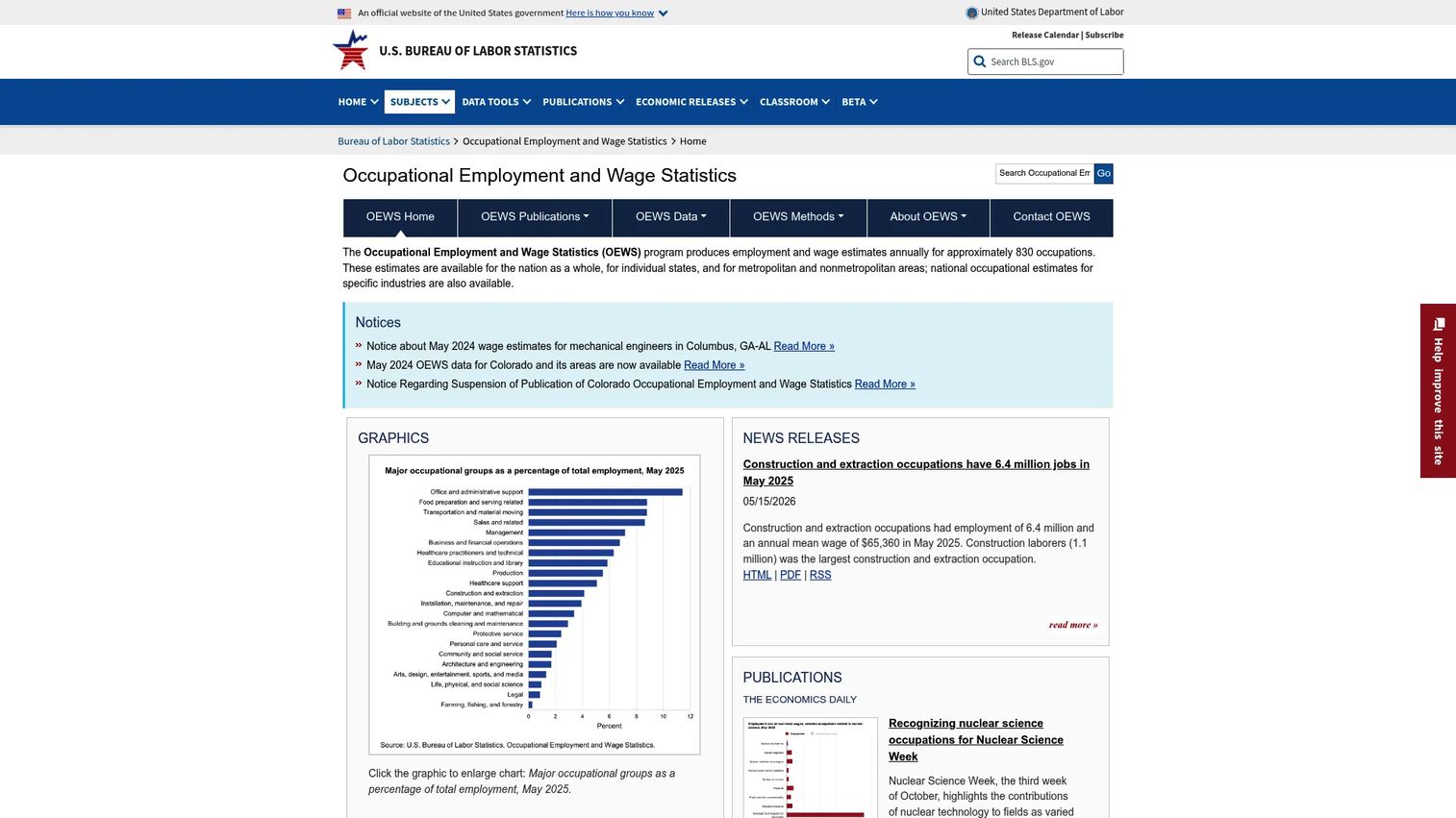
The Occupational Employment and Wage Statistics program publishes annual wage estimates for approximately 830 occupations across national, state, metropolitan, and industry geographies. For marketplace analyst hiring, the market research analyst occupation code gives you wage percentiles at the 10th, 25th, 50th, 75th, and 90th percentile levels. That range is more useful for salary-band setting than a single median figure.
Best for: HR leads and founders setting a compensation band before opening a marketplace analyst role.
Key features
- Annual mean, median, and percentile wage estimates
- Geographic comparisons: National, state, metro area
- Industry-specific employment and wage data
- Downloadable tables and interactive database queries
- Hourly and annual wage formats
Why choose Occupational Employment and Wage Statistics: A single median hides the spread. Knowing the 75th percentile wage in your metro tells you what a strong, experienced candidate reasonably expects. Use that number to anchor the band rather than discover it during negotiation.
Occupational Employment and Wage Statistics pricing: Free.
8. Target Job Search
Target's careers site is worth tracking as a reference for how a large retailer frames marketplace partner performance work. Target's analyst roles spanning supply chain, corporate, and merchandising analytics reveal how retailer marketplace teams scope analytical responsibilities around partner performance, inventory, promotions, and compliance.
Best for: Candidates and hiring managers who want to see how established retail marketplace teams structure analyst responsibilities and qualifications.
Key features
- Search and apply for Target analyst and corporate roles
- Job alerts by career area and location
- Career areas covering stores, supply chain, and corporate
- Application-status tracking through the candidate portal
- Hiring process and interview guidance
Why choose Target Job Search: Retailer marketplace analyst postings expire quickly. Setting up a job alert catches openings as they appear. For founders, studying Target's role descriptions reveals what a mature marketplace operation expects from analysts in terms of partner ecosystem performance skills.
Target Job Search pricing: Free for job seekers.
9. Microsoft Excel
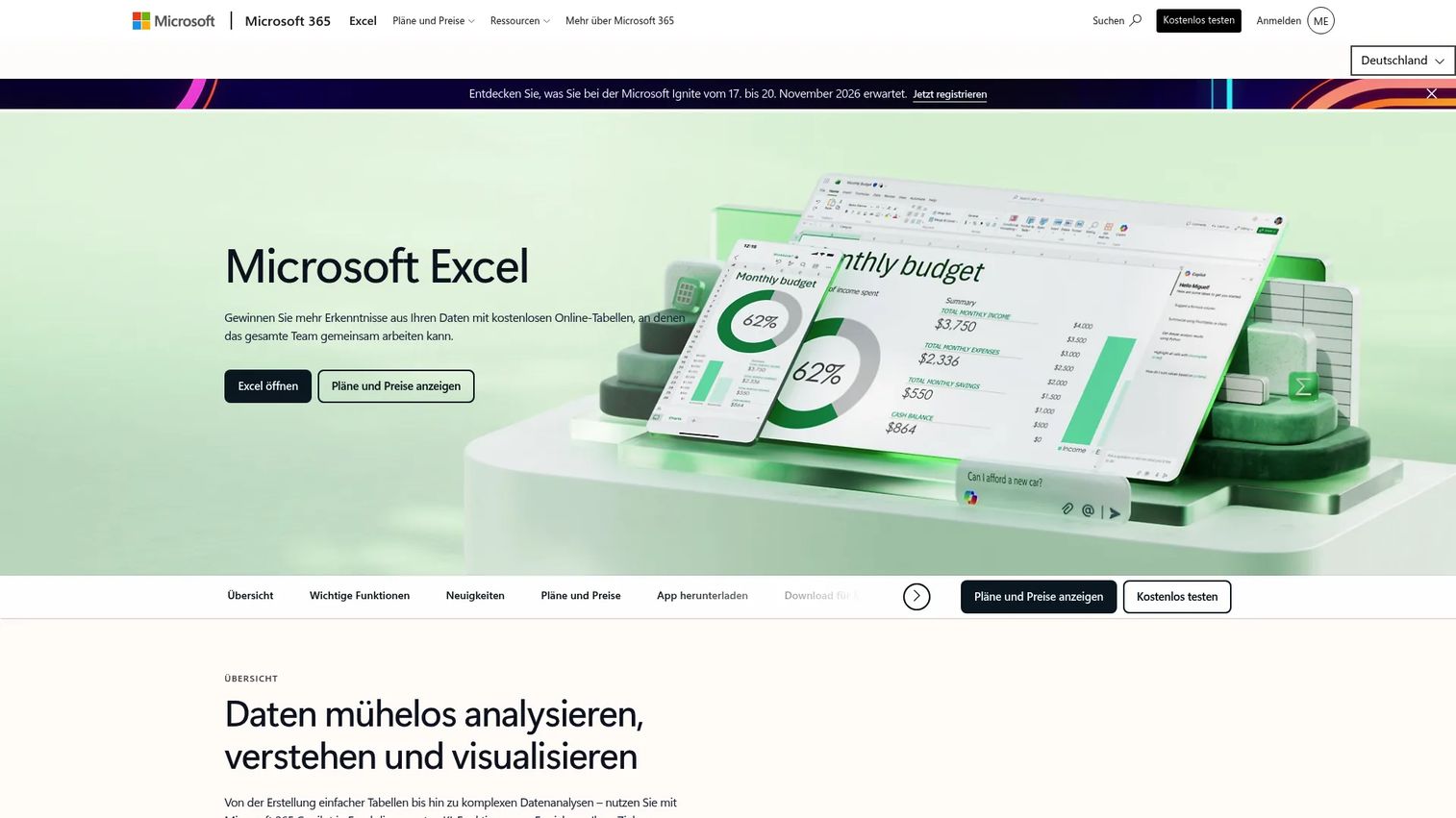
Microsoft Excel remains the workhorse for marketplace analysis at companies of every size, including teams that also run BI tools. SKU analysis, pricing change modeling, inventory reconciliation, and promotion performance reviews all pass through spreadsheets at some point. A candidate who struggles in Excel will slow down the weekly operating cadence.
Best for: Fast ad hoc analysis, data reconciliation, and board-ready reporting when raw marketplace exports need to become usable insight quickly.
Key features
- Pivot tables and Power Query for data shaping
- Formulas and financial modeling
- Charts and executive-ready tables
- CSV and data-source handling
- Copilot-assisted editing on paid plans
Why choose Microsoft Excel: Excel is where messy marketplace data exports become decisions. Test this directly in a hiring exercise. Give a candidate a raw SKU export and 30 minutes. The output tells you more than a resume does.
Microsoft Excel pricing: A free web version is available. Microsoft 365 Personal runs $99.99 per year; Family runs $129.99 per year. Both include the desktop application.
G2 rating: 4.7/5
10. SQL
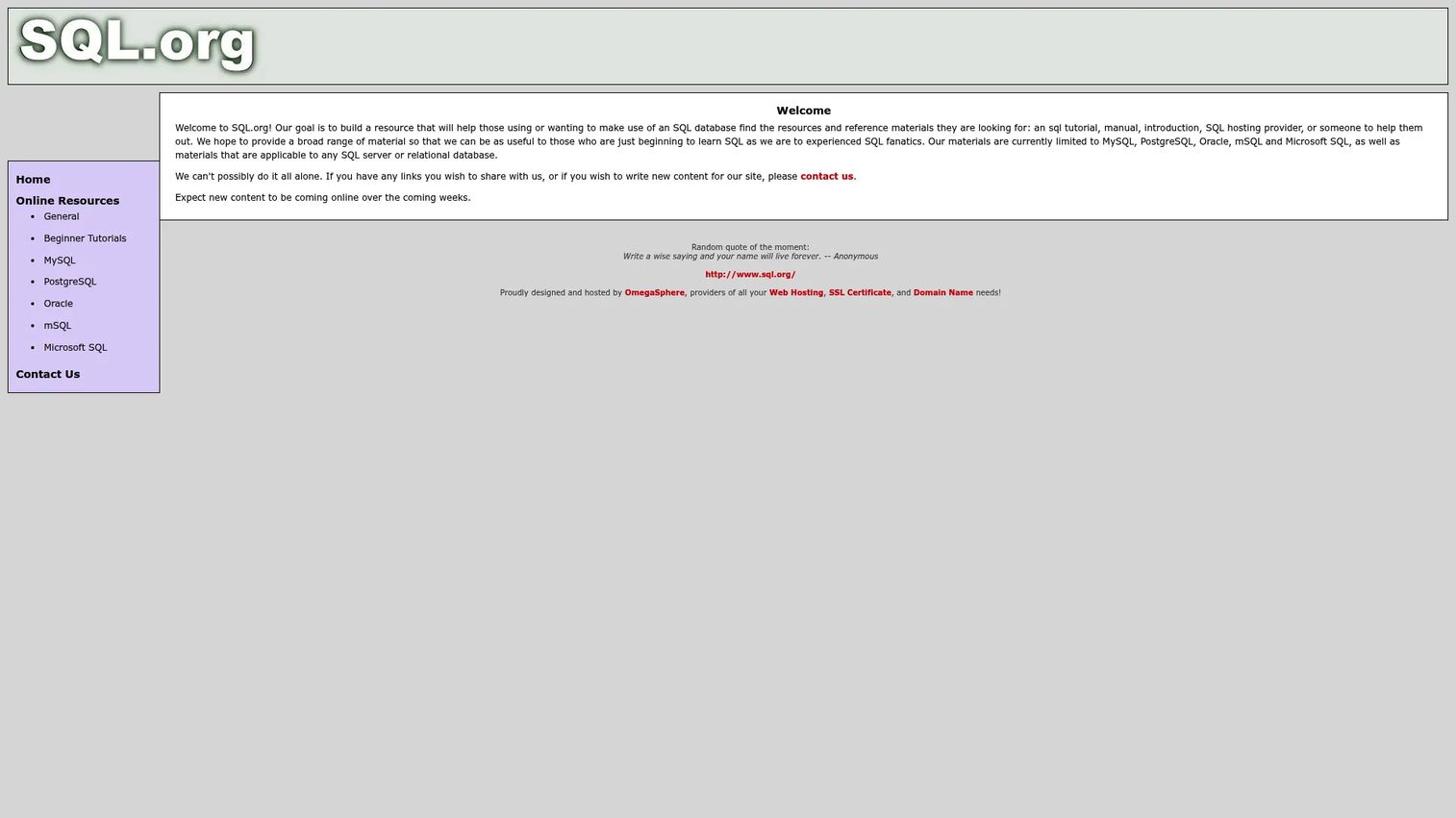
SQL is the language marketplace analysts use to query order data, seller performance records, listing attributes, SKU-level events, and inventory movements directly from source systems. SQL.org serves as an informational resource covering tutorials and reference materials for MySQL, PostgreSQL, Oracle, and Microsoft SQL Server. SQL itself is an open standard.
Best for: Pulling and joining marketplace data from source systems without waiting for a pre-built report to update.
Key features
- Data querying and filtering across large tables
- Joins and aggregations for performance analysis
- Cohort and time-series analysis
- KPI extraction from transactional databases
- Root-cause investigation at the record level
Why choose SQL: SQL is the difference between waiting for a dashboard to update and asking the next question immediately. For marketplace analytics teams running weekly operating reviews, that speed matters. An analyst who cannot write SQL relies on others to answer every follow-up question.
SQL pricing: SQL is an open standard. The cost depends on the database, data warehouse, and cloud infrastructure the team runs on.
11. Amazon QuickSight
Amazon QuickSight is AWS's business intelligence service for building dashboards, running natural-language queries, and embedding analytics. For marketplace teams already running their data infrastructure on AWS, QuickSight is the natural dashboarding layer. Seller performance summaries, weekly KPI snapshots, and marketplace operations reports are the most common use cases.
Best for: Teams with marketplace data in AWS who need dashboards leadership reviews without standing up a separate BI environment.
Key features
- Interactive dashboards and scheduled reports
- Natural-language Q&A with Amazon Q
- SPICE in-memory analytics engine
- Embedded analytics for internal and external viewers
- Role-based access controls and single sign-on
Why choose Amazon QuickSight: If your data already lives in AWS, QuickSight connects directly without additional data movement. Analysts can build and maintain dashboards without engineering support once the data model is established.
Amazon QuickSight pricing: Reader tier starts at $3 per user per month. Author tier runs $24 per user per month. Additional capacity and SPICE charges apply.
G2 rating: 4.3/5
12. Amazon S3
Amazon S3 is object storage used as the data lake foundation in most AWS-centered marketplace stacks. Seller feeds, order exports, listing snapshots, and partner data files land in S3 before they move downstream to analytics tools. An analyst who understands where the data lives is faster to diagnose why a metric looks wrong.
Best for: Storing marketplace data files and analytical inputs in a durable, scalable location that feeds downstream tools.
Key features
- Multiple storage classes for frequent and infrequent access
- Access management with IAM and bucket policies
- Strong read-after-write consistency
- Integrations with AWS analytics and compute services
- Lifecycle policies for automated data tiering
Why choose Amazon S3: Marketplace teams accumulate data from listings, orders, partner feeds, and seller events across many files and formats. S3 collects it in one place before analysis. An analyst familiar with S3 reduces the data-retrieval overhead that slows product analytics cycles.
Amazon S3 pricing: Usage-based with no minimum charge. Storage, request, and data-transfer costs depend on volume and storage class. A free tier is available for new AWS accounts.
G2 rating: 4.6/5
13. AWS Lambda
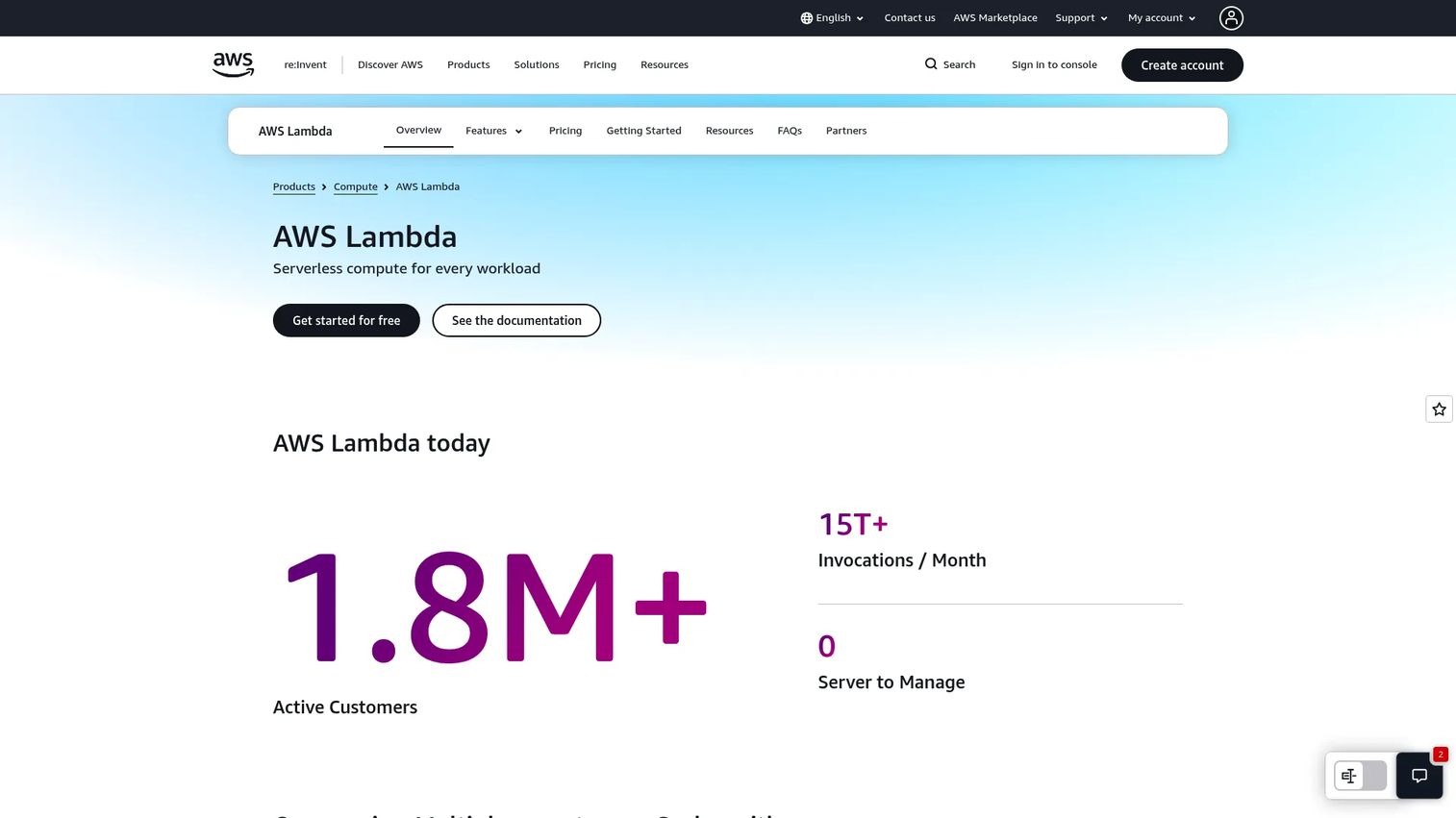
AWS Lambda is a serverless compute service that runs code in response to events without provisioning or managing servers. In marketplace data workflows, Lambda handles tasks like triggering data processing after a new seller feed lands in S3, transforming raw files into structured records, or automating scheduled report refresh steps.
Best for: Automating lightweight marketplace data workflows where engineering bandwidth is limited and the analyst team handles data orchestration.
Key features
- Automatic scaling to match incoming requests
- Event-driven triggers from S3, SQS, and other AWS services
- Support for Python, Node.js, and other common runtimes
- Native integrations with over 220 AWS services
- Usage-based billing with a free tier
Why choose AWS Lambda: It reduces repetitive manual steps in data pipelines. For a marketplace analyst managing daily or weekly data pulls, Lambda automation frees time that would otherwise go toward export-refresh work instead of analysis.
AWS Lambda pricing: $0.20 per 1 million requests. The free tier includes 1 million requests and 400,000 GB-seconds per month.
G2 rating: 4.6/5
14. Amazon DynamoDB
Amazon DynamoDB is a fully managed NoSQL database built for applications requiring low-latency access at scale. Marketplace platforms often store seller events, product availability records, and application state in DynamoDB. A marketplace analyst does not administer it, but understanding that this data store exists helps them ask better questions about data freshness and reporting lag.
Best for: Marketplace teams whose application and event data lives in DynamoDB and whose analysts need to understand the data model before building reports.
Key features
- Serverless automatic scaling with pay-per-request billing
- Global and local secondary indexes for flexible querying
- Multi-Region global tables with strong consistency options
- Built-in security, backup, and AWS service integrations
- On-demand and provisioned capacity modes
Why choose Amazon DynamoDB: Analysts who understand the data source ask better diagnostic questions. When a metric breaks after an infrastructure change, knowing that DynamoDB holds the upstream event records speeds the investigation.
Amazon DynamoDB pricing: Usage-based across on-demand and provisioned capacity modes. A free tier is available. The full pricing depends on reads, writes, storage, and region.
G2 rating: 4.4/5
15. Amazon SQS
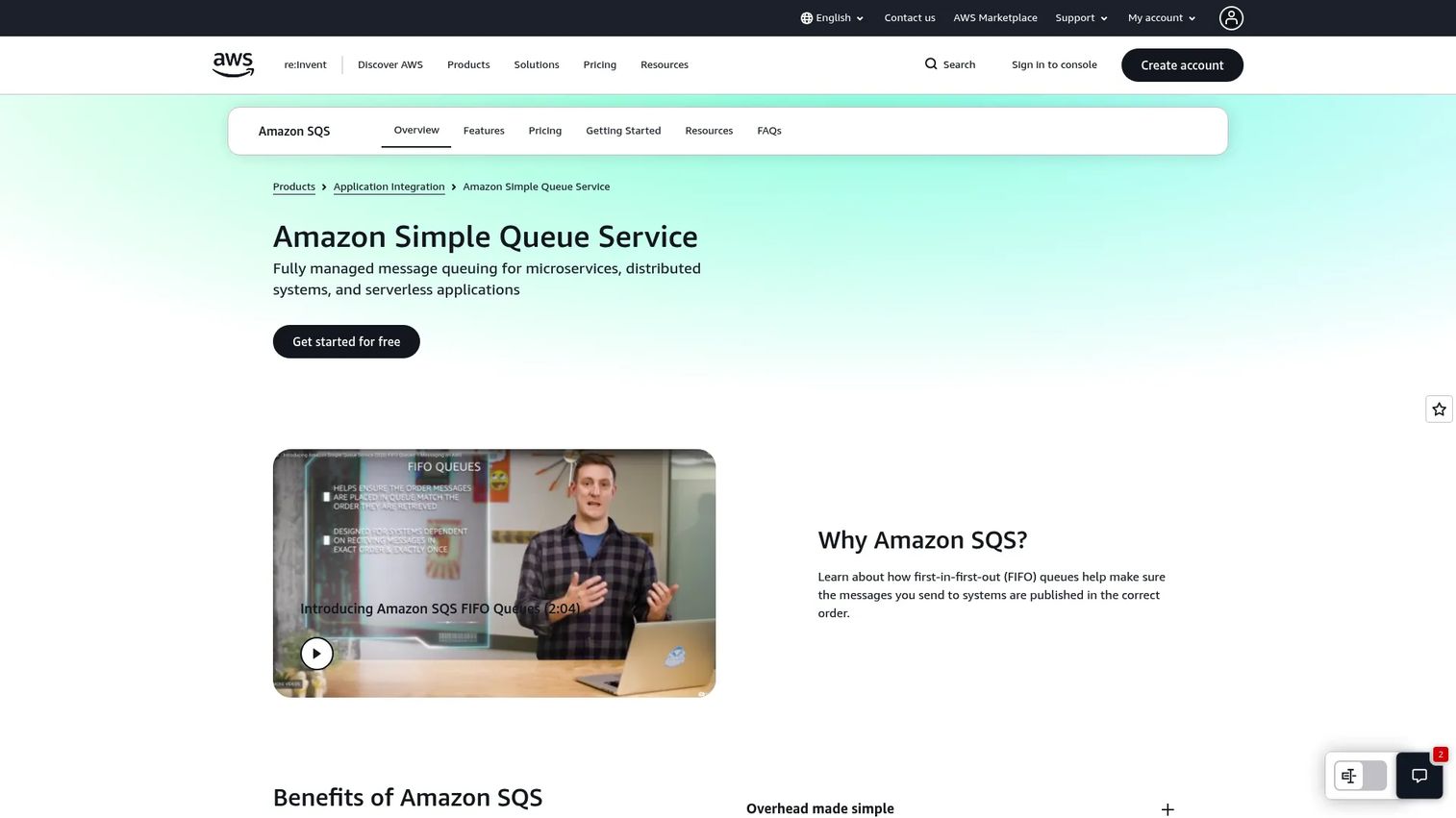
Amazon SQS is a fully managed message queuing service for distributed systems. In marketplace architectures, SQS handles event buffering between services: Seller order events, listing updates, and compliance notifications flow through queues before downstream processing. Analysts who understand why queues exist can diagnose delayed metrics without escalating to engineering.
Best for: Marketplace teams where event pipeline delays affect reporting, and analysts need to understand why certain metrics lag after operational changes.
Key features
- Standard and FIFO queues for ordered and unordered delivery
- Dead-letter queues for failed-message handling
- Server-side encryption with AWS KMS
- Long polling and message batching
- Message ordering and deduplication for FIFO queues
Why choose Amazon SQS: Marketplace reports often depend on event pipelines. An analyst who knows that queues exist understands why a metric appears delayed after a release and can set accurate expectations for the team rather than assuming the data is wrong.
Amazon SQS pricing: 1 million SQS requests are free each month. Usage above that is billed per request. No minimum fee applies.
G2 rating: 4.3/5
Considerations when choosing analyst marketplace resources
Start with the operating decision
Before pulling any resource, decide what you are solving. A job board and a wage table answer different questions. If you are writing a job description, start with O*NET. If you are setting a salary band, start with BLS and OEWS. Mixing these steps wastes time.
Separate marketplace analysis from market research
Government occupational data covers market research analysts broadly. Marketplace analyst work is more operational: SKU performance, seller health, pricing responses, and inventory reporting. Use BLS and OEWS for compensation context, then supplement with live job postings to calibrate the technical requirements.
Test for SQL and spreadsheet fluency directly
Do not rely on a resume to confirm analytical skills. Give candidates a practical exercise: A SQL query task, a spreadsheet model using a raw marketplace export, and a written recommendation for leadership. The output tells you whether the person can close the loop from data to decision.
Check whether resources update often enough
Job listings expire in days. BLS wage data updates annually. AWS pricing can change by quarter. Before publishing a hiring guide or setting a compensation band, verify figures against the live source. Stale data in a board presentation is a credibility problem.
Look for decision output, not dashboard count
A marketplace analyst's value is not the number of dashboards they maintain. It is their ability to explain what changed, why it changed, and what the team should do before the next operating review. Structure the interview around that output, not around tool familiarity.
Conclusion
The resources in this guide cover the full range of what a founder needs before opening a marketplace analyst role.
Indeed and Target Job Search show live role demand and how companies are framing the work right now. BLS, OEWS, O*NET, CareerOneStop, and Projections Central handle salary context, skills taxonomies, and labor-market outlook. Microsoft Excel and SQL reflect the execution core of the role. Amazon QuickSight, S3, Lambda, DynamoDB, and SQS represent the AWS-side infrastructure a marketplace analyst will encounter in data-heavy environments.
The practical next step: Build the scorecard before you write the job description. Use O*NET for task language, BLS for wage anchoring, and live Indeed postings to confirm which skills the market currently treats as table stakes. Then test SQL and Excel in the interview before committing to an offer.
If the next operating problem on your list is not hiring an analyst but helping prospects understand your product before they get on a call, Start your journey with Guideflow today!
FAQs
A marketplace analyst measures performance across sellers, listings, categories, inventory, pricing, and promotions inside an ecommerce or platform marketplace. The role produces the weekly and monthly operating reports that help leadership make decisions about growth, margin, seller health, and customer experience. It sits between operations, finance, and growth rather than purely inside any one function.
No, though the titles appear close in occupational databases. Market research analysts study customers, competitors, and market demand at a category or macro level. Marketplace analysts work closer to internal operational data: SKU performance, seller behavior, listing metrics, and platform-specific KPIs. The skills overlap on data analysis and business communication, but the context is different.
SQL for querying order and seller data, Excel for modeling and reconciliation, and dashboarding fluency are the technical core. Beyond tools, the role requires KPI definition, pricing awareness, inventory logic, and the ability to write a short business recommendation that a leadership team can act on. The best analysts explain what changed and what to do before the next operating review.
Start with Indeed for live postings using search terms including marketplace analyst, marketplace performance analyst, ecommerce analyst, and business analyst marketplace. Large retailer and marketplace company career pages, such as Target's, list roles that expire quickly, so set job alerts. O*NET and CareerOneStop also link to job-search tools from their occupational profiles.
Salary depends on seniority, location, technical depth, marketplace complexity, and whether the role owns business recommendations or just report production. Use the Bureau of Labor Statistics Occupational Outlook Handbook and the OEWS wage tables to find national and metro-level percentile ranges for market research analysts as the closest occupational match. Layer in live Indeed postings to see what companies are currently advertising.
Yes, in most data-heavy marketplace roles. SQL lets analysts query order tables, seller records, listing attributes, inventory logs, and event data without waiting for a pre-built export. Analysts without SQL depend on engineers or data teams for every follow-up question, which slows the operating cadence at exactly the moments speed matters most.
Excel and SQL are the execution foundation. For teams running on AWS, familiarity with Amazon QuickSight for dashboarding, and a conceptual understanding of S3, Lambda, DynamoDB, and SQS, helps the analyst diagnose data issues without escalating. For career planning and hiring context, BLS, O*NET, and CareerOneStop provide skills and wage frameworks. For active job searching, Indeed remains the most practical starting point.
Define the operating cadence first. Decide what reporting this person will own and what decisions that reporting is supposed to improve. Then build the interview around a marketplace data case, a spreadsheet exercise with a raw export, a SQL task, and a short written recommendation addressed to a leadership team. Score on the quality of the decision output rather than the technical sophistication of the tools they mention.