

The order is bagged and sitting on the shelf. The customer is in the lot. And your phone rings anyway: "Is my order ready?"
That gap between ready and handed off is where curbside operations leak time and goodwill. Staff juggle calls, ETAs live in three different screens, and nobody knows who just pulled into spot four. It adds up. Approximately 72 million Americans, about 25.3% of U.S. consumers, used curbside pickup in the past year, and U.S. curbside pickup retail sales are projected at $54.3 billion in 2025, according to Capital One Shopping and Red Stag Fulfillment. That volume is not going away.
The fix is better curbside pickup technology, not more staff. The right tool ties together order-ready notifications, customer check in, a live tracking link, and geofencing so arrivals get detected automatically and handoffs happen fast. This guide compares six tools built for that job, with real pricing and clear operational fit.
What's inside
This guide is for operators at restaurants, retail stores, grocers, and multi-location brands who want to reduce pickup friction and measure it.
We picked and ranked these six tools on the criteria that actually change wait times:
- Order-ready alerts and status messaging
- Arrival detection through geofencing, QR, or text check-in
- Staff dashboards and ETA visibility for staging
- POS and online ordering integrations
- Pricing transparency and commercial model
Every pricing figure and rating below comes from each vendor's own pages or listings, verified at the time of writing.
TL;DR
- Best for enterprise location intelligence: Flybuy, with precise parking-lot-aware ETAs and staff dashboards built for multi-location pickup.
- Best for simple pickup notifications: QuestTag (now Shipday), with a free starter tier and per-order pricing.
- Best for pickup plus delivery in one platform: Shipday, with dispatch, route optimization, and branded tracking.
- Best for SMS-first communication: SimpleTexting, when the messaging layer matters more than a full operations stack.
- Best for Shopify-driven pickup: Zapiet, with pickup and delivery logic inside checkout.
- Best for straightforward curbside coordination: SWIPEBY, for teams wanting a lightweight curbside pickup solution that cuts wait-time without heavy setup.
What curbside pickup software is
Curbside pickup software coordinates the handoff between a ready order and a waiting customer, from the moment an order is prepared to the moment it lands in the trunk.
It sits between your ordering system and your curb, managing order-ready notifications, customer check in, ETAs, a pickup dashboard for staff, and customer messaging in one place. Instead of guessing when someone will arrive, staff see real arrival signals and stage orders on time.
Core capabilities most tools share:
- Order status workflow: Automated alerts move an order from received, to ready, to picked up, keeping both staff and customer in sync.
- Arrival detection: Geofencing, QR check-in, or text check-in triggers a "customer is here" signal without a phone call.
- ETA tracking: A live tracking link estimates when the customer will arrive so staff stage orders at the right moment.
- Staff dashboard: A single screen shows every active pickup, its status, and who is next.
- Integrations: POS integration and online ordering hooks pull order data in automatically so nobody retypes it.
When to use curbside pickup software
Reduce "is my order ready?" calls
Every repeat call is a staff interruption and a customer who does not trust your timing. Automated order-ready notifications and a live status board replace that loop. The customer gets a text the moment their order is staged, and the phone stops ringing. That alone frees frontline staff to actually run the handoff.
Detect arrivals automatically
Manual check-in falls apart at peak. Geofencing detects when a customer enters your lot and fires an arrival signal. QR check-in and text check-in give customers a backup when GPS is imperfect. Location-triggered workflows mean staff start bagging or firing the order at the right moment, not too early and not too late.
Coordinate staff around real ETAs
A staff dashboard turns scattered ETAs into a single staging queue. When your team can see who is five minutes out versus who just parked, they stage orders in the right order. That is the difference between a warm order handed off in 90 seconds and a cold one after four minutes of scrambling.
Connect curbside pickup to your existing stack
Retyping orders is where errors and delays creep in. POS integration and online ordering connections pull orders in automatically, so the pickup dashboard reflects reality without manual entry. Fewer manual steps means fewer mistakes and a cleaner order status workflow end to end.
Comparison table
The table below is built around operational fit, not just price. A cheaper SMS tool and an enterprise location platform solve different problems, so read the "Best for" and "Key differentiator" columns before the pricing.
| # | Product | Best for | Key differentiator | Pricing | G2 rating |
|---|---|---|---|---|---|
| 1 | Flybuy | Multi-location location intelligence | Parking-lot-aware ETAs and staff dashboard | $15/mo + 3¢ per order | 4.5/5 |
| 2 | QuestTag (Shipday) | Simple pickup notifications | Free starter tier, per-order model | Free up to 1,000 orders/mo | Not listed |
| 3 | Shipday | Pickup plus delivery in one | Dispatch, routing, and branded tracking | Free; paid from $19/mo | Not listed |
| 4 | SimpleTexting | SMS-first customer messaging | Two-way texting and automation at scale | From $39/mo | 4.8/5 |
| 5 | Zapiet | Shopify pickup and delivery | Checkout-native pickup logic | From $29.99/mo | 4.9/5 |
| 6 | SWIPEBY | Restaurant customer workflows | AI-driven customer-facing automation | Contact vendor | 4.9/5 |
1. Flybuy
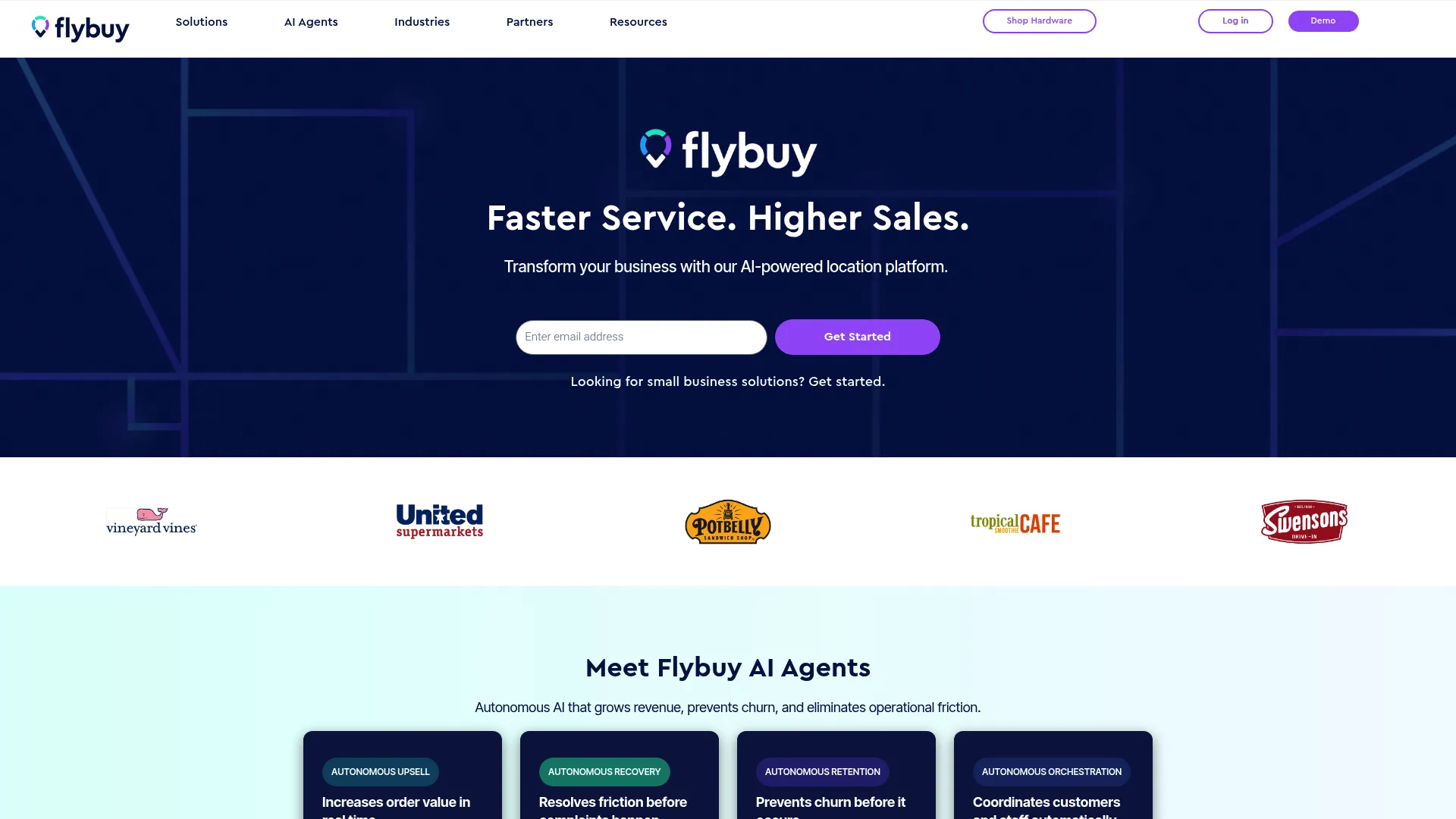
Flybuy is a location-based operations platform for pickup, delivery, dine-in, and customer engagement. Its core strength is precise ETAs that account for the drive to your lot, so staff stage orders at the moment a customer actually arrives, not when they hit "on my way." For multi-location restaurants, retail, and hospitality brands, that parking-lot-aware ETA is the differentiator that cuts cold handoffs.
Best for: Multi-location restaurants, retail, and hospitality brands that need location-based pickup and guest engagement at scale.
Key strengths
- Pickup optimization with precise ETAs and arrival alerts
- Drive-thru, delivery, and table-service workflows
- Location-based marketing and messaging
Flybuy leans into location intelligence harder than the SMS-first tools on this list. Its ETA logic and staff dashboard are built for operators running dozens of sites where a few minutes per order compounds fast. If your pain is staging orders for customers whose real arrival time is a moving target, this is the tool designed for exactly that.
Why choose Flybuy: Choose it when arrival accuracy and multi-location visibility drive your wait times, not just notification volume. The precise ETA and staff dashboard combination is what separates it from tools that only send a text.
Flybuy pricing: Flybuy for Small Business starts at $15/month per location plus 3¢ per order, billed monthly, with no setup fee and no long contracts. The small-business offering is described as three modular packages; enterprise pricing is handled directly.
2. QuestTag
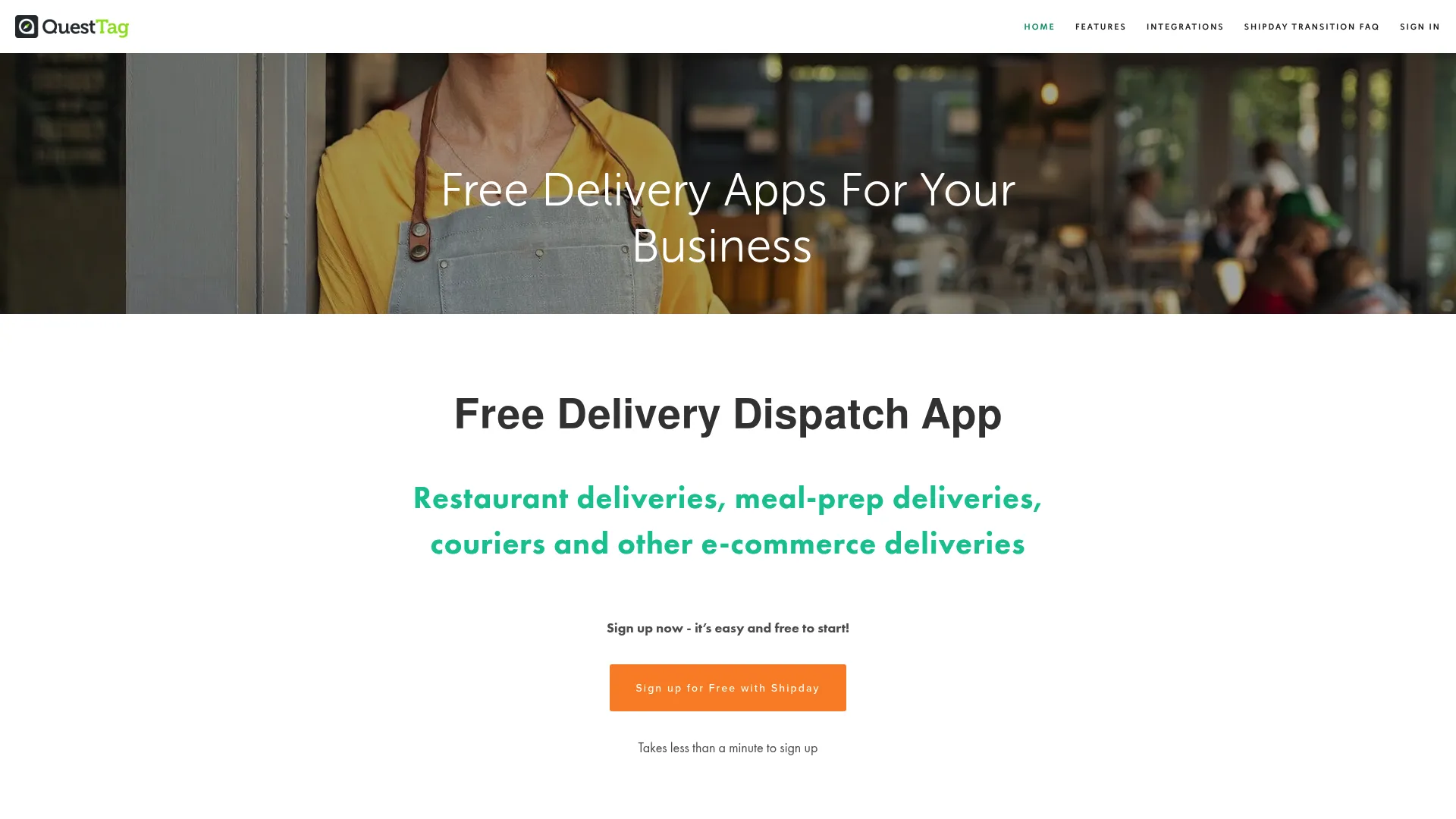
QuestTag is delivery and pickup management software for restaurants and local businesses, covering dispatch, a driver app, and customer tracking. Its homepage now notes that QuestTag is Shipday, which matters when you are searching and comparing branding across the two. For curbside, the draw is real-time customer ETA and order tracking paired with automatic or manual dispatching.
Best for: Restaurants and delivery operations that need dispatch, tracking, and proof of delivery alongside a simple pickup notification workflow.
Key strengths
- Automatic or manual dispatching
- Driver mobile app with proof of delivery
- Real-time customer ETA and order tracking
QuestTag fits teams that want operational tracking without a heavyweight rollout. The free starter tier lets you validate the workflow before committing budget, and the per-order model keeps costs tied to actual volume. That makes it a practical entry point for a smaller operation testing curbside as a channel.
Why choose QuestTag: Choose it when you want a simple pickup notification workflow with real ETA tracking and a low-risk way to start. The free tier and usage-based pricing suit teams that would rather scale cost with volume than pay a flat platform fee upfront.
QuestTag pricing: The Starter version is always free up to 1,000 orders per month. The Professional version is usage-based at $0.10 per order in the US and Canada, including SMS. The Enterprise version starts from $1,299/month.
3. Shipday

Shipday is delivery management software that automates dispatch, tracking, and customer communications. It earns a spot here because curbside pickup rarely lives alone; many operators run pickup and local delivery side by side. Shipday handles both, with real-time driver and customer tracking, branded tracking pages, and SMS and WhatsApp notifications in one system.
Best for: Local teams that want pickup and delivery in a single platform, with dispatch and branded customer updates.
Key strengths
- Real-time driver and customer delivery tracking
- Branded tracking pages and driver app customization
- SMS and WhatsApp notifications, route optimization, and auto-dispatch
The value here is consolidation. Instead of running separate tools for curbside notifications and last-mile dispatch, Shipday links pickup workflows to broader delivery operations. Route optimization and auto-dispatch matter more once delivery volume grows, and the free plan lets you start small before scaling into paid tiers.
Why choose Shipday: Choose it when your operation spans pickup and delivery and you want one order status workflow covering both. The branded tracking pages also keep the customer experience consistent whether they are driving to you or waiting at home.
Shipday pricing: A free Basic plan is available. Paid plans start at Professional Lite for $19/month, then Professional at $39/month, Premium at $79/month, Elite at $99/month, and Business AI at $349/month, all billed monthly.
4. SimpleTexting
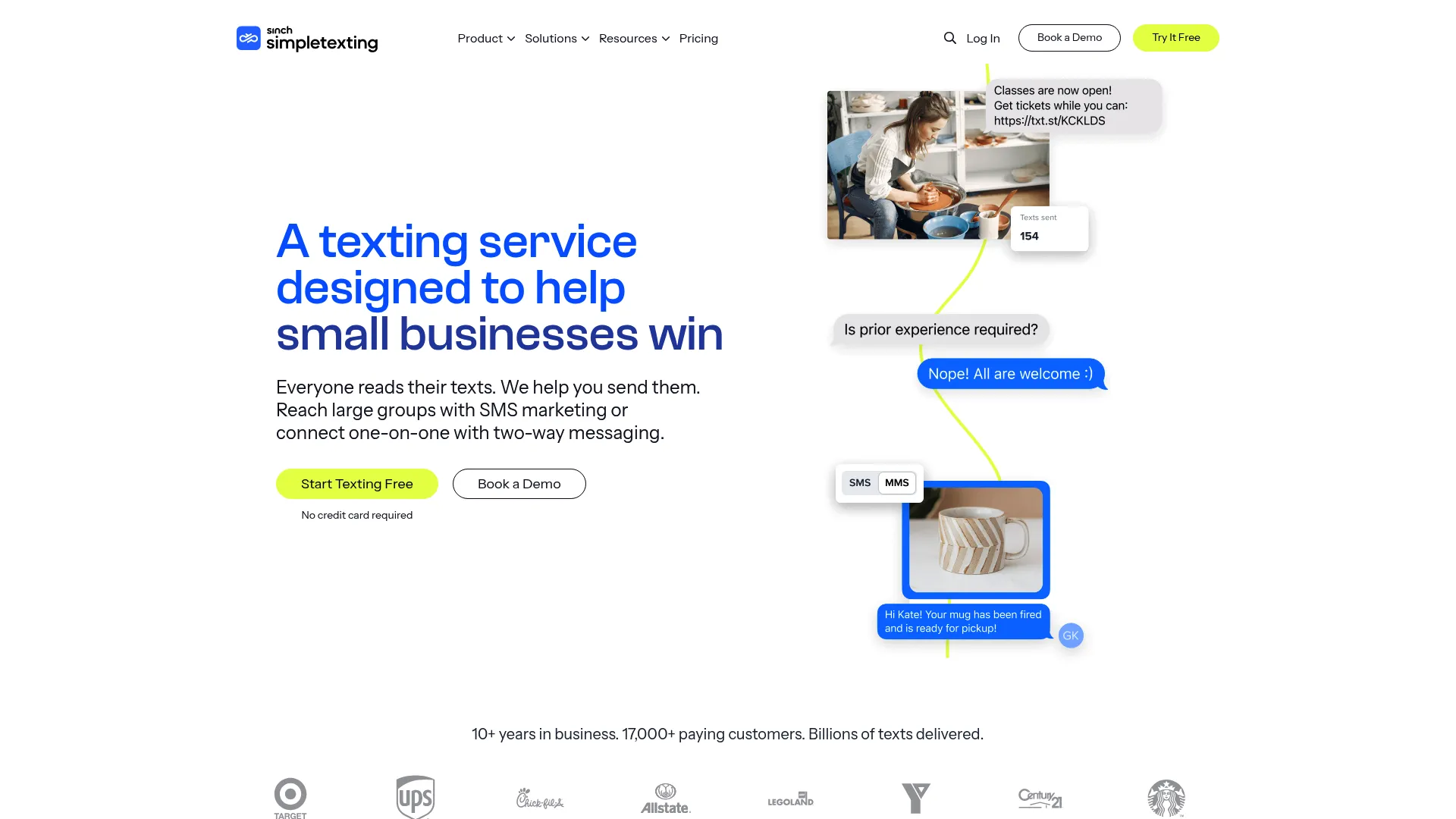
SimpleTexting is an SMS marketing platform for sending mass texts, managing two-way conversations, and automating messaging. It is not a dedicated pickup operations stack, and that is the point. When your curbside bottleneck is customer messaging rather than arrival detection, a strong SMS layer with automation and two-way replies does the heavy lifting.
Best for: Small and mid-sized businesses that want reliable SMS alerts and two-way texting more than a full operational control system.
Key strengths
- Mass texting and scheduled, automated texts
- Two-way messaging and opt-in tools
- AI assistant, analytics, and a mobile app
SimpleTexting shines when the reach channel is the priority. Text is still the most dependable way to tell a customer their order is ready, and two-way messaging lets them reply "here in spot 3" without a phone call. Pair it with your existing ordering system and you have a messaging-first curbside flow that scales cleanly.
Why choose SimpleTexting: Choose it when you already have order data and just need dependable customer messaging on top. It gives you the notification and two-way layer without asking you to replace the operations tools you already run.
SimpleTexting pricing: The pricing page shows an estimated monthly cost of $39.00 plus a $4 one-time carrier registration. Local numbers are $10/month plus a $4 activation fee, and dedicated short codes begin at $1,000/month. All prices are in USD.
5. Zapiet
Zapiet builds Shopify apps for pickup, local delivery, shipping, and order management. If your storefront runs on Shopify, Zapiet puts pickup and curbside logic directly inside checkout, so customers choose a pickup location and time before they pay. That checkout-native approach keeps the order status workflow tied to your commerce data from the start.
Best for: Shopify merchants that need pickup, delivery, and shipping workflow control inside their store.
Key strengths
- Order scheduling and product availability controls
- Split fulfillment across locations
- Shopify POS integration and storefront widgets
Zapiet fits merchants who want curbside logic to live where the order is placed, not bolted on afterward. Its Shopify POS integration ties online and in-store fulfillment together, and the widget-based checkout options give customers clear pickup choices. For e-commerce operators, that is cleaner than syncing a separate pickup tool to your store.
Why choose Zapiet: Choose it when Shopify is your commerce backbone and you want pickup scheduling and rate logic native to checkout. It is purpose-built for that environment rather than adapted to it.
Zapiet pricing: The Pickup + Delivery app offers an Essential plan at $29.99/month, Advanced at $79.99/month, and Professional at $179.99/month. A 14-day free trial is available, and annual billing saves 15%.
6. SWIPEBY
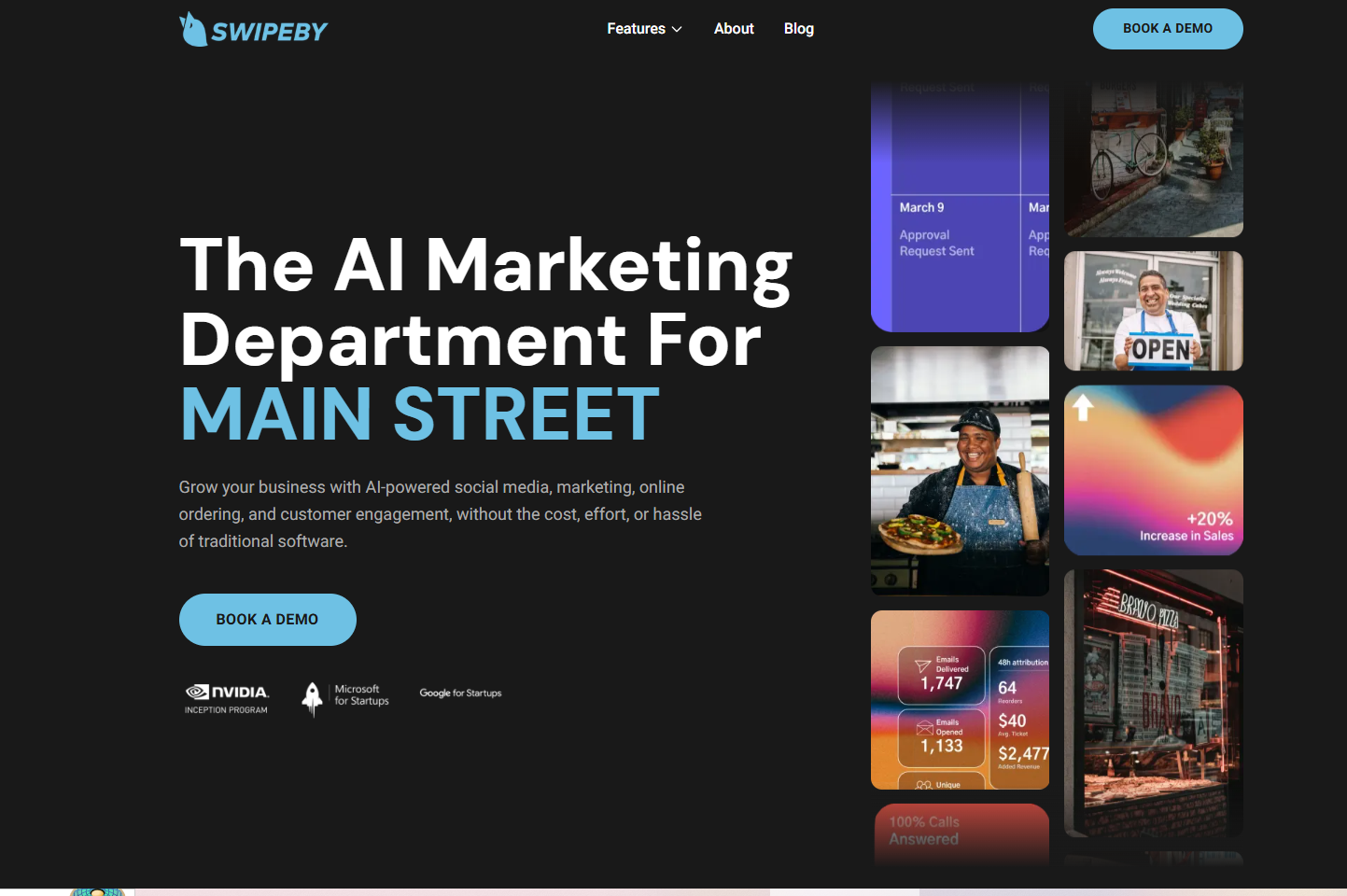
SWIPEBY is an AI-driven platform for restaurants and brick-and-mortar businesses that automates customer-facing workflows, including reviews and responses. For smaller restaurants and local retail, it fits teams that want to streamline the customer-facing side of pickup and reputation without stitching together several separate tools.
Best for: Restaurants wanting to automate customer-facing workflows and review collection alongside a straightforward pickup experience.
Key strengths
- Automated review requests after customer interactions
- AI-generated responses to Google reviews
- Google Business Profile connection and review automation
SWIPEBY leans on AI to handle the repetitive customer-facing work that pulls staff away from the handoff. For a local operation, automating reviews and responses frees the team to focus on the curb itself. It fits teams that value a simple, automated customer experience over a deep operational control panel.
Why choose SWIPEBY: Choose it when you run a smaller restaurant or local shop and want customer-facing automation with minimal overhead. It carries a 4.9/5 rating on G2 from a small review base, so weigh that against your own trial.
SWIPEBY pricing: Public pricing was not listed on the vendor's own pages at the time of writing, so contact SWIPEBY directly for a current quote.
Considerations before you buy
Before committing, run each shortlisted tool against the operational reality of your locations.
Arrival detection method
Geofencing, QR check-in, and text check-in each behave differently in your specific lots. GPS-based arrival detection can drift in dense urban areas or covered garages, so confirm the tool offers a backup check-in method. Test it in your actual parking conditions, not just a demo environment.
POS and ordering integration depth
A tool is only as fast as its connection to your order source. Confirm the POS integration supports your exact system and pushes order status both ways. Shallow integrations force manual re-entry, which reintroduces the delay you are trying to remove.
Messaging cost and reliability
SMS alerts remain the most reliable reach channel, but per-message and carrier registration fees add up at volume. Model your monthly order count against per-order or per-message pricing before you sign. A "free" tier can cost more than a flat plan once you cross a volume threshold.
Reporting and measurement
You cannot improve wait time you cannot see. Look for a pickup dashboard and reporting that tracks handoff time, arrival-to-ready gaps, and notification delivery rates. Event-level data lets you segment by location and shift, then prove the impact of any workflow change.
Conclusion
Curbside pickup solutions win or lose on one thing: how fast a ready order reaches a waiting customer. Match the tool to your actual bottleneck.
If your pain is arrival accuracy across many locations, Flybuy's parking-lot-aware ETAs and staff dashboard are built for that scale. If you want a low-risk start with per-order pricing, QuestTag fits. If pickup and delivery run side by side, Shipday consolidates both. When customer messaging is the real gap, SimpleTexting delivers the SMS layer. Shopify merchants should look at Zapiet for checkout-native pickup logic, while SWIPEBY suits teams wanting straightforward curbside coordination.
The through-line is wait-time reduction. Pick the tool that removes the most manual steps between "order ready" and "handed off" for your restaurant and retail curbside operations, then measure the handoff time before and after. Start with the comparison table above, shortlist two, and run both against a real week of orders.
FAQs
Curbside pickup software coordinates the handoff between a prepared order and a waiting customer. It manages order-ready notifications, customer check in, and a live tracking link so staff know when to stage orders and customers know when they are ready. The goal is a faster, more reliable handoff with fewer phone calls.
Geofencing draws a virtual boundary around your location and detects when a customer's phone crosses it. That triggers an automatic arrival signal, so staff can stage the order at the right moment instead of guessing. Because arrivals are detected automatically, teams staff and prepare orders more accurately during peak windows.
Yes. POS integration lets the software pull order data automatically, so staff do not retype orders or update statuses by hand. That keeps the pickup dashboard accurate in real time and removes a common source of delay. Always confirm the tool supports your specific POS before buying.
The biggest levers are accurate ETA tracking, a clear staff dashboard, and automatic arrival alerts. ETAs tell staff when to stage an order, the dashboard shows the full pickup queue at a glance, and arrival alerts remove the phone call. Together they close the gap between ready and handed off.
Yes. SMS alerts remain the most reliable way to reach a customer in a parking lot, since nearly everyone reads a text quickly. Two-way messaging also lets customers confirm arrival or a parking spot without a call. Many pickup and delivery software flows lean on SMS as the default channel for exactly that reason.
Compare the pricing model, not just the headline number. Per-location pricing suits multi-site brands, per-order pricing ties cost to volume, and flat subscriptions favor high-volume operators. Model your real monthly order count against each model, and factor in SMS and carrier fees, which can shift the total materially.
BOPIS, or buy online pick up in store, means the customer walks inside to collect the order. Curbside pickup brings the order out to the customer's vehicle instead. The software overlaps, but curbside adds arrival detection and vehicle-level handoff steps that in-store pickup does not require.
Restaurants with multiple locations often fit Flybuy for its ETA precision, or Shipday when delivery runs alongside pickup. SWIPEBY suits smaller restaurants wanting customer-facing automation. For retail, Shopify merchants are well served by Zapiet's checkout-native pickup, while SimpleTexting works across both when messaging is the priority.