Your framework choice becomes part of your roadmap. It shapes hiring capacity, release cadence, security posture, and how expensive every future architectural change will feel. Pick the wrong one early, and your team spends the next two years working around it.
According to the Stack Overflow Developer Survey 2025, React leads web framework adoption at 44.7% of respondents, with Next.js at 20.8% and Angular at 18.2%. Popularity is a signal, not a verdict. The right framework for your product depends on what you're building, what your team can maintain, and what talent the market can supply.
This guide cuts through the ecosystem noise to give product managers and engineering leads a clear, 2026-ready comparison of 12 frameworks across frontend, backend, and full-stack categories.
What's inside
This guide compares 12 web development frameworks relevant to modern SaaS and web product teams.
- Who it's for: Product managers, engineering managers, and technical leads preparing framework discussions or modernization decisions
- How frameworks were chosen: Adoption data from the Stack Overflow Developer Survey 2025, ecosystem maturity, documentation quality, and practical product fit
- Selection criteria used:
- Developer adoption and hiring market depth
- Maintenance reality across release cycles
- Fit by product type (content sites, SaaS dashboards, APIs, enterprise systems)
- Pricing reality: All listed frameworks are open source; costs come from hosting, infrastructure, and commercial support
TL;DR
- Best overall frontend choice: React, for ecosystem depth, component flexibility, and the widest hiring pool
- Best production React full-stack choice: Next.js, for routing, server rendering, and integrated full-stack patterns
- Best approachable frontend option: Vue.js, for teams that want readable conventions without Angular-level structure
- Best enterprise frontend framework: Angular, for opinionated architecture and large-team governance
- Best Python backend choices: Django for batteries-included apps, FastAPI for API-first products requiring typed Python
- Best mature full-stack backend options: Laravel for PHP teams, Ruby on Rails for fast CRUD delivery, ASP.NET Core for Microsoft-stack enterprises
What are web development frameworks?
Web development frameworks are reusable software structures that help teams build websites and web applications faster by providing patterns, libraries, routing, rendering, data handling, and security conventions. Rather than writing foundational infrastructure from scratch, teams use frameworks to focus on product-specific work.
The category splits into four types:
- Frontend frameworks: Handle the user interface in the browser, including components, state management, and client-side routing (React, Vue.js, Angular, Svelte)
- Backend frameworks: Manage server logic, APIs, authentication, database access, and business rules (Express.js, Django, FastAPI, Laravel, Ruby on Rails, ASP.NET Core)
- Full-stack frameworks: Connect frontend and backend concerns in one development model (Next.js, Laravel, Ruby on Rails)
- Meta-frameworks: Add routing, server rendering, deployment patterns, or build tooling around a core UI library (Next.js, Astro, SvelteKit)
Key capabilities to evaluate across any framework:
- Routing and page structure
- Component or template systems
- Data fetching and state management
- Authentication and authorization patterns
- API and database integration
- Rendering options: Static generation, server-side rendering, client-side rendering
- Testing, build, and deployment tooling
- Security defaults and community package quality
For product managers, a framework choice is not just a developer preference. It affects time-to-market, hiring difficulty, onboarding for new engineers, release cadence, and the opportunity cost of every future migration.
When to use web development frameworks
Build a product faster without inventing every pattern
Frameworks give teams shared conventions so engineering can focus on product-specific work instead of infrastructure debates. For PMs managing backlogs, this means fewer sprint cycles lost to foundational decisions. A well-chosen framework eliminates repeated work around authentication, routing, and form handling.
Scale delivery across more engineers and release cycles
Conventions matter most after the first version ships. When a new engineer joins, a well-documented framework lets them contribute to production code in days rather than weeks. Consistent patterns reduce review overhead and prevent architecture drift across a growing team.
Match the architecture to the product experience
A documentation site, a SaaS dashboard, an API platform, and an internal admin tool do not need the same framework. Shipping a heavy SPA framework for a content site creates unnecessary JavaScript overhead. Applying a minimal API framework to a complex multi-tenant product creates gaps in auth and data modeling. Choose by product type, not by what's trending.
Web development frameworks comparison
The table below serves as a fast filter, not a universal ranking. All listed frameworks are open source and free to use. Hosting, infrastructure, engineering time, and commercial support are where real costs accumulate.
G2 ratings are shown where a verified, directly relevant listing exists. Open-source frameworks without a meaningful standalone listing are marked N/A.
| # | Product | Best for | Key differentiator | Pricing | G2 rating |
|---|---|---|---|---|---|
| 1 | React | Flexible frontend apps | Largest UI component ecosystem | Free, open source | N/A |
| 2 | Next.js | Production React apps | Full-stack React with server rendering | Free, open source | 4.7/5 |
| 3 | Vue.js | Approachable frontend teams | Progressive adoption with readable patterns | Free, open source | 4.6/5 |
| 4 | Angular | Enterprise frontend teams | Opinionated full framework with built-in structure | Free, open source | 4.5/5 |
| 5 | Svelte | Lean interactive interfaces | Compiler-first UI with minimal runtime | Free, open source | N/A |
| 6 | Astro | Content-heavy websites | Islands architecture for performance-first content sites | Free, open source | N/A |
| 7 | Express.js | Node.js APIs | Minimal backend framework with large middleware ecosystem | Free, open source | 4.5/5 |
| 8 | Django | Python web apps | Batteries-included backend with admin, ORM, and auth | Free, open source | N/A |
| 9 | FastAPI | Python APIs | Type-hint-driven API development with automatic docs | Free, open source | N/A |
| 10 | Laravel | PHP web applications | Productive full-stack conventions with first-party tooling | Free, open source | 4.7/5 |
| 11 | Ruby on Rails | Fast full-stack CRUD apps | Convention-over-configuration for rapid delivery | Free, open source | 4.5/5 |
| 12 | ASP.NET Core | Enterprise .NET applications | High-performance cross-platform framework for Microsoft stacks | Free, open source | 4.3/5 |
Best 12 web development frameworks for 2026
1. React
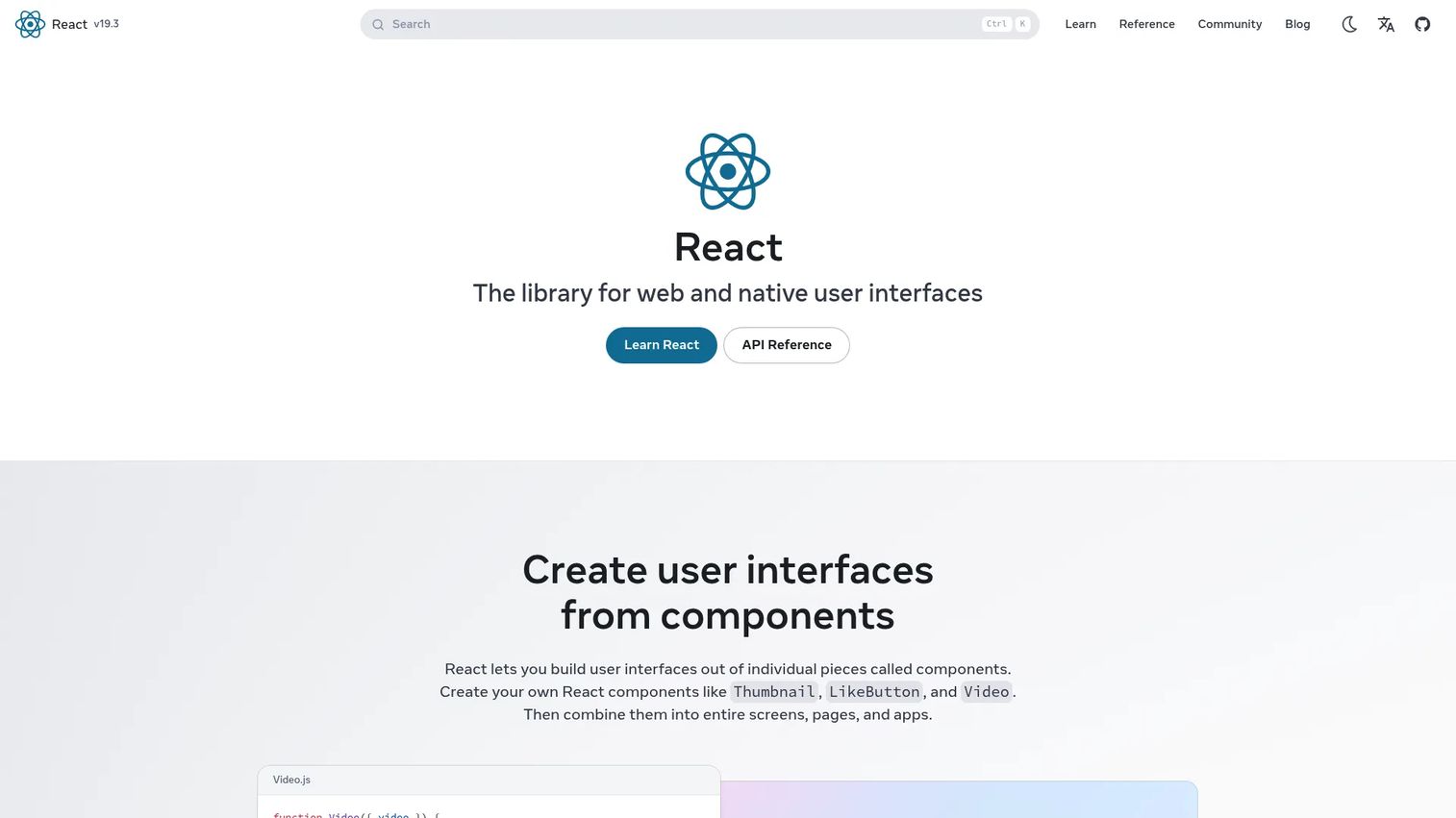
React is a JavaScript library for building user interfaces through a component-based model. Created by Meta and maintained as an open-source project, it has become the dominant choice for frontend development in production teams worldwide. According to the Stack Overflow Developer Survey 2025, 44.7% of respondents used React for extensive web development, the highest figure for any frontend technology.
Best for: Product teams building flexible, interactive interfaces where ecosystem depth and hiring supply matter most.
Key features
- Component-based UI architecture
- JSX markup for declarative rendering
- Hooks for state and lifecycle management
- React Compiler for build-time optimization
- Strong TypeScript support
Why choose React: React is the low-regret default when product scope is still evolving and the team needs access to a broad library ecosystem. For PMs, it also maximizes hiring flexibility because the talent pool is large relative to any other frontend option.
React pricing: React is free and open source. Budget separately for hosting, CI/CD tooling, design systems, and developer time.
2. Next.js
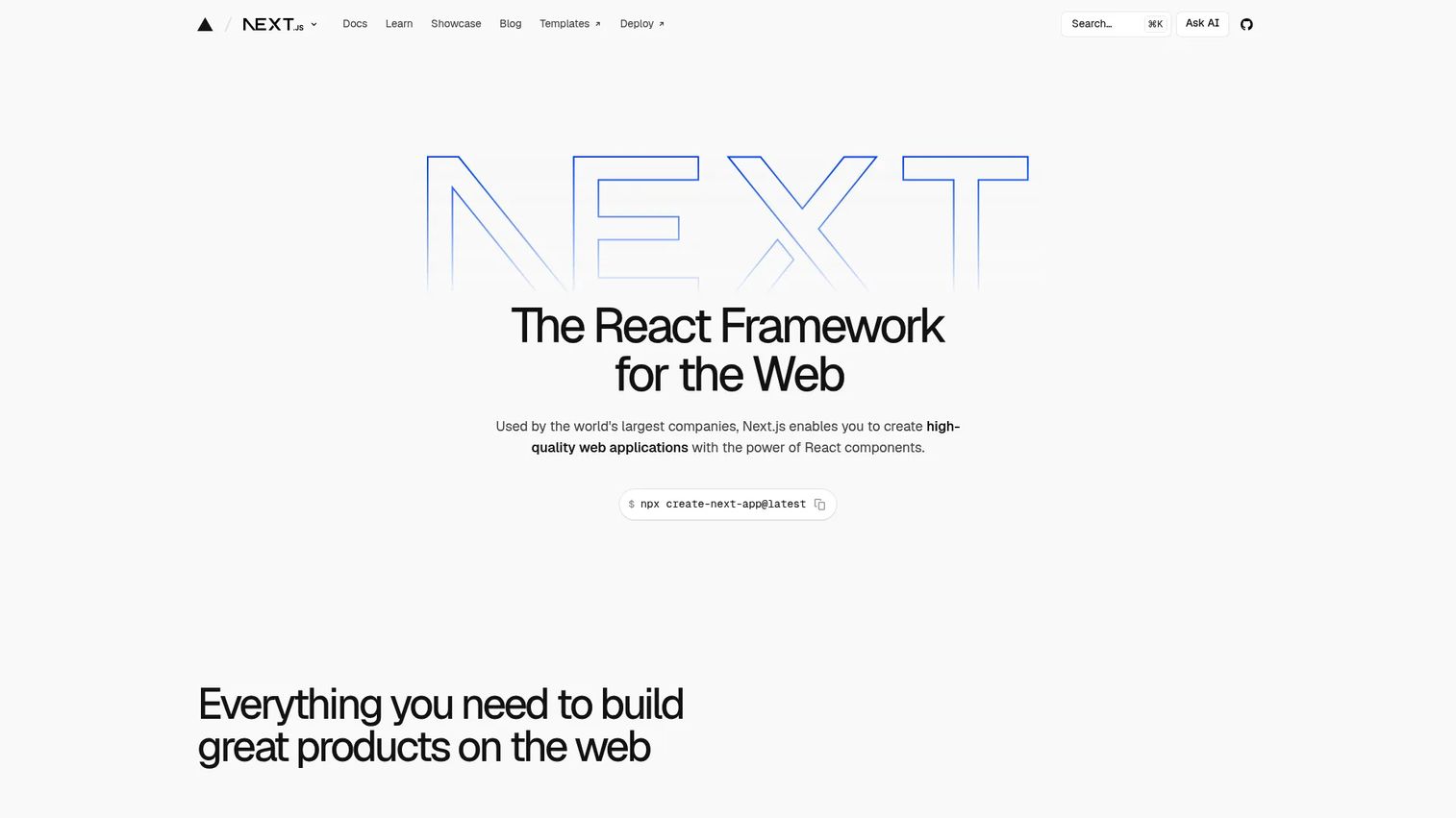
Next.js is a React framework for building full-stack web applications, maintained by Vercel. It adds file-system-based routing, server-side rendering, static site generation, React Server Components, and full-stack API patterns on top of React. At 20.8% usage in the Stack Overflow Developer Survey 2025, it ranks as the most-used React meta-framework. The State of JavaScript 2025 notes that Next.js remains heavily discussed and continues to shape how teams think about full-stack React architecture.
Best for: Teams building SEO-sensitive, performance-conscious React applications where frontend and backend concerns live close together.
Key features
- File-based App Router with React Server Components
- Static generation, server-side rendering, and dynamic rendering
- Built-in prefetching, streaming, and client-side navigation
- API routes and server functions
- Full-stack app patterns in one project
Why choose Next.js: Choose Next.js when React alone leaves too many architecture decisions open. It is especially useful when product pages, authenticated dashboards, and API endpoints belong in a single codebase, reducing context switching and deployment complexity.
Next.js pricing: The Next.js framework is free and open source. Managed hosting on Vercel is priced separately by usage and plan tier.
G2 rating: 4.7/5
3. Vue.js
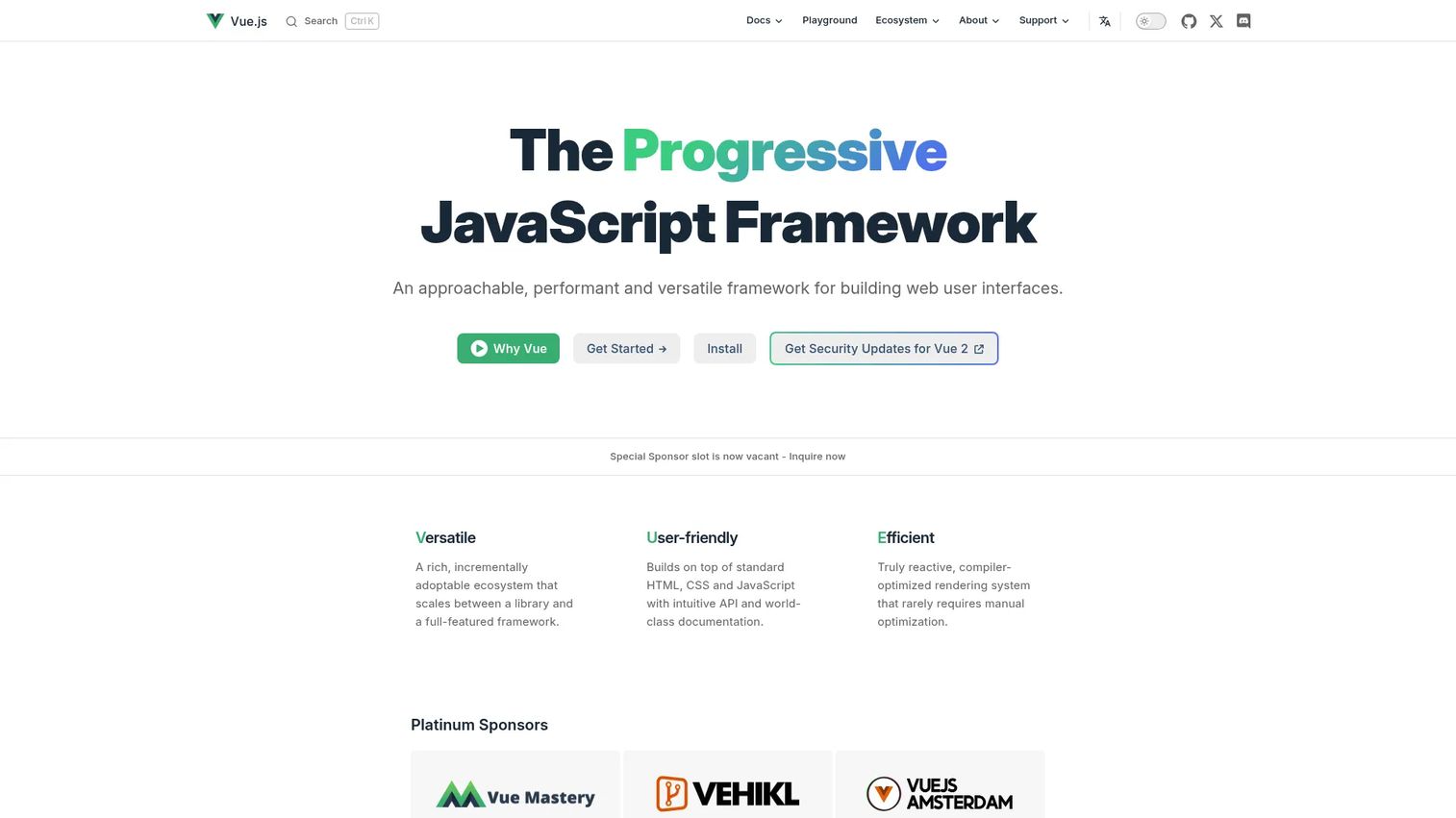
Vue.js is a progressive JavaScript framework for building web user interfaces. It supports both an Options API for teams transitioning from class-based models and a Composition API for more complex state patterns. Single-file components bundle HTML, JavaScript, and styles together, making the code readable and approachable. Vue appeared at 17.6% in the Stack Overflow Developer Survey 2025, holding steady as one of the three most-used frontend frameworks.
Best for: Teams that want a productive frontend framework with a gentle onboarding curve and clear conventions.
Key features
- Single-file component structure
- Reactive data binding
- Options API and Composition API
- Vue Router for client-side routing
- Pinia for state management
Why choose Vue.js: Choose Vue when developer onboarding speed matters and the team wants clear structure without Angular-level weight. It performs well for SaaS interfaces where iteration pace matters and the team size makes per-file readability a practical concern.
Vue.js pricing: Vue.js is free and open source under the MIT license. Commercial costs come from hosting, tooling, and optional ecosystem services.
G2 rating: 4.6/5
4. Angular
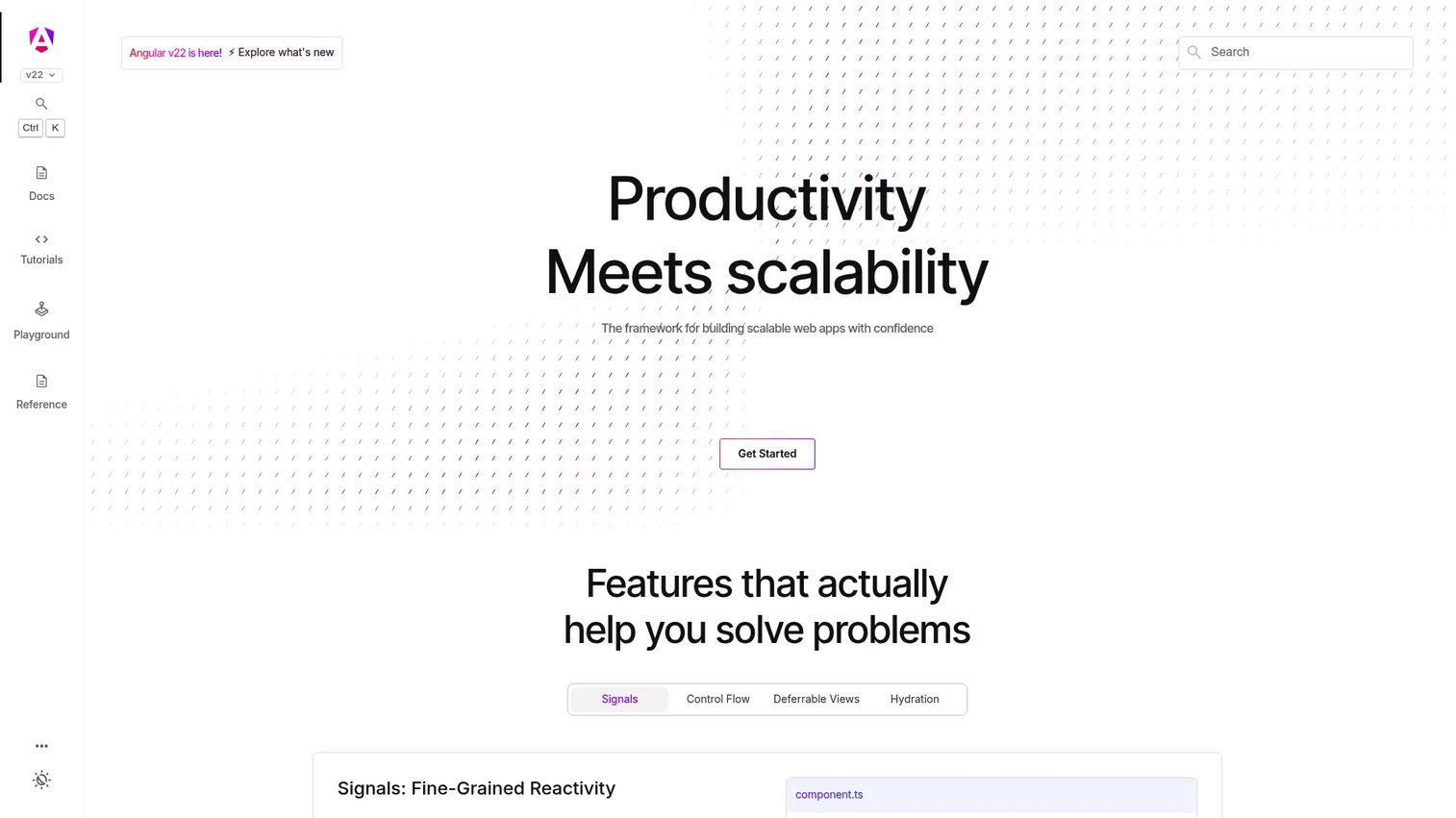
Angular is a full frontend framework maintained by Google. It is TypeScript-first by design, with built-in dependency injection, routing, reactive forms, an integrated CLI, and testing utilities. At 18.2% usage in the Stack Overflow Developer Survey 2025, it holds strong among enterprise and larger-scale teams. Angular Signals, introduced in recent versions, adds a more ergonomic reactivity model while preserving the opinionated structure teams rely on.
Best for: Enterprise teams that need a complete, opinionated frontend framework with strong structural governance.
Key features
- TypeScript-first architecture throughout
- Dependency injection system
- Built-in routing and reactive forms
- Angular Signals for reactive state
- Integrated CLI with Vite and esbuild
Why choose Angular: Choose Angular when large teams need consistency more than maximum flexibility. The framework's conventions reduce architecture drift across long-lived products, which matters for PMs managing roadmaps beyond the first year of development.
Angular pricing: Angular is free and open source under the MIT license. Costs come from engineering, hosting, and optional enterprise support arrangements.
G2 rating: 4.5/5
5. Svelte
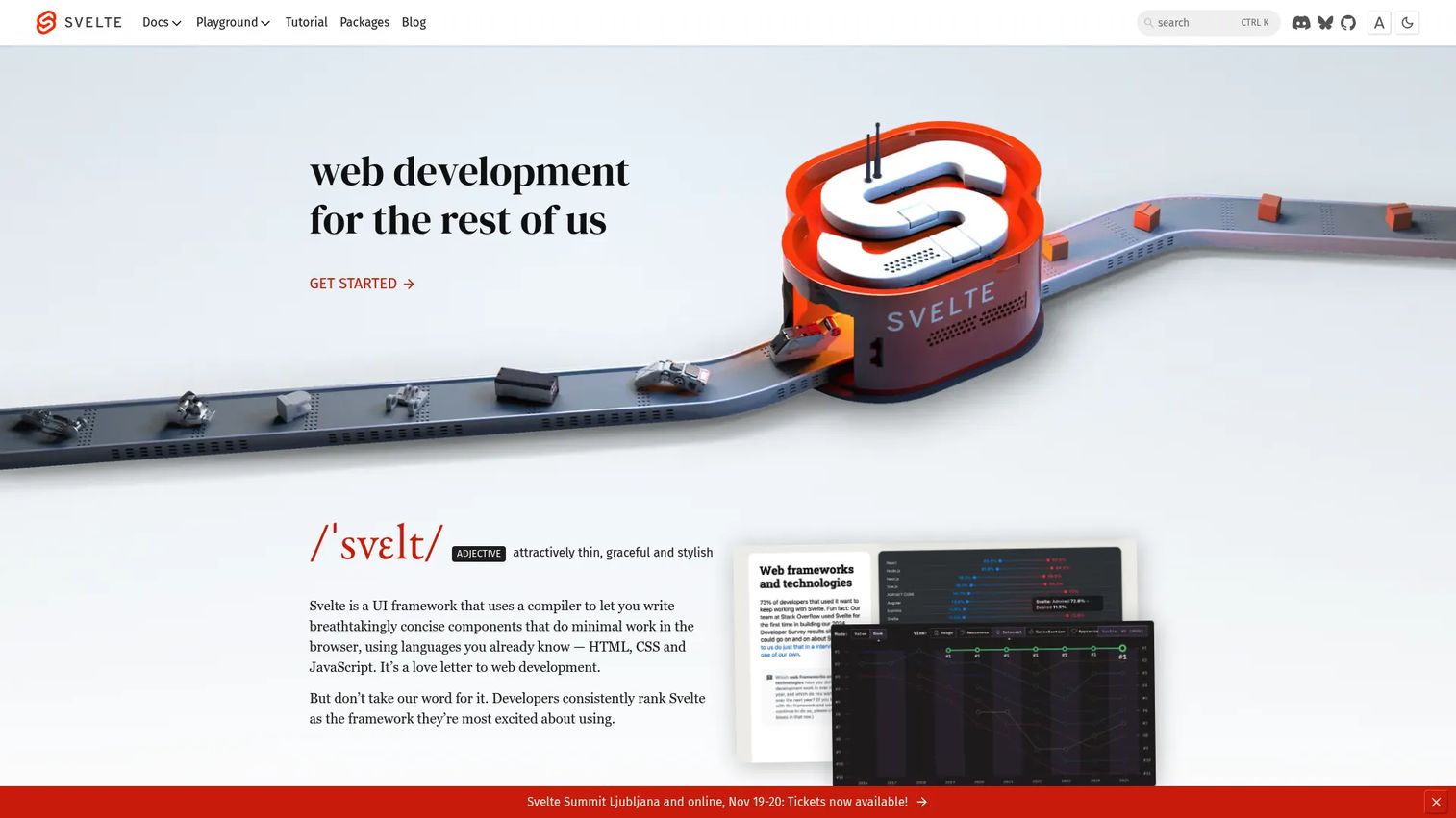
Svelte is a compiler-based frontend framework that shifts rendering work from runtime to build time. Instead of shipping a virtual DOM library to the browser, Svelte compiles components into optimized vanilla JavaScript at build time, resulting in smaller bundles and faster initial load. SvelteKit extends Svelte with routing, server-side rendering, prerendering, and full-stack patterns. The framework appeared at 7.8% in the Stack Overflow Developer Survey 2025.
Best for: Teams building lean, interactive interfaces where runtime bundle size and UI performance are priorities.
Key features
- Compiler-based component generation
- Minimal browser runtime
- Built-in reactivity without a virtual DOM
- SvelteKit for routing, SSR, and prerendering
- Simple, readable component syntax
Why choose Svelte: Choose Svelte when product experience demands fast load times and the team can accept a smaller hiring pool compared to React or Vue. It is a strong fit for focused products, kiosks, or marketing experiences where UI performance directly affects activation.
Svelte pricing: Svelte is free and open source. Hosting and SvelteKit deployment costs depend on the platform choice.
6. Astro
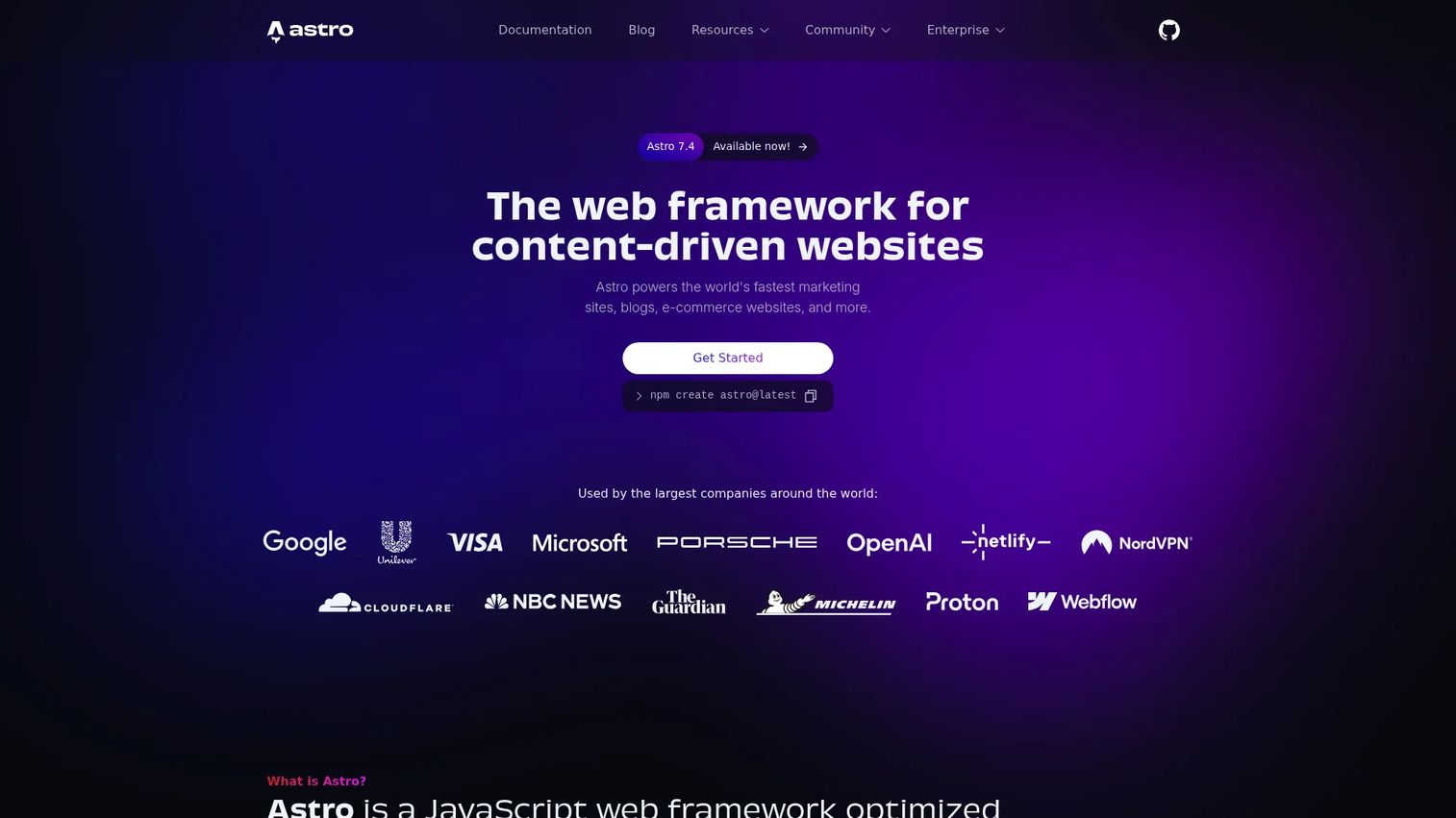
Astro is a web framework optimized for content-heavy websites. Its Islands architecture ships zero JavaScript by default and hydrates only the interactive components that need it. Astro supports components written in React, Vue, Svelte, and other UI libraries within a single project, giving teams flexibility without committing to one ecosystem. It appeared at 6.2% in the Stack Overflow Developer Survey 2025.
Best for: Content-heavy websites, documentation hubs, marketing sites, and changelog pages that need strong performance without shipping unnecessary JavaScript.
Key features
- Islands architecture with zero-JS default
- Static site generation and server rendering
- Multi-framework component support
- Markdown and MDX content collections
- File-based routing with deployment adapters
Why choose Astro: Choose Astro when the product needs fast, SEO-critical content pages alongside occasional interactive components. PMs should consider it when web performance and content update velocity are both priorities, particularly for documentation or marketing surfaces adjacent to a core SaaS product.
Astro pricing: Astro is free and open source under the MIT license. Hosting costs depend on whether you deploy statically or use server rendering.
7. Express.js
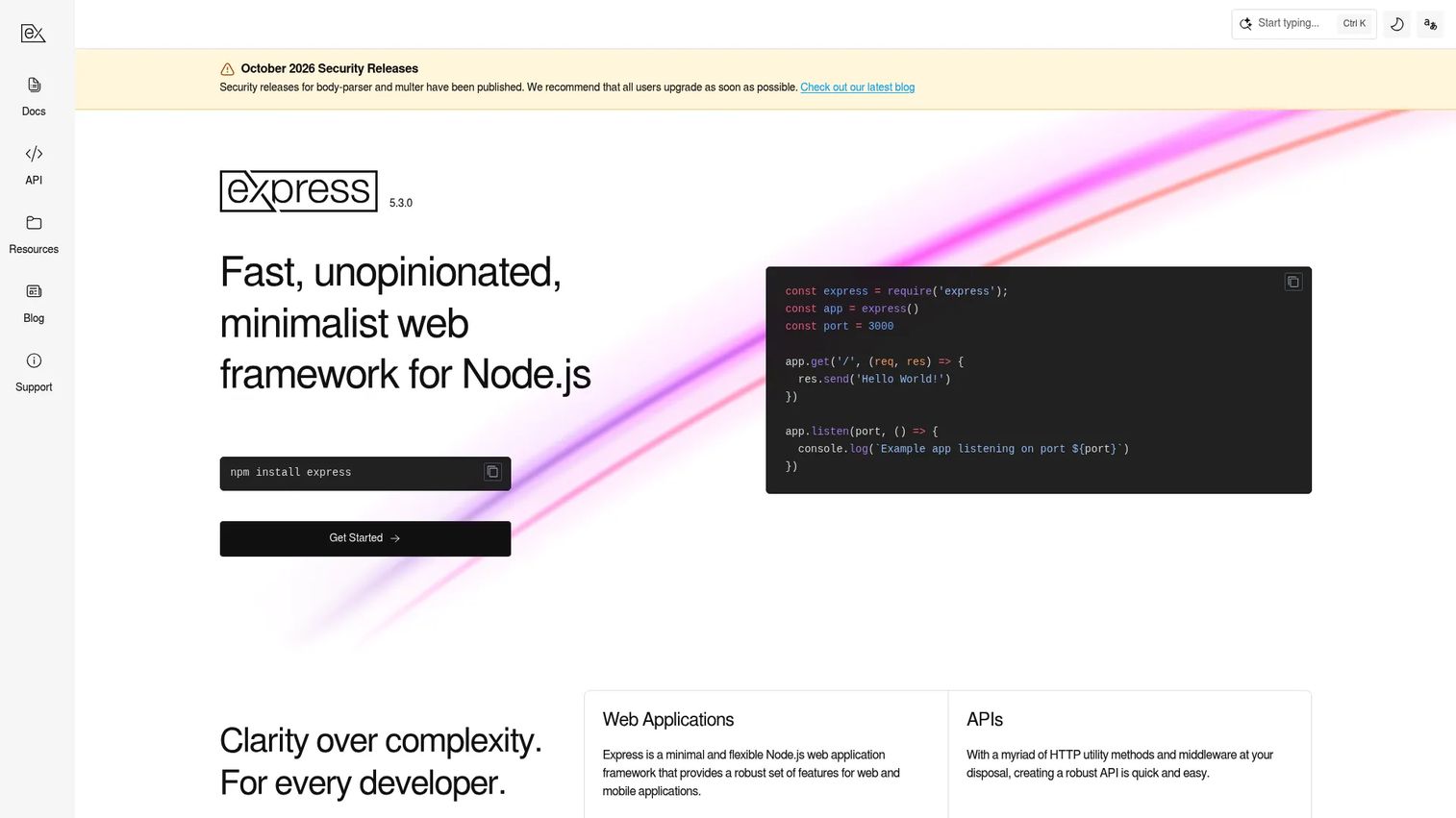
Express.js is a minimal, flexible Node.js web framework for building APIs and web servers. It provides a thin routing layer and middleware model on top of Node.js, leaving architecture decisions largely to the team. The npm ecosystem gives Express access to thousands of community packages for authentication, logging, validation, and database integration. Express appeared at 15.6% in the Stack Overflow Developer Survey 2025 and remains the most widely deployed Node.js backend framework.
Best for: Node.js teams that want a lightweight backend with broad package support and direct control over architecture.
Key features
- Minimal HTTP routing layer
- Middleware-based request pipeline
- Access to the full npm ecosystem
- REST API server patterns
- Flexible, non-prescriptive architecture
Why choose Express.js: Choose Express when the team has Node.js experience and wants to stay close to the platform. It suits APIs, microservices, and prototypes where architectural simplicity is more valuable than convention-driven scaffolding.
Express.js pricing: Express is free and open source. Budget for hosting, monitoring, security hardening, and ongoing backend maintenance.
G2 rating: 4.5/5
8. Django
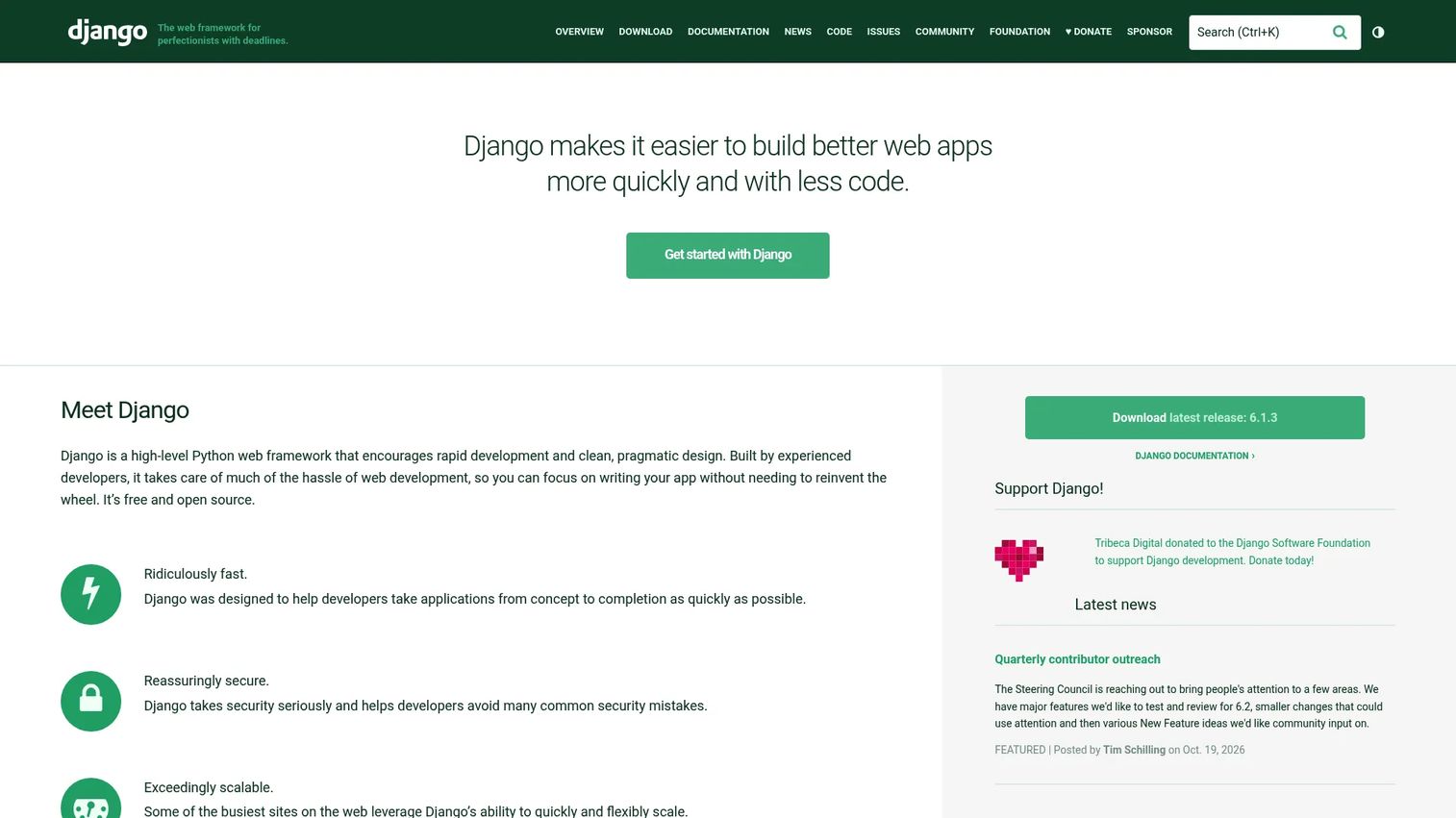
Django is a batteries-included Python framework that ships with an ORM, an admin interface, authentication, form handling, caching, and security protections against common attacks including CSRF and SQL injection. Its philosophy is to make the most common web development tasks fast and secure by default. Django appeared at 11.3% in the Stack Overflow Developer Survey 2025 and is widely used in data-heavy products, internal tools, and media platforms.
Best for: Product teams building database-backed Python web applications where security and admin tooling matter from day one.
Key features
- Object-relational mapper (ORM) for database access
- Built-in admin interface
- Authentication and authorization system
- Security protections against CSRF, XSS, and SQL injection
- Template engine and form validation
Why choose Django: Choose Django when speed to a secure, database-backed product is the priority. PMs should value the built-in admin interface particularly in the early stages, as it eliminates an entire internal tools sprint.
Django pricing: Django is free and open source under the BSD license. Hosting, database, storage, and commercial support are separate costs.
9. FastAPI
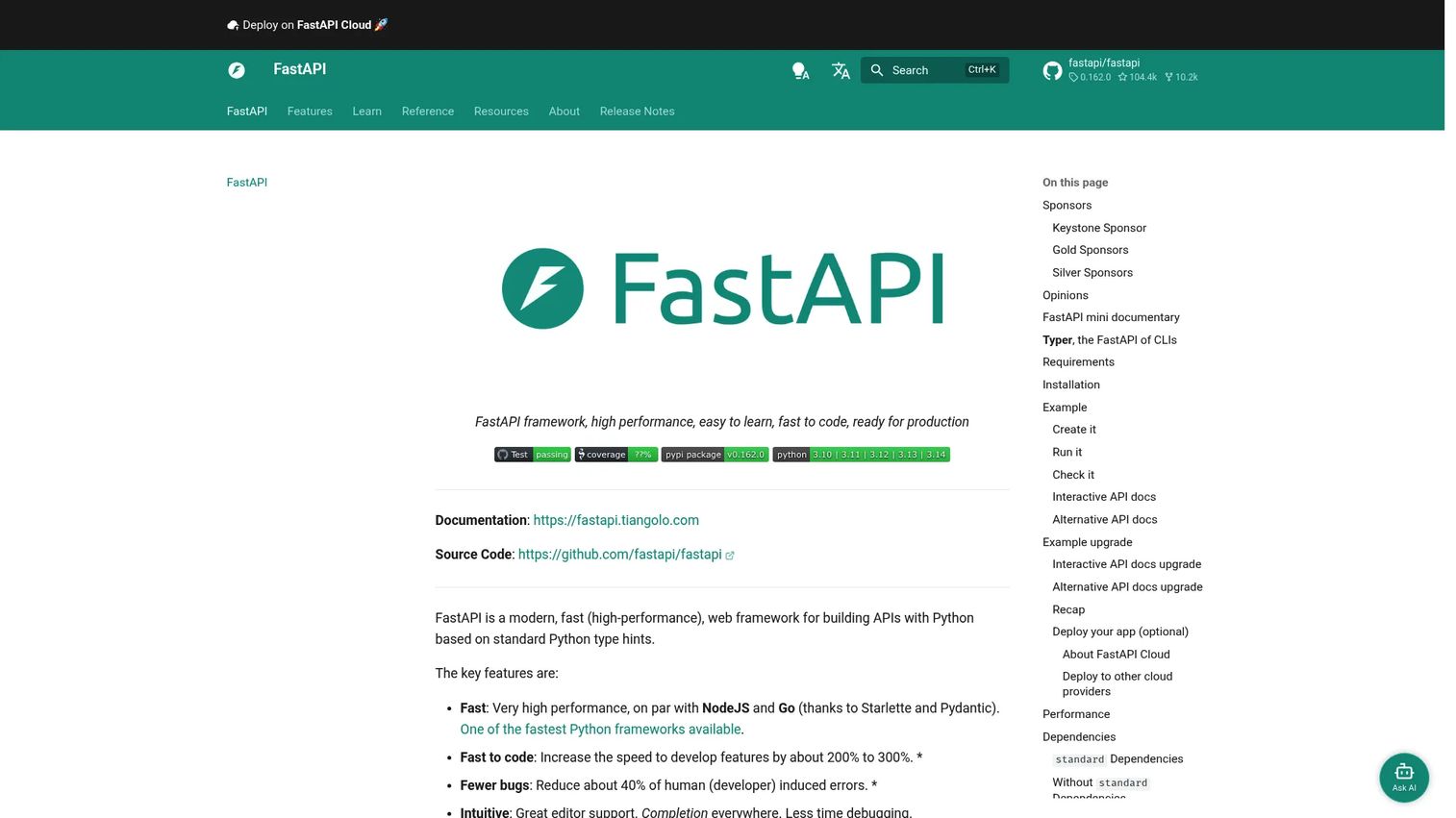
FastAPI is a modern Python framework for building APIs using standard Python type hints. It automatically generates interactive OpenAPI documentation via Swagger UI and ReDoc, validates request and response data, and supports async request handling for high-throughput workloads. FastAPI appeared at 18.5% in the Stack Overflow Developer Survey 2025, ahead of Django in that dataset.
Best for: Teams building API-first products, machine learning services, and typed Python backends where clear API contracts matter.
Key features
- Python type hints for input validation
- Automatic OpenAPI and JSON Schema generation
- Swagger UI and ReDoc documentation out of the box
- Async support for high-performance workloads
- OAuth2, JWT, and API key authentication patterns
Why choose FastAPI: Choose FastAPI when the product depends more on APIs than server-rendered pages. For PMs, the automatic documentation is a practical benefit: Frontend and backend teams align on API contracts without a separate documentation sprint, which reduces integration friction.
FastAPI pricing: FastAPI is free and open source under the MIT license. Hosting, observability, and deployment infrastructure are separate costs.
10. Laravel
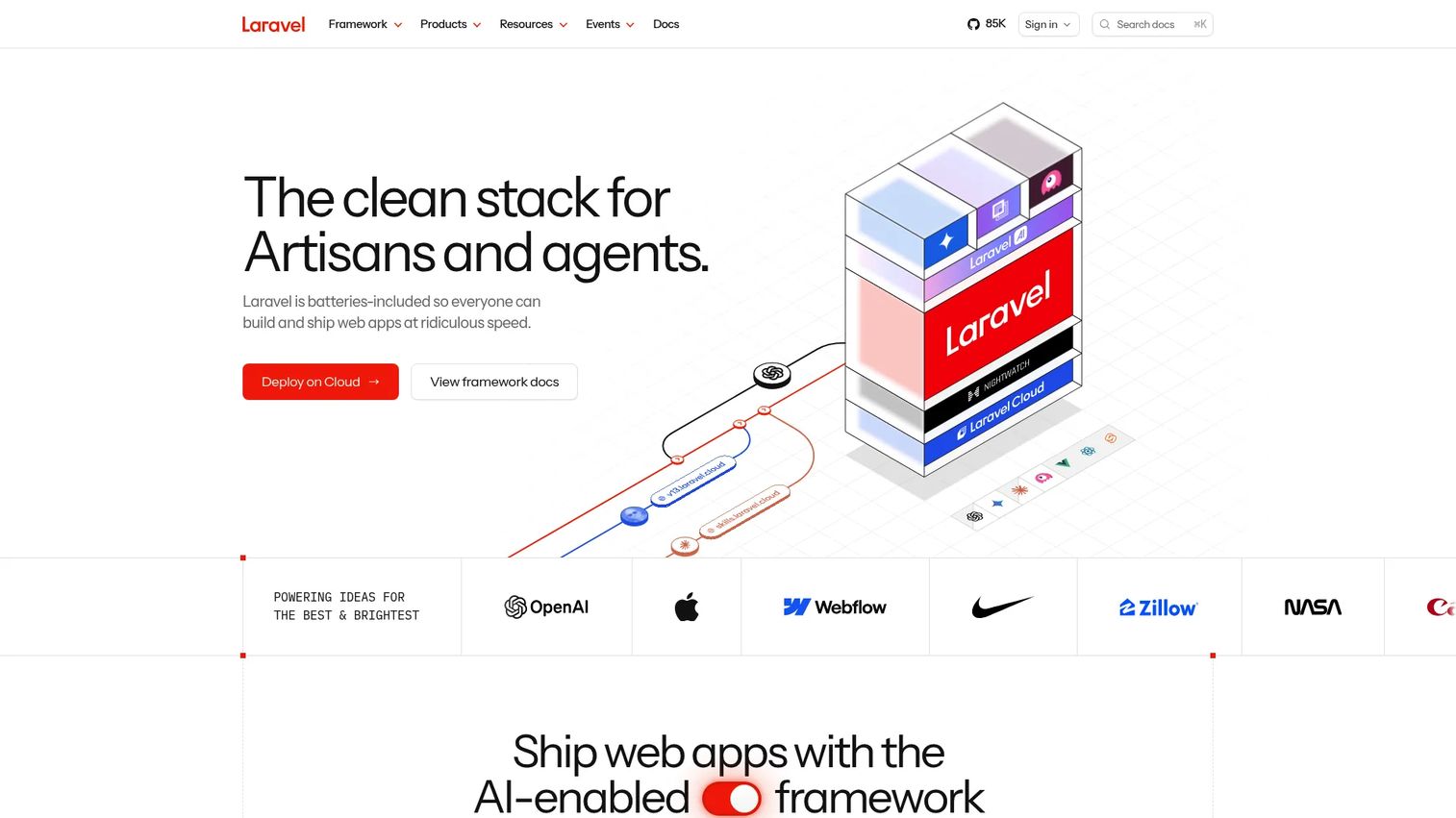
Laravel is a full-featured PHP framework with a strong developer productivity focus. It ships with Eloquent ORM, Blade templates, a queue system, authentication scaffolding, and a first-party tooling ecosystem including Forge, Vapor, and Laravel Cloud. At 7.6% in the Stack Overflow Developer Survey 2025, it commands the largest PHP framework adoption by a significant margin.
Best for: Teams building full-stack web applications in PHP where convention, productivity, and a mature ecosystem matter.
Key features
- Eloquent ORM for database modeling
- Blade templating engine
- Queue and job processing system
- Authentication and authorization scaffolding
- First-party managed hosting via Laravel Cloud
Why choose Laravel: Choose Laravel when the team wants speed, convention, and a mature PHP deployment story. It works well for SaaS products, admin panels, and marketplaces where moving fast matters and the team already works in PHP.
Laravel pricing: The Laravel framework is free and open source under the MIT license. Laravel Cloud managed hosting starts at $5 per month plus usage, with Growth ($20/month plus usage) and Business ($200/month plus usage) tiers, and custom pricing for Enterprise.
G2 rating: 4.7/5
11. Ruby on Rails
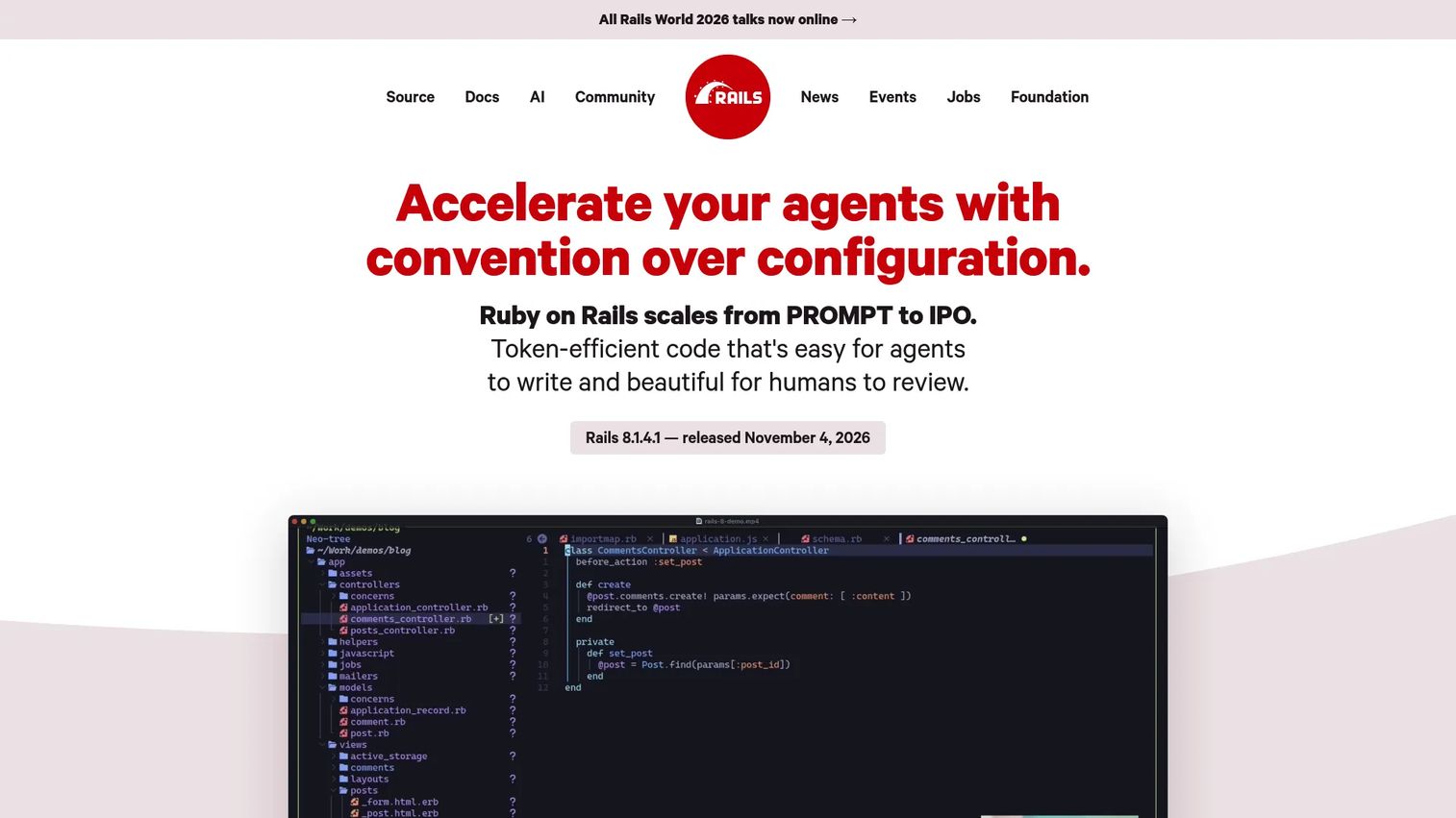
Ruby on Rails is a mature full-stack framework built around convention over configuration. It includes Active Record for database modeling, Hotwire for live page updates without heavy JavaScript, generators for scaffolding common patterns, and built-in security against CSRF and XSS attacks. Rails appeared at 5.7% in the Stack Overflow Developer Survey 2025 and continues to power many established SaaS businesses.
Best for: Teams that want to ship full-stack business applications quickly, particularly those where backend business logic drives most of the product value.
Key features
- MVC architecture with Active Record ORM
- Database migrations and generators
- Hotwire integration for reactive UI without a JavaScript framework
- Background job and email handling
- Security protections for common attack vectors
Why choose Ruby on Rails: Choose Rails when speed to a working product matters and the team values strong conventions over flexibility. PMs should consider it for workflow-heavy apps where business logic is the product, and the team can commit to the Ruby hiring market.
Ruby on Rails pricing: Rails is free and open source under the MIT license. Hosting and commercial support costs vary by deployment platform.
G2 rating: 4.5/5
12. ASP.NET Core
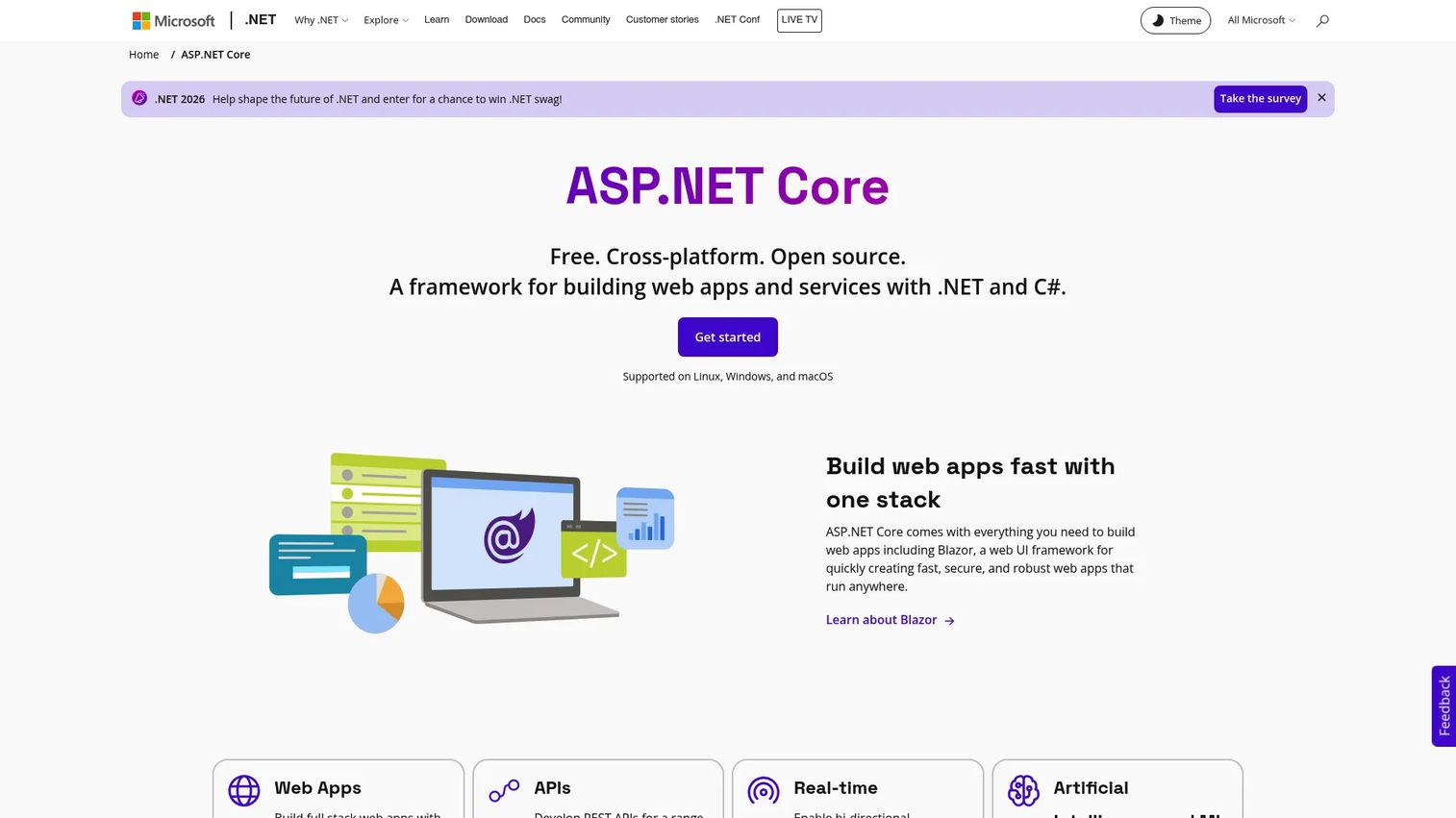
ASP.NET Core is Microsoft's cross-platform, open-source framework for web apps, REST APIs, and enterprise services. It supports full-stack development through Blazor (C# in the browser), MVC, Razor Pages, and Web API patterns. At 19.9% in the Stack Overflow Developer Survey 2025, ASP.NET Core ranks among the highest backend framework figures in the dataset, reflecting deep enterprise adoption across regulated industries.
Best for: Enterprise teams already invested in C#, Azure, and Microsoft tooling who need high performance, strong security defaults, and long-term vendor support.
Key features
- C# and .NET for type-safe development
- MVC, Razor Pages, and Web API patterns
- Blazor for full-stack C# development
- Built-in dependency injection
- Cross-platform runtime on Windows, Linux, and macOS
Why choose ASP.NET Core: Choose ASP.NET Core when enterprise governance, compliance requirements, and Microsoft stack alignment drive the decision. It is particularly strong for regulated or large-scale systems where existing .NET expertise removes onboarding risk.
ASP.NET Core pricing: ASP.NET Core is free and open source under the MIT license. Azure hosting, Windows Server licensing, and enterprise support contracts add costs depending on deployment model.
G2 rating: 4.3/5
Considerations when choosing a web development framework
The comparison table narrows the field. These criteria help you make the final call.
Product fit before popularity
Map the framework to your product type before reviewing adoption charts. A content site, a SaaS dashboard, an API service, and an enterprise internal platform have genuinely different rendering, routing, and security needs. A framework that dominates surveys may still be the wrong choice for your specific product surface.
Team skills and hiring market
Framework maturity affects hiring timelines, onboarding ramp, and delivery risk. React and ASP.NET Core have deep talent pools. Svelte and FastAPI offer strong developer experience but require deliberate hiring plans. For API development tools and adjacent infrastructure, language fit matters as much as framework brand.
Release cadence and maintainability
Ask how the framework handles major version upgrades, testing patterns, and migration paths. The first release is not the finish line. Frameworks that break APIs frequently or lack long-term support commitments create compounding maintenance costs across your roadmap. Tools that assist with application release orchestration can help here, but the framework itself still sets the baseline cost.
Performance and user experience
Framework choice connects directly to Core Web Vitals, perceived load speed, and mobile performance. For SaaS products, frontend framework efficiency affects activation rates and early retention. Single-page applications built on heavy runtimes may need additional optimization work that content-first frameworks like Astro handle by default.
Security and ecosystem maturity
Security defaults, community package quality, and long-term maintenance commitments vary across frameworks. Django and ASP.NET Core ship with strong built-in protections. Minimal frameworks like Express.js require teams to assemble and maintain their own security layer. Application security software and application security testing tools complement any framework choice, but the framework defaults still determine the baseline attack surface.
Conclusion
No single framework is universally correct. The right decision comes from aligning four questions with your current engineering reality:
- What are you building in the next 12 months?
- What can your current team maintain without slowing delivery?
- What skills can you hire for in your market and at your budget?
- Which framework reduces long-term delivery drag, not just initial build time?
For most modern SaaS products, React and Next.js are strong frontend defaults. Backend teams with Python expertise should evaluate Django for structured apps and FastAPI for API-first products. PHP teams will find Laravel productive. Teams wanting fast full-stack Rails delivery still find it competitive, and Microsoft-stack enterprises have a strong foundation in ASP.NET Core.
The decision also affects how you show and validate your product. Once a framework is in place, PMs often need to demonstrate new features to stakeholders, prospects, and onboarding users without requiring engineering involvement each time. Pairing your framework with tooling that lets teams create and share product demos without touching the codebase helps close that gap.
Start your journey with Guideflow today!
FAQs
There is no universal best. React leads frontend adoption at 44.7% (Stack Overflow Developer Survey 2025) and is a strong default for interactive interfaces. Next.js is the natural choice for production React full-stack apps. For backend work, Django suits batteries-included Python apps, while FastAPI fits API-first products. The best framework matches your product type, team skills, and maintenance capacity.
Vue.js is widely considered approachable for frontend developers due to its readable single-file components and clear Options API. For full-stack development, Laravel and Ruby on Rails offer strong conventions that reduce decision fatigue. The most accessible framework is often the one whose primary language the team already knows.
Frontend frameworks handle the user interface in the browser: Components, state, routing, and rendering. Backend frameworks handle server logic, APIs, authentication, database access, and business rules on the server side. Full-stack frameworks like Next.js, Laravel, and Ruby on Rails combine parts of both concerns in one development model.
React is technically a UI library for building component-based interfaces. In practice, most teams treat it as part of a broader frontend framework stack when paired with routing (React Router), build tooling (Vite), and state management (Zustand or Redux). When combined with Next.js, it functions as a full production framework with server rendering, routing, and deployment patterns included.
For SaaS dashboards, React and Next.js are common frontend choices. Vue.js and Angular also fit well depending on team size and governance needs. For the backend, Django, FastAPI, Laravel, Ruby on Rails, and ASP.NET Core are all viable depending on language preference, authentication complexity, and data model needs. The decision often comes down to the billing integration, multi-tenancy model, and what engineering can maintain across a long roadmap.
Startups should optimize for speed to working product, available hiring, and future maintainability. React with Next.js is a common pragmatic frontend choice. Django, Laravel, and Ruby on Rails all support fast initial delivery with reasonable hiring markets. Avoid picking a niche framework primarily because it feels exciting; the opportunity cost of a small talent pool compounds quickly as the team grows.
Angular and ASP.NET Core are strong enterprise fits due to their opinionated structure, TypeScript and C# type safety, long-term vendor support, and governance tooling. React also works well in enterprise contexts when paired with strong architecture standards and application performance monitoring tools. Security, testing infrastructure, and long-term support commitments should weigh more than initial developer experience scores.
The framework license is free, but the total cost of ownership is not. Teams pay for hosting, infrastructure, developer time, monitoring, security hardening, and sometimes commercial support contracts. For regulated environments or high-availability products, managed services and enterprise support can add meaningful cost. Evaluate total cost of ownership, not license cost alone, before committing a framework to your roadmap.