You do not notice bad fleet data on a dashboard. You notice it when a delivery is late, fuel spend jumps without explanation, a vehicle sits in the shop for the third time this quarter, and nobody can tell you why.
Fleet costs do not usually break all at once. They leak through idle time, missed maintenance windows, underused assets, compliance gaps, and spreadsheets nobody fully trusts. According to the Verizon Connect Fleet Technology Trends Report (2025), 47% of GPS fleet tracking users saw positive ROI in under a year. The implication is straightforward: The right system pays back fast, but only if it fits the way your fleet actually operates.
If a fleet is part of your business model, tracking is not an operations side project. It is how leadership sees cost, risk, service quality, and capacity. Give your VP of Operations a system that makes those signals visible without routing every status question back to you.
What's inside
This guide compares 8 fleet tracking software platforms for 2026, chosen for category fit, breadth of fleet workflows covered, and market visibility.
- Who it is for: Founders, operators, and fleet managers evaluating real-time fleet visibility, cost control, compliance, and implementation clarity
- How tools were selected: Category fit, fleet workflows covered, buyer proof, and G2 standing
- What we compare: GPS tracking, telematics, maintenance, routing, driver safety, compliance, integrations, pricing, and G2 ratings
- How to use it: Shortlist 2 to 3 tools based on your fleet's primary constraint, then book demos
TL;DR
- Best overall fleet tracking platform: Geotab, for fleets that need deep telematics, compliance, integrations, and connected vehicle data at enterprise scale
- Best for connected operations: Samsara, for teams that want GPS tracking, AI cameras, equipment monitoring, and driver safety in one platform
- Best for trucking and compliance: Motive, for commercial fleets that prioritize ELD, driver workflows, and transportation operations
- Best for maintenance-first teams: Fleetio, for operators trying to reduce downtime, control service costs, and centralize maintenance records
- Best for last-mile delivery: Onfleet, for teams that care most about routing, dispatch, delivery tracking, and customer notifications
- Best for small and mid-sized fleets: Azuga, for GPS tracking and driver safety coaching without a heavy enterprise rollout
What is fleet tracking software?
Fleet tracking software helps businesses monitor vehicles, drivers, routes, equipment, maintenance, fuel usage, and compliance data from a central system. It combines GPS devices, telematics data, mobile apps, dashboards, and reporting into an operating picture that lets teams act on what is happening, not just what happened last week.
The category overlaps with fleet management software, but fleet tracking focuses more directly on visibility, location, movement, status, and real-time performance signals. Advanced platforms add safety scoring, dash cams, maintenance workflows, ELD compliance, IFTA reporting, route optimization, fuel analytics, and integrations with payroll, ERP, and field service tools.
Three terms worth distinguishing:
- GPS tracking: Where the vehicle is right now and where it has been
- Fleet telematics: What the vehicle and driver are doing, including speed, braking, engine diagnostics, and fuel consumption
- Fleet management: The broader operating layer that also covers drivers, assets, maintenance cost, compliance, and reporting
Key capabilities to look for
- Real-time GPS tracking: Vehicle location, route history, geofencing, time on site
- Telematics data: Speed, braking, engine health, diagnostics, odometer, utilization
- Driver safety: Behavior scoring, dash cams, coaching workflows, incident review
- Maintenance workflows: Preventive schedules, inspections, fault alerts, repair history
- Compliance tools: ELD, HOS (hours of service), DVIR (driver vehicle inspection reports), IFTA reporting
- Fuel management: Idle time monitoring, fuel-card data, inefficient route detection
- Dispatch and routing: Route planning, ETAs, proof of delivery, job status
- Integrations: CRM, ERP, payroll, fuel cards, maintenance shops, field service platforms
According to the Verizon Connect Fleet Technology Trends Report (2025), 69% of fleets across industries now use GPS fleet tracking. For founders evaluating whether this is a strategic systems decision or a line-item purchase, that adoption rate reflects a shift: Fleet visibility has become a standard operating input, not a premium add-on.
When to use fleet tracking software
Track vehicles without waiting for manual updates
Manual check-ins break at scale. Fleet tracking software gives dispatch, operations, and leadership a live view of vehicle location, route progress, stops, and exceptions without status meetings. If the board asks why a delivery SLA slipped, you need timestamped data rather than a driver's recollection.
Control fuel, maintenance, and utilization costs
Cost leakage shows up through idling, inefficient routing, underused assets, and late maintenance. Vehicle tracking software makes those patterns visible before they hit the P&L. If your operations lead cannot answer "what percentage of drive time is idle time?", the data infrastructure is not doing its job.
Reduce safety and compliance risk
Fleets face risk through unsafe driving, missed inspections, HOS violations, and incomplete records. Fleet telematics helps managers coach behavior, keep compliance documents current, and catch patterns before they become incidents or fines. This section covers how software helps organize those records. Confirm specific regulatory requirements with your legal or compliance team.
Fleet tracking software comparison
The table below summarizes all 8 tools in the same order as the detailed sections. Pricing and G2 ratings were verified from each vendor's official pricing page and live G2 listing. Several vendors use quote-based pricing because hardware, fleet size, contract length, and add-ons all affect the final number. Where a vendor does not publish standard pricing, that is noted directly.
| # | Product | Best for | Key differentiator | Pricing | G2 rating |
|---|---|---|---|---|---|
| 1 | Geotab | Enterprise telematics and compliance | Open platform with deep fleet data and marketplace integrations | Contact sales | 4.5/5 |
| 2 | Samsara | Connected operations and safety | GPS, AI cameras, equipment monitoring, and safety in one platform | Contact sales | 4.5/5 |
| 3 | Verizon Connect | Field service and mixed fleets | Routing, dispatch, GPS visibility, and driver management | Contact sales | 3.8/5 |
| 4 | Motive | Trucking and transportation fleets | ELD, driver workflows, safety scoring, and fleet operations | Contact sales | 4.4/5 |
| 5 | Fleetio | Maintenance-first fleet teams | Service history, inspections, work orders, and cost tracking | From $4/vehicle/month | 4.6/5 |
| 6 | Azuga | Small and mid-sized fleets | Driver scoring, safety coaching, GPS tracking, and fuel insights | From $25/vehicle/month | 4.7/5 |
| 7 | Onfleet | Last-mile delivery teams | Dispatch, route optimization, customer notifications, proof of delivery | From $619/month | 4.6/5 |
| 8 | Salesforce Automotive Cloud | Enterprise workflow integration | Fleet and customer data connected to CRM, service, and automation | From $300/user/month | N/A |
Best 8 fleet tracking software for 2026
1. Geotab
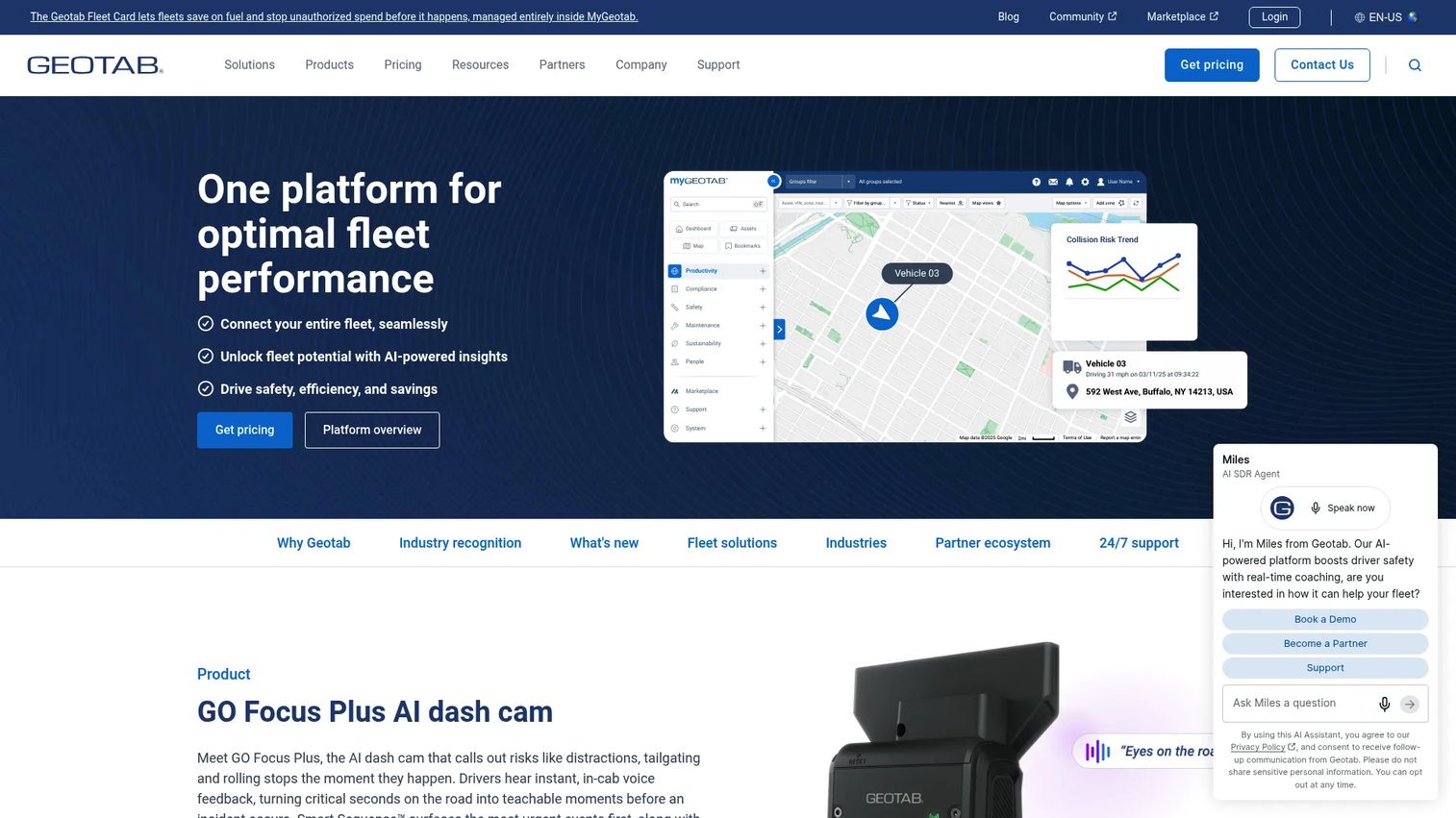
Geotab is a connected vehicle and fleet telematics platform used by organizations managing large, complex fleets. It provides real-time GPS tracking, driver safety tools, compliance workflows, vehicle diagnostics, and a marketplace of third-party integrations built on its open API. Geotab covers powered vehicles, trailers, equipment, and non-powered assets, making it relevant for fleets with mixed asset types.
Best for: Enterprise and mid-market fleets that need deep telematics, compliance tools, and integrated fleet data across many asset types.
Key features
- Real-time GPS vehicle and asset tracking
- Driver safety coaching and video telematics
- ELD and HOS compliance tools
- Vehicle diagnostics and predictive maintenance alerts
- Marketplace ecosystem with third-party integrations
Why choose Geotab: Choose Geotab when fleet data has to plug into a larger operating model. It fits teams that need more than dots on a map, particularly when compliance, OEM data, diagnostics, and third-party integrations drive the buying decision.
Geotab pricing: Geotab prices through resellers and partners rather than a standard published tier. Buyers should contact a reseller to confirm current plan packaging, hardware costs, and contract terms. The vendor lists GO Core and GO plan options on its pricing page without publishing specific figures.
Geotab G2 rating: 4.5/5 on G2.
2. Samsara
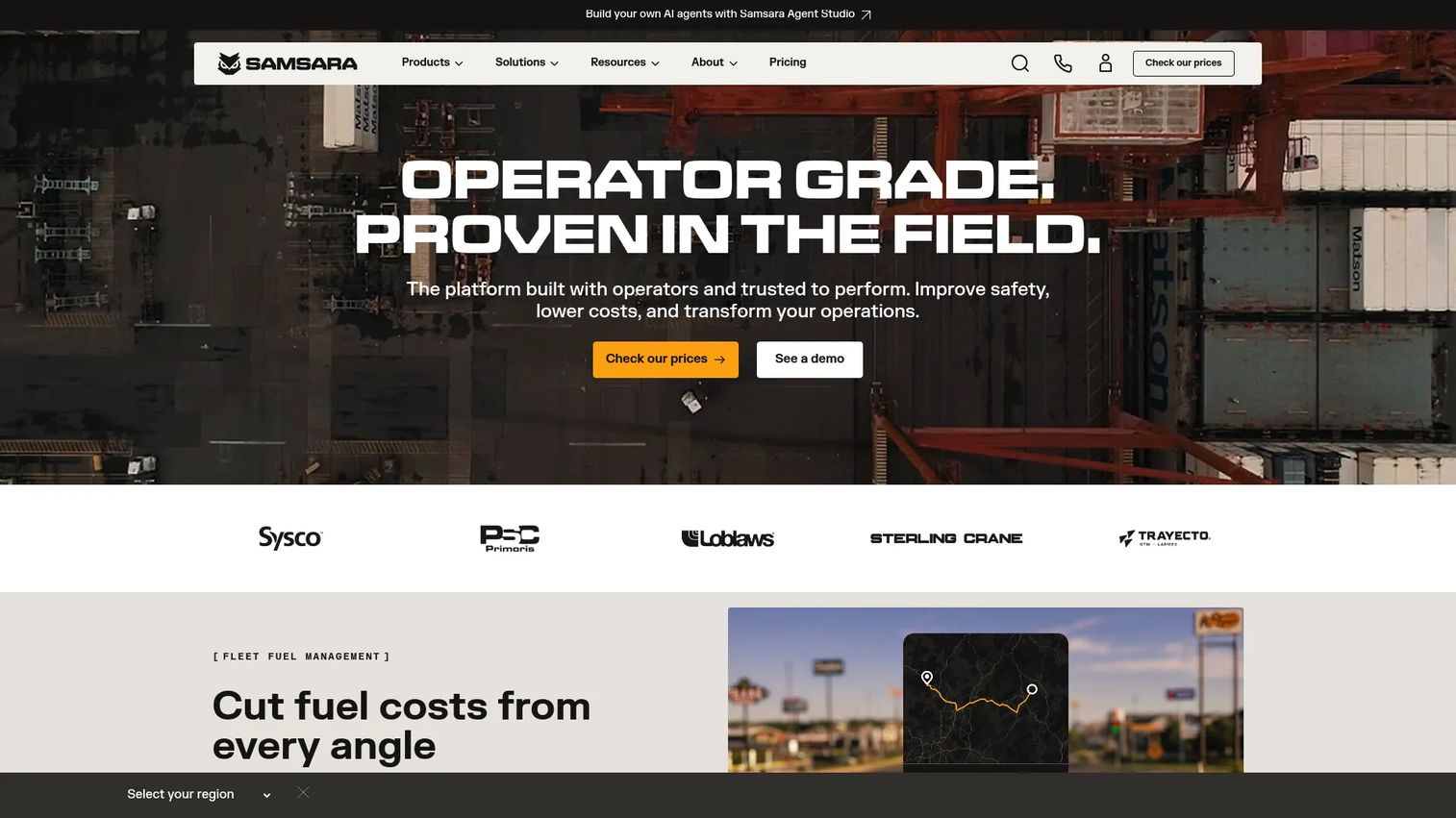
Samsara is a Connected Operations Cloud for managing fleets, equipment, and physical operations. It combines real-time GPS tracking, AI-powered dash cameras, driver safety scoring, equipment diagnostics, and compliance tools in one platform. Teams use Samsara across trucking, logistics, field service, food and beverage, construction, and utilities.
Best for: Fleets that want GPS tracking, AI safety cameras, equipment monitoring, and driver compliance data in one connected operations platform.
Key features
- AI-powered cameras and video safety workflows
- Real-time GPS tracking and route visibility
- Equipment diagnostics, location tracking, and maintenance alerts
- Driver safety scores and coaching tools
- ELD and HOS compliance management
Why choose Samsara: Choose Samsara when you want to connect fleet visibility, driver coaching, equipment monitoring, and dispatch signals without stitching together separate systems. It is a strong fit for operations leaders who want a single operational picture across vehicles and assets.
Samsara pricing: Samsara prices by quote, with cost driven by hardware selected, fleet size, products activated, and contract terms. Buyers should confirm hardware bundling, trial options, and annual contract requirements directly with sales.
Samsara G2 rating: 4.5/5 on G2.
3. Verizon Connect
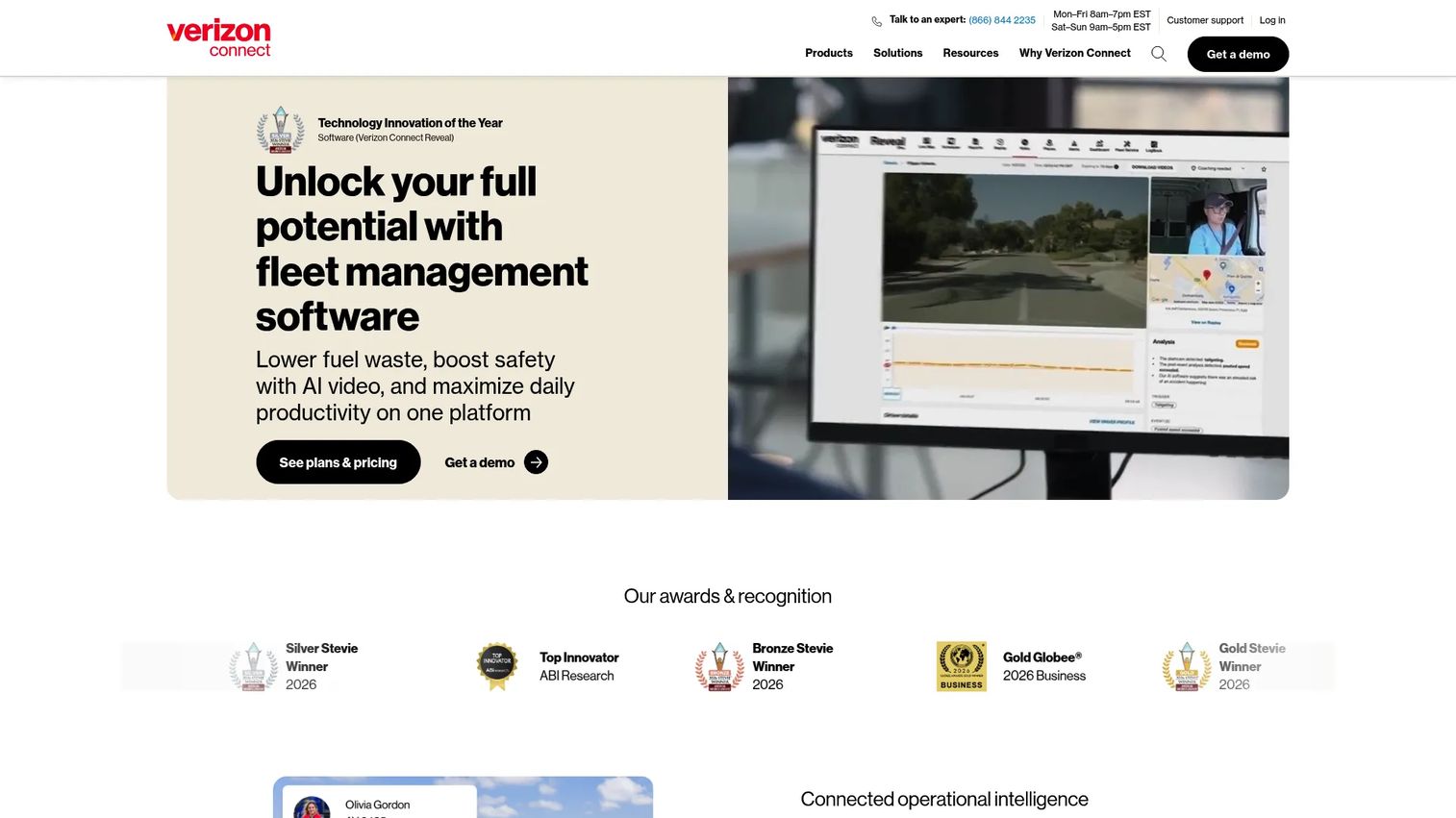
Verizon Connect is a fleet management and telematics platform covering GPS tracking, dispatch, driver safety, maintenance, and compliance. It serves field service businesses, mixed fleets, and enterprise operations that need routing and vehicle visibility as part of daily workforce management. The platform also includes electric vehicle monitoring with battery and charging status tracking.
Best for: Field service businesses and mixed fleets that need GPS visibility, routing, dispatch, driver performance tools, and EV monitoring.
Key features
- Near-real-time GPS vehicle and asset tracking
- Driver behavior monitoring and AI dashcam integration
- Fleet maintenance alerts, diagnostics, and reporting
- HOS, ELD, and DVIR compliance tools
- Electric vehicle battery and charging status monitoring
Why choose Verizon Connect: Choose Verizon Connect when dispatch, service routing, and vehicle visibility need to work together daily. It fits teams running field service operations where practical tracking and driver reporting matter more than deep maintenance-only workflows.
Verizon Connect pricing: Buyers should confirm hardware fees, monthly software costs, installation, contract length, and service tier differences directly with the vendor.
Verizon Connect G2 rating: 3.8/5 on G2.
4. Motive
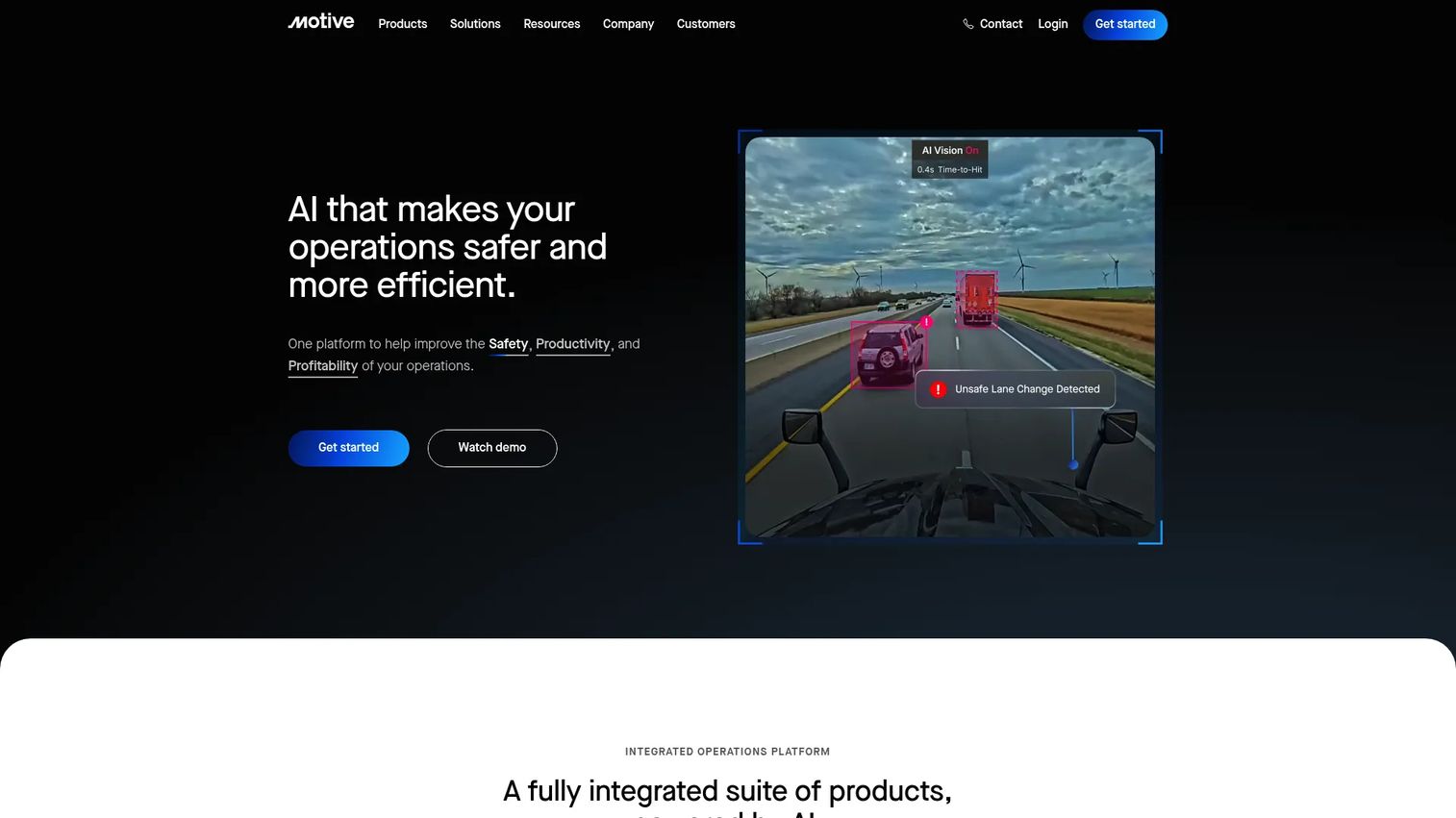
Motive is an AI-powered integrated operations platform for commercial fleets. It covers fleet management, driver safety, equipment monitoring, ELD compliance, fuel management, spend management with its fleet card, and workforce management. Motive is built around transportation-specific workflows, including driver qualification files, HOS management, and vehicle diagnostics for trucking and logistics operations.
Best for: Trucking and commercial transportation fleets that need ELD, driver safety, spend management, and fleet operations visibility in one place.
Key features
- ELD and HOS compliance with a driver-facing mobile app
- AI-powered driver safety risk monitoring and dash cams
- GPS tracking, telematics, and fuel management
- Equipment monitoring for asset location and utilization
- Motive fleet card for spend tracking and fuel cost management
Why choose Motive: Choose Motive when your fleet depends on drivers moving freight safely, legally, and on schedule. It fits teams that need compliance, safety, tracking, and driver communication tied closely together rather than managed across separate platforms.
Motive pricing: Motive does not publish standard platform pricing on its website. Buyers should ask sales to confirm hardware costs, contract minimums, and the pricing model for each product module. A Workforce Management tier is documented as available at no additional cost for some customers.
Motive G2 rating: 4.4/5 on G2.
5. Fleetio
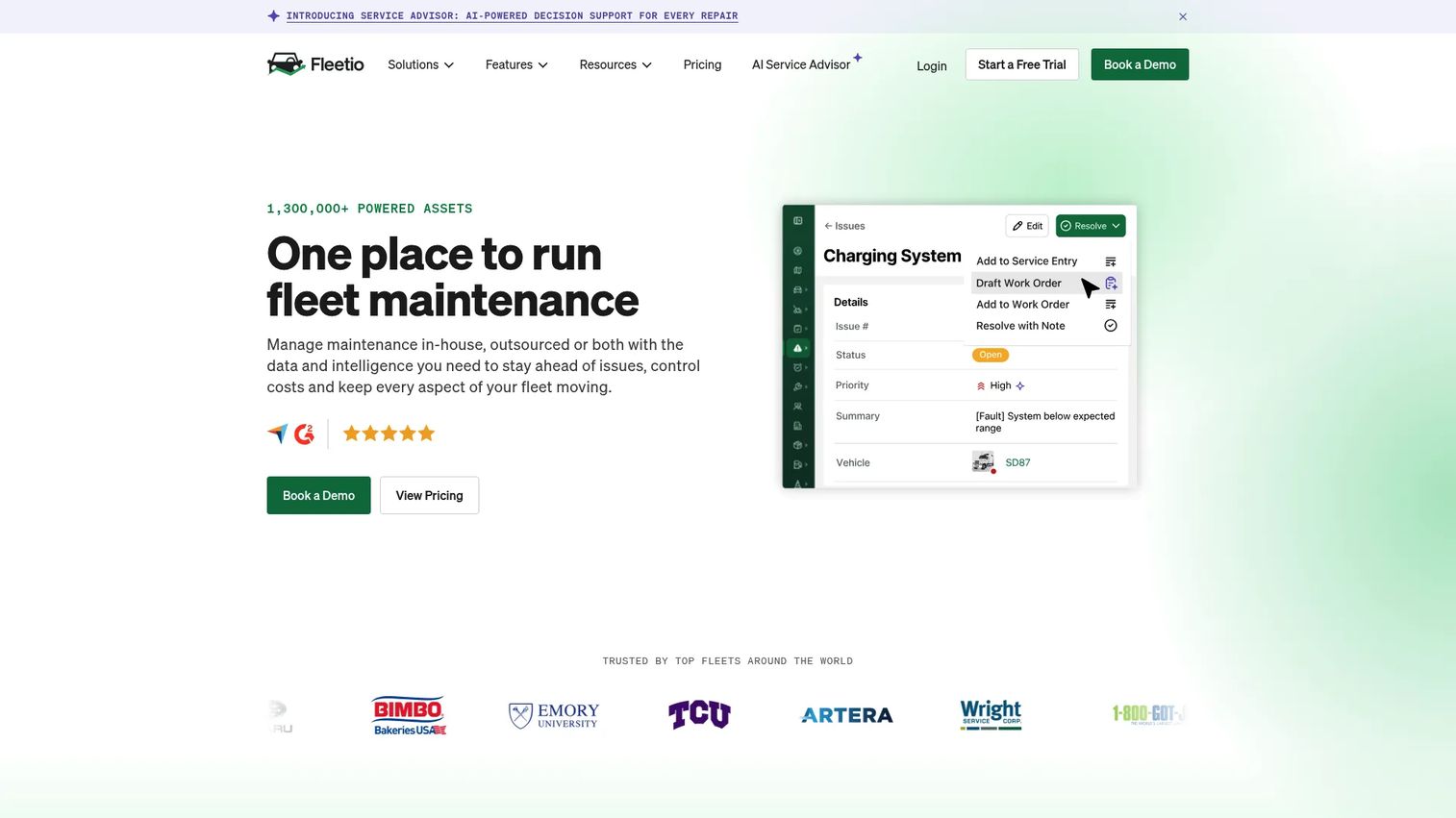
Fleetio is a cloud-based fleet maintenance and management platform. It centralizes preventive maintenance scheduling, work orders, driver vehicle inspections, fuel tracking, parts inventory, and vendor management. Fleetio integrates with GPS and telematics platforms, so teams can pair it with a tracking layer rather than replacing one. It fits any fleet where uptime and service cost are the primary operating constraints.
Best for: Fleet operators trying to reduce unplanned downtime, control repair costs, and maintain organized service records across vehicles and equipment.
Key features
- Preventive maintenance scheduling and work order management
- Mobile driver vehicle inspection reports (DVIR)
- Fuel tracking and fuel card integrations
- Parts and inventory management
- Telematics and GPS integration via third-party connections
Why choose Fleetio: Choose Fleetio when vehicle uptime is the operating constraint rather than real-time GPS dispatch. It gives leadership cleaner maintenance records, fewer missed services, and clearer cost visibility, which is exactly what you need when a VP of Operations asks why repair spend jumped.
Fleetio pricing: Plans start at $4 per vehicle per month (billed annually) on the Essential tier. The Professional tier is $7 per vehicle per month (annual only), and Premium is $10 per vehicle per month (annual only). A 14-day free trial is available. Monthly billing is available on the Essential tier at $5 per vehicle per month.
Fleetio G2 rating: 4.6/5 on G2.
6. Azuga
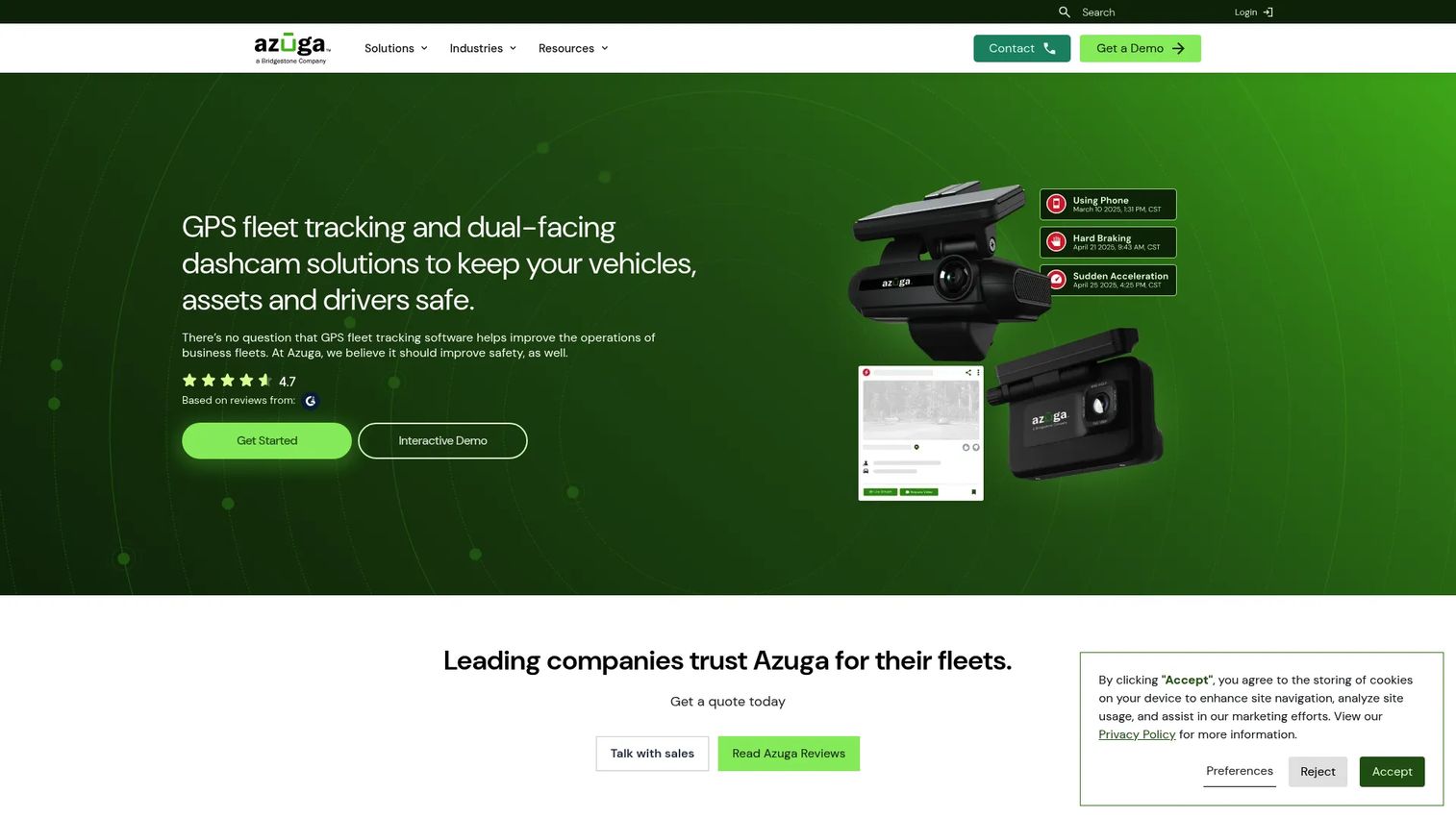
Azuga is a cloud-based GPS fleet tracking and driver safety platform for small and mid-sized commercial fleets. It covers vehicle tracking, driver scoring, rewards-based safety coaching, vehicle diagnostics, maintenance reminders, and fleet reporting. Azuga also offers asset and equipment tracking alongside its standard vehicle monitoring tools.
Best for: Small and mid-sized fleets that want GPS tracking and driver accountability in place without a complex enterprise rollout.
Key features
- GPS vehicle tracking and geofencing alerts
- Driver safety scoring and rewards-based coaching
- Vehicle diagnostics and scheduled maintenance reminders
- Fleet reports and performance dashboards
- Asset and equipment tracking
Why choose Azuga: Choose Azuga when the first priority is getting fleet visibility and driver accountability running quickly. It is a practical fit for teams that need safety signals and location data without building a complex fleet data architecture from scratch.
Azuga pricing: Plans start at $25 per vehicle per month on the BasicFleet tier. SafeFleet is $30 per vehicle per month, and CompleteFleet is $35 per vehicle per month. An AI dual-facing SafetyCam is available as an add-on starting at $49.99 per month.
Azuga G2 rating: 4.7/5 on G2.
7. Onfleet
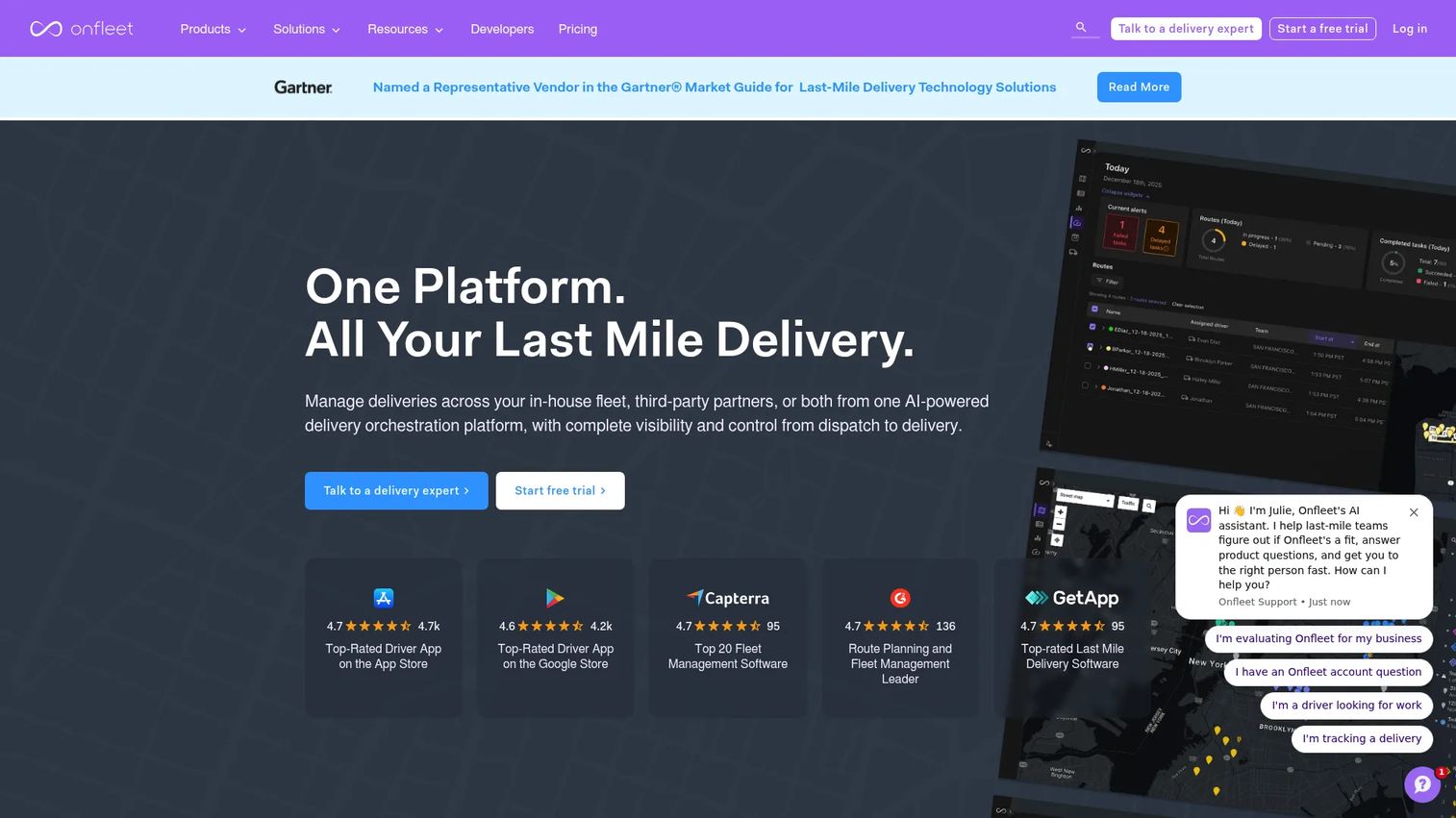
Onfleet is delivery management software built for coordinating, tracking, and analyzing local delivery operations. It covers route optimization, real-time driver tracking, automated customer notifications, proof of delivery, dispatcher dashboards, and API access for custom workflow integration. Onfleet fits the fleet tracking category because delivery teams need real-time driver visibility and dispatch control, not just GPS dots on a map.
Best for: Last-mile delivery teams that need dispatch, driver tracking, route optimization, proof of delivery, and customer communication in one platform.
Key features
- Route optimization for driver efficiency
- Real-time delivery tracking and automated ETA notifications
- Driver mobile app with photo and signature proof of delivery
- Dispatcher dashboard with live task and driver status
- API and webhook access for custom integrations
Why choose Onfleet: Choose Onfleet when the business problem is delivery execution rather than deep vehicle diagnostics. It fits teams where customer ETAs, route efficiency, and dispatcher visibility matter more than engine-level telematics or compliance logging.
Onfleet pricing: The Launch plan starts at $619 per month and includes 2,500 completed deliveries. Scale is $1,349 per month (5,000 deliveries), and Enterprise plans typically start around $3,099 per month (10,000+ deliveries). A 14-day free trial is available. A Courier Suite add-on starts from $299 per month.
Onfleet G2 rating: 4.6/5 on G2.
8. Salesforce Automotive Cloud
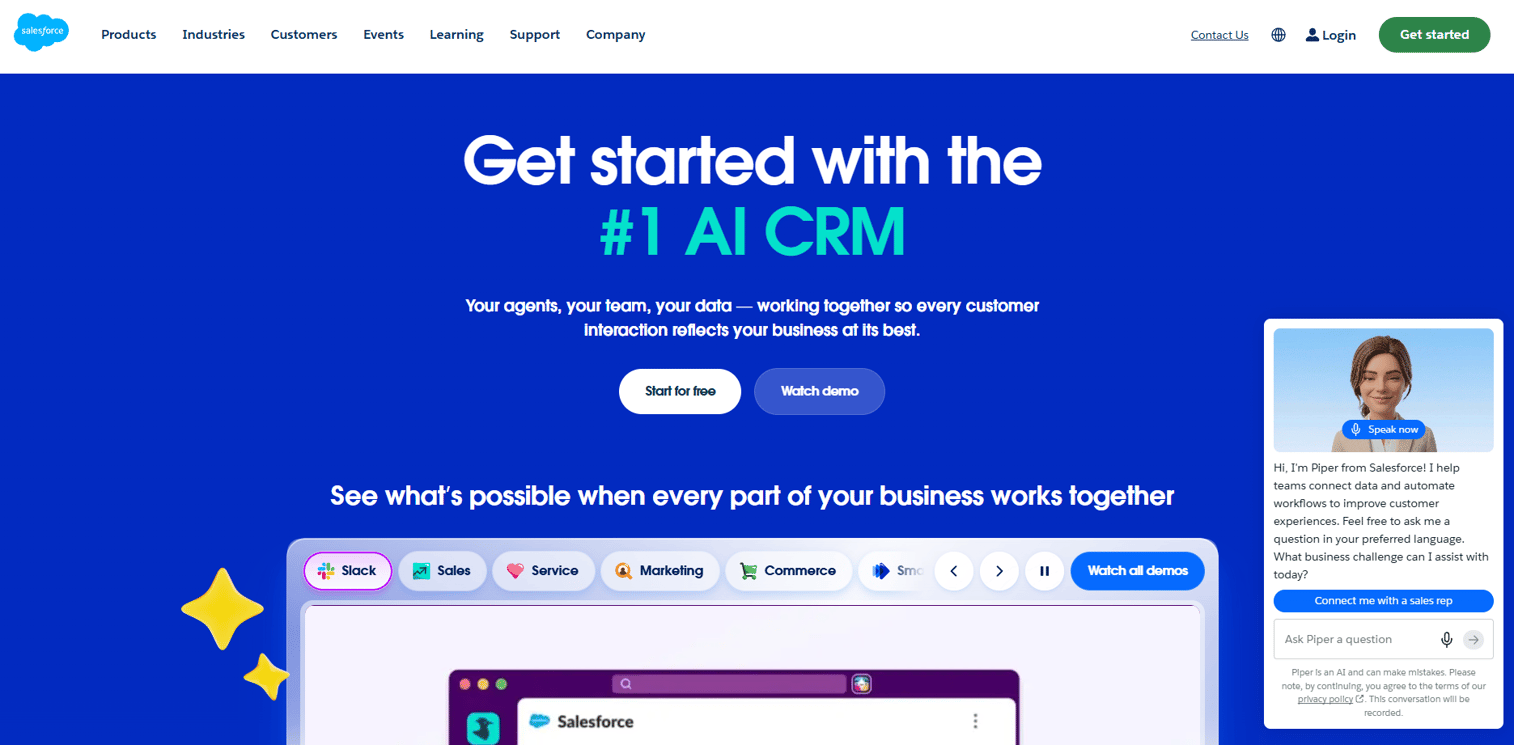
Salesforce Automotive Cloud is an automotive CRM and operations platform that unifies vehicle data, customer records, field service workflows, and operational automation. It is less of a pure GPS tracking tool and more of a system layer for companies that need fleet operations connected to customer management, service scheduling, and enterprise workflow automation.
Best for: Enterprise automotive, mobility, and field service teams that need fleet and vehicle data connected to customer records, service workflows, and CRM automation.
Key features
- Unified vehicle and asset consoles with telemetry and alerts
- Automotive lead and stakeholder management
- Fleet, warranty, inventory, and service management
- Salesforce Scheduler for service appointments
- Remote vehicle actions and milestone tracking
Why choose Salesforce Automotive Cloud: Choose Salesforce Automotive Cloud when fleet visibility has to connect with customer operations, service workflows, and enterprise data rather than operating as a standalone tracking system. It is strongest when the fleet is part of a broader customer experience or field service motion.
Salesforce Automotive Cloud pricing: Pricing starts at $300 per user per month for the Sales and Service Core edition (billed annually). Advanced is $500 per user per month. Service Max and Sales Max are both $700 per user per month. The Sales and Service Max bundle is $725 per user per month. Annual contracts are required.
Considerations when choosing fleet tracking software
Match the tool to your fleet's operating model
A delivery fleet, trucking operation, construction fleet, and field service business do not need the same system. Start with the workflow that breaks most often: Routing, compliance, maintenance, safety, or asset utilization. A tool that solves the wrong constraint will collect data nobody uses.
Verify hardware, installation, and connectivity requirements
Most fleet tracking platforms depend on vehicle gateways, GPS devices, dash cams, or mobile apps. Ask who installs the hardware, what cellular networks the devices run on, and how replacements work mid-contract. Hardware logistics are often the biggest implementation variable and the one most founders underestimate.
Check compliance requirements before shortlisting
If your fleet needs ELD, HOS, DVIR, or IFTA support, make those non-negotiable filters before you start vendor calls. Discovering a compliance gap after rollout costs more than due diligence does. Confirm current regulatory requirements with your legal or compliance team.
Evaluate integrations before signing
Fleet data should flow into the systems that already run the business: Payroll, ERP, dispatch, fuel cards, field service platforms, and accounting tools. Ask each vendor for a specific integration list and whether your stack is supported natively or through a connector.
Model total cost over three years, not just monthly software fees
Hardware, installation, driver devices, support tiers, contract minimums, training, and internal admin time add up. A tool that looks cheaper per month can cost significantly more once hardware and implementation are included. Ask vendors to provide a three-year total cost estimate alongside their software pricing.
Conclusion
Fleet tracking software is an operating system decision, not a GPS map purchase. The right tool depends on your fleet's primary constraint: Real-time visibility, driver safety, compliance, maintenance uptime, delivery execution, or enterprise data integration.
Here is a quick recap of where each tool fits:
- Geotab for enterprise telematics, compliance, and a wide integration marketplace
- Samsara for connected operations covering vehicles, equipment, and driver safety
- Motive for trucking and commercial transportation with ELD and spend management built in
- Fleetio for fleets where maintenance visibility and uptime are the core pain
- Onfleet for last-mile delivery teams focused on dispatch, routing, and customer communication
- Verizon Connect for field service operations that need daily routing and vehicle visibility
- Azuga for smaller fleets that want GPS tracking and safety coaching with clear per-vehicle pricing
- Salesforce Automotive Cloud for enterprise teams connecting fleet data to customer and service workflows
Shortlist 2 to 3 tools based on the constraint you most need to fix. Build a requirements checklist around GPS coverage, compliance workflows, maintenance capabilities, and integrations, then ask each vendor to walk through the exact workflows your operations team runs weekly. Compare total cost over three years rather than headline monthly fees.
If your company sells complex software and buyers struggle to understand what your product actually does before a demo call, that is a separate but equally real operating constraint. Guideflow helps SaaS teams turn product flows into self-serve interactive demos that prospects can explore before a call, so your sales team spends less time on unqualified discovery and more time on deals that are ready to move.
Start your journey with Guideflow today!
FAQs
Fleet tracking software helps businesses monitor the location, movement, status, and performance of their vehicles, assets, and drivers from a central platform. Most systems combine GPS devices, telematics data, mobile apps, and reporting dashboards to give operations and leadership a live view of what is happening across the fleet. Advanced platforms also cover driver safety scoring, maintenance scheduling, ELD compliance, and fuel management.
Fleet tracking software focuses specifically on real-time visibility, location, movement, and status signals. Fleet management software is a broader category that typically also includes driver records, cost management, maintenance workflows, asset lifecycle tracking, compliance documentation, and reporting across the full operating model. Many platforms now cover both, but the primary emphasis varies by product.
Prioritize based on your fleet's biggest operating constraint. For dispatch-heavy operations, focus on real-time GPS tracking, geofencing, route history, and mobile apps. For compliance-sensitive fleets, ELD, HOS, and DVIR tools are non-negotiable. For fleets where uptime drives revenue, maintenance alerts and vehicle diagnostics matter most. Driver safety scoring, fuel reporting, and integrations with payroll or ERP systems are worth evaluating for most growing fleets.
Cost varies by vehicle count, hardware type, camera add-ons, contract length, and the number of product modules activated. Fleetio starts at $4 per vehicle per month on an annual plan. Azuga starts at $25 per vehicle per month. Onfleet starts at $619 per month for up to 2,500 deliveries. Salesforce Automotive Cloud starts at $300 per user per month. Geotab, Samsara, Motive, and Verizon Connect all price by quote. For a useful comparison, ask each vendor for a three-year total cost estimate that includes hardware, installation, and support.
GPS location is a useful starting point. As a fleet grows, location data alone typically becomes insufficient for managing fuel costs, driver behavior, maintenance schedules, compliance records, and asset utilization. Teams that started with basic GPS often find they need telematics, safety tools, and integrations to make fleet data actionable rather than just informational.
Small fleets generally need fast setup, mobile usability, clear per-vehicle pricing, and practical safety and GPS tools. Azuga fits this profile with plans starting at $25 per vehicle per month and driver scoring built in. Onfleet is a strong fit for small delivery operations given its task-based pricing and route optimization. Fleetio works well for small fleets where maintenance visibility is the priority.
Enterprise fleets typically need API access, compliance workflows, multi-asset support, admin controls, and integrations with ERP, payroll, and CRM systems. Geotab is the strongest fit for telematics depth and marketplace integrations. Samsara suits enterprise operations that want vehicles, equipment, and safety in one platform. Salesforce Automotive Cloud fits enterprise teams that need fleet data connected to customer records and service workflows.
Yes, when the platform supports the compliance workflows your fleet requires. ELD (electronic logging device) compliance, HOS tracking, DVIR management, and IFTA reporting are standard features on platforms like Geotab, Samsara, Motive, and Verizon Connect. Confirm that the specific compliance requirements for your fleet type and jurisdiction are covered before signing. Verify current regulatory requirements with your legal or compliance team rather than relying on vendor marketing materials.