You can survive messy financial reporting at $2M ARR. Spreadsheets, shared Word docs, and email threads hold together well enough when one person owns the numbers. Scale into board scrutiny, audit prep, investor updates, and regulated filings, and that improvised system starts breaking in expensive ways.
The disclosure management software market reached $1.38 billion in 2025, projected to more than double to $3.11 billion by 2031, according to Mordor Intelligence (2026). That growth reflects a genuine problem: Finance teams responsible for SEC filings, ESEF reports, ESG disclosures, and statutory accounts need a controlled, repeatable process that survives version changes, multi-reviewer cycles, and audit requests. The right disclosure management system replaces fragile manual workflows with connected data, structured approvals, and a complete audit trail. This guide helps you shortlist the right one.
What's inside
This guide compares 15 disclosure management software options for 2026. It is written for Series B founders who need to hand a credible shortlist to their CFO, controller, or VP Finance. Tools were selected from recognized vendors in the category.
Evaluation criteria:
- Regulatory and statutory reporting support (SEC, ESEF, XBRL, iXBRL, ESG)
- Data integration from ERP, EPM, and consolidation systems
- Collaboration, review, version control, and audit trail depth
- Pricing transparency and implementation fit
TL;DR
- Best overall for enterprise disclosure workflows: Workiva covers financial, ESG, audit, and GRC reporting under one connected platform with strong governance
- Best for SEC filing and capital markets teams: ActiveDisclosure and Donnelley Financial Solutions (DFIN) handle regulated public-company disclosure and EDGAR submissions
- Best for XBRL and iXBRL-heavy reporting: IRIS CARBON and IRIS Business Services have the deepest structured reporting and taxonomy expertise
- Best for planning-connected disclosure: Anaplan Disclosure Management links board books and statutory reports directly to planning data
- Best for broader finance transformation: CCH Tagetik, LucaNet, Prophix One, insightsoftware, and Wolters Kluwer combine disclosure with consolidation, planning, or tax
- Best for statutory and board reporting maturity: Toppan Merrill Bridge and Report Authority focus on document production and disclosure workflow structure
What is disclosure management software?
Disclosure management software is a finance and compliance platform that helps teams prepare, review, tag, approve, and publish regulated financial and narrative reports from controlled data sources.
It replaces the fragile combination of copied spreadsheets, versioned Word documents, and emailed PDFs with a governed workflow. Source data links directly into report documents, so a number change in the ERP or consolidation system flows through to every table, chart, and narrative reference in the report. Reviewers work inside a controlled environment with tracked changes, sign-off workflows, and a full version history.
Depending on the vendor, a financial disclosure management software platform supports some or all of the following:
- SEC annual and quarterly filings, including 10-K and 10-Q
- ESEF reports for European-listed companies
- XBRL and iXBRL structured tagging and validation
- Statutory accounts for group and subsidiary reporting
- ESG and sustainability disclosures
- Board books and investor reporting packages
- Management reporting and internal governance
Key capabilities to look for:
- Data linking from ERP, EPM, and consolidation systems
- Narrative reporting in familiar document workflows (Word, Excel)
- XBRL and iXBRL tagging with taxonomy validation
- SEC, ESEF, and statutory filing support
- Review, approval, and certification workflows
- Version control and audit trails
- Report roll-forward automation for recurring cycles
- Multi-format publishing (PDF, HTML, EDGAR-ready)
- ESG and investor-relations reporting support
Disclosure reporting software differs from a general financial reporting tool because it adds the narrative layer, filing infrastructure, and audit-ready governance that regulated disclosures require. A finance team producing board books alone can often get by with a simpler reporting tool. A team managing SEC filings, ESEF submissions, and ESG disclosures needs a platform built specifically for that combination.
When to use disclosure management software
Prepare regulated filings without spreadsheet drift
Finance teams filing 10-Ks, 10-Qs, ESEF reports, or statutory accounts need version control and audit trails that spreadsheets do not provide. Manual processes create version confusion and make it hard to prove data lineage during an audit. A disclosure management tool gives every reviewer a controlled environment and gives the CFO a clear record of who approved what.
Shorten board and investor reporting cycles
Recurring board packages and investor updates consume significant finance capacity when assembled manually from multiple files. Disclosure management systems with roll-forward automation and data-linked documents cut the assembly time on each reporting cycle. Founders preparing for a fundraise or managing a quarterly board meeting benefit when finance can produce a clean package without days of manual reconciliation.
Connect narrative reporting to controlled financial data
When numbers live in one system and narrative lives in another, disconnected updates create risk. A figure revised in the ERP must be manually found and corrected across every Word table and slide that references it. Disclosure software eliminates that gap by linking source data directly into narrative documents, so the report stays consistent as numbers change during the close cycle.
Disclosure management software comparison
The 15 tools below cover enterprise-grade platforms, XBRL-specialist tools, CPM suites with disclosure modules, and filing-service providers. All pricing was verified from vendor pages and review sources. Contact sales for a quote applies across most of this category, as pricing is rarely made public. Confirm G2 ratings against each tool's live listing before your final shortlist review.
| # | Product | Best for | Key differentiator | Pricing | G2 rating |
|---|---|---|---|---|---|
| 1 | Workiva | Enterprise finance, ESG, and audit teams | Unified platform for financial, sustainability, and GRC reporting | Quote-based | 4.5/5 |
| 2 | ActiveDisclosure | Public-company SEC and regulatory disclosure | iXBRL, coauthoring, and filing workflow for regulated teams | Quote-based | 4.7/5 |
| 3 | Report Authority | Finance teams needing structured disclosure workflows | Disclosure report production and process control | Quote-based | N/A |
| 4 | Anaplan Disclosure Management | Planning-connected disclosure and board reporting | Links planning data to narrative and statutory reports | Quote-based | 4.6/5 |
| 5 | Certent Disclosure Management | Recurring multi-author regulatory and statutory reports | Microsoft Office integration with XBRL tagging | Quote-based | 4.2/5 |
| 6 | LucaNet | Finance teams connecting consolidation with reporting | Integrated CFO platform for consolidation, planning, and reporting | Quote-based | 4.7/5 |
| 7 | CCH Tagetik | Enterprise finance transformation programs | CPM suite with regulatory reporting, ESG, and corporate tax | Quote-based | 4.3/5 |
| 8 | IRIS CARBON Disclosure Management Software | XBRL, iXBRL, and ESEF filing teams | AI-powered tagging, validation, and multi-jurisdictional filing | Quote-based | 4.8/5 |
| 9 | Prophix One | Mid-market finance automation | Unified FP&A, consolidation, close, and reporting platform | Quote-based | 4.5/5 |
| 10 | Toppan Merrill Bridge | SEC disclosure and EDGAR filing with services support | EDGAR submissions and iXBRL filing for public companies | Quote-based | 5.0/5 |
| 11 | Donnelley Financial Solutions (DFIN) | Public-company filing and capital markets reporting | Disclosure, XBRL, and transaction management for regulated companies | Quote-based | 4.5/5 |
| 12 | Authority Software | Contact center workforce optimization | Quality management, workforce management, and scripting | Quote-based | N/A |
| 13 | insightsoftware | ERP-connected financial disclosure and reporting | Wide finance reporting footprint across ERPs, EPMs, and consolidation | Quote-based | 4.3/5 |
| 14 | Wolters Kluwer | Global statutory, regulatory, and tax compliance reporting | Portfolio of finance, tax, and compliance tools across jurisdictions | Varies by product | 4.2/5 |
| 15 | IRIS Business Services | Structured digital regulatory reporting and XBRL | AI-powered XBRL/iXBRL filing, supervision, and compliance workflows | Quote-based | 4.8/5 |
Best 15 disclosure management tools for 2026
These tools are ordered by relevance to core disclosure management use cases. Verify pricing, implementation timelines, and filing support directly with each vendor before purchase. Founders should involve CFO, controller, legal, audit, and security early in the evaluation.
1. Workiva
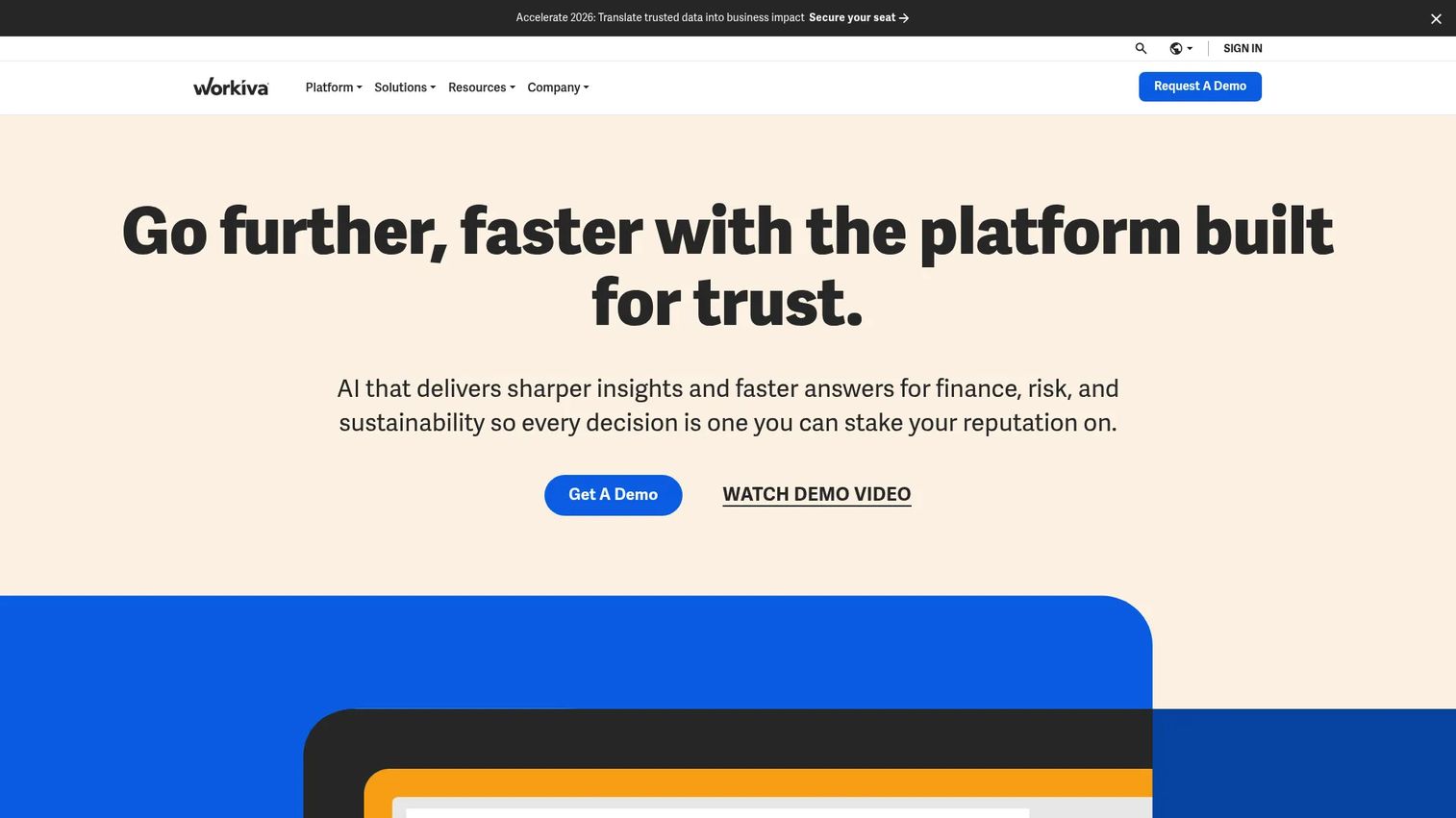
Workiva is a unified, AI-powered SaaS platform for financial reporting, sustainability management, and governance, risk, and compliance workflows. It connects financial and non-financial data from ERP, HCM, CRM, cloud, and on-premise systems directly into reports, presentations, and dashboards. Teams across finance, ESG, audit, and legal collaborate in a controlled environment with granular permissions, version history, and full audit trails. Workiva holds strong recognition for enterprise disclosure management, including SEC reporting, internal controls, and risk workflows.
Best for: Enterprise finance, sustainability, audit, risk, and compliance teams managing multiple disclosure workflows under one governance model.
Key features
- Connected reporting across financial, ESG, and GRC workflows
- Data integration from ERP, HCM, and CRM systems
- XBRL and iXBRL tagging for SEC and regulatory filings
- Audit trails, version control, and granular permissions
- Workiva AI for reporting and compliance workflows
Why choose Workiva: Choose Workiva when the disclosure problem is bigger than one filing type and the finance, ESG, and audit functions all need a shared, governed reporting environment. It is the strongest broad enterprise pick.
Workiva pricing: Workiva uses solution-based annual or multi-year subscription contracts. Pricing depends on expected usage and solution scope. Request a quote from sales and confirm modules, user count, and filing volume before evaluation.
G2 rating: 4.5/5
2. ActiveDisclosure
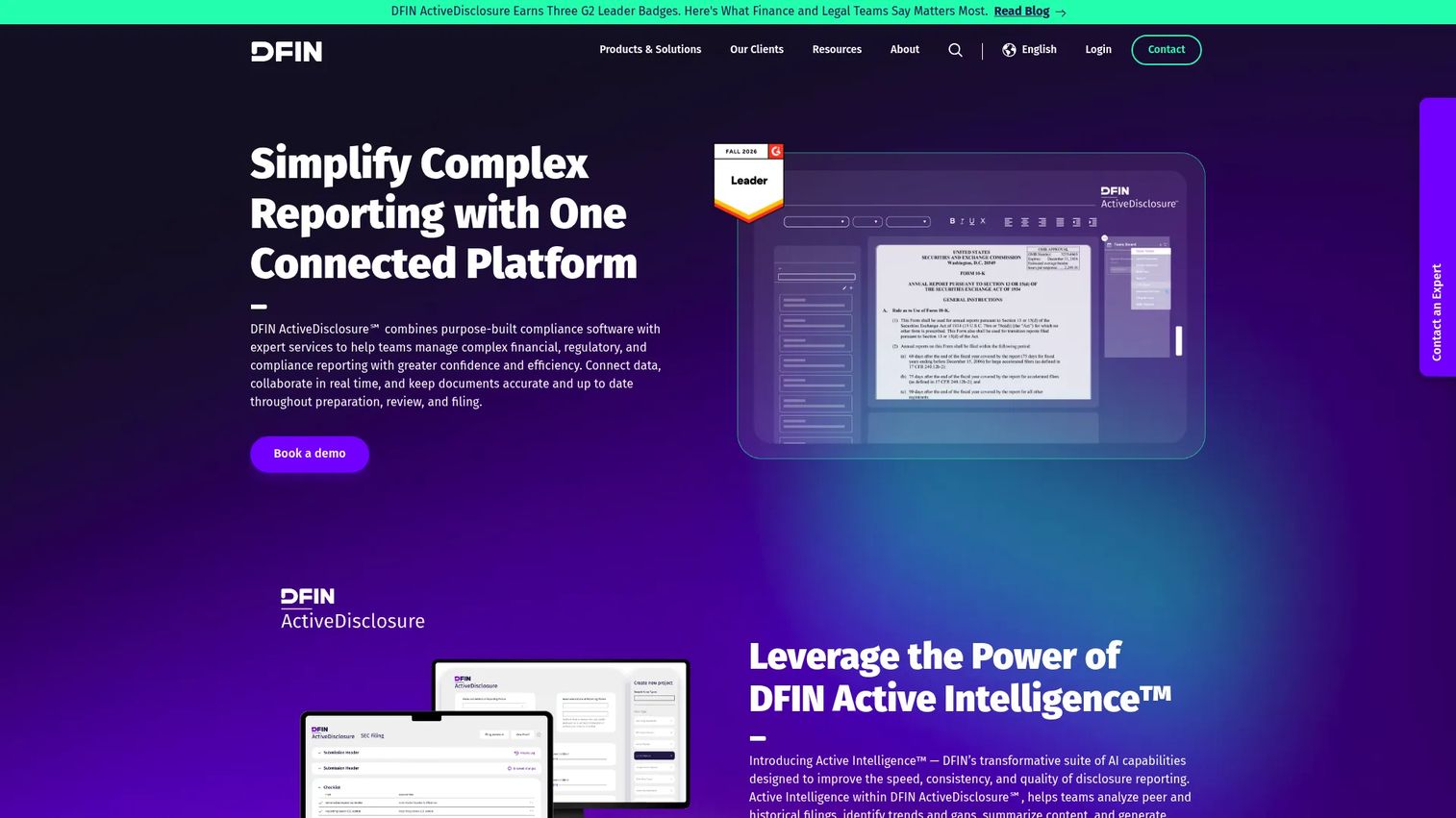
ActiveDisclosure is DFIN's compliance and reporting platform designed for financial, regulatory, SEC, ESG, proxy, and transaction reporting. It supports real-time coauthoring, track changes, comments, and task assignments so finance and legal teams can work simultaneously without version conflicts. Built-in iXBRL tagging, health checks, and validation tools reduce the risk of filing errors before submission. Support binders, tie-outs, reusable templates, and version history round out the audit-readiness features.
Best for: Public-company finance, accounting, legal, and compliance teams managing complex SEC and regulatory reporting cycles.
Key features
- Real-time coauthoring and task assignment workflows
- iXBRL tagging with health checks and validation
- Excel linking and connected data workflows
- Support binders, tie-outs, and version history
- AI peer and historical filing analysis
Why choose ActiveDisclosure: It is the right fit for teams whose core pain is SEC filing accuracy and document control, rather than broader CPM or planning integration. The filing-focused workflow keeps legal and finance aligned on submission-ready documents.
ActiveDisclosure pricing: Contact sales and confirm filing volume, user count, and service needs before committing to scope.
G2 rating: 4.7/5
3. Report Authority
Report Authority appears in disclosure management category data as a tool focused on structured reporting and disclosure process control. It is positioned for finance teams that need a purpose-built disclosure workflow without the overhead of a broader CPM deployment. Because verified first-party product details were limited at the time of this review, the recommendation is to test a demo directly with the vendor before drawing conclusions about specific capabilities.
Best for: Finance teams looking for a focused disclosure reporting tool with workflow structure and report production controls.
Key features
- Disclosure report workflows and structured report production
- Review tracking and approval management
- Version control and compliance documentation
- Report production and publishing support
Why choose Report Authority: Consider it when a narrower, workflow-focused disclosure tool fits better than a full CPM platform. Confirm specific capabilities and filing support with the vendor before shortlisting.
Report Authority pricing: Request a quote and confirm filing types, user count, and implementation scope.
4. Anaplan Disclosure Management
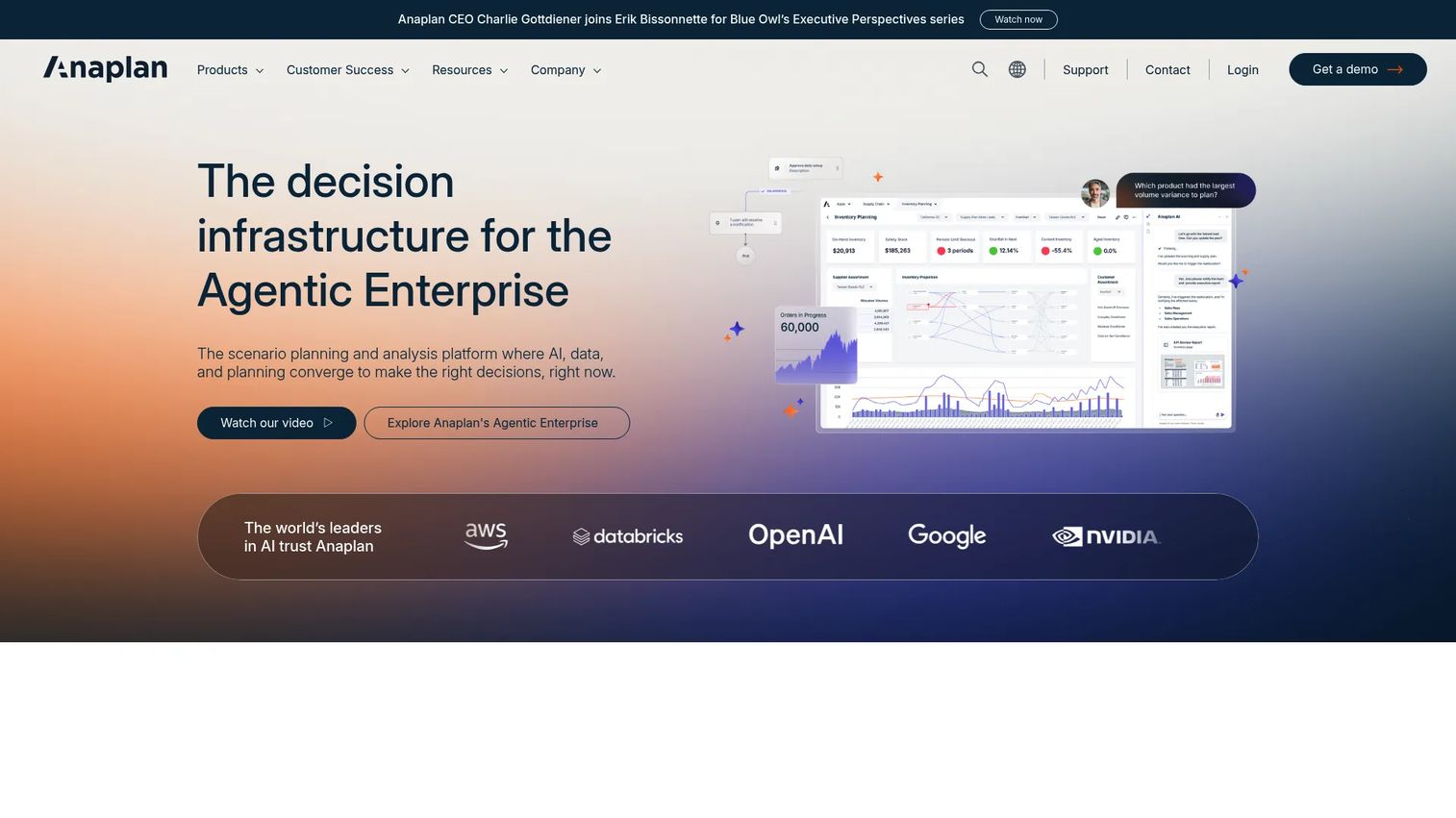
Anaplan Disclosure Management automates the creation, collaboration, compliance, and distribution of financial, narrative, statutory, and regulatory reports. It connects planning data directly to disclosure documents, so board books, annual reports, and statutory filings stay synchronized with the numbers being used for forecasting. Collaborative authoring, review, and approval workflows keep multi-stakeholder reporting cycles on track. Automated roll-forward functionality reduces the manual rebuild effort for recurring reports. Multi-format publishing supports HTML and PDF outputs, and multi-language document handling covers global reporting needs.
Best for: Enterprise finance teams already using Anaplan for planning who want disclosure reports connected to the same data used for forecasting and budgeting.
Key features
- Planning-connected reporting with dynamic document updates
- Regulatory compliance support for SEC and ESEF requirements
- Automated roll-forward for recurring report cycles
- Multi-language document handling and automated translation
- Multi-format publishing including HTML and PDF
Why choose Anaplan Disclosure Management: The strongest fit is when disclosure reporting cannot be separated from planning and forecasting. If your board book and your annual forecast reference the same numbers, keeping them in the same system removes a significant reconciliation risk.
Anaplan Disclosure Management pricing: Confirm modules, reporting scope, and user count when requesting a quote.
G2 rating: 4.6/5
5. Certent Disclosure Management
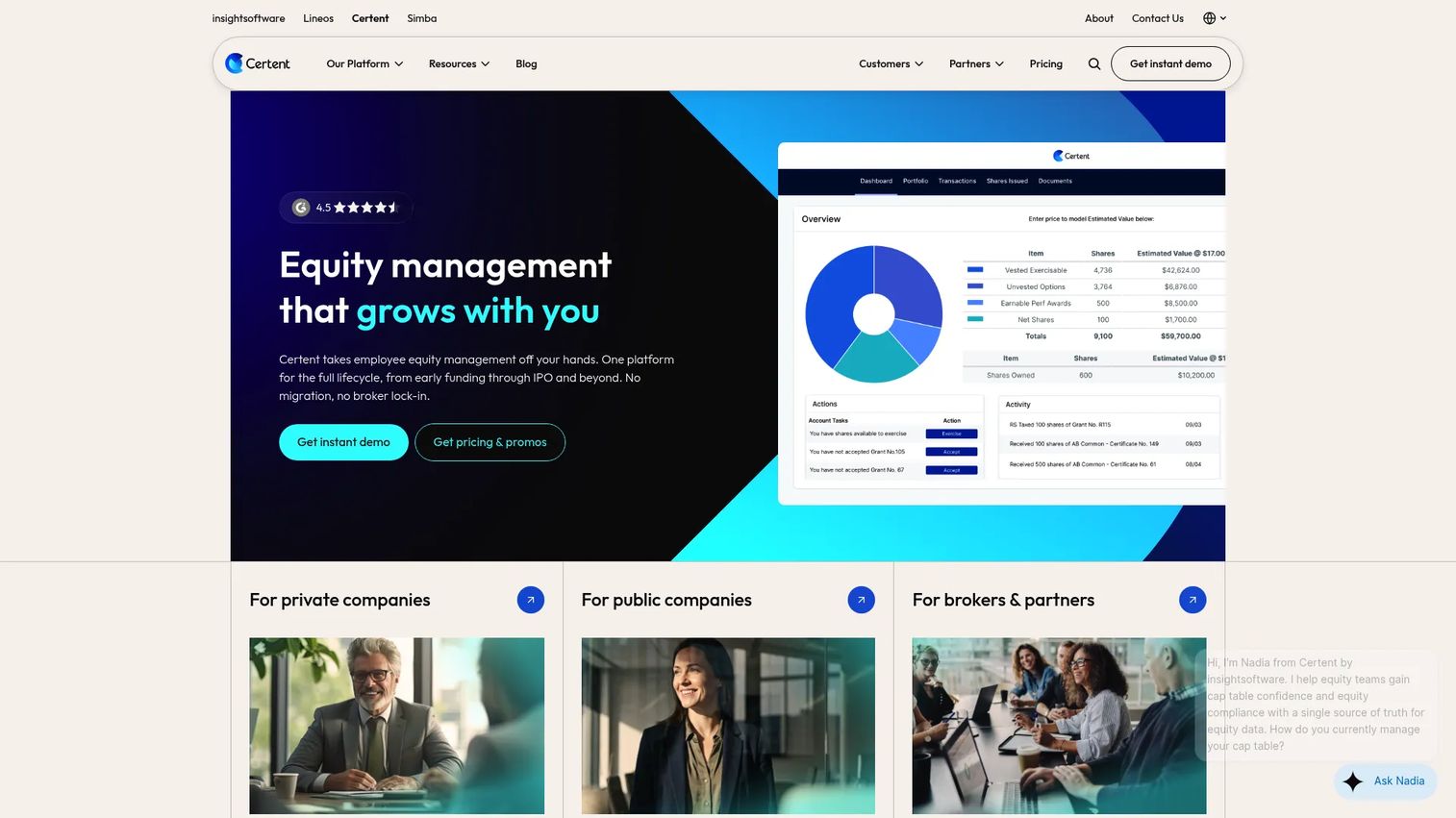
Certent Disclosure Management, now part of insightsoftware, provides enterprise disclosure management for creating, reviewing, automating, and publishing regulatory, external, and internal reports. It integrates directly with Microsoft Word, Excel, and PowerPoint, so finance teams work in familiar environments with automated data connections to source systems. XBRL and iXBRL tagging, taxonomy management, and SEC filing support handle the structured reporting side. Version control, workflow management, and audit trails provide the governance layer.
Best for: Finance and reporting teams producing recurring, multi-author regulatory, statutory, and narrative reports who want to keep their existing Office workflow.
Key features
- Microsoft Office integration (Word, Excel, PowerPoint)
- Automated narrative reporting with direct source-data connections
- XBRL and iXBRL tagging, validation, and SEC filing support
- Version control, access controls, and audit trails
- Multi-user collaboration and report publishing
Why choose Certent Disclosure Management: It is a solid choice for teams that want disclosure workflow structure with the flexibility to keep working in Office. The insightsoftware parent adds ERP connectivity options if broader data integration matters.
Certent Disclosure Management pricing: Confirm modules, entities, and user count.
G2 rating: 4.2/5
6. LucaNet
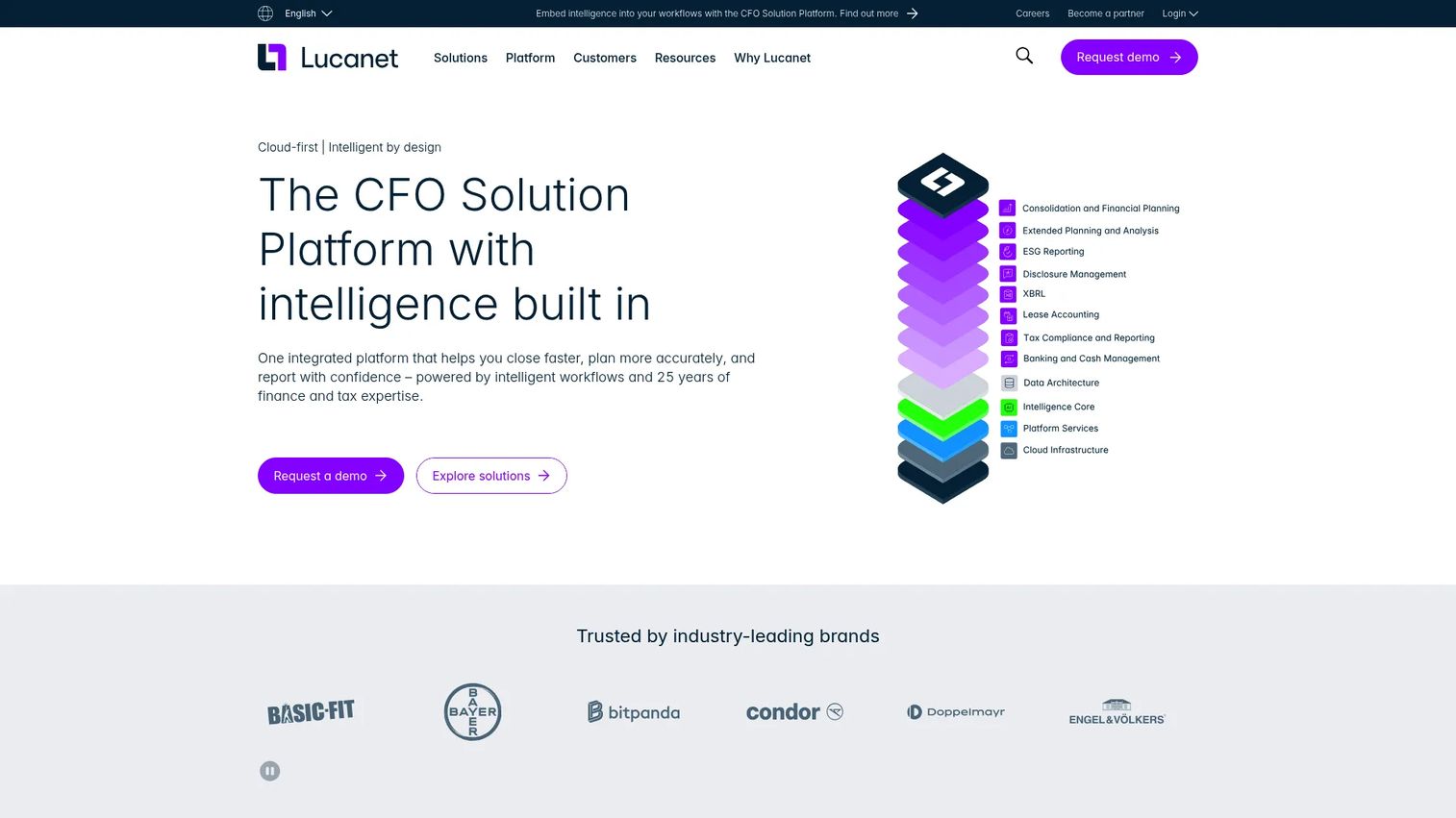
LucaNet is an intelligent CFO platform covering financial consolidation, planning, reporting, and compliance. It connects the close and consolidation cycle to budgeting, forecasting, and management reporting in a single environment. Data integration through ETL adapters and APIs pulls from source systems without manual extract steps. Multi-currency conversion, drill-down analysis, and dashboards support both statutory reporting and internal management review. Audit trails and collaborative workflows give finance teams the governance documentation they need for external reporting.
Best for: Mid-market finance teams that need consolidation, close, planning, and disclosure reporting connected rather than managed across separate tools.
Key features
- Financial consolidation with multi-currency and intercompany eliminations
- Integrated budgeting and planning workflows
- Data integration via ETL adapters and APIs
- Dashboards and drill-down reporting
- Audit trails, collaboration, and compliance support
Why choose LucaNet: The right fit when disclosure reporting quality depends on consolidation quality and the team needs both in one place. LucaNet offers Basic, Advanced, and Professional packages on minimum 12-month licenses; contact sales for pricing on each tier.
LucaNet pricing: Three package tiers (Basic, Advanced, Professional) are available on annual licenses.
G2 rating: 4.7/5
7. CCH Tagetik
CCH Tagetik, part of Wolters Kluwer, is an AI-powered unified platform for financial close, consolidation, planning, reporting, ESG, regulatory reporting, and corporate tax. It covers the full finance transformation scope: From budgeting and scenario modeling to statutory consolidation, regulatory filings, and sustainability reporting. AI capabilities include anomaly detection, predictive intelligence, and automapping to reduce manual configuration. The platform suits large, complex organizations standardizing finance processes across multiple entities and jurisdictions.
Best for: Large enterprises standardizing consolidation, regulatory reporting, ESG, planning, and corporate tax under a single CPM platform.
Key features
- Financial close and consolidation workflows
- Financial planning, budgeting, and scenario modeling
- ESG and sustainability reporting
- Regulatory reporting with compliance validation
- AI-powered anomaly detection and automapping
Why choose CCH Tagetik: Choose it when disclosure reporting is part of a broader finance transformation and the organization needs consolidation, planning, tax, and ESG in one governed environment. Implementation scope is significant; factor consulting time into the evaluation.
CCH Tagetik pricing: Cost drivers include modules, entities, user count, and implementation services.
G2 rating: 4.3/5
8. IRIS CARBON Disclosure Management Software
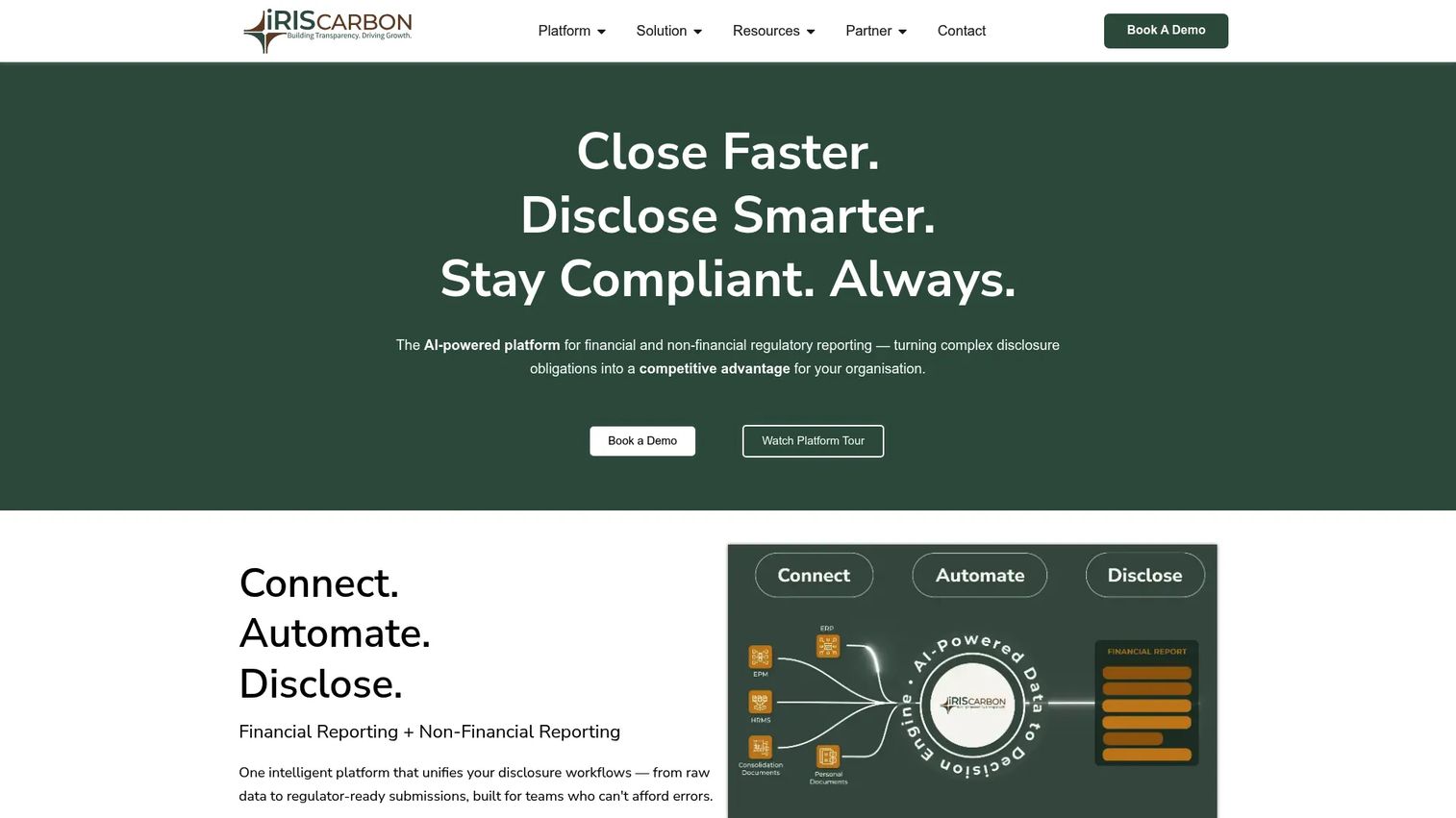
IRIS CARBON is an AI-powered disclosure management platform for creating, reviewing, tagging, validating, and filing financial, regulatory, and ESG reports. Its core strength is structured reporting: Automated XBRL and iXBRL tagging, real-time validation, and taxonomy management reduce the manual effort and risk associated with digital regulatory filings. Centralized data management integrates with ERPs, APIs, and flat files. AI features include content generation, anomaly detection, translation, and disclosure-quality checks. The platform supports multi-jurisdictional filing requirements, making it useful for teams managing ESEF, SEC, and other structured reporting obligations simultaneously.
Best for: Enterprise finance, accounting, and sustainability teams with complex multi-jurisdictional regulatory filings where XBRL and iXBRL accuracy are the primary risk.
Key features
- Automated XBRL and iXBRL tagging with real-time validation
- Multi-jurisdictional regulatory filing support (ESEF, SEC, and others)
- ERP and API data integration
- AI content generation, anomaly detection, and translation
- Real-time collaboration, approvals, and version control
Why choose IRIS CARBON: It is the strongest choice when structured reporting quality is the primary concern and the team needs taxonomy precision, validation confidence, and filing-ready outputs across multiple jurisdictions. The AI capabilities add meaningful efficiency to review cycles.
IRIS CARBON pricing: Pricing requires a quote from the IRIS CARBON team. Contact sales and confirm jurisdictions, filing types, and user count before evaluation.
G2 rating: 4.8/5
9. Prophix One
Prophix One is a unified financial performance platform for planning, budgeting, forecasting, reporting, reconciliation, consolidation, and close. Mid-market finance teams use it to automate recurring FP&A and close workflows without building custom integrations between separate tools. Financial consolidation includes intercompany eliminations, multi-currency translation, and minority-interest calculations. Account reconciliation supports approvals, status visibility, matching automation, and audit trails. Reporting workflows connect close and planning data to management and disclosure outputs.
Best for: Mid-market finance teams that need financial planning, close, consolidation, and reporting automation in one platform without enterprise-scale complexity.
Key features
- Financial planning, budgeting, and scenario analysis
- Financial consolidation with multi-currency and intercompany eliminations
- Account reconciliation with approval workflows and audit trails
- Reporting automation connecting close and planning data
- Dashboarding and analytics
Why choose Prophix One: It fits when the reporting problem is broader than disclosure alone. If your finance team is managing planning, close, and reporting in separate systems, Prophix consolidates those workflows. The platform's disclosure reporting is stronger for management and board reporting than for complex regulatory filings.
Prophix One pricing: Confirm modules, user count, and implementation services when requesting a quote.
G2 rating: 4.5/5
10. Toppan Merrill Bridge
Toppan Merrill Bridge is a regulatory disclosure and SEC filing platform for document preparation, collaboration, EDGAR submissions, and iXBRL workflows. It supports Forms 3, 4, 5, 13D, 13G, 13F, Form D, and Form 144 alongside standard annual and quarterly filings. Document preparation and collaboration tools keep legal and finance aligned through the filing cycle. XBRL tagging and filing management handle the structured data requirements. The platform combines software with the broader Toppan Merrill filing services capability, which matters for teams that need execution support alongside the workflow tool.
Best for: Public companies and capital markets teams that need SEC filing workflows paired with disclosure production services rather than a pure software deployment.
Key features
- EDGAR submission and iXBRL filing support
- Document preparation and multi-user collaboration
- XBRL tagging and filing management
- Support for Forms 3, 4, 5, 13D, 13G, and other SEC forms
- Filing project management workflows
Why choose Toppan Merrill Bridge: Choose it when filing execution and document production support matter as much as the software itself. Teams filing infrequently or managing complex capital markets transactions benefit from the services layer alongside the platform.
Toppan Merrill Bridge pricing: Contact Toppan Merrill to confirm your specific filing needs and get a quote.
G2 rating: 5.0/5
11. Donnelley Financial Solutions (DFIN)
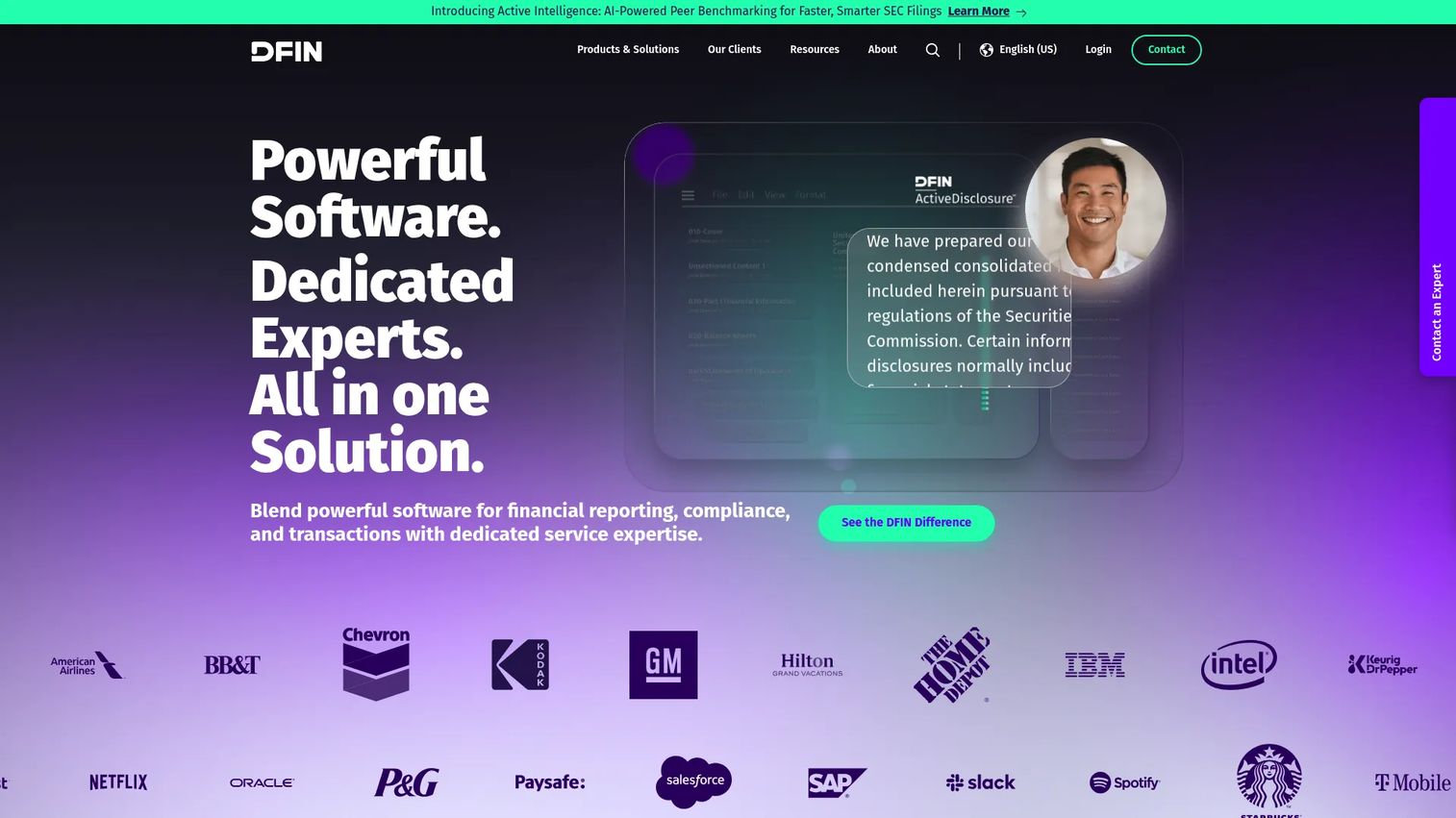
Donnelley Financial Solutions (DFIN) provides software and technology-enabled financial regulatory, compliance, filing, reporting, and deal management for public and private companies, mutual funds, and regulated investment firms. Its core capabilities span regulatory filing and compliance, financial reporting and disclosure management, virtual data rooms, and workflow automation with AI-powered document tagging and search. ActiveDisclosure is DFIN's dedicated disclosure management product; the broader DFIN suite handles the capital markets and transaction reporting context around it.
Best for: Regulated organizations managing SEC filings, capital markets transactions, compliance reporting, and secure document sharing across deal cycles.
Key features
- Regulatory filing and compliance workflows
- Financial reporting and disclosure management
- Virtual data rooms and secure document sharing
- AI-powered document tagging and search
- Workflow automation and multi-user collaboration
Why choose Donnelley Financial Solutions (DFIN): DFIN is the right choice when disclosure management sits inside a larger capital markets, compliance, or transaction reporting need. The combination of software and services makes it particularly relevant for public companies navigating complex filing calendars.
DFIN pricing: Contact DFIN to confirm filing volume, product modules, and service needs before evaluation.
G2 rating: 4.5/5
12. Authority Software
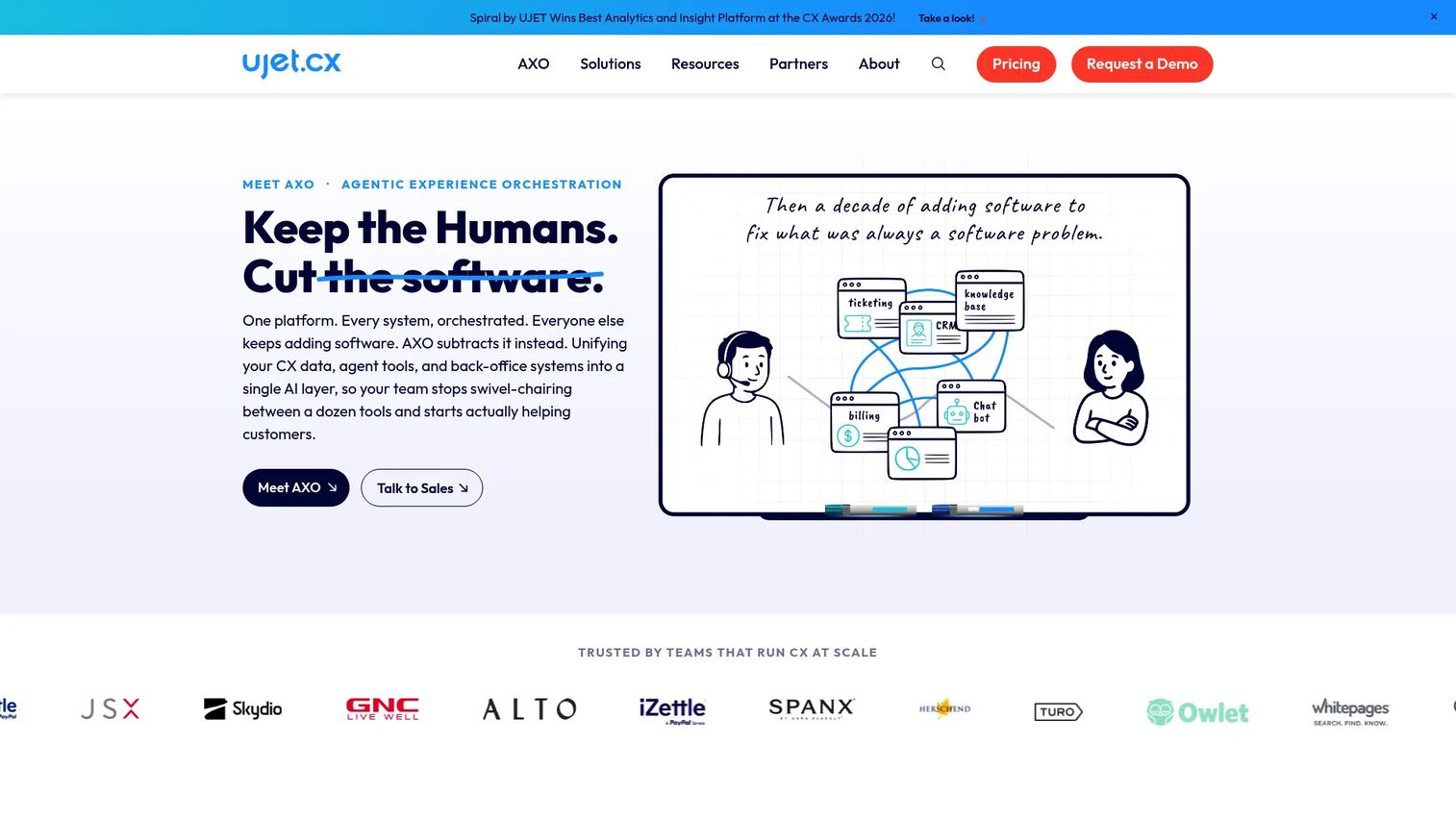
Authority Software is a cloud-based workforce optimization platform built for contact center operations. Its core products cover quality management with QA forms, metrics, and audio and video recording; workforce management with forecasting and scheduling; and a no-code drag-and-drop script, form, and workflow designer. Based on verified research, Authority Software's current product positioning is in contact center operations rather than financial disclosure management. Finance teams evaluating disclosure management tools should confirm with the vendor whether a disclosure-specific offering exists before including it in a shortlist.
Best for: Contact centers needing configurable quality management, workforce management, scripting, and CX applications.
Key features
- Quality management with QA forms and recording
- Workforce management with forecasting and scheduling
- No-code script and workflow designer
- Audio and video recording for QA review
- Configurable CX applications
Why choose Authority Software: Relevant for contact center operations teams rather than finance disclosure workflows. Confirm the vendor's current product scope directly if financial disclosure management is the primary evaluation goal.
13. insightsoftware
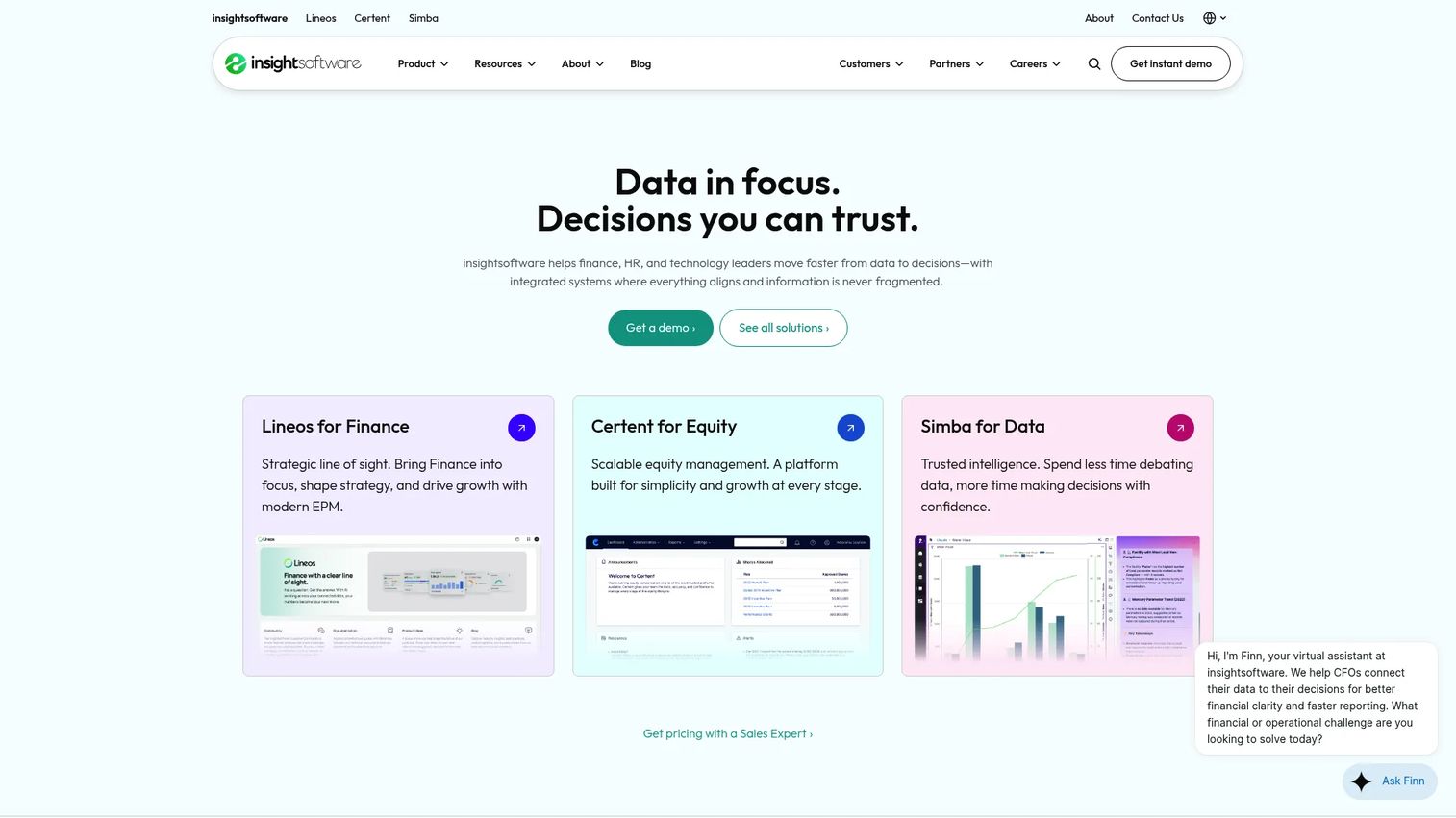
insightsoftware provides connected software for finance, HR, and technology leaders, spanning unified EPM for close, consolidation, reporting, and planning; ERP reporting and data management; and solutions for lease accounting, tax reporting, equity management, and governed data access. Its disclosure management capability includes Certent Disclosure Management (covered separately above). The broader insightsoftware portfolio is notable for the depth of ERP connectivity it offers, pulling reporting data from a wide range of on-premise and cloud ERP systems without manual extracts.
Best for: Mid-market and enterprise finance teams that need disclosure and reporting management connected directly to ERP, EPM, and consolidation data across multiple source systems.
Key features
- Unified EPM for close, consolidation, reporting, and planning
- ERP reporting and data management with writeback
- Lease accounting, tax reporting, and equity management
- Governed data access and audit trails
- ERP-native disclosure and reporting automation
Why choose insightsoftware: The strongest fit when source-system connectivity is the reporting bottleneck. If finance is spending significant time on manual data extracts before building reports, insightsoftware's ERP integration footprint is a practical advantage over narrower disclosure tools.
insightsoftware pricing: Contact sales and confirm which specific products, integrations, and user counts apply to your evaluation.
G2 rating: 4.3/5
14. Wolters Kluwer
Wolters Kluwer is a global provider of professional information, software, and services across healthcare, tax and accounting, compliance, legal and regulatory, and corporate performance and ESG. Within finance and compliance, its portfolio covers regulatory reporting, statutory reporting, tax compliance workflows, and governance functions. CCH Tagetik (covered separately above) is its flagship CPM and disclosure platform. The broader Wolters Kluwer portfolio includes tools relevant to statutory accounts, regulatory filings, and finance team governance across jurisdictions.
Best for: Large finance, tax, and compliance teams managing statutory and regulatory reporting across multiple jurisdictions, especially where tax and finance workflows intersect.
Key features
- Regulatory and statutory reporting across jurisdictions
- Tax compliance and tax reporting workflows
- Corporate performance management via CCH Tagetik
- Finance data controls and governance
- ESG and sustainability reporting support
Why choose Wolters Kluwer: The right fit when disclosure management is part of broader finance, tax, and regulatory compliance operations spanning multiple countries. Evaluate specific products within the portfolio rather than the brand as a whole, since capabilities and pricing vary significantly by offering.
Wolters Kluwer pricing: Pricing varies by product. Some individual products (such as UpToDate) have publicly listed prices; most finance and compliance solutions require a quote from sales. Confirm which specific product you are evaluating and request pricing accordingly.
G2 rating: 4.2/5
15. IRIS Business Services
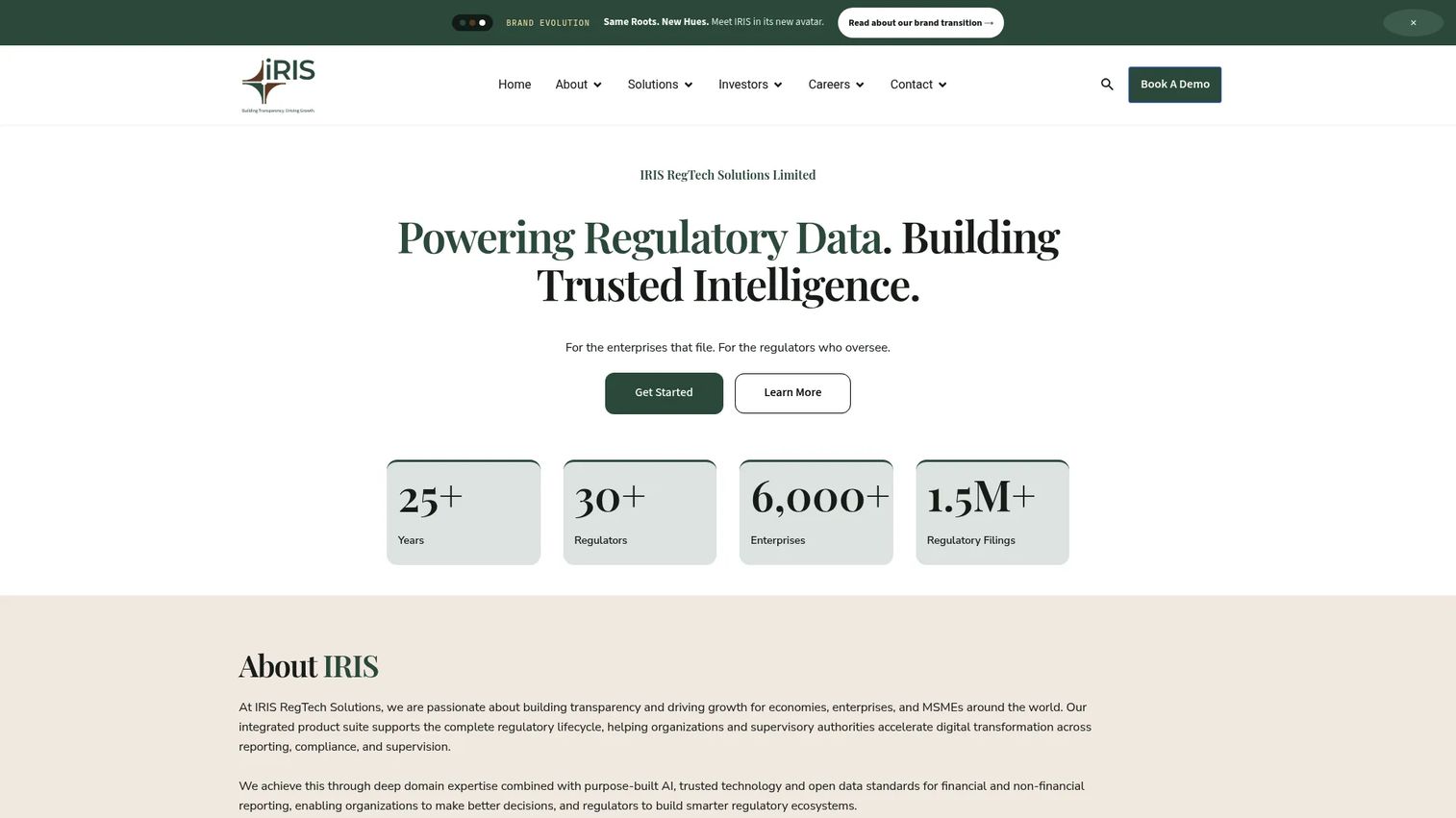
IRIS Business Services, now operating as IRIS RegTech Solutions Limited, provides regulatory reporting, disclosure management, supervision, and compliance technology. Its capabilities include AI-powered disclosure management, XBRL and iXBRL reporting with real-time validation, and regulatory filing workflows with analytics and risk-based supervision tools. The platform serves enterprises, financial institutions, and regulators, making it one of the few tools in this list designed for both the filer and the regulator side of structured reporting.
Best for: Regulatory reporting teams at enterprises and financial institutions that need structured digital disclosure, XBRL expertise, and compliance workflow support.
Key features
- AI-powered XBRL and iXBRL reporting and tagging
- Real-time taxonomy validation and regulatory submissions
- Disclosure management and report review workflows
- Risk-based supervision and compliance analytics
- Regulatory filing workflow management
Why choose IRIS Business Services: Choose it when digital regulatory reporting precision and taxonomy expertise are the primary reasons for buying disclosure software. The supervision and analytics layer makes it relevant for organizations that also need insight into regulatory patterns, not just filing execution.
IRIS Business Services pricing: Contact the team to confirm jurisdictions, filing types, and service needs before evaluation.
G2 rating: 4.8/5
Considerations when choosing disclosure management software
Match the tool to your filing obligations
List every required output before you evaluate a single vendor: SEC filings, ESEF reports, statutory accounts, board books, ESG disclosures, management reports. The tools in this list serve different combinations of those obligations. A platform strong for SEC reporting may have limited statutory account support. Confirm each finalist covers your actual filing calendar, not just the headline use cases in their marketing.
Verify data lineage before workflow polish
Workflow automation adds value only if the numbers link back to controlled sources. Ask each vendor to show you how a number change in your ERP or consolidation system flows through to a specific table in a live report. If the answer involves a manual step or a scheduled export, you have a data lineage gap that the workflow layer will not fix. ERP and EPM connectivity is the foundation; everything else sits on top.
Test review, approval, and audit trails in a real scenario
Do not accept a demo of the approval workflow in isolation. Run a real reporting scenario through the finalist tools: Draft a section, make a change, route it for review, reject it, revise it, and approve it. Then check what the audit trail shows. A genuine audit or diligence process will ask for evidence of who changed what and when. Make sure the system generates that evidence naturally, not only if you configure it correctly upfront.
Check XBRL and iXBRL depth
Basic XBRL support covers tagging. Deep XBRL support covers taxonomy updates, extension management, validation against filing rules, roll-forward tagging across periods, and review workflows that catch errors before submission. If your team files XBRL or iXBRL regularly, push vendors on taxonomy update frequency, validation rule coverage, and how the platform handles taxonomy changes mid-cycle.
Model implementation cost and finance team capacity
Ask each vendor how long a typical implementation takes, who owns the system day-to-day, and how many reporting cycles pass before teams feel productive. Implementation for enterprise CPM platforms with disclosure modules commonly runs three to six months. Finance teams managing a live reporting calendar alongside an implementation need a realistic transition plan. Factor consultant fees and internal time into the total cost before approving budget.
Conclusion
Disclosure management software is not optional once reporting spans multiple stakeholders, regulated filings, or board scrutiny that cannot tolerate unexplained number variances. The right choice depends on which reporting obligations you are solving for today and which ones you expect to add over the next two years.
Workiva is the strongest broad enterprise pick for teams managing financial, ESG, and audit workflows together. ActiveDisclosure and DFIN fit public-company filing workflows tightly. Anaplan Disclosure Management connects best when planning and disclosure need to share the same data. IRIS CARBON and IRIS Business Services lead on XBRL and iXBRL structured reporting depth. CCH Tagetik, LucaNet, Prophix One, insightsoftware, and Wolters Kluwer fit teams standardizing broader finance operations alongside disclosure.
Give this shortlist to your CFO, controller, legal counsel, and audit lead. Run one real reporting cycle through the demo environment of your top three. Make each vendor prove data lineage, audit trails, and filing readiness before you move to contract review.
Start your journey with Guideflow today!
FAQs
Disclosure management software is a finance and compliance platform that helps teams prepare, review, tag, approve, and publish regulated financial and narrative reports from controlled data sources. It connects source data from ERP and consolidation systems into report documents, supports multi-reviewer approval workflows, maintains version history and audit trails, and produces filing-ready outputs for SEC, ESEF, statutory, ESG, and other regulated reporting channels.
CFOs, controllers, financial reporting managers, legal and compliance teams, investor relations teams, ESG reporting owners, and external reporting teams all use disclosure management tools. At Series B SaaS companies, the immediate need often appears when board reporting, debt covenants, international entities, or audit readiness expose gaps in the finance team's manual reporting process.
Financial reporting software focuses on producing financial statements and management reports from accounting data. Disclosure management software adds narrative reporting, filing workflows, approvals, audit trails, XBRL tagging, and regulated publishing on top of the financial data layer. A general reporting tool produces numbers; a disclosure management system produces the governed, filing-ready package that regulators and auditors review.
Start with data linking from your ERP and consolidation systems, workflow automation for review and approval cycles, version control and audit trails, XBRL and iXBRL tagging support where required, and multi-format publishing for PDF and EDGAR or ESEF submissions. Secondary evaluation criteria include ESG reporting support, roll-forward automation for recurring reports, and integration with existing finance infrastructure.
Not every private SaaS company needs it early. The need becomes clear when board reporting, audit requirements, debt covenant compliance, international subsidiary reporting, ESG investor demands, or IPO readiness make manual document assembly a real risk. Most Series B companies begin evaluating disclosure tools when they hire a first CFO or VP Finance who has operated at a more mature finance function and recognizes the gap.
Most enterprise disclosure management tools price by quote rather than publishing fixed rates. The cost drivers are modules selected, user count, entity count, filing types, required integrations, implementation services, and ongoing support tier. For enterprise platforms like Workiva, CCH Tagetik, or IRIS CARBON, annual contract values commonly run from the tens of thousands into six figures for larger deployments. Verify current ranges directly with each vendor's sales team.
XBRL (eXtensible Business Reporting Language) is a machine-readable tagging standard used for structured financial and regulatory reporting. It lets regulators and investors extract, analyze, and compare financial data without manual interpretation. iXBRL (Inline XBRL) combines human-readable HTML with embedded XBRL tags, so a single document is both readable and machine-processable. ESEF filings in Europe require iXBRL. SEC filings in the US require XBRL. Tagging accuracy, taxonomy compliance, and validation quality vary significantly across disclosure tools, so verify these capabilities carefully if structured reporting is part of your obligation.
Start with your required reports and filing jurisdictions. List your data sources and confirm which tools can pull from them without manual exports. Map your review and approval workflow to understand how many roles and sign-off steps the system needs to support. Test audit trail generation in a real scenario rather than in a configured demo. Run the top two or three finalists through a complete report cycle before committing to a contract.