You're building a shortlist for a tool that could affect your CAC, attribution workflow, or campaign velocity. The first software review site shows five stars. The second tells a different story. A third has no reviews from companies your size or industry.
That fragmentation costs you. Poor vendor research leads to duplicate tools in the stack, stakeholder confidence that evaporates at the first RevOps review, and evaluation cycles that drag on because nobody can agree on what the evidence actually shows.
According to G2's 2025 research, 56% of enterprise buyers use software review sites when researching software. Yet 73% of technology buyers say they regularly or sometimes encounter fake online reviews, per TrustRadius (2024). Volume alone is not the answer. The right platforms, used in the right sequence, are.
This guide maps nine technology review platforms so you can build a faster, more defensible shortlist, whether you're a mid-market growth marketer choosing martech or an enterprise demand gen lead pushing a stack consolidation.
What's inside
This guide is for digital marketers, growth teams, and software buyers who need credible research to justify technology purchasing decisions to finance, RevOps, or leadership.
- Nine platforms covering B2B software discovery, peer reviews, enterprise research, and buyer advisory support
- How each platform handles review depth, category coverage, and buyer decision tools
- Selection criteria: Review quality, research formats, comparison features, and fit by buyer type
- A buyer checklist for avoiding misleading comparisons and duplicated research effort
TL;DR
- Best overall for broad B2B software research: G2, for category discovery, peer reviews, and comparison workflows
- Best for enterprise peer validation: Gartner Peer Insights, for practitioner feedback and enterprise research context
- Best for in-depth review content: TrustRadius, for detailed buyer narratives that surface implementation friction
- Best for buyer advisory support: Software Advice, for teams that want guided shortlist help instead of solo research
- Best for IT and infrastructure research: PeerSpot, especially in security, data, and enterprise technology categories
- Cross-checking tip: Use a broad directory for discovery and a deeper peer platform for validation before treating any rating as decision-ready evidence
What are technology review platforms?
Technology review platforms are websites and research services that help buyers evaluate software vendors through user reviews, ratings, category directories, comparison tools, reports, and buying guidance.
What they help buyers do
- Discover software by category, company size, budget, or use case
- Compare vendors using ratings, review narratives, and product detail pages
- Validate vendor claims through feedback from practitioners with similar contexts
- Build a shortlist that a buying committee can evaluate from shared evidence
Core features to look for
- Verified or moderated user reviews with reviewer role and company size context
- Filters for industry and company size
- Category comparison tools and side-by-side product pages
- Review recency signals and incentive disclosure
- Research reports, scorecards, or structured buyer guides
- Vendor comparison and shortlist workflows
How these platforms differ
Not every platform does the same job. Understanding the type before you open a tab saves significant research time.
| Type | Primary job | Best for |
|---|---|---|
| Broad software directory | Category browsing and peer ratings | Discovery across many categories |
| Enterprise peer-review platform | Practitioner validation and research assets | Complex B2B technology evaluation |
| In-depth review and research platform | Detailed written narratives and buyer intent | Surfacing implementation and support patterns |
| Buyer advisory and shortlist service | Guided research with human support | Teams that want a narrower shortlist faster |
Checking which type a platform belongs to before you rely on its data is one of the fastest ways to avoid building a shortlist on misleading evidence. If you're doing software buyer research for a competitive category, you will often need two platform types, not one.
When to use technology review platforms
Build a software shortlist before requesting demos
Check category fit, reviewer context, integration claims, and review themes before scheduling any sales calls. A review platform that filters by company size and deployment type lets you find feedback from organizations with your same constraints. This reduces meetings with vendors that cannot realistically replace existing tools in your stack.
Validate claims your internal team cannot test quickly
Technical claims about implementation speed, support responsiveness, reporting depth, and adoption patterns are hard to stress-test before purchase. Review platforms surface recurring themes across dozens of independent accounts, which is faster than waiting for a reference call.
Give stakeholders evidence they can evaluate independently
A rating alone is not a buying argument. Finance, operations, and security reviewers want to read the actual context behind a score. Pointing them toward a curated set of peer reviews, filtered by company size and use case, shortens the alignment process and keeps the shortlist from collapsing at the last hurdle.
Technology review platforms comparison
The nine platforms below cover the full spectrum from broad software directories to structured enterprise research. Use this table for a first pass, then read the individual entries for the detail that actually moves a decision.
| # | Product | Best for | Key differentiator | Pricing | G2 rating |
|---|---|---|---|---|---|
| 1 | G2 | Broad B2B software discovery | Large category directory with review-led comparison and buyer-intent tools | Free for buyers; vendor Starter plan from $2,999/year | 4.6/5 |
| 2 | Gartner Peer Insights | Enterprise technology validation | Peer review context plus Voice of the Customer and Peer Lessons Learned reports | Free for buyers and vendors | 4.6/5 |
| 3 | Capterra | SMB and mid-market software discovery | Broad directory with buyer-friendly category filters | Free for buyers | N/A |
| 4 | TrustRadius | Detailed B2B software research | Long-form verified reviews for deeper buyer evaluation | Free for buyers; vendor plans from $30,000/year per product | 3.5/5 |
| 5 | PeerSpot | IT and infrastructure evaluations | Practitioner reviews for enterprise technology categories | Free listing; paid vendor packages from $50,000/year | 4.8/5 |
| 6 | SoftwareReviews | Structured enterprise software evaluation | Data Quadrant and Emotional Footprint research formats | Custom pricing | N/A |
| 7 | GetApp | App discovery for business teams | Category browsing and comparison for operational buyers | Free for buyers | 4.0/5 |
| 8 | Software Advice | Assisted shortlist building | Buyer advisory support plus software directories | Free for buyers | 4.0/5 |
| 9 | SourceForge | Commercial and open-source software discovery | Product directory spanning commercial and open-source listings | Free for buyers; vendor plans available on request | 4.3/5 |
Best 9 technology review platforms for 2026
1. G2
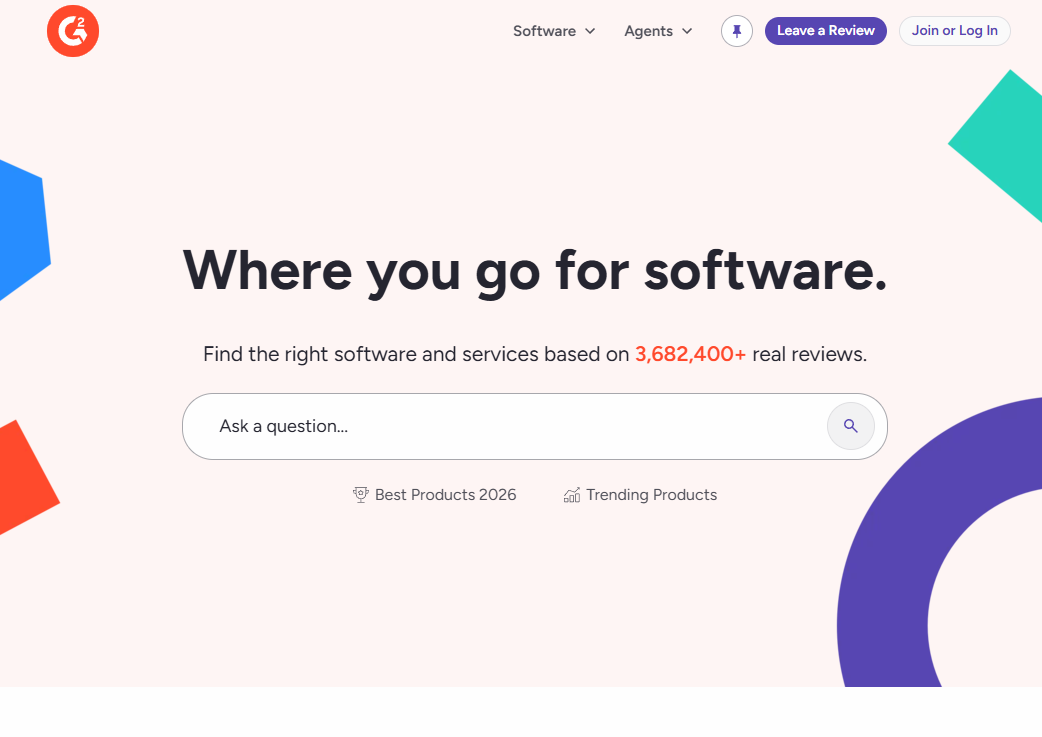
G2 is a software and services marketplace that helps buyers discover and compare products through peer reviews. Its category directory spans thousands of software categories, each organized with review grids, satisfaction ratings, product comparison pages, and filtering by company size. For growth marketers, the platform also surfaces buyer-intent signals that indicate which accounts are researching specific categories.
Best for: Digital marketers and software buyers who need a broad starting point for B2B software discovery, category intelligence, and vendor comparison before narrowing a shortlist.
Key features
- Large B2B software category directory with grid views
- Peer reviews filtered by company size and industry
- Side-by-side product comparison tools
- Buyer-intent data for vendor marketing teams
- Market reports and category grids updated quarterly
Why choose G2: G2 works best when you need a wide view of a software category before committing to a shortlist. Its combination of review volume, comparison filters, and category reports gives growth marketers a fast way to map the competitive landscape and spot the vendor messaging patterns buyers actually respond to.
G2 pricing: Free for buyers. The vendor-facing Starter plan runs $2,999 in the first year and $5,999/year thereafter. Professional and Enterprise tiers, along with Buyer Intent, Content Subscription, and Ads add-ons, are priced by contacting G2's sales team.
G2 rating: 4.6/5
Digital marketer angle: Use G2 to monitor competitor positioning, read review themes from your target segment, and identify the objections buyers raise before they reach your funnel. Do not treat a category grid ranking as a final selection signal; read the actual reviews filtered to your company size.
2. Gartner Peer Insights
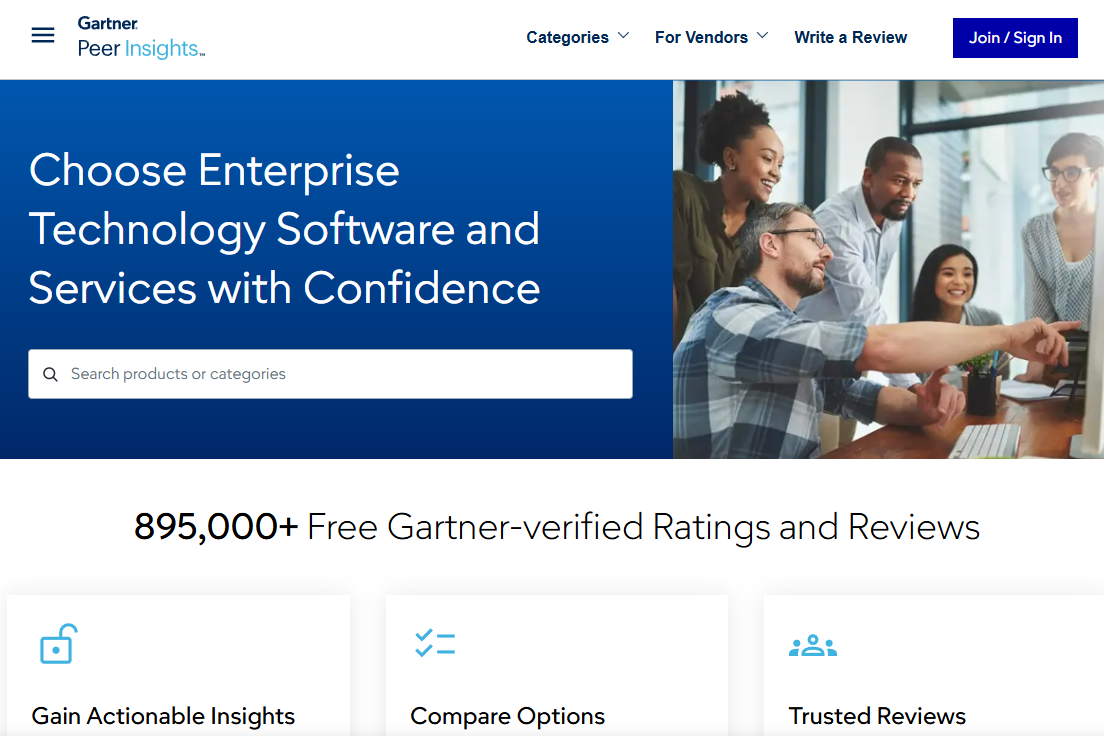
Gartner Peer Insights is a peer review platform focused on enterprise technology products and services. It publishes verified practitioner reviews alongside structured research assets including Voice of the Customer reports and Peer Lessons Learned documents. The platform supports side-by-side product comparisons and reviewer demographic context, which makes it easier to find feedback from organizations with similar deployment scale or industry constraints.
Best for: Enterprise buying teams and marketers supporting complex technology categories where reviewer role, company size, and deployment context matter more than review volume.
Key features
- Verified peer ratings and reviews with demographic filters
- Side-by-side product comparisons
- Voice of the Customer reports published by Gartner
- Peer Lessons Learned documents from practitioner contributors
- Customers' Choice recognition for vendor recognition programs
Why choose Gartner Peer Insights: This platform fits evaluation workflows where security, procurement, or architecture stakeholders need structured evidence beyond a rating average. The Voice of the Customer reports condense practitioner sentiment into a format that enterprise buying committees can evaluate without reading hundreds of individual reviews.
Gartner Peer Insights pricing: Gartner describes the platform as complimentary for buyers, non-clients, vendors, and end users. No paid tiers for buyers were identified on the vendor resource pages verified in October 2026.
G2 rating: 4.6/5
Digital marketer angle: Useful for tracking enterprise category perception, understanding competitor narratives in procurement contexts, and identifying the concerns that surface late in buying cycles. Because reviewers here tend to be senior enterprise practitioners, the language they use often reflects the objections your sales team faces at the security and architecture stage.
3. Capterra
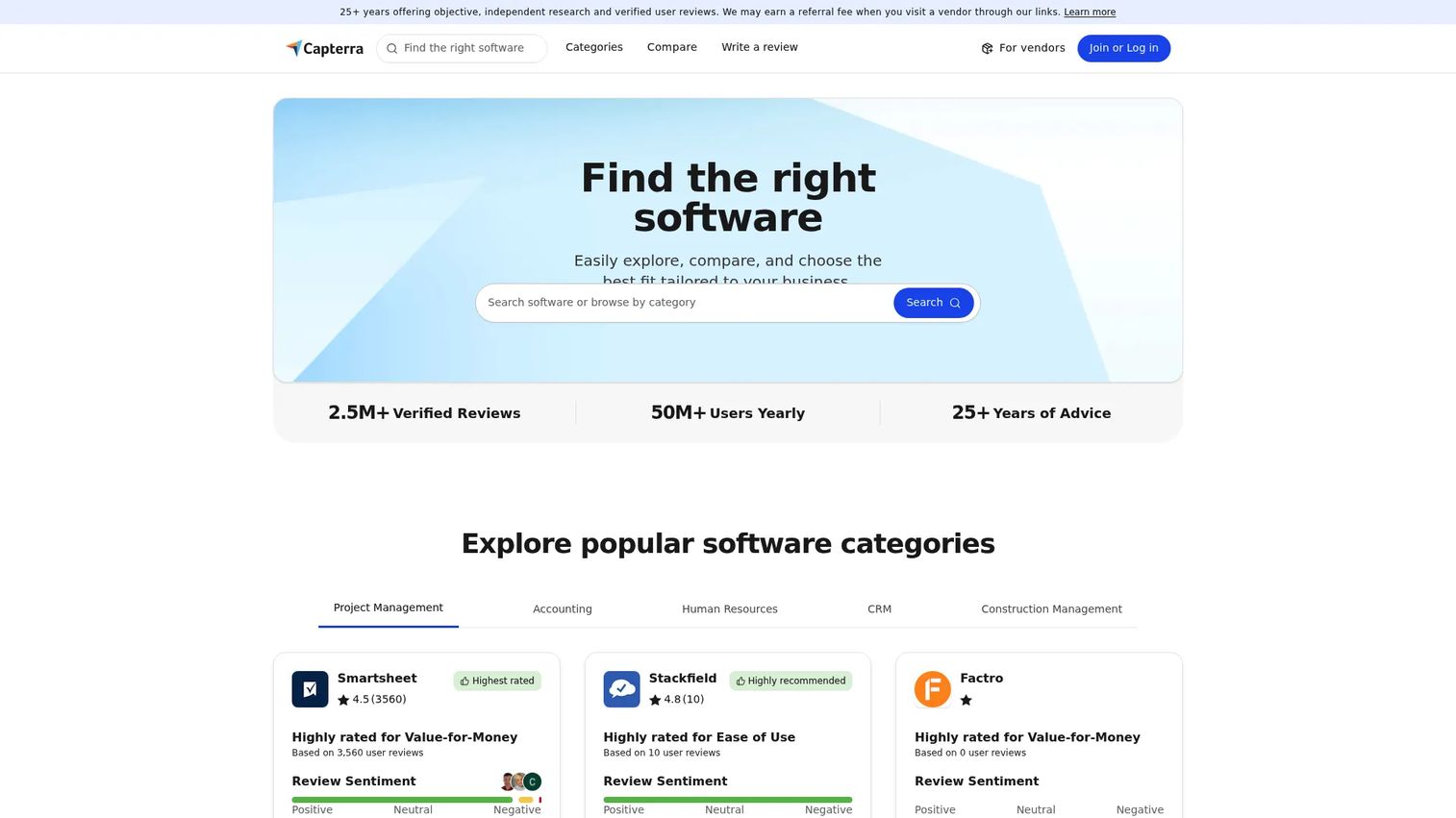
Capterra is a business software review marketplace covering categories from marketing automation and CRM to HR, finance, and project management. Its interface is built for browsability: Category pages use filters, feature checklists, and rating summaries to help buyers quickly compare options. It also publishes buyer guides for many software categories, which are useful for teams starting research without a defined shortlist.
Best for: Growth marketers and operational buyers at SMB and mid-market companies comparing business software across multiple functional areas.
Key features
- Broad business software directory across hundreds of categories
- Category and feature-level filters for narrowing options
- Verified user ratings and review summaries
- Side-by-side product comparison pages
- Buyer guides and research content for major categories
Why choose Capterra: Capterra's strength is orientation speed. When you are entering an unfamiliar software category or helping a non-marketing stakeholder understand their options, the structured category pages and buyer guides reduce the time from "where do we start?" to a working shortlist. It's a solid first tab to open, especially for business intelligence software research across operational functions.
Capterra pricing: Free for buyers. Software and service providers may purchase sponsored profiles and lead generation services; buyer-facing search and comparison features carry no cost.
Digital marketer angle: Use Capterra to understand how buyers describe competing products in natural language, which category filters shape initial discovery, and what review patterns look like for your software category. Cross-check high-rated tools here against a deeper review platform before finalizing any shortlist.
4. TrustRadius
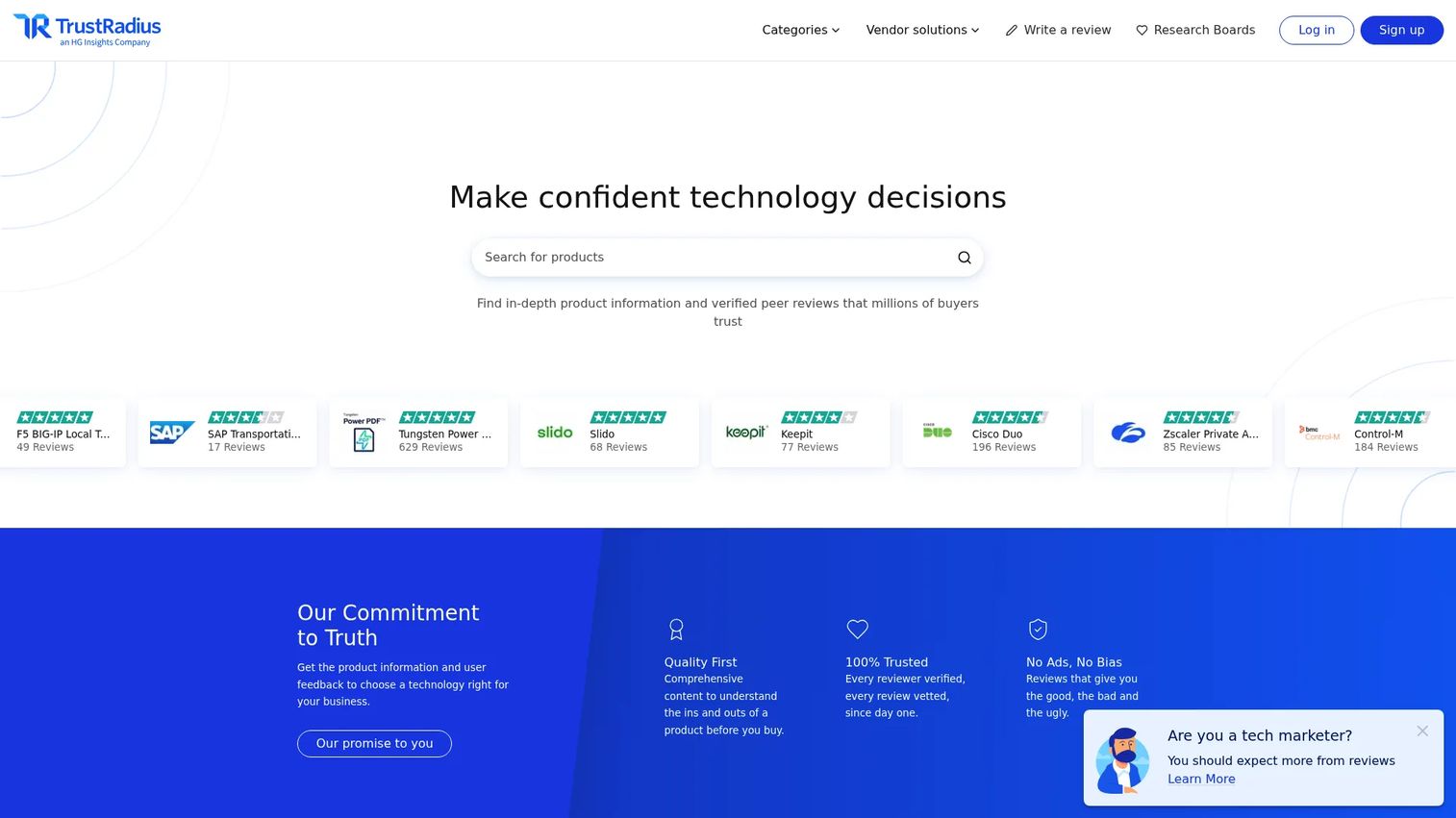
TrustRadius positions itself as a B2B technology research platform built around verified, in-depth reviews. Where many platforms surface star ratings and short snippets, TrustRadius encourages longer written narratives covering implementation experience, product fit, support quality, and specific use cases. This makes it particularly useful for buyers who need evidence that goes beyond an aggregate score.
Best for: Buyers evaluating B2B software where implementation complexity, adoption patterns, or long-term customer experience are deciding factors in the purchase.
Key features
- In-depth verified B2B software reviews with structured prompts
- Review content organized by use case
- Product search and side-by-side comparison tools
- Vendor customer-voice and buyer-intent offerings
- Pricing research content on product pages
Why choose TrustRadius: Detailed review narratives surface the issues a five-star average cannot show: Slow onboarding, support ticket patterns, integration gaps, and edge cases that only appear after six months of use. If your buying committee needs written evidence to justify a recommendation, TrustRadius tends to produce more substantive content per review than broader directories.
TrustRadius pricing: Free for buyers. The vendor-facing Customer Voice plan starts at $30,000 per year per product, per TrustRadius's own product page (verified October 2026). Additional vendor offerings use request-a-demo or custom pricing.
G2 rating: 3.5/5
Digital marketer angle: Mine the written reviews to find the language your target buyers use when describing outcomes, objections, and implementation friction. This is faster than running primary research and often produces messaging insights that competitor analysis alone misses. The best user research tools for marketers combine primary research with exactly this kind of secondary review mining.
5. PeerSpot
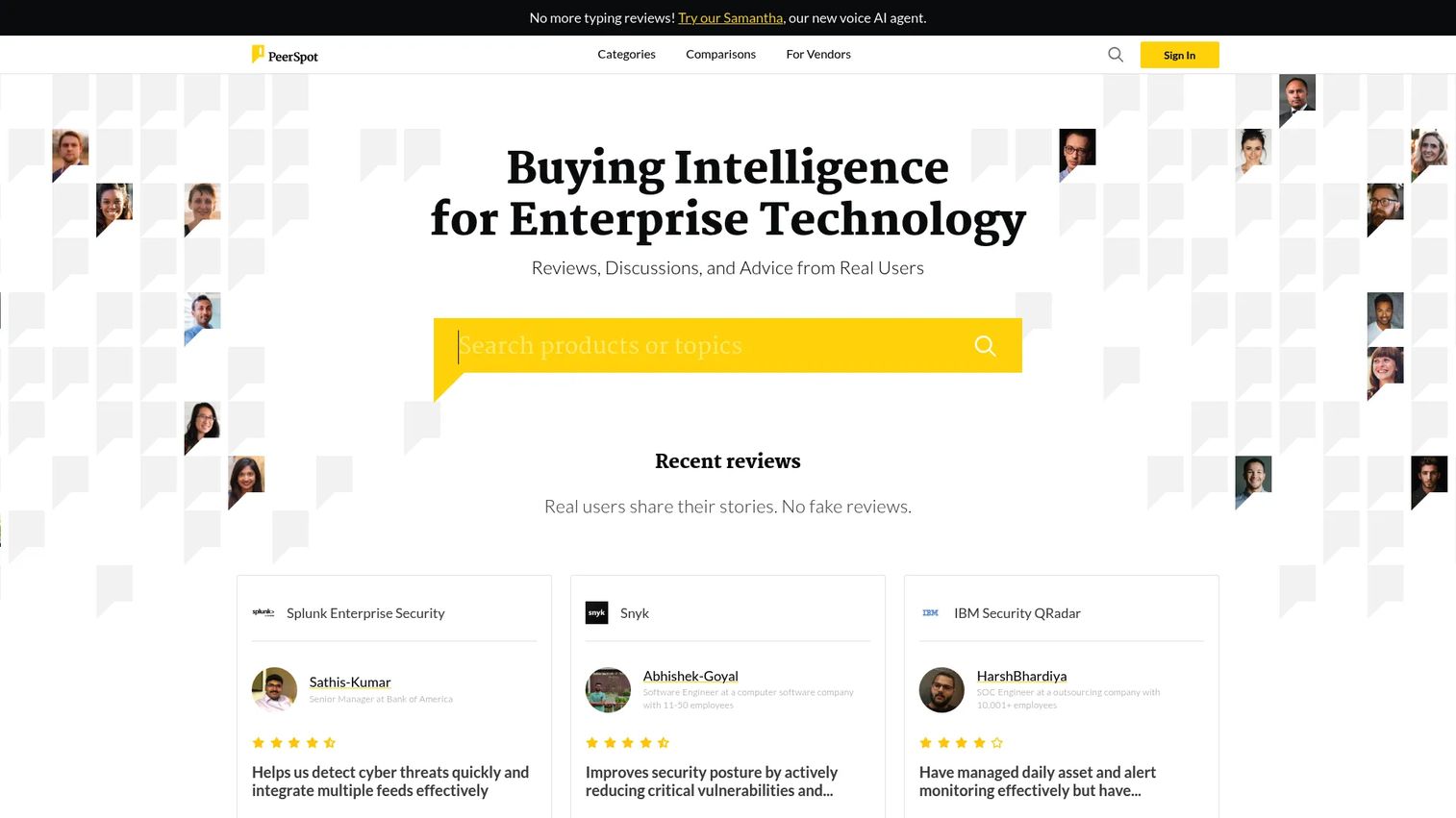
PeerSpot is a buying-intelligence and technology-review platform built around verified practitioner reviews for enterprise IT, security, data, and infrastructure categories. It combines peer review capture with AI-powered content creation through peerspot.ai, demand generation tools including PeerIntent and PeerPixel, and marketplace syndication to AWS and Google Cloud Marketplace. The review base skews heavily toward technical practitioners who evaluate products in complex enterprise environments.
Best for: Marketers supporting enterprise technology products where technical practitioners, IT teams, or security buyers influence or make the purchase.
Key features
- Verified practitioner reviews with managed interview capture
- AI-assisted content creation for go-to-market teams
- Buyer-intent data through PeerIntent and PeerPixel
- AWS Marketplace and Google Cloud Marketplace syndication
- Competitive comparison pages for enterprise technology categories
Why choose PeerSpot: The platform's strength is in categories where a marketing messaging gap with technical buyers costs deals. Reviews from IT architects, security engineers, and data platform leads surface the operational requirements and evaluation criteria that marketing copy rarely addresses. For enterprise software reviews, this practitioner depth is often the missing piece between a strong demo and a closed contract.
PeerSpot pricing: The Get Listed plan is free. The AI Package runs $50,000 per year per product, and the AI + Growth Package runs $70,000 per year per product (both billed annually, verified October 2026). Add-on pricing was not publicly listed on the reviewed pricing page.
G2 rating: 4.8/5
Digital marketer angle: Use PeerSpot to find the technical buying criteria and content gaps between your current messaging and what practitioners say they actually evaluated. The intent data can also inform which accounts are in an active evaluation cycle for your category.
6. SoftwareReviews
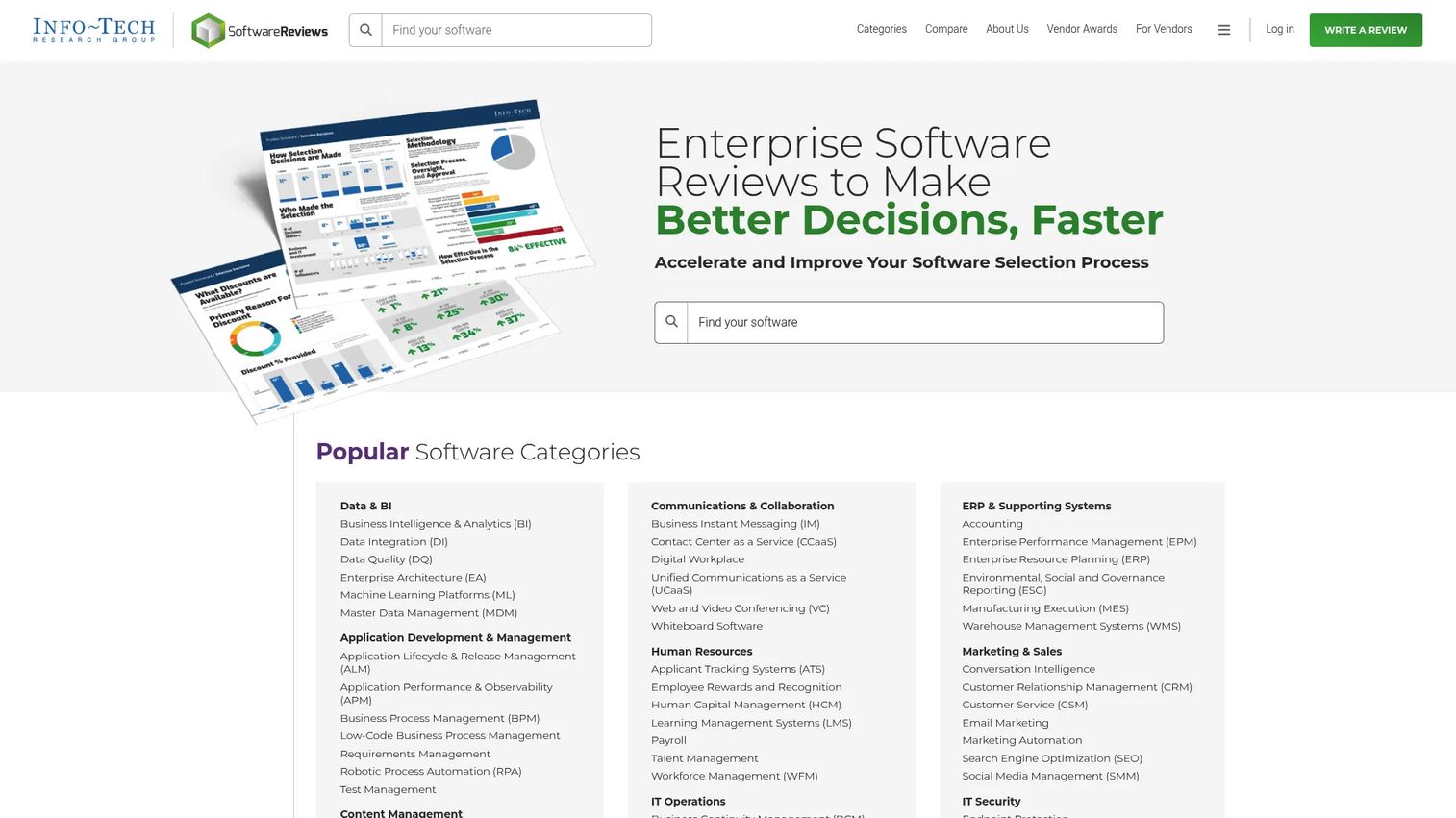
SoftwareReviews provides data-driven enterprise software research built around end-user feedback. Its signature formats, Data Quadrant reports and Emotional Footprint evaluations, organize satisfaction data into structured frameworks that procurement and IT teams can use without reading hundreds of individual reviews. Product scorecards add feature-level and capability-level satisfaction data to complement the higher-level category rankings.
Best for: Enterprise teams that need structured evaluation artifacts, stakeholder alignment documents, and category reports that go beyond basic review aggregation.
Key features
- Data Quadrant reports comparing software products and vendors
- Emotional Footprint reports measuring vendor relationship quality
- Product scorecards with feature satisfaction and renewal intent data
- Enterprise category research across major software categories
- Buyer guides and structured evaluation content
Why choose SoftwareReviews: It suits buying committees that need a documented vendor-evaluation rationale. A Data Quadrant or Emotional Footprint report gives procurement, IT, and finance teams a shared reference point that is harder to challenge than a curated list of five-star quotes. For enterprise technology research where the buyer is a committee rather than an individual, structured research formats reduce the debate about which evidence counts.
SoftwareReviews pricing: Custom pricing. No publicly readable pricing page or numeric tiers were verified as of October 2026. Contact SoftwareReviews directly for vendor program details and research access options.
Digital marketer angle: Useful for understanding the evaluation dimensions that shape enterprise vendor selection, particularly the emotional and relationship factors that procurement reviewers weight alongside feature parity. The Emotional Footprint format surfaces vendor trust and support quality perceptions that standard rating averages obscure.
7. GetApp
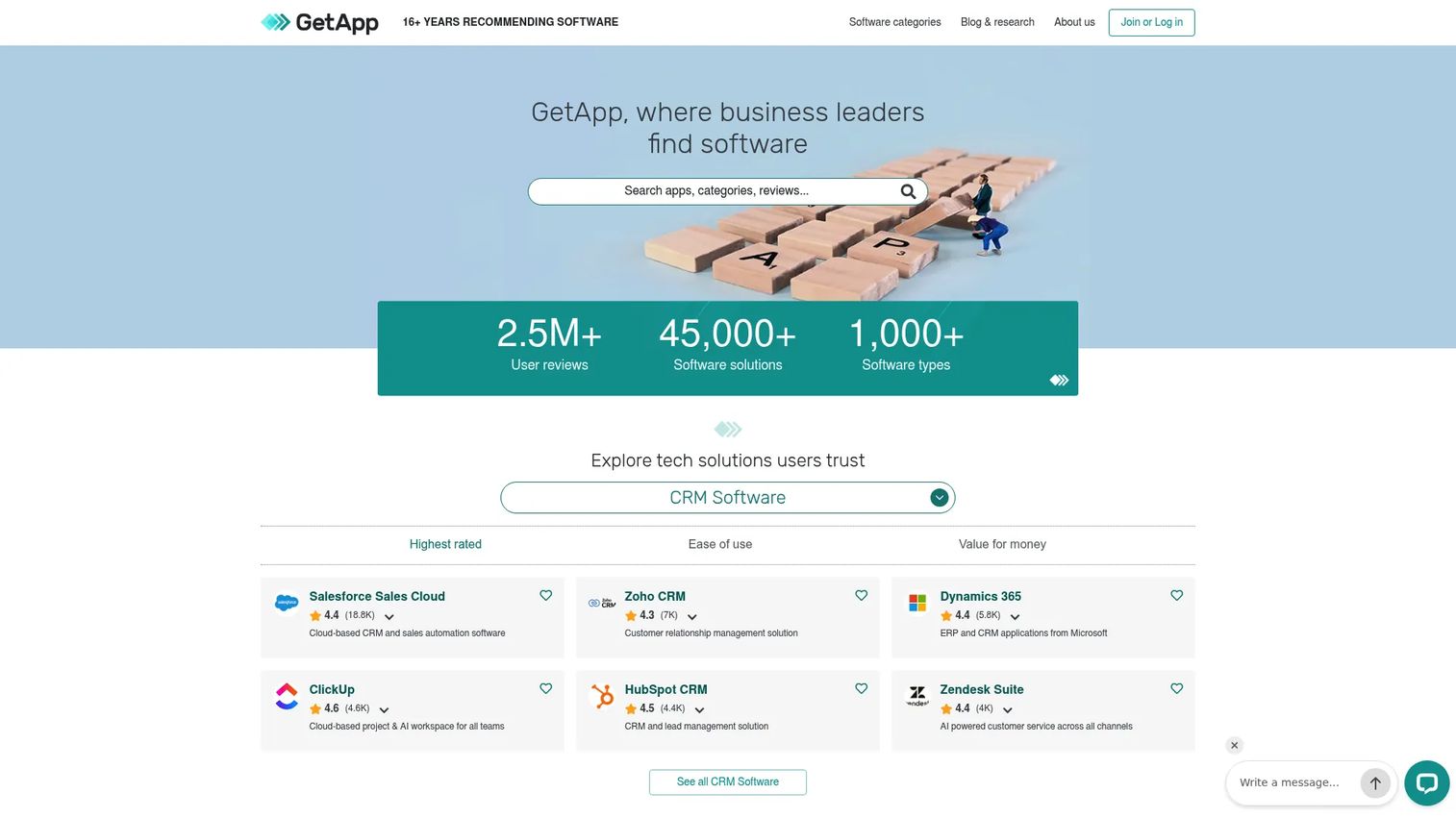
GetApp is a free software discovery and comparison platform aimed at business teams researching practical applications. Its category browsing is optimized for operational buyers: Marketing software, sales tools, HR platforms, finance applications, and customer service technology all have dedicated category pages with filters, comparison tables, and verified user reviews.
Best for: Small and mid-sized business teams beginning software research and comparing practical applications without enterprise process overhead.
Key features
- Software search and category browsing across business functions
- Side-by-side software comparison pages
- Verified user reviews and ratings
- Feature-focused product discovery filters
- Buyer research content for major software categories
Why choose GetApp: GetApp works well for teams at the start of a research cycle who need a fast orientation across a category before narrowing options. Its straightforward interface requires no learning curve, which makes it a practical first stop when a non-technical stakeholder is doing initial research. For data visualization tools or operational software categories, the category filters help buyers self-select by feature rather than by brand recognition.
GetApp pricing: Free for buyers. No paid buyer plans or subscription tiers were identified on the official site (verified October 2026).
G2 rating: 4.0/5
Digital marketer angle: Use GetApp to see how fast-moving software categories are framed for operational buyers and where product messaging becomes feature-led rather than outcome-led. Categories where the feature filter drives discovery are often underdeveloped in vendor positioning.
8. Software Advice
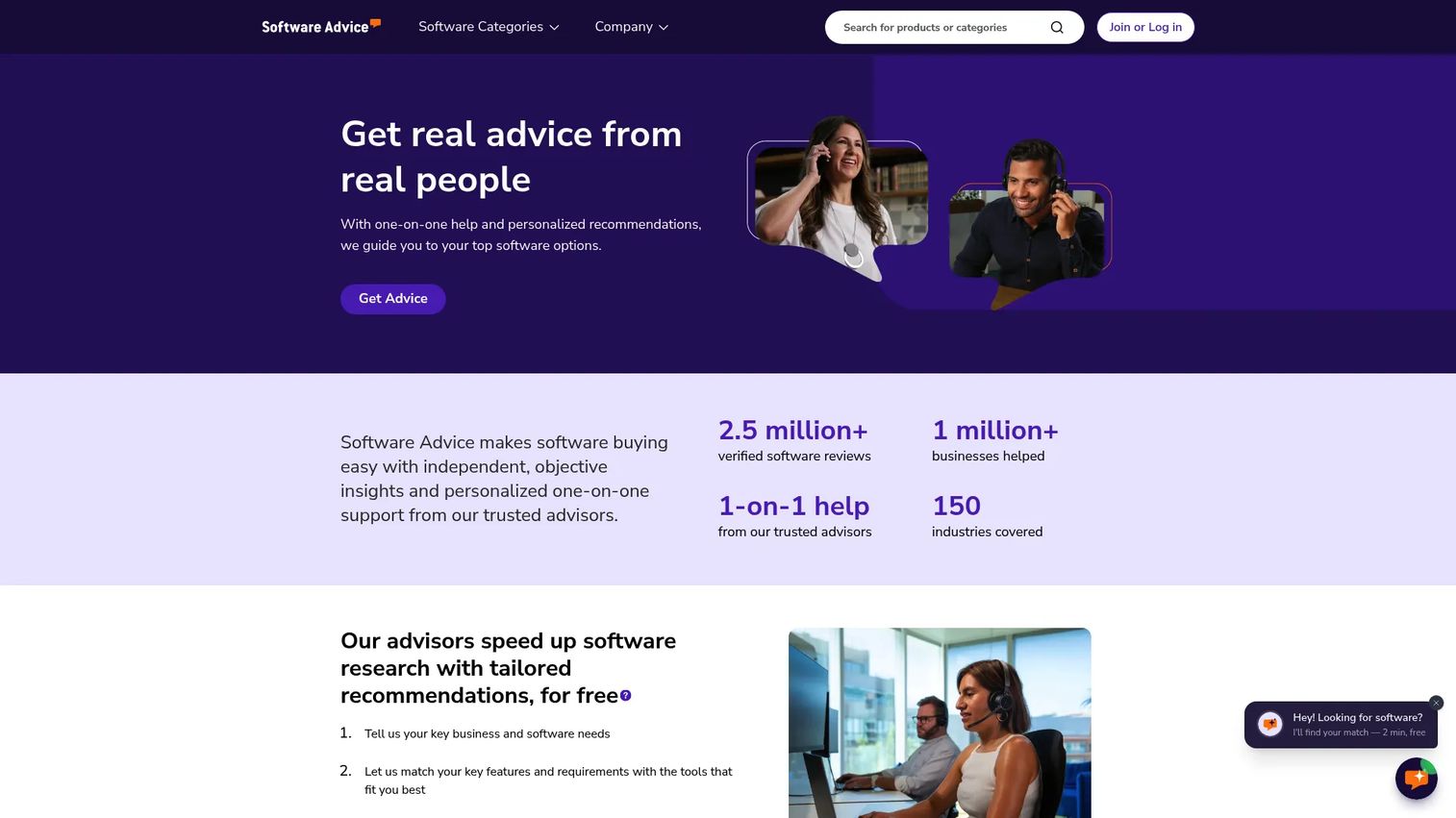
Software Advice combines software category directories with a personalized advisory service. Buyers can browse categories independently or connect with an advisor who helps narrow the field based on their specific requirements. The platform covers over 150 industries, which makes it useful when the buyer's context is specialized enough that generic category filters produce irrelevant results.
Best for: Buyers who want guided help narrowing a crowded software market rather than doing all the comparative research independently.
Key features
- Personalized one-on-one software recommendations from advisors
- Software reviews and category comparison content
- Category coverage across 150+ industries
- User review content alongside advisory guidance
- Shortlist assistance for buyers with specific requirements
Why choose Software Advice: The advisory layer reduces research time for buyers entering an unfamiliar category. Rather than reading through dozens of reviews to identify which filters matter, an advisor conversation surfaces the right shortlist criteria quickly. This is useful for growth marketers helping non-marketing stakeholders, such as finance or operations teams, evaluate software outside their usual category knowledge.
Software Advice pricing: The advisory service is free for buyers. No paid buyer plans were identified (verified October 2026). Vendor participation operates on a separate commercial model.
G2 rating: 4.0/5
Digital marketer angle: Software Advice's advisory process reveals how buyers move from "too many options" to a working shortlist. Studying the questions advisors surface, visible in their buyer guides and category content, can improve your own competitor comparison pages and conversion paths for high-intent visitors.
9. SourceForge
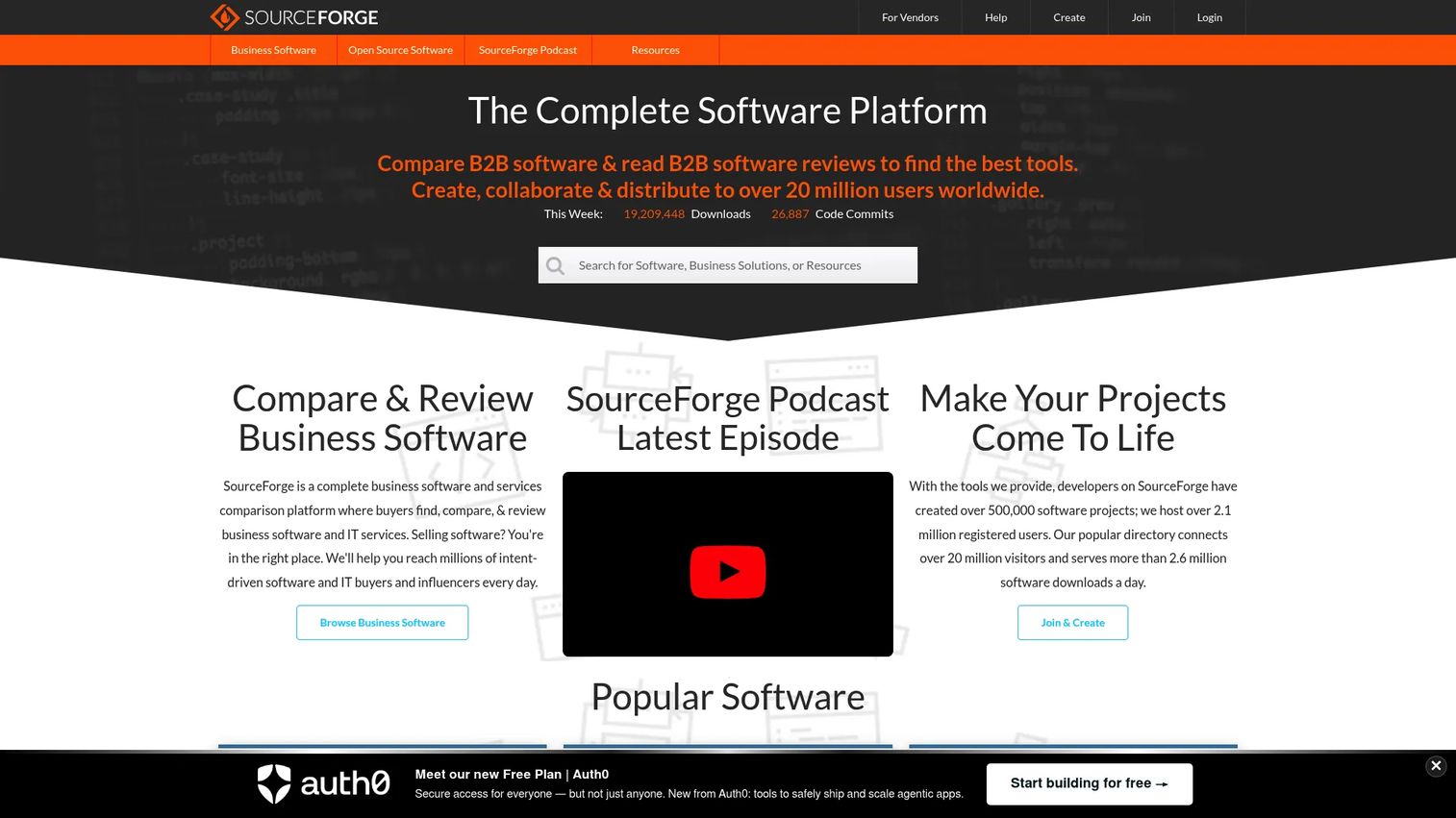
SourceForge is a long-standing software discovery, review, and open-source hosting platform. Its directory spans commercial software and open-source projects, with product pages, user reviews, ratings, and comparison information. For buyers whose shortlist might include open-source alternatives alongside commercial options, SourceForge covers both in one destination.
Best for: Teams researching a mix of commercial software and open-source alternatives, particularly in technical, developer-adjacent, or infrastructure categories.
Key features
- Git, Mercurial, and Subversion code repositories for open-source projects
- Commercial software directory with user reviews and ratings
- Side-by-side product comparison information
- File hosting and global download mirrors for software distribution
- Issue tracking with milestones and custom fields for open-source projects
Why choose SourceForge: Its fit is narrowest for enterprise buying committees that require structured research reports or practitioner validation. Where it earns a place in the research workflow is when the shortlist genuinely includes open-source options or developer tools, and the buyer needs a single location to compare both categories. For a customer data platform evaluation that includes an open-source data layer, SourceForge may surface alternatives that purely commercial directories miss.
SourceForge pricing: Core open-source project hosting and download features are free. Vendor business listing plans, including Plus, Premium, Amplify, and Precision ABM, are available, but no public prices were displayed on the pricing page (verified October 2026). Contact SourceForge for current rates.
G2 rating: 4.3/5
Digital marketer angle: Use SourceForge selectively for competitive discovery in technical categories. It is not a replacement for enterprise peer research, but it identifies open-source alternatives that buyers may bring into a competitive evaluation without your marketing team anticipating them.
Considerations when choosing a technology review platform
Review relevance beats raw review count
A review from a company your size, in your industry, solving the same problem carries far more weight than a category average built on thousands of unfiltered responses. Before trusting a score, filter for reviewer role, company size, and deployment context. A single relevant review often tells you more than fifty generic ones.
Check review recency and moderation signals
Look at review dates, incentive disclosure, and whether the platform labels reviews collected through vendor-sponsored campaigns. A product that collected 400 reviews during a vendor promotion two years ago may look strong on a rating chart while current users have a different experience. Recency matters more in fast-moving software categories.
Separate discovery from validation
Broad directories help you find vendor names and category boundaries. Detailed peer research helps you pressure-test specific claims. Expecting one platform to do both jobs well leads to shortcuts. Use a directory to build the longlist, then shift to a deeper peer review or research platform to cut it down. This two-stage workflow reduces the risk of shortlisting based on marketing copy rather than practitioner evidence.
Match the platform to the buying motion
A startup growth marketer researching their first attribution tool has different needs than an enterprise demand gen team justifying a $400K stack consolidation to procurement and legal. The platform you use should match the complexity and formality of the buying motion. Broad directories serve fast decisions well. Structured research formats, scorecards, and advisory services serve committee decisions better.
Plan the handoff after review-site research
Review platforms are rarely the final conversion point. When a buyer clicks through to your product site after researching on a third-party review platform, they need clear product proof, not another sales deck. A well-structured interactive product experience lets buyers validate product fit on their own terms, without scheduling a meeting they are not yet ready for. Plan that handoff before you invest in review-site presence.
Conclusion
Most technology purchasing decisions fail not because buyers chose the wrong platform, but because they relied on a single source and treated a rating average as a complete answer.
The nine platforms in this guide cover different jobs. G2 gives you the broadest B2B software directory for initial discovery. Gartner Peer Insights and SoftwareReviews fit more formal enterprise evaluation with structured research artifacts. TrustRadius and PeerSpot help teams investigate deeper practitioner evidence before committing. Capterra, GetApp, and Software Advice make the research process accessible for operational buyers and non-technical stakeholders. SourceForge earns a place when the shortlist includes open-source options.
The practical workflow: Use one broad directory to map the category, then use one deeper peer platform to validate the shortlist before entering vendor conversations. Read reviews filtered to your company size and industry, not the overall rating. Check recency. And before you invest in building a presence on any of these platforms, make sure the buyers who find you there have something worth clicking through to.
Once buyers reach your product site, give them a way to evaluate the product without waiting for a meeting. Start your journey with Guideflow today!
FAQs
A technology review platform is a service that helps buyers research software vendors through user reviews, ratings, category directories, comparison tools, reports, and buying guidance. These platforms range from broad software directories to specialized enterprise research services. Platform depth varies significantly by software category and buyer type, so matching the platform to the research job matters as much as the platform's brand recognition.
Software review sites focus primarily on user feedback, star ratings, and written reviews from practitioners. Software comparison platforms add filters, side-by-side product information, category pages, and shortlist features that help buyers evaluate multiple vendors at once. In practice, most major platforms combine both functions, though their emphasis differs. G2 and Capterra lean toward broad comparison, while TrustRadius and PeerSpot lean toward deeper review depth.
Enterprise teams typically need reviewer context, category depth, and structured research artifacts that procurement, IT, and security reviewers can evaluate independently. Gartner Peer Insights and SoftwareReviews both offer research formats built for committee buying decisions. PeerSpot works well for IT and infrastructure categories where practitioner validation carries more weight than volume. Comparing at least two sources before creating a final enterprise shortlist reduces the risk of a single platform's reviewer population skewing the picture.
Ratings are useful signals, not complete answers. A single aggregate score cannot capture implementation effort, integration fit, or support quality for your specific context. Before trusting a score, inspect review recency, reviewer role, company size, incentive disclosure, and the written comments behind the number. According to TrustRadius's 2024 research, 73% of technology buyers say they regularly or sometimes encounter fake online reviews, which reinforces the value of reading actual review content rather than relying on averages.
Growth marketers can use review platforms for four jobs beyond personal software research. First, competitive intelligence: Read competitor review themes and identify the objections buyers raise. Second, category messaging: Find the language buyers use to describe outcomes and problems in your category. Third, buyer intent: Platforms like G2 and PeerSpot offer intent data showing which accounts are researching specific categories. Fourth, review generation: A presence on the right platforms for your category improves visibility during the research phase. According to G2's 2025 data, 79% of B2B software buyers say AI search has changed how they conduct research, which means review content is increasingly being surfaced through AI-generated answers, not just direct platform visits.
Incentives do not automatically invalidate feedback, but they warrant scrutiny. Look for transparency disclosures, verified-user indicators, and balance between positive and critical content. A review that describes only strengths with no operational friction is a weak signal regardless of how it was collected. Recurring themes across multiple independent reviewers carry more weight than any single five-star narrative, incentivized or not.
No. Review platforms help buyers narrow choices and identify the right questions to ask. They do not replace hands-on product evaluation. After researching on a software review site, buyers still need evidence that the product fits their specific workflows, integrations, and internal operating model. A review describing another company's implementation experience is useful context, not a substitute for seeing the product behave in your own environment.
Different platforms attract different reviewer populations, emphasize different software categories, and apply different research formats. A category that has strong coverage on G2 may have more relevant practitioner depth on PeerSpot, or more structured research on SoftwareReviews. Cross-checking two complementary sources, one broad directory and one deeper peer platform, reduces the risk of treating one rating system or reviewer population as the complete market view. According to G2's 2025 research, software review sites influence 15.1% of vendor shortlists, which means no single platform captures the full picture of how buyers make decisions.