A return is not one problem. It is three problems wearing the same label.
It is a cost center, because someone pays for the reverse shipping, the restocking, and the refund. It is a customer experience moment, because a person who wants their money back is deciding whether they will ever buy from you again. And it is an inventory problem, because that item has to be received, inspected, graded, and either put back on the shelf or written off. Most teams try to run all three through email threads, spreadsheets, and manually generated labels. That works until volume climbs.
And volume is climbing. Online return rates average around 30% compared to roughly 8.89% for in-store purchases, according to LateShipment (2026). A brand doing meaningful ecommerce revenue is processing returns on nearly a third of what it ships. The category exists because that scale breaks manual workflows fast. The global returns management software market sat at USD 1.58B in 2023 and is forecast to reach USD 3.29B by 2031 at a 9.6% CAGR, per The Insight Partners (2024). That growth tracks a real shift: reverse logistics software is now standard infrastructure, not a nice-to-have.
The hard part is not deciding you need a tool. It is picking one without wrecking the customer experience while you cut cost. A branded return portal that deflects support tickets and an exchange-first flow that keeps revenue in your ecosystem solve different problems than an enterprise reverse logistics engine wired into your WMS. This guide gives you a shortlist for 2026, organized around what you are actually trying to fix. If you also evaluate adjacent systems, our roundups on loyalty management and customer data platform tools pair naturally with returns decisions.
What's inside
This guide covers eight returns management software tools built for ecommerce returns management, from branded return portals to enterprise reverse logistics orchestration. We picked tools based on four criteria that actually matter when you deploy one: quality of the branded returns portal, depth of workflow and return policy automation, handling of refunds and exchanges (especially exchange-first flows), and integration fit with your ecommerce, WMS, and OMS stack. Analytics weighted heavily too, since returns analytics is where you find the SKUs and policies quietly draining margin. The shortlist is organized around practical buyer criteria, not vendor size or hype. If a tool leans support-heavy or ops-heavy, we say so.
TL;DR
- Best for branded returns centers plus analytics: ReturnLogic, built for ecommerce brands that want a white-label returns center and reporting depth.
- Best for broad post-purchase ecosystem: AfterShip, if you want tracking, shipping, and returns from one vendor.
- Best for exchange-first retention: Loop Returns, purpose-built to keep revenue in your store through exchanges and store credit.
- Best for enterprise post-purchase experience: Narvar, for larger retailers with complex customer journeys and branded communication needs.
- Best for ops-heavy reverse logistics: ClickPost, when carrier logic and shipping orchestration matter as much as the return portal.
- Best for leaner Shopify-led setups: ReturnGO or Redo Returns & Exchanges, for merchants who want self-service returns without heavy configuration.
What is returns management software?
Returns management software is a returns management platform that automates return requests, RMA authorization, label generation, refunds, exchanges, customer communication, and the reverse logistics behind getting a product back and back into inventory.
Under the hood, most tools in this category handle a common set of jobs. Understanding these helps you compare vendors on the same terms:
- Return portal: A self-service, often branded returns portal where customers start a return, pick a reason, and get instructions without emailing support.
- RMA automation: Automated return merchandise authorization, so approvals follow your rules instead of a person clicking through each one.
- Return label generation: Prepaid or on-demand labels, sometimes QR-code or paperless, generated the moment a return is approved.
- Return policy automation: Rules that enforce windows, eligibility, final-sale exclusions, and fees without manual gatekeeping.
- Refunds and exchanges: Refund processing to the original method, plus store credit, gift cards, and exchange-first workflows.
- Inventory sync: Disposition and inventory sync so returned stock updates counts and routes to the right location.
- Returns analytics: Reporting on return reasons, rates by SKU, refund volume, and recovered revenue.
- WMS and OMS integrations: Connections to warehouse and order management systems so the return moves through operations cleanly.
That last point separates a returns center front-end from a full platform. A portal collects the request. The platform runs policy, logistics, analytics, and workflow automation end to end.
When to use returns management software
Reduce manual return handling
You know you have outgrown manual returns when your support inbox fills with "where is my refund" and "how do I return this" messages. Agents generate labels by hand, check refund status across systems, and re-explain the same policy dozens of times a day. A returns management platform pushes that work to a self-service portal and automated rules. The result is fewer touches per return and a support team that spends time on real problems instead of status updates. This is the fastest way to reduce return processing time and reduce support tickets in one move.
Protect margin with exchange-first workflows
Every refund is revenue leaving your business. Exchange-first workflows flip the default so a customer sees a size swap, a different variant, or store credit before a cash refund. When your goal is retention and revenue recovery, this matters more than any other feature. Tools built around exchange-first flows nudge shoppers toward keeping the money in your ecosystem, which protects margin without forcing a harder return policy on everyone.
Standardize returns across ecommerce and operations stacks
Once you run multiple sales channels, warehouses, or regions, consistency becomes the problem. You need the same policy, the same data, and the same disposition logic everywhere. That means WMS and OMS integrations, ERP connections, and accounting sync so refunds and inventory stay accurate. If your team is stitching returns data together by hand across systems, you have hit the point where a platform pays for itself through data consistency and scale.
Comparison table
The table below sorts the eight tools by overall category fit for ecommerce returns management. Read it as a shortlisting aid: match your primary intent (branded portal, exchange-first, enterprise, or ops-heavy) to the row, then read the full section before deciding.
| # | Product | Intent | Key use case | Pricing | G2 rating |
|---|---|---|---|---|---|
| 1 | ReturnLogic | Branded returns center | White-label portal plus returns analytics for ecommerce brands | Custom | Not listed |
| 2 | AfterShip | Post-purchase suite | Tracking, shipping, and returns in one platform | From $29/mo | 4.6/5 |
| 3 | Loop Returns | Exchange-first retention | Exchanges and store credit for DTC brands | Free; from $155/mo | 4.7/5 |
| 4 | Narvar | Enterprise post-purchase | Branded returns and communication at scale | Custom | Not listed |
| 5 | ClickPost | Ops-heavy reverse logistics | Carrier logic plus returns orchestration | Custom | 4.8/5 |
| 6 | parcelLab | Post-purchase orchestration | Lifecycle communication plus returns | Custom | 4.6/5 |
| 7 | ReturnGO | Shopify-led self-service | Automated returns and exchanges portal | From $147/mo | 4.8/5 |
| 8 | Redo Returns & Exchanges | Leaner ecommerce setup | Exchange nudges and free returns portal | Free; OMS from $99/mo | 4.8/5 |
1. ReturnLogic
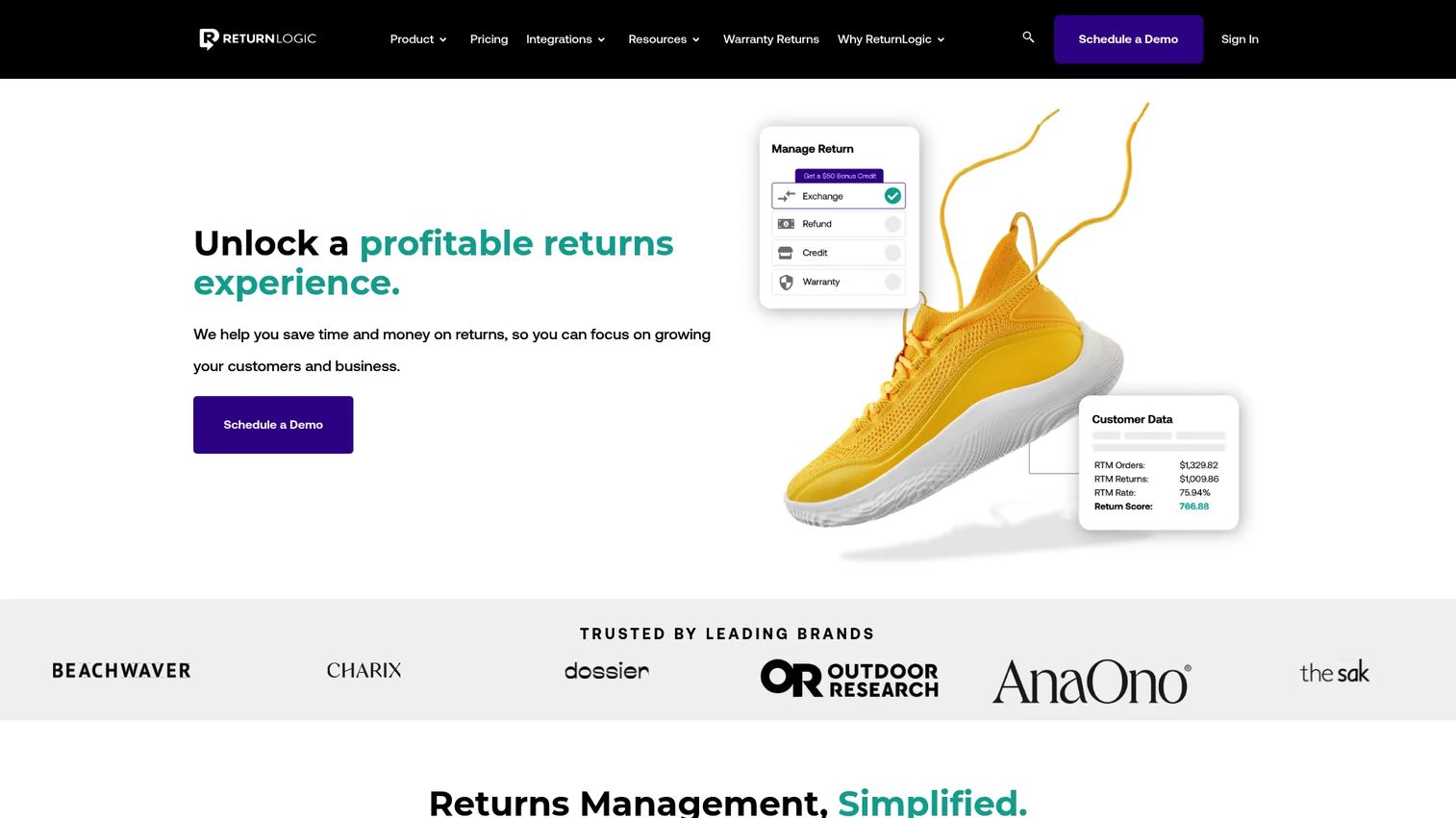
ReturnLogic is a returns management platform built for ecommerce brands that treat returns as a strategic surface, not a cost to minimize quietly. It combines a white-label returns center with automated return rules, disposition management, warranty returns, and reporting depth that most portal-only tools do not match. The pitch is straightforward: give shoppers a branded returns portal that feels like part of your store, then run the operational and analytical layers behind it.
Best for: Ecommerce brands that want a branded returns center paired with serious returns analytics and control over disposition.
Key strengths
- White-label returns center: A fully branded return portal so the return experience matches your store instead of a generic third-party page.
- Automated return rules: Policy automation that enforces windows, eligibility, and fees so approvals follow your logic without manual review.
- Disposition and reporting: Disposition management plus advanced reporting that surfaces return reasons, rates by SKU, and recovered revenue.
Why choose ReturnLogic: If your team wants to understand why returns happen and act on it, ReturnLogic leans harder into analytics and disposition than most portal-first tools. It fits brands that see returns as a data problem to solve, not just a queue to clear. The exchange incentives and warranty handling make it a fit when the goal is margin protection alongside a polished customer experience.
ReturnLogic pricing: ReturnLogic positions itself around ecommerce brands and does not publish a fixed public entry price, so plans are quote-based depending on your volume and feature needs. Contact the vendor for a tailored quote, and confirm which analytics and disposition capabilities sit at your tier before committing.
2. AfterShip
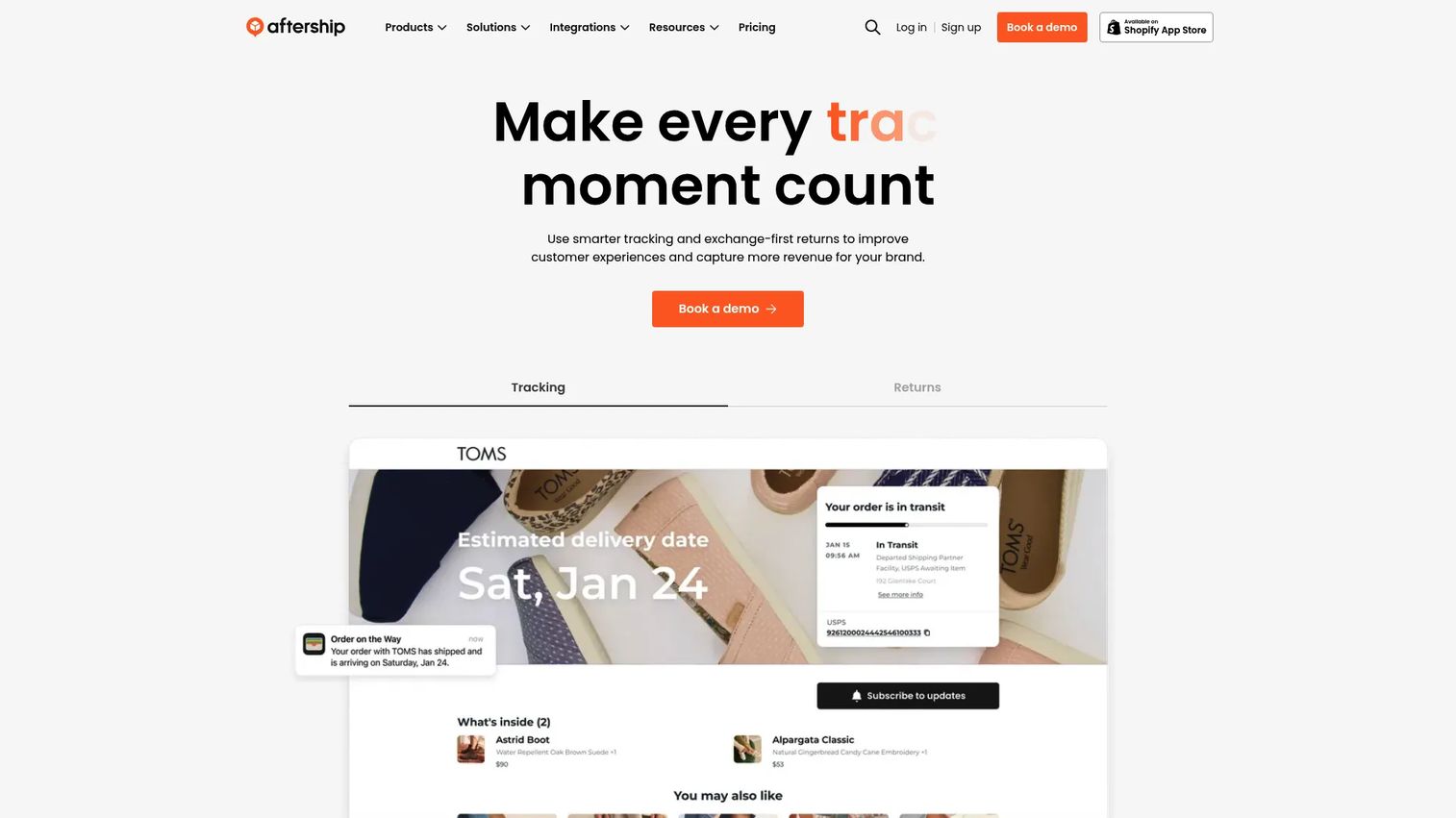
AfterShip is post-purchase software that spans shipment tracking, automated returns and exchanges, and multi-carrier shipping tools in one ecosystem. For teams that want tracking, notifications, and returns from a single vendor rather than three point tools, the breadth is the draw. The branded tracking pages and returns automation share the same post-purchase layer, so the customer sees a consistent experience from shipped to returned.
Best for: Ecommerce brands that want post-purchase tracking and returns automation from one platform.
Key strengths
- Branded shipment tracking: Branded tracking pages that keep customers in your experience and cut "where is my order" tickets.
- Automated returns and exchanges: Self-service returns and exchange handling wired into the same post-purchase flow.
- Multi-carrier shipping tools: Label and carrier tooling so outbound shipping and reverse logistics live together.
Why choose AfterShip: AfterShip fits when returns are one part of a broader post-purchase strategy and you would rather consolidate than integrate. The volume-based pricing scales with order flow, which suits brands that want to start on tracking and layer returns on top. It is a strong fit for teams prioritizing breadth across the post-purchase journey.
AfterShip pricing: AfterShip's Tracking pricing starts at $29/month for Essentials and $59/month for Premium, with a Team option at $10 per member per month billed annually and Enterprise available at custom pricing. Annual billing carries roughly an 18% saving, and a free start option is available. Confirm which returns capabilities are included at each tier when you scope your plan.
3. Loop Returns
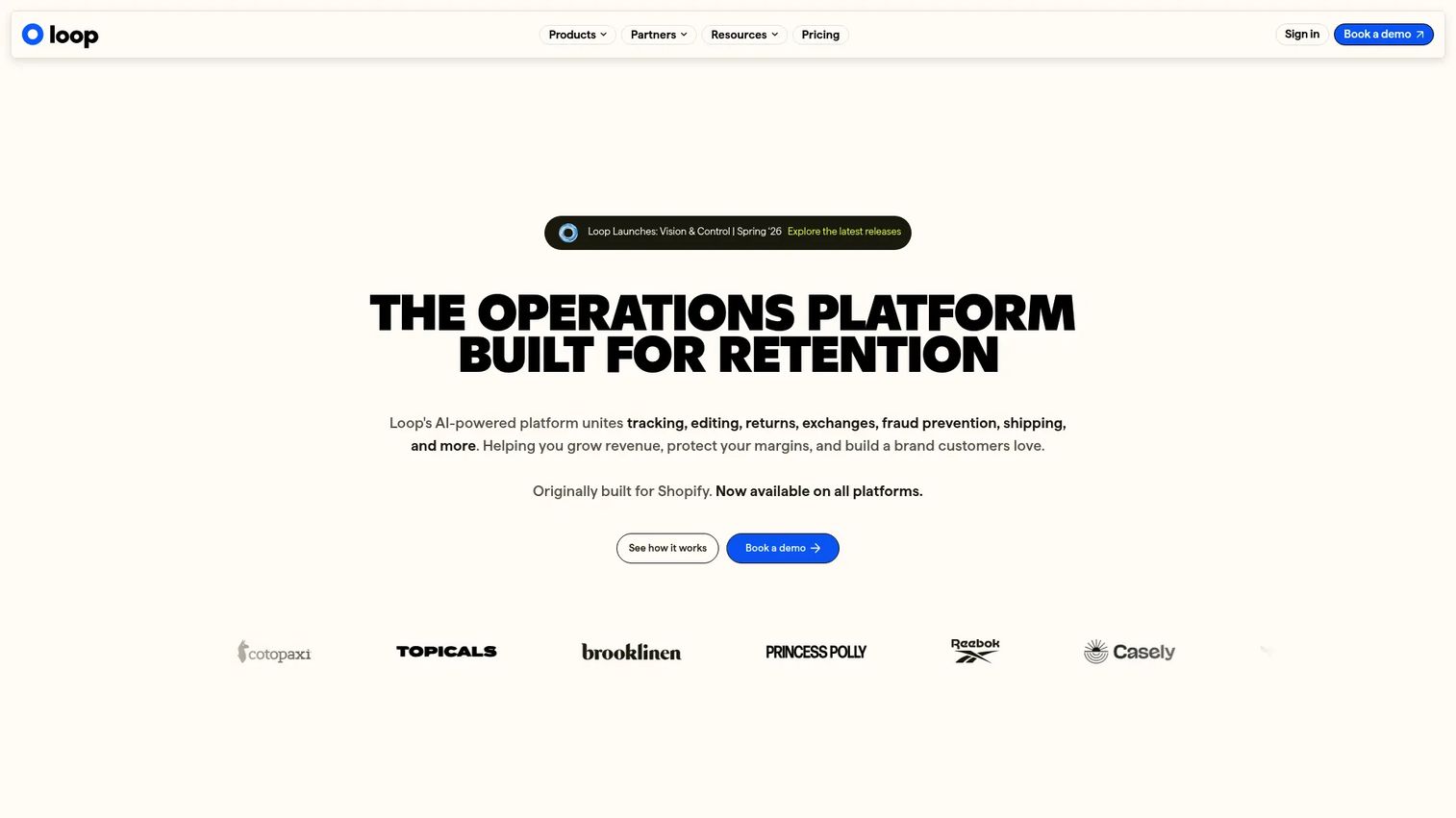
Loop Returns is an AI-powered operations platform for ecommerce returns, exchanges, tracking, shipping, and fraud prevention, best known for its exchange-first workflows. The whole product is oriented around keeping revenue in your store: when a customer starts a return, Loop steers them toward an exchange, a variant swap, or store credit before a cash refund. For DTC and ecommerce teams focused on retention, that default is the point.
Best for: Ecommerce brands that want to automate returns and exchanges while improving retention.
Key strengths
- Exchange-first workflows: Return flows that surface exchanges and store credit first, protecting margin on every eligible return.
- Branded returns experience: A returns portal that carries your brand and reduces support deflection through self-service.
- Order tracking and shipping: Tracking, shipping, and order editing that extend the post-purchase experience beyond returns.
Why choose Loop Returns: Loop is the tool teams reach for when the primary goal is revenue recovery, not just refund processing. If your leadership cares about net revenue retention and keeping dollars in the ecosystem, the exchange-first model does real work. It fits DTC brands with repeat-purchase potential where an exchange today protects lifetime value tomorrow.
Loop Returns pricing: Loop lists Checkout+ as free, Essential starting at $155/month, and Advanced starting at $340/month. The pricing page shows plan names and public starting prices, so verify which exchange and analytics features sit at each tier for your volume before you commit.
4. Narvar

Narvar is post-purchase commerce software built for larger retailers, covering branded tracking experiences, proactive multi-channel notifications, and returns and exchanges automation. Where lighter tools focus on the return portal alone, Narvar treats returns as one stage in a full branded post-purchase journey. That makes it a fit for teams whose customer communication spans tracking, delivery, and returns as a single experience.
Best for: Retailers needing a branded post-purchase experience across tracking, returns, and notifications.
Key strengths
- Branded tracking experiences: Post-purchase pages that keep the customer in your brand from order to return.
- Proactive notifications: Multi-channel notifications that update customers before they open a ticket.
- Returns and exchanges automation: Self-service returns and exchange handling built for higher-volume retail operations.
Why choose Narvar: Narvar fits enterprise and larger mid-market retailers with complex customer journeys and the internal resources to run a full post-purchase program. If branded communication across the whole delivery-and-returns lifecycle is a priority, it goes deeper than portal-only tools. Evaluate implementation scope and integration needs early, since this is a platform built for scale.
Narvar pricing: Narvar does not publish public pricing and works on a custom-quote basis tailored to retailer size and scope. Contact the vendor for a quote, and factor implementation and integration planning into your evaluation timeline given the enterprise focus.
5. ClickPost
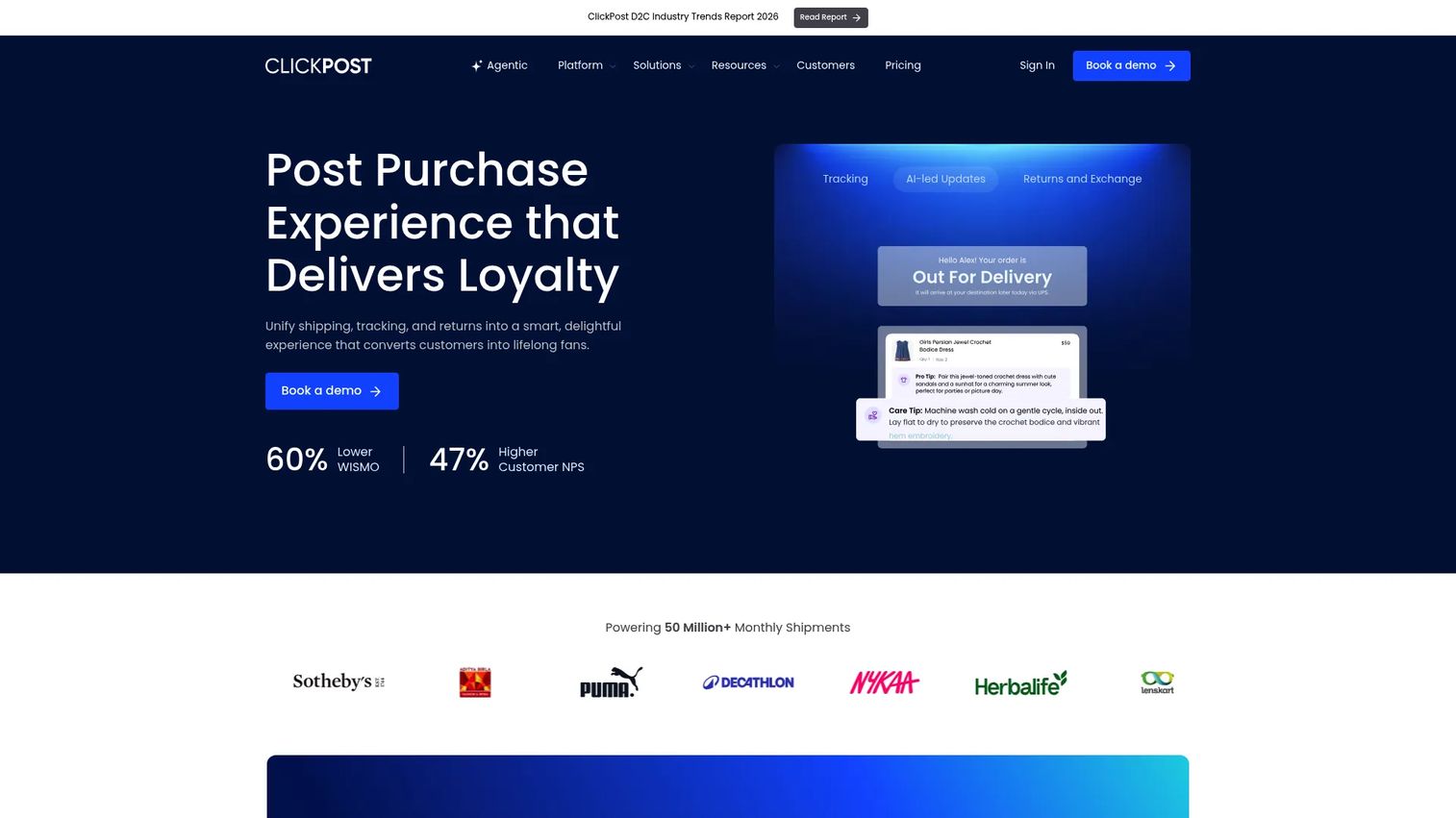
ClickPost is a post-purchase logistics intelligence platform for ecommerce and D2C brands, built around multi-carrier tracking, returns and exchanges management, and carrier allocation with delivery exception workflows. Where many tools start from the customer-facing portal, ClickPost starts from logistics. That makes it the tool ops-heavy teams evaluate when carrier logic, shipping orchestration, and reverse logistics matter as much as the return experience.
Best for: Enterprise ecommerce brands needing unified post-purchase automation across shipping and returns.
Key strengths
- Multi-carrier shipment tracking: Tracking across carriers so returns and deliveries share one logistics view.
- Returns and exchanges management: Return automation that ties into the same carrier and orchestration layer.
- Carrier allocation and exceptions: Delivery exception workflows and carrier allocation that reduce failed and delayed reverse shipments.
Why choose ClickPost: ClickPost is the pick when your returns problem is really a logistics problem. Teams running high shipment volume across multiple carriers get orchestration depth that portal-first tools do not focus on. It fits brands that want reverse logistics and shipping logic managed in one intelligence layer.
ClickPost pricing: ClickPost uses custom pricing based on business needs, shipment volume, and the feature modules you select, rather than fixed public tiers. There is no published entry price, so request a quote scoped to your volume and confirm which returns and orchestration modules are included.
6. parcelLab
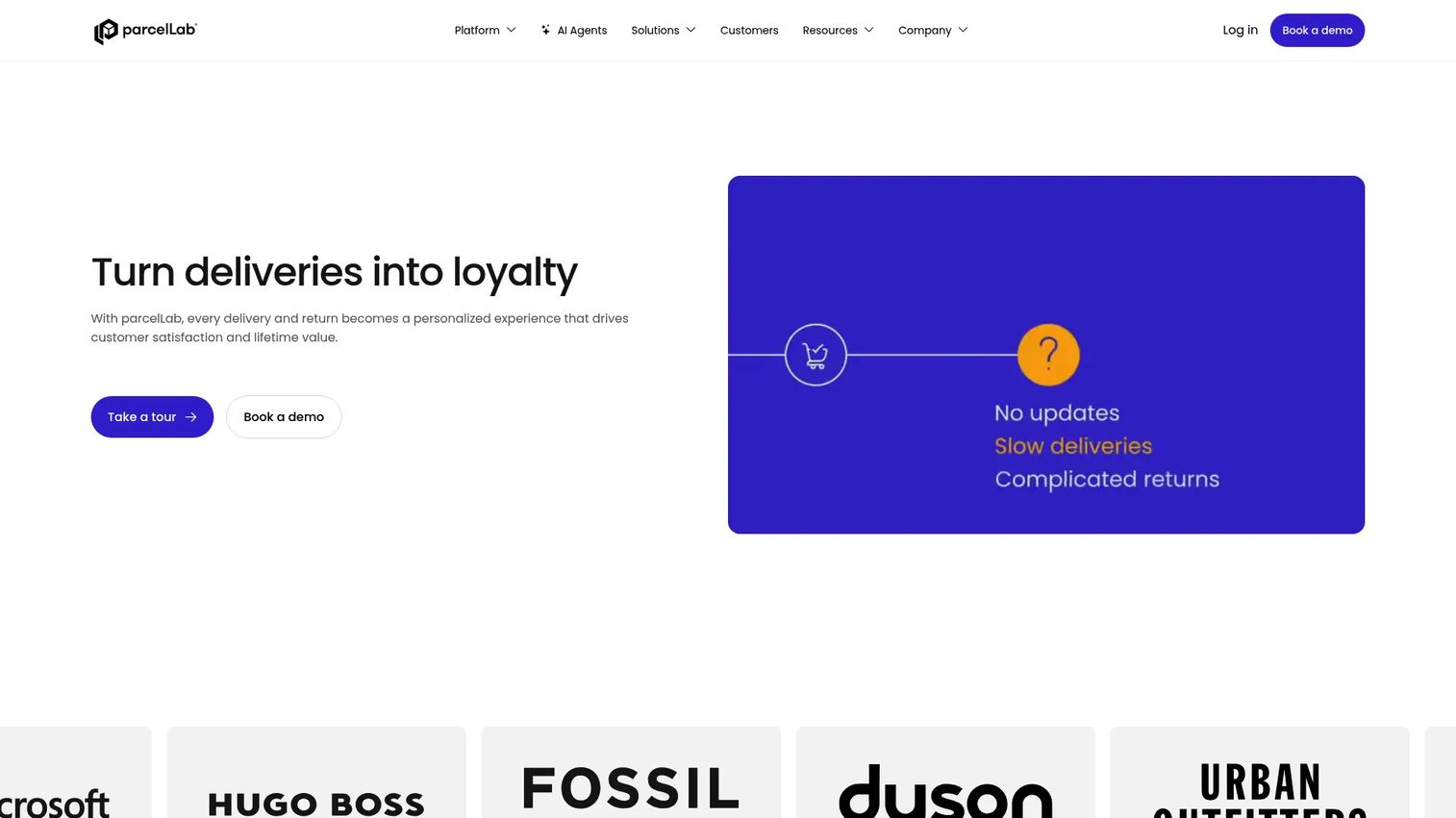
parcelLab is post-purchase experience software for retail brands, covering branded order tracking, a self-service returns portal, and AI-powered post-purchase automation and analytics. Its strength is treating returns as one thread in a wider lifecycle of customer communication. For teams that want delivery updates, returns, and post-purchase messaging orchestrated together, parcelLab extends beyond returns-only tooling.
Best for: Retailers that want to improve delivery, returns, and post-purchase customer experience together.
Key strengths
- Branded order tracking: Order tracking and delivery updates that keep customers informed and in your brand.
- Self-service returns portal: A returns management portal that lets customers start returns without support contact.
- Post-purchase automation and analytics: AI-powered automation plus analytics across the full post-purchase lifecycle.
Why choose parcelLab: parcelLab fits retailers who see returns as inseparable from the rest of the post-purchase experience. If you want lifecycle communications and returns managed on one platform rather than bolted together, it covers more of that journey. It suits larger teams with the appetite to run post-purchase as a program, not a single portal.
parcelLab pricing: parcelLab does not publish a fixed public price and indicates pricing varies and is tailored to the brand. Contact the vendor for a quote scoped to your volume and the post-purchase capabilities you need, and confirm which returns and analytics features are included.
7. ReturnGO
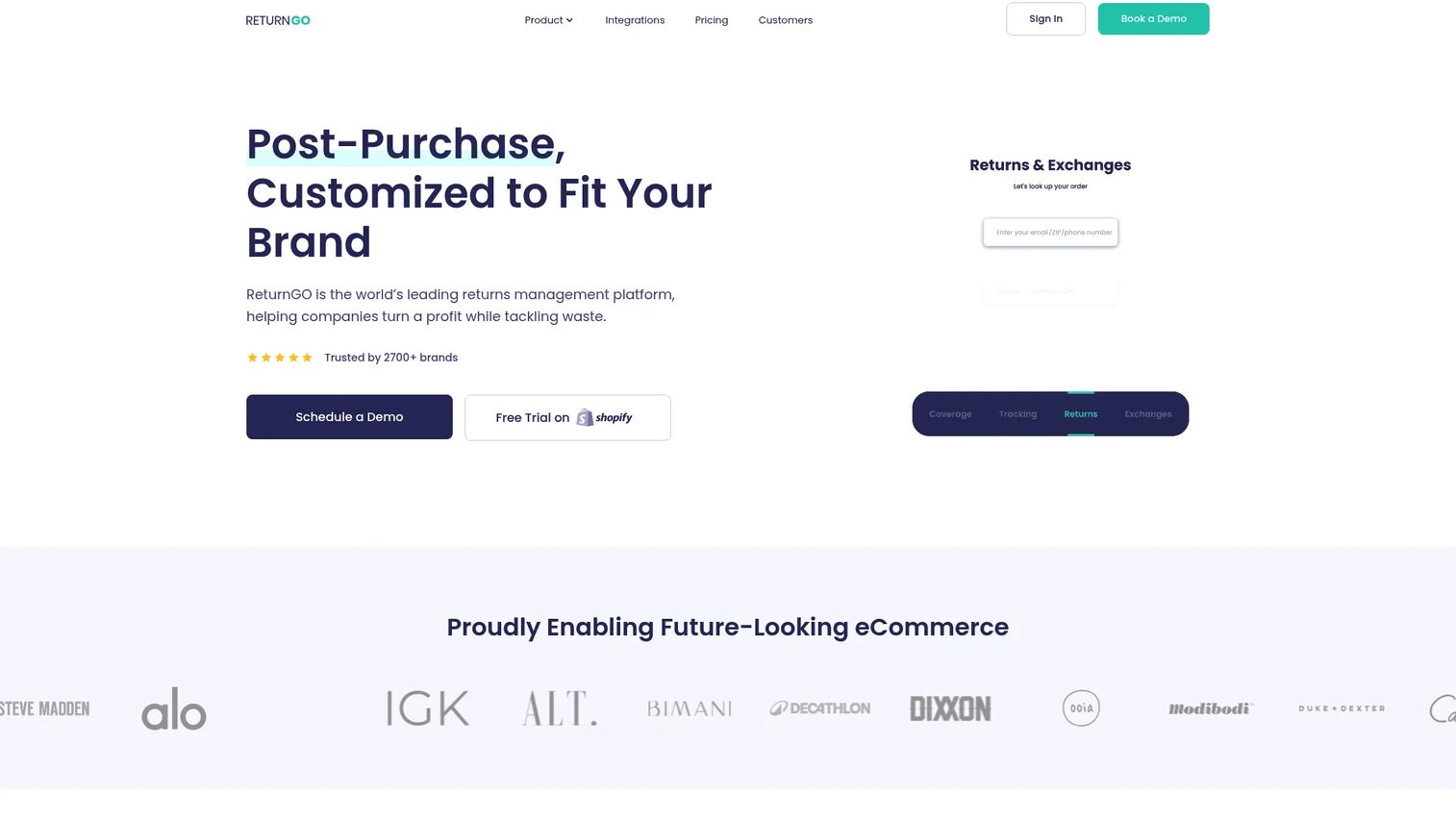
ReturnGO is a returns, exchanges, and post-purchase management platform for ecommerce brands, with an embedded self-service return portal, variant and product exchanges, and refunds handled through gift cards or store credit. It leans toward Shopify and other ecommerce merchants who want workflow automation and merchant control without a heavy build. The portal is designed to be customizable, so brands can shape the return experience while keeping self-service front and center.
Best for: Shopify and other ecommerce merchants needing automated returns and exchanges.
Key strengths
- Embedded self-service portal: A branded returns portal customers use directly, cutting support contact on routine returns.
- Variant and product exchanges: Exchange-first options for size, variant, and product swaps that keep revenue in store.
- Refunds, gift cards, and store credit: Flexible refunds and exchanges, including store credit, to steer toward retention.
Why choose ReturnGO: ReturnGO fits Shopify-led teams that want strong return policy automation and merchant control without enterprise complexity. The self-service portal and exchange options handle the common cases, and the customization keeps the experience on-brand. It is a practical pick when you want capability without a long implementation.
ReturnGO pricing: ReturnGO's Premium plan starts at $147/month and Pro starts at $297/month, with Enterprise available at custom pricing. Shopify self-service plans include a free 14-day trial. Confirm which exchange and portal customization features sit at your tier when you scope the plan.
8. Redo Returns & Exchanges
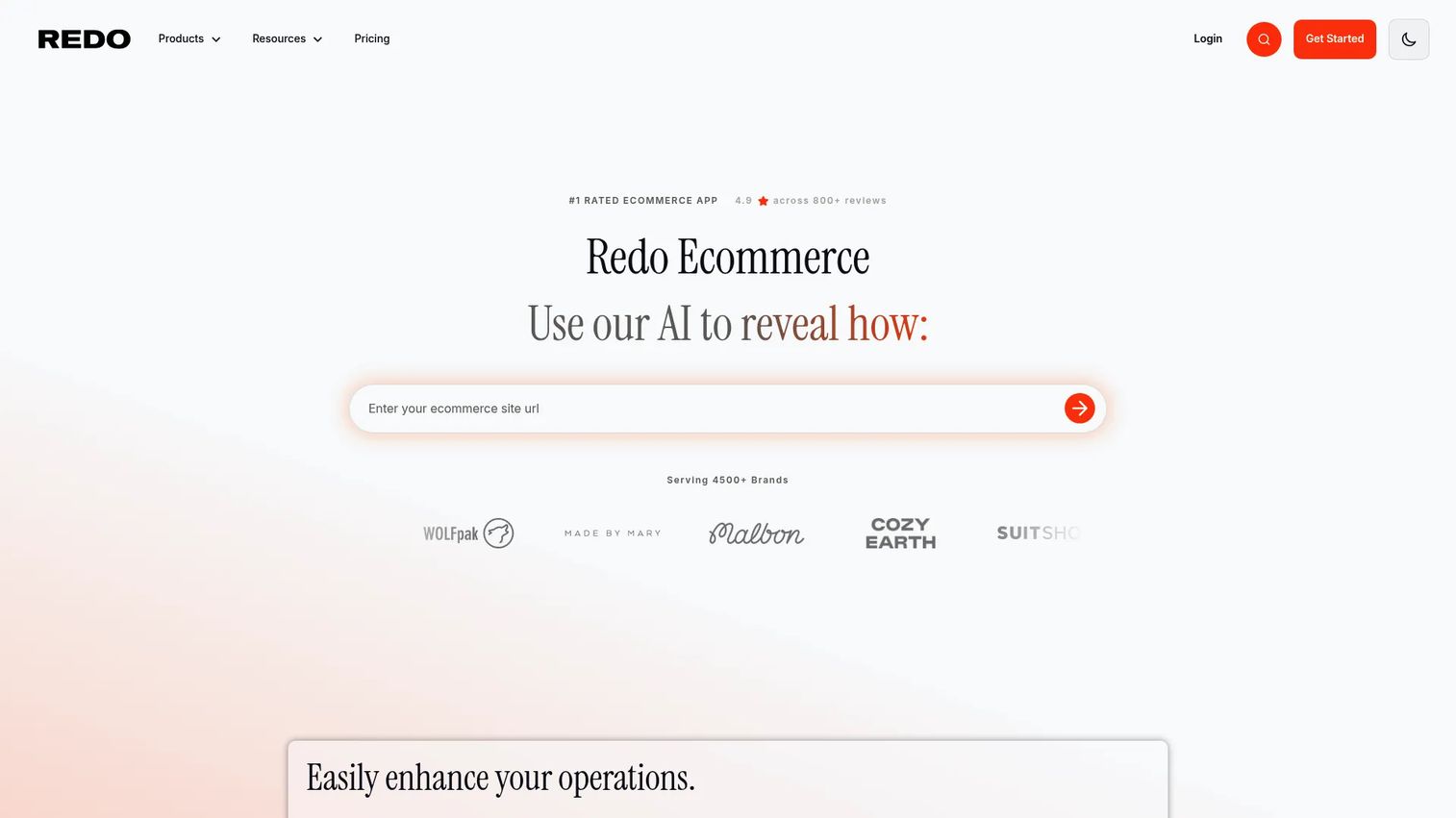
Redo Returns & Exchanges is ecommerce post-purchase software covering returns, exchanges, claims, order tracking, support, and related automation, built around a leaner, ecommerce-friendly setup. Its returns and claims portals are free, with AI exchange recommendations and return review automation layered on top. For teams that want return flow automation and exchange nudges without committing to a large platform spend up front, the modular pricing is the draw.
Best for: Ecommerce brands that want exchange-first returns and post-purchase automation.
Key strengths
- Free returns and claims portals: Branded returns and claims portals available at no base cost, with modular add-ons.
- AI exchange recommendations: Exchange nudges and return review automation that steer toward keeping revenue in store.
- Analytics and A/B testing: Real-time returns analytics and A/B testing on return flows to optimize the experience.
Why choose Redo Returns & Exchanges: Redo fits teams that want a lean, ecommerce-friendly setup with exchange-first behavior baked in. The free base portal and pay-as-you-go add-ons let you start small and scale spend with usage. The A/B testing on return flows is unusual at this tier and useful for teams that want to optimize, not just automate.
Redo pricing: Redo shows multiple product lines. Returns and Claims portals are free, OMS starts at $99/month, SMS starts at $0.016 per send, order tracking is $0.08 per tracked order, and support is $0.20 per resolution, with Support AI Agents at $0.85 per resolution. Some AI agent products are custom priced, so map your usage to the modules you actually need.
How to choose returns management software
Use these criteria to pressure-test any tool before you buy. They map to the operational tradeoff at the heart of returns: cutting cost without wrecking the customer experience.
Portal branding and self-service depth
A generic third-party portal signals to customers that returns are an afterthought. Evaluate how far you can brand the returns center, what customers can do without contacting support, and how the flow reads on mobile. The more self-service the portal, the more you reduce support tickets.
Policy and workflow automation
Look at how granular the return policy automation gets. Can you set windows, eligibility rules, fees, and final-sale exclusions without engineering help? Strong RMA automation and rules engines are what let the platform run returns at volume instead of routing everything to a human.
Exchange and refund handling
Decide up front how much you want to steer toward exchanges and store credit. Exchange-first workflows protect margin, but the nudges have to feel helpful, not coercive. Confirm the tool handles refunds to original payment, store credit, and gift cards cleanly.
Analytics depth
Returns analytics is where you find the SKUs, sizes, and policies quietly costing you money. Check whether the tool reports return reasons, rates by product, refund volume, and recovered revenue, and whether you can export that data into your own stack. Weak analytics turns returns into a black box. If broader reporting matters, our guide to marketing analytics and agentic analytics tools covers adjacent needs.
Stack and integration fit
Confirm the tool connects to your ecommerce platform, and to your WMS and OMS integrations if you run operations at scale. Weak integrations create the same manual reconciliation the software was supposed to remove. For teams managing contracts with 3PLs, our roundup of contract management tools is a useful companion.
Conclusion
There is no single best returns management software, only the best fit for the problem in front of you. If you want a branded returns center with analytics depth, ReturnLogic earns the first look. If retention and revenue recovery drive the decision, Loop Returns and its exchange-first model make sense. For enterprise post-purchase experience at scale, Narvar fits, while ClickPost is the pick when reverse logistics and carrier orchestration matter most. Shopify-led teams wanting leaner setups should compare ReturnGO and Redo Returns & Exchanges, and AfterShip or parcelLab suit brands consolidating the full post-purchase journey.
The practical next step is to shortlist two tools that solve different halves of your problem: one portal-first option with strong branding and self-service, and one with deeper analytics or enterprise controls. Run both against your real return volume, your actual policy rules, and your existing stack. The tool that reduces return processing time without adding manual work on the back end is the one worth buying. Returns will not stop growing, so the platform you pick should scale with them.
FAQs
Returns management software handles return requests, RMA authorization, label generation, refunds, exchanges, and status updates, usually through a self-service portal. It automates the reverse logistics of getting a product back and back into inventory, replacing manual email threads and spreadsheets. Most tools also add returns analytics so you can see why returns happen.
It moves routine work to a self-service return portal where customers start returns, pick reasons, and get labels without emailing support. Automated status updates answer "where is my refund" before a ticket is opened, and clear policy rules reduce back-and-forth. The net effect is fewer touches per return and a support team focused on real problems.
Portal branding and self-service depth, return policy automation, exchange and refund handling, returns analytics, and integrations with your ecommerce, WMS, and OMS stack. Portal quality and policy automation drive support deflection, while exchange handling and analytics drive margin. Integration fit determines whether the tool removes manual work or quietly adds it back.
A return portal is the customer-facing front end where a shopper starts a return. A returns management platform includes the portal but also runs return policy automation, label generation, refunds and exchanges, disposition, inventory sync, analytics, and workflow automation end to end. The portal collects the request; the platform runs everything behind it.
Loop Returns is purpose-built around exchange-first workflows, steering customers toward exchanges and store credit before a cash refund. ReturnGO and Redo Returns & Exchanges also handle variant and product exchanges well and suit leaner setups. The best fit depends on how hard you want to steer toward retention and how much revenue recovery matters to your model.
Most category leaders offer ecommerce integrations, and several are built with Shopify-led merchants in mind, though integration depth varies by vendor. Confirm the tool connects to your specific platform and, if you run operations at scale, to your WMS and OMS. Shallow integrations recreate the manual reconciliation the software was meant to remove.
They matter most once you run multiple warehouses, channels, or high volume, where returns have to move through operations cleanly and inventory has to stay accurate. WMS and OMS integrations keep refunds, disposition, and stock counts consistent without manual reconciliation. For a single-warehouse Shopify brand, a lighter portal-first tool may be enough at first.
Map pricing to your return volume, since many tools price per return, per order, or by module rather than a flat seat fee. Compare what sits at each tier, especially exchange handling, analytics depth, and integrations, and factor in implementation for enterprise platforms. The cheapest entry tier is rarely the real cost once you scope the features you actually need.