Chasing rent is a tax on your time. Manual tracking, inconsistent follow-up texts, mismatched deposits, and spreadsheets that break whenever a tenant pays late - it adds up fast. According to Ingo Payments (2025), 86% of renters say online rent payments are important when choosing a property, yet many landlords still collect rent the slow way.
The gap between what tenants expect and what landlords actually have in place is a solvable ops problem. The right rental payment software closes it: Automated reminders, clean ACH and card processing, payment history tenants can reference, and records your accountant can actually use at year-end.
This guide does not sell a single product. It compares 10 tools side by side so you can match the right one to your portfolio size, payment fee tolerance, and appetite for broader property management workflows.
What's inside
This guide is for independent landlords, small property managers, and operators who need online rent collection to work without manual follow-up. Items were chosen based on four criteria:
- Payment methods: ACH, debit, credit card, recurring payments, and one-time charges
- Pricing transparency: what landlords pay, what tenants pay, and how fees are structured
- Workflow depth: how far each tool extends beyond payments into screening, leases, maintenance, and accounting
- Portfolio fit: whether the tool matches a 5-unit landlord or a 500-door property management company
TL;DR
- Best mobile-first platform: RentRedi, for landlords who want rent collection plus screening, maintenance, and messaging in one app
- Best for accounting depth: TenantCloud, for teams that need payments tied to invoicing, reconciliation, and owner portals
- Best free rent collection entry point: Zillow Rental Manager, for landlords already using Zillow who want basic online rent collection at no cost
- Best free full-property-management option: Innago, for small landlords who want payments, leases, maintenance, and communication with no monthly fee
- Best for growing property management teams: Buildium or AppFolio, depending on portfolio scale and accounting requirements
- Best payment-first tool: PayRent, for landlords who primarily need rent collection without a full property management suite
What is rental payment software?
Rental payment software helps landlords and property managers collect, track, and reconcile rent payments online through methods including ACH transfers, debit cards, credit cards, autopay schedules, and tenant portals.
The category splits into two distinct types. Payment-first tools focus on collection, automatic reminders, one-time charges, and transaction records. Broader property management platforms layer on tenant screening, rental applications, lease signing, maintenance requests, owner portals, and accounting workflows. Some tools do both well; others specialize in one.
Core features to look for:
- Online rent collection via ACH, debit card, and credit card
- Autopay and recurring payment schedules
- Automated rent reminders
- Tenant portal or mobile app for self-serve payments
- One-time charges for security deposits, utilities, and move-in fees
- Payment tracking and transaction history
- Accounting, reconciliation, or financial reporting
- Tenant screening and rental applications
- Maintenance request management
- Listings and leasing workflows
The boundary between "rent collection software" and "property management software" is blurry by design. Many landlords start with collection and find themselves wanting screening, leases, and accounting from the same system. The tools in this guide range from pure-payment apps to full operating platforms, so you can see exactly where each one draws the line.
When to use rental payment software
Collect rent without manual follow-up
If you are sending texts or emails asking tenants whether the payment went through, that is the problem software solves. Automatic reminders, recurring ACH schedules, and real-time payment status visibility eliminate most of that friction. Tenants who prefer ACH, debit, or credit card all get a path that works for them.
Replace spreadsheets with payment records
Manual tracking breaks once you manage more than a few units. Payment software generates transaction histories, exportable reports, and sometimes 1099-ready records for tax season. Reconciling deposits against units becomes a lookup instead of a detective exercise.
Give tenants a self-serve payment experience
A good tenant portal means fewer "did my payment go through?" texts. Tenants log in, see their balance, pay recurring rent, and handle one-time charges like utility splits or move-in fees on their own schedule. That self-serve layer reduces your administrative load without you doing anything extra.
Rental payment software comparison
The table below lists all 10 tools ranked by relevance to the core "rental payment software" need. Pricing and G2 ratings reflect verified data from each vendor's pricing page and G2 listing.
| # | Product | Best for | Key differentiator | Pricing | G2 rating |
|---|---|---|---|---|---|
| 1 | RentRedi | Mobile-first landlords | All-in-one platform with rent collection, screening, maintenance, and rent reporting | From $12/mo | 4.4/5 |
| 2 | TenantCloud | Accounting-heavy workflows | Rent collection tied to invoicing, reconciliation, portals, and reporting | From $18/mo | 4.4/5 |
| 3 | Zillow Rental Manager | Free online rent collection | ACH, card payments, reminders, one-time fees, and Zillow listing integration | Free (premium optional) | N/A |
| 4 | Innago | Free property management | Payments, leases, maintenance, and communication with no monthly fee | Free ($0/mo) | N/A |
| 5 | Avail | DIY landlords | Listings, screening, leases, and rent collection for small portfolios | Free; $9/unit/mo for Plus | 4.0/5 |
| 6 | Buildium | Growing property management teams | Payments, accounting, leasing, maintenance, and owner portals | From $65/mo | 4.4/5 |
| 7 | AppFolio | Larger professional property managers | Full platform with per-unit pricing and advanced operations | From $1.49/unit/mo | 4.6/5 |
| 8 | TurboTenant | Listing-to-lease workflows | Listings, applications, screening, leases, and rent payments | Free; paid from $12.42/mo | 4.6/5 |
| 9 | DoorLoop | Portfolio operators | Payments, accounting, maintenance, leasing, and owner reporting | From $69/mo | N/A |
| 10 | PayRent | Payment-first rent collection | Online rent collection, autopay, reminders, and credit reporting | Free for 5+ units; from $29/mo | N/A |
Best 10 rental payment software tools for 2026
1. RentRedi
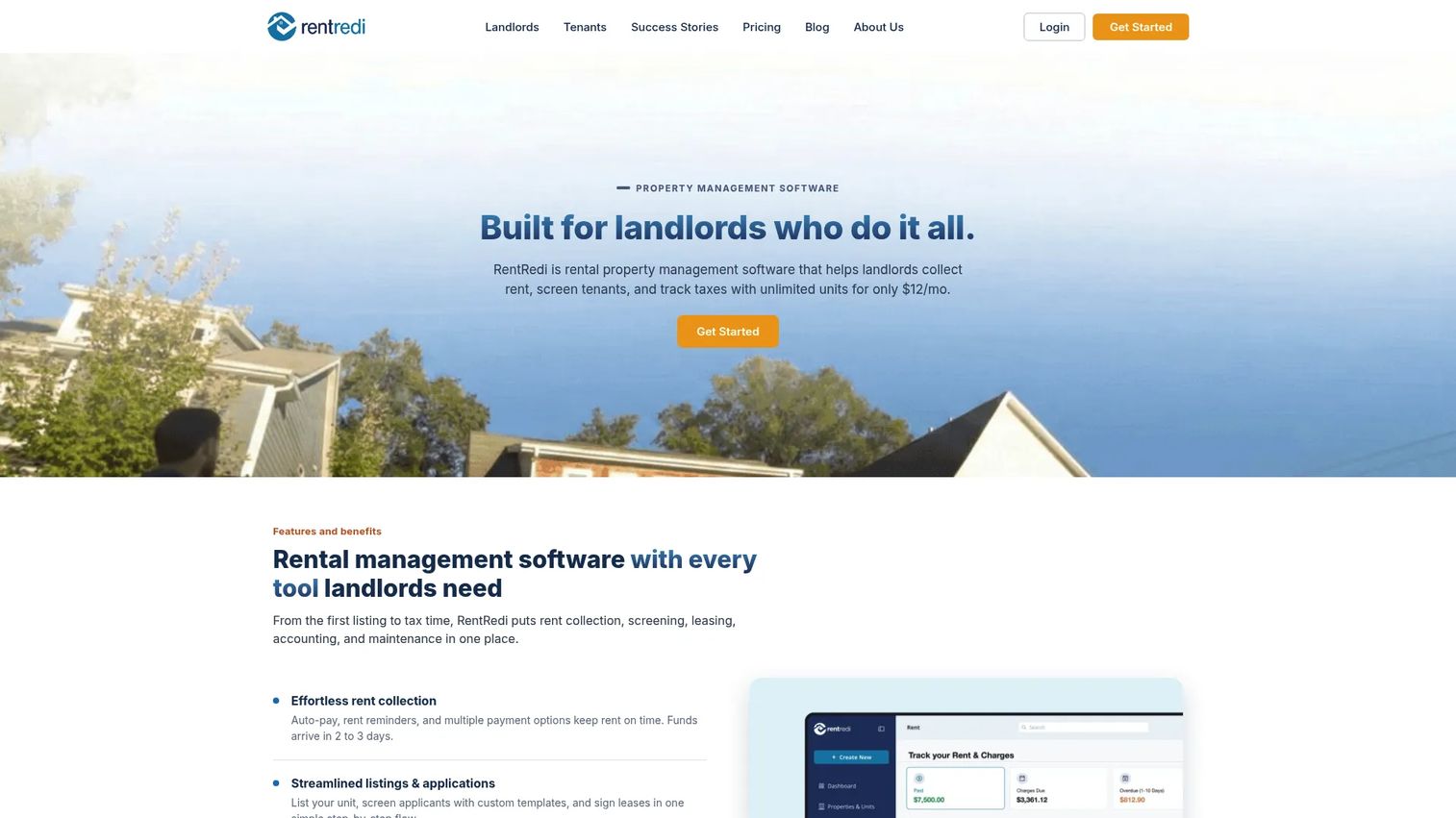
RentRedi is an all-in-one property management platform built for landlords who want rent collection, tenant applications, screening, maintenance requests, messaging, and accounting in one place. The mobile app covers both landlord and tenant sides, making it a strong fit for landlords who manage everything from their phone.
Best for: Landlords who want mobile-first rent collection alongside day-to-day tenant operations.
Key features
- Online rent collection with autopay and reminders
- Tenant applications and screening
- Maintenance request tracking
- Landlord and tenant mobile apps
- Accounting, tax tracking, and rent reporting to credit bureaus
Why choose RentRedi: RentRedi's flat-rate pricing covers unlimited properties, unlimited tenants, and unlimited teammates at every tier. That structure makes it predictable for landlords who do not want per-unit fees eating into margins as the portfolio grows.
RentRedi pricing: Plans start at $12/month when billed annually, $20/month on a 6-month term, or $29.95/month on a monthly basis. All plans include the full feature set. A 30-day money-back guarantee applies, though RentRedi does not offer a free trial.
G2 rating: 4.4/5
2. TenantCloud
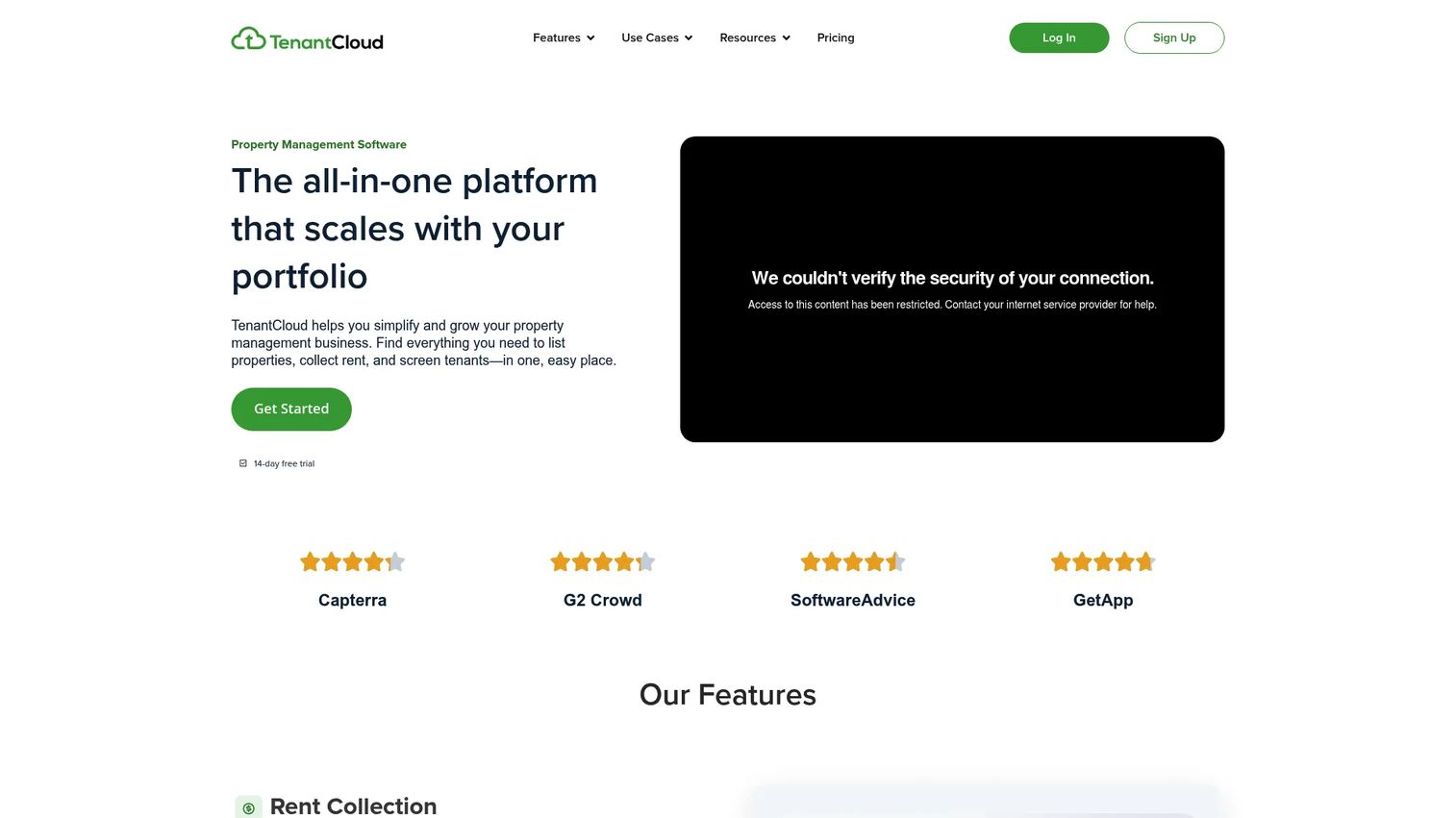
TenantCloud is a property management platform for landlords and property managers who need rent payments connected to accounting, invoicing, and financial reporting. It supports tenant, owner, and service-professional portals, plus listing syndication and online lease signing.
Best for: Landlords and property managers who need payment collection integrated with back-office accounting and owner reporting.
Key features
- Online rent collection with ACH and card payments
- Accounting, invoicing, and bank reconciliation
- Tenant, owner, and service-provider portals
- Listing syndication and online leases
- Maintenance requests and inspections
Why choose TenantCloud: TenantCloud fits teams where rent payment data needs to flow into owner statements, financial reports, and reconciliation workflows. It goes deeper on the back-office side than most landlord-first apps.
TenantCloud pricing: The Starter plan runs $18/month ($15/month billed annually). Growth is $35/month ($29.17/month annually). Pro is $60/month ($50/month annually). Business starts at $100/month with custom pricing.
G2 rating: 4.4/5
3. Zillow Rental Manager
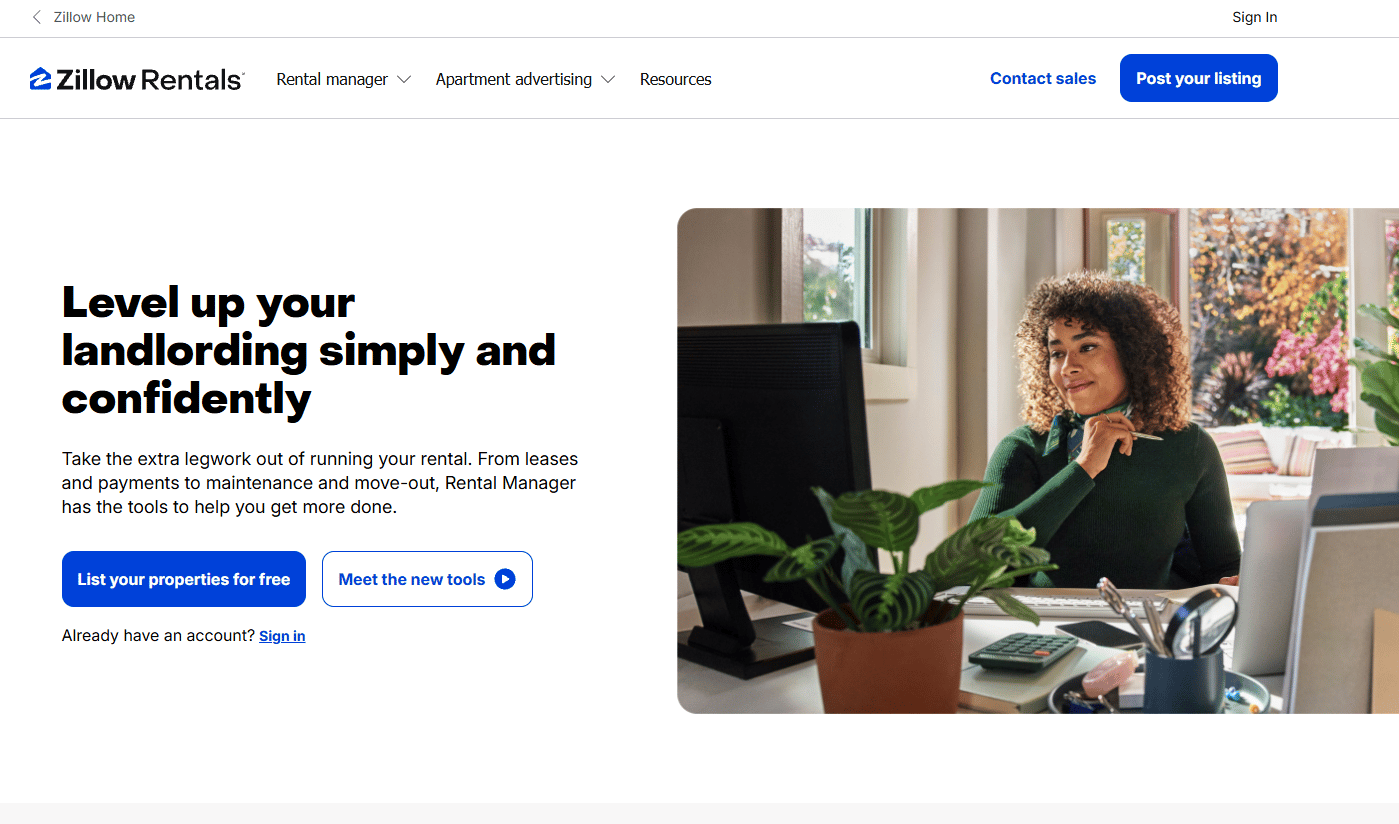
Zillow Rental Manager combines rental listings with online rent collection, tenant applications, screening, lease signing, and tour scheduling. For landlords already using Zillow to find tenants, keeping payments inside the same platform removes a step from the workflow.
Best for: Landlords who list properties on Zillow and want free-entry online rent collection without a separate subscription.
Key features
- ACH, credit card, and debit card rent collection
- Autopay and automated reminders
- One-time charges for deposits, utilities, and move-in fees
- Tenant applications and screening
- Lease upload and electronic signing
Why choose Zillow Rental Manager: The free core plan is a low-friction starting point, particularly for landlords with one to five units who want payment collection without committing to monthly software costs. It does not go as deep on accounting or owner reporting as full property management platforms.
Zillow Rental Manager pricing: Core landlord features are free. A Premium listing option adds exposure and priority support. ACH, card fee, and processing details are available at checkout within the platform.
4. Innago
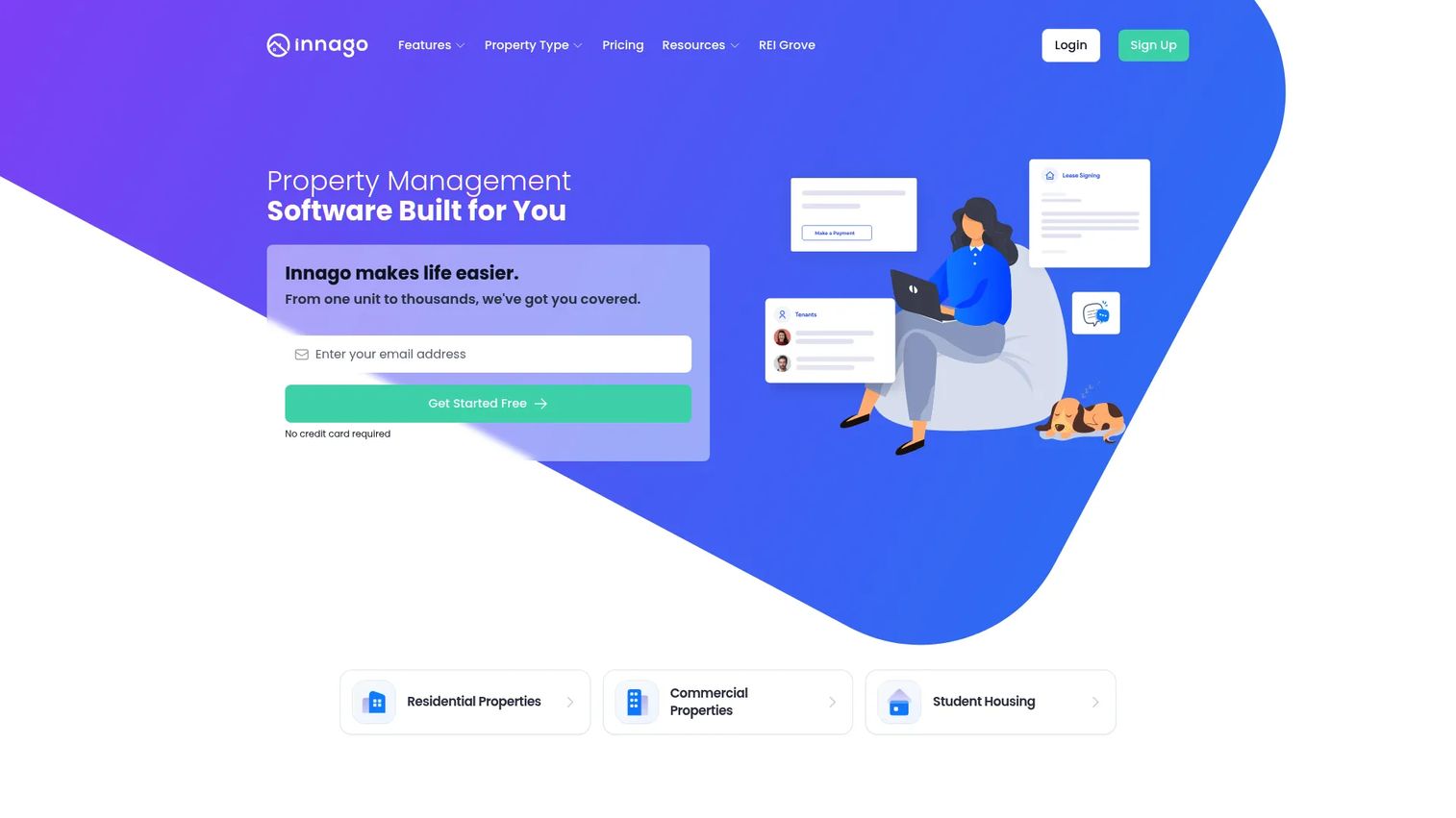
Innago is free cloud-based property management software covering rent collection, digital lease management, maintenance requests, tenant communication, and financial tracking. It serves residential, commercial, and student housing portfolios without a monthly subscription.
Best for: Small to mid-sized landlords who want broad property management coverage without paying a monthly platform fee.
Key features
- Online rent collection via ACH and card
- Digital lease management and e-signatures
- Maintenance request tracking
- Tenant portals and messaging
- Financial tracking and reporting
Why choose Innago: Innago charges no monthly fee to landlords. Tenants pay transaction fees directly: $2 per ACH payment, 2.99% for card payments, and $30 to $35 for screening reports. That fee structure keeps landlord costs at zero while tenants cover payment processing.
Innago pricing: The platform is $0/month for landlords. Tenant-paid ACH fees are $2 per transaction; card payments are 2.99%. Screening reports cost $30 to $35, with income verification adding $10.
5. Avail
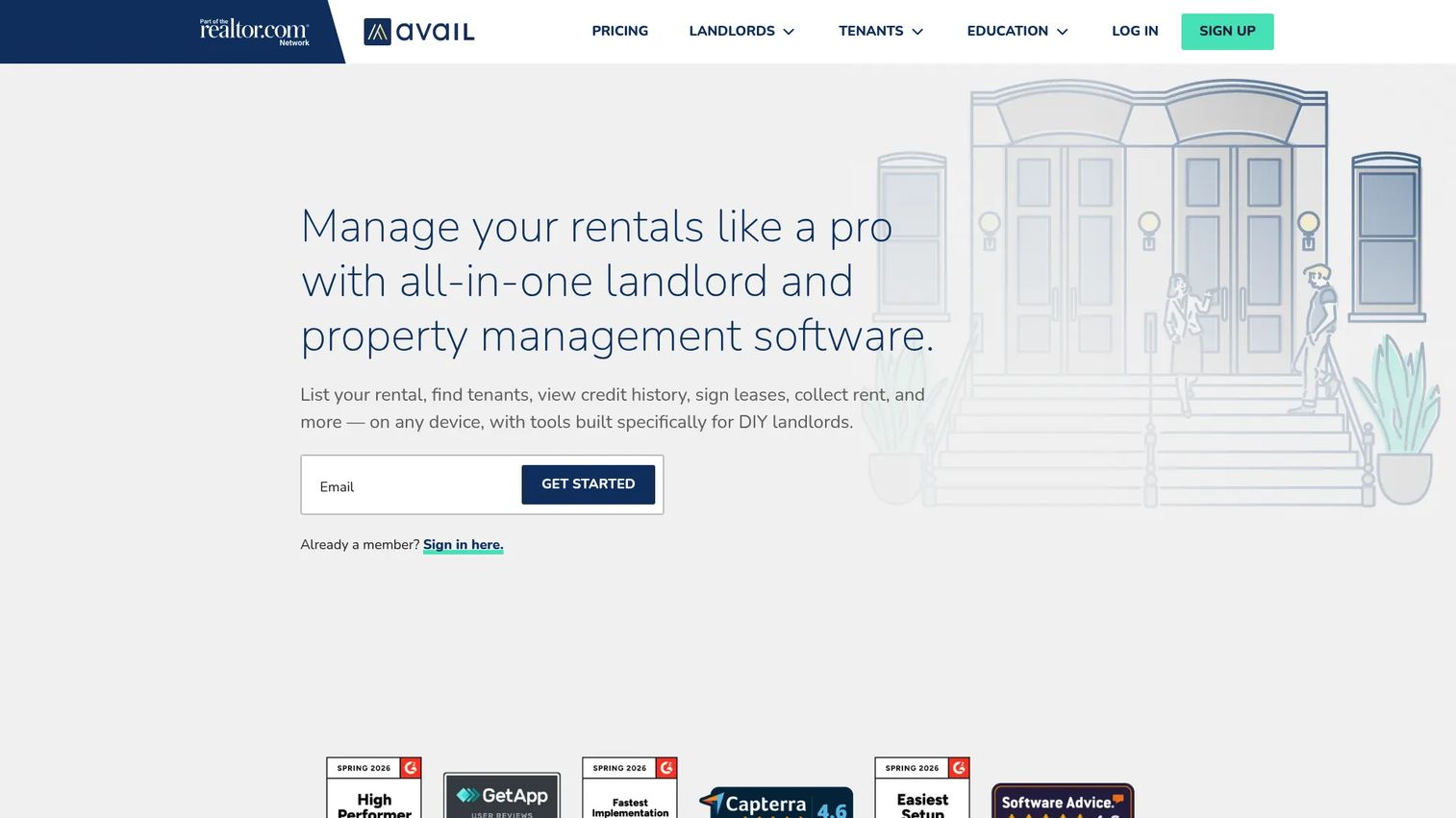
Avail is a DIY landlord platform that combines rental listing syndication, tenant screening, digital leases, online rent collection, and maintenance tracking. It is designed for independent landlords who want guided workflows from vacancy through lease signing and payment collection.
Best for: Independent landlords managing small portfolios who want a full listing-to-payment workflow without property management company overhead.
Key features
- Rental listing syndication to major sites
- Tenant screening and applications
- Digital leases with e-signatures
- Online rent collection and maintenance tracking
- FastPay and waived ACH fees on the paid plan
Why choose Avail: The free Unlimited plan covers the core landlord workflow at no cost per unit. The Unlimited Plus upgrade at $9/unit/month adds faster deposits, waived ACH charges, and priority support. That per-unit pricing makes it predictable for small portfolios but can add up for larger ones.
Avail pricing: Unlimited is $0 per unit. Unlimited Plus is $9 per unit per month. ACH fees apply on the free plan; they are waived on Plus.
G2 rating: 4.0/5
6. Buildium
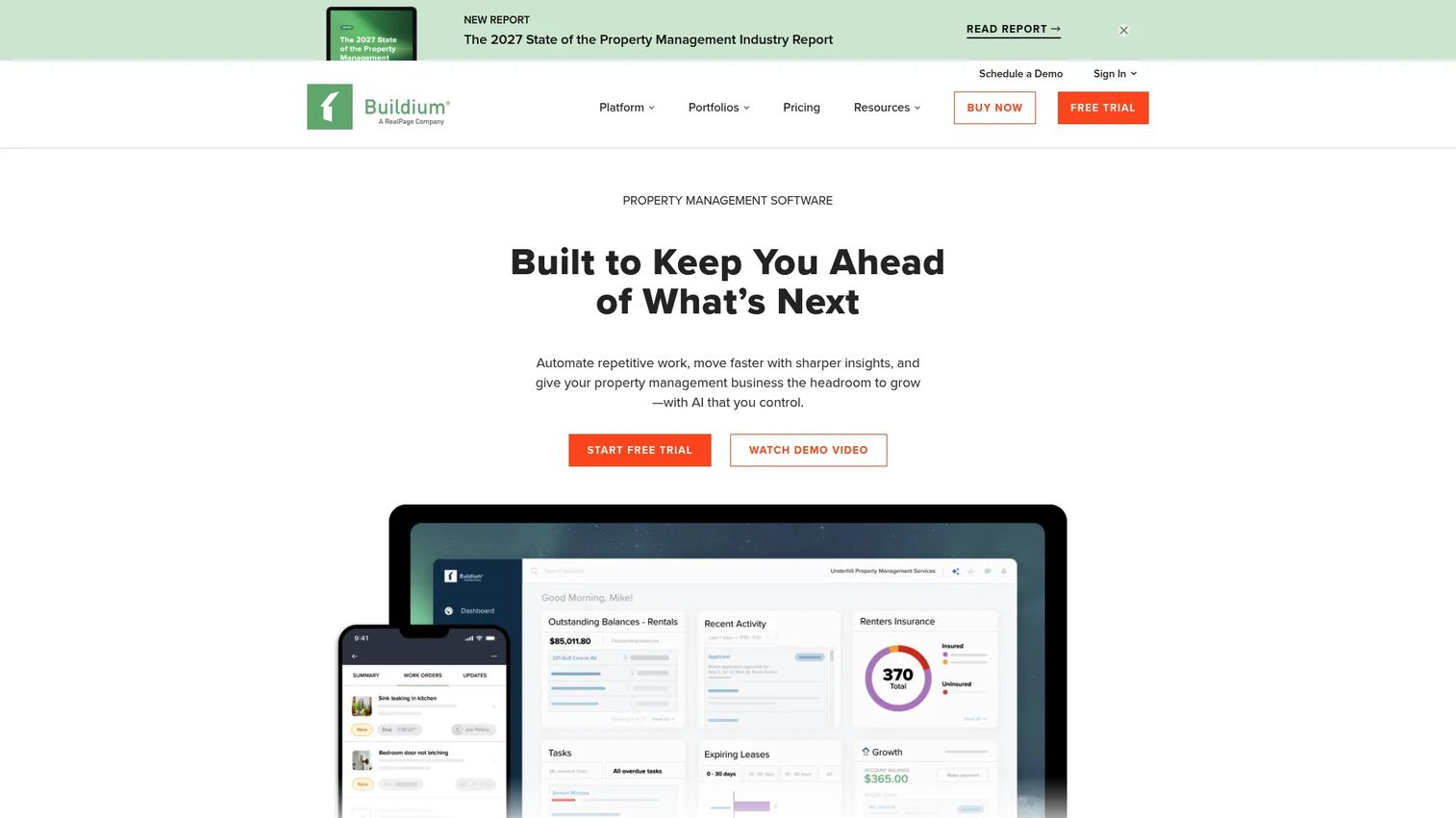
Buildium is a full property management platform for residential, community association, commercial, and student housing portfolios. It handles online payments, property accounting, leasing, maintenance, owner portals, and AI-assisted workflow automation within one system.
Best for: Property management companies that need rent collection inside a broader accounting and operations platform.
Key features
- Online payments and resident portals
- Property accounting and financial reporting
- Leasing, listing syndication, and tenant screening
- Maintenance task and work-order management
- Business analytics and Open API access on the Premium plan
Why choose Buildium: Buildium fits professional property managers more than small landlords. Its accounting depth, owner portal, and reporting automation cover workflows that spreadsheets and simpler tools cannot handle at scale. The tradeoff is a higher starting price relative to landlord-first apps.
Buildium pricing: Essential starts at $65/month. Growth starts at $202/month and adds enhanced screening, reporting automation, and analytics. Premium starts at $420/month and includes Open API, advanced AI, and expanded services. All prices listed are starting rates.
G2 rating: 4.4/5
7. AppFolio
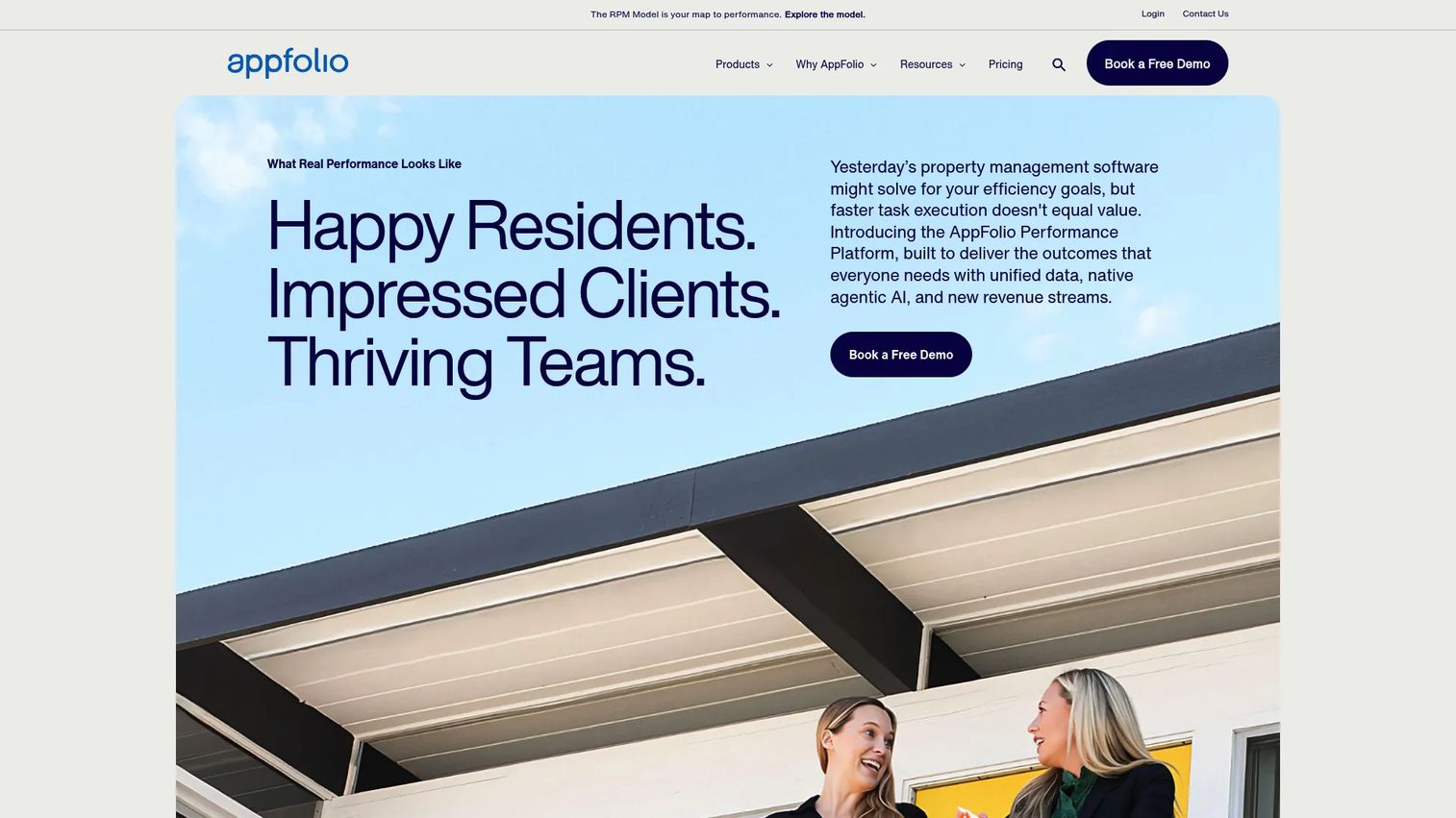
AppFolio is a cloud-based property management platform for residential, commercial, student housing, affordable housing, and community association businesses. It covers rent payments, portfolio accounting, leasing automation, maintenance, and owner reporting in an integrated system.
Best for: Property management companies managing large or complex portfolios where payments, accounting, and leasing need to work from the same data layer.
Key features
- Online rent payments and resident experience tools
- Portfolio accounting and reporting
- Marketing and leasing automation
- Work order management and inspections
- Owner reporting and communication
Why choose AppFolio: AppFolio's per-unit pricing model scales with portfolio size, and the Core plan requires a 50-unit minimum. That makes it the wrong fit for a 10-unit landlord but a strong candidate for professional managers running 100 or more units who need operational depth across staff, owners, and reporting.
AppFolio pricing: Core is $1.49 per unit per month. Plus is $3.20 per unit per month. Max is $5.00 per unit per month. Minimum spend and unit requirements apply across all plans.
G2 rating: 4.6/5
8. TurboTenant
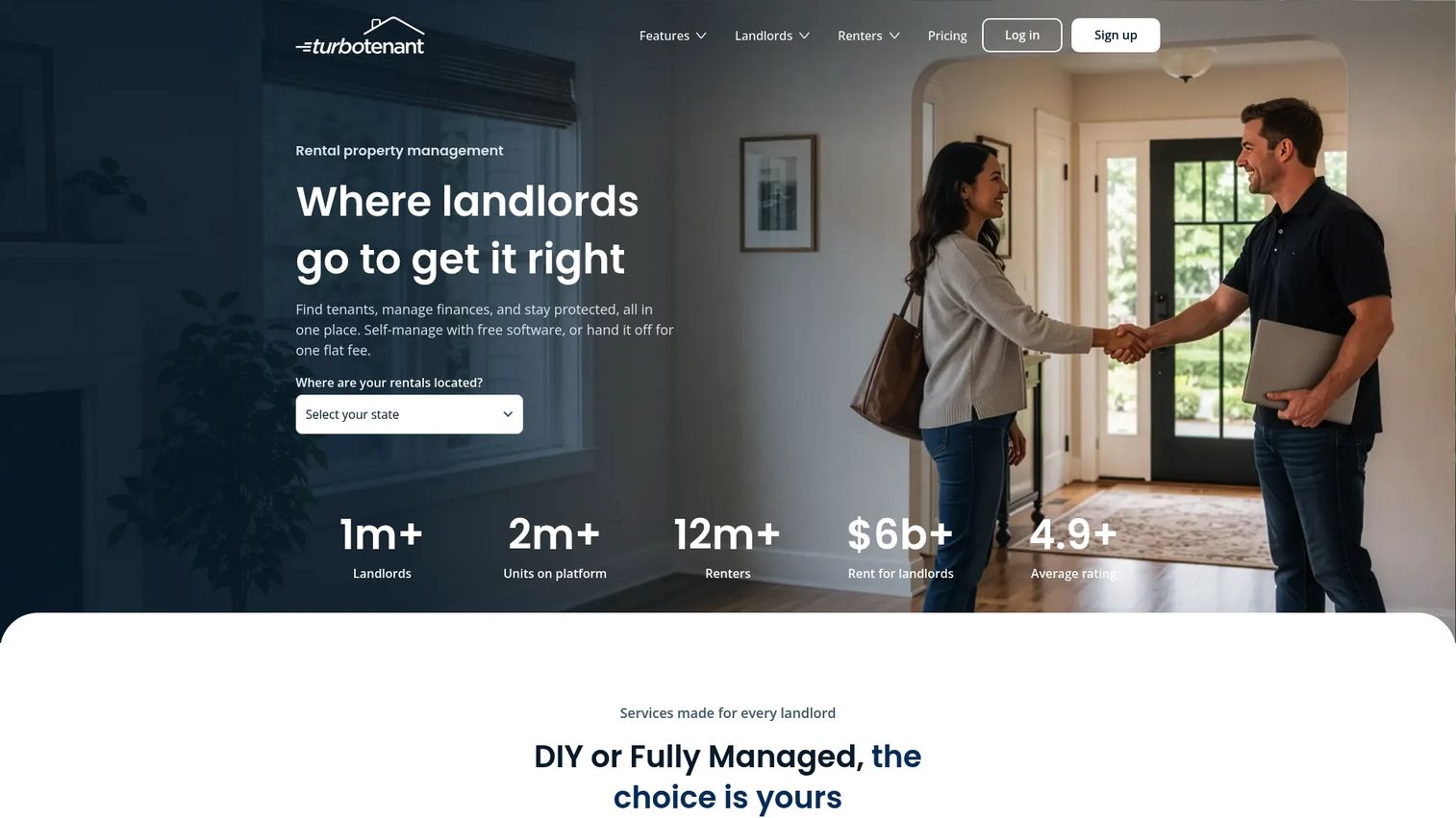
TurboTenant is an all-in-one platform for independent landlords that starts with rental listing syndication and lead management, then extends into tenant applications, screening, online leases, and rent collection. It is built for landlords who want vacancy marketing and payment collection in the same tool.
Best for: Landlords who want listing, applicant screening, and rent payment all in one accessible workflow.
Key features
- Rental listing syndication and lead management
- Tenant applications and screening
- Online leases and e-signatures
- Online rent collection
- Tax-ready reports and accounting on the Pro plan
Why choose TurboTenant: TurboTenant's free plan covers listing, screening, and rent collection, which is a wide functional starting point at no cost. The paid Pro plan adds income verification and accounting at $16.58/month billed annually. For landlords filling vacancies and collecting rent as connected jobs, TurboTenant covers both without a separate tool.
TurboTenant pricing: Free is $0/month. Essentials is $12.42/month billed annually ($149/year). Pro is $16.58/month billed annually ($199/year). The free plan covers rental marketing, screening, and rent collection.
G2 rating: 4.6/5
9. DoorLoop
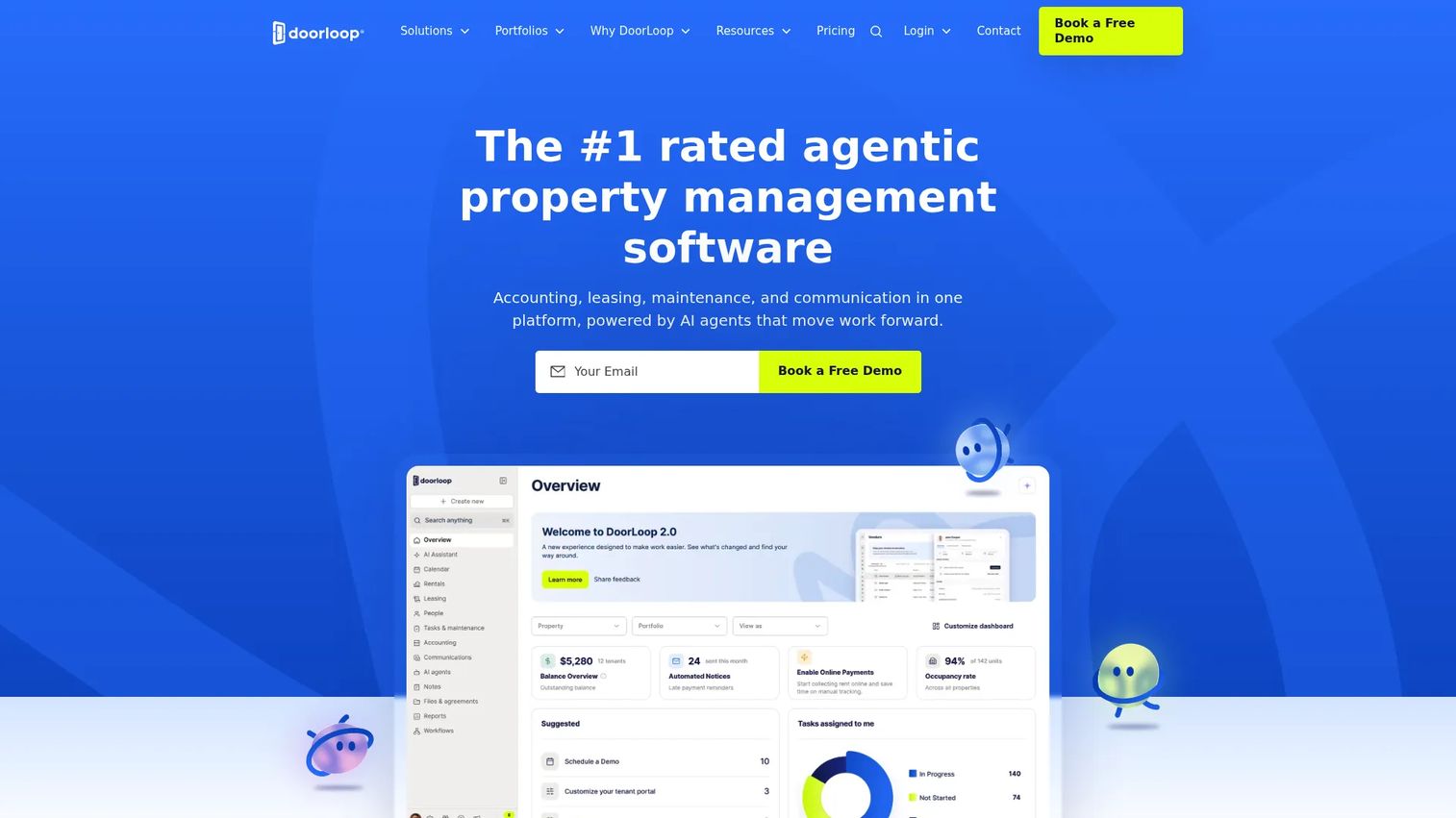
DoorLoop is an AI-powered property management platform combining accounting, online rent collection, leasing, maintenance management, vendor coordination, and tenant and owner portals. It includes QuickBooks integration and bank synchronization for property accounting workflows.
Best for: Portfolio operators who want rent collection, accounting, and maintenance inside a single modern property management system.
Key features
- Online rent collection and tenant payments
- Accounting and financial reporting with QuickBooks integration
- Tenant and owner portals
- Maintenance management and vendor coordination
- Listings, leasing, and AI-assisted inspections
Why choose DoorLoop: DoorLoop fits operators who want a modern interface and accounting depth without AppFolio's minimum unit requirements. The Starter plan covers up to 10 units, making it accessible for smaller portfolios that want room to grow into more advanced accounting and reporting features.
DoorLoop pricing: Starter is $69/month billed yearly (up to 10 units). Pro is $149/month billed yearly. Premium is $209/month billed yearly and adds VIP support, free incoming ACH, API access, and unlimited users.
10. PayRent
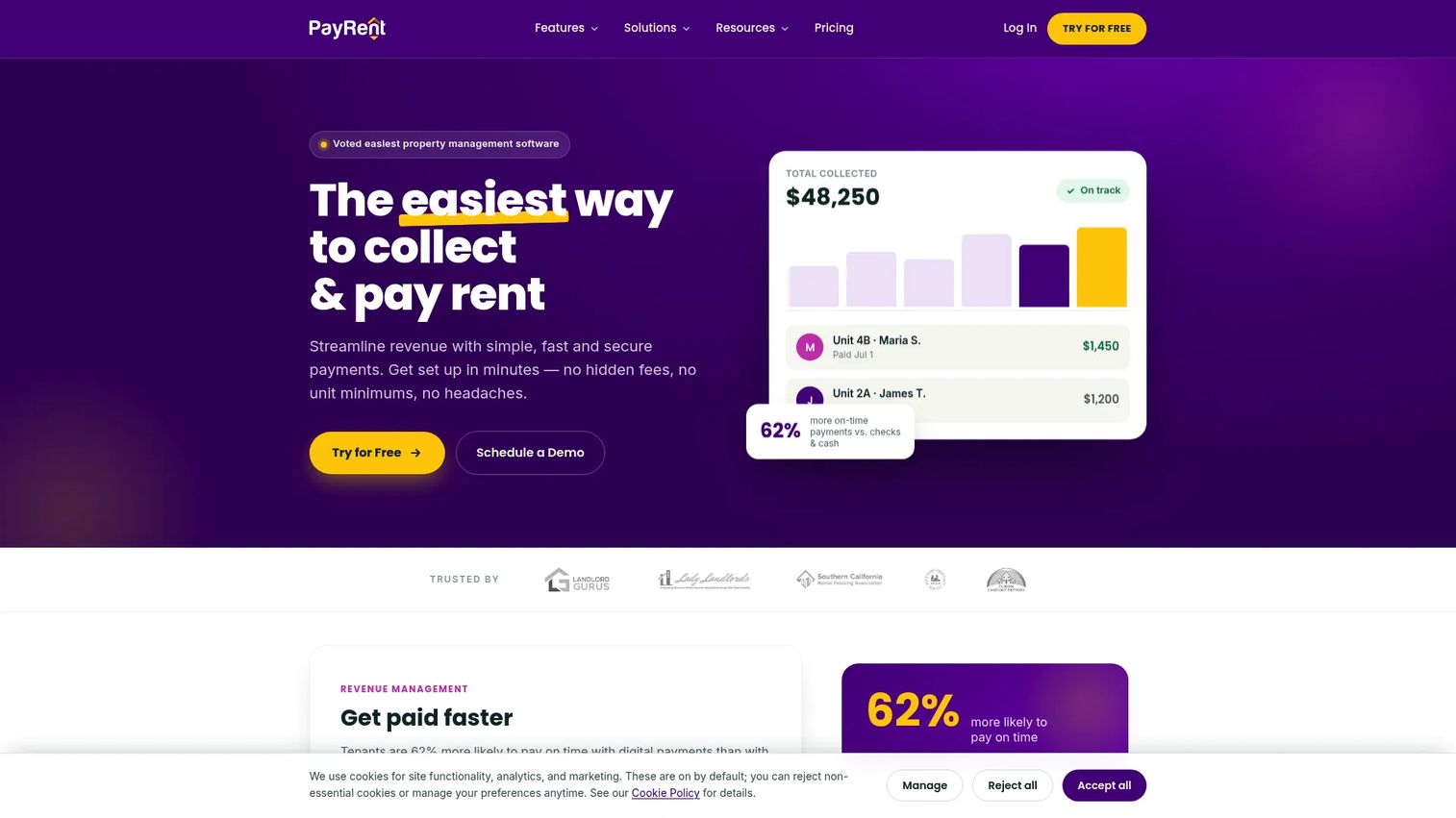
PayRent is a payment-first online rent collection platform for independent landlords and small property managers. It covers ACH and card payments, autopay, automated reminders, landlord payment controls, and rent reporting to all three major credit bureaus.
Best for: Landlords who mainly need reliable rent collection and payment controls rather than a full property management suite.
Key features
- Online rent collection via bank transfer and credit card
- Autopay and automated reminders
- Payment controls including partial payment blocking
- Rent reporting to all three major credit bureaus
- Document storage and downloadable payment reports
Why choose PayRent: PayRent focuses specifically on the payment layer. If you already manage leases, maintenance, and listings through other tools, PayRent gives you collection and credit reporting without buying a broader platform you do not need.
PayRent pricing: Free-for-five requires a minimum of 5 occupied units at $0/month. Do-it-yourself covers 25 units at $29/month with a 14-day free trial. Go-like-a-pro covers 50 units at $99/month with a 14-day free trial. ACH fees vary by plan: $9.95 on the free tier, $5 on Do-it-yourself, and free on Go-like-a-pro. Credit card payments are 3.5% plus $6.95 on all plans.
Considerations when choosing rental payment software
Payment methods and fees
Check whether ACH, debit, and credit card payments are all supported, and confirm who pays the fee. Some platforms charge tenants directly; others pass costs to landlords. Verify failed-payment handling as well: A platform that does not notify you of a returned ACH until three days later creates a cash flow problem.
Deposit timing and reconciliation
ACH payout timing ranges from 2 to 5 business days depending on the platform, your bank, and whether the account is verified. For landlords with mortgages timed to rent deposits, that timing gap matters. Also check whether the platform exports transaction data in a format your accountant can use for year-end accounting software workflows.
Tenant experience
A tenant portal reduces the volume of payment-related questions you field. Look for autopay options, payment history, receipt access, and mobile app availability. Renters paying offline are 23% more likely to pay late than online payers, according to Realtor.com (2026). Friction in the payment flow is friction in your cash flow.
Portfolio fit
A landlord with 5 units has different needs than a property manager with 200 doors. Payment-first tools like PayRent and free tiers from Innago fit small portfolios. Full building management software platforms like Buildium and AppFolio fit teams managing scale, staff, and owner reporting. Buying the wrong tier in either direction wastes either money or capability.
Adjacent workflows
Payments rarely stay isolated. If you are already using separate tools for screening, leases, maintenance, and accounting, check whether one platform consolidates those jobs better. More features only help when they replace existing work rather than adding a new tool to maintain.
Conclusion
The right rental payment software is the one that matches your portfolio size and closes the specific gaps causing you friction today.
For mobile-first landlord operations, start with RentRedi. For accounting and owner reporting depth, compare TenantCloud, Buildium, DoorLoop, and AppFolio. If free-entry rent collection is the priority, Zillow Rental Manager and Innago both deliver that without monthly fees. For listing-to-lease workflows, compare Avail and TurboTenant. If payments are the main job, PayRent keeps the scope clean.
Before migrating: Shortlist two or three tools based on portfolio size, run one tenant payment through the platform, verify ACH payout timing against your bank, and export a transaction report to confirm your finance team can work with the data.
Most decisions in this category hinge on two numbers: What the tool costs at your unit count, and how many manual steps it removes per month. Verify both before committing.
Start your journey with Guideflow today!
FAQs
Rental payment software helps landlords and property managers collect rent online, track payment status, automate reminders, and maintain payment records. It supports payment methods including ACH bank transfers, debit cards, credit cards, autopay schedules, and tenant portals for self-serve payments.
Small landlords usually need low cost, easy setup, autopay, and simple payment records. Free-entry tools like Innago and Zillow Rental Manager cover the basics without monthly fees. Avail adds listing syndication and digital leases on the free tier. Check ACH and card fees before choosing, since tenant-paid fees vary significantly across platforms.
Several platforms offer free landlord plans, including Innago, TurboTenant, Avail, and Zillow Rental Manager. Free does not always mean zero cost: Tenants typically pay ACH or card processing fees directly. Verify who pays which fee before setting up payments, since the answer differs by platform.
ACH bank transfers generally carry lower fees and suit recurring monthly rent well. Credit card payments give tenants more flexibility around cash flow but carry higher processing costs, often 3% or more. For recurring rent collection software, ACH is the standard default; card payments work better as a fallback option for tenants who prefer them.
Core features include autopay, automatic rent reminders, a tenant portal, payment history, one-time charges for deposits and utilities, and transaction exports. For portfolios beyond a few units, add accounting integration, owner portals, maintenance tracking, and financial reporting. The right feature set matches your actual workflow rather than a generic checklist.
Timing varies by platform, payment method, your bank, and whether the tenant's account is verified. ACH deposits typically take 2 to 5 business days. Card payments may settle faster. Check each vendor's stated payout timing before switching rent collection over, particularly if your mortgage or owner distributions depend on predictable deposit dates.
Software does not guarantee on-time payment, but it reduces the conditions that cause lateness. Automatic reminders before the due date, visible payment history, and easy autopay setup all reduce the number of tenants who pay late simply because the process was inconvenient. When rent is late, clean records and transaction history give you better documentation.
Rent collection software fits landlords who already manage listings, leases, and maintenance through other tools and only need a payment layer. Full property management software fits teams that need payments connected to accounting, owner reporting, maintenance workflows, and leasing data. The practical test: Count how many separate tools you currently use, and check whether one platform replaces enough of them to justify the monthly cost.