You ship 400 orders a day. Every one of them needs a carrier, a service level, and a rate. Pick the wrong combination and you overpay by a dollar or two per package. Multiply that across a month and the leak turns into a real number on your P&L.
Most operators still handle this by habit. They default to one carrier, or they eyeball a rate card, or a warehouse team member checks two options and moves on. That works at 20 orders a day. It stops working the moment volume climbs and margin gets scrutinized.
The global rate shopping software market hit USD 1.54B in 2024 and is projected to reach USD 4.07B by 2033, a 12.7% CAGR, according to Growth Market Reports (2024). That growth tracks a simple pressure: shipping is one of the largest controllable costs in ecommerce, and manual carrier comparison does not scale.
Automated carrier rate shopping fixes the leak. It compares live rates, transit times, and service eligibility across your carriers, then applies your business rules to pick the option that fits each shipment. No eyeballing. No default-carrier tax.
What's inside
This guide is for ecommerce operators, logistics leads, RevOps-minded founders, and anyone accountable for shipping spend at scale. We looked past the marketing pages and compared tools on what actually matters when you are choosing software for your stack.
We ranked each tool against four criteria:
- Carrier coverage: the number and type of carriers supported, including regional and LTL
- Automation depth: cheapest-rate selection versus time-in-transit and business-rule logic
- Checkout or fulfillment fit: whether it lives at checkout or inside warehouse operations
- Reporting and setup: savings visibility, plus how much internal effort integration takes
No tool names in this section. That is what the list below is for.
TL;DR
- Best for API-first teams: EasyPost. One multi-carrier shipping API for rate shopping, labels, tracking, and address verification.
- Best for enterprise parcel optimization: ProShip. Advanced rate shopping with time-in-transit logic for high-volume shippers.
- Best for analytics and connected logistics: Enveyo. Modeling, reporting, and parcel management in one platform.
- Best for checkout conversion: ShipperHQ. Merchant-facing shipping rules and delivery dates that clean up the checkout experience.
- Best for full fulfillment workflows: Deposco. Rate shopping inside a broader warehouse and order management platform.
- Best for B2B supply chain integration: TrueCommerce. Rate groups and carrier selection inside EDI and trading-partner workflows.
- Best for freight and TMS needs: Kuebix. Rate quotes and shipment execution across a transportation management system.
What is rate shopping software
Rate shopping software automatically compares carrier rates, transit times, and service eligibility in real time, then selects the shipping option that fits your rules for each order.
Instead of defaulting to one carrier or checking rates by hand, the software queries every carrier you have connected, applies your logic, and returns the best fit. That logic can favor the cheapest shipping rates, the fastest delivery, or a specific service commitment.
Key features you will see across the category:
- Multi-carrier rate shopping: live rate pulls from UPS, FedEx, USPS, DHL, and regional carriers
- Cheapest-rate selection: automatic pick of the lowest qualifying rate per shipment
- Time-in-transit logic: rate decisions weighted by delivery speed and promise dates
- Business rules and service controls: cost caps, carrier preferences, and zone rules
- Label creation or checkout integration: generate labels or display rates at checkout
- Reporting and savings visibility: carrier-level spend data and audit trails
Why it matters: shipping is often the second-largest variable cost in an ecommerce operation. A tool that shaves even a few percent off every label compounds into meaningful margin over a year. Real-time rate comparison turns a guessing game into a repeatable, measurable process.
When to use rate shopping software
Reduce shipping spend without manual carrier checks
When volume climbs, manual comparison becomes a bottleneck and a cost. Rate shopping software finds lower-cost service options automatically on every order. That matters most when margin is tight and each package carries a rate you could have beaten. The savings scale with volume, which is exactly when hand-checking stops being possible.
Improve checkout conversion with simpler shipping choices
Too many shipping options at checkout create decision friction. Fewer, clearer methods with accurate delivery dates reduce abandoned carts. Checkout-focused rate shopping shows customers the right options without overwhelming them. Clean shipping choices at checkout can lift conversion and cut the "why is shipping so expensive" drop-off.
Automate rate decisions across multiple carriers
Automation removes the manual comparison step and speeds up fulfillment. You set rules once, and the software applies them to every shipment. Rules can prioritize cost, speed, or a specific service commitment depending on the order. This is where multi-carrier rate shopping earns its place: it turns a per-order judgment call into a system.
Comparison table
The right choice depends on whether you need API control, checkout simplicity, or enterprise optimization. API-first teams and merchants have different needs than warehouse operators running full fulfillment.
| # | Product | Best for | Key differentiator | Pricing | G2 rating |
|---|---|---|---|---|---|
| 1 | EasyPost | API-first shipping teams | Multi-carrier shipping API with rate shopping, labels, tracking | Free up to 3,000 labels | 4.2/5 |
| 2 | ProShip | Enterprise parcel optimization | Advanced rate shopping with time-in-transit logic | Custom | 3.9/5 |
| 3 | Enveyo | Logistics analytics and modeling | Modular logistics intelligence and parcel management | Custom | 3.3/5 |
| 4 | ShipperHQ | Ecommerce checkout | Shipping rules and delivery dates at checkout | From $245/month | 4.2/5 |
| 5 | Deposco | Full fulfillment workflows | Rate shopping inside supply chain execution | Custom | 4.2/5 |
| 6 | TrueCommerce | B2B supply chain integration | Rate groups inside EDI and trading-partner workflows | Custom | 4.4/5 |
| 7 | Kuebix | Freight and TMS | Rate quotes and shipment execution across a TMS | From $99/month | Not rated |
Best rate shopping software for 2026
1. EasyPost
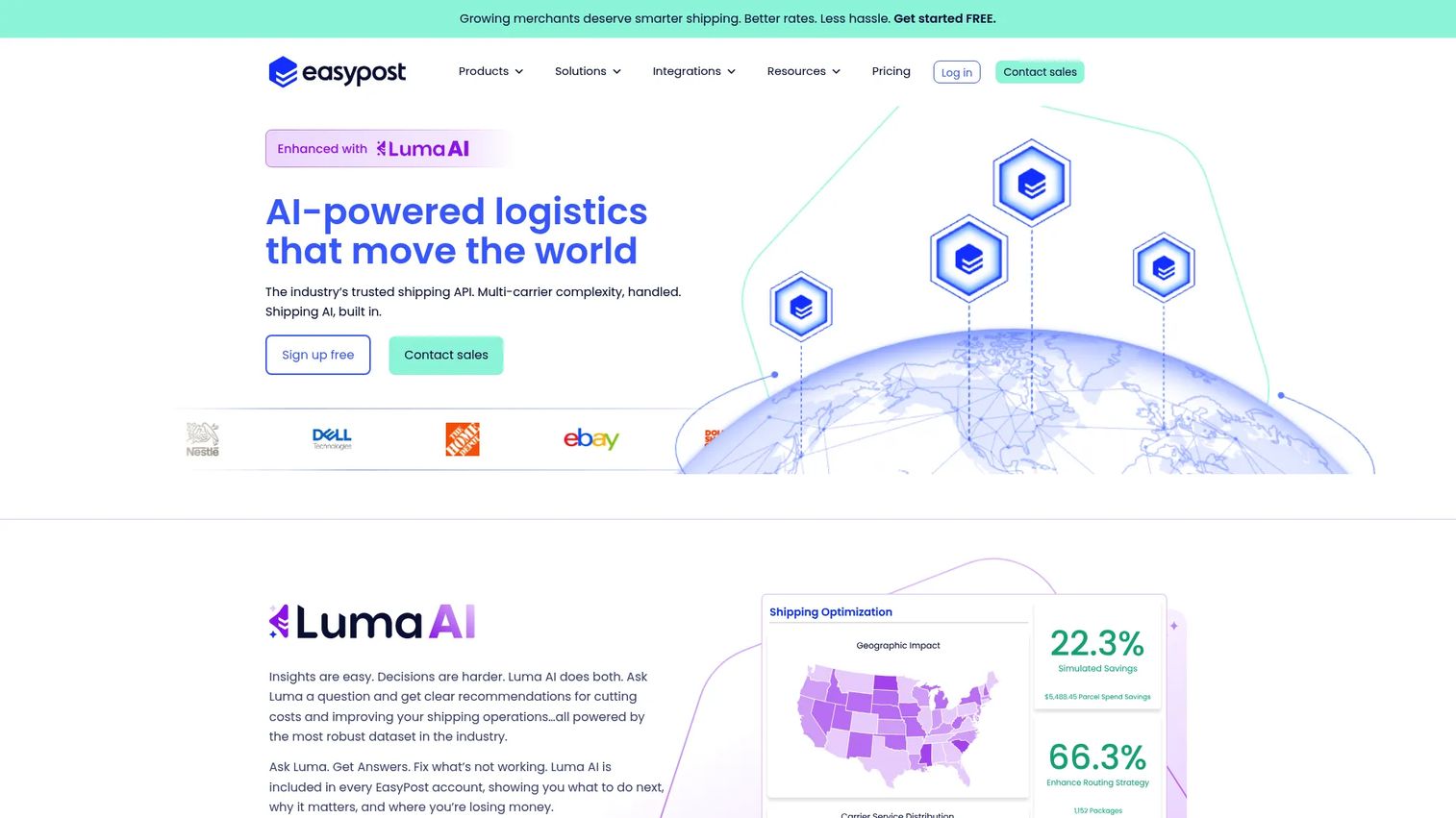
EasyPost is a multi-carrier shipping API and platform built for teams that want to control shipping in code. It handles rate shopping, label creation, address verification, tracking, and insurance through a single integration. If your engineering team wants one shipping API instead of managing separate carrier connections, this is the fit.
The rate shopping runs across your connected carriers, returning live rates so your logic can pick the best option per shipment. You can bring your own carrier accounts or use EasyPost's wallet carriers to access negotiated rates without holding contracts yourself.
Best for: engineering-led teams that want a single shipping API for rate shopping, labels, and tracking.
Key strengths
- Multi-carrier shipping API: rate shopping, labels, tracking in one integration
- Address verification to cut failed deliveries
- Shipping insurance available through the same API
- Wallet carriers or bring-your-own carrier accounts
Why choose EasyPost: it fits teams with developer bandwidth who want automation-friendly workflows and full control over shipping logic. If you would rather build shipping into your own systems than run it through a merchant dashboard, EasyPost is the direct match.
EasyPost pricing: free access with wallet carriers up to 3,000 labels per month. Bring your own carrier accounts starts at $20 per month. Enterprise plans are custom-priced by volume.
2. ProShip
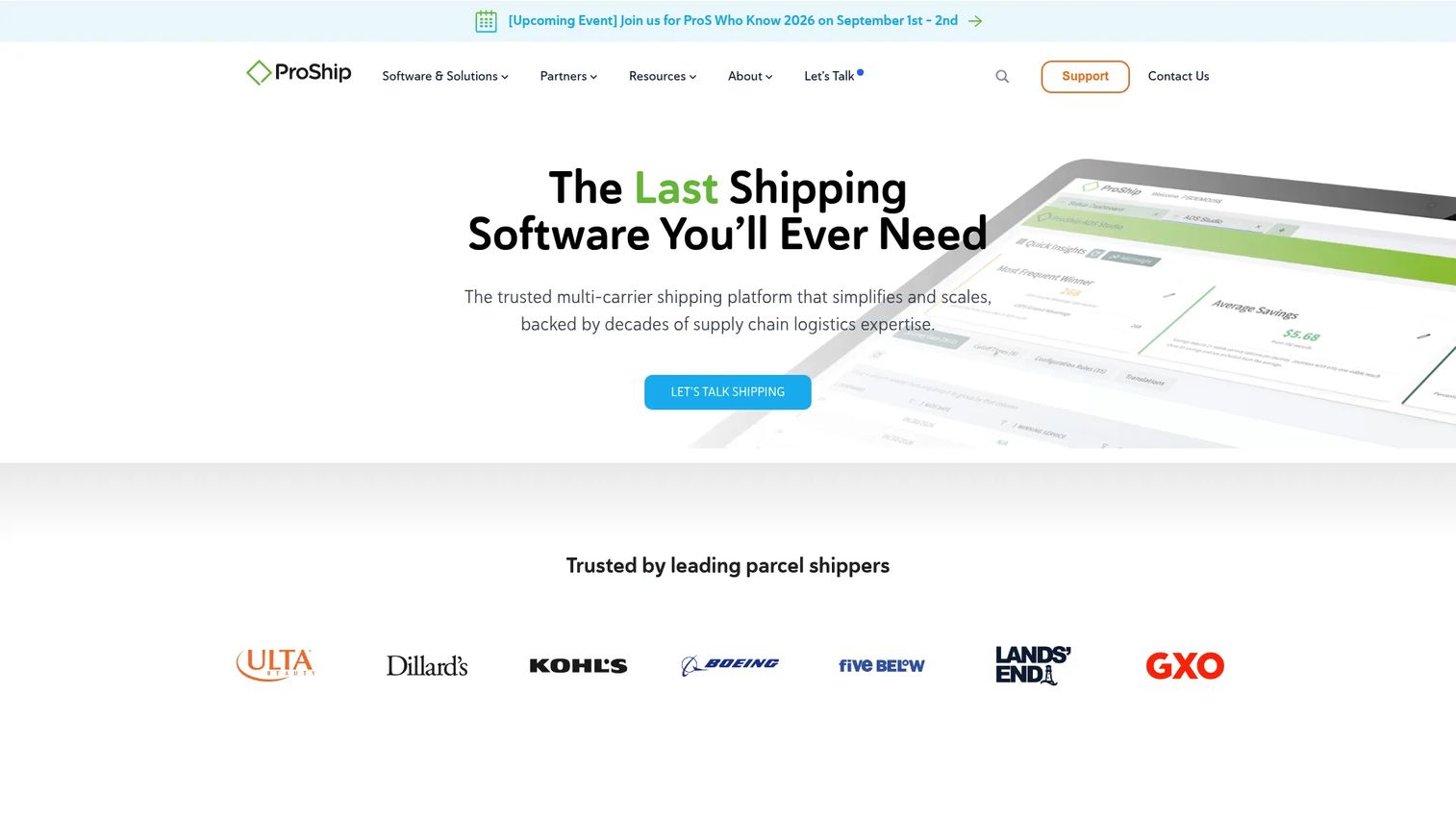
ProShip is enterprise multi-carrier parcel shipping software built for high-volume shippers. It goes deeper than simple cheapest-rate tools with advanced optimization, including time-in-transit logic and carrier rate shop groups. If your operation runs complex rules across parcel and needs precise control over carrier selection, ProShip is engineered for that scale.
Beyond basic rate shopping, it weighs delivery promises against cost, so the cheapest rate that still hits the on-time commitment wins. It integrates as a carrier-agnostic layer across WMS, OMS, and ERP systems, which matters when shipping decisions have to sync with warehouse execution.
Best for: large shippers needing configurable parcel automation and deep multi-carrier rate shopping.
Key strengths
- Automatic rate shopping across carriers
- Time-in-transit and delivery-date optimization
- Address validation built in
- Carrier-agnostic WMS, OMS, and ERP integrations
Why choose ProShip: it fits operations where on-time delivery optimization and business rules matter as much as raw cost. High-volume shippers with complex carrier contracts get the control that lighter tools do not offer.
ProShip pricing: custom and quote-based. Pricing depends on software complexity, engineering requirements, annual maintenance, and whether you choose a perpetual license or subscription model.
3. Enveyo
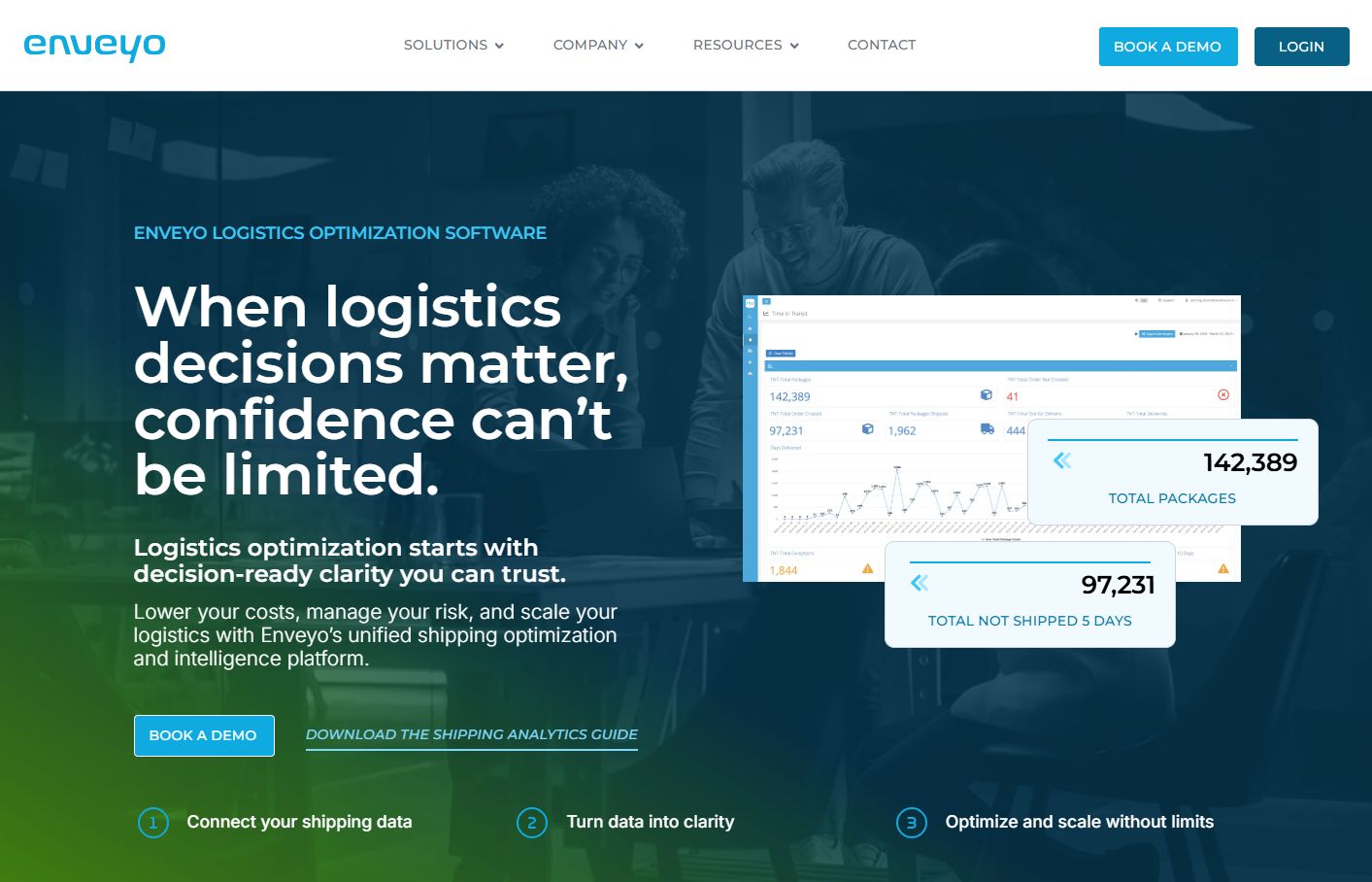
Enveyo is modular logistics intelligence software for parcel and freight management. It fits teams that need more than a rate at checkout: reporting, scenario modeling, and connected logistics data across the operation. If you want to see where shipping spend goes and model what changes would save, Enveyo is built for that analysis.
The platform integrates and standardizes logistics data, then layers on insights, modeling, cloud routing, alerting, and audit modules. Carrier comparison sits inside a broader intelligence layer, so rate decisions connect to reporting and predictive insight rather than living in isolation.
Best for: shippers and 3PLs that need logistics analytics, modeling, and parcel management in one platform.
Key strengths
- Logistics data integration, cleansing, and standardization
- Insights, modeling, and cloud routing modules
- Alerting and audit capabilities
- Carrier, TMS, WMS, ERP, and billing integrations
Why choose Enveyo: it fits enterprise logistics operations that want to optimize based on data, not habit. If your problem is visibility across a complex shipping footprint, the analytics depth here goes past what checkout tools provide.
Enveyo pricing: custom. Enveyo does not publish public pricing and directs prospects to request a demo for a tailored quote.
4. ShipperHQ
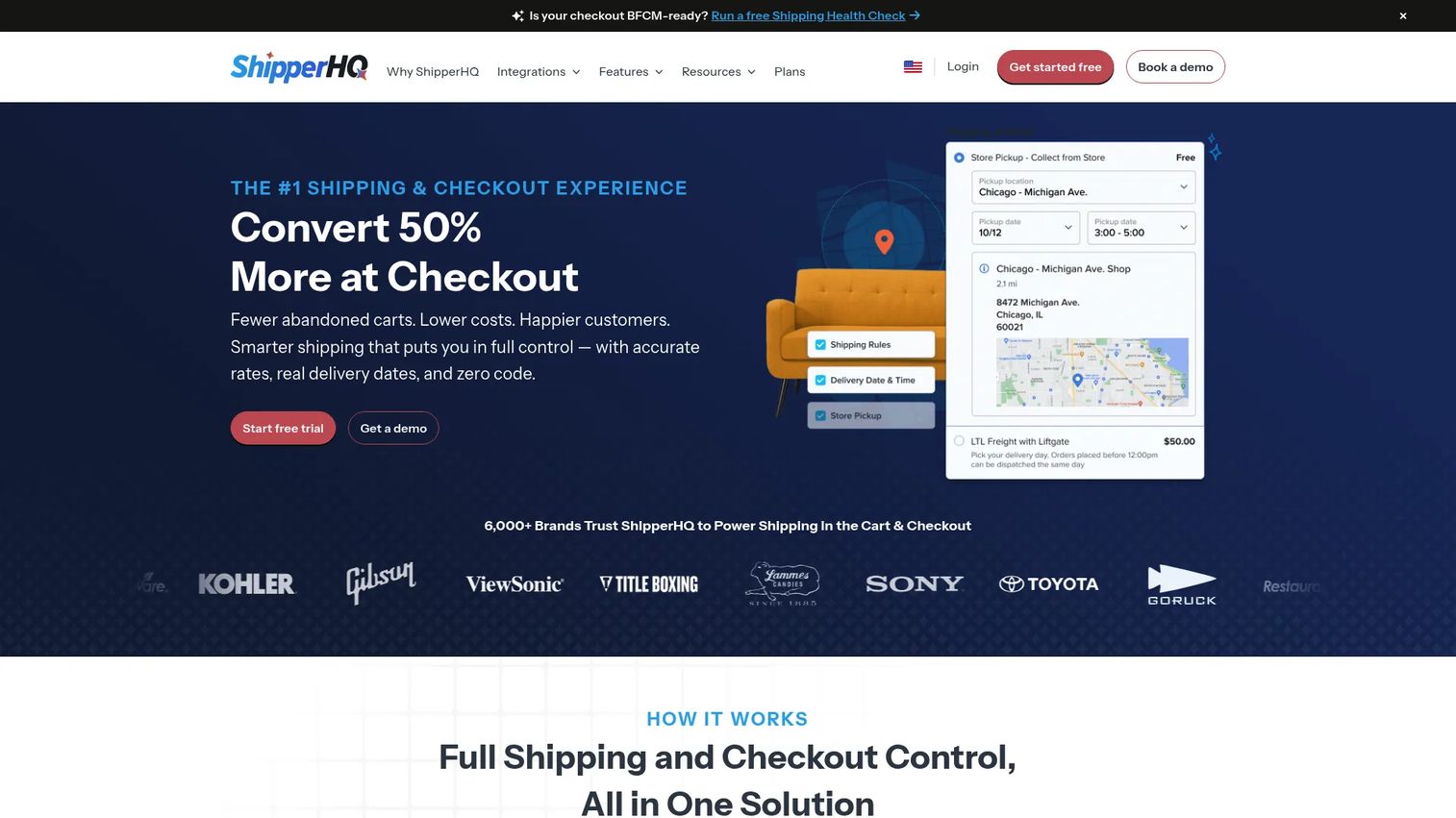
ShipperHQ is a shipping checkout and rate-management platform built for ecommerce merchants. Its focus is the checkout experience: showing the right shipping methods, accurate delivery dates, and custom rules that match how you actually ship. If your priority is checkout conversion and customer experience, this is the merchant-facing option.
You control which rates and methods appear, apply free shipping rules, and set delivery date and time selection at checkout. It also handles dimensional packing and multi-origin shipping, so rates reflect real package sizes and warehouse locations rather than flat estimates.
Best for: ecommerce merchants needing advanced shipping-rate, delivery-date, and multi-origin checkout logic.
Key strengths
- Shipping rules and rate control at checkout
- Delivery date and time selection display
- Dimensional packing for accurate rates
- Multi-origin shipping support
Why choose ShipperHQ: it excels at the storefront, where clear shipping choices and delivery dates drive conversion. It is more checkout-oriented than deep logistics optimization, which is exactly right for merchants who want to fix the buying experience first.
ShipperHQ pricing: the Standard plan starts at $245 per month and the Advanced plan at $420 per month. Enterprise pricing is custom, and a 15-day free trial is available.
5. Deposco
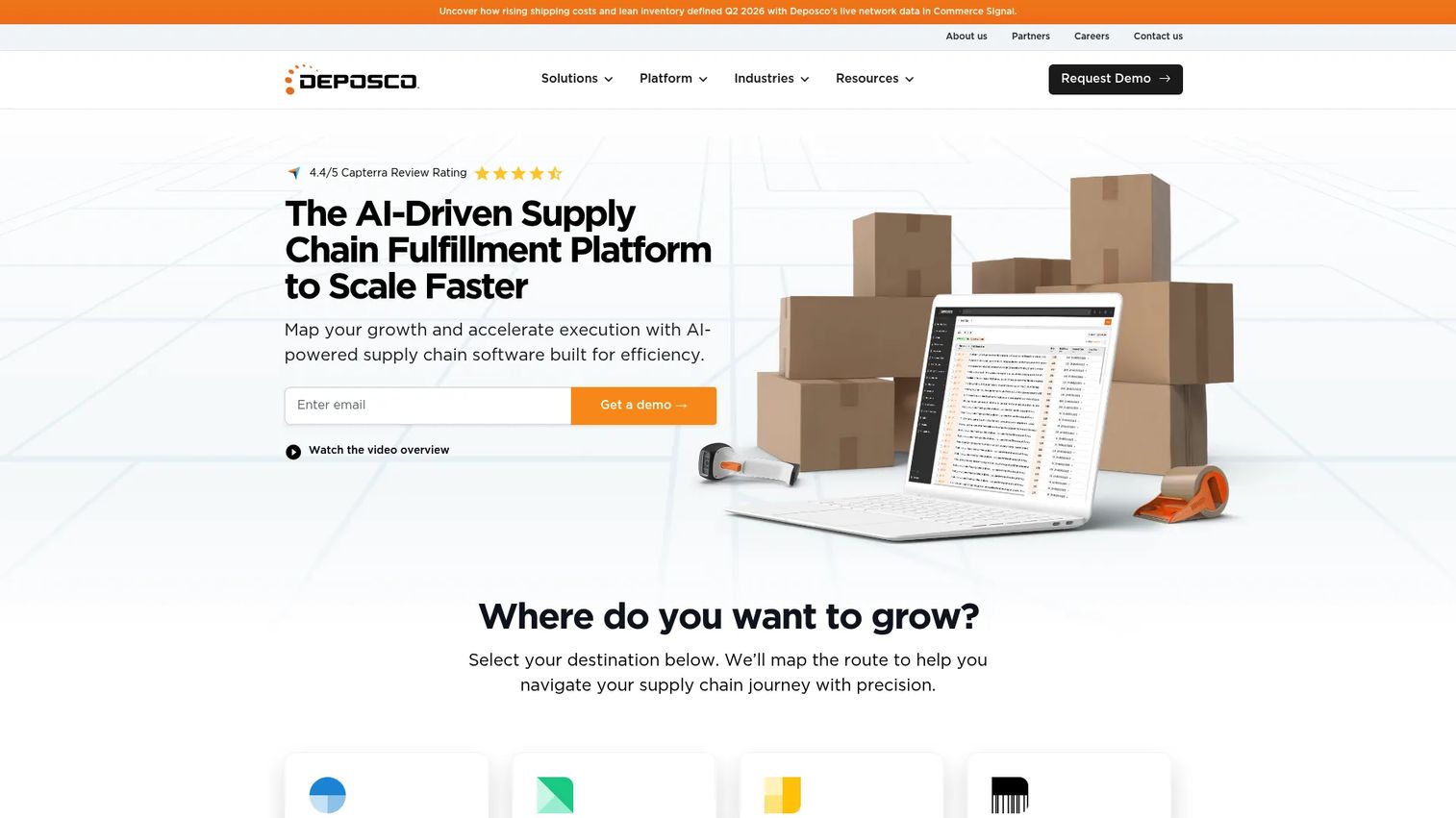
Deposco is cloud supply chain fulfillment software that covers warehouse, order, planning, and intelligence operations. Rate shopping here is one capability inside a larger fulfillment platform. If you want carrier selection logic embedded in the same system that runs your warehouse and orders, Deposco fits that operator profile.
The platform handles warehouse management, order and distributed order management, and forecasting and inventory planning. Rate shopping sits inside that execution flow, so carrier decisions happen where fulfillment happens rather than in a separate tool you have to reconcile.
Best for: mid-market and enterprise brands needing omnichannel supply chain execution and fulfillment.
Key strengths
- Warehouse management
- Order and distributed order management
- Forecasting and inventory planning
- Rate shopping inside the fulfillment workflow
Why choose Deposco: it is a workflow platform first and a rate shopping capability second. Choose it when you want shipping logic living inside a broader supply chain system, not bolted on as a standalone.
Deposco pricing: custom, based on order volume and required features. Deposco does not publish public pricing on its site.
6. TrueCommerce
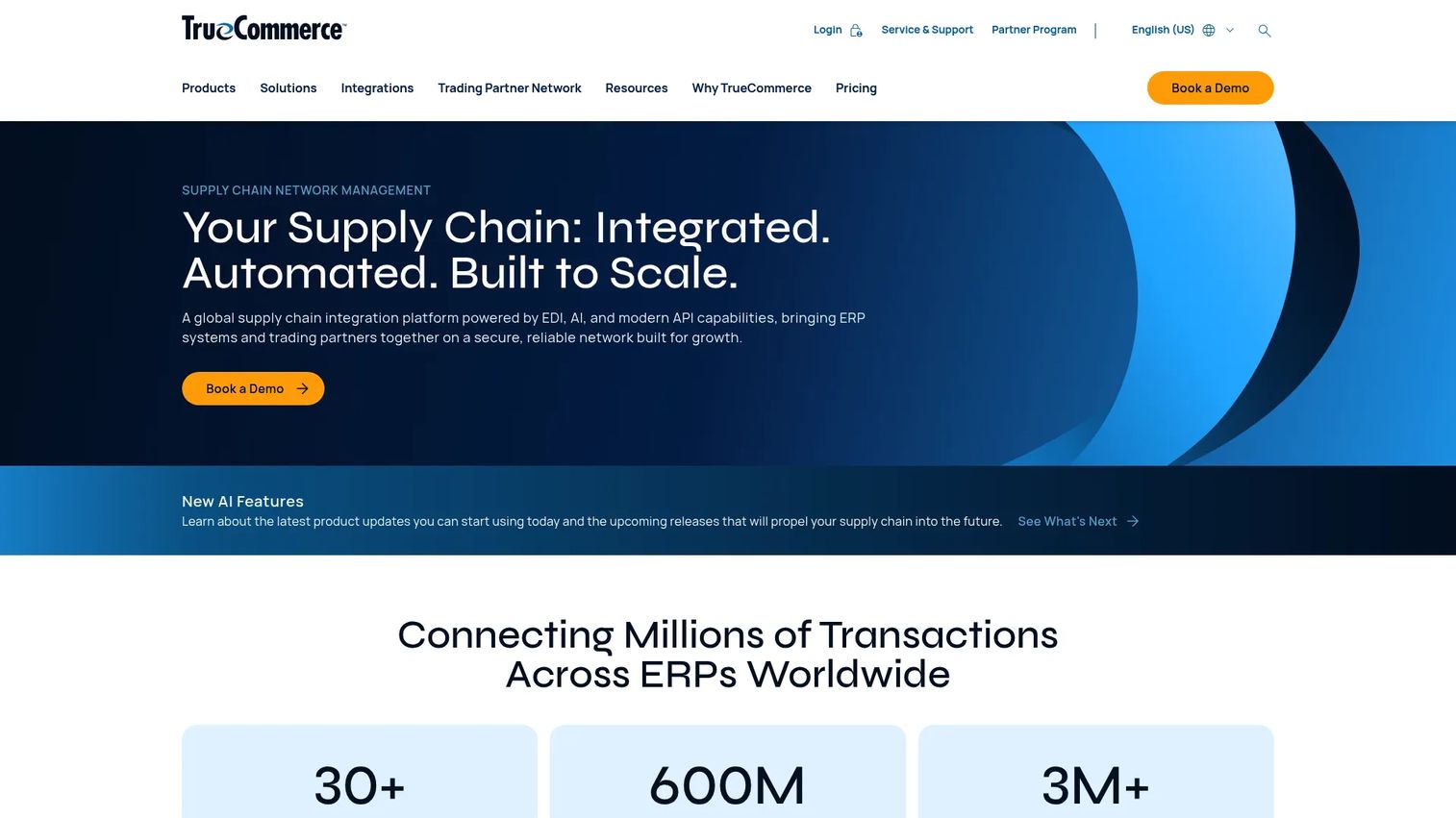
TrueCommerce is B2B supply chain integration software covering EDI, e-invoicing, vendor managed inventory, and B2B ecommerce. Its rate and carrier service selection sits inside pack-and-ship and trading-partner workflows. If your shipping happens as part of a larger B2B integration process, TrueCommerce fits that environment.
The platform connects trading partners through integrated EDI and API connections, adds AI-powered vendor managed inventory, and runs a B2B ecommerce layer. Rate groups and carrier selection support the shipping steps inside that broader supply chain automation, keeping fulfillment aligned with order and inventory data.
Best for: businesses needing managed B2B integration and supply chain automation across trading partners.
Key strengths
- Integrated EDI and API connections
- AI-powered vendor managed inventory
- B2B ecommerce platform
- Rate groups and carrier service selection
Why choose TrueCommerce: it fits warehouse execution and logistics processing inside a B2B trading network. Choose it when carrier selection is one step in a connected supply chain rather than a standalone rate engine.
TrueCommerce pricing: custom. TrueCommerce tailors pricing to business needs and requires a quote request.
7. Kuebix
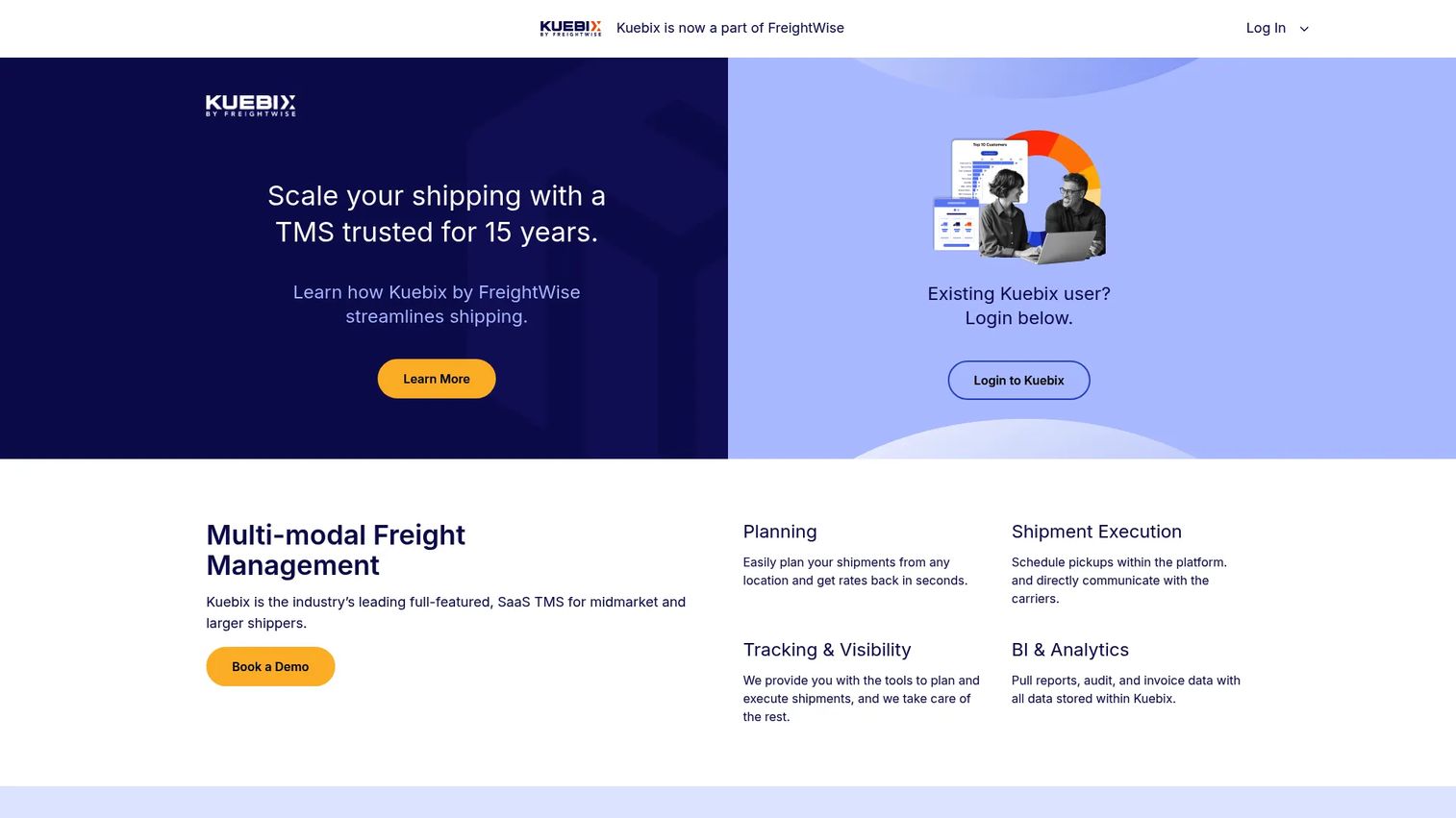
Kuebix is a cloud-based transportation management system for midmarket and larger shippers. Rate comparison sits inside broader shipment management, so it suits teams that need planning and execution alongside cost comparison. If your job is managing freight and shipments end to end, not just picking a parcel rate, Kuebix is built for that.
The system covers shipment planning and rate quotes, shipment execution with pickups and carrier communication, and tracking with BI and analytics. Rate shopping is part of a full transportation workflow rather than a point tool, which fits operators who need visibility across the whole shipment lifecycle.
Best for: shippers that need a TMS for planning, execution, tracking, and freight analytics.
Key strengths
- Shipment planning and rate quotes
- Shipment execution with pickups and carrier communication
- Tracking and visibility
- BI and analytics
Why choose Kuebix: it fits teams that need shipment management alongside cost comparison, especially across freight. Choose it when rate shopping is one piece of a larger transportation management need.
Kuebix pricing: the Get Started plan is $99 per month. Pro users are $50 per month per user and Lite users $25 per month per user. Some integrations and services are quote-based.
Considerations
Carrier coverage
The tool has to support the carriers you actually use, or the savings never materialize. Check for UPS, FedEx, USPS, and DHL, plus any regional carriers that give you an edge on specific zones. If you ship freight, confirm LTL support. Broad coverage is what makes rate shopping worth running in the first place.
Optimization depth
There is a difference between basic cheapest-rate selection and real optimization. Simple tools return the lowest rate. Deeper tools weigh transit time, delivery promises, and business rules so the cheapest option that still hits your commitment wins. Decide how much logic your orders actually need before you pay for depth you will not use.
Checkout or fulfillment fit
Some tools live at checkout, showing customers clean shipping options and delivery dates. Others live in warehouse operations, picking carriers after the order is placed. Match the tool to your motion. A merchant fixing cart abandonment needs a different tool than an operator optimizing a fulfillment center.
Reporting and savings visibility
You need proof the tool is saving money, not just a claim. Look for savings dashboards, carrier-level reporting, and audit trails you can show a board or a finance lead. Shipping cost reduction only counts if you can measure it. Without visibility, you are trusting a black box.
Setup and maintenance
Be honest about internal effort. API-heavy tools need developer time to integrate and maintain. No-code merchant tools trade some flexibility for faster setup. Weigh the implementation cost against your team's bandwidth. The best tool on paper is worthless if it sits half-configured for six months.
Conclusion
The right rate shopping software comes down to your motion and your scale. API-first teams with developer bandwidth get the most from EasyPost. High-volume operations that need time-in-transit logic and deep carrier control fit ProShip. Enterprises that want to optimize on data lean toward Enveyo.
Merchants focused on checkout conversion and delivery dates should look at ShipperHQ. Operators who want rate shopping inside a full fulfillment platform fit Deposco, while B2B integration environments fit TrueCommerce. Teams managing freight and shipments across a TMS get the broadest workflow from Kuebix.
Next step: map your shipping volume, carrier mix, and where the decision happens, at checkout or in the warehouse. Then shortlist two tools that match that profile and run a trial or a demo against your real order data. The savings show up fast when the fit is right, and the leak keeps compounding until you close it.
FAQs
Rate shopping software compares carrier rates, transit times, and service eligibility in real time, then picks the shipping option that fits your rules. It replaces manual carrier comparison with automated, repeatable rate selection across UPS, FedEx, USPS, DHL, and regional carriers.
The software queries every carrier you have connected, pulls live rates and transit times, then applies your business rules to select the best option per shipment. Rules can prioritize the cheapest shipping rates, the fastest delivery, or a specific service commitment.
Most tools support the major carriers: UPS, FedEx, USPS, and DHL. Many also connect regional carriers and, for freight, LTL carriers. Coverage varies by tool, so confirm the specific carriers you use are supported before you commit.
Not when it is built for real-time rate comparison. Checkout-focused tools return rates fast enough to display without noticeable delay. In fact, showing accurate methods and delivery dates tends to improve checkout conversion by reducing the friction of unclear or surprising shipping costs.
Yes. By comparing every carrier on every order and picking the lowest qualifying rate, it removes the default-carrier tax you pay when shipping by habit. The savings compound with volume, which is why shipping cost reduction is the main reason operators adopt these tools.
It depends on volume. At low order counts, manual comparison may still work. But once you are shipping enough that a few percent per label adds up, automated carrier rate shopping pays for itself. Tools like EasyPost with a free tier and Kuebix at $99 per month keep entry costs low for smaller operations.
Rate shopping picks the cheapest qualifying rate. Time-in-transit optimization weighs delivery speed and promise dates alongside cost, so the tool selects the least expensive option that still meets the delivery commitment. Deeper tools like ProShip combine both rather than optimizing on price alone.
Some can. Transportation management systems and logistics platforms often support LTL rate comparison alongside parcel. Tools like Kuebix and Enveyo handle freight, while parcel-focused tools may not. If you ship LTL, confirm freight support before choosing.