
You launched a mentoring program with the best intentions. A spreadsheet of mentors. A second spreadsheet of mentees. A shared calendar. A folder of email threads nobody reads.
Six weeks in, half the pairs never met. You cannot say who is active, who dropped off, or whether any of it moved a single retention metric.
That is the real problem with running mentoring by hand. It is not the matching. It is not the scheduling. It is the fact that none of it holds together long enough to prove impact to the people who funded it.
The market has noticed. The global mentoring software market is estimated at USD 970.6 million in 2026 and projected to reach USD 2.25 billion by 2032, a 14.9% CAGR according to GIIR (2024). Buyers are moving off spreadsheets because manual coordination does not survive a program past a few dozen pairs.
This guide compares the platforms that make mentoring repeatable. It focuses on matching depth, program administration, reporting, and how each tool connects to the rest of your stack.
What's inside
This guide is for HR, L&D, People Ops, and enablement buyers evaluating a mentoring platform to run a program at scale. It skips the marketing gloss and stays on the decisions that actually shape a purchase.
We selected tools based on four criteria that matter most when a program grows past manual coordination:
- Mentor matching depth: how well the platform pairs people on skills, goals, seniority, department, and geography
- Program administration: how much manual work the tool removes through templates, automation, and workflows
- Reporting and ROI tracking: whether you can prove participation, progression, and retention impact to leadership
- Integrations: how the platform connects with HRIS, LMS, calendar, and communication tools
TL;DR
Short on time? Here is where each of the best mentoring software picks lands.
- Best overall for enterprise mentoring programs: Together, strong matching plus structured administration
- Best for modern AI-assisted program operations: Mentorloop, with sentiment tracking and program intelligence
- Best for structured program management: MentorcliQ, built for scale, governance, and ERGs
- Best for broad mentoring workflows: Chronus, flexible across formal and informal formats
- Best for simpler team programs: Qooper, approachable setup with learning pathways
- Best for career growth and matching: Mentorink, deep mentor matching software with automation
- Best for enterprise learning and engagement layers: MentorCloud, mentoring tied to knowledge sharing
What is mentorship software?
Mentorship software is a platform for organizing, matching, managing, and measuring mentoring programs from a single system, so pairing people and tracking outcomes does not fall apart at scale.
It replaces the spreadsheet-and-email approach with structured workflows. Instead of manually pairing mentors and mentees, chasing sessions, and guessing at results, you run the whole program in one place with data attached to every step.
Core capabilities of a modern mentoring platform:
- Mentor matching: pair participants on skills, goals, seniority, department, and location
- Program workflows: structured onboarding, milestones, and guided journeys
- Session scheduling: built-in coordination and calendar sync
- Progress tracking: milestone completion and participation status
- Surveys and feedback: pulse checks and satisfaction signals
- Dashboards and reporting: participation, engagement, and outcome metrics
- Integrations: HRIS integration, LMS integration, calendar, and chat tools
The point is repeatable mentoring at scale, not a one-off matching tool. A good mentoring program software turns a fragile manual effort into a system you can run every quarter without starting over.
That system does real work for the business. Mentoring program software supports employee development by connecting people to the skills and relationships they need to grow. It backs retention and engagement by giving employees a reason to stay and progress. And it builds a leadership pipeline by making career development software part of how the organization grows its own talent.
When to use mentorship software
Scale a mentoring program beyond manual coordination
Spreadsheets work for a pilot with ten pairs. They break around fifty. Once you are tracking matches, sessions, milestones, and feedback across departments, the manual version collapses into missed meetings and stale data.
The signals are obvious once you look. Pairs stop meeting and you find out weeks later. You cannot answer a simple leadership question about participation. Every quarter you rebuild the program from scratch. That is when employee mentoring software earns its cost.
Match mentors and mentees with less admin work
Matching is where most programs live or die. Bad pairs disengage fast. Manual matching does not scale past a few dozen people, and it introduces bias you cannot defend.
Mentor matching software applies consistent criteria at scale: skill gaps, career goals, department, seniority, time zone, and geography. A rep in Austin who wants to move into management gets paired with a director who has made that jump, automatically, across hundreds of participants.
Prove mentoring impact to leadership
A program you cannot measure is a program that gets cut. Once mentoring becomes a line item, someone asks for ROI and reporting, and "people seem to like it" is not an answer.
This is where reporting matters most. Track participation, session completion, feedback scores, career progression, and retention indicators. Tie mentoring engagement to outcomes leadership already cares about, and the program funds itself.
Comparison table
The table below sorts the seven platforms by relevance to a buyer running an employee mentoring program. Use it as a fast scan, then read the full sections for fit. Pricing reflects what each vendor publishes; several use custom pricing tied to program size and participant volume. G2 ratings come from each tool's current listing and are useful as directional mentoring software reviews, not gospel.
| # | Product | Best for | Key differentiator | Pricing | G2 rating |
|---|---|---|---|---|---|
| 1 | Together | Enterprise programs at scale | Intelligent matching plus structured admin | Custom | 4.8/5 |
| 2 | Mentorloop | AI-assisted program operations | Real-time sentiment and analytics | From $299/mo | 4.4/5 |
| 3 | MentorcliQ | Structured program management | AI matching plus ERG and community support | Custom | 4.7/5 |
| 4 | Chronus | Broad mentoring workflows | Flexible across formal and informal formats | Custom | 4.7/5 |
| 5 | Qooper | Simpler team programs | Templates plus learning pathways | Custom | 4.7/5 |
| 6 | Mentorink | Career growth and matching | AI matching across multiple mentoring types | Custom | 4.6/5 |
| 7 | MentorCloud | Learning and engagement layers | Mentoring tied to knowledge sharing | From under $4/person | Not listed |
Best 7 mentorship software tools for 2026
1. Together
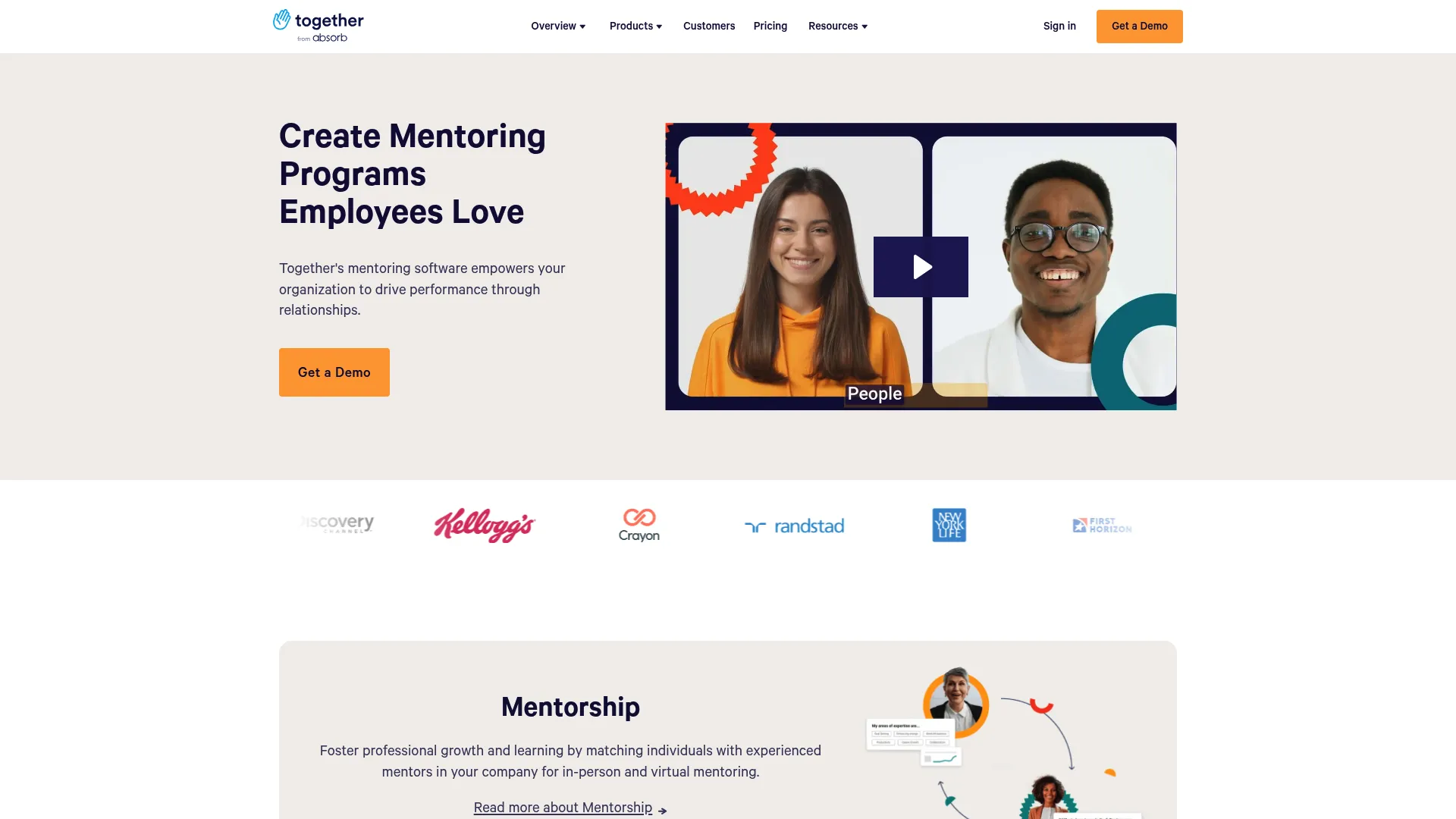
Together is mentoring software for building, managing, and measuring employee mentoring programs. It leans into structured program creation and intelligent pairing, which is why it tends to fit enterprise buyers who need a program to run the same way every cycle. The platform pairs strong matching with reporting so admins are not stitching results together by hand.
Best for: enterprise teams running structured mentorship programs at scale.
Key features
- Intelligent mentor-mentee matching
- Program templates and onboarding support
- Tracking, reporting, and analytics
- Integrations for HRIS and communication tools
- Enterprise administration and controls
Why choose Together: if your program spans departments and you need governance plus repeatable structure, Together removes the admin drag that kills large programs. It fits organizations that want a scalable program without a full-time coordinator babysitting spreadsheets.
Together pricing: pricing is custom and based on the number of learners, match types, and program goals. The vendor states pricing includes implementation and support with no initiation fees. Contact Together for a quote tied to your program size.
Together holds a 4.8/5 rating on G2, one of the higher scores in this category.
2. Mentorloop
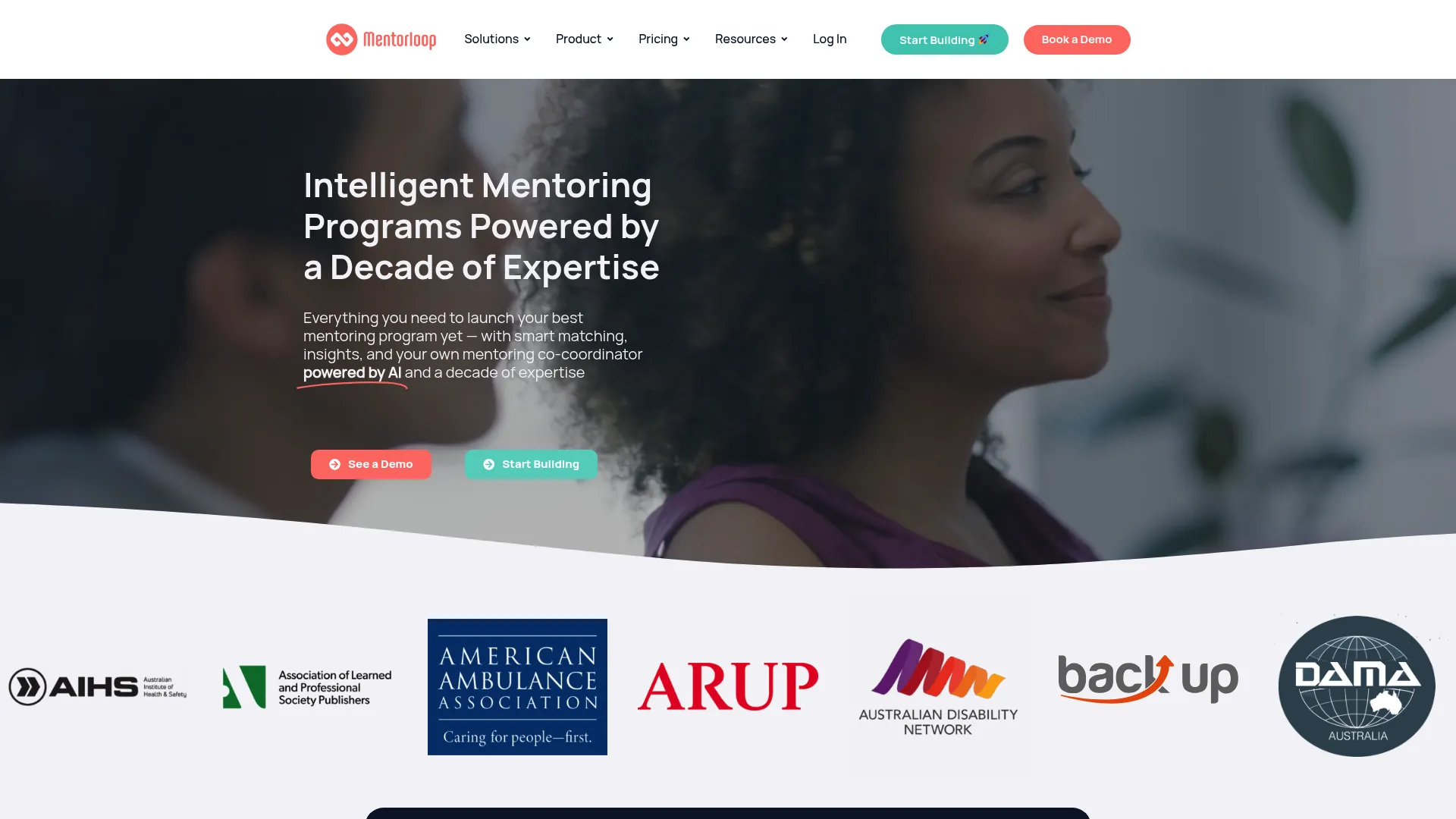
Mentorloop is mentoring software for building and scaling programs, with a modern bias toward automation and program intelligence. Its standout is a real-time sentiment layer that shows how relationships are actually going, not just whether meetings happened. That makes it a good fit for teams who want signals early enough to intervene.
Best for: organizations that want a scalable mentoring program with matching, reporting, and integrations.
Key features
- Equitable matching and manual matching
- Real-time sentiment feedback and analytics
- Milestones and program nudges
- Integrations including SSO, calendar, HRIS, and CRM
- Enterprise collaboration workflows
Why choose Mentorloop: if you run a mature program and want ongoing insight rather than end-of-cycle guesswork, the sentiment dashboard earns its keep. It suits teams that treat mentoring as an operational program, not a one-time event.
Mentorloop pricing: the public pricing page shows a free build option, a Pro plan starting from $299/mo, and an Enterprise tier by contact sales. A Community Support Program is referenced for charities and nonprofits. Start free, then move to Pro as the program grows.
Mentorloop carries a 4.4/5 rating on G2.
3. MentorcliQ
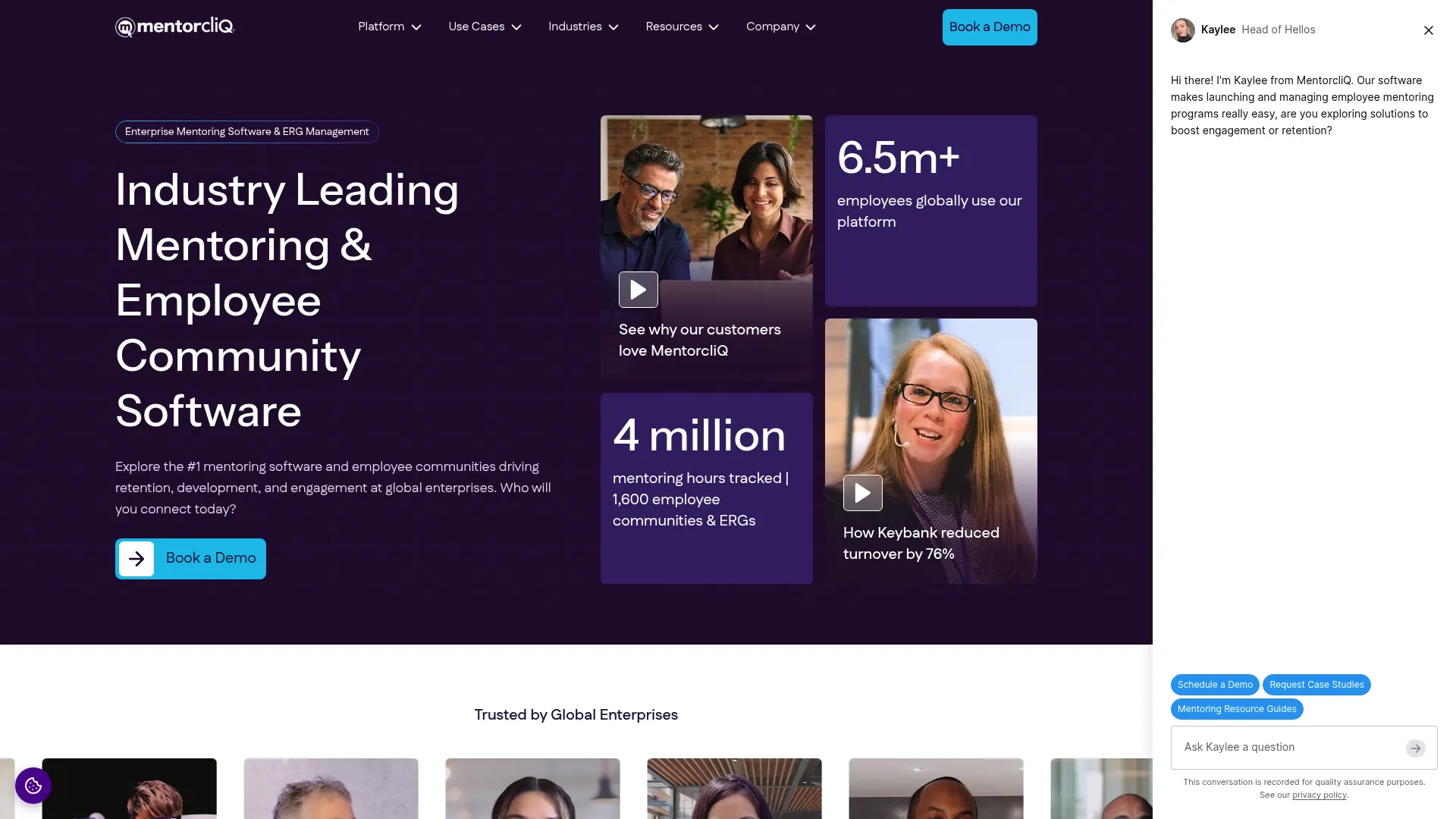
MentorcliQ is enterprise mentoring and employee community software covering mentoring programs and ERGs. It is built for organizations that prioritize scale, governance, and formal learning programs, with a mobile app so participants can enroll, match, and message on the go. That breadth makes it a fit for global enterprises running more than one program at once.
Best for: global enterprises running structured mentoring and ERG programs.
Key features
- AI-powered matching and program administration
- Mobile app for enrolling, matching, messaging, and progress tracking
- Resource library and learning materials
- Analytics and measurement
- Employee development and ERG support
Why choose MentorcliQ: if mentoring sits alongside broader employee development and community programs, MentorcliQ handles both under one roof. It fits enterprises that need formal governance and want ERGs managed in the same place.
MentorcliQ pricing: pricing is flexible and demo-led. The first-party pricing page presents plan options rather than a public number, so pricing is tied to your program and requires a conversation with sales.
MentorcliQ holds a 4.7/5 rating on G2.
4. Chronus
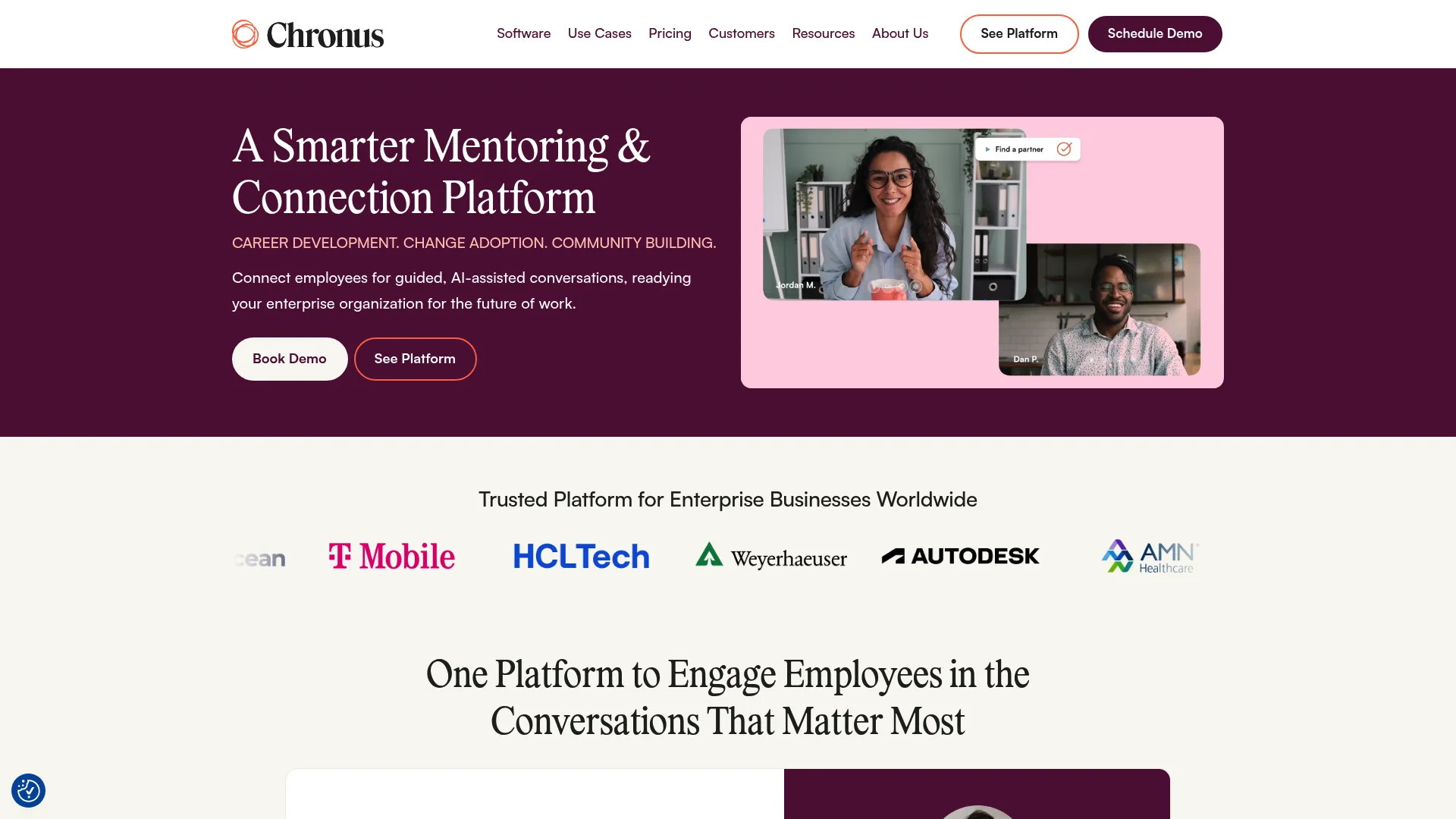
Chronus is an enterprise mentoring and employee connection platform spanning career development, change adoption, and community building. Its flexibility across formal and informal mentoring is the draw, with guided conversations that keep pairs moving. That makes it a strong pick for organizations running several mentoring formats across different employee segments.
Best for: large organizations needing mentoring, peer learning, and employee community software.
Key features
- AI-powered matching
- Guided conversations for mentor-mentee pairs
- Employee community management with events and communication
- Reporting and budget tools
- Engagement tracking and surveys
Why choose Chronus: if you run more than one type of mentoring, from structured cohorts to informal peer learning, Chronus adapts without forcing every program into the same mold. It fits enterprises that want mentoring and community management together.
Chronus pricing: public pricing is not displayed. The pricing page lists tier names, Ignite Performance, Unleash Performance, and Peak Performance, and directs buyers to contact sales for pricing. Expect a quote tied to program scope.
Chronus holds a 4.7/5 rating on G2.
5. Qooper
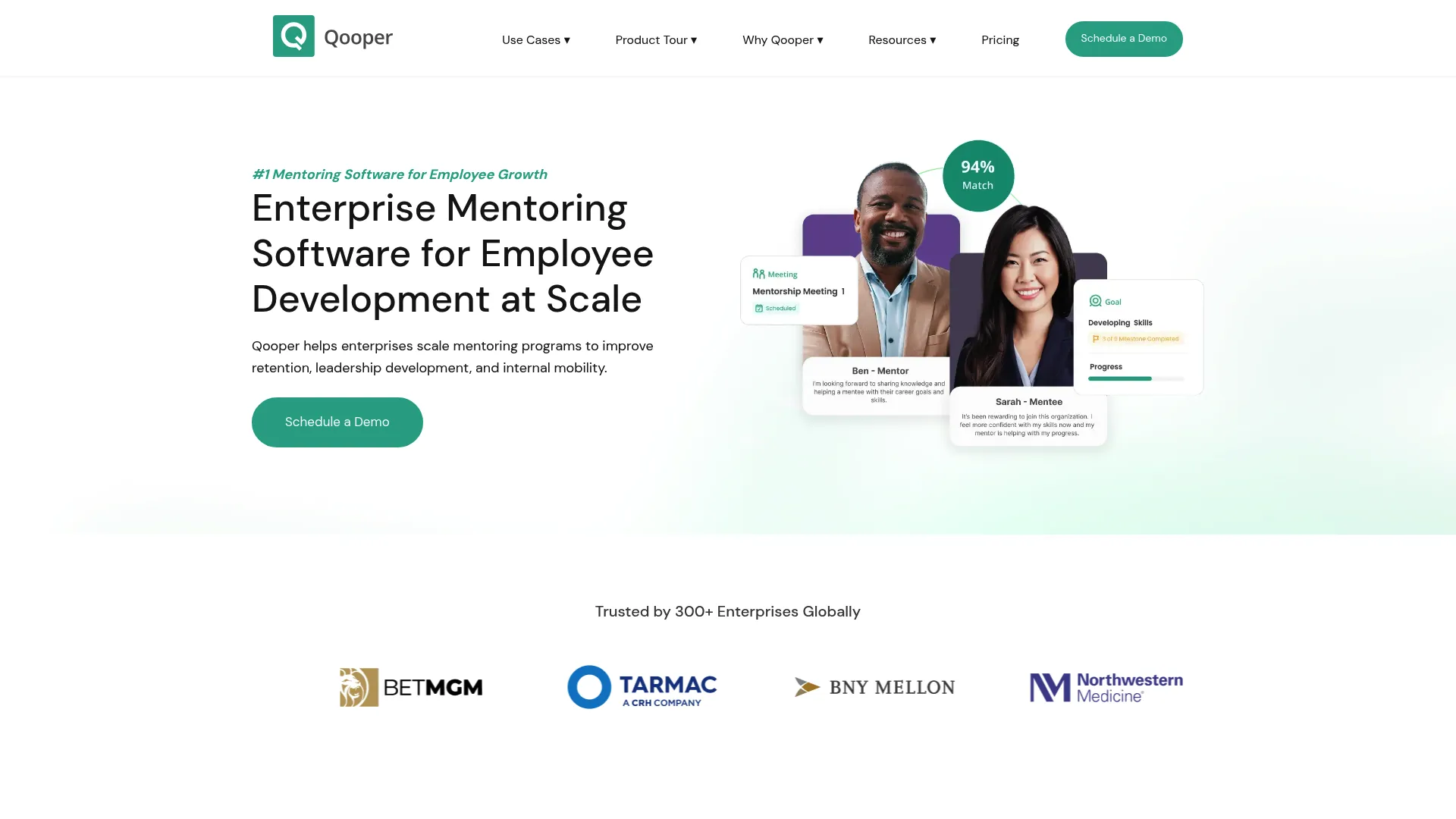
Qooper is enterprise mentoring and learning software aimed at employee development at scale. It stands out for an approachable setup, with program design templates and smart matching that get a program live without a long implementation. That makes it a good fit for teams that want to launch quickly without sacrificing structure.
Best for: organizations running structured mentoring programs for employees, students, or members.
Key features
- Program design templates
- Smart mentor matching
- Automated follow-ups and reporting
- Session coordination
- Learning pathways
Why choose Qooper: if you want an employee mentoring program up and running fast, Qooper's templates and automation cut the setup time that stalls most launches. It suits teams that value ease of setup alongside solid reporting.
Qooper pricing: the first-party pricing page bases pricing on program scope, participant volume, and organizational requirements, and directs visitors to request pricing rather than showing a public number. Ask for a quote matched to your program.
Qooper holds a 4.7/5 rating on G2.
6. Mentorink
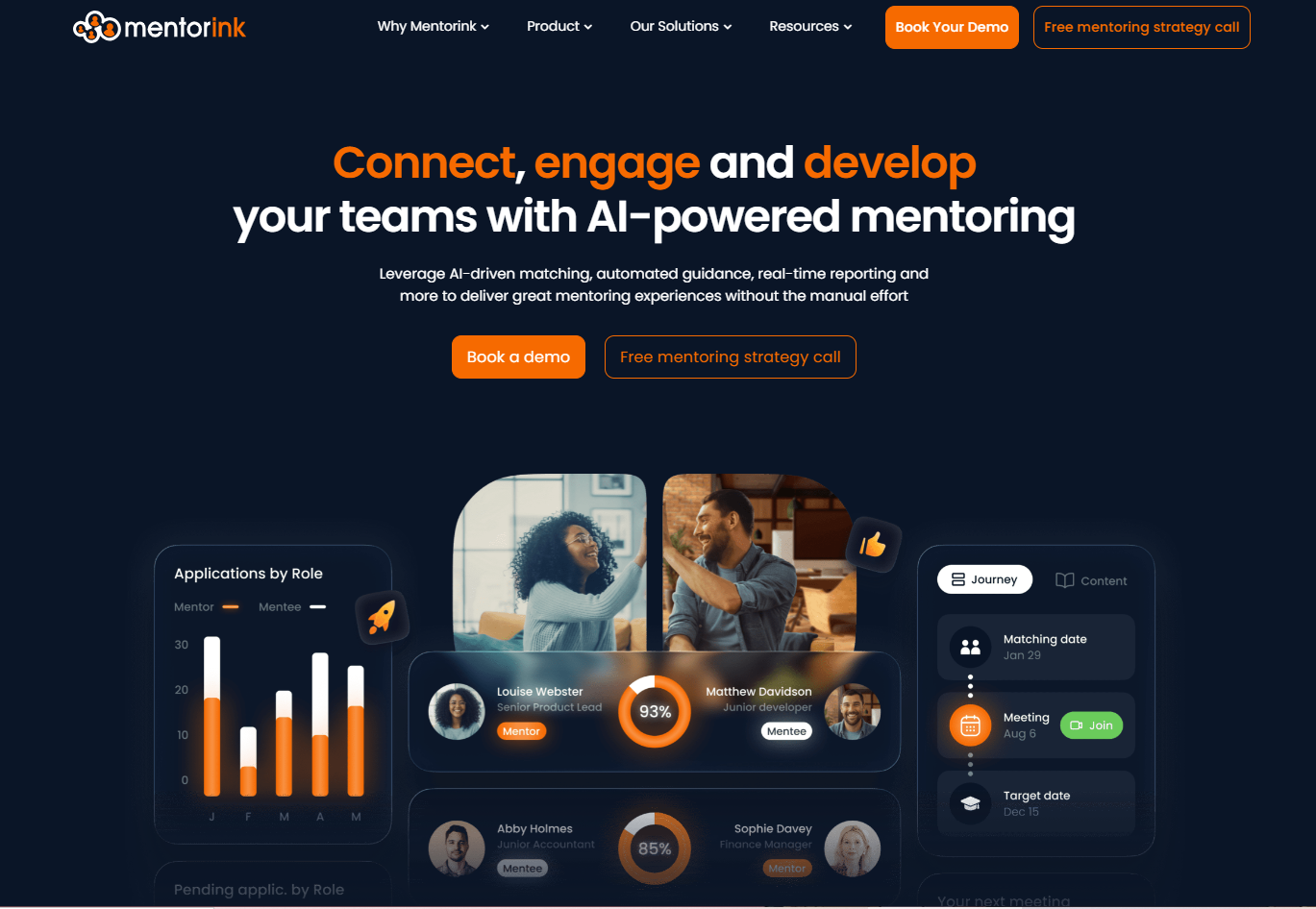
Mentorink is AI-powered mentoring software for launching, scaling, and automating mentoring programs. Its strength is matching depth combined with support for many mentoring formats, from one-on-one to mentoring circles. That flexibility makes it a fit for teams focused on career growth who want strong participation workflows.
Best for: enterprise teams running structured mentoring programs at scale.
Key features
- AI-powered matching
- Automated scheduling, feedback collection, and progress tracking
- Supports one-on-one, group, reverse, and flash mentoring
- Mentoring circles and high-potential programs
- Analytics and reporting
Why choose Mentorink: if your program needs to run several mentoring types at once with minimal manual coordination, Mentorink's automation handles scheduling and tracking so admins stay out of the weeds. It fits teams that treat matching quality as the priority.
Mentorink pricing: pricing is not publicly listed. The FAQ states pricing varies by organization size and program scope and directs buyers to contact for a detailed quote. Expect quote-based pricing tied to your scale.
Mentorink carries a 4.6/5 rating on G2.
7. MentorCloud
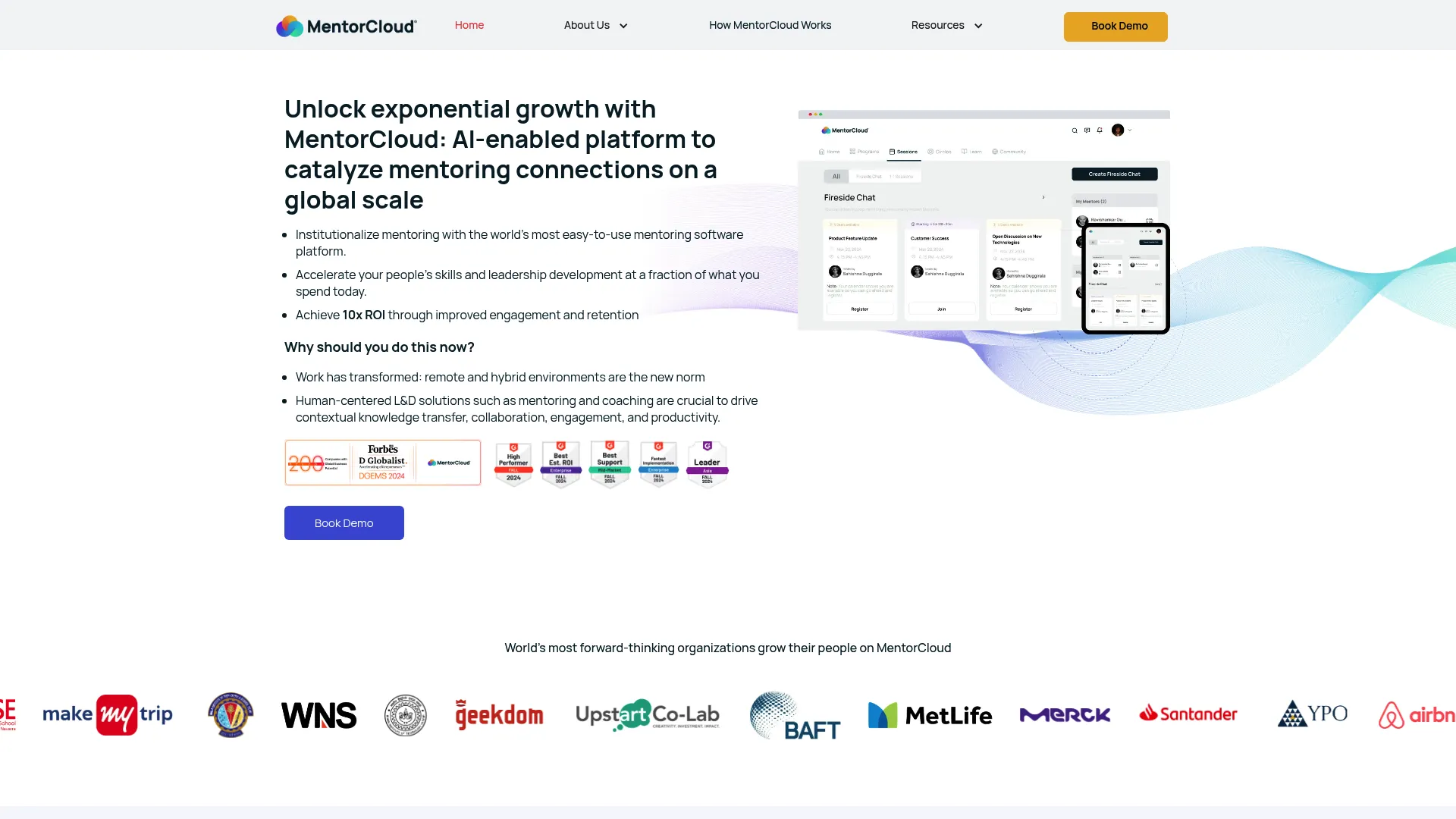
MentorCloud is AI-enabled mentoring software for enterprise mentoring and knowledge sharing. It ties mentoring to learning and engagement, with fireside chats and peer learning communities layered on top of standard program management. That makes it a fit for teams that want mentoring connected to broader employee development outcomes.
Best for: enterprises running structured mentoring programs across teams or geographies.
Key features
- AI mentor-mentee matching
- Multiple mentoring program management
- Reporting and analytics
- Video call integration
- Fireside chats and peer learning communities
Why choose MentorCloud: if you want mentoring to feed a broader learning and engagement motion, MentorCloud's community features extend the program beyond one-on-one pairs. It suits enterprises running mentoring across multiple teams or regions.
MentorCloud pricing: three plans are listed, Basic, Premium, and Enterprise. Basic and Premium are shown at under 4 per person billed annually, while Enterprise is for 2,500+ employees and requires contacting sales. A 30-day commitment-free trial is mentioned.
Considerations
Before you shortlist, run each platform against the criteria that decide whether a program survives its first year.
Matching quality
Matching is the single biggest driver of engagement. Evaluate how deep the logic goes: skill gaps, career goals, seniority, department, time zone, and geography. Ask whether matching is fully automated, admin-assisted, or self-select, and whether you can override a pairing when context demands it.
Administration overhead
The whole point is less manual work. Look at how much the platform automates: templates for launching programs, automated nudges and reminders, milestone tracking, and workflow controls. A tool that removes coordinator busywork pays for itself in saved hours.
Reporting and ROI
Leadership will ask for numbers. Prioritize platforms that track participation, session completion, feedback scores, career progression, and retention indicators. The best tools tie mentoring engagement to outcomes the business already measures, so you can defend the budget.
Integrations and stack fit
Adoption dies when a tool sits outside daily workflows. Check for HRIS integration to sync employee data, LMS integration to connect learning, calendar sync for scheduling, and Slack or Teams for in-flow reminders. Also confirm identity and SSO support. Deeper integration means higher participation.
Security and permissions
Mentoring data touches sensitive employee information. Confirm SSO, role-based access control, and enterprise governance. Ask who can see what, how data is stored, and whether the platform meets your security review before you commit.
Conclusion
The right pick depends on your program's shape, not a leaderboard. For a large, structured program that needs governance and repeatability, Together is the strongest all-round choice among the best mentoring software here. If you want modern automation and early warning signals, Mentorloop's sentiment tracking stands out. MentorcliQ and Chronus fit enterprises running mentoring alongside ERGs, community, and multiple formats.
For teams that want to launch fast, Qooper's templates cut setup time. If matching depth and career growth are the priority, Mentorink leans into strong mentor matching software. And MentorCloud fits organizations tying mentoring to broader learning and engagement.
The decision factors stay constant: matching quality, administration overhead, reporting, and integrations. Your next step is simple. Shortlist two or three tools that fit your program size, then compare them head to head on matching logic, reporting depth, and how cleanly they connect to your HRIS and LMS.
FAQs
Mentoring software organizes peer and career relationships at scale, matching mentors and mentees and tracking program outcomes across an organization. Coaching software usually centers on structured, goal-driven engagements between a professional coach and an individual, often with session management and skill frameworks. The overlap is real, but mentoring platforms emphasize matching and program administration while coaching tools emphasize the individual development arc.
Matching depth, program administration, reporting, and integrations do the heavy lifting. Strong matching drives engagement, administration removes manual coordination, reporting proves ROI to leadership, and integrations with HRIS, LMS, and communication tools drive adoption. If a platform is weak on any of these four, the program tends to stall regardless of its other strengths.
Start with participation and completion, then layer in outcomes. Track how many pairs stay active, session completion rates, and feedback scores, then connect those to career progression and retention indicators. The strongest case ties mentoring engagement to metrics leadership already watches, like internal mobility and regretted attrition, so the program reads as a business investment.
Yes. Most enterprise mentoring platforms offer HRIS integration to sync employee data for matching and LMS integration to connect mentoring with formal learning. Many also support calendar sync, Slack or Teams, and SSO. Integration depth matters because it drives participation and keeps employee data current without manual uploads.
Together, MentorcliQ, and Chronus are the strongest enterprise fits in this list. Together leads on structured programs with intelligent matching and reporting. MentorcliQ adds ERG and community management, and Chronus flexes across formal and informal mentoring formats. The best choice depends on whether you need pure mentoring or mentoring plus community at scale.
Lean on automation. Choose a platform with program templates, automated matching, milestone tracking, and nudges that remind pairs to meet without you chasing them. Tools like Qooper and Mentorink emphasize automated follow-ups and scheduling. The goal is a program that runs on workflows, not on a coordinator's manual effort every week.
Look at the criteria the algorithm uses and how much control you keep. Strong mentor matching software pairs on skills, goals, seniority, department, time zone, and geography, and lets admins review or override matches. Also check whether it supports different mentoring formats, since one-on-one, group, and reverse mentoring each need different matching logic.
Reduce friction and stay in people's workflow. Integrate reminders into Slack or Teams, keep matching fast so momentum does not stall, and use milestones and nudges to keep pairs meeting. Reporting helps too: when you can show early drop-off, you can intervene before a pair disengages rather than finding out at the end of the cycle.