Your finance lead has the emissions numbers in one spreadsheet. Operations has utility data in another. Procurement is chasing suppliers over email. And somewhere in that mess, an auditor or a board member is about to ask you to prove it.
That is the moment spreadsheet reporting stops holding up. It works fine when one person owns the numbers. It breaks the second the reporting surface widens across teams, facilities, and vendors, and every figure needs an evidence trail behind it.
The pressure is not going away. The ESG reporting software market sat at USD 1.32 billion in 2025 and is projected to reach USD 7.36 billion by 2034, a 21.02% CAGR, according to Fortune Business Insights (2025). That growth tracks a simple reality: more companies now have to disclose environmental data on a repeating schedule, and manual trackers cannot keep pace.
This guide breaks down the tools that fix that problem.
What's inside
This is a practical shortlist for founders, operators, and finance or sustainability leaders who need repeatable environmental reporting without spreadsheet chaos. It covers environmental reporting software, not generic ESG consulting or broad governance suites bolted onto the category.
We picked tools on four criteria:
- Audit readiness: evidence linking, version control, and traceability that survives scrutiny
- Data collection: pulling numbers from internal teams, facilities, and suppliers
- Framework support: mapping to CSRD, ISSB, TCFD, and similar disclosures
- Cross-functional usability: a system finance, ops, and sustainability can share
TL;DR
- Best overall for structured ESG and reporting workflows: Workiva
- Best for environmental reporting tied to broader sustainability operations: Sphera
- Best for governed enterprise reporting and board visibility: Diligent
- Best for automated sustainability data workflows: Osapiens
- Best for carbon and disclosure depth: Novisto
- Best for risk and EHS adjacent needs: CorityOne
- Best for mid-market sustainability teams balancing usability and structure: EcoOnline ESG
If you already know your reporting maturity, jump to the comparison table. If you are still separating broad ESG platforms from focused environmental workflows, read the next two sections first.
What is environmental reporting software
Environmental reporting software helps companies collect, validate, manage, and disclose environmental data such as emissions, resource use, and sustainability metrics in a single controlled system.
It overlaps with broader ESG reporting software but stays focused on the environmental side. Where an ESG reporting platform stretches across social and governance data too, environmental reporting tools go deep on carbon, energy, water, waste, and the audit trail behind each number. Many teams run both, or use one tool that covers the full ESG surface with strong environmental depth underneath.
The category exists because environmental data is messy at the source. It lives in utility bills, ERP records, supplier submissions, and facility meters. Someone has to pull it together, check it, and stand behind it when a regulator or board asks.
Core capabilities to expect:
- Data collection from internal teams and external sources like suppliers and utilities
- Aggregation and validation across facilities, vendors, and systems
- Scope 1, Scope 2, and Scope 3 emissions tracking with emissions factor management
- Framework mapping for CSRD, ISSB, TCFD, and similar disclosures
- Audit trails, evidence linking, and version control for every reported figure
- Board-ready and external-report outputs that hold up under assurance
The strongest tools treat carbon accounting software capabilities and disclosure readiness as one workflow, not two disconnected steps. That matters when the same dataset has to satisfy an internal board deck and an external CSRD filing in the same quarter.
When to use environmental reporting software
Replace spreadsheets when reporting becomes a recurring process
A spreadsheet handles a one-off carbon estimate fine. It stops holding up when reporting turns into a quarterly or annual cycle with multiple contributors. Formulas break, versions multiply, and nobody can say which file is the source of truth. Once you are re-running the same collection process every reporting period, a purpose-built system pays for itself in reduced rework and fewer errors.
Build audit-ready disclosures for investors or regulators
When an auditor or investor reviews your numbers, they do not just want the figure. They want the evidence behind it: the source document, who entered it, and what changed since. Sustainability reporting software with evidence linking and traceability turns a defensive scramble into a clean handoff. This is the difference between disclosure readiness and hoping nobody digs too deep.
Consolidate environmental data across multiple teams
Operations owns facility data. Finance owns spend-based figures. Procurement owns supplier data collection. Sustainability owns the framework. When four functions each hold a piece, no single spreadsheet reconciles them. ESG data management software gives every team one place to contribute and one validated dataset to report from, which is what makes the process repeatable rather than founder-dependent.
Comparison table
The tools below sit at different points on the maturity curve. Some are deep enterprise platforms; others fit mid-market teams that need structure without heavy implementation. Pricing across this category is almost entirely quote-based, so the table reflects that honestly rather than inventing figures.
| # | Product | Best for | Key differentiator | Pricing | G2 rating |
|---|---|---|---|---|---|
| 1 | Workiva | Enterprises needing controlled, audit-ready reporting across finance, ESG, and GRC | Connected numbers and narrative with audit trails | Quote-based | 4.5/5 |
| 2 | Sphera | Large enterprises needing integrated risk, safety, and sustainability | Integrated EHS&S and sustainability platform | Quote-based | 4.0/5 |
| 3 | Diligent | Boards and governance teams needing secure oversight | AI-assisted board and GRC platform | Quote-based | 4.5/5 |
| 4 | Osapiens | Mid-market and enterprise teams needing compliance and efficiency | Modular AI-powered HUB for sustainability workflows | Quote-based | 4.4/5 |
| 5 | Novisto | Teams managing ESG data, disclosures, and reporting | AI-enabled ESG data governance and reporting | Quote-based | 4.4/5 |
| 6 | CorityOne | Large enterprises managing EHS, quality, and sustainability | Unified EHS+ data with Cortex AI | Quote-based | 3.9/5 |
| 7 | EcoOnline ESG | Mid-market teams needing reporting and carbon accounting | Carbon accounting plus ESG framework reporting | Quote-based | 4.3/5 |
Best environmental reporting software for 2026
Seven tools, ranked by how well they fit a scaling team that needs repeatable, board-safe environmental reporting. Read the "best for" line first to find your match.
1. Workiva
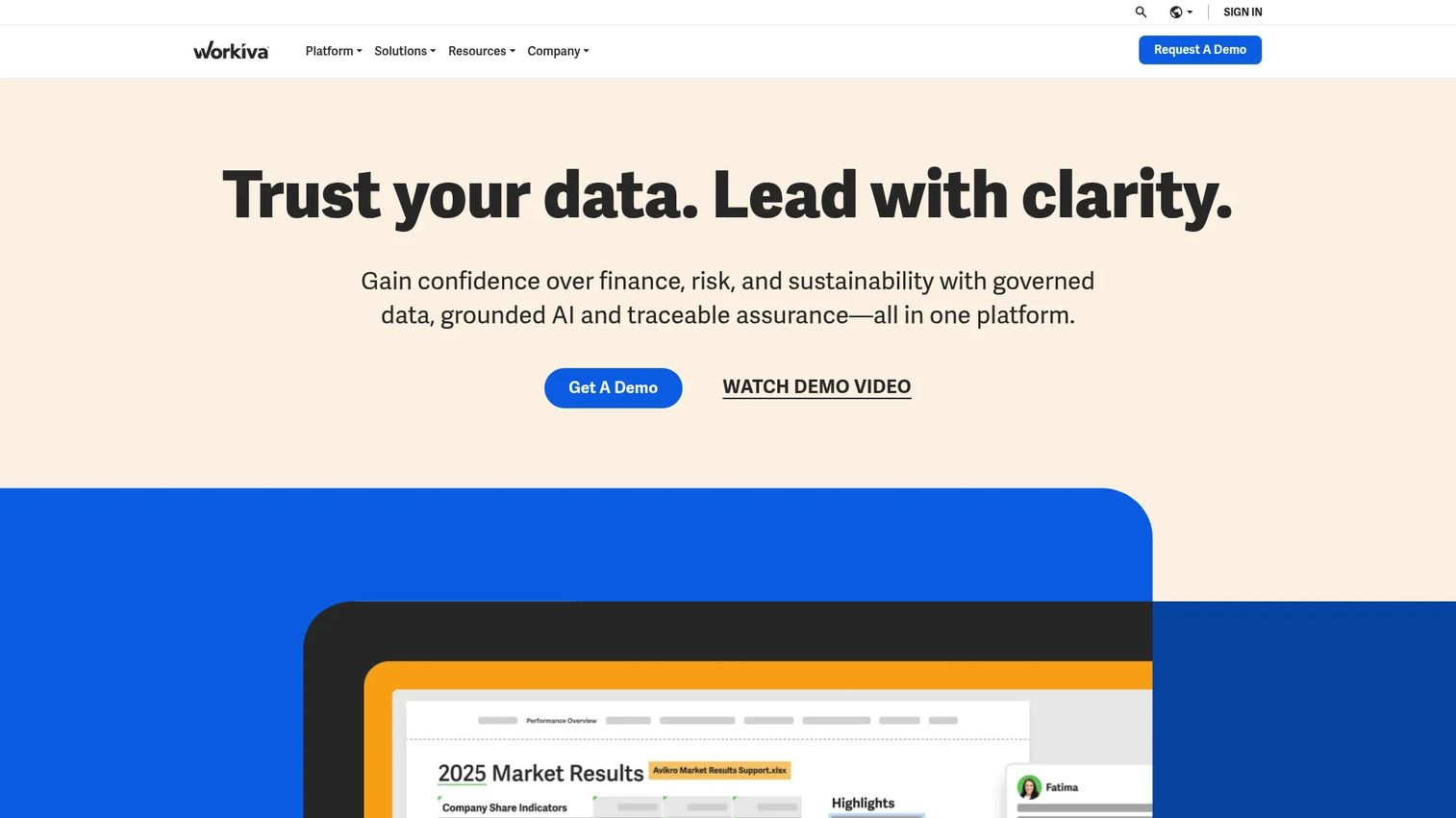
Workiva is a cloud platform for connected financial reporting, sustainability, and audit or risk workflows. Its core idea is that your numbers and your narrative live in the same place, so a figure in a board deck traces straight back to its source. That connection is what makes reporting hold up when assurance teams start pulling threads.
For a founder-led team, the pull is rigor. When you are preparing for a fundraise or a regulated disclosure, the evidence trail behind each number matters as much as the number itself.
Best for: Enterprises needing controlled, audit-ready reporting across finance, ESG, and GRC.
Key features
- Financial reporting with connected numbers and narrative
- Sustainability reporting and dashboards
- Audit and risk management with audit trails and evidence
- Framework support for major disclosure standards
- Board-ready outputs linked to source data
Why choose Workiva: Choose it when reporting rigor and audit readiness matter more than a lightweight setup, and when finance, ESG, and governance need to report from one connected system.
Workiva pricing: Workiva uses solution-based subscription pricing and provides a tailored quote rather than published rates. Contact their sales team for a figure specific to your reporting scope.
Workiva holds a 4.5/5 rating on G2.
2. Sphera
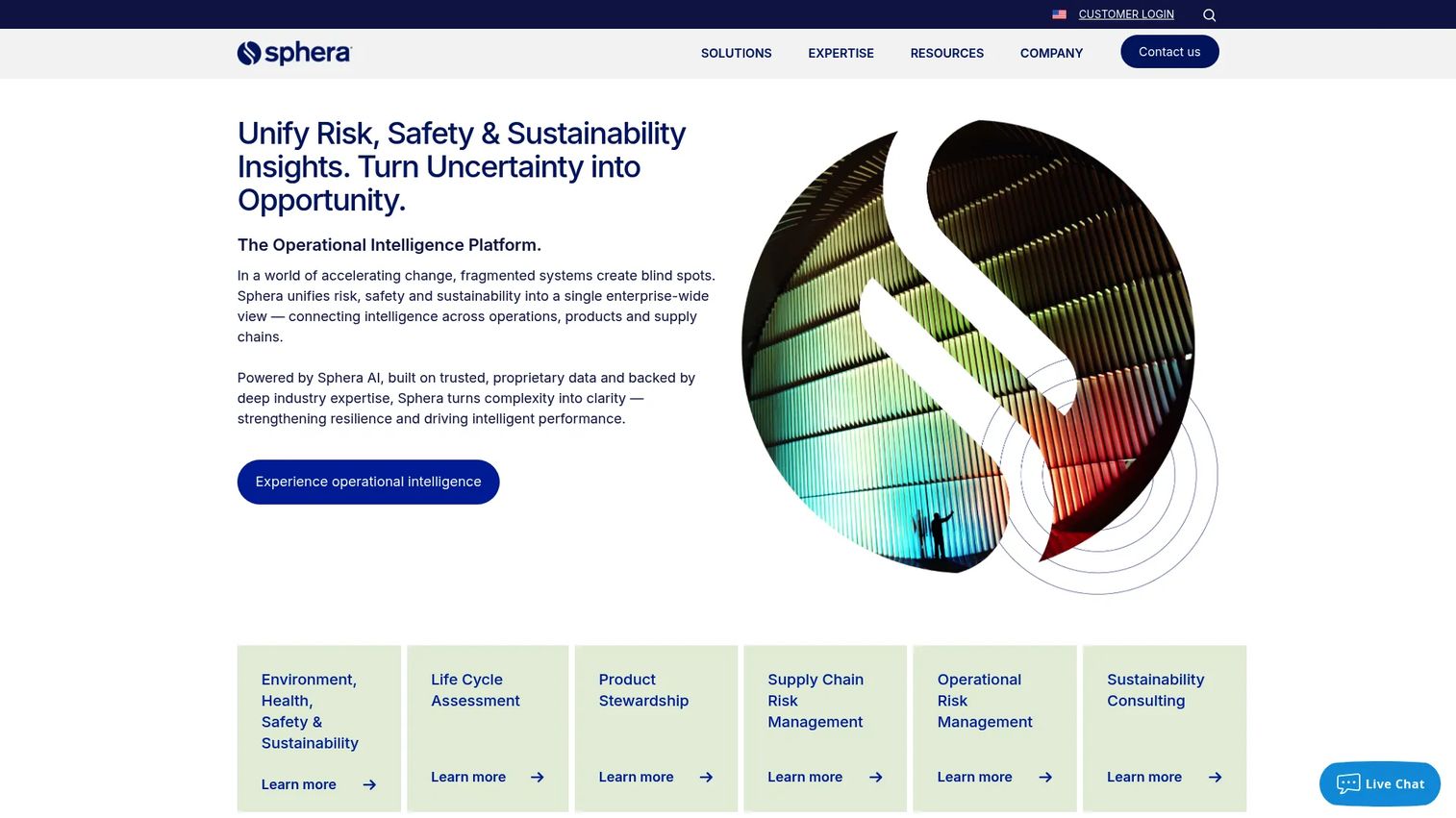
Sphera is enterprise software, data, and consulting for EHS, sustainability, process safety, product stewardship, and supply chain risk. Its environmental reporting lives inside a broader operational sustainability platform, which suits companies where emissions data and safety data flow through the same operations.
If your reporting is tied to real facility operations rather than sitting in a standalone sustainability function, Sphera's integrated approach fits the way your data actually moves.
Best for: Large enterprises needing integrated risk, safety, sustainability, and stewardship software.
Key features
- Integrated EHS&S and sustainability platform
- Product stewardship and chemical management
- Supply chain risk management and operational risk management
- Environmental footprint measurement and validation
- Traceability across operational data sources
Why choose Sphera: Choose it when environmental reporting is one part of a larger operational risk and safety picture, and you want those datasets managed together rather than in separate tools.
Sphera pricing: Sphera pages route to a demo and contact flow, so pricing comes as a custom quote after a conversation about your requirements.
Sphera holds a 4.0/5 rating on G2.
3. Diligent
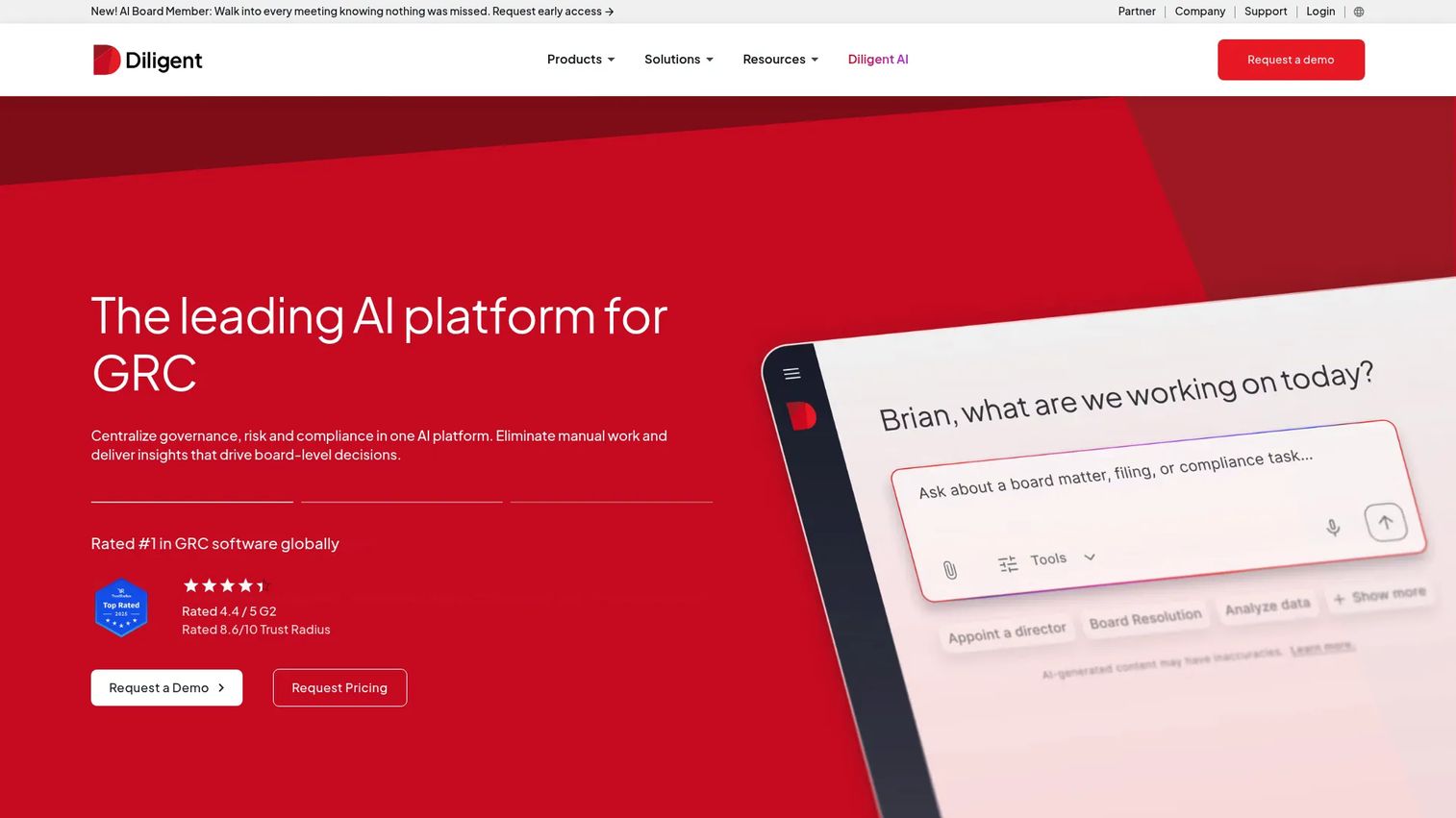
Diligent is governance, risk, and compliance software built for boards and organizations. Its strength is executive-level oversight: secure board communications, entity management, and reporting that rolls up to the people who answer to investors. Environmental data becomes one input into a governed reporting layer rather than a siloed sustainability project.
For a founder managing board pressure, that framing matters. Diligent treats environmental reporting as a governance question, which is often exactly how your board already sees it.
Best for: Boards and governance teams needing a secure, AI-assisted board management platform.
Key features
- AI-powered board portal and meeting workflow automation
- Secure board communications and document sharing
- Governance, risk, compliance, and entity management
- Board-ready reporting with executive oversight
- Cross-functional reporting discipline
Why choose Diligent: Choose it when reporting discipline and board visibility are the priority, and you want environmental disclosures to sit inside a broader governance and risk framework.
Diligent pricing: Diligent does not display numeric pricing. Its pricing page requests your details to build a tailored quote based on the products and scale you need.
Diligent holds a 4.5/5 rating on G2.
4. Osapiens
Osapiens is an AI-powered platform for sustainability, compliance, transparency, and operational efficiency. Its modular HUB lets teams automate the repetitive parts of data collection and reporting, which is the part of environmental reporting that eats the most hours. Supply chain transparency sits alongside the reporting workflows, so supplier data flows into disclosures rather than living in a separate inbox.
For an operator focused on efficiency, that automation is the draw. Less manual chasing means the reporting process runs without one person holding it all together.
Best for: Mid-market and enterprise teams needing ESG, supply-chain compliance, and operational efficiency software.
Key features
- Modular osapiens HUB platform
- Compliance and sustainability reporting workflows
- Supply chain transparency and risk management
- Automated data collection processes
- Structured, repeatable reporting
Why choose Osapiens: Choose it when sustainability data automation and supplier transparency matter most, and you want the collection process to scale without adding headcount.
Osapiens pricing: Osapiens tailors pricing to each business and shares a customized offer after a demo. There is no self-serve public rate, so plan on a scoping conversation first.
Osapiens holds a 4.4/5 rating on G2.
5. Novisto
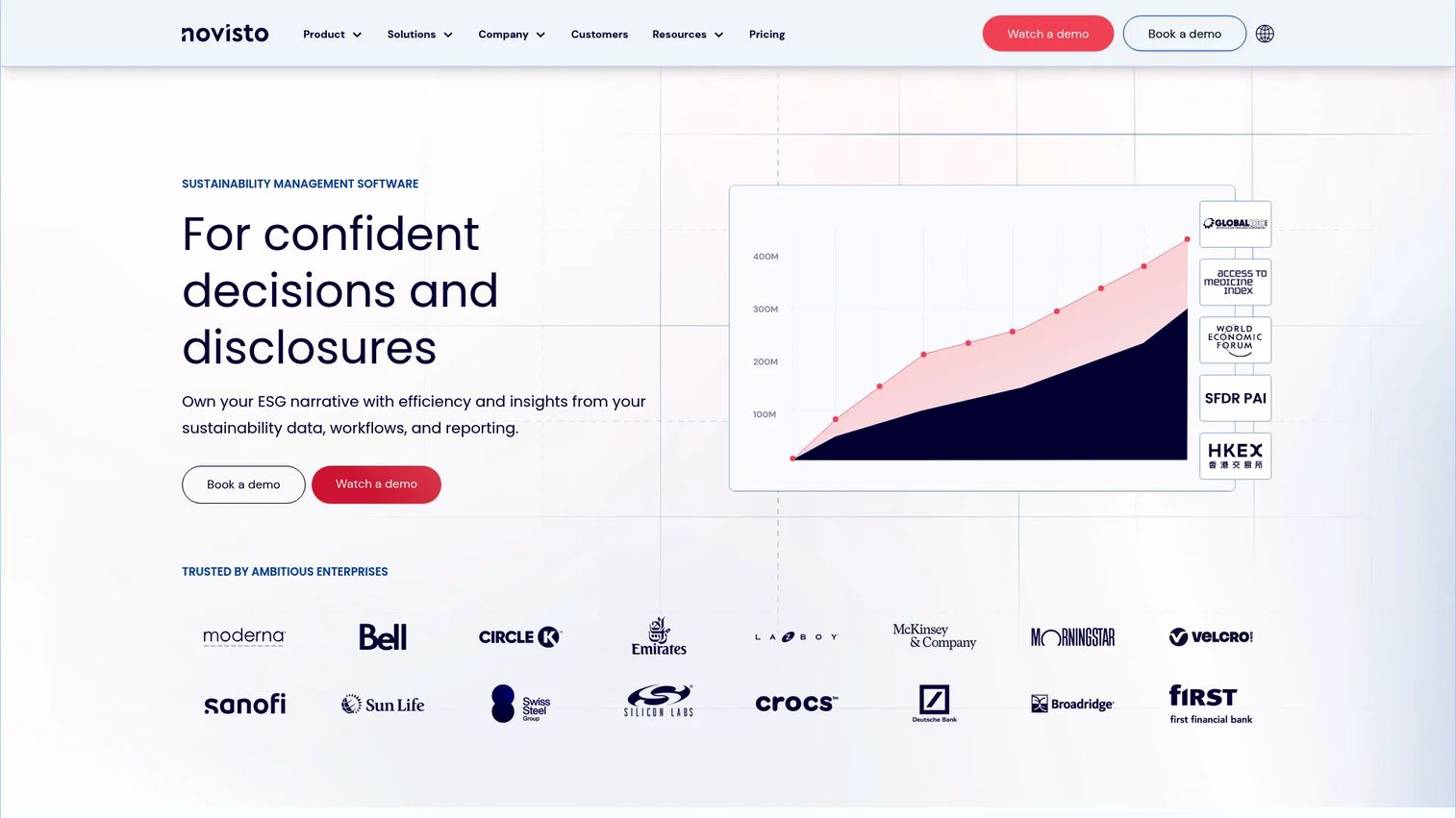
Novisto is enterprise ESG data management and reporting software with real depth on the data structure side. It handles ESG data collection, governance, and reporting, with carbon and climate reporting support built in. AI features come inside the subscription rather than as a bolt-on, so workflows and insights sit in one place.
For a team that cares about reporting maturity, Novisto rewards structure. The more disciplined your data governance, the more you get out of it.
Best for: Mid-market and enterprise teams managing ESG data, disclosures, and reporting.
Key features
- AI-enabled ESG workflows and insights
- ESG data collection, governance, and reporting
- Carbon and climate reporting support
- Emissions management and disclosure workflows
- Structured ESG data model
Why choose Novisto: Choose it when reporting maturity and clean data structure are the goal, and you want carbon and disclosure depth without stitching together separate tools.
Novisto pricing: Novisto uses subscription-based pricing and asks teams to contact sales for a figure. AI features are included in the subscription rather than priced separately.
Novisto holds a 4.4/5 rating on G2.
6. CorityOne
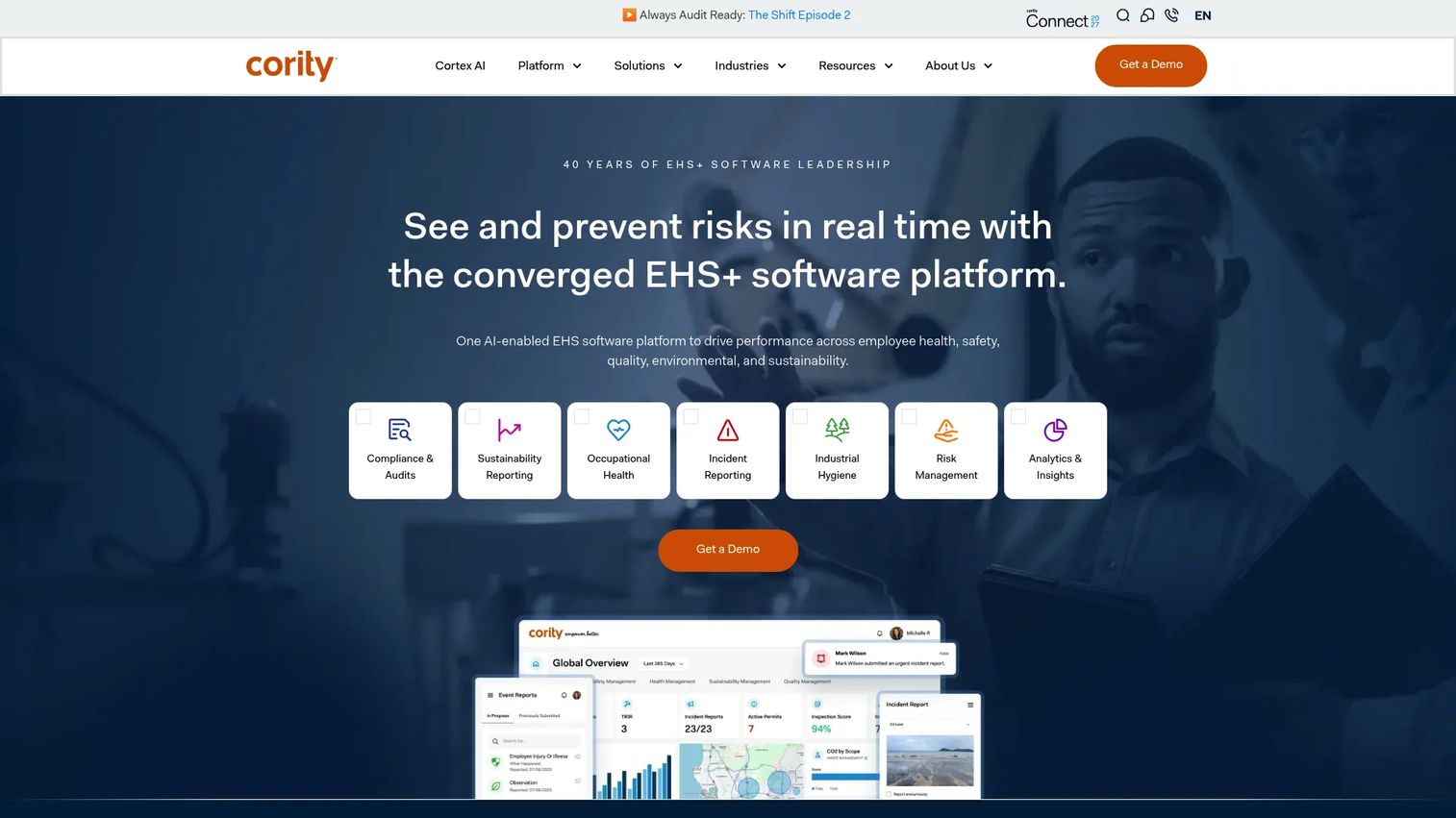
CorityOne is an enterprise EHS+ software platform covering safety, health, environmental, quality, and sustainability management. Its environmental reporting overlaps heavily with EHS workflows, which fits compliance-heavy operations where environmental data and safety data share the same systems and the same audiences.
For teams in regulated, operations-driven environments, that overlap is the point. You are not buying a standalone reporting tool; you are extending an operational data platform into disclosure.
Best for: Large enterprises managing EHS, quality, and sustainability across complex operations.
Key features
- Unified EHS+ data and workflows
- Cortex AI with human-in-the-loop guidance
- Reporting, analytics, and mobile access
- Environmental and compliance data management
- Operational data tied to reporting outputs
Why choose CorityOne: Choose it when environmental reporting needs to sit alongside EHS, quality, and risk in one operational platform rather than in a separate sustainability tool.
CorityOne pricing: Cority does not show numeric pricing on its site and routes visitors to a demo. Expect a custom quote shaped by the modules and scale your operations require.
CorityOne holds a 3.9/5 rating on G2.
7. EcoOnline ESG
EcoOnline ESG is sustainability management and ESG reporting software that pairs carbon accounting with ESG framework reporting in one platform. It leans toward mid-market usability, giving teams structure without the weight of a full enterprise implementation. That balance makes it a practical entry point for teams building their first repeatable reporting process.
If you need real environmental reporting workflows but do not have a dedicated sustainability team to run a heavy platform, EcoOnline ESG sits at a workable middle ground.
Best for: Mid-market and enterprise teams needing ESG reporting and carbon accounting in one platform.
Key features
- Carbon accounting across Scope 1, 2, and 3
- ESG framework reporting
- Climate risk and audit-ready reporting
- Practical sustainability management workflows
- Mid-market-friendly setup
Why choose EcoOnline ESG: Choose it when you want carbon accounting and framework reporting together in a tool built for usability, not a heavyweight enterprise suite.
EcoOnline ESG pricing: EcoOnline ESG describes its capabilities but does not list rates. Reach out to their team for a quote matched to your reporting needs.
EcoOnline ESG holds a 4.3/5 rating on G2.
Considerations
Before you commit, run the shortlist through these five checks. They separate a tool that demos well from one that survives a real reporting cycle.
Data sources and evidence quality
The best reporting is only as good as its inputs. Check how the tool pulls from ERP systems, utility data, and supplier submissions, and whether it links each figure back to a source document. Weak evidence quality shows up at the worst moment, when an auditor asks where a number came from and nobody can answer.
Framework coverage
CSRD software, ISSB, and TCFD requirements move fast. Confirm the tool maps to the frameworks you report against today and can adapt as those disclosures evolve. A tool that covers your current framework but cannot flex to the next one becomes a migration project inside two years.
Audit trails and traceability
Traceability and audit trails are what turn a spreadsheet number into a defensible disclosure. Look for version control, change history, and clear ownership on every entry. This is the layer that makes external assurance a handoff instead of a fire drill.
Cross-functional ownership
Environmental data lives across finance, operations, procurement, and sustainability. The tool has to work for all four without forcing everyone into a single specialist's workflow. If only one person can operate it, you have rebuilt the spreadsheet bottleneck with a bigger price tag.
Implementation effort and time to first report
Ask directly how long until your first real report ships. Some platforms need months of configuration; others get you to a usable output faster. For a scaling team, time to first report often matters more than any single feature, because a tool that earns its place inside the first quarter is a tool your team will actually adopt.
Conclusion
The right pick comes down to your reporting maturity and where your data already lives.
If you need connected, audit-ready reporting across finance and ESG, Workiva is the strongest fit. If environmental reporting is part of a larger operational and safety picture, Sphera fits the way your data moves. Diligent suits teams that see reporting as a governance and board question first. Osapiens rewards teams that want automated, repeatable data collection, while Novisto goes deep for those chasing reporting maturity and clean data structure. CorityOne fits EHS-heavy operations, and EcoOnline ESG gives mid-market teams carbon accounting and framework reporting without a heavyweight rollout.
Your next step: shortlist two tools that match your maturity, then ask each vendor exactly how fast you reach your first real report. That single question tells you more about fit than any feature list. The tool that gets you to a defensible disclosure fastest, without routing everything through one person, is the one worth buying.
FAQs
ESG reporting software covers environmental, social, and governance data across the full disclosure surface. Environmental reporting software focuses on the environmental slice: emissions, energy, water, waste, and the evidence behind them. Many teams start with focused environmental tools, then expand into broader ESG coverage as their disclosure obligations grow.
Yes. Tracking Scope 1, 2, and 3 emissions is a core function of most environmental reporting tools, usually paired with emissions factor management. Scope 3 is the hardest because it depends on supplier data collection, so check how well a tool handles pulling and validating data from vendors before you commit.
Yes. Most serious CSRD software maps your data to the required disclosures and structures outputs for filing. Confirm the specific framework support matches your reporting obligations, and that the tool can adapt as CSRD requirements continue to evolve. Framework mapping that goes stale becomes a real problem at filing time.
Audit readiness comes from evidence linking, version control, and traceability. Every reported figure should trace back to a source document, with a clear record of who entered it and what changed. That trail turns an external assurance review into a clean handoff rather than a scramble to reconstruct where numbers came from.
If reporting has become a recurring process with multiple contributors, yes. The moment you are re-running the same collection cycle every quarter and cannot name your single source of truth, a purpose-built tool pays for itself in reduced rework. Tools like EcoOnline ESG and Osapiens fit mid-market teams that need structure without a heavy enterprise rollout.
Start by mapping where each data type lives and who owns it. Then test how each tool imports that data and links it to evidence. The real question is how much manual reconciliation the tool removes. If it just relocates your spreadsheet chaos into a new interface, it has not solved anything.
The integrations that carry your source data. ERP and finance systems for spend-based figures, utility and facility systems for energy and emissions, and procurement systems for supplier data. Strong connections to these sources are what make sustainability data automation possible, rather than leaving you to key numbers in by hand.
Match the tool to your obligations, not your ambitions. If your near-term pressure is environmental disclosure, a focused tool gets you to a defensible report faster. If your board and investors expect full ESG coverage, a broader ESG reporting platform avoids a second migration later. Buy for the disclosure you actually owe this year, then expand from strength.