Your buyer says they use 200 SaaS apps. IT can name 60. Security owns the gap.
That gap is not theoretical. According to the Cloud Security Alliance (2025), 55% of organizations report that employees adopt SaaS tools without security's involvement. The same research found that 56% say poor access control is actively exposing data to risk. Traditional perimeter security was never designed for a world where Salesforce, Slack, Google Workspace, and Dropbox each hold sensitive business data and can be accessed from any device, anywhere.
Cloud access security broker software, or CASB software, was built to sit in that gap. It gives security and IT teams visibility into cloud usage, a policy layer across SaaS and IaaS environments, and tools to protect data, detect threats, and support audit requirements. For presales teams, understanding how buyers evaluate these controls matters: CASB comes up in security questionnaires, RFP reviews, and technical validation conversations more often than most SEs expect.
This guide cuts through the category to help you build a real shortlist.
What's inside
This guide compares 13 CASB tools for 2026, chosen based on four criteria:
- Cloud application visibility: Shadow IT discovery, risk scoring, and SaaS monitoring depth
- Data loss prevention: Classification methods, policy enforcement, and remediation options
- Threat detection: User behavior analytics, anomaly detection, and malware controls
- Deployment flexibility: API-based, forward proxy, and reverse proxy options, plus key SaaS integrations
Each entry includes a feature summary, a buyer-fit recommendation, verified pricing status, and a G2 rating. Pricing was checked against vendor pages and G2 at draft time.
TL;DR
- Best for enterprise cloud security: Netskope, for organizations that need deep SaaS visibility, cloud DLP, and SASE convergence
- Best for Microsoft-first environments: Microsoft Defender for Cloud Apps, priced from $12/user/month as part of the Defender Suite, with native Microsoft 365 integration
- Best for data-centric cloud protection: Skyhigh CASB, for teams prioritizing DLP and sensitive-data controls across SaaS and cloud apps
- Best for SASE-driven programs: Palo Alto Prisma Access or Zscaler CASB, for teams aligning CASB with zero trust and secure access architecture
- Best for SaaS visibility and governance: Zluri, for IT and security teams focused on application discovery, access review software, and license management
What is CASB software?
CASB software, short for cloud access security broker software, is a security control layer that sits between users and cloud applications to discover cloud usage, enforce access policies, protect sensitive data, detect threats, and support compliance.
Originally coined by Gartner to describe a class of products that enforce security policies when users access cloud services, CASB tools have expanded significantly. Modern platforms cover SaaS, IaaS, and increasingly SASE architectures where cloud security, network access, and data protection converge.
The four CASB pillars:
- Visibility: Discover which cloud apps are in use, including unsanctioned tools, score their risk, and monitor user activity across Microsoft 365, Google Workspace, Salesforce, Slack, Dropbox, Jira, and thousands of other services
- Data protection: Apply cloud DLP policies, classify sensitive content, control downloads and uploads, enforce encryption or tokenization, and prevent unauthorized file sharing
- Threat protection: Detect compromised accounts, insider threats, impossible-travel events, malware in cloud storage, and anomalous behavior through user and entity behavior analytics
- Compliance: Generate audit logs, map controls to frameworks like HIPAA, GDPR, PCI DSS, and ISO 27001, and produce evidence for security reviews
Common deployment models:
- API-based CASB: Connects directly to SaaS apps via APIs to scan data at rest and enforce policies without sitting in the traffic path. Strong for sanctioned app governance.
- Forward proxy CASB: Sits inline between managed devices and the cloud, inspecting traffic in real time. Best for managed endpoints and known-device access.
- Reverse proxy CASB: Intercepts cloud app sessions from unmanaged devices without requiring an agent. Useful for BYOD and contractor access scenarios.
How CASB differs from adjacent categories:
A secure web gateway (SWG) filters web traffic but does not specialize in cloud app visibility or SaaS-level policy enforcement. SASE is a broader architecture that typically includes CASB alongside SWG, ZTNA, and SD-WAN. Zero trust network access (ZTNA) controls private application access but does not focus on cloud app data governance. CASB sits at the intersection of cloud application visibility, data protection, and access policy enforcement.
When to use CASB software
Discover Shadow IT before it becomes a security incident
Employees regularly adopt SaaS tools outside IT's approved list. A CASB discovers these unsanctioned apps, scores them for risk, and gives security teams the data to decide whether to block, monitor, or sanction each one. For pre[sales teams, this is often the most relatable entry point when buyers ask how cloud governance fits into their stack: The Shadow IT discovery use case maps directly to a buyer's fear of data exposure they cannot see.
Protect sensitive data across SaaS applications
Cloud DLP policies prevent customer records from being shared publicly, block uploads to risky apps, and restrict sensitive file downloads to unmanaged devices. CASB tools apply these controls across major platforms](https://www.guideflow.com/blog/sales-enablement-software-tools), including Microsoft 365, Google Workspace, and file-sharing services. Data classification, encryption, and tokenization give teams additional controls for regulated data environments.
Support compliance reviews and cloud audits
CASB tools collect the activity logs, policy reports, and anomaly-detection evidence that auditors expect. For HIPAA, GDPR, PCI DSS, and ISO 27001 reviews, that audit trail is often what separates a clean assessment from a findings report. CASB does not make an organization compliant on its own, but it provides the control documentation that compliance teams need to show their work. Presales teams supporting enterprise security reviews will see this use case in almost every RFP.
CASB software comparison
The table below covers all 13 tools in this guide. Pricing is shown as custom where no public numeric rate was available on the vendor's pricing page at draft time. G2 ratings reflect each tool's current listing.
| # | Product | Best for | Key differentiator | Pricing | G2 rating |
|---|---|---|---|---|---|
| 1 | Netskope | Enterprise cloud and SASE security | CASB plus SASE convergence in one platform | Custom pricing | 4.4/5 |
| 2 | Skyhigh CASB | Data-centric cloud protection | Strong DLP with API, proxy, and IaaS coverage | Custom pricing | 4.8/5 |
| 3 | Microsoft Defender for Cloud Apps | Microsoft-first security teams | Native Microsoft 365 and Defender integration | From $12/user/month (Defender Suite) | 4.4/5 |
| 4 | Palo Alto Prisma Access | SASE-driven security programs | CASB embedded in full SASE architecture | Custom pricing | 4.3/5 |
| 5 | Cisco Cloudlock | SaaS app protection in Cisco environments | API-based cloud app security | Custom pricing | Not listed on G2 |
| 6 | Proofpoint CASB | People-centric threat defense | User risk scoring tied to threat intelligence | Custom pricing | 4.4/5 |
| 7 | Forcepoint ONE | Unified cloud access control | CASB, SWG, and ZTNA in one cloud service | Custom pricing | 4.2/5 |
| 8 | Lookout CASB | Mobile and distributed workforce security | Multi-mode deployment with endpoint context | Custom pricing | 4.3/5 |
| 9 | Trend Micro Cloud App Security | SaaS threat and email protection | Email and collaboration app threat defense | Custom pricing | 4.4/5 |
| 10 | Zscaler CASB | Zero-trust and SASE-aligned cloud security | Inline and API-based controls inside Zscaler platform | Custom pricing | 4.4/5 |
| 11 | Censornet CASB | Mid-market multi-control environments | CASB alongside email and web security | Custom pricing | 4.6/5 |
| 12 | CloudCodes CASB | Google Workspace and SaaS governance | Access control and DLP for collaboration apps | Custom pricing | 4.0/5 |
| 13 | Zluri | SaaS visibility and identity governance | App discovery, access reviews, and lifecycle automation | Custom pricing | 4.6/5 |
Best 13 CASB software tools for 2026
1. Netskope
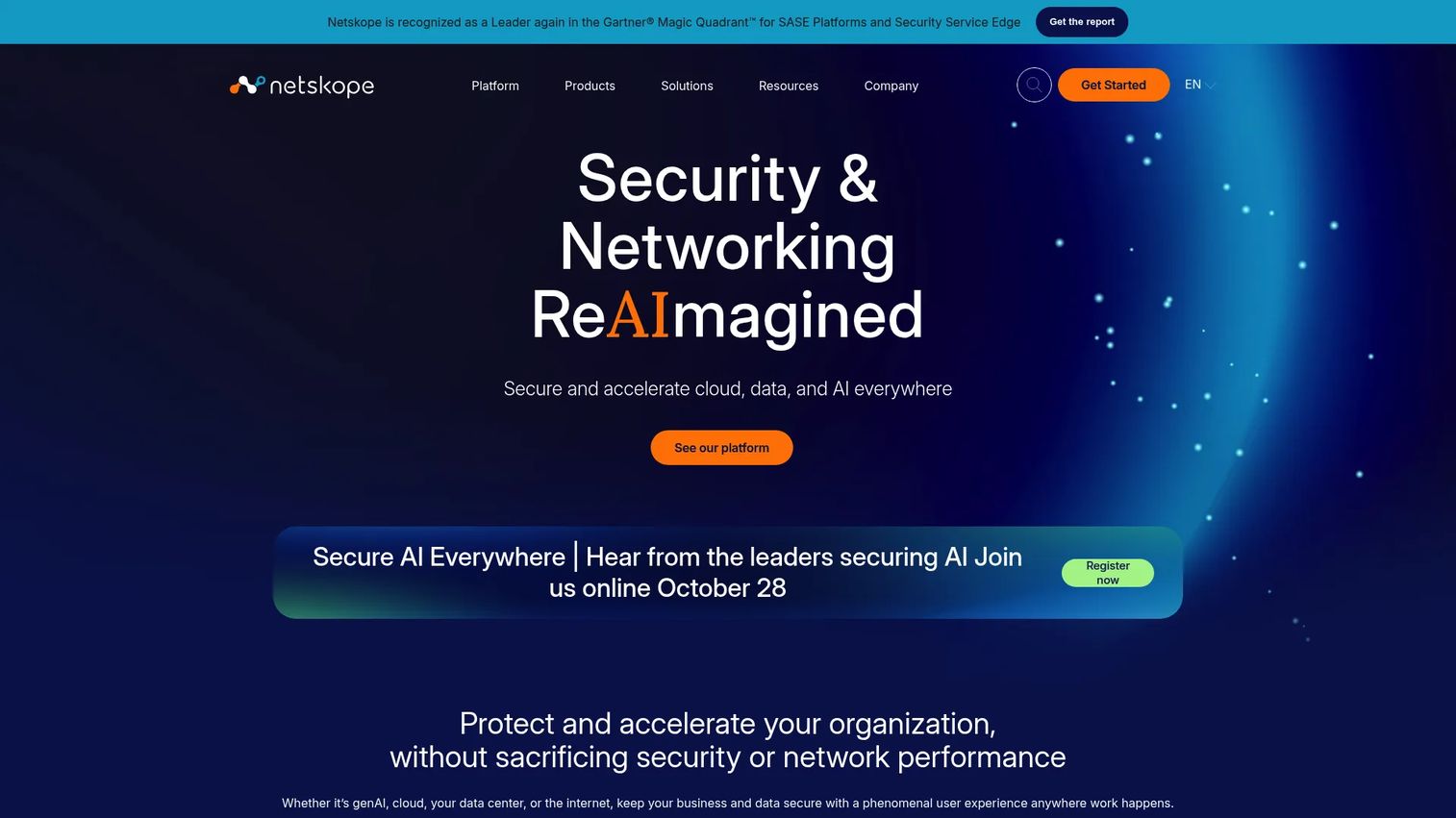
Netskope is a cloud-native security platform that covers CASB, SASE, secure web gateway, ZTNA, and data protection from a single architecture. It is built for large enterprises running complex SaaS, web, and private application environments where cloud visibility and data security cannot be separated from network access controls.
Best for: Enterprise security teams that need cloud app visibility, cloud DLP, and SASE convergence in one platform.
Key features
- Cloud app discovery and risk scoring across thousands of apps
- Cloud DLP with classification and policy enforcement across SaaS and IaaS
- Inline threat protection and user behavior analytics
- Secure web gateway and ZTNA within the same SASE architecture
- Advanced data context and real-time session control
Why choose Netskope: Choose Netskope when CASB cannot be purchased as a standalone point product because cloud data protection, secure access, and remote-workforce governance need to work together. It is the strongest fit for organizations that are modernizing their security architecture rather than adding another console.
Netskope pricing: Netskope does not publish plan prices on its website. Contact sales for a quote. The global CASB market reached $6.6 billion in 2025 (Grand View Research, 2026), and enterprise platform pricing in this segment typically reflects user count, deployment scope, and selected modules.
G2 rating: 4.4/5
2. Skyhigh CASB
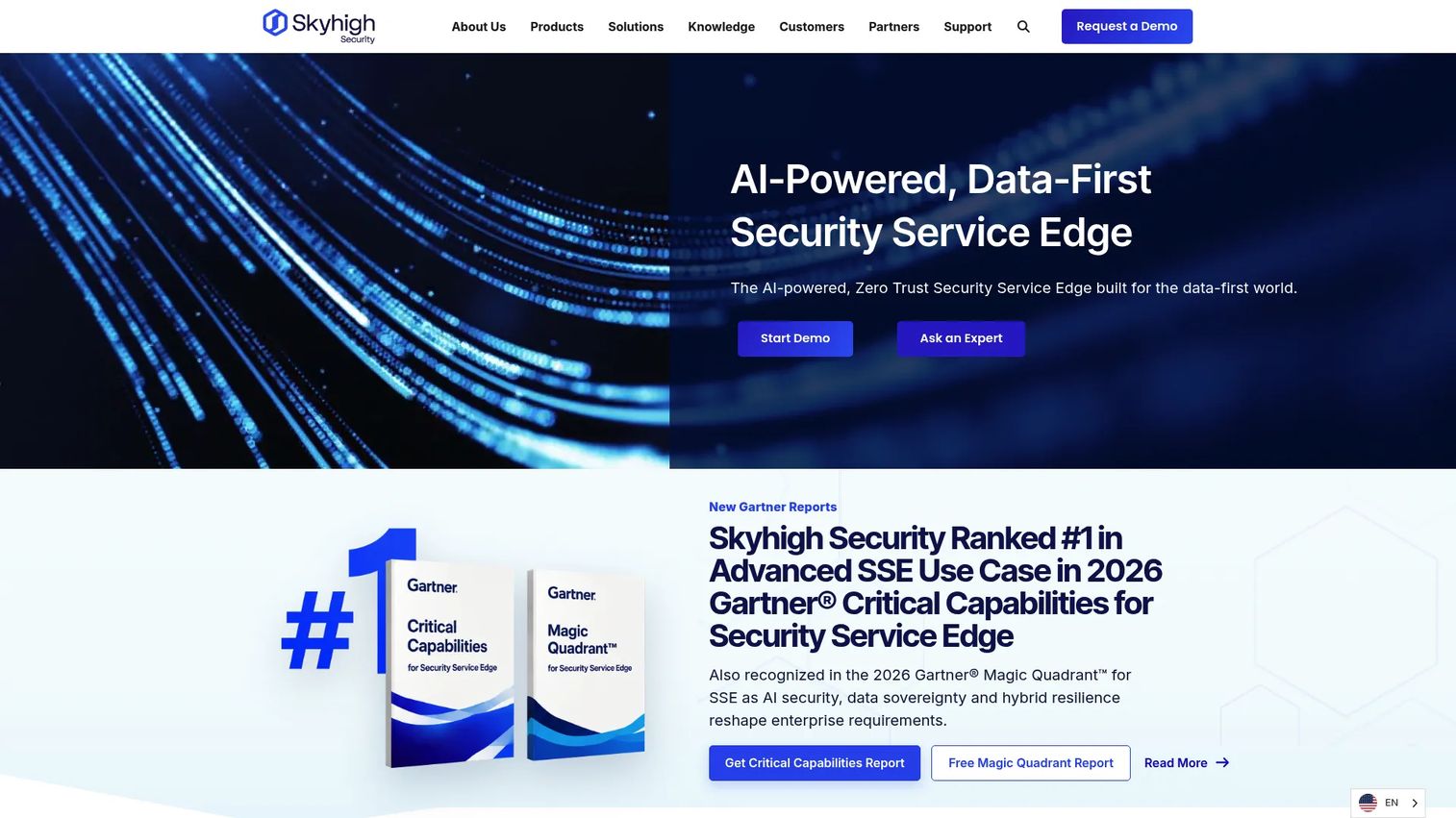
Skyhigh CASB is a data-centric cloud access security broker focused on protecting sensitive information across SaaS, PaaS, and IaaS environments. It covers Shadow IT discovery, DLP, access control, threat detection through user behavior analytics, and cloud misconfiguration auditing. Deployment options include API, forward proxy, and reverse proxy modes.
Best for: Organizations in regulated industries that prioritize data movement controls, sensitive file governance, and policy enforcement across sanctioned and unsanctioned cloud apps.
Key features
- Sensitive data discovery and cloud DLP with granular policies
- Shadow IT discovery and cloud-service risk scoring
- UEBA-based insider-threat and anomaly detection
- Cloud misconfiguration auditing and remediation
- API, forward proxy, and reverse proxy deployment modes
Why choose Skyhigh CASB: Skyhigh earns a place on the shortlist for teams where the primary CASB objective is data protection rather than network access consolidation. It is a strong fit when buyers need to demonstrate data governance controls across SaaS and answer audit questions about where sensitive information lives and who can access it.
Skyhigh CASB pricing: Pricing is not listed on the vendor's website. Request a quote directly. Skyhigh CASB has two G2 reviews, so reviewer-reported ranges are not available as a benchmark.
G2 rating: 4.8/5 (based on 2 reviews)
3. Microsoft Defender for Cloud Apps
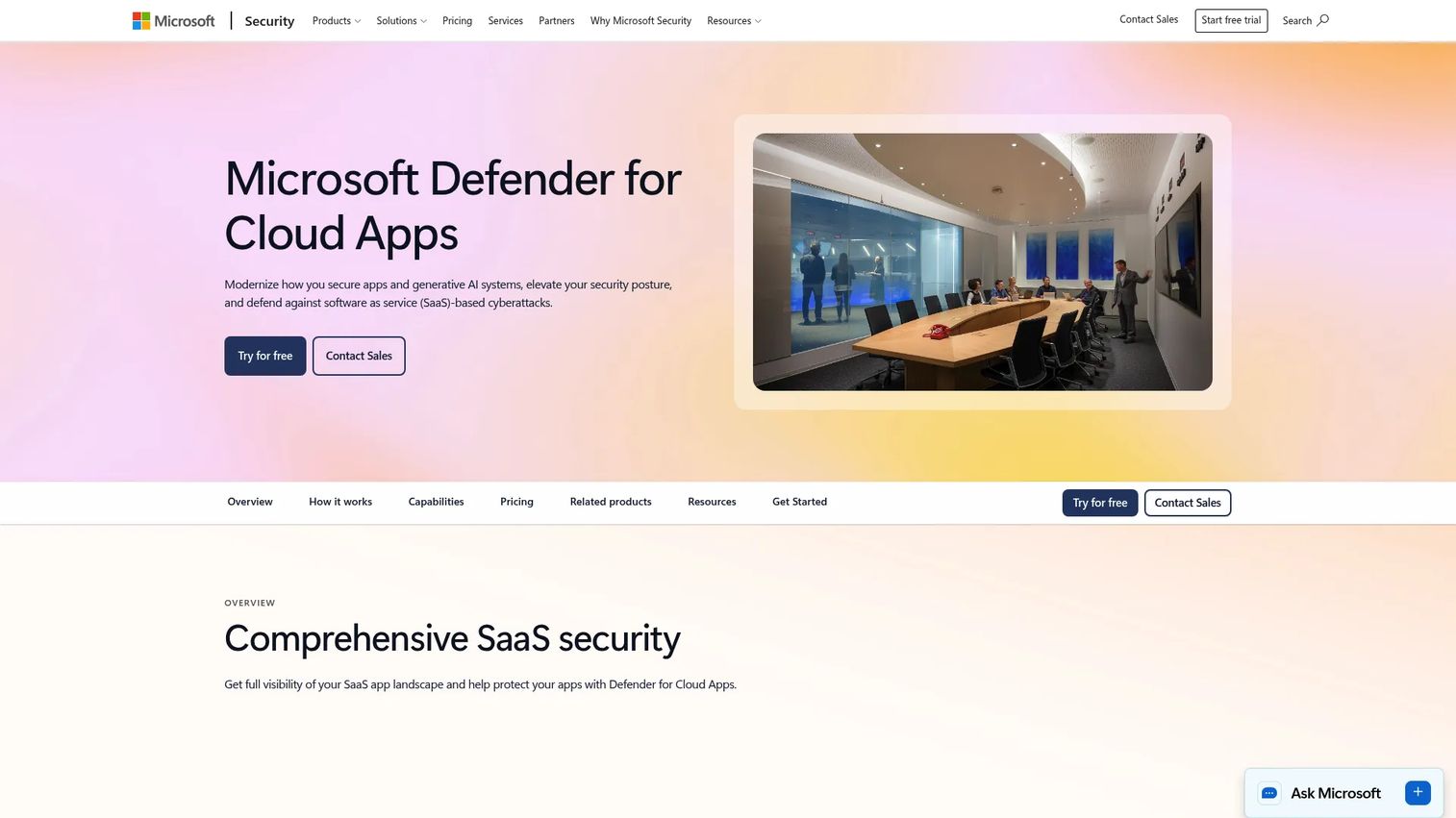
Microsoft Defender for Cloud Apps is Microsoft's CASB, formerly called Microsoft Cloud App Security. It integrates directly with Microsoft Defender, Entra ID, Microsoft Sentinel, and Microsoft Purview, giving security teams a single control plane for cloud app governance, session controls, DLP, app connectors, and threat detection.
Best for: Security teams already standardized on Microsoft 365 and the broader Microsoft security stack.
Key features
- Cloud app discovery and Shadow IT risk assessment
- SaaS Security Posture Management (SSPM)
- Data loss prevention with Microsoft sensitivity-label integration
- Real-time session and access controls
- User and entity behavior analytics, anomaly detection, and malware protection
- OAuth app governance and app-to-app protection
Why choose Microsoft Defender for Cloud Apps: If your buyer already runs Microsoft Defender and Microsoft 365, this is the path of least resistance for CASB coverage. Adding another vendor's CASB console where Microsoft already provides governance, session control, and UEBA through a platform the team knows is a hard case to make.
Microsoft Defender for Cloud Apps pricing: The product is included in the Microsoft Defender Suite at $12.00 per user per month (billed annually) and in Microsoft 365 E5 at $60.00 per user per month (billed annually). A standalone price is not listed separately on Microsoft's pricing page.
G2 rating: 4.4/5
4. Palo Alto Prisma Access
Palo Alto Prisma Access is a cloud-delivered SASE platform that includes CASB capabilities alongside secure web gateway, ZTNA, remote browser isolation, and firewall as a service. For enterprises that want CASB as part of a broader network security modernization, Prisma Access ties cloud app controls to the same architecture managing secure internet access and private app connectivity.
Best for: Security and network teams building or consolidating a SASE architecture that includes cloud app governance.
Key features
- CASB controls within a full SASE architecture
- Zero Trust Network Access and Secure Web Gateway
- Cloud app visibility and data protection policies
- Threat prevention across cloud and web traffic
- Flexible licensing across Secure Internet, ZTNA, and Enterprise editions
Why choose Palo Alto Prisma Access: Choose Prisma Access when cloud app governance is one requirement inside a larger secure-access project. Buying a point CASB while also evaluating Prisma SASE creates unnecessary overlap. The integrated approach makes more sense for organizations retiring legacy VPN and web proxies at the same time.
Palo Alto Prisma Access pricing: Pricing requires a sales conversation. Palo Alto Networks structures Prisma Access around editions (Secure Web Gateway, ZTNA, and Enterprise) with flexible licensing by deployment, location, and user count.
G2 rating: 4.3/5
5. Cisco Cloudlock
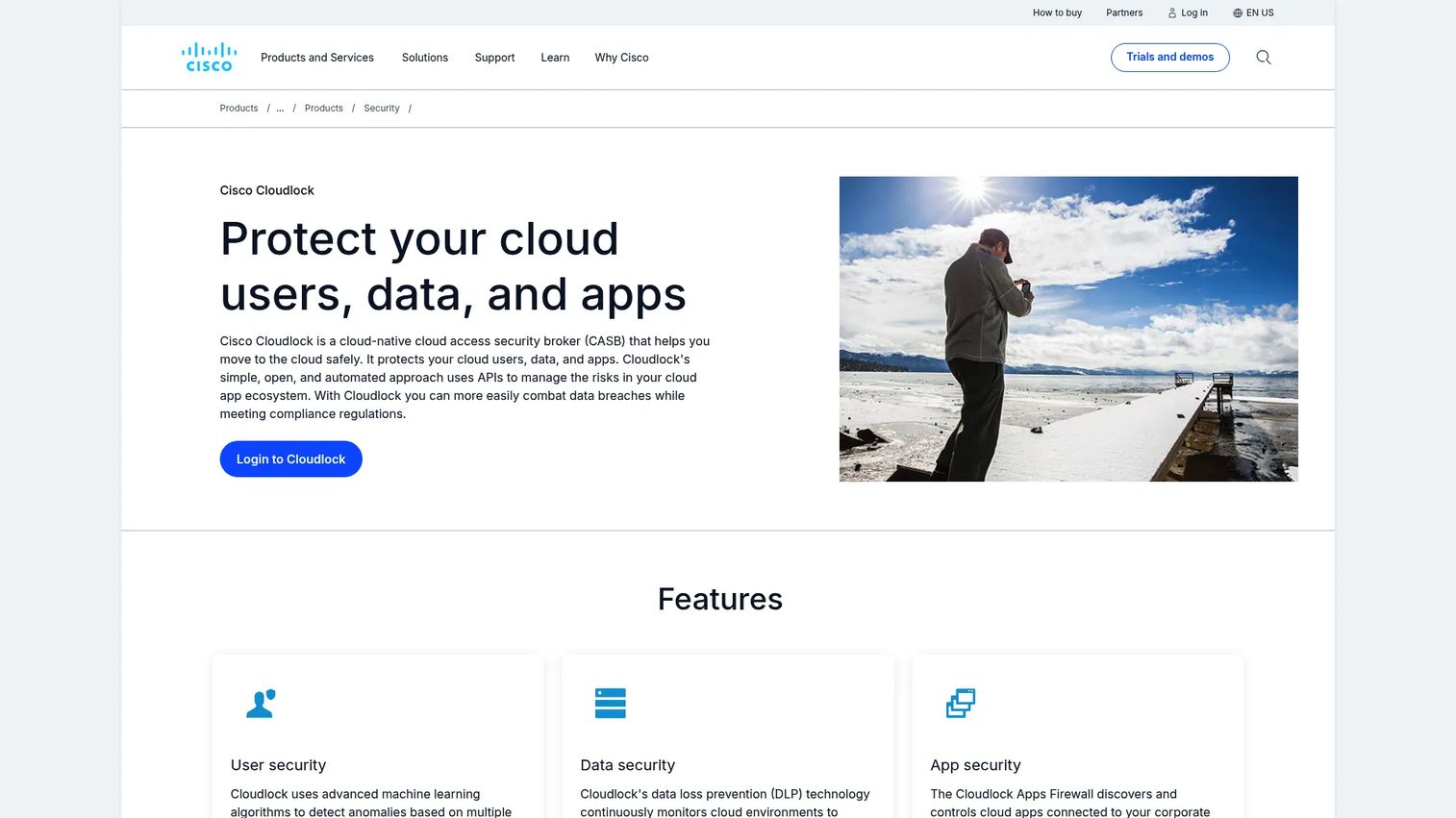
Cisco Cloudlock is a cloud-native CASB built for SaaS application protection. It uses API-based connections to monitor user behavior, detect data exposure, and control third-party app access across cloud platforms. Its Apps Firewall functionality lets teams discover, rate, and block connected OAuth applications that are accessing corporate data without authorization.
Best for: Organizations already invested in Cisco security infrastructure that need SaaS-focused cloud app visibility and user behavior controls.
Key features
- API-based SaaS monitoring without inline proxy deployment
- User and entity behavior analytics using machine learning
- Cloud DLP with predefined and customizable policy templates
- Apps Firewall for discovering and controlling connected OAuth apps
- Data exposure detection across files, messages, and shared content
Why choose Cisco Cloudlock: Cloudlock fits best inside a Cisco security environment where the team wants SaaS app governance without deploying a new proxy or agent. If your buyer is already running Cisco security tooling and needs targeted cloud app controls, Cloudlock is worth including in the technical evaluation.
Cisco Cloudlock pricing: Cisco does not display pricing for Cloudlock on its product pages. Reach out to Cisco sales for current packaging and quotes. No dedicated G2 listing with verified pricing ranges was available for cross-reference.
6. Proofpoint CASB
Proofpoint CASB frames cloud security around people rather than infrastructure. Its CASB capabilities tie cloud app visibility, data loss prevention, and account-takeover detection to Proofpoint's threat intelligence and user risk scoring. Teams get a picture of which users carry the most cloud risk, which apps are exposing data, and which accounts show signs of compromise.
Best for: Enterprise security teams that already think about risk in terms of user behavior and targeted threats, particularly where email and cloud risk overlap.
Key features
- User risk scoring based on behavior and threat intelligence signals
- Cloud DLP with machine-learning content classification
- Account takeover and anomalous-login detection
- Third-party OAuth app discovery and governance
- Cloud app visibility with deployment via API connectors and proxy
Why choose Proofpoint CASB: For buyers who already use Proofpoint for email security, extending into CASB through the same vendor makes the user risk picture more complete. The connection between email threat intelligence and cloud account behavior is the differentiating angle that most pure-play CASB tools do not match.
Proofpoint CASB pricing: Pricing is not shown on Proofpoint's product page. Contact Proofpoint for a quote. G2 reports 11 reviews for this product, but reviewer-reported price ranges were not available as a reference.
G2 rating: 4.4/5
7. Forcepoint ONE
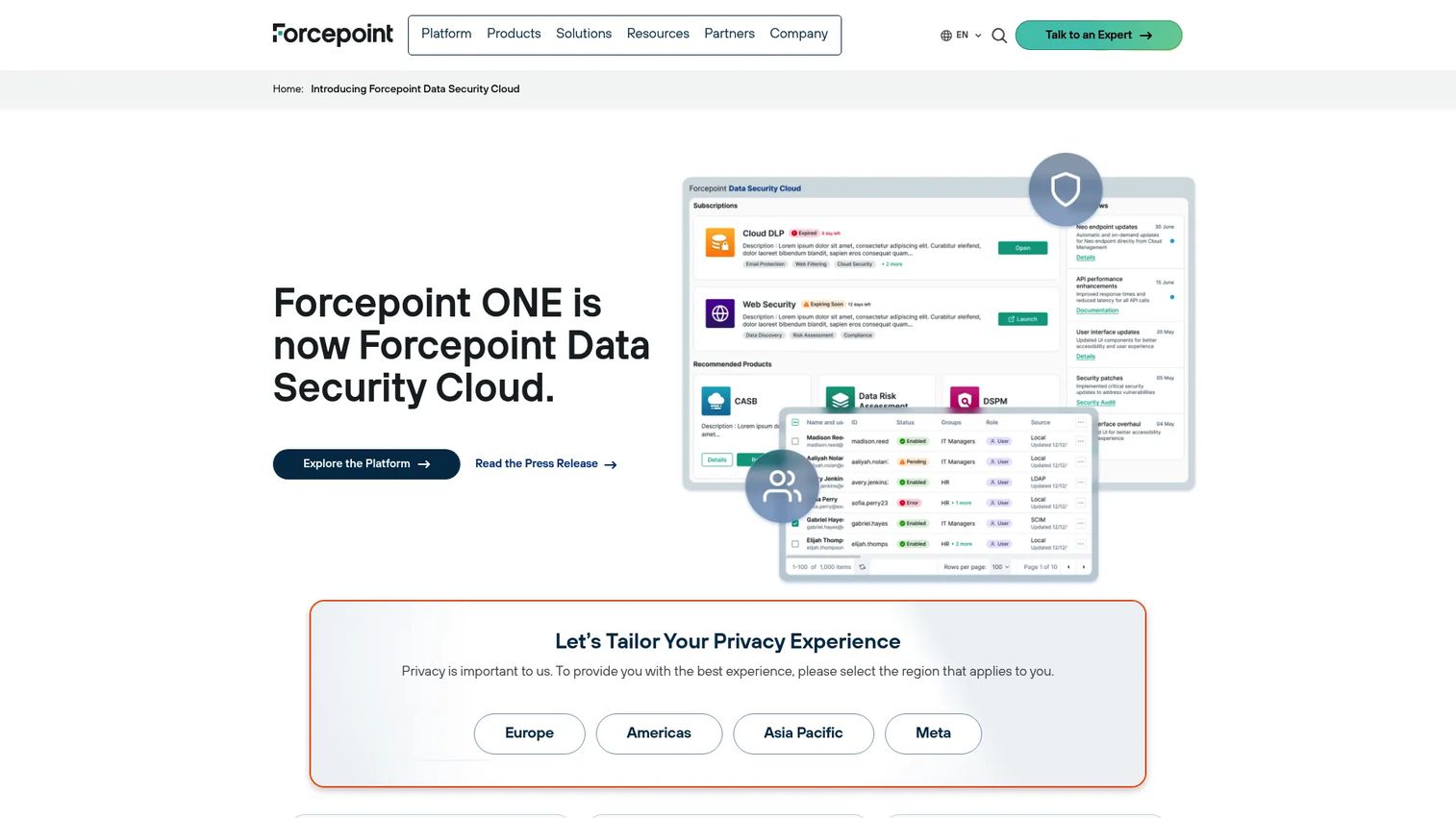
Forcepoint ONE (now rebranded as Forcepoint Data Security Cloud) is a cloud-delivered platform that combines CASB, secure web gateway, and zero-trust network access capabilities in one service. It is designed for organizations that want to consolidate web security, cloud app controls, and private application access without managing three separate consoles.
Best for: Teams looking to consolidate CASB, SWG, and ZTNA-style access controls under a single cloud platform.
Key features
- CASB controls for SaaS app governance and data protection
- Secure Web Gateway for web traffic inspection and threat defense
- Zero-trust network access for private application connectivity
- Data loss prevention and malware scanning
- Unified policy management across web, cloud, and private apps
Why choose Forcepoint ONE: Forcepoint fits when the buyer's security consolidation goal covers web, cloud, and private app access in one motion. If those three requirements are separate projects with separate budgets, a point CASB is a faster path. For teams ready to consolidate, Forcepoint ONE reduces the number of vendors and management interfaces.
Forcepoint ONE pricing: Forcepoint describes annual per-user subscriptions across all-in-one, web-security, ZTNA, and CASB editions, but prices are not displayed. Request a quote from Forcepoint sales.
G2 rating: 4.2/5
8. Lookout CASB
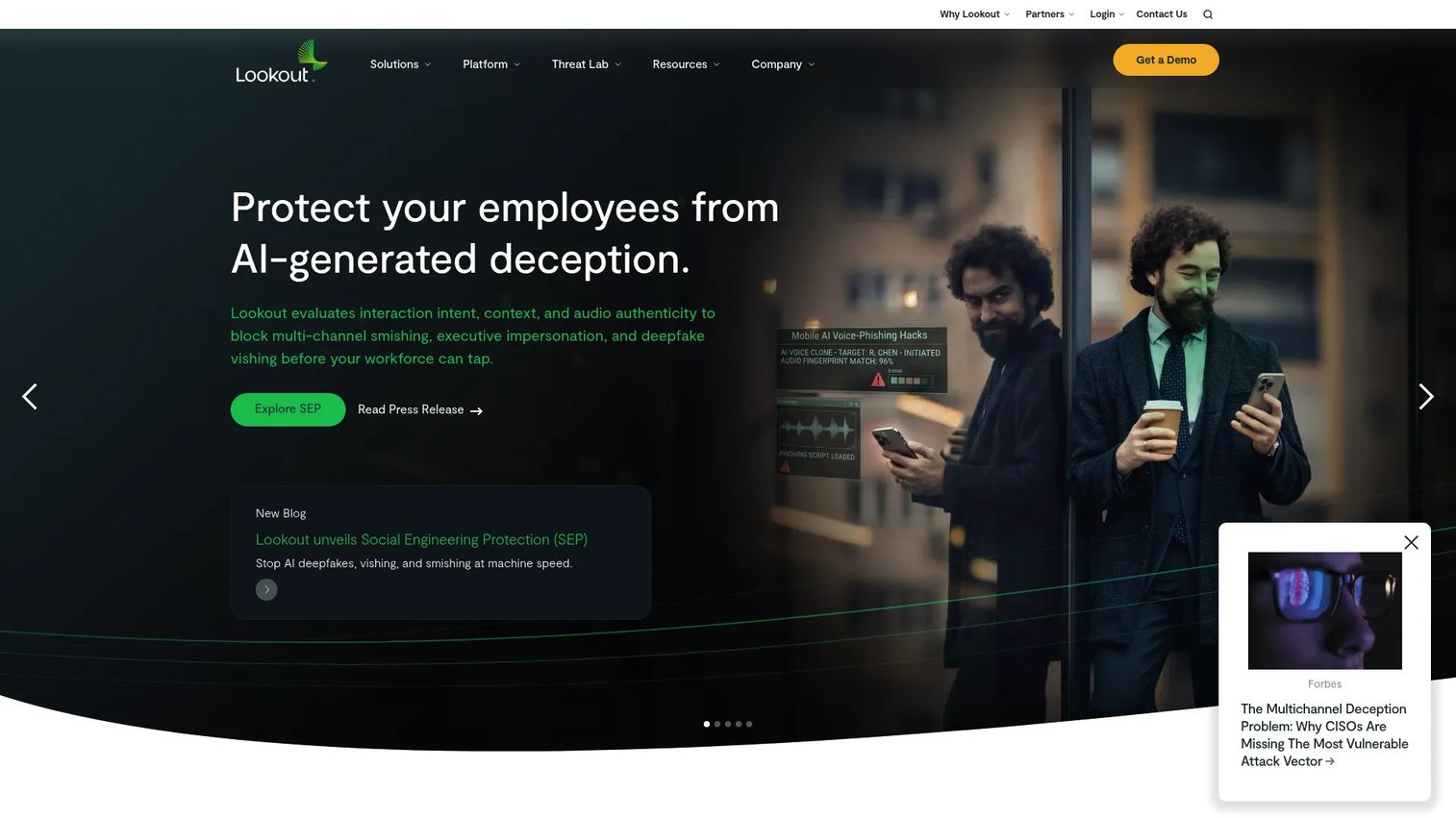
Lookout CASB is a cloud access security broker with a strong emphasis on mobile, endpoint, and distributed-workforce scenarios. Its multi-mode deployment supports API, forward proxy, reverse proxy, and inline email gateway configurations, giving teams flexibility to cover managed devices, unmanaged access, and mobile endpoints within the same policy framework.
Best for: Organizations where cloud access frequently happens from mobile devices, personal endpoints, or unmanaged machines.
Key features
- API, forward proxy, reverse proxy, and inline email gateway deployment
- Data loss prevention with classification and digital rights management
- User activity monitoring and adaptive access control
- Malware and ransomware detection with quarantine
- SSPM, Shadow IT discovery, and historical data scanning
Why choose Lookout CASB: Lookout earns its place when endpoint context matters as much as SaaS policy enforcement. If your buyer's risk model centers on mobile workforces or contractors accessing cloud apps from personal devices, Lookout's device-aware approach covers ground that many SaaS-only CASB tools do not.
Lookout CASB pricing: Lookout offers Essentials, Advanced, and Premium package tiers. Prices are not shown publicly and require a sales conversation. Package details are available in Lookout's product datasheet.
G2 rating: 4.3/5
9. Trend Micro Cloud App Security
Trend Micro Cloud App Security focuses on advanced threat and data protection for collaboration platforms, particularly Microsoft 365 and Google Workspace. It scans email, files, and collaboration content for phishing, malware, and sensitive data without requiring changes to MX records or the deployment of a web proxy, connecting instead through direct API integrations.
Best for: Teams that need threat protection for email and collaboration apps, particularly Microsoft 365 and Google Workspace, without a full SWG or SASE overhaul.
Key features
- Email threat protection against phishing and advanced malware
- File scanning across cloud storage and collaboration services
- API-based integration with no MX record changes required
- Compliance-policy enforcement across file-sharing apps
- Cloud DLP for sensitive content in cloud collaboration environments
Why choose Trend Micro Cloud App Security: Choose this when the buyer's primary CASB risk is malicious content arriving through email and file-sharing, and deploying a full inline proxy is not on the roadmap. It is a practical choice for mid-market teams that want strong SaaS threat controls without rearchitecting their network security stack.
Trend Micro Cloud App Security pricing: Pricing is not listed on Trend Micro's product pages. Contact Trend Micro sales or a channel partner for current rates and trial availability.
G2 rating: 4.4/5
10. Zscaler CASB
Zscaler CASB delivers cloud app security through the Zscaler platform, combining inline, real-time controls with out-of-band API scanning for data at rest. Organizations already using Zscaler Internet Access get CASB controls as part of the same architecture, covering Shadow IT discovery, SaaS security posture management, cloud DLP, and threat prevention without adding a separate vendor.
Best for: Enterprises aligning cloud app security with zero trust, SASE, and the broader Zscaler security architecture.
Key features
- Inline, real-time cloud application security with TLS/SSL inspection
- Out-of-band API scanning for sanctioned SaaS apps and IaaS data at rest
- Shadow IT discovery and risky-app control
- Cloud DLP for sanctioned and unsanctioned app traffic
- SaaS security posture management and compliance visibility
Why choose Zscaler CASB: If your buyer is already evaluating or running Zscaler Internet Access, CASB is a natural extension of the same platform rather than a separate purchase. Adding CASB inside Zscaler avoids policy fragmentation and keeps the security stack consolidated under one vendor.
Zscaler CASB pricing: Zscaler structures pricing around Essentials and Zscaler Platform bundles, with CASB-related controls and advanced SaaS Security available as add-ons. Prices require a sales engagement. No public numeric rates are shown on Zscaler's pricing page.
G2 rating: 4.4/5
11. Censornet CASB
Censornet CASB provides cloud application security that sits alongside Censornet's email and web security controls. For mid-market teams managing multiple security requirements with a lean IT function, combining CASB with email filtering and web security through one vendor reduces administrative overhead and the number of consoles to manage. The CASB layer monitors user activity within cloud apps and enforces granular policies on specific actions and file content.
Best for: Mid-market organizations that want CASB controls integrated with email security and web filtering without adding a standalone enterprise platform.
Key features
- Visibility into user activity within cloud and web applications
- Granular monitoring and blocking of specific application features
- File scanning for content, risk indicators, and malware in cloud storage
- SaaS threat defense
- Integrated management alongside email and web security modules
Why choose Censornet CASB: Censornet makes sense for teams that do not need a full enterprise SASE platform but want CASB controls connected to their existing email and web security. The integrated approach is practical for mid-market security teams that are managing too many separate tools.
Censornet CASB pricing: Pricing is not displayed on Censornet's website. Contact Censornet for current package details and pricing. The product appears on G2 under the TrustLayer Cloud Application Security listing.
G2 rating: 4.6/5
12. CloudCodes CASB
CloudCodes CASB is a cloud security platform focused on access control and data protection for enterprise SaaS applications, with particular strength in Google Workspace environments. It covers IP restriction policies, cloud DLP, single sign-on, identity management, shadow IT management, and email DLP across platforms including Google Workspace, Microsoft 365, Dropbox, Salesforce, and Slack.
Best for: Teams that need targeted SaaS access governance and DLP, particularly in Google Workspace environments, without a broader SASE architecture.
Key features
- Access control with IP restriction and policy enforcement
- Cloud DLP across Google Workspace, Microsoft 365, and Dropbox
- Single sign-on and identity management
- Shadow IT management and app risk controls
- Email DLP and Shared Drive protection
Why choose CloudCodes CASB: CloudCodes fits when the immediate requirement is SaaS access governance rather than full SASE convergence. It is a targeted choice for teams that want app-level restrictions, user access policies, and DLP without the cost and complexity of an enterprise platform.
CloudCodes CASB pricing: CloudCodes does not display pricing on its site. Contact the vendor directly for quotes. G2 reports a 4.0/5 rating under the CloudCodes SSO1 listing, and reviewer-sourced pricing ranges are not currently available.
G2 rating: 4.0/5
13. Zluri
Zluri is an identity governance and administration platform covering SaaS application discovery, access requests, automated provisioning and deprovisioning, access reviews, and identity risk management. Its positioning has shifted from pure SaaS management toward unified identity governance, but its application discovery and Shadow IT capabilities still overlap meaningfully with CASB evaluation criteria, particularly for IT and security teams focused on SaaS sprawl and access control software.
Best for: IT and security teams that need SaaS visibility, identity-based access governance, and automated lifecycle workflows rather than inline cloud traffic inspection.
Key features
- Identity and application discovery across 300+ integrations
- Access reviews and identity risk management
- Automated provisioning and deprovisioning workflows
- SaaS spend visibility and application optimization
- Access request and policy-based approval flows
Why choose Zluri: Choose Zluri when the primary problem is knowing which SaaS apps exist, who has access, and whether that access is still appropriate. For teams whose security reviews are stalling on access governance questions rather than inline DLP or threat detection, Zluri addresses the identity and discovery side more directly than a traditional CASB. For deep cloud DLP or proxy-based enforcement, compare it against the dedicated CASB tools earlier in this list.
Zluri pricing: Zluri does not display pricing on its website. Pricing requires a sales conversation. Contact Zluri for current rates.
G2 rating: 4.6/5
Considerations when choosing CASB software
Deployment model
Match the deployment model to your actual risk scenario. API-based CASB works well for governing sanctioned SaaS apps and scanning data at rest, but it does not inspect real-time traffic. Forward proxy covers managed-device traffic inline. Reverse proxy addresses unmanaged-device access without requiring an agent. Most enterprise environments need more than one mode, so verify whether the vendor supports all three or whether you will need to supplement.
Cloud DLP depth
Not all DLP implementations are equal. Ask vendors to show you their classification methods, file-type coverage, policy templates, and remediation options. Encryption and tokenization support matters for regulated data. A DLP layer that can only generate alerts without blocking or quarantining is only half the solution. Check how the vendor handles false positives in high-volume SaaS environments.
SaaS and IaaS coverage
Verify which cloud apps and cloud platforms the vendor supports through direct connectors. Microsoft 365, Google Workspace, Salesforce, Slack, Dropbox, AWS, and Azure are the common baseline. Beyond that baseline, coverage varies considerably. If your buyer runs Jira, Workday, or a less-common SaaS stack, check the supported-app list before committing to a POC.
Threat detection and UEBA
User behavior analytics catches compromised accounts and insider threats that policy-based controls miss. Look for impossible-travel detection, login anomaly alerting, and MITRE ATT&CK-aligned threat modeling where available. The application security testing software category offers adjacent tooling that some teams pair with CASB for fuller coverage.
Compliance and audit evidence
CASB produces the logs, reports, and control-mapping documentation that auditors review for HIPAA, GDPR, PCI DSS, and ISO 27001 assessments. Verify that the vendor's reporting covers your required retention periods, supports your audit workflow, and exports in formats your compliance team can use. CASB alone does not deliver compliance; it provides the evidence layer that supports the argument.
Conclusion
CASB software is not a single buying motion. The tools in this guide cover meaningfully different ground.
Netskope and Zscaler CASB suit enterprises building or consolidating a SASE architecture where cloud app controls, secure web access, and remote-workforce governance need to work together. Microsoft Defender for Cloud Apps is the most practical choice for Microsoft-standardized environments. Skyhigh CASB and Proofpoint CASB address specific data-centric and people-centric priorities. Lookout CASB fits when mobile and endpoint context drives the risk model. Trend Micro Cloud App Security covers collaboration and email threat scenarios without a full proxy deployment. Forcepoint ONE makes sense for teams consolidating three control layers. Censornet CASB fits lean mid-market teams. CloudCodes CASB handles targeted SaaS governance. Zluri solves the identity governance and SaaS discovery problem more than the inline enforcement problem.
Build your shortlist around four questions: Which deployment model fits your managed and unmanaged access patterns? Which SaaS apps carry the most risk in your buyer's environment? What compliance evidence does the audit require? Does CASB need to sit inside a SASE architecture, or can it run as a focused point product?
Start with two or three vendors that match those answers and run a structured POC before committing.
Start your journey with Guideflow today!
FAQs
CASB software, or cloud access security broker software, is a security control layer that sits between users and cloud applications to discover cloud usage, enforce access policies, protect sensitive data, detect threats, and support compliance reporting. It covers both sanctioned cloud apps like Microsoft 365 and Salesforce, and unsanctioned tools discovered through Shadow IT monitoring. Most enterprise CASB deployments combine API-based controls for data at rest with proxy-based controls for real-time traffic inspection.
The four CASB pillars are visibility, data security, threat protection, and compliance. Visibility covers Shadow IT discovery, cloud app risk scoring, and SaaS activity monitoring. Data security covers cloud DLP, classification, encryption, and file-sharing controls. Threat protection covers anomaly detection, UEBA, compromised-account signals, and malware scanning. Compliance covers audit logs, policy reporting, and control mapping for frameworks like HIPAA, GDPR, PCI DSS, and ISO 27001.
No. CASB is one cloud security control category focused on cloud application visibility, data governance, and access policy enforcement. SASE is a broader architecture that combines network and security functions, typically including CASB alongside a secure web gateway (SWG), zero trust network access (ZTNA), firewall as a service (FWaaS), and SD-WAN. Several vendors in this guide, including Netskope, Palo Alto Prisma Access, and Zscaler, offer CASB as part of a full SASE platform.
API-based CASB connects directly to cloud apps through their APIs, scanning data at rest and enforcing governance policies without sitting in the traffic path. It is strong for sanctioned-app control but does not inspect real-time sessions. Proxy-based CASB sits inline: A forward proxy inspects traffic from managed devices, while a reverse proxy controls access from unmanaged devices and browsers without requiring an installed agent. Most enterprise deployments use both modes to cover different access patterns.
Microsoft Defender for Cloud Apps is the most integrated choice for Microsoft 365 environments because it shares the same management plane as Microsoft Defender, Entra ID, and Microsoft Purview. Broader CASB platforms like Netskope and Zscaler also provide strong Microsoft 365 coverage and may fit better when the organization also needs non-Microsoft SaaS governance, SASE architecture, or deeper multi-cloud DLP across AWS and Google Workspace simultaneously.
CASB software can discover unsanctioned cloud apps, assess their risk, and enforce policies that block or restrict access. It does not eliminate Shadow IT on its own because adoption is driven by organizational behavior and workflow friction. CASB gives security teams the visibility to know what is running and the enforcement mechanism to manage it, but reducing Shadow IT also requires access governance processes and clear policies around approved app alternatives. See our guide to asset discovery software for adjacent tooling that some teams pair with CASB for SaaS inventory.
CASB tools help collect the evidence that compliance reviews require: Activity logs, policy enforcement records, anomaly-detection reports, and access control documentation. They support audit workflows for HIPAA, GDPR, PCI DSS, ISO 27001, and similar frameworks. However, CASB does not make an organization compliant by itself. Compliance depends on how policies are designed, enforced, and documented across the whole security program, and that responsibility remains with the organization's security and legal teams.
Presales teams encounter CASB most often in enterprise security questionnaires, RFP responses, and technical validation conversations where buyers ask how a vendor's product handles data exposure, access governance, and cloud risk. Understanding the CASB landscape helps presales teams speak credibly to those questions without confusing CASB with SASE, SWG, or general access control software. The practical value is better technical discovery: When you know why a buyer cares about Shadow IT discovery or cloud DLP, you ask better qualifying questions and handle security objections earlier in the deal cycle. For broader presales tooling context, see our guide to best presales software tools.