Rent is due on the first. The tenant pays on the ninth. You texted a reminder on the fourth, a check showed up on the eleventh, and you are still not sure whether the late fee applied or who owes what going into next month.
That is the real problem. Not the payment itself, but the fact that reminders, payments, records, and enforcement all live in separate places. Every gap between them is a place where money leaks and hours disappear.
The shift is already underway. According to Gitnux, 68% of U.S. renters used digital rent payment solutions in 2023, up from 42% in 2020. Automated collection cut non-sufficient funds fees by 52% for landlords in the same year. When rent moves through one system instead of five, late payments drop and your records stop being a shoebox of screenshots.
The right software turns collection into a repeatable process. You want predictable cash flow, fewer manual touches, and clean records at tax time. This guide compares 13 tools against those outcomes, so you pick based on portfolio size and workflow, not marketing copy.
What's inside
This guide is for independent landlords, small portfolio owners, and property managers who want to collect rent online without chasing anyone. It also serves anyone researching the category, including founders evaluating adjacent property software.
We compared three groups of tools:
- Dedicated rent collection and landlord platforms
- Full property management suites
- General payment apps people use for rent
Every tool was evaluated on five criteria:
- Payment methods (ACH, card, cash)
- Automation (reminders, autopay, late fees)
- Trust and security (bank verification, data handling)
- Reporting and records (dashboards, histories, 1099s)
- Pricing transparency
TL;DR
- Best free for landlords: Zillow Rental Manager, TurboTenant, and Innago all offer no-cost rent collection with tenants covering card fees.
- Best for automated reminders and late fees: TurboTenant and Avail handle recurring reminders and rule-based late fees without manual chasing.
- Best for full property management: Buildium and Rentec Direct combine rent, accounting, and owner reporting in one system.
- Best for rent reporting and credit-building: ClearNow and RentPayment report on-time payments to credit bureaus.
- Best for simple payment-only use: PayPal, Venmo, and Zelle move money fast, but lack rent-specific automation and records.
What is rent collection software
Rent collection software is a tool that lets landlords accept rent payments online, automate reminders and late fees, and keep a clean record of every transaction across a rental portfolio.
That definition sounds simple. The category is not. Three types of products all claim to "collect rent," and confusing them costs you money.
- Dedicated rent collection software and landlord platforms handle payments plus the workflow around them: applications, leases, screening, and rent tracking. Zillow Rental Manager, TurboTenant, Avail, and Innago sit here.
- Full property management suites wrap rent collection inside accounting, maintenance, and owner reporting. Buildium and Rentec Direct fit growing portfolios that need one system for everything.
- General payment apps move money between people. PayPal, Venmo, and Zelle work as payment rails, but they were never built for rent workflows.
Whatever category you land in, expect these core capabilities:
- ACH bank transfers and card payments
- Autopay and recurring charges
- Automated payment reminders
- Digital receipts and payment histories
- Late fee rules
- Rent reporting to credit bureaus
- A tenant portal for self-serve payment
The market is moving toward these tools fast. Industry Research Biz reports roughly 58% of landlords globally now use digital rent collection systems as of 2024. The global rent payment software market hit $2.8 billion in 2025 and is projected to reach $5.4 billion by 2034, per MarketIntelo.
When to use rent collection software
Collect rent online from tenants
Manual transfers and paper checks work until they don't. One tenant pays by check, another by Venmo, a third "forgot," and now you are reconciling three payment methods against one lease.
Online rent collection fixes that by giving every tenant one place to pay. It removes payment confusion, timestamps every transaction, and cuts the back-and-forth. If you manage more than one unit, or one unit where late payments keep happening, software pays for itself in saved hours.
Automate reminders and late fees
Chasing rent is the worst part of the job. Recurring reminders and rule-based late fees remove you from that loop entirely.
Here is the practical version. You set a reminder to fire three days before the first, another on the due date, and a late fee that auto-applies at 11:59 PM on the fifth. The tenant gets nudged, the fee applies itself, and you never send an awkward text. Fewer missed payments, less chasing, cleaner records.
Track payments, records, and tax documents
Come tax season, "I think they paid in March" is not an answer. Dashboards, payment histories, and 1099 access turn a year of transactions into a clean export.
The same records settle disputes. When a tenant claims they paid, you pull the timestamped history in seconds instead of scrolling through bank statements. Automated rent collection means the paper trail builds itself.
Rent collection software comparison
Here is how the 13 tools stack up. Dedicated landlord platforms and full suites lead, since they handle the whole workflow. Payment apps sit lower because they move money without the rent-specific layer.
| # | Product | Best for | Key differentiator | Pricing | G2 rating |
|---|---|---|---|---|---|
| 1 | Zillow Rental Manager | All-in-one listing plus collection | Free rent collection with listing syndication | Free core | 4.1/5 |
| 2 | TurboTenant | Independent landlords wanting all-in-one | Free workflow with autopay and late fees | Free; Essentials $12.42/mo | 4.5/5 |
| 3 | Avail | DIY landlords wanting control | Free Unlimited plan plus FastPay | $0/unit; Plus $9/unit | 4.8/5 |
| 4 | Rentec Direct | Landlords and small PMs | Operational depth plus cash payments | From $45/mo | Not listed |
| 5 | Buildium | Growing portfolios | Rent inside full accounting suite | From $62/mo | 4.4/5 |
| 6 | Innago | Budget-conscious landlords | Free full-featured platform | Free | 4.8/5 |
| 7 | Apartments.com Rental Manager | Apartments.com ecosystem users | Free collection plus listings | Free tools | Not listed |
| 8 | ClearNow | ACH-focused landlords | ACH debiting with credit reporting | From $14.95/mo | Not rated |
| 9 | PayYourRent | Specialized rent payment teams | Unit-based rent payment product | From $9.95/mo | Not listed |
| 10 | RentPayment | Multi-channel payment portals | Multiple payment channels plus rewards | Free; Premium $6.95/mo | Not listed |
| 11 | PayPal | Simple payment acceptance | Widely accepted payment rail | 2.89% + $0.29/txn | 4.4/5 |
| 12 | Venmo | Peer-to-peer transfers | Familiar mobile payment app | Free personal | 4.6/5 |
| 13 | Zelle | Fast bank transfers | Bank-integrated instant transfers | Typically free | Not listed |
The pattern is clear. The higher a tool sits, the more of the rent workflow it owns. Payment apps handle the transaction and nothing else, which matters more than it sounds once you factor in reminders, late fees, and records.
Best 13 rent collection software tools for 2026
1. Zillow Rental Manager
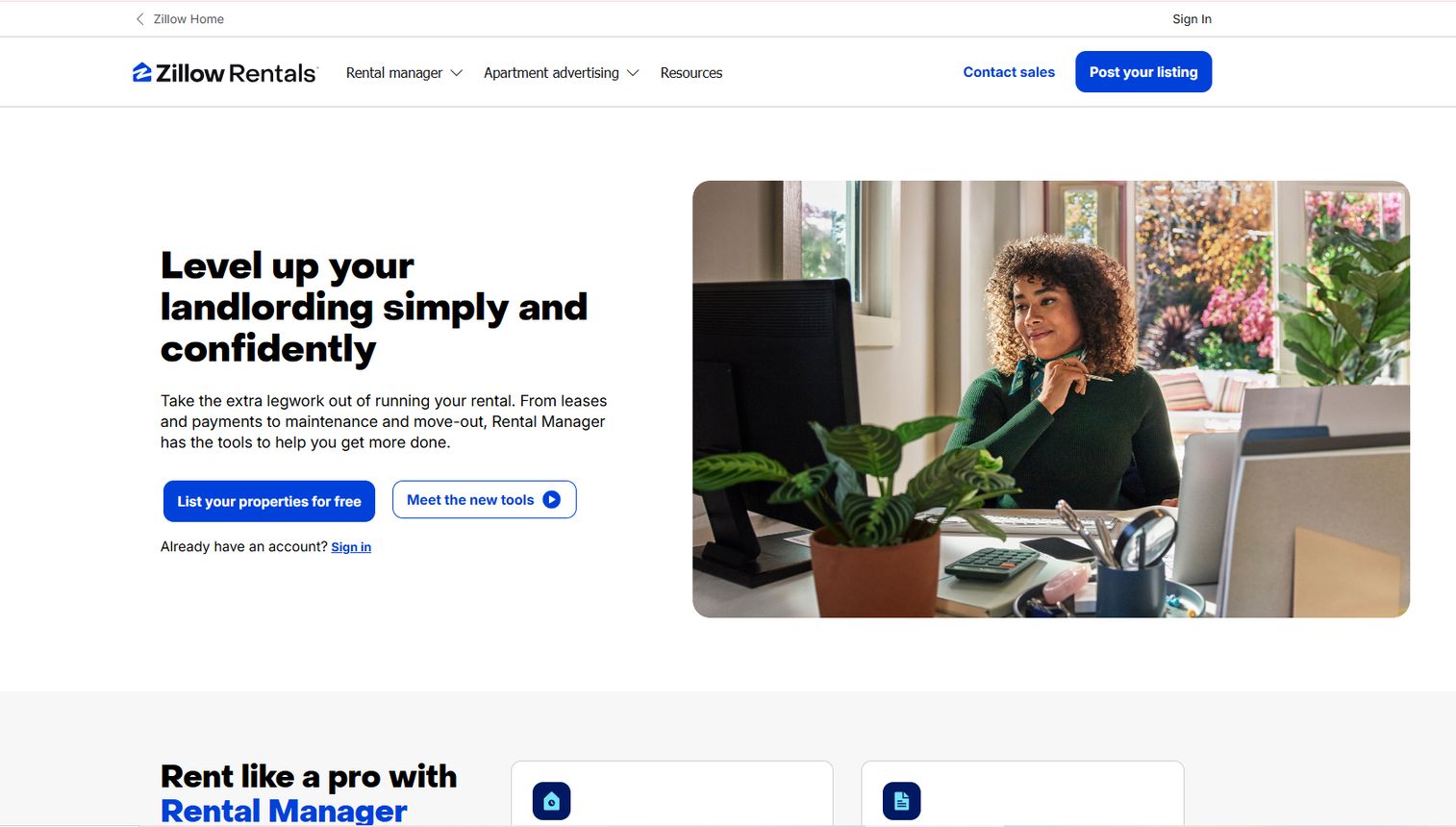
Zillow Rental Manager is an online property management tool that lets landlords list rentals, screen tenants, sign leases, and collect rent from one place. Rent collection is free for landlords, and listings syndicate across Zillow, Trulia, and HotPads, which is hard to beat for filling vacancies fast.
Best for: Landlords who want free rent collection bundled with listing exposure and screening.
Key strengths
- Free online rent collection for landlords
- Listing syndication across Zillow, Trulia, and HotPads
- Tenant screening with background, credit, and eviction checks
- Online lease signing and rent reminders
Why choose Zillow Rental Manager: If you fill vacancies through Zillow anyway, keeping listings, screening, leasing, and collection in one account removes a lot of tab-switching. It fits landlords who value reach and simplicity over deep accounting.
Zillow Rental Manager pricing: Core Rental Manager tools are free for landlords. Zillow also offers a Premium upgrade, though a public price was not listed at the time of writing. Tenants typically cover card processing fees.
2. TurboTenant
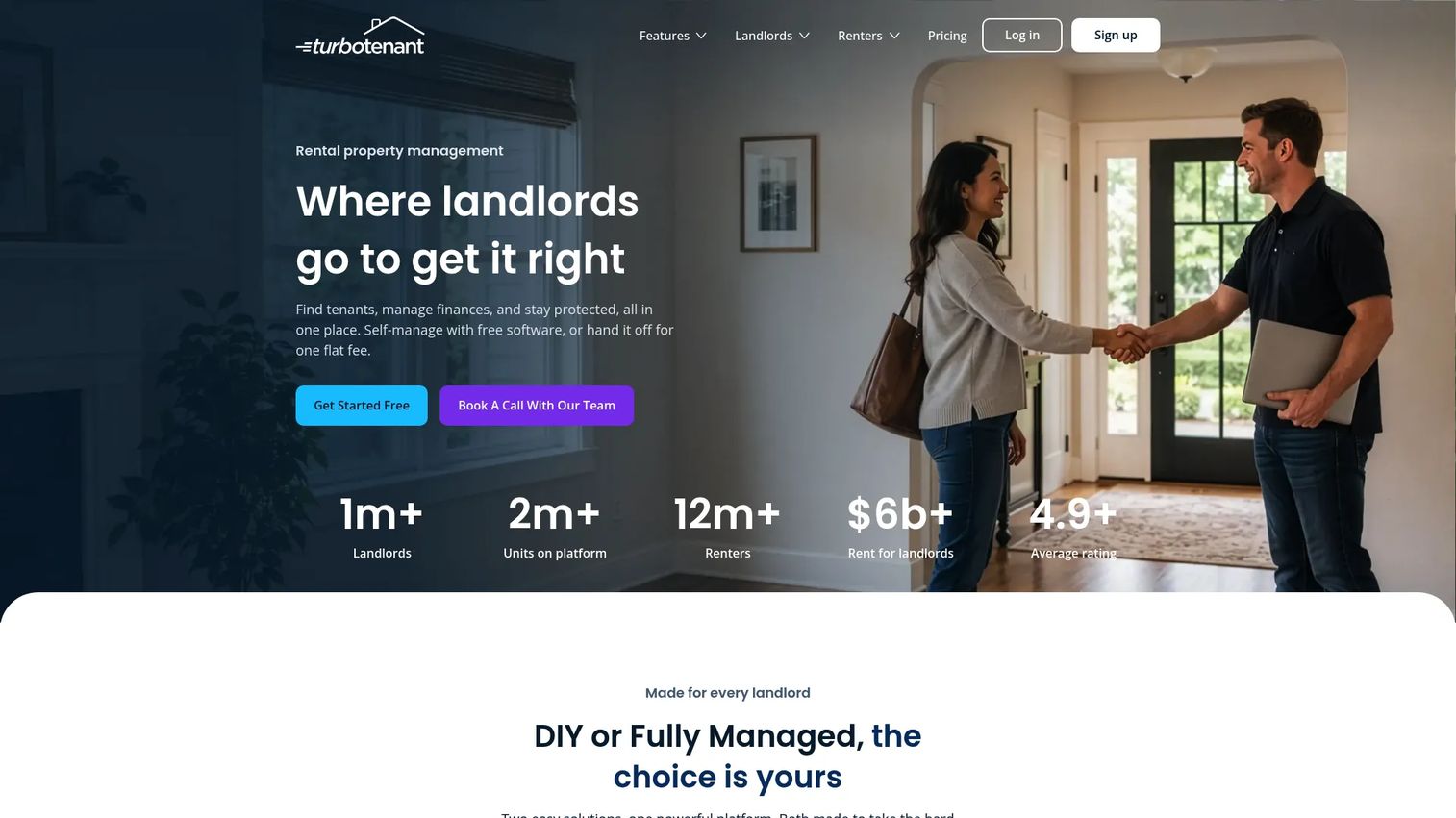
TurboTenant is landlord and property management software covering marketing, screening, leasing, rent collection, and maintenance. It runs a genuinely usable free plan, then layers paid tiers for landlords who want accounting and premium tools. The rent collection flow supports autopay, reminders, ACH, and rule-based late fees.
Best for: Independent landlords and small-to-mid portfolios who want an affordable all-in-one workflow.
Key strengths
- Free property listing syndication
- Tenant applications and screening
- Rent collection with autopay and late fees
- Lease building, e-signatures, and maintenance requests
Why choose TurboTenant: The free plan covers most of what a small landlord needs, and the paid tiers stay cheap relative to full suites. It fits landlords who want automation without a per-unit accounting bill.
TurboTenant pricing: The Free plan is $0/mo. Paid Premium plans are Essentials at $12.42/mo billed annually ($149/year) and Pro at $16.58/mo billed annually ($199/year). Pricing varies by units managed for larger portfolios.
3. Avail
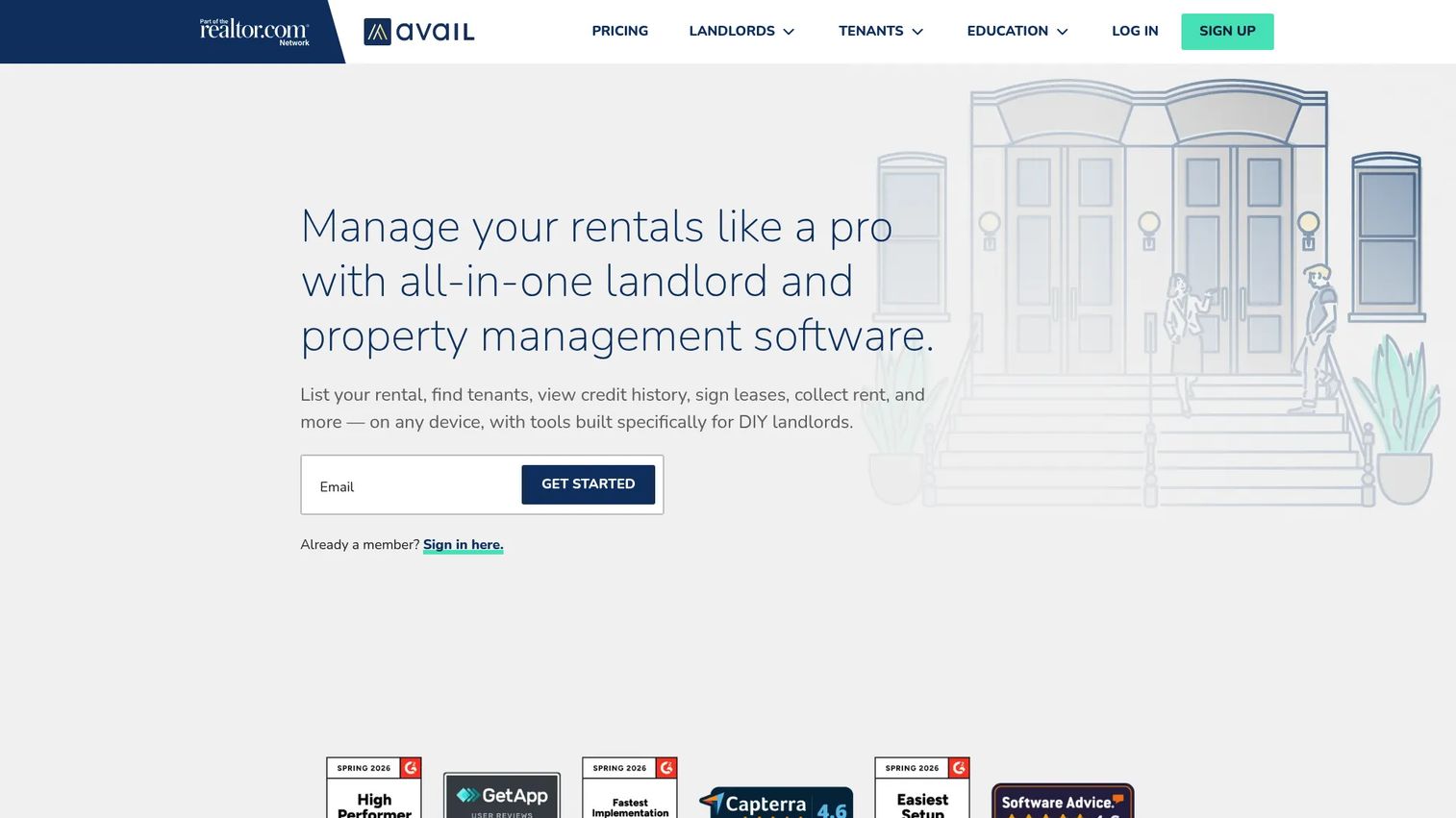
Avail, part of Realtor.com, is all-in-one rental property management software built for DIY landlords. It bundles free listings, screening, digital leases, and online rent collection, with a paid tier that adds FastPay, waived ACH charges, and custom lease tools. Landlords who want branded, controlled workflows lean on it.
Best for: Independent landlords managing one or a few properties who want more control.
Key strengths
- Free rental listings and syndication
- Tenant screening with credit, background, and eviction reports
- Digital leases and online rent collection
- FastPay and property accounting on the paid tier
Why choose Avail: The free Unlimited plan handles core collection at no cost, and Unlimited Plus adds faster deposits and customization for a flat per-unit price. It fits hands-on landlords who want polish without a suite.
Avail pricing: The Unlimited plan is $0/unit for unlimited units. Unlimited Plus is $9/unit per month and adds FastPay, waived ACH fees, and custom lease agreements.
4. Rentec Direct
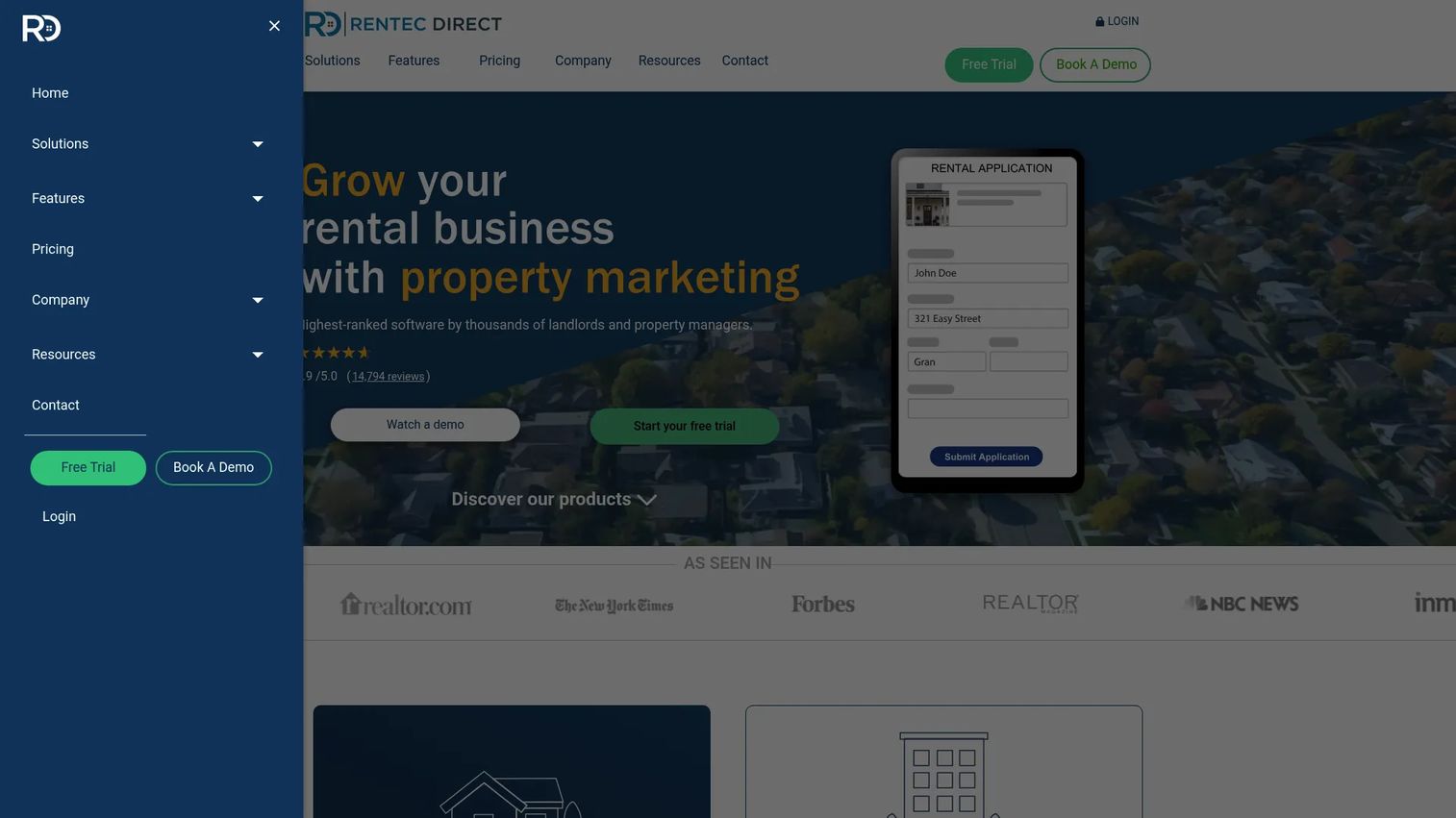
Rentec Direct is property management software for landlords and property managers who want operational depth. It combines online rent payments, tenant screening, a tenant portal, and full trust accounting, plus owner portals for anyone managing on behalf of others. The feature set runs deeper than most landlord-first tools.
Best for: Landlords and small property managers who want integrated rent collection, screening, and accounting.
Key strengths
- Online rent payments and tenant portal
- Tenant screening
- Owner portal and trust accounting
- Late fee automation and 1099 support
Why choose Rentec Direct: If you manage properties for owners or need real accounting behind your rent collection, the operational depth justifies the monthly cost. It fits managers who have outgrown free landlord tools.
Rentec Direct pricing: The FAQ states pricing starts at $45 per month. The public pricing page shows Rentec Pro at $55/mo and Rentec PM at $65/mo, both billed annually.
5. Buildium
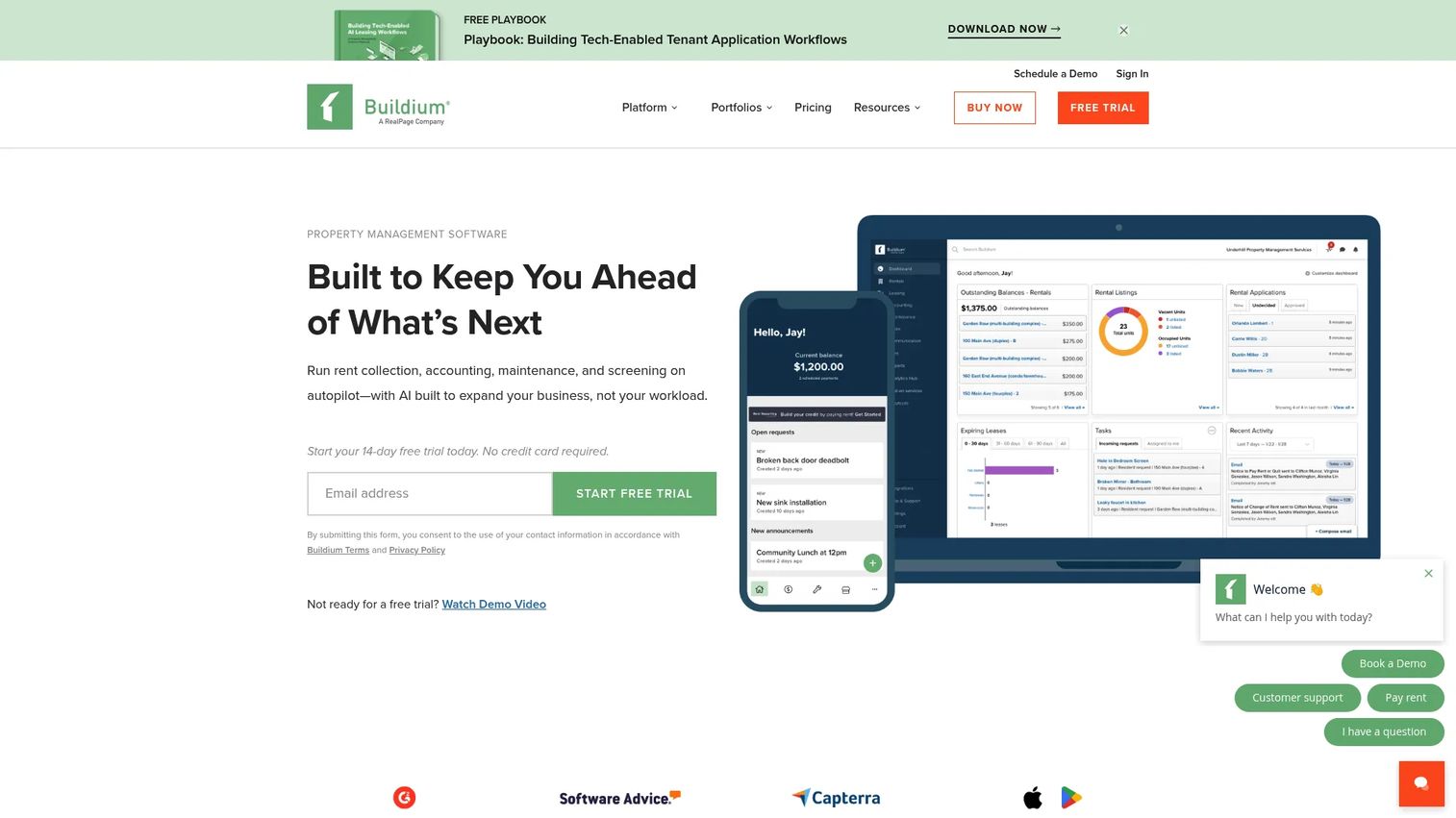
Buildium is cloud-based property management software for residential, community association, and commercial portfolios. Rent collection lives inside a broader suite that handles property accounting, maintenance work orders, and resident communication. Recurring payments and automations reduce the manual load as you scale.
Best for: Property management teams needing one platform for leasing, accounting, and resident communications.
Key strengths
- Property accounting built in
- Online rent collection with recurring payments
- Maintenance requests and work orders
- Owner reporting and automations
Why choose Buildium: When rent, accounting, and operations need to live in one system, Buildium removes the handoffs between tools. It fits growing portfolios where a landlord-first app no longer keeps up.
Buildium pricing: Three published plans: Essential at $62/month, Growth at $192/month, and Premium at $400/month. A free trial is available; there is no free tier.
6. Innago
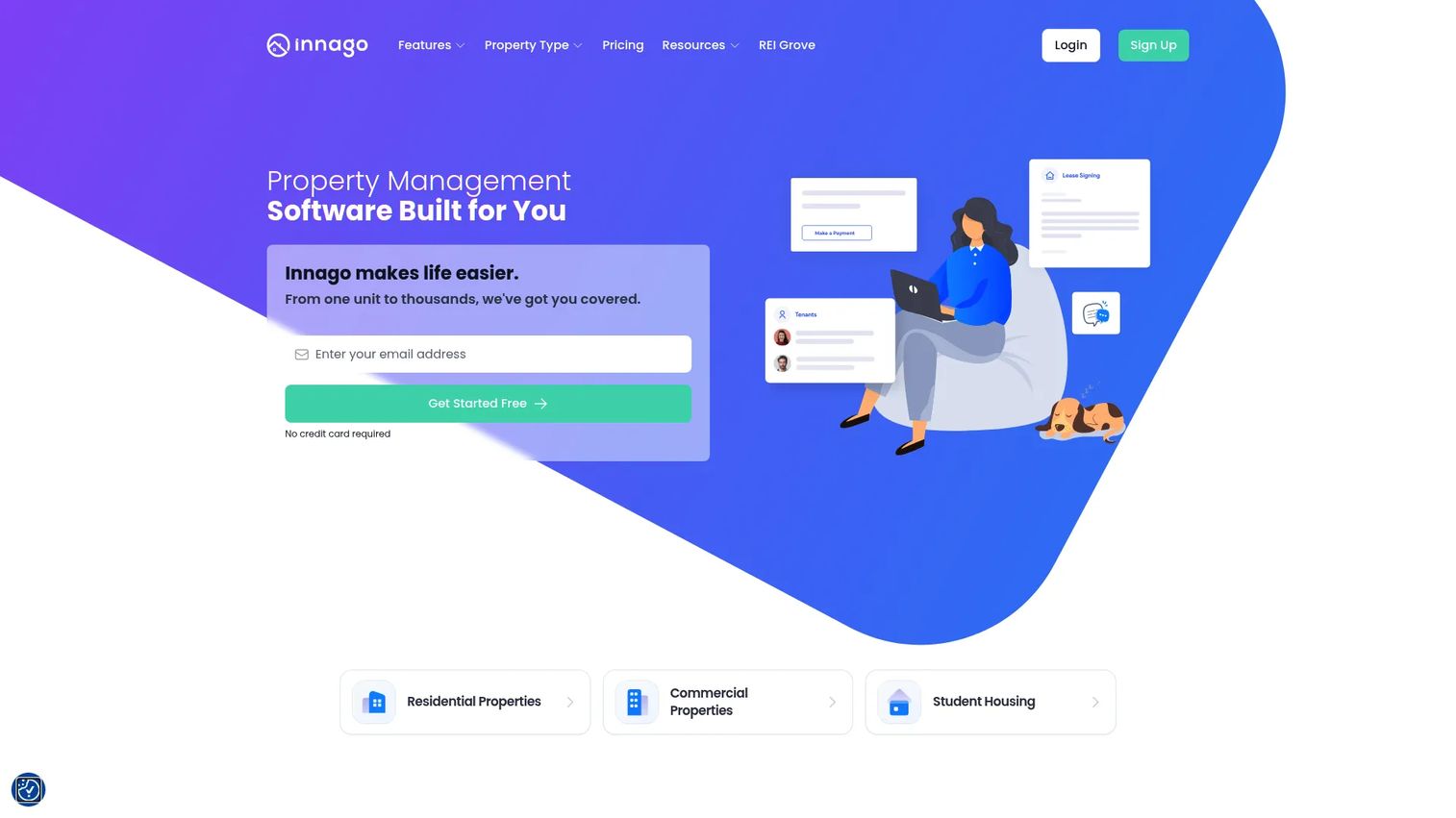
Innago is free property management software for landlords and property managers. It covers online rent collection, tenant screening, maintenance management, online lease signing, and expense reporting without a monthly fee. For budget-conscious landlords, the free positioning is the draw.
Best for: Independent landlords and small-to-mid property managers who want free rental management software.
Key strengths
- Online rent collection
- Tenant screening and lease signing
- Maintenance management and tenant communication
- Expense reporting and renter's insurance options
Why choose Innago: You get a full landlord toolkit at no monthly cost, with tenants covering payment processing fees. It fits landlords who want capability without a subscription line item.
Innago pricing: Free, with no monthly fee, no setup fee, and no contract. Innago monetizes through optional services and tenant-side payment fees.
7. Apartments.com Rental Manager
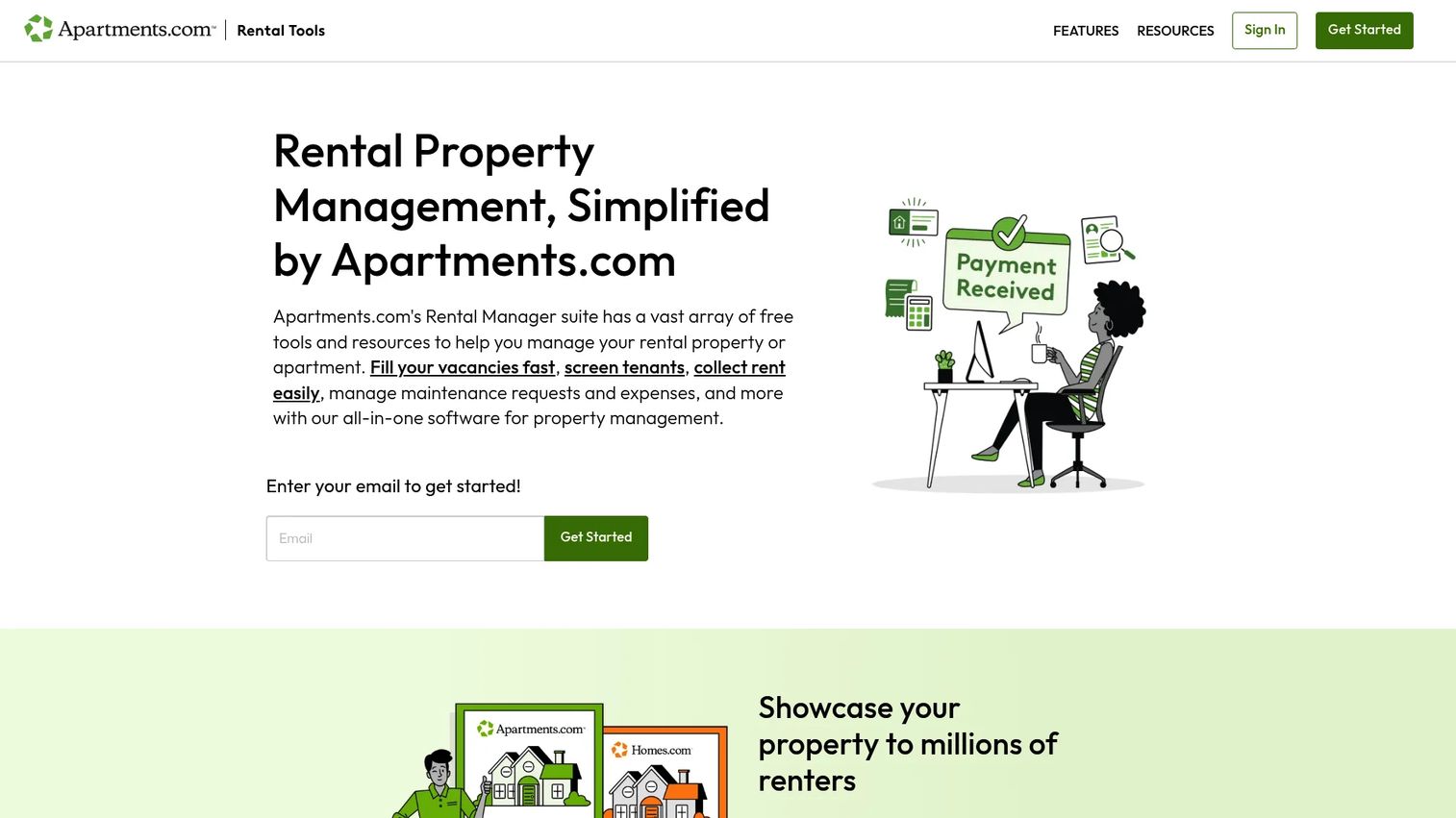
Apartments.com Rental Manager offers free online rental management tools for listing, rent collection, messaging, screening, leases, maintenance, and expense tracking. Rent collection and Express Pay are free, and listings reach the Apartments.com and Homes.com audiences.
Best for: Small landlords and owners who want a free, all-in-one suite tied to the Apartments.com ecosystem.
Key strengths
- List on Apartments.com and Homes.com
- Collect rent entirely online for free
- Built-in messaging, screening, and leases
- Maintenance and expense tracking
Why choose Apartments.com Rental Manager: If you already advertise vacancies on Apartments.com, folding collection and screening into the same account keeps everything in one place. It fits landlords already living in that ecosystem.
Apartments.com Rental Manager pricing: The suite is marketed as free tools for landlords, with free rent collection and Express Pay. A public plan-by-plan price sheet was not available at the time of writing.
8. ClearNow
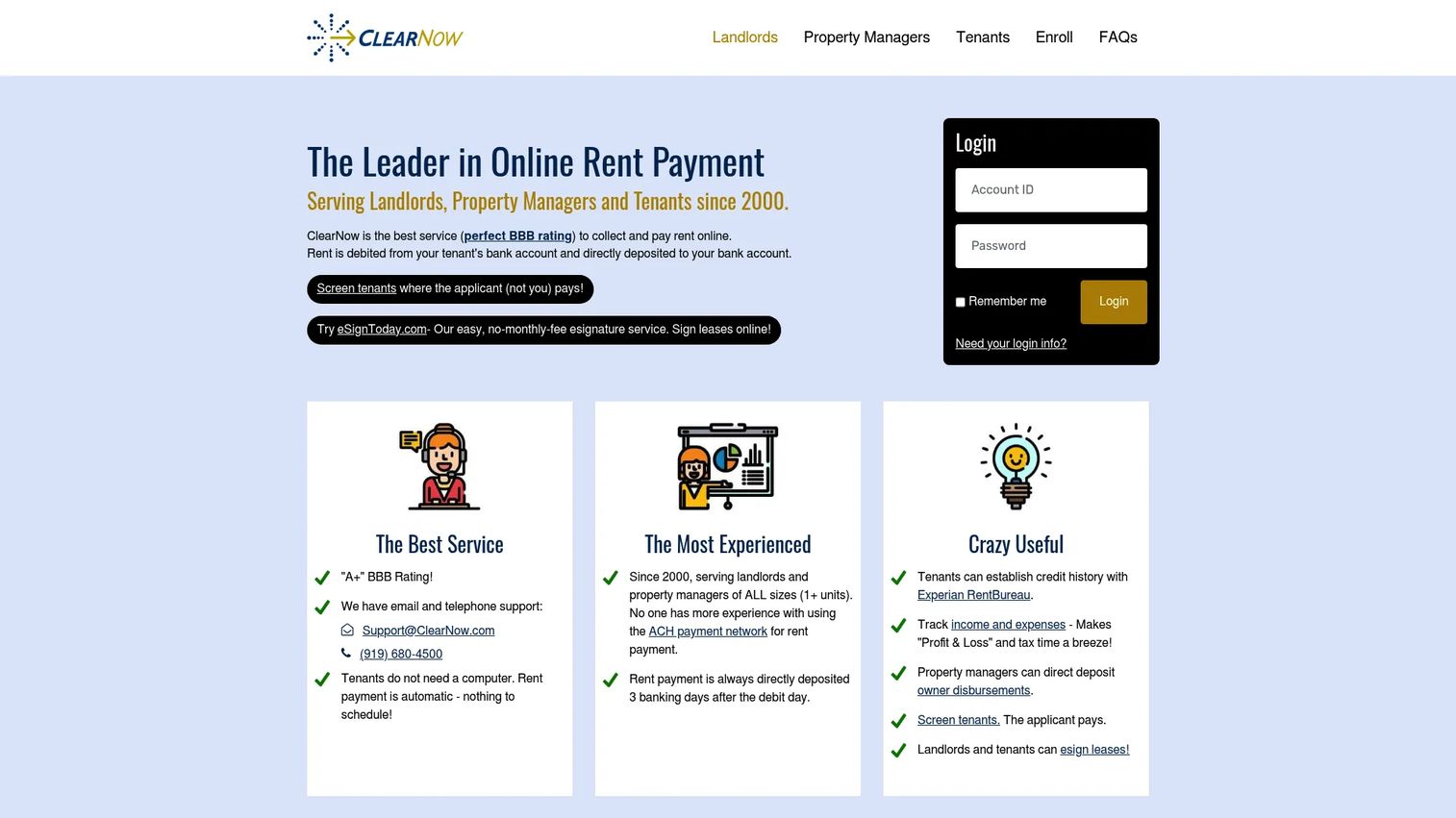
ClearNow is an online ACH rent payment service for landlords, property managers, and tenants. It focuses on one thing: automatic rent debits pulled from the tenant's account and deposited directly to the landlord's. It also reports tenant payments to Experian RentBureau, which supports rent reporting and credit-building.
Best for: Landlords who want a simple, ACH-based collection system with credit reporting.
Key strengths
- Automatic rent debits and direct deposit to landlords
- Tenant credit reporting via Experian RentBureau
- Income and expense tracking
- Owner disbursements for property managers
Why choose ClearNow: If your workflow is bank-to-bank and you want tenants building credit on time, ClearNow keeps things focused and predictable. It fits landlords who value ACH simplicity over a broad feature set.
ClearNow pricing: No setup fees. Monthly debit is $14.95/month for one debit, with each additional debit at $2/month. Semimonthly and biweekly debits are $4 per debit. Fees apply only when a debit is attempted.
9. PayYourRent
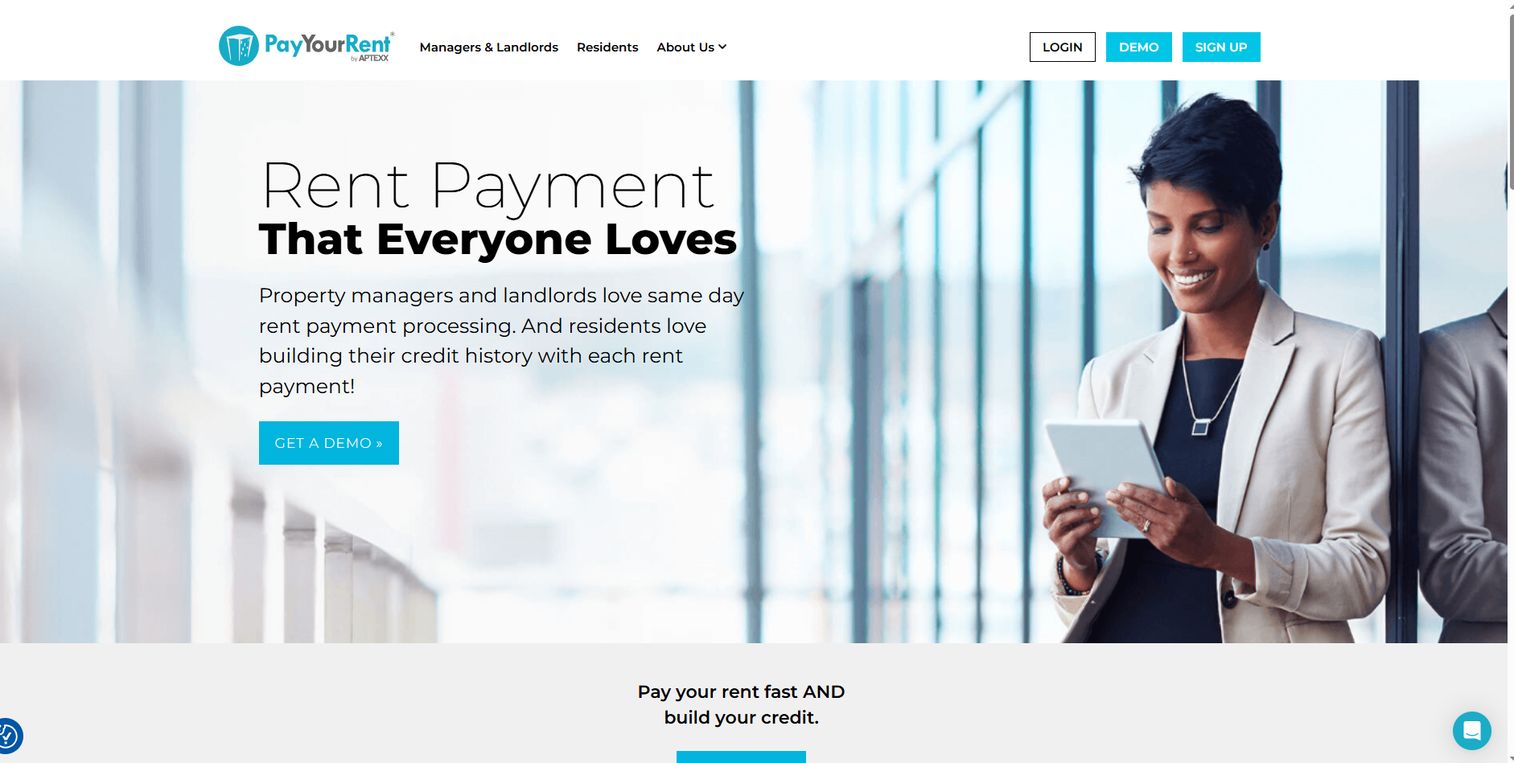
PayYourRent is online rent payment and property management software for landlords, property managers, and residents. It handles online rent payments, resident screening, and maintenance requests, with pricing scaled to how many units you manage. It fits teams that want a purpose-built rent payment product rather than a general app.
Best for: Landlords and property managers needing online rent collection with screening and maintenance tools.
Key strengths
- Online rent payments
- Resident screening
- Maintenance requests
- Unit-based plans that scale with portfolio size
Why choose PayYourRent: The tiered, unit-based structure means you pay in line with portfolio size instead of a flat suite fee. It fits landlords who want a specialized rent workflow without paying for accounting modules they will not use.
PayYourRent pricing: The Rental Plan for 1 to 5 units is $9.95/month. The Landlord Plan for 6 to 50 units is $19.95/month. The Corporate Plan for 50+ units is quoted at $0/month on the pricing page and requires contacting the vendor for ACH terms.
10. RentPayment
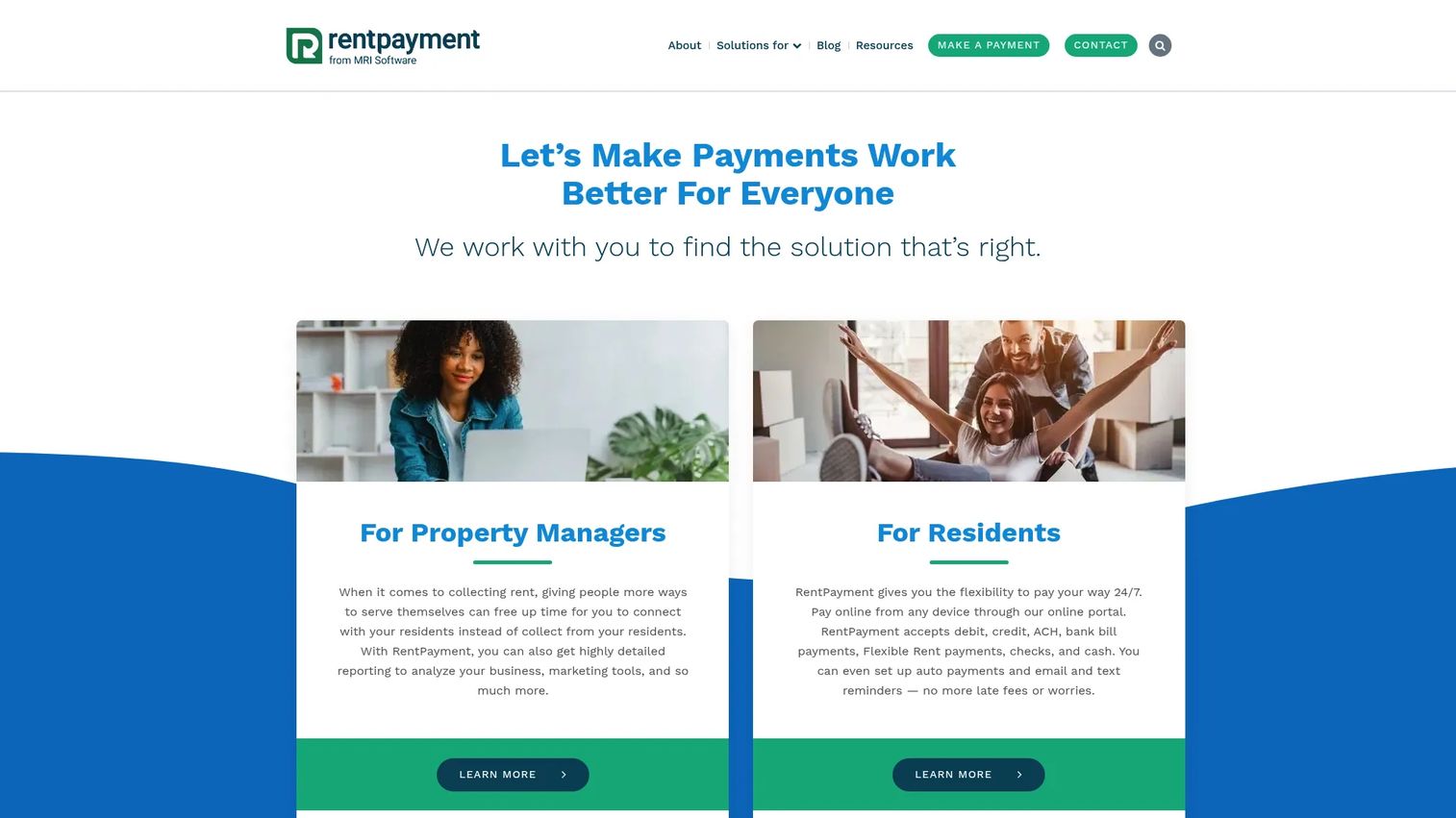
RentPayment is an online rent payment platform for residents and property managers, built around multi-channel collection. Tenants can pay by card, ACH or eCheck, phone, email click-to-pay, cash via MoneyGram, or in person, and a mobile app covers iPhone and Android. That channel breadth suits larger property operations with varied tenant preferences.
Best for: Residents and property managers needing a multi-channel rent payment portal.
Key strengths
- Online rent payments via web and mobile app
- Card, ACH/eCheck, phone, and email click-to-pay
- Cash payments via MoneyGram
- Rewards and credit-building on the Premium plan
Why choose RentPayment: When tenants pay in many different ways, including cash, the channel coverage keeps everyone in one system. It fits multifamily-focused operations that need flexibility across a diverse resident base.
RentPayment pricing: RentPayment Rewards offers a free Basic Plan and a Premium Plan at $6.95/month. Payment processing fees vary by method.
11. PayPal

PayPal is a digital payments platform for consumers and businesses to send, accept, and pay money online. Some landlords use it to accept rent, and it is widely accepted with strong buyer and seller protections. It is a payment rail, though, not rent-specific software.
Best for: Landlords who want simple payment acceptance and already use PayPal for other income.
Key strengths
- Widely accepted online payments
- Invoicing and Virtual Terminal
- Digital wallet and purchase protection
- Pay Later options
Why choose PayPal: PayPal performs best when you want a familiar, trusted way to accept a payment. For a full rent workflow, you would still handle reminders, late fees, and payment histories separately, since those live outside a general payment tool.
PayPal pricing: Business fees are published by use case. Expanded Checkout is 2.89% + $0.29 per transaction, PayPal Checkout is 2.99% + $0.49, invoicing is 3.49% + $0.49, and Virtual Terminal is 3.39% + $0.29. There are no monthly or setup fees for standard payment acceptance.
12. Venmo

Venmo is a mobile payments app for sending, receiving, and spending money, with business profiles and crypto features. It shows up constantly in rent conversations because tenants already have it and paying is fast. Convenience is real, but automation, reporting, and rent-specific controls are not part of the app.
Best for: Individuals and small landlords who want simple peer-to-peer payments for a single unit.
Key strengths
- Send and receive money quickly
- Business profiles for payment acceptance
- Familiar mobile experience for tenants
- No monthly fee for personal use
Why choose Venmo: Venmo performs best when speed and familiarity matter more than structure. For recurring reminders, automatic late fees, and clean tax records, a dedicated rent tool handles those jobs that a peer-to-peer app leaves to you.
Venmo pricing: No monthly fee. Standard personal transfers are free. Business profile transactions run 1.9% + $0.10 or 2.29% + $0.09 per transaction. Instant Transfer is 1.75%, with a $0.25 minimum and $25 maximum fee.
13. Zelle
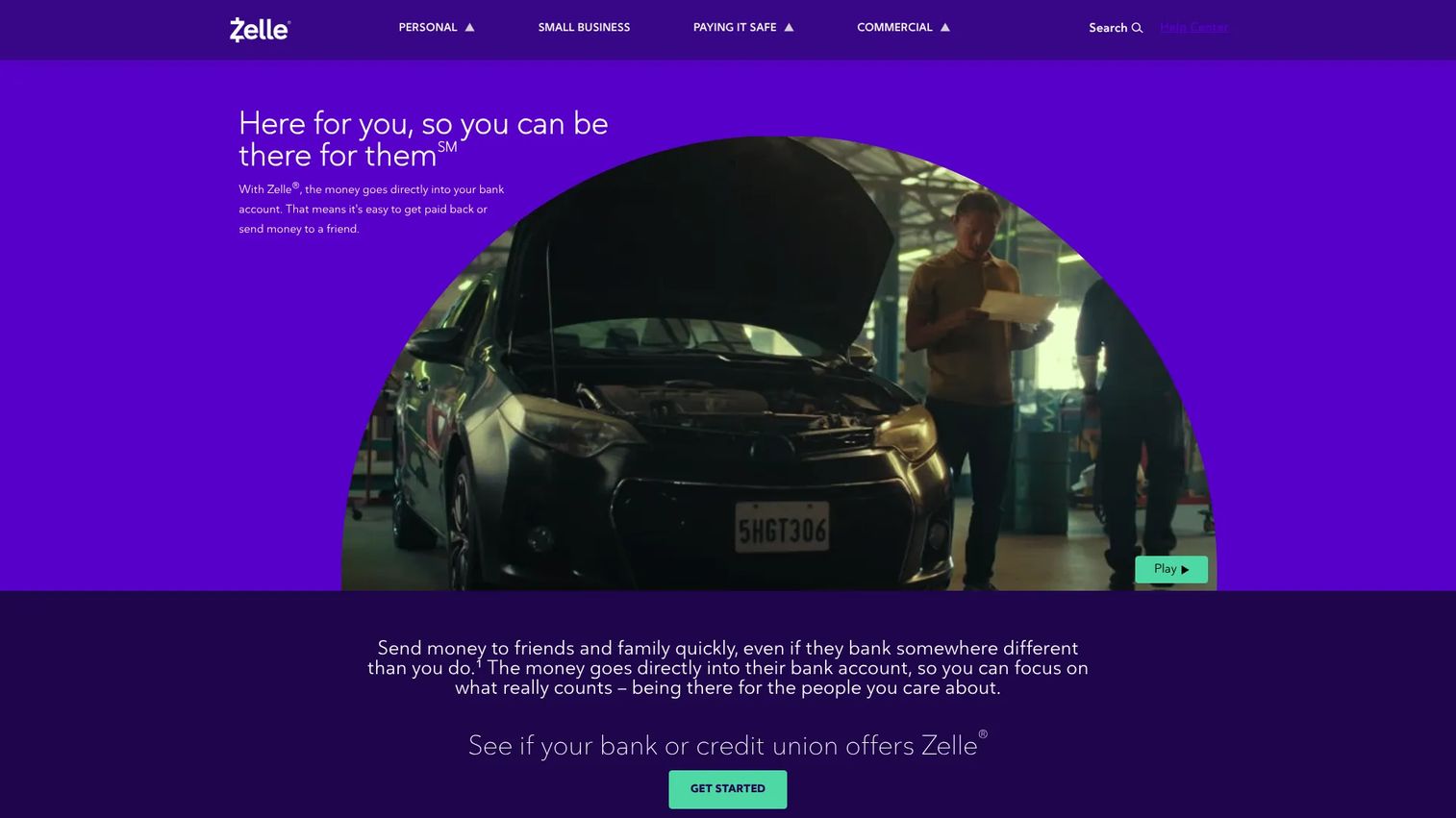
Zelle is a bank-app payment network for sending money to people you know and trust. Money moves directly between bank accounts, usually within minutes, and it is built into more than 2,200 U.S. banking apps. That speed and familiarity make it a common way tenants send rent.
Best for: Consumers and small landlords who want fast, bank-integrated transfers for a single unit.
Key strengths
- Send and receive through participating bank apps
- Money lands in a bank account within minutes
- Available in 2,200-plus U.S. banking apps
- No app to download for most users
Why choose Zelle: Zelle works well as a transfer method when both sides bank with a participating institution. As a rent collection system, it does not track leases, apply late fees, or generate the reporting that dedicated software builds automatically, so it is best paired with your own record-keeping.
Zelle pricing: Consumer send and receive is typically free. Pricing for small business use depends on the financial institution, and no public plan pricing is shown on the brand site.
Considerations
Payment methods
Check for ACH, credit card, debit card, and cash support before you commit. ACH is cheapest and best for recurring rent, while cards add convenience at a higher fee, usually passed to tenants. If any tenant pays in cash, a network like MoneyGram matters. Payment choice affects fees, adoption, and how fast deposits clear.
Automation
Evaluate reminders, autopay, late fees, and recurring charges. The whole point of automated rent collection is removing you from the loop. A tool that fires reminders on schedule and applies late fees by rule saves hours every month. Payment apps leave all of that to you, which is the real difference between a rail and a workflow.
Reporting and records
Assess dashboards, payment histories, owner reporting, and tax documents. At tax time, you want a clean export and 1099 support, not a scroll through bank statements. During disputes, timestamped histories settle questions fast. If you hand records to an accountant, clean accounting handoff is worth paying for.
Trust and security
Cover bank verification, data handling, payment protection, and compliance. Do not treat all payment tools equally. Dedicated rent software verifies bank accounts, protects tenant data, and builds an audit trail by design. Security and trust are not features to skim past when you are moving thousands of dollars a month.
Tenant experience
Evaluate onboarding, mobile access, portal simplicity, and support. Smooth tenant onboarding and a simple portal directly improve on-time payment behavior. If paying rent takes three confusing steps, tenants delay. A clean mobile flow and responsive support quietly raise your collection rate.
Conclusion
The best pick depends on your portfolio and how much you want automated.
For free rent collection, Zillow Rental Manager, TurboTenant, and Innago cover the basics without a subscription. For automated reminders and late fees, TurboTenant and Avail take the chasing off your plate. For operations-heavy portfolios that need accounting and owner reporting, Buildium and Rentec Direct earn the monthly cost. For rent reporting and credit-building, ClearNow and RentPayment stand out. And for simple payment-only situations, PayPal, Venmo, and Zelle move money fast.
One pattern holds across all of them. Dedicated rent collection software usually beats general payment apps for automation and records, because reminders, late fees, and clean histories are built in rather than bolted on. Payment apps handle the transaction; rent software handles the workflow.
Pick based on three questions. How many units do you manage, how much automation do you want, and how clean do your records need to be at tax time? Answer those, and the shortlist above narrows to one.
FAQs
For most small landlords, TurboTenant, Avail, and Innago hit the sweet spot: free or low-cost rent collection with autopay, reminders, and screening built in. Zillow Rental Manager is strong if you also want listing exposure. The best fit depends on whether you value listing reach, deep automation, or a fully free plan.
Yes. Zillow Rental Manager, TurboTenant, Avail, Innago, and Apartments.com Rental Manager all offer free rent collection for landlords. Tenants typically cover card processing fees, while ACH is often free or low-cost. Free plans usually cover collection, reminders, and basic screening, with paid tiers unlocking accounting and faster deposits.
Most dedicated rent collection tools support all three. ACH bank transfer is cheapest and best for recurring rent. Credit and debit card payments add convenience at a higher processing fee, usually passed to the tenant. Some platforms like RentPayment also accept cash through networks such as MoneyGram.
A payment app like Venmo or Zelle moves money and stops there. Rent collection software adds the workflow around the payment: automated reminders, rule-based late fees, payment histories, lease tracking, and tax documents. If you manage more than one unit or want records that hold up at tax time, the workflow layer is the difference.
Yes, and this is where dedicated tools earn their keep. Platforms like TurboTenant, Avail, and Rentec Direct let you set autopay for tenants and apply late fees by rule, so the fee triggers automatically after the grace period. That removes the manual chasing and the awkward reminder texts entirely.
Some can. ClearNow reports tenant payments to Experian RentBureau, and RentPayment offers credit-building on its Premium plan. Rent reporting helps tenants build credit history with on-time payments, which can be a selling point when you list a unit. Not every platform includes it, so confirm before choosing.
They are legitimate payment rails with real security, but they were not built for rent. Zelle transfers are typically irreversible, and none of the three tracks leases, applies late fees, or generates tax records. They work for a single unit when paired with your own bookkeeping. For a portfolio, dedicated rent collection software is the safer, cleaner choice.
Full property management suites lead here. Buildium and Rentec Direct offer property accounting, owner reporting, and 1099 support built for portfolios. Among landlord-first tools, TurboTenant and Avail provide solid payment histories and accounting add-ons. If tax records and accounting handoff are your priority, choose a suite over a payment app every time.