The school nurse finishes a medication pass, walks back to her desk, and opens a binder. The student's allergy record is in a different folder. The emergency card is filed somewhere else. The immunization printout from last year may or may not reflect a booster the parent mentioned at drop-off.
This is the operational reality in schools that still run health records on paper, shared drives, or disconnected spreadsheets. And the stakes are not abstract. According to the National Association of Community Health Centers (2026), 4,446 school-based health center sites served nearly 9.8 million children nationwide. When staff cannot find the right health information fast, that volume becomes a liability.
Purpose-built student health records software changes that equation. The right platform collects forms from parents before the school year starts, surfaces allergy and medication details at the point of care, and keeps immunization records current without a manual chase every September.
This guide maps nine platforms across the category so you can shortlist the right one for your school, district, or program.
What's inside
This guide compares 9 student health records software options for 2026, chosen based on health office workflow fit, immunization and medication support, FERPA and HIPAA posture, SIS integration claims, and pricing transparency.
- Tools for K-12 health offices, districts, boarding schools, childcare programs, camps, and college campuses
- What each platform handles best and where it fits in the category
- Where to verify compliance, integrations, and implementation depth
- How to choose based on school size, workflow complexity, and staff adoption requirements
Who it is for: School nurses, K-12 administrators, district operations and technology leaders, student services teams, and founders studying the education health software category.
TL;DR
- Best overall for K-12 student health management: Magnus Health, a dedicated platform built specifically for school nurse workflows, digital forms, immunizations, and emergency access
- Best for health records plus registration workflows: SchoolDoc, combining student EHR, eMAR, family communication, and program registration in one system, starting at $425 per month
- Best for clinical EHR and Medicaid billing depth: Patagonia Health, suited for districts that treat school health as part of a clinical or public-sector health operation
- Best for schools needing student data connected to broader systems: PowerSchool or Blackbaud, when health is one piece of a larger student information operation
- Best for boarding schools and residential programs: Reach Student Life, covering student care, attendance, pastoral notes, and medication dispensary in campus life context
- Best for campus payments and program registration: TouchNet, for organizations where financial workflows connect to student services rather than clinical health records
What is student health records software?
Student health records software is a digital system schools use to collect, store, update, secure, and report student health information such as immunizations, medications, allergies, care plans, screenings, injuries, and parent-submitted health forms.
The category sits between two adjacent systems that schools often confuse it with. A Student Information System (SIS) manages academic records, enrollment, grades, and attendance. A general school management platform handles admissions, billing, and operations. Student health records software focuses specifically on the clinical and administrative workflows that school nurses, health aides, and health services administrators run every day.
Common users include school nurses, athletic trainers, front-office staff who handle health form intake, parents and guardians submitting records, compliance staff managing immunization requirements, and administrators who need health data for state reporting.
Schools move from paper records to dedicated software for four concrete reasons. Forms stop getting lost. Medication administration becomes documented and auditable. Immunization status can be queried in seconds rather than searched through a file drawer. And when a student has a reaction or injury away from the main building, the staff member on duty has access to the right information.
Key capabilities to look for in this category:
- Digital health form collection and parent submission workflows
- Immunization and vaccination tracking with exemption management
- Medication administration records and eMAR for documented dose tracking
- Allergy, condition, and care plan records
- Individualized health plans and action plans (asthma, diabetes, anaphylaxis)
- Injury, screening, and clinic visit documentation
- Parent and guardian communication tools
- FERPA and HIPAA-relevant access controls, audit logs, and permissions
- SIS and immunization registry integrations
- Reporting for compliance, state submissions, and operations
Privacy obligations for school health data vary by school type, funding source, and the structure of health services delivery. Schools should assess their specific obligations under FERPA, HIPAA, state law, and district policy with their own counsel. Software evaluation should focus on practical controls: Who can access which records, how access is logged, and how data is retained.
When to use student health records software
Replace paper health files and emailed forms
Paper binders and emailed PDFs create predictable failure modes: Missing immunization records at the start of the year, allergy information that never reached the nurse who covers a field trip, and form collection that depends on individual staff chasing families by phone. A dedicated platform moves form collection online, automates reminders to parents, and stores submissions in a searchable record tied to each student. When a nurse retires or leaves, the institutional knowledge does not walk out the door with the binders.
Manage medications, immunizations, and care plans
Daily medication administration in schools is a documented clinical workflow, not an informal handoff. A student taking medication for ADHD, epilepsy, or diabetes needs a record that shows who administered the dose, at what time, and whether any incident occurred. An electronic medication administration record (eMAR) provides that structure. Similarly, immunization requirements change at state and district level, and software that flags missing or expiring vaccinations saves hours of manual tracking before enrollment deadlines.
Give staff faster access during incidents
A student collapses on the athletic field. The coach's first question is about allergies and medications. If that information lives in a binder in the nurse's office and the nurse is across campus, time is lost. Platforms that support emergency access, whether through a dedicated emergency card view, a mobile app, or role-based off-campus permissions, address this directly. The same logic applies to after-school programs, field trips, and sports travel: Staff need the right record at the right moment.
Student health records software comparison
Use the table below to build an initial shortlist. It covers the nine platforms in this guide by primary use case, key differentiator, pricing, and G2 rating. Pricing and ratings reflect verified figures from vendor pricing pages and G2 at drafting time. Confirm live before procurement, as figures change.
| # | Product | Best for | Key differentiator | Pricing | G2 rating |
|---|---|---|---|---|---|
| 1 | Magnus Health | K-12 dedicated student health management | Broad health office workflows, emergency access, SIS and registry integrations | Contact for quote | 4.2/5 |
| 2 | SchoolDoc | K-12 schools, childcare, and youth programs | Student EHR, eMAR, digital forms, registration, family communication | From $425/month | 4.7/5 |
| 3 | Patagonia Health | Districts and programs needing clinical EHR depth | EHR, practice management, Medicaid billing, public-sector health reporting | Contact for quote | N/A |
| 4 | MyCabinet School Health | Schools replacing manual health record workflows | Student health records, medications, immunizations, parent communication | Contact for quote | N/A |
| 5 | Blackbaud | Independent schools in the Blackbaud ecosystem | School management platform with student data and family portal | Contact for quote | 3.8/5 |
| 6 | PowerSchool | K-12 districts prioritizing SIS-aligned data | Broad SIS coverage including health module, analytics, and family engagement | Contact for quote | 4.2/5 |
| 7 | Reach Student Life | Boarding schools and residential programs | Student safety, attendance, pastoral care, medication dispensary, campus operations | Contact for quote | 2.8/5 |
| 8 | Senior Systems | Independent PK-12 schools | Integrated student information, enrollment, billing, and advancement | Contact for quote | 3.8/5 |
| 9 | TouchNet | Colleges and universities managing campus payments | Campus commerce, payment processing, program registration, and credential management | Contact for quote | 3.1/5 |
Best 9 student health records software tools for 2026
1. Magnus Health
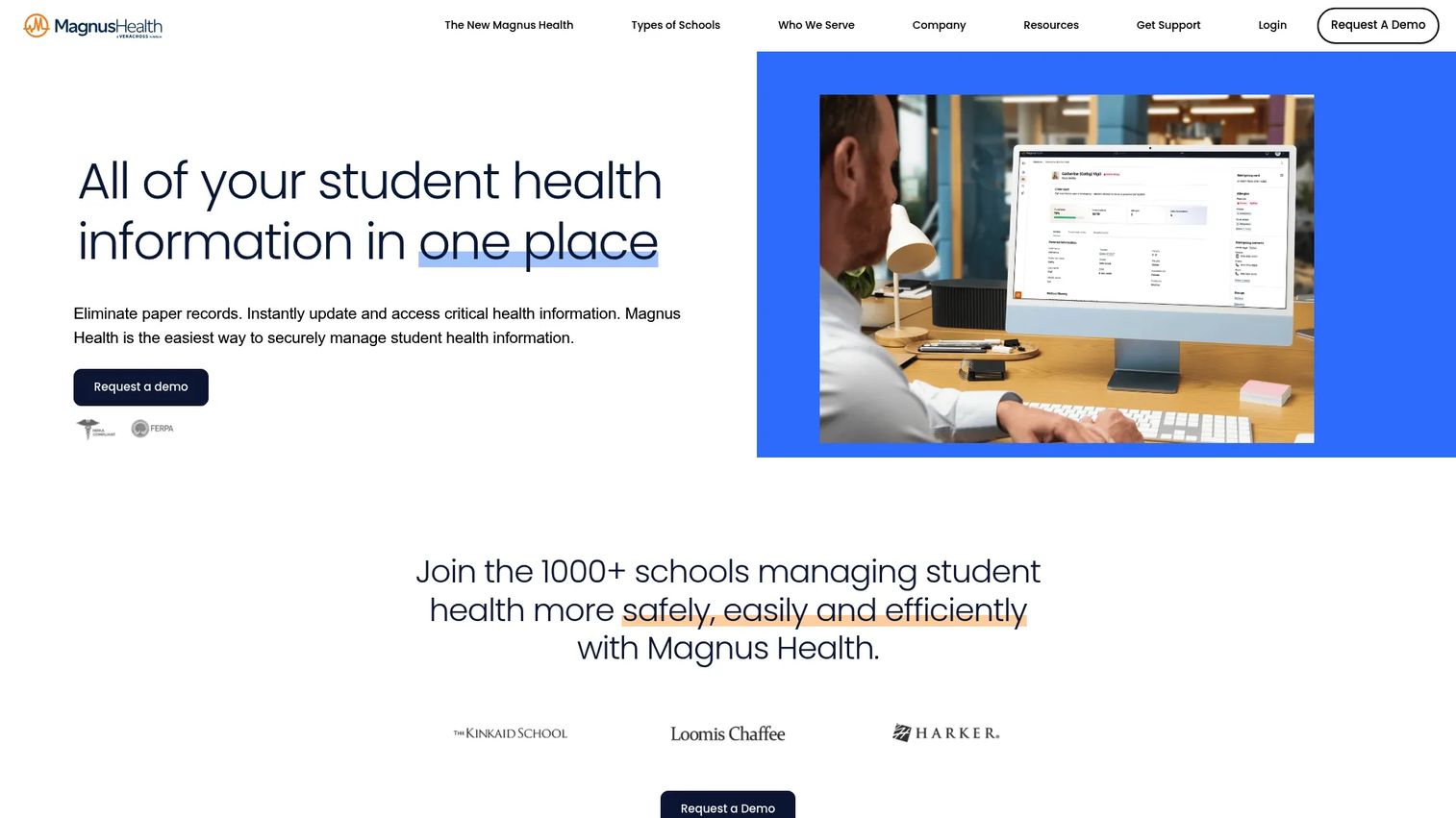
Magnus Health is a student health record management platform built specifically for K-12 schools, colleges, and universities. It centralizes digital form collection, immunization tracking, medication management, treatment notes, and emergency access in one purpose-built system. Staff can access student health information from the health office, off-campus, or during an emergency through Magnus911. SIS and immunization registry integrations connect health data to the broader student record without manual imports.
Best for: K-12 schools and districts that need a dedicated student health management platform with deep health office workflows.
Key features
- Digital student health forms with parent submission
- Immunization and medication tracking
- Emergency health access via Magnus911
- Student-athlete health workflows
- SIS and immunization registry integrations
Why choose Magnus Health: It fits schools where student health operations are complex enough to justify software built entirely around nurse workflows, not a health module bolted onto a broader school management system. Schools managing large student populations, multiple buildings, or athletic programs find the emergency access and cross-campus visibility especially useful.
Magnus Health pricing: Magnus Health prices by quote. Ask the sales team about per-student or per-school pricing, which modules are included, and what implementation and training look like for your district size.
G2 rating: 4.2/5
2. SchoolDoc
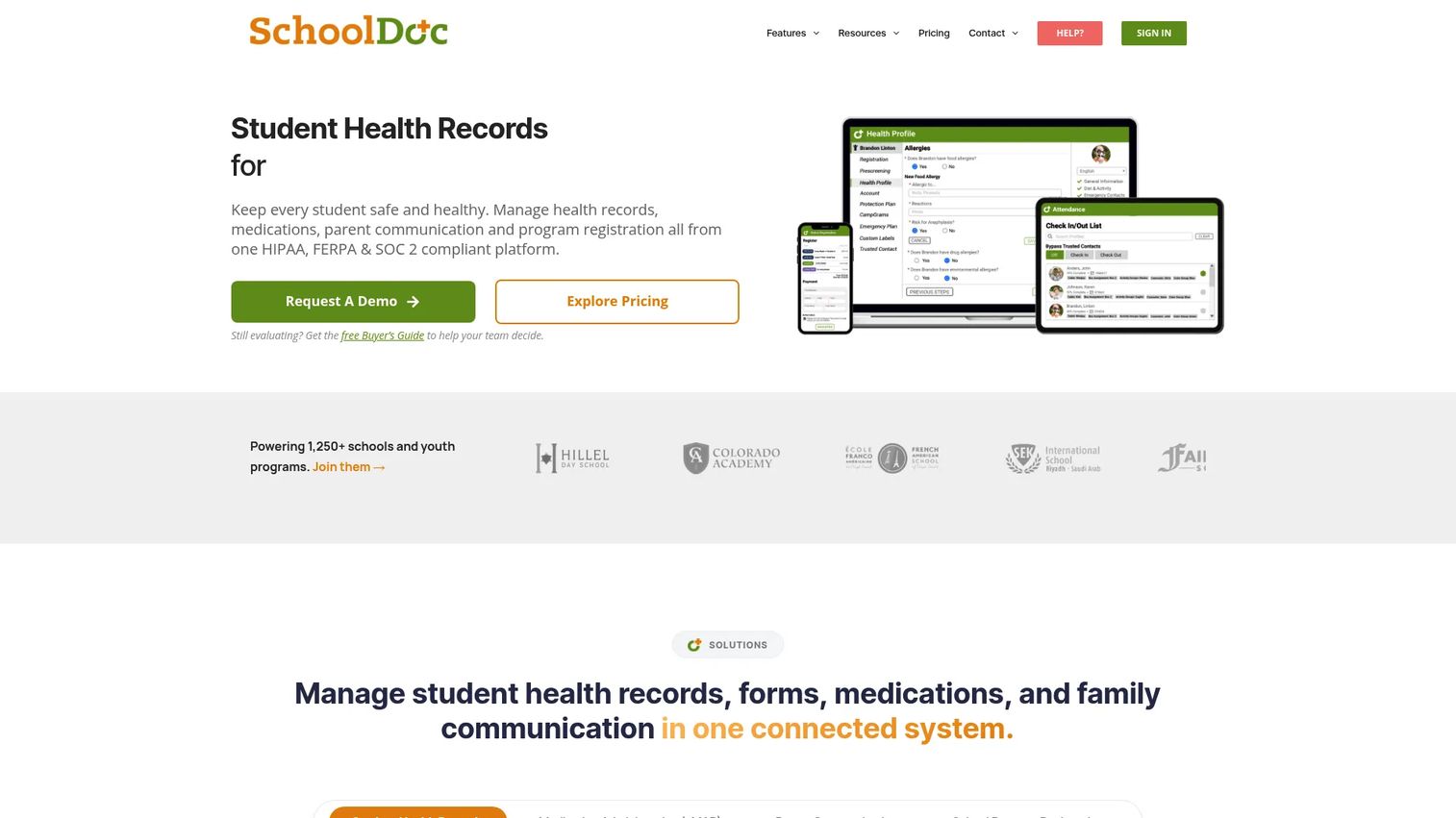
SchoolDoc is student health records and school nurse software for K-12 schools, childcare programs, camps, and youth programs. The platform covers digital health forms, allergy and immunization tracking, eMAR for documented medication passes, clinic visit logs, behavioral health management, and online program registration. Parent communication runs through email and text, and role-based permissions give administrators, nurses, and family members access to the right level of information. SchoolDoc makes FERPA, HIPAA, and SOC 2 compliance claims on its product pages; buyers should verify posture specifics with their own compliance teams.
Best for: Schools and youth programs that need student health records, medication administration, family communication, and registration in one system.
Key features
- Student electronic health records and clinic incident logs
- eMAR for documented medication administration
- Allergy and immunization tracking with flags
- Parent email and text communication
- Online school program registration
Why choose SchoolDoc: The combination of health records and registration workflows matters when health requirements are tied to program enrollment, camp participation, or childcare intake. Schools that currently manage health forms and registration in separate systems will see immediate consolidation value.
SchoolDoc pricing: Plans start at $425 per month. The starting price includes onboarding, training, multi-user access, and compliance features. Confirm final pricing with SchoolDoc's team based on your program size and module needs.
G2 rating: 4.7/5
3. Patagonia Health
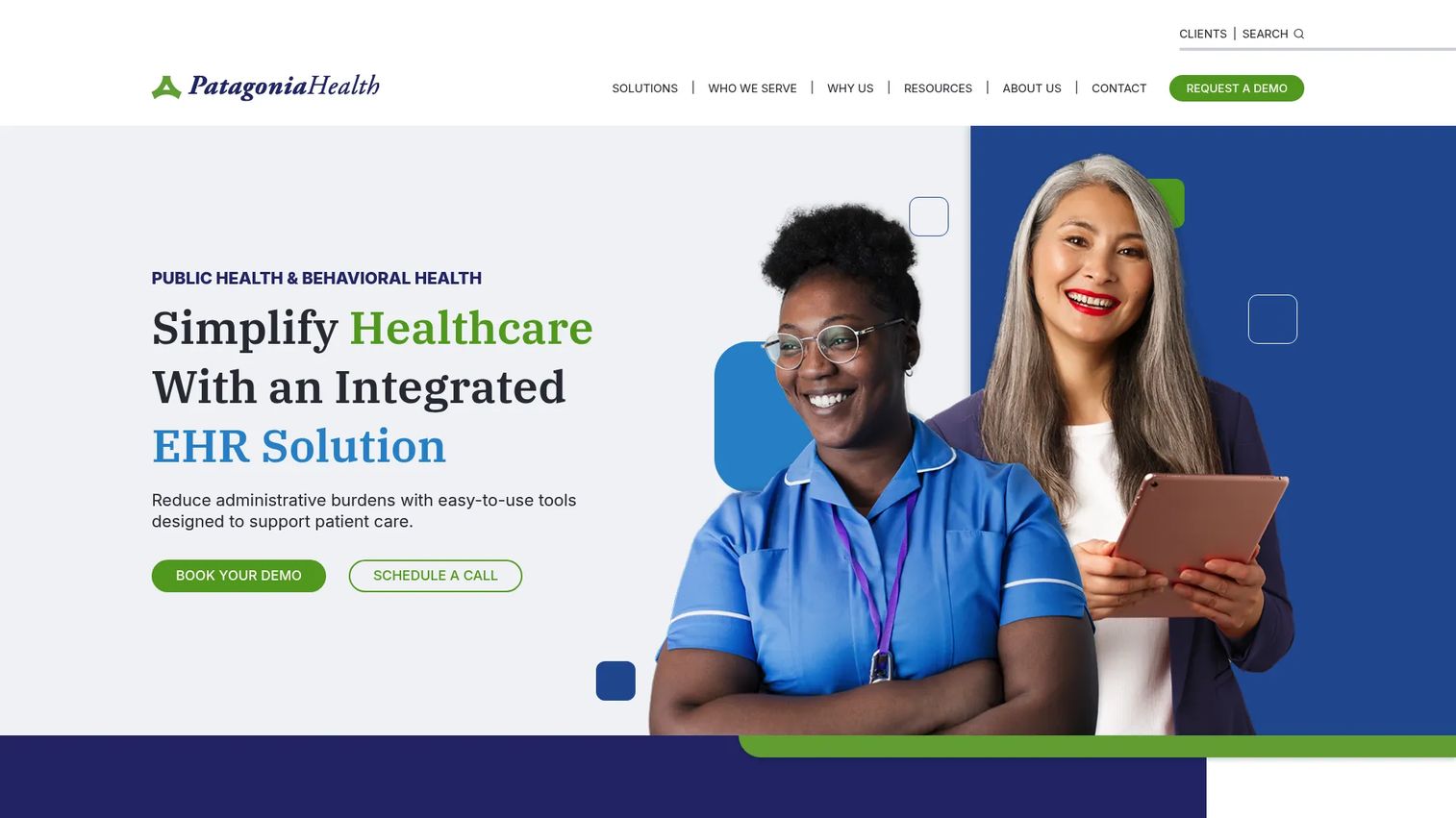
Patagonia Health is an integrated EHR, practice management, and medical billing platform built for public health departments and behavioral health organizations. It has documented use in school health contexts, particularly for districts that need clinical-grade documentation, Medicaid billing, and state and federal reporting. The platform is cloud-based, HIPAA-compliant, and federally certified, with HL7 interoperability support. A patient portal covers self-scheduling, electronic consent, health summaries, and secure messaging.
Best for: School districts or public health programs that treat school health nursing as part of a clinical health operation, not only a student records function.
Key features
- Integrated EHR, practice management, and billing workflows
- Medicaid billing and claims processing
- Reporting for state, federal, and county requirements
- Patient portal with electronic consent and messaging
- HL7 interoperability and cloud-based access
Why choose Patagonia Health: Choose it when billing against Medicaid for school health services is a real operational requirement, or when your district needs clinical documentation depth and formal reporting structures that go beyond standard school nurse software. It fits organizations where school health operates more like a community health clinic than a traditional school office.
Patagonia Health pricing: Patagonia Health uses custom fixed-rate pricing with no transaction fees for claim processing, insurance verifications, or appointment reminders. Contact their team for a quote based on your organization's size, billing volume, and reporting requirements.
4. MyCabinet School Health
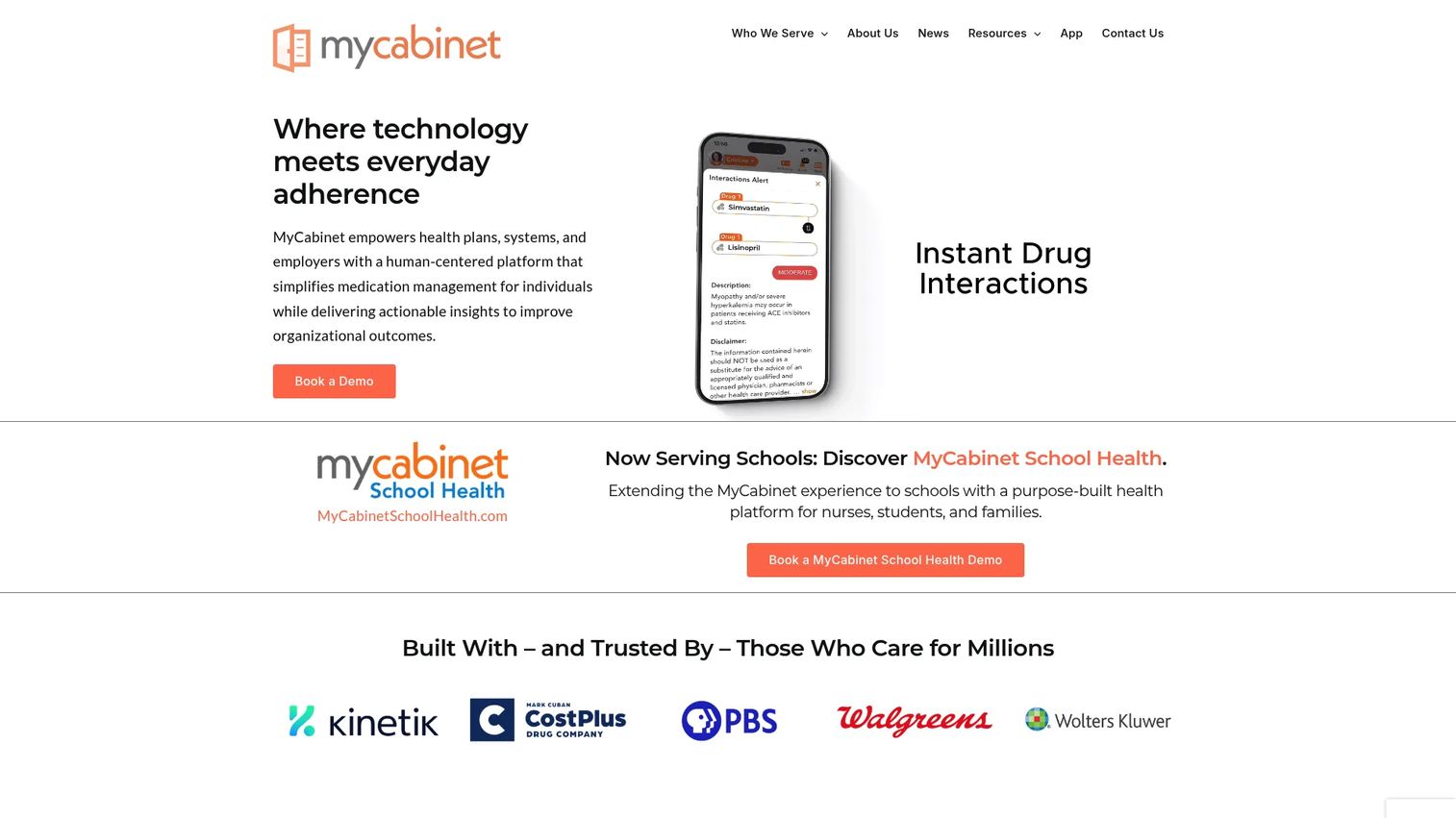
MyCabinet School Health is a web-based platform for nurses, school administrators, and families to manage student health records, medications, digital forms, and parent-to-school communication. Core capabilities include health record storage, real-time updates between home and school, digital form collection, SIS data integration, and customizable workflows and access levels. The platform supports compliance and audit-ready record keeping, and allows administrators to tailor health profiles and forms to their school's specific needs.
Best for: K-12 schools and childcare organizations that want a customizable school health platform covering records, medications, and parent communication.
Key features
- Student health records and medication management
- Digital health form collection with secure storage
- Real-time home-to-school communication
- SIS data integration
- Customizable access levels and health profiles
Why choose MyCabinet School Health: It suits schools that want flexibility in how workflows and forms are structured, particularly those with non-standard care plans or multiple programs running on different schedules. The SIS integration and parent communication tools address two of the most common friction points in school health administration.
MyCabinet School Health pricing: MyCabinet prices by quote through a demo process. Contact their team with details on school size, number of health offices, and required modules to get an accurate figure.
5. Blackbaud
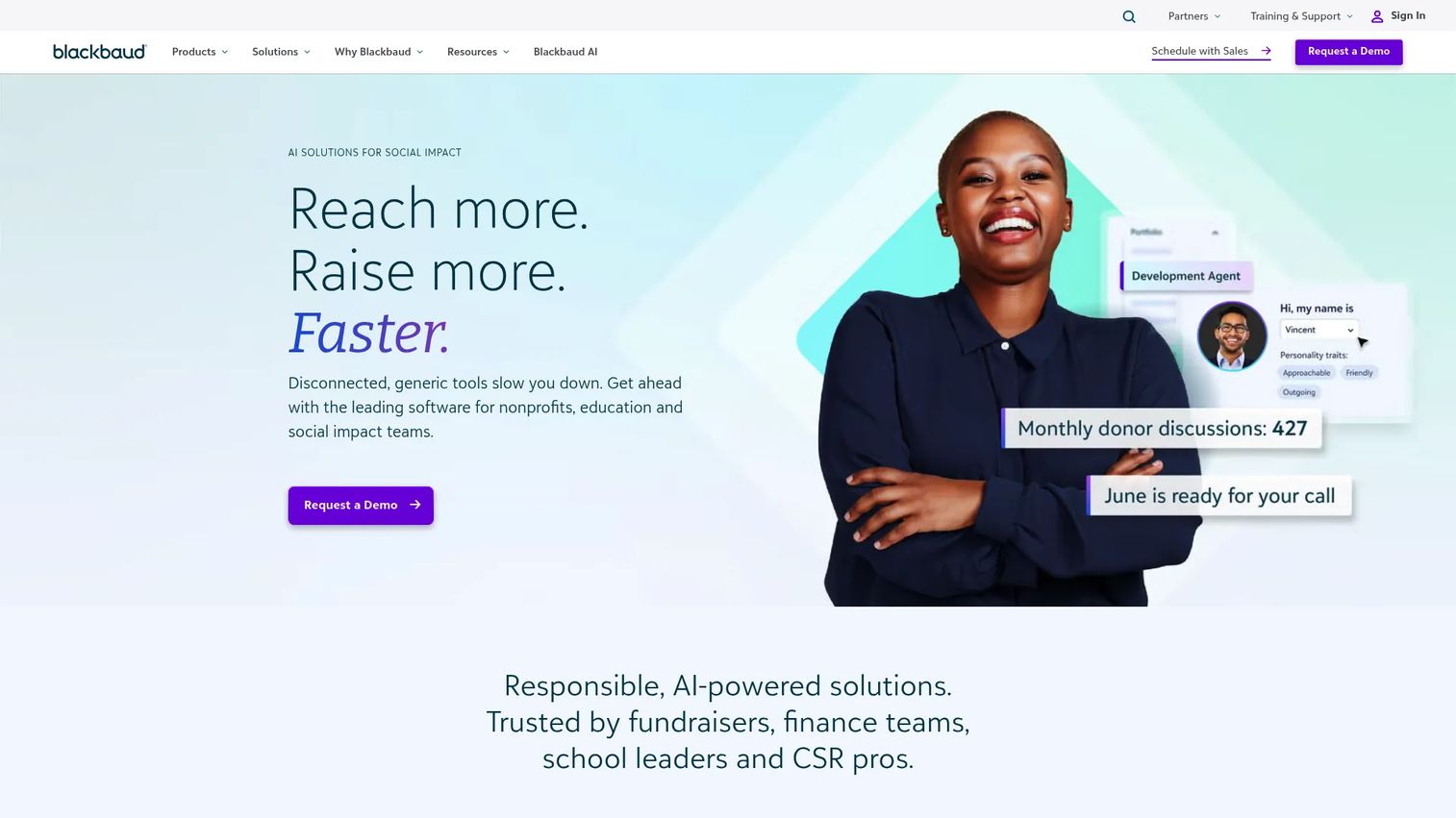
Blackbaud is a software platform serving nonprofits, educational institutions, and social-impact organizations. For K-12 independent schools, it offers school management tools that connect student data, admissions, fundraising, family portals, and administrative reporting. Health-related record capabilities exist within the broader student information context, not as a standalone health office module. Schools that already run Blackbaud for admissions, advancement, or fund accounting may find value in keeping student records in one ecosystem.
Best for: Independent schools already using Blackbaud for school management that want health data connected to the broader student information system rather than managed separately.
Key features
- School management platform with student data workflows
- Family portal and communication tools
- Administrative reporting and analytics
- AI-powered data insights
- Education management for K-12 schools
Why choose Blackbaud: The case for Blackbaud rests on consolidation, not health-office depth. If your school already runs Blackbaud for multiple functions and wants to avoid a separate health records vendor, verify which specific health workflows are native versus requiring a third-party integration. Ask the Blackbaud team directly what nurse-facing features are included and which require additional modules.
Blackbaud pricing: Blackbaud prices by quote based on organization size, selected modules, and support needs. Ask specifically which school management modules include health-related workflows.
G2 rating: 3.8/5
6. PowerSchool
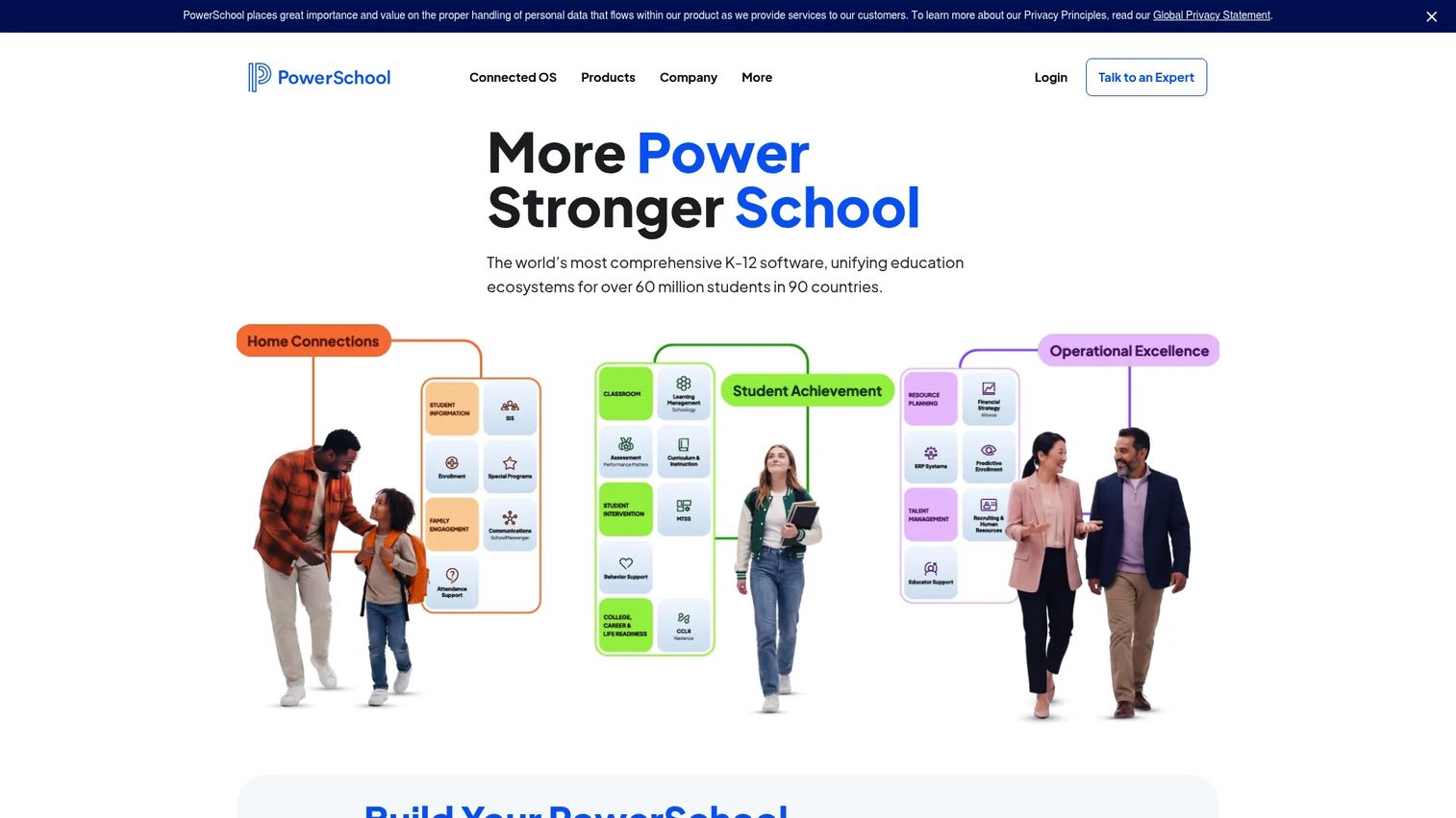
PowerSchool is a major K-12 education platform connecting students, teachers, administrators, and families across student data, learning, and school operations. Its Student Information System includes health-related modules covering attendance, enrollment, health records, and behavior alongside grading, analytics, and family engagement. According to a Nebraska School Health Data Report (2023), 95% of surveyed schools used a student information system, and 90% of those systems included a health module, with 97% of nurses using it to manage health data. PowerSchool is one of the dominant players in this SIS space.
Best for: K-12 districts that want student health data aligned with a single SIS rather than managed in a dedicated health records system.
Key features
- Student information management including health records
- Grading, attendance, and behavior tracking
- Family engagement with multilingual communication
- Data analytics, reporting, and interoperability
- AI assistance through PowerBuddy
Why choose PowerSchool: Districts that already use PowerSchool as their SIS may find value in activating health modules rather than procuring a separate platform. Before deciding, verify which nurse-specific workflows, such as eMAR, care plan management, and immunization registry connections, are native features versus add-ons or partner integrations. Health-office depth in SIS platforms varies considerably.
PowerSchool pricing: PowerSchool prices by quote. Ask which student health workflows require add-ons or partner integrations beyond the base SIS license.
G2 rating: 4.2/5
7. Reach Student Life
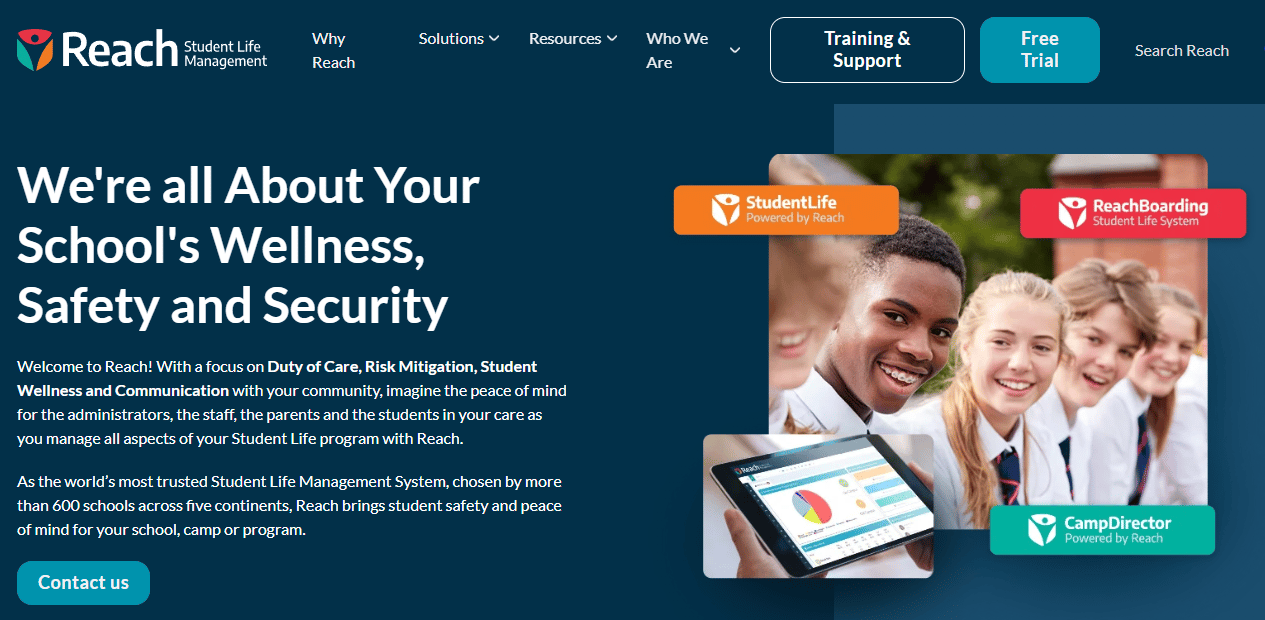
Reach Student Life is a student life management platform for boarding schools, residential programs, camps, and higher-education environments. It covers student tracking, attendance, roll calls, leave and permission management, pastoral care notes, wellness surveys, medication dispensary, and emergency response. Parent communication and messaging are built in, along with SIS, LMS, and eMAR integrations. The platform positions itself around student safety, location, and wellbeing visibility rather than clinical health record depth.
Best for: Boarding schools and residential education programs that need student care, attendance, and pastoral wellbeing managed in one platform across a 24-hour campus environment.
Key features
- Student tracking, attendance, and roll calls
- Pastoral care notes and wellness surveys
- Medication dispensary and visitor management
- Leave, permission, and transportation management
- Real-time messaging and emergency response tools
Why choose Reach Student Life: Residential schools operate differently from day schools: Student wellbeing, location accountability, and overnight care create workflows that general health office software does not address. Reach Student Life is built around that context. For schools where immunization records, care plan documentation, and clinical nursing workflows are the primary need, verify Reach's depth in those areas specifically before purchasing.
Reach Student Life pricing: Reach Student Life prices by annual per-student subscription. Contact the team for a quote based on campus size and required modules.
G2 rating: 2.8/5 (based on 3 reviews on G2)
8. Senior Systems
Senior Systems provides integrated school management software for independent PK-12 schools, covering student information, enrollment management, billing, and advancement. Student record management connects across departments, and parent-facing processes run through the platform alongside reporting and financial tools. Health-specific capabilities are not a primary focus of the Senior Systems product description; schools with complex nurse-office needs should verify which health workflows are native and which require an integration.
Best for: Independent PK-12 schools that want administrative student records connected across finance, academics, admissions, and advancement in one system.
Key features
- Student information and record management
- Enrollment and admissions management
- Billing and financial workflows
- Advancement tools
- Reporting across departments
Why choose Senior Systems: It fits schools that want a single administrative platform for the back-office functions that run alongside academics, not a health-first system. If health record management is a primary requirement, ask the Senior Systems team directly which health workflows are included and what a school would need to manage separately.
Senior Systems pricing: Senior Systems prices by quote. Ask which health record capabilities are native to the platform and which require additional integrations or third-party tools.
G2 rating: 3.8/5
9. TouchNet
TouchNet provides campus payment, commerce, and credential management for colleges and universities. Its core capabilities cover payment acceptance, online storefronts, program registration, tuition installment plans with real-time SIS integration, point-of-sale for dining and retail, and campus ID management. TouchNet is not a student health records platform. It appears in this list because campus payment and registration infrastructure sometimes connects to student services workflows, including health-related program fees, registration requirements, and student services transactions.
Best for: Colleges and universities that need integrated campus payment, commerce, and credential management as part of a broader student services operation.
Key features
- Campus payment acceptance and processing
- Online storefronts and secure program registration
- Tuition installment plans with real-time SIS sync
- Point-of-sale for campus retail, dining, and venues
- Campus credential and ID management
Why choose TouchNet: Choose TouchNet for the financial and registration infrastructure around student services, not for clinical health record management. If immunizations, medications, and care plans are the core need, a dedicated health records platform belongs in front of this one. TouchNet adds value when campus commerce, fee collection, and program registration are the operational gaps to close.
TouchNet pricing: TouchNet prices by quote. Ask about transaction fees, implementation timelines, and integration requirements with your existing SIS.
G2 rating: 3.1/5
Considerations when choosing student health records software
Nurse workflow fit
Map the daily nurse office routine before evaluating any platform: Visit notes, medication passes, allergy checks, care plan reviews, parent calls, screening workflows, and emergency responses. The right system makes common actions fast without requiring duplicate data entry across screens. Ask vendors to walk through a typical medication pass or a new student intake in a live demo, not a slide.
FERPA, HIPAA, and access control
Schools face privacy obligations that vary by funding source, the structure of health services delivery, and state law. Software evaluation should cover practical controls: Role-based access permissions, audit logs, data encryption, retention policies, and how data is shared with outside parties. Assess specific legal obligations with your own compliance team or counsel rather than relying on a vendor's compliance marketing.
SIS and registry interoperability
A student health platform that cannot sync with your existing SIS creates a parallel data problem. Ask vendors to demonstrate roster sync, demographic updates when a student transfers or changes grade, immunization registry connections for your state, and how data conflicts are handled. A claimed integration that requires manual CSV imports weekly is not the same as real interoperability.
Medication, immunization, and emergency readiness
Verify eMAR workflows in detail: How medication doses are documented, how administration errors are flagged, what allergy information appears at the medication screen, and how field trip or off-campus access works. Immunization tracking should handle your state's specific requirements, including exemption types and reminder workflows. Emergency access should be testable before you commit.
Implementation effort and parent adoption
Health records projects fail when families do not submit forms or staff do not adopt the workflow. Ask vendors for specific onboarding timelines, training formats, migration support for existing paper records, and automated parent reminder systems. Request references from schools of similar size and complexity that have gone through implementation in the past 12 months.
Conclusion
The nine tools in this guide cover a wide range from dedicated school nurse platforms to campus payment infrastructure. Picking the wrong category of tool is the most common procurement mistake in this space.
For schools where health office workflows are the primary need, Magnus Health and SchoolDoc are the strongest dedicated options. Magnus Health fits complex K-12 environments with multiple buildings, athletics, and emergency access requirements. SchoolDoc works well for schools, childcare programs, and youth organizations that want health records, eMAR, and registration combined from day one.
Patagonia Health serves districts that treat school health as clinical work, particularly where Medicaid billing and formal health reporting are part of the picture. MyCabinet School Health suits schools that want flexible, customizable health record workflows with strong parent communication.
PowerSchool and Blackbaud belong on the shortlist only when the decision is really about SIS alignment, not health office depth. Reach Student Life serves boarding and residential schools. Senior Systems fits independent schools that want a unified administrative platform. TouchNet belongs in conversations about campus payments, not clinical records.
Shortlist two or three platforms, map them against your nurse's actual daily workflow, verify compliance posture with your own team, test SIS integration in a real demo environment, and ask for implementation references from schools of similar size.
FAQs
Student health records software is a digital platform schools use to collect, store, and manage student health information, including immunizations, medications, allergies, care plans, screenings, and parent-submitted health forms. It replaces paper files and disconnected spreadsheets with structured, searchable records tied to each student's profile. Common users include school nurses, health aides, administrators, and parents.
A Student Information System manages academic data: Enrollment, grades, attendance, schedules, and demographics. Student health records software focuses specifically on nurse-office workflows such as medication administration, immunization tracking, clinic visit documentation, and care plans. Many schools use both, with varying degrees of integration between them. Some SIS platforms include a health module, but the depth of those modules varies significantly.
Privacy obligations for school health records depend on the school type, funding source, how health services are structured and delivered, and applicable state law. FERPA governs most student records at educational institutions. HIPAA may apply in specific circumstances, such as when a school operates a separately structured health clinic. Schools should evaluate their specific obligations with their own legal counsel rather than relying on a vendor's compliance labeling.
Start with visit documentation and clinic log workflows, immunization tracking with flag and reminder capabilities, eMAR for documented medication administration, allergy and condition visibility at the point of care, and parent communication tools. Speed matters: Nurses use this system during active student care, so common actions should require minimal clicks. Emergency access and off-campus availability are important second-tier requirements.
Pricing in this category is driven by school size, number of health offices, selected modules, implementation scope, support level, and integration requirements. Most dedicated health records platforms price by quote rather than displaying a fixed rate. SchoolDoc is a notable exception, with plans starting at $425 per month. Broader school management platforms like Blackbaud and PowerSchool also price by quote based on the full scope of modules selected.
Many platforms advertise SIS integrations, but integration depth varies considerably. Some connections offer real-time roster sync, automated demographic updates, and single sign-on. Others require manual imports or periodic batch files. Before committing to any platform, ask vendors to demonstrate the integration with your specific SIS in a live environment and clarify how data conflicts are resolved when records differ between systems.
An eMAR, or electronic medication administration record, is a digital log that documents each medication dose given to a student, including the medication name, prescribed dose, time of administration, the staff member who administered it, and any observations or incidents. It replaces paper MAR logs and provides an auditable record of medication management in the school health office.
Start by inventorying all current form types and identifying which health data needs to be digitized first. Prioritize immunization records and active medication orders, since those affect daily operations most directly. Train nurses before rolling out parent-facing features, and pilot with one school or program before expanding district-wide. Treat parent communication as a separate launch workstream, with clear instructions, deadlines, and follow-up reminders built into the onboarding plan.