Your hiring plan says 20 new employees this year. Your process still runs on spreadsheets, calendar threads, and whoever remembered to ping the hiring manager last Tuesday.
That gap is expensive. According to iHire (2025), 25.9% of employers now use AI in recruitment, up from 14.7% in 2024, which means your competitors are building faster, more structured hiring systems while you're still chasing feedback over Slack. The recruitment software market itself reached $2.54 billion in 2025 and is forecast to hit $4.05 billion by 2030 (The Business Research Company, 2026), which tells you something about how seriously the category is being taken.
Recruiting software creates a system around open roles, candidate pipelines, interview coordination, offer workflows, and funnel reporting. The right platform removes the founder from routine hiring decisions, gives your new VP of Talent something to work with on day one, and produces metrics that survive a board question about headcount efficiency.
This guide covers 21 platforms across the full recruiting stack.
What's inside
This guide is for Series B SaaS founders, Heads of People, and operations leaders building a repeatable hiring system. Tools were selected and ordered by:
- Workflow coverage: Does it manage the end-to-end hiring process or fill a specific gap?
- Adoption reality: Will hiring managers and department leads actually use it?
- Integration fit: Does it connect with your HRIS, payroll, calendar, and CRM?
- Reporting depth: Can it produce metrics your leadership team and board can act on?
- Stack fit: Does it reduce tool count or add to it?
The first six entries receive fuller coverage because they carry the strongest search relevance for most SaaS hiring teams.
TL;DR
- Best for a structured core ATS: Greenhouse, with structured hiring workflows, interview kits, and hiring plan visibility
- Best for HR and recruiting combined: BambooHR, with employee records, onboarding, and payroll in one platform
- Best for small team implementation: JazzHR, with straightforward applicant tracking starting at $1,000/year
- Best for recruiting automation: Workable, with AI sourcing, job distribution, and HR tools from $299/month
- Best for global hiring operations: Deel Hire, with EOR, contractor, and ATS capabilities across multiple countries
- Best for recruiting agency workflows: Recruit CRM, with ATS, CRM, outreach, and billing built for placement operations
What is recruiting software?
Recruiting software is a category of hiring technology that helps companies source candidates, manage applications, coordinate interviews, evaluate talent, extend offers, and measure hiring performance.
The category spans several overlapping product types:
Applicant tracking system (ATS): Stores candidate profiles, application stages, interview feedback, and offer status. The core record of your hiring pipeline. According to HR.com (2025), 78% of organizations use an applicant tracking system.
Recruiting CRM: Manages outbound candidate relationships, talent pipelines, and engagement sequences. Distinct from an ATS in that it handles candidates before they apply. See our guide to candidate relationship management software for more context.
Hiring workflow automation: Covers job posting, interview scheduling, reminders, scorecards, approvals, and offer letters.
Candidate sourcing tools: Distribute job listings, aggregate profiles from LinkedIn and GitHub, or run outbound outreach. Our applicant sourcing software guide covers the sourcing layer specifically.
Recruiting analytics: Source quality, funnel conversion, time to fill, time to hire, offer acceptance rates, and stage aging.
Category boundaries:
| Category | Primary job | Typical owner | Best fit |
|---|---|---|---|
| Applicant tracking system | Manage candidates through hiring stages | Recruiters and hiring managers | Companies formalizing hiring |
| Recruiting software | Coordinate sourcing, applications, interviews, offers, and reporting | Talent, People, and operations | Companies running repeatable hiring |
| HR software | Manage employees after hiring | People and HR operations | Companies needing a broader employee system |
Many vendors now combine two or more of these categories. The right choice depends on where your biggest gap is today.
When to use recruiting software
Remove the founder from routine hiring decisions
Structured requisitions, approval workflows, and automated reminders mean the founder stops being the person who moves things forward. The platform carries the operational load so your VP of Talent can run the process without routing every question back to you.
Give hiring managers a workflow they'll actually use
Department leaders need to see candidates, submit structured feedback, and track next steps without leaving their tools or attending a meeting. Platforms with clean hiring manager portals and interview kits close that gap.
Connect hiring plans to board-level operating metrics
Time to fill, offer acceptance rate, source quality, and recruiter capacity are hiring metrics your leadership team can act on. Connect recruiting data to your HRIS and finance stack and you can answer headcount variance questions in a board meeting without scrambling.
Recruiting software comparison
The table below is a screening tool, not a final buying decision. Use it to identify candidates for a more detailed workflow evaluation. Pricing reflects verified figures from each vendor's pricing page. G2 ratings are sourced from live G2 listings. Where pricing is not publicly displayed, the table notes custom pricing.
Also worth reviewing: Our roundup of AI recruiting software and candidate engagement software for specialized tools in those areas.
| # | Product | Best for | Key differentiator | Pricing | G2 rating |
|---|---|---|---|---|---|
| 1 | Greenhouse | Structured ATS at scale | Interview kits, scorecards, hiring plan visibility | Custom pricing | 4.4/5 |
| 2 | BambooHR | HR plus recruiting combined | Employee records, payroll, benefits, and hiring in one platform | From $10.25/employee/month | 4.4/5 |
| 3 | JazzHR | Small and growing teams | Straightforward ATS with job posting and assessments | From $1,000/year | 4.4/5 |
| 4 | Recruitee | Collaborative hiring teams | Candidate pipelines, career sites, and 200+ integrations | Custom pricing | N/A |
| 5 | Workable | Broad recruiting automation | AI sourcing, job distribution to 200+ boards, HR tools | From $299/month | N/A |
| 6 | Pinpoint | Insurance risk intelligence | Predictive analytics for P&C carriers | Custom pricing | N/A |
| 7 | Factorial | HR suite with recruiting module | Time, payroll, HR, and recruiting from $8/user/month | From $8/user/month | 4.4/5 |
| 8 | Journeyfront | High-volume hiring teams | Assessments, structured interviews, and post-hire analytics | Custom pricing | 4.2/5 |
| 9 | TE Recruit | Recruiting and staffing agencies | ATS plus CRM with job board posting | From $79/user/month | N/A |
| 10 | Checkr | Background screening | Per-report pricing with 100+ ATS integrations | From $29.99/report | 4.5/5 |
| 11 | Deel Hire | Global and cross-border hiring | ATS plus EOR, contractor, and PEO services | From $14/worker/month | 4.7/5 |
| 12 | Manatal | SMB recruiting teams | AI scoring, resume parsing, and CRM from $15/user/month | From $15/user/month | 4.7/5 |
| 13 | Recruit CRM | Recruitment agencies | ATS, CRM, outreach, and billing for placement firms | From $95/user/month | 4.8/5 |
| 14 | ClearCompany | Recruiting through onboarding | Talent management and workforce analytics | Custom pricing | 4.6/5 |
| 15 | Screenz | Automated candidate screening | AI-led structured interviews with scoring and multilingual support | From $749/month | N/A |
| 16 | VidCruiter | Structured video interviews | Pre-recorded and live interviews with rating guides | Custom pricing | 4.8/5 |
| 17 | Mitratech Circa | OFCCP compliance and DEI recruiting | Compliance tracking plus 15,000+ community outreach connections | Custom pricing | 4.2/5 |
| 18 | Truffle | Outbound recruiting motions | Candidate sourcing and pipeline organization | N/A | N/A |
| 19 | AvaHR | Small businesses without a dedicated recruiter | AI candidate scoring from $119/month | From $119/month | 4.7/5 |
| 20 | Gem | Outbound sourcing at scale | AI sourcing across 800M+ profiles plus CRM and ATS | From $130/month | 4.7/5 |
| 21 | PowerToFly | Diverse and AI-specialized talent | Domain-expert sourcing plus job posting at $499/month per posting | From $499/month per posting | 4.8/5 |
Best recruiting software for 2026
1. Greenhouse
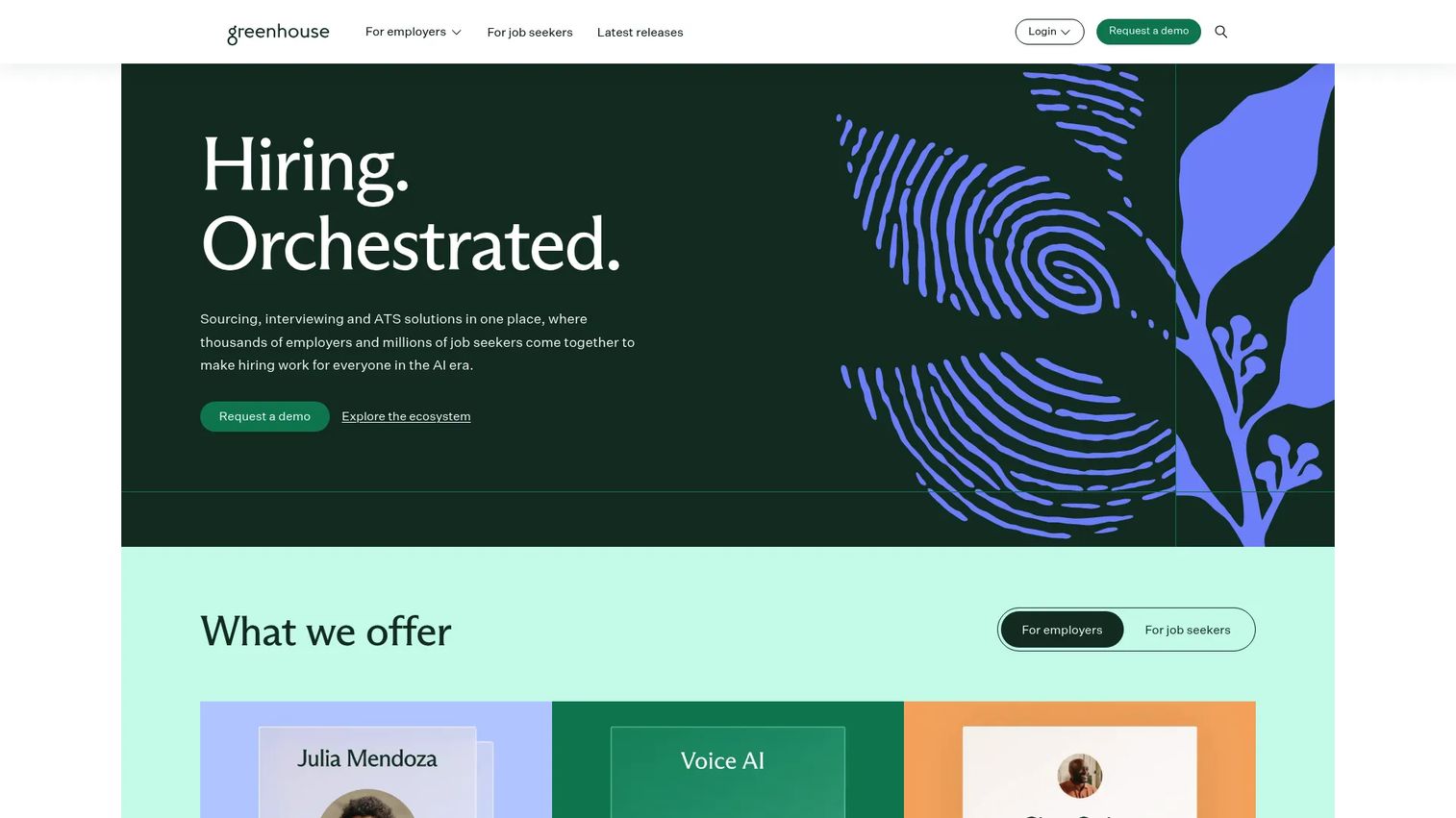
Greenhouse is an end-to-end hiring platform built around structured recruiting. It manages sourcing, applicant tracking, interview coordination, offer management, and onboarding, with governance controls and AI tools layered throughout. Greenhouse is designed for organizations running repeatable hiring across multiple teams and job families.
Best for: Companies formalizing hiring across multiple departments and needing structured workflows from requisition to offer.
Key features
- Structured interview kits, scorecards, and AI-generated interview notes
- Hiring plan visibility and requisition management
- Talent sourcing and candidate relationship management
- Reporting, analytics, and hiring funnel dashboards
- Onboarding and new hire workflows
- Candidate fraud detection and verification
Why choose Greenhouse: If you're a Series B founder handing recruiting off to a new VP of Talent, Greenhouse gives them a system to work within rather than a blank slate to design. The structured approach also makes it easier to audit where hiring slows and why.
Greenhouse pricing: Greenhouse offers Core, Plus, and Pro plans. Pricing is customized to hiring volume and organizational scope, so you'll need to contact them for a quote.
G2 rating: 4.4/5
2. BambooHR
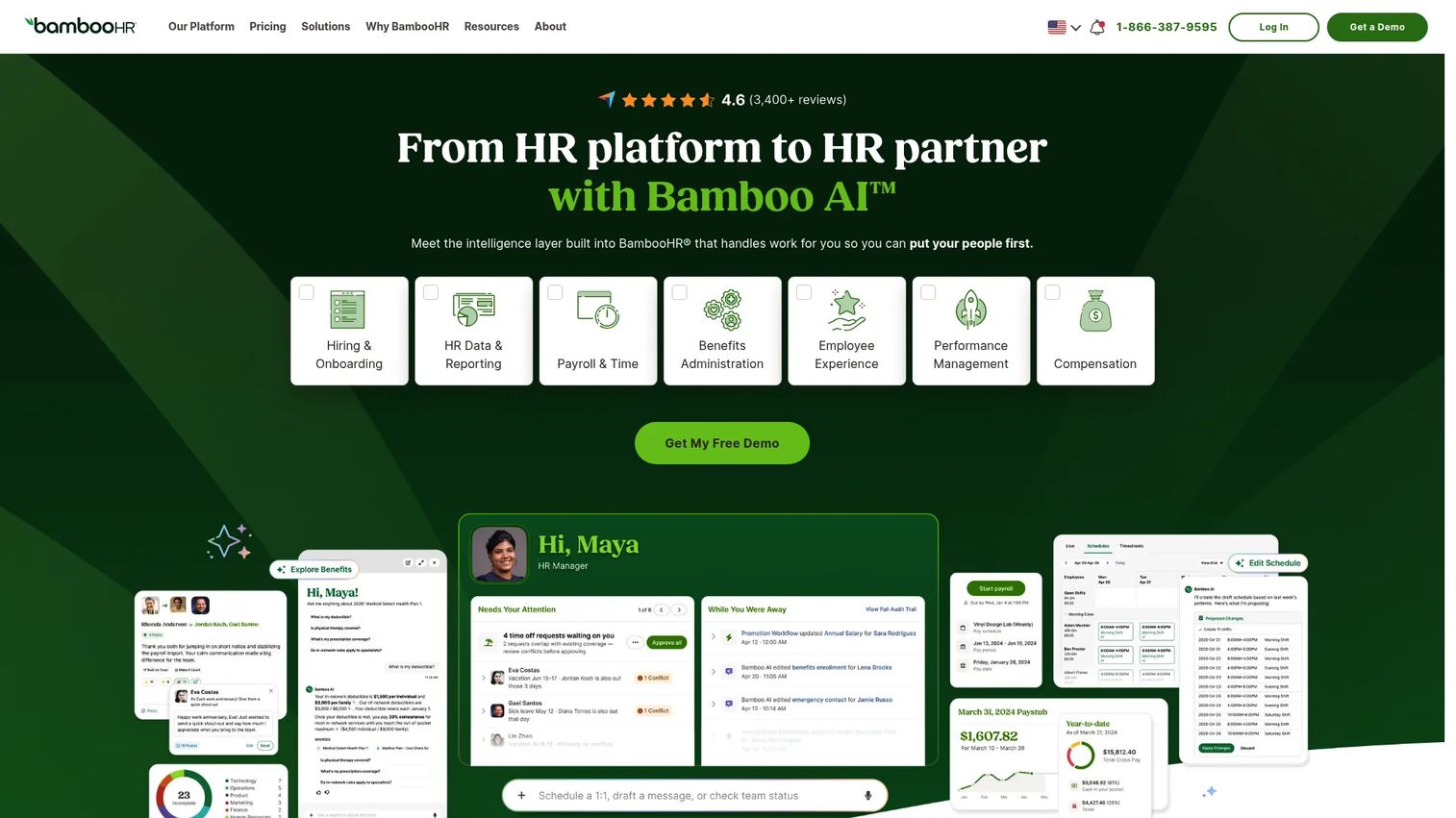
BambooHR combines recruiting, employee records, payroll, benefits, time tracking, and performance management in one platform. Rather than separating the hiring system from the people system, BambooHR keeps the full employee lifecycle in one place, so a new hire transitions from applicant to employee without a manual data handoff.
Best for: Growing companies consolidating recruiting and people operations into a single platform.
Key features
- Recruiting, applicant tracking, and onboarding
- Employee records, org charts, and document management
- Payroll, benefits, and time tracking
- Performance management and recognition
- Compensation management on the Elite plan
- Compliance and global employment support
Why choose BambooHR: The value for a Series B team is consolidation. You get recruiting and HR in one system, which simplifies reporting and reduces the number of integrations you're managing. If you're hiring a Head of People and want to give them one platform to run everything through, BambooHR is a strong candidate.
BambooHR pricing: Plans start at $10.25 per employee per month (Core), rising to $17.50 (Pro) and $25 (Elite) per employee per month. Minimum billing is $250, $425, or $650 per month for teams of 25 or fewer. A free trial is available.
G2 rating: 4.4/5
3. JazzHR
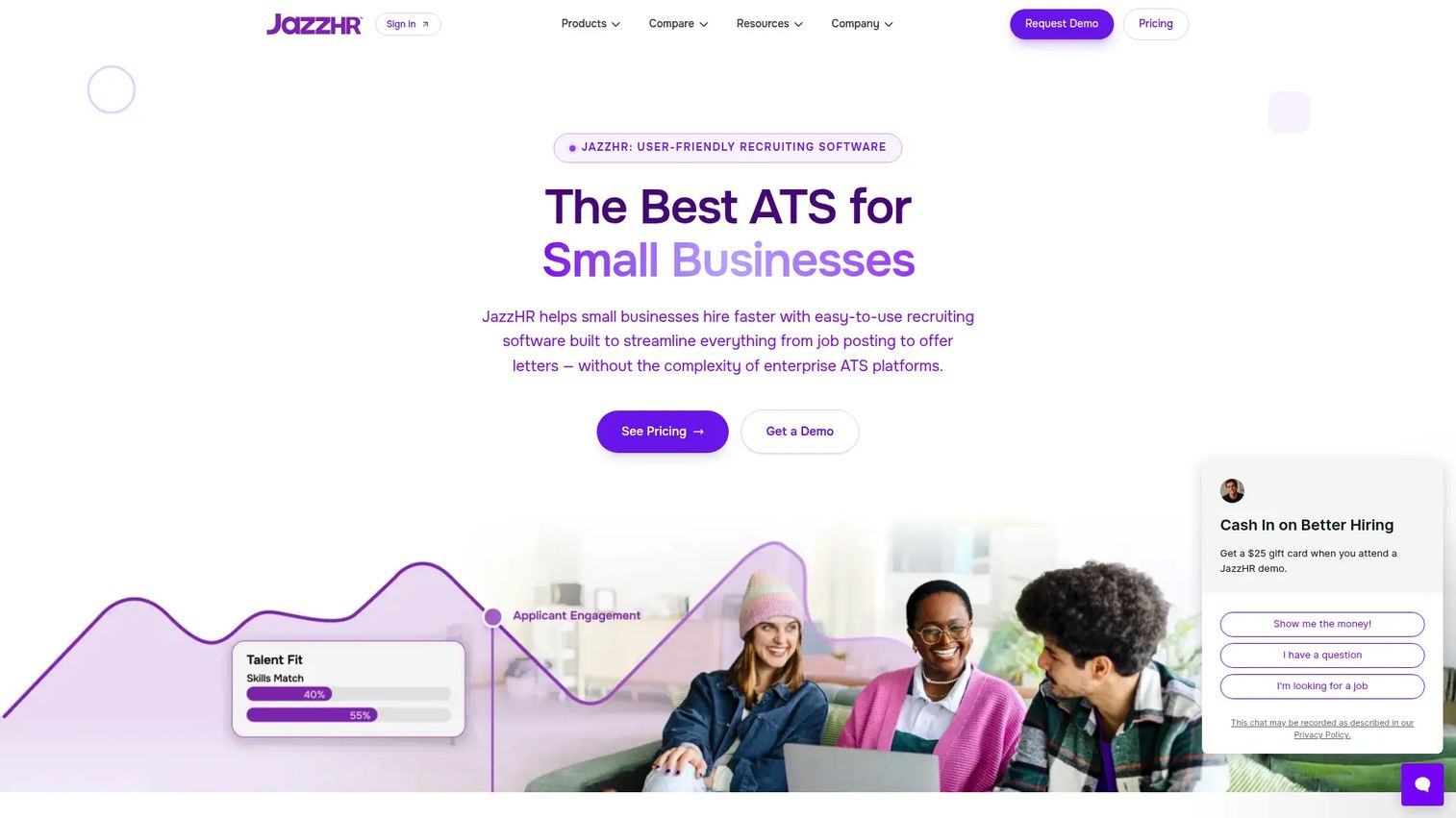
JazzHR is an applicant tracking and recruiting platform built for small and growing businesses. It covers job posting, candidate pipelines, collaborative hiring, assessments, and offers. The platform is designed for teams that don't have a dedicated recruiting function and need a structured starting point without a long implementation.
Best for: Small and growing businesses replacing spreadsheet-based hiring with a structured ATS.
Key features
- Job posting and distribution to job boards
- Applicant tracking and candidate pipeline management
- Collaborative hiring, interviews, and structured assessments
- Employer branding and customizable career pages
- Offers and eSignatures (Pro plan)
- Advanced visual reporting (Pro plan)
Why choose JazzHR: JazzHR is worth evaluating if your immediate need is a clean applicant record and a process hiring managers can follow. It's focused enough that a small people team can configure it quickly. Note that JazzHR excludes staffing agencies, franchises, multi-location businesses, and companies over 250 employees from its standard plans.
JazzHR pricing: Annual plans start at $1,000/year (Hero), rising to $3,480/year (Plus) and $5,508/year (Pro). A free trial is available.
G2 rating: 4.4/5
4. Recruitee
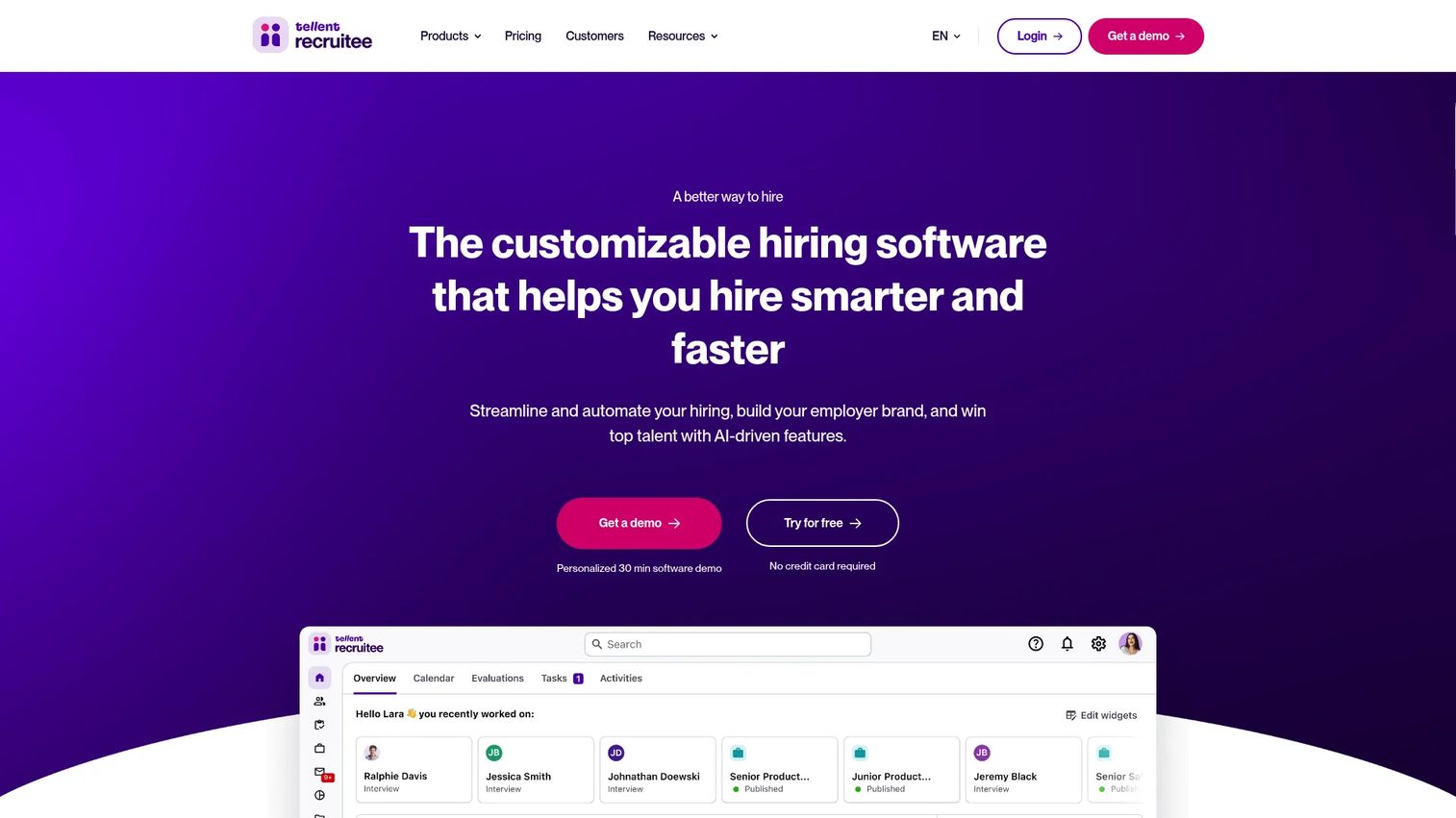
Recruitee is a collaborative applicant tracking and hiring platform focused on team-based recruiting workflows. It offers candidate pipelines, career site building, AI screening tools, workflow automation, and 200+ integrations. Annual billing includes a 20% discount over monthly.
Best for: Distributed recruiting teams that need collaborative hiring pipelines and a customizable career site.
Key features
- Candidate pipelines with AI screening and matching
- Career site builder and multi-channel job posting
- Team collaboration and structured evaluation workflows
- Workflow automation and 200+ integrations
- GDPR compliance and data protection controls
- Reporting dashboards and recruiting analytics
Why choose Recruitee: Recruitee fits teams where multiple people, recruiters, hiring managers, and founders, need to collaborate on candidates without losing track of where each one stands. The integration depth also matters if you're connecting to a broader tech stack.
Recruitee pricing: Start, Advance, and Optimize plans are available. Annual contracts include a 20% discount.
5. Workable
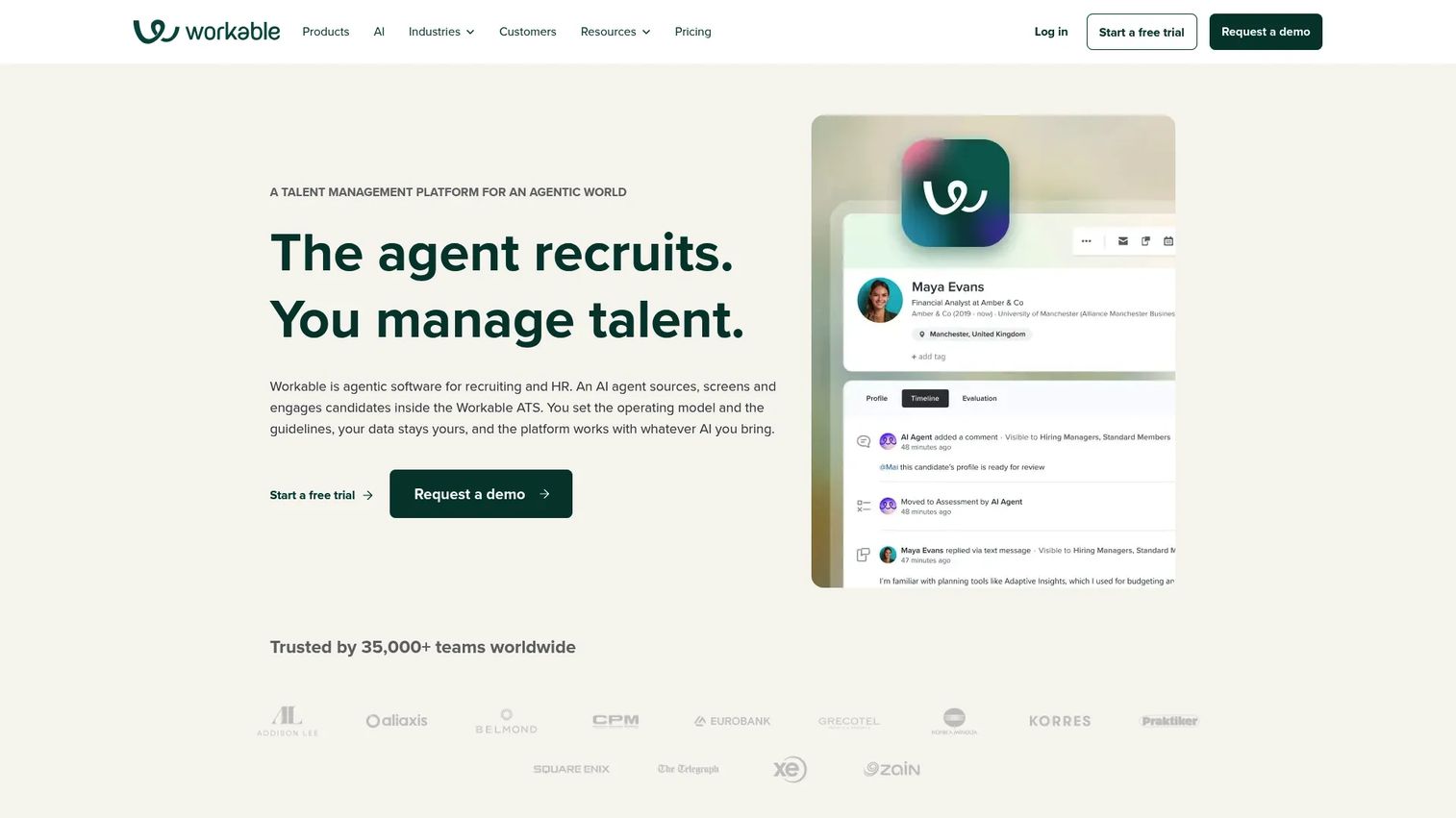
Workable covers applicant tracking, AI-powered sourcing, job distribution to 200+ job boards, interview coordination, offer management, and HR workflows including onboarding, employee records, and time off. It's one of the more complete platforms on this list for a team that wants recruiting and people operations without buying two separate tools.
Best for: Companies wanting recruiting automation and employee management in one product.
Key features
- Applicant tracking with customizable hiring pipelines
- AI-powered candidate sourcing and resume screening
- Job distribution to 200+ boards and career page builder
- Interview kits, scorecards, and scheduling
- Onboarding, employee records, org charts, and time off
- Talent CRM and mobile applications
Why choose Workable: Workable's combination of AI sourcing and HR functionality makes it a practical choice for a team that's outgrowing spreadsheets and doesn't want separate systems for recruiting and people operations. The 15-day free trial lets you evaluate the workflow before committing.
Workable pricing: Standard plan starts at $299/month (or $3,588/year) for 1 to 20 employees. A 15-day free trial is available. Essential HR features are included free.
6. Pinpoint
Pinpoint offers AI-driven risk intelligence and predictive analytics for property-and-casualty insurers. Its capabilities cover marketing, underwriting, claims, and ratemaking rather than general talent acquisition. It is included here as listed in the brief but is not a general recruiting platform.
Best for: Property-and-casualty insurance carriers building predictive risk workflows.
Key features
- Marketing intelligence for lead profitability and conversion likelihood
- Underwriting automation including eligibility screening and renewal likelihood
- Predictive ratemaking for filed and non-admitted pricing
- Claims optimization for litigation, fraud, and large-loss risk
- Custom Discovery Models deployable via API or batch workflows
Why choose Pinpoint: Relevant only for insurance carriers needing predictive risk analytics. If you are evaluating recruiting software for a general SaaS hiring process, skip to the next entry.
Pinpoint pricing: Custom pricing. Contact Pinpoint directly for a quote.
7. Factorial
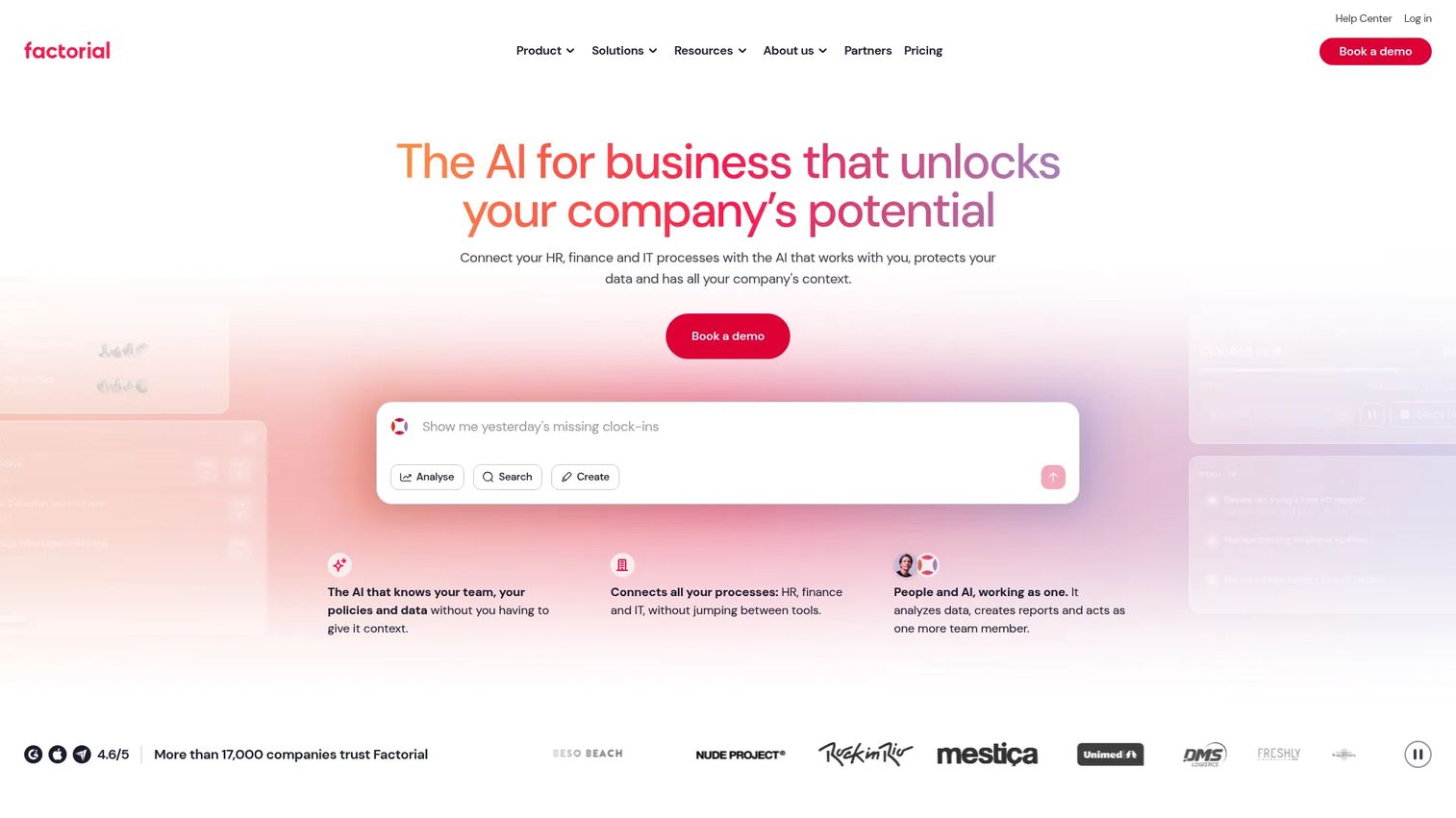
Factorial is a modular HR platform covering time off, time tracking, payroll, performance, shifts, recruitment, expenses, training, and IT inventory. The recruiting module sits alongside broader HR operations rather than standing alone. This matters if you want a single system for people operations.
Best for: Companies seeking an HR suite that includes recruiting as one module among several.
Key features
- Applicant tracking and recruitment module
- Time off and absence management
- Time tracking and shift management
- Payroll and payslip distribution
- Document management and digital signatures
- Reports, analytics, and employee portal
Why choose Factorial: Factorial's modular structure means you pay for what you need and add capabilities as the company grows. The starting price of $8 per user per month is competitive for teams combining HR and recruiting in one place. Worth evaluating if you want to consolidate tools rather than add one.
Factorial pricing: Starts at $8 per user per month. Additional modules are priced separately.
G2 rating: 4.4/5
8. Journeyfront
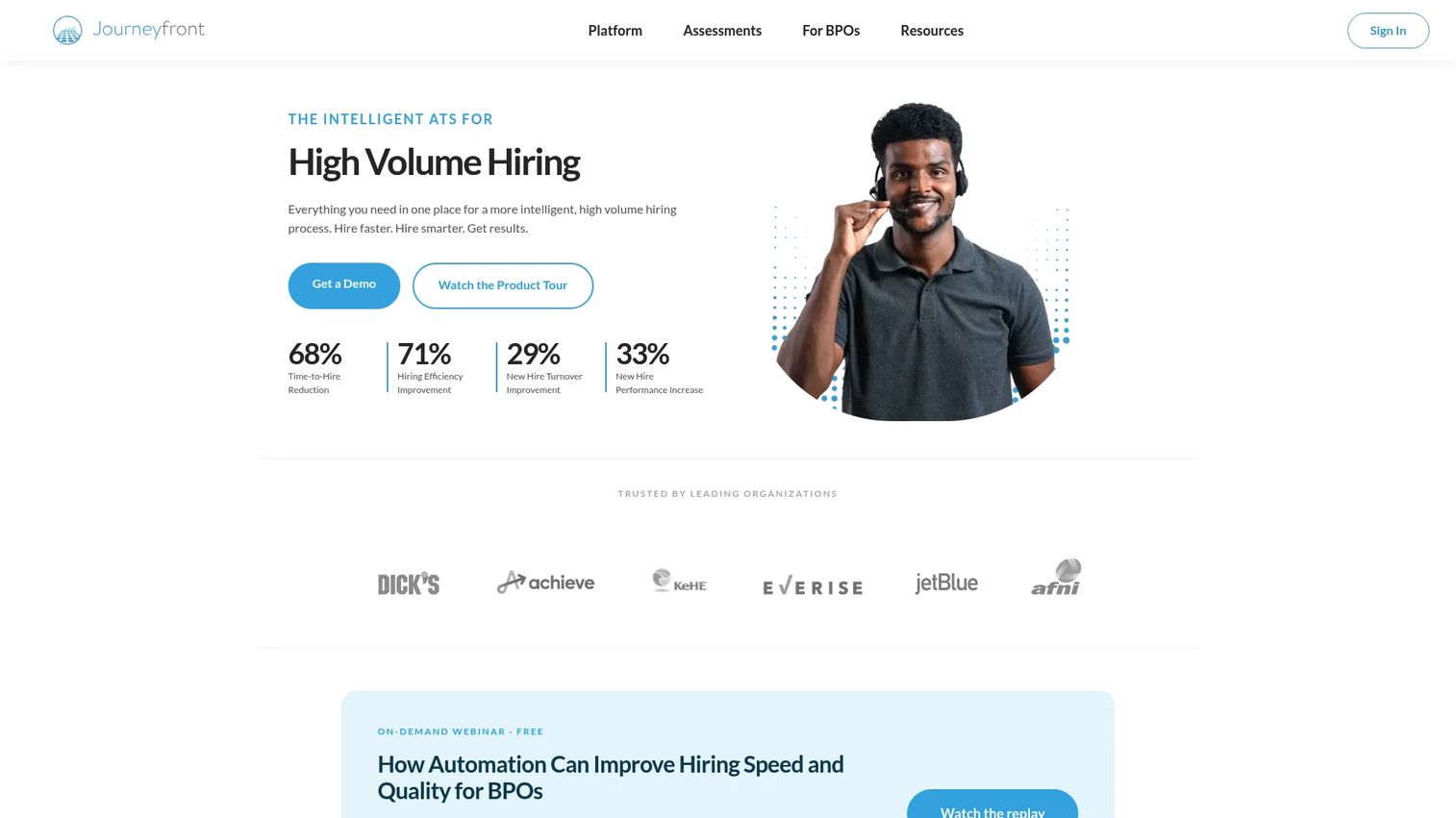
Journeyfront is an intelligent hiring platform combining applicant tracking, pre-hire assessments, structured interviews, workflow automation, and post-hire analytics. It's built for high-volume hiring teams, particularly in BPO and contact center environments, where prediction and consistency matter more than feature breadth.
Best for: High-volume recruiting teams that need integrated assessments, structured interviews, and post-hire outcome tracking.
Key features
- Applicant sourcing, screening, and AI-powered ranking
- Predictive behavioral assessments and skills tests
- Automated hiring workflows and candidate communications
- Structured interviews with scorecards and predictive insights
- Funnel, source effectiveness, and post-hire analytics
Why choose Journeyfront: Journeyfront's post-hire analytics close the loop between hiring decisions and employee outcomes. If you're at a stage where you want to know whether your assessment process predicts performance, Journeyfront has that capability built in.
Journeyfront pricing: Standard and Pro plans, priced per employee headcount. Contact Journeyfront for a quote.
G2 rating: 4.2/5
9. TE Recruit
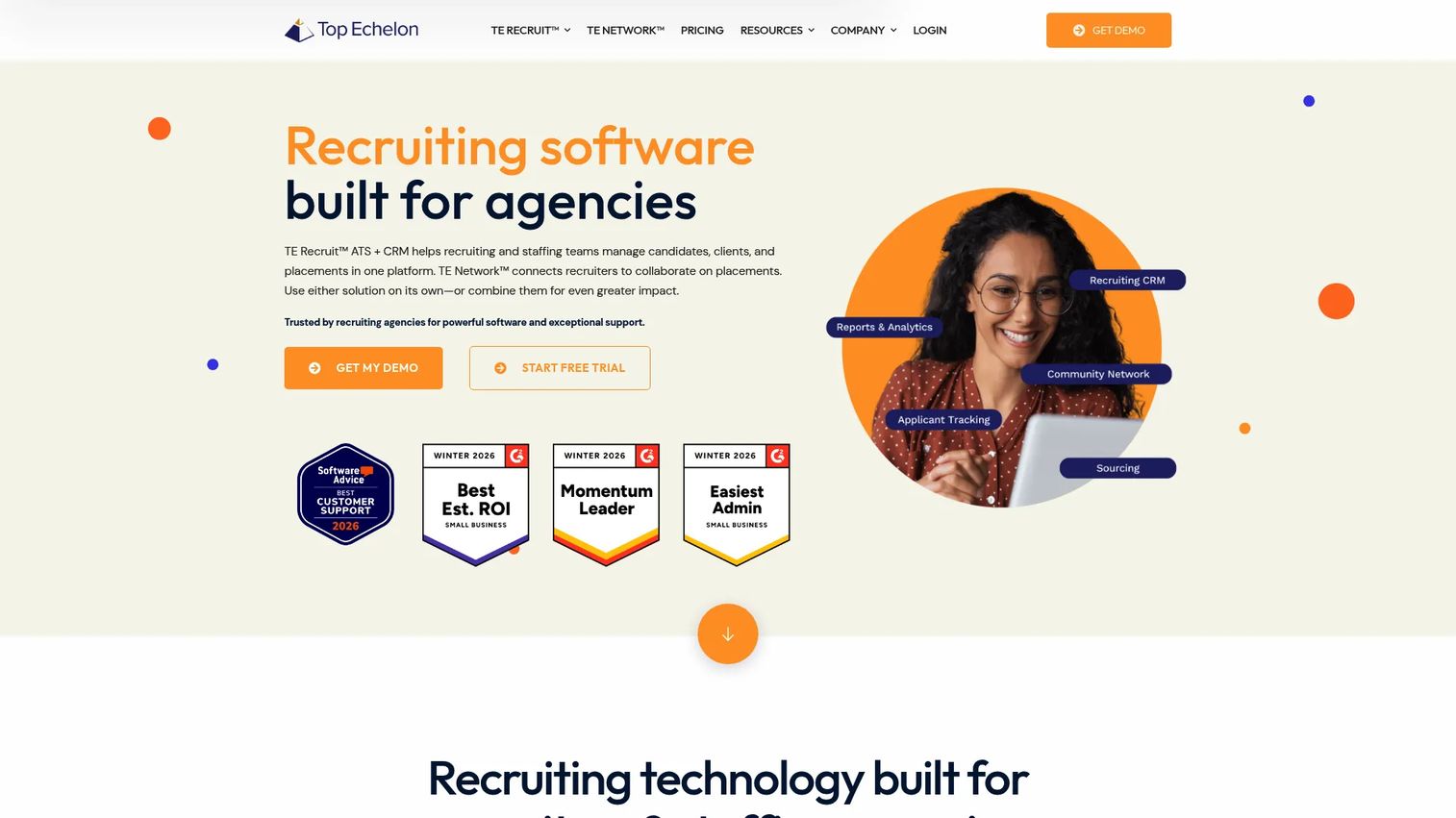
TE Recruit is an ATS and recruiting CRM built for recruiting and staffing agencies. It combines applicant tracking, client management, job order tracking, one-click job board posting, communication tools, and automation in one platform.
Best for: Boutique recruiting firms and staffing agencies needing a combined ATS and CRM.
Key features
- Applicant tracking and candidate pipeline management
- Recruiting CRM for clients, job orders, and placements
- One-click job board posting to multiple boards
- Workflow automation and AI-powered functionality
- Integrated email, calendar, and SMS
- Reporting and analytics
Why choose TE Recruit: Built specifically for agency workflows rather than in-house recruiting. The combination of ATS and CRM in one platform avoids the need to stitch together separate tools for candidate and client management.
TE Recruit pricing: Standard plan at $79/user/month (annual) or $95/month (monthly). Professional plan at $95/user/month (annual) or $115/month (monthly). A free trial is available.
10. Checkr
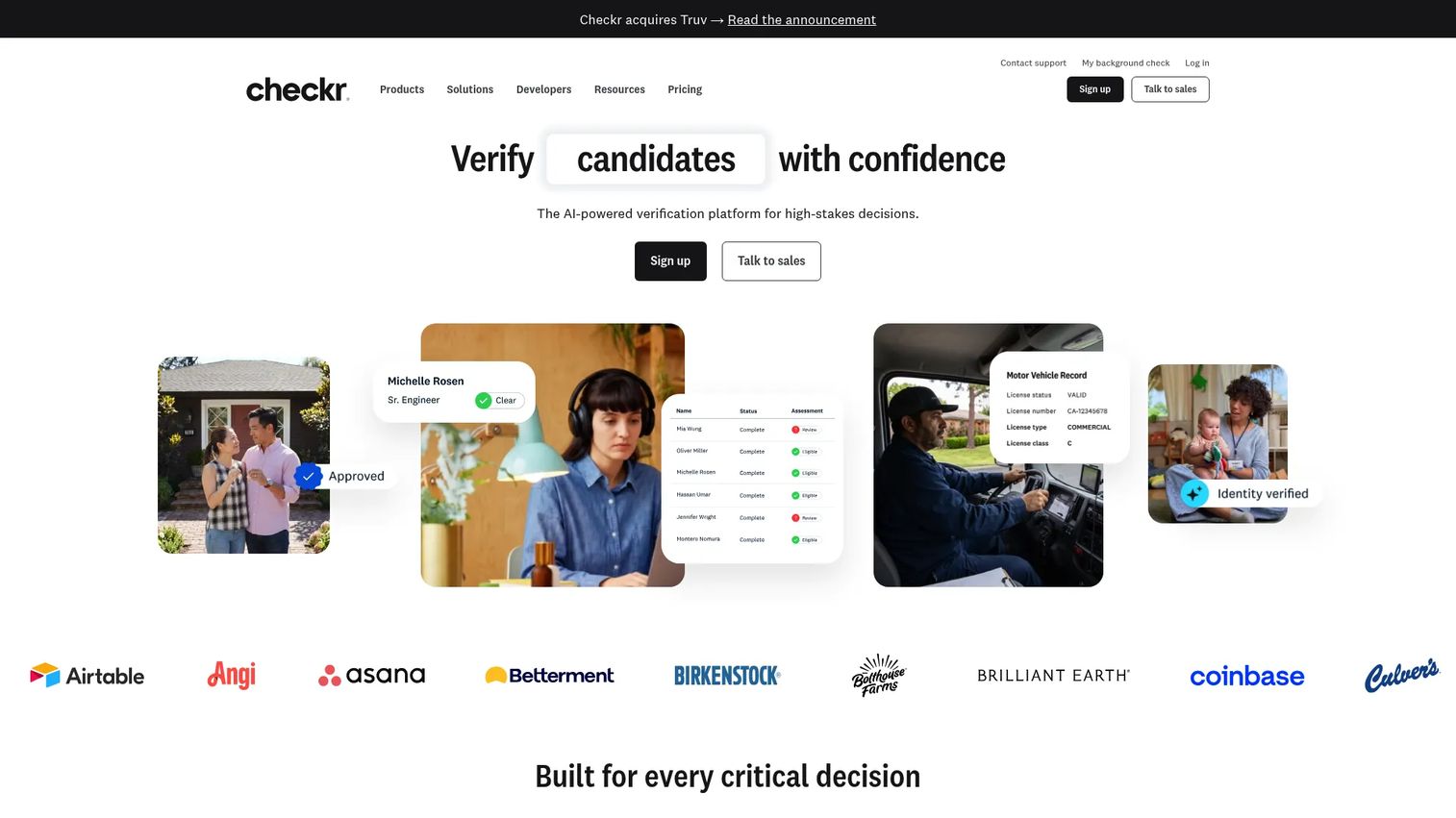
Checkr is a background screening platform, not a full ATS. It handles criminal checks, identity verification, employment history, education, drug testing, and motor vehicle records. Its value in a recruiting stack comes from the 100+ pre-built integrations with ATS and HRIS systems, so it plugs into your existing workflow rather than replacing it.
Best for: Organizations adding background screening infrastructure to an existing ATS.
Key features
- Criminal, identity, employment, and education checks
- 100+ pre-built ATS and HRIS integrations
- Flexible API for embedded screening workflows
- Compliance engine and machine-learning charge classification
- Drug testing and motor vehicle record checks
Why choose Checkr: Checkr makes sense when you need screening at volume with clean integration into your ATS. It complements a core recruiting platform rather than replacing it.
Checkr pricing: Pay-as-you-go. Basic at $29.99/report, Essential at $59.99/report, Complete at $94.99/report. Personal profiles are free.
G2 rating: 4.5/5
11. Deel Hire
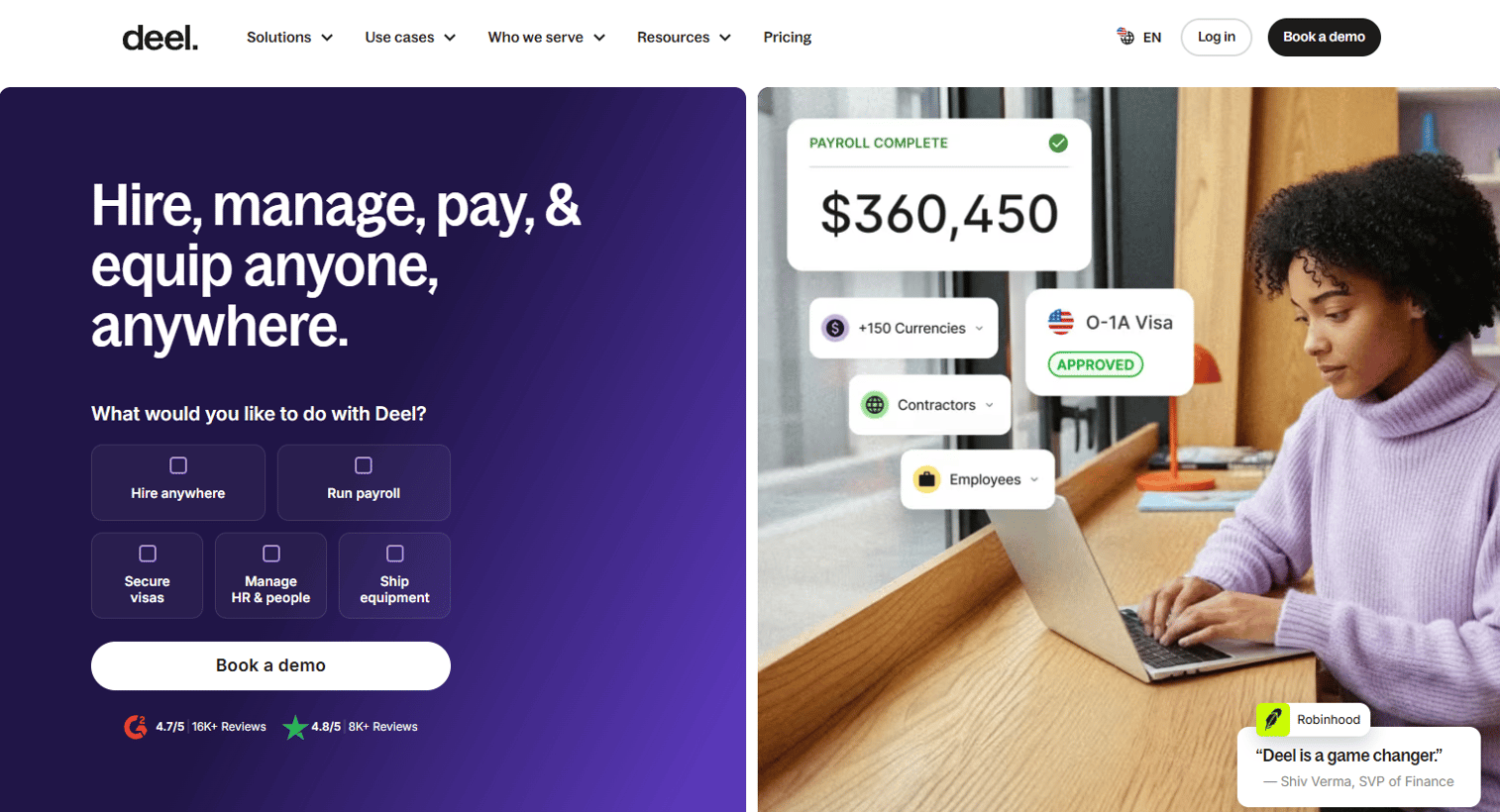
Deel Hire is Deel's global hiring platform combining an AI-powered ATS with employer-of-record, contractor management, and PEO services. It covers the full international hiring workflow from applicant tracking through onboarding, payroll, and compliance across multiple countries.
Best for: Distributed SaaS teams hiring across borders and needing EOR or contractor management alongside an ATS.
Key features
- AI-powered applicant tracking and candidate-to-hire workflows
- Job posting, pipeline visibility, and interview scheduling
- Global EOR with contracts, payroll, benefits, and compliance
- Contractor and PEO services across multiple countries
- Offer generation and cross-border onboarding
Why choose Deel Hire: If you're hiring in more than two countries, the integration between the ATS and the employment infrastructure matters. Deel Hire avoids the need for a separate EOR vendor alongside your recruiting system.
Deel Hire pricing: Find talent from $14/worker/month. Contractor management from $49/contractor/month. Contractor of Record from $325/month. EOR from $599/employee/month.
G2 rating: 4.7/5
12. Manatal
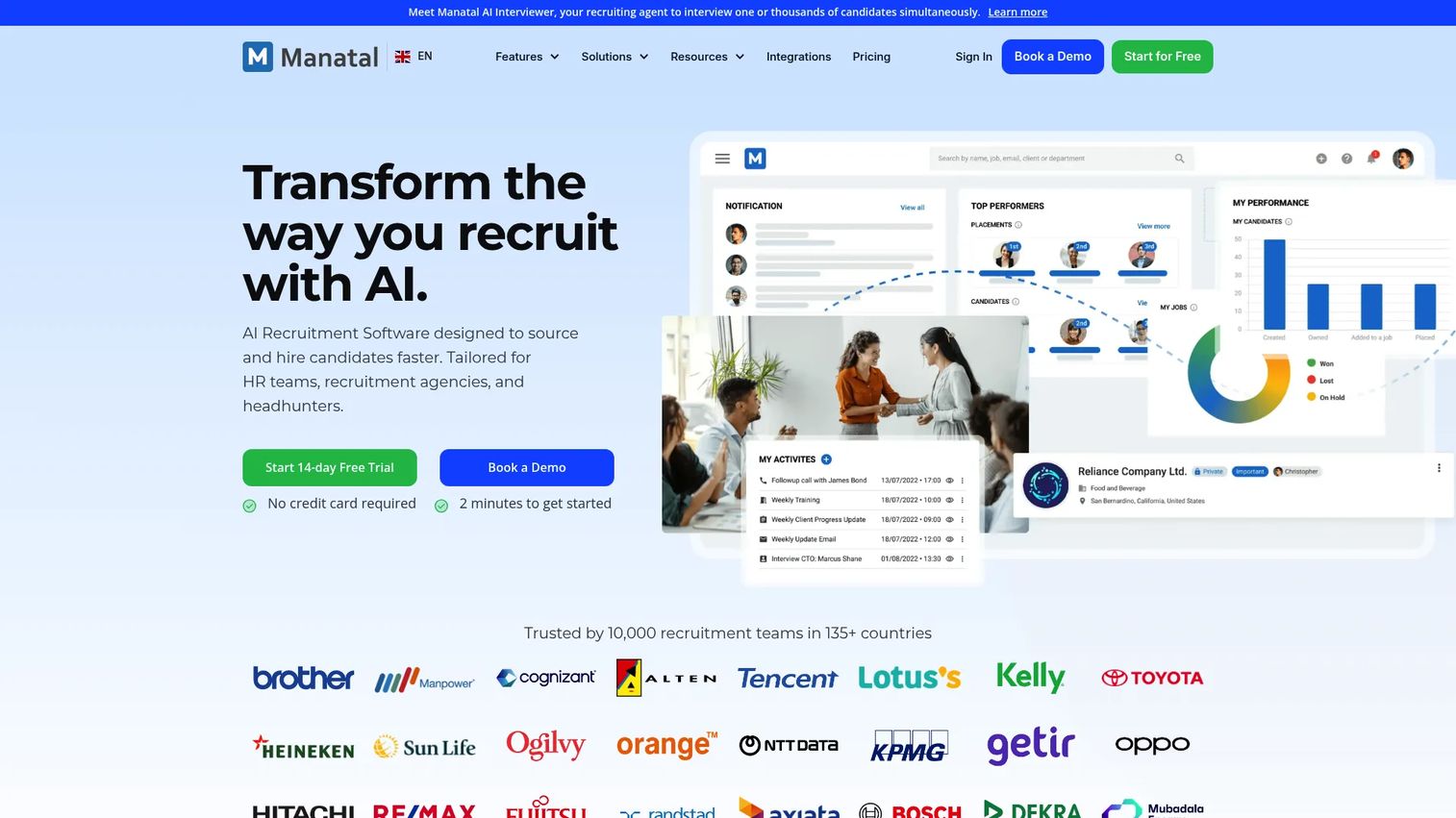
Manatal is an AI-powered applicant tracking and recruiting platform for HR teams and recruiting agencies. It combines AI candidate scoring, resume parsing, career page management, job board posting, and a recruiting CRM in one tool at a price point accessible to smaller teams.
Best for: Small and mid-sized recruiting teams that need AI-enabled ATS and CRM without an enterprise price tag.
Key features
- AI candidate scoring and recommendations
- Resume parsing and profile enrichment
- AI-powered interviews, transcription, and summaries
- Career pages and job board multiposting
- Recruiting CRM, collaboration, reporting, and analytics
Why choose Manatal: At $15/user/month on annual billing, Manatal offers AI sourcing and CRM capability at a price that makes sense for a team of two to five recruiters. The 14-day trial lets you validate the workflow before committing.
Manatal pricing: Professional at $15/user/month (annual), Enterprise at $35/user/month, Enterprise Plus at $55/user/month. No free tier; 14-day free trial available.
G2 rating: 4.7/5
13. Recruit CRM
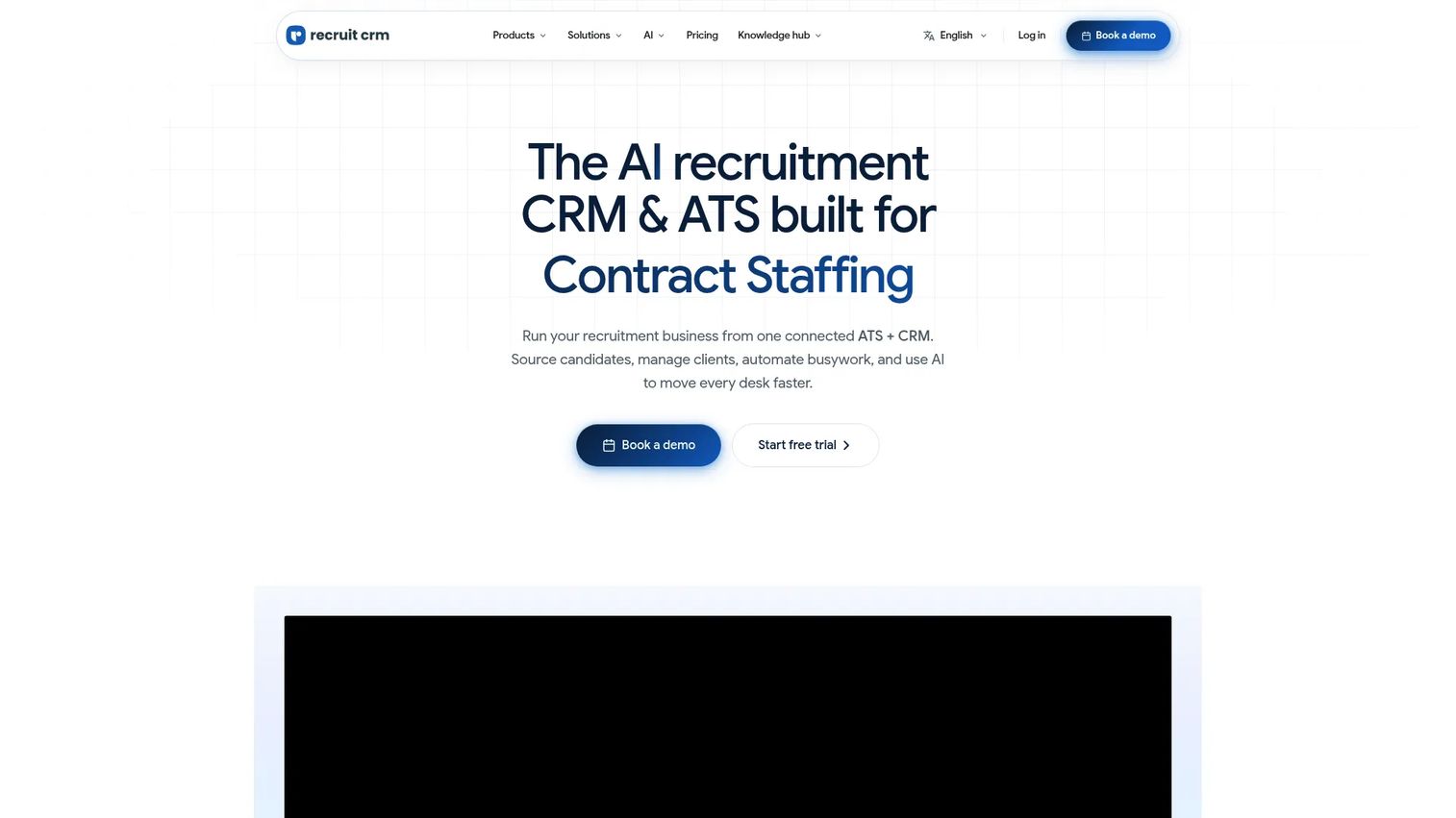
Recruit CRM is an AI-powered ATS and CRM built specifically for recruitment agencies and executive search firms. It handles candidates, clients, job orders, placements, outreach sequences, and billing in one platform.
Best for: Recruitment agencies running placement operations and business development alongside candidate management.
Key features
- ATS and CRM for candidates, clients, jobs, and placements
- AI sourcing, matching, and resume parsing
- Email, LinkedIn, WhatsApp, and SMS outreach sequences
- Workflow automation and real-time analytics
- Timesheets, contractor billing, invoicing, and client portals
- Chrome sourcing extension and job board distribution
Why choose Recruit CRM: The billing and client portal features separate it from general ATS products. For an agency founder who wants recruiting and business operations in one system, Recruit CRM covers both sides. A 30-day free trial is available.
Recruit CRM pricing: Pro at $95/user/month, Business at $135/user/month, Enterprise at $215/user/month (all monthly billing). Annual billing saves up to 17%.
G2 rating: 4.8/5
14. ClearCompany
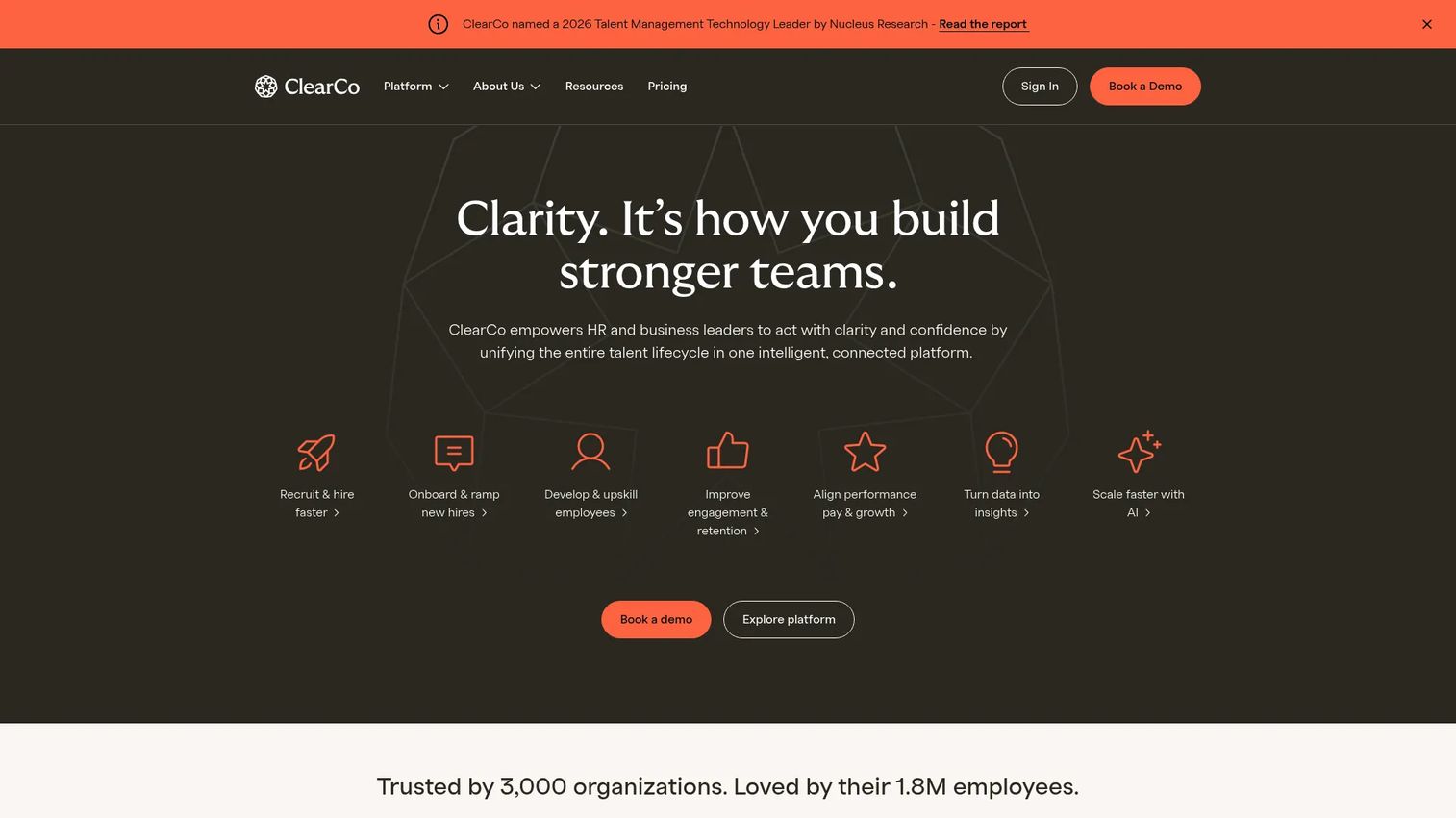
ClearCompany is a unified talent platform connecting recruiting, background checks, onboarding, learning, performance management, engagement, compensation, and workforce analytics. It's structured for organizations that want recruiting to feed directly into a broader talent management system.
Best for: Companies connecting recruitment with onboarding, performance, and employee lifecycle management.
Key features
- Candidate attraction, recruiting experience, and applicant tracking
- Background checks and structured onboarding
- Performance management and employee engagement tools
- Learning and compensation management
- People analytics, Talent AI, and system integrations
Why choose ClearCompany: ClearCompany earns its place when recruiting is part of a larger talent strategy. If you're building out performance management and L&D alongside hiring, keeping those systems connected from day one is worth the investment.
ClearCompany pricing: Packages include ClearRecruit, TotalTalent, ClearTalent, ClearGrow, ClearLearn, and ClearCare. Pricing requires contacting ClearCompany for a customized quote.
G2 rating: 4.6/5
15. Screenz
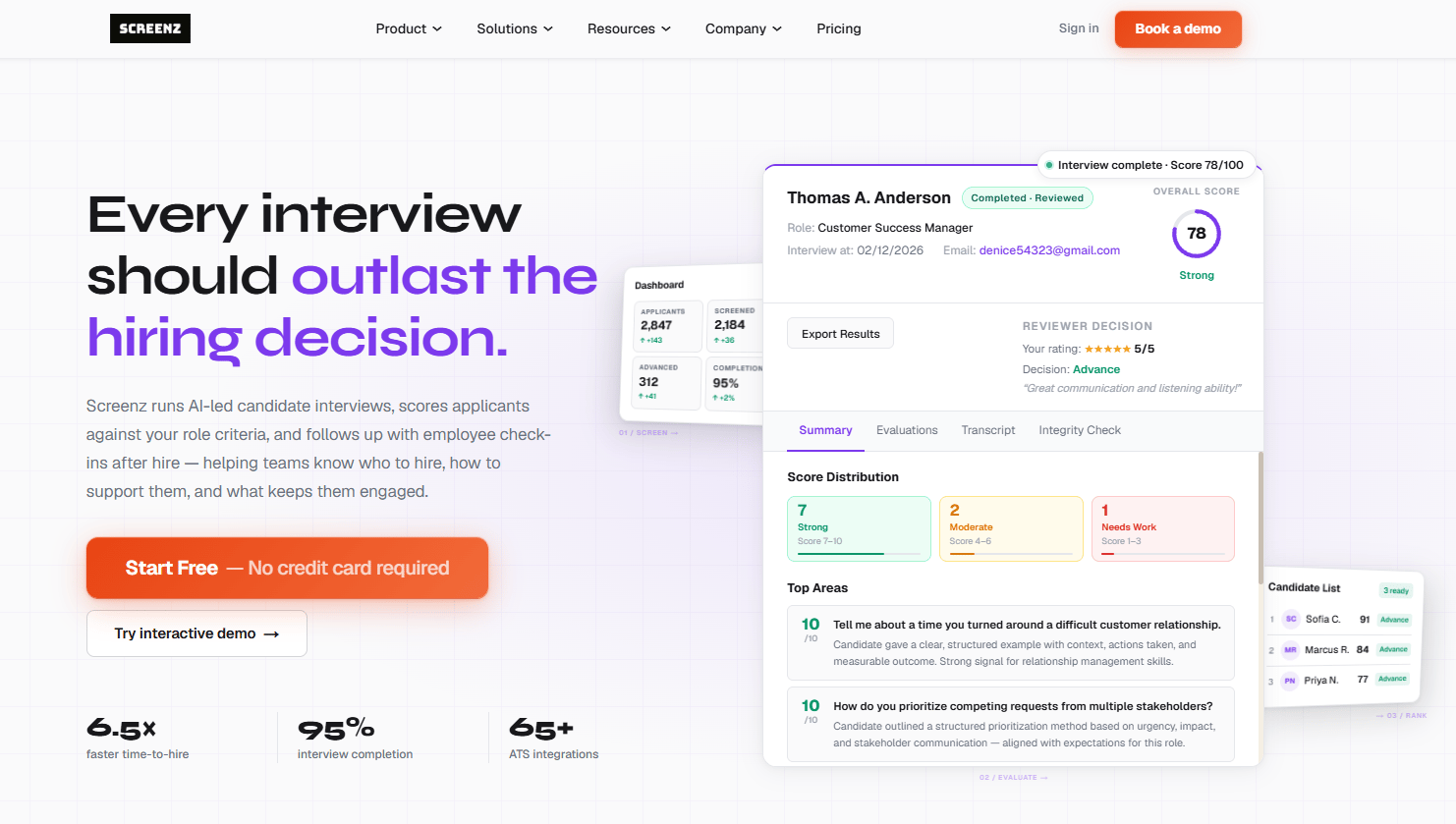
Screenz runs AI-led structured candidate interviews, scores applicants, and provides ranked shortlists with transcript evidence. It supports screening in 33 languages and connects hiring signals with post-hire outcomes. It integrates with existing ATS systems rather than replacing them.
Best for: Teams automating first-round structured interviews at volume and needing ranked candidate shortlists.
Key features
- AI-led structured candidate interviews
- Candidate scoring and ranking with transcript evidence
- Multilingual screening in 33 languages
- ATS integrations
- Post-hire employee check-ins and hiring intelligence loop
Why choose Screenz: Screenz reduces the time recruiters spend on first-round phone screens. If your bottleneck is the volume of unscreened applicants, Screenz handles the initial filter and delivers a ranked list rather than a pile of resumes.
Screenz pricing: Free plan includes 10 screenings. Active Hiring at $749/month (annual), Hiring Pipeline at $1,250/month, Hiring Ops at $2,500/month. Enterprise pricing is custom.
16. VidCruiter
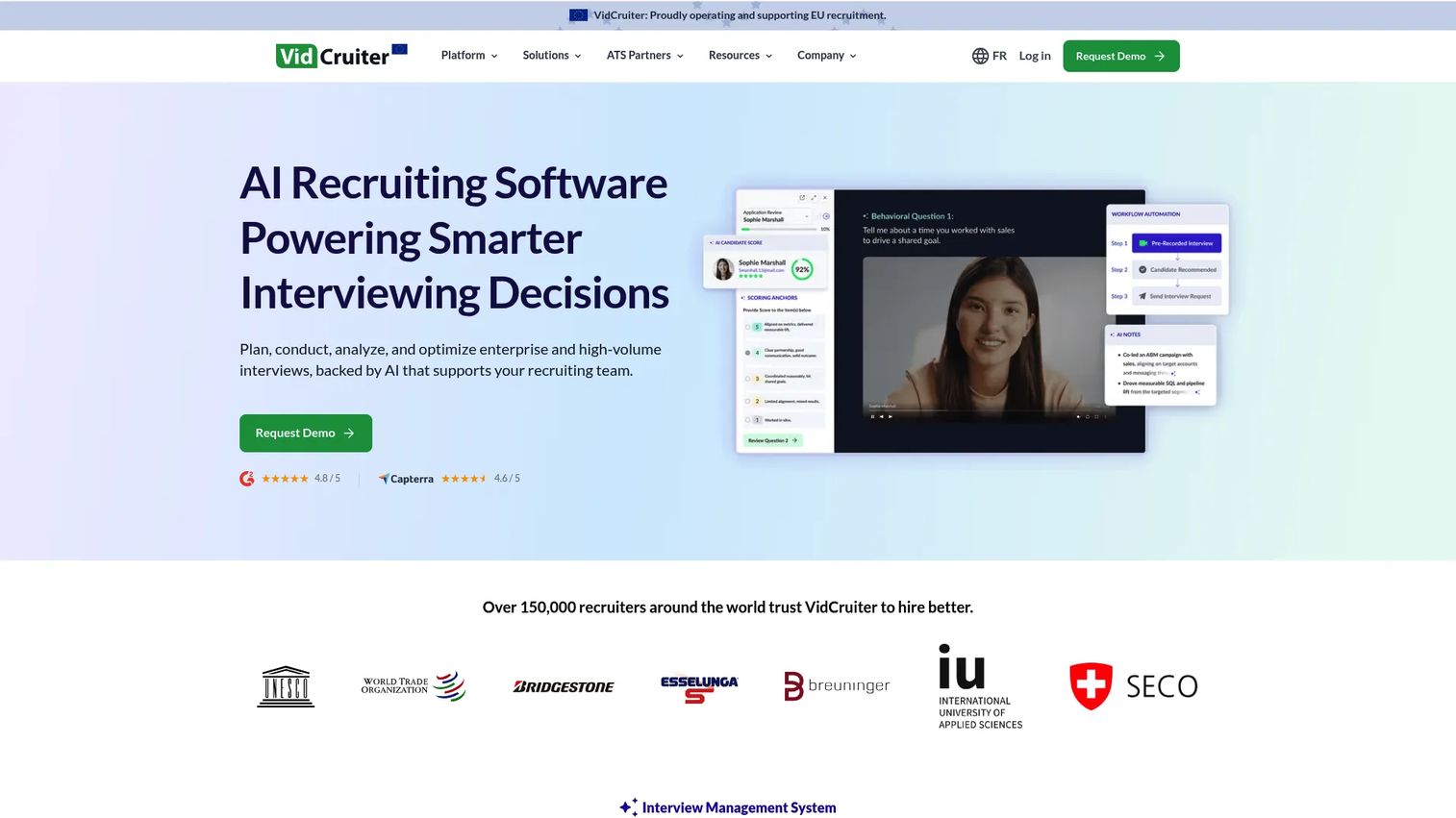
VidCruiter is an AI recruiting and interview management platform for structured, high-volume hiring. It supports pre-recorded and live video interviews, automated scheduling, structured rating guides, AI transcription and summaries, automated reference checks, and skills testing.
Best for: Enterprise, public-sector, and high-volume hiring teams managing structured interview workflows.
Key features
- Pre-recorded and live video interviews
- Automated interview scheduling
- Structured interviews with rating guides and scorecards
- AI candidate screening, notes, and transcripts
- Automated reference checks
- Skills testing and video proctoring
Why choose VidCruiter: VidCruiter's rating guide structure and proctoring features make it a fit for organizations where interview consistency and defensibility matter. Its strong G2 score reflects experience with demanding compliance environments.
VidCruiter pricing: Custom pricing. Contact VidCruiter for a quote based on hiring volume and feature requirements.
G2 rating: 4.8/5
17. Mitratech Circa
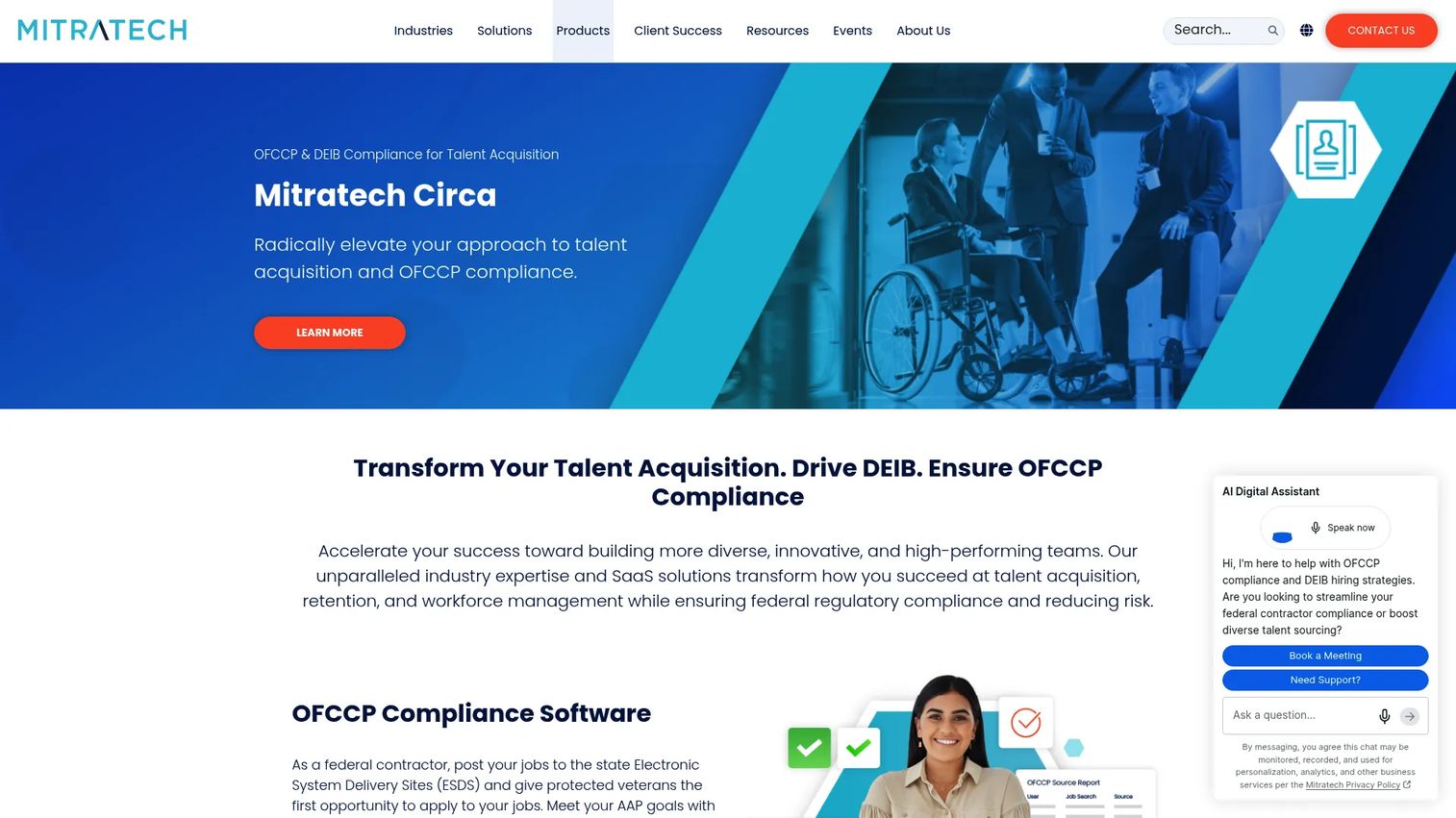
Mitratech Circa is talent acquisition and compliance software for OFCCP compliance, diversity recruiting, and DEIB initiatives. It connects employers with 15,000+ community-based organizations and manages compliance documentation for federal contractors.
Best for: Federal contractors and HR teams with OFCCP compliance requirements and active diversity sourcing programs.
Key features
- OFCCP compliance tracking and audit documentation
- Job posting distribution to state systems and diverse job boards
- Outreach management with 15,000+ community-based organizations
- Diversity sourcing database and employer branding tools
- DEI calendars, content guides, and engagement resources
Why choose Mitratech Circa: Relevant for organizations where OFCCP compliance is a legal requirement. The community outreach network and audit documentation are hard to replicate with a general ATS.
Mitratech Circa pricing: Custom pricing. Contact Mitratech for a quote.
G2 rating: 4.2/5
18. Truffle
Truffle is listed in this category, but the platform could not be verified from primary sources at the time of publication. The official homepage returned a server error and no readable product or pricing information was accessible. If you're evaluating Truffle, verify its current status and feature set directly with the vendor before making a decision.
Best for: Contact Truffle directly to confirm current use cases.
Key features
- Features could not be verified from primary sources
Why choose Truffle: Contact the vendor directly for current product details.
Truffle pricing: Contact Truffle for current information.
19. AvaHR
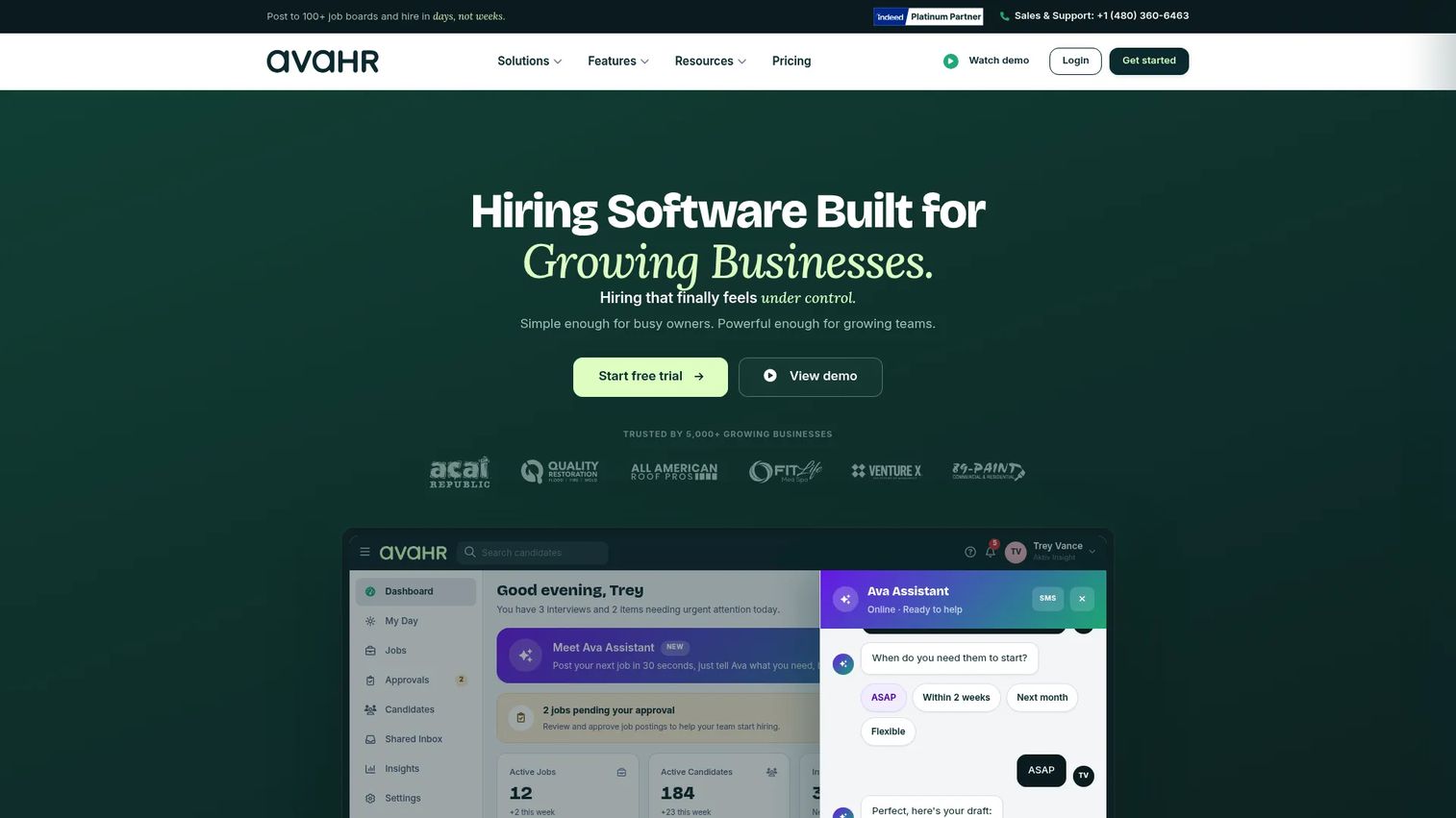
AvaHR is a cloud-based hiring and applicant tracking platform for small and midsize businesses. It distributes jobs to 100+ boards, scores and ranks candidates with AI, and supports interview coordination and team collaboration without requiring a dedicated recruiting team.
Best for: Small and growing businesses that need an ATS without a full-time recruiter.
Key features
- Job distribution to 100+ job boards
- AI-assisted candidate scoring and ranking
- Candidate pipelines with screening questionnaires
- Email and text candidate communication
- Interview scorecards and team collaboration
- Hiring analytics and reporting
Why choose AvaHR: AvaHR's flat monthly pricing and 7-day trial make it a low-risk starting point for a small team that needs structured hiring without a large platform investment.
AvaHR pricing: Lite at $119/month ($99/month annual), Plus at $199/month ($165/month annual), Premium at $399/month ($332/month annual), Max at $549+/month ($457+/month annual). No free tier; 7-day free trial available.
G2 rating: 4.7/5
20. Gem
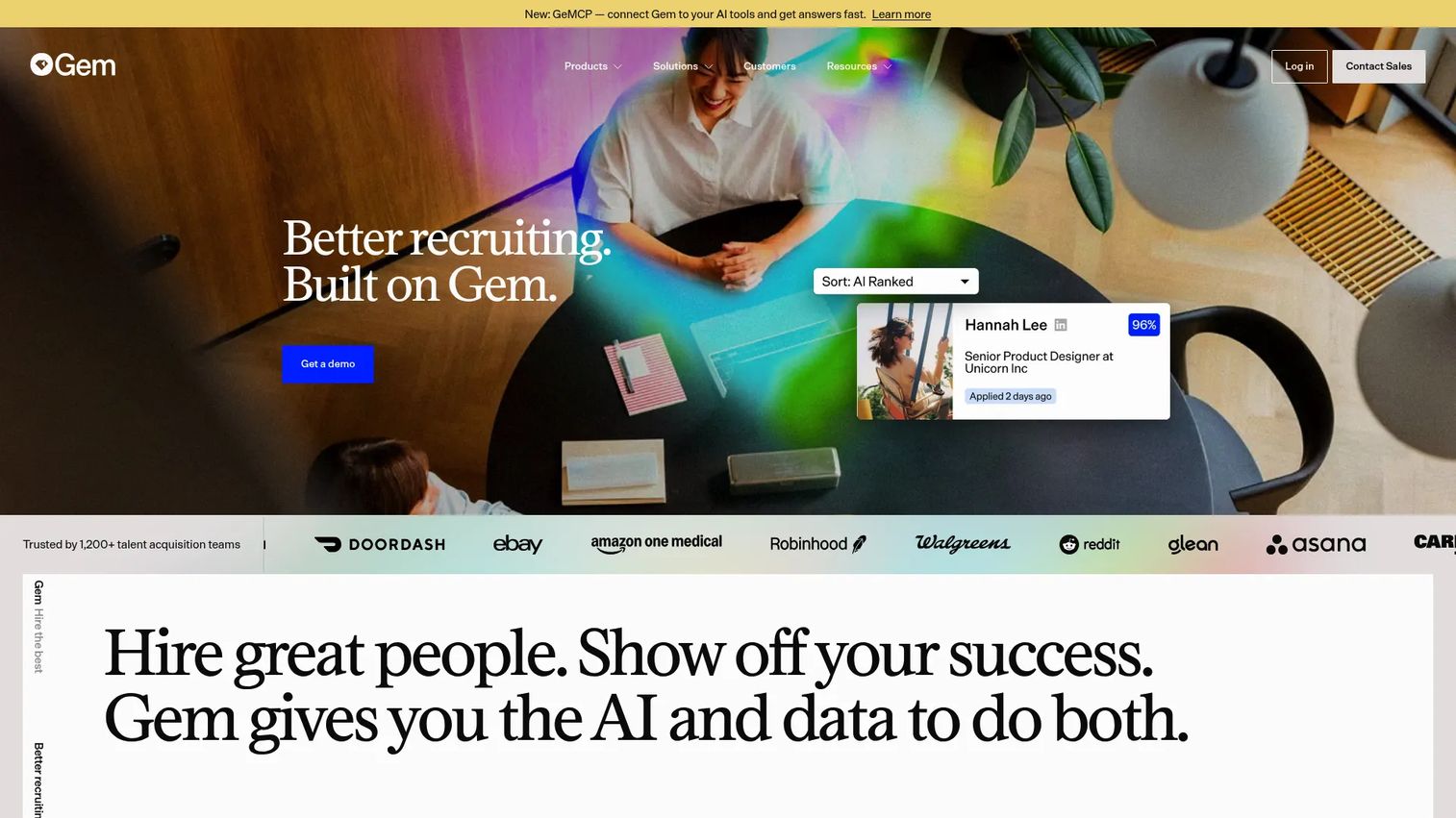
Gem is an AI-first recruiting platform combining ATS, candidate CRM, sourcing across 800M+ profiles, automated scheduling, and recruiting analytics. It's built for talent teams running outbound sourcing at scale alongside inbound applicant management.
Best for: Talent acquisition teams running outbound sourcing programs alongside an inbound pipeline.
Key features
- AI sourcing across 800M+ candidate profiles
- AI application review and applicant ranking
- Candidate relationship management and outreach sequences
- Full applicant tracking system
- Automated interview scheduling
- Recruiting analytics and hiring forecasting
Why choose Gem: Gem closes the gap between sourcing and tracking in one platform. For a team that runs proactive talent outreach and needs to manage the resulting pipeline, having CRM and ATS in one system avoids duplicate data and manual transfers.
Gem pricing: Startups (1 to 10 FTE) from $130/month (annual). Staffing agency plans from $99/user/month (Essentials, annual) or $149/user/month (Professional, annual). Growth and Enterprise plans are custom-priced.
G2 rating: 4.7/5
21. PowerToFly
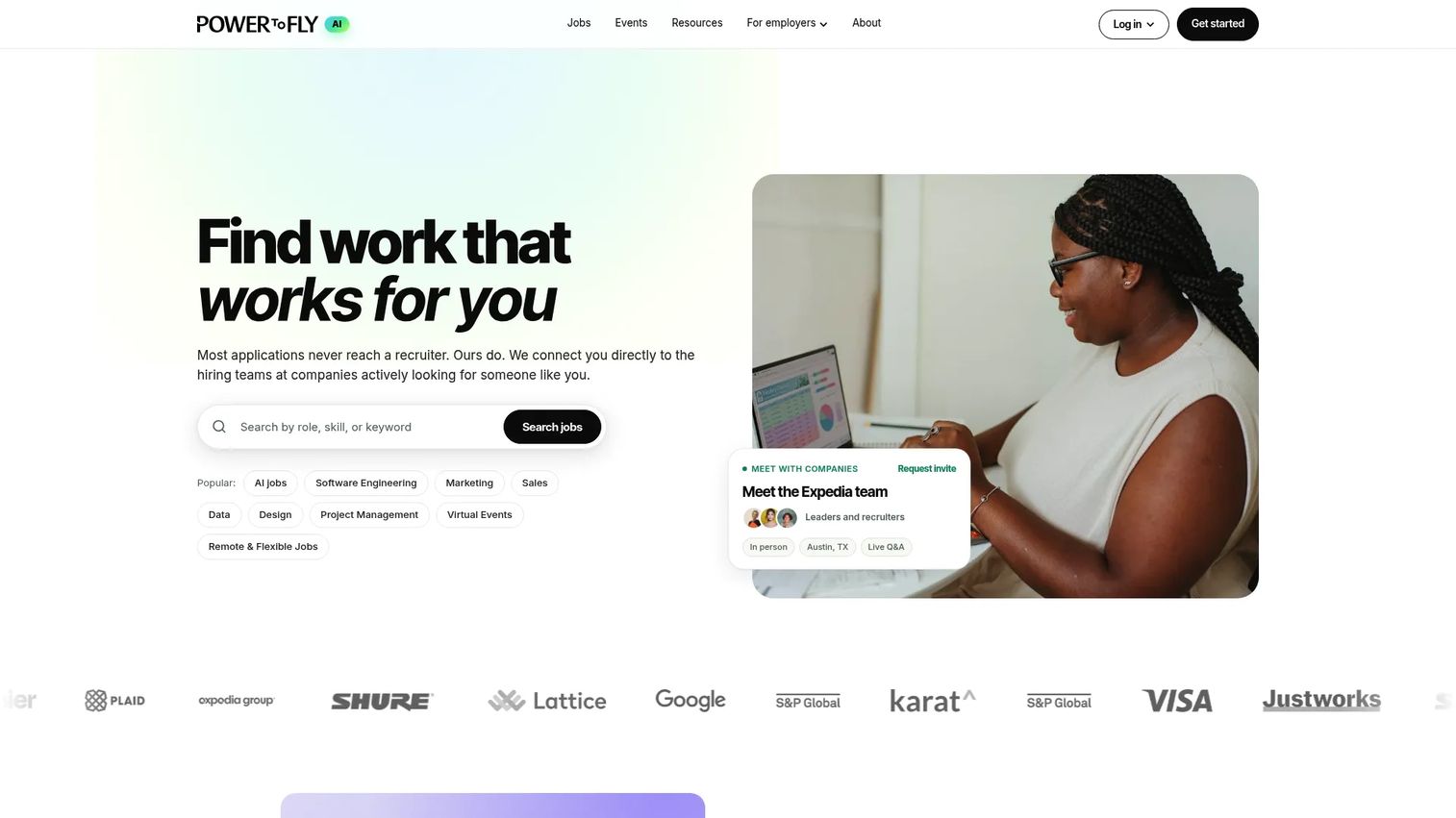
PowerToFly connects employers with diverse and domain-expert talent, including professionals for AI model training, evaluation, red-teaming, and data annotation. Job postings deliver applicants directly to your ATS.
Best for: Organizations building diverse talent pipelines or hiring domain experts for AI and technical roles.
Key features
- Job posting with direct ATS delivery of applicants
- Domain-expert talent community and diverse talent sourcing
- AI model training, evaluation, and QA talent
Why choose PowerToFly: Useful when your recruiting challenge is reach to specific talent pools rather than workflow management. The $499/month per posting model works for teams running targeted searches.
PowerToFly pricing: Job posting at $499/month per posting. Custom pricing available for multi-role hiring.
G2 rating: 4.8/5
Considerations
Define the system boundary first
Decide whether the immediate need is an ATS, a recruiting CRM, a sourcing layer, an assessment tool, or a full HR suite. Buying a broad HR platform when the problem is applicant tracking delays the fix and adds implementation complexity. Know the gap before selecting a platform.
Evaluate hiring manager adoption honestly
The best recruiting platform fails if department leaders don't use it. Ask vendors how hiring managers access candidate feedback, approve requisitions, and see next steps. If the answer requires training a VP of Engineering to log into another system, adoption will be low. Test the hiring manager workflow specifically during your evaluation.
Check integration depth with your existing stack
Verify connections with your HRIS, payroll system, calendar, identity provider, and communication tools before signing. A recruiting platform that doesn't pass data cleanly to your HRIS creates manual reconciliation work that compounds every hire. Request integration documentation and test it in a trial environment.
Require recruiting funnel reporting from day one
Source quality, time to fill, offer acceptance rate, and stage conversion are the metrics a VP of Talent and a board need to see. If a platform can't produce those reports without custom configuration or a data export, factor that into your evaluation. Greenhouse and Gem are worth reviewing specifically on this dimension.
Model total cost across the first year
Include implementation, data migration, training, recruiter seats, hiring manager access, integrations, and support tiers. Some platforms charge separately for analytics modules or integration connectors that appear included in the demo. Get a fully loaded quote before comparing platforms on headline price.
What to avoid when selecting recruiting software
Avoid buying a full HR suite when applicant tracking is the only immediate gap. The added complexity delays the fix and increases implementation risk. Similarly, avoid selecting a sourcing tool without a system of record behind it. A strong sourcing layer without an ATS produces candidate data with nowhere to go.
Treat AI claims with appropriate scrutiny. Ask vendors for specific evidence of AI-driven improvements in your hiring context rather than accepting category-level performance claims. And don't underinvest in hiring manager adoption. A platform your department leaders ignore is worse than a spreadsheet because it creates a false sense of process.
Treat implementation as an ongoing workflow rather than a one-time project. Recruiting systems need a data quality owner, a reporting cadence, and a process for updating workflows as the company changes. Assign that ownership before signing.
Conclusion
Recruiting software earns its place in a Series B stack when it removes the founder from routine hiring decisions, gives hiring managers a workflow they'll actually use, and turns hiring activity into a metric the leadership team can act on.
For a structured core ATS, Greenhouse is the starting point for most organizations formalizing hiring across multiple teams. BambooHR suits companies combining HR and recruiting in one platform. JazzHR offers a clean starting point for smaller teams. Workable covers recruiting automation and HR in one product. Deel Hire handles global hiring including EOR. For agencies and placement operations, Recruit CRM covers the full workflow. For teams running outbound sourcing at scale, Gem is worth evaluating alongside any general ATS.
The practical next step: Shortlist two or three platforms, run the same hiring workflow through each, and compare the experience from both the recruiter and the hiring manager seat. Implementation effort and adoption friction are as important as feature lists.
Start your journey with Guideflow today!
FAQs
Recruiting software is a category of hiring technology that helps companies source candidates, track applications, coordinate interviews, evaluate talent, extend offers, and measure hiring performance. It differs from a standalone ATS in that it often includes sourcing tools, candidate relationship management, analytics, and hiring workflow automation alongside basic applicant tracking. Some platforms also include HR features like onboarding and employee records.
The answer depends on hiring volume, hiring manager participation requirements, reporting needs, and integration requirements. Greenhouse fits companies formalizing structured hiring across multiple teams. Workable suits organizations wanting recruiting and HR in one product. Gem is worth evaluating if outbound sourcing is a priority. Run the same hiring workflow through two or three shortlisted platforms to compare adoption friction before committing.
Pricing typically varies by employee count, recruiter seat count, feature modules, integrations, implementation scope, and contract length. Verifiable starting prices in this list range from $8/user/month (Factorial) to $14,995 per year at the enterprise entry level. Most platforms in this category require a custom quote. Request a fully loaded cost estimate including implementation, training, and integration fees before comparing platforms.
Core features include applicant tracking, job distribution to job boards, candidate sourcing, interview scheduling, structured feedback and scorecards, offer management, recruiting analytics, permissions and access controls, and candidate communications. Additional capabilities worth evaluating include a recruiting CRM for outbound pipelines, background check integrations, video interviewing, pre-employment assessments, and HRIS and payroll integrations.
An ATS focuses on managing candidates and applications through hiring stages. Recruiting software is a broader category that can include the ATS layer plus outbound sourcing, candidate relationship management, scheduling automation, analytics, assessments, and workflow automation. Many vendors now bundle both into a single platform. The distinction matters when you're deciding whether you need a focused applicant record system or a broader hiring workflow tool.
Some platforms support global sourcing, local hiring workflows, contractor management, employer-of-record services, and international employment administration. Deel Hire is built specifically for cross-border hiring. Tools like iCIMS and SmartRecruiters support enterprise global programs. When evaluating global capability, verify specific country coverage, employment model support (EOR vs. contractor vs. PEO), and local compliance documentation for the countries where you're hiring.
Measure time to fill, time to hire, source quality by channel, recruiter capacity per open role, interview cycle time, offer acceptance rate, hiring manager response time, and cost per hire. Establish a baseline before implementation so you can compare performance after the system is live. Changes in hiring manager adoption and interview consistency are often as important as the efficiency metrics but harder to quantify without deliberate measurement.
Timelines depend on data migration scope, integration complexity, workflow design, permissions configuration, reporting setup, and training. A focused ATS with limited integration requirements can be operational in two to four weeks. A full HR suite with HRIS, payroll, and calendar integrations typically takes two to four months. Run a limited workflow through the system in the first two weeks before expanding to all roles and hiring managers.