An advisor preparing for a 30-minute student meeting shouldn't need to open five systems first. Yet that's exactly what happens at most institutions: The SIS lives in one tab, advising notes in another, LMS data somewhere else, appointment history in a calendar tool, and alert workflows in yet another platform. The student arrives, and the advisor is still assembling the picture.
Fewer than one-third of surveyed students had ever interacted with academic advising, according to Inside Higher Ed and Tyton Partners in 2024. That's not a staffing problem alone. It's a visibility problem. When advisors can't act quickly on risk signals, students disengage before support finds them.
Academic advising software consolidates that workflow. The category now spans degree audit systems, coordinated-care platforms, higher education CRMs, and virtual advising tools. Choosing the wrong layer means adding another dashboard instead of removing friction.
This guide covers the 10 strongest options for 2026, organized around the operating model questions that matter: What does each platform replace, who owns the data, and where does the workflow break down without it?
What's inside
This guide is written for higher education leaders, directors of student success, registrars, and operators evaluating campus-wide advising technology. It is also useful for edtech founders and operators researching how institutions evaluate these platforms.
Selection criteria for every tool on this list:
- Advising model fit: Does it support the operating model the institution actually runs?
- Integration depth: How cleanly does it connect to existing SIS, LMS, or CRM infrastructure?
- Workflow completeness: Does it move data from alert to action, or stop at the dashboard?
- Reporting for leadership: Does it produce metrics that hold up in board and accreditation conversations?
Pricing and ratings were verified in October 2026 from vendor pages and current review listings.
TL;DR
- Best for institution-wide student success: EAB Navigate360 handles coordinated care, proactive outreach, and higher education CRM workflows in one system
- Best for degree planning and student-facing progress: Stellic gives students a clear view of their own path and gives advisors caseload visibility
- Best for established advising office workflows: AdvisorTrac (TracCloud) brings structured appointment, notes, and referral workflows at published tiered pricing
- Best for degree audits and curricular requirements: Degree Works is the established foundation for registrar-driven audit and planning
- Best for proactive intervention and engagement: Watermark Student Success and Engagement coordinates early alerts, outreach, and intervention case management
- Best for Workday-standardized institutions: Workday Student embeds advising and planning directly in the enterprise student system
What is academic advising software?
Academic advising software is a higher education platform that helps institutions guide students through degree planning, appointments, academic progress, outreach, referrals, alerts, and intervention workflows.
The category is broader than scheduling tools or degree audit systems alone. A scheduling tool books appointments. Academic advising software connects what happens before, during, and after that appointment, and routes what the advisor learns into the institution's retention infrastructure.
Core functions
- Degree planning and audits: Shows completed requirements, remaining courses, and possible paths to graduation
- Student profiles: Combines academic records, notes, milestones, alerts, and support history in one view
- Scheduling: Lets students book advising appointments and helps staff manage availability
- Early alerts: Flags academic, engagement, or attendance risks for follow-up
- Case management: Routes referrals, tasks, notes, and interventions across support teams
- Outreach and communications: Supports campaigns, text messaging, reminders, and follow-up workflows
- Analytics: Measures caseloads, student progression, intervention patterns, and retention indicators
- Integrations: Connects with SIS, LMS, identity, calendar, and data warehouse systems
Four categories inside this market
| Category | Primary job | Typical buyer | What to evaluate |
|---|---|---|---|
| Degree planning and audit | Clarify requirements and course paths | Registrar, advising, academic affairs | Curriculum rules, transfer credit, student planning |
| Student success platform | Coordinate outreach and intervention | Student success leaders, advising directors | Alerts, case management, analytics |
| Higher education CRM | Manage relationship and communications data | Enrollment, advising, student services | Profiles, campaigns, integrations |
| Virtual advising platform | Deliver remote appointments and student support | Advising operations, online learning teams | Scheduling, video, accessibility, queue management |
A scheduling tool alone is not academic advising software. The distinction matters at procurement time.
When to use academic advising software
Scale proactive support across large caseloads
When email threads, spreadsheets, and shared calendars stop working, the first sign is usually an advisor who can't tell which students need attention most. Student success and advising case management software solves this by surfacing risk signals automatically, prioritizing caseloads, and routing outreach through shared workflows. The result is fewer students who fall through the gap between advisor check-ins.
Help students see a credible path to completion
Degree planning tools matter when students can't articulate how far they are from graduating. Transfer credit confusion, course sequencing errors, and unmet requirements are common reasons students stop out. Academic planning software lets both the student and advisor see the same completion picture, which makes the advising conversation faster and more specific.
Coordinate interventions across departments
Advising doesn't happen in isolation. Faculty flag attendance issues, financial aid flags holds, tutoring flags repeated struggles. When those signals travel through email, they arrive late or get missed. Coordinated care platforms give advisors, faculty, and student services teams a shared record of referrals, open cases, and follow-up, so the student gets one coherent response instead of three disconnected outreach attempts.
Academic advising software comparison
Every product below serves a different center of gravity. Some prioritize degree progress, some prioritize coordinated care, and some sit inside broader student information systems. Match the tool to the problem your institution is actually trying to solve.
| # | Product | Best for | Key differentiator | Pricing | G2 rating |
|---|---|---|---|---|---|
| 1 | AdvisorTrac | Advising center operations | Tiered, published pricing with structured advising workflows | From $5,999 | 4.8/5 |
| 2 | EAB Navigate360 | Institution-wide student success | Coordinated care, embedded AI, and higher education CRM | Contact for pricing | 4.5/5 |
| 3 | Stellic | Degree planning and advisor productivity | Student-facing planning plus advisor caseload insights | Contact for pricing | Not listed on G2 |
| 4 | Ellucian Student Success | Ellucian ecosystem institutions | Integrated planning, audit, and AI-driven advising | Contact for pricing | 3.4/5 |
| 5 | Degree Works | Degree audit and curricular requirements | Established degree audit and what-if scenario planning | Contact for pricing | Not verified |
| 6 | Watermark Student Success and Engagement | Proactive intervention teams | Predictive early alerts and caseload prioritization | Contact for pricing | Not listed on G2 |
| 7 | ConexED | Virtual and multi-campus student support | Unified scheduling, queues, and case management | Contact for pricing | 4.2/5 |
| 8 | Jenzabar SONIS | Smaller specialized institutions | SIS-connected advising and student records | Contact for pricing | 3.7/5 |
| 9 | Salesforce Education Cloud | Salesforce-invested institutions | Configurable CRM with learner lifecycle and AI agents | From $81.25/user/month | 4.2/5 |
| 10 | Workday Student | Workday-standardized institutions | Planning and advising embedded in enterprise student system | Contact for pricing | 4.0/5 |
Best 10 academic advising software tools for 2026
1. AdvisorTrac
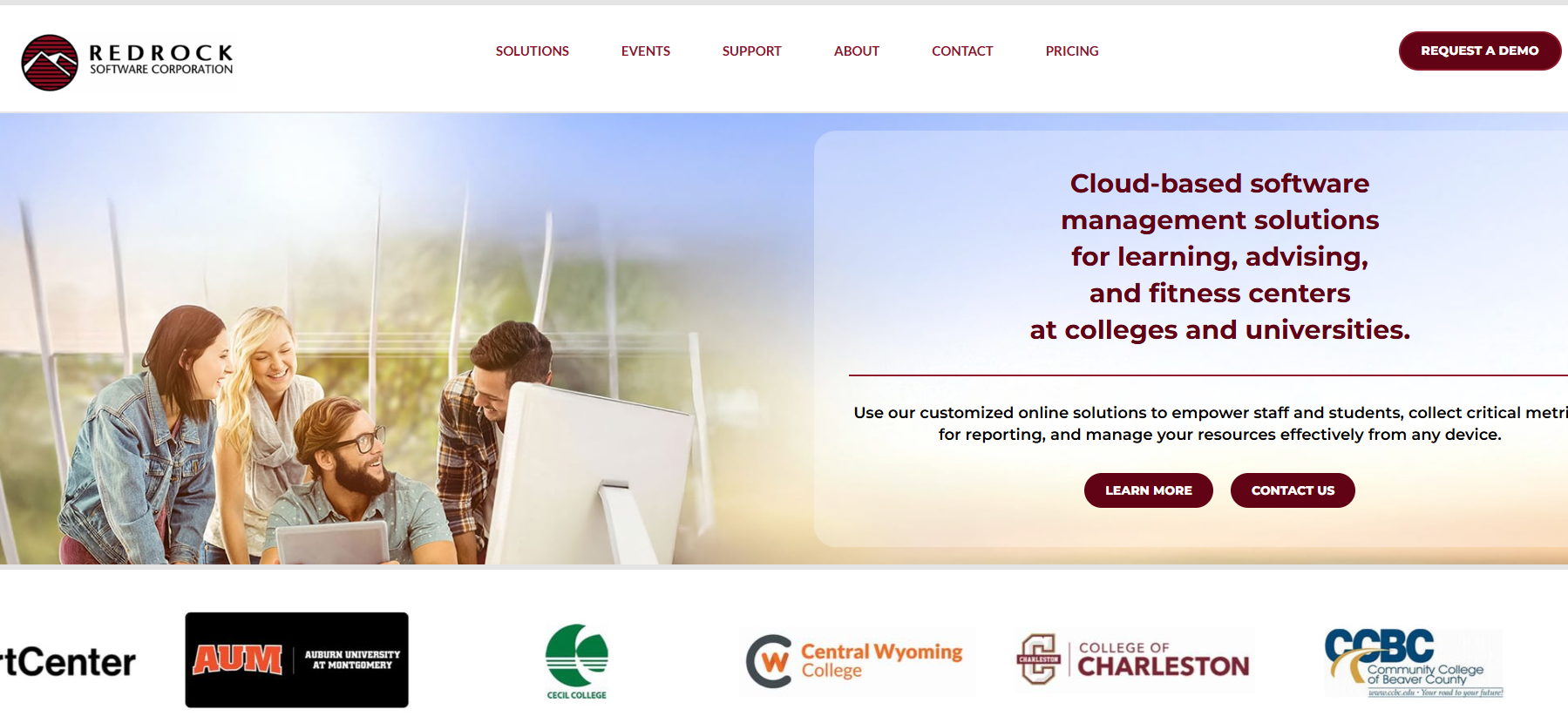
AdvisorTrac, now delivered through the TracCloud platform by Redrock Software, is a purpose-built advising and student support management system used by colleges and universities managing structured advising center operations. It handles reason-based appointment scheduling, waitlist management, SAGE early-alert referrals, success plans, and kiosk check-in workflows. The platform is one of the few in this category with published tiered pricing, which makes it easier to budget without an extended procurement conversation.
Best for: Colleges and universities that need a structured, advising-center-focused platform for appointments, notes, referrals, and caseload tracking.
Key features
- Reason-based appointment scheduling: In-person, virtual, phone, and async
- Waitlist management with real-time queue visibility
- SAGE early-alert referrals and student support workflows
- Customizable success plans and automated progress tracking
- Surveys, kiosk check-in, payroll tracking, and communications
Why choose AdvisorTrac: The right fit for institutions with mature advising offices that need repeatable operational workflows. It's strongest where advising-center structure matters more than broad enterprise CRM configuration.
AdvisorTrac pricing: Plans start at $5,999 (TracCloud Tier), with Essentials at $7,999, Retention at $9,999, and Advancement at $15,999. Enterprise pricing requires contacting sales. The pricing page does not specify billing period, so confirm annual versus multi-year terms during procurement.
G2 rating: 4.8/5
2. EAB Navigate360
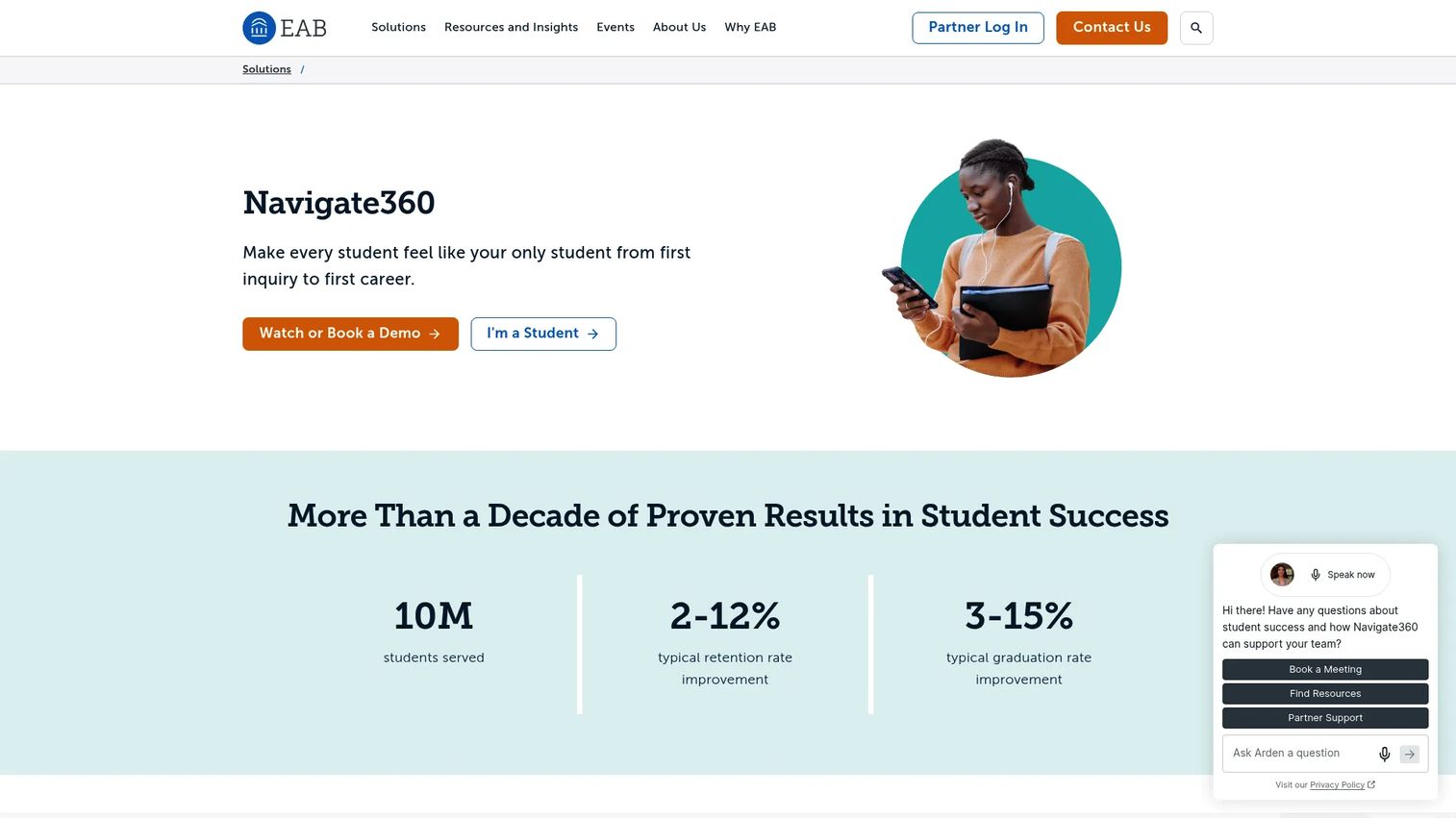
EAB Navigate360 is a higher education CRM and coordinated care platform that spans student recruitment, advising, retention, career success, and alumni advancement. Its staff workflow automation covers cases, referrals, alerts, messaging, campaigns, and faculty progress reports. Embedded AI assists with outreach drafting, meeting preparation, transcription, student guidance, and workflow automation. The platform integrates with SIS, LMS, email, and calendar services across a wide range of institutional environments.
Best for: Institutions seeking one system to coordinate advising, student success, retention, and support services across departments, without managing multiple siloed tools.
Key features
- Coordinated care network with cases, referrals, and alerts
- Embedded AI for outreach, reporting, and meeting prep
- Enrollment CRM, two-way SMS, surveys, and campaign library
- Predictive analytics, report building, and scheduled exports
- System-agnostic integrations with SIS, LMS, and Common App
Why choose EAB Navigate360: The operating-model case here is campus-wide visibility. It fits institutions where leadership wants a single view of student support activity across every department, not just a scheduling or degree-audit layer.
EAB Navigate360 pricing: Enterprise pricing is enrollment-based and includes license, maintenance, support, training, best-practice resources, and strategic support. Contact EAB directly for institutional pricing.
G2 rating: 4.5/5
3. Stellic
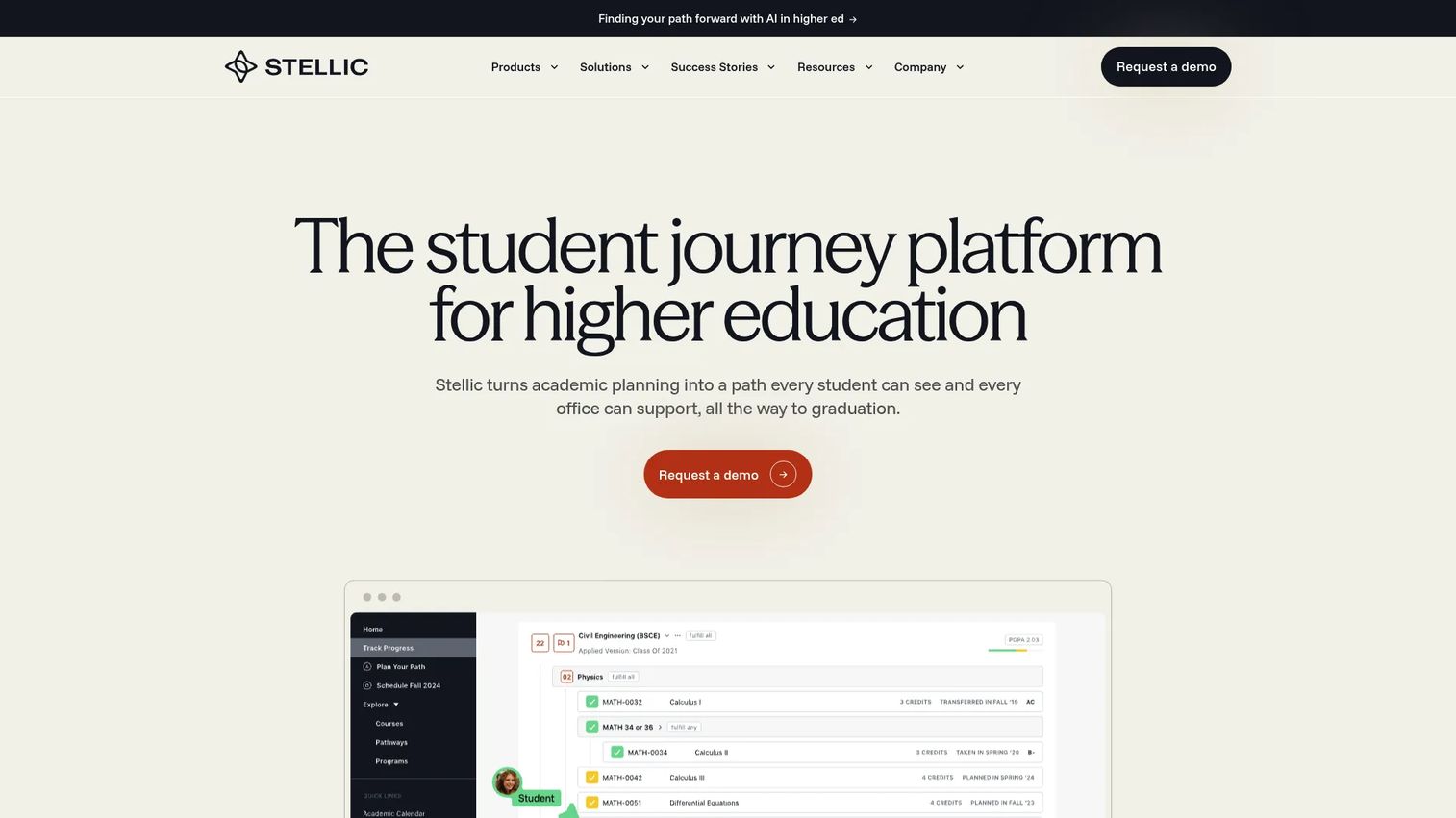
Stellic is a higher education student journey and academic planning platform that connects degree progress, proactive advising, and transfer pathways in one environment. Students get a clear view of their own degree progress, course planning options, and remaining requirements. Advisors work from caseload dashboards, appointment tools, notes, alerts, referrals, and outreach workflows. Stellic also handles transfer-credit evaluation with AI transcript analysis and automated transfer rules.
Best for: Institutions that want students to own their degree planning experience while giving advisors better visibility into where planning friction actually occurs.
Key features
- Degree progress tracking with course planning workflows
- Proactive advising: Notes, messaging, appointments, alerts, and referrals
- Transfer-credit evaluation with AI transcript analysis
- Advisor caseload insights and student outreach tools
- Exploration support for program changes and transfer pathways
Why choose Stellic: Strong fit when the institution's core problem is that students don't understand their own requirements. It pairs student-facing clarity with advisor-level analytics without requiring a full SIS replacement.
Stellic pricing: Stellic doesn't post pricing on its site and directs institutions to request a demo. Contact Stellic for contract and implementation details.
4. Ellucian Student Success
Ellucian Student Success is part of Ellucian's broader higher education software platform, which includes degree auditing, academic planning, AI-driven advising and student engagement, and transfer-credit recognition. It is designed for institutions already operating within the Ellucian environment, where connecting advising workflows to existing student data reduces integration work. The platform supports advisor-defined planning logic, eligibility and requirements rules, and student-success workflows alongside completion pathway guidance.
Best for: Colleges and universities already in the Ellucian ecosystem that want advising and planning capabilities aligned with their existing student data infrastructure.
Key features
- Degree auditing and academic planning templates
- AI-driven advising and student engagement workflows
- Transfer-credit recognition and equivalency management
- Advisor-defined planning logic and eligibility rules
- Student success and completion pathway tools
Why choose Ellucian Student Success: Data continuity is the main argument. Institutions that want advising and planning connected to their existing Ellucian environment can reduce the integration overhead that standalone platforms require. Evaluate the depth of the advising-specific capabilities relative to the institution's needs.
Ellucian Student Success pricing: Ellucian doesn't post pricing and directs prospects to contact the company. Pricing structure varies by deployment and institutional scope.
G2 rating: 3.4/5
5. Degree Works
Degree Works, also part of the Ellucian family, is a specialized degree audit and academic planning software used widely by registrar and advising teams. Its core job is helping students and advisors understand curriculum requirements, remaining credits, transfer pathways, and academic progress through clear, actionable audits. The what-if scenario analysis lets students explore program changes and alternative paths before committing, which reduces advisor rework and student confusion.
Best for: Registrar and advising teams that need a well-established degree audit software foundation with proven curriculum-tracking and planning workflows.
Key features
- Actionable degree audit reporting
- What-if scenario planning for program exploration
- Student and advisor educational plans
- Transfer articulation support
- Curriculum requirement tracking across programs
Why choose Degree Works: It fits institutions whose primary need is curricular accuracy and graduation-path visibility. Teams that also need proactive outreach, alert workflows, or cross-department case management will typically pair Degree Works with a coordinated-care platform.
Degree Works pricing: Ellucian uses FTE-based pricing for Degree Works, but specific figures are not posted publicly. Contact Ellucian or request institutional procurement documentation for current terms.
6. Watermark Student Success and Engagement
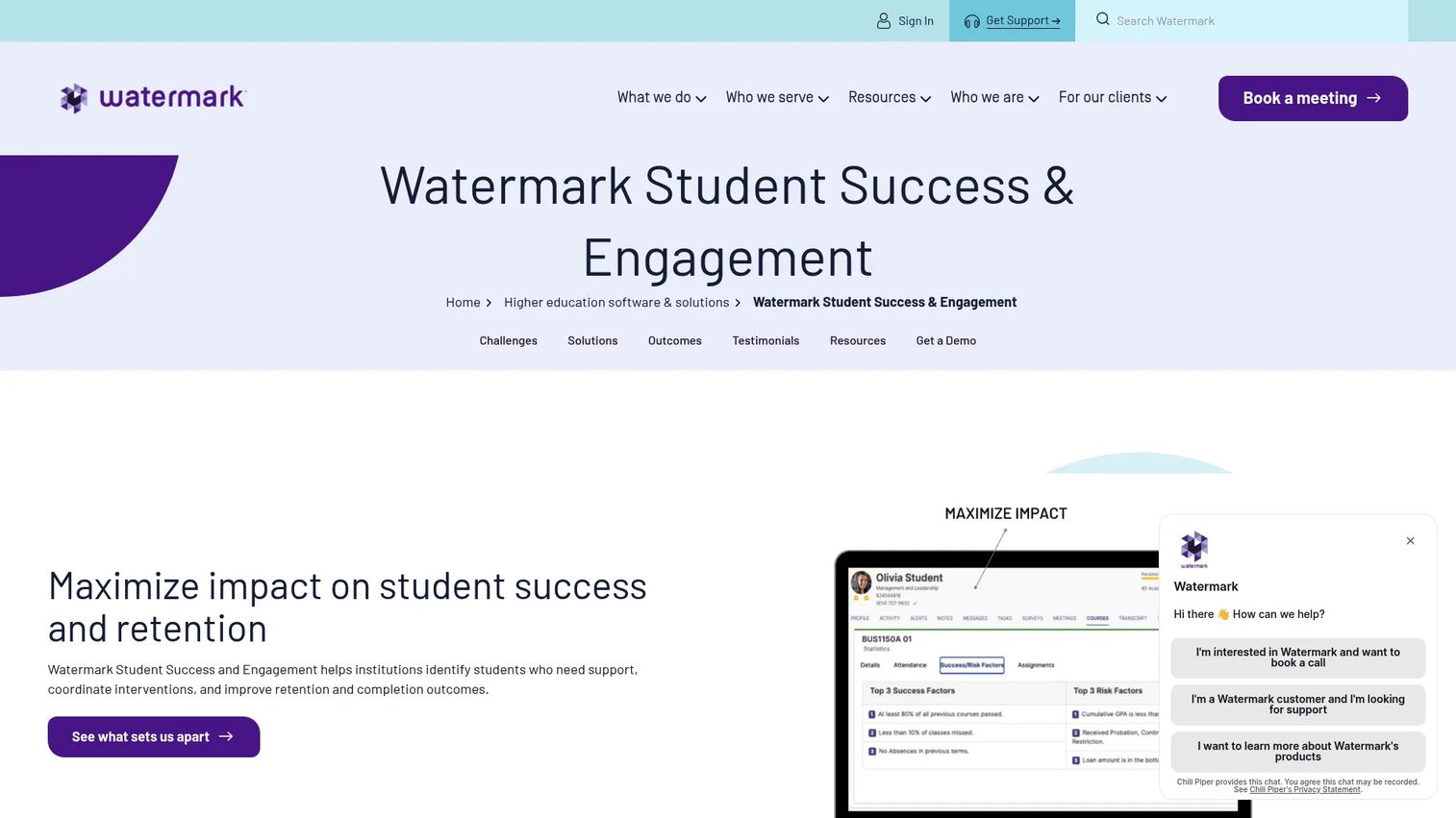
Watermark Student Success and Engagement is a higher education student success platform built around predictive early alerts, proactive advising, engagement tracking, and intervention case management. It combines SIS and LMS data into one student support view, surfaces risk indicators before students disengage, and routes those signals into guided academic and success plans. The native mobile app and workflow tools support both advisors and student support staff working across departments.
Best for: Student success teams that need to act on risk signals, not just report them, and want coordination across advising, faculty alerts, and engagement data in one place.
Key features
- Predictive early alerts and risk indicators
- Guided academic and success plans
- Predictive caseload prioritization for advisors
- Intervention case management and workflow tools
- SIS and LMS integrations with native mobile app
Why choose Watermark Student Success and Engagement: The fit is strongest for institutions that have early alert data but no clear workflow connecting that signal to an action. During evaluation, test the quality and latency of data integrations with your specific SIS and LMS, since that connection is where the platform's value depends.
Watermark pricing: Watermark doesn't post pricing on its site. Request a quote directly from the vendor.
7. ConexED
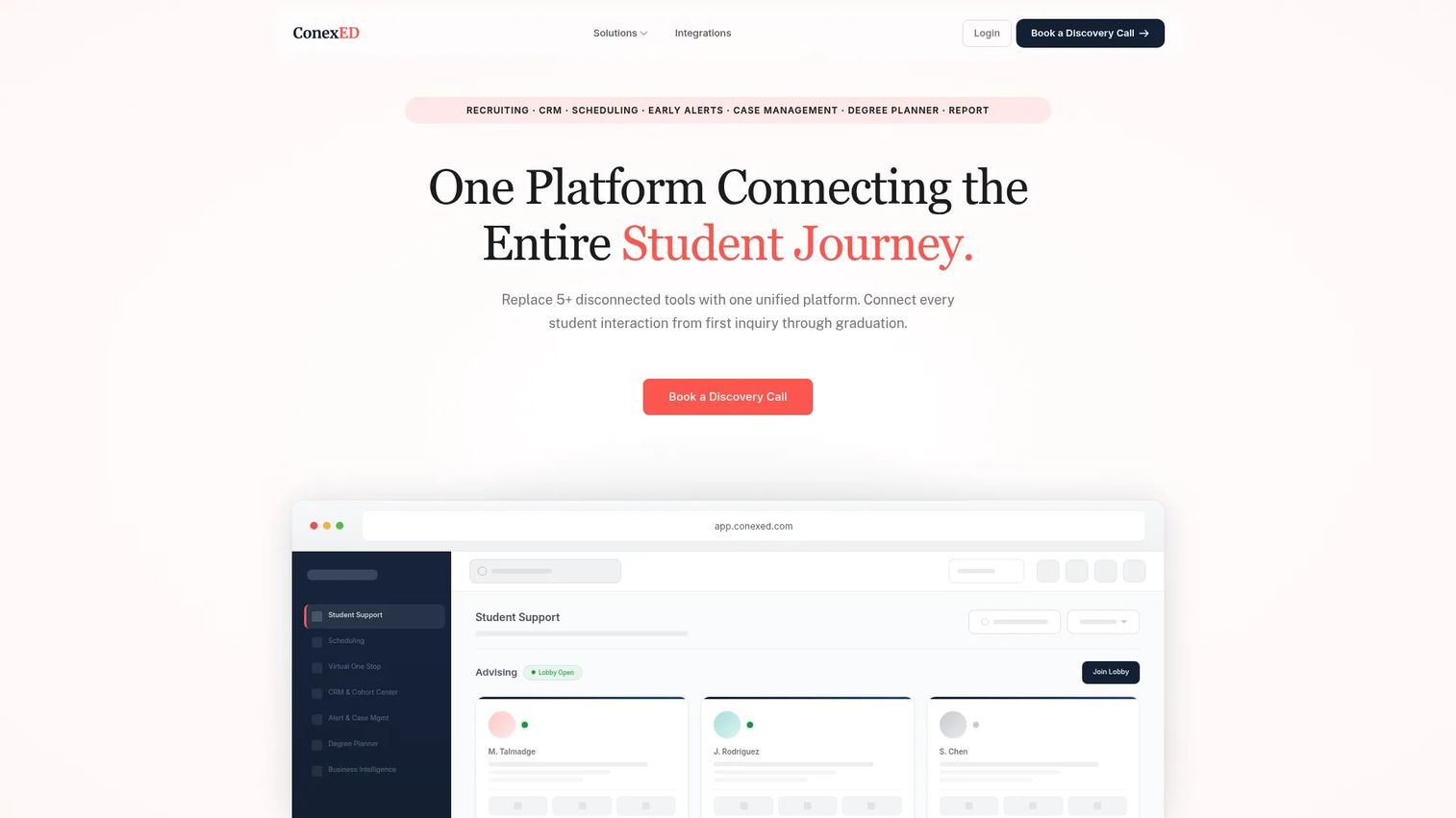
ConexED is a higher education platform that connects recruitment, appointment scheduling, early alerts, case management, communications, degree planning, and business intelligence across the student lifecycle. Its virtual advising tools, including online queues, walk-in management, two-way messaging, and kiosk support, make it particularly relevant for institutions with large online student populations or multi-campus service delivery needs.
Best for: Institutions with significant online, hybrid, or multi-campus student populations that need accessible virtual advising alongside early alerts and case workflows.
Key features
- Appointment scheduling and virtual advising queues
- Walk-in management and kiosk support
- Early alerts and case management
- Two-way communications and messaging
- Degree planning and business intelligence reporting
Why choose ConexED: The platform is especially practical when access and service delivery are the operational bottlenecks. It extends advising beyond physical office hours without requiring separate scheduling and case management tools.
ConexED pricing: Pricing is not posted on the ConexED site. Contact the vendor for institutional and module-level pricing.
G2 rating: 4.2/5, 190 reviews
8. Jenzabar SONIS
Jenzabar SONIS is a cloud-based student information system designed for smaller, specialized, and growing higher education institutions, including faith-based, healthcare, technical, continuing education, and international schools. It handles admissions, registration, student records, billing, financial aid, course management, and degree audits within one integrated environment. Advising workflows sit alongside the core SIS rather than as a separate layer, which suits institutions that prioritize a unified operational foundation over specialized advising features.
Best for: Smaller or specialized institutions that want advising functionality closely connected to core student records and administrative workflows, without managing a separate advising platform.
Key features
- Student records, registration, billing, and financial aid
- Admissions and applicant management
- Course management, grading, attendance, and degree audits
- Academic planning support
- Reporting and administrative controls
Why choose Jenzabar SONIS: The fit is for teams that prioritize an integrated institutional system over an isolated advising layer. Institutions that need sophisticated coordinated care, predictive alerts, or cross-department case management may find that a standalone student success platform handles those jobs better alongside SONIS.
Jenzabar SONIS pricing: Pricing is not posted on the Jenzabar site. Contact the vendor for current packaging and implementation terms.
G2 rating: 3.7/5
9. Salesforce Education Cloud
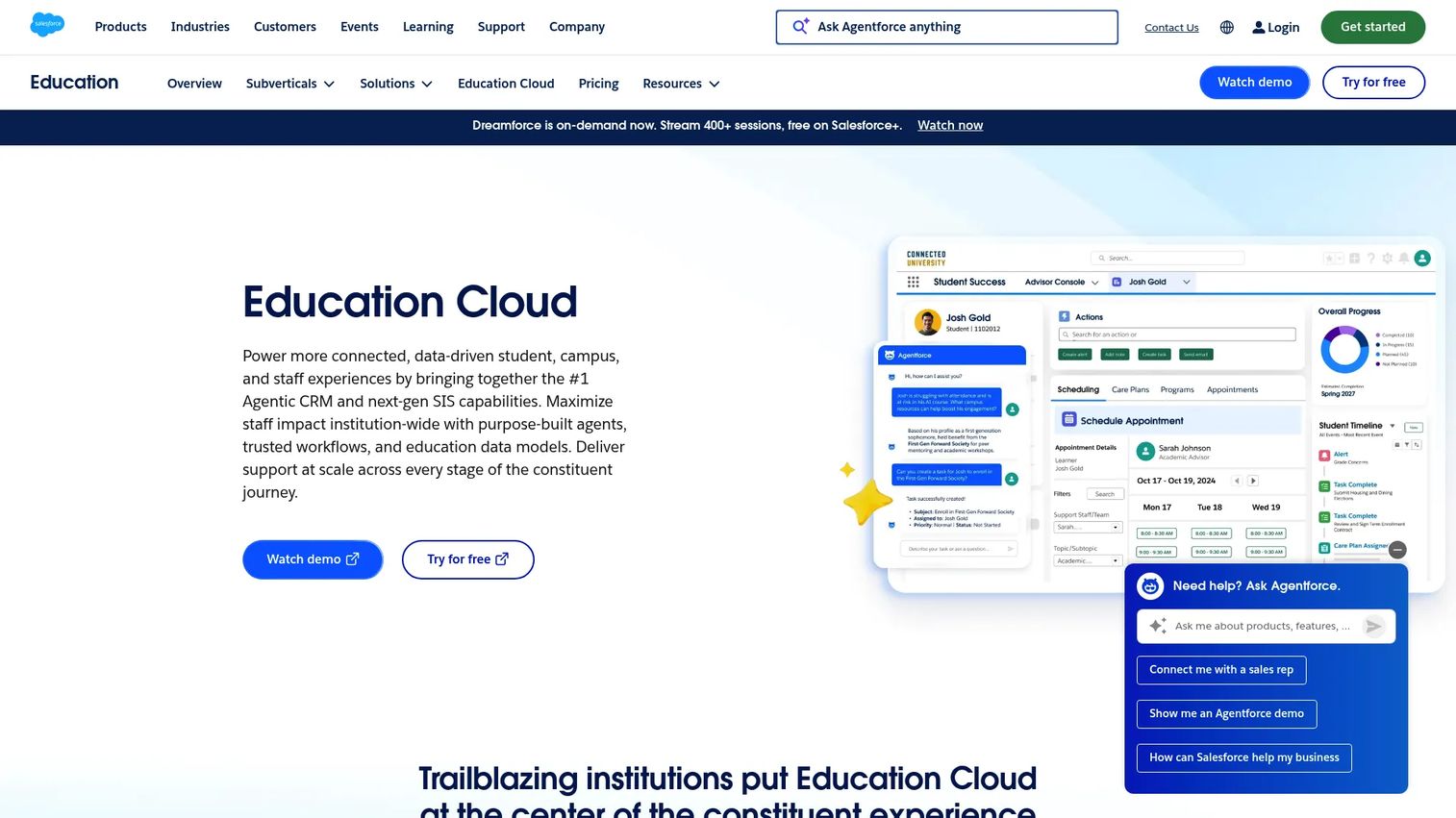
Salesforce Education Cloud, now also referenced as Agentforce Education in current Salesforce documentation, is a configurable CRM platform for learner and institution relationship management across the education lifecycle. It supports recruitment, admissions, academic operations, student success, mentoring, alumni relations, and fundraising within Salesforce's broader CRM infrastructure. AI-powered agents, workflow automation, configurable dashboards, and education-specific data models let institutions build advising and student services workflows on top of an existing Salesforce operating model.
Best for: Institutions already invested in Salesforce that need flexible relationship, case, engagement, and account management software across student-facing teams, with room to configure advising-specific workflows.
Key features
- Education-specific data model with unified learner profiles
- Recruitment, admissions, student success, and alumni relations
- AI-powered agents, workflow automation, and portals
- Case and service workflows with configurable dashboards
- CRM integrations and analytics
Why choose Salesforce Education Cloud: Configurability is the main argument. It works well where the institution has Salesforce administrators, a clear data model, and existing Salesforce governance. It is not a plug-in replacement for specialized degree audit tools, so institutions typically pair it with Degree Works or a planning-specific layer.
Salesforce Education Cloud pricing: Enterprise Edition starts at $81.25 per user per month, billed annually. Unlimited Edition is $138.75 per user per month, billed annually. Additional editions for sales and service functions range from $87 to $363 per user per month. Confirm edition requirements and implementation costs directly with Salesforce.
G2 rating: 4.2/5
10. Workday Student
Workday Student is an AI-enabled higher education student information system covering the student lifecycle from recruiting and admissions through advising, financials, and graduation. Its academic planning, registration, student records, curriculum management, and financial aid capabilities sit within the same environment as Workday's finance and human-capital systems, which is the core value proposition for institutions already standardized on Workday. Student engagement journeys, personalized communications, and advisor appointment capabilities are included.
Best for: Higher education institutions that have standardized on Workday and want academic planning, advising, and student success workflows embedded in the same enterprise system.
Key features
- Academic advising, planning, and registration
- Student records and curriculum management
- Student recruitment and admissions
- Student finance and financial aid
- Student engagement journeys and personalized communications
Why choose Workday Student: Most compelling for institutions that want academic planning and advising within a single enterprise student environment and already have Workday handling finance or HR. Verify how deeply the advising module supports your specific local advising model before treating it as a dedicated student success platform.
Workday Student pricing: Workday doesn't post pricing. Contact Workday directly for institutional pricing and implementation terms.
G2 rating: 4.0/5
Considerations when choosing academic advising software
Match the tool to the advising model
A centralized advising office, a faculty-led model, a community college success center, and an online university do not need the same system. Define your operating model before comparing features. A platform built for centralized appointment workflows will create friction in a faculty-advised environment, and vice versa.
Verify SIS and LMS data quality before committing
The software is only as useful as the data it receives. Ask specifically which student records, course activity, enrollment statuses, holds, and milestones sync automatically. Confirm sync frequency, who owns the integration on the institutional side, and how errors surface when data doesn't transfer correctly. Integration promises made during demos often don't match production reality.
Test the student and advisor experience separately
Students need a clear path to planning and support. Advisors need a usable workspace during a live appointment under time pressure. Require both groups to complete a real workflow during evaluation. If your VP of Student Success can't get through a referral workflow without documentation, it won't get used after launch.
Evaluate intervention workflows, not just dashboards
A risk score has little value if it doesn't produce a clear owner, an outreach record, notes, and a follow-up. Ask for a live demonstration from early alert to resolved case. That workflow, not the dashboard visualization, is where institutional value either materializes or gets lost.
Plan governance across departments before launch
Academic advising software crosses academic affairs, IT, enrollment, student services, and institutional research. Assign owners for configuration, data definitions, training, change management, and release testing before the contract is signed. Tools that cross this many departments without clear ownership tend to stall at go-live.
Conclusion
The best academic advising software is the platform that turns student data into a clear next action for the advisor and a credible path for the student. No single tool is best in every situation.
For institution-wide coordinated care and proactive outreach, EAB Navigate360 is the strongest choice. For degree planning clarity at the student and advisor level, Stellic is purpose-built. Degree Works remains the reliable foundation for registrar-driven degree audit work and pairs well with a coordinated care platform on top. ConexED handles virtual and multi-campus service delivery without requiring separate scheduling infrastructure.
SIS-connected options, including Ellucian Student Success, Jenzabar SONIS, and Workday Student, make the most sense when integration and data continuity outweigh the value of a specialized standalone platform. Salesforce Education Cloud belongs on the shortlist for institutions that already govern their operations through Salesforce.
The practical next step: Shortlist two or three platforms, map them against your current advising workflows, and require each vendor to demonstrate a real student journey from initial planning through an intervention. The gaps show up in the workflow demonstration, not the slide deck.
For additional reading on related alumni management software, appointment reminder software, and campus management software tools that connect to student success operations, see the linked guides.
FAQs
Academic advising software is a higher education platform that helps institutions manage degree planning, appointments, student progress, advisor notes, outreach, early alerts, referrals, and intervention workflows. The category includes both focused advising platforms built around appointment and caseload management, and broader student success systems that coordinate outreach and intervention across departments.
A student information system is the institutional system of record for enrollment, academic records, registration, grades, and related data. Academic advising software uses that data to support planning, outreach, caseload management, and intervention workflows. Some platforms, like Workday Student and Jenzabar SONIS, combine both functions. Others, like Stellic or Watermark, sit on top of the SIS and pull data from it.
Software supports retention by helping teams identify students who need support, coordinate follow-up, and track whether interventions close. It does not guarantee retention gains. Outcomes depend on staffing levels, intervention quality, advisor adoption, and the accuracy of the data flowing into the system. Institutions should establish a baseline before implementation and measure appointment completion, intervention response time, and early-alert-to-resolution rates after launch.
The priority depends on the advising model, but most institutions need degree planning, appointment scheduling, student profiles, early alerts, case management, reporting, communication tools, mobile access, and SIS integration. Institutions running coordinated care programs additionally need cross-department referral workflows and shared case records. Institutions focused on degree audit accuracy need strong curriculum-rules engines and what-if scenario planning.
Many student success and advising platforms connect with LMS data to surface engagement or academic risk indicators. Common integration points include login activity, assignment submission patterns, and grade data. The supported LMS platforms, data sync frequency, and specific activity data available vary by vendor. Verify this during procurement by requesting a current integration documentation sheet for your specific LMS version.
Degree Works is primarily a degree audit and academic planning system. It helps students and advisors understand curriculum requirements, remaining credits, and transfer pathways. It is central to advising at many institutions, but it does not include proactive outreach, coordinated care workflows, or cross-department case management. Institutions typically pair Degree Works with a student success platform for those functions.
Timelines vary by integration complexity, historical data requirements, workflow redesign, training scope, and governance structure. A narrow scheduling rollout can move in weeks. A campus-wide coordinated care or CRM implementation typically runs in multiple phases over six to eighteen months. The integration between the advising platform and the SIS is usually the longest single dependency.
Establish baseline metrics before launch, then track post-implementation changes in appointment completion rates, student engagement with planning tools, caseload coverage, referral completion, time from alert to first advisor contact, degree-plan completion, credit momentum, persistence rates, and advisor administrative time per student. Metrics that can't be baselinted before implementation shouldn't be claimed as outcomes afterward.