An operations director opens the morning shift with a gate conflict on one screen, an overdue airfield inspection in a paper binder, a work order buried in someone's inbox, and a compliance report due to the FAA by end of day. None of these systems talk to each other. That is the daily reality inside most airports still coordinating flights, gates, inspections, maintenance, and safety across disconnected spreadsheets and legacy tools.
The cost of that fragmentation shows up in delays, missed audit trails, and hours lost to manual reconciliation. The global airport management software market was valued at $11.6 billion in 2024 and is expected to reach $18.2 billion by 2030, growing at a 7.9% CAGR, according to Strategic Market Research (2024). The same research projects that by 2026, roughly 43.7% of globally connected international airports will integrate smart-terminal orchestration platforms. Airports are consolidating fragmented workflows into unified systems because the manual model no longer scales.
The right airport management software gives teams a single operational view: real-time airport operations across gates and flights, standardized inspections, connected maintenance and asset workflows, and audit-ready compliance reporting. The hard part is choosing a platform that matches how your airport actually runs. A regional airport prioritizing passenger flow has different needs than a mid-sized hub focused on FAA Part 139 compliance or a facility balancing operations against revenue and security.
This guide ranks four platforms by operational scope, compliance depth, workflow automation, and cross-department visibility, so you can shortlist without wading through vendor landing pages.
What's inside
This guide covers four airport management software tools chosen for operational breadth, compliance support, workflow automation, and visibility across airport teams. We focused on platforms built for real airport workflows: gate management, airfield inspections, maintenance, safety, asset tracking, and compliance reporting. Generic project management tools did not make the cut, because airports need modular platforms designed around aviation operations and regulatory requirements.
We selected these four based on four criteria: how much operational ground each covers, how well it supports FAA, TSA, and ICAO compliance, how deeply it automates repeatable workflows, and how clearly it surfaces operational visibility across departments. Each product section covers core capabilities, best fit, and practical selection context so you can match a platform to your airport's priorities.
TL;DR
- Best for broad airport operations and passenger processing: AeroCloud, a cloud-native airport operations system with gate management, FIDS, and passenger flow monitoring.
- Best for compliance depth and inspections: Aerosimple, a modular airport compliance software platform strong in FAA Part 139 inspections, maintenance, and safety workflows.
- Best for workflow automation and audit readiness: Veoci, a no-code platform for digitized forms, airfield inspections, work orders, and emergency management.
- Best for finance plus security oversight: TADERA, an integrated suite covering operations, safety, credentialing, security, and revenue management.
Match the platform to whether your airport leads with operations visibility, compliance, automation, or combined operational and commercial control.
What is airport management software?
Airport management software is a category of platforms that help airports coordinate operations, compliance, maintenance, safety, and reporting from a centralized system. It replaces fragmented spreadsheets, paper records, and disconnected point tools with a single source of truth for how the airport runs day to day. Buyers often use the terms airport management software and airport operations software interchangeably, and many vendors position their products under both labels.
An airport management system typically spans several core capabilities:
- Real-time operational visibility across gates, flights, staff activity, and resource allocation
- Airfield and facility inspections with standardized, repeatable digital forms
- Work order management for maintenance requests, assignment, and follow-through
- Airport asset management software for tracking equipment, vehicles, and infrastructure lifecycle
- Airport safety software for incident reporting, safety management systems, and emergency workflows
- Compliance reporting aligned to FAA, TSA, and ICAO requirements with audit trails
- Airport gate management software for stand allocation, turnaround coordination, and conflict resolution
- Cross-department coordination connecting operations, maintenance, safety, and administration
Modular architecture matters more here than in most software categories. A regional airport running a handful of flights daily has different priorities than an international hub managing thousands of passengers and complex security requirements. A modular airport platform lets teams turn on the capabilities they need, inspections and compliance first, then maintenance and asset visibility, without paying for or maintaining modules that do not fit their operation. That flexibility is why the strongest platforms in this category are built as configurable suites rather than one-size-fits-all products.
When to use airport management software
Improve real-time airport coordination
Reach for a platform when your team needs a single operational view across gates, flights, maintenance, and staff activity. Airports lose time when a gate change lives in one system, a delayed turnaround sits in another, and the ops desk reconciles both by phone. Centralized airport control reduces the delays caused by fragmented updates and manual coordination. If your morning shift starts by stitching together three spreadsheets, that is the signal.
Streamline inspections and compliance reporting
Use airport compliance software when FAA Part 139, TSA, or internal audit requirements make manual records too risky. Paper inspection logs are hard to standardize, easy to lose, and slow to produce during an audit. Digital airport inspection software gives you repeatable checklists, timestamped records, and faster response times when a finding needs remediation. Audit readiness stops being a scramble and becomes a byproduct of daily work.
Connect maintenance, safety, and asset workflows
Turn to a unified platform when work orders, asset tracking, safety reporting, and emergency workflows need to live in one system instead of scattered across departments. When a runway inspection flags a defect, the work order, the asset record, and the safety log should connect automatically. That linkage drives faster follow-through and clearer operational visibility, so nothing falls through the cracks between teams.
Comparison table
Here is how the four platforms compare on intent, primary use case, pricing, and G2 rating. Pricing across this category is quote-based and depends on airport size, selected modules, and user count, so we have noted that where public figures were not available.
| # | Product | Intent | Key use case | Pricing | G2 rating |
|---|---|---|---|---|---|
| 1 | AeroCloud | Broad airport operations | Passenger processing, gate management, FIDS, operational visibility | Modular, quote-based | Not enough reviews |
| 2 | Aerosimple | Compliance and operations | FAA Part 139 inspections, maintenance, safety, asset management | Modular, quote-based | Not listed |
| 3 | Veoci | Workflow automation | Digitized inspections, work orders, audit readiness, emergency management | Quote-based | 3.0/5 |
| 4 | TADERA | Finance plus security | Operations, safety, credentialing, revenue and property management | Quote-based | Not listed |
Use the table as a starting shortlist, then read the sections below for the operational detail that decides fit.
1. AeroCloud
AeroCloud is a cloud-native airport operations platform built around passenger processing and operational visibility. It positions its Airport Operations System (AOS) as the central hub, then layers on passenger processing tools and flow monitoring. For airports where passenger experience and real-time operations are the top priorities, AeroCloud is often the first platform on the shortlist.
The platform's cloud-native architecture matters for airports moving off legacy on-premise systems. Strategic Market Research (2024) found that by 2024, 64% of airports had migrated core systems to the cloud, and AeroCloud is built for that shift rather than retrofitted onto it. Its modular structure means airports can adopt the operations system first and expand into passenger processing and forward planning as needs grow.
Best for: Airports that need modular, cloud-native operations software with strong passenger processing and airport gate management software capabilities.
Key strengths
- Airport Operations System (AOS): Centralizes flight, gate, and resource data into a single operational view for real-time airport operations.
- Passenger processing solutions: Supports CUPPS, CUSS, and DCS workflows so airports can standardize check-in, boarding, and passenger flow.
- AeroCloud Optic: Monitors passenger flow across the terminal to spot congestion and reallocate resources before delays cascade.
Why choose AeroCloud: If your operational pain centers on passenger throughput, gate coordination, and moving off aging infrastructure, AeroCloud's cloud-native design fits that profile better than platforms retrofitted for the cloud. Its modular model lets a growing airport start with core operations and add passenger processing and airport asset management software over time, without committing to modules it does not need yet.
AeroCloud pricing: AeroCloud does not publish numeric pricing on its site. The company describes a modular, pay-for-what-you-need model with no user licence fees, so cost scales with the modules and operational scope you select. Airports evaluating AeroCloud will need to request a scoped quote based on size and requirements. No public G2 rating was available at the time of writing because the product does not yet have enough reviews.
2. Aerosimple
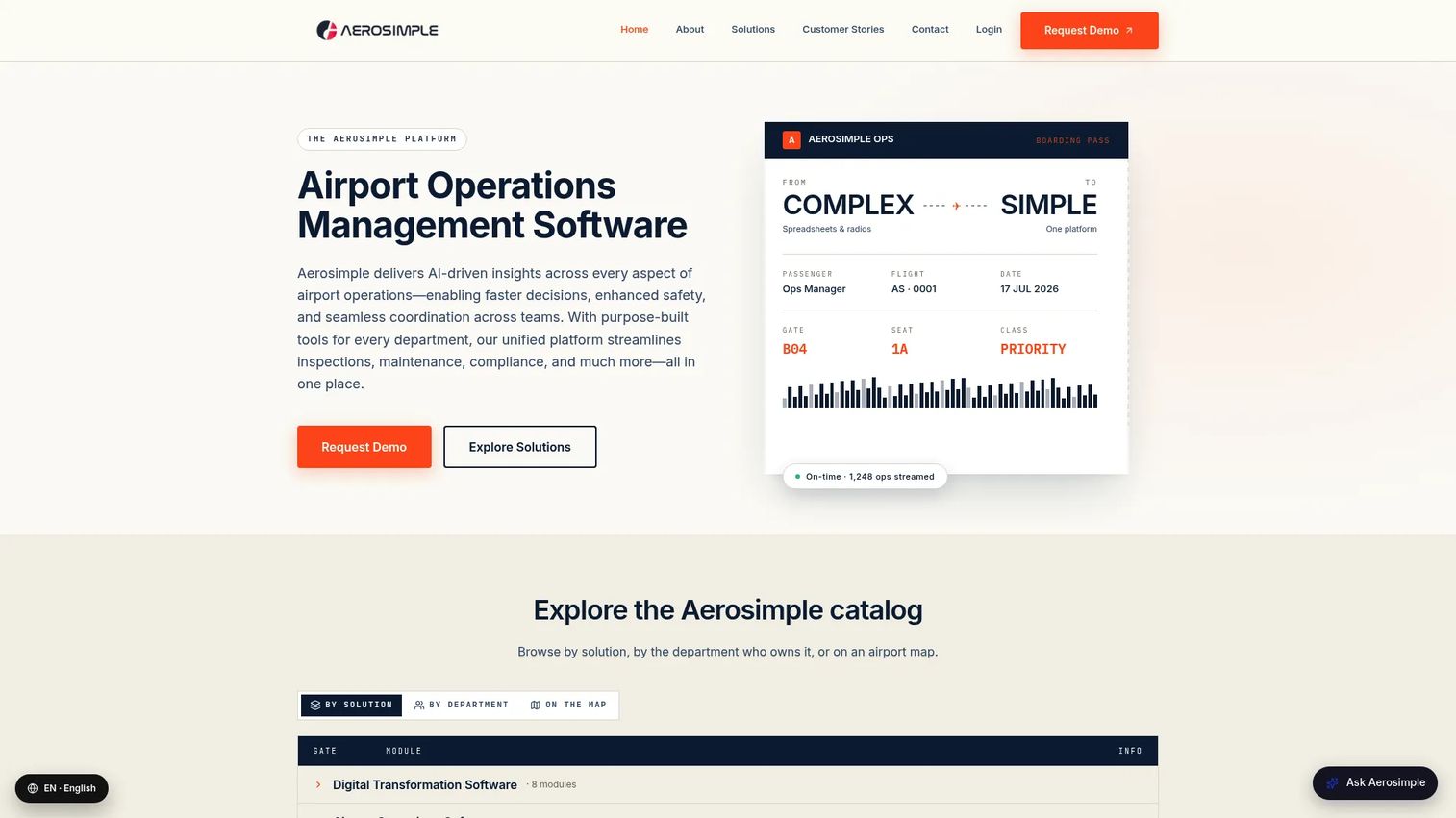
Aerosimple is airport operations management software built with compliance and standardization at its core. Where some platforms lead with passenger flow, Aerosimple leads with the operational and regulatory depth that airports need to stay audit-ready across inspections, maintenance, safety, and environmental workflows. It is a strong fit for teams that treat FAA Part 139, TSA, and ICAO alignment as non-negotiable.
The platform is modular by design, so an airport can start with airport compliance software and inspections, then expand into maintenance, training, and asset management as operations mature. Live dashboards, mobile inspections, and instant notifications keep the field and the ops desk on the same page. Its department-level coverage means operations, safety, and maintenance teams work in one system rather than maintaining parallel records.
Best for: Airports that prioritize compliance depth and want a modular airport platform covering inspections, maintenance, safety, and environmental workflows.
Key strengths
- Compliance and audit-ready workflows: Standardizes airfield inspections and reporting so audit readiness is built into daily operations, not reconstructed at deadline.
- Real-time dashboards and mobile inspections: Lets field teams complete airport inspection software checklists on a device and sync results instantly to a live operational view.
- AI-driven operational insights: Surfaces patterns across compliance tracking and automated reporting so teams catch issues before they become findings.
Why choose Aerosimple: For airports where regulatory alignment drives the buying decision, Aerosimple's compliance-first design and department-level coverage give operations, safety, and maintenance teams a shared system of record. Its work order management and airport maintenance software capabilities connect directly to inspection findings, so a defect flagged in the field flows into a tracked repair with a clear audit trail. That connective tissue is what turns compliance from a burden into a repeatable process.
Aerosimple pricing: Aerosimple does not publish numeric pricing publicly. The company describes a modular, subscription-based model that is quote-based and scales with airport size, selected modules, and user count. Teams evaluating Aerosimple should request a quote scoped to the modules they plan to deploy. A current G2 rating was not available at the time of writing.
3. Veoci
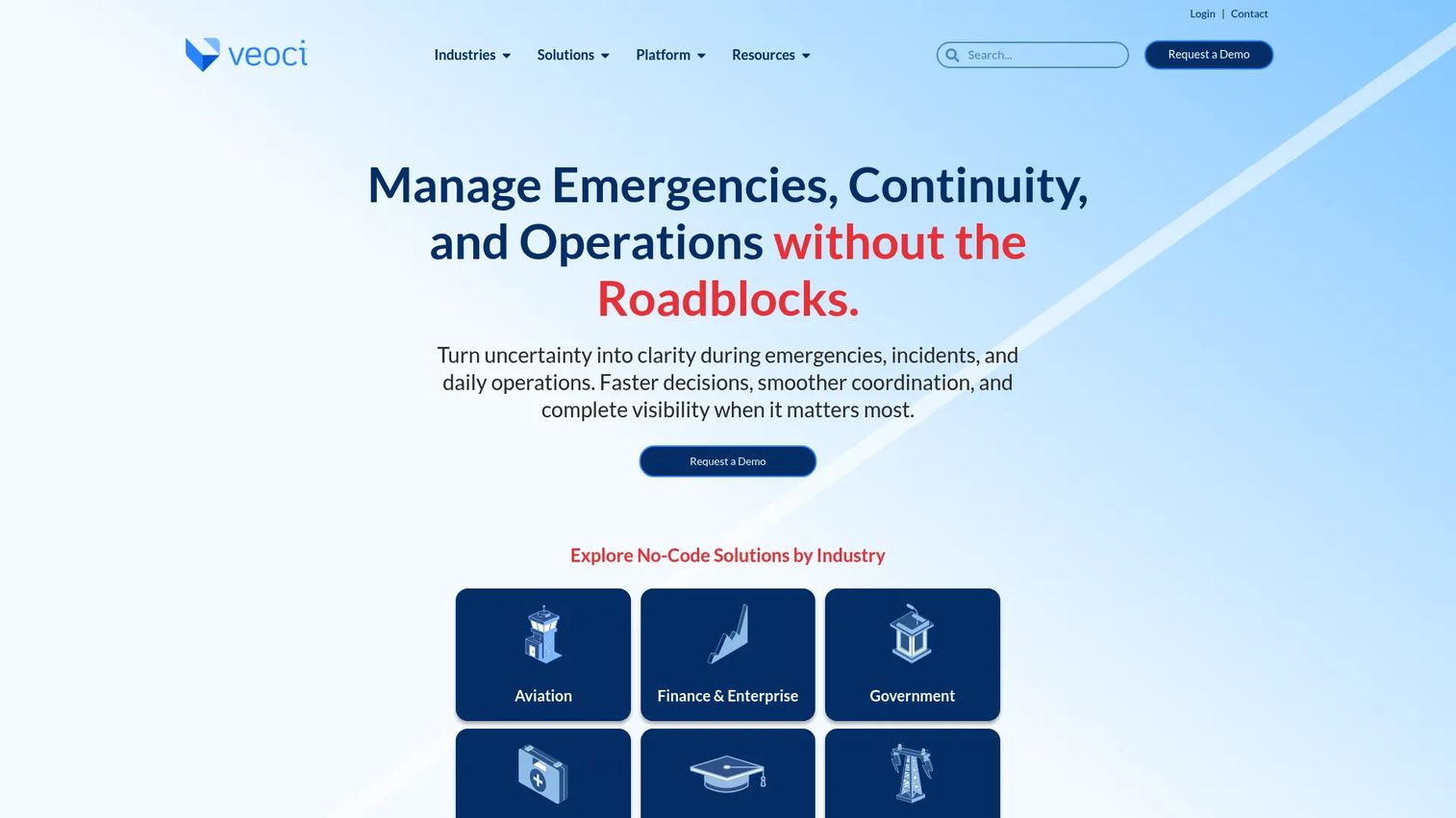
Veoci is a no-code platform built around digitized forms, workflows, and emergency management, widely used by airports for airfield inspections, work order management, and audit readiness. Its strength is turning manual, paper-based processes into structured digital workflows that generate centralized, timestamped records. For airports that want to digitize operations without heavy custom development, Veoci's no-code approach is the draw.
The platform's form-driven model lets teams build inspection checklists, maintenance requests, and safety reports that route automatically to the right people, with dashboards and GIS mapping layering visibility on top. Because Veoci grew from emergency management and continuity, its safety and emergency management workflows are mature, which matters for airports that need to coordinate crisis response alongside daily operations.
Best for: Airports that want to digitize inspections, work orders, and safety and emergency management through configurable, no-code workflows.
Key strengths
- No-code forms, workflows, and custom actions: Lets ops teams build and adjust airport inspection software checklists and work order flows without waiting on developers.
- Mass notification and collaboration tools: Supports safety and emergency management with real-time alerts and shared collaboration rooms during incidents.
- Dashboards, GIS mapping, and saved views: Layer operational visibility and audit readiness over every digitized workflow, with print-ready templates for reporting.
Why choose Veoci: If your priority is digitizing airfield inspections and work orders while keeping a strong emergency management backbone, Veoci's no-code flexibility lets you shape the platform to your processes rather than the reverse. Its centralized records and audit-ready reporting make it a fit for airport safety software needs where documentation and fast response matter equally. Veoci holds a 3.0/5 rating on G2, so weigh reviewer feedback against your specific workflow requirements during evaluation.
Veoci pricing: Veoci does not publish public pricing; its site routes evaluators to a demo request. Pricing is quote-based and depends on the workflows, users, and modules an airport deploys. Because Veoci spans emergency management, continuity, and operational workflows, scope your quote around the specific use cases you plan to run. Veoci carries a 3.0/5 rating on G2 at the time of writing.
4. TADERA
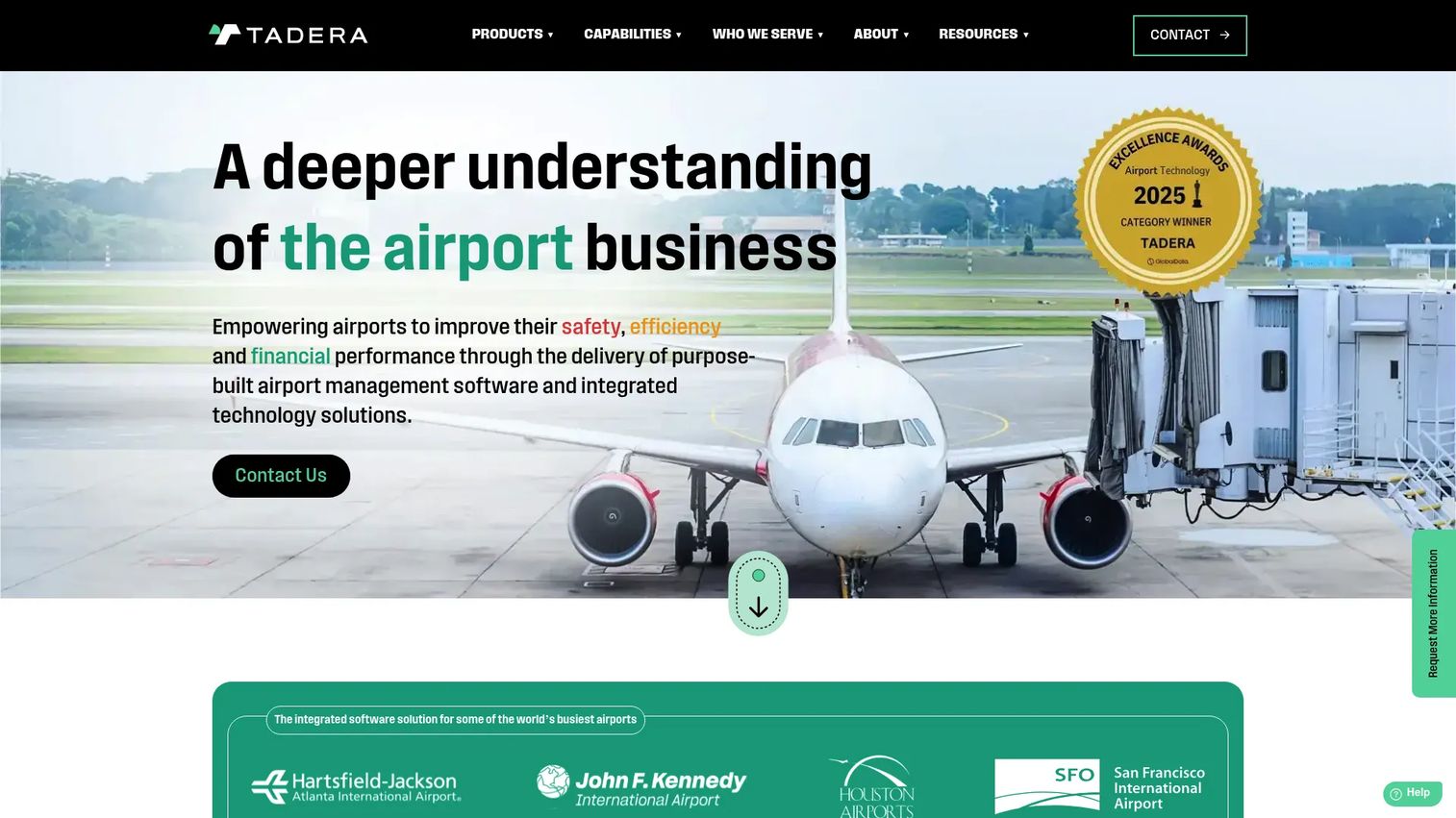
TADERA is an integrated airport management software suite that spans operations, safety, security, credentialing, and finance. Where most platforms in this category focus on operational workflows, TADERA pairs those with revenue and property management, making it a fit for airports that need to manage commercial and operational priorities in the same system. It is especially relevant where security control and financial oversight matter together.
The suite framing is TADERA's differentiator. An airport running TADERA can coordinate operations and compliance management, run its airport safety software and safety management system, manage credentialing and security, and oversee revenue and property from a connected platform. That breadth suits airports and aviation agencies that want fewer vendors and tighter integration between operational and commercial data.
Best for: Airports and aviation agencies that need integrated operations, safety, security, credentialing, and revenue management in one suite.
Key strengths
- Operations and compliance management: Coordinates daily operations with compliance workflows and audit readiness across departments.
- Airport safety management system: Handles incident reporting, safety workflows, and airport safety software requirements within the broader suite.
- Revenue and property management: Connects airport gate management software and utilization data to commercial oversight, so operations and revenue teams work from shared data.
Why choose TADERA: For airports where security and financial control carry as much weight as operational efficiency, TADERA's integrated suite reduces the gap between operational and commercial systems. Credentialing and security sit alongside safety and revenue management, which helps teams that would otherwise stitch together separate tools. If your airport treats revenue oversight and security as first-class priorities rather than afterthoughts, TADERA's breadth is worth evaluating.
TADERA pricing: TADERA does not publish public pricing; its site uses request-information and contact-sales CTAs. Pricing is quote-based and scales with the modules and scope an airport deploys across operations, safety, security, and finance. Because the suite is broad, scope your evaluation around which modules you will actually run. A current G2 rating was not available at the time of writing.
Considerations
Before you commit to a platform, work through this checklist. Airport management software is a multi-year decision, and the right questions surface fit before implementation does.
Compliance and audit readiness
Verify how the platform handles reporting, permissions, and audit trails against your regulatory obligations. Ask whether inspection records are timestamped and immutable, whether reports map cleanly to FAA Part 139, TSA, and ICAO formats, and whether role-based permissions match your org structure. Regulatory compliance is only as strong as the audit trail behind it, so confirm you can produce a complete record on demand.
Workflow coverage
Map the platform's coverage against every workflow you need: inspections, maintenance, safety, gate management, and record-keeping. A platform strong in one area may leave gaps in another. Decide which workflows are must-haves at launch and which can wait, then confirm the vendor supports your day-one scope without forcing you into modules you do not need.
Integration depth
Identify which systems need to connect: flight data feeds, asset management systems, identity and credentialing, and downstream reporting tools. Ask about API availability, supported data formats, and whether integrations are configured or custom-built. Weak integration turns a promising platform into another silo.
Scalability and modularity
Confirm the platform can expand as your airport grows without forcing you into a bloated deployment on day one. A modular airport platform should let you start with your highest-priority workflows and add capabilities on your timeline. Ask how modules are priced and whether adding one requires re-implementation.
Trust proof and implementation fit
Check case studies and references from airports of similar size and operational profile to yours. Ask about implementation timelines, onboarding support, and whether the vendor brings aviation-specific expertise or treats airports as a generic vertical. The best platform on paper still needs an implementation team that understands airfield operations.
Conclusion
The best airport management software depends entirely on what your airport leads with. If operational visibility and passenger processing top your list, AeroCloud's cloud-native operations system is built for that. If compliance depth drives the decision, Aerosimple's inspection, maintenance, and safety coverage keeps you audit-ready by default. If you want to digitize workflows and lean on strong emergency management, Veoci's no-code platform shapes to your processes. And if security and finance carry equal weight to operations, TADERA's integrated suite closes the gap between commercial and operational data.
Use the comparison table and the considerations checklist to narrow this list to two vendors, then request scoped demos from each. Bring your real workflows to those demos: your actual inspection checklist, a live gate conflict, a maintenance escalation. The platform that handles your day-to-day cleanly, not the one with the longest feature list, is the one to shortlist. From there, weigh implementation timelines and references from comparable airports before you sign.
FAQs
Airport management software is a category of platforms that help airports coordinate operations, compliance, maintenance, safety, and reporting from a centralized system. It replaces paper records and disconnected spreadsheets with a single source of truth across departments. The goal is real-time operational visibility, standardized workflows, and audit-ready records that reduce manual coordination.
The highest-impact features are digitized inspections, work order management, airport asset management software, gate management, compliance reporting, and cross-department coordination. Strong platforms also add real-time dashboards, safety and incident reporting, and audit trails. Prioritize the workflows tied to your regulatory obligations and your biggest daily coordination pains.
Teams use it to standardize inspections with repeatable digital checklists, capture timestamped and immutable records, and centralize documentation across departments. When an audit arrives, the platform can produce a complete, mapped record aligned to FAA Part 139, TSA, and ICAO requirements. That turns regulatory compliance from a deadline scramble into a byproduct of daily work.
In practice, the terms overlap heavily and most vendors use them interchangeably. Airport operations software sometimes emphasizes real-time coordination of flights, gates, and resources, while airport management software can imply broader coverage including finance, security, and compliance. Because vendors label products both ways, evaluate on actual capabilities rather than the name on the page.
Aerosimple and Veoci both emphasize digitized inspections and work order management. Aerosimple leads with compliance-first standardization across inspections, maintenance, and safety, while Veoci brings no-code flexibility to build and adjust airfield inspection and work order flows. Match your choice to whether you want compliance depth out of the box or maximum workflow configurability.
For large or complex operations, evaluate platforms with genuine modular architecture, broad department coverage, and centralized visibility. AeroCloud fits airports leading with passenger processing and cloud-native operations, while TADERA suits those needing operations, safety, security, and revenue in one suite. Confirm that adding modules over time does not require re-implementation.
Compare operational scope, compliance fit, integration depth, implementation support, and reference customers of similar size and profile. Bring your real workflows to scoped demos rather than relying on feature lists. Narrow to two vendors using a considerations checklist, then weigh implementation timelines and aviation-specific expertise before committing.