You scoped a card feature in two sprints. Then legal asked about the bank partner. Then RevOps asked about reconciliation. Then engineering asked who maintains the issuing integration after launch. The feature that looked like a quick win turned into a quarter-long compliance and infrastructure project.
That gap between "we should issue cards" and "we shipped cards" is where most roadmaps stall. A virtual card issuing platform exists to close it: the issuing API, the banking partners, the spend controls, the compliance posture, and the reconciliation tooling come pre-assembled so you build the product, not the financial plumbing.
The demand is real. Juniper Research projects 175 billion virtual card transactions by 2028, up from 36 billion in 2023. And 360iResearch reports that over 78% of B2B organizations have already adopted virtual card solutions to replace manual processes. For a product manager, the question is no longer whether to issue cards. It's which platform fits your roadmap, your engineering bandwidth, and your compliance load without becoming a maintenance burden.
This guide compares seven platforms by the criteria that actually move a launch decision: API depth, spend controls, compliance posture, mobile wallet provisioning, treasury integration, and operational tooling. If your evaluation work also touches adjacent stacks, the breakdowns of the best customer data platform and best contract lifecycle management software follow the same decision-first format. For the financial controls layer specifically, the audit management software guide pairs well with anything involving spend governance.
What's inside
This guide is for product managers, fintech teams, and operators choosing a virtual card issuing platform to ship a monetizable financial feature. We selected platforms based on four criteria that matter most when a card program touches your roadmap: API depth and developer-first setup, spend controls and authorization rules, compliance posture and banking partners, and treasury integration plus operational tooling like reconciliation and analytics. Seven platforms made the list, ranging from developer-led infrastructure to enterprise-grade issuing and full embedded finance stacks. Each entry is framed around which product strategy it fits, not just a feature checklist.
TL;DR
- Best all-around platform: Stripe, if your stack already lives in Stripe and you want issuing, Treasury, and spend controls under one roof with transparent pricing.
- Best for deep issuing infrastructure: Galileo, for teams that need broad program capabilities, many card types, and enterprise-grade operational support.
- Best for embedded finance: Unit, when you want cards plus accounts, money movement, and a faster path to launch a full banking stack.
- Best for global enterprise scale: Adyen, for teams that care about instant virtual cards, unified acquiring and issuing, and reconciliation across regions.
- Best for programmatic control: Marqeta, for flexible card programs with just-in-time funding and dynamic spend controls.
- Best for developer velocity: Lithic, for product teams that want fast API integration and tight authorization control.
What is a virtual card issuing platform?
A virtual card issuing platform is the financial infrastructure that lets a company create and manage payment cards (mostly virtual, sometimes physical) through an API, without becoming a bank or building direct network relationships itself.
Physical card issuing produces a plastic card mailed to a cardholder. Virtual card issuing creates a card number instantly, ready to use online or provisioned into a mobile wallet within seconds. For most SaaS, marketplace, and spend-management products, virtual issuing is the priority because it lets you issue virtual cards instantly inside your own product flow, with no fulfillment delay.
API-first platforms package the parts that used to take a year of bank negotiations and compliance work into a single integration. That is what makes them relevant to a product roadmap: you get instant issuance, programmatic control, and a compliance framework without staffing a payments team.
Core capabilities a card issuing platform typically provides:
- Issuance: create virtual or physical cards via a card issuing API, including single-use and branded cards.
- Spend controls: set authorization rules, merchant category limits, per-transaction caps, and real-time controls.
- Mobile wallet provisioning: push cards to Apple Pay and Google Pay via tokenization.
- Compliance: KYC, KYB, AML monitoring, and PCI scope handled through the platform and its banking partners.
- Reconciliation: transaction-level data, settlement reporting, and ledger sync.
- Analytics: spend visibility, authorization data, and program-level reporting.
- Treasury integration: funding accounts, balances, and money movement tied to the card program.
The maturity gap between platforms is widest on compliance, banking partners, and treasury depth, which is exactly where a PM's risk lives.
When to use a virtual card issuing platform
Launch embedded spend products
If cards are a feature inside a broader financial product (a spend-management app, a marketplace payout system, a vertical SaaS with money movement), you need an issuing platform that handles the program management layer. The PM decision here is build versus assemble: most teams cannot justify the compliance and banking overhead of issuing directly, so the platform becomes the foundation the product sits on. Evaluate API breadth and treasury adjacency first.
Replace manual expense or rewards workflows
When the goal is employee spend, supplier payments, incentive disbursements, or customer payouts, cards replace manual reimbursement and bank-transfer flows. The value is operational: instant issuance, programmatic limits, and clean reconciliation instead of spreadsheets. Here the priority shifts to spend controls and reporting depth over raw API flexibility.
Add real-time controls and reporting
In regulated or high-volume programs, the ability to set authorization rules, block or approve transactions in real time, and surface transaction-level data is non-negotiable. Real-time controls protect against fraud and misuse, and detailed reporting keeps finance and compliance teams aligned. If your program touches regulated spend, weight compliance posture and control granularity heavily.
Comparison table
The table below sorts the seven platforms by intent and primary use case. Pricing in card issuing is largely interchange-based and program-specific, so several platforms price through sales rather than a public list. Ratings come from each vendor's G2 listing where available.
| # | Product | Intent | Key use case | Pricing | G2 rating |
|---|---|---|---|---|---|
| 1 | Stripe | All-around issuing + treasury | Issuing inside an existing Stripe stack | 2.9% + 30¢ per transaction (payments); issuing priced separately | 4.4/5 |
| 2 | Galileo | Deep issuing infrastructure | Enterprise card programs with broad capabilities | Custom | 4.4/5 |
| 3 | Unit | Embedded finance | Cards plus accounts and money movement | Contact sales | Not listed |
| 4 | Adyen | Global enterprise issuing | Instant virtual cards at scale | $0.13 + 4% per transaction (example) | 4.0/5 |
| 5 | Marqeta | Programmatic control | Flexible branded card programs | Custom | 4.4/5 |
| 6 | Lithic | Developer velocity | Fast API issuing and auth control | Custom | 4.5/5 |
| 7 | Treasury Prime | Embedded banking | Cards plus treasury and accounts | Usage-based | Not listed |
1. Stripe
Stripe is the broadest option on this list, and for teams already running payments or billing on Stripe, it is usually the path of least resistance. Stripe Issuing lets you create virtual and physical cards programmatically, pairs natively with Stripe Treasury for funding and money movement, and inherits the same compliance posture and banking partners that power the rest of the Stripe platform. You can issue virtual cards instantly and provision them into Apple Pay and Google Pay.
Best for: Product teams already on Stripe who want issuing, treasury integration, and spend controls without bolting on a separate vendor.
Key strengths
- Treasury tie-in: Issuing connects directly to Stripe Treasury, so funding, balances, and money movement live in one system.
- Spend controls: real-time authorization rules, merchant category restrictions, and per-card limits enforced at the network level.
- Ecosystem fit: issuing data flows into the same dashboard, APIs, and reporting your team already uses for payments and billing.
Why choose Stripe: The honest case for Stripe is ecosystem gravity. If your billing, payments, and ledger already run here, adding issuing is an incremental integration rather than a new vendor relationship, new compliance review, and new reconciliation workflow. The interchange revenue and revenue-share structure can also help offset program costs. Teams not already on Stripe should weigh whether the broader platform is worth adopting for issuing alone.
Stripe pricing: Stripe's standard payments pricing is 2.9% + 30¢ per successful domestic card transaction, listed publicly on its pricing page. Issuing is priced separately and varies by card type and program volume, with custom pricing available for larger businesses. There is no free tier. Contact Stripe sales for issuing-specific and Treasury pricing.
2. Galileo
Galileo is the API-heavy choice for teams that need deep issuing infrastructure rather than a quick-launch wrapper. It provides open APIs with sandbox testing, broad payments and cards infrastructure, and real-time risk and fraud decisioning. Galileo supports many card types, token management, and push provisioning to mobile wallets, alongside the program guidance that larger programs lean on.
Best for: Banks, fintechs, and brands that need enterprise financial infrastructure and broad program capabilities, not just a card number generator.
Key strengths
- Program breadth: support for many card types and program structures under one issuing platform.
- Real-time risk decisioning: authorization rules and fraud controls applied at transaction time.
- Developer tooling: open APIs and sandbox testing for building and validating before launch.
Why choose Galileo: Galileo fits teams that expect their card program to grow into substantial volume and complexity. The trade-off is that this depth suits organizations ready to invest in a full program rather than ship a lightweight feature in a sprint. For PMs planning a multi-product financial roadmap, that infrastructure depth is the point.
Galileo pricing: Galileo does not publish public pricing. The company states that pricing depends on business needs and is delivered through custom proposals. Expect a sales-led process tied to program scope, volume, and the services you need. Galileo holds a 4.4/5 rating on G2.
3. Unit
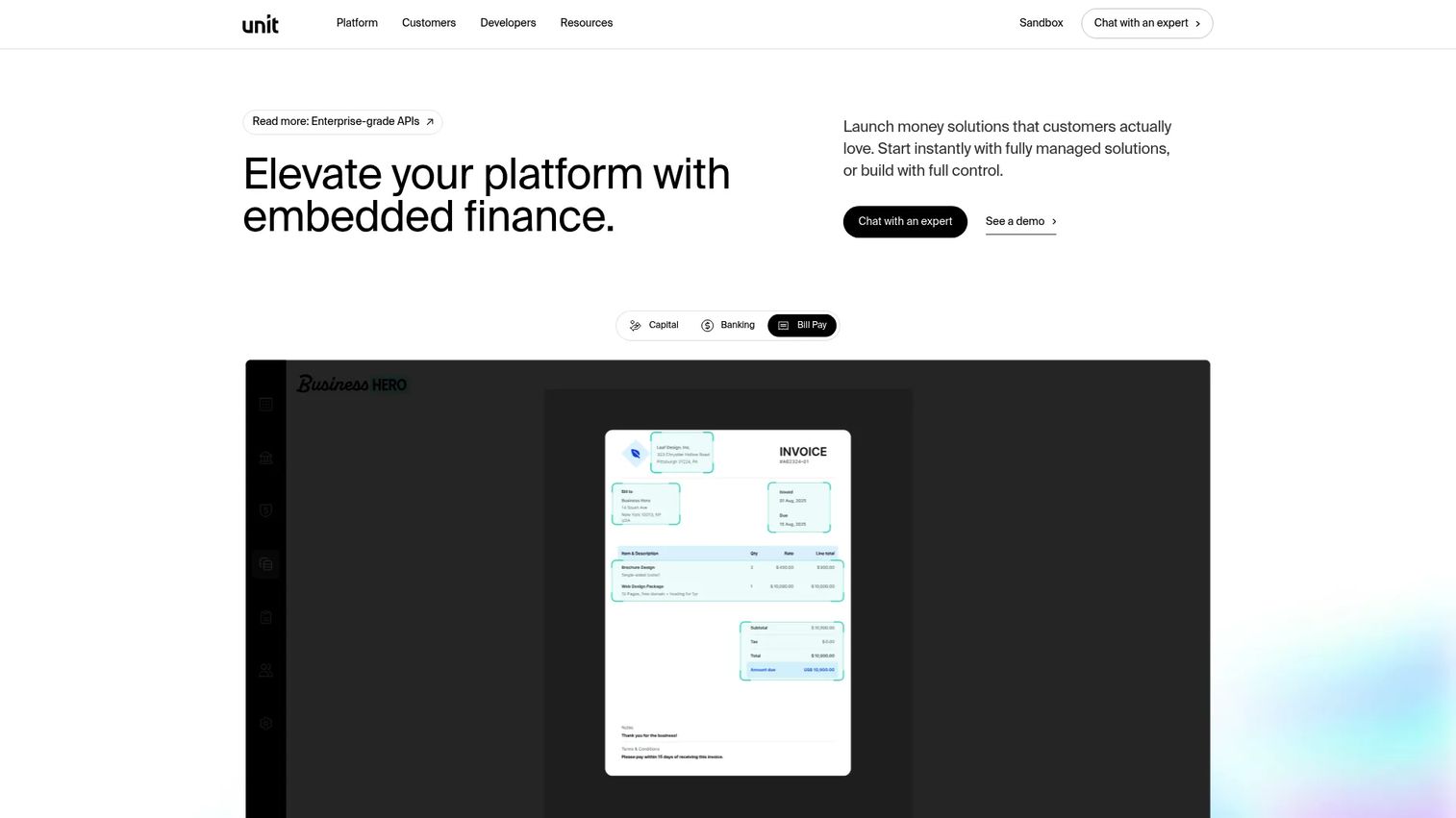
Unit is the embedded finance option, built for software platforms that want cards as part of a broader banking stack rather than a standalone feature. Alongside card issuing via API and dashboard, Unit provides accounts and wallets with real routing and account numbers, plus money movement across ACH, wires, RTP, checks, and international payments. That makes it a fit when the roadmap is a full financial product, not just cards.
Best for: Fintech and software platforms that need embedded financial infrastructure, including accounts and money movement around their card program.
Key strengths
- Accounts and wallets: FBO accounts with real routing and account numbers, so cards sit on top of real balances.
- Broad money movement: ACH, wires, RTP, checks, and international payments through one integration.
- API and dashboard: issue branded cards and capital products programmatically or through an operations dashboard.
Why choose Unit: Unit makes sense when cards are one piece of a bigger money-movement product. Rather than stitching issuing, accounts, and payments from separate vendors, you get a coherent embedded finance stack with a faster path to launch. For a PM, that consolidation reduces the number of compliance and reconciliation surfaces your team has to own.
Unit pricing: Unit does not list public pricing. Per its documentation, card issuing and related services are priced through a conversation with a Customer Success Manager. Pricing is program-specific, so plan for a sales-led scoping process around volume, services, and bank partner requirements.
4. Adyen
Adyen is the enterprise-grade, global option, and its differentiator is that issuing sits on the same platform as its acquiring business. That unified model means a single source of payment data across accepting and issuing, which matters for teams that care about reconciliation and operational visibility at scale. Adyen supports instant virtual cards, branded issuance, and provisioning into mobile wallets across regions.
Best for: Enterprises that need global scale, instant virtual cards, and unified acquiring and issuing under one platform.
Key strengths
- Unified commerce: issuing and acquiring on one platform for cross-channel payment data and cleaner reconciliation.
- Instant issuance: create virtual cards instantly and provision them across global regions.
- Risk and optimization tooling: authentication, fraud management, and revenue optimization built in.
Why choose Adyen: Adyen fits teams operating at global scale where the same platform handling payments acceptance and card issuing meaningfully simplifies reconciliation and reporting. The interchange revenue and consolidated data model are real advantages for large programs. Smaller teams may find the platform geared toward enterprise scope and volume.
Adyen pricing: Adyen prices on a transaction basis with no setup or monthly fees, per its pricing page. A representative US example is $0.13 + 4% per transaction for a given payment method, though issuing and other products are priced separately and vary by region and method. There is no free tier. Adyen holds a 4.0/5 rating on G2.
5. Marqeta
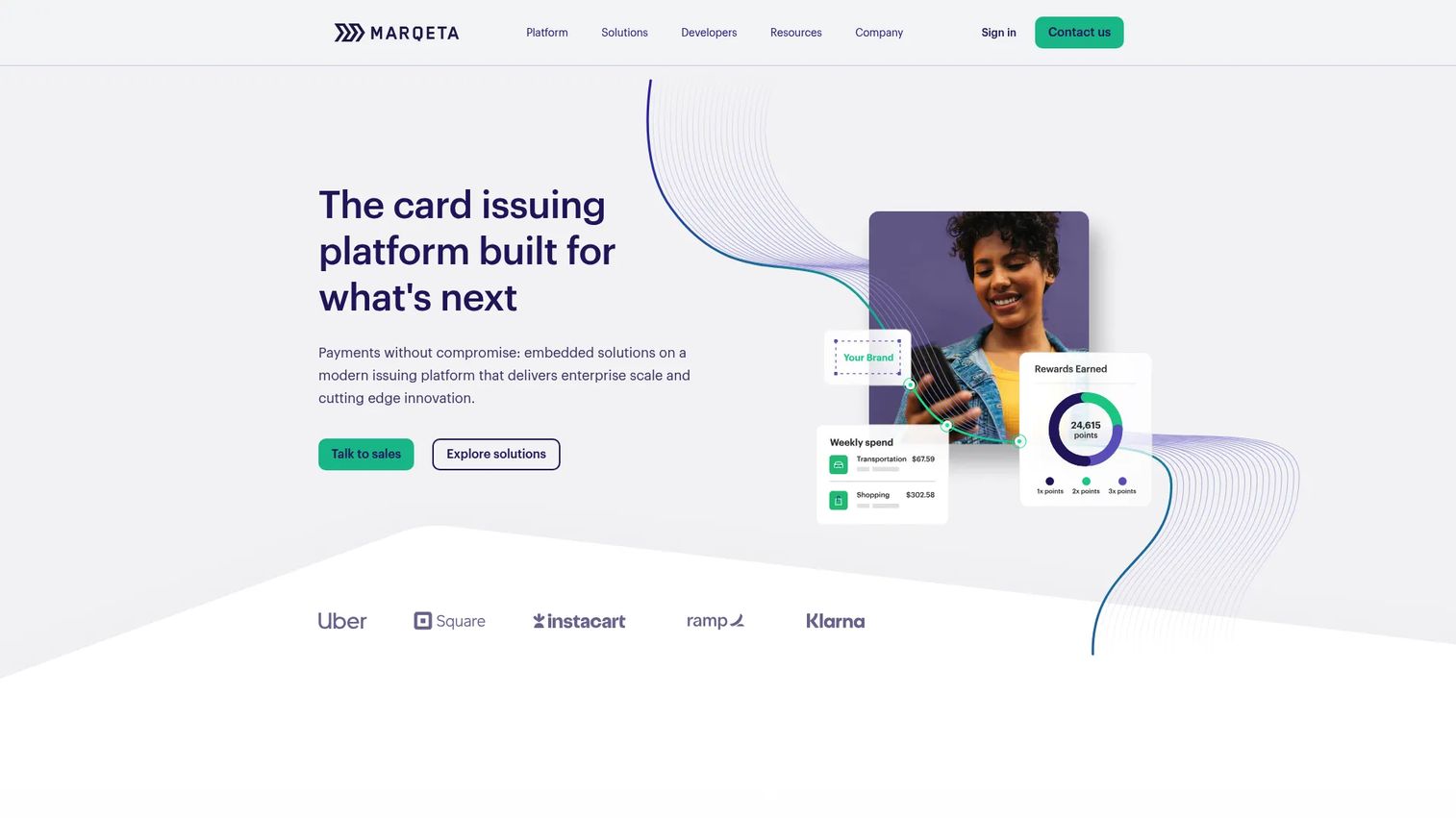
Marqeta is a modern card issuing platform built around programmatic control. Its standout capability is Just-in-Time funding, where the platform authorizes and funds transactions in real time based on your own logic, giving you precise control over what gets approved. It supports debit, credit, prepaid, and virtual card programs, plus tokenization and open APIs with developer SDKs.
Best for: Enterprises and fintechs launching or scaling branded card programs that need fine-grained, programmatic spend control.
Key strengths
- Just-in-Time funding: authorize and fund transactions in real time using your own decisioning logic.
- Dynamic spend controls: granular authorization rules applied at the transaction level.
- Tokenization and SDKs: virtual and physical card issuing with mobile wallet provisioning and developer tooling.
Why choose Marqeta: Marqeta fits when control is the point. JIT funding lets you make approve-or-decline decisions in the authorization stream, which is powerful for spend-management products, on-demand platforms, and any program where you want to validate intent before money moves. That programmatic depth suits teams building card behavior into their core product logic.
Marqeta pricing: Marqeta does not publish public pricing; it operates a sales-led, program-specific model based on volume and configuration. Expect pricing tied to your card type mix, transaction volume, and the services you provision. Marqeta holds a 4.4/5 rating on G2.
6. Lithic
Lithic is the developer-friendly option, focused on getting a card program live fast with a clean API. It supports debit, prepaid, charge, and revolving credit programs, plus money movement tools including ACH, wire transfers, and virtual or routable accounts. Fraud and spend controls come through authorization rules, token controls, and real-time webhooks, which is exactly what product teams want for fast iteration.
Best for: Product teams and startups that want fast API integration and tight authorization control over a custom card program.
Key strengths
- Developer-first setup: a clean card issuing API designed for fast integration and product velocity.
- Authorization controls: auth rules, token controls, and real-time webhooks for real-time controls over spend.
- Money movement: ACH, wire transfers, and virtual or routable accounts alongside issuing.
Why choose Lithic: Lithic suits teams that value shipping speed and engineering ergonomics. The webhook-driven model lets you react to authorization events in real time and build card logic directly into your product. For a PM weighing engineering cost against time-to-launch, Lithic's developer focus keeps the integration lean and the maintenance burden manageable.
Lithic pricing: Lithic does not publish a public pricing page; the site references an API pricing section in its terms, implying program-specific or enterprise pricing. Plan for a sales conversation scoped to your card type and volume. Lithic holds a 4.5/5 rating on G2.
7. Treasury Prime
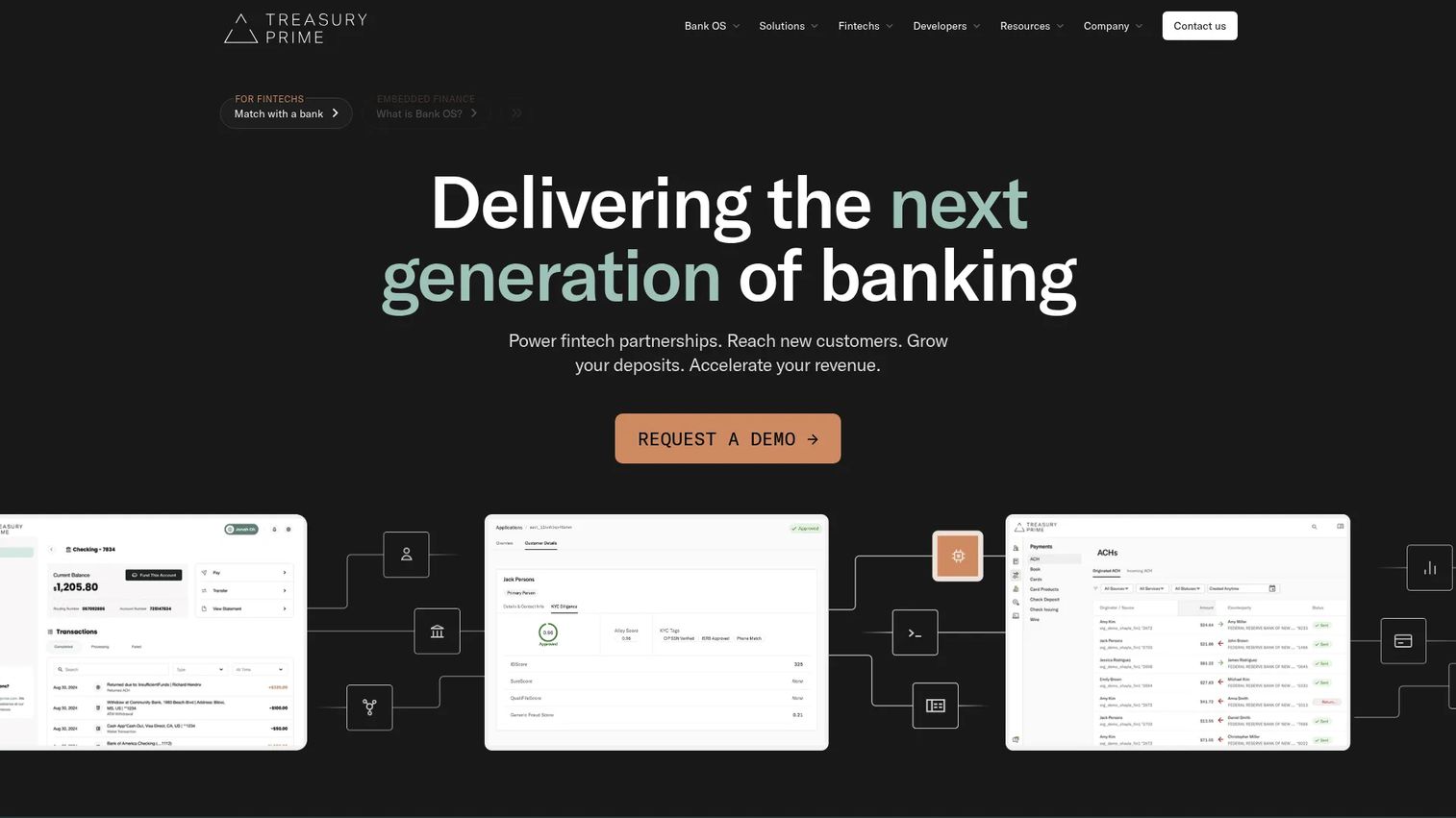
Treasury Prime is embedded banking infrastructure, which makes it relevant when cards are one part of a broader money-management product. Its strength is the account and money-movement adjacency: embedded banking, digital banking, and open banking capabilities that connect fintechs directly to bank partners. For PMs who need cards plus treasury, accounts, and a banking relationship under one roof, that adjacency is the differentiator.
Best for: Banks and fintechs building embedded banking, payments, and account-opening programs where cards sit alongside accounts and treasury.
Key strengths
- Embedded banking: direct connections between fintechs and bank partners for accounts and money movement.
- Treasury and accounts adjacency: cards as part of a broader treasury integration rather than a standalone feature.
- Open banking: infrastructure for connecting and orchestrating banking data and services.
Why choose Treasury Prime: Treasury Prime fits when the product is fundamentally about money management, with cards as one capability among accounts, payments, and treasury. The value for a PM is owning the full banking relationship through one infrastructure layer rather than coordinating separate issuing and banking vendors. That consolidation matters most for products where the account, not the card, is the center of gravity.
Treasury Prime pricing: Treasury Prime uses usage-based pricing and does not publish public figures; pricing is set through a contract process tied to your program. Plan for a sales-led engagement scoped to volume and the banking services you need.
Considerations before you choose
API depth and developer-first setup
Match the API to your engineering reality. A developer-first platform like Lithic keeps integration lean, while deeper infrastructure like Galileo suits teams planning a multi-product program. Evaluate sandbox quality, documentation, and webhook coverage before committing, because these shape both launch speed and long-term maintainability.
Spend controls and authorization rules
Confirm the granularity of spend controls you can enforce: per-card limits, merchant category restrictions, real-time approve-or-decline logic, and authorization rules tied to your own data. Programs touching regulated or high-risk spend need controls applied at the authorization stream, not just after settlement.
Compliance and banking partners
Every issuing program rides on banking partners and a compliance framework (KYC, KYB, AML, PCI scope). Ask which banks back the platform, what compliance the platform owns versus what you own, and how that affects your risk and audit obligations. This is where a clean answer protects your roadmap.
Treasury integration and reconciliation
Decide early whether you need cards alone or cards plus accounts and treasury. Platforms like Unit and Treasury Prime fold issuing into a broader money-movement stack, which reduces the number of systems your team reconciles. Verify transaction-level reporting and ledger sync so finance is not stitching data manually.
Pricing model and interchange revenue
Card issuing economics run on interchange revenue and program-specific pricing. Model the full picture: transaction fees, revenue share, and any platform costs against the interchange your program earns. A platform that looks expensive upfront can be net-positive once volume and interchange are factored in.
Conclusion
The right virtual card issuing platform depends on how much control, treasury depth, and operational support your product strategy demands. Stripe is the pragmatic all-around pick when your stack already lives there. Galileo and Marqeta serve teams building deep, high-control programs. Adyen fits global enterprise scale with unified acquiring and issuing. Unit and Treasury Prime are the embedded finance choices when cards sit alongside accounts and money movement. Lithic is the developer-first option for fast, lean launches.
The practical next step: shortlist two platforms that match your strategy, then validate the three things that actually stall launches: bank partner and compliance fit, spend control granularity, and reconciliation tooling. Run a sandbox integration against a real workflow before you sign. The platform that wins is the one your engineering team can ship and maintain without it becoming a quarter-long project.
Start your journey with Guideflow today!
FAQs
A virtual card issuing platform is financial infrastructure that lets a company create and manage payment cards through an API without becoming a bank itself. It bundles issuance, spend controls, compliance, banking partners, and reconciliation so product teams can ship a card feature without building the payments stack from scratch.
A card issuing API lets your application create cards, set spend controls, and receive transaction data programmatically. When a card is used, the platform processes the authorization (often calling your own logic in real time for approve-or-decline decisions), funds the transaction, and sends webhooks so your system stays in sync. The platform handles the network and bank connections behind that API.
Compare API depth and developer-first setup, spend control granularity, compliance posture and banking partners, treasury integration, reconciliation tooling, and pricing relative to interchange revenue. The deeper decision is build versus assemble: pick the platform that fits your roadmap and engineering bandwidth without creating a long-term maintenance burden.
Yes. Most virtual card issuers support mobile wallet provisioning through tokenization, so cards can be pushed into Apple Pay and Google Pay. Stripe, Galileo, Adyen, and Marqeta all support wallet provisioning, though exact coverage and tokenized card flows vary by program and region, so confirm the specifics during evaluation.
They are foundational. Every issuing program depends on banking partners and a compliance framework covering KYC, KYB, AML, and PCI scope. The platform's compliance posture directly shapes your risk, audit obligations, and launch timeline, so clarify exactly what the platform owns versus what your team owns before committing.
Pair cards with treasury or accounts when the product is fundamentally about money management rather than a single card feature. If your roadmap includes balances, payouts, or money movement, an embedded finance platform like Unit or Treasury Prime reduces the number of systems and compliance surfaces your team has to own.
Look for per-card and per-transaction limits, merchant category restrictions, real-time approve-or-decline authorization rules, and controls tied to your own data. For regulated or high-volume programs, controls applied in the authorization stream (such as just-in-time funding) matter more than post-settlement reporting alone.
It varies widely by platform and program complexity. Developer-first platforms can get a basic virtual card program live in weeks, while enterprise programs with custom compliance, multiple card types, and bank negotiations can take months. The biggest timeline drivers are compliance review, bank partner onboarding, and reconciliation setup, not the API integration itself.