Your talent pool goes cold faster than you think. A recruiter spends three weeks sourcing for a key engineering role, builds a list of 40 strong passive candidates, and the role gets paused. Six months later, the role reopens. The list is stale. The notes are scattered across email, a spreadsheet, and someone's memory. So the recruiter starts over.
That cycle is the exact problem candidate relationship management software solves. A recruiting CRM keeps talent pools warm, tracks every touch, and turns one-off sourcing sprints into a pipeline you can reuse. The U.S. talent acquisition software market, which includes these tools, was USD 6.89 billion in 2025 and is projected to reach USD 13.55 billion by 2032 at an 8.82% CAGR, according to SNS Insider. Within that market, candidate relationship management is the fastest-growing segment by CAGR, outpacing applicant tracking systems from 2026 onward.
For founders and HR leaders scaling a team, the stakes are operational. Slow hiring blocks the roadmap. Inconsistent follow-up burns your employer brand. And when candidate data lives in five places, your reporting is guesswork. A recruitment CRM fixes the same kind of pipeline discipline problem that a best crm software platform solves for sales, just pointed at talent instead of revenue. If you are also evaluating sourcing automation, our guide to ai recruiting software pairs well with this one, and teams comparing adjacent customer-facing systems often look at best pr crm software for stakeholder outreach.
What's inside
This guide covers 10 candidate relationship management tools built for talent acquisition teams that need to nurture passive candidates, manage talent pools, and connect recruiting data across the hiring pipeline. We selected each tool based on four criteria: candidate nurture and engagement depth, talent pool and segmentation capability, ATS integration and data architecture, and recruiter adoption in real workflows. The list spans enterprise talent acquisition software, ATS-native recruiting CRM platforms, recruiter-led sourcing tools, and lean options for smaller teams. Pricing and ratings reflect verified vendor and G2 sources as of mid-2026.
TL;DR
- Best for enterprise talent acquisition: Avature and Beamery lead on configurable talent pooling, nurture automation, and large-scale candidate engagement.
- Best for ATS-native teams: SmartRecruiters and Gem combine applicant tracking and CRM in one system, so passive candidates and active applicants live together.
- Best for recruiter-led outreach: Gem and iSmartRecruit shine for sourcing sequences and personalized outreach at speed.
- Best for talent experience and engagement automation: Phenom and Eightfold use talent intelligence to personalize career sites and candidate journeys.
- Best for smaller and agency teams: Recruit CRM, Crelate, and iSmartRecruit deliver candidate database management and pipeline tracking without enterprise overhead.
- Best for early talent and events: Yello owns campus, event, and high-volume candidate engagement workflows.
What candidate relationship management software is
Candidate relationship management software is a recruiting CRM that helps talent teams build talent pools, nurture passive candidates over time, and track candidate engagement across every touchpoint before, during, and after an open role.
Think of it as the recruiting counterpart to a sales CRM. Where an applicant tracking system manages people who have already applied, a CRM for recruiting manages people who have not applied yet, or who applied in the past and stayed warm. This is the core of talent relationship management: treating candidates as a long-term audience, not a transaction tied to one job posting.
Core features you will find across the category:
- Candidate database management: A central candidate database with deduplication, enrichment, and full interaction history.
- Messaging and sequences: Email, SMS, and multi-step outreach with personalization tokens for candidate nurture at scale.
- Talent pools and segmentation: Group candidates by skill, role, seniority, location, or pipeline stage.
- Landing pages and recruitment marketing: Branded talent communities, event pages, and capture forms for employer branding.
- Analytics: Engagement, conversion, source effectiveness, and pipeline health reporting.
- ATS integration: Two-way sync so sourcing and nurture data flows into your hiring pipeline without manual re-entry.
The strongest platforms also layer in talent intelligence: matching, rediscovery of past applicants, and signals on which passive candidates are most likely to respond.
Why candidate relationship management matters now
Job postings alone do not fill senior roles. The best candidates for a VP of Sales or a staff engineer are usually employed, not browsing your careers page. Reaching them takes sustained, personalized outreach over months, not a single InMail. That is candidate nurture, and it does not happen reliably in a spreadsheet.
There is data behind the urgency. Across talent acquisition platforms, automated workflows can reduce time-to-hire by up to 63%, and AI-driven systems can enable up to 90% faster hiring cycles, according to SNS Insider's 2025 analysis. For a founder, that translates directly to roadmap velocity and less time personally pulled into hiring.
The reporting angle matters just as much. When a board asks how the talent pipeline looks for the roles you committed to fill this quarter, you need an answer backed by data, not vibes. A recruiting CRM gives you pipeline coverage, source quality, and engagement metrics in one place, the same way you would expect clean numbers from your revenue stack. It also reduces founder bottleneck: instead of routing every senior hire through your inbox, your recruiting team runs a repeatable nurture motion. The tooling discipline mirrors what you would apply to contract management or marketing resource management, just aimed at people instead of documents.
When to use candidate relationship management software
Not every team needs a dedicated CRM on day one. Here is how to pattern-match your situation.
Build passive candidate pipelines
When you repeatedly hire for the same role types, ad hoc sourcing wastes effort. A CRM lets you build talent pools once and nurture them continuously, so the next time a role opens, you have a warm shortlist instead of a blank search. This is where recruitment CRM software pays off fastest for scaling companies.
Improve candidate engagement
Generic blasts get ignored. A recruiting CRM supports segmentation and cadence, so a passive senior engineer gets a different message than a recent graduate. Personalized outreach, timed follow-ups, and content that matches the candidate's stage all lift response rates and protect your employer branding.
Centralize hiring data and handoffs
When sourcing notes, applicant data, and interview feedback live in different tools, candidates fall through the cracks. ATS integration and shared visibility keep the full hiring pipeline in one view, so recruiters, hiring managers, and leadership work from the same record. This matters most when multiple people touch a single candidate.
Support recruitment marketing
If you invest in employer branding, you need somewhere to capture and nurture the interest it generates. Landing pages, talent communities, and nurture campaigns turn career-site visitors and event attendees into a managed candidate database you can re-engage later.
Comparison table
The tools below are ordered by relevance to the candidate relationship management software keyword, blending enterprise recruiting CRM platforms with ATS-native and recruiter-led options.
| # | Product | Best for | Key differentiation | Pricing | G2 rating |
|---|---|---|---|---|---|
| 1 | SmartRecruiters | Enterprise ATS + CRM teams | AI talent matching inside a full hiring suite | From $14,995/yr (Essential) | 3.9/5 |
| 2 | Avature | Configurable enterprise TA | Highly configurable talent pooling and workflows | Custom | 4.4/5 |
| 3 | Beamery | Large-scale talent lifecycle | Talent lifecycle and campaign orchestration | Custom | Not listed |
| 4 | Phenom | End-to-end talent experience | Career site personalization and talent CRM | Custom | 4.3/5 |
| 5 | Eightfold | AI talent intelligence | Matching and candidate rediscovery | Custom | 4.2/5 |
| 6 | Yello | Campus and high-volume hiring | Event and early-talent engagement | Custom | 4.4/5 |
| 7 | Gem | Recruiter-led sourcing | Sourcing, ATS, and CRM in one platform | Custom | 4.8/5 |
| 8 | Recruit CRM | Agencies and search firms | All-in-one ATS/CRM with sourcing extension | Free trial; paid tiers | 4.8/5 |
| 9 | Crelate | Staffing and midmarket teams | ATS + CRM + AI sourcing with flexible plans | From $85/user/mo | 4.4/5 |
| 10 | iSmartRecruit | Budget-conscious TA teams | ATS/CRM hybrid with recruitment automation | Free trial; quote-based | 4.8/5 |
1. SmartRecruiters
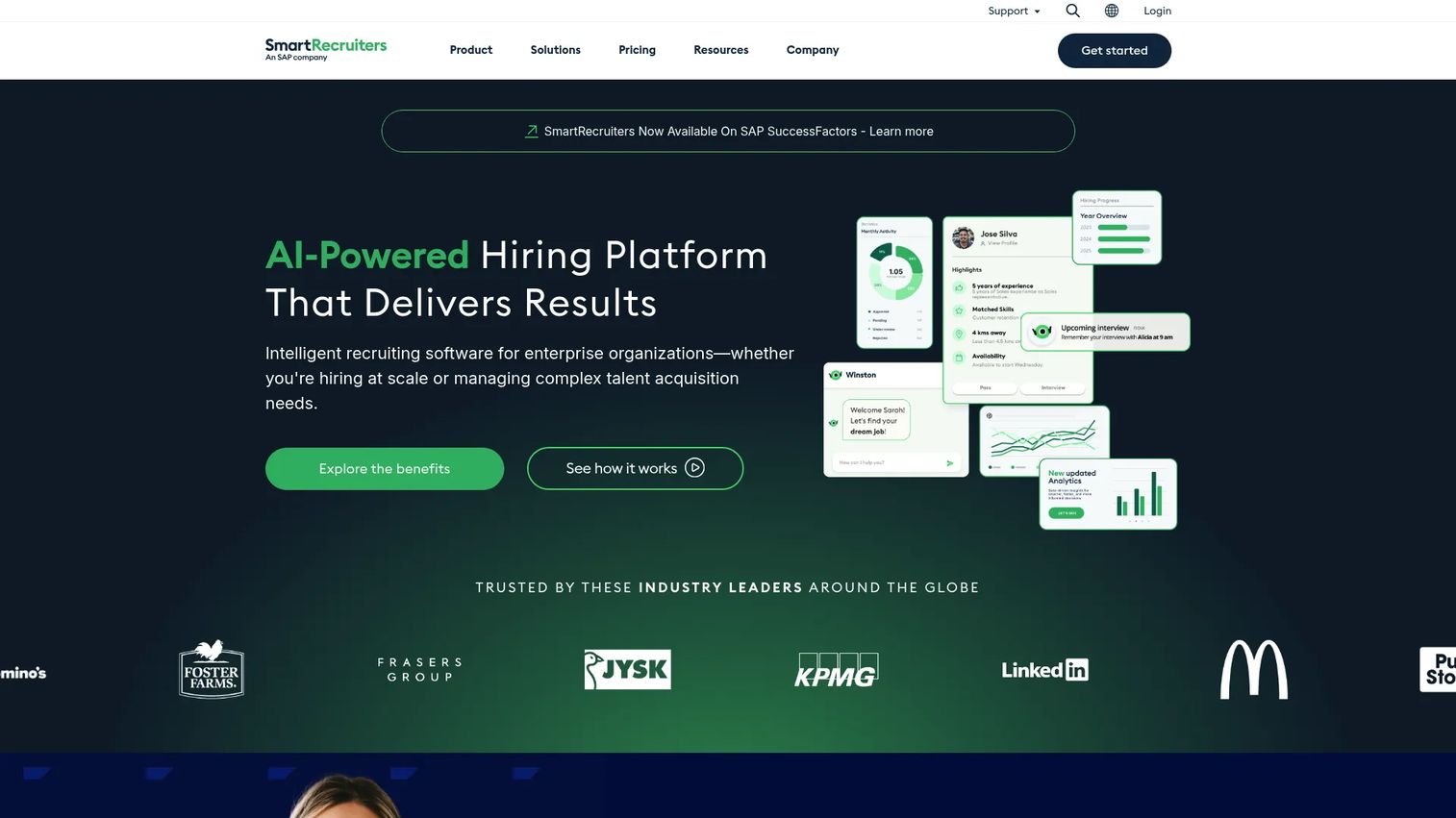
SmartRecruiters is an AI-powered talent acquisition platform built for enterprise hiring teams that want applicant tracking and candidate relationship management in one system. Rather than bolting a CRM onto a separate ATS, it treats sourcing, nurture, and active applications as a single talent flow, which keeps passive candidates and live applicants in the same record.
Best for: Enterprise recruiting teams that need an AI-driven ATS and CRM under one roof.
Key strengths
- Unified ATS and CRM: Talent pools and active pipelines live together, so candidate nurture never gets disconnected from the hiring pipeline.
- AI talent matching: The matching engine surfaces relevant candidates from your existing database and rediscovers past applicants.
- Job distribution and screening: Built-in distribution and AI-powered screening reduce manual sourcing and shortlisting work.
Why choose SmartRecruiters: If you already want an enterprise ATS and would rather not run a separate CRM, this consolidates both. The native ATS integration removes the sync headaches that come with two-system setups, which matters for teams that value clean reporting and a single candidate database.
Pricing: The Essential plan starts at $14,995 billed annually. Professional, High Volume, and Complete plans require a custom quote from sales. There is no public free tier. Pricing reflects SmartRecruiters' first-party pricing page as of mid-2026. Its G2 rating sits at 3.9/5.
2. Avature
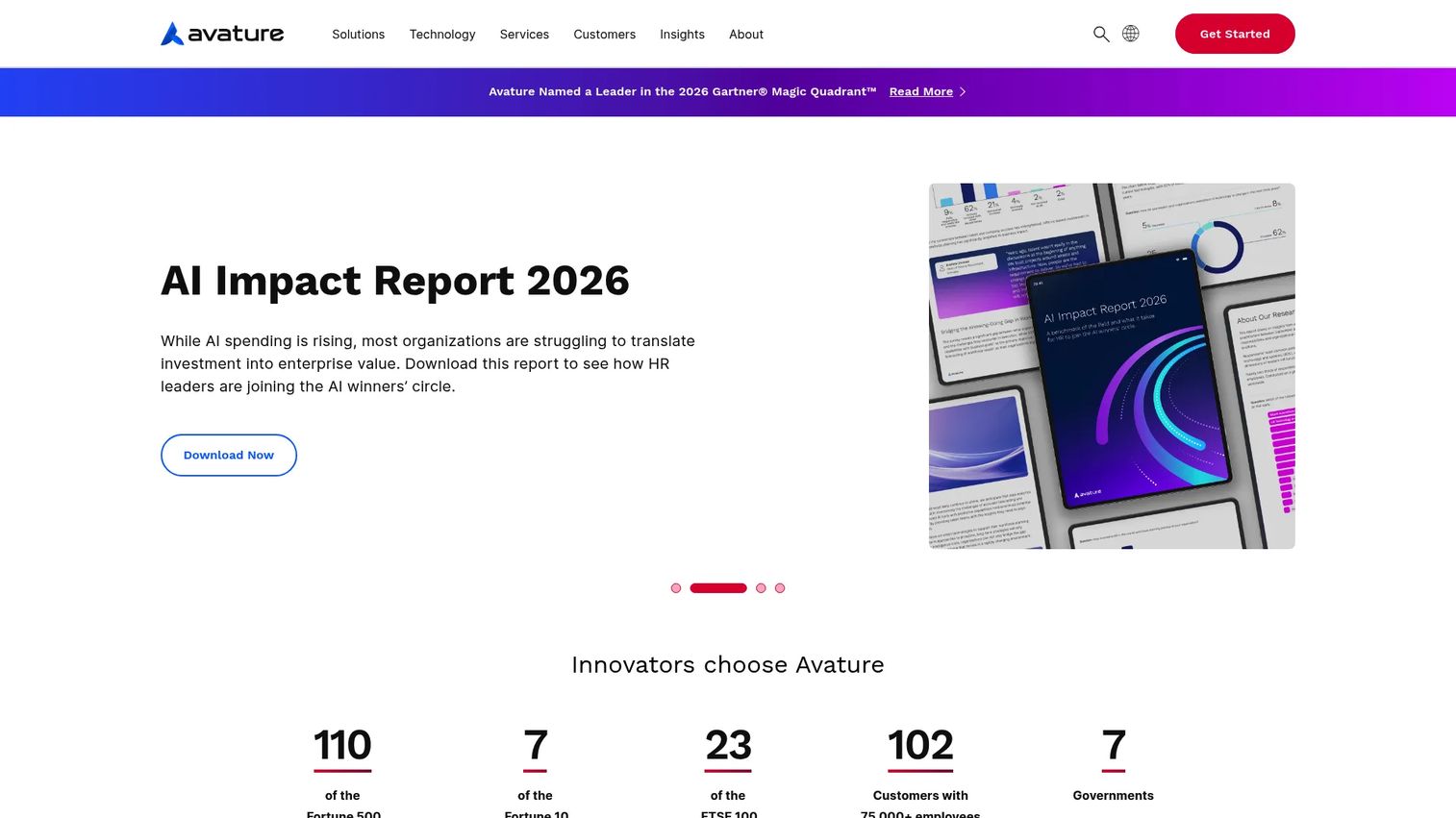
Avature is an enterprise recruitment and talent management platform known for being one of the most configurable systems in the category. Large talent acquisition teams choose it when off-the-shelf tools cannot model their hiring process, because Avature lets you build custom workflows, talent pools, and nurture sequences to match how your organization actually recruits.
Best for: Large enterprises that need a highly configurable talent acquisition and CRM platform.
Key strengths
- Configurable talent pooling: Build and segment talent pools around any criteria your recruiting model requires.
- Nurture automation: Multi-channel campaigns keep passive candidates engaged over long hiring cycles.
- Full talent lifecycle: Career sites, onboarding, internal mobility, and performance management extend beyond sourcing.
Why choose Avature: When your process is too specific for templated tools, configurability becomes the deciding factor. Avature suits enterprise teams with the recruiting operations maturity to design and maintain custom workflows, and it rewards that investment with deep candidate engagement automation.
Pricing: Avature uses custom enterprise pricing and does not publish public rates; the site routes you to a demo or sales conversation. Its G2 rating is 4.4/5.
3. Beamery
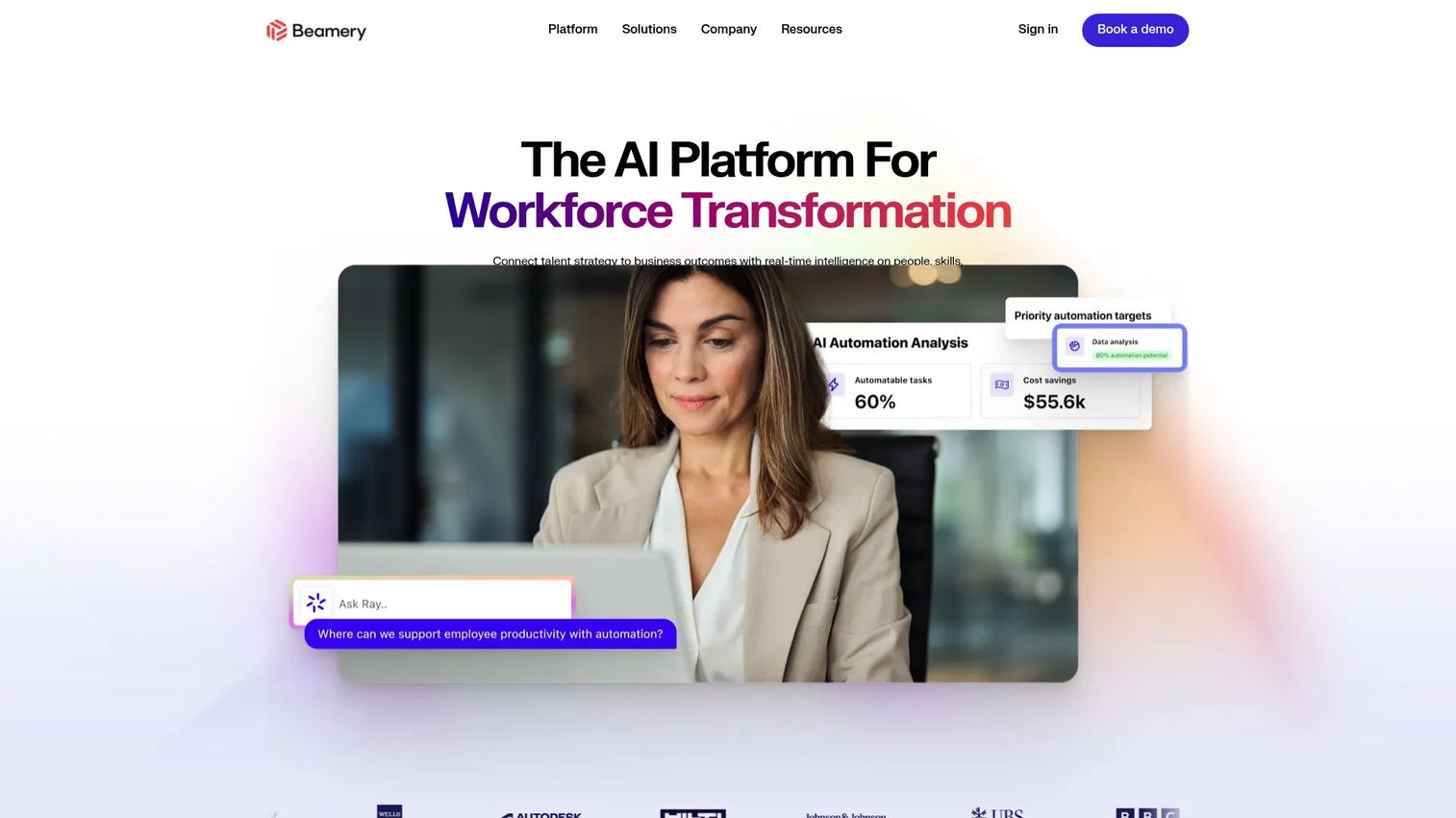
Beamery approaches recruiting as talent lifecycle management. Beyond standard recruiting CRM features, it orchestrates sourcing, nurture, and re-engagement across the full candidate journey, which fits large hiring teams running sustained talent acquisition programs rather than one-off requisitions.
Best for: Large-scale hiring teams that want talent lifecycle orchestration, not just a candidate database.
Key strengths
- Talent pools at scale: Build, segment, and re-engage large talent pools across regions and functions.
- Campaign automation: Run nurture campaigns that keep passive candidates warm between roles.
- Pipeline analytics: Track engagement and conversion to see which sources and campaigns produce hires.
Why choose Beamery: Beamery fits when recruiting is a continuous program with talent pipelines you manage proactively. The orchestration layer connects sourcing and nurture so candidates do not stall, which is valuable for enterprise teams measuring pipeline health over time.
Pricing: Beamery uses custom enterprise pricing and directs buyers to contact sales for a quote. Public G2 rating data was not listed at the time of writing, so evaluate it through a direct trial or reference calls.
4. Phenom
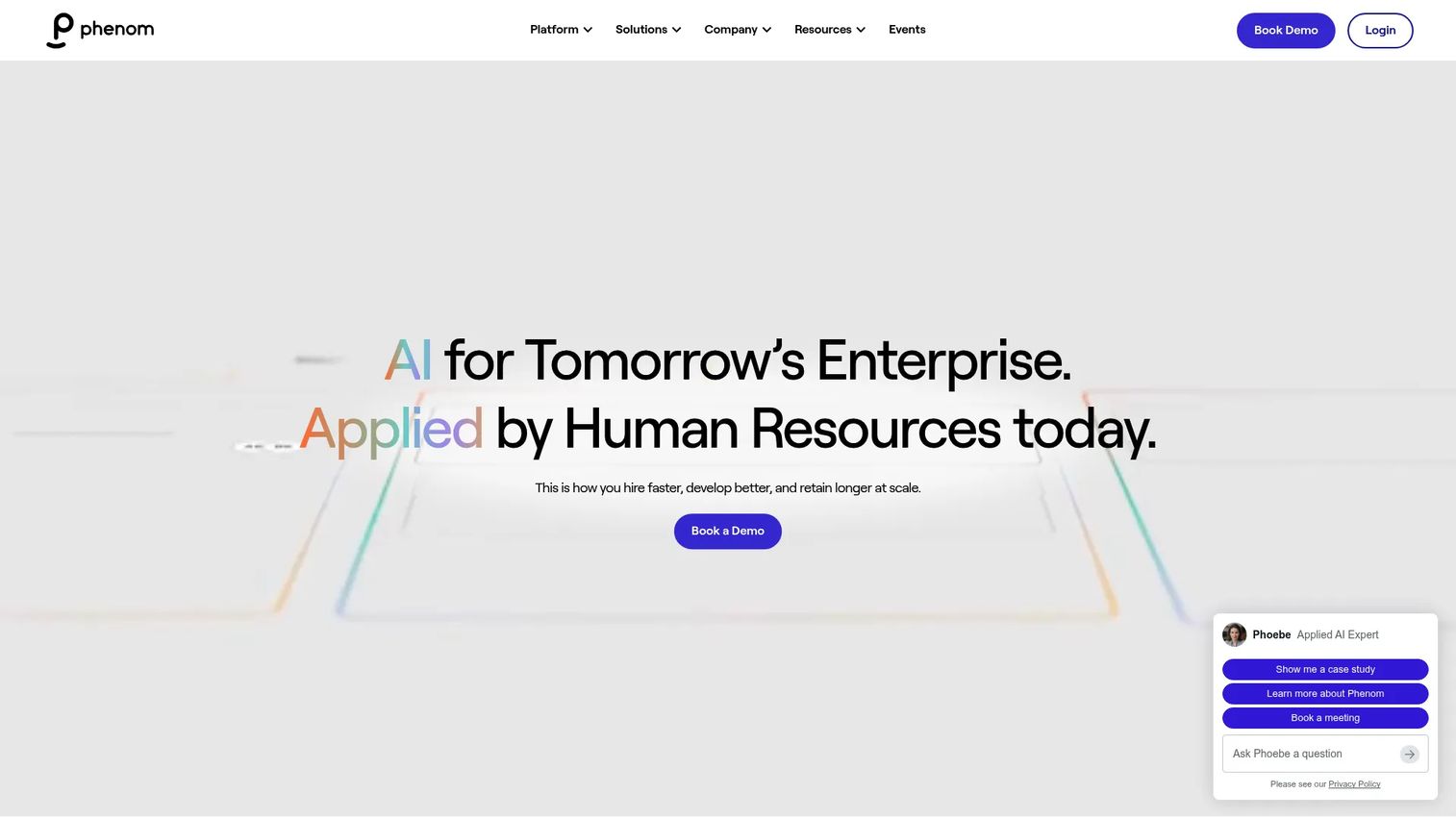
Phenom positions itself as a talent experience platform, connecting candidate-facing career sites with a talent CRM and internal mobility tools. For teams that care about candidate experience as much as sourcing, Phenom personalizes the journey from the first career-site visit through application and beyond.
Best for: Enterprises modernizing the end-to-end talent experience with AI personalization.
Key strengths
- Career site personalization: Dynamic content and a chatbot tailor what each candidate sees, lifting candidate engagement.
- Talent CRM: Manage talent pools and candidate nurture alongside the candidate-facing experience.
- Talent marketplace: Career pathing, gigs, mentoring, and referrals extend engagement to internal talent.
Why choose Phenom: Phenom suits teams that treat employer branding and candidate experience as competitive levers. Connecting the career site to the CRM means the same personalization that attracts candidates also feeds your nurture pipeline, which keeps messaging consistent across the funnel.
Pricing: Phenom does not list public pricing; the pricing page directs visitors to contact the company for a quote or RFP. Its G2 rating is 4.3/5.
5. Eightfold
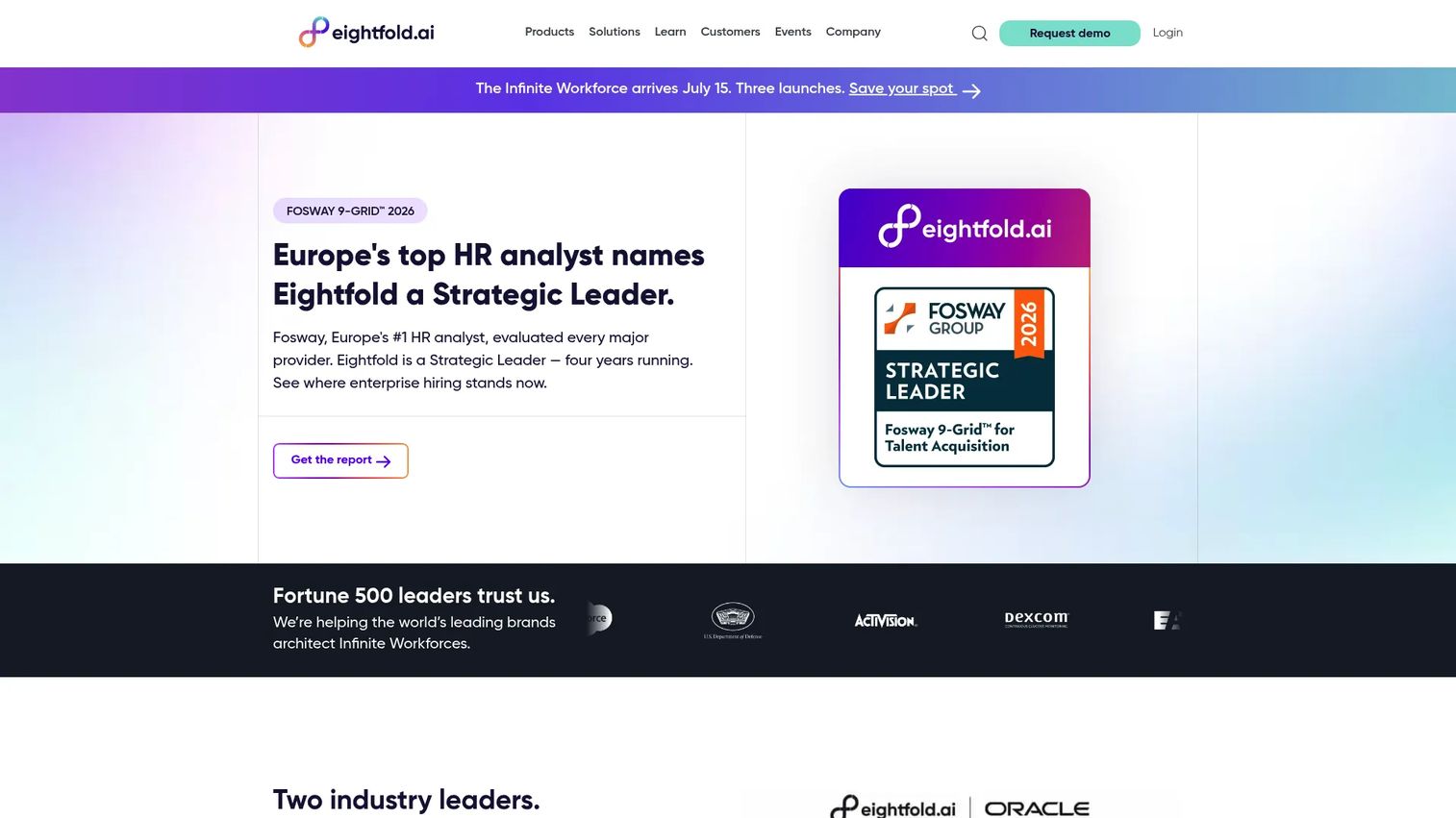
Eightfold is a talent intelligence platform that uses AI to match candidates to roles, surface internal mobility opportunities, and rediscover candidates already in your database. Its strength is the talent graph that powers matching across both external and internal talent.
Best for: Enterprise HR teams that want AI-driven matching and talent intelligence across hiring and internal mobility.
Key strengths
- Talent intelligence: AI matching scores candidate fit against roles using skills, not just keywords.
- Candidate rediscovery: Surface qualified past applicants in your candidate database before sourcing externally.
- Internal mobility: Apply the same matching to existing employees for redeployment and growth.
Why choose Eightfold: Eightfold fits when you already have a large candidate database and want to mine it before spending on new sourcing. The talent intelligence layer turns your existing pool into a renewable source of passive candidates, which improves both speed and cost per hire.
Pricing: Eightfold uses custom pricing and routes buyers to request a demo; no public rates are listed. Its G2 rating is 4.2/5.
6. Yello
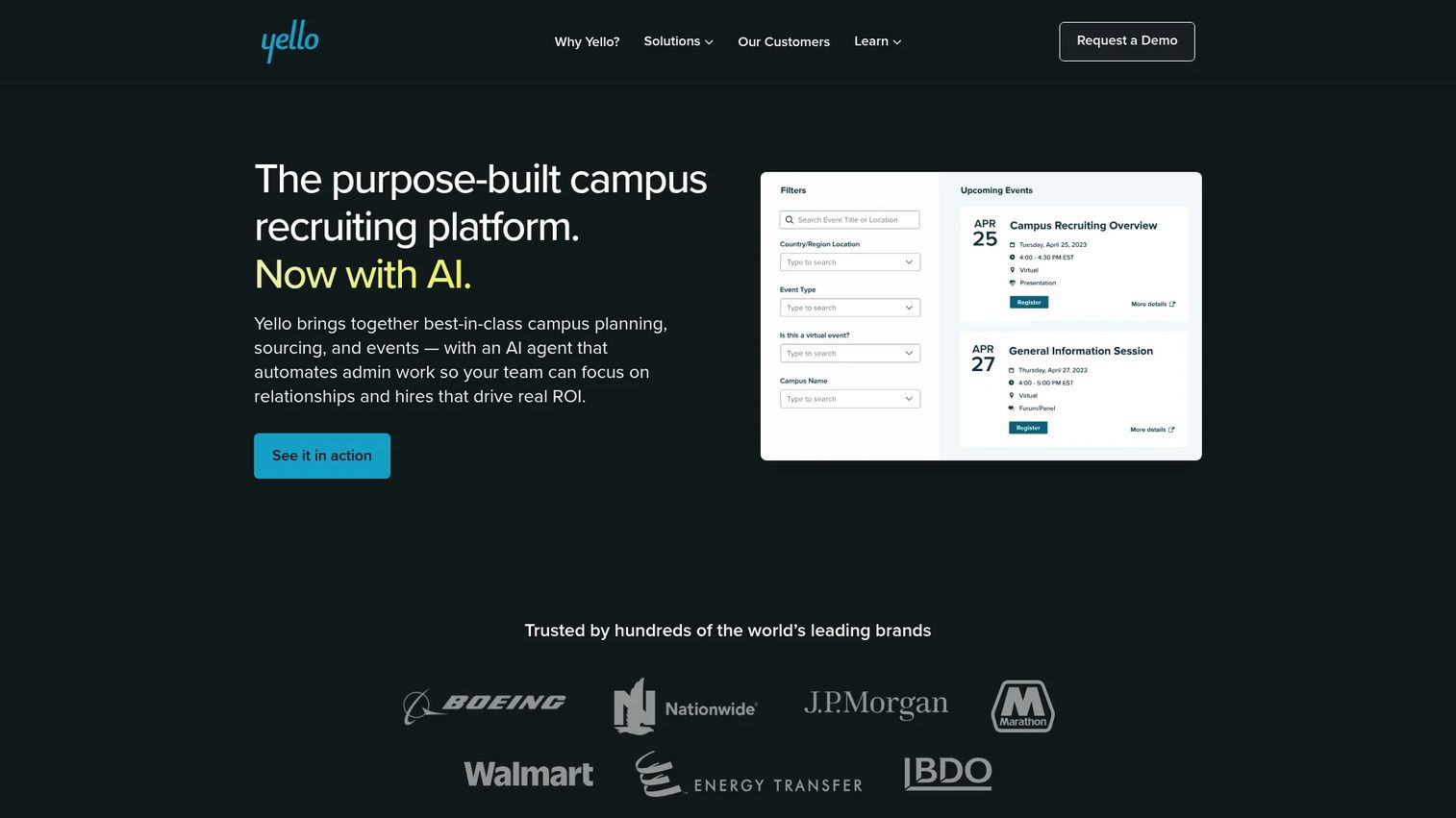
Yello specializes in early-talent, campus, and high-volume recruiting. If your hiring runs through events, career fairs, and intern programs, Yello manages the candidate engagement and event logistics that general-purpose CRMs handle less natively.
Best for: Large employers running campus recruiting and early-talent programs at volume.
Key strengths
- Campus and event management: Plan, run, and track recruiting events with candidate capture built in.
- Candidate sourcing and engagement: Engage high volumes of early-talent candidates through automated touchpoints.
- Recruitment operations: Coordinate schedules, interviews, and pipelines for high-volume hiring.
Why choose Yello: Yello fits a specific motion well: campus and early-talent hiring where you meet hundreds of candidates at events and need to nurture them into applications. For that use case, the event-driven talent pipeline tooling is purpose-built rather than adapted.
Pricing: Yello does not display public pricing and directs buyers to request a demo. Its G2 rating is 4.4/5.
7. Gem
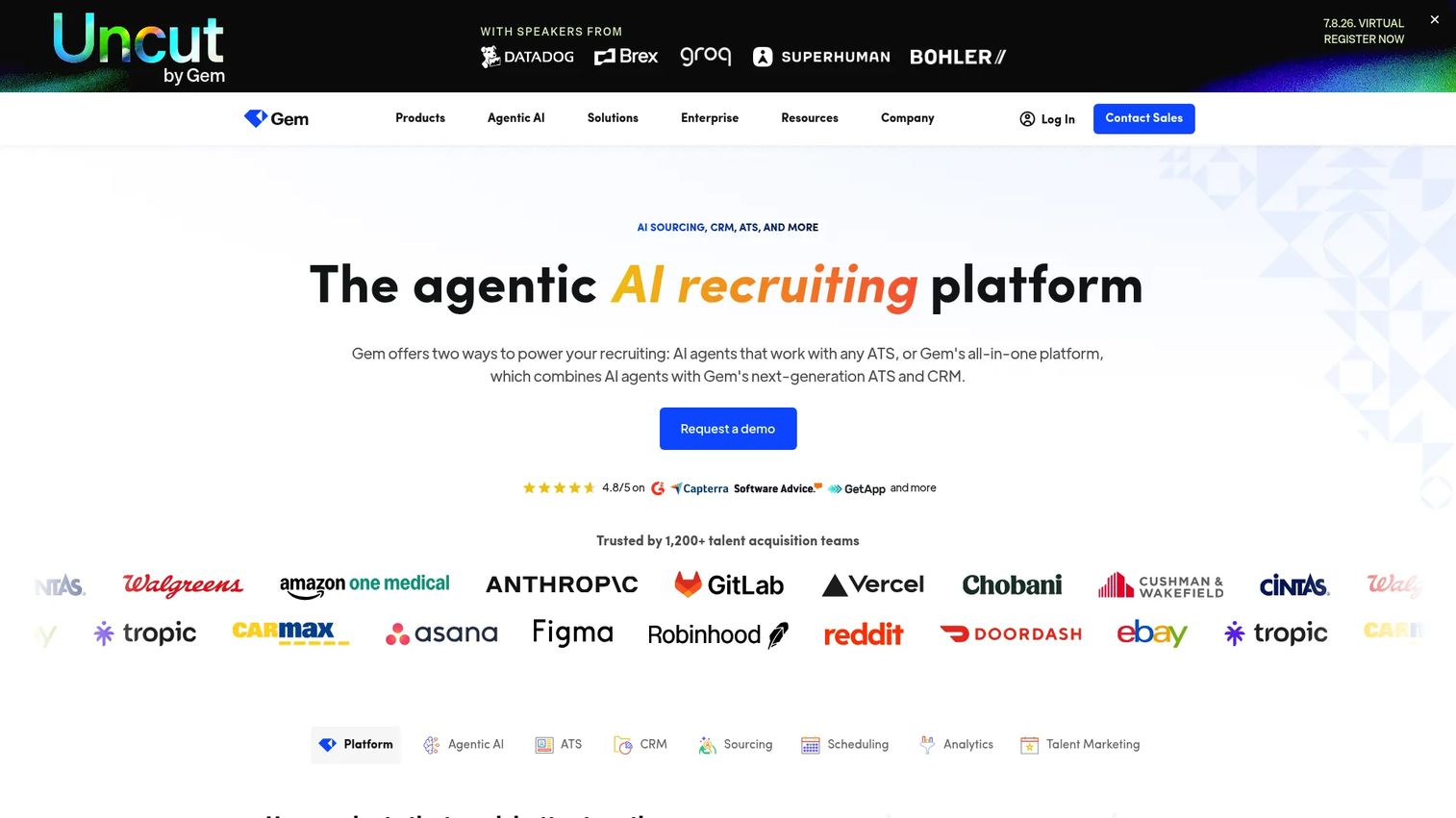
Gem is a recruiting platform that combines sourcing, ATS, and CRM with strong recruiter productivity tools. Recruiters use Gem to build pipelines fast, run personalized outreach sequences, and manage candidates from first touch to hire in one place.
Best for: Recruiting teams that want one platform for sourcing, candidate engagement, and applicant tracking.
Key strengths
- AI sourcing at scale: Search across a large profile database and add candidates to sequenced outreach.
- Outreach sequences: Multi-step, personalized email cadences lift response rates from passive candidates.
- Built-in scheduling and analytics: Interview scheduling and pipeline reporting keep recruiters in one tool.
Why choose Gem: Gem fits recruiter-led teams that live in sourcing and outreach. The CRM-like candidate management plus fast pipeline building makes it strong for proactive sourcing, and the unified ATS option removes the gap between sourcing and tracking.
Pricing: Gem uses custom pricing across Startups (up to 100 FTE), Growth (101 to 1,000 FTE), and Enterprise (1,000+ FTE) tiers, with ATS available as an add-on on Enterprise. Contact Gem for a quote. Its G2 rating is a strong 4.8/5.
8. Recruit CRM
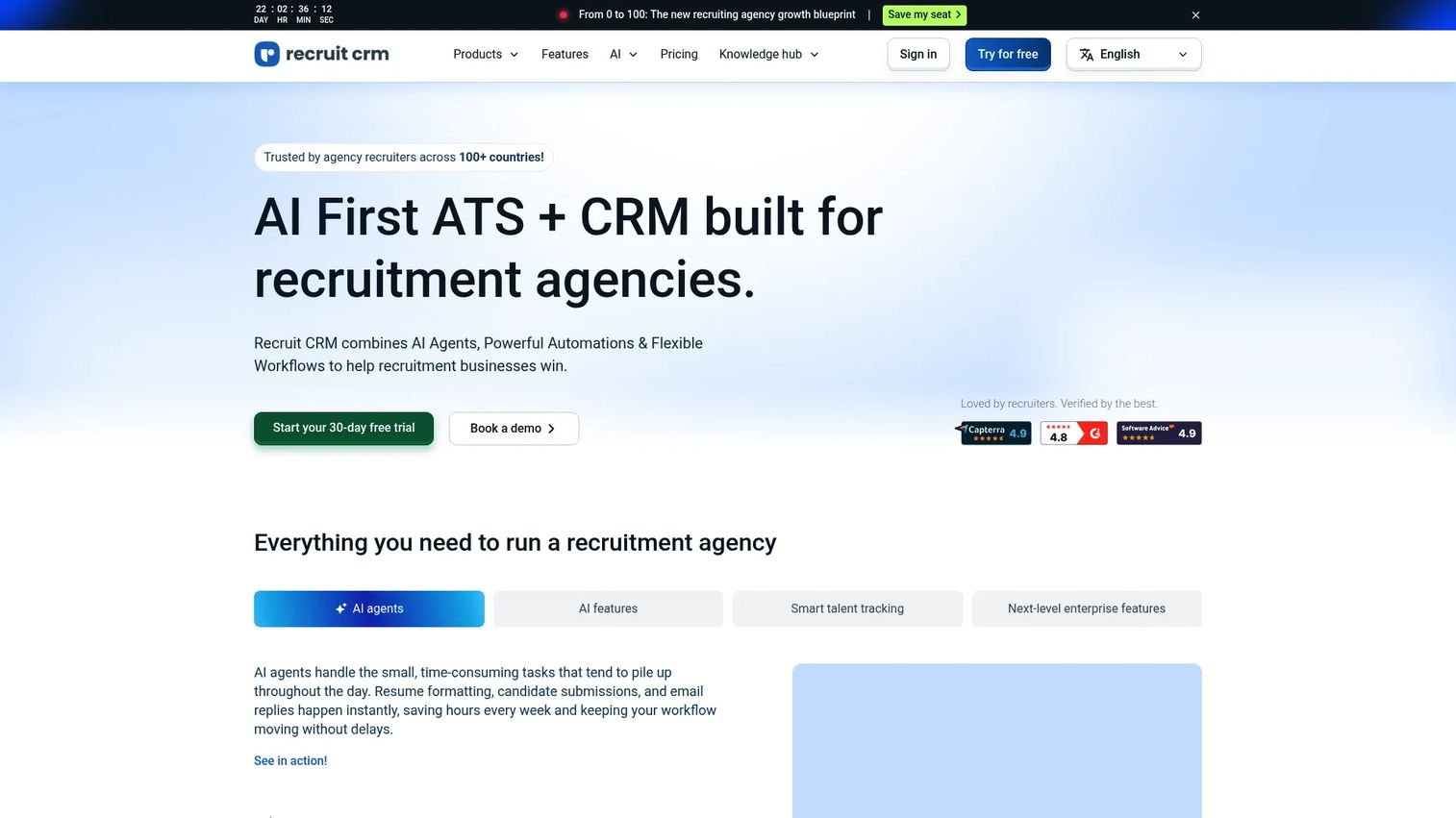
Recruit CRM is an all-in-one ATS and CRM built for recruitment agencies and executive search firms. It pairs candidate database management with client and deal tracking, which fits agency workflows where you manage both candidates and the companies hiring them.
Best for: Recruitment agencies and executive search teams that need ATS and CRM in one tool.
Key strengths
- Chrome sourcing extension: Pull candidate profiles from the web directly into your candidate database.
- AI resume parsing: Parse and structure resumes automatically to keep records clean.
- Workflow automation: Automate repetitive steps across sourcing, outreach, and pipeline tracking.
Why choose Recruit CRM: For agencies, the dual focus on candidates and clients is the draw. Recruit CRM keeps messaging, pipeline tracking, and candidate engagement in one usable system, which suits lean teams that cannot run separate stacks for recruiting and business development.
Pricing: Recruit CRM publishes Pro, Business, and Enterprise plans, offers a free trial, and lists Enterprise as demo-based. Public numeric prices were not shown on the page reviewed, so request current rates directly. Its G2 rating is 4.8/5.
9. Crelate
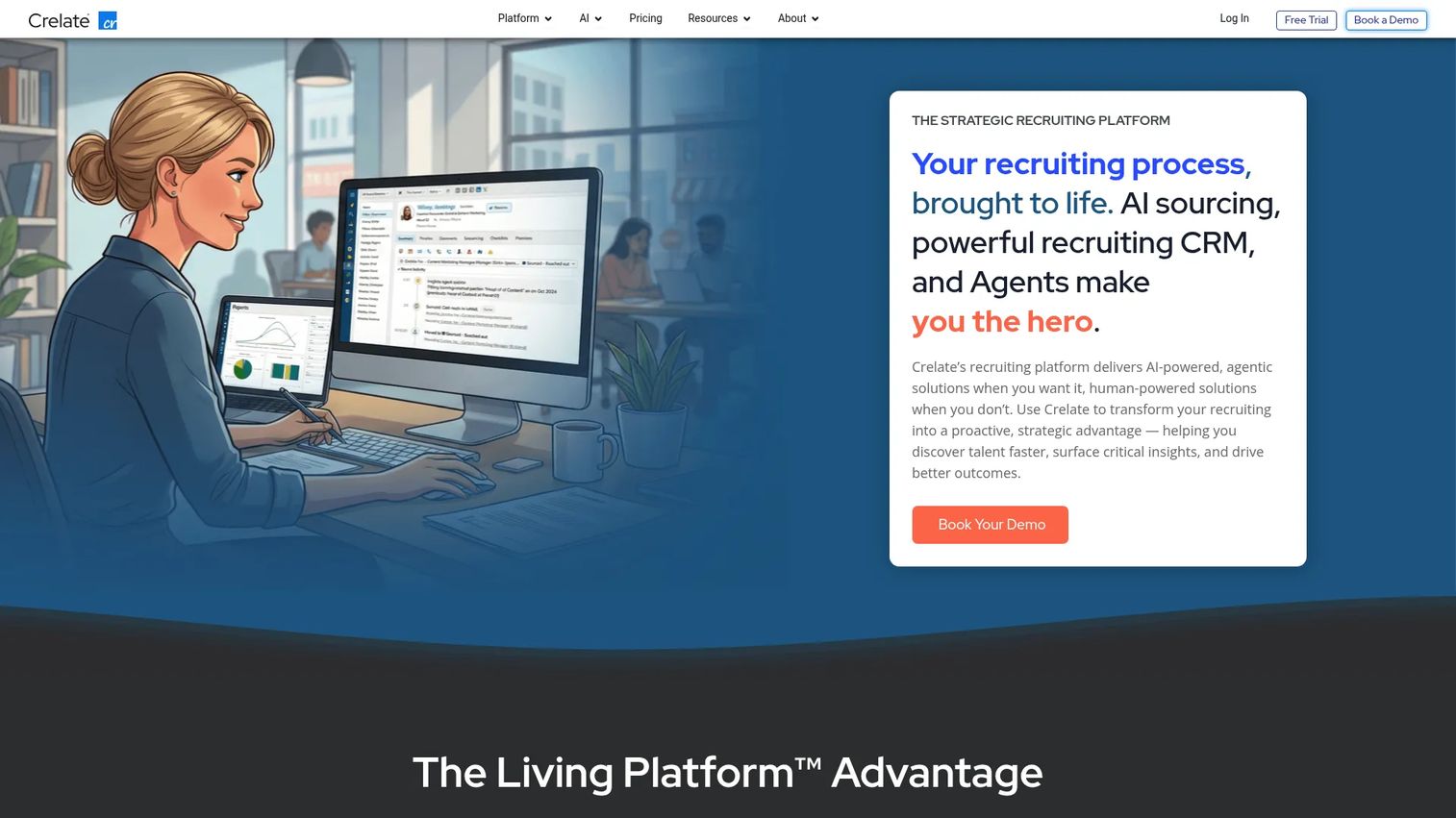
Crelate combines a recruiting CRM with ATS-style workflow support, AI sourcing, and contact enrichment. It targets staffing and small-to-midmarket recruiting teams that want flexibility and customization without enterprise complexity.
Best for: Recruiting and staffing teams that want ATS, CRM, and AI sourcing in one flexible platform.
Key strengths
- ATS plus CRM: Manage active applicants and long-term talent pools in a single workflow.
- AI sourcing and enrichment: Find candidates and enrich contact data to speed up outreach.
- Flexible, customizable workflows: Adapt pipelines and fields to how your team actually recruits.
Why choose Crelate: Crelate hits a practical middle ground: more workflow flexibility than lightweight tools, less overhead than enterprise suites. For staffing teams that need both candidate and client tracking with room to customize, it balances capability and usability well.
Pricing: Crelate publishes per-user pricing. Essentials starts at $85 per user per month (billed annually), Business is $119 per user per month, and Business Plus and platform licensing are custom. Add-on services like data sync and onboarding are priced separately. Its G2 rating is 4.4/5.
10. iSmartRecruit
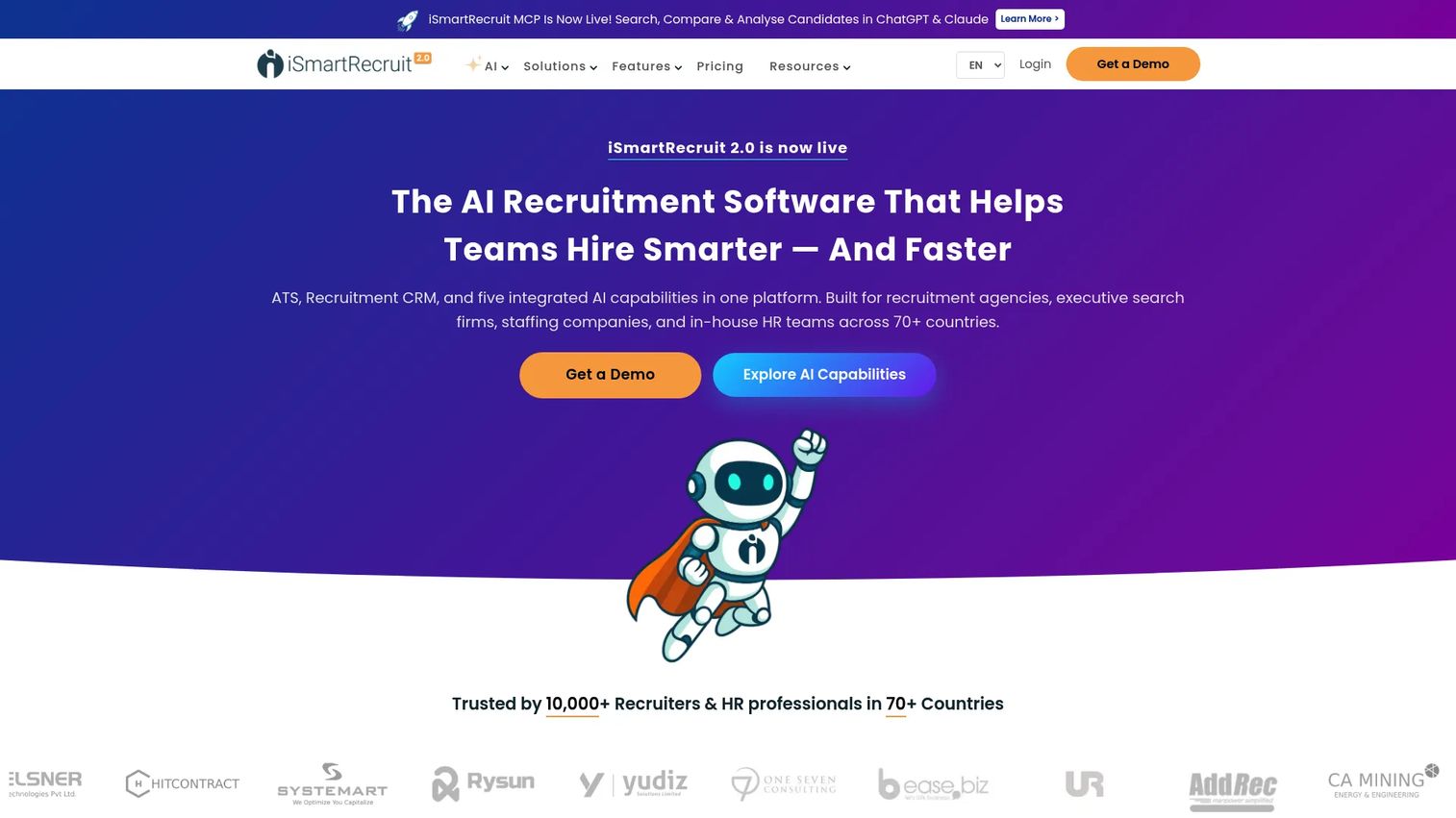
iSmartRecruit is an ATS and recruiting CRM hybrid with recruitment automation, aimed at agencies, staffing firms, and in-house teams that want capability without a large budget. It covers applicant tracking, candidate engagement, and automation in one affordable package.
Best for: Budget-conscious agencies, staffing firms, and in-house TA teams needing ATS plus CRM and automation.
Key strengths
- ATS and recruiting CRM: Manage applicants and nurture passive candidates in one system.
- Recruitment automation: Automate sourcing, screening, and follow-up to free recruiter time.
- Candidate engagement tools: Keep talent pools warm with structured outreach and tracking.
Why choose iSmartRecruit: iSmartRecruit fits teams that want a full ATS/CRM hybrid at a lower entry cost, including those hiring across multiple currencies and regions. With no setup fees and a pay-per-user model, it suits budget-conscious buyers who still want automation and candidate engagement depth.
Pricing: iSmartRecruit uses a pay-per-user model with Starter, Professional, Growth, and Pro plans; exact numbers are quote-based and not publicly listed. It offers a free 7-day trial, no setup fees, and supports multiple currencies including USD, CAD, AUD, EUR, and GBP. Its G2 rating is 4.8/5.
Considerations before you buy
Use this checklist to pressure-test any candidate relationship management platform before you commit.
Architecture: stand-alone CRM vs ATS-native
Decide whether you want a CRM that integrates with your existing ATS or a single system that does both. ATS-native tools like SmartRecruiters and Gem keep passive candidates and active applicants in one record, while stand-alone CRMs give you more nurture depth but depend on clean ATS integration. Your existing stack usually decides this.
ATS integration depth
If you keep a separate ATS, the integration is the whole game. Look for two-way sync, field mapping, and deduplication so a candidate's full history follows them. A shallow integration that only pushes data one way will fragment your candidate database and undermine reporting.
Automation and candidate nurture
Evaluate how the tool handles sequences, segmentation, and personalized outreach. Can you build different cadences for passive senior candidates versus early-talent pools? Strong candidate nurture automation is what separates a real recruiting CRM from a glorified contact list.
Analytics and data ownership
Confirm the platform reports on pipeline coverage, source quality, engagement, and conversion, and that you can export your own data. Clean recruiting analytics are what let you answer board-level questions about hiring without manual spreadsheet work.
Recruiter adoption
The best tool fails if recruiters avoid it. Check the daily workflow: sourcing, logging touches, and moving candidates through stages should be fast. If logging activity feels like overhead, your data goes stale and the investment underperforms.
Conclusion
The right candidate relationship management software depends on your scale and workflow maturity. For enterprise talent acquisition with custom processes, Avature and Beamery lead on configurability and talent lifecycle orchestration. For teams that want ATS and CRM unified, SmartRecruiters and Gem keep passive candidates and applicants together. For talent experience and AI-driven engagement, Phenom and Eightfold stand out, while Yello owns campus and high-volume hiring.
Smaller and agency teams should start with Recruit CRM, Crelate, or iSmartRecruit, which deliver candidate database management, candidate nurture, and pipeline tracking without enterprise overhead. Your next step is practical: shortlist two or three tools that match your team size and ATS situation, then run a trial against a real, active sourcing project. The platform that keeps your talent pools warm and your data clean, with adoption your recruiters actually sustain, is the one worth buying.
FAQs
An applicant tracking system manages candidates who have already applied to a specific role, handling resumes, stages, and compliance. A recruiting CRM manages candidates before they apply, building talent pools and nurturing passive candidates over time. Many modern platforms combine both, but the CRM side is about proactive, long-term candidate engagement rather than processing active applications.
Not always. If your ATS handles talent pools, segmentation, and nurture sequences well enough for your hiring volume, a separate tool adds cost and complexity. Consider a stand-alone CRM when you do heavy proactive sourcing, run sustained nurture campaigns, or need deeper recruitment marketing than your ATS provides. The question is whether the gap is real, not whether a separate tool exists.
You segment candidates into talent pools by role, skill, or stage, then run personalized outreach sequences timed to each segment. A passive senior engineer might get occasional, high-value touches, while an early-talent pool gets event invitations and content. The CRM tracks every interaction, so when a relevant role opens, you already have a warm shortlist instead of starting from zero.
Segmentation, multi-step sequences, and personalization are the core three. You need to group passive candidates intelligently, reach them with cadences that do not feel like spam, and tailor messages to their seniority and interests. Strong analytics on who opened, replied, and converted let you refine outreach so your employer branding improves rather than erodes.
Look past the logo on a marketing page and confirm the integration is two-way, maps fields correctly, and deduplicates candidates. A real ATS integration means a candidate's sourcing history, applications, and interview feedback live in one record. A one-way or shallow connection fragments your candidate database and forces manual reconciliation, which defeats the point.
It can be, if you hire repeatedly for similar roles or do meaningful proactive sourcing. Tools like Recruit CRM, Crelate, and iSmartRecruit give lean teams candidate database management and nurture without enterprise pricing. If you hire occasionally and reactively, your ATS may be enough for now. The trigger is repeatable pipelines, not headcount.
At minimum, pipeline coverage by role, source quality, engagement rates, and conversion from pool to hire. Good reporting lets you see which talent pools and campaigns produce results and where candidates stall. For founders and HR leaders, exportable, board-ready metrics matter as much as the in-app dashboards, so you can answer hiring questions with data rather than guesswork.
Watch for the signs: talent pools going cold, recruiters re-sourcing the same roles, follow-up that slips through the cracks, and reporting that lives in spreadsheets. If you are scaling, hiring proactively for key roles, or feeling like every senior hire routes through the founder, a recruitment CRM brings the pipeline discipline that turns one-off sourcing into a repeatable system.