A set of valid credentials for your admin panel just showed up in a stealer log on a Telegram channel. Nobody on your team knows yet. The attacker does.
That gap between exposure and awareness is where most breaches turn expensive. Leaked passwords, session tokens, and internal data circulate on dark web marketplaces and private forums for weeks before anyone inside the company notices. By then, the attacker has already logged in.
The market is responding. The global data breach detection space sat at roughly USD 2.1B in 2025 and is projected to reach USD 4.8B by 2034, according to MarketIntelo (2025). That growth tracks a shift in how security teams think about the problem. Detection is no longer a passive monitoring task. It is an operational race between your alerting speed and an attacker's login attempt.
This guide compares seven tools built to close that gap.
What's inside
This guide is for security leaders, SOC analysts, incident response teams, and the presales engineers who field security questions during software evaluations. Every tool here was selected against the same four criteria:
- Source coverage: depth across public leaks, dark web marketplaces, private forums, Telegram channels, stealer logs, and ransomware leak sites
- Alert quality: whether hits arrive with enough context to act, not just raw matches
- Integrations and workflow: SIEM, SOAR, ticketing, and API fit into your response process
- Pricing transparency: what you can actually verify before a sales call
We compare breach detection tools directly. We do not pad the list with adjacent categories like general SIEM or EDR platforms unless they carry a genuine breach-detection function.
TL;DR
- Best for deep breach source coverage: Breachsense monitors dark web marketplaces, private forums, and ransomware leak files with full-text search and API access.
- Best for credential remediation: SpyCloud pairs recaptured darknet data with automated remediation for compromised identities and sessions.
- Best for broad threat intelligence: Recorded Future correlates breach signals with adversary infrastructure across an intelligence graph.
- Best for attack surface context: UpGuard combines external attack surface management with breach and leak detection.
- Best for endpoint-linked SOC teams: CrowdStrike Falcon ties breach context to endpoint detection and 24/7 managed response.
- Best for infostealer intelligence: Hudson Rock specializes in infected-endpoint and compromised-credential discovery.
- Best for investigative lookups: DeHashed offers pay-per-query breach and domain intelligence search.
What is data breach detection software?
Data breach detection software continuously scans internal and external sources to identify leaked credentials, compromised accounts, exposed data, and unauthorized access before attackers exploit them. It watches where stolen data actually surfaces, then alerts your team fast enough to contain the damage.
The category spans several capability buckets. Understanding them helps you match a tool to your actual gap.
- Dark web monitoring: scans marketplaces, private forums, invite-only Telegram channels, and ransomware leak sites for your exposed data
- Credential monitoring: detects leaked passwords, stolen credentials, and session tokens tied to your domains and users
- Attack surface management: discovers external-facing assets and third-party exposure that widen your breach risk
- SIEM, EDR, and threat intelligence: correlate breach signals with endpoint activity and adversary context for a fuller picture
Key features to look for:
- Continuous monitoring with real-time or near-real-time alerting
- Coverage of infostealer logs and stealer log dumps, not just public breach databases
- Enriched alerts that show what was exposed, where, and how recently
- API access and webhook support for automated response
- Integrations with SIEM, SOAR, and ticketing systems
- Search across historical breach data for investigation
The strongest tools do not stop at detection. They connect a breach signal to a response action, whether that is a credential reset, a session token revocation, or a vendor-risk review.
When to use data breach detection software
Detect compromised credentials before attackers use them
Infostealer malware harvests saved passwords, cookies, and session tokens from infected machines, then bundles them into logs sold on private channels. A single stealer log can hand an attacker a valid session that skips your MFA entirely.
Breach detection tools watch for your domains and users in those logs. When a match surfaces, your team can force a password reset and revoke active sessions before the credential gets used. That early containment window is the whole point.
Monitor external exposure across public and private sources
Your exposed data does not stay in one place. It moves from a private forum to a paste site to a ransomware leak page. Public breach databases catch a fraction of it.
Continuous monitoring across dark web marketplaces, invite-only Telegram channels, and stealer log dumps gives you visibility into exposure the moment it appears. Fast alerting matters here because the same data reaches multiple buyers quickly.
Support incident response and vendor-risk workflows
A breach signal is a trigger, not an endpoint. When a tool detects exposed credentials, that should kick off a defined response: containment, credential rotation, and a check on whether a third-party vendor was the source.
Presales engineers hit this constantly during security reviews. A prospect's security team wants to know how your breach detection feeds their SOC and incident response process. Tools with strong SIEM and SOAR integrations answer that question cleanly.
Comparison table
Capability differences between these tools are large. One specializes in infostealer logs, another in attack surface context, another in full-platform endpoint response. Match the tool to your primary gap rather than chasing the longest feature list.
| # | Product | Best for | Key differentiator | Pricing | G2 rating |
|---|---|---|---|---|---|
| 1 | Breachsense | Security teams needing API-first credential and dark web monitoring | Full-text search across leaked ransomware files | Free dark web scan; tiered, quote-based plans | 4.8/5 |
| 2 | SpyCloud | Teams needing identity exposure intelligence and remediation | Automated remediation for compromised identities and sessions | Quote-based, tiered by accounts protected | 4.7/5 |
| 3 | Recorded Future | Enterprises needing broad threat intelligence | Intelligence graph across dark web and adversary infrastructure | Quote-based (Core, Professional, Elite) | 4.6/5 |
| 4 | UpGuard | Teams managing third-party risk and attack surface | Combined attack surface management and breach detection | Free tier; paid from $600/mo billed annually | 4.5/5 |
| 5 | CrowdStrike Falcon | Orgs running endpoint security with MDR options | Endpoint-linked detection across a single sensor | From $7.99 per device/month | 4.6/5 |
| 6 | Hudson Rock | Teams focused on infostealer intelligence | Infected-endpoint and compromised-credential discovery | Free sign-up; quote-based plans | Limited reviews |
| 7 | DeHashed | Investigators needing focused breach lookups | Pay-per-query breach and domain search | WHOIS credits from $0.00 | 4.6/5 |
Best data breach detection software for 2026
1. Breachsense
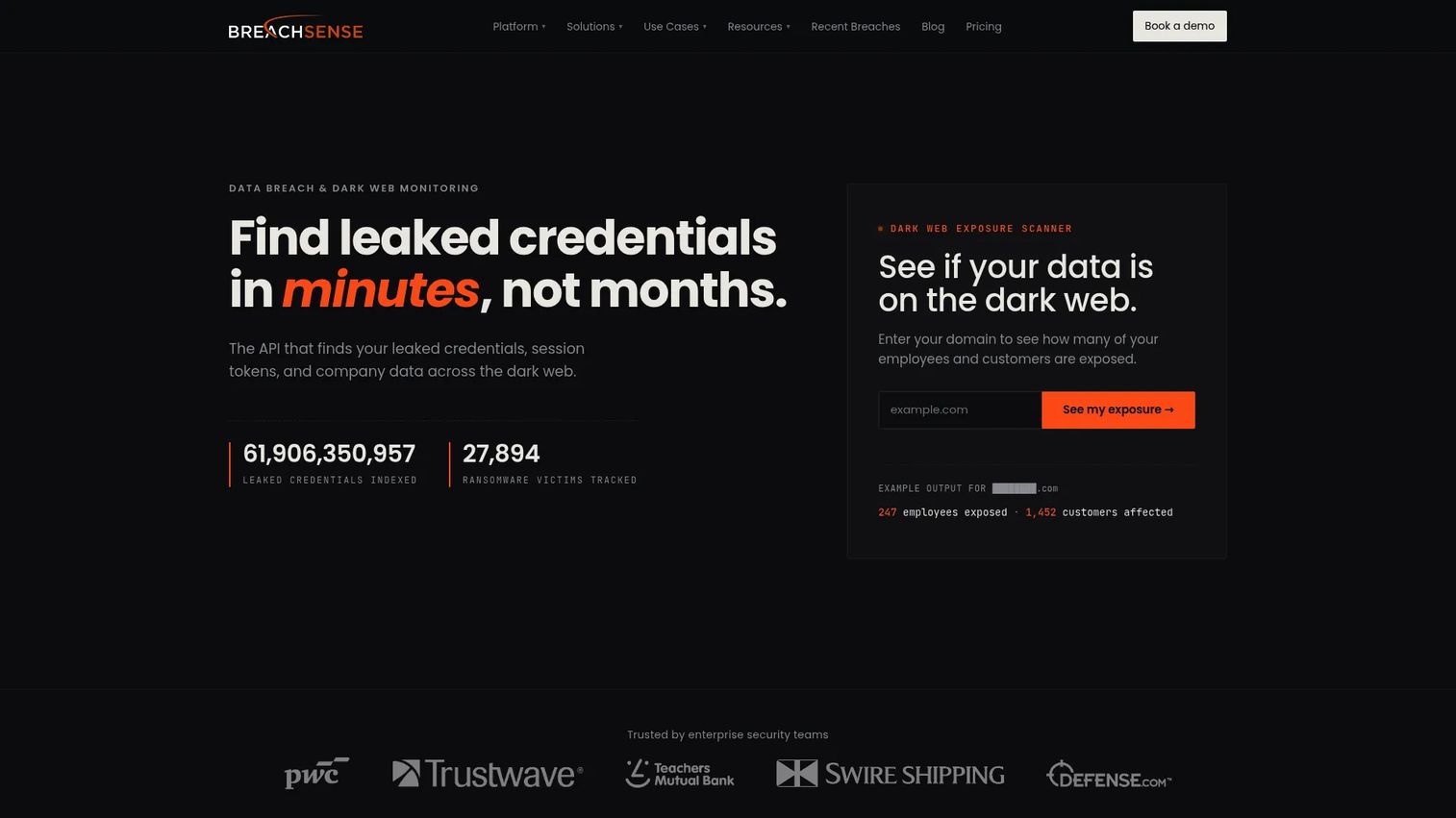
Breachsense is a dark web and breach monitoring platform built to detect exposed credentials and leaked data. It monitors dark web marketplaces, private forums, and ransomware leak files, then surfaces matches through webhooks, email alerts, and a full API. The API-first design fits teams that want breach intelligence flowing directly into their own tooling rather than a standalone dashboard.
Its full-text search across leaked ransomware files stands out. Instead of a simple credential match, you can dig into the actual leaked content to understand scope and context. That matters when you need to know exactly what an attacker got, not just that something leaked.
Best for: Security teams needing API-first monitoring of leaked credentials and dark web exposure.
Key features
- Compromised credential detection across dark web sources
- Full-text search across leaked ransomware files
- Webhook and email alerts
- Full API access for automated workflows
Why choose Breachsense: If your team runs a SOC with its own alerting stack and wants breach data piped in via API rather than another console to check, Breachsense fits that workflow. The full-text ransomware search suits investigators who need to assess exposure depth.
Breachsense pricing: Breachsense offers four tiers with plans set by monitoring scope, and it publishes a free dark web scan plus a 7-day trial after a demo. Prices are quoted directly rather than listed on the pricing page.
Breachsense holds a 4.8/5 rating on G2.
2. SpyCloud
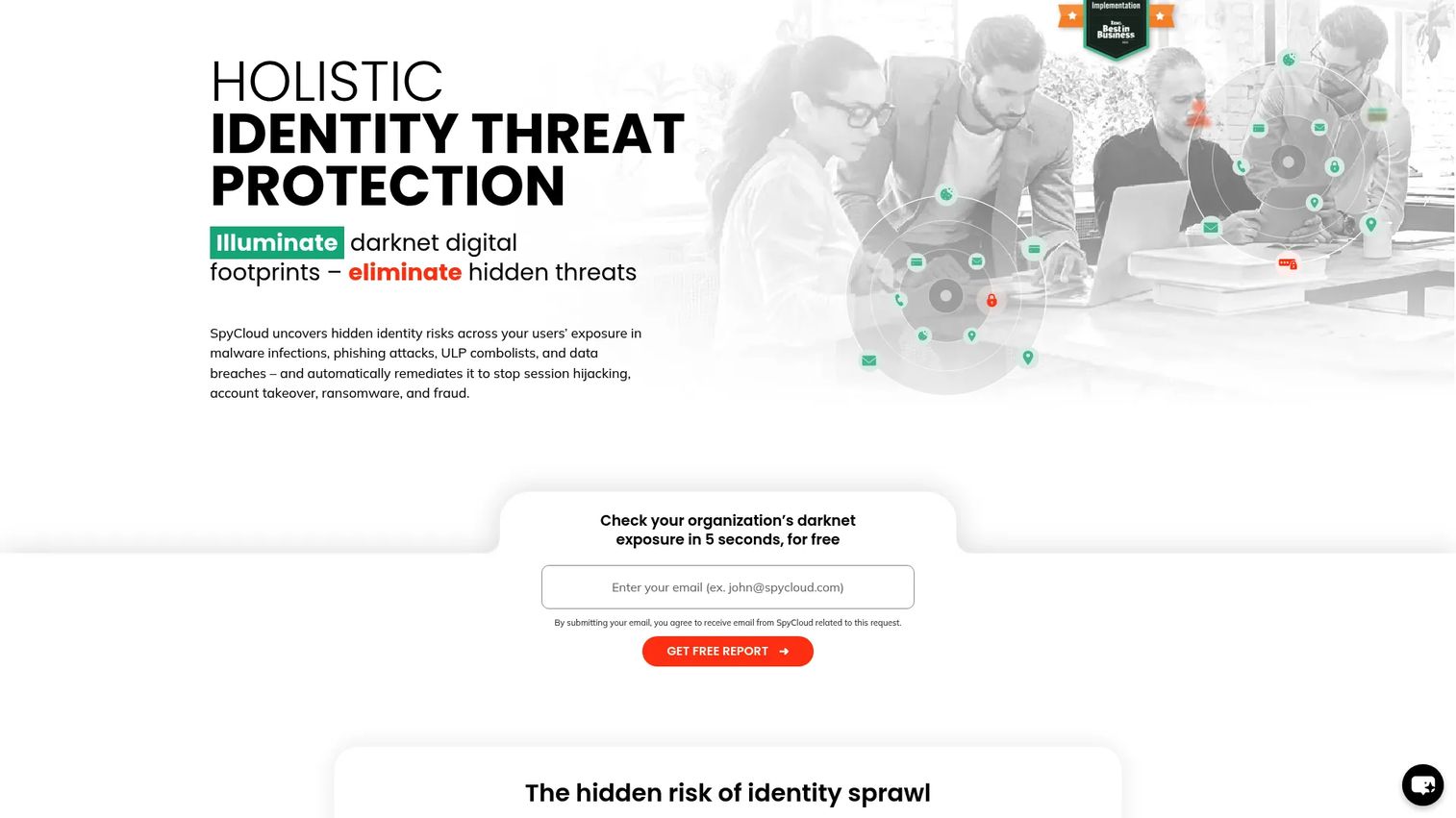
SpyCloud is identity threat protection software that helps organizations prevent, remediate, and investigate cybercrime. It draws on recaptured darknet and stolen identity data, then connects that intelligence to automated remediation for compromised identities and sessions. The remediation layer is what separates it from tools that stop at detection.
For security teams, the value is in closing the loop. When SpyCloud detects a compromised credential or session, it can trigger the response rather than just flagging it. Its investigations console and API also plug into existing security workflows for deeper analysis.
Best for: Security teams needing identity exposure intelligence and automated remediation.
Key features
- Recaptured darknet and stolen identity data intelligence
- Automated remediation for compromised identities and sessions
- Investigations console and API
- Integrations for security workflows
Why choose SpyCloud: Teams that want detection and remediation in one motion, rather than stitching together a detection tool and a separate response process, will find SpyCloud's identity focus useful. It suits organizations protecting both workforce and consumer accounts.
SpyCloud pricing: SpyCloud prices by the solution purchased, with tiers set by protected accounts, seat count, or query volume, and volume discounts available. Enterprise Protection, Consumer Risk Protection, and Investigations are all quoted through sales.
SpyCloud holds a 4.7/5 rating on G2.
3. Recorded Future
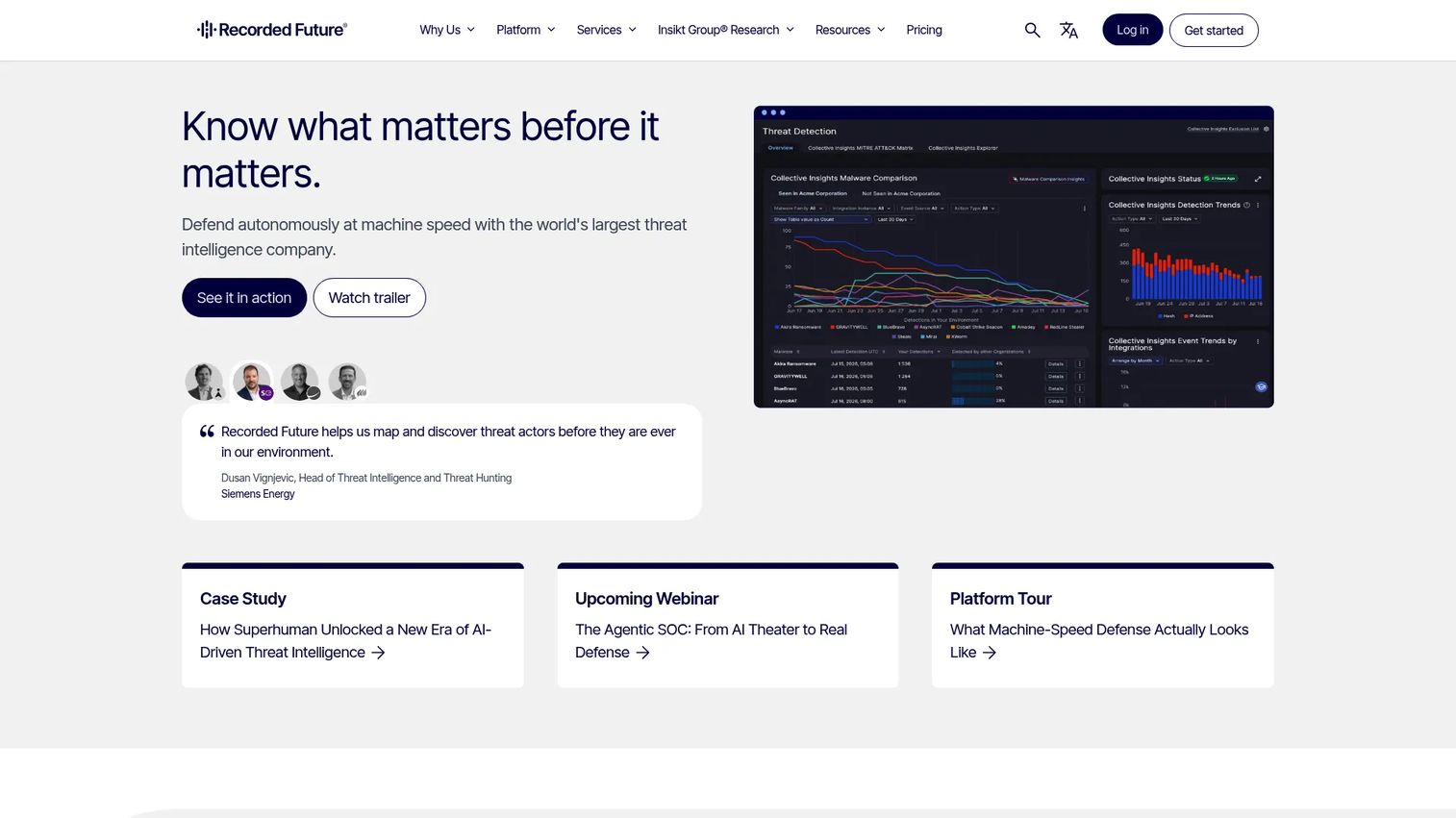
Recorded Future is a threat intelligence platform covering cyber operations, digital risk protection, third-party risk, and payment fraud. Its intelligence graph correlates signals across technical sources, the dark web, the open web, and adversary infrastructure. That breadth positions it for teams that want more than breach-only detection.
Where a dedicated breach tool tells you a credential leaked, Recorded Future adds the surrounding context: which adversary group, what infrastructure, what campaign. Its cyber operations layer supports autonomous threat hunting and continuous monitoring, while its third-party risk features extend visibility to vendor exposure.
Best for: Security teams needing enterprise threat intelligence and pre-attack defense.
Key features
- Intelligence graph across technical, dark web, and open web sources
- Cyber operations for threat hunting and continuous monitoring
- Digital risk protection for external asset discovery
- Third-party risk and security ratings
Why choose Recorded Future: If your team wants breach signals embedded in a broader threat intelligence picture rather than a standalone credential feed, Recorded Future is built for that scope. It fits mature SOCs with the capacity to act on rich intelligence.
Recorded Future pricing: Recorded Future prices by package selection, organization size, usage levels, and services across its Core, Professional, and Elite tiers. Prospects contact sales for a tailored quote.
Recorded Future holds a 4.6/5 rating on G2.
4. UpGuard
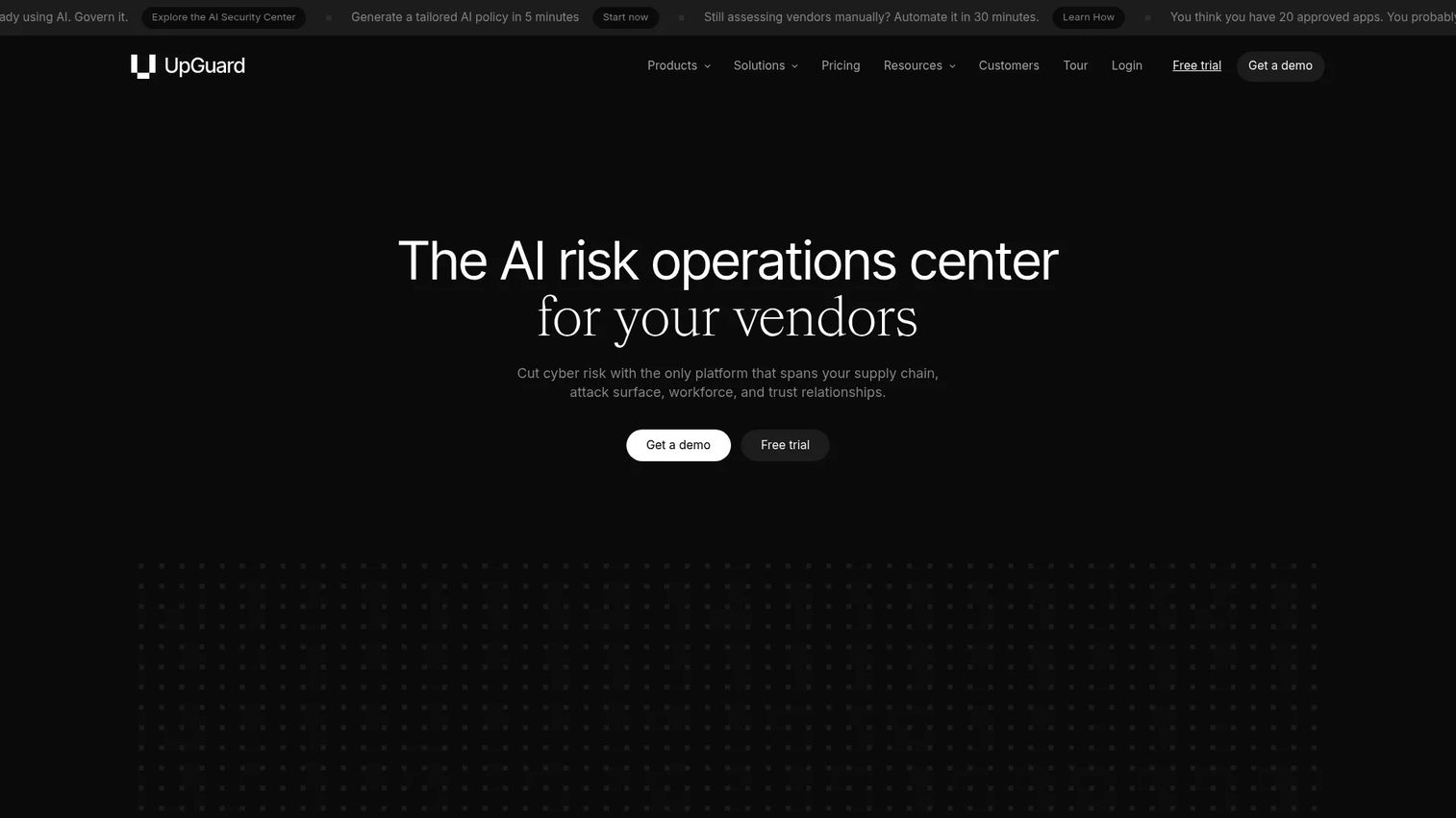
UpGuard is cyber risk management software spanning vendor risk, breach risk, workforce risk, trust centers, and risk automation. It combines attack surface management with breach and leak detection, so you see external exposure and the assets that create it in one place. That pairing suits teams whose breach risk is driven by a sprawling third-party footprint.
The attack surface management angle is the differentiator. Rather than only alerting on leaked data, UpGuard maps your external-facing assets and continuously monitors them, then applies security ratings to vendors that touch your data. Remediation workflows connect detection to action.
Best for: Teams managing third-party risk and external attack surface in one platform.
Key features
- Vendor risk assessments and continuous monitoring
- Attack surface management and threat intelligence
- Security ratings for vendors
- Remediation workflows
Why choose UpGuard: Teams whose biggest breach exposure comes from vendors and unmanaged external assets get more from UpGuard than from a pure credential monitor. The combined view reduces tool sprawl for third-party risk programs.
UpGuard pricing: UpGuard publishes pricing across several products. Trust Exchange starts free at $0/mo with a paid tier at $600/mo billed annually, Vendor Risk Standard runs $1,750/mo billed annually, and Breach Risk self-service starts at $250/month scaling by company size.
UpGuard holds a 4.5/5 rating on G2.
5. CrowdStrike Falcon
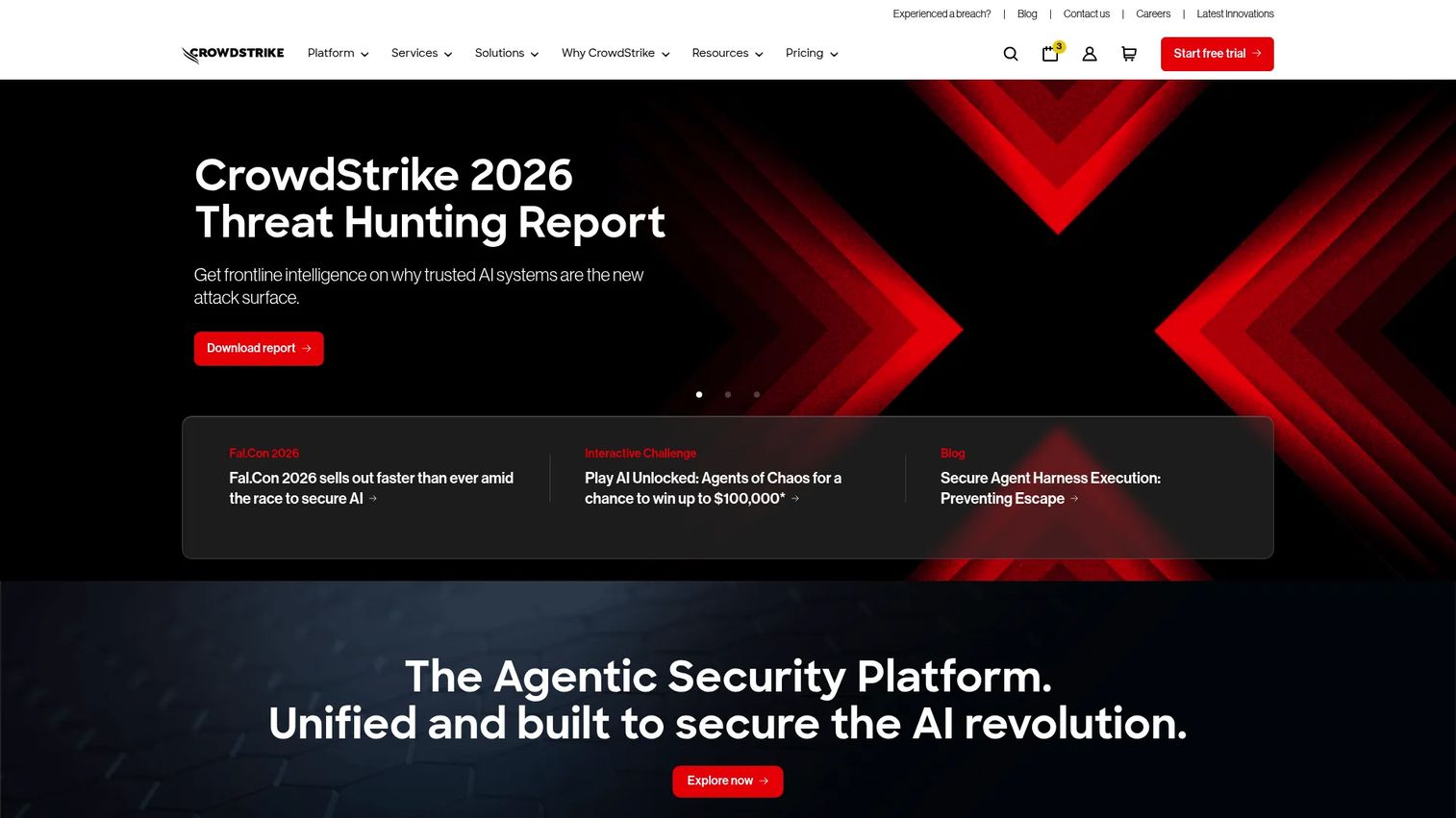
CrowdStrike Falcon is a cloud-delivered cybersecurity platform covering endpoint, cloud, identity, and AI-era threat protection. It runs a single lightweight sensor across domains and layers next-gen antivirus with endpoint detection and response. For breach detection, its value is context: it ties exposure signals to what is actually happening on your endpoints.
Teams already running endpoint security workflows get the most here. When a credential is compromised, Falcon can connect that to endpoint activity, which sharpens your response. Its 24/7 managed detection and response option suits teams without a fully staffed SOC.
Best for: Organizations seeking a unified endpoint-security platform with MDR options.
Key features
- Single lightweight sensor across domains
- Next-gen antivirus and endpoint detection and response
- 24/7 managed detection and response
- Cloud and identity protection
Why choose CrowdStrike Falcon: If breach detection needs to sit inside a broader endpoint and identity protection platform rather than run as a standalone feed, Falcon fits. It suits teams consolidating detection and response under one sensor.
CrowdStrike Falcon pricing: Falcon Go starts at $7.99 per device billed monthly, Falcon Pro at $14.99 per device, and Falcon Enterprise at $19.99 per device, with Falcon Complete quoted through sales. A 15-day free trial is available.
CrowdStrike Falcon holds a 4.6/5 rating on G2.
6. Hudson Rock
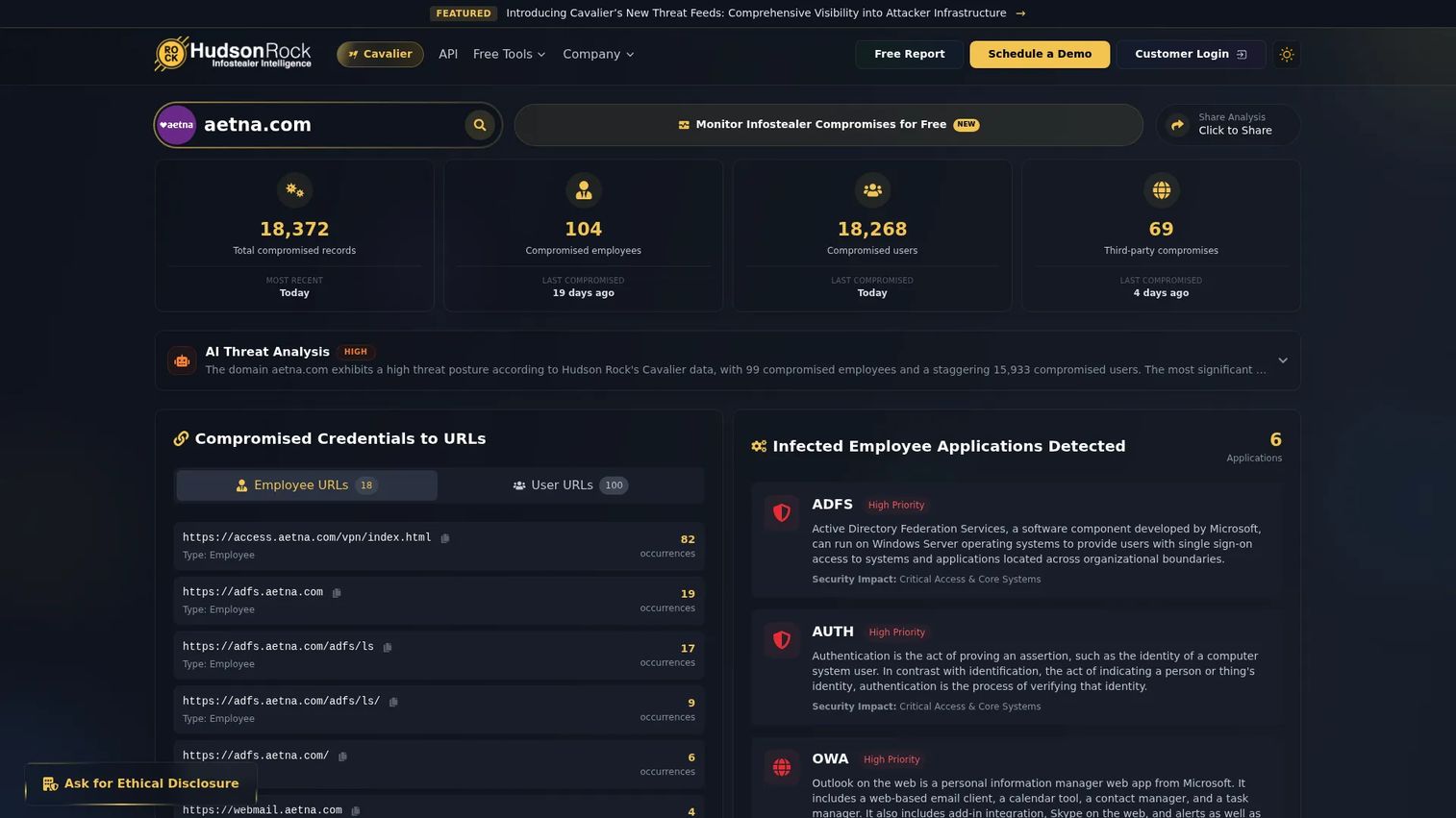
Hudson Rock is a cybercrime intelligence provider focused on compromised-credential and exposure discovery. Its products center on infostealer intelligence: identifying infected endpoints and the credentials harvested from them. For teams worried about stealer logs specifically, that focus is the draw.
The platform supports search across domains, emails, usernames, IPs, and passwords, plus third-party risk and external attack surface discovery. Its infected-endpoint angle answers a question most tools skip: not just what leaked, but which machine got compromised and what else it exposed.
Best for: Security teams and cybersecurity vendors needing cybercrime intelligence and exposure monitoring.
Key features
- Compromised credentials and infected-endpoint intelligence
- Search across domain, email, username, IP, and password
- Third-party risk discovery
- External attack surface visibility
Why choose Hudson Rock: Teams whose main concern is infostealer malware and infected-machine exposure get a specialized view here that broader tools generalize. It also serves cybersecurity vendors building intelligence into their own products.
Hudson Rock pricing: Hudson Rock offers products including Bayonet and Cavalier, with a free sign-up available and no credit card required. Specific plan prices are handled through sales rather than listed publicly.
Hudson Rock has limited public review coverage on G2 at this time.
7. DeHashed
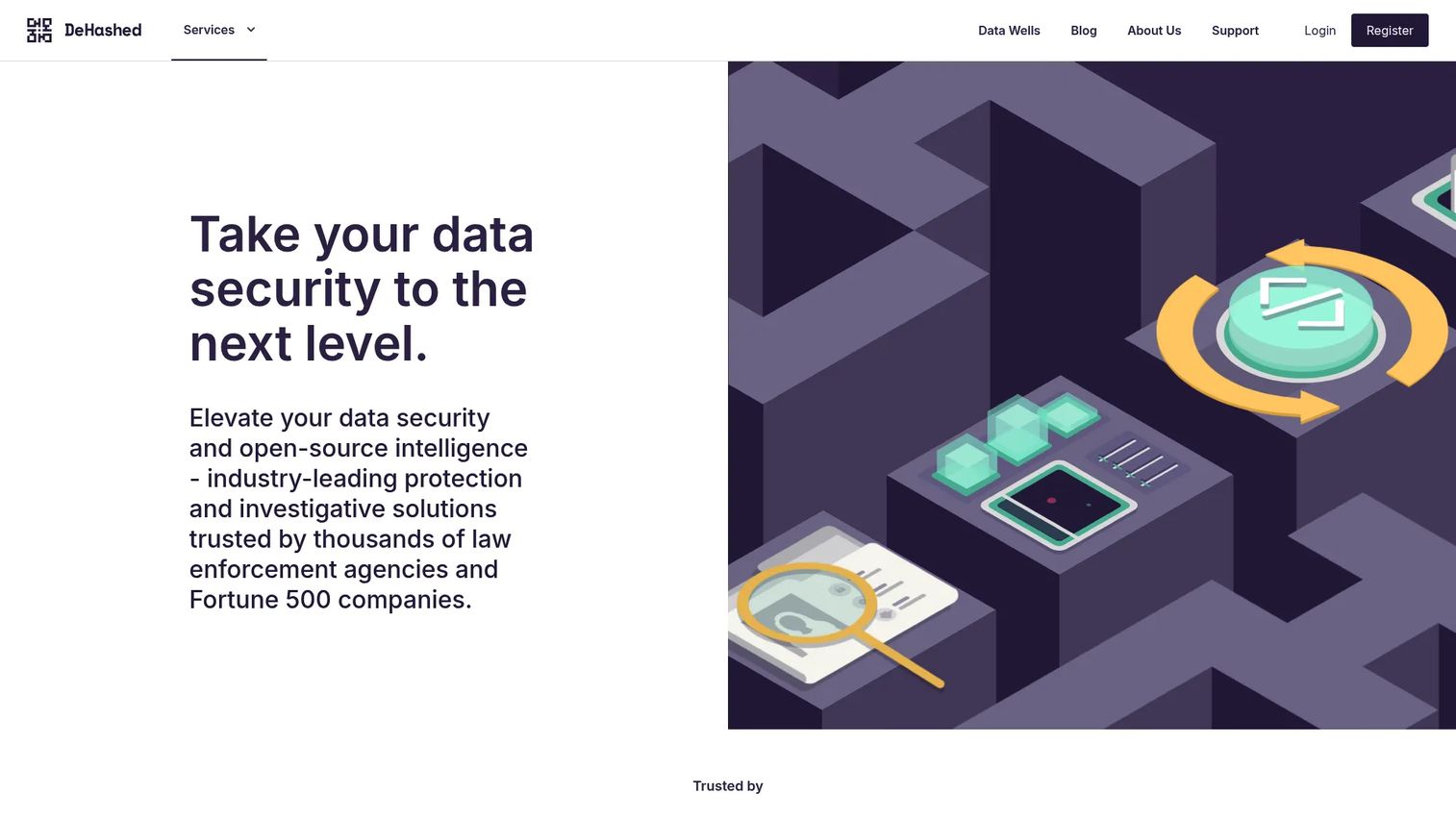
DeHashed is a cybersecurity data search and monitoring platform for breach, WHOIS, IP, and related intelligence. It searches exposed data across usernames, email addresses, IP addresses, and more, which makes it a practical tool for focused investigations and manual lookups. Where continuous platforms watch for you, DeHashed lets you query directly.
For investigators and OSINT researchers, the search-first model fits how they actually work. It also supports monitoring with breach notifications by text, email, or webhook, plus API access for programmatic queries and a full set of domain intelligence lookups.
Best for: Security teams, OSINT researchers, and investigators needing breach and domain intelligence.
Key features
- Search exposed usernames, emails, and IP addresses
- Breach notifications via text, email, or webhook
- API access for programmatic queries
- WHOIS, Reverse WHOIS, and subdomain search
Why choose DeHashed: Teams that need a fast lookup tool for specific investigations, rather than a full continuous monitoring platform, get direct value from DeHashed's search model. It also suits researchers cross-referencing breach and domain data.
DeHashed pricing: DeHashed lists WHOIS pay-per-query credit bundles at $0.00 for the shown tiers, and it offers free access for government and non-profit users through support. Broader product pricing is handled outside the public WHOIS page.
DeHashed holds a 4.6/5 rating on G2.
Considerations
Before you commit to a breach detection tool, run it against this checklist. The differences that matter rarely show up in a feature grid.
Source coverage
Ask exactly which sources the tool watches. Public breach databases are table stakes. The real value sits in private forums, invite-only Telegram channels, stealer logs, and ransomware leak sites. Push vendors to name their coverage rather than accept "dark web monitoring" as a claim.
Alert quality and context
A raw match is noise. You need alerts that show what was exposed, where it surfaced, how recently, and what action to take. Test alert quality during a trial by checking whether a hit gives you enough to act without a follow-up investigation.
Integrations and response workflow
Evaluate how breach signals reach your team. SIEM and SOAR integrations, ticketing connections, and API access determine whether detection triggers automated response or sits in a separate console. For presales engineers fielding security reviews, this is the question prospects ask most.
Pricing model and scale
Understand whether pricing runs on seats, protected accounts, query volume, or a flat subscription. Some tools publish clear starting prices; others quote by scope. Match the model to how your usage will grow so a scaling breach program does not surprise your budget.
Remediation after detection
Check how the tool moves you from detection to containment. The strongest options connect a signal to a credential reset, session token revocation, or vendor-risk review. If a tool only alerts, confirm it feeds a system that closes the loop.
How to choose the right tool for your team
The right pick depends on where your biggest gap sits.
If you need deep stolen credential visibility, Breachsense and Hudson Rock focus hard on compromised credentials and infostealer logs. Breachsense fits API-first SOCs; Hudson Rock suits teams centered on infected-endpoint intelligence.
If you need attack surface context, UpGuard pairs breach detection with external attack surface management and vendor risk. It fits teams whose exposure is driven by a large third-party footprint.
If you need broad threat intelligence and workflow integration, Recorded Future and CrowdStrike Falcon embed breach signals in a wider picture. Recorded Future adds adversary context; Falcon ties detection to endpoint response.
If you need a lighter investigative lookup tool, DeHashed gives you fast, direct search across breach and domain data without a full monitoring subscription. SpyCloud fits when you want detection and automated remediation in one motion.
Conclusion
The tradeoffs across these seven tools come down to focus. Breachsense and Hudson Rock go deep on credentials and stealer logs. SpyCloud closes the loop with remediation. Recorded Future and CrowdStrike Falcon fold breach detection into broader intelligence and endpoint platforms. UpGuard leads on attack surface and vendor risk. DeHashed serves fast, focused investigations.
Two factors should drive your decision above all: source coverage and alert quality. A tool that watches the private forums and stealer logs where your data actually surfaces, and that delivers alerts you can act on immediately, will contain more breaches than a broader platform with shallow reach.
Start by naming your primary gap. Then trial the two tools that match it, and test detection-to-response speed with real alerts before you sign.
Start your journey with Guideflow today!
FAQs
It continuously scans internal and external sources to find leaked credentials, compromised accounts, and exposed data before attackers use them. Security teams use it to detect exposure early, contain damage fast, and feed breach signals into incident response and vendor-risk workflows.
SIEM aggregates and correlates logs from inside your environment to spot suspicious activity on systems you control. Breach detection watches external sources like dark web marketplaces, private forums, and stealer logs for your data that has already leaked. The two are complementary: SIEM tells you what is happening inside, breach detection tells you what is exposed outside.
Yes, when the coverage is deep enough. Strong dark web monitoring scans marketplaces, invite-only Telegram channels, stealer logs, and ransomware leak sites where credentials actually surface. Coverage varies widely between tools, so confirm which sources a vendor monitors rather than accepting the label alone.
Beyond public breach databases, the sources that matter are infostealer logs, private forums, invite-only Telegram channels, and ransomware leak sites. Stealer logs are especially important because they often contain live session tokens that bypass MFA. Ask any vendor to name their specific source coverage.
As close to real time as possible. Leaked credentials and session tokens get bought and used quickly, so the window between exposure and alert directly affects whether you can contain the damage. Look for continuous monitoring with real-time or near-real-time alerting rather than periodic scans.
Move from detection to containment fast. Reset affected credentials, revoke active session tokens, and check whether a third-party vendor was the source. Tools with SIEM, SOAR, and API integrations help automate this response so containment does not wait on manual steps.
Test whether a single alert gives you enough to act without a follow-up investigation. A quality alert shows what was exposed, where it surfaced, how recently, and the recommended action. Run a trial and judge alerts on how much context they carry, not just how many hits they produce.
Yes. Tools with attack surface management and third-party risk features, like UpGuard and Recorded Future, extend detection to your vendors and external assets. This matters because a large share of breaches originate through third parties, so monitoring vendor exposure closes a common gap.