Provider data breaks quietly. A physician moves clinics. A license expires. A specialty gets miscoded. None of those changes propagate automatically across your directories, credentialing systems, claims platforms, or scheduling tools. They just drift. And the drift compounds.
According to Clinical Architecture (2025), 68% of healthcare organizations rate their own patient data quality as mixed or poor. A separate finding from the same study notes that 70% of those organizations cite limited time and resources as the primary barrier to fixing it. That gap between knowing the problem and having the system to solve it is exactly where provider data management software lives.
When provider records are wrong, the downstream cost is operational: Patients book with unavailable physicians, claims route incorrectly, payer directories fall out of compliance, and credentialing teams chase data that should already exist in a governed record. The right contract lifecycle management discipline applied to provider data would prevent most of this. Most organizations don't have it yet.
This guide gives you a practical shortlist of 19 tools to evaluate, with fit criteria for payers, health systems, and operations leaders who need to stop the drift.
What's inside
This guide is for payer operations leaders, health system executives, credentialing directors, and founders entering healthcare workflows who need to evaluate provider data management software.
- Who it's for: Payers, health systems, provider groups, and healthtech operators
- Selection criteria: Data validation depth, governance controls, integration scope, workflow automation, and directory management capabilities
- What you'll get: A comparison table with 19 tools, individual tool breakdowns, and a buyer's checklist to hand to your implementation lead
- Pricing approach: All pricing fields reflect what vendors disclose; quote-based tools are flagged with the cost drivers to ask about
TL;DR
- Best for patient access and scheduling intelligence: DexCare PDM+ connects provider data quality directly to scheduling density and demand capture
- Best for payer directory operations: Availity PDM and CAQH Provider Data Management both serve payers managing attested, compliant provider records at scale
- Best for data enrichment and validation: The LexisNexis suite (Provider Data MasterFile, Provider Data Validation, ProviderPoint) covers external reference data, record matching, and file cleansing
- Best for provider lifecycle and credentialing: symplr Provider handles credentialing, privileging, and lifecycle management for hospitals and health systems
- Best for enterprise data infrastructure: InterSystems HealthShare suits large organizations that need provider data connected to clinical and operational systems
- Best for payer network analytics: MacroHealth Platform and Milliman MedInsight Payer Platform add network intelligence to payer data operations
What is provider data management software?
Provider data management software centralizes, validates, governs, and distributes healthcare provider information across directories, payer systems, credentialing workflows, claims operations, scheduling platforms, and patient access channels.
The category covers a wide range of data attributes:
- Demographics: Name, address, phone, NPI, taxonomy, practice locations
- Qualifications: Licenses, credentials, board certifications, specialties, DEA registration
- Relationships: Group affiliations, facility relationships, contracts, network participation
- Availability: Bookability, visit types, modalities, scheduling slots, referral routing
- Governance: Ownership, approval workflows, edit history, data stewardship assignments
- Distribution: Provider directories, claims systems, EHRs, payer platforms, websites, call centers
Key capabilities to look for when evaluating tools in this category:
- Centralized provider master record with deduplication
- Data normalization across source systems
- Provider directory management and multi-channel distribution
- Credentialing and enrollment workflow support
- Provider data validation against external reference datasets
- Contract and network relationship tracking
- Audit logs and governance controls
- EHR, claims, and payer system integrations
- Ongoing monitoring for changes, sanctions, and license lapses
This category is adjacent to, but distinct from, pure credentialing software. Asset lifecycle management software comparisons follow a similar pattern: The master record layer is different from the workflow layer, and buying the wrong one is a common implementation mistake. Provider data management covers both, but the emphasis varies by vendor. Some tools focus on enrichment and validation; others on directory publishing; others on end-to-end lifecycle workflows from onboarding through contract management. Know which layer you're buying before you demo.
When to use provider data management software
Clean up provider directories before they create compliance risk
Directory accuracy affects patient access, plan compliance, and trust in your provider network. Manual spreadsheet updates break fast when provider rosters, locations, and specialties change across multiple payers and facilities. A governed provider data management solution replaces ad hoc cleanup with a repeatable process that catches stale records before they surface in a CMS audit or a patient complaint.
Manage payer provider data at network scale
Payer-specific needs go well beyond name and address. In-network and out-of-network status, contracts, claims routing logic, legal entity relationships, network adequacy reporting, and provider data validation all touch the same underlying provider record. Without a single governed source, each of these domains maintains its own version of provider truth, and those versions diverge.
Connect provider lifecycle workflows across teams
Credentialing, enrollment, privileging, contracting, onboarding, and monitoring all require the same provider data. When multiple teams touch the same provider record without a shared system, updates get lost, documents get duplicated, and exceptions fall through. A centralized provider data management solution gives each team a single record to update and audit.
Provider data management software comparison
The table below covers all 19 tools in this guide. Pricing reflects what each vendor discloses; most enterprise tools in this category price by quote. G2 ratings are noted where a verified listing exists.
| # | Product | Best for | Key differentiator | Pricing | G2 rating |
|---|---|---|---|---|---|
| 1 | DexCare PDM+ | Health systems improving access and scheduling | Provider data structured around patient navigation and bookability | Quote-based | 5.0/5 |
| 2 | InterSystems HealthShare | Enterprise healthcare data infrastructure | Unified health data across clinical and operational systems | Quote-based | 4.5/5 |
| 3 | Kyruus Connect | Provider search and access experiences | Provider matching, search, and scheduling access | Quote-based | N/A |
| 4 | Newgen Provider Data Management | Payers with process-heavy workflows | Workflow automation and case-style process management | Quote-based | N/A |
| 5 | Availity PDM | Payer directory and attestation workflows | Provider attestation connected to payer-provider transactions | Quote-based | 4.0/5 |
| 6 | CAQH Provider Data Management | Credentialing and payer directory accuracy | Provider-supplied data shared across payers; free for providers | Free (providers); payer pricing by agreement | 2.0/5 |
| 7 | Constellation4 Provider Data Management | Health plan network operations | Native Salesforce Health Cloud integration | Quote-based | N/A |
| 8 | Gaine Health Data Management Platform | Enterprise master data management in healthcare | Healthcare-specific data governance and entity resolution | Quote-based | N/A |
| 9 | Infosys Helix Provider Lifecycle Management | Large payer transformation programs | End-to-end lifecycle plus managed services | Quote-based | N/A |
| 10 | LexisNexis Provider Data MasterFile | Provider reference data enrichment | 8.5M+ U.S. practitioners with NPI, DEA, affiliations | Quote-based | N/A |
| 11 | LexisNexis Provider Data Validation | Real-time provider data checks | Web-based search across demographics, licenses, sanctions | Quote-based | N/A |
| 12 | LexisNexis ProviderPoint | Provider record cleansing and golden record creation | Fuzzy-logic matching and AcuSync database | Quote-based | N/A |
| 13 | MacroHealth Platform | Payer network analytics and cost optimization | Provider search with quality, tier, and cost transparency | Quote-based | N/A |
| 14 | Milliman MedInsight Payer Platform | Payer claims analytics with network context | Milliman-engineered benchmarks and AI analytics | Quote-based | N/A |
| 15 | NTT DATA Provider Data Management | Enterprise payer data transformation | Data cleansing, golden records, and contract management | Quote-based | N/A |
| 16 | Prime Provider Data Accuracy and Validation Services | Note: See tool section below | Note: See tool section below | N/A | N/A |
| 17 | symplr Provider | Hospital and health system credentialing | 9,600+ privileges across 300+ specialties | Quote-based | 4.0/5 |
| 18 | symplr Payer | Health plan credentialing and enrollment | Modular tiers: Surveys, eSearch, eApply, Core | Quote-based | 4.2/5 |
| 19 | symplr Directory | Provider directory management and compliance | Continuous validation and digital front door enablement | Quote-based | 4.1/5 |
Best 19 provider data management software for 2026
1. DexCare PDM+
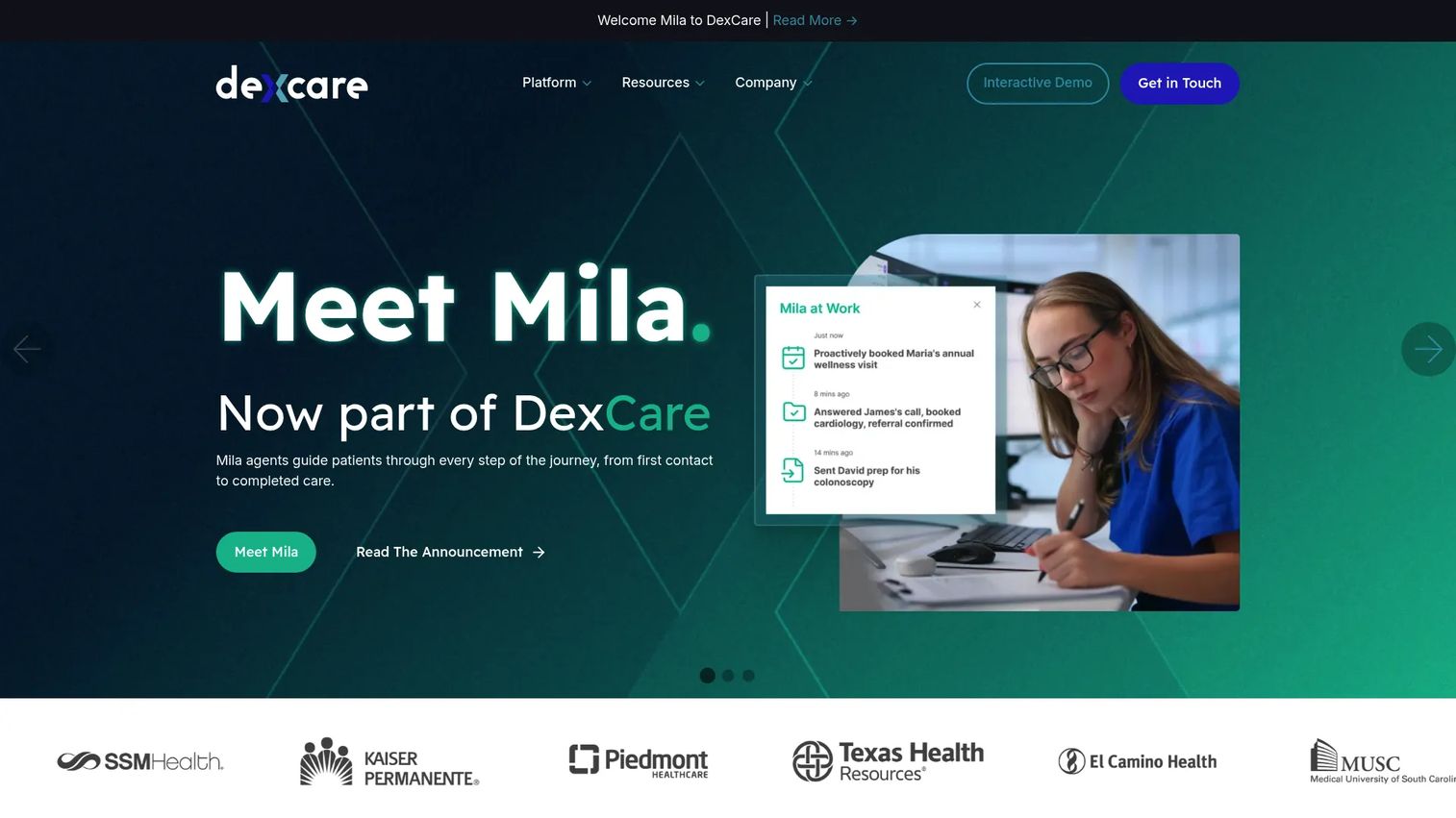
DexCare PDM+ is an AI-powered provider data management platform built specifically for health systems focused on patient access, scheduling, and demand capture. Unlike tools that treat provider data as a static directory problem, DexCare structures provider records around the clinical and operational attributes that determine whether a patient can actually book care. The platform creates a governed data layer covering search, routing, scheduling, specialties, visit types, and virtual care options.
Best for: Medium-to-large health systems connecting provider data quality to scheduling density and patient navigation.
Key features
- Automated data ingestion from source systems
- Governed updates with approvals and full audit history
- Relational mapping for venues, visit types, and modalities
- Keyword management with AI-assisted suggestions
- AI-assisted data quality and gap detection across the provider profile
Why choose DexCare PDM+: This is the right tool when the buyer's primary pain is patient leakage due to inaccurate or incomplete scheduling data. The operational link between a provider's data record and whether a patient can find and book them is DexCare's core positioning, which makes it distinct from tools focused purely on directory compliance.
DexCare PDM+ pricing: DexCare prices by sales quote. Ask for platform, module, and implementation fee breakdowns when you engage their team.
G2 rating: 5.0/5 (seller-level rating from 2 reviews on G2; a standalone PDM+ product rating is not yet available separately).
2. InterSystems HealthShare
InterSystems HealthShare is an enterprise healthcare interoperability platform that aggregates, normalizes, and shares health data through unified longitudinal care records. It supports HL7 FHIR, HL7v2, CDA, and API-based data exchange across payers, providers, and health information exchanges. Provider data is one domain within a broader health data unification architecture that also covers clinical records, patient engagement, and care coordination.
Best for: Large healthcare organizations that need provider data governed alongside clinical and operational data in a single interoperability layer.
Key features
- Unified, normalized patient-centered care records
- HL7 FHIR, HL7v2, CDA, and API interoperability
- Analytics, machine learning, and AI-enabled clinical insights
- Care coordination and patient engagement modules
- Flexible deployment: On-premises, cloud, or managed service
Why choose InterSystems HealthShare: Choose this when provider data is part of a larger data unification initiative, not a standalone directory problem. Organizations already building on InterSystems infrastructure will find HealthShare the natural fit for adding governed provider data to an existing platform investment.
InterSystems HealthShare pricing: InterSystems directs prospects to contact sales. The price depends on deployment size, module selection, integration scope, and whether you use their managed service option.
G2 rating: 4.5/5 (seller-level rating).
3. Kyruus Connect
Kyruus Connect is a care access platform that unifies provider data to power patient-facing search, self-scheduling, check-in, care navigation, and cost transparency. Provider data management functions as the foundation layer that enables accurate provider discovery across call centers, websites, and digital front doors. The platform also supports referral workflows and advanced access analytics.
Best for: Health systems and medical groups improving provider discovery, appointment access, and patient self-scheduling.
Key features
- Provider data management and APIs
- Provider search and directory experiences
- Patient self-scheduling
- Digital check-in and care navigation
- Cost estimation and price transparency tools
Why choose Kyruus Connect: The buying question here is not just data storage. It's whether patients can actually find and book the right care. Kyruus is purpose-built for that patient-facing use case, which means the data model is oriented around bookability and access, not just directory compliance.
Kyruus Connect pricing: Pricing is sales-led. Ask about implementation fees, module bundling, and whether analytics and scheduling access are priced separately.
4. Newgen provider data management

Newgen's provider data management solution is built for healthcare payers that treat provider data as an operational process, not a static database. The platform uses AI and machine learning to automate data capture and runs variance detection, reconciliation, and approval workflows across provider records. It integrates with credentialing sources including CAQH, PECOS, OIG, NPPES, DEA, CLIA, and state license files.
Best for: Healthcare payers that need structured approval workflows, case management, and automated data capture across provider records.
Key features
- Unified provider data management with automated AI capture
- Variance detection and reconciliation screening
- Entity relationship and hierarchy maintenance
- Document handling and approval routing
- Audit tracking and update history
Why choose Newgen: This is the right fit when payer teams have complex approval chains and provider data updates require structured case routing rather than open editing. The integration depth with CAQH, NPPES, and OIG also reduces manual lookup work for credentialing and compliance teams.
Newgen provider data management pricing: Pricing is quote-based. When you engage sales, ask about license costs, workflow module pricing, integration fees, and implementation scope.
5. Availity PDM

Availity PDM helps health plans collect, attest, validate, and distribute accurate provider data across payer workflows. The platform supports more than 400 provider data elements, runs confidence scoring on each record, and generates attested golden records for use across directories, claims, authorizations, and credentialing. It connects directly to the Availity payer-provider transaction network, which means provider data updates flow alongside existing administrative transactions.
Best for: Health plans that need reliable provider directory attestation connected to broader payer-provider operational workflows.
Key features
- Provider-friendly directory attestation portals
- Roster submission and upload attestation
- Support for 400+ provider data elements
- Confidence scoring and targeted attestation workflows
- Attested provider golden record generation
Why choose Availity PDM: Payers already using Availity for eligibility, claims, or prior authorization get meaningful efficiency gains by managing provider data in the same network. The attestation model is particularly strong for plans that need CMS-compliant directory accuracy without building a separate outreach operation.
Availity PDM pricing: Pricing requires a sales conversation. Ask about plan size, data element scope, transaction volume, and whether directory publishing is included or an add-on.
G2 rating: 4.0/5 (42 reviews at seller level).
6. CAQH provider data management
CAQH operates the centralized provider data infrastructure that most healthcare organizations already interact with through credentialing. The CAQH Provider Data Portal (formerly CAQH ProView, now migrating to CAQH Unity) provides a single electronic credentialing application accepted across all 50 states. Providers and practice managers maintain their own profiles; payers and credentialing organizations access that data through standardized exchange. The Provider Data Portal is available at no charge to providers and office staff.
Best for: Healthcare organizations that need trusted, provider-supplied data at scale for credentialing and payer directory workflows.
Key features
- Single electronic credentialing application accepted nationally
- Secure profile and document management with authorization-based sharing
- Provider, practice manager, and group portals
- Support for credentialing, directory updates, delegated rosters, and enrollment
- Payer data exchange infrastructure
Why choose CAQH: No other tool in this category has the provider participation breadth of CAQH. If your organization needs to ingest provider-supplied credentialing data from a large, nationally distributed network, CAQH is the starting point, not the alternative.
CAQH provider data management pricing: The Provider Data Portal is free for providers and office staff. Organizations interested in participating payer or data partner access should contact CAQH directly for agreement terms.
G2 rating: 2.0/5
7. Constellation4 provider data management

Constellation4 delivers provider data management for health plans through a Salesforce Health Cloud-native architecture. The platform aggregates public and private data sources and curates a database of over 7 million provider records, covering network analysis, gap analysis, provider recruitment campaigns, and directory management. Because it runs natively on Salesforce Health Cloud, it integrates directly with payer CRM and member management workflows.
Best for: Health plans already running on Salesforce Health Cloud that need provider network data and directory management without a separate integration build.
Key features
- Network analysis, gap analysis, and provider recruiting campaigns
- Centralized provider data with verification, reconciliation, and compliance dashboards
- Native Salesforce Health Cloud integration
- Provider directory management and distribution
- 7M+ provider record database from aggregated sources
Why choose Constellation4: The Salesforce-native architecture removes a significant integration barrier for plans that have already standardized on Health Cloud. Teams that are not on Salesforce will find less leverage here and should evaluate alternatives with broader integration flexibility.
Constellation4 pricing: Pricing is quote-based. The key drivers are plan size, number of providers in the network, and the scope of workflow and analytics modules selected.
8. Gaine Health Data Management Platform
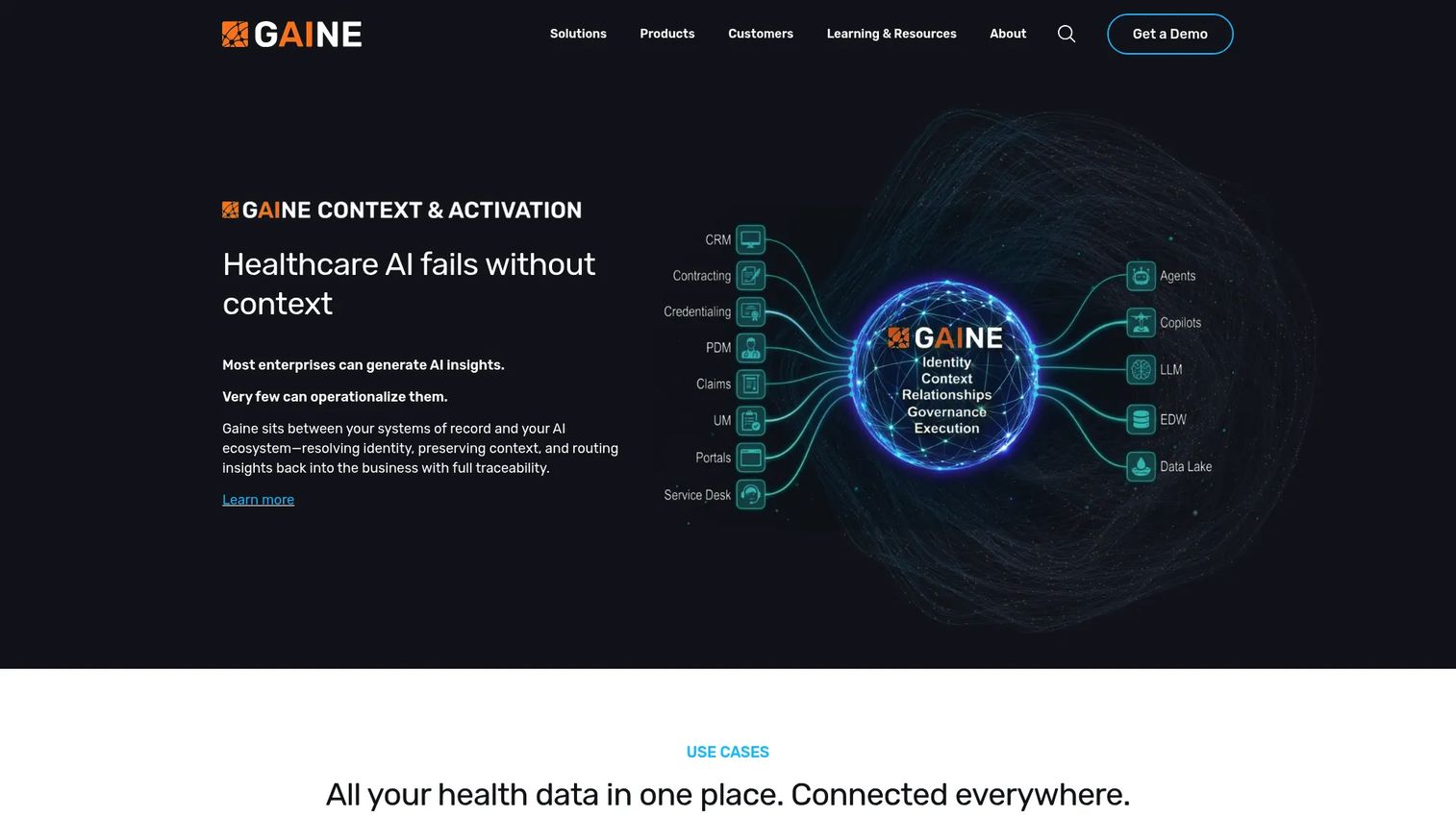
Gaine is a healthcare data management platform with master data management at its core. The platform integrates, cleanses, validates, enriches, governs, and synchronizes health data across payers, providers, and life sciences organizations. Its healthcare-specific data model covers multiple domains including providers, members, and facilities. Entity resolution, survivorship rules, and real-time synchronization make it useful for organizations that need a governed data foundation rather than just a provider directory tool.
Best for: Healthcare payers, providers, and life sciences organizations that need governed, multi-domain master data management, not a point solution for directories alone.
Key features
- Master data management with matching, cleansing, merging, and enrichment
- Healthcare-specific cross-domain data model
- Universal integration and real-time synchronization
- Survivorship rules, audit trails, and data governance controls
- Data quality monitoring and transformation
Why choose Gaine: This is a strong fit when the organization needs a governed data foundation across multiple healthcare domains. It's a more complex investment than a pure provider directory tool, which is worth factoring into implementation timelines.
Gaine Health Data Management Platform pricing: Pricing is quote-based. Cost drivers include platform scope, number of data domains, integration complexity, and implementation services.
9. Infosys Helix provider lifecycle management

Infosys Helix offers an end-to-end provider network management platform covering recruitment, applications, credentialing, contracting, provider data management, and provider finder services. What distinguishes it from pure software vendors is the managed services wrapper: Infosys can operate workflows, not just configure them. Large payers running transformation programs often choose this approach when internal implementation capacity is the binding constraint.
Best for: Large healthcare payers that need technology plus process redesign support, not just a software license.
Key features
- Provider recruitment and online applications
- Automated credentialing and digital contracting
- Provider data management and provider finder services
- Managed services delivery model
- Enterprise implementation and transformation support
Why choose Infosys Helix: Choose this when the organization wants a partner to design, implement, and operate provider lifecycle workflows rather than owning those operations internally. The managed services model is a meaningful differentiator for payers without large technology teams.
Infosys Helix pricing: Pricing uses enterprise contracts tied to program scope, service model, and transformation depth. Contact Infosys directly for a scoping conversation.
10. LexisNexis Provider Data MasterFile
LexisNexis Provider Data MasterFile is a centralized provider data repository covering more than 8.5 million U.S. healthcare practitioners and over 1 million organizations. It provides comprehensive provider attributes including NPI, DEA, specialties, licenses, credentials, and multiple address types. The dataset also includes provider relationship and affiliation data across IDNs, ACOs, and health systems. Organizations use it to enrich internal provider files rather than as a workflow system.
Best for: Healthcare organizations, pharmacies, PBMs, and life sciences companies that need authoritative provider reference data to enrich or validate internal records.
Key features
- 8.5M+ U.S. practitioner records with NPI, DEA, specialties, and credentials
- Provider relationship and affiliation visibility
- Multiple address types and contact information
- Data for directories, credentialing, compliance, claims, and outreach
- Enrichment at scale without requiring a workflow platform
Why choose LexisNexis Provider Data MasterFile: Use this when the core problem is incomplete or stale provider records, not workflow automation. It's a reference dataset that supplements whatever system of record you already have.
LexisNexis Provider Data MasterFile pricing: LexisNexis prices by data access, volume, and permitted use. Contact LexisNexis Risk Solutions for dataset and licensing terms.
11. LexisNexis Provider Data Validation
LexisNexis Provider Data Validation is a web-based, real-time provider information search service for verifying provider demographics, affiliations, licenses, DEA data, sanctions, taxonomies, and NPI information. Users research individual providers or run batch validations against external reference sources to confirm the accuracy of internal records before they flow into directories, claims systems, or credentialing workflows.
Best for: Healthcare organizations that already have a system of record but don't trust the accuracy of what's in it.
Key features
- Real-time provider information search
- Detailed demographics, affiliations, licenses, DEA, and sanctions data
- Taxonomy and NPI validation
- Supports credentialing, claims, compliance, and network management
- Batch validation for large provider files
Why choose LexisNexis Provider Data Validation: This is the right starting point when the immediate problem is bad data quality and the buyer wants external confirmation before rebuilding workflows around unreliable records. It's a validation service, not a full platform.
LexisNexis Provider Data Validation pricing: Contact LexisNexis Risk Solutions. Pricing varies by file size, validation frequency, and delivery model.
12. LexisNexis ProviderPoint
LexisNexis ProviderPoint is a hosted provider data cleansing and augmentation solution that creates golden records from incomplete or inaccurate source files. It uses AcuSync and the Master Provider Referential Database to apply fuzzy-logic and probabilistic matching, generate recommended action steps, and produce integration codes for downstream systems. The result is a cleaned, enriched provider file with standardized formatting and business rules applied.
Best for: Payers, health systems, and life sciences organizations that need to cleanse provider records and build reliable golden records before distribution.
Key features
- Probabilistic and fuzzy-logic matching against the Master Provider Referential Database
- AcuSync-powered golden record creation
- Integration codes and recommended action steps
- Customized file formatting and business rules
- Programmable update schedules
Why choose LexisNexis ProviderPoint: Choose this when the input problem is a messy, deduplicated provider file and the output requirement is a clean, matched record ready for operational use. It bridges the gap between raw data and a system of record.
LexisNexis ProviderPoint pricing: Contact LexisNexis Risk Solutions for dataset access and processing fees.
13. MacroHealth Platform

MacroHealth is a cloud-based healthcare marketplace platform that helps payers optimize costs, connect with health market partners, and deliver price transparency tools. The platform includes provider search with configurable quality, tier, and specialty filters, real-time member-specific cost estimates, network and solution optimization, single-point partner integration, and on-demand reporting. It serves health plans, third-party administrators, brokers, and consultants.
Best for: Health plans and payer market participants evaluating network performance, cost optimization, and provider access data.
Key features
- Network and solution optimization workflows
- Provider search with quality, tier, and specialty filters
- Price transparency with real-time, member-specific cost estimates
- Single-point partner integration and data connectivity
- Customer portal and on-demand analytics
Why choose MacroHealth: The fit is strongest when provider data connects to network strategy and payer market decisions, not only directory publishing. If your primary question is "which providers should be in our network and at what cost," MacroHealth adds analytical context that pure PDM tools don't.
MacroHealth Platform pricing: Pricing is quote-based. Contact MacroHealth for module, payer scale, and data scope details.
14. Milliman MedInsight Payer Platform
Milliman MedInsight is an enterprise healthcare analytics platform designed for health plans to analyze claims and clinical data, monitor performance, and support cost, utilization, risk, and value-based care decisions. Provider network data serves as context within a broader payer analytics environment. The platform uses Milliman-engineered actuarial benchmarks and includes an Innovation Portal for AI and machine learning capabilities.
Best for: Health plans that need provider network data in a broader payer analytics and benchmarking environment.
Key features
- Performance benchmarking with Milliman-engineered actuarial benchmarks
- Claims and clinical data analytics with custom analysis
- Cost and utilization analysis
- Population health and care management modules
- AI and machine learning through the Innovation Portal
- Data Confidence Model with automated audits
Why choose Milliman MedInsight: Use this when provider data quality is a component of a larger payer analytics problem, specifically one involving cost benchmarking, utilization analysis, or value-based contract performance. It is not a pure provider data management tool.
Milliman MedInsight pricing: Contact Milliman. Pricing depends on modules selected, data volume, and implementation services scope.
15. NTT DATA provider data management

NTT DATA offers an end-to-end healthcare payer solution focused on improving provider network data quality and operational effectiveness. The offering covers provider engagement workflows (claims, eligibility, benefits, and notifications), provider data cleansing, golden record management, and contract management. Like Infosys Helix, NTT DATA brings implementation depth and services capacity that pure software vendors don't.
Best for: Healthcare payers running enterprise data transformation programs that need a systems integrator alongside the technology.
Key features
- Provider engagement workflows across claims, eligibility, and benefits
- Provider data cleansing and normalization
- Golden record management
- Contract management integration
- Healthcare transformation services
Why choose NTT DATA: The right fit is when internal capacity is the bottleneck, not technology selection. NTT DATA's value is its ability to own implementation complexity across legacy payer systems, which is often the hardest part of a provider data modernization project.
NTT DATA provider data management pricing: Enterprise contracts; contact NTT DATA for services scope, implementation model, and technology fees.
16. Prime provider data accuracy and validation services
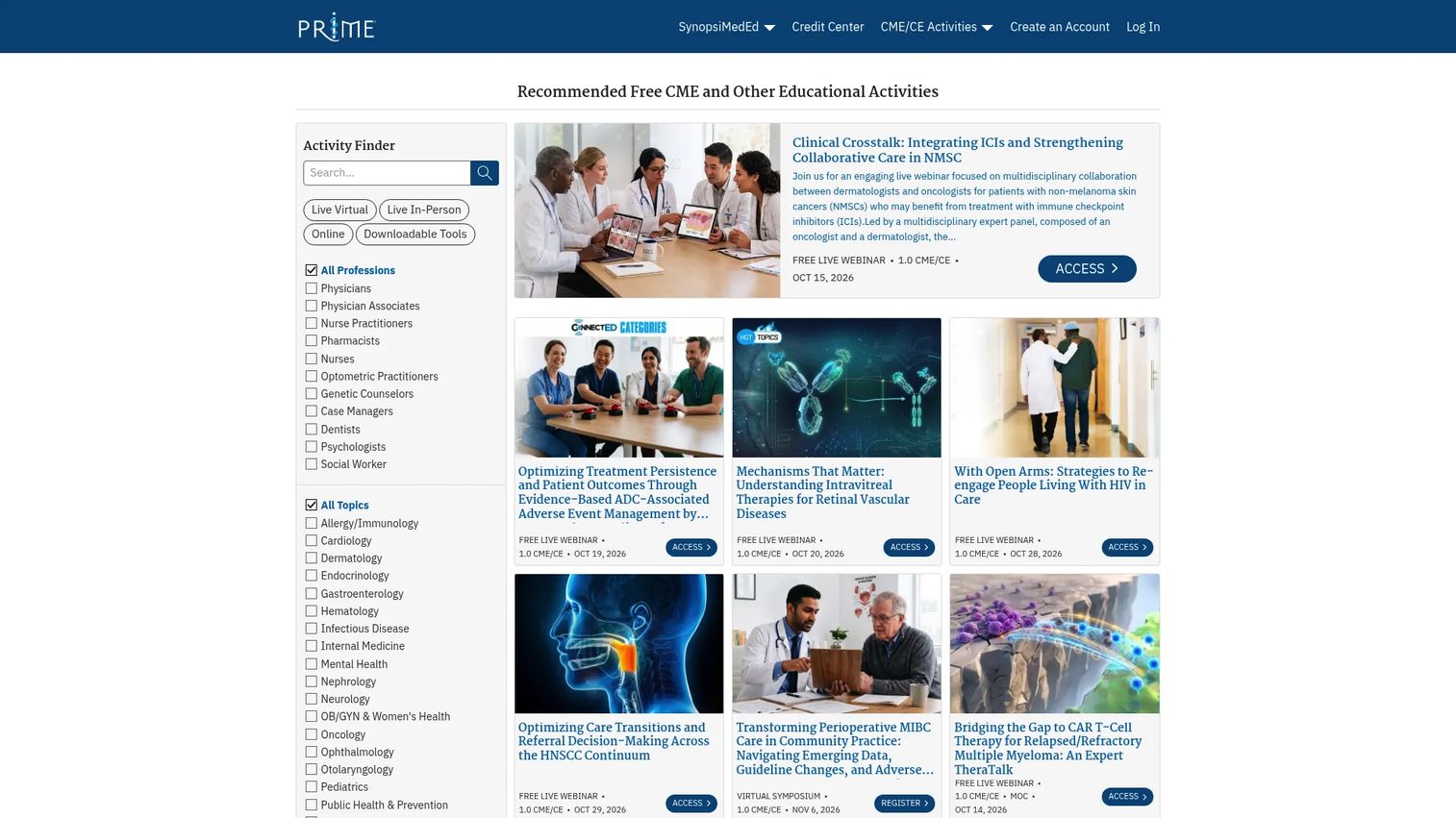
Prime appears in multiple healthcare procurement shortlists under provider data accuracy and validation services. However, the organization's primary public-facing identity is as a continuing medical education (CME) provider. The website at primeinc.org does not surface a dedicated provider data management or validation product with verifiable features, pricing, or reviews. Buyers encountering "Prime" in a provider data management context should confirm the specific entity and product before engaging.
Best for: Verify the specific Prime entity and product scope before including this in a formal evaluation.
Key features
- Features could not be verified from first-party sources for a provider data validation product
Why choose Prime: Confirm with your procurement or vendor management team that the "Prime" entity on your list matches the organization offering provider data accuracy services, not the CME company at primeinc.org.
Prime pricing: Contact the specific Prime entity directly to confirm product scope and pricing.
17. symplr Provider
symplr Provider is cloud-based provider data management software for hospitals and health systems that covers the full provider lifecycle: Verification, credentialing, enrollment, privileging, peer review, and quality improvement. The platform includes access to more than 9,600 privileges across 300+ specialties, automated application management, committee review workflows, license monitoring, and scheduled reporting. It is built specifically for health system medical staff operations.
Best for: Hospitals, health systems, and medical groups managing complex credentialing, privileging, and lifecycle workflows for large provider populations.
Key features
- Provider credentialing and centralized provider data management
- 9,600+ privileges across 300+ specialties
- Application management and committee review workflows
- License monitoring and provider lookup
- Scheduled reporting and compliance documentation
Why choose symplr Provider: This is the right tool when provider data must directly support medical staff operations and credentialing governance. The depth of privileging support sets it apart from general provider data management platforms that treat credentialing as a secondary workflow.
symplr Provider pricing: Pricing is quote-based. Reach out to symplr and ask about module selection, organization size, and implementation requirements.
G2 rating: 4.0/5 (22 reviews).
18. symplr Payer
symplr Payer is provider data management and payer credentialing software for health plans and managed care organizations. It covers automated primary source verification, compliance tracking, centralized provider data, payer interoperability, and audit-ready reporting. The product is structured in modular tiers: Surveys, eSearch, eApply, and Core, allowing payers to start with the capabilities they need and add modules as workflows expand.
Best for: Health plans managing commercial and government payer enrollment, credentialing, and network data workflows.
Key features
- Automated primary source verification
- Compliance tracking and alerts
- Centralized provider data management with payer integrations
- Credentialing and recredentialing automation
- Audit-ready reporting
Why choose symplr Payer: The modular structure is meaningful for payers that want to start with enrollment or credentialing and expand later, rather than committing to a full platform from day one. When payer enrollment delays are creating revenue friction, this is a practical entry point.
symplr Payer pricing: Sold through sales with modular annual pricing across Surveys, eSearch, eApply, and Core tiers. Contact symplr for pricing by module and organization size.
G2 rating: 4.2/5 (7 reviews).
19. symplr Directory
symplr Directory centralizes, validates, governs, and distributes healthcare provider data for payers and providers managing complex networks. The platform runs continuous automated validation and data curation, supports healthcare-specific compliance workflows, enables enterprise system integrations, and powers provider search and digital front door experiences. It is purpose-built for organizations where the provider directory is the visible failure point for underlying data quality problems.
Best for: Healthcare payers and providers managing large provider networks that require compliance, accuracy, and patient-facing directory publishing.
Key features
- Centralized provider data management with governance controls
- Automated data validation and continuous curation
- Healthcare-specific compliance support
- Enterprise system integrations
- Provider search and digital front door enablement
Why choose symplr Directory: Choose this when the organization's immediate problem is directory inaccuracy that is showing up in patient complaints, plan audits, or failed scheduling attempts. The continuous validation model addresses the update frequency problem that static directory approaches can't solve.
symplr Directory pricing: Pricing is not displayed; symplr directs buyers to request a demo. Ask about provider count, integration scope, and whether compliance reporting is included or an add-on.
G2 rating: 4.1/5 (5 reviews).
Considerations when choosing provider data management software
Start with the system-of-record question
Many failed purchases start because the team buys the wrong layer. Before evaluating vendors, decide whether you need a provider master record, an enrichment and validation service, a workflow automation system, or a directory publishing tool. Some vendors cover multiple layers; others specialize in one. Knowing your primary gap narrows the field fast.
Map provider data to specific business outcomes
Tie your evaluation to measurable outcomes: Directory accuracy rates, provider onboarding time, payer enrollment speed, claims routing accuracy, scheduling density, and manual rework hours. Tools that don't connect to at least one of these outcomes are solving the wrong problem. Ask each vendor which outcome their existing customers measure most consistently.
Check integration depth before you see a demo
The most important question in any provider data management evaluation is what it connects to. Check for integrations with your EHR, claims system, credentialing platform, call center tools, payer directory, scheduling system, and data warehouse. A governed provider record that doesn't distribute to downstream systems is just another database. Confirm integration depth before you spend time on demos. For comparison, see how other healthcare account management software evaluations approach the integration question.
Evaluate governance, not just data fields
Provider data management breaks when nobody owns updates. Ask each vendor how they handle approval workflows, edit history, audit trails, stewardship role assignments, and exception routing. A system with good data and no governance model will drift again within months of implementation.
Budget for services and change management
Implementation is rarely just software configuration. Plan for data cleanup, source-system mapping, workflow redesign, training, validation rule setup, and ongoing data stewardship. For enterprise tools and managed service offerings, services cost can match or exceed license cost. Build that into your evaluation budget, not just your post-award budget.
Conclusion
Provider data management is not a single category. The tools on this list cover at least five distinct layers: Reference data enrichment (LexisNexis), workflow automation for payers (Newgen, Availity, symplr Payer), credentialing and lifecycle management for health systems (symplr Provider), directory publishing and compliance (symplr Directory), patient access and scheduling intelligence (DexCare PDM+, Kyruus Connect), and enterprise data infrastructure (InterSystems HealthShare, Gaine).
The right vendor depends on which workflow breaks today and which system should own provider data tomorrow. If the immediate pain is directory inaccuracy, start with a validation-first tool like LexisNexis Provider Data Validation or a directory-focused platform like symplr Directory. If the pain is payer enrollment speed, symplr Payer or Availity PDM are more direct fits. If you're running a health system transformation program and need implementation depth alongside the software, Infosys Helix or NTT DATA are worth evaluating.
Forward this shortlist to your VP Ops, payer lead, or implementation owner with a note on which layer is your primary gap. That conversation will narrow 19 tools to 3 faster than any demo sequence will.
Start your journey with Guideflow today!
FAQs about provider data management software
Provider data management software centralizes, validates, governs, and distributes healthcare provider information across directories, payer systems, credentialing workflows, claims platforms, and scheduling tools. It creates a single, governed source of provider truth that downstream operational systems can rely on without manual reconciliation. The category spans enrichment datasets, workflow automation, directory publishing, and master data management.
The primary users are healthcare payers managing network directories and claims routing, health systems managing credentialing and provider lifecycle workflows, and credentialing directors overseeing enrollment and compliance. Provider enrollment managers, network operations teams, data governance leads, and patient access leaders also rely on these tools. At the organizational level, buyers are typically VP-level operations, IT, or payer network executives.
Provider directory management is one downstream use case within a broader provider data management scope. A provider directory reflects a curated, published view of providers available in a network. Provider data management covers the source records, validation processes, governance workflows, lifecycle events, and multi-system distribution that make an accurate directory possible. Buying a directory tool without governing the source data upstream usually results in a compliant directory that drifts quickly.
For payers, provider data management covers in-network and out-of-network provider records, contract relationships, claims routing logic, legal entity management, network adequacy reporting, and directory compliance with CMS requirements. The data must stay current as providers join and leave networks, change practice locations, or update specialties. Payer-specific tools typically emphasize attestation, confidence scoring, and compliance audit trails. For related ai governance tools used in adjacent data operations, see our separate guide.
Accuracy improves through a combination of validation, attestation, deduplication, and governed update workflows. External validation services check records against authoritative sources like NPPES, OIG, state license boards, and DEA. Attestation workflows prompt providers to confirm their own data periodically. Deduplication algorithms identify and merge duplicate records. Governed edits prevent unauthorized changes from overwriting confirmed data. Together, these processes reduce the drift that makes directories inaccurate over time.
No. Credentialing software verifies provider qualifications, manages the credentialing workflow, and supports privileging decisions. Provider data management can include credentialing data as one input, but its scope is much broader: Directory records, network contracts, claims data attributes, scheduling parameters, and patient access configurations. Some vendors like symplr offer both within a product suite; others specialize in one or the other. Buying credentialing software when you need provider data management across multiple operational systems will leave significant gaps.
At minimum, a provider data management solution should connect to your EHR, claims system, credentialing platform, payer directories, and scheduling tools. Beyond those, look for integrations with call center platforms, CRM, data warehouse, and analytics tools. The integration list should also cover external reference data sources like NPPES, OIG, CAQH, state license boards, and DEA. A governed provider record that doesn't reach the downstream systems that need it solves only half the problem. For context on how similar operational software handles asset lifecycle management integrations, the evaluation criteria are closely parallel.
Start with a requirements checklist that covers data model fit, validation source coverage, governance controls, integration depth, workflow automation, reporting, implementation support, and total cost of ownership. Run a data audit before vendor demos so you know the exact shape of your problem. Ask each vendor for references from organizations with similar size, payer mix, and integration complexity. Confirm whether implementation services are included or contracted separately. Build in a realistic timeline for data cleanup and source-system mapping, which often extends beyond the software go-live date by several months.