A feature ships. Then security asks where its event data, customer attributes, support attachments, and AI prompts are stored. For most product teams, the answer is split across a warehouse, three SaaS tools, an object storage bucket, and a vendor whose contract nobody can find.
That friction is not a perimeter problem. It is a data problem. The data-centric security model shifts the question from "Is the network secure?" to "Where is sensitive data, who can reach it, and what controls follow it?" According to 360iResearch (2025), the data-centric security market was valued at $7.78 billion globally, growing toward $18.74 billion by 2032 at a 13.36% CAGR. Adoption is accelerating because cloud sprawl, SaaS proliferation, and AI copilots keep creating new data paths faster than perimeter tools can track them.
This guide is written for product and engineering leaders who participate in security evaluations but are not the primary budget owner. It covers how the category works and which tools close which control gaps.
What's inside
- A plain-English definition of data-centric security and its five core capabilities
- A side-by-side comparison of 10 tools spanning DSPM, access governance, DLP, and encryption
- Buyer criteria linking data security decisions to release cadence and product data lifecycle
- A checklist for evaluating coverage, remediation, and cost structure before procurement
TL;DR
- Best for full data security operations: Varonis, for teams that need discovery, permissions remediation, and threat detection in one operating model
- Best for cloud-native discovery: Cyera, for large cloud data estates and AI-related exposure visibility
- Best for encryption and key management: Thales CipherTrust Data Security Platform, for persistent protection controls and centralized key governance
- Best for a DSPM-led program: Sentra, for continuous classification and posture context across multi-environment data stores
- Best for privacy and governance alignment: BigID, for organizations connecting discovery to privacy workflows and retention management
What is data centric security?
Data-centric security is an approach that discovers, classifies, protects, and monitors sensitive data throughout its lifecycle, regardless of where that data is stored, processed, or shared.
Unlike perimeter-led security, which focuses on network boundaries and endpoint controls, data-centric security follows the data itself. Network, application, and identity controls still matter. What this approach adds is a layer of protection that moves with sensitive data across cloud services, access control software, SaaS applications, endpoints, and partner workflows.
Five capabilities to expect from any platform
- Discovery and inventory: Find structured and unstructured sensitive data across connected environments
- Classification and labeling: Identify PII, financial data, credentials, health data, source code, and proprietary information
- Access analysis and policy control: Determine who can reach sensitive data and whether that access is justified
- Protection and enforcement: Apply encryption, tokenization, masking, DLP, or policy-based restrictions
- Monitoring and remediation: Audit activity, detect risky exposure, and guide or automate the response
How the adjacent categories fit together
| Category | Main question answered | Typical outcome |
|---|---|---|
| DSPM | Where is sensitive data, and where is it exposed? | Risk inventory and prioritized remediation |
| DLP | Is sensitive data moving or being shared in a risky way? | Alerting, blocking, or policy enforcement |
| Encryption and key management | Can unauthorized parties read the data? | Protected data at rest, in use, or in transit |
| Data access governance | Who has access, and should they keep it? | Rightsizing and least-privilege controls |
| Data-centric security | How do discovery, control, protection, and monitoring work together? | Lifecycle protection around the data itself |
A dashboard that only inventories sensitive data is not enough for teams trying to reduce risk across product, cloud, and AI workflows. The platform you choose determines whether your team can turn that visibility into classification, access controls, encryption, policy enforcement, and remediation.
When to use data centric security tools
Reduce cloud and SaaS data sprawl
Customer information ends up in warehouses, object storage buckets, collaboration tools, CRM records, ticketing systems, and product analytics platforms, often without a shared ownership model. A data-centric security tool should show data context and permissions across those environments, not only storage locations. This matters most when a product team is trying to answer "where does customer PII actually live?" before a launch readiness review.
Prepare AI workflows for security review
New AI copilots, agents, support assistants, and analytics experiments create data paths that often outpace documentation. Product managers running AI governance tools reviews or shipping AI-assisted features need to validate what data each workflow can access before it goes live. Data-centric security platforms that surface AI-connected data stores and monitor prompt data movement address this gap directly.
Turn audit findings into operational work
Audit and privacy findings frequently reveal unknown sensitive-data stores, weak classification, excessive permissions, or inconsistent handling rules. Acting on those findings requires cross-functional ownership across security, data, privacy, IT, and product. Data-centric security tools that connect findings to remediation workflows make it possible to close gaps without converting every finding into a manual engineering ticket.
Data centric security tools comparison
The 10 platforms below serve different layers of the data-centric security stack. Some specialize in DSPM and data discovery. Others combine discovery with access governance, DLP, encryption, or policy enforcement. The right choice depends on whether the immediate problem is visibility, remediation, persistent protection, or a coordinated platform strategy. For teams building adjacent posture capabilities, the guide to best AI security posture management tools covers the AI-specific layer.
| # | Product | Best for | Key differentiator | Pricing | G2 rating |
|---|---|---|---|---|---|
| 1 | Cyera | Cloud-first enterprises with large data estates | AI-native discovery, classification, and access governance | Custom pricing | 4.6/5 |
| 2 | Varonis | Discovery plus permissions remediation | Identity, access, activity, and remediation in one model | Custom pricing | 4.7/5 |
| 3 | Sentra | Continuous DSPM across cloud, SaaS, and on-premises | Agentless scanning with AI data readiness and governance | Custom pricing | 0.0/5 (1 review) |
| 4 | BigID | Privacy, governance, and security teams | Data intelligence connecting discovery to privacy workflows | Custom pricing | 4.3/5 |
| 5 | Wiz | Cloud security teams consolidating exposure context | DSPM connected to cloud assets, identities, and attack paths | Custom pricing | 4.7/5 |
| 6 | Thales CipherTrust | Encryption and key management programs | Discovery combined with granular protection and key governance | Free Community Edition available | 4.0/5 |
| 7 | Palo Alto Networks Prisma Cloud DSPM | Existing Palo Alto customers | DSPM within a broader cloud security platform | Custom pricing | Not listed on G2 |
| 8 | Cyberhaven | Data movement and insider-risk visibility | Data lineage and policy controls across endpoints, SaaS, and AI | Custom pricing | 4.5/5 |
| 9 | Forcepoint Data Security | DLP and behavior-aware data protection | Cross-channel DLP with risk-adaptive enforcement | Custom pricing | 4.2/5 |
| 10 | OneTrust Data Discovery and Classification | Privacy-led data governance programs | Discovery connected to privacy, compliance, and retention workflows | Custom pricing | 4.4/5 |
Pricing and G2 ratings verified in October 2026 from vendor pricing pages and current G2 listings.
Best data centric security tools for 2026
1. Cyera
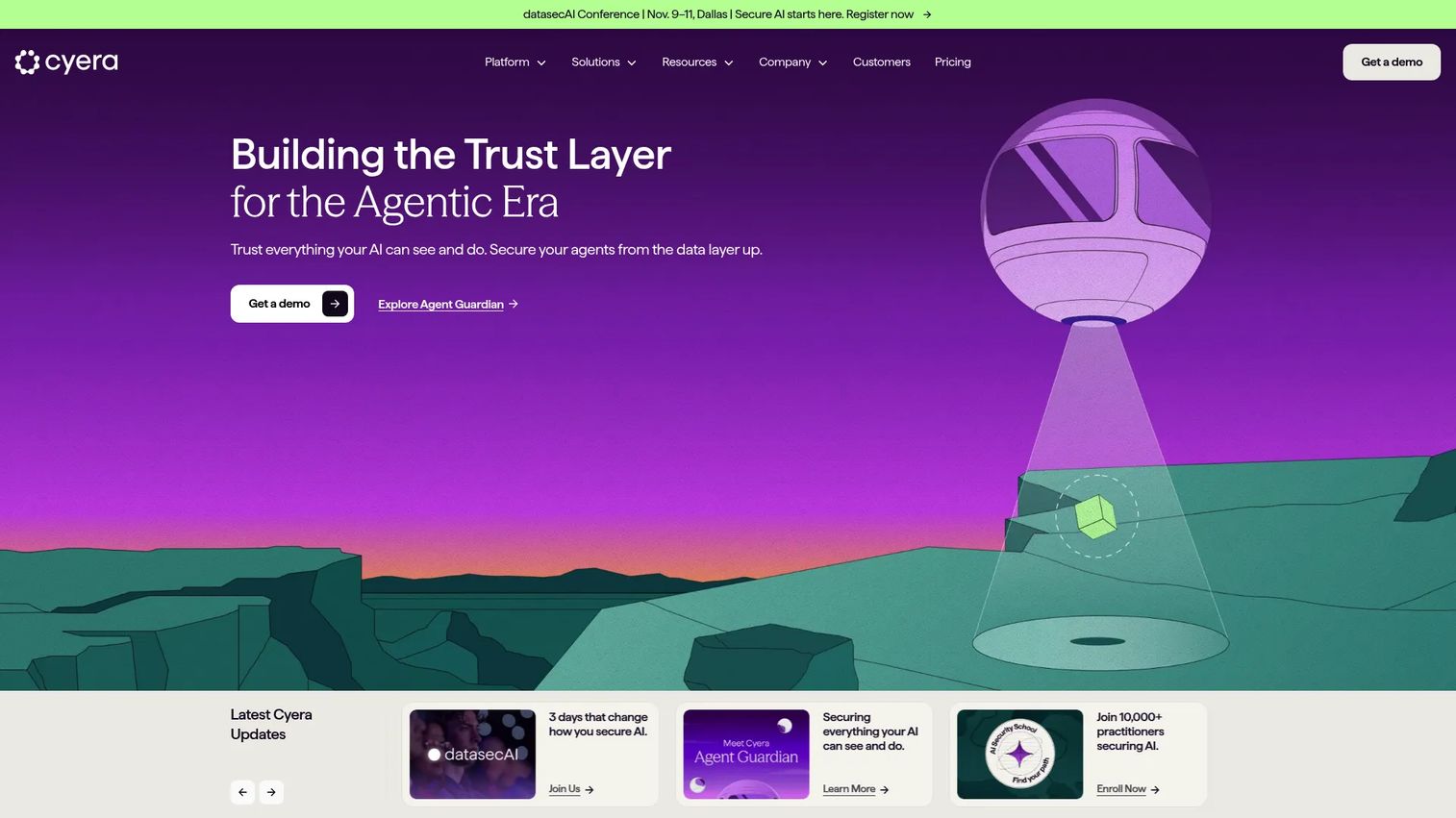
Cyera is a cloud-native data security platform built around AI-native discovery, classification, and access governance across cloud, SaaS, databases, and on-premises environments. It offers two core plans, DSPM and DLP, with optional add-ons including Data Subject Request Automation and DataWatcher. Coverage extends to AI tools, browsers, endpoints, and other channels where sensitive data can move.
Best for: Enterprise security teams that need unified data discovery, access governance, and DLP across hybrid environments, including visibility into AI-connected systems.
Key features
- Agentless discovery and AI-native classification across cloud, SaaS, and on-premises
- Contextual risk prioritization combining sensitivity, identity, access, and exposure signals
- Automated remediation and workflow orchestration
- DLP covering AI tools, browsers, and endpoints
- AI asset discovery with runtime access governance
Why choose Cyera: Product teams that ship frequently into cloud infrastructure benefit from Cyera's contextual risk model, which surfaces not just where sensitive data exists but who has access and whether that access creates real exposure. Ask your evaluation team to verify coverage for your specific warehouse, object storage layer, and AI integrations.
Cyera pricing: Cyera requires a custom quote for both its DSPM and DLP plans. Pricing is not published and varies by data estate scope, connected sources, and selected add-ons. Contact Cyera sales directly to scope your environment.
G2 rating: 4.6/5 (verified October 2026, G2).
2. Varonis
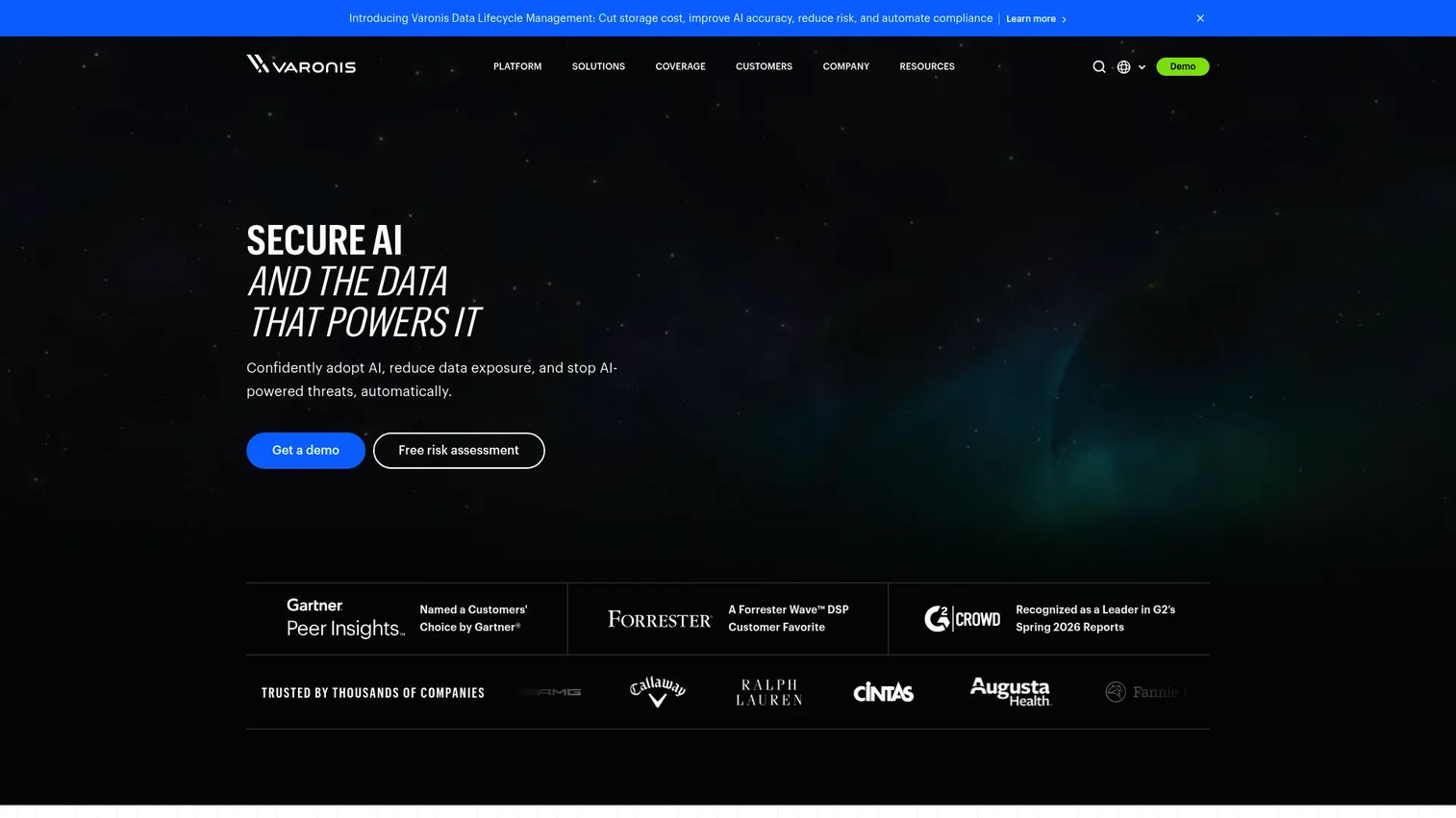
Varonis provides a data and AI security platform that connects sensitive-data discovery and classification with identity analysis, permissions monitoring, behavioral threat detection, and automated least-privilege remediation. It covers cloud, SaaS, on-premises file shares, and AI environments. For product teams, it is the most complete option when over-privileged access to customer data is the primary risk driver.
Best for: Enterprise organizations with significant unstructured data, SaaS applications, and complex permission models that need discovery tied to active remediation.
Key features
- Sensitive-data discovery and classification across cloud, SaaS, and file systems
- Permissions and access analysis with least-privilege remediation
- Data activity monitoring and behavioral threat detection
- Automated remediation of excessive permissions and risky configurations
- AI security and data governance controls
Why choose Varonis: The operational question Varonis answers is "Who can access this sensitive data, and how do we reduce exposure?" For product teams managing support platforms, analytics systems, and customer data workflows, that connection between classification and permissions remediation is the key differentiator. It suits teams whose audit findings include both unknown data stores and excessive access rights simultaneously.
Varonis pricing: Varonis directs all pricing inquiries to its sales team. Enterprise packaging depends on deployment scope, number of repositories, and selected modules. A risk assessment or proof of concept is typically the starting point for scoping. Reviewer-reported ranges on G2 suggest annual contracts for enterprise teams.
G2 rating: 4.7/5 from 125 reviews (verified October 2026, G2).
3. Sentra
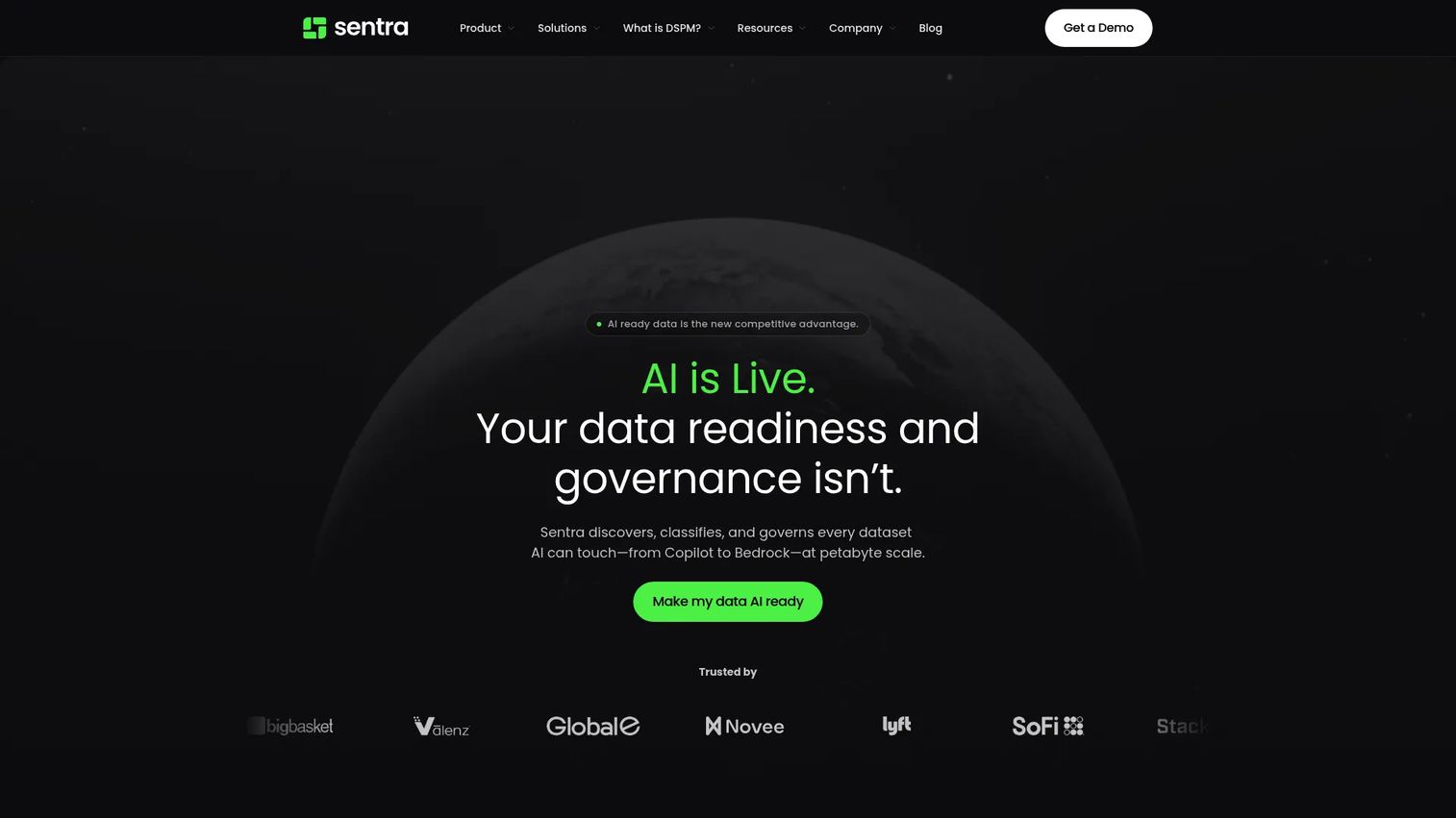
Sentra is a data security platform focused on continuous DSPM across cloud, SaaS, data warehouses, databases, and on-premises environments. It uses agentless, in-environment scanning to perform discovery and classification without requiring agents or data movement, which matters when product data lives in regulated or sensitive environments. Integration options include DLP, IAM, ITSM, SIEM, and SOAR platforms.
Best for: Security and compliance teams building a DSPM foundation across a multi-environment data estate, particularly where continuous classification and AI data readiness are priorities.
Key features
- Continuous agentless scanning within the customer environment
- AI-powered data classification and hygiene monitoring
- AI data readiness and governance across connected environments
- Data privacy and compliance workflow support
- Integrations with IAM, SIEM, SOAR, ITSM, and DLP platforms
Why choose Sentra: Teams moving from a fragmented data inventory to continuous visibility and posture monitoring will find Sentra's classification-first approach directly applicable. Its focus on data hygiene and AI readiness is relevant for product organizations deploying AI features that access production data stores. Note that Sentra's G2 presence is early-stage, so evaluate through a proof of concept rather than review volume.
Sentra pricing: Sentra uses custom pricing based on the volume of data at rest across connected IaaS, PaaS, DBaaS, SaaS, and on-premises environments. Request a tailored quote through the Sentra website.
G2 rating: 0.0/5 based on one review (verified October 2026, G2). Assess through proof-of-concept rather than rating volume.
4. BigID
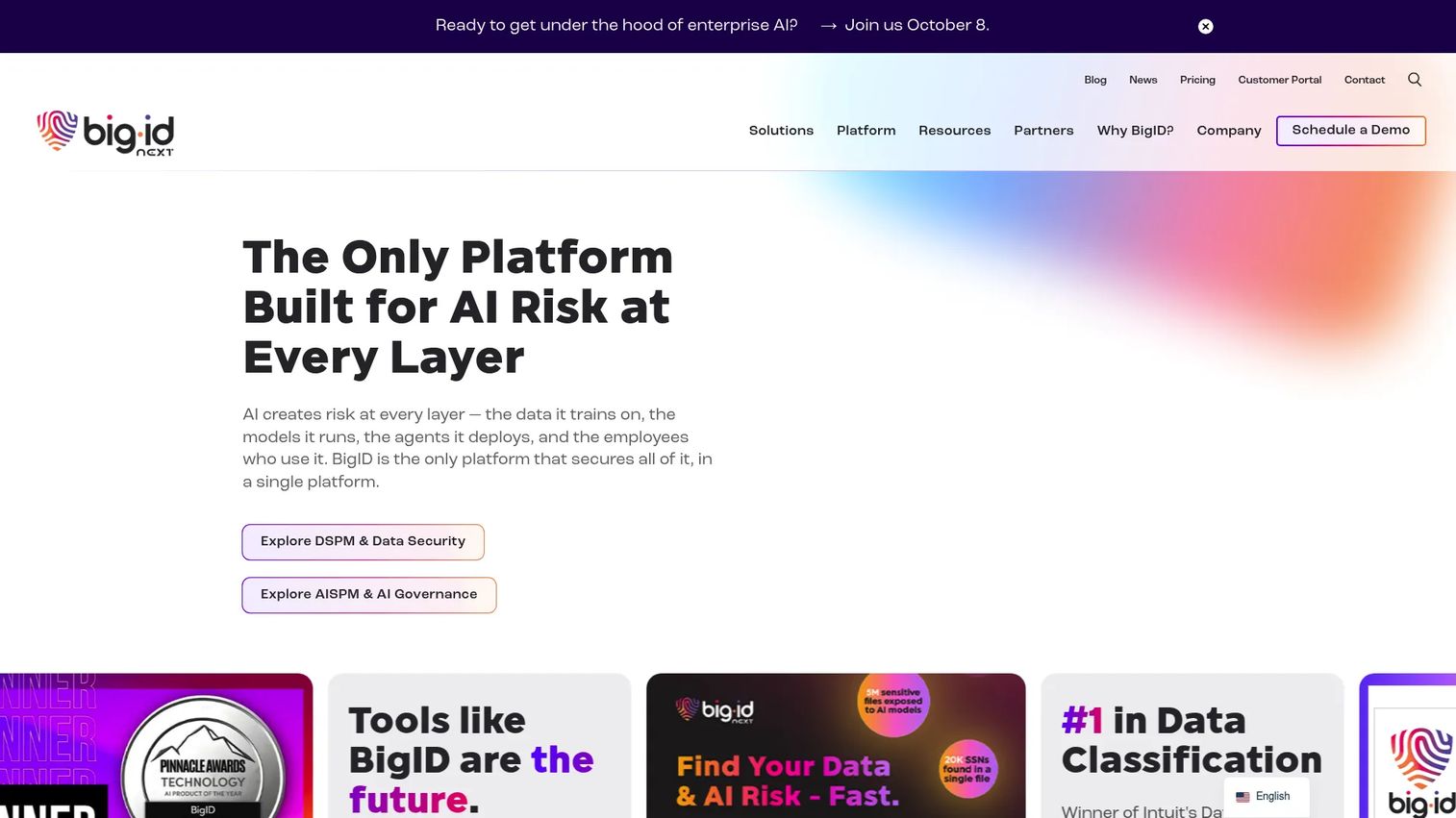
BigID is an enterprise data intelligence platform used across privacy, security, data governance, and data management programs. It goes beyond DSPM to support privacy rights workflows, retention controls, data minimization, consent management, and shadow AI detection. The platform offers three plan tiers (Express, Business, and Enterprise), all requiring direct sales engagement for pricing.
Best for: Large enterprises where privacy, legal, data governance, and security teams need a shared data inventory to coordinate risk, compliance, and retention decisions.
Key features
- Data discovery and AI-powered classification across cloud, SaaS, and on-premises
- Data security posture management and risk remediation
- Privacy automation: Consent management, data mapping, and data subject request workflows
- Data masking, redaction, labeling, retention, and deletion
- AI security, governance, and shadow AI detection
Why choose BigID: BigID fits when the business problem extends beyond security exposure into privacy operations and data governance. Product managers benefit from clearer data maps, explicit ownership of customer data retention, and structured input for privacy reviews. Buyers should identify which modules they need for their first-year roadmap before engaging sales; the platform's breadth can create scope complexity when teams purchase ahead of operational capacity.
BigID pricing: BigID prices by data estate size, AI systems covered, selected modules, deployment model, and support tier. The Express, Business, and Enterprise tiers all require a sales conversation. Pricing is not published on the BigID website.
G2 rating: 4.3/5 from 16 reviews (verified October 2026, G2).
5. Wiz
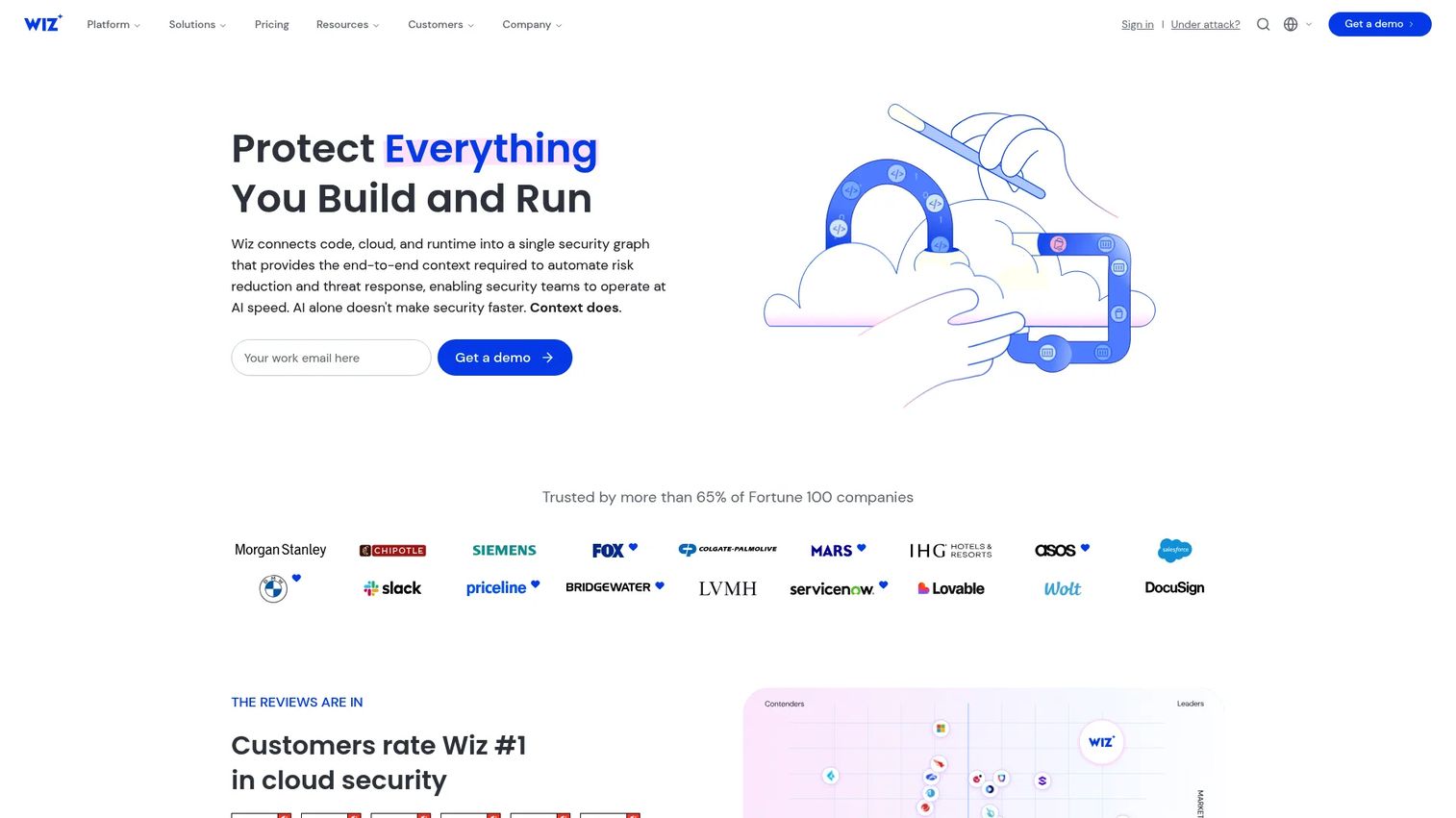
Wiz is a cloud and AI security platform with native DSPM integrated into a broader cloud risk model. Its Security Graph connects sensitive data findings with cloud assets, workload vulnerabilities, identity exposure, and attack paths, giving security teams a unified view from code to runtime. Wiz offers three packaging options: Wiz One, Wiz Go, and A La Carte, all at custom pricing.
Best for: Cloud security teams that want sensitive data context within a consolidated cloud security platform, rather than managing a separate DSPM system.
Key features
- Agentless cloud-native DSPM with sensitive data classification
- Security Graph and attack-path analysis connecting data to broader cloud risk
- Identity and workload context layered into data exposure findings
- Infrastructure-as-Code scanning and code-to-cloud correlation
- Runtime protection and cloud threat intelligence
Why choose Wiz: Product teams shipping frequently into cloud infrastructure benefit when data risk cannot be separated from cloud misconfigurations, exposed workloads, or identity gaps. Wiz surfaces those connections without requiring a separate data security tool. Buyers should validate the depth of data controls and remediation options needed beyond cloud posture visibility, as direct data protection enforcement may require complementary controls depending on the architecture.
Wiz pricing: Wiz presents Wiz One, Wiz Go, and A La Carte options without publishing prices. A custom quote is required for all packaging. Contact Wiz sales to scope by workload type and cloud footprint.
G2 rating: 4.7/5 from 845 reviews (verified October 2026, G2).
6. Thales CipherTrust Data Security Platform
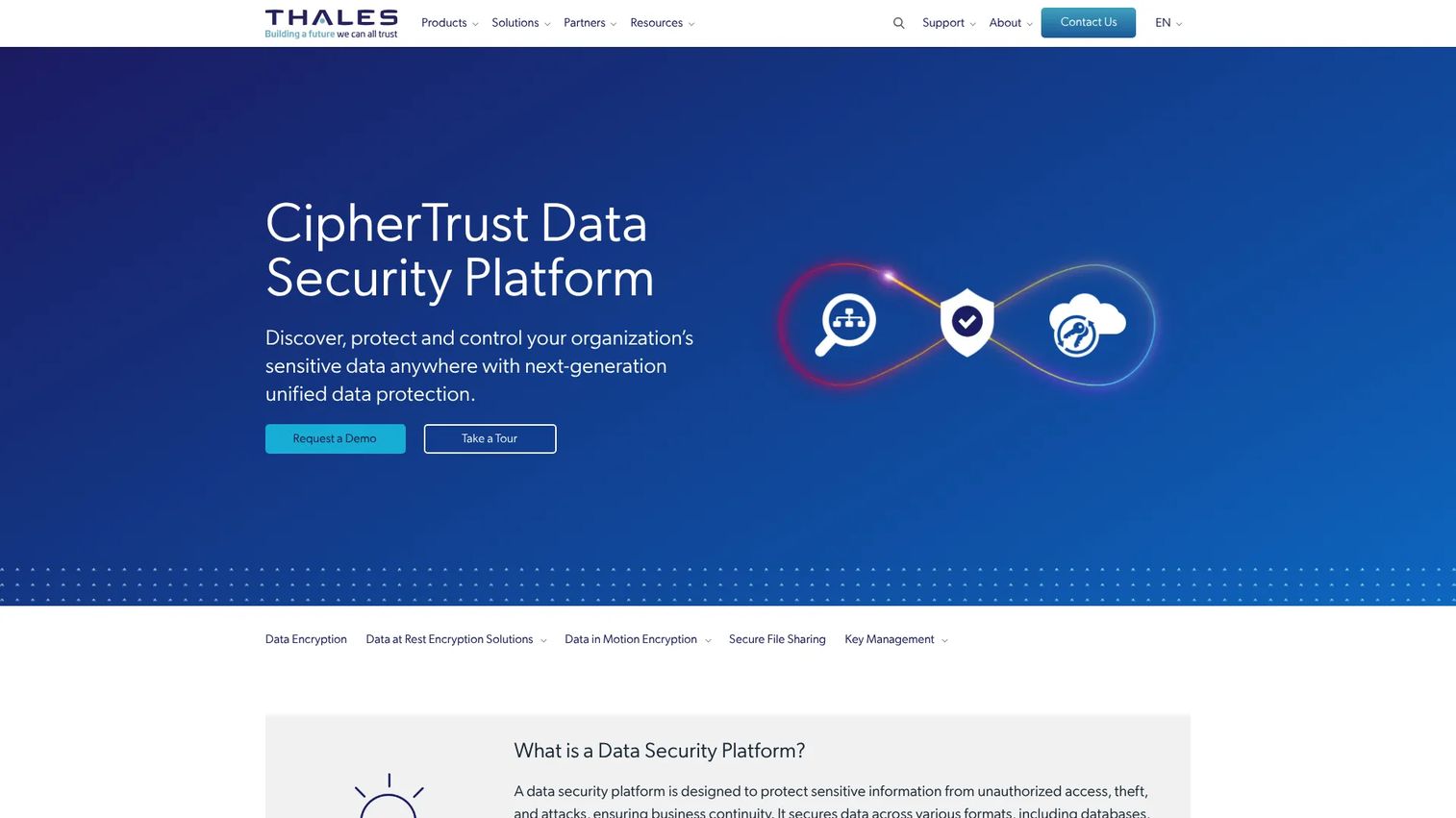
Thales CipherTrust Data Security Platform combines sensitive-data discovery and classification with persistent protection controls, including encryption, tokenization, data masking, and centralized key management. It is the strongest fit in this list for organizations that need to control encryption keys and enforce technical protections across databases, files, applications, containers, and hybrid infrastructure.
Best for: Teams that need persistent data protection controls alongside discovery, covering complex environments where data must remain protected after it leaves a managed application.
Key features
- Centralized enterprise and multi-cloud encryption key management
- Transparent data encryption across databases, files, and containers
- Tokenization and data masking
- Data discovery, classification, and risk analysis
- Granular access policy controls
Why choose Thales CipherTrust Data Security Platform: Choose this platform when your primary need is persistent protection, not discovery alone. Understanding which data is sensitive is the first step; applying technical controls that follow data into storage, applications, and cloud services is the second. This distinction matters for product teams whose customer data flows through multiple processing environments where access-key governance is a security requirement.
A practical note: Encryption does not eliminate access risk if attackers use valid credentials. Pair CipherTrust with access controls, key governance policies, and activity monitoring for a complete data handling review.
Thales CipherTrust Data Security Platform pricing: The Community Edition is free forever, covering selected key management and encryption capabilities. Enterprise and Data Protection on Demand plans do not carry published starting prices; licensing varies by data volume scanned, selected services, and contract duration. Contact Thales sales to scope enterprise deployment costs.
G2 rating: 4.0/5 from 4 reviews (verified October 2026, G2).
7. Palo Alto Networks Prisma Cloud DSPM
Palo Alto Networks Prisma Cloud DSPM delivers agentless data security posture management as part of the broader Prisma Cloud platform. It uses 100+ prebuilt classifiers to discover and classify sensitive data across AWS, Azure, GCP, Snowflake, and other cloud environments, then surfaces data risk in the context of misconfigurations, access governance findings, and compliance posture.
Best for: Organizations already standardizing on Palo Alto Networks cloud security that want DSPM added to an existing platform rather than introducing a separate system.
Key features
- Automated data discovery and classification with 100+ prebuilt classifiers
- Data risk analysis for exposed assets, misconfigurations, data flows, and excessive permissions
- Data privacy, compliance, and access governance coverage
- Detection and response and malware prevention for data stores
- Agentless deployment across major cloud providers
Why choose Palo Alto Networks Prisma Cloud DSPM: This option fits teams whose security stack already centers on Palo Alto Networks, where adding a separate DSPM tool would create fragmentation rather than reduce it. For product teams releasing into cloud infrastructure, having security findings surface within the same platform the security team already monitors reduces handoff friction. Validate whether DSPM is included in your current Prisma Cloud tier or requires an add-on before assuming coverage.
Palo Alto Networks Prisma Cloud DSPM pricing: Palo Alto Networks does not publish prices for Prisma Cloud on its product pages. Packaging and module availability require a direct sales conversation. Confirm whether DSPM is bundled in your current platform tier or priced separately.
8. Cyberhaven
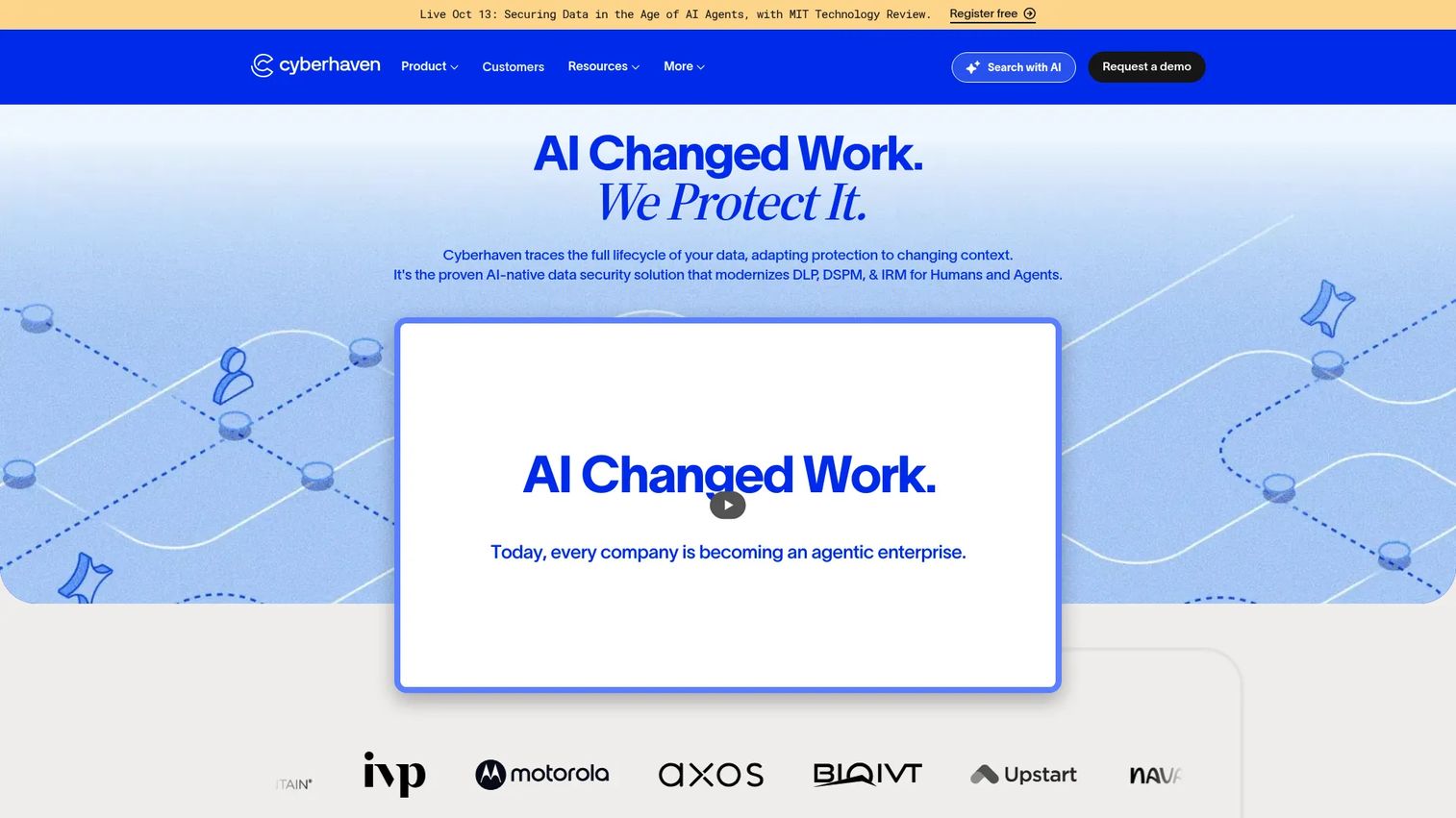
Cyberhaven is an AI-native data security platform combining data lineage tracking, DLP, insider risk management, and AI security. Its core capability is following data from origin through movement, transformation, and sharing across endpoints, email, web, cloud, SaaS, and AI tools. This lineage model is particularly relevant when static inventory is insufficient because the security team must understand how sensitive data moves, copies, and changes across work environments.
Best for: Security teams whose primary concern is data movement visibility, insider-risk reduction, and policy controls across SaaS and AI workflows.
Key features
- Data lineage tracking from origin through movement and sharing
- AI-powered data classification and content intelligence
- DLP across endpoints, email, web, cloud, SaaS, and AI tools
- Insider risk management and autonomous risk detection
- AI application and agent discovery, monitoring, and controls
Why choose Cyberhaven: Product teams sharing logs, support exports, customer files, and AI prompts across internal and external systems benefit from Cyberhaven's lineage-first model. Knowing where sensitive data sits is different from knowing where it has traveled. The platform's AI security features are also relevant for teams evaluating which AI cybersecurity solutions to add alongside their DSPM stack. Test coverage across the highest-risk channels in your environment before committing.
Cyberhaven pricing: Cyberhaven requires contacting sales for pricing details. Enterprise plans are scoped by deployment scope and channel coverage. No trial or Community Edition was listed on the Cyberhaven site as of October 2026.
G2 rating: 4.5/5 (verified October 2026, G2).
9. Forcepoint Data Security
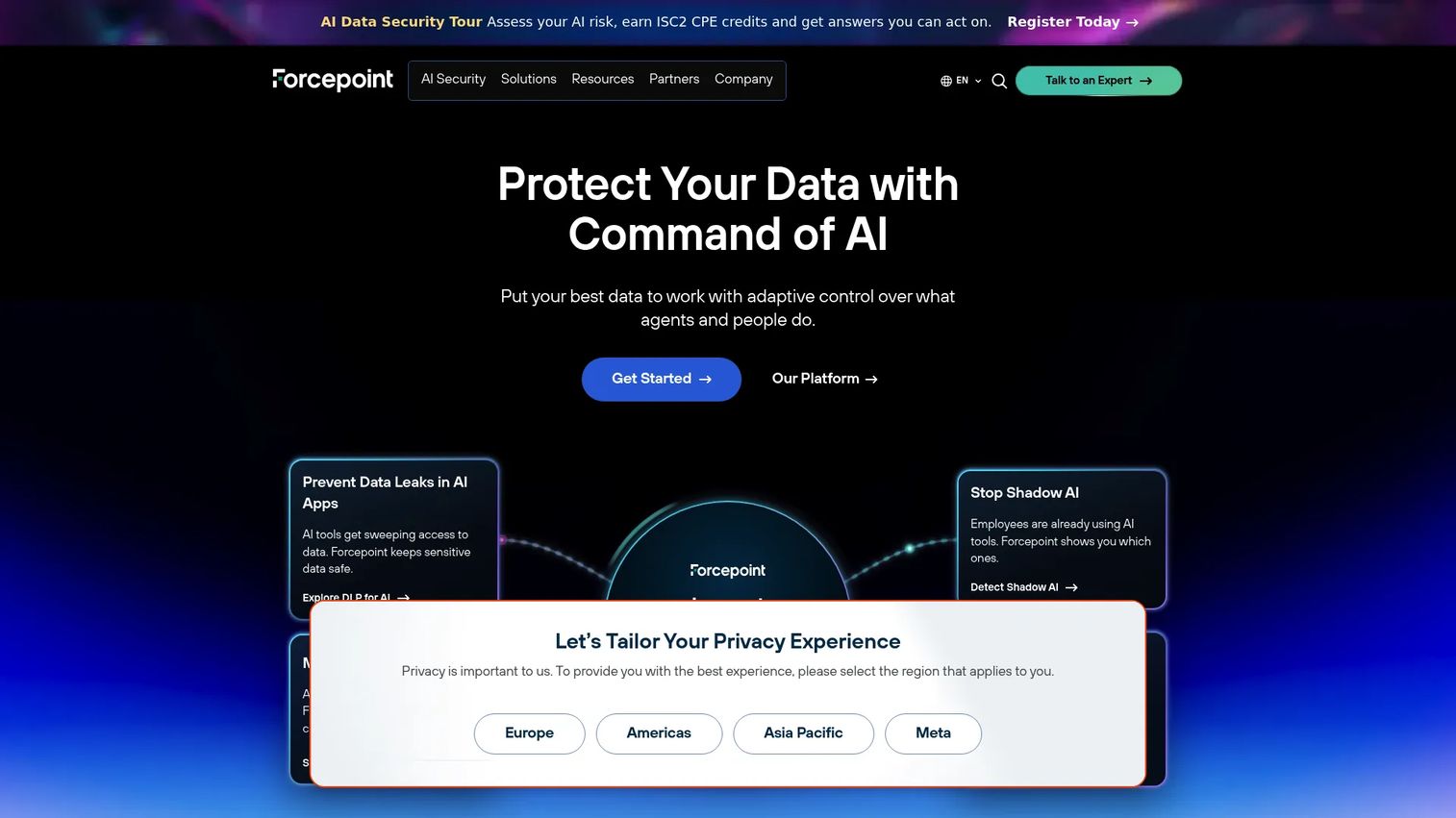
Forcepoint Data Security is a cloud-native data protection platform centered on DLP, user behavior analytics, classification, and enforcement across endpoint, web, email, and cloud channels. It applies risk-adaptive protection that adjusts policy enforcement based on user behavior signals, and supports predefined compliance classifiers and templates for regulated industries.
Best for: Enterprises and government organizations whose immediate priority is preventing sensitive-data exfiltration and enforcing data-handling policies across multiple channels.
Key features
- Unified DLP policy management across cloud, web, email, endpoints, and AI applications
- AI-powered data discovery and classification
- Risk-adaptive protection based on user behavior signals
- Device control and endpoint management
- Predefined compliance policies, classifiers, and templates
Why choose Forcepoint Data Security: DLP-first teams choose Forcepoint when the urgent problem is data movement and policy enforcement rather than posture management or encryption depth. The risk-adaptive model is useful for organizations where insider behavior patterns are a meaningful signal. DLP outcomes depend heavily on classification accuracy and policy tuning upfront; evaluate false-positive management, policy authoring effort, and SIEM integration depth during your proof of concept.
Forcepoint Data Security pricing: Forcepoint directs DLP and data security pricing inquiries to its sales team. Pricing is custom for enterprise deployments. No published starting price or free tier was found on the Forcepoint DLP pricing page as of October 2026.
G2 rating: 4.2/5 (verified October 2026, G2 for Forcepoint Data Security Cloud).
10. OneTrust Data Discovery and Classification
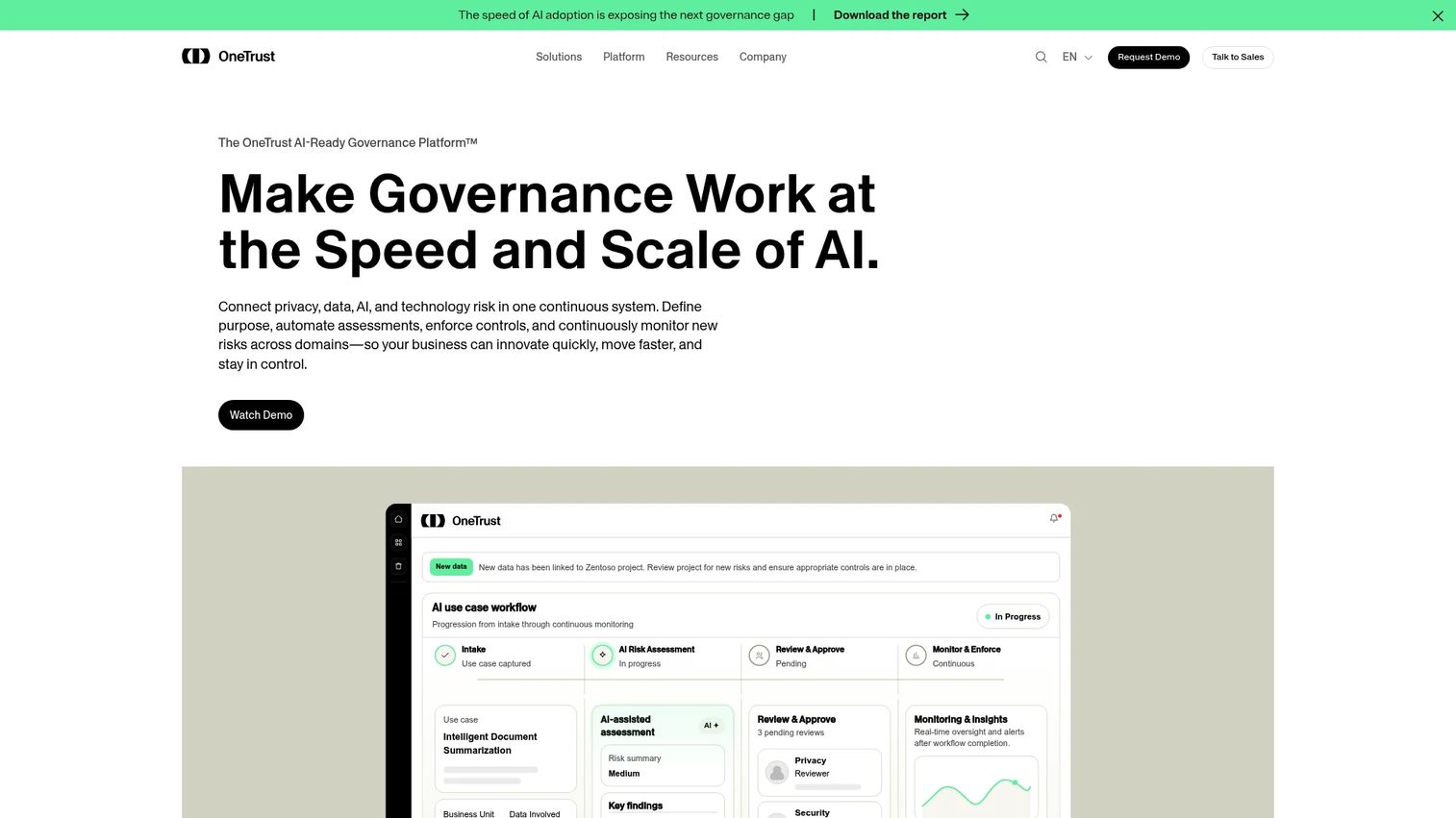
OneTrust Data Discovery and Classification is an AI-powered discovery and classification product within the broader OneTrust platform. It discovers data across cloud, on-premises, legacy systems, and unstructured repositories using AI/ML, natural language processing, named entity recognition, and OCR. More than 300 out-of-the-box classifiers support classification, and findings connect directly to privacy-rights requests, retention schedules, deletion workflows, and consent management.
Best for: Privacy, legal, data governance, and security teams that need a shared record of sensitive-data handling to coordinate across regulatory, operational, and product requirements.
Key features
- Automated discovery across cloud, on-premises, structured, semi-structured, and unstructured sources
- AI/ML classification with 300+ out-of-the-box classifiers and NLP support
- Automated data policy enforcement and correlation with regulatory context
- Privacy-rights request, retention, deletion, redaction, and remediation workflows
- Data mapping support across systems and jurisdictions
Why choose OneTrust Data Discovery and Classification: This platform suits organizations where privacy and data governance are central to the operating model. For product managers, it provides clearer data maps, explicit ownership of customer data retention, and structured input for privacy review processes before feature launches. Buyers whose primary need is active encryption, key management, or deep technical DLP enforcement should evaluate companion controls alongside OneTrust, as those capabilities live outside its core scope.
OneTrust Data Discovery and Classification pricing: OneTrust uses custom pricing based on usage dimensions including admin users, inventory size, data profiles, and data volume. Specific pricing for the Data Discovery and Classification module requires direct engagement with OneTrust sales.
G2 rating: 4.4/5 (verified October 2026, G2 for OneTrust overall seller profile).
Considerations when choosing data centric security tools
Match the tool to the first risk question you need answered
If the urgent problem is unknown data locations, prioritize DSPM discovery and classification. If the issue is excessive permissions, prioritize data access governance and remediation. If data must stay protected after it leaves a managed application, prioritize encryption, tokenization, or masking controls.
Test classification on your own data
A vendor's generic classification demonstration proves little. Include representative structured data, support attachments, product telemetry, source code, and exported reports from your own environment. Measure classification precision and the operational effort required to tune policies.
Verify coverage against your full data estate
Build a source list before procurement. Include cloud storage, databases, warehouses, SaaS applications, CRM, support platforms, developer environments, and AI services. A long connector list is less important than deep coverage for the systems carrying your highest-value data. For teams evaluating related access review software, map that process to your DSPM findings for a coordinated remediation model.
Evaluate remediation, not only dashboards
Ask what happens after the platform finds a risky file, store, entitlement, or data flow. Look for actionable owner routing, workflow integrations, access-rights remediation, and audit evidence generation. A finding without a workflow is a report, not a risk reduction.
Model cost against data growth
Many platforms price by data volume, number of repositories, modules, or protected workloads. Build a three-year model that includes planned cloud growth, new SaaS additions, AI initiatives, and scanning frequency. Implementation and professional services costs vary significantly across vendors.
Conclusion
The right data-centric security tool depends on the control gap, not the broadest feature list.
Cyera fits cloud-first discovery and access governance. Varonis covers permissions, activity monitoring, and active remediation. Sentra suits teams building a DSPM foundation across multi-environment estates. BigID connects discovery to privacy and data governance operations. Wiz delivers data risk context within a consolidated cloud security platform. Thales CipherTrust is the strongest option for encryption depth and key governance. Palo Alto Networks Prisma Cloud DSPM serves teams standardizing on an existing Palo Alto stack. Cyberhaven addresses data movement and lineage. Forcepoint Data Security fits DLP-led enforcement priorities. OneTrust Data Discovery and Classification serves privacy-driven governance programs.
Build your shortlist around the first risk you need to reduce. Then run a proof of concept against your own data sources, permission models, and remediation workflow. Coverage that looks complete on a product page may not hold up against your specific warehouse schema or AI data path.
Start your journey with Guideflow today!
FAQs
Data-centric security is the broader approach of protecting data through its full lifecycle, regardless of where it lives. DSPM is a specific category of tools that focuses on discovering sensitive data, identifying exposure, and prioritizing risk remediation. DSPM is one component within a data-centric security program, not a synonym for it.
They complement each other rather than replace one another. DSPM and broader data-centric platforms find and contextualize risky data, while DLP detects, alerts on, or blocks risky movement. Some platforms combine both capabilities, but buyers should evaluate the depth of each function separately rather than assuming one subscription covers both fully.
Start with customer PII, authentication credentials, payment-related information, support attachments, and application logs. Add source code, AI prompts, secrets stored in development environments, and exported reports that leave managed systems. Classification priority should reflect your own data taxonomy and the risk model your security team uses, not a generic list.
Coverage varies significantly by platform and connector depth. Buyers should validate the specific SaaS applications, objects, attachments, permissions models, activity data, and remediation options required for their environment. A connector that discovers data in a SaaS app may not support remediation actions within the same app.
Zero Trust requires continuous evaluation of access and risk at every layer. Data-centric controls contribute by classifying sensitive data, analyzing access rights, enforcing data-handling rules, and monitoring activity. Teams evaluating broader AI security posture management controls alongside data classification will find these capabilities complementary in a Zero Trust architecture.
Encryption is a major protection layer, but it does not answer who has access, whether permissions are excessive, or how data is moving. An attacker using valid credentials bypasses encryption entirely. Strong data security programs combine encryption with discovery, access analysis, monitoring, and policy enforcement. No single control layer substitutes for the others.
Test whether the platform discovers data accessible to AI tools, identifies sensitive content in connected repositories and prompts, tracks data movement into AI workflows, and supports relevant policy controls. Map ownership across security, privacy, data, and product teams before launching AI-enabled features. Teams looking specifically at AI application controls can also review the guide to AI governance tools for the governance layer that sits above the data security stack.
Timing depends on data sources, access approvals, connector setup, and the number of use cases tested. A focused POC covering two or three high-risk repositories and clearly defined success criteria, classification accuracy, permissions visibility, remediation workflow, and reporting, typically completes in four to eight weeks. Broader scopes take longer and often drift in focus. Start narrow.