Your ERP says one thing. The batch record says another. The production lead has the answer, but it lives in a spreadsheet nobody trusts.
That gap is not a data problem. It is a systems problem. According to Deloitte (2025), 55% of manufacturers still rely on manual reporting methods such as spreadsheets, even as 92% say smart manufacturing will be a main driver of competitiveness over the next three years. The floor and the finance team are operating in parallel universes, and the founder or VP Ops ends up as the translator at month-end close.
Process manufacturing adds another layer of complexity. Batch yields vary. Raw materials arrive with different potency or moisture levels. Lot records need to trace forward to customers and backward to suppliers. Quality holds, recalls, and regulatory audits do not wait for a convenient quarter. The right batch management software consolidates that operational reality into one coherent picture.
This guide helps you build a shortlist without wading through vendor marketing. No fluff, no guessing.
What's inside
This guide compares 15 process manufacturing software tools for 2026. It is for operations leaders, manufacturing founders, and executives evaluating ERP, MES, quality, and production systems.
Tools were selected based on:
- Formula, recipe, and batch management depth
- Lot traceability and audit readiness
- Compliance workflow coverage for regulated industries
- Pricing clarity and G2 ratings from verified sources
The guide includes a comparison table, per-tool breakdowns, a buyer checklist, and FAQs.
TL;DR
- Best for shop floor visibility: Fusion Operations gives real-time production tracking and MES-style controls before or alongside a full ERP project
- Best for mobile-first operations: Mitti by SafetyCulture fits frontline teams running inspections and task execution from mobile devices
- Best for process ERP depth: Deacom ERP, BatchMaster Manufacturing, and Sage X3 are built around formula, batch, and compliance workflows
- Best for food and beverage: JustFood ERP and Aptean Food & Beverage ERP cover traceability, recalls, catch weight, and food safety requirements
- Best for cloud ERP with finance coverage: NetSuite by Oracle and Acumatica connect manufacturing operations to financial reporting at scale
- Best for ERP plus quality in one system: QT9 ERP pairs production, inventory, and quality management without requiring separate platforms
What is process manufacturing software?
Process manufacturing software helps manufacturers plan, produce, track, cost, and control goods made by mixing, blending, reacting, cooking, fermenting, refining, or otherwise transforming raw materials.
Unlike discrete manufacturing, which assembles countable parts into finished goods, process manufacturing produces outputs that cannot be easily disassembled. A batch of sauce cannot be separated back into its ingredients. That fundamental difference shapes every software decision.
The category spans several system types. ERP covers finance, inventory, purchasing, and production planning in one backbone. MES handles real-time shop floor execution, work instructions, and quality checks. MRP focuses on material requirements and production scheduling. QMS manages quality records, audits, and compliance documentation. Many manufacturers need more than one, and some platforms combine several in a single product.
Core features of process manufacturing software
- Formula and recipe management with version control and scaling
- Batch production records and electronic batch tickets
- Lot traceability: Forward to customers, backward to raw material suppliers
- Quality control workflows, certificates of analysis, and CAPA management
- Inventory tracking by lot, weight, potency, expiration, and location
- Production scheduling and shop floor visibility
- Yield, waste, co-product, and by-product tracking
- Costing that connects raw materials, labor, overhead, and yield loss
- Regulatory compliance workflows for GMP, HACCP, FSMA, and FDA requirements
- Dashboards, alerts, and analytics for operational and financial reporting
Process manufacturing vs discrete manufacturing
| Dimension | Process manufacturing | Discrete manufacturing |
|---|---|---|
| Output | Bulk goods, blended products, formulated items | Assembled finished goods |
| Production model | Batch, continuous, or semi-continuous | Work orders, assemblies |
| Core planning object | Formula or recipe | Bill of materials |
| Traceability need | Lot genealogy, potency, yield | Serial number, component |
| Quality control | Batch testing, COAs, GMP records | Inspection by unit or order |
| Costing complexity | Yield loss, co-products, by-products | Labor routing, component cost |
| Common industries | Food, chemicals, pharma, cosmetics | Electronics, machinery, automotive |
The boundary blurs during packaging. Many process manufacturers need mixed-mode capabilities when they switch from bulk production to labeled consumer units. Evaluate whether a system handles both before committing.
When to use process manufacturing software
Control batch variation before it hits margin
Raw materials arrive with different potency, moisture levels, and supplier quality. Without software, formula adjustments stay in personal notebooks and batch outcomes go unrecorded until a finance reconciliation surfaces the gap. A process manufacturing system lets you log planned versus actual yield, track variance by ingredient lot, and catch margin erosion in the week it happens, not at the quarterly close.
Prove traceability without spreadsheet archaeology
An auditor or customer asks for the full chain of custody on a lot produced three months ago. A recall notice arrives on a Friday afternoon. The question is always the same: Which finished goods contain that raw material lot, and where did they ship? Software built for lot genealogy answers that question in minutes. Teams relying on spreadsheets answer it in days, if they answer it at all.
Connect production, inventory, and finance
Inventory that looks clean in the accounting system but is physically wrong on the floor creates purchasing errors, missed commitments, and over-procurement. The right advanced planning and scheduling software or process ERP syncs production consumption, lot status, and location in real time, so the finance and operations teams are working from the same numbers. For a founder preparing for a board meeting or a fundraise, that alignment is not optional.
Process manufacturing software comparison
Tools in this category differ significantly by operating model. Some are MES-first, built to control the floor. Others are ERP-first, designed to unify finance, inventory, and production planning. A few are purpose-built for regulated food, pharmaceutical, or chemical environments. Pricing and G2 ratings below were verified from vendor pricing pages and G2 listings.
| # | Product | Best for | Key differentiator | Pricing | G2 rating |
|---|---|---|---|---|---|
| 1 | Fusion Operations | Shop floor visibility and production tracking | Cloud MES with real-time production, quality, and scheduling | From $173/month | 4.9/5 |
| 2 | Mitti by SafetyCulture | Mobile inspections and frontline workflows | Mobile-first operations platform with free tier | Free; Premium from $24/seat/month | 4.6/5 |
| 3 | Deacom ERP | Process manufacturers replacing fragmented systems | ERP built around batch, formula, and compliance | Custom pricing | 4.2/5 |
| 4 | BatchMaster Manufacturing | Formula-heavy manufacturers | Formula, recipe, batch, and compliance depth | Custom pricing | 2.9/5 |
| 5 | Infor CloudSuite Process | Enterprise process manufacturers | Industry-specific cloud ERP for complex operations | Custom pricing | N/A |
| 6 | QAD Adaptive ERP | Global manufacturers with complex operations | Manufacturing ERP for adaptive supply chains | Custom pricing | 3.5/5 |
| 7 | JustFood ERP | Food and beverage manufacturers | Food-specific ERP with traceability and safety workflows | Custom pricing | N/A |
| 8 | Microsoft Dynamics 365 Business Central | Microsoft-centric small and mid-sized manufacturers | Flexible cloud ERP with manufacturing extensions | From $80/user/month | 4.0/5 |
| 9 | Aptean Food & Beverage ERP | Food and beverage traceability | Food ERP depth across production, quality, and recall workflows | Custom pricing | 4.1/5 |
| 10 | SAP Business One | Growing manufacturers needing ERP fundamentals | SMB ERP with manufacturing and finance coverage | Custom pricing | 4.3/5 |
| 11 | NetSuite by Oracle | Cloud ERP for scaling manufacturers | Cloud ERP with finance, inventory, and planning coverage | Custom pricing | 4.1/5 |
| 12 | QT9 ERP | Manufacturers needing ERP plus quality management | ERP and QMS coverage in one system | Custom pricing | 4.9/5 |
| 13 | Acumatica | Cloud ERP with manufacturing flexibility | Resource-based cloud ERP for growing teams | From $1,495/month | 4.4/5 |
| 14 | Sage X3 | Finance-led process manufacturing | Process ERP with finance and operational depth | Custom pricing | N/A |
| 15 | Global Shop Solutions | Manufacturers needing shop floor control | ERP with scheduling, inventory, and shop management | Custom pricing | 3.9/5 |
Best 15 process manufacturing software for 2026
1. Fusion Operations
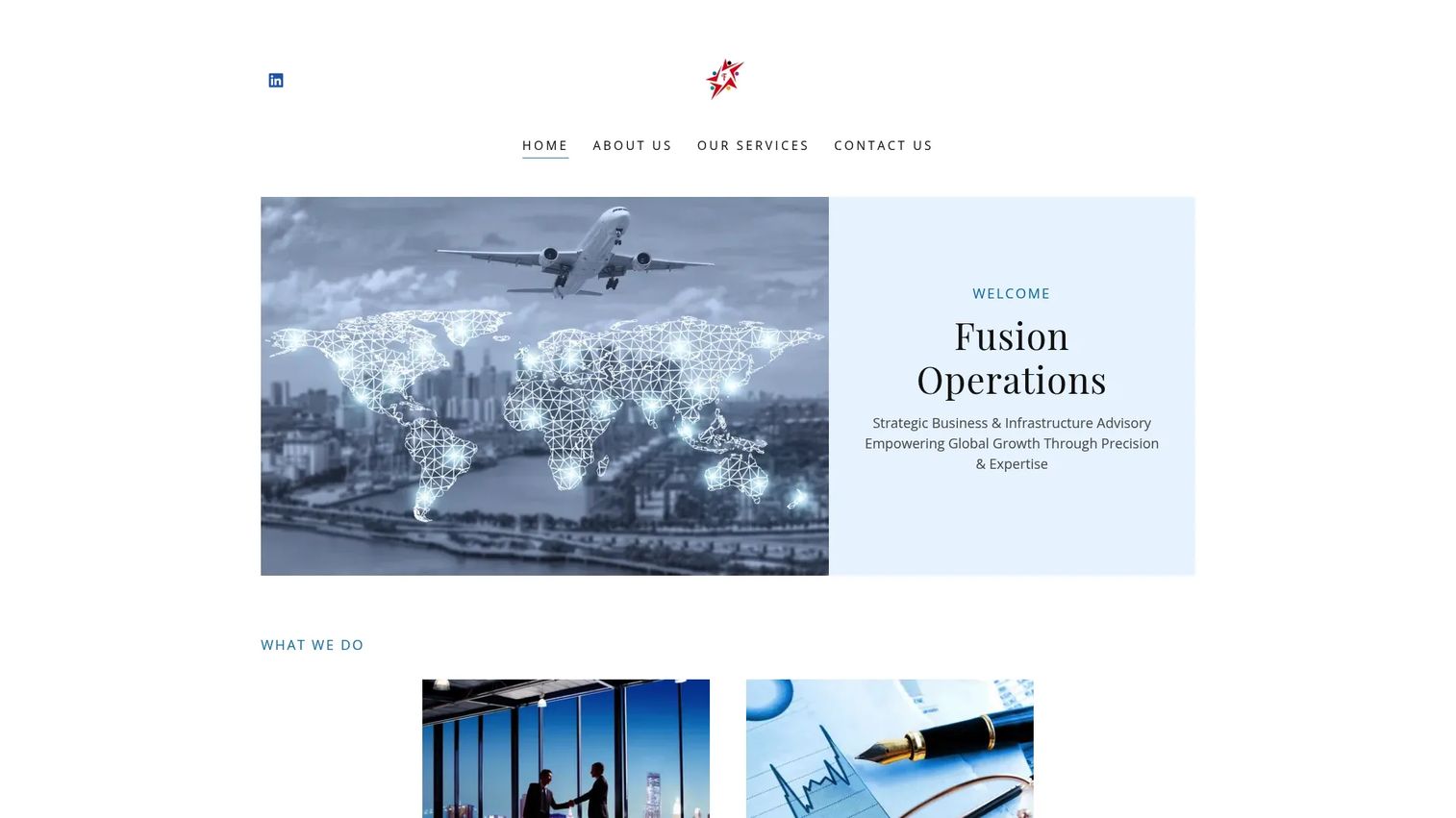
Fusion Operations is Autodesk's cloud-based manufacturing execution system for digitizing and controlling production-floor operations. It covers production tracking, work instructions, quality checks, scheduling, inventory, and maintenance management in a single platform. Teams use it to replace paper-based production records and gain real-time visibility into what is happening on the floor. A 14-day free trial makes it accessible to evaluate without a lengthy procurement process.
Best for: Process manufacturers that need real-time shop floor visibility before or alongside a full ERP project.
Key features
- Real-time production tracking and scheduling
- Digital work instructions and electronic batch records
- Quality checks with end-to-end lot traceability
- Inventory management with material requirements planning
- Operations maintenance and equipment monitoring
Why choose Fusion Operations: It fits operations leaders who need to see production status, downtime, and quality outcomes in a single daily view, without waiting for data to reach finance. It is particularly useful when the floor team is still on paper and the ERP project is 12 months away.
Fusion Operations pricing: Plans start at $173/month, with annual and multi-year subscription options available through Autodesk. A 14-day free trial is included.
G2 rating: 4.9/5
2. Mitti by SafetyCulture
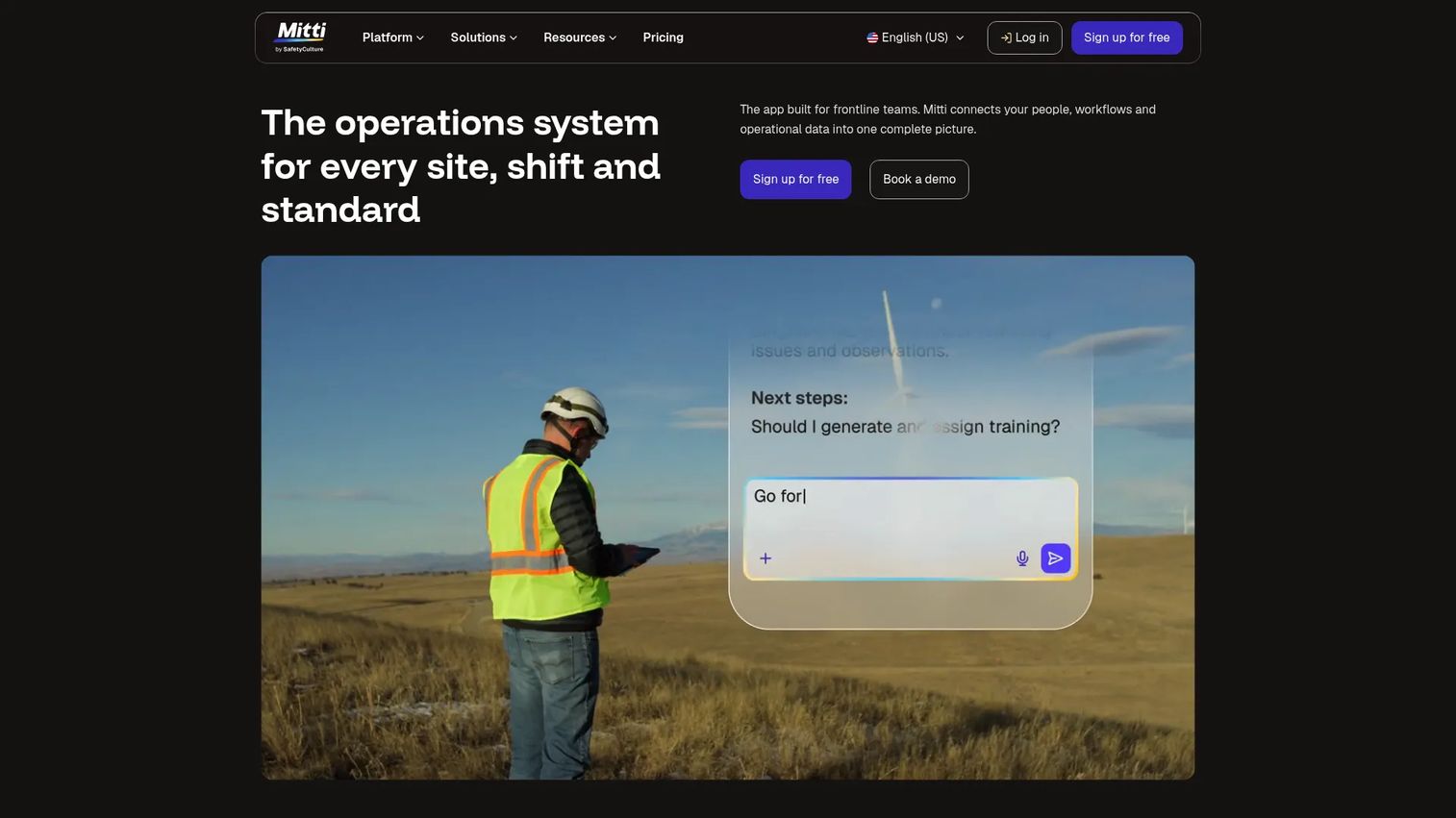
Mitti by SafetyCulture is a mobile-first operations platform built for frontline teams managing inspections, task execution, corrective actions, and training across production environments. It is not a full process ERP; it functions as an operational workflow and quality layer that sits close to where work actually happens. Teams use it to standardize daily checks, reduce missed handoffs, and capture issue data from the floor in real time.
Best for: Teams where the biggest gap is execution discipline on the floor, not general ledger depth.
Key features
- Mobile digital inspections and audits
- Issue reporting with corrective action workflows
- Task management and operational checklists
- AI-assisted operational insights and dashboards
- Mobile-first training modules
Why choose Mitti by SafetyCulture: Choose it when operators need to complete inspections and report issues from a phone or tablet, and when centralizing that data is the priority over replacing an ERP. It stacks well with existing financial systems.
Mitti by SafetyCulture pricing: A free plan covers teams of up to 10 users with inspections, reports, tasks, and basic analytics. Premium plans run $24/seat/month billed annually, or $29/seat/month on a monthly basis. Enterprise pricing requires contacting sales.
G2 rating: 4.6/5
3. Deacom ERP
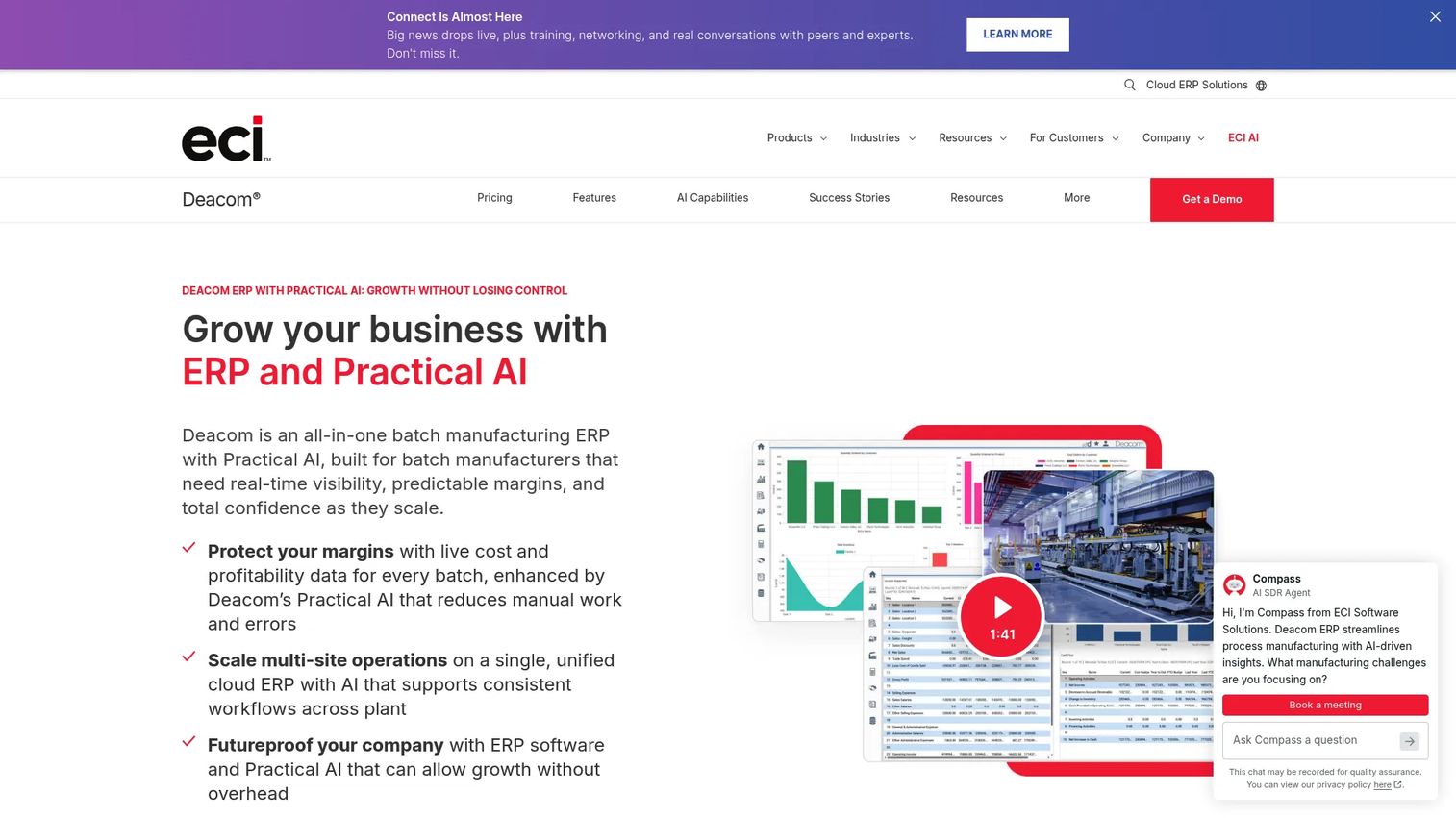
Deacom ERP, now part of ECI Software Solutions, is an all-in-one cloud ERP for batch and process manufacturers. It is built around formula management, batch production, lot tracking, MRP, supply chain, quality, compliance, and financial operations. The focus is on eliminating the reconciliation work that comes from running production in one system and finance in another. Teams replacing disconnected spreadsheets, entry-level accounting software, and standalone quality tools are the core fit.
Best for: Process manufacturers ready to consolidate production, inventory, accounting, and quality into a single ERP backbone.
Key features
- Formula and recipe management with batch production controls
- Real-time batch quality controls and lot traceability
- MRP and supply chain management
- Regulatory compliance workflows and audit trails
- Financial and production cost tracking
Why choose Deacom ERP: It fits manufacturers that have outgrown spreadsheets and need production data and finance data to agree without manual reconciliation every month. The ECI backing adds implementation and support resources for mid-market deployments.
Deacom ERP pricing: Pricing is handled through ECI sales. Contact ECI for current package and implementation estimates.
G2 rating: 4.2/5
4. BatchMaster Manufacturing
BatchMaster Manufacturing is cloud and on-premise ERP software for growing and mid-market formula-based manufacturers. It serves food, beverage, chemical, nutraceutical, cosmetics, and pharmaceutical-adjacent companies where recipe accuracy, lot control, and regulatory documentation drive the software decision. Formulation and R&D tools support versioned formulas, scaling, costing, and approval workflows. Batch production modules include electronic batch tickets, co-products, rework, and mobile warehouse scanning.
Best for: Manufacturers where formulas, regulatory documentation, and batch controls are the primary buying criteria.
Key features
- Formulation and R&D with versioned formulas and scaling
- Electronic batch tickets with co-products and rework
- Lot genealogy and full traceability workflows
- Quality control, certificates of analysis, CAPA, and audit trails
- Formula costing and production cost tracking
Why choose BatchMaster Manufacturing: It works best when recipe accuracy, potency tracking, compliance records, and formula costing matter more than generic manufacturing modules. Teams switching from paper batch records or spreadsheet-based formulation find the most immediate value.
BatchMaster Manufacturing pricing: Pricing requires a registration and sales conversation.
G2 rating: 2.9/5
5. Infor CloudSuite Process
Infor CloudSuite Process is an enterprise cloud ERP offering built on Infor's industry-specific CloudSuite architecture, with process manufacturing, process modeling, and process mining capabilities for complex multi-site operations. It targets food, beverage, chemical, distribution, and other process-heavy organizations that have outgrown mid-market ERP and need more formal governance across plants and regions. Infor's AI-assisted process intelligence tools add operational insights on top of the ERP core.
Best for: Enterprise process manufacturers with multi-site operations, complex supply chains, and industry-specific ERP requirements.
Key features
- Industry-specific cloud ERP for process manufacturing
- Process modeling and process mining through Infor Process Intelligence
- Multi-site operations and supply chain planning
- AI-assisted process insights and workflow automation
- Quality management and compliance controls
Why choose Infor CloudSuite Process: Choose it when the manufacturing operation has outgrown mid-market ERP and needs an enterprise-grade backbone with process industry depth. Strong for teams requiring formal governance across multiple plants or geographies.
Infor CloudSuite Process pricing: Pricing is handled through Infor sales and implementation partners.
6. QAD Adaptive ERP
QAD Adaptive ERP is a cloud-based enterprise resource planning system built specifically for global manufacturers. It covers manufacturing planning, scheduling, production, shop floor control, financial management, inventory with lot and serial traceability, purchasing, supplier management, and enterprise asset management. The platform is designed for manufacturers that need ERP discipline across production, supply chain, and finance, particularly when operations span multiple sites or countries.
Best for: Global or multi-site manufacturers that need manufacturing-first ERP rather than a generic business system.
Key features
- Manufacturing planning, scheduling, and shop floor control
- Financial management including general ledger and budgeting
- Inventory management with lot, serial, and forward or backward traceability
- Supply chain and demand planning with supplier management
- Embedded analytics, low-code extensibility, and mobile access
Why choose QAD Adaptive ERP: It fits companies where supply chain shifts, customer requirements, and plant-level data need to feed one consistent operating model. The manufacturing-first design means less configuration is needed to reach process-specific functionality compared to general business ERP.
QAD Adaptive ERP pricing: Pricing requires a conversation with QAD sales. No public figures were available from the vendor's official materials or verified review sources at time of writing.
G2 rating: 3.5/5
7. JustFood ERP
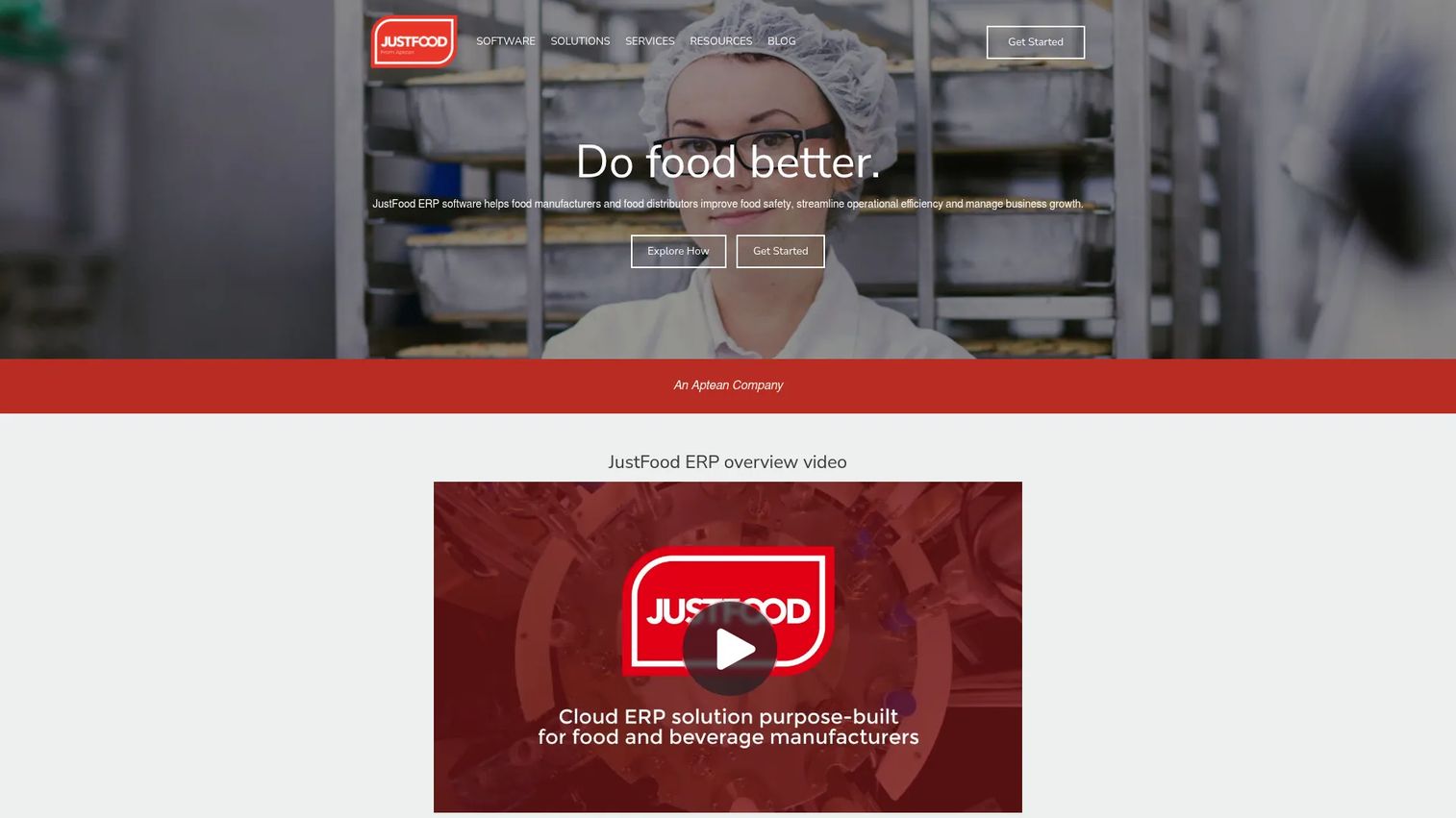
JustFood ERP is a cloud ERP for food manufacturers and distributors, covering operations, food safety, finance, sales, inventory, and production in one system. It includes food safety compliance, traceability, and recall management workflows alongside batch processing, bills of materials, yield reporting, and lot tracking with expiration-date management. For food businesses where safety, labeling, shelf life, and recall readiness are daily operational concerns, a generic ERP typically requires significant customization to reach the same coverage.
Best for: Food and beverage manufacturers that need industry-specific ERP rather than a configured general system.
Key features
- Food safety, compliance, and traceability workflows
- Recall management with lot tracking and expiration-date controls
- Catch weight and variable-weight inventory management
- Batch processing with yield reporting and BOM management
- Warehouse and inventory planning with FEFO controls
Why choose JustFood ERP: It fits food businesses that want production, inventory, traceability, and finance to operate from the same data set. The industry-specific design reduces the customization burden that generic ERP projects typically carry in food environments.
JustFood ERP pricing: Pricing requires a request through the vendor's website.
8. Microsoft Dynamics 365 Business Central
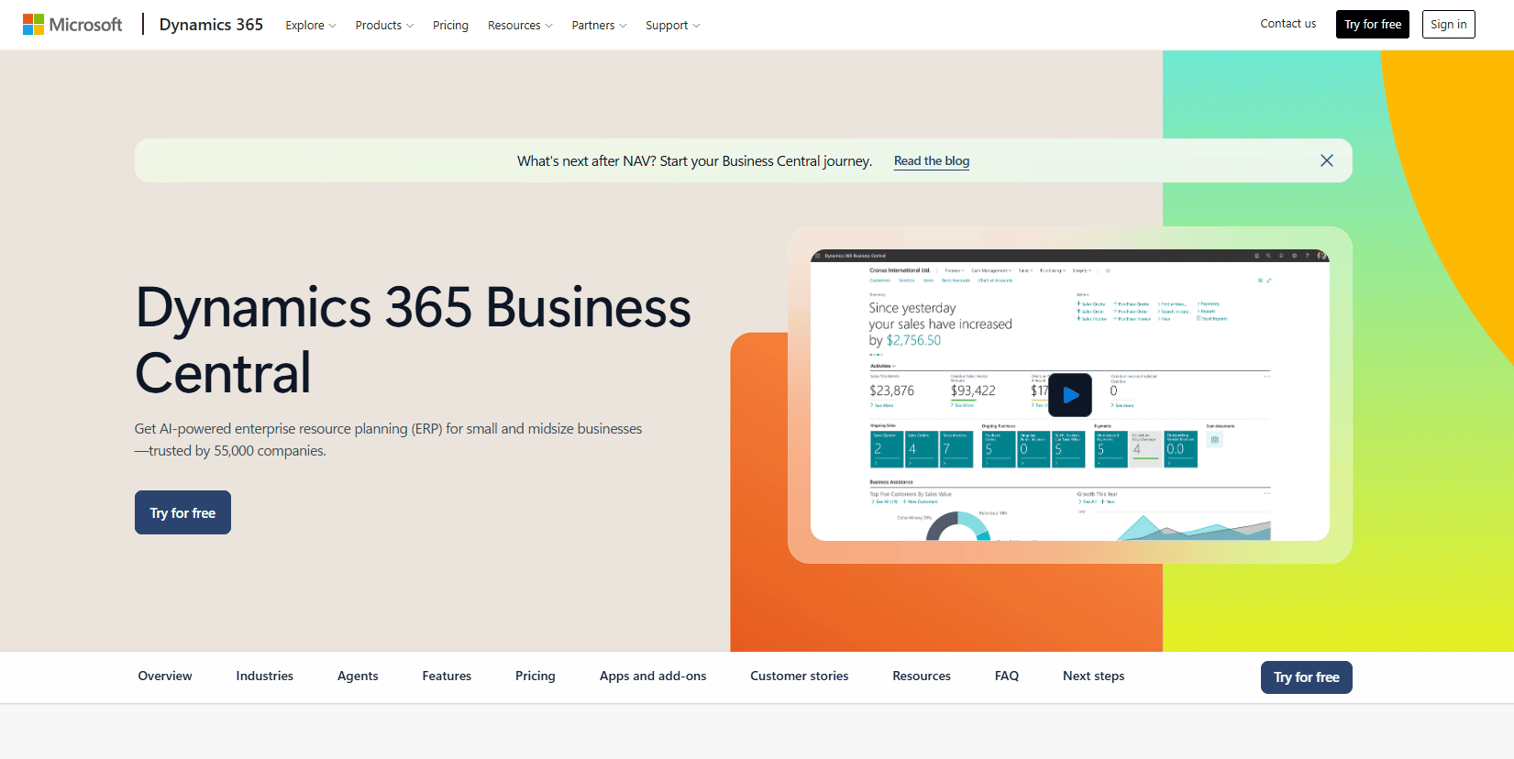
Microsoft Dynamics 365 Business Central is a cloud ERP for small and mid-sized businesses covering finance, sales, inventory, supply chain, projects, service, and manufacturing. It integrates natively with Microsoft 365, Power BI, Teams, and the Power Platform. Manufacturing capability is real, but process manufacturing depth, including formula management and GMP compliance workflows, typically depends on implementation partner configuration or add-on modules. It is not process-specific out of the box.
Best for: Microsoft-centric manufacturers that want ERP flexibility and can work with an implementation partner for process-specific needs.
Key features
- Financial management and financial analytics
- Inventory, supply chain, and warehouse management
- Production orders and purchasing workflows
- Microsoft Copilot and Power Platform integrations
- 30-day free trial available
Why choose Microsoft Dynamics 365 Business Central: Choose it when Microsoft stack fit is a priority, finance needs are central, and the team has an implementation partner that handles process manufacturing configuration. Validate formula, lot, and compliance depth during your demo before committing.
Microsoft Dynamics 365 Business Central pricing: The Essentials plan runs $80/user/month billed annually. Premium, which adds service management and manufacturing modules, is $110/user/month. Team Members access is $8/user/month. A 30-day free trial is available.
G2 rating: 4.0/5
9. Aptean Food & Beverage ERP
Aptean Food & Beverage ERP is a purpose-built ERP for food and beverage manufacturers and distributors. It covers lot and batch traceability, inventory management with FEFO tracking, production planning, manufacturing management, quality workflows, and compliance documentation. For manufacturers where regulatory records and customer-specific documentation matter as much as production throughput, the industry-specific design reduces the need to build every workflow from scratch inside a generic platform.
Best for: Food and beverage businesses that need traceability, quality workflows, and production planning in one ERP.
Key features
- Lot and batch traceability with forward and backward tracking
- Inventory management with FEFO and expiration controls
- Production planning and manufacturing management
- Quality management and compliance documentation
- Recall workflow support
Why choose Aptean Food & Beverage ERP: It fits manufacturers where HACCP documentation, FSMA requirements, recall readiness, and customer-specific labeling are non-negotiable. The food-first design means less implementation time spent building compliance workflows that come standard in a general ERP.
Aptean Food & Beverage ERP pricing: Aptean prices through sales conversations Pricing reflects modules, users, and sites.
G2 rating: 4.1/5
10. SAP Business One
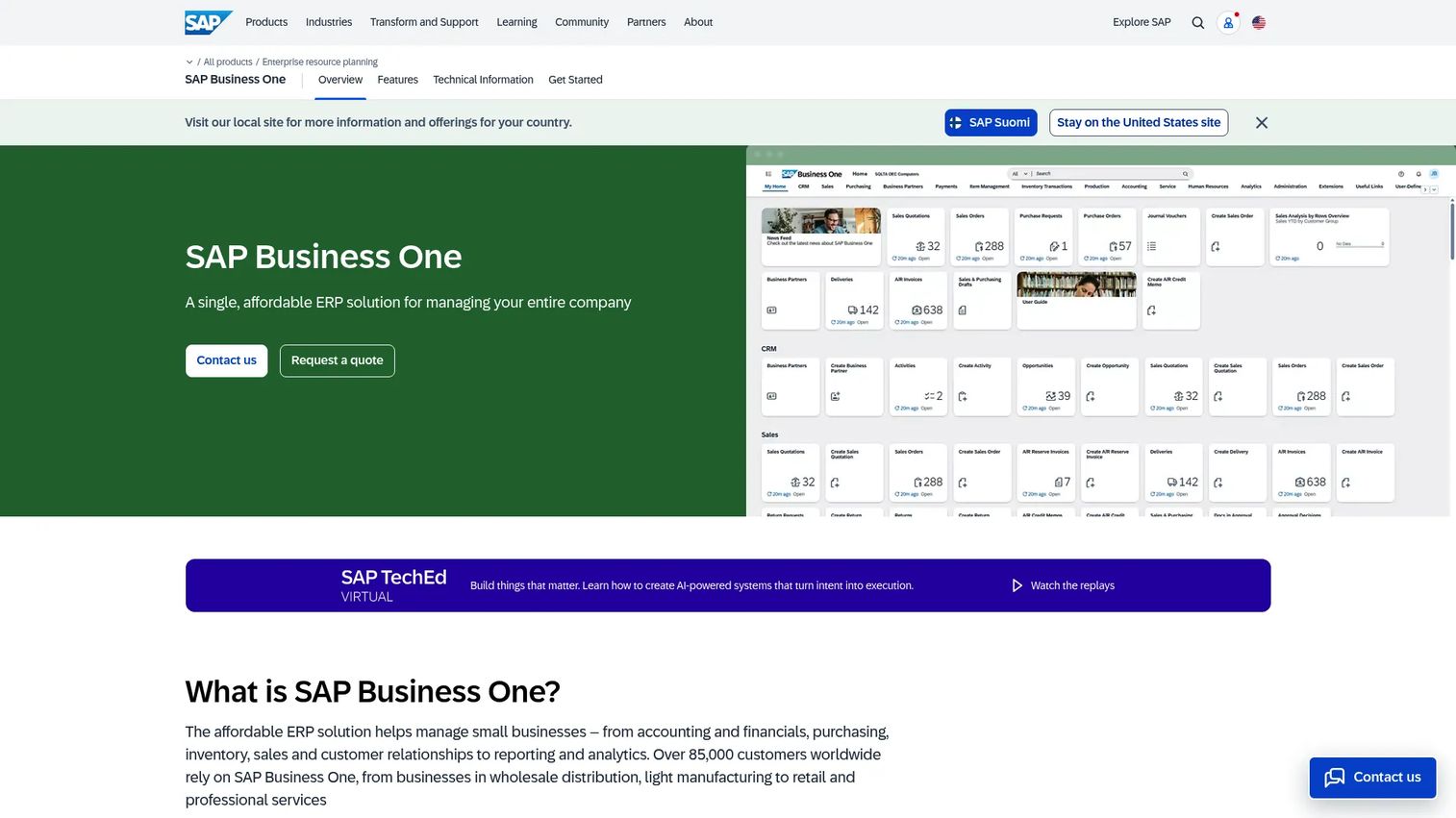
SAP Business One is ERP for small and midsize businesses covering financial management, sales, purchasing, inventory, production, and reporting. Manufacturing and process-specific functionality, including formula management and lot compliance depth, is often delivered through implementation partners or ISV add-ons rather than the core product. It is a finance and ERP foundation with manufacturing coverage, not a dedicated process manufacturing platform.
Best for: Growing manufacturers that want SAP ERP fundamentals without starting with an enterprise-scale SAP deployment.
Key features
- Financial management and accounting with banking reconciliation
- Sales, opportunity, and customer management
- Purchasing, inventory, and warehouse management
- Production planning and business intelligence dashboards
- Mobile apps, SAP HANA integration, and industry-specific add-ons
Why choose SAP Business One: It suits manufacturers that prioritize accounting, inventory, and core ERP governance, and have an implementation partner that can extend it for process needs. For formula, lot, and GMP compliance depth, verify those workflows during vendor demos before purchase.
SAP Business One pricing: SAP directs customers to request a quote through their website or partner network.
G2 rating: 4.3/5
11. NetSuite by Oracle
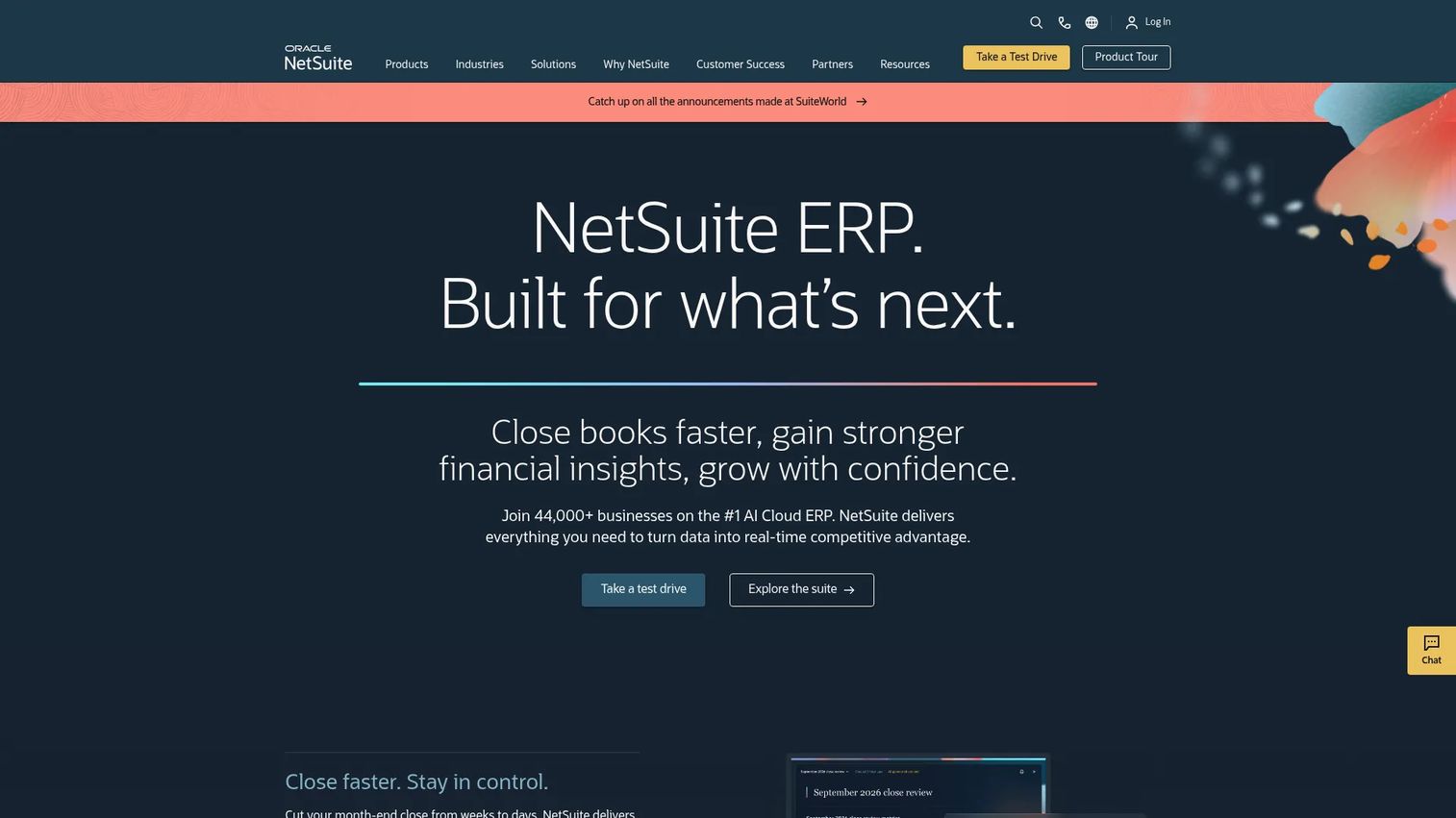
NetSuite by Oracle is an AI-powered cloud ERP covering financials, inventory, order management, procurement, supply chain, CRM, commerce, and analytics. It is used by scaling manufacturers that need clean operating data for finance, inventory, and executive reporting in a single cloud platform. For process manufacturing specifically, formula management, batch traceability, and GMP compliance workflows should be validated during evaluation, as these capabilities vary by configuration and partner implementation.
Best for: Growth-stage manufacturers that need cloud ERP across finance, inventory, purchasing, and operations.
Key features
- Financial management with multi-entity and multicurrency support
- Inventory, order, and supply chain management
- Procurement and warehouse management
- AI-powered analytics and conversational assistance
- CRM and commerce integration
Why choose NetSuite by Oracle: It fits companies that need cleaner operational data to feed weekly decisions and board reporting. The cloud architecture removes on-premise maintenance burden, and the finance coverage is strong for scaling companies. Validate batch, formula, and quality workflows before purchase if process manufacturing depth is the primary need.
NetSuite by Oracle pricing: Pricing is customized based on the core platform, optional modules, number of users, and a one-time implementation fee. Contact NetSuite sales for current figures.
G2 rating: 4.1/5
12. QT9 ERP
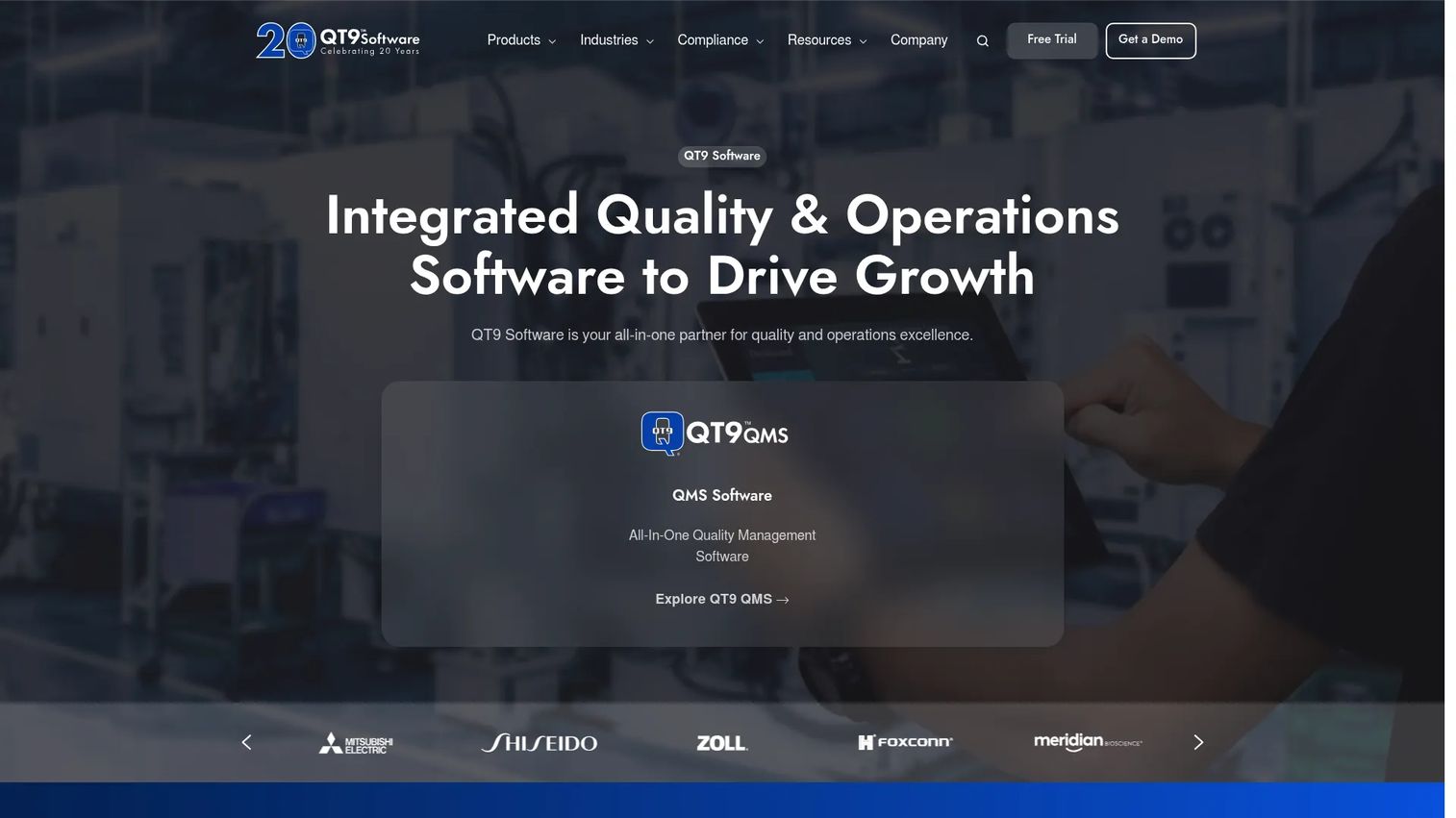
QT9 ERP is manufacturing ERP software that integrates production, inventory, purchasing, accounting, supply chain, and quality management in one connected system. For manufacturers that run ERP data and quality records in separate platforms and spend time reconciling them, QT9 pulls both into a single environment. It includes electronic batch and device history records, traceability, lot and serial tracking, CAPA, document control, and an open API for integrations.
Best for: Manufacturers that want ERP and quality management in a connected system, particularly regulated organizations.
Key features
- Production planning, MRP, routing, scheduling, and shop floor management
- Inventory control with lot, serial, expiration, and multi-location tracking
- Integrated accounting, accounts payable, accounts receivable, and financial reporting
- Traceability and quality workflows including electronic batch records and CAPA
- Customizable dashboards, user-defined fields, and open API
Why choose QT9 ERP: Choose it when quality workflows need to sit directly next to production and inventory data. It is especially useful for teams that have been managing ERP and quality records separately and want to close that gap without a complex integration project.
QT9 ERP pricing: Pricing is custom and depends on users, deployment model, facilities, and selected modules. Cloud and on-premise options are both available. Contact QT9 for a current quote. A free trial is advertised on the website.
G2 rating: 4.9/5
13. Acumatica
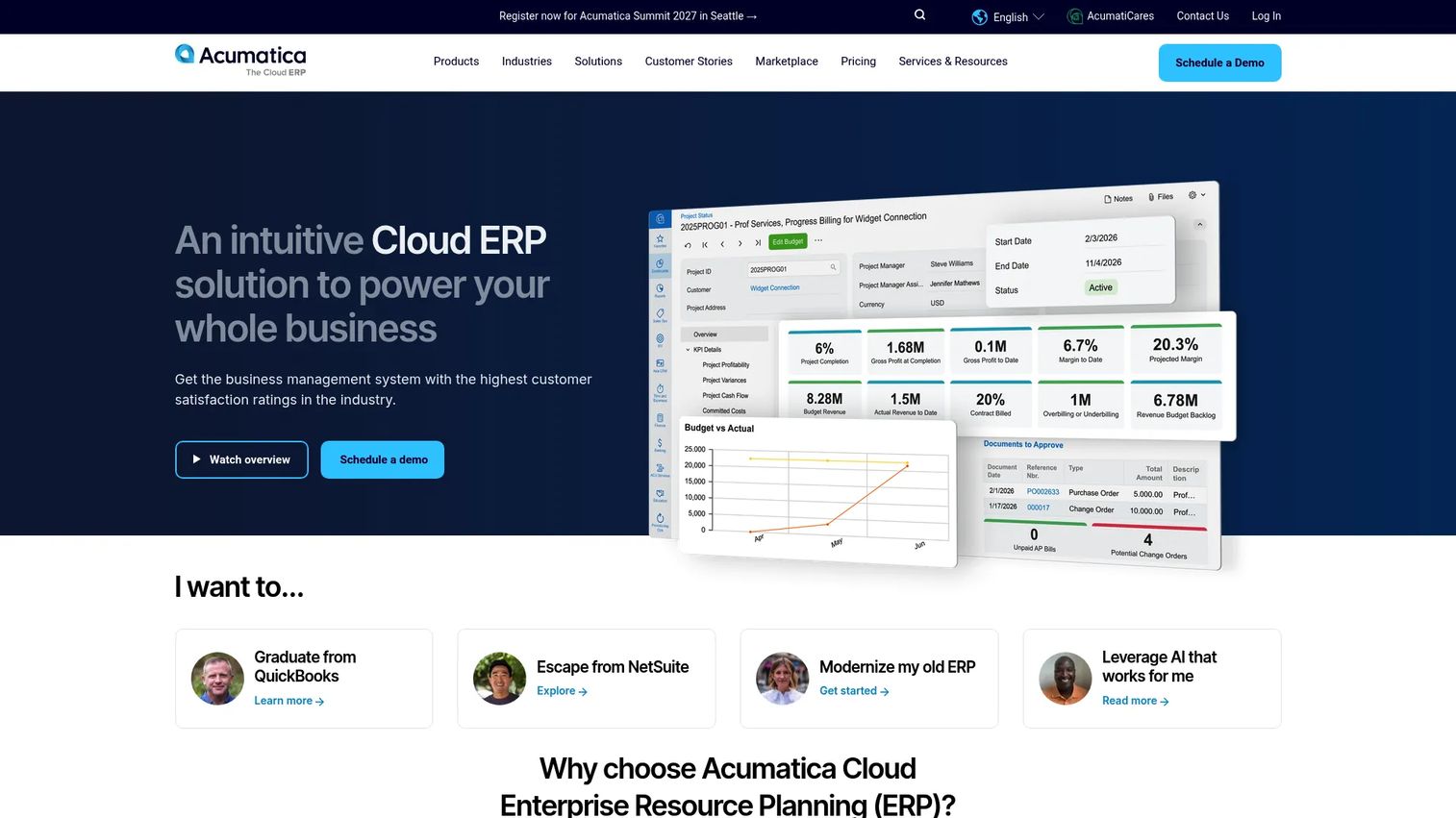
Acumatica is a cloud ERP for small and midmarket organizations covering financial management, manufacturing, inventory, distribution, project accounting, CRM, and reporting. Its resource-based pricing model, where the cost depends on usage rather than named users, suits growing teams that want to add staff without paying per-seat fees. Manufacturing capabilities include production management, inventory control, BOM and routing, and scheduling. Process manufacturing depth, including formula and batch controls, depends on the specific edition and partner configuration.
Best for: Small and mid-sized manufacturers that want cloud ERP with flexible licensing and room to grow into more modules.
Key features
- Cloud ERP with financial management and manufacturing modules
- Inventory, distribution, and project accounting
- CRM and customer management
- Reporting dashboards and workflow automation
- iOS and Android mobile apps
Why choose Acumatica: It fits teams that want a cloud ERP foundation with flexible licensing as headcount grows. For process manufacturing, validate the specific edition and partner's configuration capability before committing, since formula and batch depth varies.
Acumatica pricing: Standard pricing is customized by application and usage. APEX for Manufacturing starts under $2,185/month and APEX for Distribution starts under $1,495/month as publicly listed entry points. Contact Acumatica for a full pricing review based on your environment.
G2 rating: 4.4/5
14. Sage X3
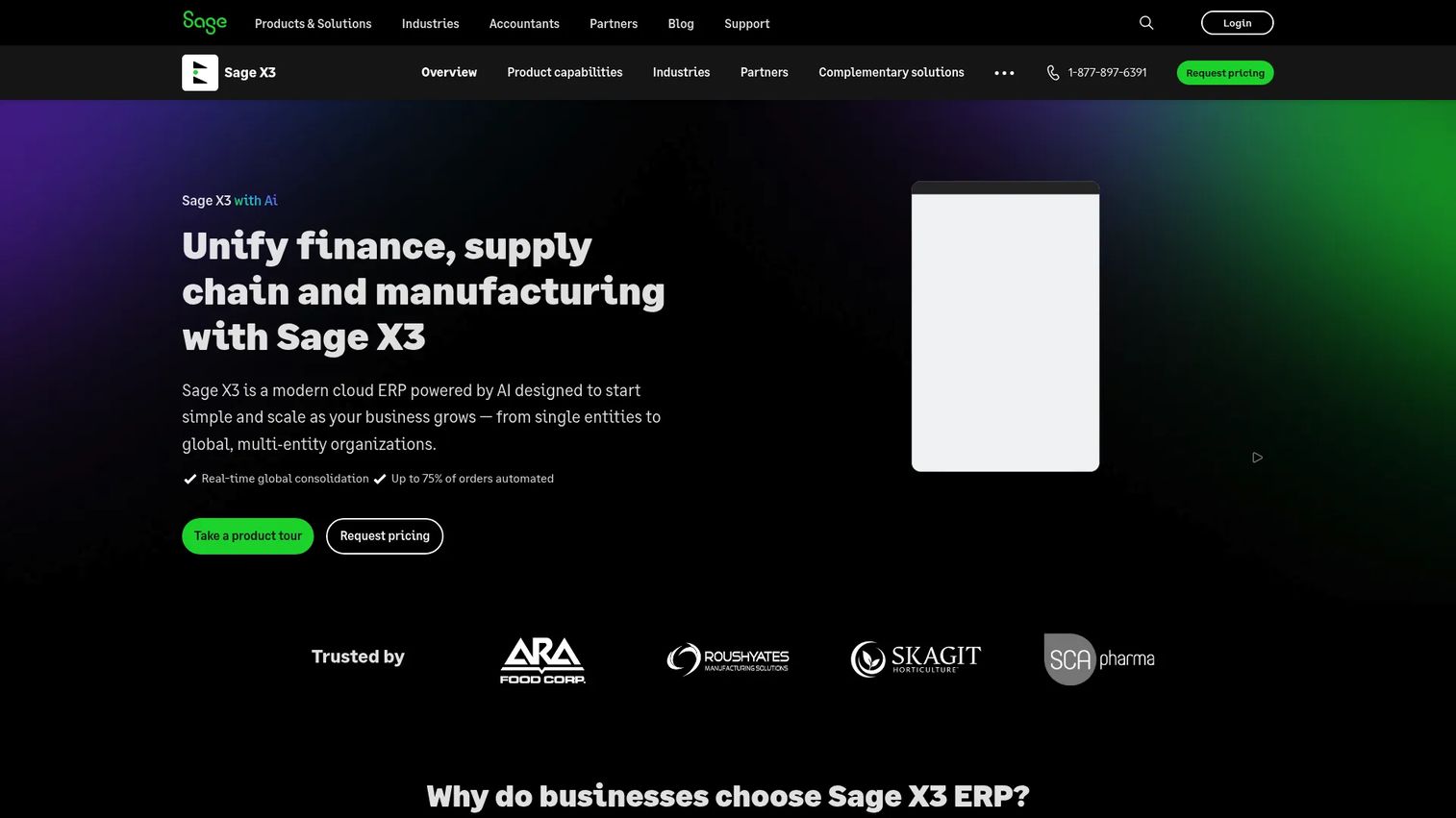
Sage X3 is an AI-powered cloud ERP for mid-sized and larger manufacturing, distribution, and product-centric organizations. It supports discrete, process, and mixed-mode manufacturing with lot, batch, and recall controls alongside financial management, supply chain, inventory, and multi-entity operations across countries and currencies. The finance-to-production integration is a core strength, making it a practical option for founders and CFOs who want production data and cost data to agree without manual reconciliation.
Best for: Process manufacturers that need ERP depth across production, inventory, finance, and compliance workflows.
Key features
- Process, discrete, and mixed-mode manufacturing with batch and lot controls
- Finance, supply chain, and inventory management
- Multi-entity, multi-country, and multi-currency management
- Sage Copilot conversational insights and workflow automation
- Low-code configuration and integration services
Why choose Sage X3: It works well for manufacturers where the finance and operations teams are still reconciling data manually every period. The multi-entity support is a practical advantage for businesses with more than one plant or legal entity. Confirm formula management and GMP compliance depth during your demo if regulated production is a core need.
Sage X3 pricing: Sage provides pricing through a request process. Pricing reflects users, sites, countries, modules, and implementation services.
15. Global Shop Solutions
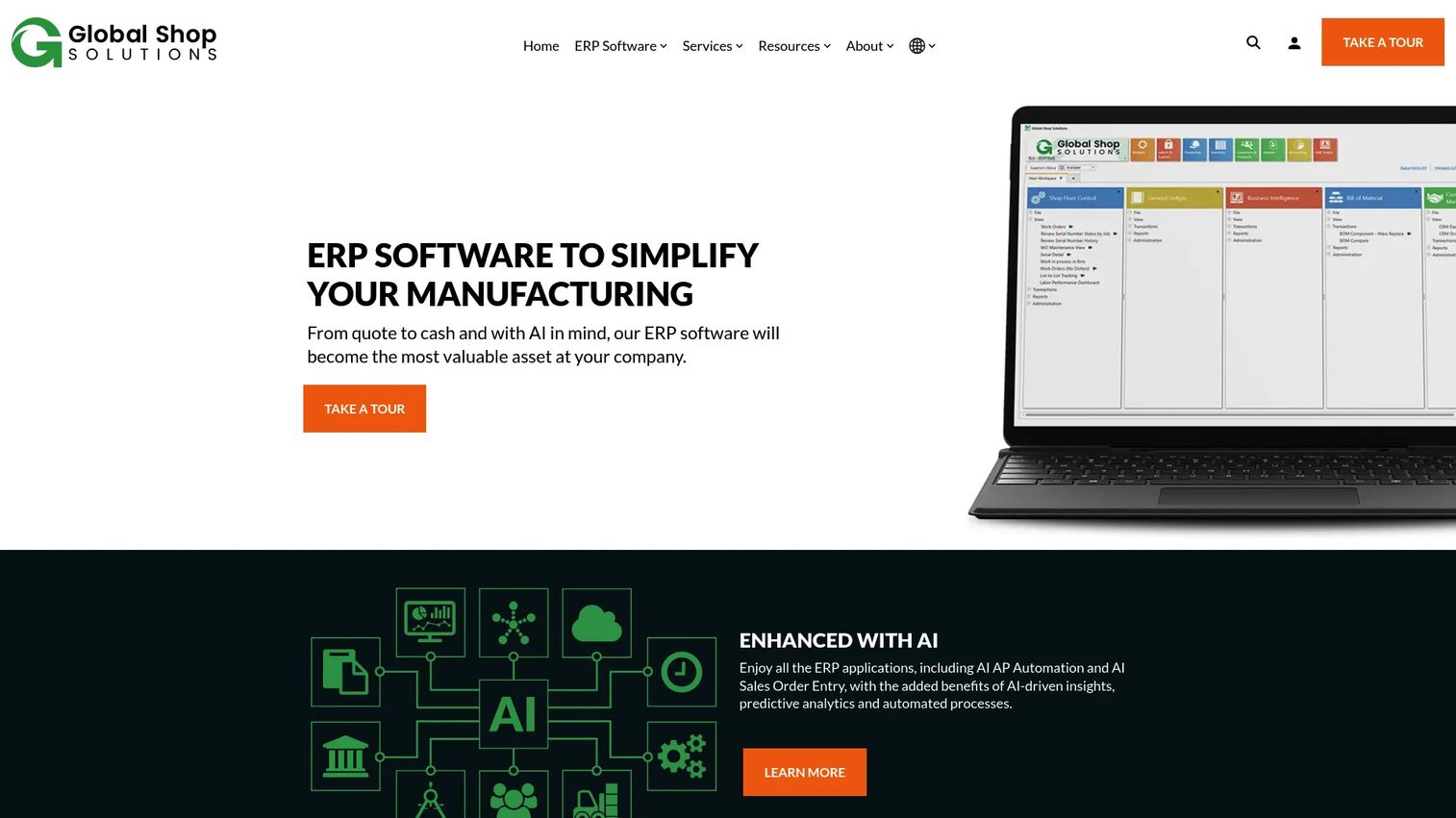
Global Shop Solutions is an AI-enhanced ERP for manufacturers covering production, inventory, scheduling, shop floor data collection, quality, purchasing, shipping, accounting, CRM, and KPI reporting. It is primarily associated with discrete and mixed manufacturing, covering operations from quote to cash. For pure process manufacturers, batch genealogy, formula management, and lot compliance workflows should be tested carefully during the evaluation to confirm fit before purchase.
Best for: Manufacturers that need shop floor control, scheduling, and inventory visibility in an integrated ERP system.
Key features
- Shop floor data collection and management
- Scheduling, planning, and production management
- Inventory management and quality control
- Purchasing, shipping, and accounting
- CRM, sales orders, dashboards, and KPI reporting
Why choose Global Shop Solutions: It fits manufacturers that want operational control over production execution and scheduling alongside ERP and financial visibility. For process-specific needs including formula, batch, and lot compliance, buyers should run a targeted demo scenario before deciding.
Global Shop Solutions pricing: Pricing is customized per company and includes an upfront cost plus ongoing quarterly fees based on concurrent users. On-premise, cloud, and SaaS deployment options are available. Contact the vendor for a current estimate.
G2 rating: 3.9/5
Considerations when choosing process manufacturing software
Formula, recipe, and batch depth
Evaluate how the system handles versioned formulas, substitutions, yield adjustments, potency variation, allergen management, and rework. A generic production module can appear functional in a demo and break down under real batch variation. Run a scenario with an ingredient substitution and a planned versus actual yield comparison before making a shortlist decision.
Traceability and audit readiness
Lot genealogy needs to work in both directions: Forward to customers and shipments, backward to raw material supplier lots. Quality holds, recalls, certificates of analysis, and audit trails should be part of the core system, not a manual add-on. Software supports these workflows, but the manufacturer remains responsible for its own regulatory program. Do not let a vendor claim compliance on your behalf.
Inventory and costing accuracy
Process manufacturers need inventory tracked by lot, weight, potency, expiration date, location, and quarantine status simultaneously. Costing should connect raw material inputs, labor, overhead, yield loss, waste, co-products, and by-products into a coherent margin picture. If the system tracks inventory in one way and costs it in another, the numbers will not reconcile without manual work.
Integration with finance, warehouse, and quality systems
Map your integration requirements before vendor demos. Finance, WMS, MES, QMS, procurement, EDI, labeling, and analytics systems all need to connect. A system that handles production well but cannot push data to your financial reporting tool creates a reconciliation bottleneck that your operations team will end up managing by hand. See our guide on business process management software for integration evaluation frameworks.
Implementation capacity
ERP and MES projects fail when teams underestimate master data cleanup, process redesign, training, and change management. At the Series B stage, you are not buying software for yourself. You are buying a system your VP Ops, production manager, and finance lead can run without you in the room. If the implementation plan does not account for data migration, user training, and a parallel run period, the project is already behind schedule before it starts.
Conclusion
The right process manufacturing software depends on the operational risk you are trying to eliminate, not the feature list you can check off in a demo.
For shop floor visibility, start with Fusion Operations. For mobile inspections and frontline execution, evaluate Mitti by SafetyCulture. For process ERP depth, compare Deacom ERP, BatchMaster Manufacturing, Infor CloudSuite Process, and Sage X3. For food and beverage operations, JustFood ERP and Aptean Food & Beverage ERP cover traceability and food safety requirements without heavy customization. For cloud ERP with strong financial coverage, evaluate NetSuite, Acumatica, and Microsoft Dynamics 365 Business Central. For ERP and quality management in a single platform, QT9 ERP stands out.
The practical next step: Pick three vendors from this list, run the same batch scenario through every demo, and compare the outputs. Use one real recipe, one lot traceability question, one quality hold, and one margin report. The gaps will show up immediately.
If you sell complex software into manufacturing or adjacent markets, static screenshots will not explain batch workflows, traceability, or production planning to buyers clearly. Use Guideflow to build interactive demos that let prospects click through your product's workflows before a call, so discovery conversations start with informed buyers instead of blank slates.
Start your journey with Guideflow today!
FAQs
Process manufacturing software helps manufacturers plan, produce, track, cost, and control goods made by transforming raw materials through mixing, blending, reacting, cooking, fermenting, or refining. It manages formulas, batch records, lot traceability, inventory, quality workflows, compliance documentation, and production costing in one or more connected systems. The category includes ERP, MES, MRP, QMS, and inventory management tools.
Process manufacturing software focuses on formulas, batches, yields, ingredient lots, potency, and lot genealogy, because the output cannot be easily disassembled back into components. Discrete manufacturing software centers on bills of materials, work orders, serial numbers, and assembled finished goods. Many manufacturers need mixed-mode capability, particularly during packaging, where bulk process production transitions into labeled discrete units.
No. ERP is one type of process manufacturing software, but the category also includes MES for shop floor execution, MRP for material planning, QMS for quality records, and standalone inventory or analytics tools. Some manufacturers need a full ERP backbone. Others start with a shop floor system like Fusion Operations or a quality platform before connecting to ERP. The right starting point depends on where your largest operational risk sits today.
The primary industries are food, beverage, chemicals, pharmaceuticals, nutraceuticals, cosmetics, paints, plastics, oil and gas, and specialty materials. Any industry that mixes, blends, reacts, cooks, ferments, or refines raw materials into outputs that cannot be easily disassembled is a process manufacturer. Some companies in these sectors also do discrete packaging, which creates mixed-mode requirements that not every system handles well.
Formula management with version control and scaling, batch records with planned versus actual yield tracking, lot traceability in both directions, quality control workflows and certificates of analysis, inventory status by lot and expiration date, production scheduling, costing that captures yield loss and co-products, and compliance support for GMP or food safety requirements. Reporting and dashboard tools that surface margin and yield data in real time matter as much as the production modules.
Cost varies by users, sites, modules, deployment model, data migration complexity, and implementation services. Shop floor tools like Fusion Operations start at $173/month. Mid-market ERP platforms like Acumatica start under $2,185/month for manufacturing editions. Enterprise ERP deployments from Infor, QAD, or SAP are typically priced by quote and can run significantly higher depending on scope. The comparison table above shows verified pricing where vendors post public figures, and indicates quote-based pricing where they do not.
Yes, but they should avoid overbuying. A small manufacturer replacing spreadsheets often gets more value starting with a targeted shop floor or inventory tool before moving into full ERP. Mitti by SafetyCulture offers a free tier for teams of up to 10 users. Fusion Operations provides a 14-day trial. Microsoft Dynamics 365 Business Central offers user-based pricing that scales with team size. The goal is a system the team can operate without constant configuration support.
Run the same scenario through every vendor demo. Include one batch recipe with a yield target, one lot traceability question asking for the full chain of custody on a specific raw material lot, one quality hold workflow, one inventory adjustment, and one margin report by batch. The gaps between what a vendor demonstrates and what your operation actually requires will appear quickly. If the demo environment cannot handle your real workflow, the production environment will not either.