Your production lead says inventory is fine. Finance says margin is off. The warehouse has a third number entirely. That gap is not a reporting problem. It is what happens when batch manufacturing, quality records, and financial data live in separate systems that only talk to each other through spreadsheets.
The manufacturing ERP market reached $6.36 billion in 2026 and is growing at nearly 10% annually, according to Mordor Intelligence (2026). The growth reflects a real shift: Manufacturers are replacing disconnected tools with process ERP software that connects formulas, batches, lot genealogy, quality holds, and finance into one operating record.
The right process manufacturing ERP does not just consolidate data. It gives your VP Ops and CFO a single version of gross margin, inventory value, and production output so board packets stop requiring heroics to assemble.
This article is designed to hand to whoever owns the ERP evaluation at your company.
What's inside
- Built for founders, COOs, finance leaders, and manufacturing operators comparing process ERP software
- 12 tools selected for process manufacturing fit, batch and recipe capabilities, deployment options, pricing visibility, and G2 presence
- Covers ERP for food and beverage, chemicals, nutraceuticals, life sciences-adjacent manufacturing, and specialty process environments
- Includes a side-by-side comparison table, numbered tool profiles, buying criteria, and FAQs
Pricing and G2 ratings were verified against each vendor's official pages and G2 listings. Where no price is shown, pricing routes through sales.
TL;DR
- Best for process-first ERP depth: Deacom ERP covers batch quality, lot traceability, and production in one system built for process manufacturers
- Best for formula-heavy mid-market teams: BatchMaster ERP or Sage X3 work well when formulation and recipe control are the operational center of gravity
- Best for food and beverage manufacturers: JustFood ERP or Aptean Food & Beverage ERP bring traceability, recall workflows, and food-specific inventory management
- Best for global manufacturing operations: QAD Adaptive or Infor M3 handle multi-site, multicountry complexity at enterprise scale
- Best for Microsoft-centric small and mid-market teams: Microsoft Dynamics 365 Business Central fits companies already standardized on Microsoft 365
- Best cloud ERP with strong finance depth: NetSuite ERP or Oracle Fusion Cloud ERP suit scaling companies where financial consolidation and multi-entity reporting matter most
What is process ERP software?
Process ERP software is enterprise resource planning software built for manufacturers that produce goods through formulas, recipes, batches, or variable-yield production rather than discrete assemblies.
A discrete manufacturer builds a product by assembling parts. A process manufacturer produces output by combining ingredients, applying chemical reactions, or running controlled production runs where the final quantity is not perfectly predictable. That fundamental difference breaks most generic ERP systems, because they assume a fixed bill of materials and a predictable yield.
Process ERP addresses the variables that generic accounting tools cannot handle:
- Formula and recipe management: Version-controlled formulas with substitutions, yield adjustments, allergen tracking, and potency scaling
- Batch production: Batch tickets, work orders, co-products, by-products, and rework workflows
- Lot traceability: Full genealogy from supplier lot to finished goods, supporting audit and recall readiness
- Quality management: In-process inspections, quality holds, nonconformance records, and corrective action workflows
- Inventory and costing: Expiration dates, catch weight, units of measure conversion, landed cost, and WIP valuation
- Compliance documentation: Structured production records for regulated or controlled manufacturing environments
- Planning and procurement: MRP with variable yields, demand planning, supplier scheduling, and capacity visibility
- Finance integration: Batch costing, production variance, inventory valuation, and period-close reporting
The difference from business process management software or narrower manufacturing execution tools is scope: Process ERP connects every operational function to the same financial ledger, so production costs, inventory value, and gross margin reconcile without manual intervention.
Small and mid-market manufacturers often start the ERP search when spreadsheet-based batch management software stops scaling. The question then becomes whether to buy a process-specific ERP or extend a general-purpose platform with manufacturing modules.
When to use process ERP software
Run batch production without spreadsheet reconciliation
Batch-based manufacturers need production, inventory, and finance connected at the transaction level. If operators record batch outcomes in spreadsheets that accounting teams then rekey, leadership is always working from a lagged and potentially inaccurate picture of margin and availability. Process ERP closes that loop by writing the batch result directly into inventory and costing in real time.
Track formulas, lot genealogy, and quality holds
Formula changes, allergen substitutions, supplier lot variability, and quality holds create operational complexity that purpose-built workflows handle far better than generic systems. When a lot fails inspection midway through production, the system needs to place a hold, capture the nonconformance, and update available inventory automatically. That sequence is where most general-purpose ERP configurations crack.
Give finance and operations one source of truth
At Series B scale, your board packets should not require your VP Ops and CFO to reconcile five dashboards before every meeting. Process ERP connects purchase orders, production runs, quality records, and shipments to the general ledger so gross margin, inventory, and production costs agree without a weekly data-stitching exercise.
Process ERP software comparison
The table below covers all 12 tools in this guide. Use it to shortlist before reading the full profiles.
| # | Product | Best for | Key differentiator | Pricing | G2 rating |
|---|---|---|---|---|---|
| 1 | Deacom ERP | Batch and process manufacturers needing one integrated system | Native batch quality, lot traceability, and finance in one platform | Custom pricing | 4.2/5 |
| 2 | QAD Adaptive | Global manufacturers with multi-site complexity | Cloud ERP with adaptive UX and global manufacturing operations | Custom pricing | 3.5/5 |
| 3 | Microsoft Dynamics 365 Business Central | Microsoft-centric small and mid-market manufacturers | ERP with deep Microsoft 365 and Power BI integration | From $80/user/month (Essentials, billed annually) | 4.0/5 |
| 4 | BatchMaster ERP | Formula-heavy process manufacturers in food, chemicals, and life sciences | Formulation, batch production, compliance, and lot tracking | Custom pricing | 2.9/5 |
| 5 | Infor M3 | Enterprise process manufacturers with global operations | Industry-specific cloud ERP for manufacturing and distribution | Custom pricing | 3.8/5 |
| 6 | JustFood ERP | Food and beverage manufacturers | Food-specific traceability, quality, and recall workflows | Custom pricing | Not listed on G2 |
| 7 | Aptean Food & Beverage ERP | Mid-to-large food processors | Built on Dynamics 365 with bidirectional traceability and catch-weight management | Custom pricing | 4.1/5 |
| 8 | SAP Business One | Growing manufacturers standardizing operations | ERP foundation with broad partner-led manufacturing extensions | Custom pricing | 4.3/5 |
| 9 | Acumatica Cloud ERP | Cloud-first mid-market manufacturers | Flexible cloud ERP with unlimited users and manufacturing edition | Custom pricing | 4.5/5 |
| 10 | NetSuite ERP | Scaling companies needing cloud finance and operations | Cloud ERP with multi-entity consolidation and broad operational modules | Custom pricing | 4.1/5 |
| 11 | Sage X3 | Mid-market process manufacturers with multi-site operations | Process manufacturing, formula management, and supply chain in one platform | Custom pricing | 4.5/5 |
| 12 | Oracle Fusion Cloud ERP | Large enterprises standardizing finance and operations | Enterprise cloud ERP with AI automation and modular pricing from $625/month | From $625/month | Not listed on G2 |
Pricing and ratings verified November 2026 from each vendor's pricing page and G2 listing.
Best 12 process ERP software tools for 2026
1. Deacom ERP
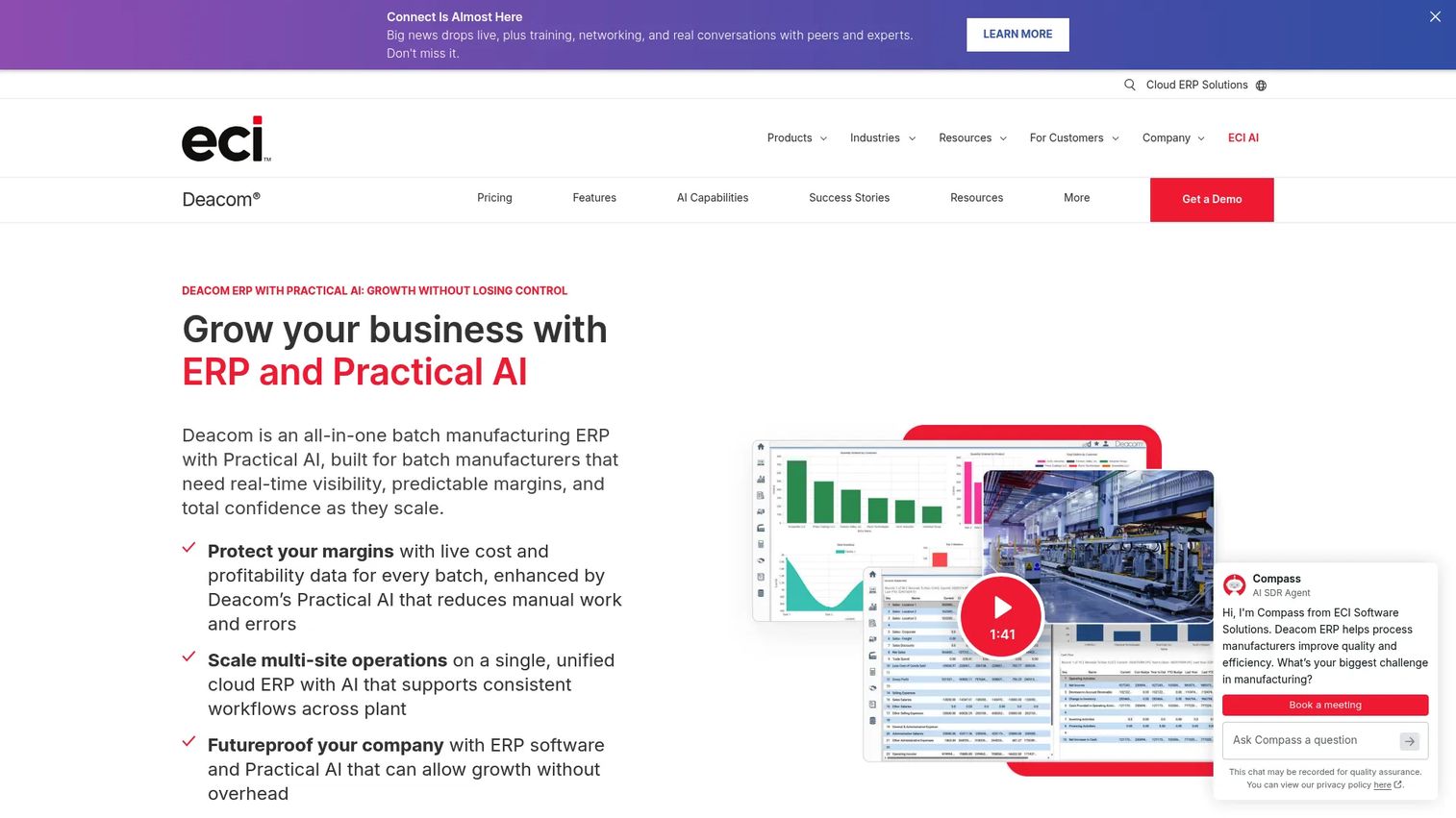
Deacom ERP is an all-in-one cloud ERP built specifically for batch and process manufacturers. Now part of ECI Software Solutions, it covers production, quality, inventory, procurement, and finance in a single system designed around process manufacturing realities rather than adapted from a discrete manufacturing base. Teams in food and beverage, chemicals, cosmetics, and life sciences-adjacent manufacturing use it when they need ERP depth that fits their operating model without heavy customization.
Best for: Batch and process manufacturers that want finance, inventory, production, and quality connected from day one.
Key features
- Batch quality management with automated quality holds
- Lot tracking and full traceability
- Inventory planning, MRP, and replenishment
- Production visibility, job costing, and analytics
- Regulatory compliance documentation support
Why choose Deacom ERP: Choose it when the operating model runs on batches and you want production, quality, and finance connected without workarounds. It is a process-first ERP, not a general platform extended with manufacturing modules.
Deacom ERP pricing: Deacom offers two plans, Essentials and Enterprise, each requiring a minimum of five concurrent users. Pricing routes through sales. Contact ECI Software Solutions for user, hosting, and implementation costs.
G2 rating: 4.2/5 (based on 5 reviews)
2. QAD Adaptive
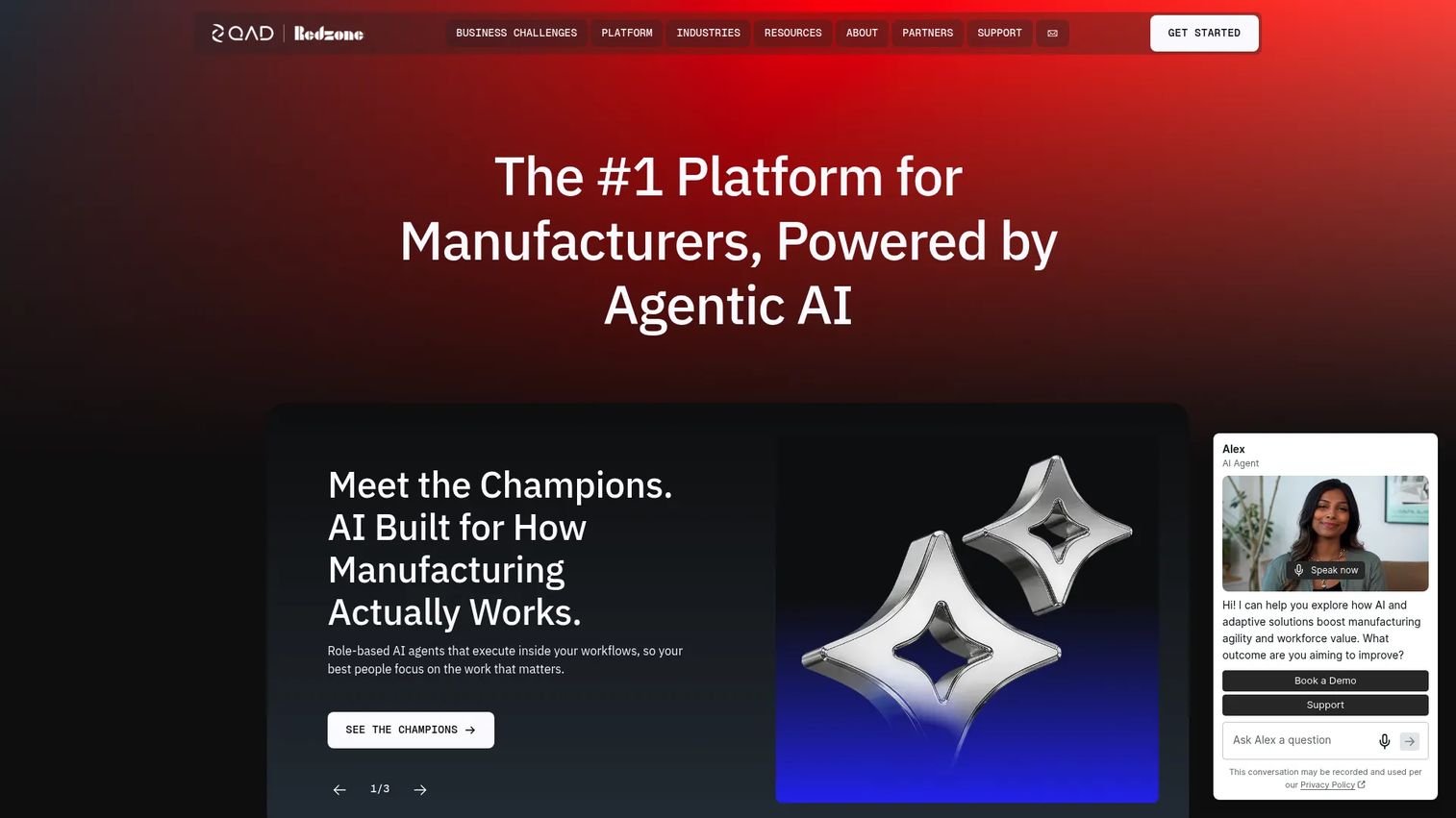
QAD Adaptive is a cloud-based ERP built for global manufacturers that need operational depth across manufacturing, supply chain, finance, and analytics. The platform covers manufacturing operations, procurement, sales, field service, and embedded analytics in one system, with multi-tenant cloud deployment on AWS and internationalization support for global regulatory and tax requirements. It is particularly strong for companies running manufacturing across multiple sites or business units.
Best for: Global and upper mid-market manufacturers with complex supply chains, multi-site production, and cross-border operations.
Key features
- Manufacturing, planning, scheduling, and inventory management
- Multi-site, multicountry, and multicurrency operations
- Embedded self-service and contextual analytics
- Adaptive UX with personalization and in-application training
- Sales, purchasing, enterprise asset management, and EDI
Why choose QAD Adaptive: Strong fit for founders and COOs who need ERP that scales across sites without requiring a custom integration project each time the business adds a facility or region.
QAD Adaptive pricing: Contact sales for user count, module selection, implementation, and support costs.
G2 rating: 3.5/5
3. Microsoft Dynamics 365 Business Central
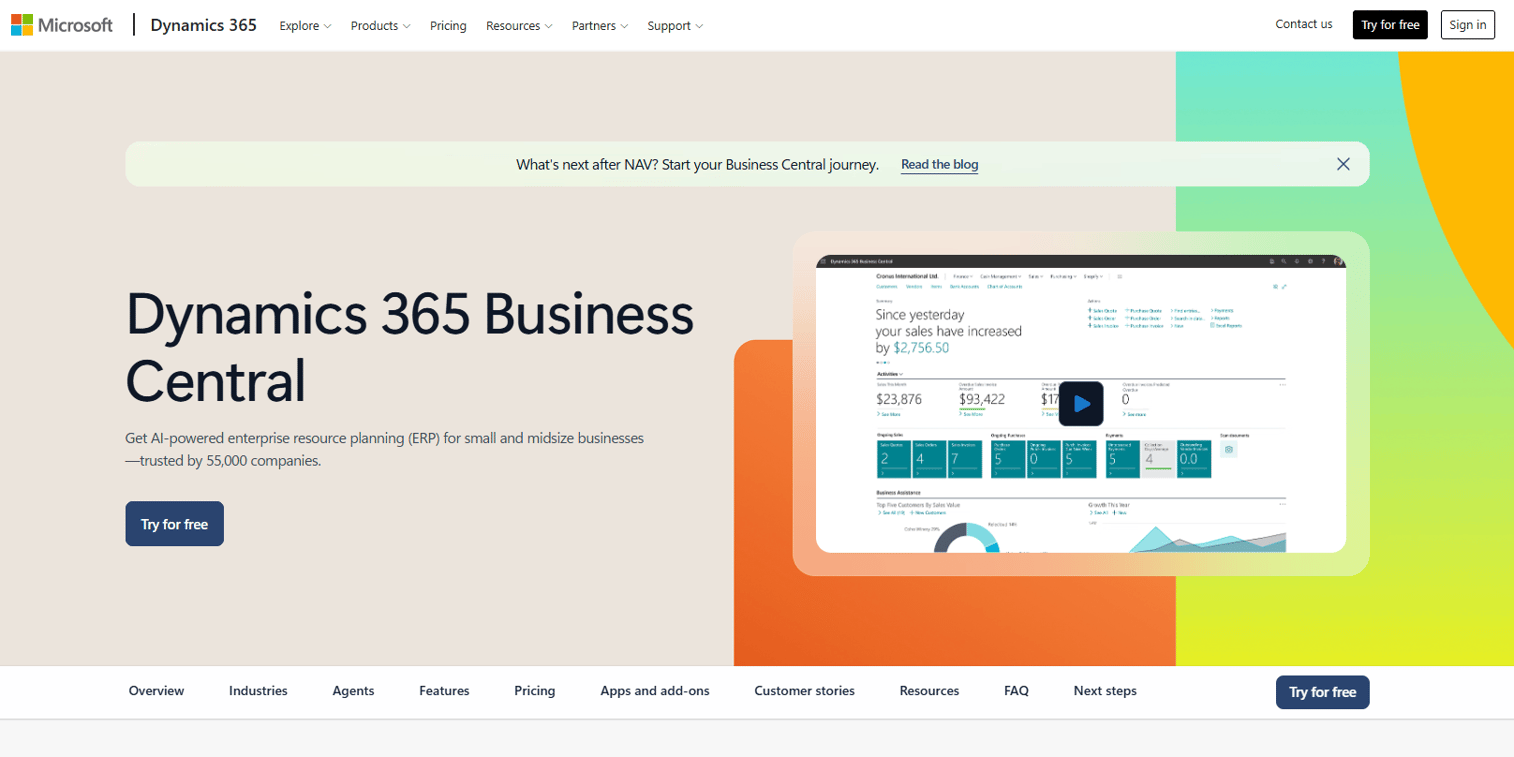
Microsoft Dynamics 365 Business Central is a cloud ERP for small and midsize businesses that connects finance, sales, purchasing, inventory, and manufacturing with the Microsoft 365 and Power BI tools teams already use. It includes Microsoft Copilot for automated workflows and AI assistance. For process manufacturers, deeper batch, formula, and compliance capabilities typically come through partner extensions or additional Microsoft apps.
Best for: Small and mid-market manufacturers already standardized on Microsoft 365, Teams, and Power BI who want a clean ERP foundation before moving to a more specialized platform.
Key features
- Financial management and financial analytics
- Inventory, purchasing, warehouse, and supply chain management
- Manufacturing module with production orders
- Power BI reporting and Microsoft 365 integration
- Microsoft Copilot and workflow automation
Why choose Microsoft Dynamics 365 Business Central: Best when Microsoft ecosystem fit matters as much as manufacturing depth. The partner availability across regions is strong, and the platform scales well for teams between 10 and 200 users.
Microsoft Dynamics 365 Business Central pricing: Essentials is $80 per user per month, billed annually. Premium (which adds service management and manufacturing) is $110 per user per month, billed annually. Team Members access is $8 per user per month. A 30-day free trial is available. Implementation and partner costs are separate.
G2 rating: 4.0/5
4. BatchMaster ERP
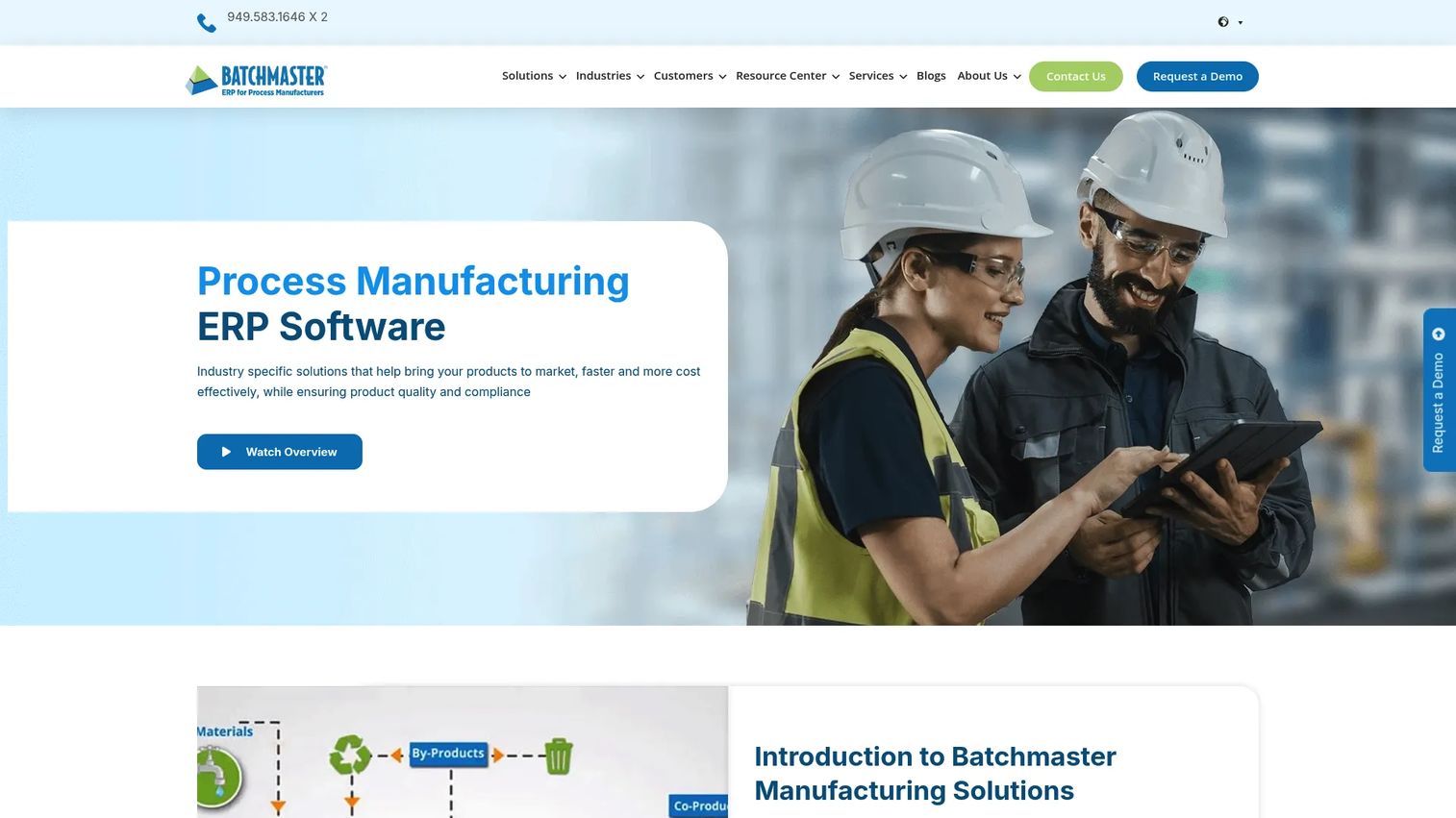
BatchMaster ERP is a cloud and on-premise ERP for formula-based process manufacturers in food, beverage, chemicals, nutraceuticals, and pharmaceuticals-adjacent production. The system is built around formulation and product development, batch production, compliance documentation, and lot traceability. It also covers financials, sales, purchasing, supply chain, and mobile warehousing in one platform.
Best for: Growing small and mid-market manufacturers where formulation, compliance records, and lot tracking are the core operating requirements.
Key features
- Formula and recipe management with version control
- Batch production, planning, and scheduling
- Lot traceability and recall management
- Quality control and compliance documentation
- Inventory, purchasing, sales, and CRM
Why choose BatchMaster ERP: Choose it when the operating model depends on controlled formulations and production records and when generic ERP forces too many workarounds to meet compliance requirements. The focus on formula-based manufacturing means less configuration to get the core workflows right.
BatchMaster ERP pricing: Contact sales or request a demo to get user, license, implementation, hosting, and support costs.
G2 rating: 2.9/5 (based on 5 reviews)
5. Infor M3
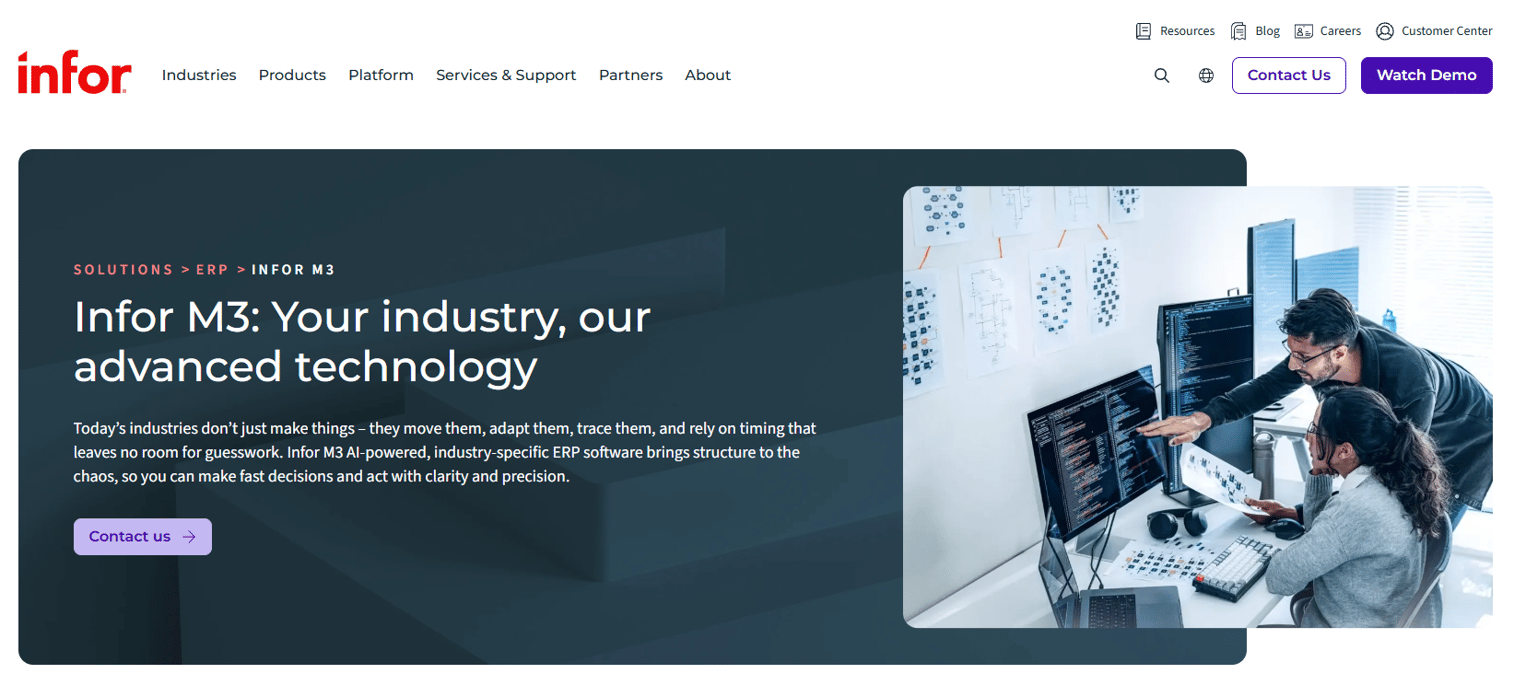
Infor M3 is a cloud-native ERP for medium-to-large global manufacturers and distributors in process-heavy industries including food and beverage, chemicals, fashion, and industrial distribution. It runs on AWS as a multi-tenant cloud application and provides industry-specific workflows, multi-entity support, and embedded analytics alongside no-code extensibility and API-based integrations. Infor M3 is designed for companies that need ERP depth across a complex global footprint.
Best for: Enterprise and upper mid-market process manufacturers with multi-site, multinational operations or complex supply chain requirements.
Key features
- Process manufacturing workflows with industry-specific logic
- Multi-company, multicountry, and multicurrency support
- Embedded business intelligence and analytics
- Supply chain planning and demand management
- No-code extensibility and open API integrations
Why choose Infor M3: Strong fit when the manufacturing environment is complex enough that generic ERP platforms require extensive customization to match operational reality. Implementation discipline matters: M3 deployments often run deep and reward teams that invest in process design upfront.
Infor M3 pricing: Pricing routes through Infor sales. Contact the team for user, module, implementation, integration, and support costs.
G2 rating: 3.8/5
6. JustFood ERP
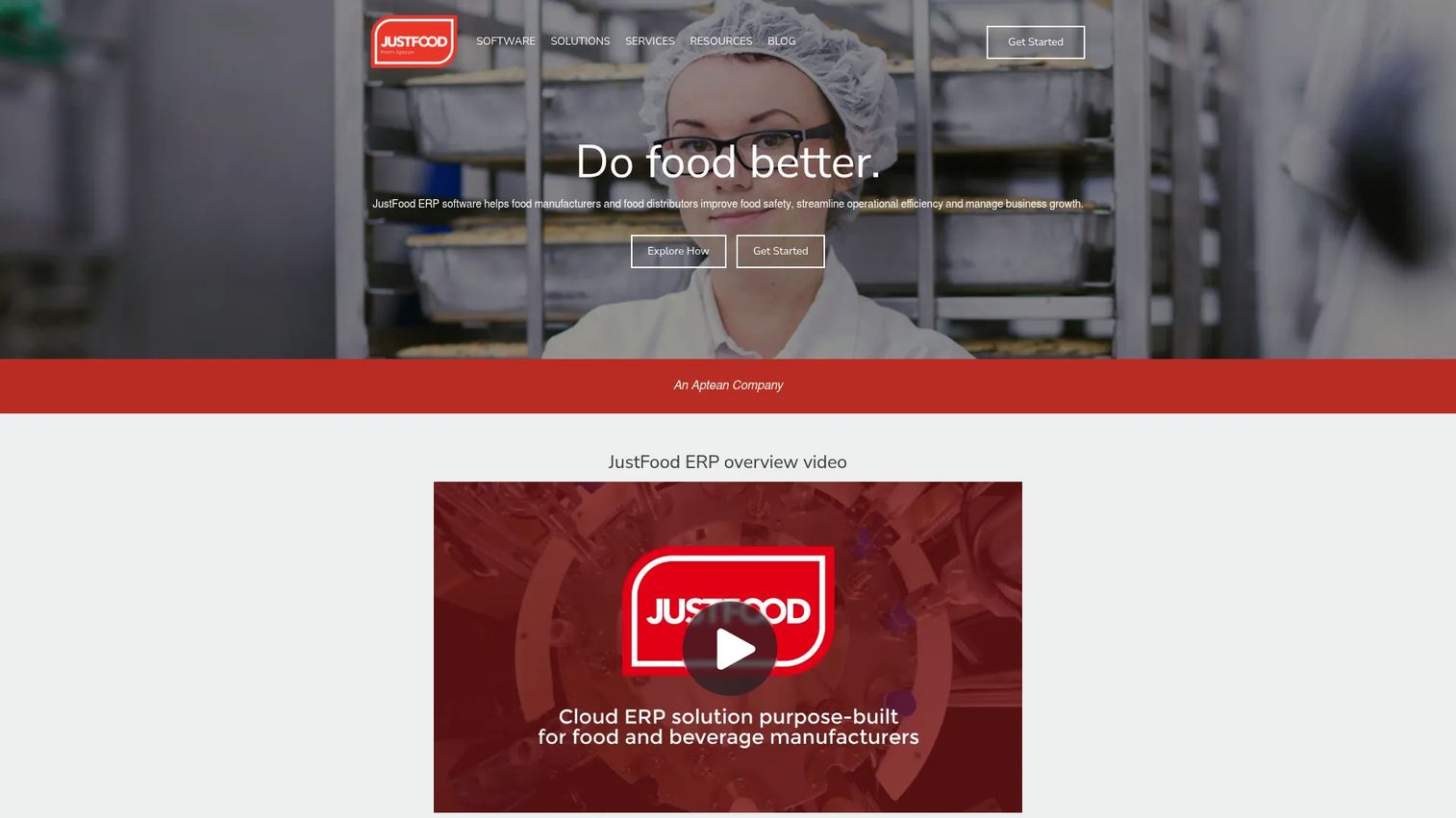
JustFood ERP is a cloud ERP built for food manufacturers and distributors. It covers production, food safety, quality, traceability, inventory, finance, and sales in one platform shaped around food manufacturing requirements. Features include lot tracking with expiration-date management, recall workflows, batch processing with yield reporting, R&D and recipe management, and nutritional information management alongside purchasing and preventative maintenance.
Best for: Food and beverage manufacturers that need ERP workflows built around safety, traceability, and production rather than adapted from a general manufacturing base.
Key features
- Food safety, quality, and traceability workflows
- Lot tracking with expiration-date management
- Batch processing, BOM management, and yield reporting
- Recipe and nutritional information management
- Finance, purchasing, sales, and inventory management
Why choose JustFood ERP: Choose it when food manufacturing fit matters more than broad ERP generality. Quality and traceability are operational workflows, not bolted-on modules, which reduces the configuration burden compared to extending a general-purpose ERP.
JustFood ERP pricing: Pricing is not shown on the JustFood website. The company requires prospective customers to request pricing, covering deployment, features, modules, and team size. Contact JustFood directly for a quote.
7. Aptean Food & Beverage ERP
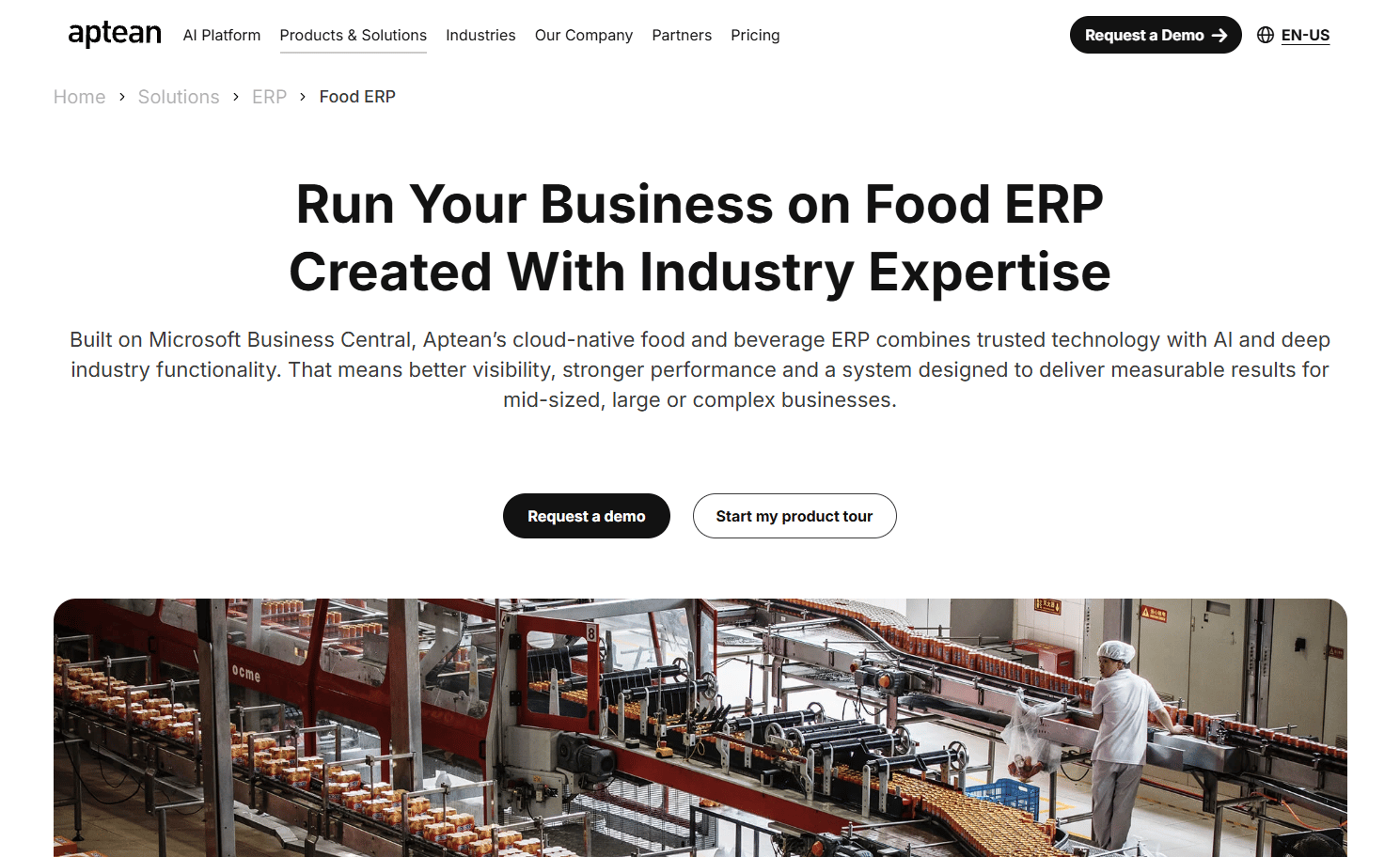
Aptean Food & Beverage ERP is a cloud-native ERP built on Microsoft Dynamics 365 Business Central for food and beverage processors, manufacturers, and distributors. It adds food industry-specific capabilities on top of the Business Central foundation: Bidirectional traceability, allergen and ingredient management, catch-weight handling, and recall support. The result is an industry-focused ERP that inherits Business Central's finance and operations depth while adding process manufacturing specifics.
Best for: Mid-to-large food and beverage businesses that need industry-specific traceability, compliance, and production capabilities with a Microsoft foundation.
Key features
- End-to-end bidirectional traceability and recall management
- Ingredient, allergen, and expiration management
- Catch-weight management with automatic scale-based calculations
- Food production planning and quality management
- Inventory control and supply chain operations
Why choose Aptean Food & Beverage ERP: Strong fit for food processors that want a specialized industry vendor rather than a general ERP with manufacturing plugins. The Microsoft foundation also eases staff adoption for teams already familiar with Dynamics.
Aptean Food & Beverage ERP pricing: Pricing routes through Aptean sales. Contact the team for software, implementation, hosting, and support costs.
G2 rating: 4.1/5
8. SAP Business One
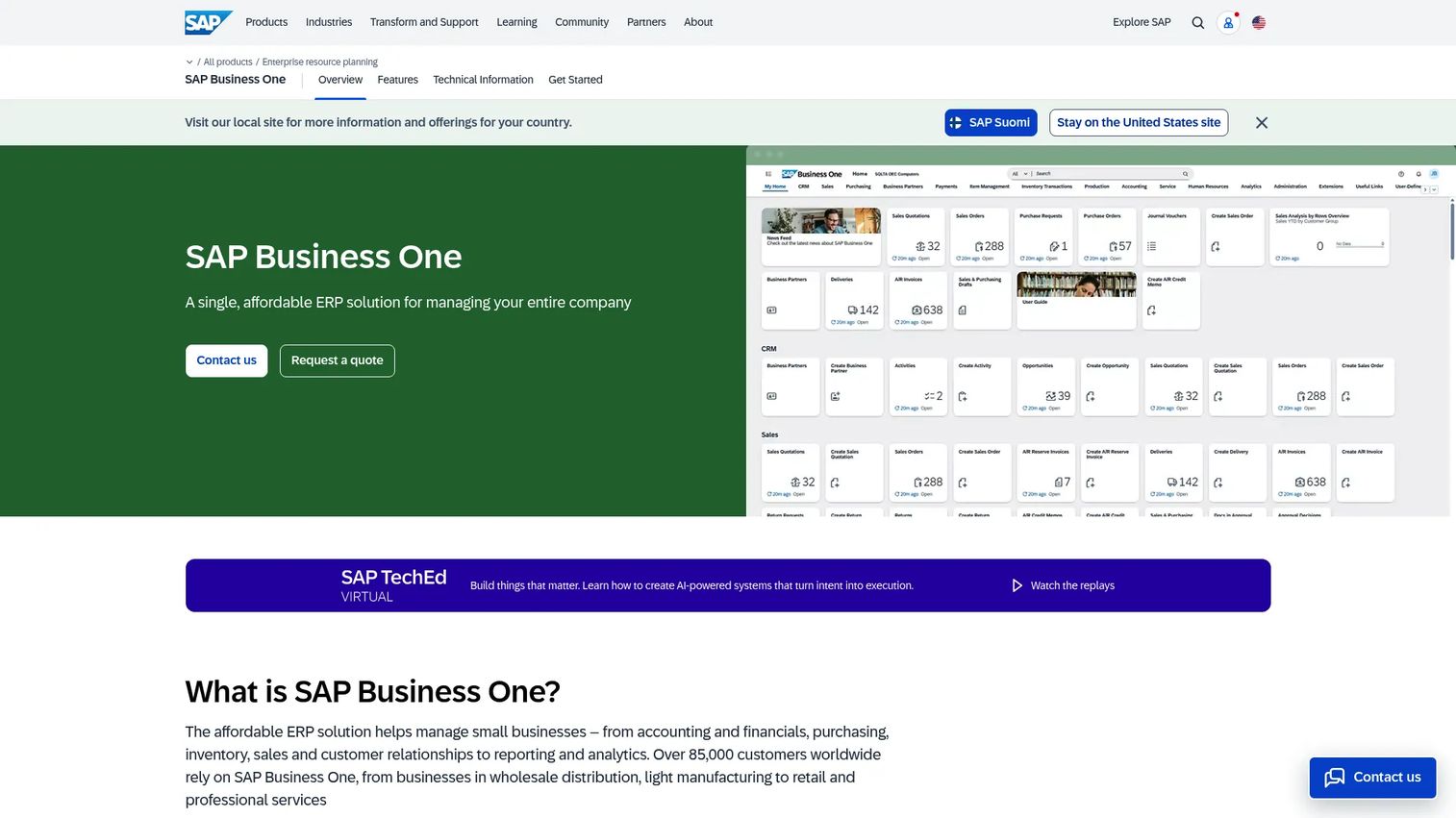
SAP Business One is an ERP for small and midsize businesses covering finance, purchasing, inventory, sales, and operations in one platform. It supports cloud and on-premise deployment, mobile access, and a broad partner ecosystem that provides industry-specific extensions including process manufacturing capabilities. For teams that want a recognizable ERP brand at a manageable scope and cost, Business One provides the foundation.
Best for: Growing manufacturers that want SAP-backed ERP with partner-led process manufacturing extensions and a path to larger SAP platforms over time.
Key features
- Financial management, accounting, banking, and reporting
- Sales, opportunity, and customer management
- Purchasing, inventory, and warehouse management
- Business intelligence dashboards and real-time analytics
- Cloud and on-premise deployment with mobile apps
Why choose SAP Business One: Best when the company wants a recognizable ERP foundation with strong partner availability and the option to extend toward more complex SAP environments as the business grows. Process manufacturers should validate batch, formula, and lot-depth requirements through partners during evaluation.
SAP Business One pricing: SAP directs buyers to contact sales or a partner for pricing. Partner-led implementations mean total costs include license, implementation, support, and any add-on modules. Ask for all-in first-year and three-year cost estimates.
G2 rating: 4.3/5
9. Acumatica Cloud ERP
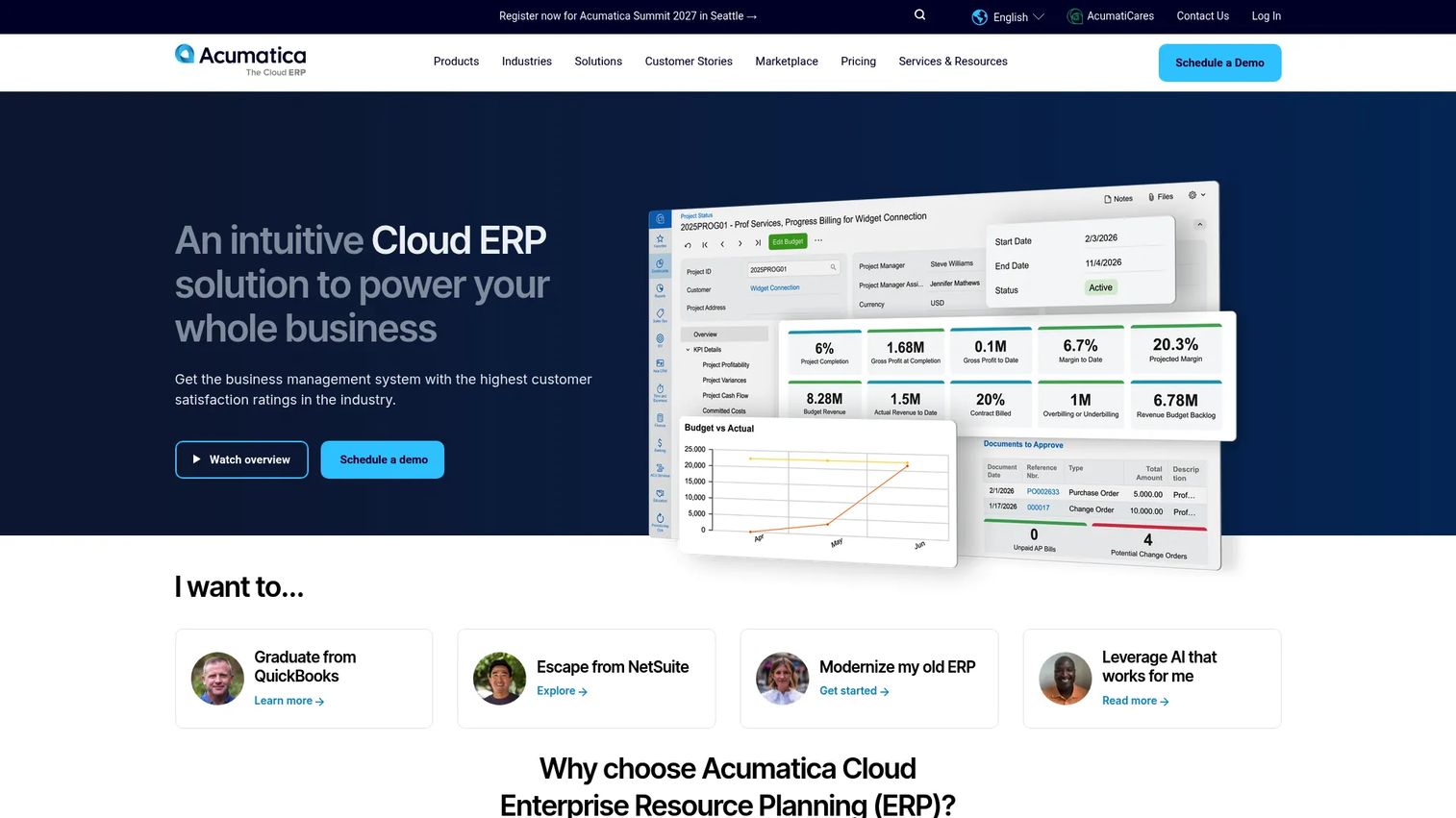
Acumatica Cloud ERP is a cloud ERP for growing small and midsize businesses with editions covering manufacturing, distribution, project accounting, and field service. The platform uses resource-based pricing rather than per-user seat fees, which means unlimited user access within a licensed resource tier. It has strong partner availability and a broad integration ecosystem, and it supports cloud, private cloud, and hybrid deployment.
Best for: Cloud-first mid-market manufacturers that want flexible ERP pricing, unlimited user access, and strong partner availability without enterprise-suite complexity.
Key features
- Cloud ERP with manufacturing and distribution editions
- Resource-based pricing with unlimited users
- Financial management and project accounting
- Inventory, sales order, and warehouse management
- CRM, reporting, dashboards, and business intelligence
Why choose Acumatica Cloud ERP: The unlimited-user model is a meaningful differentiator for manufacturing teams where shop-floor access, warehouse staff, and finance all need system visibility. Process manufacturers should validate recipe, formula, and lot-depth requirements during the evaluation.
Acumatica Cloud ERP pricing: Custom pricing based on applications, business usage, and deployment preferences. Contact Acumatica or a partner for resource tier, module, implementation, and support costs.
G2 rating: 4.5/5
10. NetSuite ERP
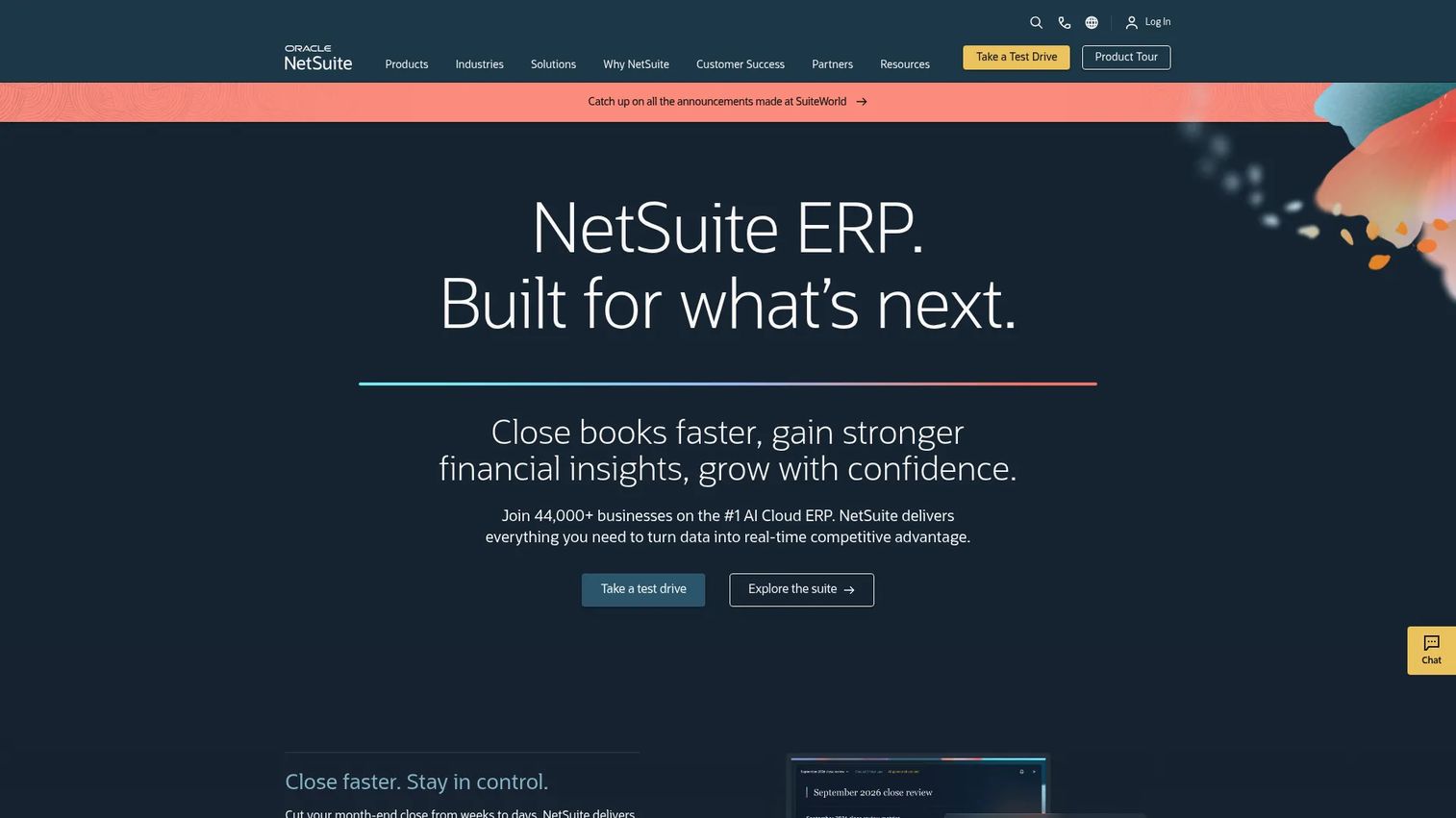
NetSuite ERP is a cloud ERP covering accounting, orders, inventory, procurement, supply chain, production, and warehouse management in one platform. It is widely used by scaling companies that need cloud financial control, multi-entity consolidation, and operational reporting under one license. Manufacturing depth comes through the production module and optional add-ons, so process manufacturers should validate batch, formula, and lot-traceability requirements against their specific needs during the evaluation.
Best for: Scaling companies that prioritize cloud financial maturity, multi-entity consolidation, and operational visibility alongside manufacturing.
Key features
- Cloud accounting and financial management
- Inventory, order, and warehouse management
- Global business management and multi-subsidiary consolidation
- Supply chain and procurement
- Enterprise performance management
Why choose NetSuite ERP: Strong fit when finance maturity and consolidated reporting across entities is as important as manufacturing operations. Teams that need heavy batch, formula, or compliance depth should evaluate module coverage carefully before committing.
NetSuite ERP pricing: Licensing includes an annual core-platform fee, optional modules, and user licenses, plus a one-time implementation fee. Contact NetSuite sales for a custom quote covering all components.
G2 rating: 4.1/5
11. Sage X3
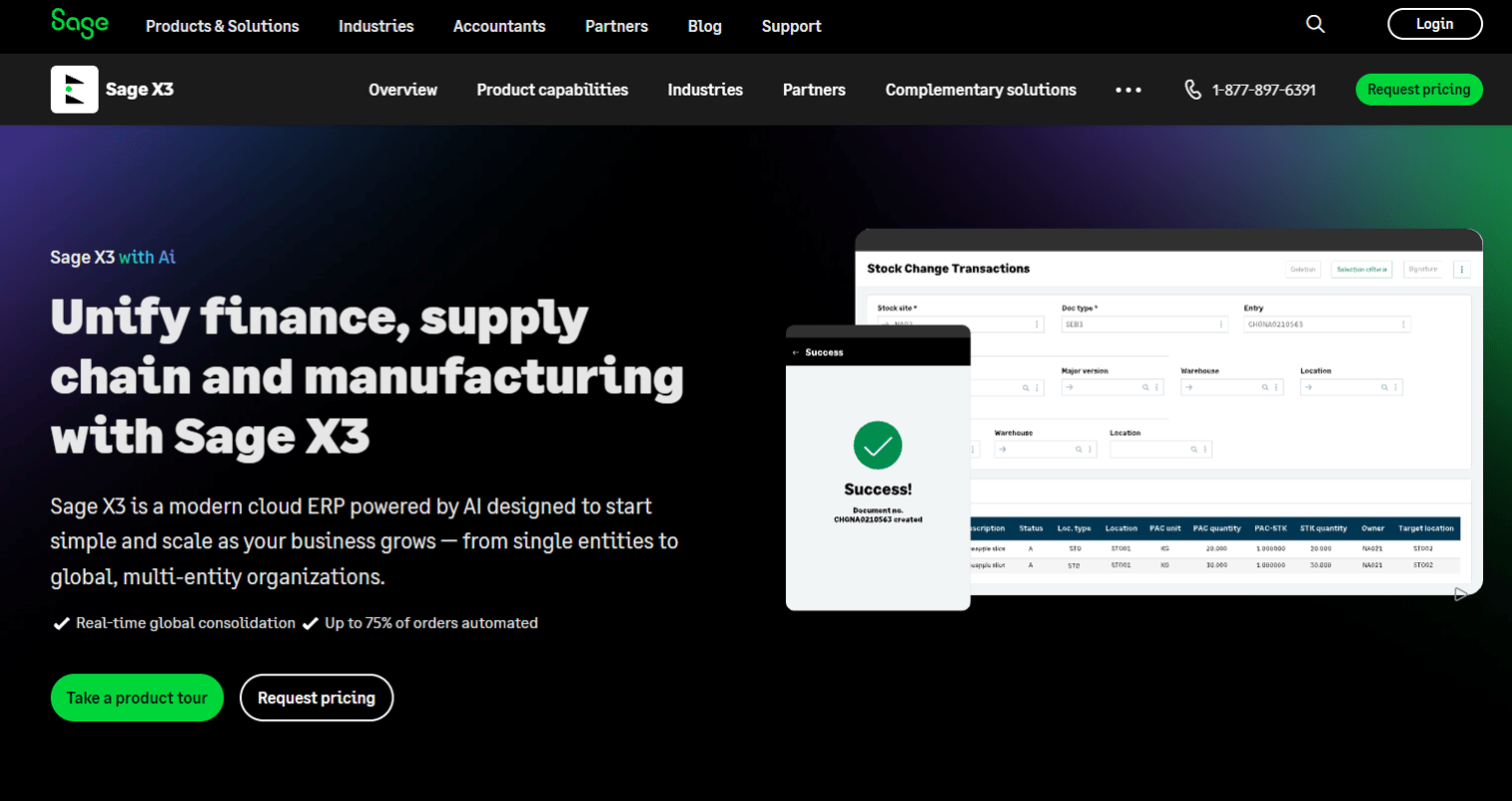
Sage X3 is a cloud ERP for mid-market manufacturers, distributors, and product-focused businesses with complex finance, supply chain, and production requirements. It covers financial management with multi-company and multicurrency support, production management with BOM planning, quality control, and traceability, and supply chain management including purchasing, inventory, and customer service. Embedded Sage Copilot adds conversational insights and automation across workflows.
Best for: Mid-market process manufacturers that need manufacturing depth, formula management, and multi-site operations without moving to a full enterprise mega-suite.
Key features
- Process manufacturing and BOM planning with shop-floor control
- Formula management, quality control, and traceability
- Multi-company, multicurrency, and multi-tax financial management
- Supply chain management including purchasing and inventory
- Configurable workflows, low-code tools, and open APIs
Why choose Sage X3: Good fit for teams with international, multi-entity, or multi-site operations that need more manufacturing depth than lighter ERP provides but do not yet need the overhead of a full enterprise platform. The advanced planning and scheduling software capabilities pair well with its production management depth.
Sage X3 pricing: Contact Sage sales for user, module, implementation, hosting, and support costs.
G2 rating: 4.5/5
12. Oracle Fusion Cloud ERP
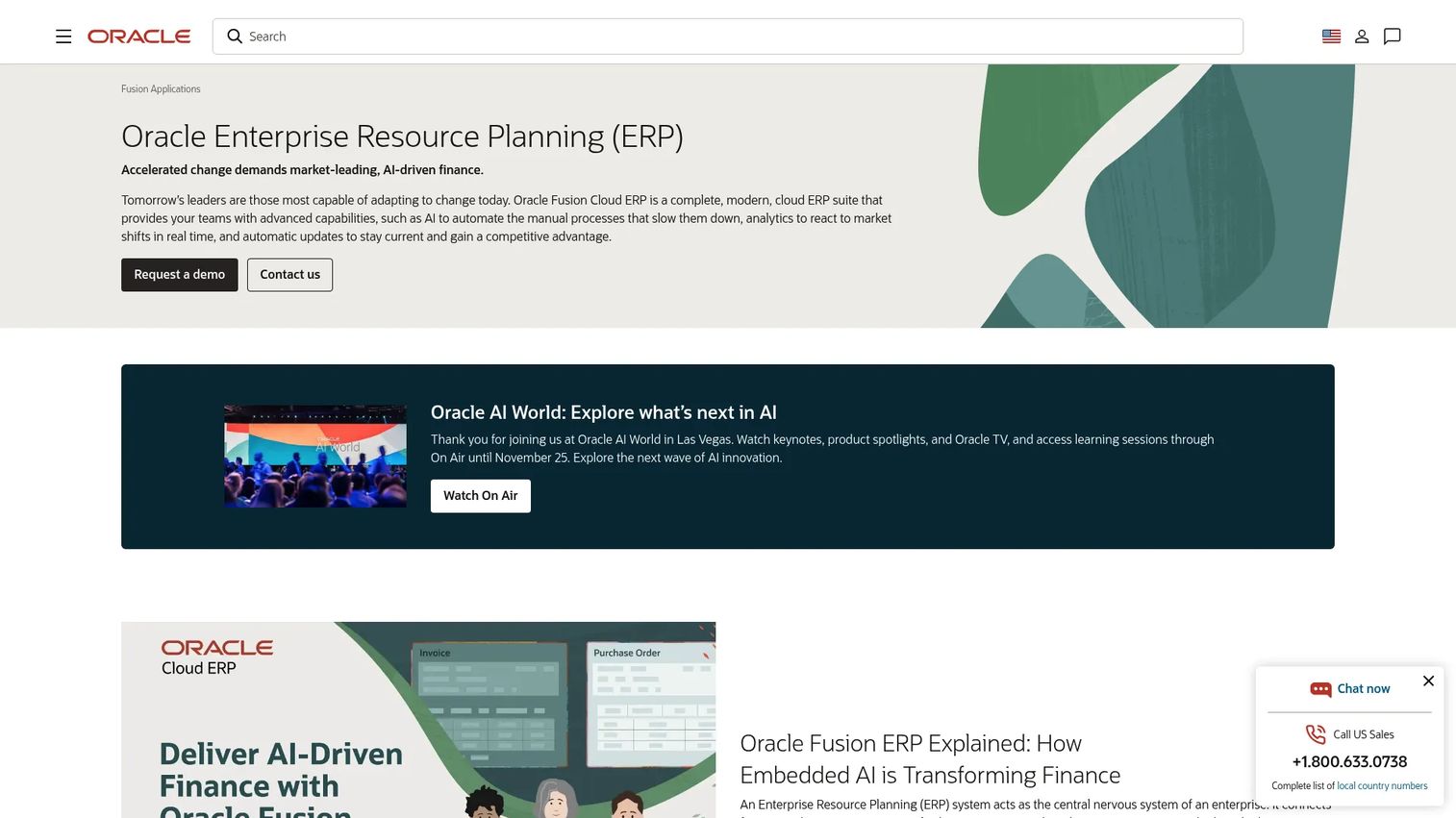
Oracle Fusion Cloud ERP is an enterprise cloud ERP suite covering financial management, procurement, project management, supply chain integration, analytics, and AI-driven automation. Large process manufacturers often pair Oracle ERP with Oracle's supply chain and manufacturing applications for end-to-end coverage. It is designed for organizations that need enterprise-grade governance, global financial control, and automatic software updates on a cloud-native platform.
Best for: Large enterprises that need cloud ERP standardization across finance, procurement, global operations, and reporting with enterprise-scale governance.
Key features
- Enterprise financials and accounting
- Procurement and supply chain integration
- Enterprise performance management
- Project management
- AI-driven automation and ERP analytics
Why choose Oracle Fusion Cloud ERP: Best suited for organizations with the resources to manage a larger ERP implementation and the need for enterprise-scale governance, compliance, and global finance. The standard subscription term is three years.
Oracle Fusion Cloud ERP pricing: The core ERP Cloud Service starts at $625 per month per hosted named user (minimum 10 users), billed monthly. The Self-Service edition is $20 per month per user (minimum 100 users). Implementation, taxes, and additional modules are priced separately.
Considerations when choosing process ERP software
Formula, batch, and lot depth
Before signing, run a live scenario that includes a formula revision, a supplier lot rejection, partial batch yield, a quality hold, and a finished goods lot trace. That sequence exposes whether the ERP handles process manufacturing natively or requires workarounds. Ask the vendor to show substitutions, by-product handling, and lot genealogy in the same session, not just batch creation.
Finance and operations alignment
The clearest test of ERP fitness is whether finance and production agree on the same numbers without manual reconciliation. Run a gross margin calculation from a completed batch, verify the inventory valuation method, and check how purchase variances flow to cost accounting. If those numbers require a spreadsheet to reconcile, the ERP has a configuration gap.
Implementation risk and ownership
ERP projects fail when process design, data migration, and internal ownership are unclear before go-live. Ask vendors who owns master data setup, what the go-live criteria are, and what the first 90 days include. Mid-market companies using the aerospace ERP software selection framework often apply the same phased ownership model to process ERP evaluations. Get references from manufacturers with the same production model, not just the same industry.
Deployment model and integration fit
Compare cloud, on-premise, and hybrid requirements against plant connectivity, security review, and integration needs. Document which systems need to connect: Warehouse management, ecommerce, EDI, quality tools, payroll, and production equipment. The integration scope often drives implementation cost as much as the software license.
Vendor and partner ecosystem health
For mid-market teams, the implementation partner can carry more weight than the software itself. Check the partner's depth in your manufacturing model, not just your industry. Ask for references from similar-sized companies that went live in the past 18 months, and ask specifically what went wrong and how the vendor responded.
Conclusion
Process ERP evaluation is not a feature checklist exercise. The real test is whether the system holds together when a formula changes, a supplier lot fails, a batch yields short, quality places a hold, and finance still needs an accurate margin number by end of week.
For process manufacturing depth, Deacom ERP, BatchMaster ERP, and Sage X3 are the strongest options. Food and beverage teams should evaluate JustFood ERP and Aptean Food & Beverage ERP, both of which are built around food-specific traceability and recall workflows. QAD Adaptive and Infor M3 suit larger organizations with global manufacturing complexity. Microsoft Dynamics 365 Business Central, SAP Business One, Acumatica, and NetSuite are strong mid-market ERP foundations for teams where finance and operations integration matters more than process-specific depth.
Shortlist three or four tools, then run the same production scenario through each vendor demo. Use a real batch from your operation, not the vendor's sample data.
Start your journey with Guideflow today!
FAQs
Process ERP software is enterprise resource planning software built for manufacturers that produce goods through formulas, recipes, batches, or variable-yield production. Unlike discrete ERP, it connects formula management, batch production, lot traceability, quality workflows, and financial costing in one operating record.
Process ERP supports formulas, recipes, batch tickets, co-products, by-products, potency management, expiration tracking, and lot genealogy. Discrete manufacturing ERP focuses on assemblies, parts, bills of materials, routings, and serial-numbered products. Process manufacturers need variable-yield MRP and lot-level costing that discrete systems typically cannot handle without significant customization.
Food and beverage, chemicals, cosmetics, nutraceuticals, cannabis, paints and coatings, specialty materials, and pharmaceuticals-adjacent manufacturing all rely on process ERP. Any industry where the production output is a mixture, formula, or batch rather than an assembled part benefits from process-specific ERP capabilities.
Total cost includes software licensing or subscription, implementation services, data migration, integrations, training, support, and internal team time. Most process ERP vendors price by quote. Ask every vendor for a first-year total cost and a three-year total cost of ownership, including all implementation and support components. For apparel ERP software and other adjacent categories, the same total-cost framing applies.
Recipe and formula management, batch production workflows, lot traceability, quality inspections and holds, inventory costing with expiration and catch weight, compliance documentation, production planning with variable yields, and finance integration. The specific priorities shift by industry: Food manufacturers weight traceability and recall speed; chemical manufacturers weight formulation version control; nutraceutical manufacturers weight potency and compliance records.
Cloud ERP works well for most process manufacturers, but fit depends on plant connectivity, integration requirements, data residency needs, and security review scope. Some regulated environments require on-premise or private-cloud deployment. Compare cloud, on-premise, and hybrid options based on your operational constraints and IT security requirements before ruling any model out.
Run the same production scenario through every finalist. Include a formula change, a purchase order receipt, a batch production run, a quality hold, a finished goods lot, a shipment, a recall trace, and a margin report. That sequence tests the entire operational thread. Vendors who demo only happy-path workflows are signaling a configuration gap. Also check advanced planning and scheduling software compatibility if production scheduling is a bottleneck in your current operation.
Yes, but avoid overbuying. Small manufacturers should look for the smallest system that handles their real batch, lot, quality, and finance requirements without creating a two-year implementation project. BatchMaster ERP and Business Central with manufacturing extensions are designed for smaller teams. The goal is a system your VP Ops can maintain without dedicated IT staff after go-live.