

Your reps dial 60 numbers and have four real conversations. The rest hit voicemail, dead lines, or a hang-up after "hello." Hours burn. Pipeline stalls. The CRM fills with half-logged attempts nobody can coach against.
Most teams blame the lead list. Sometimes that's true. More often, the problem is the system underneath the calls. Manual dialing wastes the seconds between conversations. Disconnected telephony means call outcomes never reach the CRM cleanly. And without conversation data, managers coach on gut feel instead of what actually happened on the line.
The market behind these tools is growing fast. The global call center market was valued at $352.4 billion in 2024 and is projected to reach $500.1 billion by 2030, per Grand View Research data cited by Ringly in 2026. Gartner predicts conversational AI will reduce contact center agent labor costs by $80 billion in 2026. The economics of how reps reach prospects are shifting under your feet.
For a sales enablement or RevOps leader, the right outbound call center software is not just a dialer. It is the layer that controls rep execution, feeds coaching, keeps you compliant, and ties call activity to win rate and cycle time. Pick wrong and you add another tab nobody adopts. Pick right and ramp gets shorter, conversations get more consistent, and your pipeline math finally adds up.
What's inside
This guide is for sales enablement managers, RevOps leads, and SDR or AE managers building outbound rep workflows. It ranks 10 outbound call center software tools and explains which fits which team.
We selected and ordered tools on four criteria that matter to an enablement buyer:
- Dialer automation depth: predictive, progressive, and preview modes that lift live-conversation rates.
- CRM and integration fit: clean call data sync so coaching and pipeline reporting work in-workflow.
- Compliance controls: TCPA compliance requirements for outbound calling, DNC scrubbing, and consent management for US outbound.
- Analytics and coaching: conversation intelligence, call scoring, and supervisor assist that drive ramp and consistency.
Pricing and G2 ratings were verified against vendor pages and G2 listings in June 2026 and may change.
TL;DR
Short on time? Here are the decision shortcuts by team type.
- Best for enterprise omnichannel: NICE CXone, for AI-driven engagement, predictive dialing, and workforce coaching at scale.
- Best for high-volume blended outbound: Five9, for predictive, progressive, and preview dialers plus TCPA tooling.
- Best for AI coaching and CX automation: Talkdesk, for AI agents and interaction analytics across voice and digital.
- Best for SMB and mid-market outbound sales: CloudTalk, for power and smart dialers with fast CRM setup.
- Best for real-time AI sales coaching: Dialpad, for live transcription, call summaries, and AI assist.
- Best for CRM-native outbound teams: Aircall, for tight HubSpot, Salesforce, and Zendesk integrations with a Power Dialer.
- Best for programmable, custom workflows: Twilio Flex, for developer-flexible outbound and CRM connectors.
What is outbound call center software?
Outbound call center software is a cloud platform that automates and manages agent-initiated calls to prospects and customers for sales, lead generation, surveys, collections, and notifications. It replaces manual dialing and disconnected phone systems with automated dialers, call routing, compliance controls, and analytics that sync to your CRM.
An outbound call center solution typically bundles the following:
- Dialer automation: predictive dialer, progressive dialer, and preview dialer modes that match call pace to agent availability and compliance risk. See our roundup of the best auto dialer software for a deeper look at dialer modes.
- CRM integrations: two-way sync with Salesforce, HubSpot, Zendesk, and others so call outcomes update records automatically. The right CRM software keeps your pipeline data clean.
- Call recording and monitoring: listen, whisper, and barge for live coaching and quality review.
- Analytics and reporting: connect rates, talk time, conversion, and agent performance dashboards.
- AI voice agents and conversation intelligence: transcription, sentiment, topic detection, and real-time agent assist.
- TCPA and DNC compliance controls: Do Not Call scrubbing, consent management, and call-attempt caps.
- Local presence and caller ID: match outbound numbers to the prospect's area code to lift answer rates.
- Voicemail drop and agent scripting: pre-recorded messages and on-screen talk tracks with screen-pop.
A quick distinction: inbound software handles customer-initiated calls, outbound contact center software handles agent-initiated calls, and blended platforms do both from one queue. Most modern outbound calling software is part of a broader contact center as a service (CCaaS) suite. For teams measuring call activity, pairing this with outbound call tracking software closes the reporting loop.
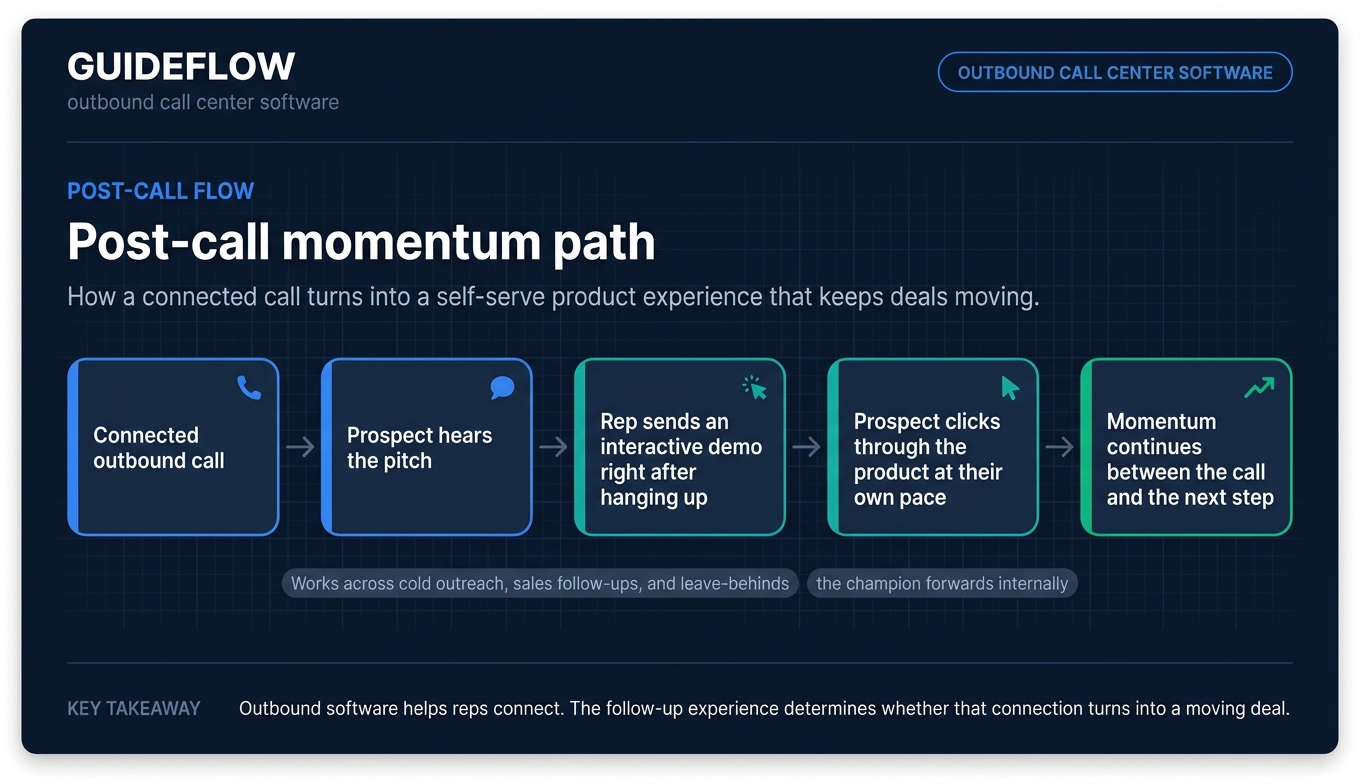
One thing outbound calling software does not do on its own: show the product. After a connected call, reps still need a way for the prospect to experience what they pitched. Many teams pair calls with interactive demos, so a prospect can click through the product at their own pace right after hanging up, instead of waiting for a scheduled meeting. That keeps momentum between the call and the next step, and it works across cold outreach, sales follow-ups, and leave-behinds the champion forwards internally.
When to use outbound call center software
Not every team needs a full outbound contact center. Here is when the investment pays off.
Scale outbound sales prospecting
When SDRs and AEs dial high volumes daily, manual calling caps how many conversations they can have. A predictive or progressive dialer removes the dead time between calls and improves speed-to-lead on inbound interest. The result is more live conversations per rep hour, which directly affects meetings booked and pipeline created. Many teams layer dialers with sales engagement tools to orchestrate multichannel outreach.
Run surveys, research, and customer notifications
Outbound is not only sales. Teams run market research, satisfaction surveys, appointment reminders, collections, and proactive outbound customer service. Outbound call center services and software handle these non-sales campaigns with the same dialer automation, scripting, and compliance controls. One platform can power both revenue and operational outreach.
Standardize rep execution across a growing team
This is the enablement angle. When you hire fast, new reps ramp slowly without consistent scripts and coaching. Outbound calling software with conversation intelligence, call scoring, and supervisor assist makes execution repeatable. You can measure talk-track adherence, coach against real recordings, and shorten time-to-productivity across cohorts. Dedicated sales coaching software can deepen this further.
Comparison table for outbound call center software
The table below ranks the 10 best outbound call center software tools by relevance to a sales enablement buyer. Read it through two lenses. First, integration fit: does call data flow into your CRM cleanly enough that coaching and pipeline reporting work without manual cleanup? Second, coaching and analytics depth: does the platform give you conversation intelligence and call scoring, not just call logs?
Pricing and G2 ratings were verified in June 2026 and may change. Many enterprise tiers are quote-based, so treat starting prices as a floor, not a final number.
| # | Product | Intent | Key use case | Pricing | G2 rating |
|---|---|---|---|---|---|
| 1 | NICE CXone | Enterprise omnichannel | AI-driven outbound and CX at scale | From $110/agent/mo | 4.3/5 |
| 2 | Five9 | High-volume blended | Predictive dialing with TCPA tools | From $119/seat/mo | 4.1/5 |
| 3 | Talkdesk | AI-first CCaaS | AI agents and interaction analytics | Free to start, then quote | 4.4/5 |
| 4 | CloudTalk | SMB/mid-market outbound | Power and smart dialers, CRM sync | From €19/user/mo | 4.4/5 |
| 5 | Dialpad | AI-native coaching | Real-time AI coaching and transcription | From $15/user/mo | 4.4/5 |
| 6 | RingCentral | UCaaS + outbound | Consolidate calling and contact center | From $19.99/user/mo | 4.3/5 |
| 7 | Aircall | CRM-native outbound | Power Dialer with tight CRM integrations | From $30/license | 4.4/5 |
| 8 | Nextiva | Unified voice + outbound | Blended inbound/outbound for SMBs | From $15/user/mo | 4.5/5 |
| 9 | Genesys Cloud CX | Enterprise + WEM | Omnichannel outbound with workforce engagement | From $75/user/mo | 4.4/5 |
| 10 | Twilio Flex / Voice | Programmable | Custom outbound workflows via APIs | Free trial, then $35/user/mo | 4.1/5 |
1. NICE CXone
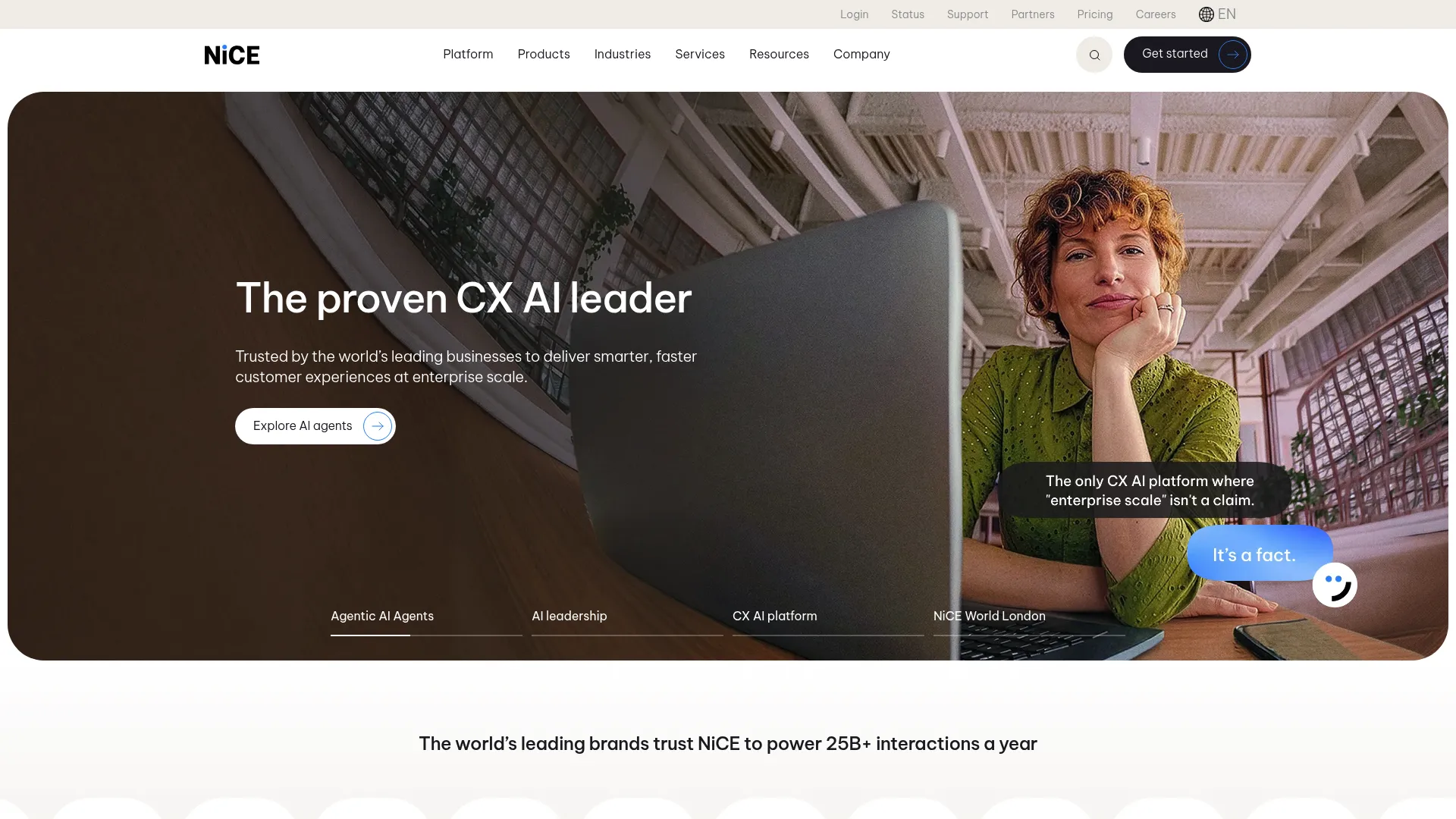
NICE CXone is an AI-powered customer engagement platform for orchestrating human and AI agents at enterprise scale. It combines predictive dialing, omnichannel routing, conversation intelligence, and workforce engagement in one suite. For enablement leaders running large outbound and CX teams, it centralizes execution, coaching, and analytics under a single system.
Best for: Enterprises that need an AI-first cloud contact center for omnichannel outbound, automation, workforce tools, and analytics.
Key strengths
- AI engagement orchestration: routes and automates outbound and digital interactions across the full service journey.
- Agent and supervisor workspaces: prebuilt dashboards and BI reports give managers real-time visibility for coaching.
- Omnichannel routing: unifies voice and digital channels so outbound campaigns and inbound coverage share one platform.
Why choose NICE CXone: If you run a large team where consistency and coaching scale matter more than raw setup speed, CXone gives you the depth. The workforce engagement and analytics layer is built for enablement managers who need to tie call activity to performance, not just dial more numbers.
NICE CXone pricing: NICE publishes USD pricing on a tiered, usage-based model billed monthly in arrears. The Omnichannel Suite starts at $110 per agent per month, with Essential Suite at $135, Core Suite at $169, Complete Suite at $209, and Ultimate Suite at $249 per agent per month (plus a per-session option). NICE holds a 4.3/5 rating on G2.
2. Five9
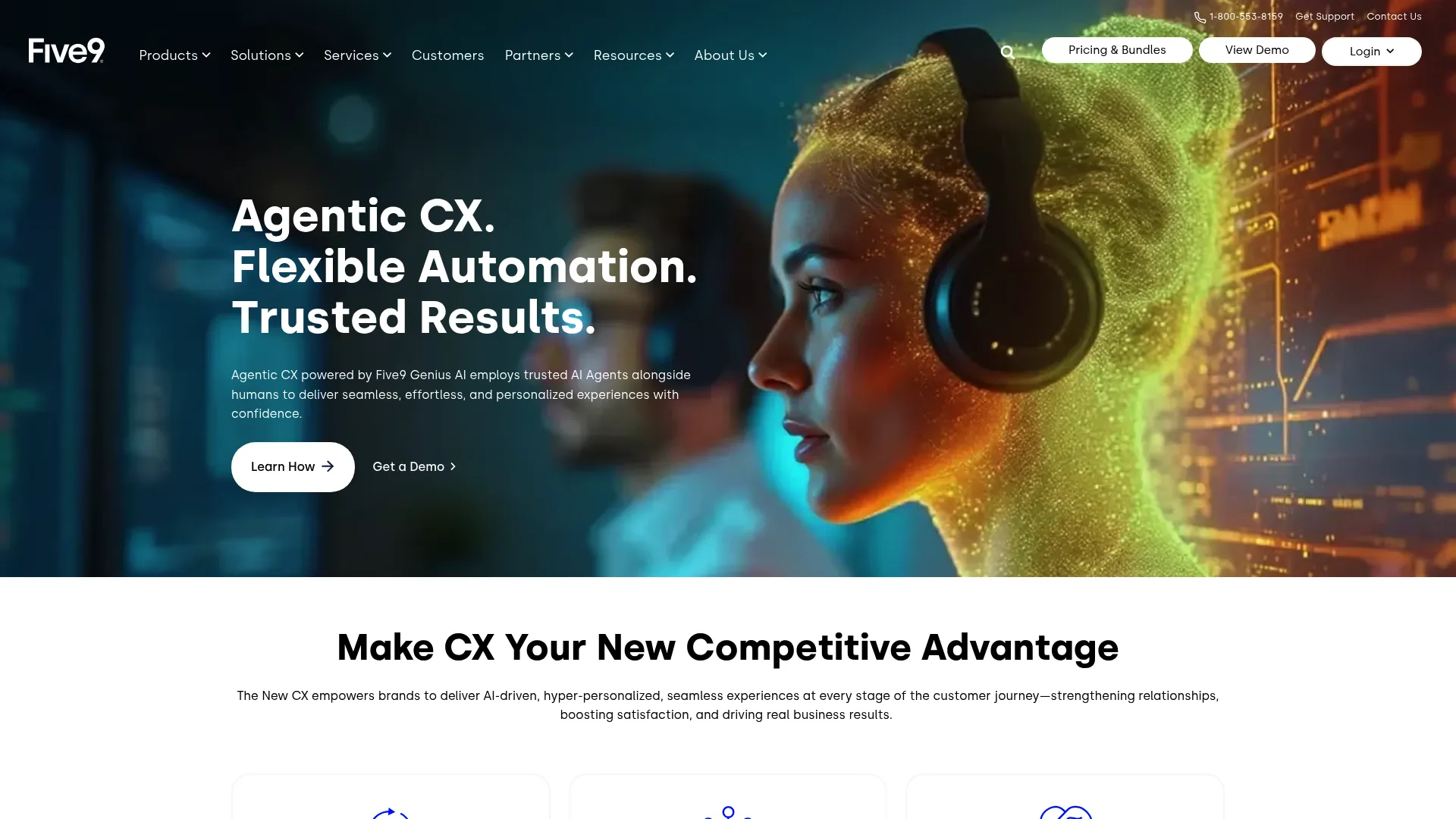
Five9 provides an Intelligent CX Platform for cloud contact centers, combining AI, digital engagement, workforce engagement, and analytics. Its outbound suite includes predictive, progressive, and preview dialers plus TCPA and DNC tooling. For high-volume outbound teams, Five9 balances dialing speed with compliance controls that reduce risk.
Best for: Enterprise and mid-market contact centers running high-volume blended outbound that needs strong compliance tooling.
Key strengths
- Multiple dialer modes: predictive, progressive, and preview dialing match call pace to compliance risk and campaign type.
- AI agent assist and analytics: AI Summaries, Live Transcription, and AI Insights surface coachable moments from calls.
- Workforce engagement options: WEM modules support quality monitoring and agent performance across cohorts.
Why choose Five9: Teams dialing at volume into US lists need compliance baked in, not bolted on. Five9 pairs aggressive predictive dialing with TCPA and DNC controls, plus the CRM adapters and reporting that keep call outcomes flowing into your pipeline view.
Five9 pricing: Five9 lists per-concurrent-user pricing with a 50-seat minimum. The Digital plan starts at $119 per seat per month and Core at $159 per seat per month. Plus, Pro, and Enterprise tiers are quote-based and add advanced AI and workforce engagement. Five9 holds a 4.1/5 rating on G2.
3. Talkdesk
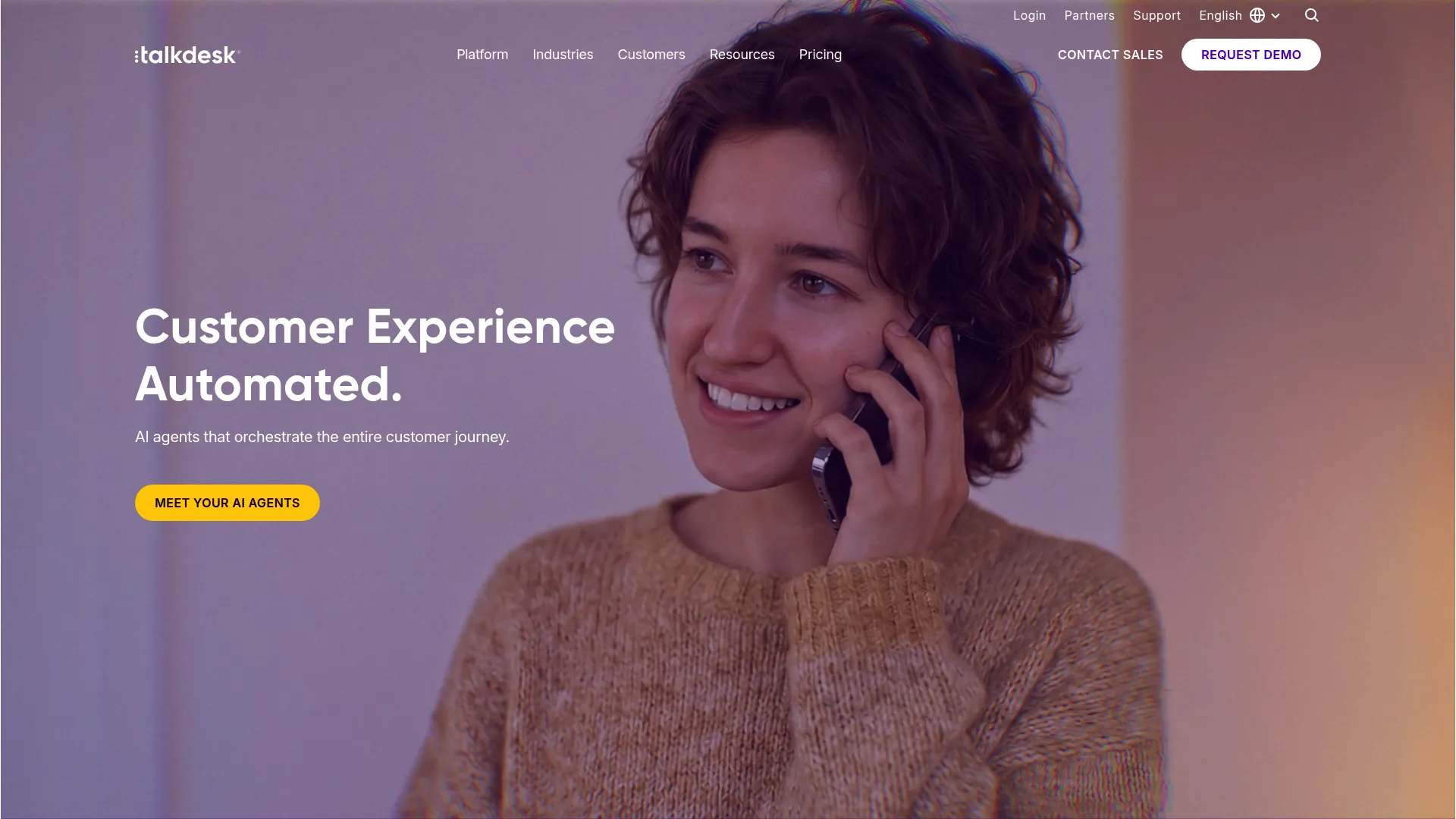
Talkdesk is a customer experience automation platform that uses specialized AI agents to automate service, sales, and support workflows. It layers agent assist, AI virtual assistants, and interaction analytics over voice and digital channels. For teams that want AI coaching built into the outbound motion, Talkdesk leads with automation.
Best for: Organizations automating contact center and CX workflows with AI agents across voice and digital channels.
Key strengths
- AI agent assistance: next-best-action prompts, knowledge-base answers, and automatic interaction summaries support reps live.
- Agentic AI virtual assistants: voice and digital assistants resolve tasks and trigger workflows without an agent.
- Interaction and quality analytics: AI transcribes and scores calls for topic, intent, and sentiment, fueling coaching.
Why choose Talkdesk: If your enablement strategy leans on AI to surface coaching moments and standardize talk tracks, Talkdesk is built around that. The analytics and agent assist reduce the manual review managers usually do to find which calls to coach. For more on this category, see the best AI sales tools.
Talkdesk pricing: Talkdesk Express is free to start, including 25 licenses and $100 in free credit for businesses under 50 employees, with no commitment required. Its AI-powered contact center solutions are quote-based, so request pricing for larger or more advanced deployments. Talkdesk holds a 4.4/5 rating on G2.
4. CloudTalk
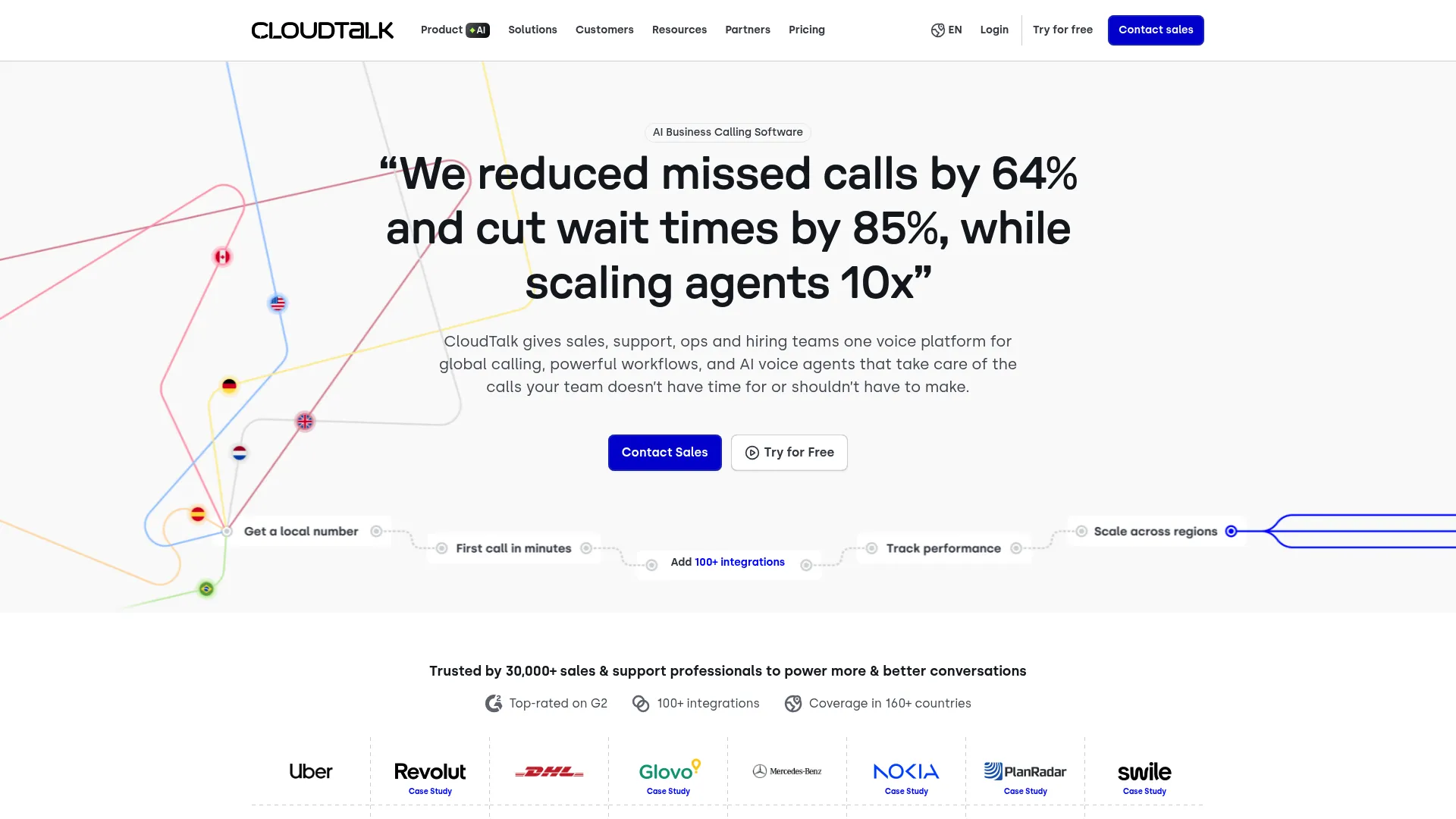
CloudTalk is an AI business calling platform for sales, support, and operations teams, combining global calling, workflows, and integrations. It offers click-to-call, a web dialer, a smart dialer, and preview, power, and parallel dialer add-ons. For SMB and mid-market outbound sales, it pairs dialer depth with fast CRM setup.
Best for: Sales and support teams that need cloud calling, routing, and CRM and helpdesk integrations across international markets.
Key strengths
- Outbound dialer range: click-to-call, web dialer, smart dialer, plus preview, power, and parallel dialer add-ons for any call volume.
- Call routing controls: IVR, queues, a call flow designer, and smart condition-based routing keep campaigns organized.
- Analytics and integrations: call recording, dashboards, and CRM and helpdesk integrations sync outcomes for reporting.
Why choose CloudTalk: For a growing sales team that wants outbound power without enterprise setup overhead, CloudTalk hits the balance. The dialer add-ons let you scale call pace as volume grows, and the CRM integrations keep your pipeline data clean.
CloudTalk pricing: CloudTalk publishes per-user plans billed annually. Lite starts at €19 per user per month, Starter at €25, Essential at €29, and Expert at €49 per user per month, with monthly options shown on the pricing page. A 14-day trial is available. CloudTalk holds a 4.4/5 rating on G2.
5. Dialpad
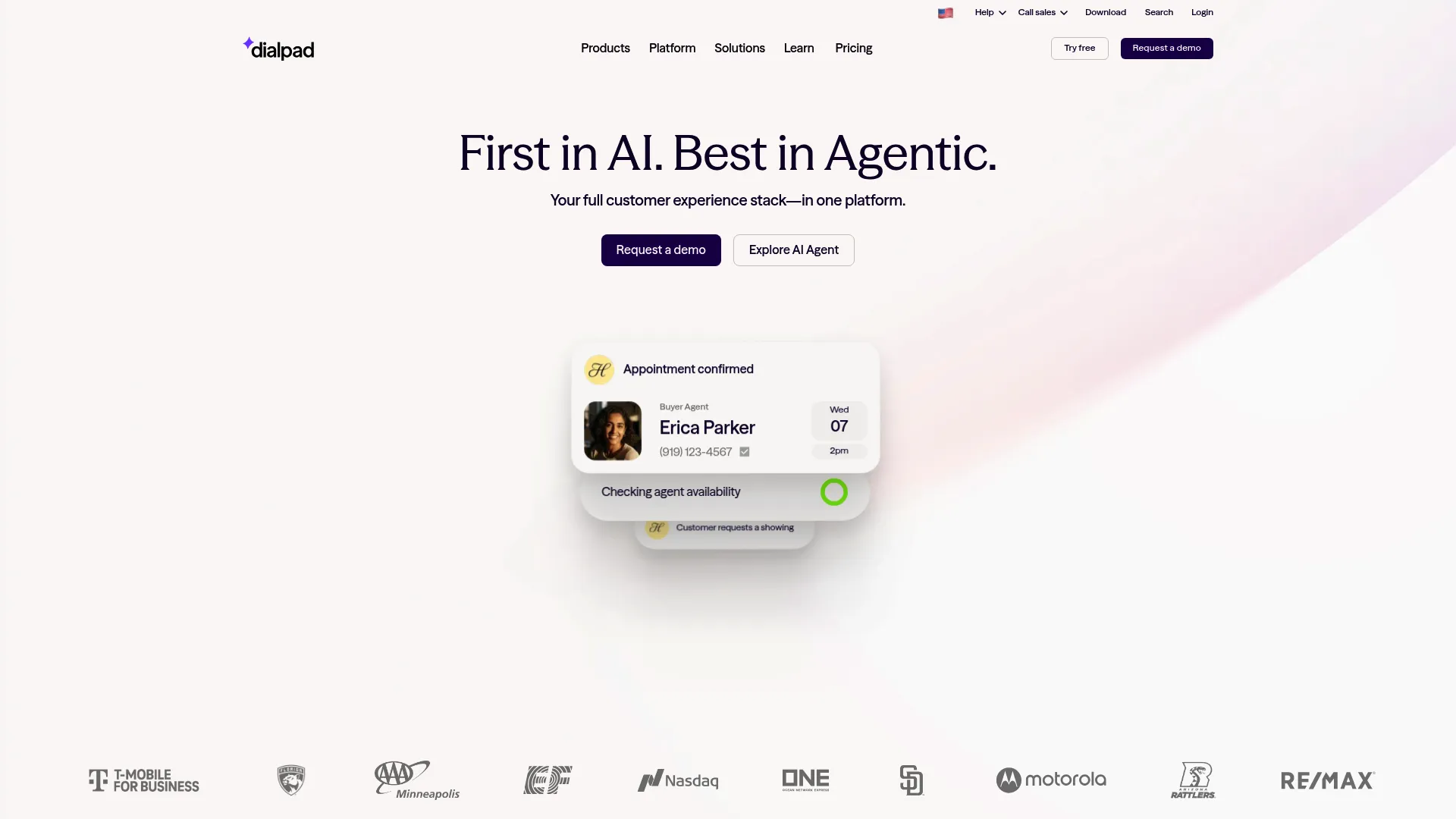
Dialpad is an agentic AI-powered contact center and communications platform that combines voice, messaging, and video in one workspace. Real-time transcription, call summaries, and automated action items make it strong for AI-driven outbound coaching. For managers who coach on live conversations, Dialpad surfaces the data automatically.
Best for: Teams that want AI-powered business calling, messaging, and customer communications with real-time coaching in one platform.
Key strengths
- Real-time AI coaching: live call transcription and summaries give managers and reps instant feedback during outbound calls.
- Automated action items: Dialpad captures next steps and analytics so call outcomes reach the CRM without manual logging.
- Broad integrations: connects with Salesforce, HubSpot, Zendesk, Microsoft Teams, Google Workspace, and more.
Why choose Dialpad: If real-time coaching is your ramp lever, Dialpad's AI does the heavy lifting. New reps get live guidance on calls, and managers spend less time reviewing recordings because summaries and analytics surface the moments that matter.
Dialpad pricing: Dialpad Connect shows three plans. Standard starts at $15 per user per month and includes HD calls plus real-time transcripts and call summaries. Pro at $25 per user per month adds CRM integrations and 24/7 support. Enterprise is quote-based with SSO and advanced controls. A 14-day free trial is available. Dialpad holds a 4.4/5 rating on G2.
6. RingCentral
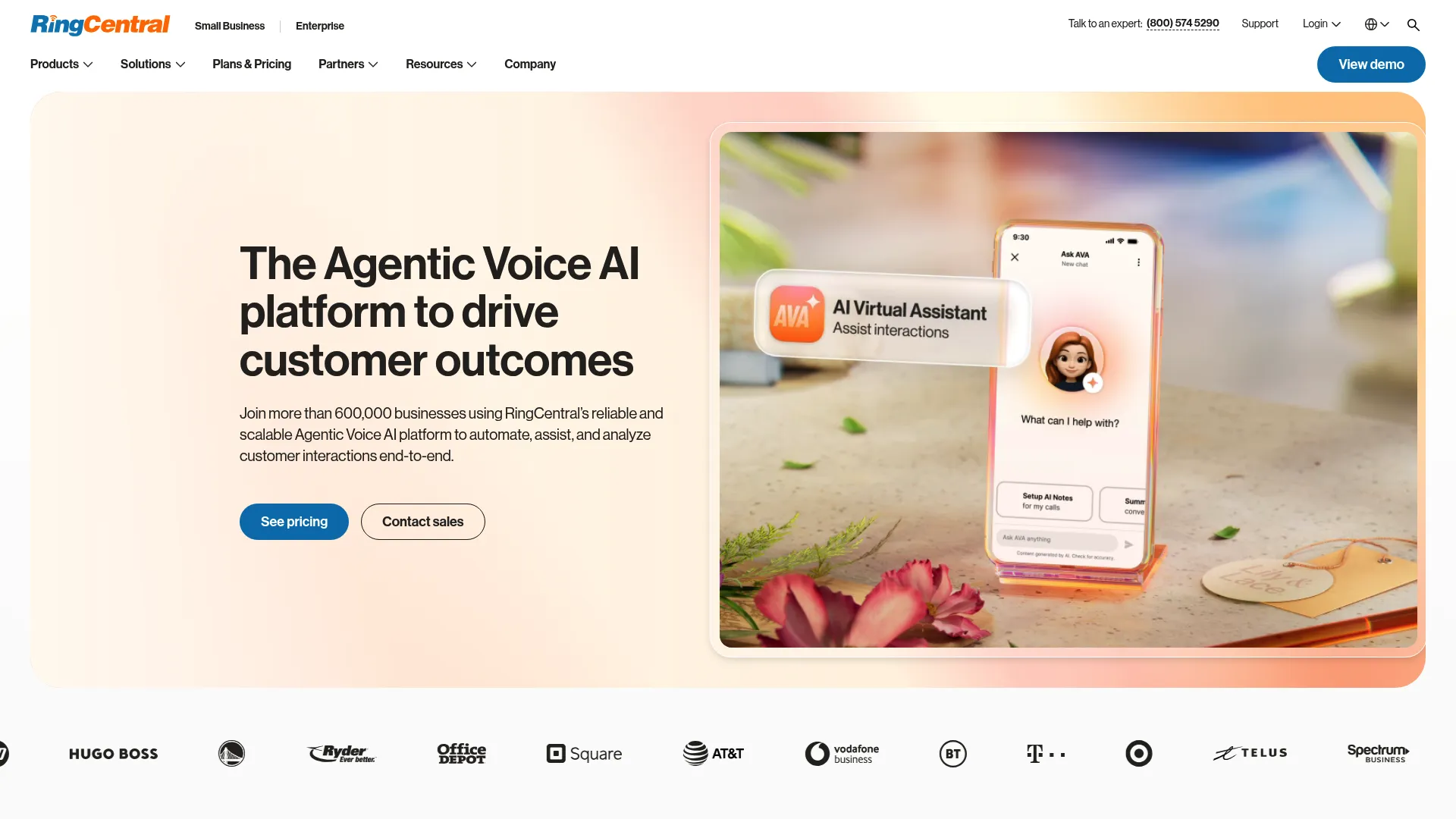
RingCentral provides an AI-powered business communications platform spanning phone, SMS, video, messaging, fax, and contact center. Its RingEX and contact center products support outbound dialing, CRM integrations, and AI-assisted calling. For teams consolidating UCaaS and outbound into one vendor, RingCentral reduces tool sprawl.
Best for: Businesses that need unified cloud calling, messaging, video, and outbound contact center across distributed teams.
Key strengths
- Unified communications: calls, video meetings, messaging, SMS, and fax live in one app, cutting overlapping tools.
- AI calling features: call notes, transcription, and writing assistance support reps during and after outbound calls.
- Business integrations: connects with Salesforce, Google, Microsoft Teams, Zendesk, and other tools reps already use.
Why choose RingCentral: If you are consolidating a fragmented stack, RingCentral covers everyday communications and outbound contact center under one roof. That single-vendor footprint simplifies admin and keeps call data in fewer places, which helps CRM hygiene.
RingCentral pricing: RingEX plans are per user per month with monthly and annual options. Essentials starts at $19.99, Standard at $24.99, Premium at $44.99, and Ultimate at $59.99 per user per month, with annual billing saving up to 33%. Contact center pricing is quote-based. A 14-day free trial is available. RingCentral holds a 4.3/5 rating on G2.
7. Aircall
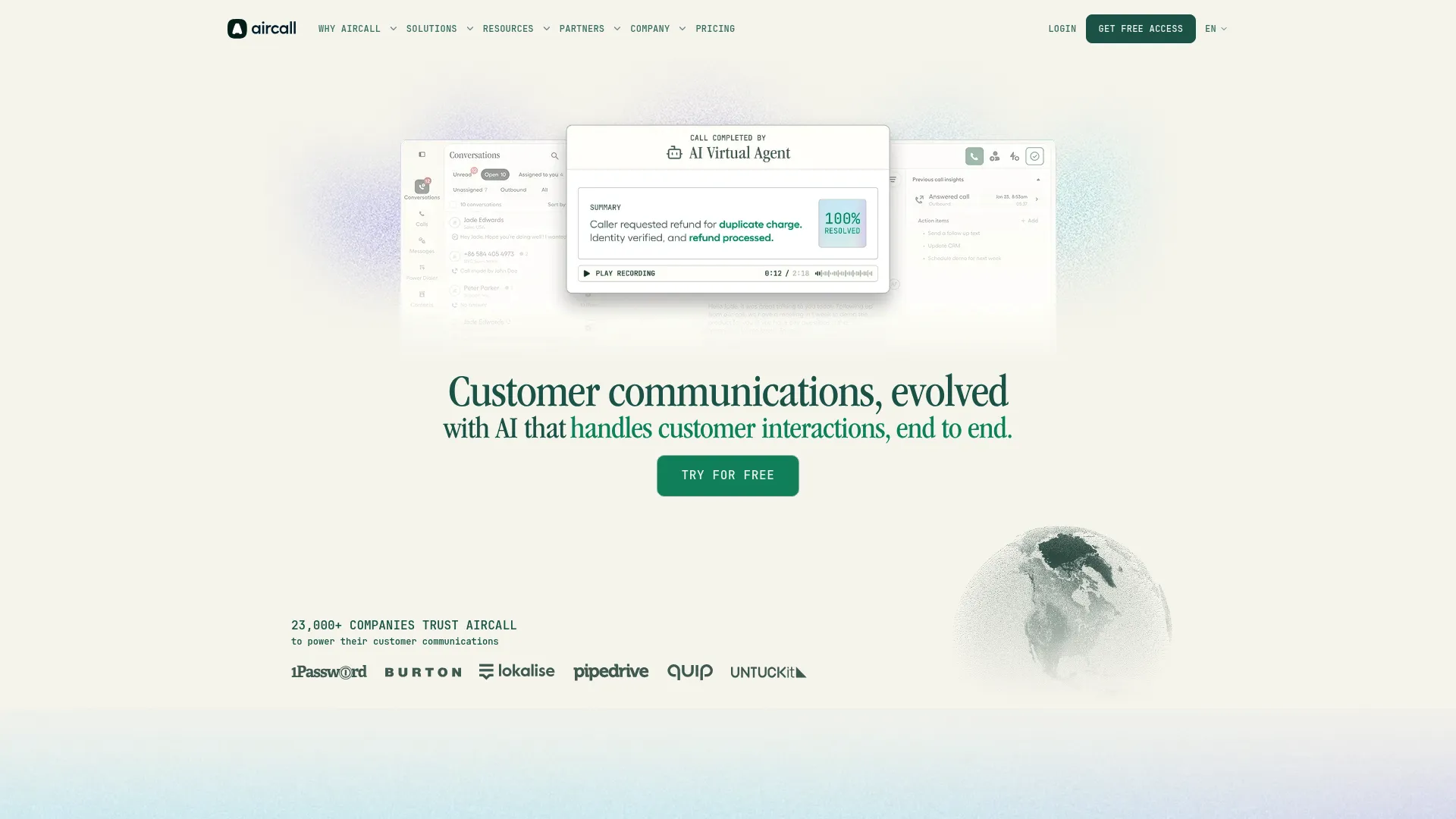
Aircall is a customer communication and intelligence platform for managing business calls, texts, integrations, and AI-assisted conversations. With a Power Dialer and over 100 CRM and help desk integrations, it logs conversations automatically. For CRM-native outbound teams, Aircall keeps call activity tied to records without extra steps.
Best for: Sales and support teams that need a CRM-integrated cloud phone and contact center with analytics and AI features.
Key strengths
- Deep CRM integrations: 100-plus CRM and help desk connectors automatically log calls into Salesforce, HubSpot, and Zendesk.
- Power Dialer and outbound tools: Power Dialer, Voicemail Drop, and unlimited simultaneous outbound calls speed up campaigns.
- Monitoring and AI: live monitoring, call recording, analytics, and AI call summaries support coaching and reporting.
Why choose Aircall: When clean CRM data is the priority, Aircall's automatic call logging removes the gap between dialing and pipeline reporting. The Power Dialer and Voicemail Drop on the Professional tier give outbound teams the velocity tools they need.
Aircall pricing: Aircall lists per-license USD plans billed annually, starting with a 3-license minimum. Essentials is $30 per license per month (3 licenses for $90/month), and Professional is $50 per license per month (3 licenses for $150/month) with Power Dialer, Voicemail Drop, and Salesforce CTI. A Custom plan covers 25-plus licenses. Aircall holds a 4.4/5 rating on G2.
8. Nextiva
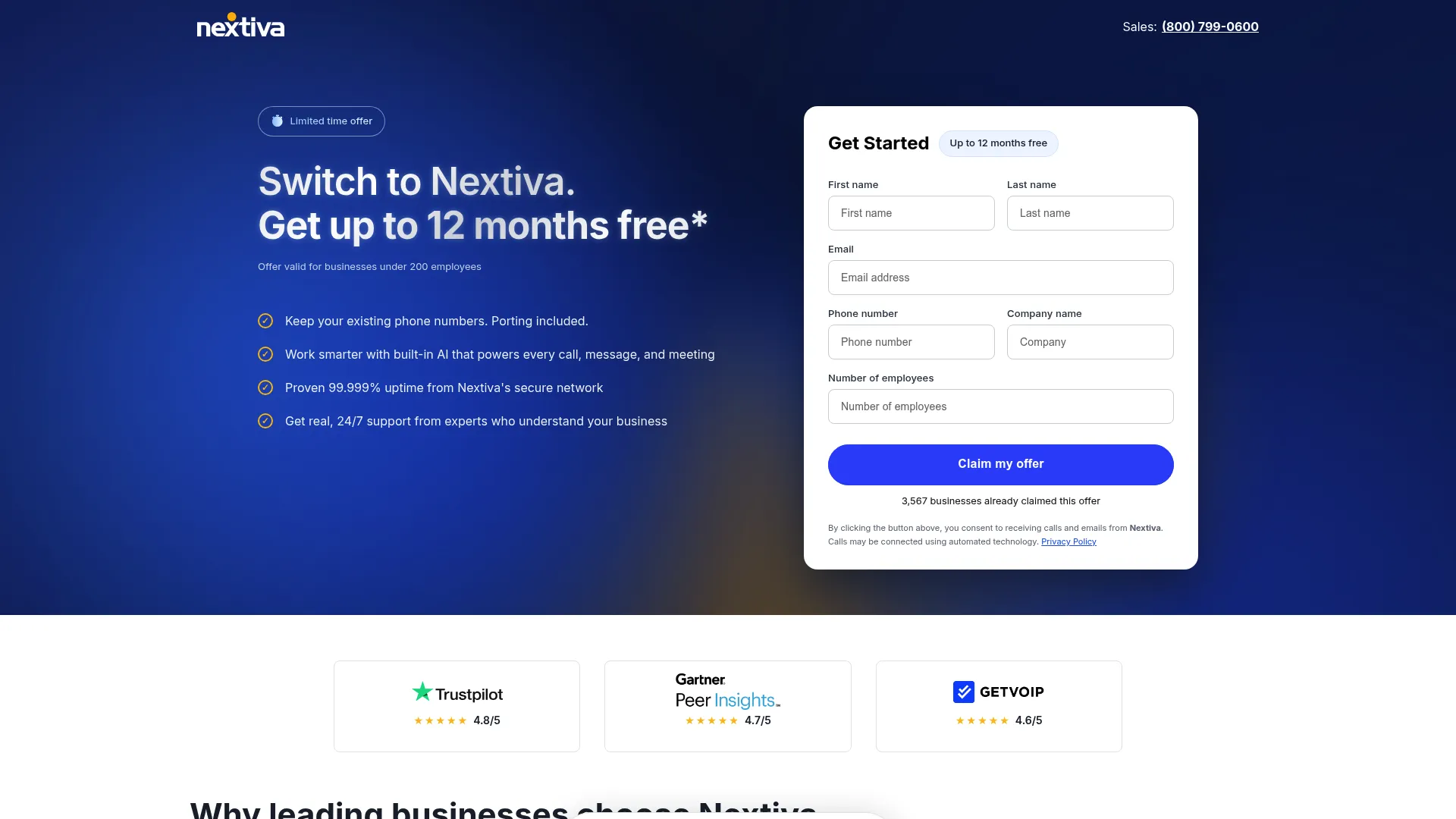
Nextiva provides a unified communications and customer experience platform for business phone, messaging, video, and contact center. Its blended inbound and outbound contact center capabilities include skills-based routing, journey orchestration, and AI transcription. For SMBs wanting unified voice plus outbound, Nextiva keeps it simple.
Best for: Small businesses and contact center teams that need unified business phone, messaging, video, routing, and CX tools in one platform.
Key strengths
- Blended contact center: inbound and outbound capabilities, skills-based routing, and journey orchestration in one system.
- AI features: AI transcription and call summaries reduce manual logging and surface coaching moments.
- Unified communications: voice, SMS, video meetings, screen sharing, and team chat consolidate everyday comms.
Why choose Nextiva: For an SMB that wants one vendor for phones and outbound campaigns, Nextiva keeps the stack lean. The blended contact center handles outbound alongside inbound coverage, and the analytics support basic coaching without enterprise complexity.
Nextiva pricing: Nextiva lists small business plans starting at $15 per user per month for Core, $25 for Engage, and $75 for Scale. Contact center plans start at $75 per agent per month for Essential, with Professional and Premium quote-based. No free plan is listed, though demos require no credit card. Nextiva holds a 4.5/5 rating on G2.
9. Genesys Cloud CX
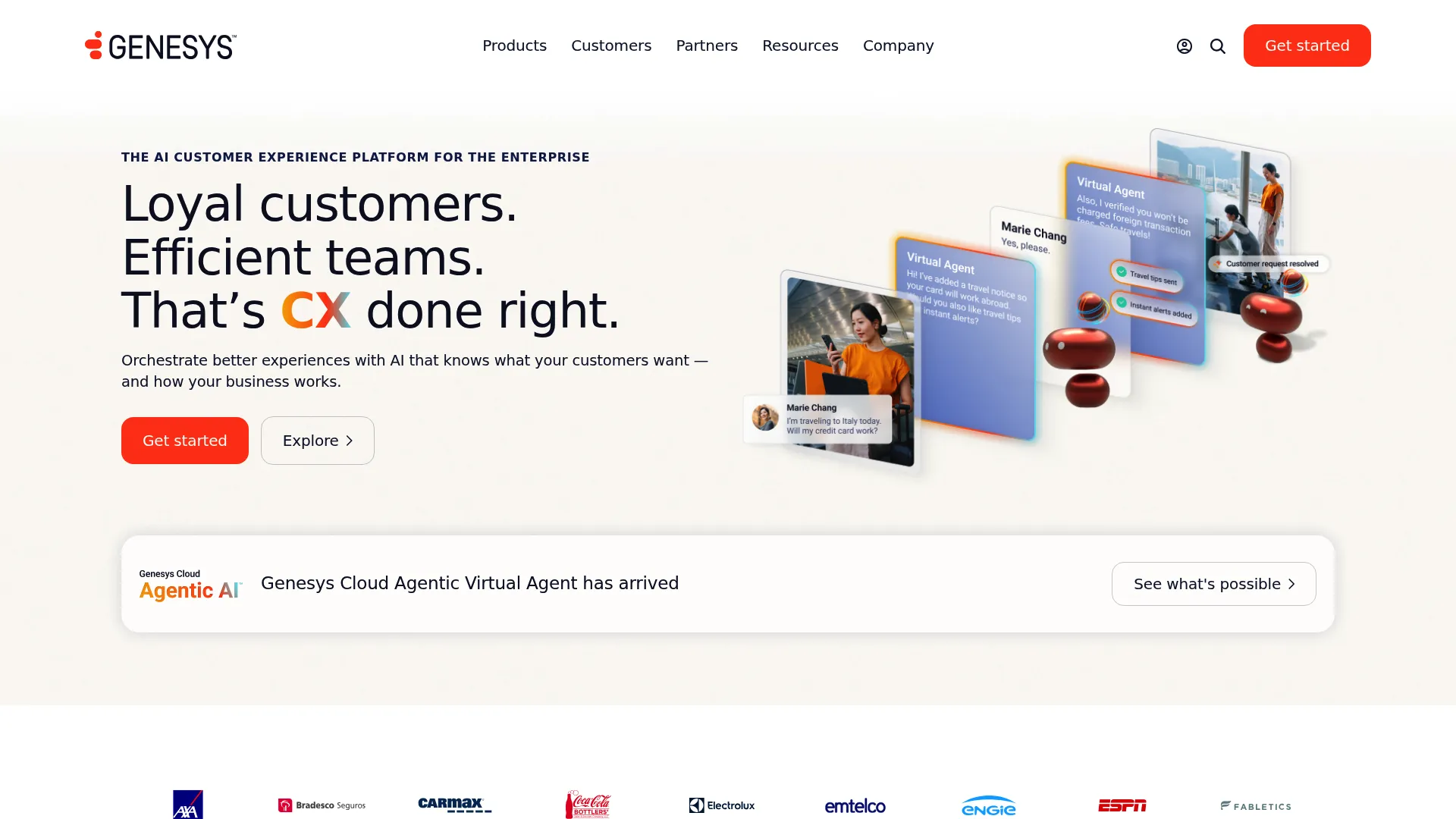
Genesys Cloud CX is an AI-powered cloud contact center for orchestrating omnichannel engagement, routing, workforce engagement, and customer journeys. It supports predictive and progressive outbound dialing, native AI, and full workforce engagement management. For enterprise outbound teams that prioritize WFM, Genesys pairs dialing depth with workforce tools.
Best for: Enterprise and mid-market contact centers needing AI-powered omnichannel customer experience orchestration with workforce engagement.
Key strengths
- Omnichannel engagement and routing: unifies voice and digital outbound and inbound under one routing engine.
- Native embedded AI: AI and automation power agent copilots, journey management, and self-service.
- Workforce engagement management: WEM capabilities support quality, scheduling, and performance coaching at scale.
Why choose Genesys Cloud CX: If workforce management is central to how you run outbound, Genesys builds WEM into the platform rather than treating it as an add-on. That matters for enablement leaders who need to align staffing, coaching, and call activity across large teams.
Genesys Cloud CX pricing: Genesys publishes per-user USD pricing billed annually. Genesys Cloud CX 1 starts at $75, CX 2 at $115, CX 3 at $155, and CX 4 at $240 per user per month. Higher tiers add omnichannel, full WEM, and AI Experience capabilities including Agent Copilot. Genesys holds a 4.4/5 rating on G2.
10. Twilio Flex / Twilio Voice
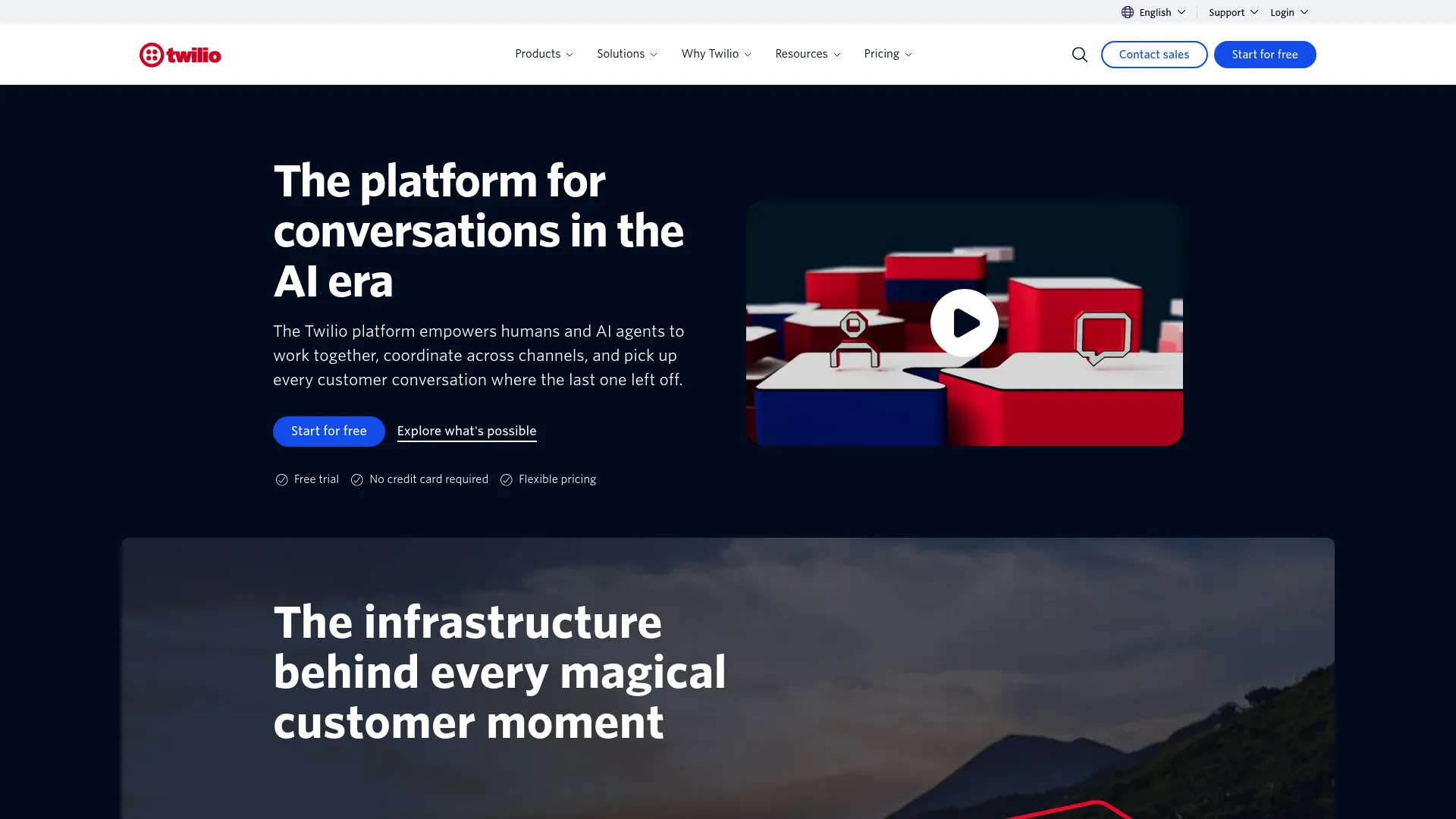
Twilio Flex / Twilio Voice is a programmable cloud contact center paired with voice APIs for building scalable calling experiences. Flex offers programmable call flows, routing, agent skills, and CRM integrations, while Voice provides IVR, recording, and conversational intelligence. For teams needing custom outbound workflows, Twilio gives developers full control.
Best for: Businesses that need a highly programmable contact center with embedded voice, messaging, AI assistance, and custom integrations.
Key strengths
- Programmable everything: customize call flows, routing, queue assignment, UI layout, and CRM data integrations.
- Voice API depth: IVR, call recording, speech recognition, conferencing, Media Streams, and Conversational Intelligence.
- Omnichannel support: built-in inbound voice, SMS, Messenger, WhatsApp, and WebChat alongside outbound calling.
Why choose Twilio Flex: When off-the-shelf outbound tools cannot match your workflow, Twilio's programmability does. You build exactly the dialing, routing, and CRM logic your motion needs, which suits teams with developer bandwidth and non-standard requirements.
Twilio Flex pricing: Twilio Flex offers a free trial that includes 5,000 free active user hours for new accounts. Paid options include user-plus-usage pricing at $35 per monthly active user plus metered usage, named user pricing at $150 per named user, and active user hour pricing at $1 per active user hour. Twilio Voice is usage-based per minute. Twilio Flex holds a 4.1/5 rating on G2.
How to choose outbound call center software for your team
The right outbound call center solution depends on call volume, compliance exposure, and how deeply you coach. Use this checklist to score your shortlist.
Dialer mode fit
Match the dialer to your motion. Predictive dialing maximizes connections for high-volume, lower-risk campaigns. Progressive and preview dialing slow the pace so reps prep before each call, which suits complex sales and reduces compliance risk. The wrong mode either wastes rep time or raises abandonment rates.
CRM and workflow integration
Ask whether call data syncs cleanly enough that coaching and pipeline reporting work without manual cleanup. In-workflow delivery drives adoption: if reps have to leave the CRM to dial, they will skip steps. Confirm two-way sync with Salesforce, HubSpot, or whatever your team lives in.
Compliance controls
For US outbound, verify TCPA support, DNC scrubbing, consent management, and call-attempt caps. Compliance is a configuration job, not a checkbox. The platform should let you operationalize Do Not Call rules and document consent, so a campaign cannot accidentally dial a scrubbed number.
Coaching and analytics depth
Look for call scoring, conversation intelligence, talk-track adherence, and supervisor assist. These features turn raw calls into ramp and consistency gains. Without them, managers coach on memory instead of evidence, and new reps take longer to reach quota. Combining this with sales onboarding software shortens ramp even further.
Adoption and ease of maintenance
The best dialer is the one reps actually use. Weigh admin overhead, onboarding time, and how seat-based pricing scales as you grow. A tool that takes a quarter to configure or balloons in cost per seat erodes the ROI you bought it for.
Conclusion
The outbound call center software market splits cleanly by team profile. For enterprise omnichannel and AI-driven engagement at scale, NICE CXone and Genesys Cloud CX lead, with Genesys edging ahead when workforce engagement is central. For high-volume blended outbound with strong compliance, Five9 is the workhorse. Talkdesk and Dialpad stand out for AI coaching and real-time conversation intelligence.
For SMB and mid-market outbound sales, CloudTalk delivers dialer depth at an accessible price, while Aircall wins for CRM-native teams that want automatic call logging. Nextiva and RingCentral suit teams consolidating voice and outbound under one vendor, and Twilio Flex fits teams with developers who need fully custom workflows.
Your next step: shortlist two or three tools that match your call volume and CRM, then run a 14-day trial against your live lead lists. Measure connect rate, live-conversation lift, and how cleanly call data lands in your pipeline view. The platform that improves those numbers, while reps actually adopt it, is the one worth buying. And remember: once reps connect, an interactive demo is what turns a good call into a moving deal.
FAQs
Outbound call center software is a cloud platform that automates and manages agent-initiated calls to prospects and customers for sales, lead generation, surveys, collections, and notifications. It combines automated dialers, CRM integrations, compliance controls, and analytics to make outbound calling faster, more consistent, and easier to coach.
Inbound software handles customer-initiated calls, such as support requests or sales inquiries, with routing, IVR, and queueing. Outbound call center software handles agent-initiated calls, using predictive, progressive, or preview dialers to reach prospects and customers. Blended platforms run both from one queue, letting agents switch between inbound coverage and outbound campaigns.
Pricing typically runs per agent or per user per month. Entry tiers start around $15 to $30 per user per month for SMB tools like Dialpad and Aircall, while enterprise CCaaS platforms like NICE CXone and Genesys Cloud CX start near $75 to $110 per agent per month. Advanced AI, omnichannel, and workforce engagement tiers are usually quote-based, and some vendors require seat minimums.
Dialpad, Talkdesk, and CloudTalk stand out for AI capabilities. Dialpad offers real-time AI coaching, transcription, and call summaries. Talkdesk positions as AI-first with agentic virtual assistants and interaction analytics. CloudTalk pairs smart and predictive dialing with AI-driven analytics. The best fit depends on whether you prioritize live coaching, automation, or dialer flexibility.
Compliance depends on how you configure the tool and the controls the vendor provides. Platforms like Five9, NICE CXone, and Genesys Cloud CX offer DNC scrubbing, consent management, and call-attempt caps. Compliance is an operational job: you must set up Do Not Call rules, document consent, and configure dialing limits correctly to stay within TCPA requirements.
Prioritize dialer automation (predictive, progressive, preview), clean CRM sync, conversation intelligence, coaching and call scoring, analytics, and TCPA and DNC compliance controls. For a growing team, coaching depth and in-workflow CRM delivery matter most, because they drive faster ramp and consistent execution as you add reps.
Yes. Salesforce, HubSpot, and Zendesk integrations are common across the tools in this list. Aircall offers over 100 CRM and help desk connectors with automatic call logging, while Dialpad, CloudTalk, and RingCentral all support major CRMs. Confirm two-way sync so call outcomes update records without manual entry.
An outbound call centre service is a managed or BPO offering where a third party staffs agents and runs campaigns on your behalf. Outbound call centre software is a self-serve platform your own team operates to dial, route, and analyze calls. Services trade control for hands-off execution, while software gives you direct control over reps, scripts, and data.