Oil and gas teams rarely have a "software problem." They have a workflow mismatch. Reservoir engineers, production engineers, field crews, project controllers, and finance teams each need fundamentally different systems. Yet leadership often evaluates them under one umbrella, compares a seismic interpretation platform against a field inspection app, and walks away confused.
The result: The wrong tool gets bought for the wrong team, and the VP of Engineering inherits a mess on day one.
EY's 2026 energy outlook projects $24 billion in upstream oil and gas digital spending this year, and 92% of oil, gas, and chemicals companies are already implementing or planning digital-twin applications, according to EY's 2025 Future of Energy Survey. The investment is real. The shortlisting decisions, too often, are not.
This guide cuts through that. It separates reservoir simulation tools from field ticketing platforms, production optimization software from project scheduling systems, and gives you a shortlist you can hand to a new VP or engineering lead with confidence.
What's inside
This guide is for founders, executives, and operations leaders who need to understand the oil and gas software market and route evaluation to the right internal owner.
- Covers 15 oil and gas engineering software tools across six workflow categories
- Tools selected for category fit, workflow depth, data integration capability, and enterprise readiness
- Pricing verified from vendor pages and live review listings
- G2 ratings sourced from live listings; "N/A" used where no current rating exists
TL;DR
- Best for reservoir and subsurface engineering: SLB (Petrel, Delfi, and the full E&P portfolio)
- Best for production and back-office workflows: Quorum (upstream to midstream, field to finance)
- Best for production optimization and industrial analytics: AspenTech
- Best for data-driven unconventional asset analysis: Petro.ai
- Best for field operations and inspection workflows: Mitti or SafetyCulture
- Best for capital project controls: Oracle Primavera P6 or InEight
What is oil and gas engineering software?
Oil and gas engineering software is specialized software that helps energy companies model reservoirs, plan wells, optimize production, manage field data, control capital projects, track assets, and connect technical workflows with operational and financial systems.
This category sits at the intersection of petroleum engineering, geoscience, production operations, asset performance management, and project controls. It is not a single product category. It is a stack of workflow-specific tools, and the right shortlist depends on the decision you are trying to improve.
Core capabilities across the category include:
- Reservoir modeling and characterization
- Seismic and well-log interpretation
- Production forecasting and decline analysis
- Well testing and pressure transient analysis
- Nodal analysis and artificial lift design
- Field data capture and field-to-office workflows
- Asset lifecycle management and inspection management
- AFE, cost, schedule, and project control
- Production accounting, joint venture billing, and reporting
- Analytics, dashboards, and decision support
- ERP, GIS, historian, SCADA, and data-lake integrations
Where the category boundaries sit:
Oil and gas engineering software overlaps with oil and gas project management software and oilfield ERP, but is not identical to either. Engineering software focuses on technical decisions and operational execution. Project management software focuses on schedules, budgets, resources, and delivery. Business systems handle accounting, revenue, procurement, and compliance. Many operators need all three layers, but they should be bought and evaluated separately.
When to use oil and gas engineering software
Improve reservoir and production decisions
When teams need reservoir simulation, typewell analysis, decline curves, pressure transient analysis, reserves estimation, or production optimization, generic BI tools cannot replace domain-specific engineering calculations. A petroleum engineer running type curve analysis in a spreadsheet is spending time that a purpose-built tool would reclaim. Buy engineering software when technical decisions drive cost exposure.
Connect field data to engineering workflows
Delayed or incomplete field data creates bad operational decisions downstream. Mobile data capture, inspection workflows, operator rounds, wellsite measurements, and maintenance events all need to reach engineering and finance systems the same day they happen. Field-to-office sync is not a reporting problem; it is a data quality problem with direct impact on production accounting and reserves reporting.
Control high-cost energy projects
Drilling programs, facility projects, turnarounds, and capital programs require AFE tracking, schedule risk management, contractor coordination, and procurement controls. These are not generic project management problems. They involve specialized cost structures, regulatory milestones, and field execution dependencies that generic tools handle poorly.
Oil and gas engineering software comparison
The tools below span six distinct workflow layers. Do not compare a reservoir simulator against a field checklist app on the same criteria. The table organizes them by what they actually do, so you can route evaluation to the right team.
Pricing and G2 ratings are verified from vendor pages and live G2 listings. Where no self-serve price exists, the table reflects that. Where no current G2 rating exists, the table shows N/A.
| # | Product | Best for | Key differentiator | Pricing | G2 rating |
|---|---|---|---|---|---|
| 1 | SLB | Subsurface and reservoir engineering | Broad E&P engineering and digital operations portfolio | Quote-based (OptiFlow QuickStart from $150K/yr) | 4.6/5 |
| 2 | Quorum | Production, accounting, and energy operations | Connected oil and gas business workflows from field to finance | Custom pricing | N/A |
| 3 | AspenTech | Production optimization and industrial analytics | Asset optimization across engineering and operations | Custom pricing (academic from $3K/yr) | N/A |
| 4 | Petro.ai | Shale analytics and production intelligence | Data-driven unconventional asset analysis | Custom pricing | N/A |
| 5 | GeoSoftware | Geoscience and reservoir characterization | Seismic, well-log, and reservoir interpretation suite | Custom pricing | N/A |
| 6 | S&P Global | Upstream engineering and production workflows | Reservoir, production, and field engineering portfolio | Custom pricing | 4.3/5 |
| 7 | Enertia | Integrated oil and gas ERP | Operations, accounting, and land workflow integration | Custom pricing | N/A |
| 8 | EnergySys | Cloud oil and gas production management | Configurable production allocation and hydrocarbon accounting | From £35,000/yr | N/A |
| 9 | FieldCap | Field data capture and ticketing | Mobile oilfield operations and job data capture | Custom pricing | 5.0/5 |
| 10 | P2 Energy Solutions | Land, production, and accounting workflows | Energy back-office and operational data systems | Custom pricing | 3.5/5 |
| 11 | Mitti | Field operations and oilfield work management | Mobile-first field workflows for energy teams | Free; Premium $24/seat/month (annual) | 4.6/5 |
| 12 | SafetyCulture | Inspections, checklists, and HSE workflows | Fast mobile inspection and safety operations | Free; Premium $24/seat/month (annual) | 4.6/5 |
| 13 | Oracle Primavera P6 | Energy project scheduling | Enterprise project scheduling and controls | From $2,750 (perpetual license) | 4.4/5 |
| 14 | InEight | Capital project controls | Cost, schedule, risk, and construction controls | Custom pricing | 4.1/5 |
| 15 | Procore | Construction and facility project execution | Contractor coordination and jobsite management | Custom pricing | 4.6/5 |
Best 15 oil and gas engineering software tools for 2026
1. SLB
SLB is a global energy technology company whose software portfolio covers subsurface interpretation, reservoir modeling, drilling, production, and digital operations. Its cloud-based Delfi digital platform and Lumi data and AI platform sit at the center of its upstream software offering, with Petrel as the flagship E&P tool for reservoir and geoscience workflows. SLB serves major and independent operators worldwide who need an integrated technical environment across the full asset lifecycle.
Best for: Large E&P operators who need subsurface, reservoir, and digital operations software from a single vendor.
Key features
- Cloud-based Delfi digital platform for E&P workflows
- Lumi data and AI platform for reservoir and production intelligence
- Tela agentic-AI workflows for automated subsurface tasks
- Petrel reservoir modeling and seismic interpretation
- Digital operations covering drilling, production, and remote sites
Why choose SLB: Choose SLB when reservoir and subsurface workflows sit at the center of the software decision and the organization has the technical depth and procurement maturity to implement enterprise E&P platforms.
SLB pricing: SLB pricing is quote-based for most products. The OptiFlow QuickStart package for unconventional onshore assets starts at $150,000 for a one-year subscription covering up to 100 wells. Ask sales for module, seat, deployment model, and implementation costs for other products.
G2 rating: 4.6/5 (SLB seller profile)
2. Quorum
Quorum Software provides connected, purpose-built software for energy companies across upstream, midstream, and measurement workflows. Its platform covers production operations, revenue accounting, land management, joint venture workflows, and measurement data management. Quorum is built for operators who need more than point engineering tools and want production data connected to commercial and finance processes.
Best for: Oil and gas operators who need a connected system spanning production, land, revenue accounting, and field operations.
Key features
- Upstream planning, economics, reserves, and accounting
- Midstream pipeline, gas gathering, and plant accounting
- Measurement data management, meter testing, and flow calculations
- Land and joint venture workflow management
- Governed AI and connected operational workflows
Why choose Quorum: Quorum fits companies where production data, revenue accounting, and land workflows are fragmented across disconnected systems. It is an operational platform, not a reservoir engineering tool.
Quorum pricing: Pricing is quote-based. Contact Quorum sales to discuss product modules, seat counts, deployment options, and implementation scope.
3. AspenTech
AspenTech provides industrial software for asset optimization, process engineering, manufacturing and supply chain, and asset performance management across energy and industrial sectors. Its software is widely used in upstream oil and gas, refining, petrochemicals, and chemicals for production optimization, process simulation, and reliability analytics. AspenTech serves operators with complex facilities who need engineering and operational decisions connected through industrial optimization models.
Best for: Operators and industrial organizations with complex production assets who need process modeling, reliability analytics, and production optimization.
Key features
- Process simulation and performance engineering
- Asset performance management with AI-based predictive maintenance
- Manufacturing and supply chain optimization
- Industrial data fabric and historian capabilities
- Production planning and scheduling
Why choose AspenTech: AspenTech works best when engineering models and operational data need to inform the same production decisions. It is deeper than a dashboard and more operationally integrated than a pure simulation tool.
AspenTech pricing: Commercial pricing is quote-based; contact AspenTech sales for asset, module, and seat costs. An academic license (aspenONE for Academics) is available from $3,000 per year.
4. Petro.ai
Petro.ai is integrated AI, geomechanics, and reservoir-engineering software for oil and gas asset teams working in unconventional plays. It supports horizontal-well inventory design, production forecasting with pre-trained basin models, and spacing, timing, and completion-design scenario comparisons. Teams use it to turn subsurface and production data into repeatable development decisions at the asset and pad level.
Best for: Reservoir engineers and asset teams in unconventional plays who need faster type curve analysis, spacing optimization, and production forecasting.
Key features
- Horizontal-well inventory design via map and gunbarrel interfaces
- Production forecasting with pre-trained basin models
- Spacing, timing, landing-zone, and completion-design scenario comparison
- Proprietary basin model creation, calibration, and maintenance
- SQL connectivity for forecast data export and model output access
Why choose Petro.ai: Choose Petro.ai when the team needs to accelerate technical analysis across wells, pads, and unconventional development programs without long setup cycles. It is purpose-built for shale and tight-oil decision workflows.
Petro.ai pricing: Pricing is quote-based. A Day One Basin trial is available. Contact Petro.ai sales for commercial terms, seat counts, and basin model access.
5. GeoSoftware
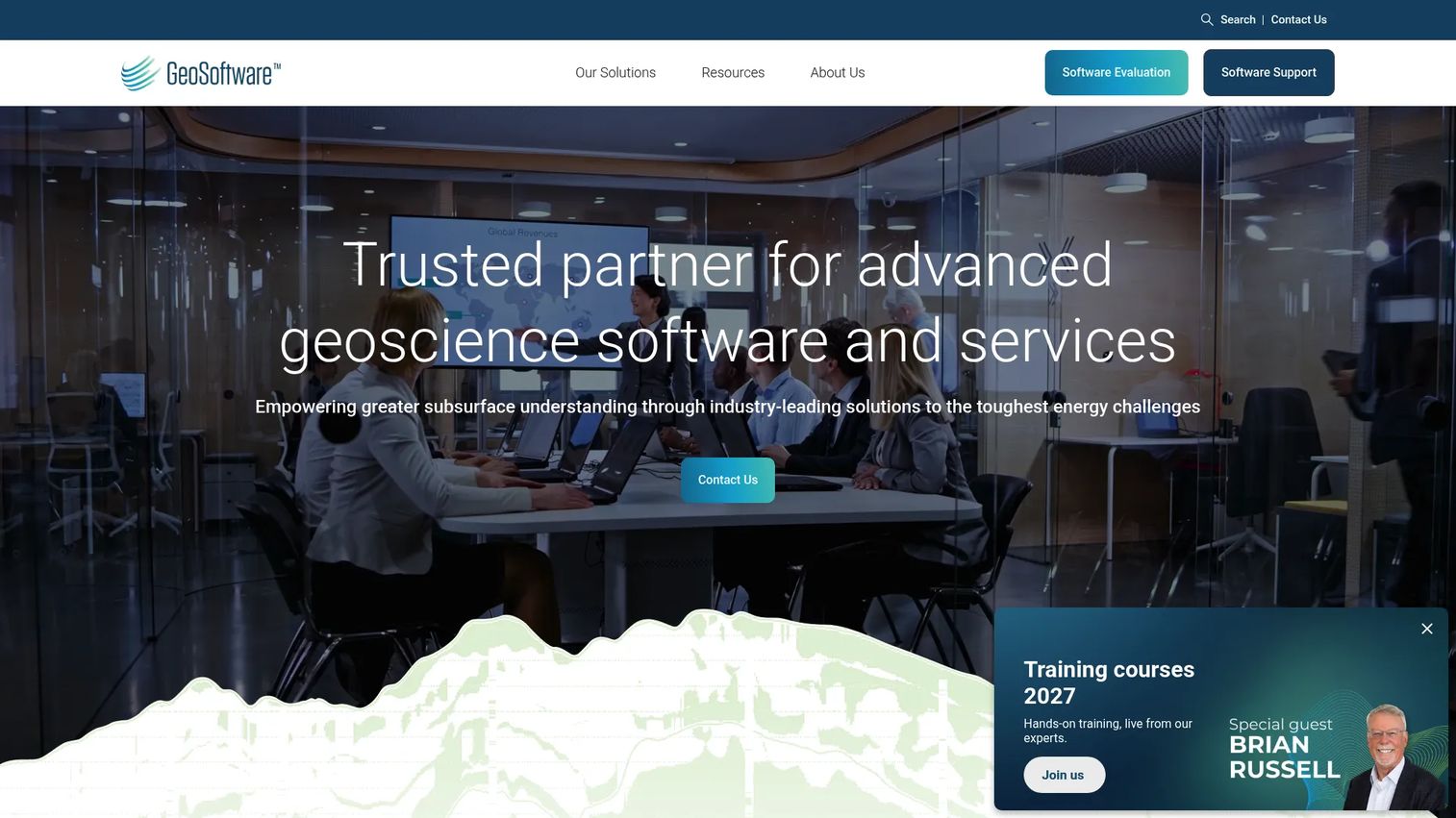
GeoSoftware provides advanced geoscience software and consulting services for subsurface characterization and energy-industry decision-making. Its suite covers seismic reservoir characterization, seismic inversion, well-log analysis, reservoir characterization, and geological modeling. GeoSoftware serves exploration, appraisal, and development teams that need specialist geoscience interpretation workflows for E&P decisions.
Best for: Geoscience teams in E&P who need specialist seismic interpretation, reservoir characterization, and petrophysics software.
Key features
- Seismic reservoir characterization and inversion
- Reservoir characterization and geological modeling
- Petrophysics and rock physics analysis
- Well-log interpretation and integration
- Uncertainty workflows for subsurface decisions
Why choose GeoSoftware: GeoSoftware is the right choice when geoscience interpretation and reservoir understanding are the core evaluation criteria, particularly for exploration and appraisal programs where seismic-to-well workflows matter most.
GeoSoftware pricing: Pricing is sales-led. A free evaluation is available on some products. Contact GeoSoftware for commercial licensing, seat structure, and module costs.
6. S&P Global
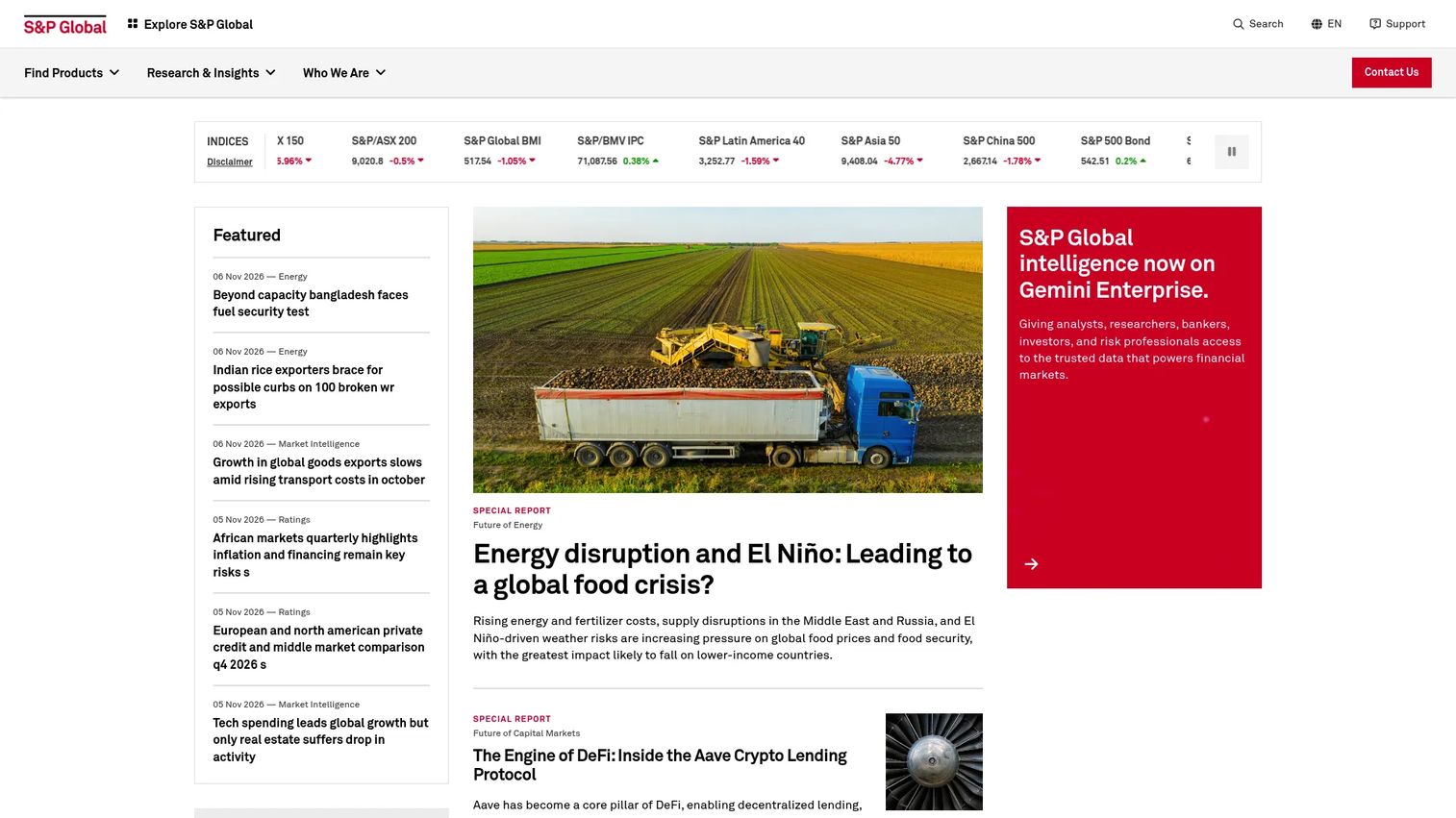
S&P Global provides data, analytics, benchmarks, and workflow technology across capital markets, energy, commodity, and automotive sectors. Its upstream engineering software portfolio includes tools for reserves estimation, well test analysis, production forecasting, nodal analysis, and field data management. Production engineers and reservoir teams use S&P Global's petroleum engineering software for specialist upstream workflow coverage from decline analysis through ESP design.
Best for: Reservoir and production engineers who need specialist upstream tools for forecasting, well performance analysis, and field data management.
Key features
- Reserves estimation and production forecasting tools
- Well test analysis and pressure transient analysis
- Nodal analysis and artificial lift design
- Field data capture and production data management
- Market data, analytics, and benchmarks across energy sectors
Why choose S&P Global: Choose S&P Global's upstream engineering software when the buyer needs specialist tools across forecasting, well performance, and production engineering rather than a broad enterprise platform.
S&P Global pricing: Pricing is quote-based and varies by product, data set, usage, and license type. Contact S&P Global for subscription terms, trial access, and module pricing.
G2 rating: 4.3/5 (S&P Global seller profile)
7. Enertia

Enertia Software provides integrated ERP for oil and gas operators covering production, land, accounting, revenue, AFE tracking, and operational reporting. It is designed for operators who want fewer disconnected systems and need production, finance, and land data in one oil and gas-specific platform. Enertia is not a reservoir simulation or geoscience tool; its value is in connecting operational and financial workflows for E&P companies.
Best for: Oil and gas operators who need a single system of record spanning production accounting, land management, and financial workflows.
Key features
- Energy ERP covering production and finance
- Production accounting and revenue management
- Land and lease workflow management
- AFE tracking and capital expenditure controls
- Operational reporting and regulatory compliance
Why choose Enertia: Enertia works when operational, production, and finance teams need one oil and gas-specific platform. It is a business system, not a technical engineering tool, and that distinction matters for evaluation.
Enertia pricing: Pricing is quote-based. Contact Enertia sales for module, seat, and implementation costs specific to your asset base and workflow scope.
8. EnergySys
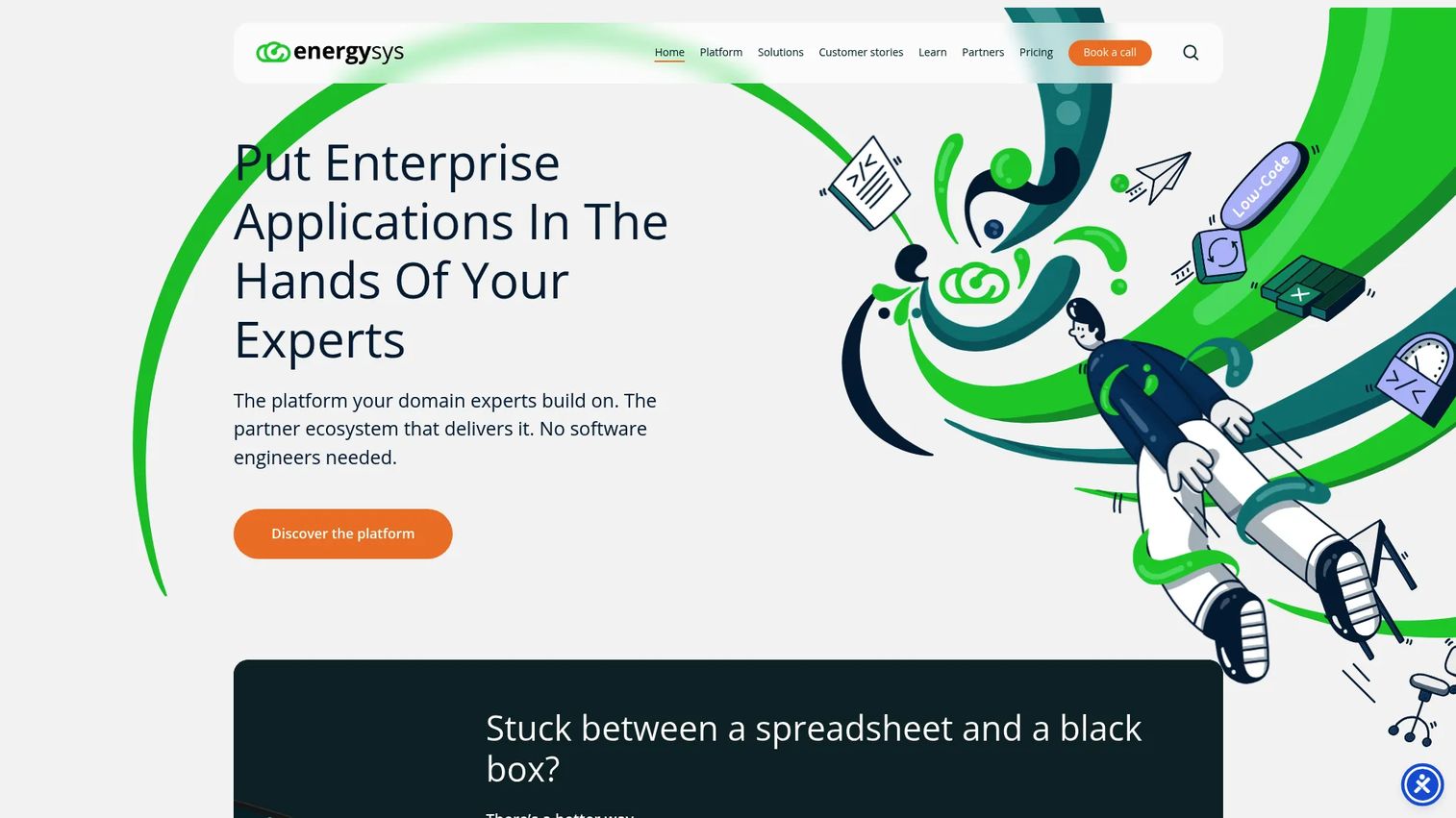
EnergySys is a managed cloud platform for configuring energy data-management and operational applications. It specializes in production allocation, hydrocarbon accounting, emissions management, and measurement workflows. Its metadata-driven, low-code configuration approach lets operators build auditable, traceable applications without long custom development cycles. EnergySys serves upstream and midstream operators who need production data to feed engineering, commercial, and finance decisions cleanly.
Best for: Upstream and midstream operators who need configurable, auditable production allocation and hydrocarbon accounting on a managed cloud platform.
Key features
- Production allocation and hydrocarbon accounting
- Metadata-driven, low-code application configuration
- Excel-based, traceable, and auditable calculations
- Connectors for SQL databases, meter historians, and OData
- Emissions management and operational reporting
Why choose EnergySys: EnergySys fits teams that need configurable production data workflows without the overhead of custom software development. Its audit trail and calculation transparency are particularly valuable for regulatory reporting and joint venture accounting.
EnergySys pricing: Subscriptions start at £35,000 per annum for a small, simple asset unit. The price scales by asset complexity. The subscription includes production and non-production instances, platform support, and security upgrades.
9. FieldCap
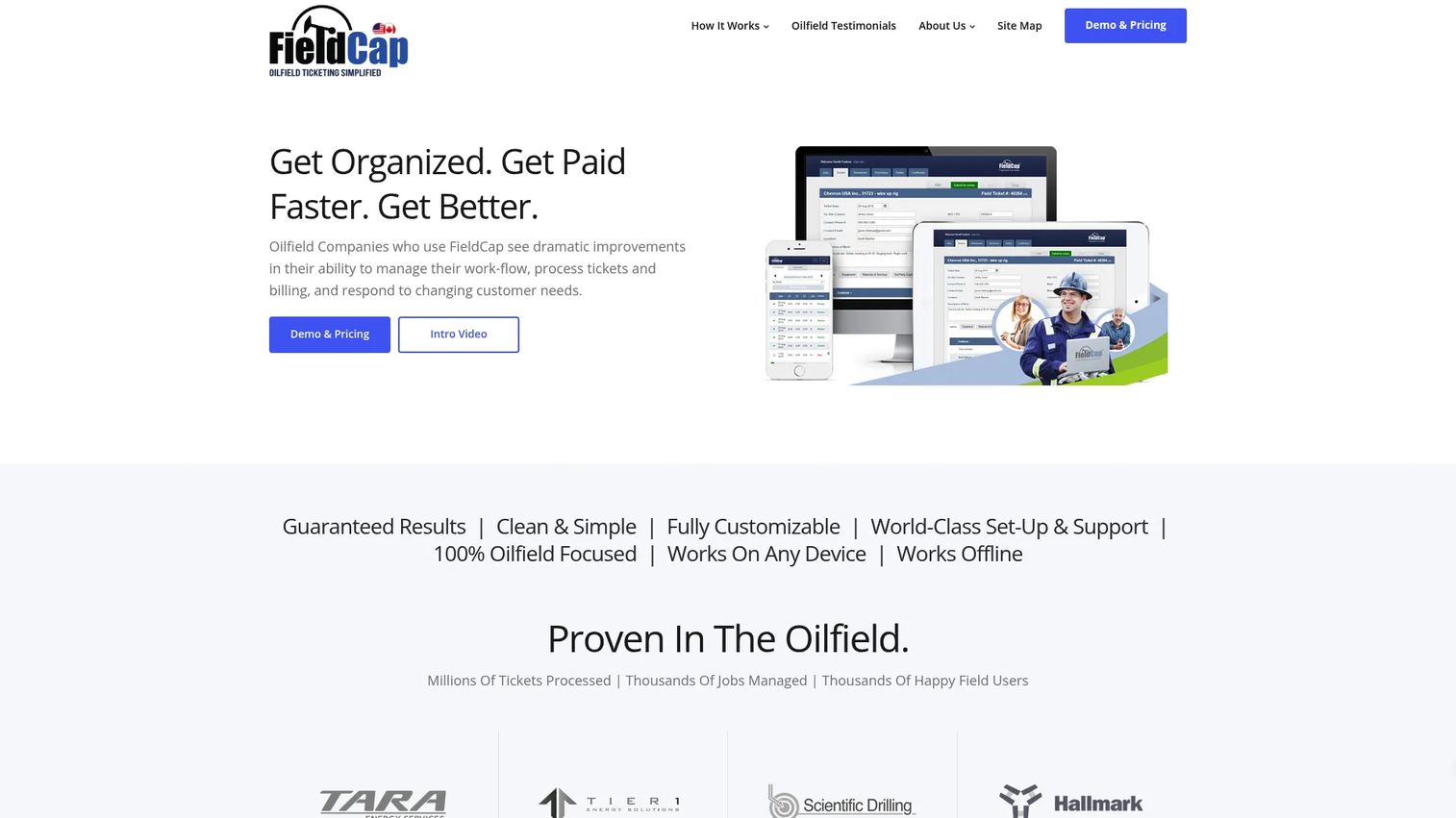
FieldCap is oilfield-focused field ticket, job tracking, workflow, approval, and billing software built for field crews and oilfield service companies. It supports offline browser-based access on phones, tablets, and laptops, with customizable tickets and forms, digital signatures, remote email approvals, and ticket-version tracking. FieldCap eliminates paper tickets and manual office entry, which speeds revenue recognition and improves data accuracy for field operations.
Best for: Oilfield service companies and operators with distributed field crews who need customizable offline field ticketing, approvals, and billing workflows.
Key features
- Offline browser-based access on phones, tablets, and desktops
- Customizable tickets and forms with configurable fields and calculations
- Digital signatures and remote email approval workflows
- Ticket-version tracking and audit history
- Field-to-office sync for job reporting and billing
Why choose FieldCap: FieldCap is the right call when paper tickets, delayed job data, and manual entry are creating billing delays or operational data gaps. It is purpose-built for oilfield service workflows, not adapted from a generic forms tool.
FieldCap pricing: Pricing is provided through a demo and pricing request. Contact FieldCap to discuss your field crew size, ticket volume, and workflow requirements.
G2 rating: 5.0/5 (based on 1 review)
10. P2 Energy Solutions
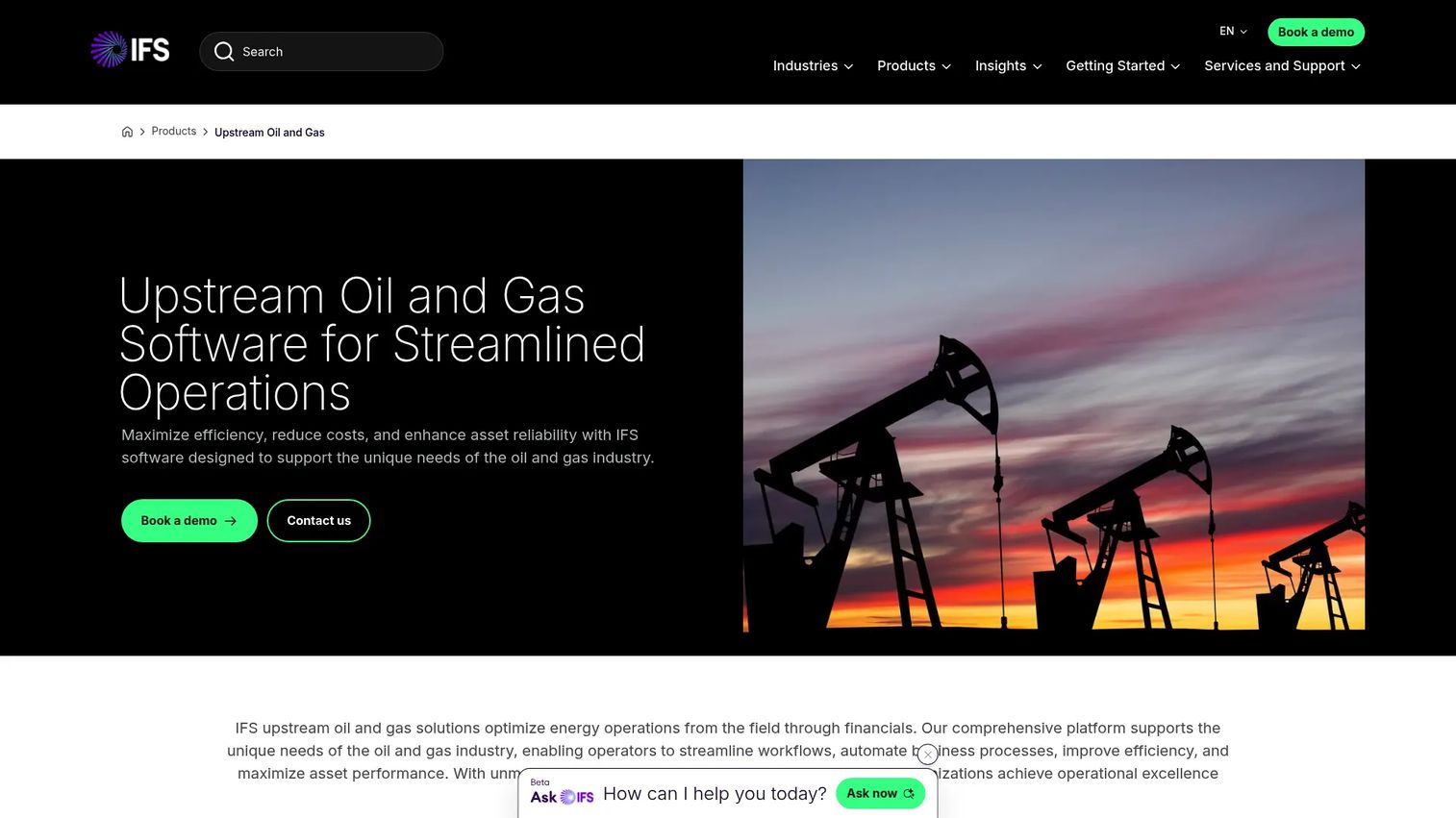
P2 Energy Solutions provides upstream oil and gas software covering production operations, oil and gas accounting, land management, and geospatial information workflows. The product is now associated with IFS Energy and Resources following acquisition and rebranding activity. P2 serves established operators with complex back-office and asset tracking requirements where energy-specific business workflows matter as much as engineering data.
Best for: Upstream oil and gas operators who need integrated production, accounting, land, and geospatial data systems.
Key features
- Production operations management
- Oil and gas accounting workflows
- Land management and lease administration
- Geospatial information solutions
- Regulatory reporting and data management
Why choose P2 Energy Solutions: P2 fits companies where land, production, and accounting data need to live in one oil and gas-specific environment. Verify the current product branding and roadmap with IFS before shortlisting, as the portfolio has changed through acquisition.
P2 Energy Solutions pricing: Pricing is quote-based. Contact the IFS Energy and Resources sales team for current module structure, licensing terms, and implementation scope.
G2 rating: 3.5/5
11. Mitti
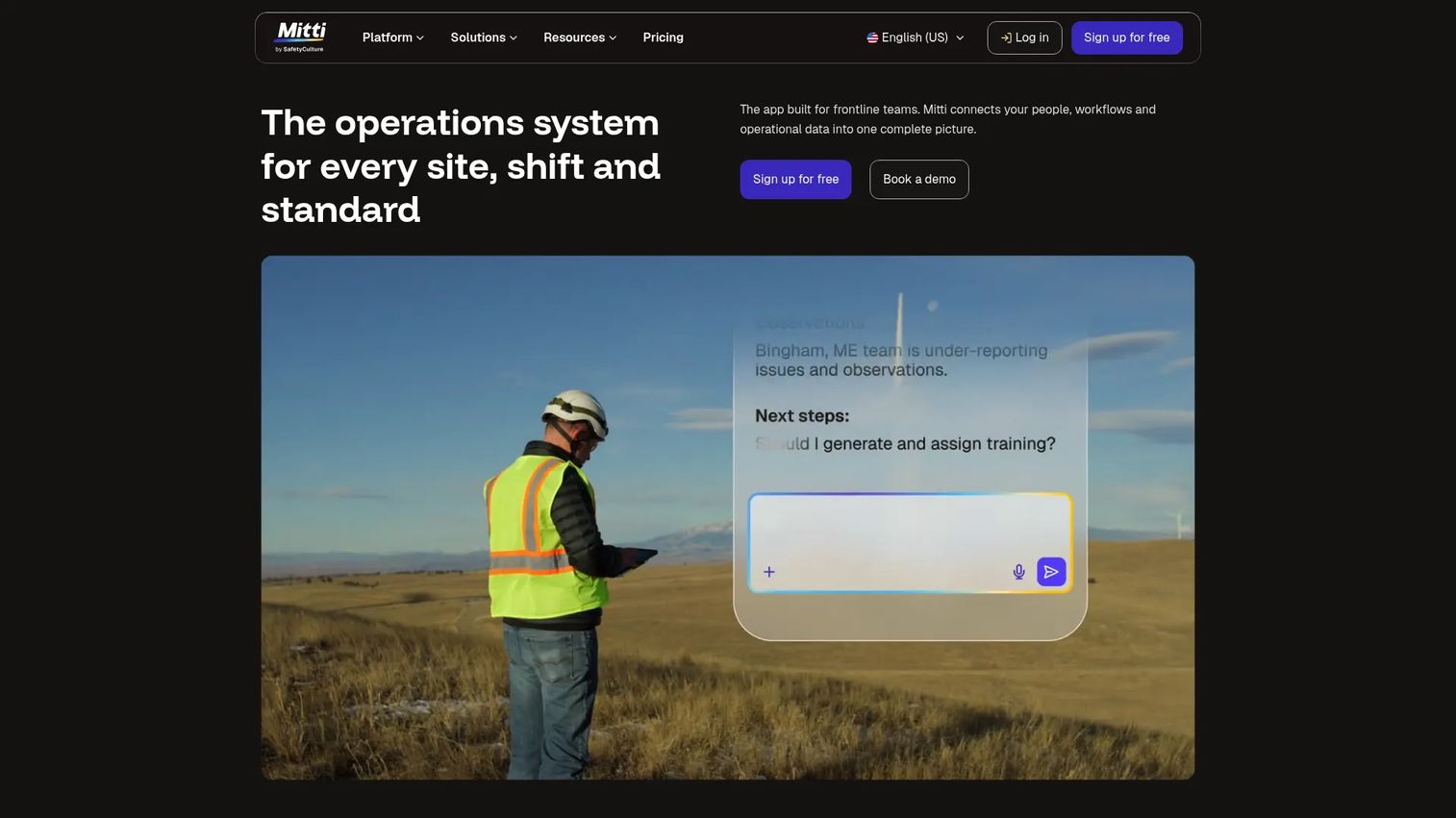
Mitti by SafetyCulture is a workplace operations platform for digitizing inspections, reporting issues, managing actions, training teams, and monitoring assets and environments. It supports templates and digital checklists, inspection reports with evidence capture, schedules and recurring reminders, incident management, and sensor monitoring. For oilfield teams, Mitti addresses the gap between field execution visibility and office-side reporting.
Best for: Energy and oilfield teams that need mobile-first field workflows for inspections, safety, maintenance, and operational reporting.
Key features
- Templates and digital checklists for field inspections
- Inspections with photo evidence capture and reports
- Schedules, recurring reminders, and action tracking
- Incident and issue reporting with investigations
- Asset and sensor monitoring with analytics
Why choose Mitti: Mitti is the right tool when the biggest gap is field execution visibility rather than reservoir simulation or production accounting. It deploys quickly and works for teams with limited technical depth.
Mitti pricing: Free plan available for small teams. Premium is $24 per seat per month billed annually, or $29 per seat per month on a monthly basis. Enterprise pricing is custom; contact sales.
G2 rating: 4.6/5
12. SafetyCulture
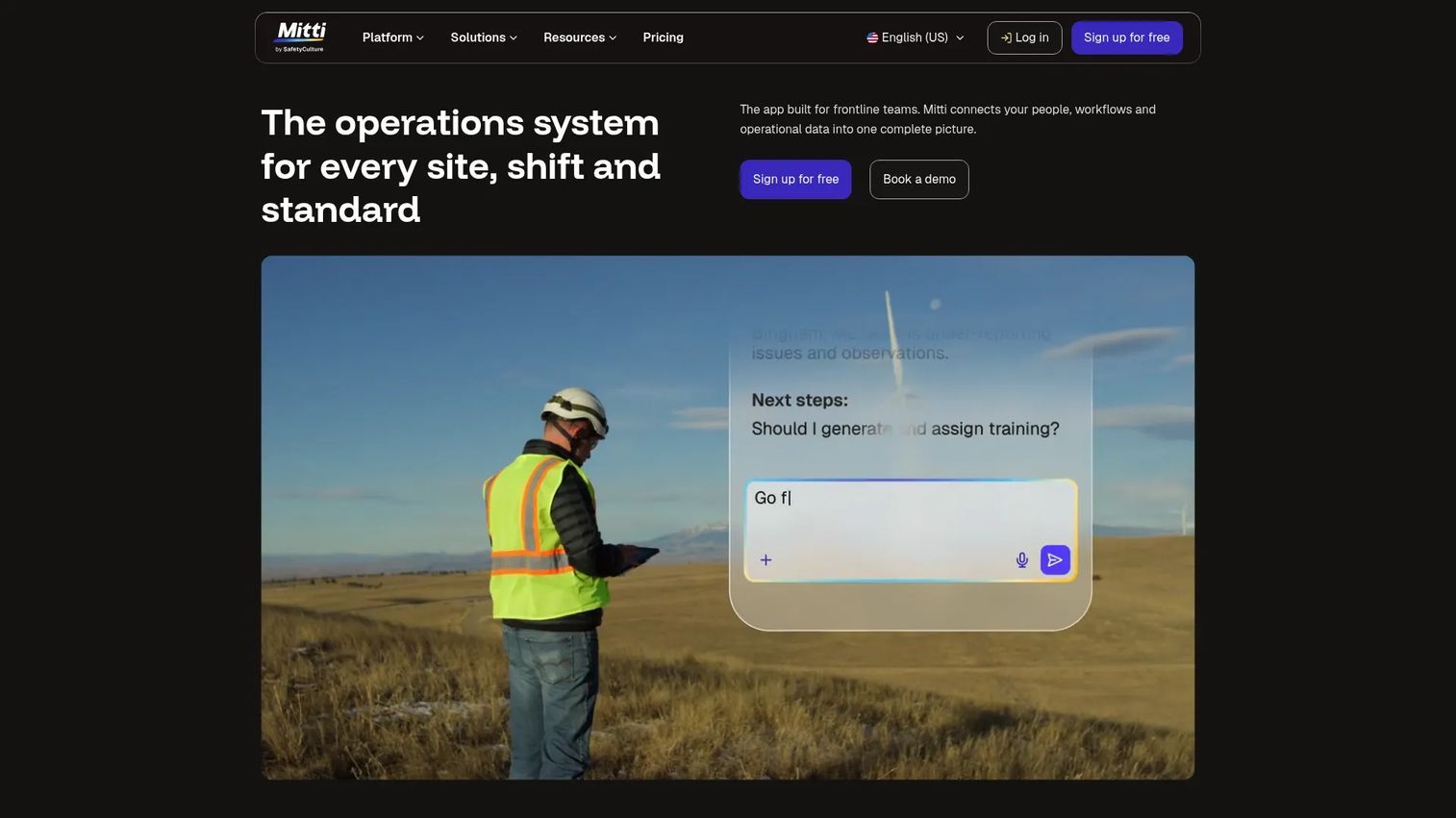
SafetyCulture is an operations platform for frontline teams supporting inspections, training, issue reporting, and workplace improvement. Its core capabilities cover digitized inspections and checklists, issue and incident reporting, and frontline training and competency tracking. For HSE managers, field supervisors, and operations leads in oil and gas, SafetyCulture addresses the mobile inspection and safety compliance layer that sits outside reservoir and production engineering systems.
Best for: HSE teams, field supervisors, and operations managers who need fast adoption for mobile inspections, safety checklists, and corrective action workflows.
Key features
- Digitized inspections and safety checklists
- Issue and incident reporting with corrective actions
- Frontline training and competency tracking
- Mobile-first access for field and remote teams
- Team reporting and performance analytics
Why choose SafetyCulture: SafetyCulture is not a petroleum engineering tool. Choose it when the team needs fast deployment for HSE and inspection workflows, not for reservoir or production engineering calculations.
SafetyCulture pricing: Free plan for teams of up to 10 seats. Premium is $24 per seat per month billed annually, or $29 per seat per month on a monthly basis. Enterprise pricing is custom.
G2 rating: 4.6/5
13. Oracle Primavera P6
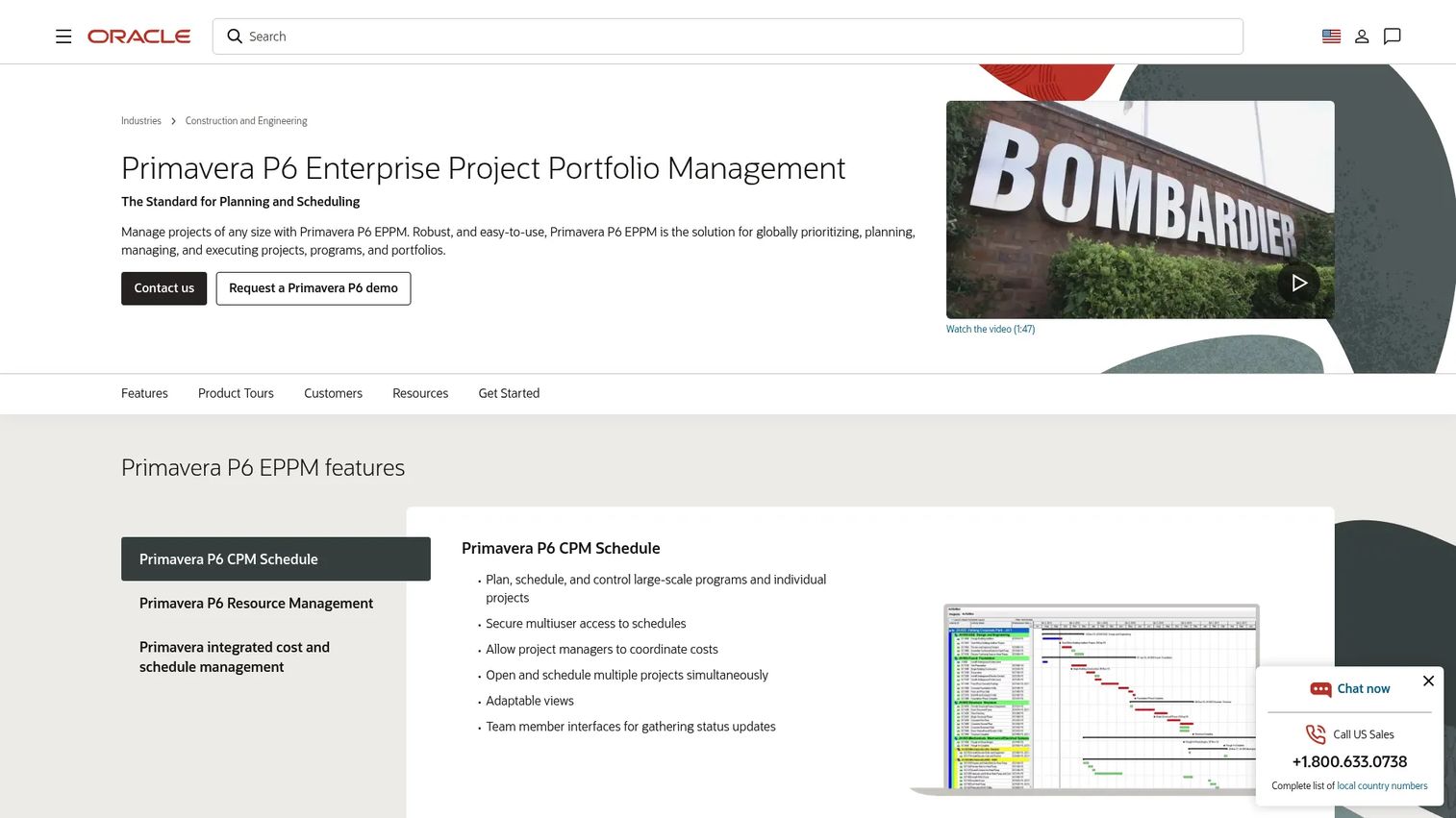
Oracle Primavera P6 is enterprise project portfolio management software for prioritizing, planning, managing, and executing projects, programs, and portfolios. In oil and gas, it is widely used for large-scale drilling programs, facility projects, turnarounds, and capital programs where critical path scheduling, resource management, and integrated cost and schedule controls drive project delivery.
Best for: Large oil and gas capital projects where schedule risk, dependency management, and integrated project controls are the primary software need.
Key features
- Critical path method scheduling and multiproject management
- Resource management, demand, and capacity planning
- Integrated cost and schedule management
- Risk management and portfolio reporting
- Baseline management and schedule variance tracking
Why choose Oracle Primavera P6: Use Primavera P6 when schedule complexity and dependency management drive cost exposure. It performs best when scheduling discipline and project controls maturity already exist in the organization.
Oracle Primavera P6 pricing: Oracle's perpetual application-user license is listed at $2,750. A separate software update and support fee of $605 applies annually. Cloud deployment options have different commercial terms; contact Oracle sales for current subscription pricing.
G2 rating: 4.4/5
14. InEight
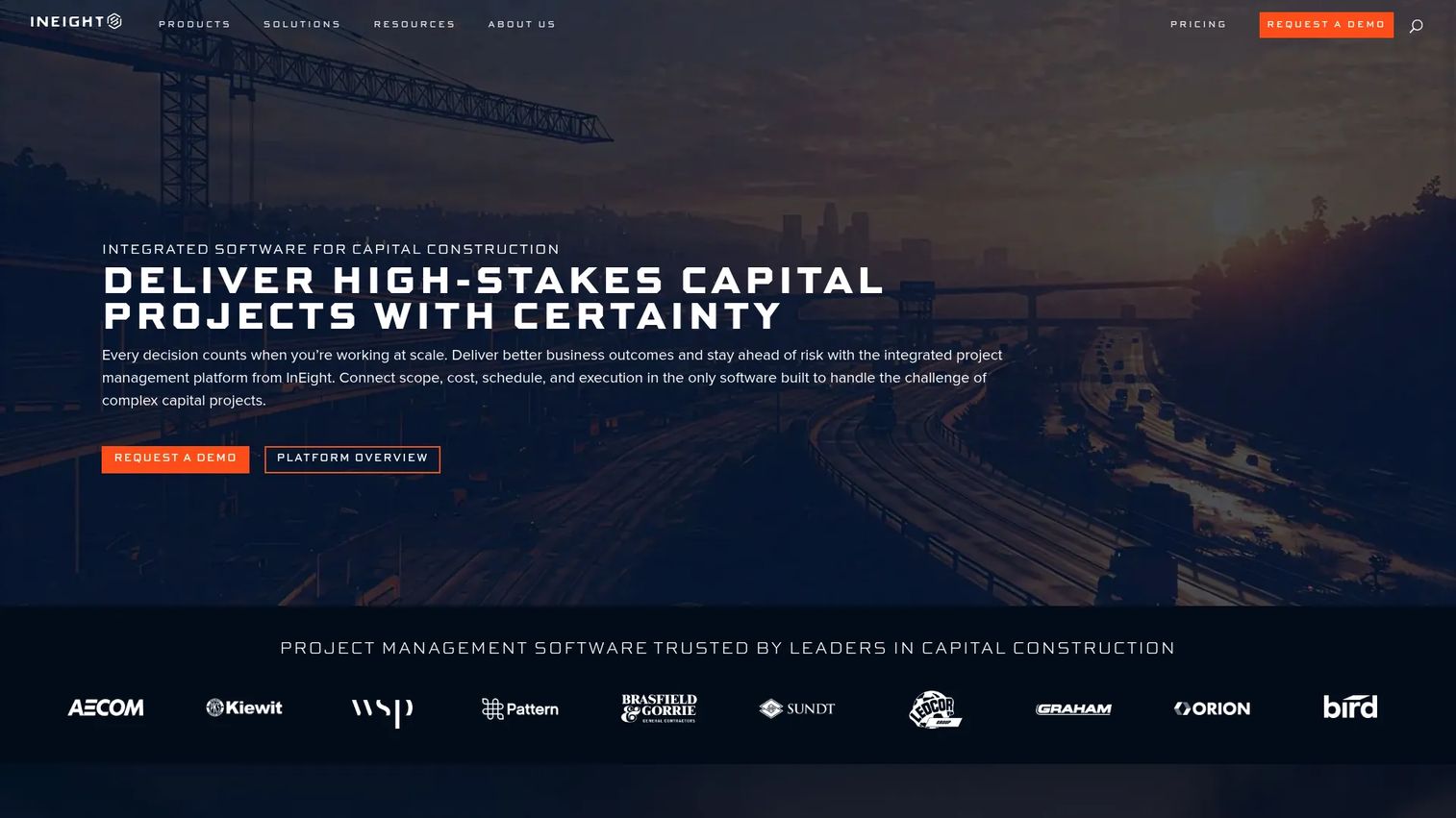
InEight is an integrated project-controls platform for complex capital construction projects. Its capabilities span cost controls, schedule management, risk tracking, field execution, document management, and construction reporting. InEight serves owners, EPCs, and contractors managing large energy and infrastructure capital programs where cost and schedule discipline directly determine project outcomes.
Best for: Owners, EPCs, and contractors managing large capital energy projects who need integrated cost, schedule, risk, and field execution controls.
Key features
- Integrated cost, schedule, scope, and change controls
- Budgeting, forecasting, variance tracking, and earned value management
- Mobile field reporting, work packaging, and quantity capture
- Document management, RFI and submittal workflows
- Construction reporting, dashboards, and portfolio analytics
Why choose InEight: InEight fits when the problem is project delivery discipline across cost and schedule rather than subsurface engineering or production optimization. It is built for capital-intensive construction and infrastructure programs.
InEight pricing: Pricing is modular and quote-based. InEight NOW per-user pricing is also available with monthly and annual options. Contact InEight sales for current terms based on products, users, and project scope.
G2 rating: 4.1/5
15. Procore

Procore is construction management software for planning, managing, and operating construction projects on one connected platform. It covers project management, cost management, bid management, quality and safety, and analytics with 500 or more integrations. In oil and gas, Procore is used for facility projects, midstream construction, and capital programs where contractor coordination, document control, and jobsite management are the primary gaps.
Best for: Oil and gas facility and construction teams who need contractor coordination, document management, RFIs, submittals, and jobsite quality and safety workflows.
Key features
- Project management including scheduling, RFIs, and submittals
- Cost management with budgets, forecasting, and invoicing
- Bid management and estimating
- Quality and safety inspections, observations, and daily logs
- 500+ integrations and AI-assisted construction analytics
Why choose Procore: Choose Procore when field construction execution and contractor coordination are the main software gap, not subsurface engineering or production accounting. It is a construction tool applied to energy capital programs.
Procore pricing: Pricing is customized based on products selected and Annual Construction Volume. Procore offers unlimited users under annual contracts. Contact Procore sales for a quote specific to your project portfolio.
G2 rating: 4.6/5
Considerations
Match the tool to the workflow owner
Reservoir engineers, production engineers, field supervisors, HSE teams, project controllers, and finance leads do not need the same system. Assign an internal owner for each evaluation before asking for demos. Buying a reservoir simulation platform for a team that needs field ticketing software is expensive and demoralizing for everyone involved.
Check integration depth before buying
Ask for real integration proof, not vague claims. Verify which ERP, SCADA, historian, GIS, production databases, and accounting software connections are production-ready versus in development. Oil and gas data environments are complex, and a tool that cannot connect to your existing stack creates a new data silo rather than eliminating one.
Separate engineering calculations from dashboards
Dashboards are useful, but they do not replace domain-specific models. Reservoir simulation, decline curve analysis, pressure transient analysis, and nodal analysis require purpose-built calculation engines. Buying a reporting tool and expecting it to do engineering work is a gap that shows up at the worst possible moment.
Evaluate field usability under real conditions
Mobile workflows need to work for field crews, not only office users. Test offline capability, photo evidence capture, digital signature workflows, and device support before committing. A tool that requires a reliable data connection in a remote wellsite is not a field tool.
Price the implementation, not just the license
Oil and gas tools frequently require data migration, configuration, process redesign, training, and data governance work. First-year total cost can be dominated by implementation and internal time rather than the license itself. Ask every vendor for a typical implementation timeline and internal resource requirement before comparing license prices.
Conclusion
Oil and gas engineering software is not one market. It is six workflow layers that each require a different evaluation team and a different shortlist.
For technical upstream engineering: SLB, GeoSoftware, and S&P Global. For operational and business workflows: Quorum, Enertia, EnergySys, and P2 Energy Solutions. For analytics and production optimization: Petro.ai and AspenTech. For field execution: FieldCap, Mitti, and SafetyCulture. For project controls and construction execution: Oracle Primavera P6, InEight, and Procore.
The practical next step is to identify the workflow owner, name the decision the tool must improve, and shortlist three tools from the table above. Verify pricing, G2 rating, deployment model, and integration requirements directly with each vendor before moving to a demo. Give your new VP or engineering lead this list and a clear mandate, and you will get a credible shortlist back inside a week.
Start your journey with Guideflow today!
FAQs
Oil and gas engineering software is specialized software that helps energy companies model reservoirs, plan wells, optimize production, manage field data, control capital projects, and connect technical workflows with operational and financial systems. The category spans petroleum engineering, geoscience, production operations, project controls, and oilfield asset management. It is not a single product category but a stack of workflow-specific tools matched to different technical and operational decisions.
Engineering software supports technical and operational decisions: Reservoir simulation, production forecasting, well performance analysis, field data capture, and production optimization. Project management software supports schedules, budgets, resources, and delivery coordination for capital programs. Many operators need both layers, but they serve different teams and solve different problems. Comparing Oracle Primavera P6 against Petrel on the same criteria will not produce a useful evaluation.
The answer depends on the specific upstream job. SLB covers subsurface interpretation, reservoir modeling, and digital operations. S&P Global and GeoSoftware address specialist geoscience and well performance workflows. Petro.ai is built for unconventional asset analysis and production forecasting. AspenTech covers production optimization and process engineering for complex facilities. Start with the workflow decision the team needs to improve, then match the tool.
FieldCap is best for oilfield service companies needing field ticketing, job data capture, and billing workflows. Mitti and SafetyCulture work well for teams that need mobile inspections, safety checklists, and corrective action management. Procore handles contractor coordination and construction execution on facility and capital projects. Each addresses a different layer of field operations, so the right choice depends on whether the gap is ticketing, inspection, or construction management.
Pricing varies widely across the category. Field and inspection tools like Mitti and SafetyCulture offer transparent SaaS pricing starting at $24 per seat per month. EnergySys starts at £35,000 per annum for a simple asset unit. Oracle Primavera P6 perpetual licenses start at $2,750 per user. Enterprise E&P platforms from SLB, Quorum, AspenTech, and others are quote-based and require conversations with sales about modules, seats, deployment, implementation, and data migration. Evaluate total first-year cost, not license cost alone.
The most important features for oil and gas production software are production data capture and validation, production allocation and hydrocarbon accounting, downtime tracking, field-to-office data synchronization, and integration with ERP and financial systems for revenue reporting. Joint venture billing, regulatory reporting, and analytics dashboards round out the picture for most operators. Generic business intelligence tools cannot replace production-specific calculation engines and workflow rules.
For technical workflows such as reservoir modeling, production optimization, and engineering calculations, general tools cannot substitute for domain-specific software. The calculations, data models, and regulatory requirements in petroleum engineering are too specialized. General project management platforms can support coordination and scheduling, but they do not replace reservoir simulators, well performance tools, or production accounting systems. Teams that try to manage engineering workflows in generic tools typically end up with spreadsheets filling the gap.
Start with the workflow, not the vendor. Identify which team owns the decision, name the specific calculation or data problem the tool must solve, and define which downstream systems it must connect to. Then shortlist tools that address the highest-cost bottleneck in that workflow. For asset lifecycle management decisions, verify the integration with your existing production database and ERP before anything else. A shortlist of three tools with clear owners and defined evaluation criteria produces faster decisions than a broad market scan.