Your company runs on SaaS you cannot fully see. The average enterprise now uses more than 110 SaaS applications, according to a 2026 market analysis cited by OpenPR, and each one carries its own configuration surface, admin roles, and third-party integrations. Every OAuth grant, every over-privileged account, every drifted setting is a door someone left open. Most security teams find out about those doors during an incident, an audit, or a security review that stalls a deal.
That is the problem SSPM software solves. SaaS security posture management continuously monitors your SaaS configurations, identities, permissions, and app-to-app integrations, then flags the risks that matter and tells you how to fix them. It is not a one-time audit. It is a running feed of misconfiguration detection, identity risk, and OAuth app exposure across the stack.
The category is growing fast for a reason. Frost & Sullivan valued the global SSPM market at USD 484.4 million in 2025 and projects it to reach USD 3.53 billion by 2030, a 48.7% compound annual growth rate. That pace tracks the reality that SaaS sprawl outgrew manual security review years ago.
For presales and security teams, SSPM does double duty. It reduces real SaaS risk, and it produces the posture reports, alerts, and remediation evidence you hand to a buying committee during technical validation. If you have ever watched a deal stall inside a security questionnaire, you already know why that evidence matters. This guide compares the leading options so you can match a tool to your SaaS footprint, your Microsoft dependency, your compliance needs, and your remediation maturity.
What's inside
This guide covers the leading SSPM software for teams comparing continuous monitoring, configuration drift detection, identity governance, OAuth app risk, and compliance support. We selected tools based on four criteria that matter to technical evaluators: breadth of SaaS coverage, depth of identity and integration visibility, quality of remediation workflow and reporting, and fit across SMB to enterprise. Every entry names where the tool performs best, what it monitors, and how its pricing is structured. The list is built for security, IT, identity, and presales stakeholders who need to explain the tool clearly to non-security buyers and defend the choice in a technical review.
TL;DR
- Best for Microsoft-heavy environments: Microsoft Defender for Cloud Apps, native to the Microsoft security stack and Secure Score.
- Best for compliance-first SaaS security teams: AppOmni, built around a five-pillar SSPM model and strong GRC mapping.
- Best for deep SaaS threat visibility: Obsidian Security, with attack-path thinking and shadow SaaS discovery.
- Best for broad security-stack alignment: Fortinet FortiSASE, for enterprises consolidating on a single vendor.
- Best for dedicated SSPM with fast operational rollout: Adaptive Shield, focused on posture checks and remediation.
- Best for lean security teams: Wing Security, with app discovery and straightforward posture workflows.
- Best for identity-first teams: OneLogin, connecting access governance to posture evaluation.
- Best for SaaS automation and remediation: BetterCloud, with no-code lifecycle and policy enforcement.
What is SSPM software?
SSPM (SaaS Security Posture Management) software is a security platform that continuously monitors SaaS applications for misconfigurations, identity and access risks, over-permissioned users, risky third-party integrations, and compliance gaps, then surfaces prioritized alerts and remediation guidance.
Unlike a periodic manual review, SSPM keeps watch as settings change, users come and go, and new apps connect to your core systems. It is purpose-built for the application layer of SaaS, where most modern data actually lives.
The core capabilities of SSPM software:
- Configuration drift and misconfiguration detection: Continuously checks SaaS settings against secure baselines and flags risky changes.
- Identity and access governance: Surfaces over-privileged accounts, dormant accounts, orphaned users, and role drift.
- Third-party integration and OAuth app oversight: Inventories connected apps, their permission scopes, and hidden app-to-app connections.
- Threat and activity monitoring: Watches for suspicious behavior, token misuse, and anomalous admin actions.
- Compliance and audit evidence: Maps posture against frameworks and produces audit-ready reports and remediation records.
SSPM is easy to confuse with adjacent categories, so it helps to draw the lines clearly. A CASB (Cloud Access Security Broker) governs cloud access and data movement broadly, sitting between users and cloud services. CSPM (Cloud Security Posture Management) watches cloud infrastructure such as IaaS and PaaS misconfigurations. SIEM (Security Information and Event Management) collects and correlates logs across your environment. SSPM is narrower and deeper: it focuses on the posture, configurations, identities, and integrations of the SaaS applications themselves. Most mature security stacks run several of these together rather than choosing one.
What SSPM software should do for presales and security teams
The best SSPM tools do more than detect problems. They translate SaaS risk into evidence a technical buyer and a security reviewer can trust.
Continuous posture monitoring
A point-in-time audit tells you the state of your SaaS on the day someone ran it. By the next week, an admin changed a sharing setting, a new integration connected, and three accounts went dormant. Continuous posture management closes that gap. Good SSPM software surfaces configuration drift as it happens, flags risky permission changes, and catches dormant accounts before they become an attack path. For presales, that live feed is what lets you say "here is our posture right now," not "here is what it was last quarter."
Identity and access governance
SaaS identity governance is where most posture risk concentrates. Evaluate whether a tool flags over-privileged users, orphaned accounts left behind after offboarding, stale credentials, and role drift where permissions creep upward over time. These are the exact items a security review probes. When you can show least-privilege enforcement and clean identity hygiene during technical validation, you remove one of the most common stalls in an enterprise deal cycle.
SaaS-to-SaaS integration visibility
Every OAuth grant is a standing permission that outlives the person who approved it. SSPM software should maintain a full OAuth app inventory, expose invisible app-to-app connections, and analyze the permission scopes each integration holds. This matters enormously to enterprise buying committees, because a single compromised token in a third-party app can expose data across your core systems. Integrations are the blind spot that manual review almost always misses.
Compliance and remediation support
Detection without a fix is just a longer to-do list. Strong SSPM software pairs findings with remediation guidance, maps posture against the frameworks your team actually reports on, and generates audit-ready evidence. Emphasize reporting, not just alerts. The output your security team can hand to an auditor, or your presales team can attach to an RFP, is often the difference between a tool that gets adopted and one that gathers dashboards nobody reads.
When to use SSPM software
SSPM earns its place in specific situations. Here is how to pattern-match your own.
You need to inventory and monitor shadow SaaS
When app count grows faster than anyone can track, ownership gets fuzzy, and controls drift app by app, you need a baseline. Teams reach this point when finance flags SaaS spend nobody recognizes, or when a security review asks "how many SaaS apps hold customer data?" and no one can answer. SSPM discovers the apps, maps who owns what, and establishes a posture baseline you can defend.
You need to prove SaaS posture before a security review
Enterprise deals live and die in security diligence. Presales teams can use SSPM outputs directly in that process: posture reports that show configuration health, alerts that prove active monitoring, and remediation evidence that demonstrates you fix what you find. Instead of scrambling to answer a questionnaire from memory, you export current-state evidence. That speeds technical validation and keeps deal momentum intact.
You need to manage OAuth and app-to-app risk
Integrations become blind spots the moment they are approved. A marketing tool with broad read access, an old automation with admin scope, a token that was never revoked: each is a live exposure. SSPM connects this to real risk such as token compromise and unauthorized app access. When you can see every connected app and its scope, you can revoke what you no longer need and monitor what you keep.
Comparison table
We ranked these SSPM vendors by relevance to the primary job: continuous SaaS posture management across configurations, identities, and integrations, weighted for coverage breadth, remediation quality, and fit across company sizes. Use the table as a shortlist filter, then read the detailed sections for fit.
| # | Product | Intent | Key use case | Pricing | G2 rating |
|---|---|---|---|---|---|
| 1 | Microsoft Defender for Cloud Apps | Microsoft-native SaaS security | App discovery, governance, and OAuth threat detection inside Microsoft security | From $60.00 user/month (via Microsoft 365 E5), paid yearly | 4.4/5 |
| 2 | AppOmni | Compliance-first SSPM | SaaS and AI security across major apps with GRC mapping | Quote-based | 4.8/5 |
| 3 | Obsidian Security | Threat-driven SSPM | Shadow SaaS and shadow AI discovery with runtime protection | Free plan; paid quote-based | 4.0/5 |
| 4 | Fortinet FortiSASE | Single-vendor security alignment | SASE/SSE for hybrid workforce with SaaS access oversight | Quote-based | 4.3/5 |
| 5 | Adaptive Shield | Dedicated SSPM and ITDR | SaaS misconfiguration, identity risk, and threat detection | Quote-based | 4.8/5 |
| 6 | Wing Security | Lean-team SaaS security | App discovery, posture policies, and identity threat response | Free entry point; paid tiers | 4.9/5 |
| 7 | OneLogin | Identity-first governance | Workforce IAM with SSO, MFA, and lifecycle management | From $3/user/month | 4.4/5 |
| 8 | BetterCloud | SaaS automation and remediation | No-code workflows, spend optimization, and governance | Free tier; modules quote-based | 4.4/5 |
Pricing and G2 ratings shift over time. Verify current figures on each vendor's pricing page and live G2 listing before you make a decision.
The 8 best SSPM software tools for 2026
1. Microsoft Defender for Cloud Apps
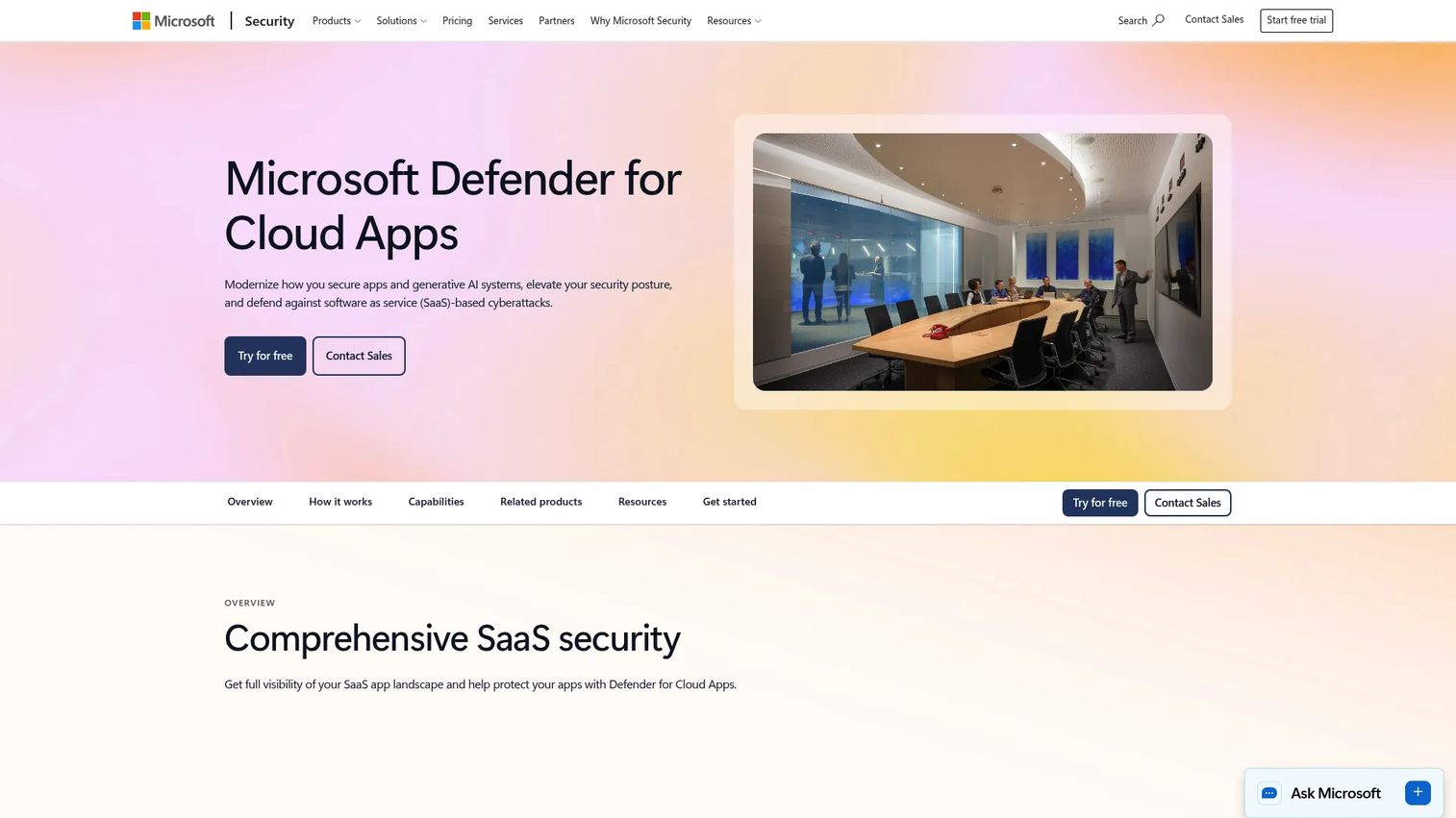
Microsoft Defender for Cloud Apps is Microsoft's SaaS security solution for discovering, governing, and protecting cloud apps and generative AI use. It layers SaaS security posture management on top of shadow IT discovery, app risk evaluation, and app-to-app governance, all inside the Microsoft security fabric. For organizations already standardized on Microsoft 365 and the Defender suite, it turns posture management into an extension of tooling the security team already runs.
Best for: Enterprises that need SaaS app discovery, governance, and threat protection within Microsoft security.
Key strengths
- SaaS security posture management: Continuous configuration assessment and security recommendations tied to Secure Score.
- Shadow IT discovery and app risk evaluation: Surfaces unsanctioned apps and scores their risk across the environment.
- App-to-app governance and OAuth threat detection: Monitors connected apps and flags risky OAuth grants and token abuse.
Why choose Microsoft Defender for Cloud Apps: If your identity, endpoint, and email security already live in Microsoft, this consolidates SaaS posture into the same investigations and score surfaces your analysts use daily. The tie-in to Secure Score gives leadership a single posture metric, and the app connectors extend coverage to major non-Microsoft SaaS. It fits teams that value one operational pane over a standalone SSPM specialist.
Microsoft Defender for Cloud Apps pricing: Microsoft does not publish a standalone price for Defender for Cloud Apps. It is available through broader Microsoft Defender purchase options, with SaaS security emphasized inside Microsoft 365 E5 at $60.00 per user per month paid yearly, Microsoft 365 E5 without Teams at $51.45 per user per month paid yearly, and the Microsoft Defender Suite at $12.00 per user per month paid yearly. There is no standalone free tier. Confirm current licensing on the Microsoft Defender pricing page.
2. AppOmni
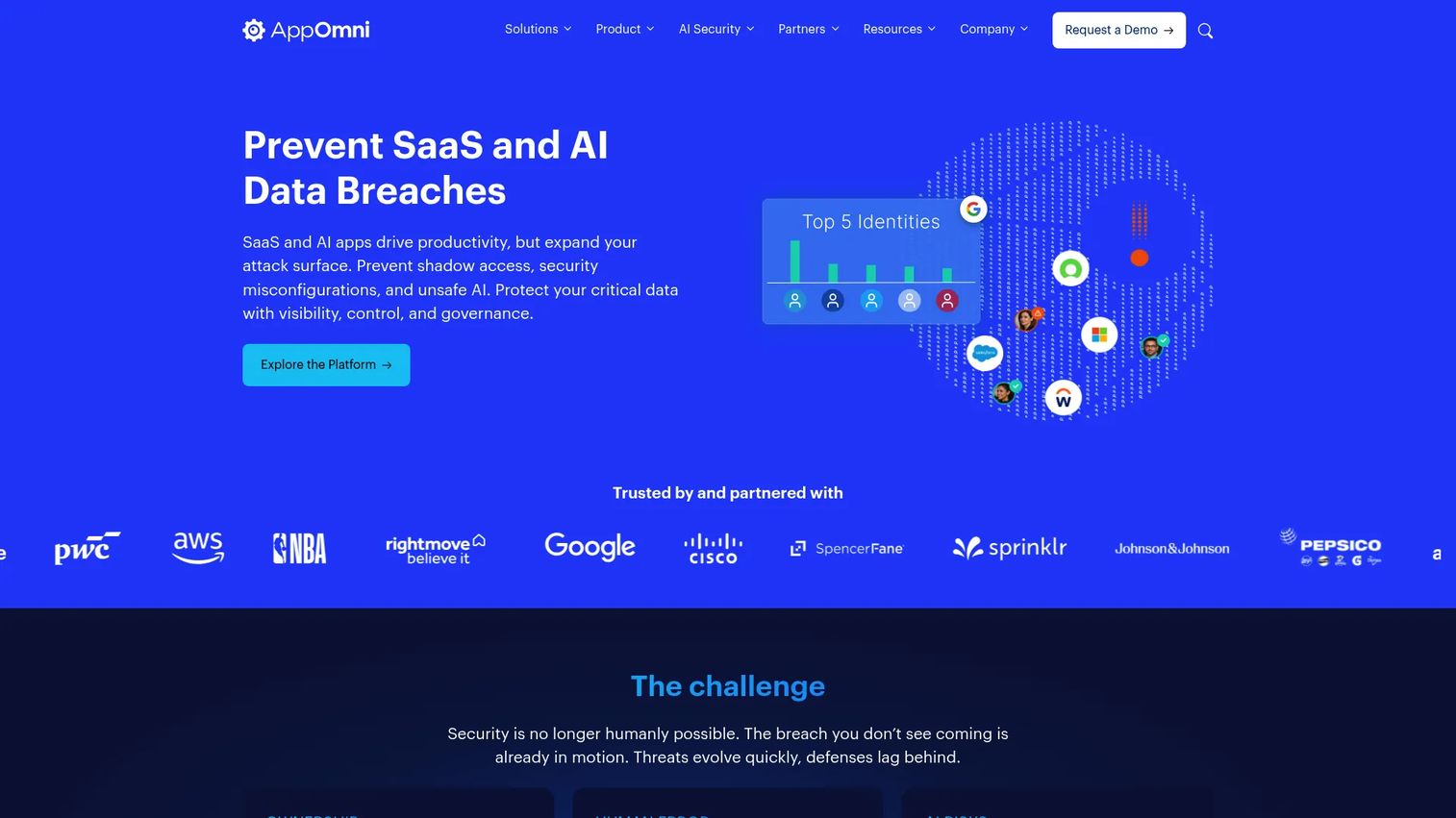
AppOmni is a SaaS and AI security platform built to identify, protect, detect, and respond to SaaS threats. It is one of the more compliance-oriented SSPM tools, with a structured model spanning configuration, identity, integrations, and governance. AppOmni provides critical app coverage for Microsoft 365, Salesforce, ServiceNow, Google Workspace, and Workday, plus emerging AI security capabilities. Teams that need audit-ready evidence across their most sensitive SaaS tend to land here.
Best for: Enterprises seeking SSPM and SaaS security with strong AI governance across major SaaS apps.
Key strengths
- Identify, protect, detect, and respond: A full lifecycle model across SaaS and AI threats, not just detection.
- Critical app coverage: Deep posture and monitoring for Microsoft 365, Salesforce, ServiceNow, Google Workspace, and Workday.
- AI security capabilities: Agent Inventory and AgentGuard extend posture management to AI agents connected to your SaaS.
Why choose AppOmni: The compliance framing is the differentiator. If your security team maps posture to frameworks and hands evidence to auditors, AppOmni's structured governance model reduces the manual assembly work. Its depth on the highest-value business apps makes it a fit for organizations where a Salesforce or Workday misconfiguration is a board-level risk, not a footnote.
AppOmni pricing: AppOmni does not publish public pricing; plans are quote-based through sales. Pricing typically reflects the number and type of SaaS applications monitored and the depth of AI governance required. Request a quote scoped to your critical app list.
3. Obsidian Security
Obsidian Security is a SaaS and AI security platform focused on visibility, governance, and runtime protection across enterprise applications. It leans into threat-driven SSPM: rather than only listing misconfigurations, it thinks in attack paths and highlights how an exposure could be chained into a breach. Obsidian also emphasizes shadow SaaS and shadow AI discovery, along with AI agent governance and runtime protection.
Best for: Mid-market to enterprise teams securing SaaS apps and AI agents with a threat-detection mindset.
Key strengths
- SaaS and AI security platform: Unified posture, governance, and detection across SaaS and connected AI.
- Shadow SaaS and shadow AI discovery: Finds unsanctioned apps and AI tools operating outside approved controls.
- AI agent governance and runtime protection: Monitors agent behavior and defends against threats as they unfold.
Why choose Obsidian Security: Choose it when your team wants continuous, threat-oriented context rather than a static posture snapshot. The attack-path framing helps analysts prioritize the exposures that actually matter, and the free entry tier lets smaller teams start before committing budget. It suits security organizations that already think in terms of detection and response and want SSPM to speak the same language.
Obsidian Security pricing: Obsidian publishes a Free plan for up to 1,000 users at $0 per month. Beyond that, the Foundations and Advanced plans are quote-based, priced through sales based on scope and coverage. The free tier makes it straightforward to trial posture visibility before scaling to a paid plan.
4. Fortinet FortiSASE
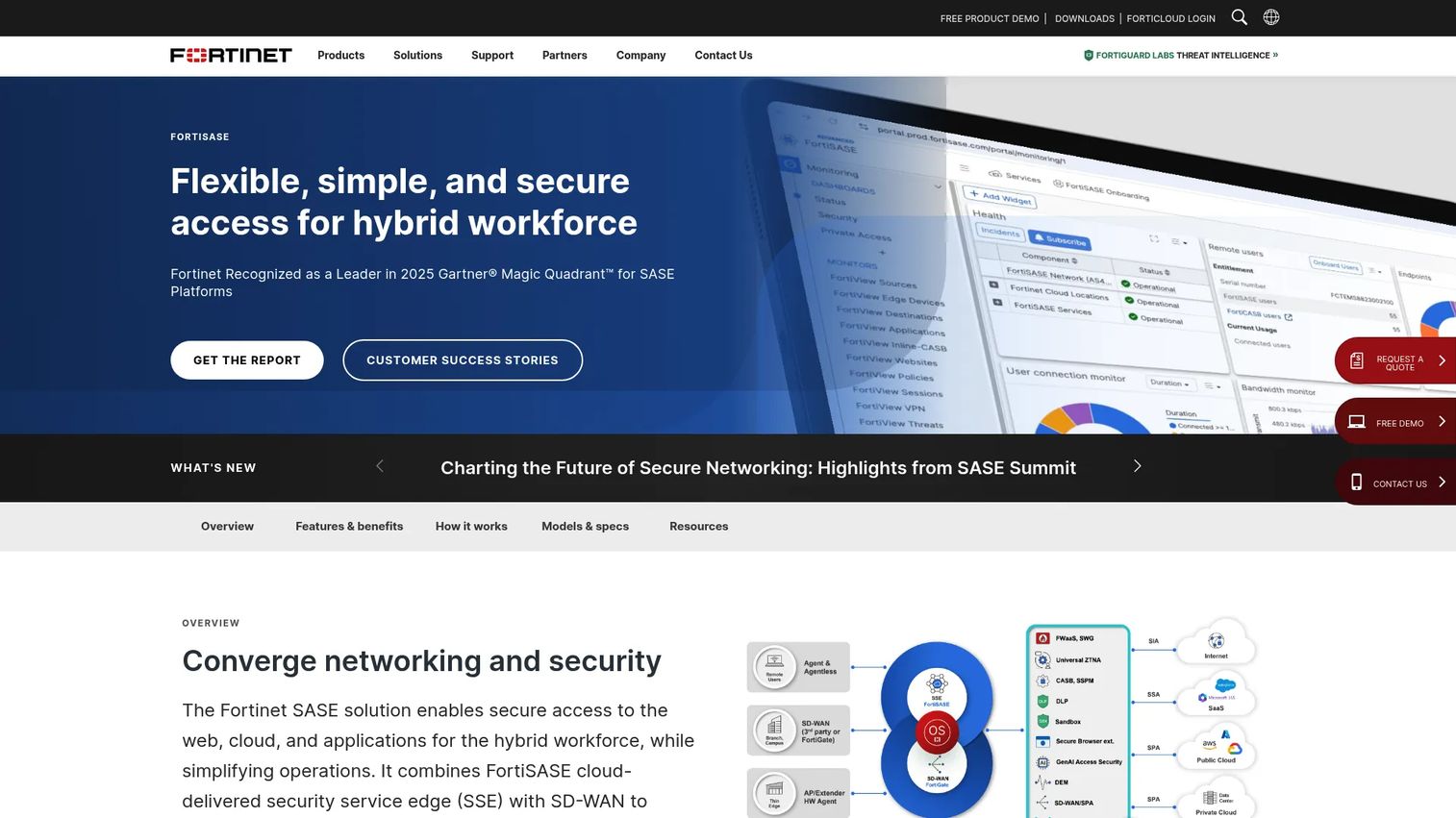
Fortinet FortiSASE is a cloud-delivered SASE and SSE platform for securing hybrid workforces with unified networking and security. It is broader than a dedicated SSPM tool, folding SaaS access oversight, misconfiguration awareness, and posture visibility into a single-vendor security architecture. For enterprises consolidating networking and security, FortiSASE brings SaaS posture into the same operating system, client, and data lake as the rest of the Fortinet stack.
Best for: Enterprises wanting a single-vendor SASE platform for hybrid workforce access and security.
Key strengths
- Unified management: One OS, one client, and one data lake across networking and security functions.
- Flexible connectivity: SD-WAN, zero trust, and both agent-based and agentless access to SaaS and private apps.
- AI-powered threat intelligence: FortiAI-Assist adds automated analysis and guidance across the environment.
Why choose Fortinet FortiSASE: This is the consolidation play. If you already run Fortinet or want to reduce vendor sprawl, folding SaaS access and posture oversight into a broader SASE platform reduces the number of consoles your team manages. Where a dedicated SSPM tool goes deeper on pure application posture, FortiSASE excels when SaaS security is one part of a wider network-and-security consolidation strategy.
Fortinet FortiSASE pricing: Fortinet describes FortiSASE as subscription-based but does not publish public pricing figures. The product page directs prospects to contact sales or request a quote, typically scoped to seat count and the modules deployed. Pricing scales with the breadth of the SASE deployment.
5. Adaptive Shield
Adaptive Shield is a SaaS security posture management platform for finding and fixing SaaS misconfigurations, identity risk, and threats. It is a dedicated SSPM built around operational workflows: run posture checks, get remediation guidance, and track identity security posture across connected apps. Adaptive Shield extends into identity threat detection and response (ITDR), giving teams a combined view of misconfigurations and the identities that touch them.
Best for: Enterprises needing SSPM and ITDR visibility across SaaS apps and connected identities.
Key strengths
- SaaS app security checks and remediation guidance: Continuous posture checks paired with clear, actionable fixes.
- Identity security posture and privileged access monitoring: Tracks over-privileged and risky identities across the SaaS estate.
- Shadow app, device, GenAI, and threat detection: Surfaces unsanctioned apps, risky devices, and emerging GenAI exposure.
Why choose Adaptive Shield: As a dedicated SSPM platform, it keeps the focus tight on SaaS posture and the identities that interact with it. The remediation guidance is designed to move teams from finding to fixing quickly, and the ITDR layer connects configuration risk to identity risk in one workflow. It fits teams that want a specialist tool rather than SSPM bundled into a larger suite.
Adaptive Shield pricing: Adaptive Shield does not publish public pricing; engagement is through sales for a scoped quote. Pricing generally reflects the number of SaaS applications and identities monitored. Contact the vendor for a quote aligned to your app inventory.
6. Wing Security
Wing Security is a SaaS and AI security platform for discovering apps, managing SaaS and AI risk, and responding to identity threats. It is built to be approachable for lean security teams: deep SaaS visibility, straightforward posture policies, and automated remediation without a heavy operational lift. Wing gives smaller teams a clear path from discovery to posture management to identity threat response.
Best for: Security teams needing SaaS and AI visibility, posture management, and identity threat response.
Key strengths
- Deep SaaS visibility: Maps apps, users, and app-to-app connections across the environment.
- SSPM-style misconfiguration policies and automated remediation: Applies posture policies and automates fixes to reduce manual effort.
- ITDR for SaaS identity threats: Detects identity threats with MITRE ATT&CK mapping for context.
Why choose Wing Security: For teams without a large security headcount, Wing balances depth with accessibility. The app-to-app connection mapping and automated remediation reduce the manual work that usually slows small teams down, and the MITRE ATT&CK mapping adds threat context that helps analysts prioritize. A free entry point lowers the barrier to starting.
Wing Security pricing: Wing offers a "Start for free" entry point and public Basic, Pro, and Enterprise tiers. A company press release noted a compliance-grade SaaS security offering starting around $1.5K, though a full public price table was not listed on the live pages reviewed. Confirm current tier pricing directly with Wing.
7. OneLogin
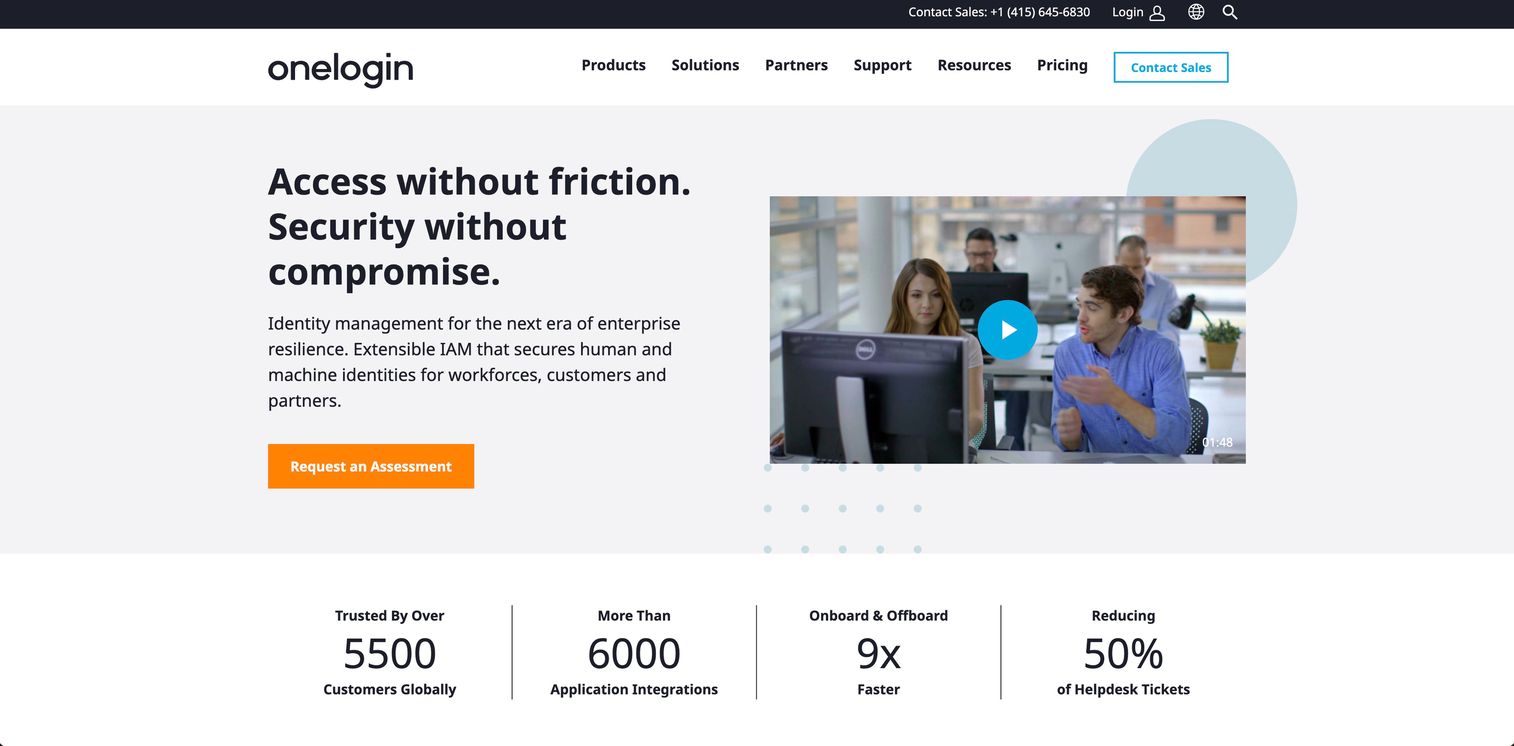
OneLogin is an identity and access management platform for workforce, customer, and education use cases. It is not a pure SSPM tool, but identity is the backbone of SaaS posture, and OneLogin supports SSPM-style evaluation by governing who has access to what across your SaaS. Single sign-on, multi-factor authentication, and identity lifecycle management give teams the access controls that posture management depends on.
Best for: Organizations needing workforce IAM with SSO and MFA that connects access to posture.
Key strengths
- Single sign-on (SSO): Centralizes access across SaaS apps to reduce credential sprawl.
- Multi-factor authentication (MFA): Adds an access-layer control that strengthens SaaS posture.
- Identity lifecycle management: Provisions and deprovisions access to cut orphaned and dormant accounts.
Why choose OneLogin: For identity-first security teams, OneLogin connects access governance to the posture picture. Clean provisioning and deprovisioning directly reduce the orphaned and over-privileged accounts that dedicated SSPM tools flag, so it complements a posture platform by tightening the identity layer at the source. It fits teams that treat identity as the first line of SaaS defense.
OneLogin pricing: OneLogin publishes workforce identity pricing with a Basic plan at $3 per user per month, Essentials at $6 per user per month, and Business at $10 per user per month. OneLogin Workflows is available as a $2 per user per month add-on, and the Enterprise plan is quote-based. A free trial is available, but there is no public free tier.
8. BetterCloud
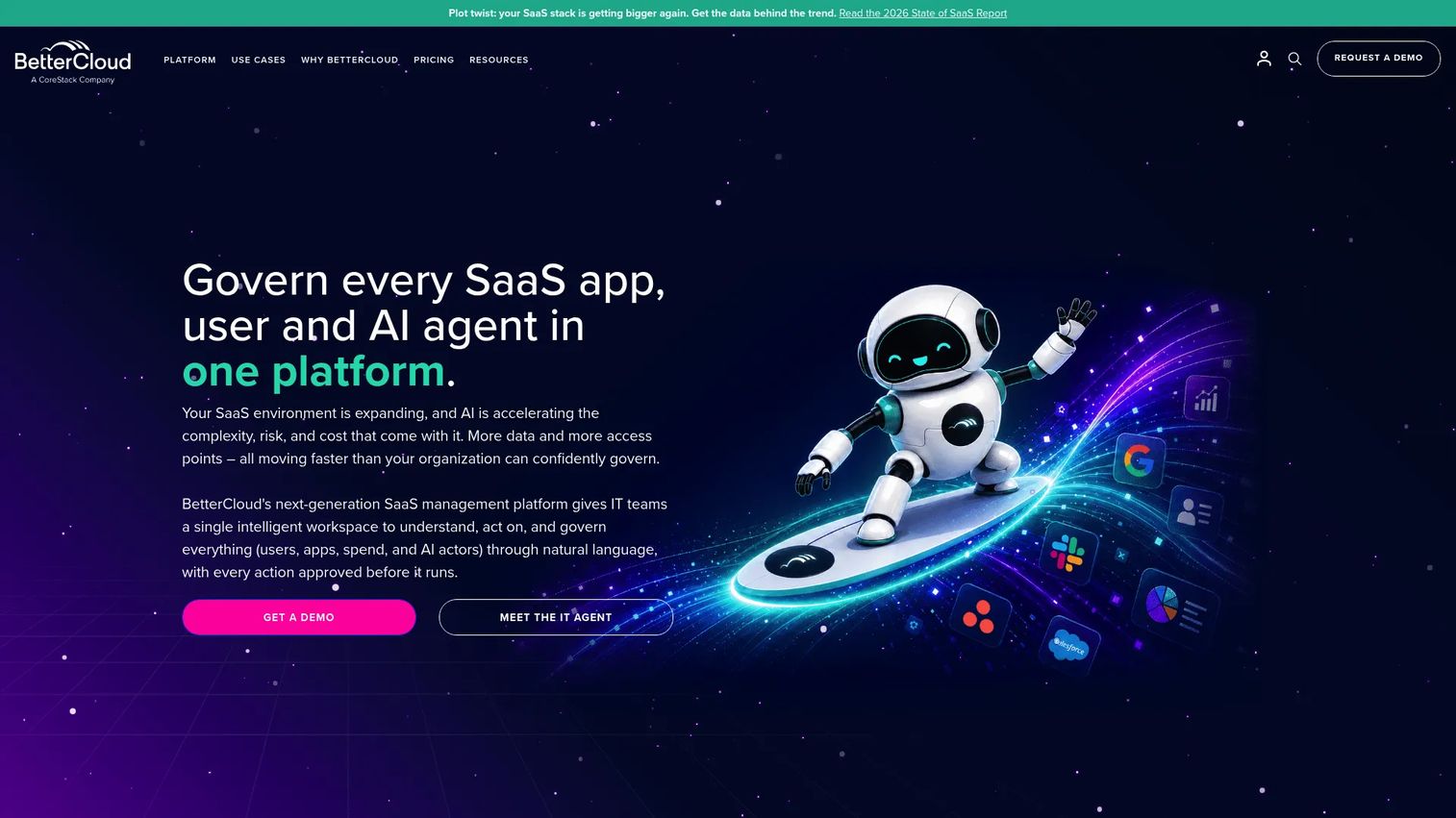
BetterCloud is a SaaS management platform for IT teams to automate workflows, optimize SaaS spend, and manage cloud app governance. Its strength is operational: no-code automation for onboarding and offboarding, policy enforcement, and cross-app control that supports posture management from the administration side. Where dedicated SSPM tools detect risk, BetterCloud gives IT and security teams the automation to remediate it at scale.
Best for: IT and security teams managing SaaS governance, automation, and spend control.
Key strengths
- No-code workflow automation: Automates onboarding and offboarding to cut orphaned accounts and access drift.
- Spend optimization: Reclaims unused licenses and benchmarks contracts to control SaaS cost.
- Workspace management for Google: Governs file sharing and lifecycle actions across Google Workspace.
Why choose BetterCloud: If your posture problem is as much about SaaS operations as detection, BetterCloud's automation closes the loop. Automated deprovisioning removes the dormant and orphaned accounts that create posture risk, and policy enforcement keeps configurations from drifting. It fits IT and security teams that want remediation and lifecycle control to happen automatically rather than by hand.
BetterCloud pricing: BetterCloud publishes partial pricing. Spend Optimization Basic is available free at $0 per month, File Governance offers a 21-day trial, and User Automation plus Workspace Management for Google are quote-based. The broader platform is priced through sales, so request a quote scoped to the modules you need.
Considerations before you buy
Once you have a shortlist, run each candidate through these criteria against your actual environment, not the vendor's marketing.
SaaS coverage
Verify the tool covers the apps in your stack, not just the household names. Deep posture coverage for Microsoft 365 or Salesforce is common; coverage for the long tail of niche SaaS your teams actually use is where tools diverge. Ask for the exact supported-app list and match it to your inventory.
Identity depth
Check whether the tool flags over-privileged users, stale credentials, dormant accounts, orphaned users after offboarding, and role drift. Identity is where most posture risk concentrates, and shallow identity coverage leaves the biggest gap exposed. This is also the area a security review probes hardest.
Integration visibility
Confirm the tool discovers OAuth apps, analyzes their permission scopes, and maps hidden app-to-app connections. Integrations are the blind spot manual review misses, and a compromised token in a third-party app can expose data across your core systems. Full integration inventory is non-negotiable for enterprise buyers.
Compliance reporting
Validate that the tool maps to the frameworks your team actually reports on and produces audit-ready evidence. A tool that maps to standards you do not use adds noise, not value. The quality of the exported evidence matters as much as the detection.
Remediation workflow
Look for guided fixes, approval flows, and alerting that reduce manual effort. Detection without remediation just lengthens the backlog. The best tools move you from finding to fixing with minimal handoffs.
Stack fit
Check compatibility with your SIEM, IAM, CASB, and existing ticketing or workflow tools. SSPM works best as part of a connected stack, feeding signals into the systems your team already lives in. Poor integration turns a strong tool into another silo.
Conclusion
There is no single best SSPM software, only the best fit for your SaaS risk profile. If your environment runs on Microsoft, Microsoft Defender for Cloud Apps consolidates posture into the security fabric you already operate. Compliance-first teams that map posture to frameworks will find AppOmni's structured governance model a strong match, while Obsidian Security fits teams that want threat-driven, attack-path context. Fortinet FortiSASE is the consolidation choice for single-vendor enterprises, and Adaptive Shield delivers dedicated SSPM with tight ITDR. Lean teams get accessibility from Wing Security, identity-first teams gain access governance from OneLogin, and IT-led organizations get automation and remediation from BetterCloud.
Strong SSPM software does more than find misconfigurations. It monitors posture continuously, governs identity, exposes integration risk, and produces the compliance proof your buyers and auditors expect. Narrow your shortlist by four questions: how big is your SaaS footprint, how deep is your Microsoft dependency, which compliance frameworks bind you, and how mature is your remediation workflow. Answer those honestly and the right tool becomes obvious.
FAQs
SSPM software is a security platform that continuously monitors SaaS applications for misconfigurations, identity and access risks, risky third-party integrations, and compliance gaps. Instead of a one-time audit, it provides continuous SaaS posture monitoring with prioritized alerts and remediation guidance. It is purpose-built for the application layer where most SaaS data lives.
A CASB governs cloud access and data controls broadly, sitting between users and cloud services to enforce policy and prevent data loss. SSPM is narrower and deeper, focusing on the security posture, configurations, identities, and integrations of the SaaS applications themselves. In the CASB vs SSPM comparison, many teams run both: CASB for access and data movement, SSPM for application posture.
CSPM (Cloud Security Posture Management) focuses on cloud infrastructure, such as misconfigurations in IaaS and PaaS environments. SSPM focuses on SaaS applications, their settings, identities, and connected apps. The SSPM vs CSPM distinction comes down to layer: CSPM watches the infrastructure you build on, SSPM watches the SaaS you buy and configure.
Yes, in most cases. In the SSPM vs SIEM comparison, SIEM collects and correlates logs across your environment to detect and investigate events. SSPM focuses specifically on SaaS posture and misconfiguration risk, surfacing exposures before they become incidents. They complement each other, and many teams feed SSPM findings into their SIEM.
Start with app inventory so you know what you actually run, then identity risk such as over-privileged and dormant accounts. Next, review OAuth integrations and their permission scopes, since these are common blind spots. Finally, address high-risk configuration drift in your most sensitive apps. This order tackles the highest-impact SaaS misconfiguration detection first.
Security, IT, and identity teams are the primary buyers, often with compliance stakeholders involved in framework mapping. Presales and sales engineering teams also rely on SSPM outputs during enterprise sales cycles, using posture reports and remediation evidence to clear security reviews. Ownership frequently spans several of these functions.
Strong SSPM vendors combine broad SaaS coverage, deep identity governance, full OAuth and integration visibility, high-quality prioritized alerts, and clear remediation guidance. Compliance mapping to the frameworks you actually use and clean integrations with your SIEM, IAM, and ticketing tools separate the leaders. Reporting quality matters as much as detection.
Compare app coverage against your real stack, identity controls, integration and OAuth visibility, compliance reporting, remediation workflow, and stack fit with your existing security tools. Then weigh enterprise readiness and pricing model against your scale. The right choice depends on your SaaS footprint, Microsoft dependency, compliance needs, and remediation maturity.