A single credit decision stuck in someone's inbox can hold up a shipment for three days. Multiply that across a growing order book, and manual credit review stops being a finance problem and becomes a revenue problem. Approvals slow down. Policy gets applied inconsistently because two reviewers read the same risk differently. Blocked orders pile up, and sales starts routing around the process entirely.
The market is moving away from this. The credit management software market was valued at USD 17.58B in 2025 and is projected to reach USD 43.10B by 2032 at a 13.66% CAGR, according to 360iResearch (2026). More than 69% of medium and large enterprises globally have adopted digital credit management platforms, per Global Market Statistics (2026). Buyers are not chasing novelty. They are trying to close a gap between how fast sales moves and how slowly credit decisions get made.
That gap matters to more than finance. When credit checks stall, deals stall. Sales enablement leaders feel it in cycle time and handoff friction, revenue operations feels it in blocked-order volume, and finance feels it in DSO and write-offs. The right platform connects those teams around one credit process instead of scattered spreadsheets and email threads.
This guide compares eight platforms that automate parts or all of the credit lifecycle, from application intake through decisioning, monitoring, and order-to-cash. Some are full workflow suites. Some are data and intelligence layers that feed your decisions. Knowing which is which is half the evaluation.
What's inside
This is a buyer's guide for teams evaluating credit automation across finance, sales, and order-to-cash. It covers eight platforms spanning two categories: full credit management suites that handle application intake, scoring, approval automation, and monitoring, and credit data providers that supply the intelligence those decisions rely on.
We selected and compared each option on four criteria that matter most in real deployments:
- Workflow depth: how much of the credit lifecycle it automates end to end.
- Decisioning and AI: scoring, risk models, and automated approval logic.
- ERP and order-to-cash fit: how cleanly it connects to SAP, Oracle, Microsoft Dynamics, and NetSuite.
- Monitoring and proof: continuous risk tracking plus verifiable pricing and G2 data where available.
TL;DR
- Best for enterprise credit risk control in order-to-cash: HighRadius, for large finance teams automating scoring, approvals, and monitoring at scale.
- Best for teams that want credit tied to broader AR: Esker, which connects credit lifecycle automation to adjacent order-to-cash workflows.
- Best for a modern, workflow-first application experience: Nuvo, built around branded credit intake, verification, and collaborative approvals.
- Best for AR-forward receivables teams: Billtrust, pairing credit with collections and payments across the receivables cycle.
- Best for replacing legacy credit systems: CGI Credit Studio, a cloud-native option for originations, decisioning, and collections.
- Best for data-first buyers: Creditsafe, Experian, and Dun & Bradstreet, when you need credit intelligence to feed decisions rather than a full workflow suite.
What is credit management software?
Credit management software is a system that automates how a company evaluates, approves, monitors, and controls customer credit across the order-to-cash cycle. It replaces manual credit review and spreadsheet-based scoring with policy-driven workflows, connecting credit decisions to sales, finance, and ERP systems.
In plain terms, it takes the judgment calls that used to live in a credit analyst's inbox and turns them into a repeatable, measurable process. The strongest credit management platforms cover the full lifecycle rather than one slice of it.
Core capabilities to expect from a credit management system:
- Credit application intake: branded, digital applications that capture customer and financial data without paper or PDFs.
- Risk scoring and decisioning: credit scoring software and decisioning engines that apply your policy and third-party data to recommend or auto-approve limits.
- Approvals and exceptions: automated credit approval for straightforward cases, with routing and escalation for exceptions.
- Continuous monitoring: credit risk monitoring software that flags limit breaches, account deterioration, and payment behavior changes.
- ERP and order-to-cash connectivity: integrations that push credit status into SAP, Oracle, Dynamics, and NetSuite to prevent blocked orders and speed release.
The line worth drawing early: a credit management software solution automates the workflow, while a credit data provider supplies the risk intelligence the workflow consumes. Many teams run both. Manual credit review still works at low volume, but it does not scale, and it rarely applies policy the same way twice.
When to use credit management software
Not every finance team needs the same depth of automation. These three situations tell you when a credit management platform earns its place in the stack.
Automate credit application review
When application volume climbs, manual review becomes the bottleneck. A credit analyst reading each application by hand cannot apply policy consistently across dozens of accounts a week, and turnaround stretches from hours to days. Credit automation software handles the routine cases against your policy and routes only genuine exceptions to a human. That keeps approvals fast and decisions aligned to the same rules every time.
Monitor credit risk continuously
A credit check taken at onboarding is a snapshot, and snapshots age fast. Accounts that were healthy at signup deteriorate, limits get breached, and payment patterns shift. Credit risk monitoring software watches the portfolio continuously, flags deterioration before it becomes a write-off, and prevents blocked orders by keeping credit status current. Static, one-time checks miss all of this.
Connect credit to sales and order-to-cash
Credit does not live in a vacuum. Sales wants to close, operations wants to ship, and finance wants to control exposure. When those teams work from different information, orders get blocked and handoffs break. A credit control software layer that connects to your ERP gives everyone one shared credit status, so orders release faster and fewer deals stall on a credit hold nobody saw coming.
Comparison table
The table below groups the eight platforms so you can spot the split between full workflow suites and credit data providers at a glance. Pricing is shown where vendors publish it; several use quote-based or outcome-based models and direct buyers to sales. G2 ratings reflect current listings where available.
| # | Product | Intent | Key differentiation | Pricing | G2 rating |
|---|---|---|---|---|---|
| 1 | HighRadius | Enterprise O2C automation | AI-driven AR, credit, and close automation | Outcome-based, $0 until go-live | 4.3/5 |
| 2 | Esker | Office of the CFO automation | Credit tied to source-to-pay and O2C | Quote-based | 4.3/5 |
| 3 | Nuvo | Credit onboarding and risk | Branded application intake and verification | Quote-based | 4.7/5 |
| 4 | Billtrust | AR and collections | Credit plus receivables and payments | Quote-based | Verify on G2 |
| 5 | CGI Credit Studio | Credit lifecycle modernization | Cloud-native originations to recovery | Quote-based | New listing |
| 6 | Creditsafe | Business credit intelligence | Global credit data and monitoring | Quote-based, free report | 4.5/5 |
| 7 | Experian | Credit and risk data | Bureau intelligence and monitoring | Free tier, from $24.99/mo | 4.4/5 |
| 8 | Dun & Bradstreet | Commercial risk data | D-U-N-S identity and risk analytics | From $49/mo | 4.3/5 |
Tool sections
1. HighRadius
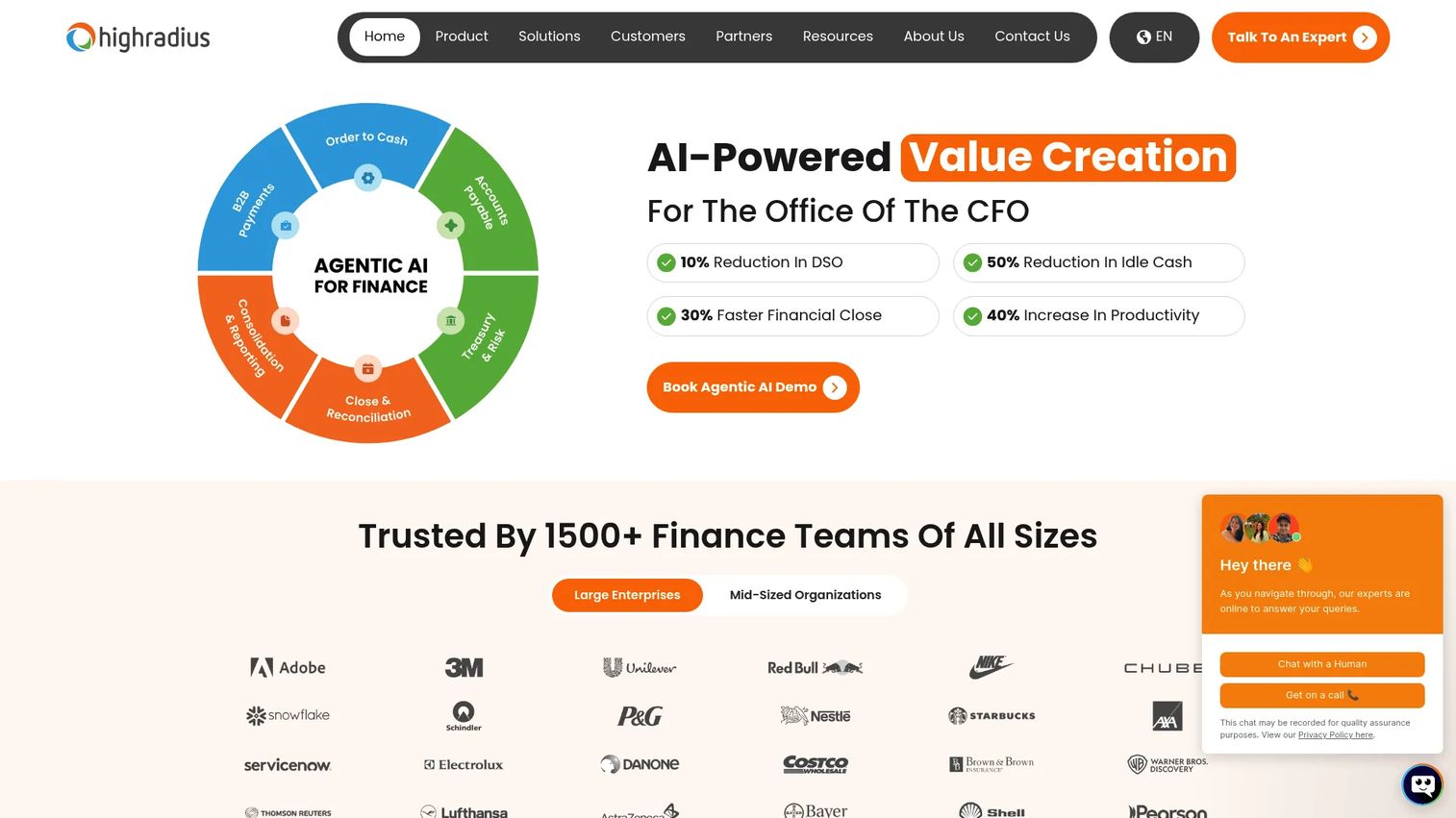
HighRadius is AI-powered finance automation software for accounts receivable, accounts payable, treasury, and close processes. For credit specifically, it covers scoring, approval automation, and ongoing monitoring inside a broader order-to-cash system. It is built for finance teams that want to run credit control at scale rather than case by case.
Best for: Mid-market and enterprise finance teams automating order-to-cash and related finance workflows.
Key strengths
- Accounts receivable automation: Credit, collections, and cash application connect in one workflow, so a credit decision follows the account through the receivables cycle.
- AP automation: Payables automation sits alongside receivables, giving finance one platform across both sides of cash flow.
- Bank reconciliation and financial close automation: Close and reconciliation reduce the manual month-end work that usually sits downstream of credit and AR.
Why choose HighRadius: If your credit process is one piece of a larger order-to-cash operation, HighRadius keeps scoring, approvals, and monitoring inside the same system that handles collections and close. That matters most for large teams where credit decisions need to flow straight into receivables without a handoff. It holds a 4.3/5 rating on G2.
HighRadius pricing: HighRadius uses outcome-based pricing rather than a public fixed-price list. Its accounts receivable pages describe no upfront costs, with $0 setup and $0 subscription until go-live, followed by a gain-share tied to measured KPI improvement. Because full list pricing is not published, plan a scoping conversation with their team to size the deal.
2. Esker
Esker is AI automation software for Office of the CFO workflows across source-to-pay and order-to-cash. Credit management sits inside that broader suite, so credit lifecycle automation connects naturally to the accounts receivable and order management steps around it. It suits teams that want credit as part of a wider finance automation footprint, not a standalone tool.
Best for: Mid-market and enterprise teams automating AP, AR, procurement, and order management.
Key strengths
- Global cloud platform: One cloud platform spans finance workflows across regions, useful for teams managing credit across multiple markets.
- AI-driven data recognition and validation: AI extracts and validates data from applications and documents, cutting the manual keying that slows credit intake.
- ERP-native integration: Native ERP connectivity keeps credit status synced with the systems where orders and invoices live.
Why choose Esker: Esker is the stronger fit when you want credit decisions wired into adjacent AR workflows rather than isolated. Because credit, collections, and cash application share a platform, a change in credit status can move through the order-to-cash flow without re-entry. It carries a 4.3/5 rating on G2.
Esker pricing: Esker does not publish pricing on its site and directs prospects to request a demo or contact sales. Expect quote-based pricing scoped to your workflow mix and volume. Ask specifically which modules are bundled, since credit is one part of a wider suite.
3. Nuvo
Nuvo is a customer onboarding and risk assessment platform for trade credit workflows. It centers on the front end of the credit lifecycle: branded application intake, identity and data verification, and collaborative approvals. That makes it a strong fit for teams that want a modern, workflow-first way to bring new accounts through credit.
Best for: B2B teams that need to streamline credit application onboarding and risk assessment.
Key strengths
- Branded credit application onboarding: Digital, branded applications replace PDFs and paper, giving customers a cleaner intake experience.
- Identity and data verification: Built-in verification checks applicant identity and data quality before a decision, reducing downstream risk.
- Collaborative approval workflows: Approvals route across finance and sales so the right people weigh in without email threads.
Why choose Nuvo: Nuvo appears frequently in comparison shortlists because it modernizes the part of credit that customers actually touch: the application. If your friction sits in slow, inconsistent onboarding, Nuvo's intake and verification workflow addresses it directly. It holds a 4.7/5 rating on G2, the highest in this group.
Nuvo pricing: Nuvo does not publish pricing publicly. Plan a demo to get pricing scoped to your application volume and workflow needs. Because it focuses on onboarding and verification, confirm how it hands off to your monitoring and ERP systems downstream.
4. Billtrust
Billtrust is an AR-forward platform that pairs credit with the broader receivables cycle, including collections and payments. Credit scoring and monitoring sit alongside invoicing and cash application, so credit decisions feed directly into how you get paid. It fits teams that think of credit as one stage in receivables rather than a separate function.
Best for: Receivables teams that want credit, collections, and payments managed in one connected cycle.
Key strengths
- Credit within receivables: Credit scoring and monitoring connect to collections, so a risky account is flagged where it matters most.
- Payments and invoicing: Order-to-cash steps beyond credit live in the same platform, reducing tool sprawl across AR.
- Enterprise receivables fit: Built for teams managing high receivables volume that need credit tightly coupled to cash flow.
Why choose Billtrust: Choose Billtrust when your priority is the full receivables cycle and credit is one part of it. It sits closer to AR operations than a pure credit-decisioning tool, which is exactly right if collections and payments are where your pain lives. Confirm the current G2 rating on its live listing before you shortlist.
Billtrust pricing: Billtrust uses quote-based pricing rather than public tiers. Scope a conversation around your receivables volume and which modules you need, since credit is bundled with broader AR functionality. Ask how credit-specific capabilities are packaged relative to collections and payments.
5. CGI Credit Studio
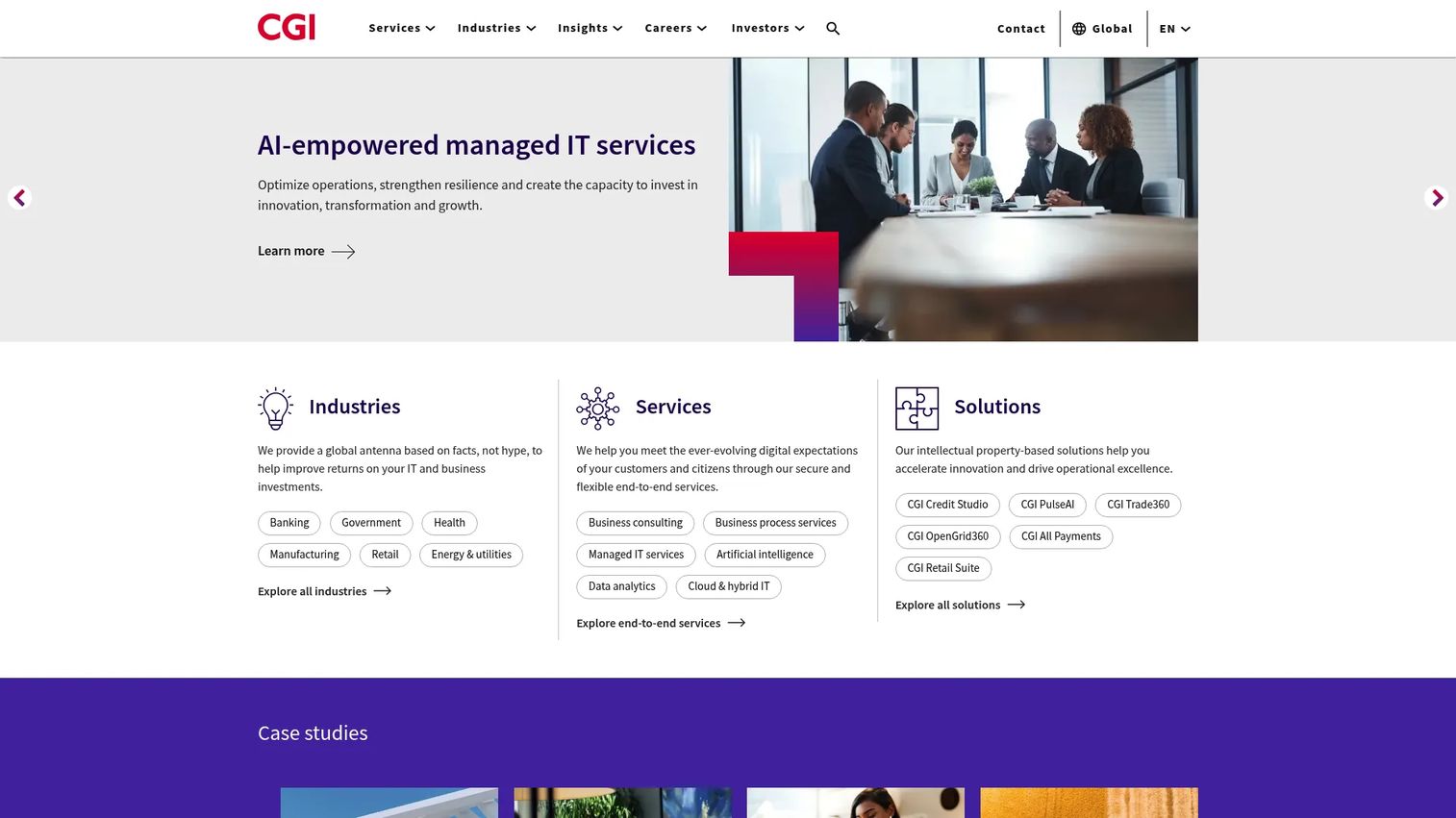
CGI Credit Studio is cloud-native credit management software for originations, decisioning, collections, and recovery. It targets larger financial institutions modernizing legacy credit systems with event-driven workflows and real-time insight. The emphasis is on architecture: security, governance, and integration built for organizations replacing older platforms.
Best for: Large financial institutions modernizing credit lifecycle operations.
Key strengths
- Loan origination and onboarding: Origination and onboarding workflows cover the front end of the credit lifecycle for lending operations.
- Real-time decisioning and fraud detection: Decisioning and fraud checks run in real time, so approvals and risk controls happen at the point of application.
- Collections, recovery, and self-service workflows: The platform extends past decisioning into collections and recovery, covering the lifecycle end to end.
Why choose CGI Credit Studio: This is the option to evaluate when the real project is a legacy replacement, not a bolt-on. Its cloud-native, event-driven design and governance focus fit institutions that need credit decisioning, collections, and recovery on modern infrastructure. As a newer G2 listing, lean on CGI's own case references rather than review volume when validating fit.
CGI Credit Studio pricing: CGI does not publish pricing publicly, and its offering is scoped to enterprise credit modernization projects. Expect a quote-based engagement sized to your originations and lifecycle needs. Treat this as a platform decision with implementation scope, not an off-the-shelf purchase.
6. Creditsafe
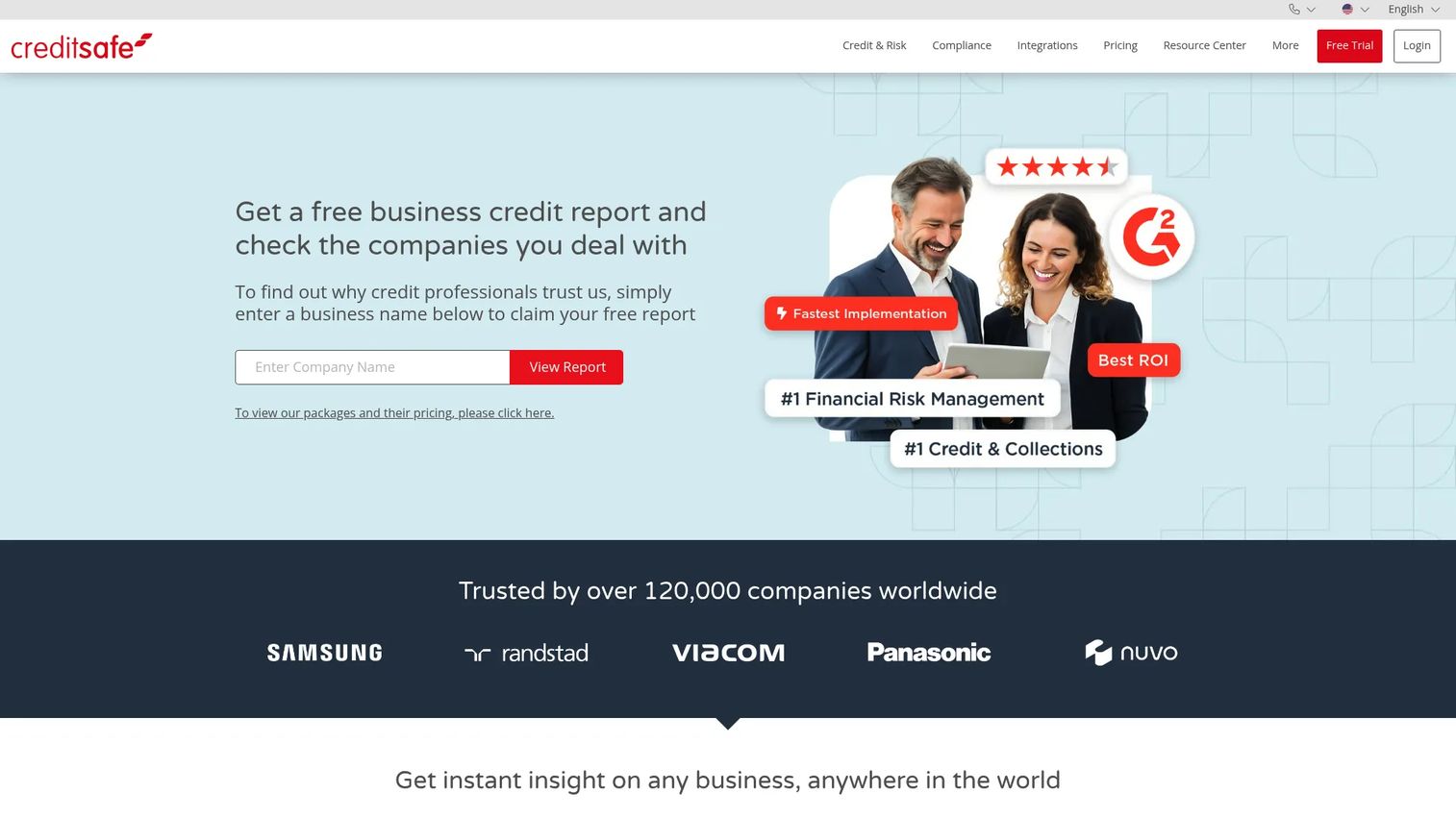
Creditsafe is a business credit intelligence and risk management platform. Rather than automating the full workflow, it supplies the credit data and monitoring your decisions rely on: business credit reports, scores, company monitoring, and compliance checks. It is a data-first fit for teams that own their workflow but need better intelligence feeding it.
Best for: Teams that need global business credit data, monitoring, and compliance checks.
Key strengths
- Business credit reports and scores: Company-level credit reports and scores inform limit and approval decisions with third-party data.
- Company monitoring and alerts: Continuous monitoring alerts you to changes in an account's credit profile over time.
- KYC/KYB, AML, and sanctions screening: Compliance checks cover identity, anti-money-laundering, and sanctions in the same platform.
Why choose Creditsafe: Creditsafe is a narrower fit than a full credit management suite, and that is the point. If you already have decisioning and approval workflows and need stronger data plus monitoring behind them, Creditsafe fills that layer. It holds a 4.5/5 rating on G2 and offers a free business credit report to review before committing.
Creditsafe pricing: Creditsafe uses customized, quote-based pricing across its Standard, Plus, and Premier packages, with no public dollar figures. A free business credit report is available to sample the data, and a free trial is referenced on G2. Scope a quote around your report volume and monitoring needs.
7. Experian
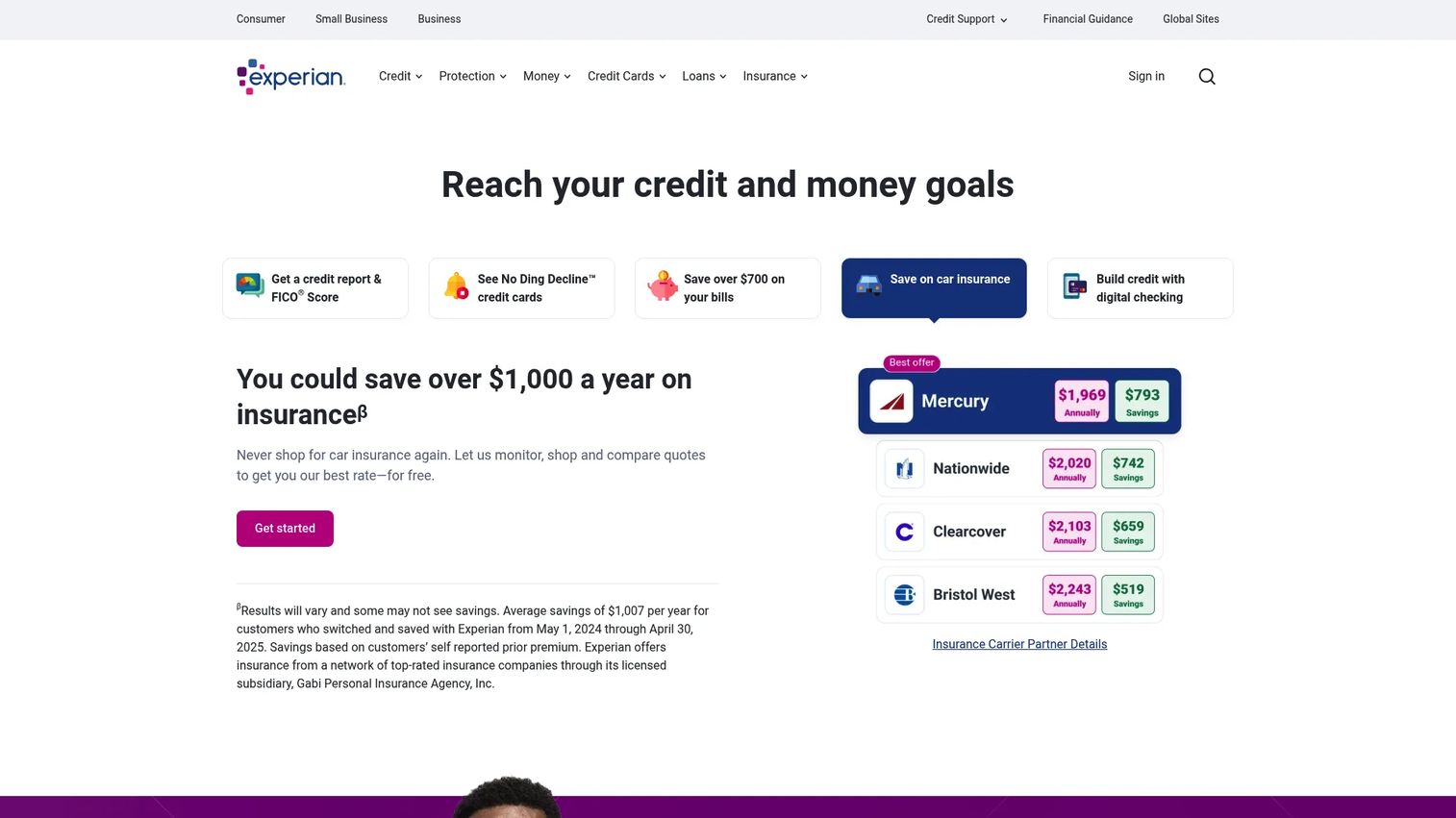
Experian is a global data and technology company offering consumer and business credit, identity, and fraud services. In a credit management context, it functions as a data and risk intelligence layer: bureau data, monitoring, and scores that feed the credit decision process. It is strongest as the intelligence source behind your workflow, not the workflow itself.
Best for: Individuals and businesses needing credit monitoring, identity protection, and data and analytics services.
Key strengths
- Credit monitoring and alerts: Continuous monitoring surfaces changes that affect risk decisions on an account.
- Identity theft protection with 3-bureau monitoring: Multi-bureau monitoring broadens the risk signal beyond a single data source.
- Credit report and score access: Report and score access, including Experian Boost, feeds decisioning with current data.
Why choose Experian: Experian earns its place as a bureau-grade data layer rather than a decisioning engine. Pair it with a workflow platform when you want established credit intelligence informing limits and approvals. Its G2 rating of 4.4/5 reflects the seller profile overall.
Experian pricing: Experian publishes consumer plan pricing: a free Basic tier, a Premium plan at $24.99 per month after a 7-day trial, and a Family plan at $34.99 per month after a 7-day trial. Enterprise and business data services are not priced publicly on the site, so scope those directly with Experian. For B2B credit data, treat the published consumer tiers as a reference point only.
8. Dun & Bradstreet

Dun & Bradstreet is a business decisioning data and analytics company built around the D-U-N-S Number and verified business intelligence. For credit teams, it supplies commercial credit data, company insights, and risk screening that support decisioning, monitoring, and account intelligence. It fits as a complementary data source that gives global visibility into your portfolio.
Best for: Teams needing business identity, sales intelligence, and credit and risk data.
Key strengths
- Verified business intelligence and D-U-N-S identity: The D-U-N-S Number anchors a verified identity for every business you assess.
- Sales intelligence and prospecting tools: Company data extends beyond credit into sales intelligence, useful for teams that share data across functions.
- Credit, risk, and finance analytics: Risk and finance analytics support both screening and ongoing portfolio monitoring.
Why choose Dun & Bradstreet: D&B matters most when you need global portfolio visibility and a consistent business identity across markets. It works as the data and screening layer under many credit workflows rather than a standalone credit management system. It holds a 4.3/5 rating on G2.
Dun & Bradstreet pricing: D&B publishes small-business pricing for D&B Hoovers Essentials at $49 per month or $529 per year. Many enterprise credit and risk products are sold via quote rather than public pricing, so larger deployments require a sales conversation. Start with the published Hoovers tier to gauge fit, then scope enterprise data needs separately.
Considerations before you buy
Before you shortlist, pressure-test each option against how your credit process actually runs. These criteria separate a good demo from a good fit.
Workflow depth versus data layer
Decide first whether you need a full credit management system or a data provider. Suites like HighRadius, Esker, Nuvo, Billtrust, and CGI Credit Studio automate the workflow. Creditsafe, Experian, and Dun & Bradstreet feed it. Many teams run one of each, so map which layer you are actually missing.
ERP and order-to-cash integration
Credit status is only useful if it reaches the systems where orders live. Confirm native support for your ERP, whether that is SAP, Oracle, Microsoft Dynamics, or NetSuite. Ask how blocked-order prevention works in practice, and how fast a credit release flows through to order fulfillment.
Decisioning and policy automation
Look at how the platform applies your credit policy. Automated credit approval should handle routine cases against your rules and escalate real exceptions to a human. Check whether the decisioning logic is configurable by your team or requires vendor involvement for every policy change.
Continuous monitoring depth
A one-time credit check ages quickly. Evaluate how the platform monitors accounts after onboarding: what triggers an alert, how limit breaches surface, and whether deterioration reaches the right person before it becomes bad debt. A credit monitoring dashboard is only as good as the alerts behind it.
Proof and implementation scope
Ask for references in your industry and at your scale. For enterprise modernization projects, implementation scope matters as much as features. Confirm pricing model, timeline, and who owns configuration after go-live so there are no surprises three months in.
Conclusion
The right credit management software depends less on brand and more on which part of the credit lifecycle you need to fix. If you are automating credit at scale inside a larger order-to-cash operation, HighRadius and Esker cover the full workflow with deep ERP fit. If your friction sits in onboarding, Nuvo modernizes the application experience. If credit belongs inside your receivables cycle, Billtrust ties it to collections and payments, and if you are replacing a legacy credit system, CGI Credit Studio is built for that modernization.
For teams that own their workflow but need stronger intelligence behind it, Creditsafe, Experian, and Dun & Bradstreet supply the credit data and monitoring your decisions rely on. Knowing whether you need a workflow suite or a data layer is the single most useful thing to settle before you demo anything.
Your next step is simple. Narrow this list to two or three vendors that match your workflow depth, ERP requirements, and monitoring needs, then map each one against your current credit process. The gap between what you do manually today and what each platform automates will tell you which one is worth a scoping call.
FAQs
Credit management software automates how a company evaluates, approves, monitors, and controls customer credit across the order-to-cash cycle. It replaces manual review and spreadsheet scoring with policy-driven workflows that connect credit decisions to sales, finance, and ERP systems. The goal is faster approvals, consistent policy enforcement, and lower bad debt.
Credit management software covers the operational lifecycle: application intake, approvals, monitoring, and order-to-cash connectivity. Credit risk management software emphasizes the risk side, scoring, exposure modeling, and portfolio monitoring. In practice the categories overlap, and most enterprise platforms handle both. When evaluating, check whether a tool leads with workflow automation or with risk analytics.
Yes. Most enterprise credit management platforms offer native or connector-based integration with SAP, Oracle, Microsoft Dynamics, and NetSuite. The integration is what pushes credit status into your ERP to prevent blocked orders and speed release. During evaluation, confirm the depth of the connection, since a real-time sync behaves very differently from a periodic batch update.
The highest-value features are configurable policy rules, automated decisioning for routine cases, and exception routing for the ones that need a human. Automated credit approval should apply your limits and risk thresholds consistently, then escalate only genuine edge cases. Look for logic your own team can adjust without vendor involvement every time policy changes.
It reduces bad debt by catching risk earlier and applying policy consistently. Continuous monitoring flags account deterioration and limit breaches before they turn into write-offs, and automated scoring prevents inconsistent approvals that let bad credit through. Tying credit status to the order-to-cash flow also stops risky orders from shipping in the first place.
Look at what triggers an alert, how fast changes surface, and whether the right person sees them in time to act. Strong credit risk monitoring software watches payment behavior, limit utilization, and third-party credit signals continuously. A useful credit monitoring dashboard turns those signals into action, not just a report nobody opens.
Yes, indirectly but meaningfully. When credit decisions are fast and consistent, deals stop stalling on credit holds and handoffs between sales, finance, and operations get cleaner. Sales enablement and revenue teams feel this as shorter cycle times and fewer blocked orders. A shared credit status keeps everyone working from the same information instead of chasing approvals.
Credit data providers like Creditsafe, Experian, and Dun & Bradstreet supply the intelligence: business credit reports, scores, monitoring, and screening. Full credit management platforms like HighRadius, Esker, Nuvo, Billtrust, and CGI Credit Studio automate the workflow around that data, from application intake to approvals and order-to-cash. Many teams use both, a workflow platform that consumes data from one or more providers.