A marina can run for years on whiteboards, spreadsheets, and people who remember where every boat sits. Then the business adds a second location, a service department, or a seasonal volume spike. The old system stops holding.
This guide covers marine software for marinas, boatyards, dealerships, yacht clubs, and service operations. It does not cover the unrelated advertising technology company with a similar name.
The marine and maritime software market reached $2.39 billion in 2023 and is projected to grow at a 12.0% compound annual growth rate through 2030, according to Grand View Research (2024). That growth is being driven in part by operators replacing fragmented, manual workflows with purpose-built systems. The question is which system fits your operating model.
What's inside
This guide helps marina operators, boatyard founders, and marine business owners choose operational software for 2026. Tools were selected based on four criteria:
- Workflow fit: Does the platform cover the highest-revenue workflows for that business type?
- Pricing transparency: Were prices or pricing models verifiable from first-party sources?
- Operational depth: Does the platform function as a system of record, or just a point tool?
- Scalability: Can the platform grow with a second location or added revenue line?
TL;DR
- Best overall for marine service and dealership operations: Boatyard covers service workflows, customer management, inventory, and business reporting in one platform
- Best for established marina operations: DockMaster suits marinas and boatyards that need deep billing, storage, and service controls
- Best for transient docking and online reservations: Dockwa is the strongest fit when guest booking experience directly drives occupancy revenue
- Best for repair shops: Digital Wrench starts at $39.95/month and covers work orders, estimates, parts, and labor with clear tier pricing
- Best for marinas that need berth-by-berth cost visibility: HarbaMaster prices from €2,700/year plus €5 per spot annually, making cost predictable as capacity grows
What is marine software?
Marine software is operational software that helps marinas, boatyards, dealerships, yacht clubs, and maritime service businesses manage reservations, customer accounts, billing, maintenance, inventory, and performance reporting.
Core types of marine software
The category covers five distinct operating models:
- Marina management software: Slip assignments, reservations, dock occupancy, billing, customer accounts, utilities, and marina reporting
- Boatyard and marine service software: Work orders, technician scheduling, estimates, parts, labor, maintenance records, and customer approvals
- Boat dealership software: CRM, boat sales, inventory, finance workflows, listing syndication, and customer follow-up
- Reservation and guest-management software: Transient slips, online booking, guest communications, payments, and arrival coordination
- Maritime operations software: Fleet, vessel, compliance, procurement, finance, and broader shipping or charter workflows
Key capabilities to look for
- Slip, storage, and reservation management
- Billing, payments, statements, and accounting connections
- Work orders, repair estimates, labor, and technician schedules
- Parts inventory, purchasing, and vendor records
- Online booking and customer portals
- CRM, sales pipeline, and communications
- Mobile access for dock staff and technicians
- Reporting across locations, departments, and revenue lines
Marine software by business type
| Business type | Highest-priority workflows |
|---|---|
| Full-service marina | Slips, billing, reservations, utilities, customer accounts |
| Boatyard or repair shop | Work orders, labor, parts, estimates, technician scheduling |
| Marine dealership | CRM, sales pipeline, inventory, trade-ins, listing syndication |
| Yacht club | Member billing, berth assignments, events, member communications |
| Transient marina | Online reservations, payments, arrival instructions, guest messaging |
Generic accounting software and simple booking widgets do not replace purpose-built marine platforms. The difference shows up in billing accuracy, service workflow completeness, and reporting depth.
When to use marine software
Replace a reservation board and manual billing cycle
The breaking point usually looks like this: Dock assignments live in a whiteboard, seasonal contracts are tracked in a spreadsheet, recurring invoices go out manually, and transient arrivals rely on phone calls. When one staff member is out, the system nearly fails. Marine software replaces that patchwork with a single source for reservations, contracts, and billing.
Run service work without losing labor or parts visibility
A boatyard or service department that tracks labor on paper will consistently undercharge. Missed parts, unlogged technician hours, and slow customer approvals are margin leaks. Purpose-built marine service software creates a clear workflow from intake through estimate, approval, repair, and invoice.
Give owners a clean view of operations across locations
Founders evaluating a second location or an acquisition need revenue, occupancy, service backlog, and cash-collection visibility in one place. A business scheduling software tool or generic platform won't surface marina-specific KPIs. Marine software built for multi-site operations consolidates that data without requiring manual exports.
Marine software comparison
No single product is best for every marine business. A reservation-focused transient marina has different requirements from a service-heavy boatyard or a multi-revenue yacht club. Use this table as an orientation, then read the full entries for the operating models that match your business.
| # | Product | Best for | Key differentiator | Pricing | G2 rating |
|---|---|---|---|---|---|
| 1 | Boatyard | Marine service businesses and dealerships | Service, sales, inventory, customer management, and reporting | Contact for pricing | 5.0/5 |
| 2 | DockMaster | Established marinas and boatyards | Deep marina billing, storage, service, and financial management | Contact for pricing | Not listed on G2 |
| 3 | Storable Marine | Marinas and boat clubs needing all-in-one ops | Bookings, billing, service, rental, and CRM in one platform | Contact for pricing | Not listed on G2 |
| 4 | MarinaOffice | Marinas needing visual management and QuickBooks integration | Storage, billing, POS, fuel, service, and online pay | Contact for pricing | 4.0/5 |
| 5 | MARINAGO | Cloud-based marina management teams | Reservations, POS, fuel, service, and marina maps | Contact for pricing | Not listed on G2 |
| 6 | Yacht Logic Pro | Boat repair and marine service businesses | AI job creation, parts, time tracking, and QuickBooks integration | From $99/month | Not listed on G2 |
| 7 | Digital Wrench | Marine repair shops | Work orders, estimates, invoicing, and inventory | From $39.95/month | 3.0/5 |
| 8 | Dockwa | Transient marinas and guest-facing dock operations | Online reservations, modular pricing, and a boater marketplace | Free tier available; modules from $99/month | 4.3/5 |
| 9 | HarbaMaster | Medium to large marinas and yacht clubs | Berth-level billing, payments, and guest management | From €2,700/year + €5/spot/year | 5.0/5 |
| 10 | Marina Master | Multi-function marinas and yacht clubs | Broad modular platform: Reservations, POS, maintenance, charter, and customer portal | Contact for pricing | Not listed on G2 |
Best 10 marine software tools for 2026
1. Boatyard
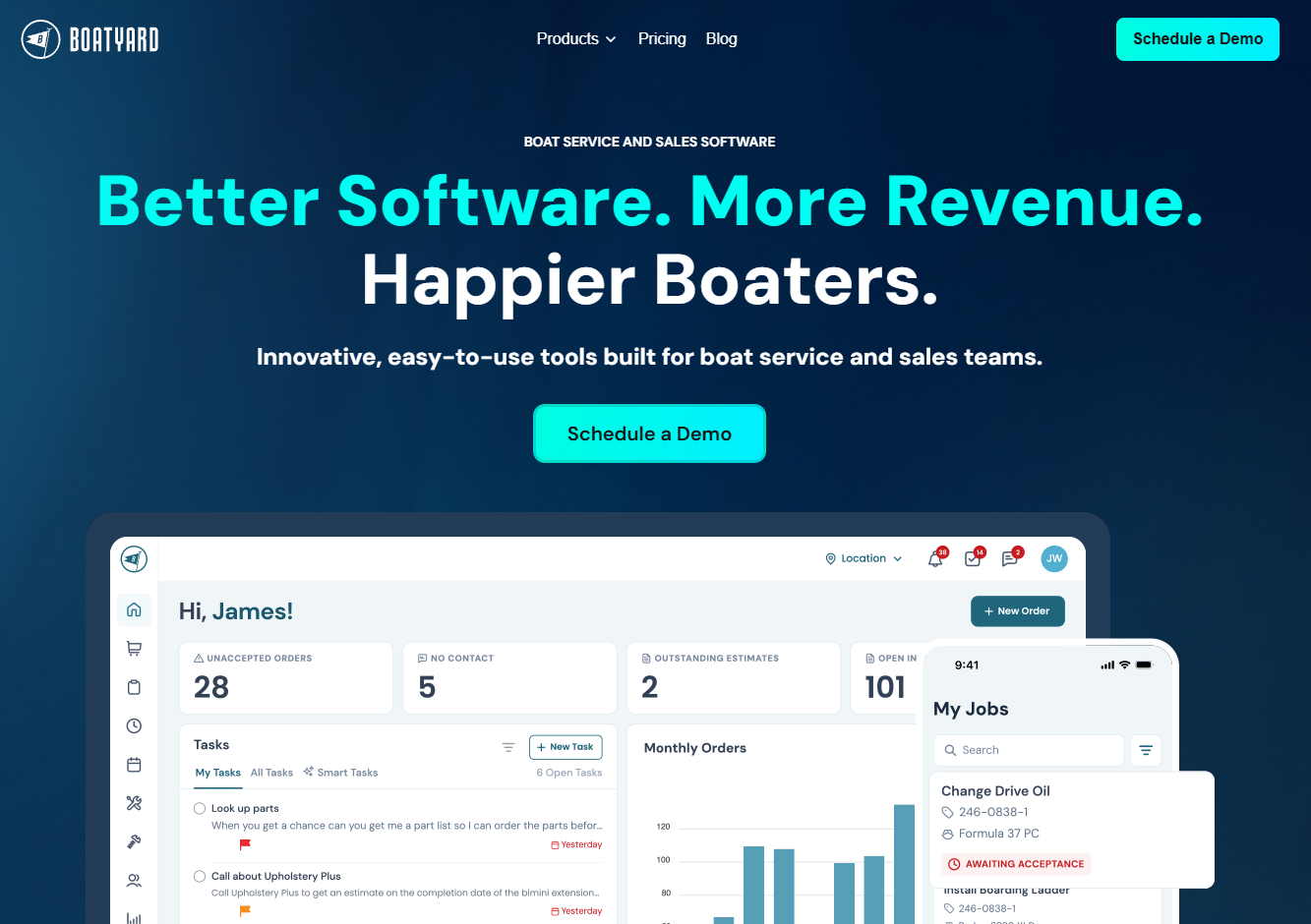
Boatyard is a marine service and sales platform built for boatyards, marinas, and marine dealers. It combines work order management, customer communication, inventory controls, digital payments, and accounting integrations in one operating environment. The platform also supports digital inspections with upsell capability, which matters for service advisors who need to present findings to customers efficiently.
Best for: Marine service businesses and dealerships that need service workflows, customer records, and business reporting under one operating system.
Key features
- Work order management and technician scheduling
- Customer portals and service reminders
- Digital inspections with upsell workflows
- Inventory management and parts controls
- Billing, digital payments, and accounting integrations
Why choose Boatyard: The strongest case is for operations where service revenue and customer follow-up run through the same team. For a founder handing off day-to-day operations to a service manager, Boatyard provides the workflow structure that makes accountability possible without the founder staying in every job.
Boatyard pricing: Boatyard directs prospects to schedule a demo rather than displaying a price on its website. Contact the vendor directly to get a quote based on your business type and team size.
G2 rating: 5.0/5
2. DockMaster
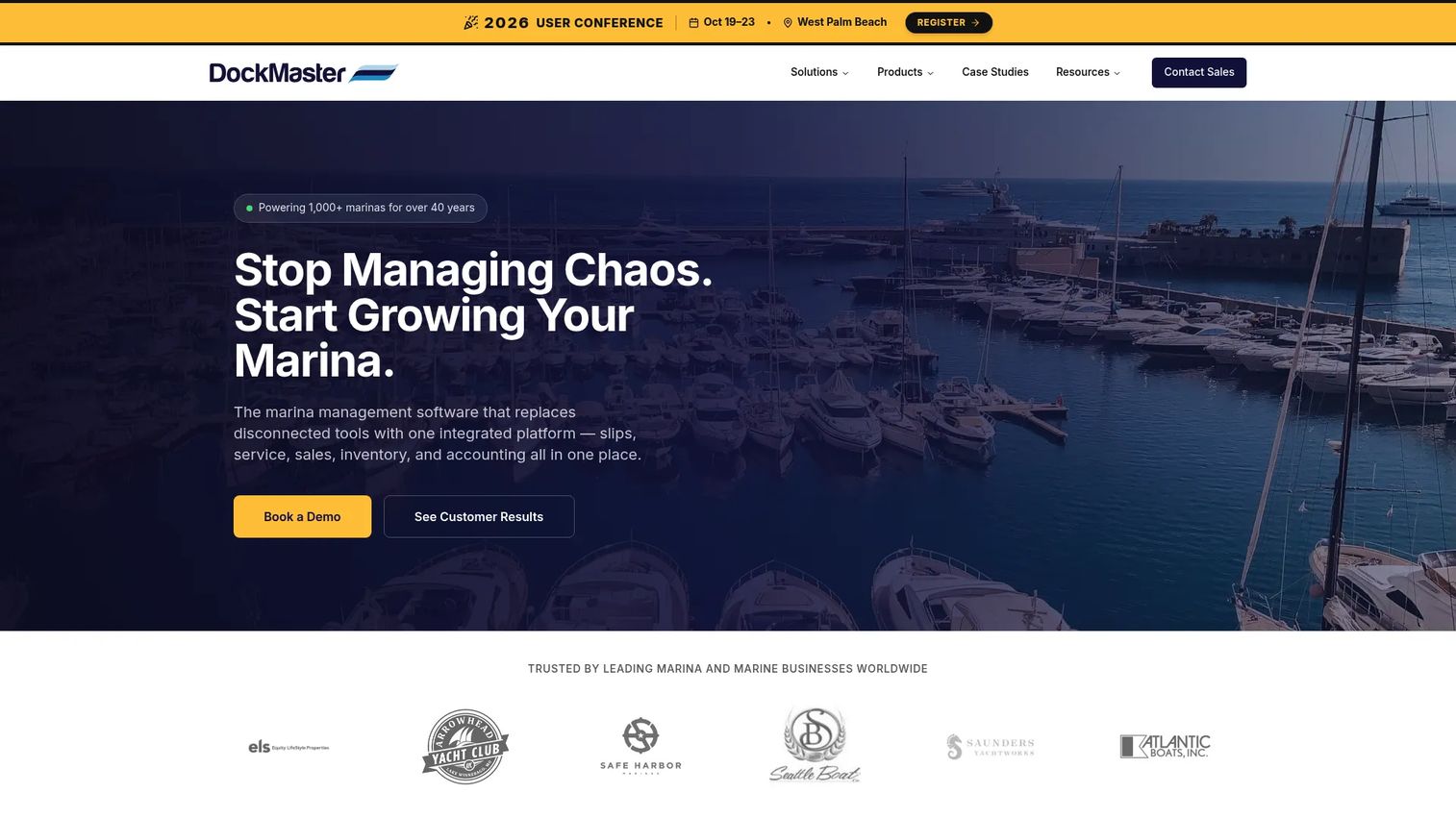
DockMaster is an all-in-one marina management platform covering marinas, boatyards, marine dealerships, and service businesses. Its operational depth covers visual slip management, reservations, recurring billing, point of sale, service department workflows, inventory, and integrated financial management including accounts receivable, accounts payable, and a general ledger. The platform also includes eSignature workflows and a customer self-service portal.
Best for: Established marina and boatyard operators that need a mature, integrated system spanning billing, storage, service, and financial controls.
Key features
- Visual marina and slip management
- Storage, reservations, and launch scheduling
- Service management: Estimates, work orders, and payments
- Inventory management and point of sale
- Integrated financial management: A/R, A/P, and general ledger
Why choose DockMaster: It fits operations that have outgrown disconnected point tools and need a deeper system of record. Stable recurring billing and financial integration are the deciding factors for marinas where cash-collection accuracy affects weekly operating decisions.
DockMaster pricing: DockMaster does not display pricing on its website. Request a quote to understand the module structure and contract terms for your location count and business type.
3. Storable Marine
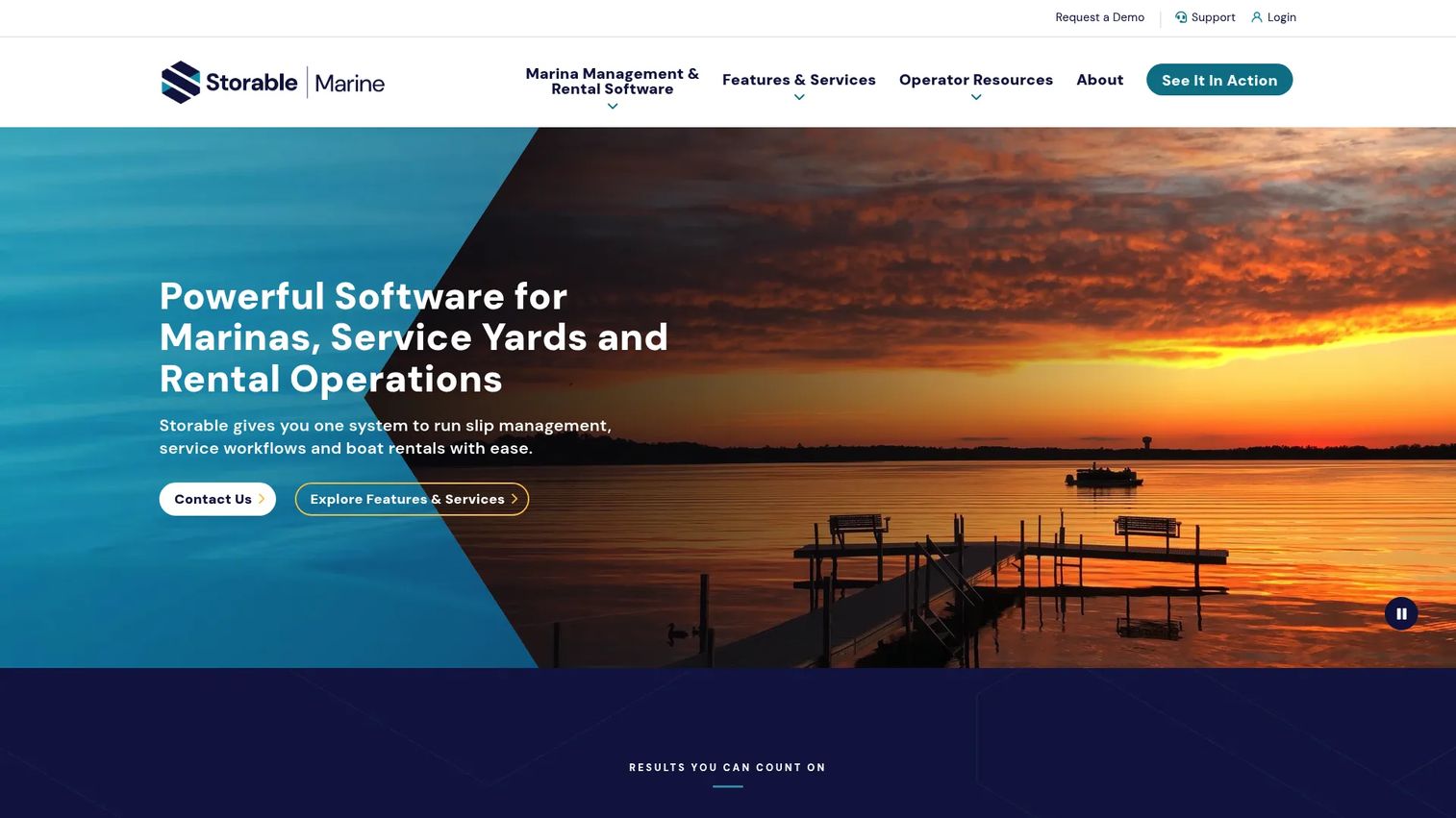
Storable Marine is an all-in-one marina platform designed for marinas, boat clubs, service yards, and rental operators. It covers slip, mooring, and storage management alongside service management with work orders, parts, labor, and technician scheduling. The platform adds POS, automated invoicing, inventory management for rental vessels and retail, online booking, reporting, accounting integrations, and CRM in one environment.
Best for: Marinas, boat clubs, and rental operators that want one system spanning bookings, operations, billing, service, and customer management.
Key features
- Slip, mooring, and storage management
- Service management with work orders, parts, and technician scheduling
- POS, billing, and automated invoicing
- Inventory management: Rental vessels, retail, fuel, and parts
- Online booking and CRM
Why choose Storable Marine: The platform suits operators who want a broad system rather than separate tools stitched together. For a founder evaluating a marina acquisition, the combination of reservations, service, and billing in one platform reduces the integration work required before the operation can generate clean reporting.
Storable Marine pricing: The website directs prospects to request a demo. Capterra has listed a starting price of $299/month, though this should be confirmed directly with Storable Marine before relying on it for budget planning.
4. MarinaOffice
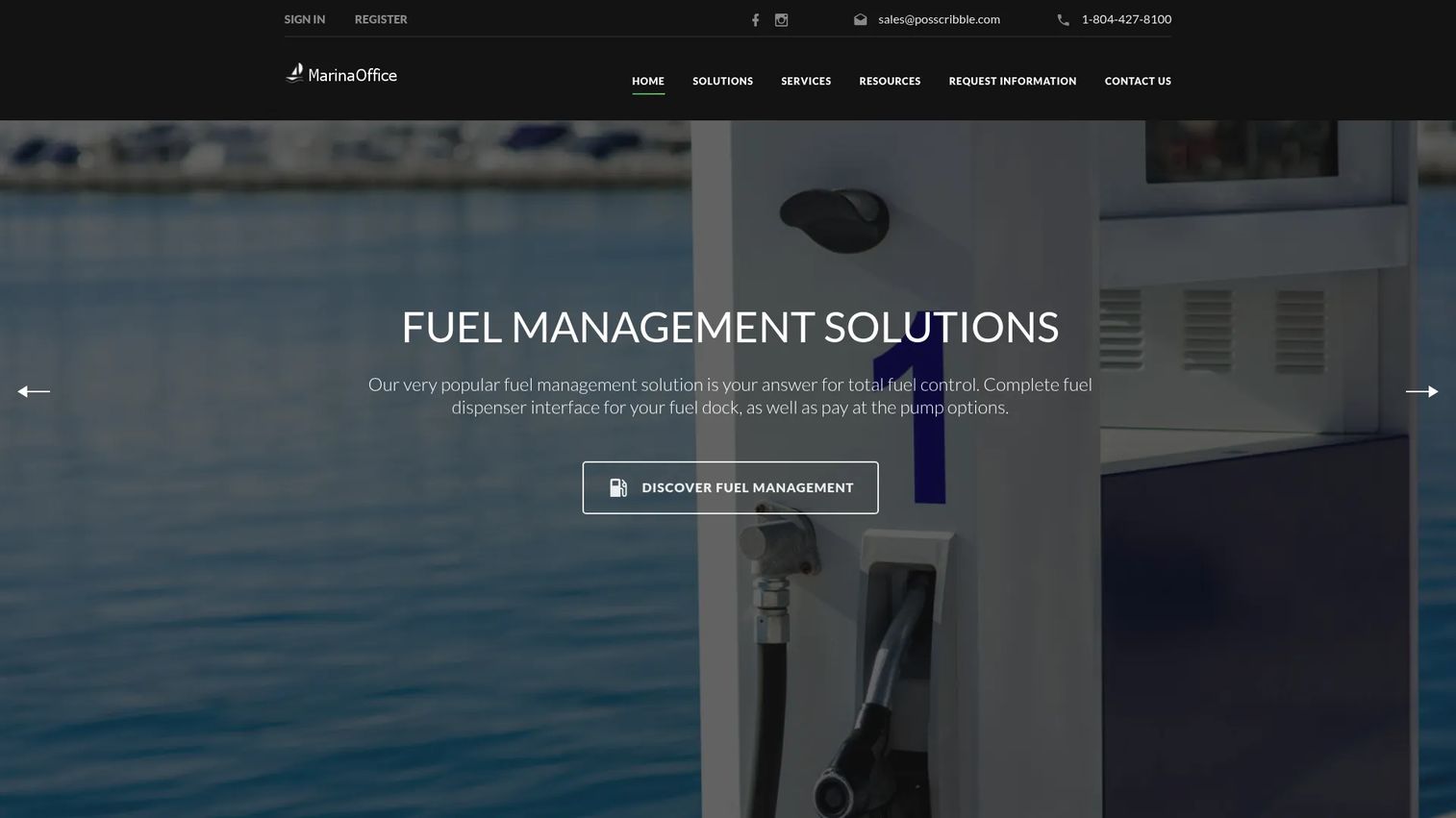
MarinaOffice is a marina management suite covering storage, billing, reservations, service, retail, and fuel operations. Its visual map design tool lets staff manage occupancy at a glance. QuickBooks integration handles accounting workflows, and an online bill-pay option reduces the manual collection cycle. The platform also supports cloud hosting, mobile apps, boat rental management, and launch scheduling.
Best for: Marinas and marine businesses that want visual occupancy management, QuickBooks integration, and an online payment option for customer accounts.
Key features
- Marina and property management with visual map design
- Storage, billing, occupancy tracking, and reservations
- Retail POS, fuel management, and boatyard service
- QuickBooks integration and online bill pay
- Cloud hosting and mobile app access
Why choose MarinaOffice: The QuickBooks integration is the deciding factor for many operators already running their books in that system. Rather than migrating accounting workflows, MarinaOffice connects the marina-specific billing layer to an existing accounting setup.
MarinaOffice pricing: MarinaOffice does not post pricing on its website. Contact the vendor for subscription terms and implementation costs.
G2 rating: 4.0/5
5. MARINAGO
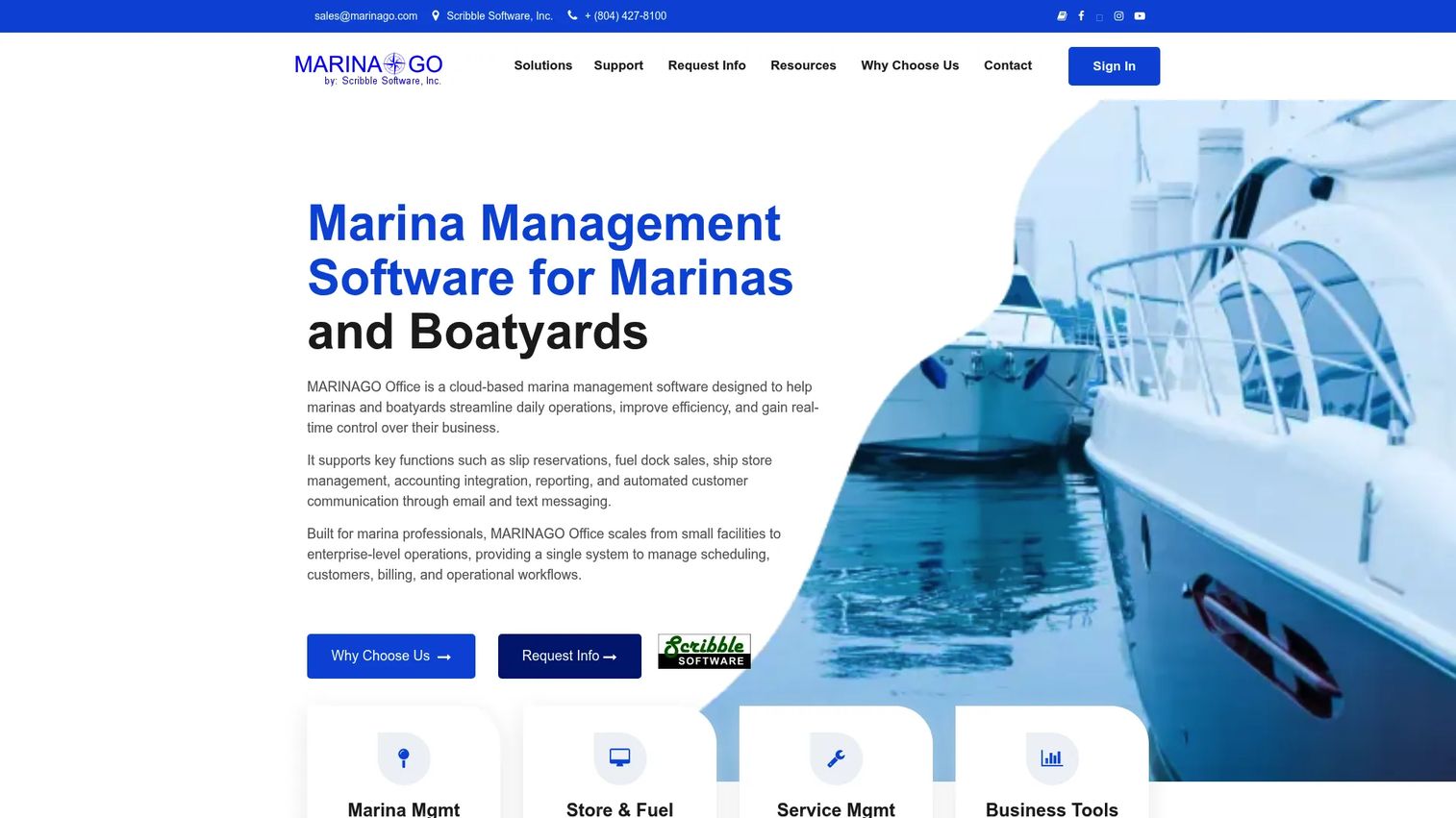
MARINAGO is a cloud-based marina management platform for marinas and boatyards. It covers slip and berth management with interactive marina maps, reservations, a customer portal, billing, accounting integrations, point of sale, fuel management with pay-at-pump capability, boat service management, and a technician portal. Enterprise reporting and built-in email and text messaging round out the feature set.
Best for: Marina operators who need cloud access to reservations, billing, POS, fuel, and service workflows from office, dock, or off-site.
Key features
- Slip and berth management with interactive marina maps
- Reservations and customer portal
- POS, fuel management, and pay-at-pump fuel
- Boat service management and technician portal
- Enterprise reporting and integrated messaging
Why choose MARINAGO: Cloud access is the practical differentiator for operations where management is not always on site. Staff can check slip occupancy, process a payment, or update a service ticket from any device, which matters when the founder is handling a second location or a board meeting.
MARINAGO pricing: MARINAGO does not display pricing publicly. Request a quote to understand plan options and module pricing for your location.
6. Yacht Logic Pro
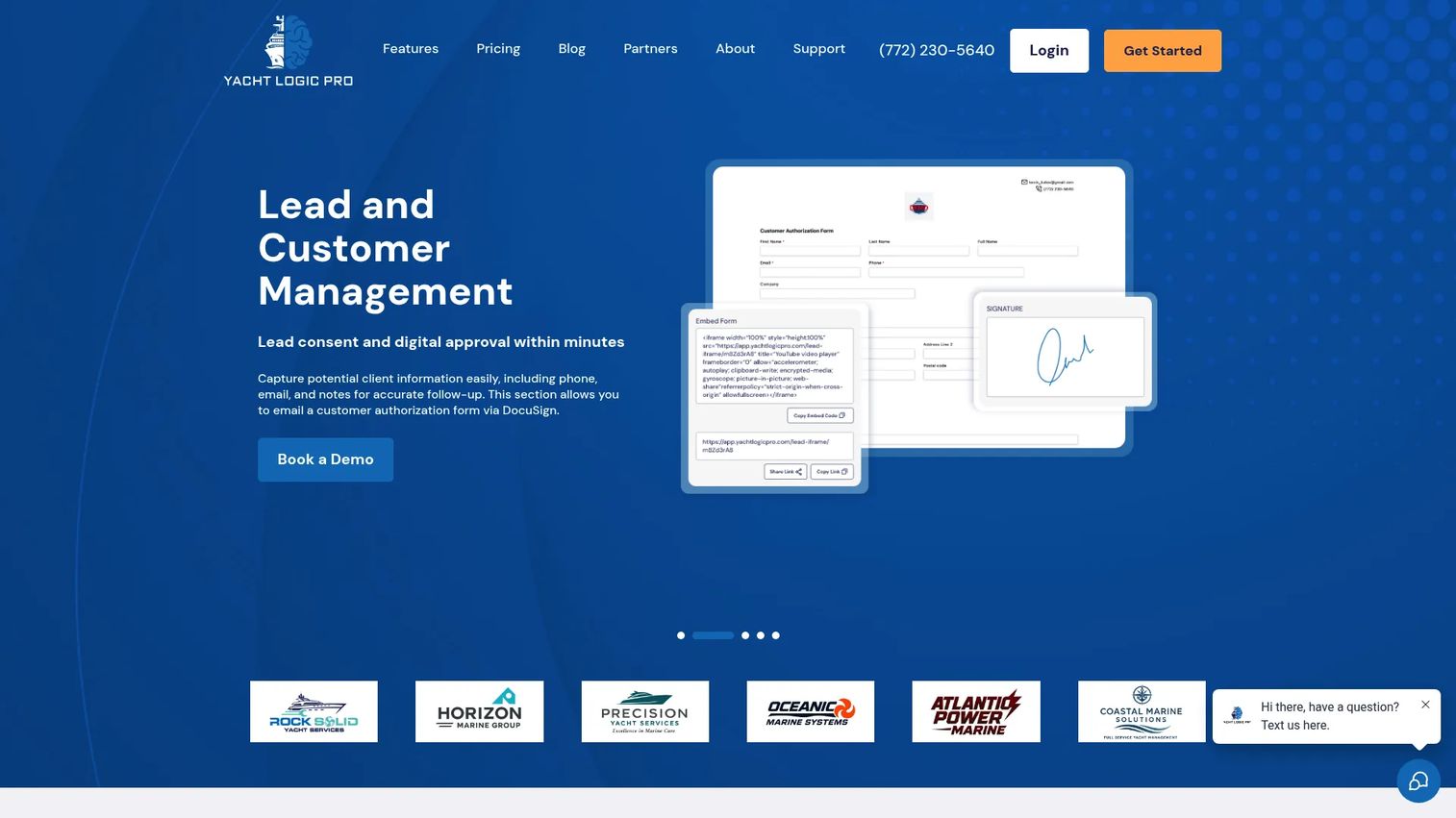
Yacht Logic Pro is marine maintenance and operations software for boat repair shops, marinas, service yards, and yacht maintenance businesses. It offers AI-powered job creation and scheduling, parts and inventory management with barcode scanning, time tracking, job costing, QuickBooks Online integration, invoicing, a mobile app with GPS navigation, lead and customer management, and role-based access controls.
Best for: Boat repair shops and marine service businesses that need job scheduling, parts management, time tracking, and QuickBooks Online integration in a single platform.
Key features
- AI-powered job creation and scheduling
- Parts and inventory management with barcode scanning
- Time tracking and job costing
- QuickBooks Online integration and invoicing
- Mobile app with GPS navigation
Why choose Yacht Logic Pro: The combination of job costing and QuickBooks Online integration gives service-led businesses a clear path from work order to financial reporting without building a custom bridge between systems. For a founder who wants a service manager to own the P&L, that connection matters.
Yacht Logic Pro pricing: Plans start at $99/month for a single user. The Annual plan covers up to 3 users at $149/month billed annually, and the Monthly plan supports up to 3 users at $199/month. Additional users cost $25/month on multi-user plans.
7. Digital Wrench

Digital Wrench is repair shop management software for work orders, invoicing, inventory, customer history, and related service operations. It covers estimates and bookings, job logging, labor tracking, invoicing, quoting, customer and vehicle management, purchase orders, inventory and stock control, point of sale, and customer reminders via email and text.
Best for: Small and specialized marine repair shops that need straightforward work-order, invoicing, inventory, and customer-history management at a low entry price.
Key features
- Estimates, job logging, and labor tracking
- Invoicing, quoting, and purchase orders
- Customer and vehicle management with full history
- Inventory and stock control
- Point of sale and customer reminders
Why choose Digital Wrench: For a focused repair operation, the pricing structure is the clearest argument. The subscription model starts low and scales by computer count rather than by user or seat, which keeps costs predictable for small teams. It's worth noting that Digital Wrench is not a full marina management platform, so verify that slip or reservation needs are covered separately if required.
Digital Wrench pricing: Subscription plans start at $39.95/month for one computer and $59.95/month for two computers, with each additional computer adding $20/month. One-time purchase options are also available: $795 for one computer and $1,095 for a two-computer LAN setup.
G2 rating: 3.0/5 (2 reviews)
8. Dockwa
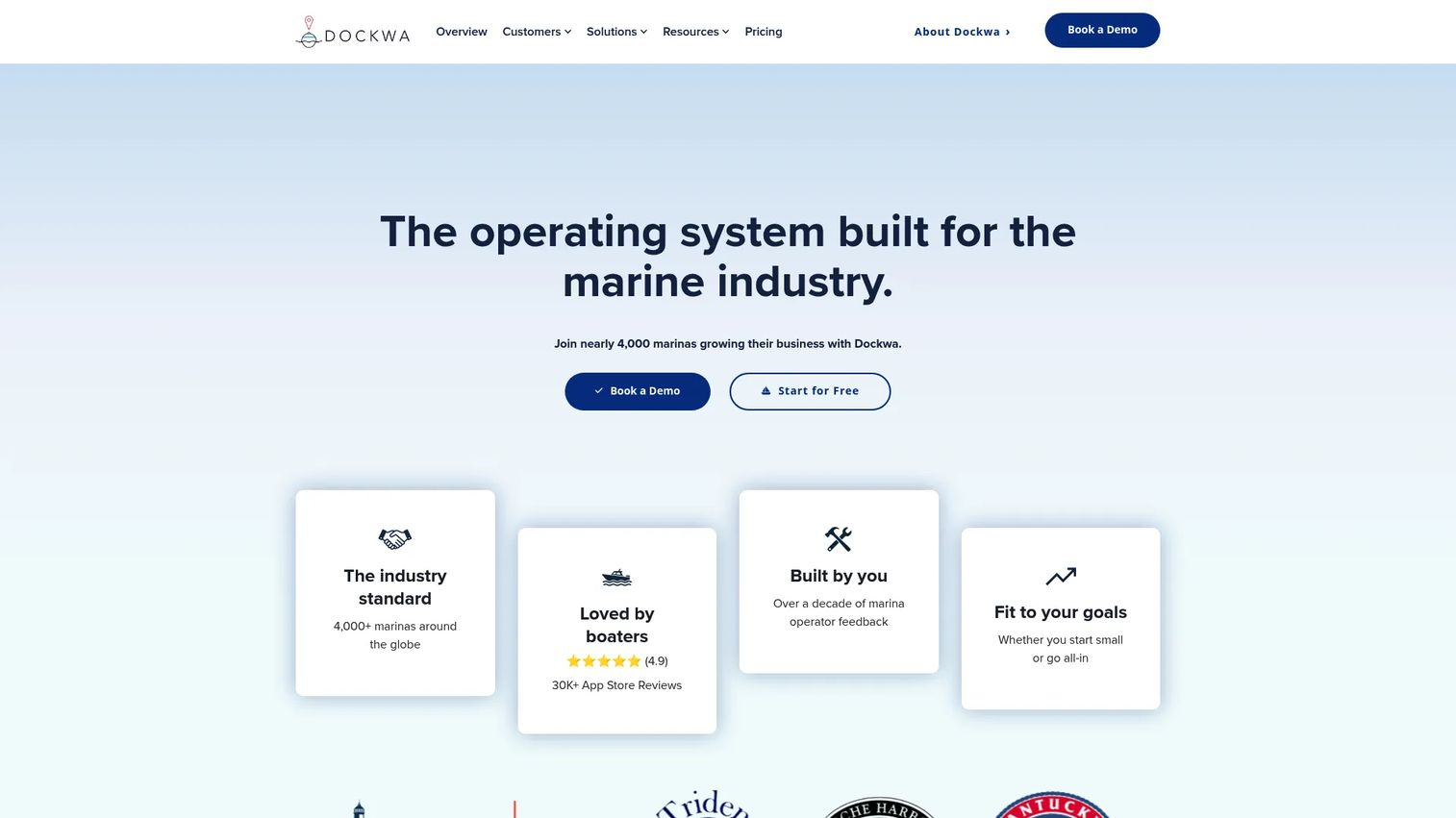
Dockwa is marina management software with an integrated boater marketplace for reservations, contracts, payments, occupancy tracking, and customer operations. Its modular pricing lets operators activate only the modules they need: Transient, Captains and Contracts, Point of Sale, Fuel Management, Spaces, Dry Stack, Integrations, and Insights. A free Leads tier lets marinas receive boater inquiries before committing to a paid module.
Best for: Transient marinas and hospitality-oriented dock operations where the booking experience affects occupancy, transient revenue, and staff workload.
Key features
- Online slip reservations and marina map
- Digital contracts, billing, and payments
- Modular platform: POS, fuel, dry stack, and analytics available separately
- Integrated boater marketplace for guest acquisition
- Occupancy tracking and slip assignment
Why choose Dockwa: The marketplace integration is the differentiator for transient-heavy operations. Rather than relying on phone calls and email for new guest bookings, Dockwa connects the marina to boaters already searching for slips. The modular pricing means you pay for the operational workflows you actually use.
Dockwa pricing: The Leads tier is free. Paid modules are billed annually: Transient at $169/month, Captains and Contracts at $180/month, Point of Sale at $249/month, Fuel Management at $199/month, Spaces at $180/month, Dry Stack at $99/month, Integrations at $84/month, and Insights at $139/month. The Telescope module requires a direct quote.
G2 rating: 4.3/5 (7 reviews)
9. HarbaMaster
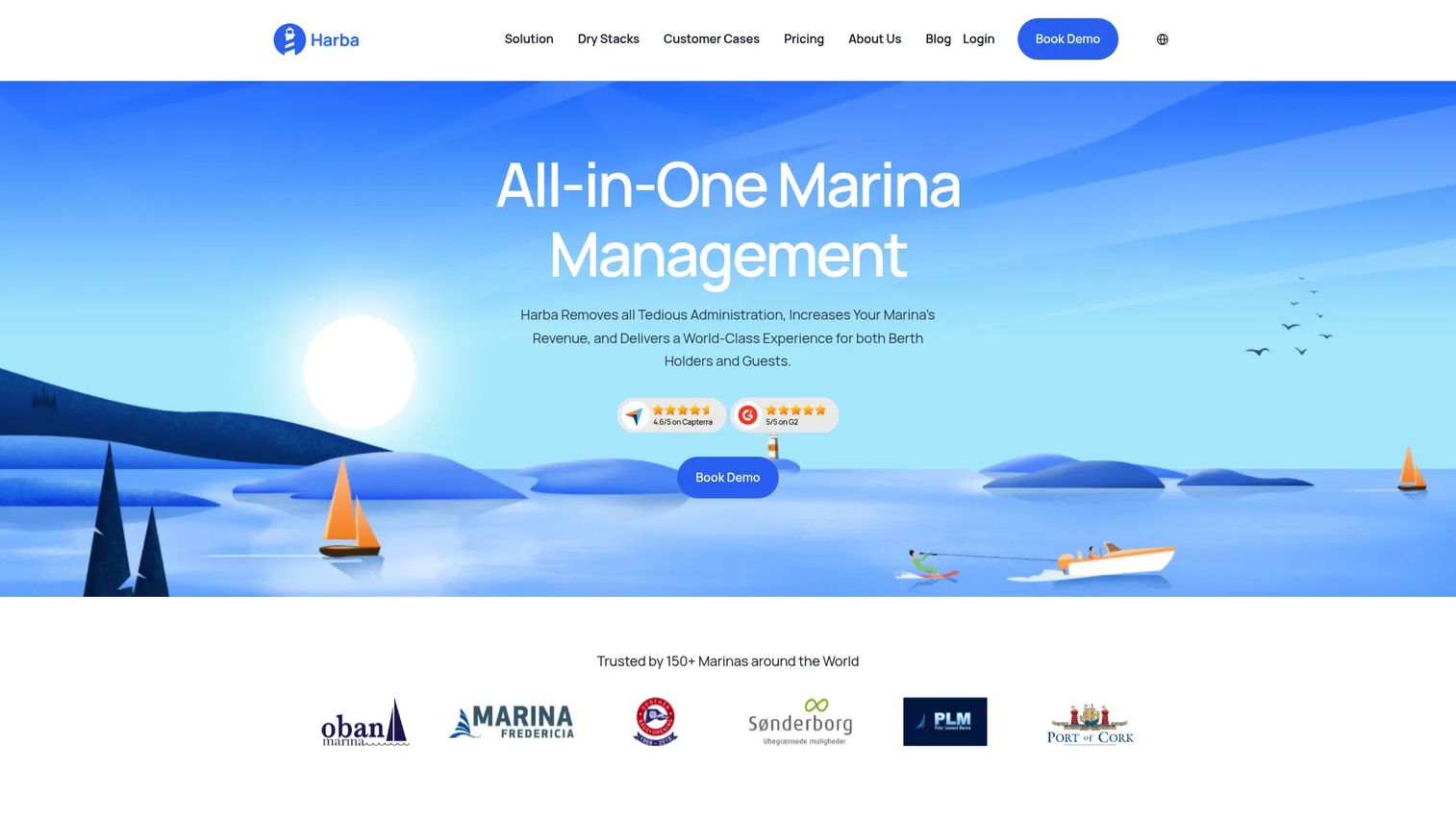
HarbaMaster (operated by Harba) is an all-in-one marina management platform for managing berth holders, guests, payments, invoicing, and marina operations. It includes a CRM for berths, boaters, and boats, invoicing and billing automation, payments through the HarbaApp, a marina map with berth assignment, guest berth management and booking payments, and additional services and product sales through HarbaPOS.
Best for: Medium to large marinas and yacht clubs that need integrated marina operations, berth-level billing, reservations, and guest management with per-spot cost visibility.
Key features
- CRM for berths, boaters, and boats
- Invoicing and billing automation
- Marina map with berth assignment
- Guest berth management and booking payments
- HarbaPOS for additional services and products
Why choose HarbaMaster: The per-spot pricing model makes cost scale predictably with the marina's actual capacity. For an operator expanding from one basin to two, the Growth plan's per-spot component means the cost increase is directly tied to revenue capacity added. The Professional tier adds a Crane Module and dynamic inventory control for full-service operations.
HarbaMaster pricing: Growth plan starts at €2,700/year plus €5 per spot per year, covering berth reservations, payments, insurance management, mobile access, and contract management. The Professional plan is €6,000/year plus €5 per spot per year and adds the Crane Module, Messaging Plus, and automatic invoicing. Enterprise pricing is available on request.
G2 rating: 5.0/5 (2 reviews)
10. Marina Master
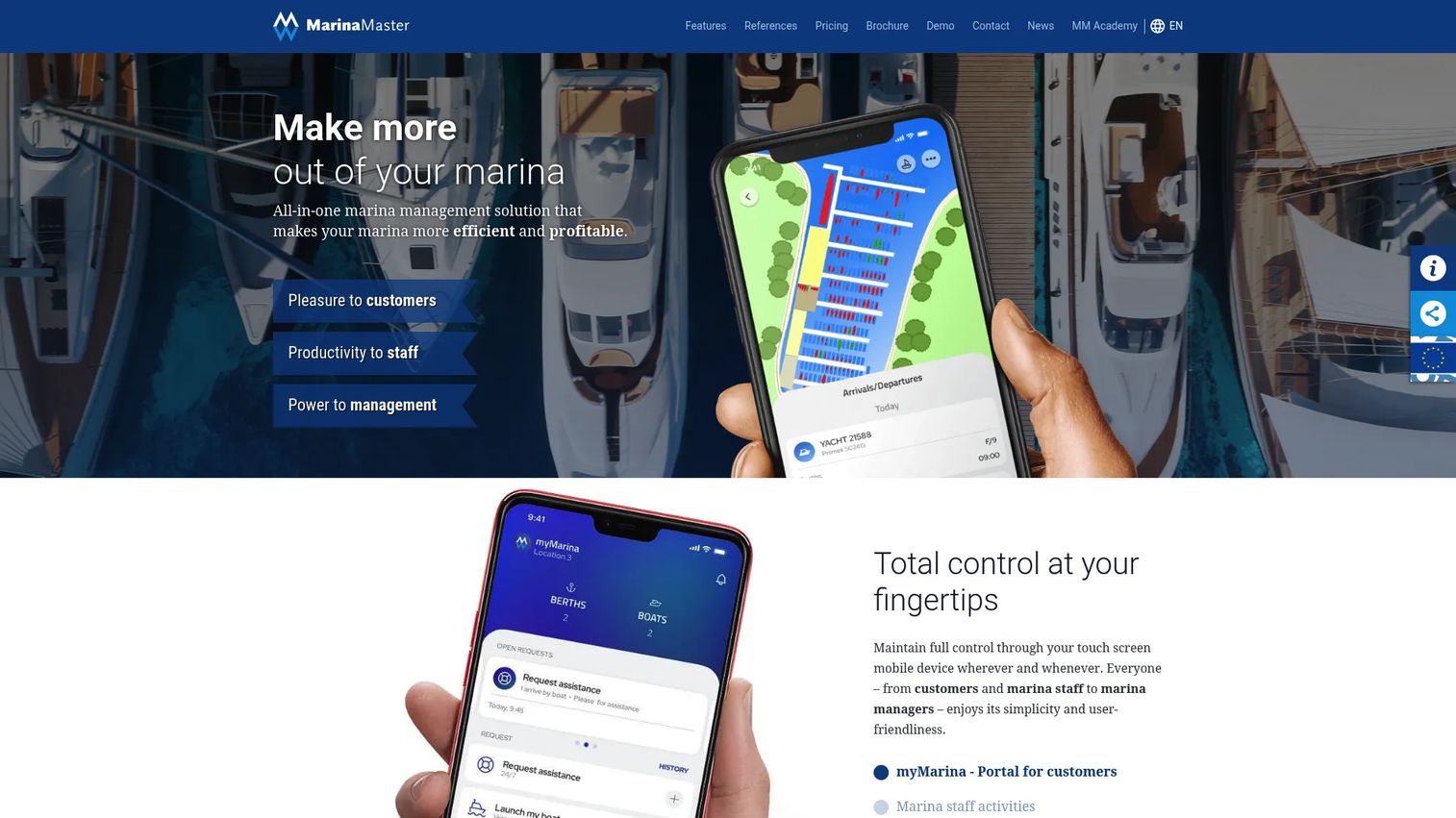
Marina Master is a cloud-based, all-in-one marina management platform covering a wide range of operational modules: CRM, an interactive reservation system, invoicing and accounting, management analytics, POS, fuel sales, boatyard and shipyard management, yacht club management, charter management, a customer portal (myMarina), accommodation management, food and beverage management, movement control, meter readings, asset management, timesheets, loyalty programs, and payment terminals.
Best for: Multi-function marinas and yacht clubs that need broad modular coverage across reservations, billing, service, POS, customer self-service, and operational analytics.
Key features
- CRM and interactive reservation system
- Invoicing, accounting, and management analytics
- POS, fuel sales, and payment terminals
- Boatyard, yacht club, and charter management
- Customer portal (myMarina), loyalty, and accommodation management
Why choose Marina Master: The module breadth suits facilities with several distinct revenue lines: Marina slips, a fuel dock, a restaurant, charter operations, and a yacht club under one roof. The risk is paying for modules that won't reach adoption in year one. Before committing, map each module to a named staff owner and a measurable first-quarter outcome.
Marina Master pricing: Marina Master customizes pricing by selected modules and specific requirements. Submit an inquiry through the vendor's website for a quote.
Considerations when choosing marine software
Start with revenue, not the feature checklist
A dry-stack operation, repair shop, and transient marina use different operating motions. Identify the workflow that creates the most revenue, the most manual work, and the most billing errors before comparing interfaces. The platform that solves your highest-cost manual handoff earns its place faster than the one with the longest feature list.
Verify billing and accounting workflows before signing
The financial workflow determines whether the platform becomes the system of record. Confirm invoicing, recurring charges, payment methods, deposits, credits, refunds, tax handling, and accounting integrations. A platform that exports a CSV to your accounting tool creates a manual reconciliation step that compounds every week. See also our guide to accounting software for context on what a clean integration should look like.
Test the workflow where staff actually work
Ask dock staff, service advisors, and technicians to complete real tasks in a demo environment. A desktop-only interface can break down if the actual work happens dockside or in a service bay. Mobile access and offline capability matter more for marine operations than most software categories.
Plan data migration before signing, not after
A complete implementation plan covers customer records, vessel records, berth data, open work orders, parts inventory, and historical billing. Assign one internal owner with the authority to resolve data questions. Multi-location migrations involving recurring billing history and service records take longer than single-location deployments with clean data.
Define the first-quarter proof point before go-live
Pick a metric that changes within 90 days: Fewer invoice corrections, faster service approvals, higher online booking conversion, or reduced time reconciling records. If you can't name that metric before implementation starts, the tool is harder to defend at the next board review. For related guidance on business process management software, see our separate roundup.
Conclusion
The right marine software depends on where operational complexity actually lives in your business.
Boatyard is the starting point for service-heavy and dealership-led marine businesses that need workflow structure across service, sales, and customer communication. DockMaster fits established marinas and boatyards with deep billing and financial management requirements. Storable Marine suits operators who want one platform spanning bookings, service, billing, and rental management.
Digital Wrench is the focused, low-cost option for repair-heavy service departments, with subscription pricing starting at $39.95/month per computer. Dockwa stands out when online reservation and transient guest experience drive occupancy revenue, with a free entry tier and modular paid options.
MarinaOffice, MARINAGO, Yacht Logic Pro, HarbaMaster, and Marina Master serve more specialized requirements: QuickBooks-first billing, cloud access for distributed teams, AI-assisted job scheduling, berth-level cost visibility, and broad multi-module marina operations respectively.
Shortlist three platforms based on your highest-cost workflow. Request workflow-specific demonstrations using real scenarios from your operation. Involve the staff members who will use the system daily in that evaluation. The platform they can navigate confidently in week one is the one that will actually replace the whiteboard.
For more vertical-specific software guides, see our roundups on boat rental management software and boat dealer software.
FAQs
The best fit depends on whether the marina's revenue comes primarily from long-term slip contracts, storage, transient bookings, fuel, service, or yacht club membership. DockMaster and MarinaOffice suit established operators with complex billing needs. Dockwa is stronger for transient-led operations. MARINAGO and Marina Master work well for cloud-first teams that need broad operational coverage.
Boatyards should prioritize work orders, estimates, labor capture, parts inventory, technician scheduling, and customer approvals. Boatyard and Digital Wrench are the strongest starting points for service-heavy operations. Boatyard covers dealership and customer management alongside service; Digital Wrench offers the lowest published entry price for a focused repair shop.
Many marina platforms support online booking, customer portals, and digital payments. Depth varies significantly: Dockwa's marketplace model actively drives new guest acquisition, while other platforms provide a booking link for existing customers. Transient operators should test the full arrival and payment flow in a demo before committing.
Core features include berth and slip management, reservations, customer accounts, invoicing, payment collection, utilities tracking, and management reporting. Online booking, mobile access, and customer communication tools are now standard in most platforms. The exact priority changes for dry-stack facilities (storage and launch scheduling), yacht clubs (member billing and event management), and service-led operations (work orders and parts inventory).
Integration availability varies by vendor and product tier. MarinaOffice connects directly to QuickBooks. Yacht Logic Pro integrates with QuickBooks Online. Other platforms may offer accounting exports or require a middleware connection. Confirm how invoices, deposits, taxes, payments, and customer balances move between systems before finalizing a purchasing decision.
Service-oriented platforms handle this as a core workflow. Digital Wrench covers job logging, labor tracking, inventory, and purchase orders. Yacht Logic Pro adds barcode scanning, time tracking, and job costing. Boatyard includes technician scheduling alongside customer communication and digital approvals. Test the full intake-to-invoice workflow using a real repair scenario before signing.
Pricing varies by the factors that drive each vendor's model: Locations, users, slips, storage units, module selection, or transaction volume. Digital Wrench publishes subscription prices starting at $39.95/month. Dockwa publishes per-module annual rates starting at $99/month. Yacht Logic Pro starts at $99/month per user. HarbaMaster starts at €2,700/year plus a per-spot annual fee. Most full marina management platforms require a custom quote. Compare first-year cost including setup, data migration, and payment-related fees, not just the headline subscription.
A focused single-location deployment with clean data and one internal owner accountable for decisions can move quickly. Multi-location implementations involving recurring billing history, service records, and parts inventory take longer. The most common delay is unresolved data quality: Customer records with missing vessel details, open work orders with unclear status, or recurring charges without documentation. Assign an implementation owner before signing and define what "ready data" means for your operation.