Once a scholarship program passes a few hundred applications, the bottleneck is rarely finding qualified students. The bottleneck is running a process that applicants trust and staff can audit.
Applications arrive through email attachments and form links. Eligibility decisions vary across reviewers. Committee scores live in spreadsheets no one fully controls. Award notifications go out late because someone had to compile the decisions manually. Leadership wants a utilization report for the donor meeting next Tuesday.
This is what scholarship administration looks like without a purpose-built system. The knowledge lives in one administrator's inbox, and the program cannot scale beyond that person.
For a founder evaluating this category, whether as a buyer or a vertical software observer, the question is whether a platform creates a repeatable operating system for a high-stakes program, or simply digitizes the intake form. There is a real difference. This guide helps you tell them apart.
Pricing and G2 ratings in this article were verified from each vendor's live pricing page and G2 listing as of October 2, 2026.
What's inside
This guide is for program administrators, foundation leaders, and operators evaluating scholarship management software for 2026. We shortlisted nine platforms based on four criteria:
- Coverage of the full scholarship lifecycle: Application intake through award, reporting, and renewals
- Fit across buyer types: Higher education, foundations, nonprofits, and corporate programs
- Verified pricing or pricing model clarity
- Current G2 ratings from the live listing
TL;DR
- Best for higher education and donor-connected programs: Blackbaud Award Management, with SIS connectivity and donor stewardship reporting
- Best for configurable workflows: SurveyMonkey Apply, with flexible forms and a structured reviewer portal
- Best for scholarship lifecycle management: Foundant Scholarship Lifecycle Manager, purpose-built for foundations and scholarship-centered nonprofits
- Best for rapid launch: SmarterSelect, with published annual pricing starting at $2,000 and a focused scholarship workflow
- Best for multi-program consolidation: Submittable, when scholarships sit alongside grants, fellowships, and CSR programs
- Best for applicant experience and disbursement: Kaleidoscope, with matching, communications, and a disbursement fee model starting at 3% of dollars disbursed
The right platform is determined by which part of the lifecycle breaks first: Applicant intake, committee review, award renewals, or donor reporting.
What is scholarship management software?
Scholarship management software is a platform that helps organizations collect applications, assess eligibility, coordinate reviewers, select recipients, manage awards, communicate with applicants, and report on scholarship funds.
It is not a scholarship search website. Search platforms help students find opportunities. Scholarship management software runs the program on the administrator's side.
Core workflows covered
- Application forms, document collection, and applicant portals
- Eligibility rules and scholarship matching
- Reviewer assignment, scoring rubrics, comments, and conflict controls
- Award decisions, renewals, notifications, and acceptance tracking
- Fund allocation, disbursement handoffs, and audit records
- Reporting for program leaders, donors, finance, and compliance stakeholders
- Integrations with student information systems, CRMs, SSO providers, and payment workflows
Category boundaries
| Category | Primary job | Why it differs |
|---|---|---|
| Scholarship management software | Run the complete application-to-award lifecycle | Built for reviewer, award, and reporting workflows |
| Scholarship search platform | Help students find opportunities | Does not administer awards for providers |
| Generic form builder | Collect submissions | Lacks scoring, matching, fund, and renewal workflows |
| Grant management software | Manage grants and funding programs | May fit some programs but needs scholarship-specific validation |
| Payment processor | Disburse funds | Handles payment, not end-to-end award administration |
When evaluating platforms, watch for tools that handle intake well but stop short of renewals, fund-level reporting, or donor stewardship. A strong application portfolio management capability is necessary but not sufficient.
When to use scholarship management software
Replace spreadsheets and inbox workflows
The trigger is application volume exceeding what a team can track manually. When eligibility decisions, document status, reviewer assignments, and award outcomes live in separate files owned by different people, the program becomes dependent on whoever built the spreadsheet. A dedicated system centralizes that knowledge so a new hire can inherit the workflow on day one.
Run fair, auditable committee reviews
Centralized scoring, reviewer permissions, blind review options, and comment trails reduce inconsistent decisions. Conflict-of-interest controls and audit history make the process defensible to donors and boards. This matters most when multiple reviewers score the same pool with different rubrics in their heads.
Scale awards, renewals, and reporting
Scholarship operations continue long after selection. Teams need acceptance tracking, renewable award workflows, donor acknowledgments, and outcome reporting. Selecting recipients is roughly half the work. Managing the asset lifecycle management of each award, including multi-year renewals and fund reconciliation, is where most spreadsheet-based programs break.
Scholarship management software comparison
The nine tools below cover the primary buyer segments: Higher education, foundations, nonprofits, and multi-program organizations. No single platform is the right default. Choose based on where your current process breaks.
Pricing verified from each vendor's official pricing page. G2 ratings verified from each tool's live G2 listing as of October 2, 2026.
| # | Product | Best for | Key differentiator | Pricing | G2 rating |
|---|---|---|---|---|---|
| 1 | Blackbaud Award Management | Higher education with donor stewardship needs | SIS connectivity, scholarship matching, and donor reporting | Custom pricing | 4.2/5 |
| 2 | SurveyMonkey Apply | Configurable application and reviewer workflows | Flexible forms, review portal, and workflow automation | Contact for pricing | 4.4/5 |
| 3 | Foundant Scholarship Lifecycle Manager | Foundation and nonprofit scholarship programs | Purpose-built scholarship lifecycle with implementation guidance | Custom pricing | 4.9/5 |
| 4 | SmarterSelect | Focused scholarship administration with published pricing | Application, review, and selection workflow at defined annual cost | From $2,000/year | 4.2/5 |
| 5 | AwardSpring | Higher education institutions with SIS integration needs | Automated scholarship workflows with Banner, Colleague, and Workday connectivity | Custom pricing | 4.7/5 |
| 6 | Submittable | Multi-program organizations consolidating intake | Broad intake and review across grants, CSR, and scholarships | Custom pricing | 4.5/5 |
| 7 | Good Grants | Configurable judging and award programs | Intro plan at $3,950/year with published tiered pricing | From $3,950/year | 4.5/5 |
| 8 | WizeHive | Complex governance and multi-program workflows | Configurable no-code workflows with eligibility and budget tracking | Custom pricing | 4.3/5 |
| 9 | Kaleidoscope | Applicant experience and disbursement management | Disbursement fee model starting at 3% of dollars disbursed | Responsive pricing; disbursement from 3% | 4.8/5 |
Best 9 scholarship management software tools for 2026
1. Blackbaud Award Management
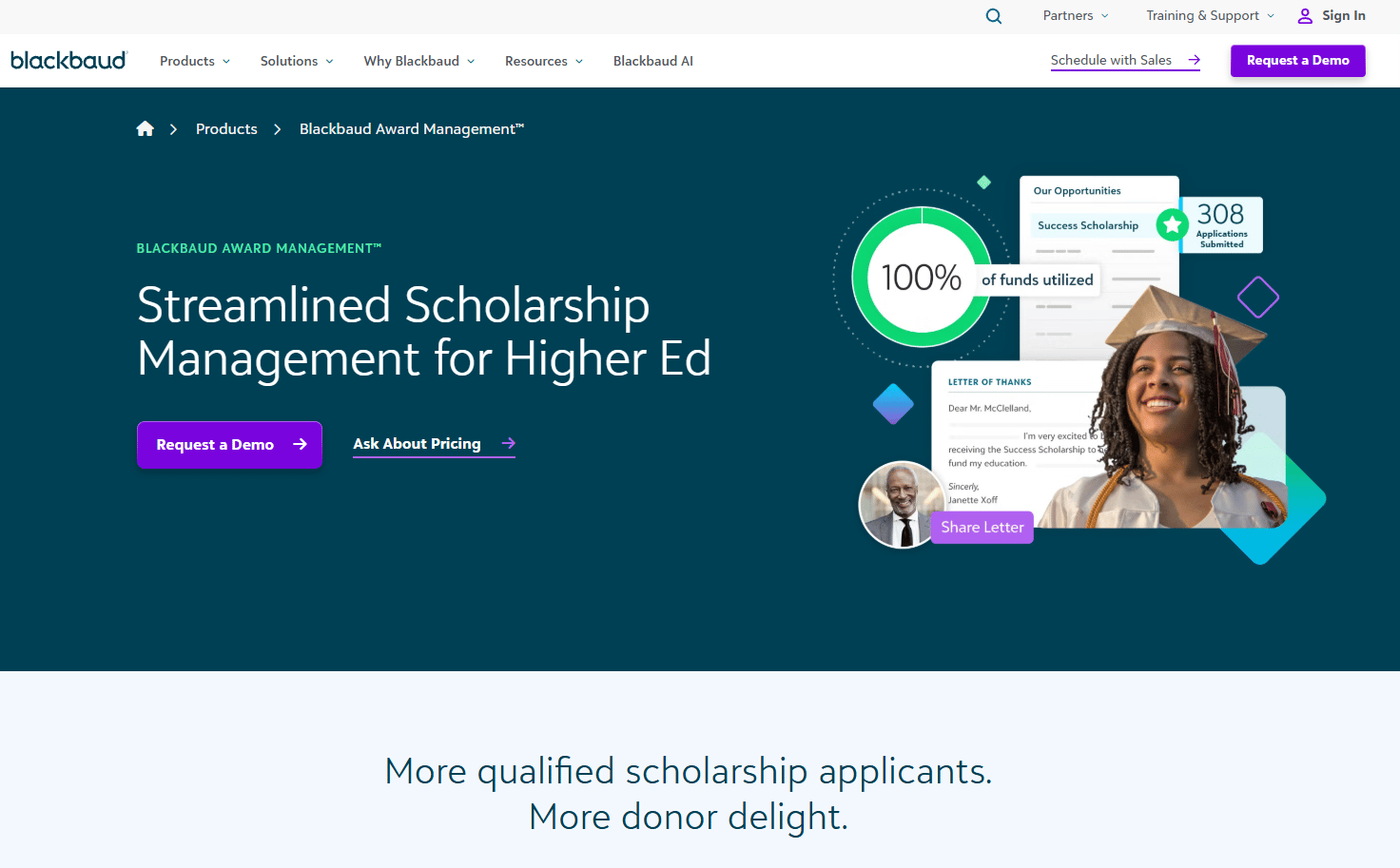
Blackbaud Award Management is built for higher education institutions managing complex scholarship portfolios across advancement offices, financial aid departments, and academic units. It handles the full award cycle: Scholarship matching, application intake, reviewer scoring, renewable award tracking, and donor stewardship reporting. For institutions where scholarship administration must connect to advancement data and student records, it functions as a system of record.
Best for: Universities and colleges coordinating multiple scholarship funds, departments, reviewer groups, and donor reporting requirements.
Key features
- Automatic scholarship matching and applicant recommendations
- Centralized application review with permissions and scoring
- Student information system data imports
- Renewable award management and tracking
- Donor reporting, digital thank-you letters, and donor profiles
Why choose Blackbaud Award Management: It belongs on the shortlist when scholarship administration must stay connected to advancement, financial aid, and institutional data. Organizations without that institutional data dependency will likely find the scope larger than they need.
Blackbaud Award Management pricing: Pricing reflects institution size, portfolio complexity, integrations, and implementation requirements. Contact Blackbaud directly to start the quote process.
G2 rating: 4.2/5 (verified October 2026).
2. SurveyMonkey Apply
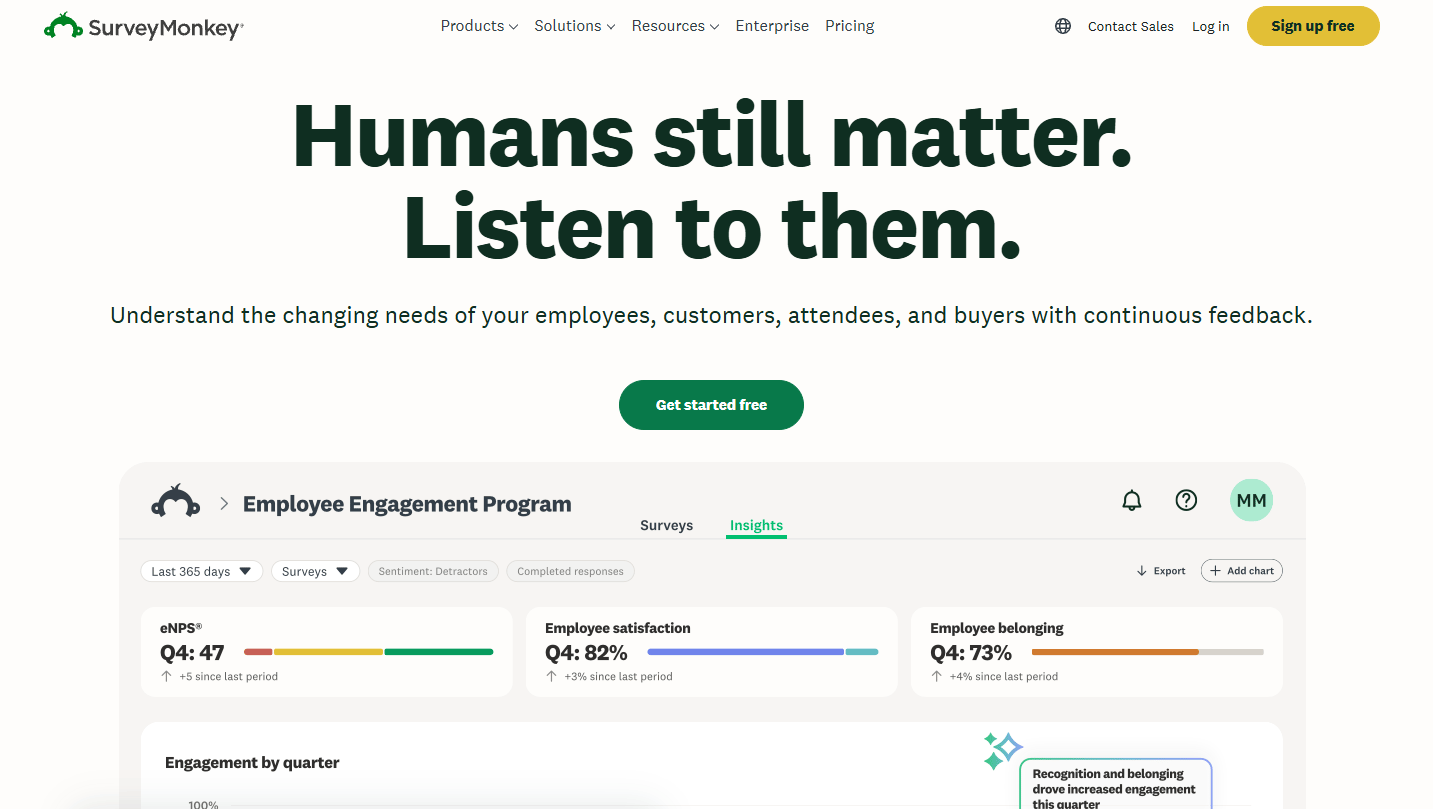
SurveyMonkey Apply is an online application management platform that can support scholarship programs alongside grants, fellowships, awards, and similar intake programs. Administrators build dynamic forms with conditional logic, collect documents and references, automate workflows, assign reviewers, and track outcomes through dashboards. Its flexibility makes it a practical choice when the program design does not fit a rigid template.
Best for: Scholarship programs with varied application types, complex eligibility questions, and distributed review committees.
Key features
- Dynamic application forms with conditional logic
- Document collection, references, and media uploads
- Automated workflow with pre-screening and reviewer assignment
- Online reviewer portal with scoring and comparison views
- Salesforce integration and single sign-on options
Why choose SurveyMonkey Apply: It makes sense when program administrators need to model a specific scholarship process without building custom software. It also works for organizations running multiple program types, such as grants alongside scholarships, from one platform.
SurveyMonkey Apply pricing: All plans require a sales conversation for pricing. The Pro plan supports up to 1,000 applicants and one program. Enterprise supports up to 5,000 applicants across 10 programs. Enterprise Plus supports unlimited applicants. Every plan includes free implementation for the first five programs and unlimited support.
G2 rating: 4.4/5 (verified October 2026).
3. Foundant Scholarship Lifecycle Manager
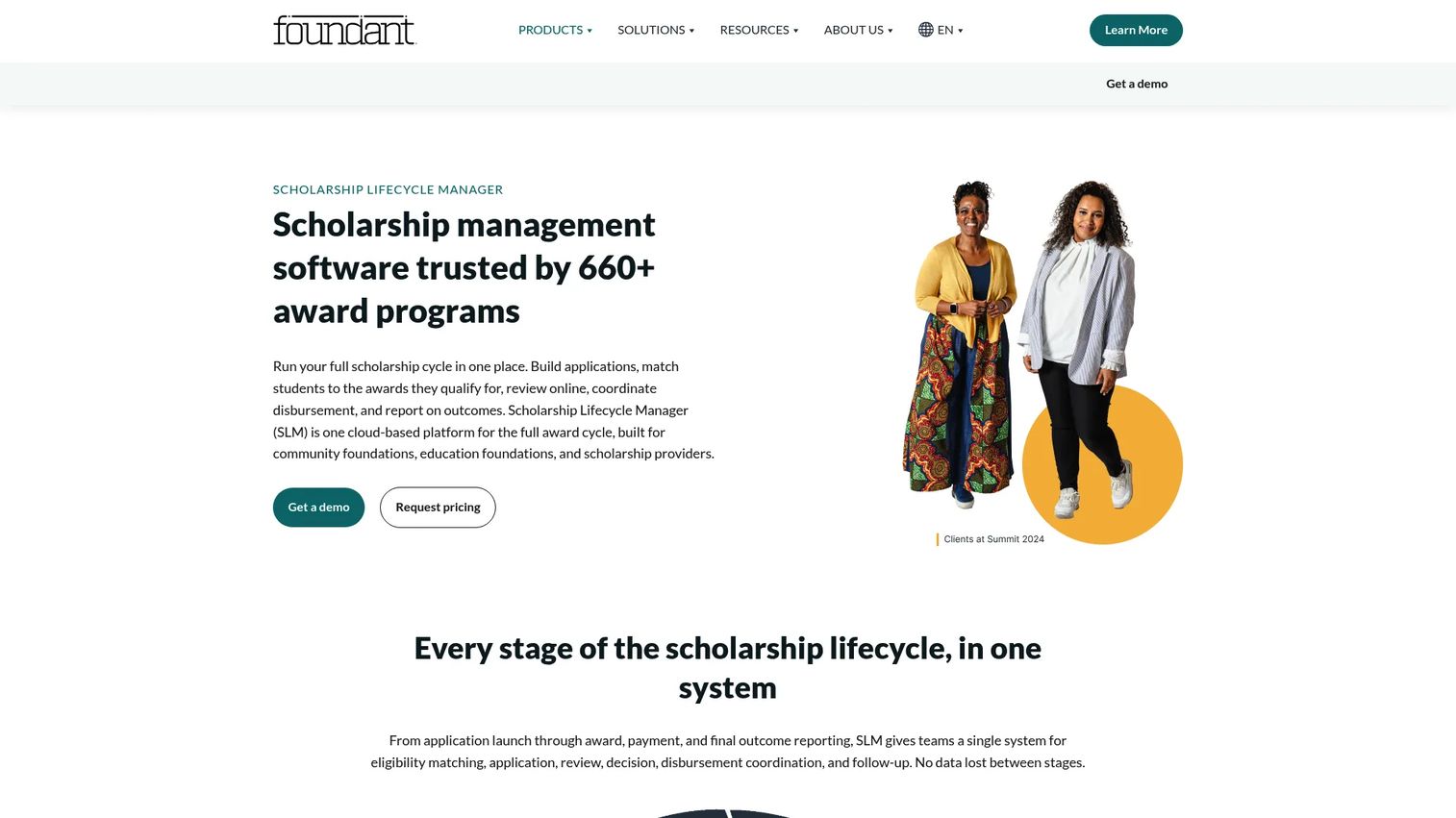
Foundant Scholarship Lifecycle Manager is purpose-built for scholarship providers: Community foundations, education foundations, and nonprofits managing donor-funded award programs. It covers the full scholarship lifecycle, from customizable applications and eligibility matching through anonymized online review, award coordination, communications, and outcome reporting. Unlimited users and support are included, which removes a common scaling cost.
Best for: Foundations and nonprofit scholarship teams that want scholarship-specific workflows and structured implementation guidance.
Key features
- Customizable applications with branching questions and table inputs
- Applicant portal with Universal Application and eligibility matching
- Anonymized online review with scoring and AI-powered summaries
- Third-party recommendation and transcript collection
- CommunitySuite integration for award payment coordination
Why choose Foundant Scholarship Lifecycle Manager: It earns the evaluation slot when the buyer needs more than a form and reviewer portal. Scholarship lifecycle management, including multi-year renewals, donor fund reporting, and structured staff processes, is where this platform is most differentiated. The implementation guidance it provides reduces the risk of launching a system the team cannot maintain.
Foundant Scholarship Lifecycle Manager pricing: Foundant provides pricing through a guided inquiry process tied to organization classification and program scope. Reach out directly through their pricing page to start the conversation.
G2 rating: 4.9/5 (verified October 2026).
4. SmarterSelect
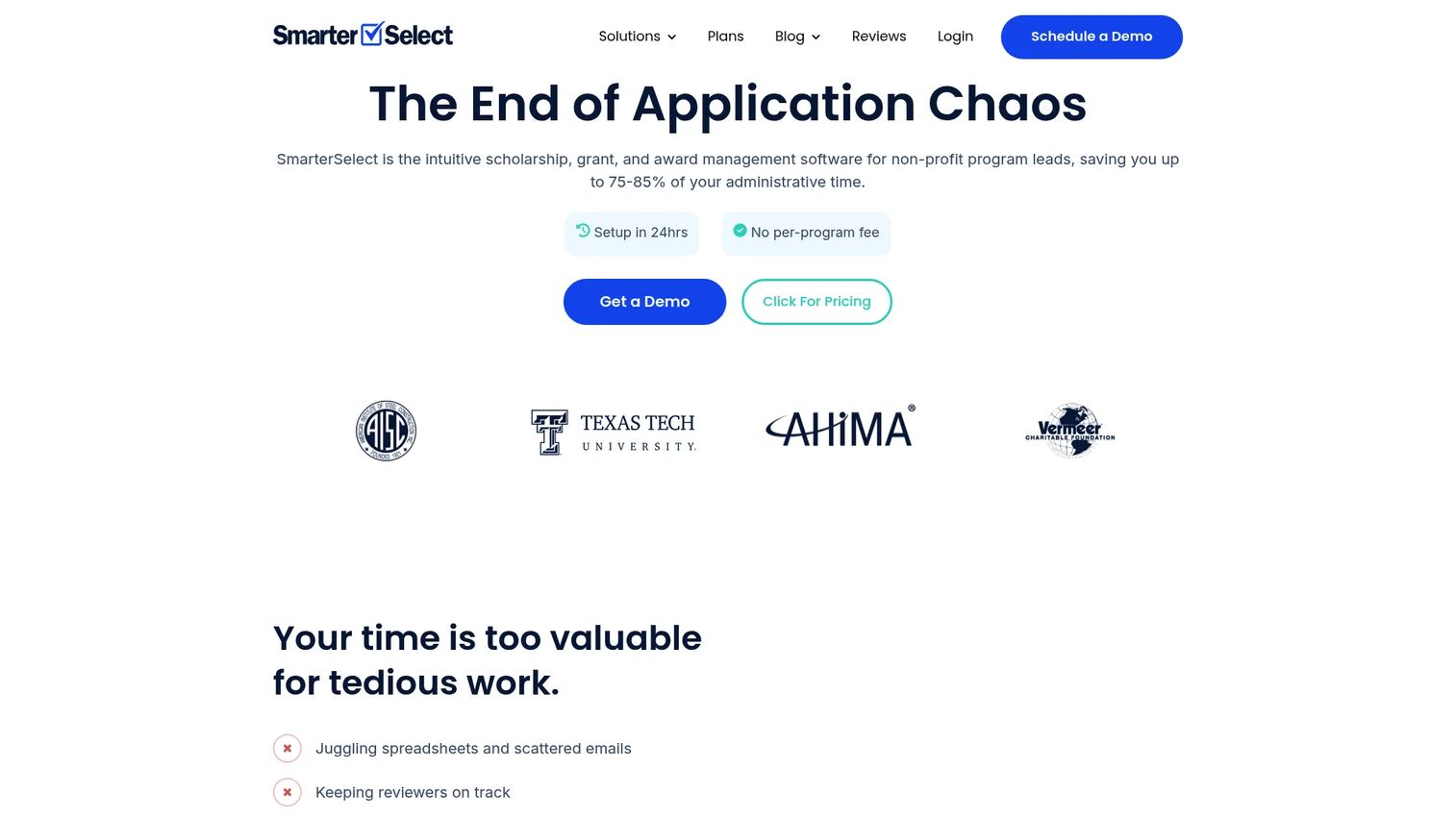
SmarterSelect is a focused scholarship management option for teams that want to launch, collect, review, score, and select applicants without deploying a broad institutional system. It covers application design, reviewer workflows, automated notifications, and multi-program administration. Published annual pricing makes budget conversations straightforward, which is uncommon in this category.
Best for: Small to midsize foundations, associations, and scholarship providers that need a dedicated scholarship workflow at a defined cost.
Key features
- Custom application forms with eligibility rules
- Online evaluation and automated scoring
- Online recommendations and pre-qualification filters
- Award tracking (Enterprise tier)
- Email and text messaging to applicants
Why choose SmarterSelect: It is a practical shortlist candidate when administrative speed and a scholarship-specific feature set matter more than deep institutional system consolidation. The published pricing also means procurement conversations start with a known number rather than a discovery process.
SmarterSelect pricing: Create plan starts at $2,000/year for up to 500 users. Enhance is $5,000/year for up to 2,500 users, adding online recommendations, application rules, and auto-scoring. Enterprise is $7,500/year for up to 10,000 users, adding scholarship matching, award tracking, and SSO.
G2 rating: 4.2/5 (verified October 2026).
5. AwardSpring
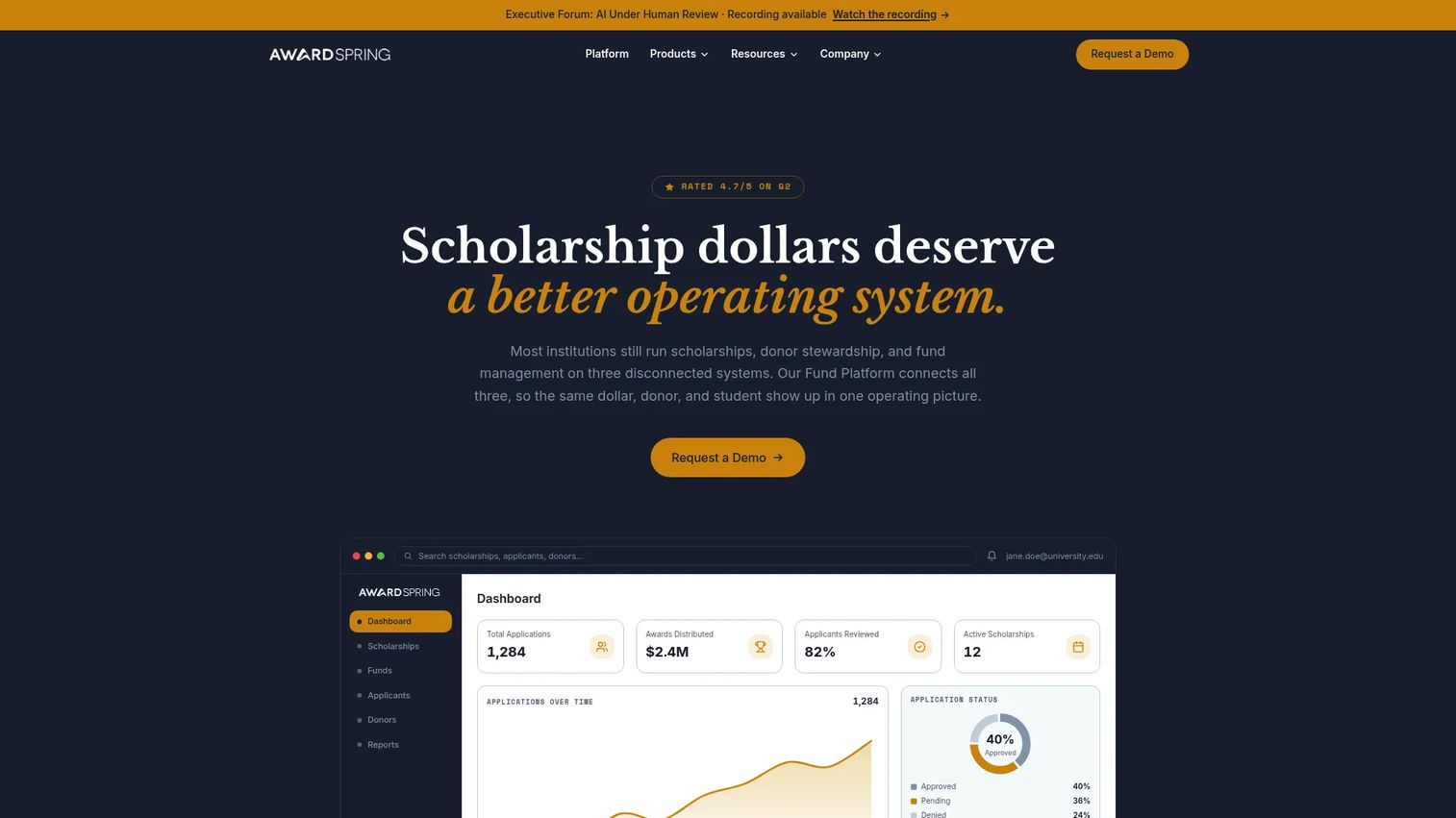
AwardSpring provides scholarship, donor, fund, and donor-experience management for colleges, universities, and scholarship foundations. It automates the full workflow from application through matching, review, and award, while connecting to major student information systems including Banner, Colleague, and Workday. Fund utilization monitoring, compliance controls, and audit trails make it a fit for institutions with donor reporting obligations.
Best for: Higher-education institutions and scholarship foundations managing institutional scholarships alongside donor-funded awards.
Key features
- Automated application, matching, review, and award workflows
- Fund setup, utilization monitoring, and audit trails
- SIS integrations with Banner, Colleague, and Workday
- Eligibility-based scholarship opportunities surfaced to applicants
- Program reporting for donors and administrators
Why choose AwardSpring: It fits institutions where the scholarship office needs to show qualified students the right opportunities automatically, rather than requiring students to self-identify which scholarships apply. The SIS integrations are a material differentiator for universities with enrollment data already in Banner or Workday.
AwardSpring pricing: Pricing is annual and determined by number of opportunities, with current rates provided through a sales inquiry or rate card request. Contact AwardSpring directly for current figures.
G2 rating: 4.7/5 (verified October 2026).
6. Submittable
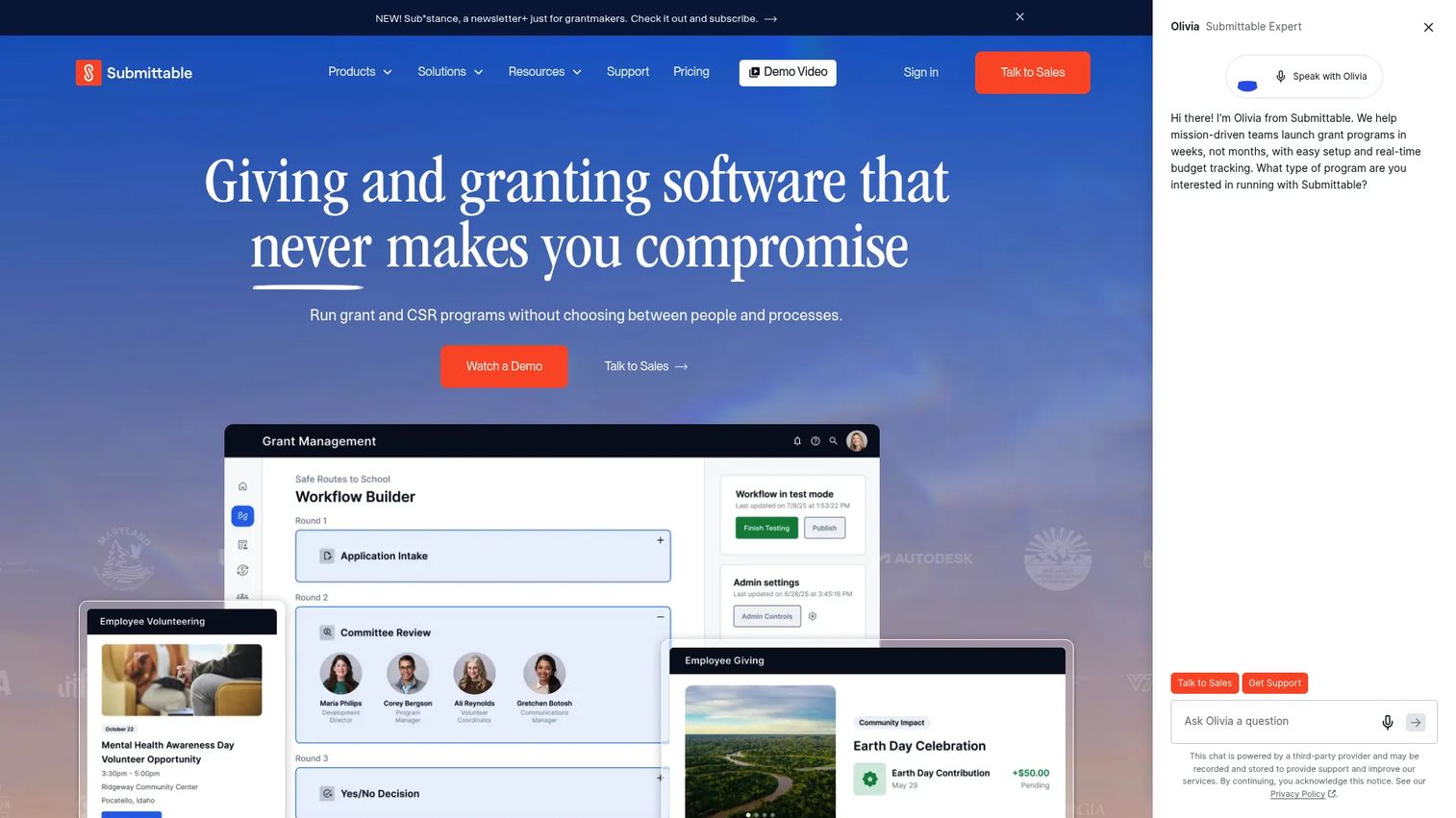
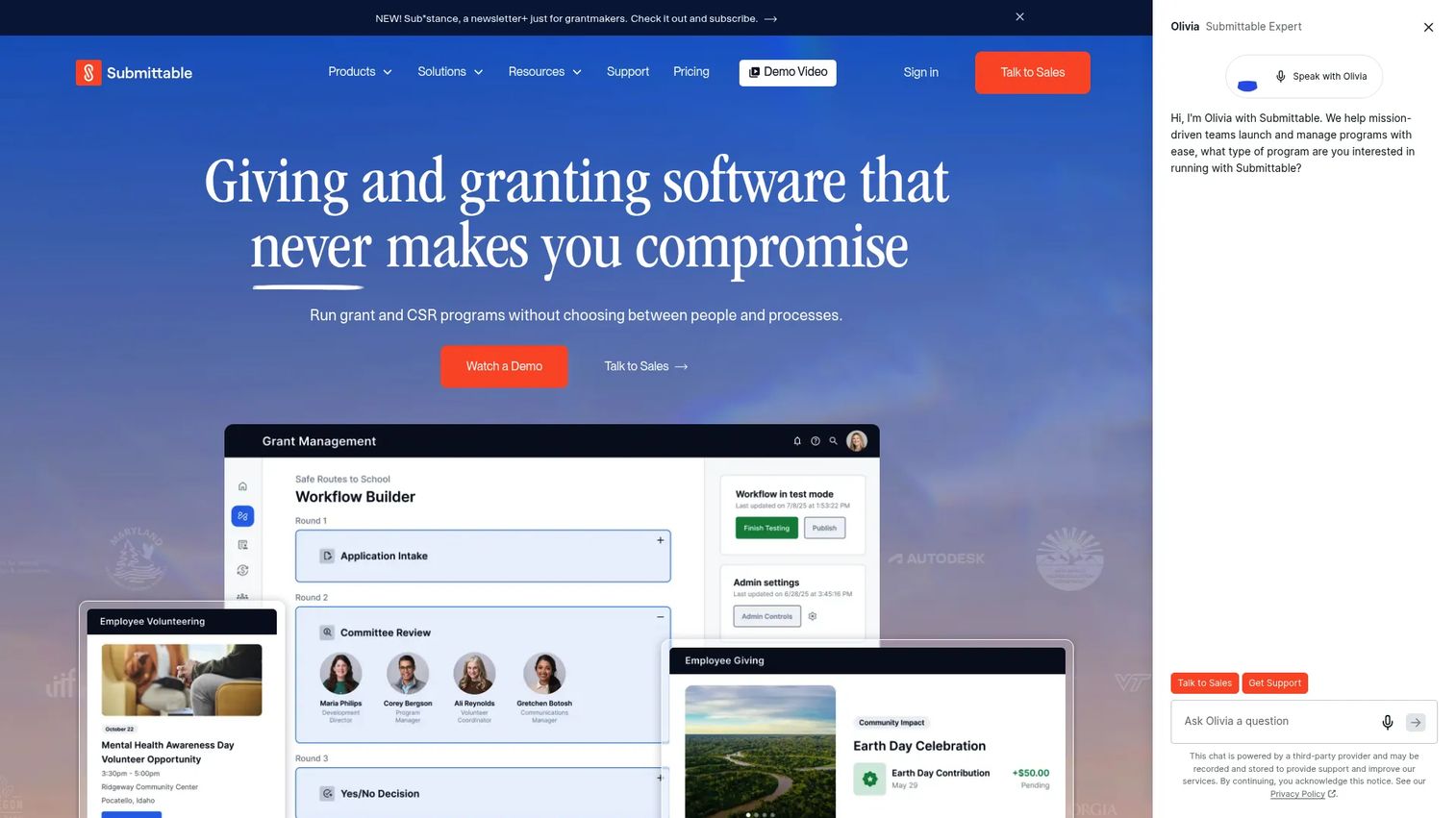
Submittable is a grant management and corporate social responsibility platform that can also support scholarship workflows alongside other application-based programs. Its drag-and-drop form builder handles 50-plus file types, its review workflows support multi-stage evaluation, and its reporting covers dashboards, exports, and audit logs. Organizations running scholarships alongside CSR, employee giving, or grantmaking programs may find consolidation on one platform worthwhile.
Best for: Foundations, nonprofits, and companies that administer scholarships alongside grants, community programs, or other submission-driven initiatives.
Key features
- Drag-and-drop form builder with conditional logic and 50+ file types
- Automated and multi-stage review workflows with customizable scoring
- Grant, CSR, and impact reporting with exports and audit logs
- Payment collection with optional or tiered fee structures
- Two-way API and integrations with CRM, ERP, and HR systems
Why choose Submittable: Consolidation is the primary argument. If a nonprofit or foundation runs several application-driven programs, one platform reduces operational fragmentation. Validate scholarship-specific functions, specifically renewable awards, fund-level reporting, and eligibility matching, before signing, since broader intake platforms vary in depth here.
Submittable pricing: All packages are quote-based across three tiers: Corporate Social Responsibility Platform, Grant and Application Management Software, and Enterprise. Contact Submittable for current pricing. Note that submission-based payment processing carries a separate transaction fee of $0.99 plus 5% per submission, which is distinct from platform subscription cost.
G2 rating: 4.5/5 (verified October 2026).
7. Good Grants
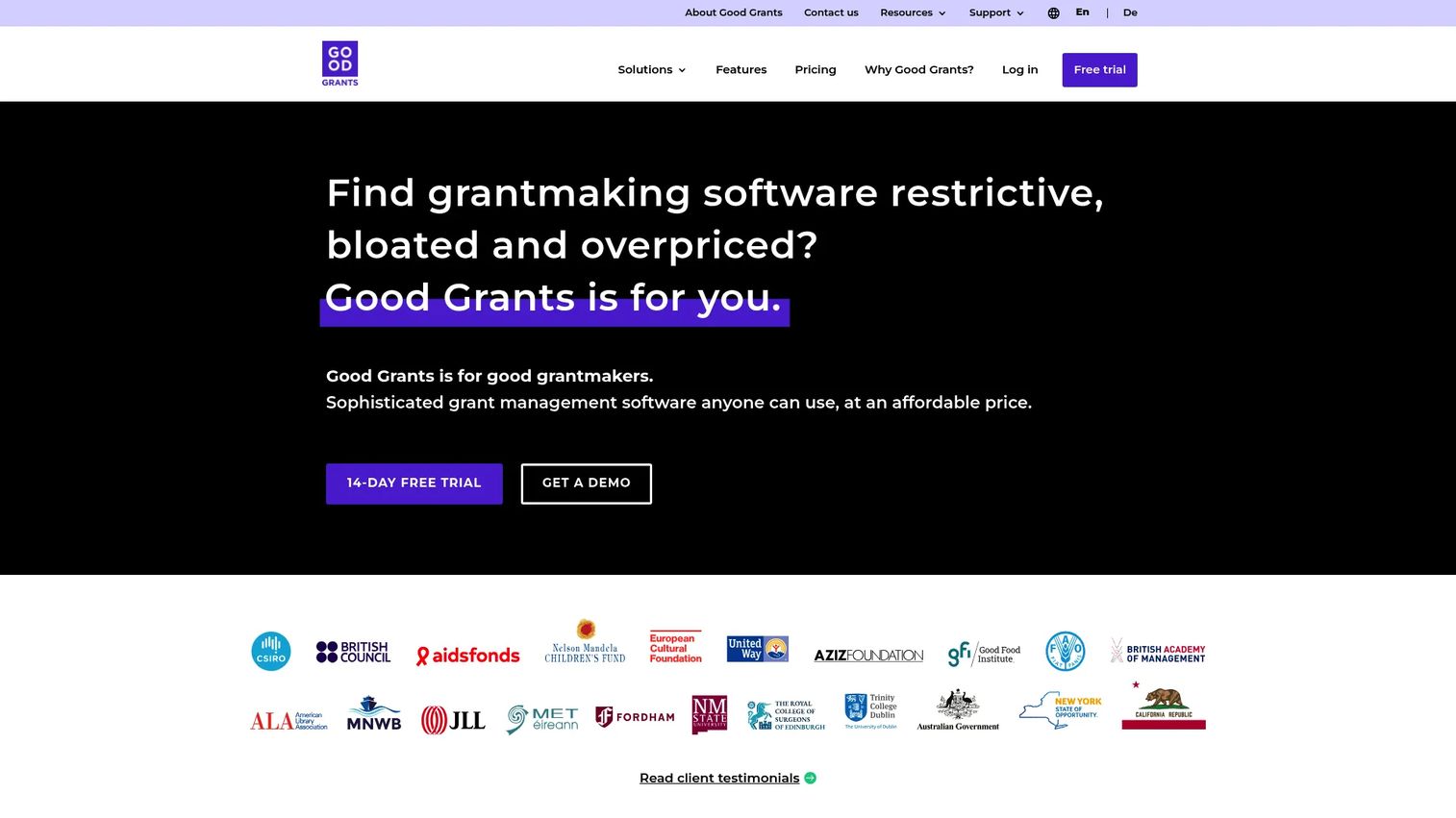
Good Grants is grant management software covering applications, review, funding allocation, payment tracking, and reporting. For scholarship programs that resemble a structured judging process across multiple rounds or categories, it is worth evaluating. Its Intro plan at $3,950 annually gives smaller programs a defined entry point without requiring a sales conversation to understand the cost.
Best for: Scholarship and award programs that need configurable judging, reviewer collaboration, and applicant communications at a published price.
Key features
- Configurable application forms and eligibility screening
- Auto-scoring and multiple review modes
- Award, funding allocation, and payment tracking
- Broadcast email and multi-language support (Premium tier)
- API and integration marketplace (Premium tier)
Why choose Good Grants: It earns consideration when the core challenge is running a clean multi-reviewer judging process and the team wants to see the bill before the sales call. Validate scholarship-specific requirements, including applicant matching, renewable awards, and donor reporting, before selecting it over a scholarship-purpose-built platform.
Good Grants pricing: Intro plan is $3,950/year, supporting up to 10,000 applications. Premium is $7,900/year, adding broadcast email, eligibility screeners, all review modes, multi-language support, and API access. Enterprise pricing is a custom quote for programs above 10,000 applications or requiring custom security and SLA-backed support.
G2 rating: 4.5/5 (verified October 2026).
8. WizeHive
WizeHive is a configurable platform for application-driven programs requiring administration controls, workflow design, and stakeholder coordination. It handles no-code form building, eligibility checks, multi-stage review, real-time budget tracking, and impact reporting. Note that WizeHive now operates under Submittable, so evaluation of either platform may lead to the same vendor relationship.
Best for: Larger organizations with complex approval paths, multiple programs, and governance requirements across grant and scholarship portfolios.
Key features
- No-code application and form building
- Eligibility checks and multi-stage review workflows
- Real-time budget tracking and impact reporting
- Role-based permissions and administrative dashboards
- Configurable workflow design across program types
Why choose WizeHive: It deserves evaluation when the buyer needs an adaptable framework across scholarship and adjacent programs, with controlled workflows and stakeholder visibility. Configuration ownership matters: Complex workflow systems work best when a named person owns the process design, permissions, testing, and future updates.
WizeHive pricing: Contact WizeHive or Submittable directly for current plan terms and cost, which reflect program count, workflow complexity, and user requirements.
G2 rating: 4.3/5 (verified October 2026).
9. Kaleidoscope
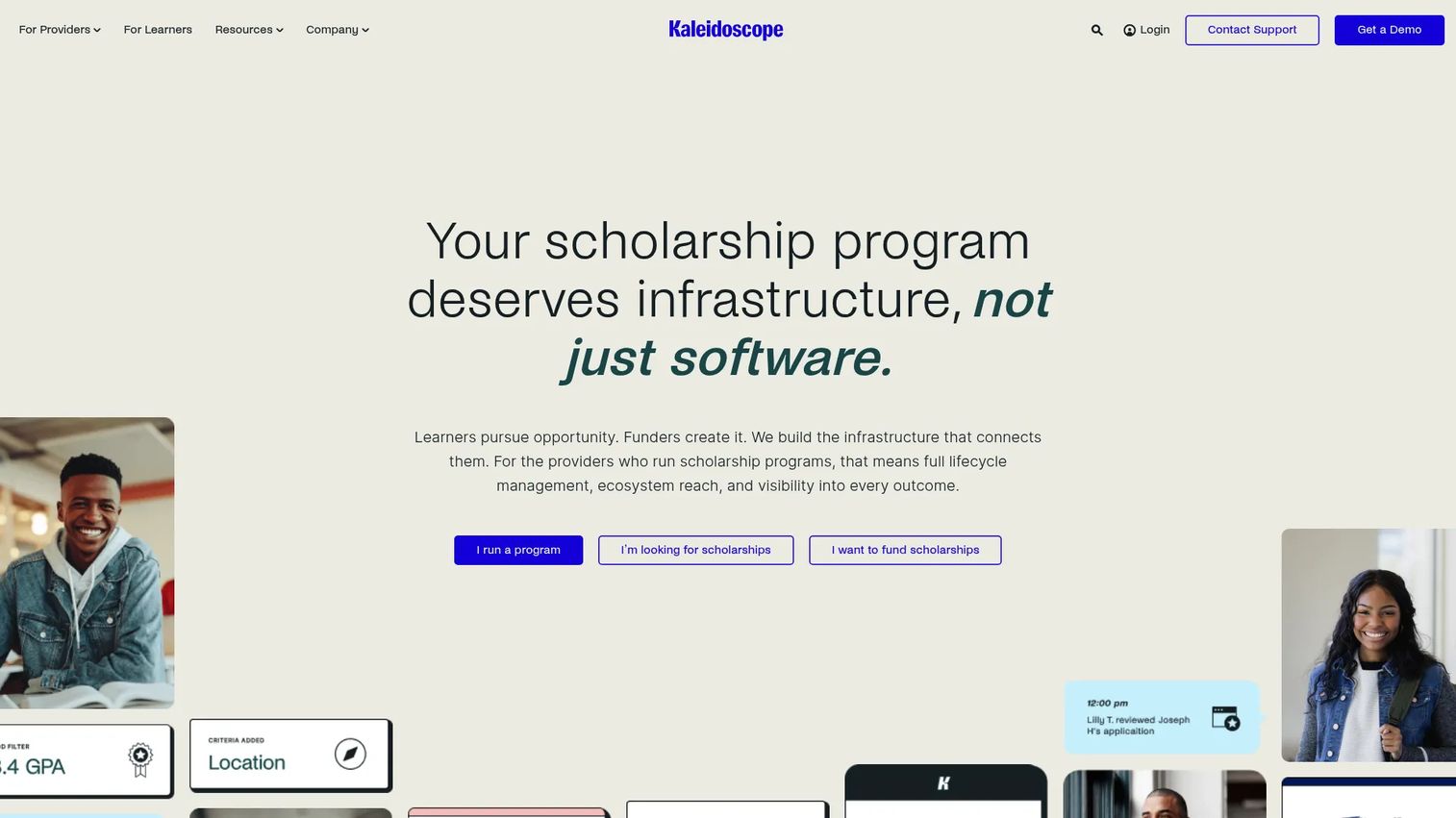
Kaleidoscope is a scholarship and grant management platform covering applications, eligibility, compliance, disbursement, and outcomes. Its applicant-facing marketplace surfaces eligibility-matched opportunities to learners, and its disbursement management model prices based on a percentage of dollars disbursed rather than a flat subscription, which aligns platform cost with program activity. A predictive analytics layer and open API give administrators reporting depth and integration flexibility.
Best for: Scholarship organizations focused on applicant experience, eligibility matching, and end-to-end disbursement management.
Key features
- Eligibility criteria and public scholarship marketplace
- Application form skip logic and branded communications
- Predictive analytics and custom reports
- Payment processing and disbursement management
- Scholar relationship management and open API
Why choose Kaleidoscope: It belongs on the shortlist when applicant completion rates and disbursement accuracy are the primary metrics. Learners can use the platform at no cost, which removes friction from the application side. Validate reporting depth, renewable award workflows, and governance controls if the program is large or donor-funded.
Kaleidoscope pricing: Pricing is responsive and program-specific. Learner access is free. Disbursement management starts at 3% of dollars disbursed annually and decreases with volume. Platform tier pricing for Starter, Platform, and Enterprise requires a direct conversation with Kaleidoscope.
G2 rating: 4.8/5 (verified October 2026).
Considerations when choosing scholarship management software
Application and eligibility design
Evaluate whether staff can build the application process without filing engineering tickets. Check conditional questions, document requirements, reference collection, and eligibility logic. Administrators who need to modify forms mid-cycle or create multiple application paths need a no-code editor that handles that complexity.
Reviewer workflow and decision quality
Ask how reviewer assignment, scoring rubrics, blind review, conflict management, and audit history work in each platform. A strong intake form does not fix an inconsistent decision process. Score normalization, calibration tools, and role-based permissions matter when multiple reviewers score the same pool. This is the section where most platforms reveal their limits quickest.
Award lifecycle and fund stewardship
Confirm what happens after selection. Evaluate acceptance tracking, renewable award workflows, donor acknowledgments, and fund-level reporting. The ability to show a donor exactly how their named scholarship performed, including who received it, how much was disbursed, and what the recipient outcome was, separates scholarship-purpose-built platforms from general intake tools. Review our best contract lifecycle management software guide for parallel thinking on post-signature workflow gaps.
Integrations and data ownership
Check student information system imports, CRM connections, APIs, SSO, and export formats. The goal is to reduce reconciliation work, not create another data silo. Ask each vendor specifically: What happens to your data if you leave? Who owns the schema? Can you export everything?
Implementation and operating model
Ask who configures workflows, who maintains them after launch, and what happens when a key staff member leaves. A program that depends on one administrator's institutional memory has not actually solved the operational problem. Platforms that include implementation guidance, documentation, and onboarding support reduce that risk.
How to choose the right scholarship management software for your organization
If you run scholarships at a college or university
Prioritize student information system connectivity, scholarship matching, financial aid collaboration, and renewable award tracking. Blackbaud Award Management and AwardSpring should both be evaluated when advancement and institutional data are central to the workflow. The SIS integration question is usually the deciding factor between them.
If you manage foundation or nonprofit scholarships
Prioritize application workflows, committee review, communications, and a sustainable admin workload for a small team. Foundant Scholarship Lifecycle Manager and SmarterSelect are strong starting points. Foundant fits programs that need lifecycle depth. SmarterSelect fits programs that need a defined cost and a faster launch.
If you run scholarships alongside grants, awards, or fellowships
Prioritize a platform that consolidates multiple submission programs without making scholarship workflows hard to manage. Submittable, Good Grants, and WizeHive should be evaluated against your broader program portfolio. Good Grants is worth leading with for programs below 10,000 applications that want published pricing.
If applicant discovery and completion are the bottleneck
Prioritize the applicant portal, matching logic, communication flow, and document collection. AwardSpring and Kaleidoscope should both be included. Kaleidoscope's disbursement-based pricing model also fits organizations that want platform cost tied to program activity rather than a flat annual fee.
Conclusion
Scholarship administration has an operational ceiling when it runs on spreadsheets. The platforms in this list each remove a different bottleneck.
Blackbaud Award Management fits institution-wide scholarship ecosystems with donor stewardship dependencies. SurveyMonkey Apply fits organizations that need highly configurable application and reviewer workflows. Foundant Scholarship Lifecycle Manager fits scholarship providers that want lifecycle support and implementation guidance. SmarterSelect fits focused scholarship administration with a published annual cost. AwardSpring fits institutions that need SIS-connected matching and fund tracking. Submittable fits multi-program organizations consolidating intake. Good Grants fits configurable judging programs with a defined entry-price point. WizeHive fits complex governance requirements. Kaleidoscope fits applicant experience and disbursement management where platform cost should scale with program activity.
Shortlist two or three platforms, map each against your application volume and operating model, then ask every vendor to demonstrate the exact workflow where your current process breaks.
Start your journey with Guideflow today!
FAQs
Scholarship search websites help students discover opportunities. Scholarship management software is used by the institution, foundation, nonprofit, or corporation running the program to administer applications, coordinate reviewers, select recipients, track awards, and report outcomes. The two categories serve opposite sides of the same transaction.
A platform can replace most spreadsheet-based workflows: Application tracking, reviewer scores, award status, and applicant communications. Before implementation, define your eligibility rules, approval process, and reporting requirements on paper. Teams that skip that step often rebuild their spreadsheet logic inside the new tool rather than improving it.
Look for reviewer assignment controls, customizable scoring rubrics, blind review options, comment and annotation tools, conflict-of-interest management, score normalization, decision audit history, and role-based permissions. The combination of blind review and audit history is particularly important for programs that need to defend selection decisions to donors or boards.
Most do. Institutions need enrollment data, academic standing, financial aid context, and renewal eligibility pulled from the SIS rather than re-collected through the scholarship application. The exact integration requirement depends on how awards are administered and which office owns the underlying student record. AwardSpring and Blackbaud Award Management both support common SIS platforms including Banner, Colleague, and Workday.
Some grant management platforms can support scholarship programs, and several tools on this list serve both categories. The key validation points are scholarship-specific: Does the platform support applicant matching, renewable multi-year awards, student-facing portals, and donor fund reporting? Broader grant tools vary significantly in depth on those capabilities. Always test the specific scholarship workflow before committing.
The right platform connects individual awards to named scholarship funds, tracks allocation status and disbursement, records recipient communications, and produces structured reports for donors or boards. The reporting depth varies widely. Some platforms produce a basic export. Others generate fund-level impact summaries tied to recipient outcomes. Ask vendors to demonstrate a specific donor report using sample data during your evaluation.
Most vendors in this category do not post flat prices. Cost typically varies with applicant volume, number of scholarship programs, reviewer seats, integration requirements, and implementation support scope. SmarterSelect publishes annual plans starting at $2,000. Good Grants publishes plans starting at $3,950/year. Kaleidoscope charges a disbursement fee starting at 3% of dollars disbursed. All other vendors on this list require a direct pricing conversation.
Request a demonstration of your actual operating workflow, not a generic product tour. Ask to see: Applicant eligibility filtering with your criteria, document collection, reviewer assignment and scoring, decision approval, award notification, renewable award setup, a fund-level report, and the integration or export you currently use. A vendor who cannot demonstrate your specific workflow during the demo will not be able to support it after you sign.
Scholarship lifecycle management refers to the end-to-end administration of a scholarship program, from defining eligibility and launching applications through review, selection, award, renewal, and outcome reporting. The term distinguishes platforms that cover the full program from tools that only handle intake or review. Foundant's Scholarship Lifecycle Manager uses the phrase to signal that its product is built for the complete cycle, not just one stage.
Start by mapping every program type you run: Scholarships, grants, fellowships, community awards. Then identify which workflows they share and which are program-specific. A multi-program foundation needs a platform that handles shared reviewer workflows and shared reporting without collapsing program-specific eligibility rules and fund accounting. Submittable, WizeHive, and Good Grants are built for multi-program environments. Test each against your most complex program, not your simplest.