You can run one storage facility from memory. Late payments, gate codes, unit availability, tenant notices: At a single site, a sharp operator handles it all. Add a second facility, then a third, and the wheels come off. Billing errors stack up. Collections fall through. Occupancy data lives in three different spreadsheets, and no one knows which one is current.
Self-storage is a genuinely large market. According to the Self Storage Association in 2025, 12.6% of U.S. households rented a storage unit in 2024, up from 11.1% just two years earlier. That growth creates real operating pressure for anyone managing more than one site without purpose-built software.
The right self-storage facility management software replaces the spreadsheets and manual follow-up with a repeatable operating system: Automated billing, online rentals, tenant communications, access control, and dashboards that answer the questions your team asks every week. This guide covers the six strongest options for 2026, with verified pricing and ratings for each.
What's inside
This guide compares 6 self-storage management software platforms for operators evaluating their options in 2026. Tools were selected based on feature depth, operator fit, and category position.
Selection criteria:
- Billing, payments, and collections automation
- Online rentals, bookings, and tenant portals
- Multi-site management and centralized reporting
- Access control integrations, support quality, and implementation approach
Pricing and G2 ratings reflect live verification at the time of writing.
TL;DR
- Best all-in-one suite: Storable covers facility software, payment processing, websites, access, insurance, and marketplace connections under one vendor relationship
- Best for enterprise control: Self Storage Manager suits multi-facility, REIT, and large portfolio operators that need centralized data, revenue management, and CRM workflows
- Best for automation and API flexibility: Storeganise fits teams that want contactless bookings, automated billing, an open API, and strong self-service tenant experiences
- Best for smaller operators: Storable Easy handles online rentals, payments, tenant communications, and marketing websites for single-site and small-portfolio facilities
- Best established platform: Sitelink offers a mature, widely adopted self-storage management platform with deep workflow coverage and Storable ecosystem access
- Best for Storable-stack operators: Storable Edge delivers integrated facility operations, billing, tenant activity tracking, and reporting for teams already in the Storable environment
What is self-storage facility management software?
Self-storage facility management software is a property operations platform that helps storage operators manage units, tenants, rentals, billing, payments, access control, reporting, and multi-site workflows from a central system.
The category combines property management, payment processing, CRM, tenant portals, and facility operations in one place. It is different from generic property management software because it handles unit-level inventory, gate access integrations, move-ins, tenant protection, and storage-specific billing cycles. A marketing website alone gets the lead; this software takes over the moment that lead becomes a tenant.
Key capabilities to look for:
- Unit inventory and occupancy tracking: Real-time view of available, rented, and reserved units across every facility
- Online rentals and reservations: Tenant-facing booking flows that capture demand outside office hours
- Automated billing and collections: Recurring charges, late fees, payment reminders, and delinquency workflows without manual intervention
- Tenant communication: Email, SMS, and automated notices for move-ins, renewals, and outstanding balances
- Digital leases and electronic signatures: Paperless rental agreements that reduce front-desk bottlenecks
- Customer portals: Self-service account access for payments, unit changes, and account updates
- Multi-site dashboards: Centralized occupancy, revenue, and delinquency data across a portfolio
- Integrations: Connections to gate systems, accounting software, payment processors, and marketing tools
Where self-storage software earns its place is in the gap between acquisition and operations. Once a tenant is in the door, every manual step between them and a paid unit is a risk. This software closes that gap.
When to use self-storage facility management software
Automate billing before receivables become a weekly fire drill
Manual invoicing and payment follow-up work at one facility with a small tenant base. As the roster grows, so does the time spent chasing late payments and generating notices. A platform that handles autopay, late fees, payment reminders, and collections reporting gives your team back hours each week and gives finance accurate receivables data.
Let tenants rent units without calling the office
After-hours demand is real, and facilities that require a phone call to rent lose tenants to competitors with online booking. Platforms with reservation flows, digital lease signing, and customer portals let tenants complete the entire rental process without staff involvement. That matters most for multi-site operators who cannot staff every location at every hour.
Manage multiple facilities from one operating view
A second facility does not double the complexity linearly. It doubles the number of dashboards, reports, and manual reconciliation tasks. Self-storage property management software with multi-site support consolidates occupancy, revenue, delinquency, and access data across locations, so an operations lead can answer portfolio questions without calling each site manager.
Self-storage facility management software comparison
The table below maps each platform to its strongest fit, key differentiator, pricing approach, and G2 rating. Use it as a starting point, not a final decision. Detailed sections follow.
| # | Product | Best for | Key differentiator | Pricing | G2 rating |
|---|---|---|---|---|---|
| 1 | Storable | All-in-one self-storage operating suite | Broad suite: Facility software, payments, websites, access, marketplace, and insurance | Custom pricing | 3.9/5 |
| 2 | Storable Edge | Operators already on the Storable platform | Integrated billing, tenant activity, unit inventory, and performance reporting | Custom pricing | 3.5/5 |
| 3 | Sitelink | Established operators wanting a mature platform | Deep self-storage workflow coverage with Storable ecosystem access | Custom pricing | N/A on G2 |
| 4 | Storable Easy | Small and single-site operators | Online rentals, payments, tenant communications, and marketing websites | Custom pricing | N/A on G2 |
| 5 | Storeganise | Automation-focused and API-driven operators | Contactless bookings, open API, automated billing, and customer portal | From $90/mo | 4.8/5 |
| 6 | Self Storage Manager | Enterprise, REIT, and multi-facility portfolios | Centralized CRM, revenue management, call tracking, and digital leases | Custom pricing | N/A (0 reviews) |
Best 6 self-storage facility management software tools for 2026
1. Storable
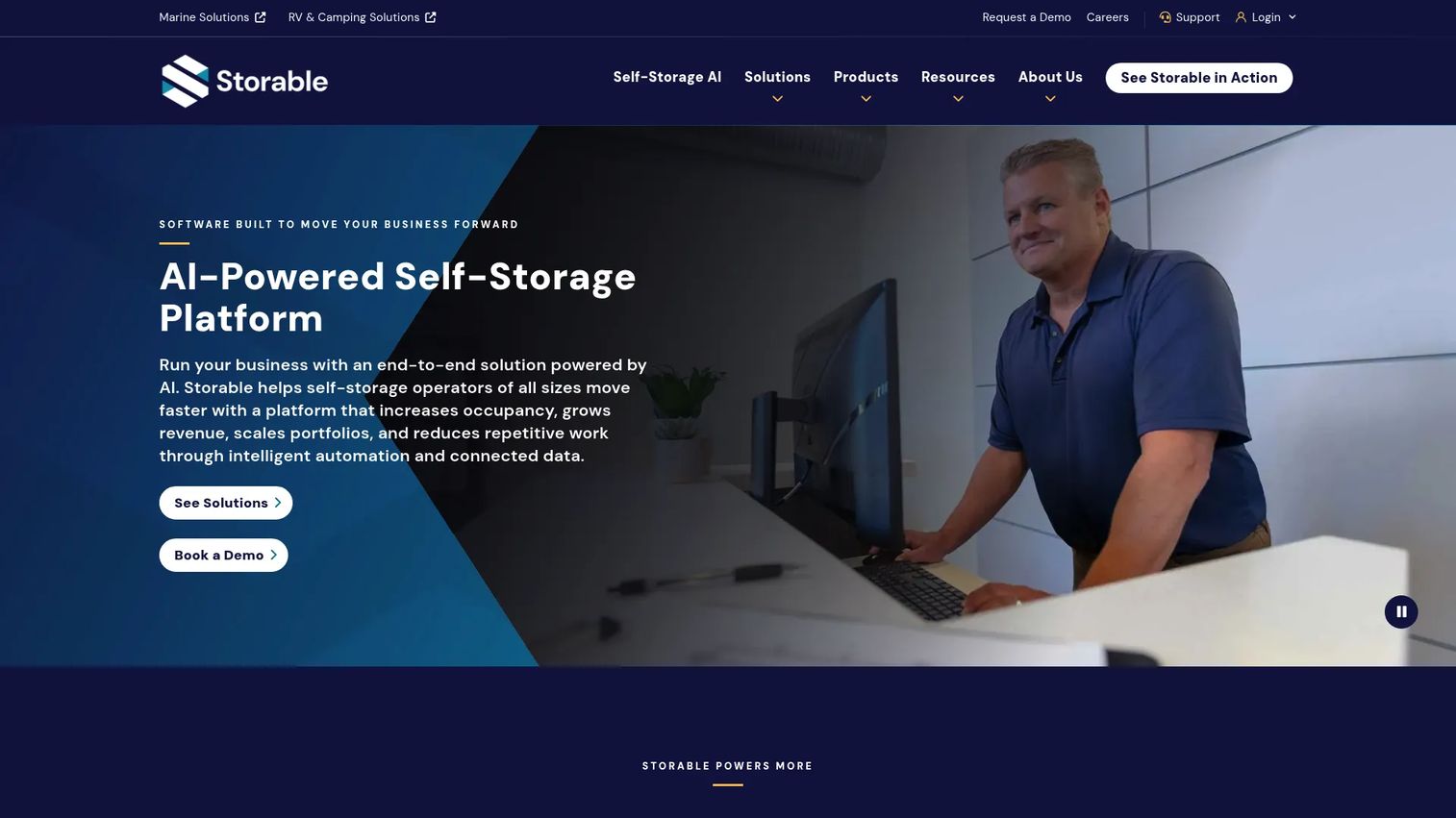
Storable is an AI-powered, end-to-end self-storage technology platform that covers property management, integrated payments, marketing websites, remote access control, CRM, auctions, insurance, and storage marketplace exposure. The platform brings together what most operators previously managed across separate vendors: Facility software, payment processing, lead management, and tenant protection.
Best for: Operators managing single facilities or multi-location portfolios who want one vendor relationship across operations, marketing, and payments.
Key features
- Property management via Sitelink and Storable Edge modules
- Integrated billing, autopay, and collections automation
- Marketing websites, storage marketplace listings, and lead management
- Remote access control and gate management
- Business intelligence dashboards and AI-powered workflows
Why choose Storable: Storable makes most sense when you want to consolidate multiple vendor contracts into one operating relationship. For a founder or operations lead evaluating tools, the pitch is fewer integration headaches, not just more features.
Storable pricing: Storable prices through a sales conversation. Request a quote that covers facility count, unit volume, payment processing needs, website packages, access control, and any add-on modules you need. The cost drivers are facilities, units, and suite depth.
G2 rating: 3.9/5 based on 36 reviews.
2. Storable Edge
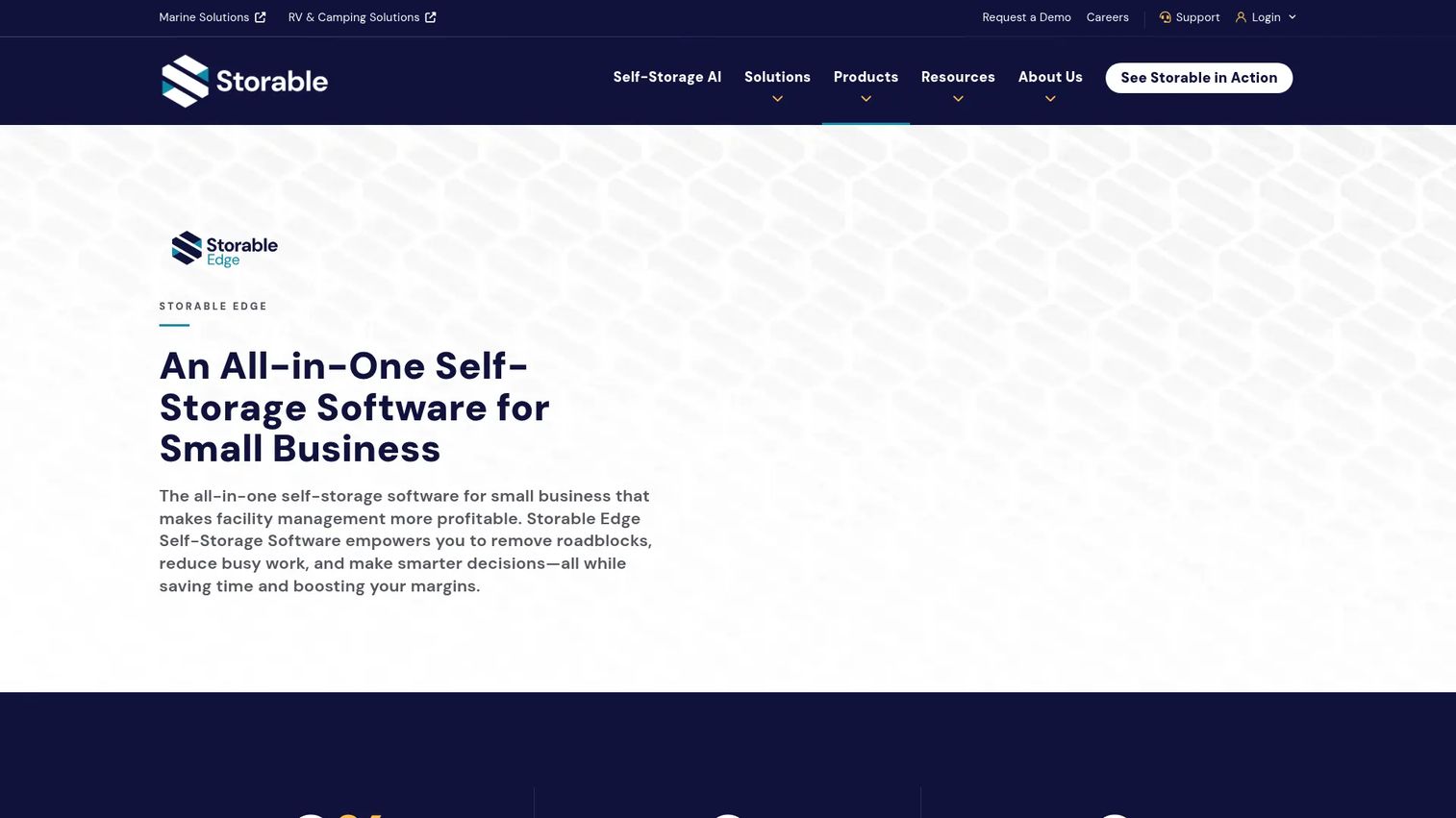
Storable Edge is Storable's integrated facility management module, positioned as an all-in-one platform for small and growing storage businesses. It handles tenant activity tracking, unit inventory, billing and renewals, collections workflows, tenant communications via SMS, email, and phone integrations, plus a Mobile Walkthrough feature for on-site inspections, notes, photos, and maintenance actions.
Best for: Small and growing self-storage operators already using or evaluating the Storable platform who want integrated facility management without separate software contracts.
Key features
- Automated task management and tenant workflows
- Revenue and collections management
- Business intelligence and management reporting
- Mobile Walkthrough for inspections and maintenance
- Integrations with Storable and third-party tools
Why choose Storable Edge: Choose Edge when your team is already in the Storable environment and you want facility management depth without adding a separate platform. Compare Edge against Sitelink before committing, since both sit within the Storable portfolio and your decision will depend on your current platform, migration path, and feature priorities.
Storable Edge pricing: Storable Edge is billed monthly with a monthly commitment. Pricing runs through a Storable sales conversation. Ask what the monthly rate covers for your facility count and which features, such as the Mobile Walkthrough and third-party integrations, are included versus add-ons.
G2 rating: 3.5/5 on G2.
3. Sitelink
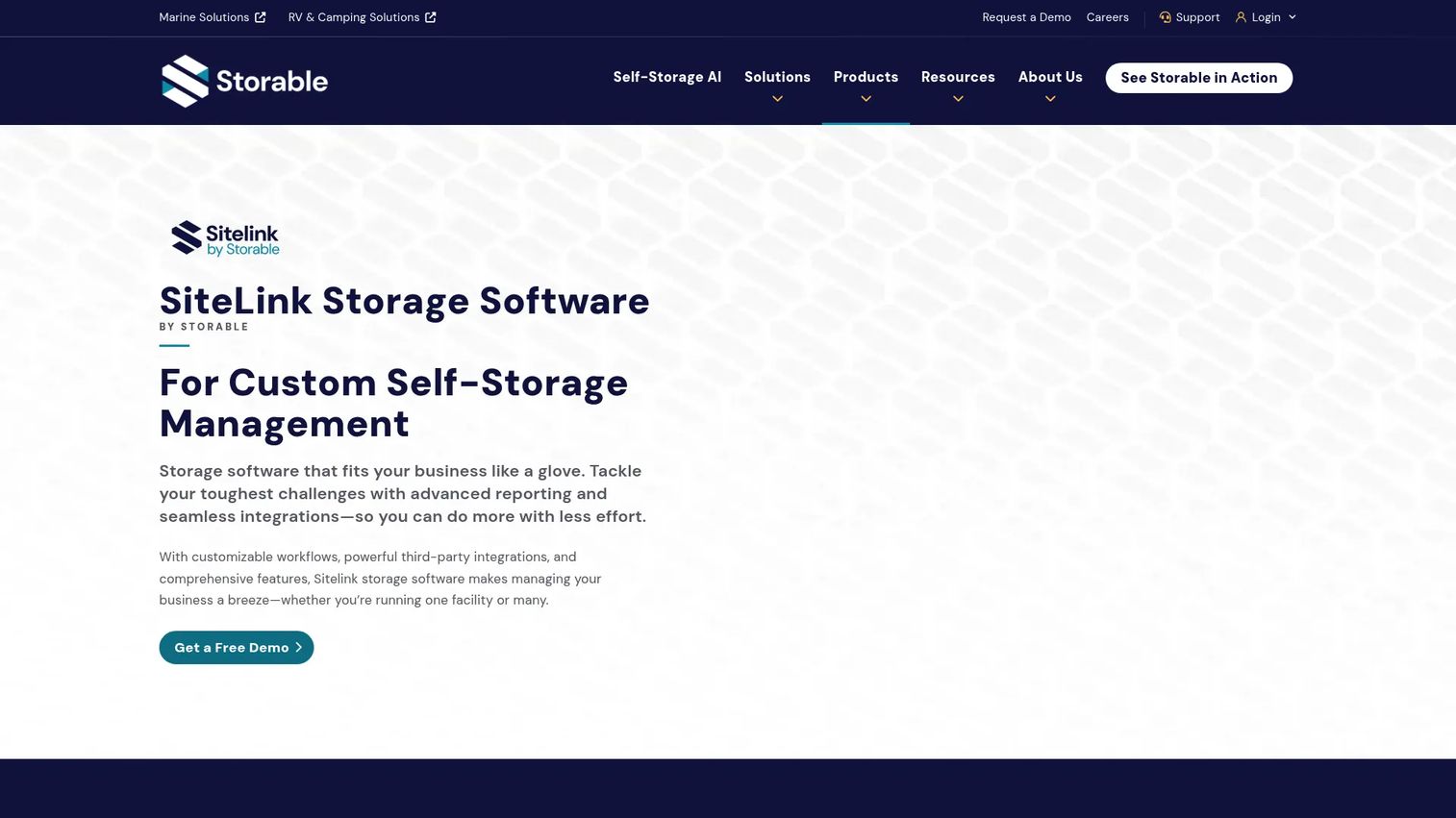
Sitelink is a cloud-based self-storage management platform with deep workflow coverage for facility operations, online rentals, payments, reporting, CRM, and multi-store management. Browser-based access through SiteLink myHub runs on smartphones, tablets, and desktops, so staff can manage operations from anywhere. The platform includes an interactive property map for move-ins, payments, unit transfers, and unit searches, plus SiteLink eSign for digital lease execution.
Best for: Established self-storage operators who value a mature, widely adopted platform with proven self-storage-specific workflows.
Key features
- Online payments, reservations, and rentals with eCommerce site integration
- Interactive property map for unit management and move-ins
- CRM, lead tracking, and automated follow-ups
- SiteLink eSign for electronic signatures and document management
- Multi-store management, accounting integrations, and business intelligence reporting
Why choose Sitelink: Sitelink fits operators who already understand the self-storage operating model and need a platform that supports established processes without requiring a heavy reconfiguration of how staff work. Its Capterra rating of 4.7/5 reflects a strong user base, though G2 reviewer data is limited.
Sitelink pricing: Sitelink uses a one-time setup fee plus a monthly subscription per license. Exact figures run through the Sitelink sales team. When requesting a quote, ask specifically about multi-store licensing, eSign inclusion, payment processing costs, and onboarding support fees.
4. Storable Easy
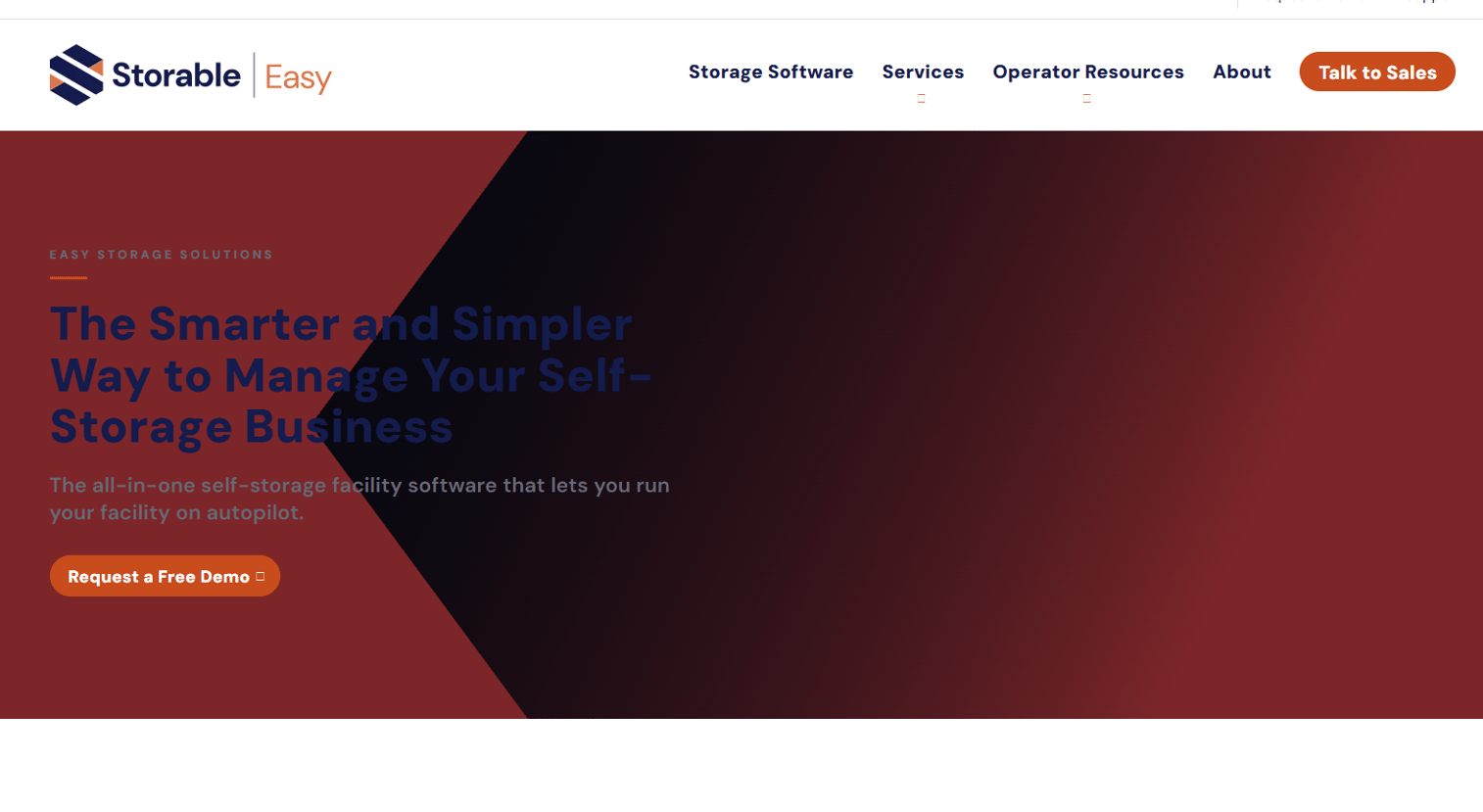
Storable Easy is an all-in-one facility management platform built specifically for single-facility and small-portfolio self-storage operators. It covers payment processing, automated payments, tenant communication, collections tools, and remote access control and gate-code management. The platform positions itself around simplifying operations so an owner-operator can manage the facility remotely without heavy staffing overhead.
Best for: Single-facility or small self-storage operators who want to run payments, tenant communication, and remote access control without enterprise-level complexity.
Key features
- Payment processing and automated recurring payments
- Tenant communication and collections workflows
- Remote access control and gate-code management
- Marketing website support
- Operational dashboards for day-to-day management
Why choose Storable Easy: Choose Storable Easy if you run one facility and want the front-office work handled with minimal staff. The focus is on practical automation: Tenants pay online, receive notices automatically, and you manage gate access remotely. It is not built for large portfolios or revenue management at scale.
Storable Easy pricing: Contact Storable directly for a quote that reflects your unit count, payment volume, and whether you need the marketing website add-on.
5. Storeganise
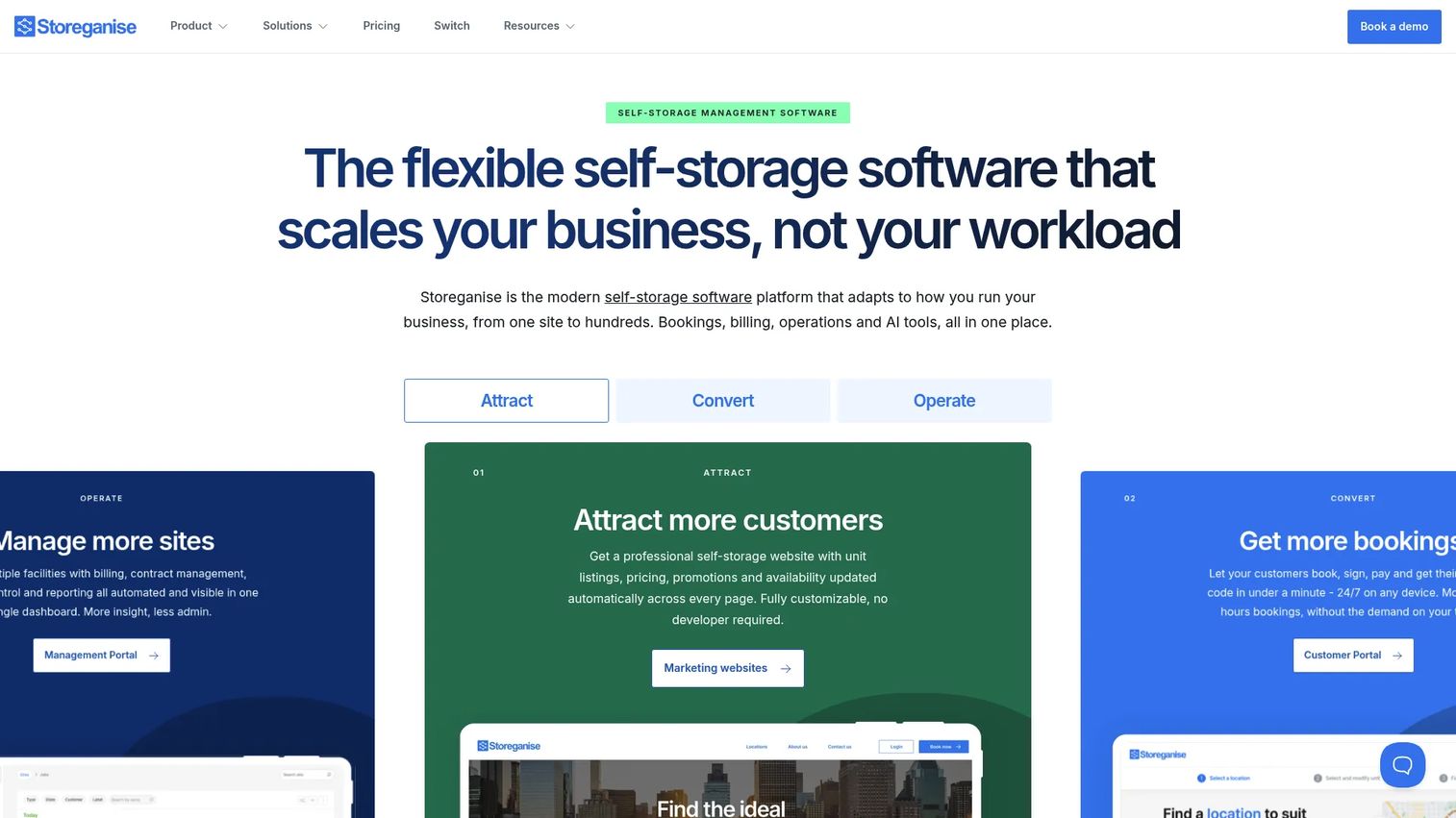
Storeganise is a cloud-based self-storage management platform built around automation, online bookings, and operator self-sufficiency. The platform covers contactless move-ins, automated billing and invoicing, late fees, multi-site operations with interactive site maps, customer portals with a mobile-first tenant experience, reporting and analytics, an open API, and a library of integrations. It also supports marketing website capabilities and localization for international operators.
Best for: Self-storage operators managing single or multiple facilities who prioritize automated booking flows, strong tenant self-service, and integration flexibility.
Key features
- Contactless online bookings and move-ins
- Automated billing, invoicing, and late-fee workflows
- Customer portal with mobile-first tenant experience
- Open API and 30-plus integrations
- Multi-site management with interactive site maps and reporting
Why choose Storeganise: Storeganise is the strongest choice when automation and API extensibility matter. If your operating model involves unusual workflows, international tenants, or a stack that needs custom integrations, its open API gives you room to build. For operators who want a tool that runs itself between staff interventions, the automated billing and tenant portal combination does most of the front-office work.
Storeganise pricing: Storeganise displays a calculated starting example of approximately $90/month on its pricing page. Actual cost depends on business size, facility count, and add-ons. The marketing website and certain integrations may incur additional fees. Request a full quote from Storeganise with your unit count and feature requirements.
G2 rating: 4.8/5 on G2.
6. Self Storage Manager
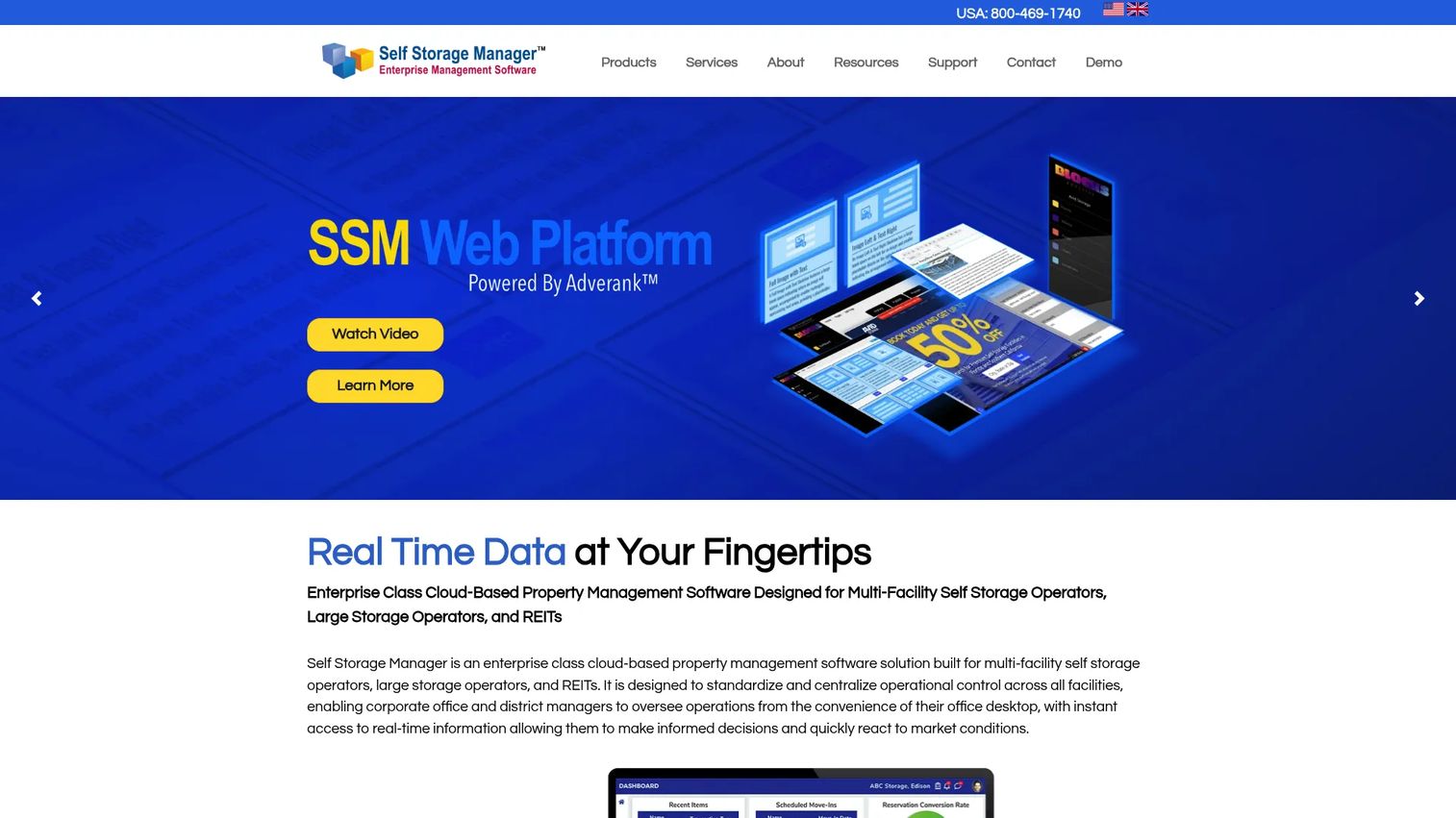
Self Storage Manager is an enterprise-class, cloud-based property management platform built for large operators, multi-facility portfolios, and REITs. It covers online reservations, rentals with waiting lists, a customer portal, advanced revenue management with dynamic pricing, delinquency management with automated fees and gate lockout, an integrated CRM with call-center interfaces and campaign tracking, and centralized multi-facility management and reporting. Gate-system integrations, accounting software connections, e-signature support, and payment integrations round out the operational layer.
Best for: Large and multi-facility self-storage operators who need centralized portfolio control, revenue management, marketing attribution, and CRM workflows in one platform.
Key features
- Online reservations, rentals, and waiting list management
- Advanced revenue management and dynamic pricing
- Integrated CRM, call-center interfaces, and campaign tracking
- Delinquency management with automated fees and gate lockout
- Multi-facility centralized reporting and management
Why choose Self Storage Manager: This platform fits operators who treat self-storage as a scaled operating business rather than a property side project. Revenue management, call tracking, advertising ROI measurement, and work orders are features that only matter once you have the volume and staff to act on the data. If you are running five or more facilities and need the numbers to hold up in board review, Self Storage Manager is built for that level of operational rigor.
Self Storage Manager pricing: Self Storage Manager does not display pricing publicly. The cost drivers are facility count, user seats, modules, implementation, and support level. Request a full quote and ask specifically about implementation fees, migration support, and what is included in the base subscription versus add-on modules.
Considerations when choosing self-storage facility management software
Match the platform to your facility count now and in 18 months
A single-site operator and a 15-site portfolio need very different buying conversations. Platforms that handle small operators well often lack the multi-store reporting depth that larger operators need. Build your shortlist around today's workflow, then confirm the platform can handle the next operational step without a full migration.
Verify billing and collections depth before the demo ends
Accepting payments is table stakes. What separates platforms is the detail underneath: Autopay enrollment, payment method flexibility, automated late fee schedules, delinquency notice sequences, gate lockout triggers, and collections reporting. Push every vendor to walk through their delinquency workflow end to end before you evaluate pricing.
Confirm access control integrations with your gate hardware
Remote operations and unmanned hours make access control a core workflow, not an add-on. Check which gate manufacturers each platform integrates with, what happens when a tenant's payment fails (automatic lockout or manual step), how exceptions are managed, and whether the activity log is real-time or delayed. The answers will vary significantly across this list.
Ask about migration before the feature comparison
A platform with better features still fails if the migration drags your operation into chaos for three months. Ask each vendor for a written migration plan that covers tenant record transfer, billing history, payment token migration, digital lease carryover, staff training, and go-live support. Operators who skip this question often regret it.
Tie reporting to the questions your team asks weekly
Dashboards are only useful if they answer the operational questions your manager or VP asks each week: Occupancy by facility, revenue per unit, delinquency rate, move-in source, and month-over-month rental trend. Evaluate reporting against your actual decision cadence, not the vendor's screenshot library.
Conclusion
Each of these six platforms fits a different operational reality.
Choose Storable when you want one vendor to cover facility operations, payments, websites, access, and insurance. Choose Storable Edge when you are already in the Storable environment and want integrated facility management without changing platforms. Choose Sitelink when an established, deeply proven self-storage platform matters more than cutting-edge interface design.
Choose Storable Easy when you run a small facility and want automated payments, tenant communication, and remote access without enterprise overhead. Choose Storeganise when automation, open API flexibility, and a strong tenant self-service experience are your priorities. Choose Self Storage Manager when you manage a large portfolio or REIT-style operation and need centralized data, revenue management, and marketing attribution.
The practical next step: Shortlist two or three platforms based on facility count and billing complexity. Ask each vendor for a migration plan, a live workflow walkthrough, a full pricing breakdown covering implementation and add-ons, and references from operators at your current scale. Compare on operational fit, not feature grids alone.
Start your journey with Guideflow today!
FAQs
Self-storage facility management software is a property operations platform that manages units, tenants, rentals, billing, payments, access control, reporting, and multi-site workflows from a central system. It differs from generic property management software by handling storage-specific workflows: Unit-level inventory, gate access, move-in automation, tenant protection, and storage billing cycles.
Storable Easy is built specifically for single-facility and small-portfolio operators who need payment processing, tenant communication, remote access control, and marketing website support without enterprise complexity. Storeganise is also a strong fit for smaller operators who want automated booking flows and a tenant portal, with pricing that starts from approximately $90/month.
Self Storage Manager is purpose-built for large and multi-facility portfolios, with centralized reporting, dynamic revenue management, CRM, and campaign tracking. Storable and Storeganise both handle multi-site operations well and offer centralized dashboards across locations. Storable Edge and Sitelink also support multi-store management within the Storable environment.
All six platforms in this list support some combination of recurring billing, automated payments, late fees, and collections workflows. The depth varies. During your demo, ask each vendor to walk through their full delinquency sequence: How late fees trigger, how payment reminders send, when gate lockout activates, how exceptions are handled, and what the collections reporting shows. That walkthrough reveals more than the feature list does.
Yes. Most modern platforms, including Storable, Storeganise, Sitelink, and Self Storage Manager, support online reservations, digital lease signing, payment collection, and customer portals for self-service move-ins. The tenant experience quality varies. Test the full tenant journey yourself, from search to signed lease to paid unit, before committing to a platform.
Pricing varies significantly based on facility count, unit volume, payment processing volume, modules selected, website packages, access control integrations, and implementation support. Storeganise publishes a starting calculator estimate from approximately $90/month. Most other platforms in this list price through a sales conversation. When requesting quotes, ask for a full breakdown that includes implementation, migration, monthly subscription, and any add-on costs.
Gate access control integrations are non-negotiable for facilities with unmanned hours. Accounting software connections, particularly QuickBooks for smaller operators, matter for clean financials. Payment processor integrations affect which methods tenants can use and what processing fees you pay. For operators running marketing campaigns, connections to CRM and campaign tracking tools help attribute rental source to advertising spend. For teams with custom workflows, an open API, as offered by Storeganise, gives the most flexibility.
Migration complexity depends on the size of your tenant database, how billing history is structured, whether payment tokens can transfer to a new processor, what happens to existing digital leases, and how much training staff need on the new system. Smaller operators with clean records and simpler billing tend to migrate faster. Multi-site operators with years of billing history and complex delinquency rules should budget more time and scrutiny. Ask every vendor for a written migration plan with a sample timeline before signing anything.