You raised a Series B. Headcount doubled. And your compensation planning still runs through a shared spreadsheet, a Slack thread, and whatever your Head of Finance can reconstruct from memory during the merit cycle.
That works at 30 people. It breaks at 80. Managers submit numbers in different formats. Someone overwrites a formula. Two directors give the same performer wildly different raises with no visibility into why. And when your board asks how pay equity looks across the org, the honest answer is: nobody can say without a week of manual work.
This is the exact friction compensation planning software solves. Roughly 47% of organizations still run incentive compensation on spreadsheets, according to Business Research Insights (2026), which tells you the manual approach persists long after it stops working. The compensation planning software market itself is projected to grow from USD 364 million in 2026 to USD 513 million by 2034 at a 5.5% CAGR, per Intel Market Research (2026), as more scaling companies replace version-control chaos with controlled workflows.
For a founder, compensation software is less an HR purchase and more an operating-system decision. It touches budget discipline, retention, fairness, and how fast you can make defensible pay decisions without routing everything through you. If you are building a repeatable GTM system, the same logic applies to how you show your product to buyers. Teams comparing evaluation formats often look at options like contract lifecycle management software or audit management software with the same lens: does it reduce manual drag and improve signal?
What's inside
This guide covers 8 compensation planning software tools built for teams outgrowing spreadsheets. We looked at how each handles the work that actually stalls a comp cycle: budgeting controls, approval workflows, pay equity and benchmarking, integrations with your existing stack, auditability, and how quickly a team can roll it out without a six-month implementation.
We selected these tools based on planning depth, benchmarking and pay equity capability, governance and audit trails, integration breadth, and rollout speed. Pricing here reflects what vendors publish on their own sites. Where a vendor gates pricing behind a sales conversation, we say so rather than guess. G2 ratings reflect current listings at the time of writing.
TL;DR
- Best for execution-first teams: Aeqium, with AI-assisted cycles, no-code configuration, and audit trails built for fast, traceable planning.
- Best for benchmarking depth: Pave, which pairs real-time market data with planning and total rewards communication.
- Best for enterprise governance: Beqom, built for global compensation, pay equity, and complex reward programs.
- Best for HRIS-connected workflows: Dayforce, where compensation lives alongside payroll, HR, and performance on one platform.
- Best for mid-market scale: Compport and Comprehensive, both configurable enough to run full cycles without enterprise overhead.
- Best for salary structure design: Salary.com CompAnalyst, a data-heavy option for setting and defending pay bands.
What is compensation planning software?
Compensation planning software is a purpose-built platform for planning, modeling, approving, and communicating salary, bonus, equity, and other reward decisions with budget controls, salary bands, and structured approval workflows. It replaces spreadsheets and scattered manager inputs with a single system where finance and HR keep control while managers still weigh in.
The core functions cluster into a few areas. Together they turn a comp cycle from a fire drill into a repeatable process.
- Merit cycle software: run annual or off-cycle raises with consistent inputs, guardrails, and manager-facing recommendations. This is where merit cycle software discipline replaces the free-for-all spreadsheet.
- Bonus and equity planning: model variable pay, equity grants, and refresh scenarios against budget before anything gets approved.
- Budget allocation: compensation budgeting software enforces spend limits at the team, department, and org level so no manager can quietly blow the pool.
- Salary band management: define, publish, and enforce pay ranges so offers and raises stay inside defensible bands.
- Pay equity analysis: pay equity software surfaces gaps by role, level, gender, and other dimensions before they become a legal or retention problem.
- Total rewards communication: total rewards software generates statements that show employees the full value of their pay, equity, and benefits.
For a scaling SaaS company, these capabilities map directly to KPIs founders already track. Cleaner budget control protects burn multiple. Fair, consistent pay decisions protect retention and net revenue retention. Faster cycles free up finance and people leaders for higher-value work. And clean, auditable comp data survives board scrutiny and due diligence when the next raise comes around.
When to use compensation planning software
Not every company needs this on day one. But three patterns signal that the pain has outgrown the workaround.
Replace spreadsheet cycles with controlled workflows
The spreadsheet works until it doesn't. The tipping point usually arrives when a comp cycle takes weeks instead of days, when managers submit numbers in incompatible formats, or when someone overwrites a formula and nobody notices until offers go out. A comp planning workflow with locked inputs, version control, and approval routing removes the version-control chaos. If your last cycle involved reconstructing what changed and who approved it, you are past the point where a spreadsheet is safe.
Improve pay equity and benchmarking visibility
Founders get asked hard questions: are we paying fairly across levels, and are our bands competitive? Answering with confidence requires current market data and the ability to run a fairness review on demand. Salary benchmarking software and pay equity reporting turn those questions from a week of manual analysis into a dashboard view. When your board or a new People leader wants proof, not vibes, this is the trigger.
Scale manager approvals without losing governance
Early on, you approve every raise. That does not scale. As more managers weigh in, finance and HR still need guardrails: budget caps, band enforcement, and approval workflows that route decisions to the right people. Compensation review software lets you delegate the input while keeping the control, complete with audit trails that show who changed what and when.
Comparison table
Here is how the 8 tools stack up on intent, differentiation, published pricing, and current G2 rating. Pricing reflects what each vendor shows publicly; several gate exact figures behind a demo, which we note directly.
| # | Product | Intent | Key differentiation | Pricing | G2 rating |
|---|---|---|---|---|---|
| 1 | Aeqium | Execution-first comp cycles | AI-assisted, no-code cycle configuration with audit trails | Demo-based, no public price | Not listed |
| 2 | Pave | Benchmarking plus planning | Real-time market data paired with planning workflows | Free tier; paid plans demo-based | 4.7/5 |
| 3 | Beqom | Enterprise governance | Global compensation, pay equity, performance breadth | Subscription, contact sales | 4.4/5 |
| 4 | Dayforce | HRIS-connected comp | Compensation unified with payroll, HR, and talent | Contact sales | 4.2/5 |
| 5 | Compport | Mid-market to enterprise | Planning, incentives, pay equity, total rewards in one | Demo-based | 4.7/5 |
| 6 | HRSoft | Enterprise comp lifecycle | Flexible workflows and total rewards communication | Custom quote (GROW, SCALE, ELEVATE) | Not listed |
| 7 | Salary.com CompAnalyst | Benchmarking and bands | Market pricing, salary structures, pay analytics | Demo-based | 4.4/5 |
| 8 | Comprehensive | Configurable cycles | Configurable workflows plus total rewards dashboards | Per-employee-per-month, billed annually | 4.9/5 |
1. Aeqium
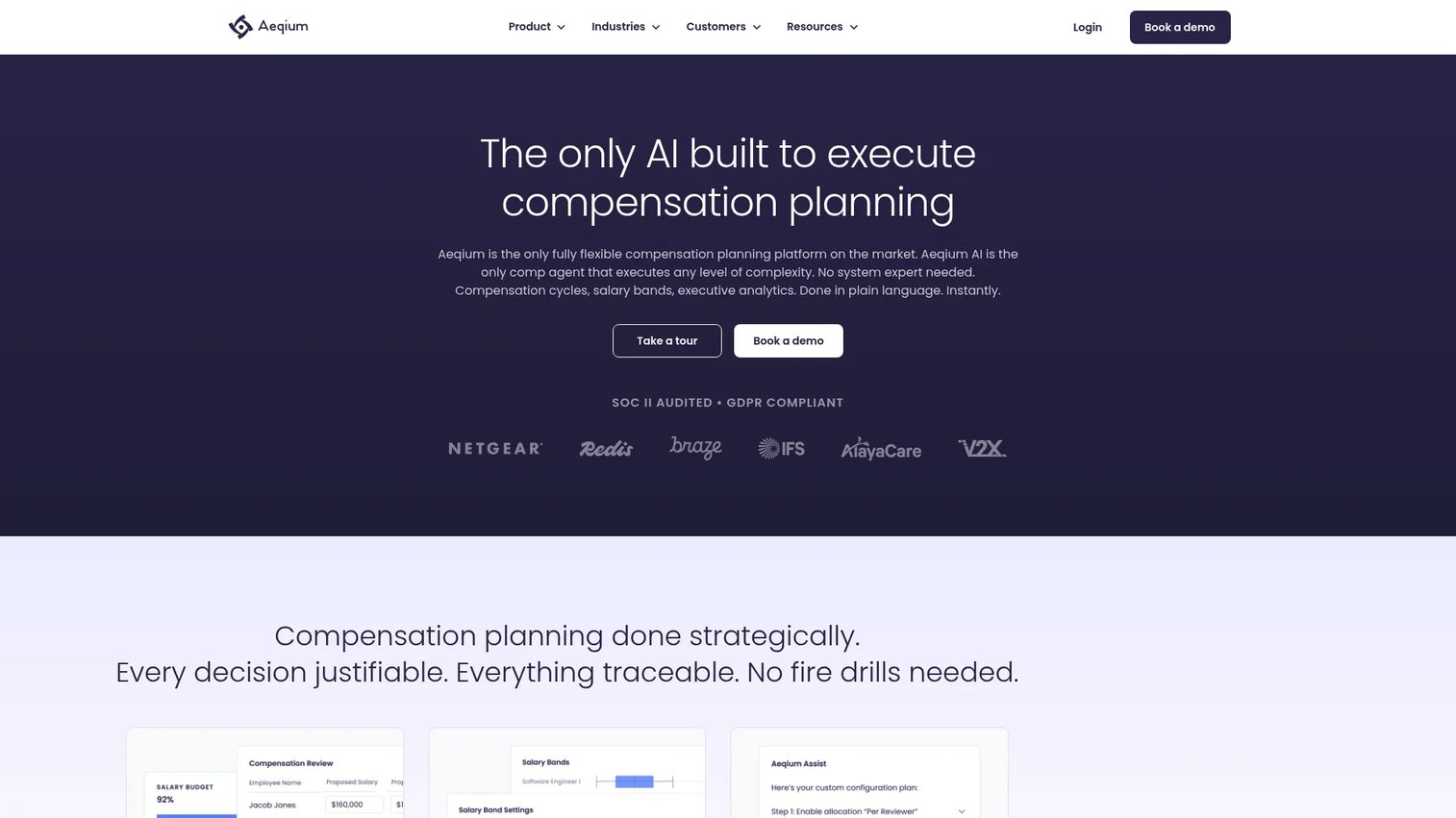
Aeqium is an AI-powered compensation planning platform built around running cycles, managing bands, surfacing analytics, and communicating total rewards to employees. It leans into execution: get a cycle configured, get managers their recommendations, and keep a clean record of every decision. For a founder who wants planning to move fast without losing traceability, that framing lands.
The no-code cycle configuration is the standout. You can set up a merit cycle, define guardrails, and route approvals without waiting on a consultant or an implementation team. The AI layer assists with analysis and execution, flagging outliers and speeding up the parts of a cycle that usually eat hours of manual review.
Best for: HR and finance teams managing complex compensation planning programs who want to configure cycles themselves and keep an audit trail.
Key strengths
- Compensation cycle management: run cycles with workflows and approvals that keep managers, HR, and finance aligned in one place.
- Band management and analytics: define pay bands and get analytics that show where offers and raises fall against them.
- AI-assisted execution: speed up analysis and outlier detection so cycles close faster with fewer manual passes.
Why choose Aeqium: If your main pain is that comp cycles are slow and hard to audit, Aeqium's execution-first design and no-code setup fit teams that want control without a heavy rollout. It suits companies scaling past the spreadsheet stage that need traceability from day one.
Aeqium pricing: Aeqium presents its plans, including a Foundations tier, but does not publish numeric pricing on its plans page. The page prompts visitors to book a demo to discuss pricing. There is no publicly listed free tier.
2. Pave
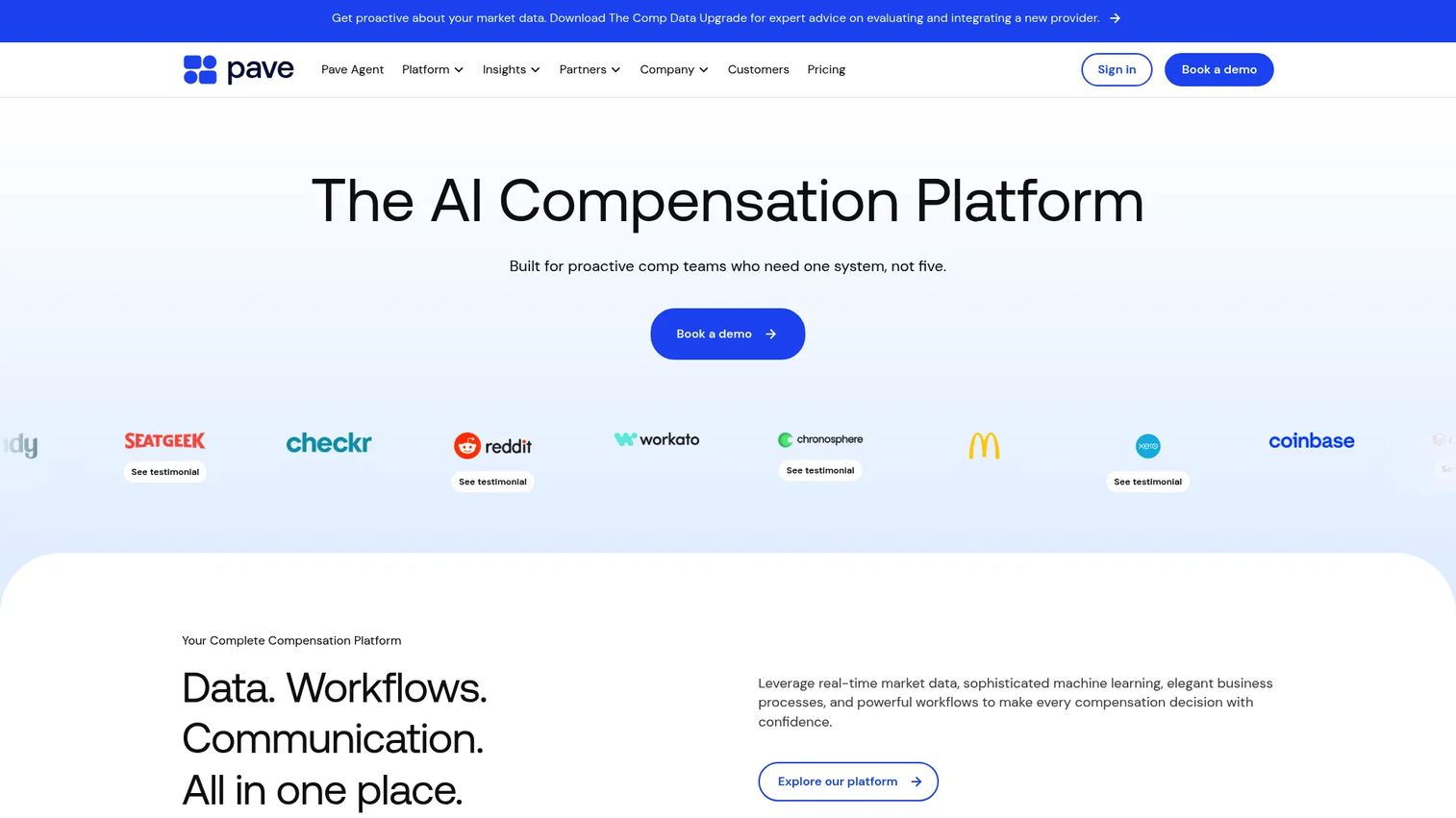
Pave combines real-time compensation benchmarking with planning workflows and total rewards communication. For fast-growing SaaS companies, the appeal is having market data and planning in the same system. You benchmark a role, price it, plan the cycle, and communicate the outcome without exporting data between tools.
The real-time market data is the differentiator. Instead of stale survey data refreshed once a year, Pave pulls current benchmarks so your bands reflect what the market actually pays now. That matters when you are competing for engineering talent and cannot afford to anchor offers to last year's numbers.
Best for: Compensation teams that need real-time market data alongside workflows for pricing jobs, planning cycles, and communicating total rewards.
Key strengths
- Real-time benchmarking: current market data and pay ranges so bands reflect present conditions, not last year's survey.
- Market pricing: price jobs against live benchmarks to set defensible offers and ranges.
- Planning and communication: run merit cycles and generate total rewards communication in the same platform.
Why choose Pave: If benchmarking depth is your priority and you want planning attached to it, Pave puts both in one place. It fits companies where getting bands right is the harder problem than running the cycle itself.
Pave pricing: Pave offers a free Market Data Lite tier. The paid Market Data Pro and Full Suite plans are demo-based, with no public numeric price shown. Pave holds a 4.7/5 rating on G2.
3. Beqom
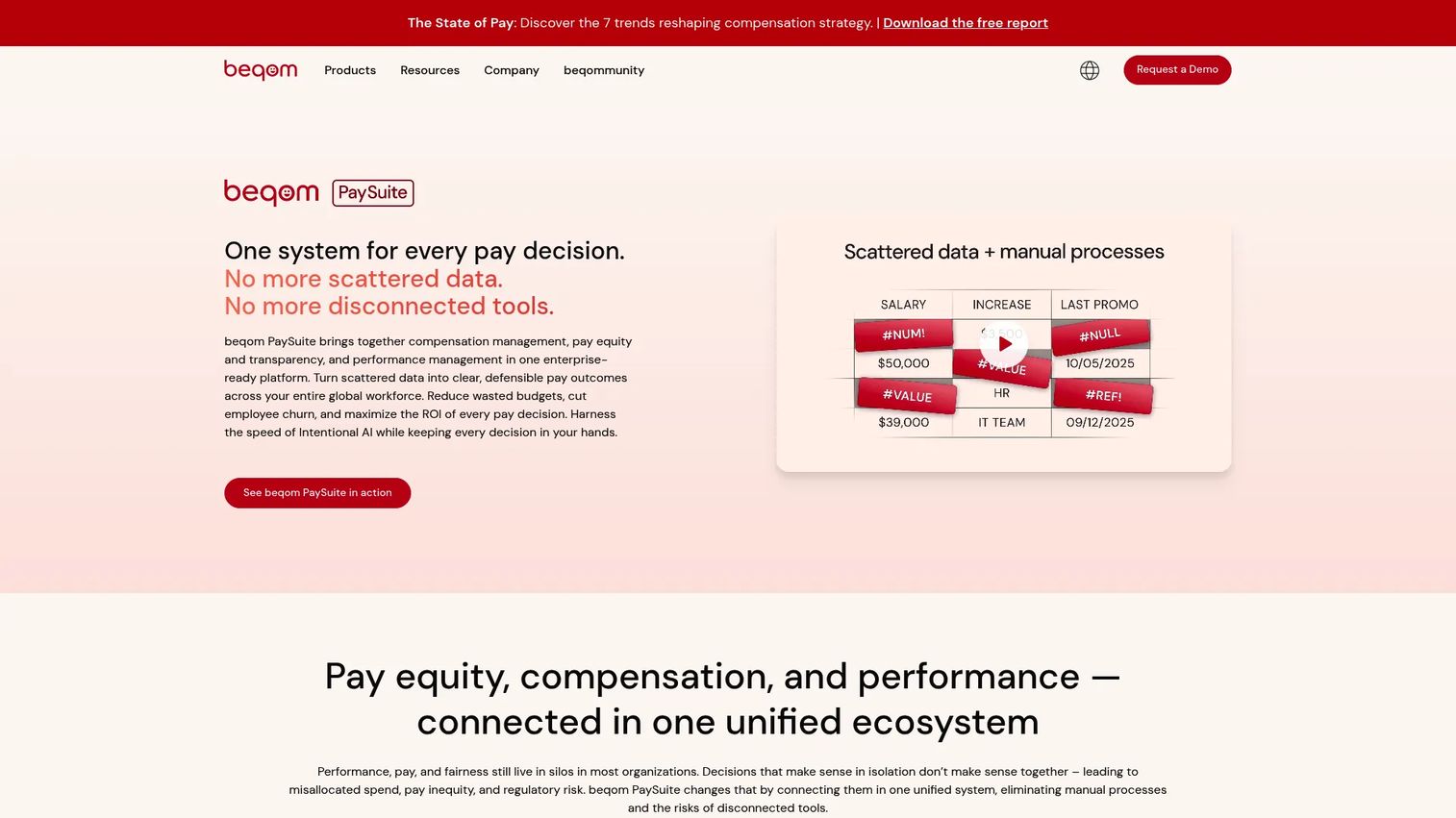
Beqom is enterprise compensation, pay equity, and performance management software built for complex reward programs and global governance. If your company is scaling toward multi-region operations, or if your board is asking harder pay equity questions, Beqom's breadth covers compensation and performance-related workflows in one governed system.
The pay equity and transparency capabilities are a core reason enterprises pick it. As pay transparency regulations expand, being able to run equity analysis and document decisions across jurisdictions moves from nice-to-have to required. Beqom pairs that with strong enterprise controls.
Best for: Large enterprises needing global compensation, pay equity, and performance workflows in one governed platform.
Key strengths
- Enterprise compensation management: run complex, multi-program compensation across regions and teams.
- Pay equity and transparency: analyze and document pay equity to meet transparency requirements and answer board questions.
- Performance management: connect performance data to compensation decisions in one system.
Why choose Beqom: If governance and global complexity are your reality, Beqom is built for it. It fits companies past the mid-market stage where compliance, multiple jurisdictions, and complex reward structures demand enterprise-grade controls.
Beqom pricing: Beqom does not publish numeric pricing on its site and uses a request-a-demo flow, with subscription-based contracting noted in its legal FAQ. Beqom holds a 4.4/5 rating on G2.
4. Dayforce
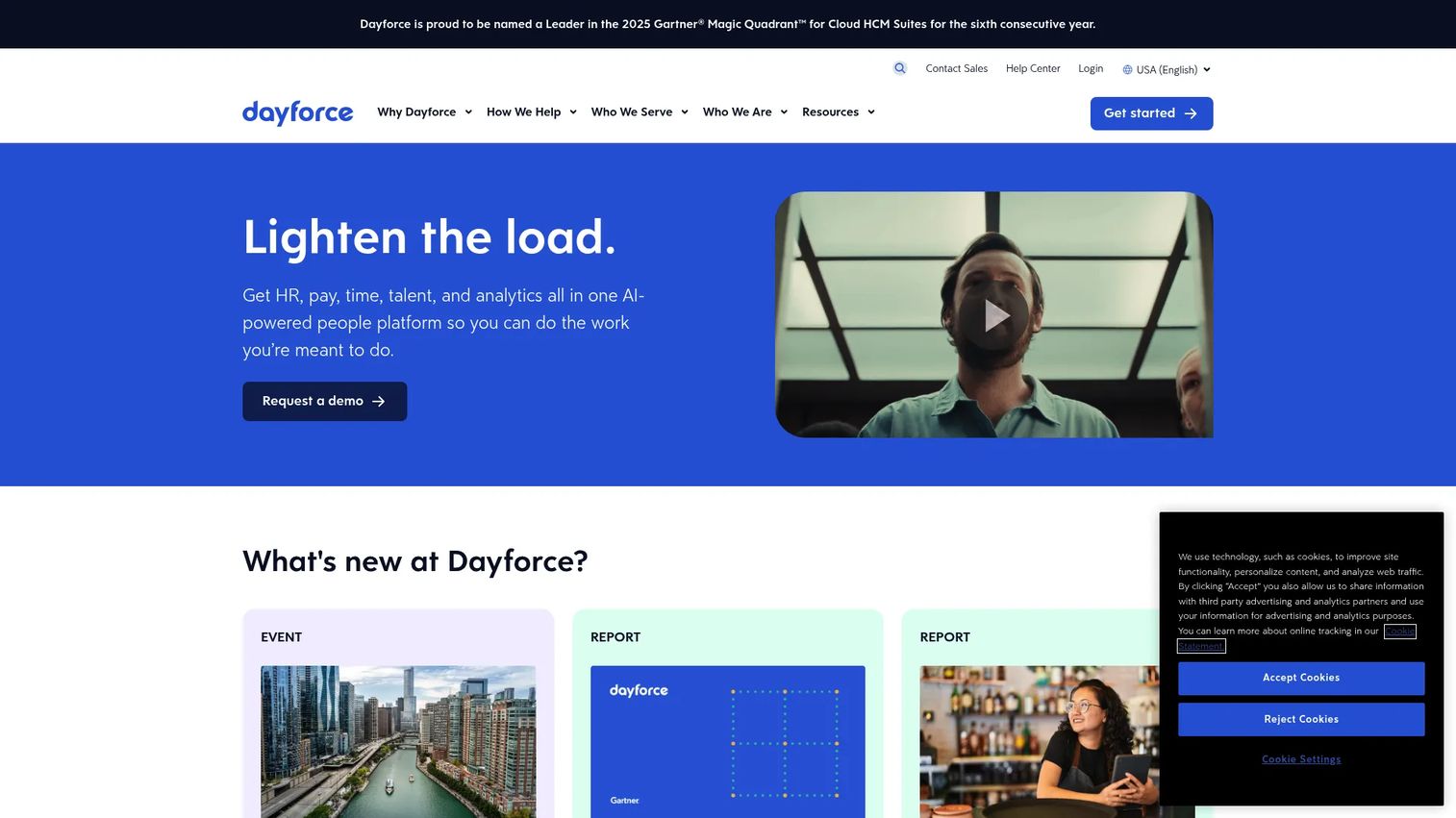
Dayforce is an AI-powered HCM platform that unifies HR, payroll, workforce management, talent, and analytics, with compensation planning as part of the suite. The pitch for founders who want fewer tools is consolidation: compensation decisions flow into payroll and sit next to performance and HR data on one platform, with real-time updates and compliance alerts.
Because everything lives together, budget rules and merit, bonus, and equity awards connect directly to the systems that execute them. When a raise is approved, it does not need a manual handoff to payroll. That payroll integration is the practical draw for teams tired of reconciling comp decisions across disconnected systems.
Best for: Large enterprises wanting a unified HCM suite where compensation lives alongside payroll, HR, and talent.
Key strengths
- Unified platform: HR, payroll, time, talent, and analytics in one system, so comp decisions flow through without manual handoffs.
- Global payroll: compensation connects directly to payroll execution and on-demand pay.
- Compliance and budget rules: real-time compliance alerts and budget guardrails across the cycle.
Why choose Dayforce: If you want compensation inside a single HCM rather than a standalone tool, Dayforce reduces the integration and reconciliation work. It fits larger organizations consolidating their people stack.
Dayforce pricing: Dayforce routes pricing questions to a demo or sales conversation and does not publish public figures. Dayforce holds a 4.2/5 rating on G2.
5. Compport
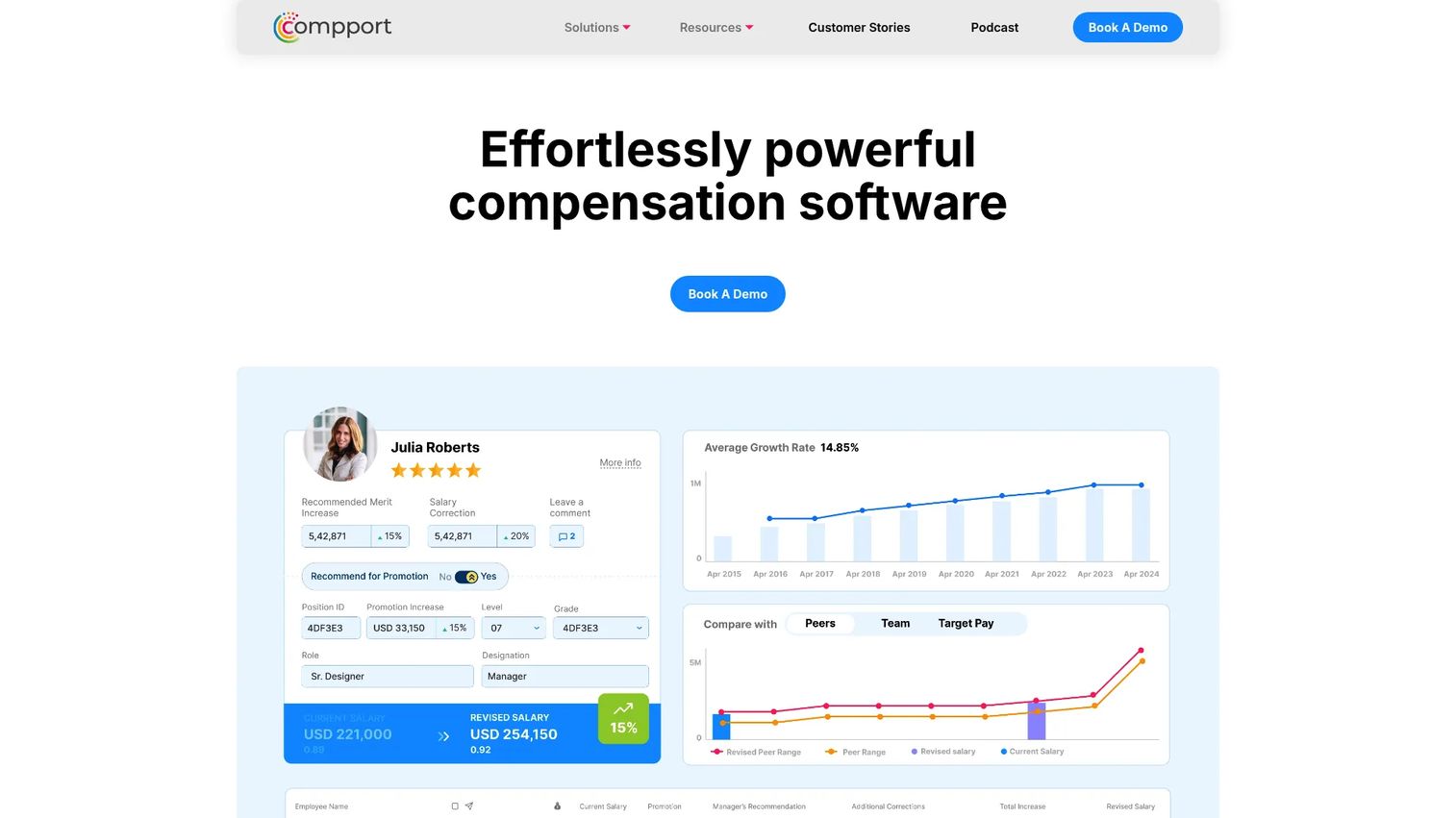
Compport is a compensation management SaaS platform covering merit cycles, bonus planning, equity, sales incentive planning, pay equity, and total rewards in one place. For companies that already run on Workday, SAP, ADP, or Oracle, the integration angle is the draw: Compport layers comp planning on top of the HRIS you already use.
The breadth is what stands out. Merit, bonus, and sales incentive planning often live in separate tools; Compport consolidates them, which matters for mid-market and enterprise teams running several comp programs at once. Pay equity management and total rewards statements round out the platform.
Best for: Mid-market to enterprise teams managing complex compensation programs across merit, bonus, incentives, and equity.
Key strengths
- Merit and salary reviews: run structured merit cycles and salary reviews with consistent inputs.
- Bonus and sales incentive planning: plan variable pay and sales incentives in the same platform.
- Pay equity and total rewards: manage pay equity and generate total rewards statements for employees.
Why choose Compport: If you run multiple comp programs and want them consolidated on top of an existing HRIS, Compport's breadth and integration focus fit. It suits scaling teams that have outgrown single-purpose tools.
Compport pricing: Compport uses demo and contact-only CTAs; no public numeric pricing was verifiable at the time of writing. Compport holds a 4.7/5 rating on G2.
6. HRSoft
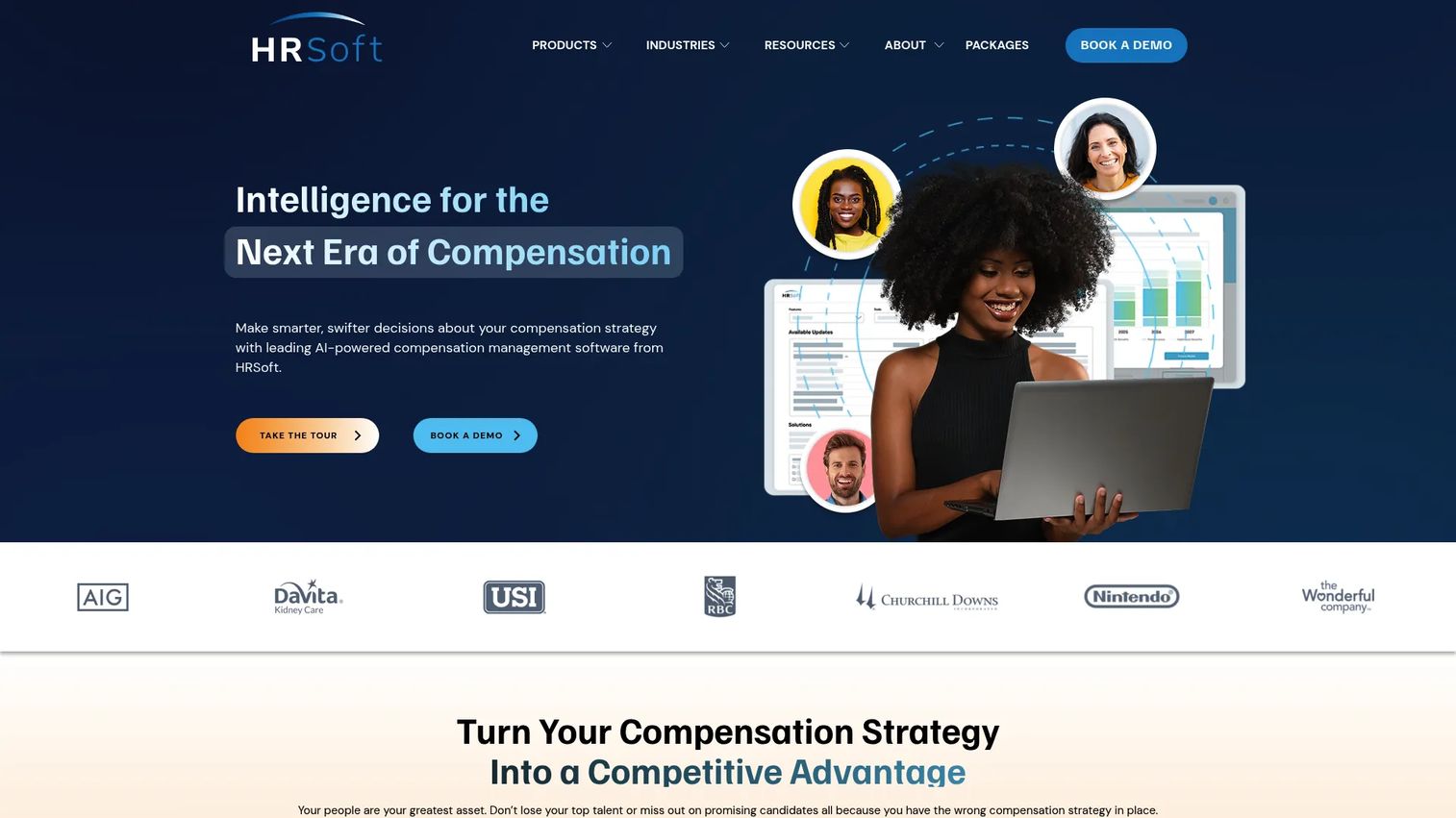
HRSoft is compensation lifecycle management software focused on enterprise compensation planning and communication. Its strength is planning depth and cycle control for larger or more complex programs, with flexible workflows that adapt to how your organization actually runs its comp process rather than forcing a rigid template.
Total compensation planning, pay for performance, and total rewards communication form the core. For teams whose comp cycle involves many approval layers and program types, the flexibility of the workflow engine is the reason to look here.
Best for: Midmarket and enterprise teams managing complex compensation cycles and total rewards communications.
Key strengths
- Total compensation planning: plan across salary, bonus, and other reward components in one cycle.
- Pay for performance: connect performance outcomes to compensation decisions with configurable rules.
- Total rewards communication: generate statements that show employees the full value of their compensation.
Why choose HRSoft: If your comp cycle is complex and you need workflow flexibility over out-of-the-box simplicity, HRSoft's configurability fits. It suits organizations with layered approvals and multiple program types.
HRSoft pricing: HRSoft lists three packages, GROW, SCALE, and ELEVATE, all requiring a custom quote with no public numeric price shown.
7. Salary.com CompAnalyst
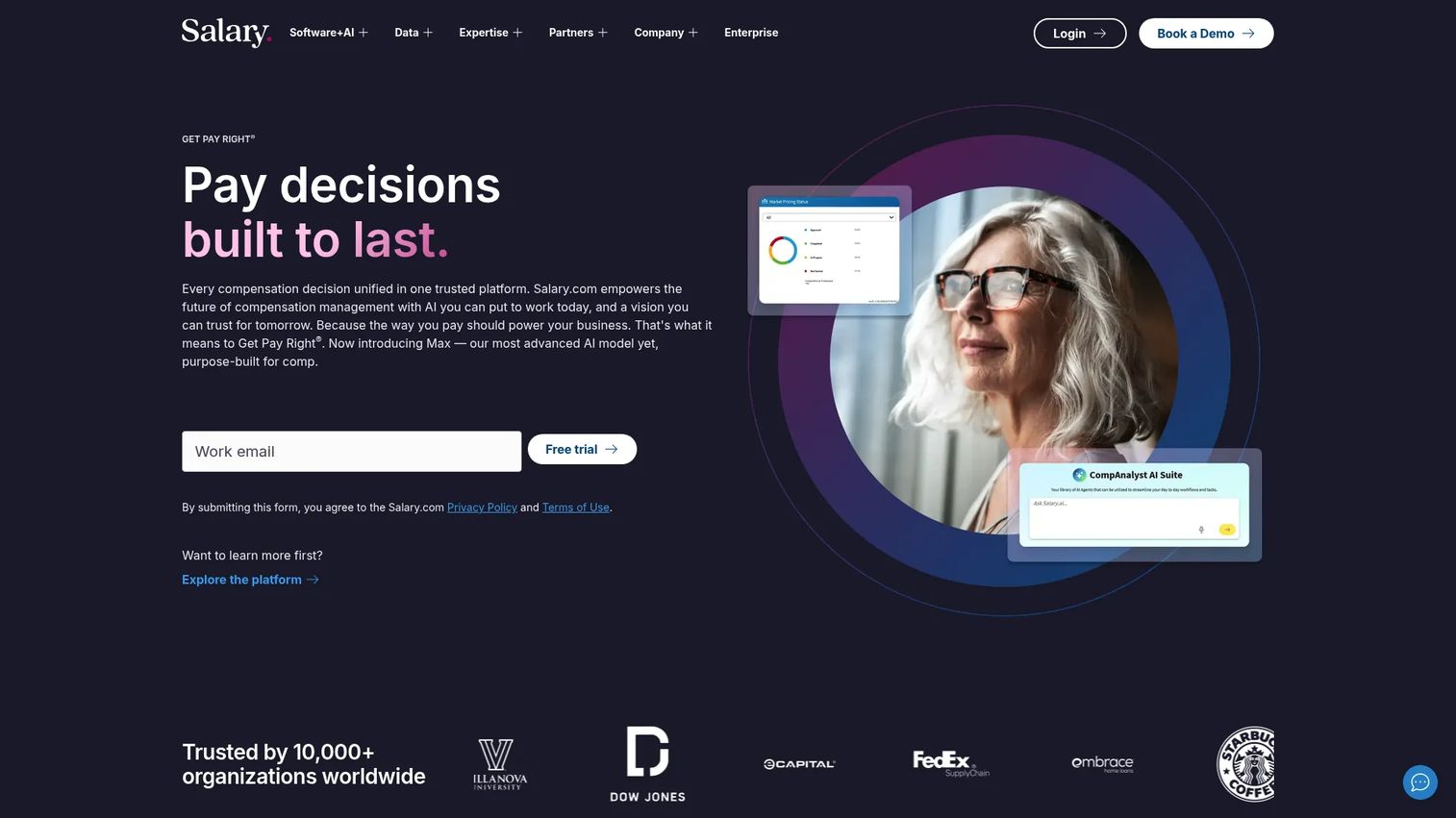
Salary.com CompAnalyst is compensation management software centered on market pricing, salary structures, and pay analytics. It is the data-heavy option on this list, useful for comp teams that need strong inputs to set and defend pay bands. If your gap is benchmarking rigor rather than cycle execution, this is where to look.
The platform combines market data, job pricing, salary structures, and analytics with automated job matching and built-in benchmarks. Salary structure modeling and pay equity analysis let you design bands and test them before you publish. That data foundation is the reason comp teams choose it.
Best for: HR and compensation teams needing centralized pay benchmarking and structure management.
Key strengths
- Market data and job pricing: built-in benchmarks and automated job matching for accurate pricing.
- Salary structure design: model and publish salary structures with confidence.
- Pay equity analysis: run equity analysis and workflow automation on top of the data.
Why choose Salary.com CompAnalyst: If setting and defending bands is your hardest problem, CompAnalyst's data depth fits. It suits comp teams that want a strong benchmarking foundation to feed their planning.
Salary.com CompAnalyst pricing: Salary.com does not publicly display CompAnalyst pricing and uses a demo or contact-sales flow instead. CompAnalyst holds a 4.4/5 rating on G2.
8. Comprehensive
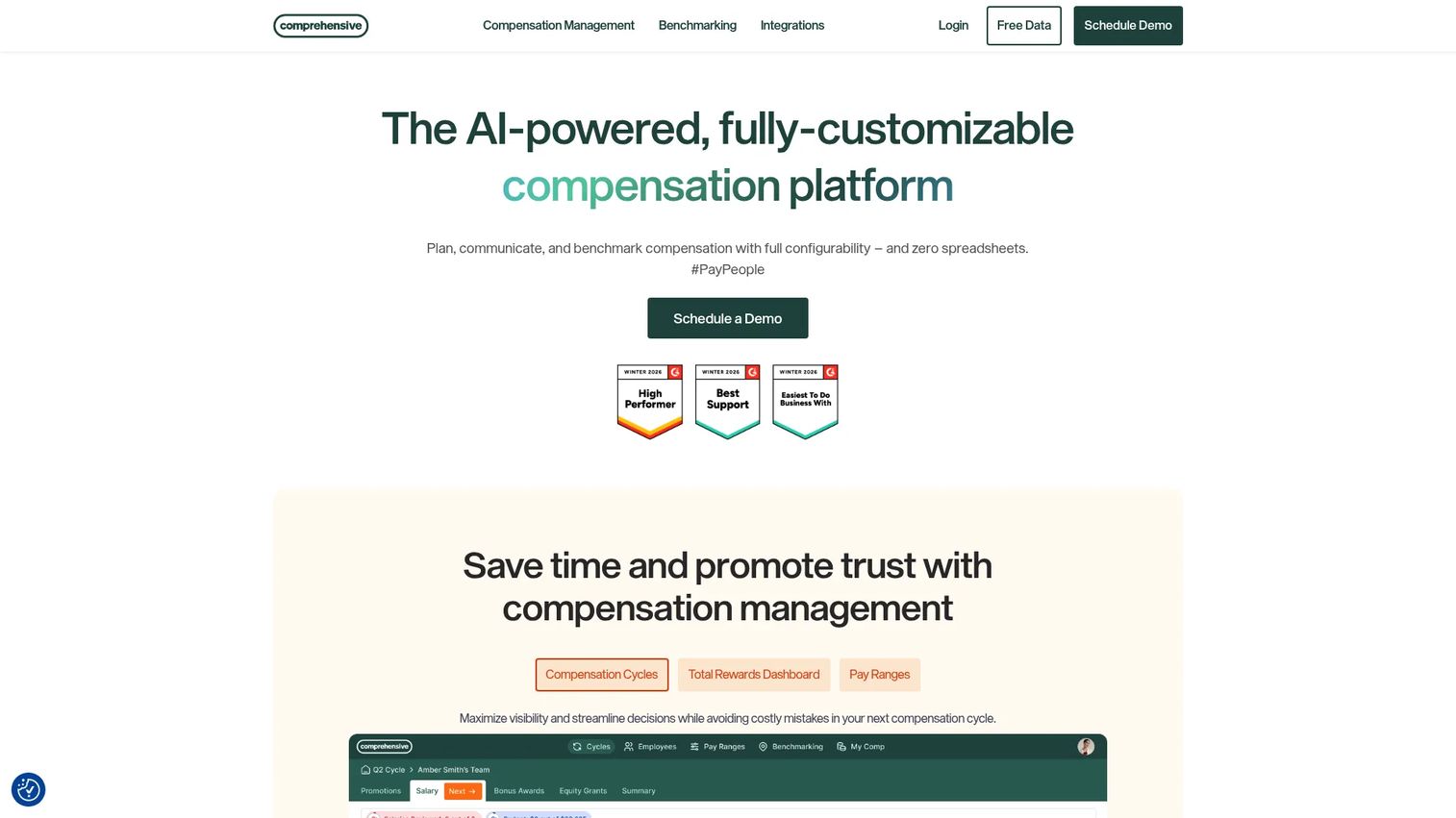
Comprehensive is an AI-powered compensation management platform for planning, benchmarking, and communicating employee pay and rewards. It is the comparison-friendly pick: configurable enough to run pay review cycles and benchmark compensation without enterprise overhead, which makes it a natural fit for buyers building a familiar comp software shortlist plus workflow support.
Configurable compensation cycles, total rewards dashboards, and salary band management form the core. For mid-market teams that want a modern, configurable platform without a long implementation, Comprehensive's flexibility and clean workflow design stand out. Its 4.9/5 G2 rating reflects strong user sentiment.
Best for: HR and compensation teams needing a configurable platform to run pay review cycles and benchmark compensation.
Key strengths
- Configurable cycles: set up compensation cycles with workflows that match your process.
- Total rewards dashboards: give employees and leaders clear visibility into total compensation.
- Salary band management: define and manage pay ranges and bands in one place.
Why choose Comprehensive: If you want a configurable, modern platform that runs full cycles without enterprise complexity, Comprehensive fits mid-market teams well. Its high G2 rating signals a positive rollout experience.
Comprehensive pricing: Comprehensive prices per employee per month, billed annually, though no public numeric figure is shown on its site. Comprehensive holds a 4.9/5 rating on G2.
What to check before you buy
The tools above cover different intents. Before you commit, run every shortlist candidate through these criteria.
Rollout speed and manager adoption
The fastest way to waste a comp software budget is buying a platform managers refuse to use. Ask how long a first cycle takes to configure and whether managers can complete their inputs without training. A tool that ships value in the first quarter beats one with more features and a six-month implementation.
Finance controls and budget guardrails
Compensation budgeting software is only useful if finance can trust the guardrails. Check that budget caps enforce at the team, department, and org level, and that no manager can exceed the pool without an explicit override that gets logged.
Pay equity and benchmarking depth
Confirm the tool can run a pay equity review on demand and that benchmarking data is current, not a once-a-year survey dump. If salary benchmarking software is a core need, weigh data freshness heavily.
Auditability and approval workflows
Audit trails matter when your board or a due-diligence team asks who approved a decision and when. Verify that approval workflows route to the right people and that every change is logged and exportable.
Integration with your existing stack
Check HRIS integration, payroll integration, and performance management integration before anything else. If comp decisions cannot flow into payroll or pull from your HRIS, you have bought another silo.
Conclusion
The right pick depends on your stage and your sharpest pain. If comp cycles are slow and hard to audit, Aeqium's execution-first design fits. If benchmarking is the harder problem, Pave and Salary.com CompAnalyst bring the data depth. If you are scaling into enterprise governance and pay equity complexity, Beqom and HRSoft are built for it. If consolidation matters, Dayforce puts compensation inside a full HCM, and Compport layers onto the HRIS you already run. For mid-market teams that want configurable cycles without heavy implementation, Comprehensive is a strong, well-rated option.
Start with your biggest source of drag. If it is version control and slow cycles, prioritize workflow and rollout speed. If it is fairness and defensibility, prioritize pay equity software and benchmarking. Then shortlist two tools, run a real cycle scenario in each, and check finance controls and integrations before you sign.
If your next challenge is showing your own product to buyers with the same clarity and speed, Start your journey with Guideflow today!
FAQs
Compensation planning software is a platform for planning salary, bonus, equity, and other reward decisions with budget controls and structured approvals. It replaces spreadsheets and scattered manager inputs with one system where finance and HR keep control while managers still weigh in. Most tools add salary bands, pay equity analysis, and total rewards communication.
An HRIS stores core employee data: records, org structure, and basic payroll information. Comp planning software specializes in the pay decision itself, including cycle modeling, scenario planning, approval workflows, and pay equity analysis. Most companies run both, with the comp tool integrating into the HRIS rather than replacing it.
Budget controls, salary bands, and approval workflows are the foundation. Layer on benchmarking, pay equity reporting, audit trails, analytics, and employee communication. For scaling companies, integration with your HRIS and payroll usually matters more than any single advanced feature.
At 20 to 30 employees, a well-managed spreadsheet often works. The pain becomes worth solving when cycles take weeks, managers submit inconsistent inputs, version control breaks, or you cannot answer pay equity questions without manual work. That inflection usually lands somewhere in the scaling phase after a growth round.
It depends on tool complexity, integration scope, and how clean your data is. A configurable, focused platform can be ready for a first cycle in weeks. Enterprise suites with multiple integrations and messy source data can take a few months. Ask each vendor for a realistic first-cycle timeline, not just go-live.
Focus on rollout speed, manager adoption, finance controls, and whether the tool actually reduces operational drag. Ask how fast a first cycle configures, whether managers need training, how budget guardrails enforce, and what the tool replaces in your current stack. A tool that earns its place in the first quarter is the right bet.
Yes. Pay equity software surfaces gaps by role, level, and other dimensions using salary bands, benchmarking, and reporting. It turns a fairness review from a week of manual analysis into a dashboard view, and it documents decisions so you can defend them to your board or in a compliance review.
Start with HRIS integration and payroll integration, since comp decisions need to flow into the systems that execute them. Then check performance management integration if you tie pay to performance, plus any equity or finance systems that feed the planning process. Confirm the depth of each integration, not just that it exists.