You can fix the signup flow. Ship a cleaner onboarding checklist. Tighten the activation email. And still lose users because the lifecycle message contradicts the in-app guide, the support team runs a different playbook, and sales sends a follow-up that lands three days after the user already churned.
That is the actual problem. Customers do not experience your product in org-chart order. According to Verint's 2025 research, 85% of customers used at least two channels in the past year. The journey spans product, email, support, sales, and content, often within a single week. Digital experience orchestration (CX orchestration) tools exist to coordinate all of it from a single data and decisioning layer.
This guide compares 10 platforms that tackle that coordination job, with verified pricing, G2 ratings, and practical guidance on where each one fits. If you are evaluating customer data platforms, engagement platforms, or full enterprise DXPs, you will find them all here.
What's inside
This guide is for product managers, lifecycle marketers, and CX leaders evaluating cross-channel orchestration platforms for 2026. Tools were selected and ordered by:
- Customer data integration: Ability to unify product, CRM, support, and marketing events into a shared customer profile
- Real-time journey decisioning: Next-best action triggered by live behavior, not scheduled batch runs
- Omnichannel execution: Coverage across web, app, email, SMS, voice, and service touchpoints
- Analytics and measurement: Activation, retention, CSAT, NPS, and CES tracking at the journey level
- Pricing and G2 ratings verified against live vendor pages and G2 listings
TL;DR
- Best enterprise CX suite: Adobe Experience Cloud for teams needing content, analytics, AI personalization, and journey orchestration in a single governed stack
- Best contact center orchestration: Genesys Cloud CX for service-heavy organizations coordinating customer and agent experiences across voice and digital channels
- Best AI-powered service automation: Talkdesk Customer Experience Automation for support teams running AI-driven routing and workflow orchestration
- Best lifecycle engagement platform: Braze for product and growth teams coordinating mobile, email, push, and in-app journeys with real-time segmentation
- Best CDP foundation: Twilio Segment for teams that need clean, governed event data before complex journey orchestration can work
- Best commerce personalization: Bloomreach for commerce brands connecting product discovery, AI recommendations, and customer engagement
What is digital experience orchestration?
Digital experience orchestration is the software-driven coordination of customer data, content, decisioning, and channel execution so each user receives the right experience at the right moment, across web, app, email, sales, service, and support touchpoints.
For a PM, the practical translation is this: Instead of each team running independent sequences, a shared data layer and decisioning engine determine what happens next based on who the user is, what they did, and where they are in the lifecycle.
Core capabilities to look for:
- Unified customer profiles and event data
- Journey design and automation
- Real-time decisioning and next-best-action selection
- AI-powered personalization
- Omnichannel messaging and routing
- Content management and delivery
- Customer experience analytics (CSAT, NPS, CES)
- Governance, permissions, and compliance controls
- Integrations with CRM, CDP, data warehouse, support, and marketing systems
Three related terms that often get confused:
- Journey mapping: Plans or visualizes the intended customer experience, a documentation exercise
- Journey management: Monitors and improves journeys over time
- Journey orchestration: Activates and adapts those journeys in real time based on actual customer behavior
The goal is not more messages. For PMs, the goal is faster activation, fewer confusing handoffs, lower support load, and cleaner evidence that orchestration moves the metrics you own.
When to use digital experience orchestration
Coordinate onboarding across product, lifecycle, and support
Onboarding breaks when product UI, lifecycle emails, help content, and CS outreach each teach a different next step. Orchestration lets teams trigger the right guidance based on role, plan, activation status, and behavior, so a trial user who invited teammates gets a different flow than one stuck on a setup wall. The PM metrics to watch: Activation rate, time to first value, onboarding completion rate, D7 retention, and support ticket volume.
Personalize journeys with real-time behavioral data
Static segments stop working when users act in ways the original segment did not anticipate. A buyer who engaged deeply with one workflow but ignored three others is sending intent signals your batch lifecycle emails cannot respond to quickly enough. Event instrumentation, identity resolution, and real-time decisioning close that gap. This is especially relevant when you need to flag churn risk, trigger expansion conversations, or surface contextual help without waiting for the next campaign cycle.
Align marketing, sales, service, and product around one customer view
Marketing sees campaign engagement. Sales sees buying intent. Support sees issue history. Product sees usage patterns. Orchestration works when all four feed into one profile and one decisioning layer. It fails when teams skip journey ownership, leave instrumentation gaps, or allow the shared data model to drift. Assign ownership for segments, triggers, experiments, content, and measurement before choosing a platform.
Digital experience orchestration tools comparison
Use this table to narrow your shortlist before reading the full tool entries. G2 ratings and pricing are verified against vendor pricing pages and live G2 listings as of November 2026.
| # | Product | Best for | Key differentiator | Pricing | G2 rating |
|---|---|---|---|---|---|
| 1 | Adobe Experience Cloud | Enterprise content, analytics, and journey orchestration | Unified AEP with content, data, analytics, and AI in one stack | Custom pricing | N/V |
| 2 | Genesys Cloud CX | Contact center and omnichannel service orchestration | AI routing, workforce management, voice and digital in one platform | From $75/user/month | 4.4/5 |
| 3 | Talkdesk Customer Experience Automation | AI-driven support and service workflow automation | Multi-agent orchestration across voice and digital with industry AI | From $85/user/month | 4.4/5 |
| 4 | Salesforce Marketing Cloud | CRM-connected lifecycle and campaign orchestration | Salesforce-native journey builder with Einstein AI | From $1,500/org/month | 4.1/5 |
| 5 | Twilio Segment | Customer data foundation and event activation | 450+ integrations, governed identity resolution, free tier available | Free plan available | N/V |
| 6 | Braze | Lifecycle and cross-channel engagement at scale | Real-time Canvas journeys, experimentation, and AI decisioning | Custom pricing | 4.5/5 |
| 7 | Insider | Growth and ecommerce personalization across channels | Predictive segmentation with unified CDP and WhatsApp Commerce | Custom pricing | 4.7/5 |
| 8 | Bloomreach | Commerce-first AI personalization and journey orchestration | Search, recommendations, and marketing automation in one platform | From $60K/year | 4.6/5 |
| 9 | Sitecore | Content-heavy enterprise digital experience management | Composable DXP with 20+ AI agents, headless CMS, and DAM | Custom pricing | 4.2/5 |
| 10 | Oracle Unity Customer Data Platform | Enterprise customer data unification in Oracle-centered environments | Unified profiles with predictive AI and Oracle CX activation | From $40/1,000 profiles/year | 4.0/5 |
Best 10 digital experience orchestration tools for 2026
1. Adobe Experience Cloud
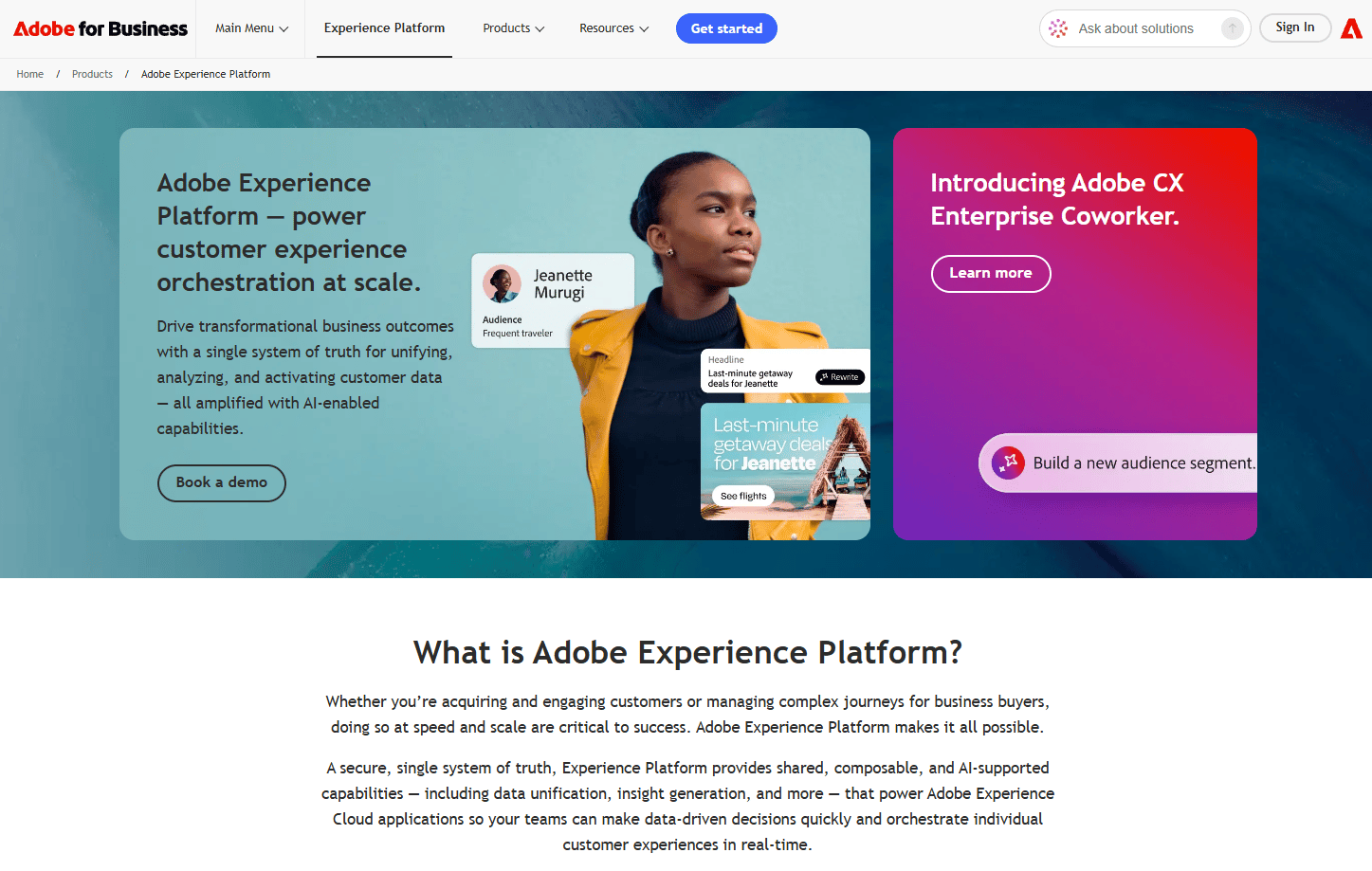
Adobe Experience Cloud is an enterprise portfolio of marketing, analytics, commerce, content, and customer-data capabilities built around Adobe Experience Platform (AEP). Teams use it to unify customer profiles, design and automate journeys, deliver personalized content, and measure outcomes across all owned channels. It is a strong fit for organizations already in the Adobe creative and analytics stack who need a governed, integrated orchestration layer.
Best for: Large enterprises that need unified customer data, AI personalization, content governance, and journey orchestration without stitching multiple vendors together.
Key features
- Unified real-time customer profiles via Adobe Experience Platform
- Customer journey analytics across product, marketing, and service data
- AI-powered personalization and audience activation
- Content supply chain workflows with digital asset management
- Cross-channel campaign orchestration across web, email, and app
Why choose Adobe Experience Cloud: Choose Adobe when the organization needs tight governance across a large volume of digital properties, regions, or brands, and when content management and analytics must connect directly to the personalization and journey layer. PMs should audit data readiness and implementation resources before committing, since AEP deployments require significant engineering investment to instrument correctly.
Adobe Experience Cloud pricing: Pricing is custom for all tiers and requires a conversation with Adobe sales. The Adobe Experience Manager Assets component offers Prime and Ultimate packages, both quoted on request.
2. Genesys Cloud CX
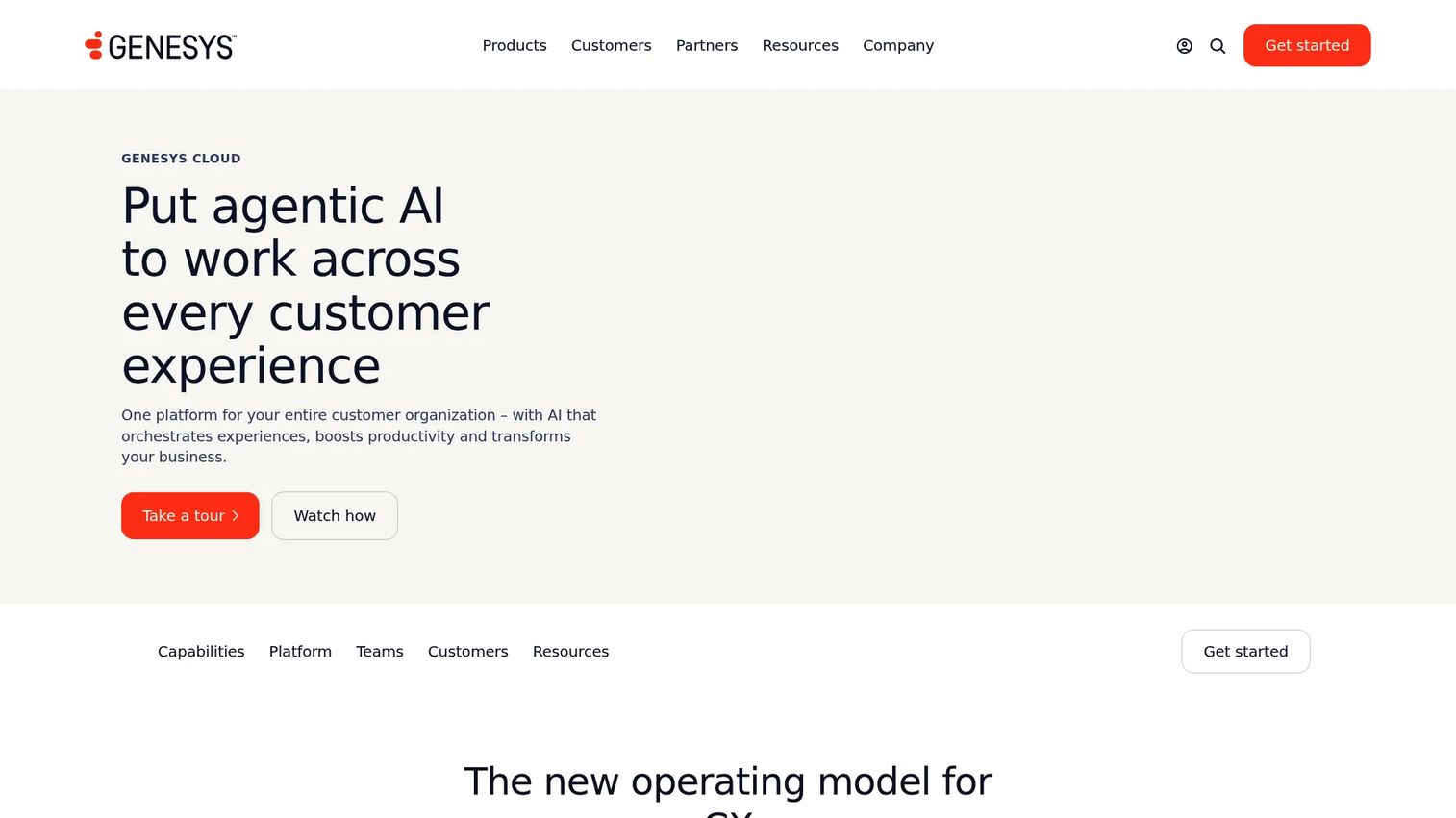
Genesys Cloud CX is an AI-powered cloud contact center and customer experience platform for teams coordinating customer and agent interactions across voice and digital channels. It handles intelligent routing, workforce engagement management, interaction analytics, and AI-assisted agent support in one platform. For organizations where service and support interactions drive a significant portion of the customer journey, Genesys is a natural fit.
Best for: Mid-market and enterprise contact centers that need scalable omnichannel engagement, AI automation, and workforce management.
Key features
- Intelligent customer routing across voice and digital channels
- Workforce engagement management, forecasting, and scheduling
- Speech and text interaction analytics
- AI-powered virtual agents, bots, and agent copilots
- Journey management, reporting, and CRM integrations via AppFoundry
Why choose Genesys Cloud CX: Use Genesys when service interactions are central to the customer journey and you need to surface experience friction from contact center data. For PMs, the interaction analytics layer is particularly useful for identifying onboarding confusion that surfaces as support volume before it shows up in activation cohorts.
Genesys Cloud CX pricing: Plans start at $75 per user per month (billed annually) for Genesys Cloud CX 1 (voice). CX 2 is $115/user/month, CX 3 is $155/user/month, and CX 4 is $240/user/month. No free tier is available.
G2 rating: 4.4/5
3. Talkdesk Customer Experience Automation
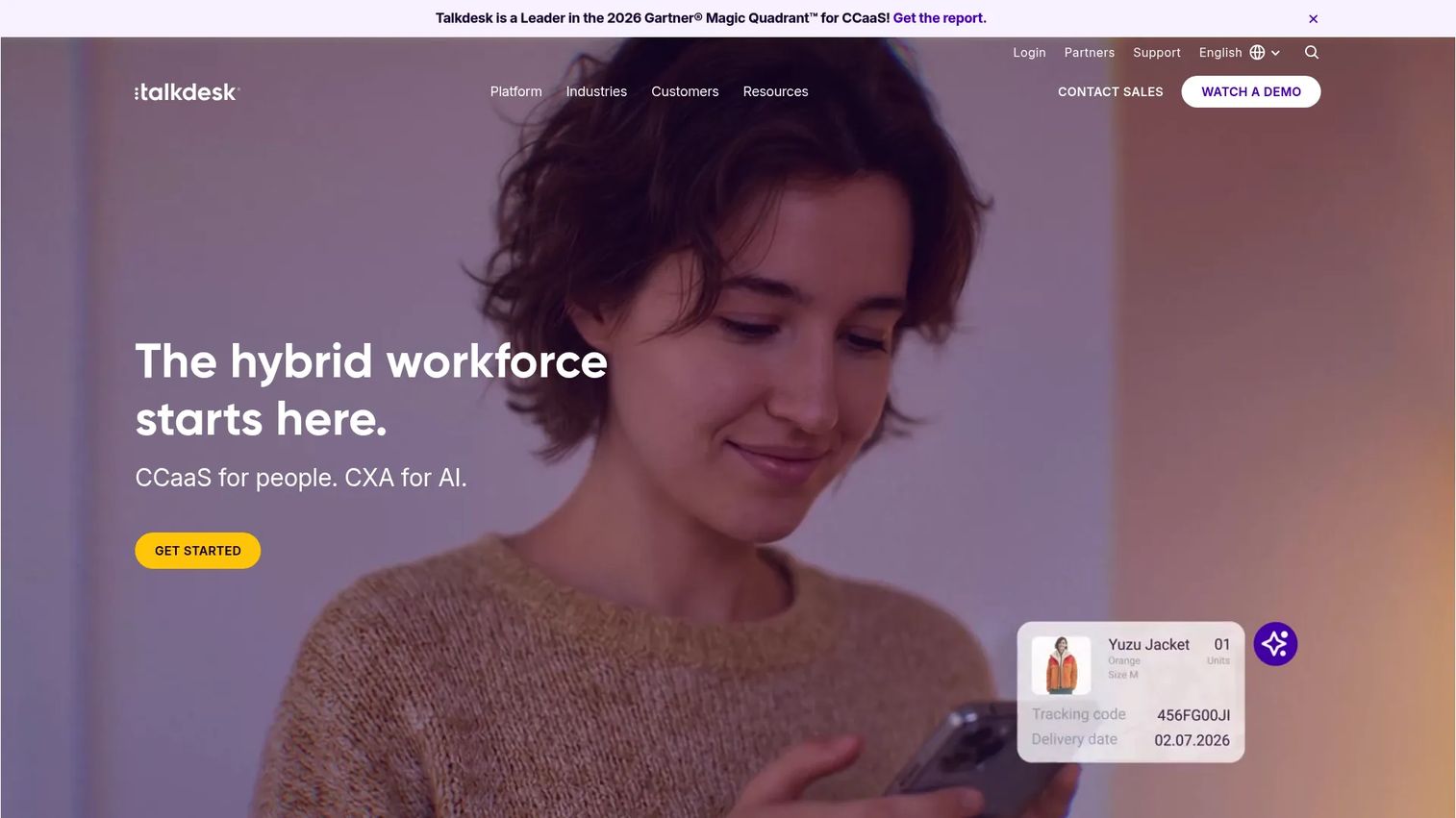
Talkdesk Customer Experience Automation (CXA) is a multi-agent platform that orchestrates AI agents across the customer experience lifecycle, from self-service to back-office workflows. It connects omnichannel continuity across voice and digital channels through the Talkdesk Data Cloud, with real-time measurement and industry-specific AI workflows for sectors including healthcare, financial services, and retail. It is especially strong for support and service teams automating high-volume, repetitive interactions.
Best for: Organizations automating AI-driven omnichannel customer service workflows across contact center and back-office operations.
Key features
- Multi-agent orchestration across service, sales, and support
- AI agents with industry-specific workflow logic
- Unified data intelligence via Talkdesk Data Cloud
- Omnichannel continuity across voice and digital
- AI Gateway for integrations with third-party AI agents and models
Why choose Talkdesk: Choose Talkdesk when the journey problem is concentrated in service, support, and contact center operations. For PMs, support signal data from Talkdesk can identify where onboarding friction surfaces as ticket volume, which is a faster indicator than waiting for D7 retention numbers.
Talkdesk Customer Experience Automation pricing: The Digital Essentials plan starts at $85 per user per month. Voice Essentials is $105/user/month, Elite is $165/user/month, and Industry Experience Clouds are $225/user/month. Talkdesk Express is offered free to small businesses in the United States and Canada, including 25 licenses and $100 in credit.
G2 rating: 4.4/5
4. Salesforce Marketing Cloud
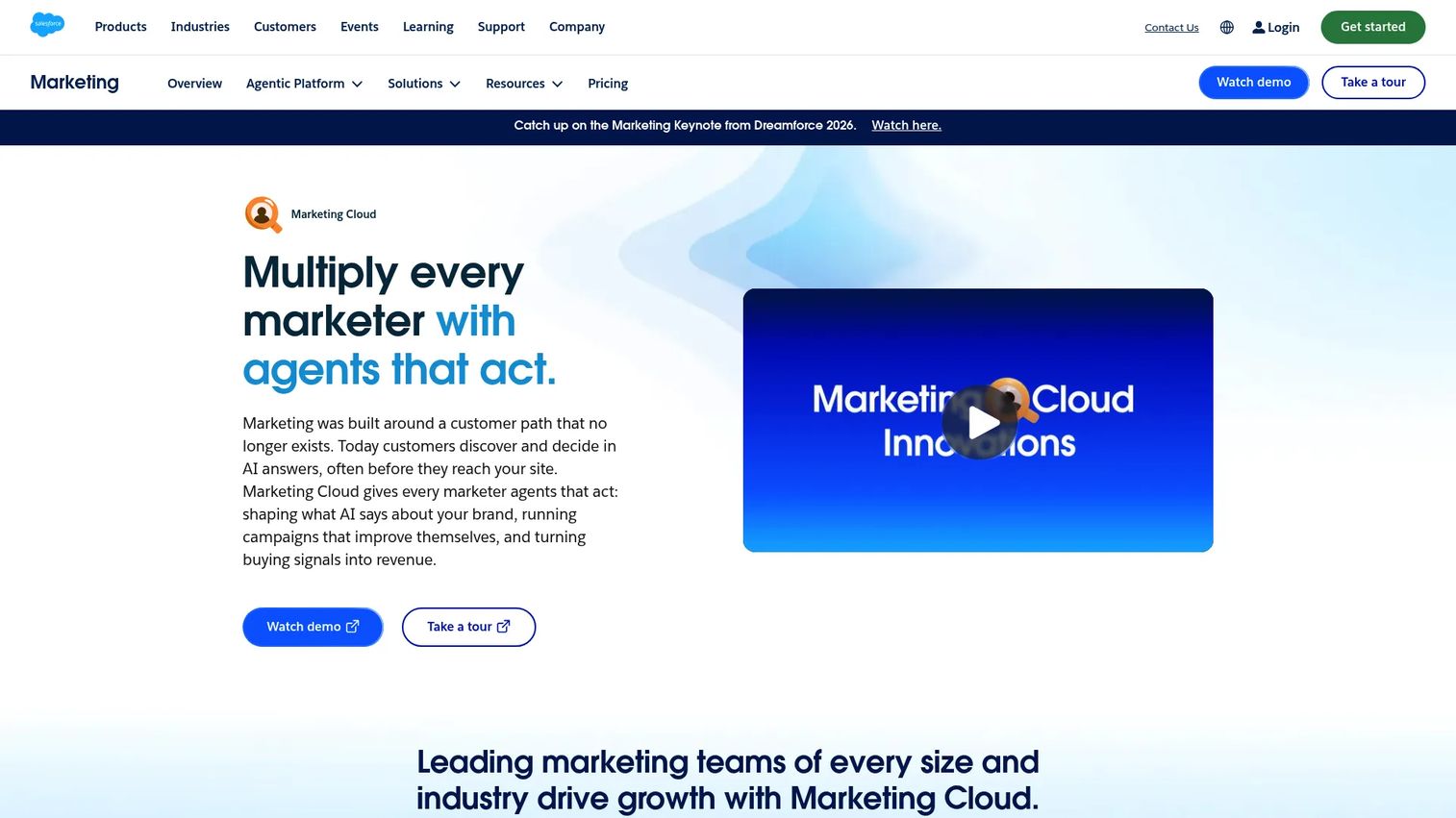
Salesforce Marketing Cloud is a marketing and customer engagement suite for orchestrating personalized journeys across email, mobile, advertising, web, and CRM-connected channels. Its Journey Builder tool and Einstein AI personalization engine are well established among teams already running Sales Cloud or Service Cloud. The Salesforce ecosystem advantage is real: Product usage events, CRM context, and service history can feed journey logic without a custom data pipeline if you are already Salesforce-native.
Best for: Teams that want journey orchestration tightly connected to CRM, sales pipeline, and service data inside an existing Salesforce environment.
Key features
- Journey Builder for event-based, multichannel journey automation
- Einstein AI personalization and next-best-action
- Email, SMS, web, and WhatsApp messaging
- CRM data activation via Data 360 and Agentforce
- Campaign attribution reporting and paid-media optimization
Why choose Salesforce Marketing Cloud: Choose Marketing Cloud when CRM context drives lifecycle engagement and the organization is already Salesforce-centered. PMs should map how product usage events flow into Salesforce before relying on it for activation or onboarding journeys, since instrumentation gaps here can limit the segmentation depth you actually get.
Salesforce Marketing Cloud pricing: Marketing Cloud Next Growth Edition starts at $1,500 per org per month (billed annually). Marketing Cloud Next Advanced is $3,250/org/month. A Salesforce Starter entry plan is available at $25/user/month, though it covers a narrower feature set.
G2 rating: 4.1/5
5. Twilio Segment
Twilio Segment is a customer data platform (CDP) that collects, unifies, governs, and activates customer event data across tools and systems. It is not a full journey orchestration suite, but it is often the layer that makes journey orchestration work. With more than 450 pre-built integrations, identity resolution, and audience activation capabilities, Segment gives product and growth teams a reliable data foundation before they invest in a personalization or engagement platform. If your instrumentation is inconsistent, Segment is often where you start.
Best for: Product and growth teams that need trustworthy customer data before they personalize journeys or run retention modeling.
Key features
- Real-time customer event collection and streaming
- 450+ pre-built integrations and destination connections
- Unified, identity-resolved customer profiles
- Audience creation and customer journey orchestration (Engage plan)
- Data governance, privacy controls, and schema validation
Why choose Twilio Segment: Choose Segment when instrumentation and data quality are the bottleneck. For PMs evaluating predictive analytics or lifecycle personalization tools, Segment is often the prerequisite: Event-based onboarding, retention modeling, and real-time segmentation all depend on clean, consistent event streams that Segment is built to produce.
Twilio Segment pricing: A free plan is available. Paid plans (Team and Business for Connections, Unify and Engage for CDP capabilities) are priced on request and not publicly displayed.
6. Braze
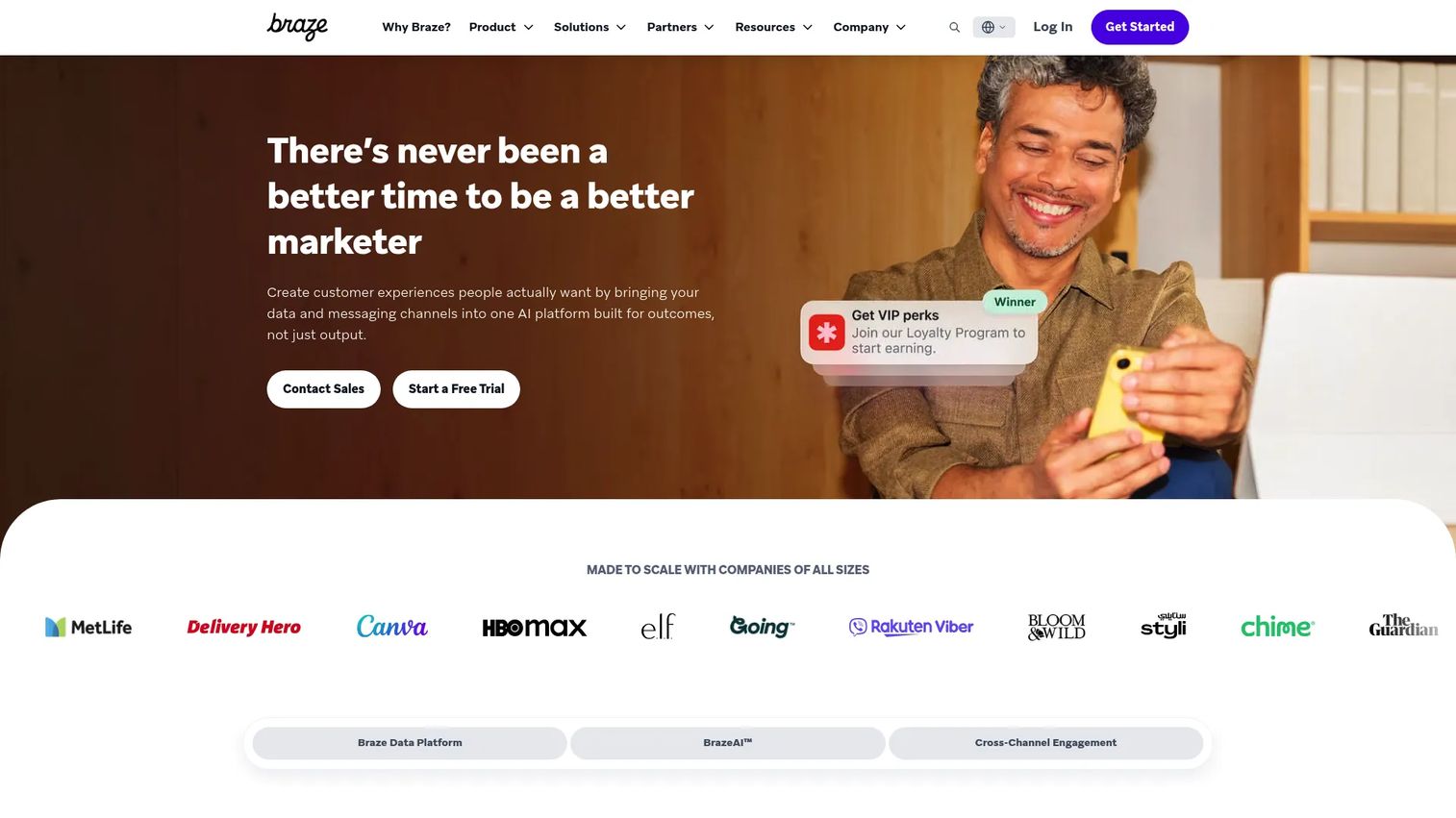
Braze is a customer engagement platform built for real-time data activation, cross-channel journey orchestration, AI-powered personalization, and analytics. Its Canvas journey builder lets lifecycle and growth teams design event-based flows across email, push notifications, SMS, MMS, RCS, WhatsApp, in-app messages, and content cards. Braze is particularly relevant for mobile-first, consumer, marketplace, and product-led companies that need high-frequency lifecycle engagement with tight experimentation controls.
Best for: Growth, scaling, and enterprise teams coordinating mobile, email, push, and in-app lifecycle journeys with real-time segmentation and experimentation.
Key features
- Cross-channel messaging across email, push, SMS, WhatsApp, in-app, and content cards
- Canvas journey builder with real-time triggers and frequency capping
- Real-time segmentation and unified customer profiles
- AI-powered personalization and decisioning
- Custom reporting, impact dashboards, and experimentation tools
Why choose Braze: Choose Braze when the core need is lifecycle engagement and rapid experimentation across messaging channels. For PMs, connecting Braze events to activation milestones and early retention cohorts is where the measurement value sits. The platform rewards teams with strong instrumentation and a clear experiment design process. This is also worth exploring alongside a best-in-class AI customer service setup if support deflection is a parallel goal.
Braze pricing: Pricing is custom across four tiers: Braze Go, Braze Select, Braze Pro, and Braze Enterprise. Rates depend on platform edition, monthly active users and profiles, action credits, and add-ons.
G2 rating: 4.5/5
7. Insider
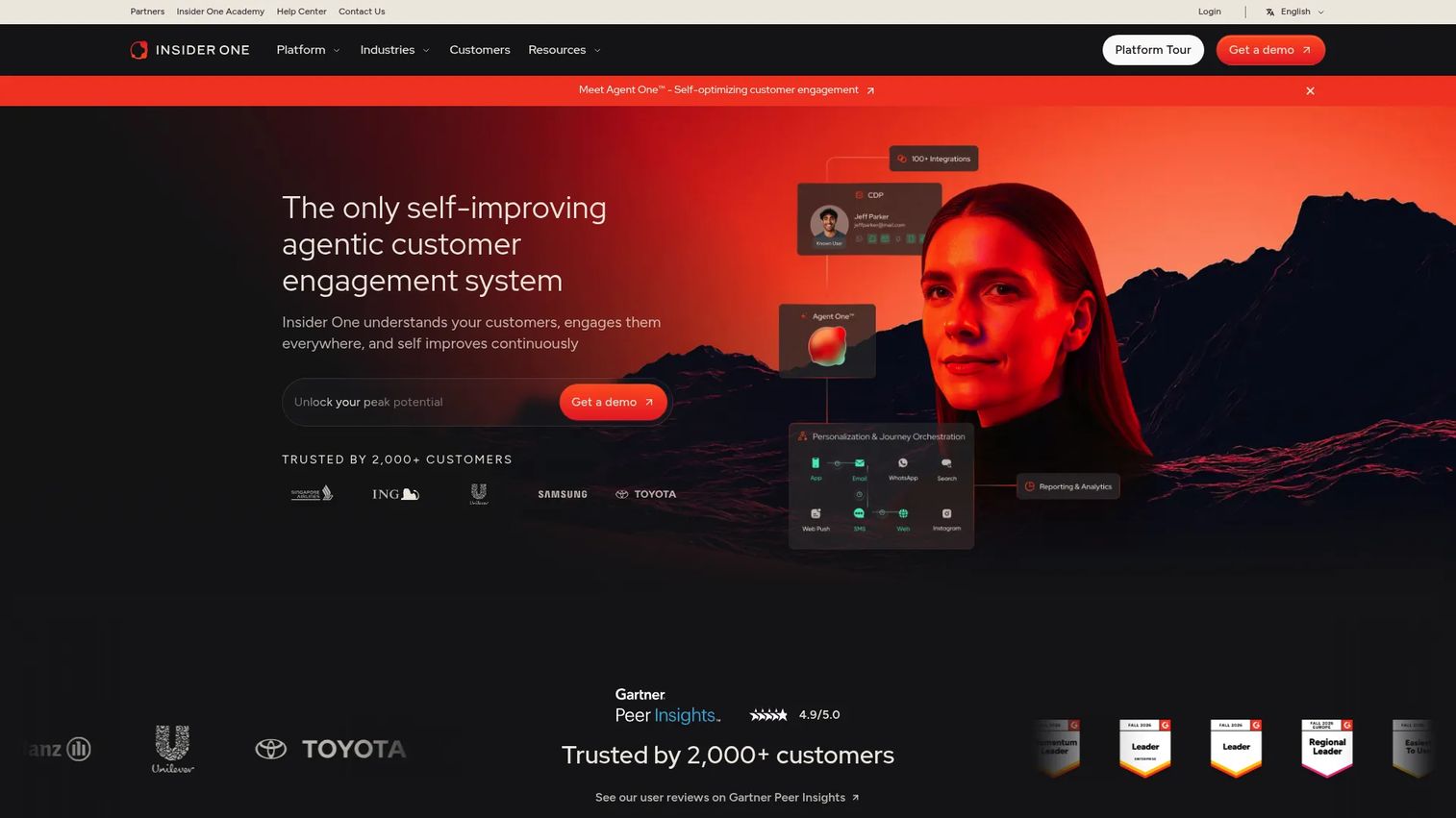
Insider is an AI-native omnichannel customer engagement platform with an integrated CDP. It supports cross-channel journey orchestration and personalization across web, app, email, SMS, messaging apps, WhatsApp Commerce, and advertising. Insider is particularly relevant for mid-market and enterprise marketing and growth teams that need predictive segmentation, AI recommendations, and automated engagement across a wide channel mix without managing separate data and engagement layers.
Best for: Mid-market and enterprise brands running omnichannel personalization across digital channels with AI-driven segmentation and product recommendations.
Key features
- Unified customer profiles and integrated CDP
- Cross-channel journey orchestration and marketing automation
- Predictive segmentation based on behavioral and intent signals
- Product recommendations and conversational AI with WhatsApp Commerce
- AI-powered personalization across web, app, and messaging
Why choose Insider: Choose Insider when the goal is revenue-oriented personalization across a wide channel mix and you need predictive engagement without managing a separate CDP. PMs should evaluate how well product usage events and lifecycle stage data can feed Insider's journey logic, since the depth of segmentation available depends heavily on the event instrumentation quality feeding the platform.
G2 rating: 4.7/5
8. Bloomreach
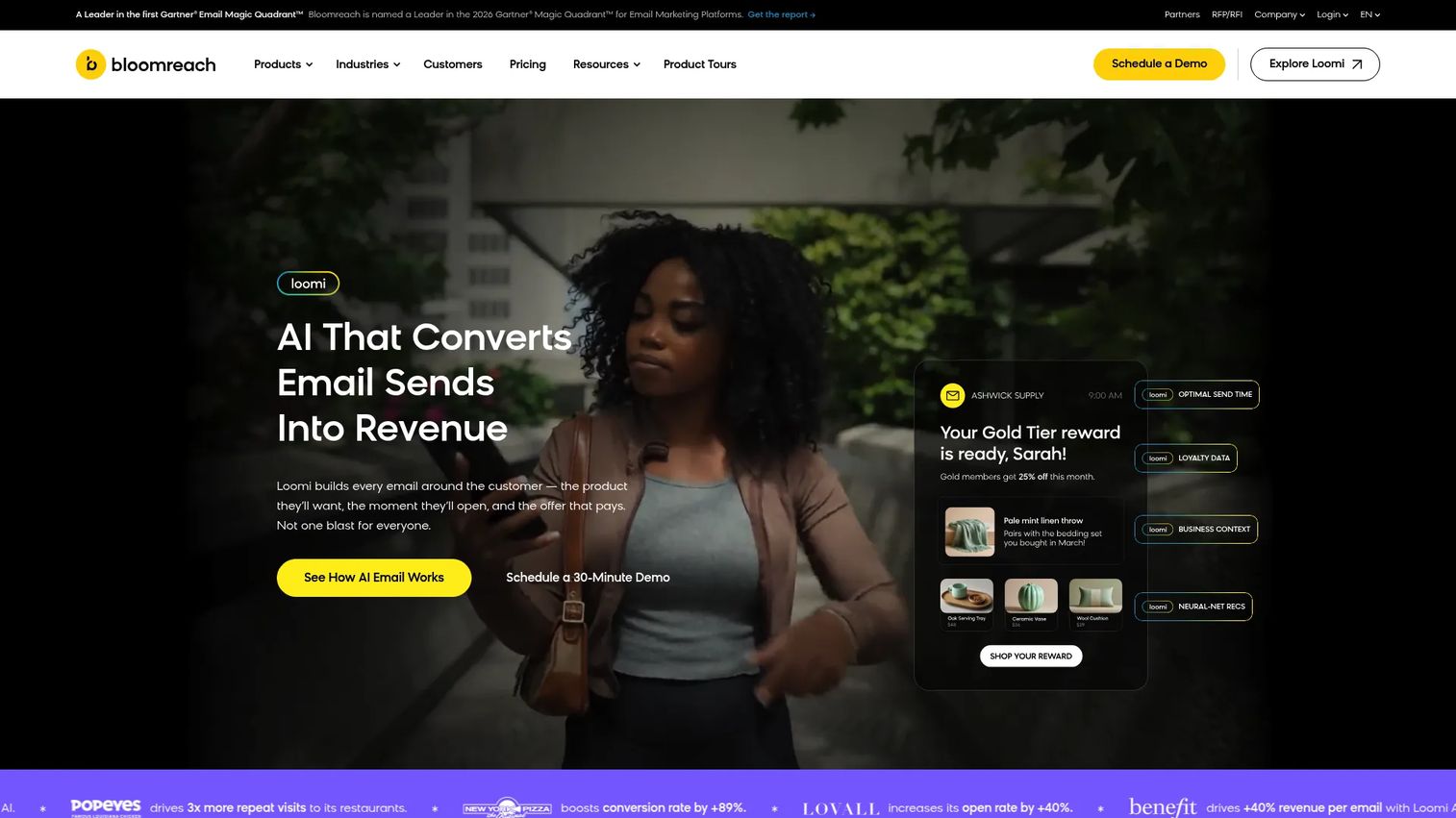
Bloomreach is an AI-powered personalization platform for commerce teams, combining customer data, marketing automation, ecommerce search, merchandising, and conversational shopping in one stack. It fits teams where search quality, product recommendations, and repeat purchase behavior all affect conversion. Bloomreach's Loomi AI agents power marketing automation and campaign orchestration, while the CDP layer unifies customer data for cross-channel activation.
Best for: Enterprise and high-growth commerce brands orchestrating product discovery, personalized marketing, and AI-driven shopping experiences.
Key features
- Personalized email, SMS, web, app, and advertising campaign orchestration
- AI-powered ecommerce search, merchandising, and product recommendations
- Marketing automation and AI marketing agents
- Conversational shopping and Loomi Connect for custom workflows
- Unified CDP with behavioral segmentation and analytics
Why choose Bloomreach: Choose Bloomreach when digital experience orchestration is tied to ecommerce conversion, search quality, and repeat purchase behavior. For PMs, the combination of a CDP layer and merchandising intelligence means you can connect lifecycle signals directly to what a customer sees in search and category pages, not just in emails. Smaller brands start at around $60K annually, so this is a mid-market and enterprise play.
Bloomreach pricing: Custom annual pricing. Bloomreach states that brands start at $60,000 per year, with final cost depending on audience size, catalog scale, and product selection.
G2 rating: 4.6/5
9. Sitecore
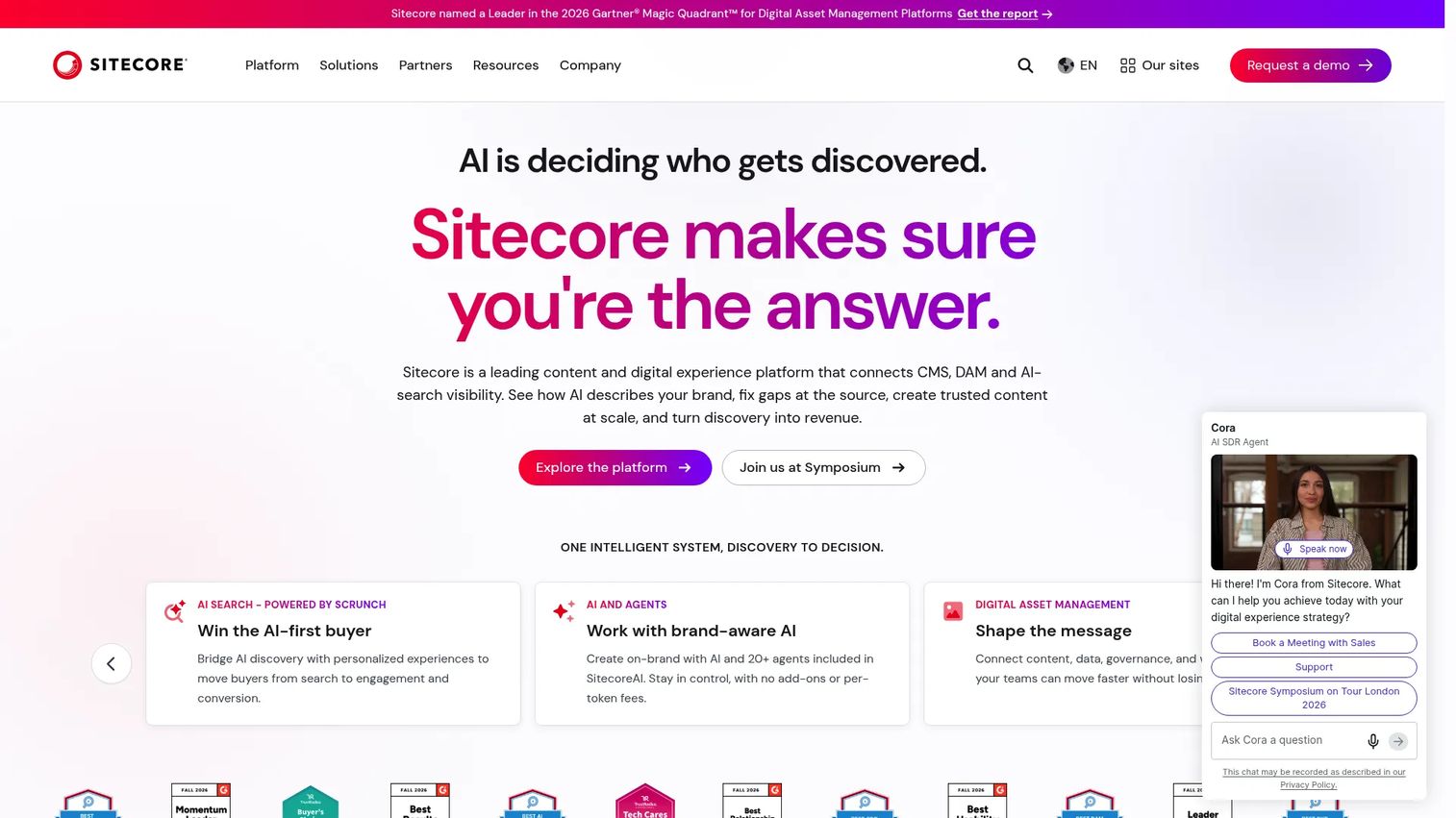
Sitecore is a digital experience platform (DXP) that connects content management, digital asset management, AI-search visibility, audience insights, and conversion optimization in a composable architecture. It includes more than 20 pre-built AI agents, brand governance controls, and headless CMS capabilities. Sitecore is designed for enterprise organizations managing complex, multi-brand, or multi-property digital experiences where content operations and personalization need to work at scale.
Best for: Enterprise organizations that need governed content management, personalization, and digital asset workflows across multiple websites, apps, or regions.
Key features
- Content management with headless CMS, AI assistance, and publishing workflows
- Digital asset management with centralized asset discovery and reuse
- 20+ pre-built AI agents with brand governance controls
- Personalization engine and audience insights
- Experience analytics and conversion optimization
Why choose Sitecore: Choose Sitecore when content governance and personalization are central to the customer experience, and the organization manages enough digital properties that a composable DXP architecture makes more sense than point solutions. For PMs evaluating orchestration scope, it is worth clarifying whether the problem is primarily a content governance problem or a journey orchestration problem, since Sitecore excels at the former.
Sitecore pricing: Sales conversations and demo requests are required to get commercial terms.
G2 rating: 4.2/5
10. Oracle Unity Customer Data Platform
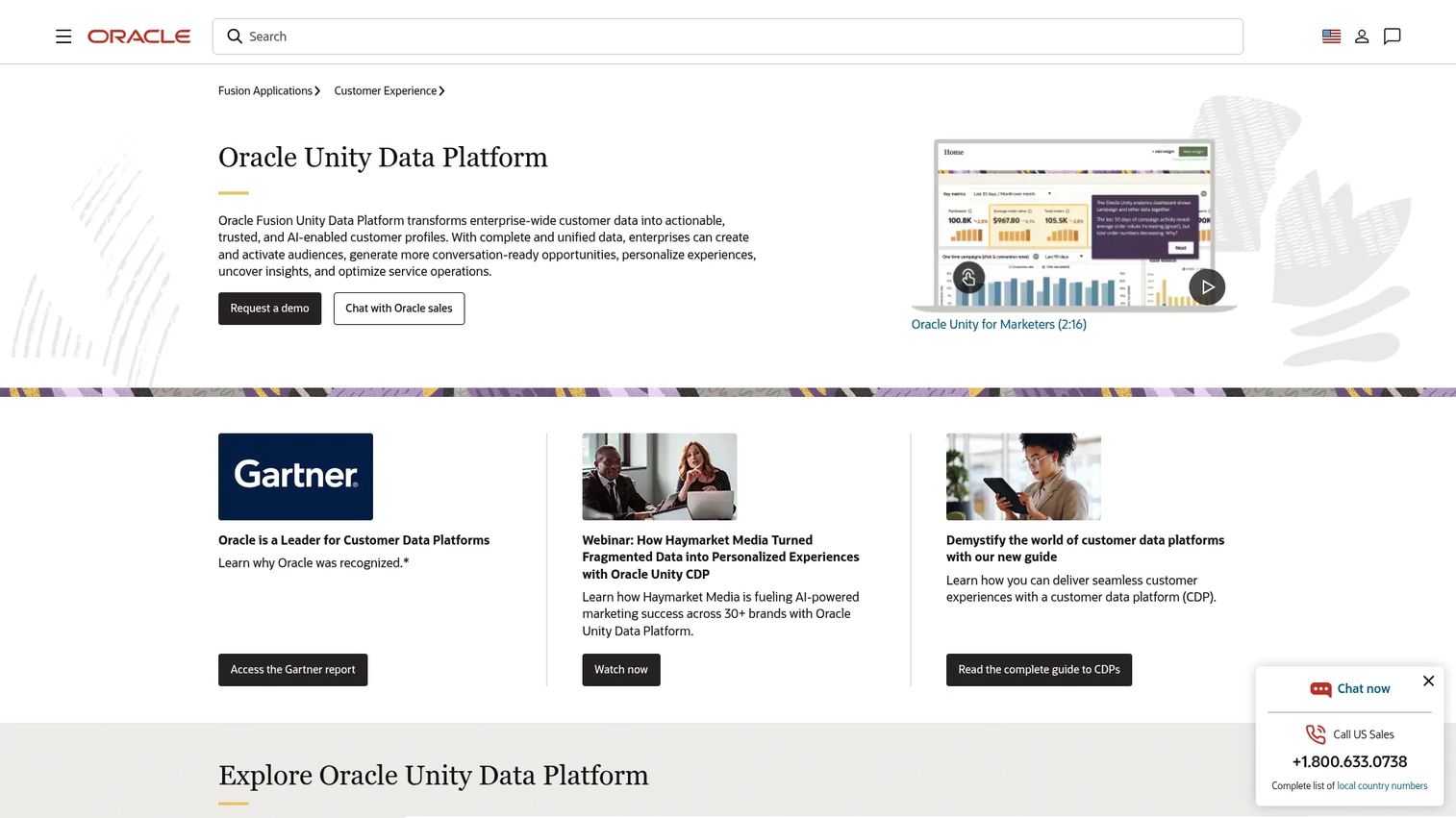
Oracle Unity Customer Data Platform (also referred to as Oracle Unity Data Platform) unifies enterprise-wide customer data into AI-enabled profiles for personalization, analytics, and cross-channel activation. It connects to Oracle CX, Oracle Marketing, Oracle Service, and Oracle Commerce, making it strongest for organizations already operating across the Oracle ecosystem. AI models handle predictive scoring, propensity modeling, lookalike generation, and recommendation generation against unified customer and account profiles.
Best for: Large enterprises that need unified customer profiles, identity resolution, and predictive AI inside an Oracle-centered technology environment.
Key features
- Unified customer and account profiles with identity resolution
- Real-time behavioral intelligence and audience segmentation
- AI models for predictive scoring, propensity modeling, and lookalike generation
- Product recommendations and next-best-action activation
- Oracle CX integration across marketing, sales, service, and commerce
Why choose Oracle Unity Customer Data Platform: Choose Oracle Unity when customer data unification is the orchestration bottleneck inside an Oracle-heavy stack and you need AI-assisted intelligence built on top of that unified profile. PMs should evaluate implementation effort, data model ownership, and activation paths into engagement tools early. Standard subscription terms are three years.
Oracle Unity Customer Data Platform pricing: The Oracle Fusion Customer Data Platform Cloud Service is priced at $40 annually per 1,000 profiles, with a minimum of 5,000 profiles. Additional pooled sessions are priced at $7.50 per 1,000 sessions. This is a subscription-based model.
G2 rating: 4.0/5
Considerations when choosing digital experience orchestration tools
Start with the journey outcome, not the platform category
Name the metric before choosing a tool. Activation rate, time to first value, trial-to-paid conversion, churn risk, support ticket deflection, repeat purchase rate, CSAT, NPS, CES: Each metric points toward a different platform type. A team focused on reducing D7 churn needs strong event-based segmentation and real-time triggers. A team focused on support efficiency needs interaction analytics and AI routing.
Audit your customer data before buying orchestration
Orchestration tools depend on clean event data, identity resolution, and a shared customer profile. If product, CRM, billing, and support systems disagree on who a customer is, personalization will amplify the inconsistency, not correct it. For PMs, this often means instrumenting product events and resolving identity before evaluating engagement or orchestration platforms. Check out our guide to AI orchestration platforms if you are also evaluating AI workflow automation alongside this category.
Decide who owns journey logic
Product managers, lifecycle marketers, CX leaders, support operations, and RevOps all touch the journey. Without clear ownership for segments, triggers, experiments, content, and measurement, orchestration tools create new coordination problems instead of solving existing ones. Assign owners before rollout, not after.
Check real-time decisioning depth
Some tools run scheduled batch campaigns. Others make real-time decisions based on live behavior or next-best-action models. Verify latency, event handling, and channel activation speed for the specific use cases you care about. A tool that segments in real time but fires email in 24-hour batches will not support the activation or churn-rescue scenarios that justify the investment.
Measure orchestration as a product system
Set baselines before rollout. Track activation rate, early retention, conversion, support ticket volume, and cohort-level impact from the first sprint. CSAT, NPS, and CES give you the customer-side read; funnel metrics and cohort retention give you the revenue-side read. Treat orchestration measurement the same way you would treat any product experiment.
Conclusion
The right choice depends on where the journey problem actually lives in your organization.
For enterprise-wide experience orchestration with content and analytics depth, Adobe, Sitecore, or Oracle are the starting points. If service and support interactions are the center of the customer journey, compare Genesys and Talkdesk. Product and growth teams that need clean event data and governed segmentation should evaluate Twilio Segment first, then stack an engagement platform on top. For lifecycle engagement and rapid experimentation across messaging channels, Braze and Insider are the strongest options. Commerce-centered orchestration points toward Bloomreach. Salesforce Marketing Cloud earns its place when CRM context is the primary driver and the organization is already Salesforce-native.
Orchestration works best when every touchpoint helps users understand what to do next. If interactive demos are part of your onboarding or enablement strategy, those touchpoints should connect back to the same journey logic and measurement model you are building here. Product education surfaces, including help center flows and onboarding assets, benefit from the same real-time decisioning and analytics that make orchestration valuable.
Start your journey with Guideflow today!
FAQs
Digital experience orchestration is the software-driven coordination of customer data, content, decisioning, and channel execution so each user receives the right experience at the right moment. It connects data from product, CRM, support, and marketing systems, selects the next best action based on behavior and lifecycle stage, and activates that decision across web, app, email, service, and support touchpoints. The outcome is measurable: Faster activation, lower support load, and higher retention.
Customer journey orchestration typically focuses on coordinating lifecycle stages through automated messaging and triggered workflows. Digital experience orchestration is broader: It includes web and product surfaces, content delivery, support interactions, and commerce workflows alongside messaging channels. Both terms are often used interchangeably, but CX orchestration tends to encompass more of the full digital stack rather than just the engagement layer.
Journey mapping visualizes or documents the intended customer experience, usually as a planning or research artifact. Journey orchestration activates and adapts that experience in real time based on actual customer behavior and data. Mapping tells you what should happen; orchestration makes it happen, adjusts it dynamically, and measures whether it worked.
Product, growth, lifecycle marketing, CX, customer success, support, service operations, RevOps, and data teams all use these platforms. The strongest deployments involve shared ownership, where product instrumentation, journey design, content production, and measurement accountability are explicitly assigned across functions. Tools that only one team touches rarely justify the investment.
You need product events, CRM fields, account data, support history, billing data, content engagement, campaign engagement, consent status, and identity resolution across those sources. Missing any of these layers creates gaps in the customer profile that lead to misfired personalization. Identity resolution, in particular, is often the first technical bottleneck teams hit when they try to activate orchestration.
Track activation rate, time to first value, onboarding completion rate, early retention (D7, W1), feature adoption by cohort, support ticket deflection, and trial-to-paid conversion. On the customer experience side, monitor CSAT, NPS, and CES at the journey level, not just overall. Set baselines before rollout and treat each journey change as an experiment with a control cohort.
No. CDPs unify and activate customer data, but most do not handle journey design, content delivery, or omnichannel messaging directly. Some CDPs include audience activation and basic journey capabilities. Others are designed as the data foundation for separate engagement or orchestration platforms. Twilio Segment and Oracle Unity are examples of CDPs that work best when paired with an execution layer. For a deeper comparison, see our best customer data platform guide.
Invest when journeys span multiple channels and teams cannot agree on customer state, when personalization needs to respond to real-time behavior rather than weekly segments, or when disconnected touchpoints measurably hurt activation, conversion, retention, or service efficiency. For PMs specifically: If you can trace specific churn or activation problems to handoff failures between product, marketing, and support, that is a strong signal that orchestration tooling will pay off faster than another feature iteration. You may also want to review our list of AI customer service agents if support deflection is a parallel investment priority.