The corporate perimeter doesn't exist anymore. Users connect from home networks, contractor laptops, branch offices, and a growing stack of SaaS apps that IT never fully controlled. Pushing all of that traffic through a central data center creates latency, complexity, and a false sense of security.
Cloud edge security software exists to fix that mismatch. It moves security controls closer to where work actually happens: at the user, the app, and the network edge. Grand View Research puts the global edge security market at $31.5 billion in 2025, projected to reach $144.2 billion by 2033, a compound annual growth rate of 21.2% across the forecast period. That trajectory is a signal of how fast enterprises are rethinking their architecture.
For presales and solution engineering teams, this category matters beyond the obvious. Security review stalls deals. Buyers ask whether your evaluation environment is isolated from production systems. Procurement wants evidence of access controls and data handling policies. Understanding cloud edge security software helps you answer those questions early, before they become late-stage blockers.
What's inside
This guide compares 10 cloud edge security tools for 2026, written for presales teams, IT buyers, and solution consultants who need a practical shortlist.
Tools were selected on four criteria:
- Enterprise relevance and deployment maturity
- Edge access coverage across remote users, branches, and private apps
- Policy depth across ZTNA, SWG, CASB, FWaaS, and DLP
- Usefulness during technical validation and security review
The guide also clarifies the category boundary, since search results for "cloud edge" frequently surface consumer camera-app results rather than enterprise security platforms.
TL;DR
- Best overall for global edge security: Cloudflare One combines zero-trust access, secure web gateway, and a global edge network under one operating model
- Best for enterprise SSE: Zscaler Internet Access is the established choice for large-scale secure internet and SaaS access
- Best for data-centric protection: Netskope Security Service Edge leads on SaaS visibility and data loss prevention
- Best for firewall-led SASE: Palo Alto Networks Prisma Access suits teams already invested in Palo Alto's security architecture
- Best for Fortinet environments: Fortinet FortiSASE extends Fortinet's security fabric to remote users and branches
- Best for lightweight ZTNA: Twingate offers the most accessible private app access rollout, with a free tier for small teams
What is cloud edge security software?
Cloud edge security software protects users, applications, data, and distributed network edges through cloud-delivered security controls that sit closer to where work happens.
This is not the same as a consumer cloud camera application. Search results for "cloud edge" sometimes surface camera-app content because of a branded camera product called CloudEdge. This guide uses the enterprise definition: software that secures distributed users, applications, and networks through cloud-delivered policy enforcement.
The category overlaps with two widely used frameworks:
- Secure access service edge (SASE): Combines network security with SD-WAN and networking capabilities in a cloud-delivered model
- Security service edge (SSE): The security-only layer of SASE, covering SWG, CASB, ZTNA, and DLP without the networking component
Most enterprise cloud edge security tools combine several capabilities:
- Zero trust network access (ZTNA): Identity-based access to private apps, replacing broad VPN connectivity
- Secure web gateway (SWG): Web traffic inspection and policy enforcement, including SSL/TLS decryption
- Cloud access security broker (CASB): SaaS visibility, risk scoring, and app control
- Firewall as a service (FWaaS): Cloud-delivered network-layer protection
- Data loss prevention (DLP): Sensitive data inspection and enforcement across web and cloud channels
- Device posture checks: Access decisions based on endpoint health and compliance state
- Remote browser isolation (RBI): Rendering web content in a cloud container to reduce endpoint risk
- Edge routing and performance: Traffic steering that minimizes latency near users and branches
The practical value for presales teams: when a prospect asks how evaluation environments, demo access, or SaaS tools are secured, knowing this category helps you speak credibly with their security stakeholders. For more on related security tooling, see our guides on application security testing software and API security tools.
When to use cloud edge security software
Secure remote users without routing everything through a VPN
Traditional VPNs grant broad network access once a user connects, which creates unnecessary exposure and performance overhead for distributed teams. Cloud edge security tools apply identity, device posture, and policy to grant granular access to specific apps rather than entire network segments. For presales teams, knowing whether a prospect uses VPN or ZTNA matters when discussing POC access, demo environment isolation, and data handling during evaluation.
Protect branch offices and distributed teams
Distributed teams need consistent security policy without deploying a separate appliance stack at every location. Cloud-delivered controls cover branch traffic, apply DNS filtering, enforce cloud firewall rules, and run SWG inspection from the same management plane as remote users. Buyers with multiple branch offices often ask about regional points of presence, latency impact, and policy consistency across locations.
Control SaaS, private apps, and sensitive data
CASB, DLP, and private app access controls matter most when buyers have strict procurement requirements, RFP security questionnaires, or regulated data handling obligations. This use case is where technical validation most often stalls. Buyers need evidence of access boundaries, data inspection, and enforcement logs. Tools in this category provide the visibility and audit trail that security review teams ask for. For additional context on access control software and access review software, those guides cover complementary categories.
Cloud edge security software comparison
The table below covers all 10 tools in order of relevance. Pricing and G2 ratings were checked against vendor pricing pages and G2 listings in October 2026. Most vendors in this category publish no list prices at all, and the pricing column says so plainly where that is the case.
| # | Product | Best for | Key differentiator | Pricing | G2 rating |
|---|---|---|---|---|---|
| 1 | Cloudflare One | Global zero-trust and edge networking | Global network with integrated access, SWG, and app security | Free up to 50 users; pay-as-you-go $7/user/month; contract pricing on quote | 4.6/5 (105 reviews) |
| 2 | Zscaler Internet Access | Enterprise secure internet and SaaS access | Mature SSE with deep traffic inspection and threat sandboxing | Quote-based; no list prices published | 4.4/5 (291 reviews) |
| 3 | Netskope Security Service Edge | Data-centric SaaS and cloud protection | Strong CASB, DLP, and context-aware policy engine | Quote-based; last published list (Aug 2024) showed SSE Professional at $213.16/user/year | 4.4/5 (97 reviews) |
| 4 | Palo Alto Networks Prisma Access | Firewall-led SASE for Palo Alto environments | Deep threat prevention with FWaaS and ZTNA in one platform | Quote-based; no list prices published | 4.3/5 (73 reviews) |
| 5 | Fortinet FortiSASE | Fortinet-standardized network environments | SASE tightly integrated with Fortinet fabric and endpoint agents | Quote-based; tiered subscriptions, no list prices published | 4.3/5 (18 reviews) |
| 6 | Cisco Secure Access | Cisco-centric enterprise secure access | SSE built for Cisco security and networking environments | Quote-based through Cisco Commerce; no list prices published | 4.3/5 (81 reviews) |
| 7 | Check Point Harmony SASE | Unified SASE with threat prevention | Combines private access, internet security, SD-WAN, and SaaS controls | Quote-based; no list prices published | 4.5/5 (231 reviews) |
| 8 | Akamai Guardicore Segmentation | Microsegmentation and lateral movement control | Process-level segmentation across hybrid and cloud environments | Quote-based; no list prices published | 3.8/5 (2 reviews) |
| 9 | Forcepoint ONE | Policy-led SSE with data protection focus | Unified SWG, CASB, ZTNA with strong DLP and agentless access | Quote-based; no list prices published | 4.2/5 (103 reviews) |
| 10 | Twingate | Lightweight private app access and VPN replacement | Developer-friendly ZTNA with a free starter tier | Free up to 5 users; Teams from $5/user/month, Business from $10/user/month | 4.6/5 (79 reviews) |
Ownership and product-history notes. All ten products above come from ten separate companies, so none of these entries is a rebadged version of another. Three carry acquisition history that affects how you read them: Check Point Harmony SASE is built on Perimeter 81, which Check Point acquired in 2023; Akamai Guardicore Segmentation came to Akamai through its 2021 acquisition of Guardicore; and the CASB layer in Forcepoint ONE came from Forcepoint's 2021 acquisition of Bitglass, with Forcepoint itself held by private equity owner Francisco Partners. Netskope is no longer privately held, having listed on Nasdaq under the ticker NTSK in September 2025. Two products are also mid-rename: Check Point now markets Harmony SASE as Check Point SASE, and Forcepoint ONE is now Forcepoint Data Security Cloud. G2 ratings above are listed under the names G2 currently uses, which are Netskope One Platform, Check Point SASE, and Forcepoint Data Security Cloud.
Cloud edge security tools, reviewed in detail
1. Cloudflare One
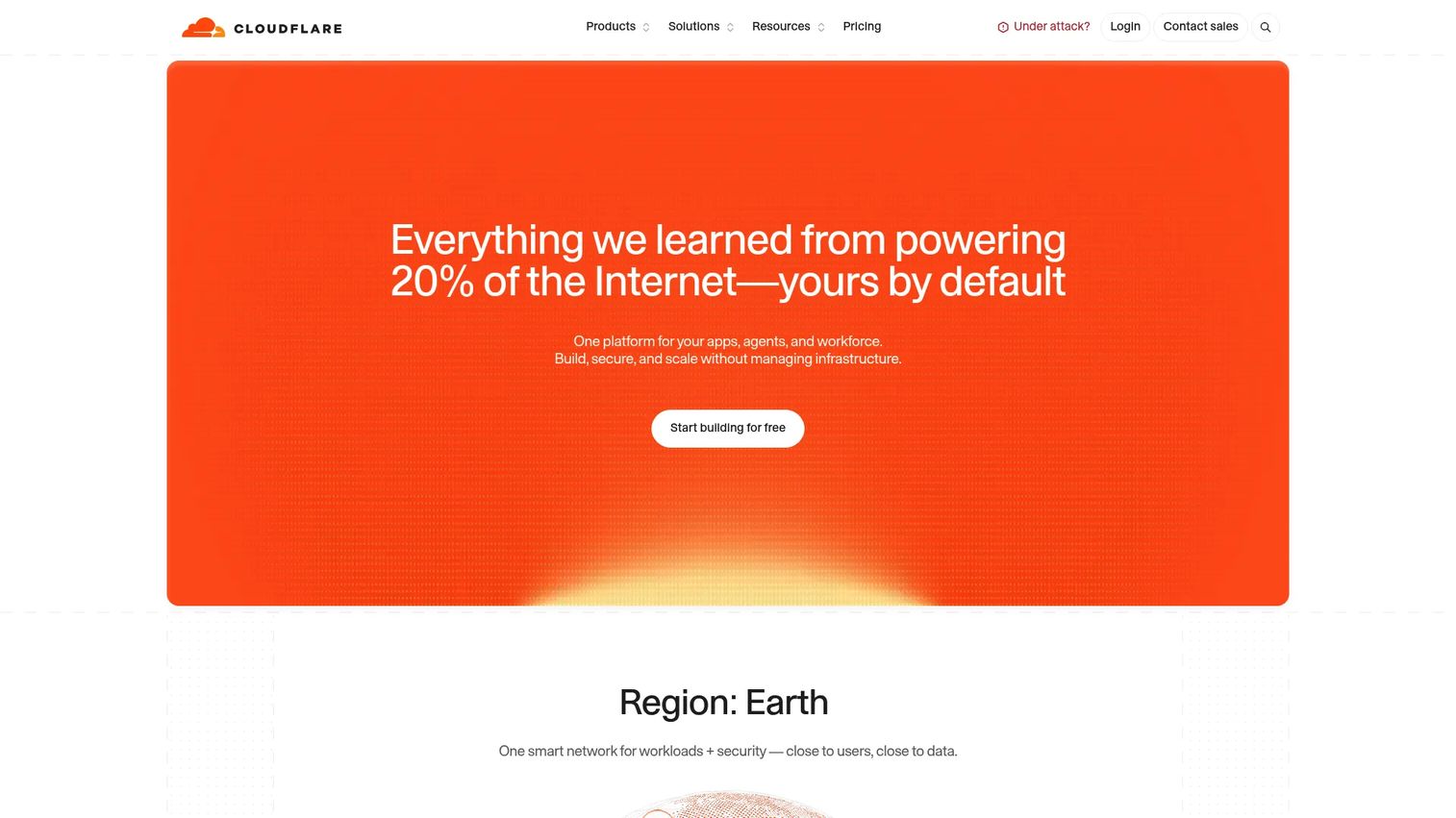
Cloudflare One is Cloudflare's SASE platform, combining zero-trust access, secure web gateway, CASB, DLP, browser isolation, and a global edge network under one operating model. It is built for teams that want to treat networking and security as one architecture decision rather than two separate procurement processes.
Best for: Global teams that want zero-trust access, web security, and edge networking managed together.
Key features
- Zero trust network access to private apps via Cloudflare Tunnel
- Secure web gateway with DNS, HTTP, and network traffic filtering
- CASB for SaaS visibility and data control
- Data loss prevention across web and cloud channels
- DDoS protection and global edge network routing
Why choose Cloudflare One: Cloudflare's global network reach is a genuine differentiator. Teams get consistent low-latency enforcement across regions without building infrastructure. For presales teams, Cloudflare One is worth understanding when buyers ask about securing demo environments or evaluation apps behind identity-aware access controls.
Cloudflare One pricing: Cloudflare is one of the few vendors in this category that publishes a numeric price. The free Zero Trust plan covers up to 50 users with access controls and gateway features. Pay-as-you-go is listed at $7 per user per month. Contract pricing for larger deployments and the full SASE packaging is quoted by sales.
G2 rating: 4.6/5 from 105 reviews
2. Zscaler Internet Access
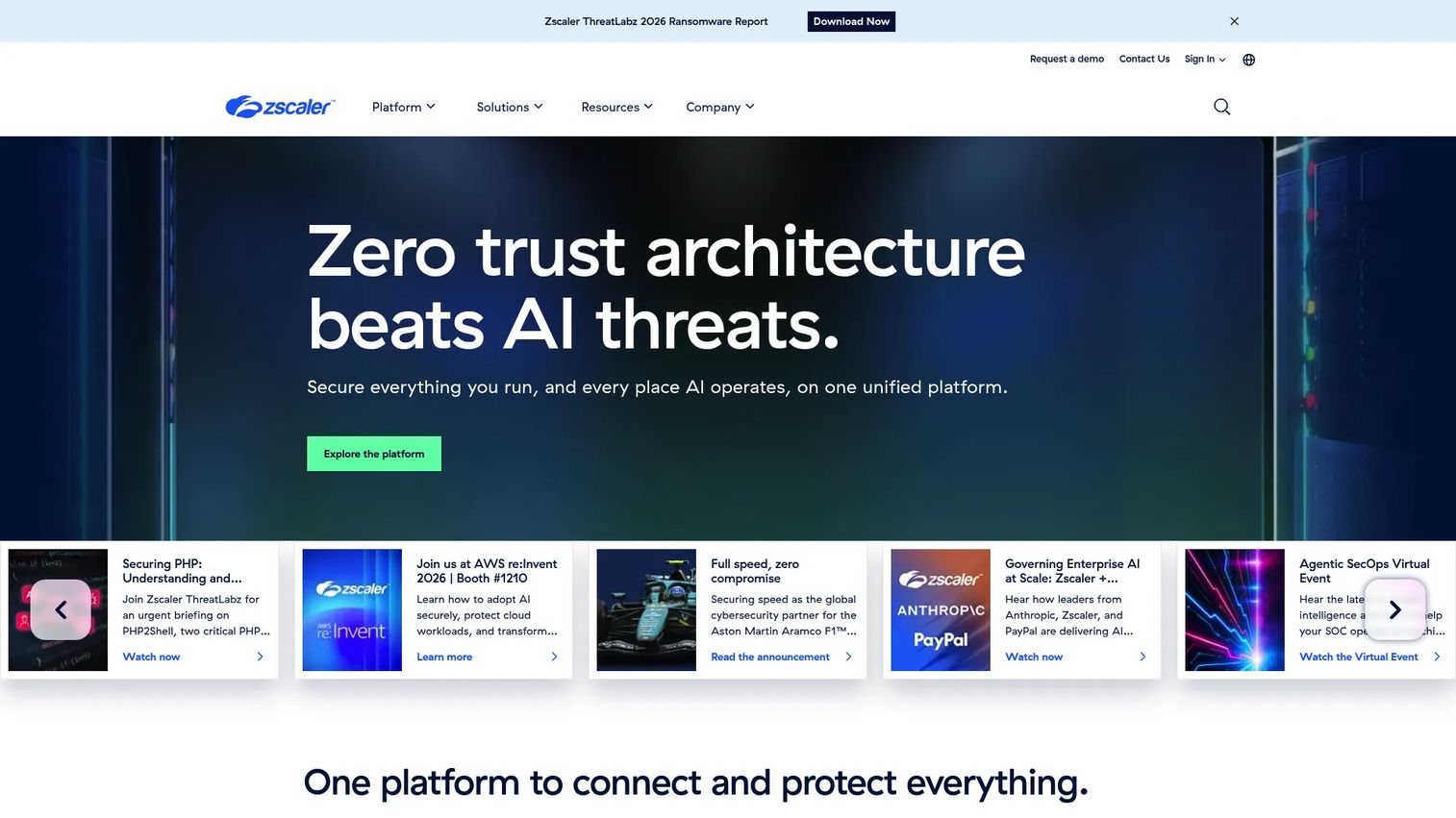
Zscaler Internet Access is a cloud-native security service edge solution within the Zscaler Zero Trust Exchange. It secures internet and SaaS access through traffic inspection, policy enforcement, threat sandboxing, and data protection. Zscaler is one of the most widely deployed enterprise SSE platforms and a familiar name in enterprise RFPs.
Best for: Large enterprises standardizing secure web and SaaS access across a globally distributed workforce.
Key features
- Secure web gateway with URL filtering and TLS/SSL inspection
- Advanced threat protection and cloud sandboxing
- Cloud access security broker and data loss prevention
- Zero trust firewall and cloud app controls
- Dynamic risk-based access policies
Why choose Zscaler Internet Access: Zscaler is the strong choice when web traffic inspection and policy maturity are the primary evaluation criteria. Buyers should validate deployment complexity and integration requirements during the technical evaluation, particularly around SSL certificate rollout and traffic forwarding architecture.
Zscaler Internet Access pricing: Zscaler sells ZIA through bundled platform packages and does not display numeric prices on its pricing page. Pricing is set per user and varies by the modules included, the committed term, and total seat count, so the only reliable figure is the one in your own quote. Contact Zscaler sales.
G2 rating: 4.4/5 from 291 reviews
3. Netskope Security Service Edge
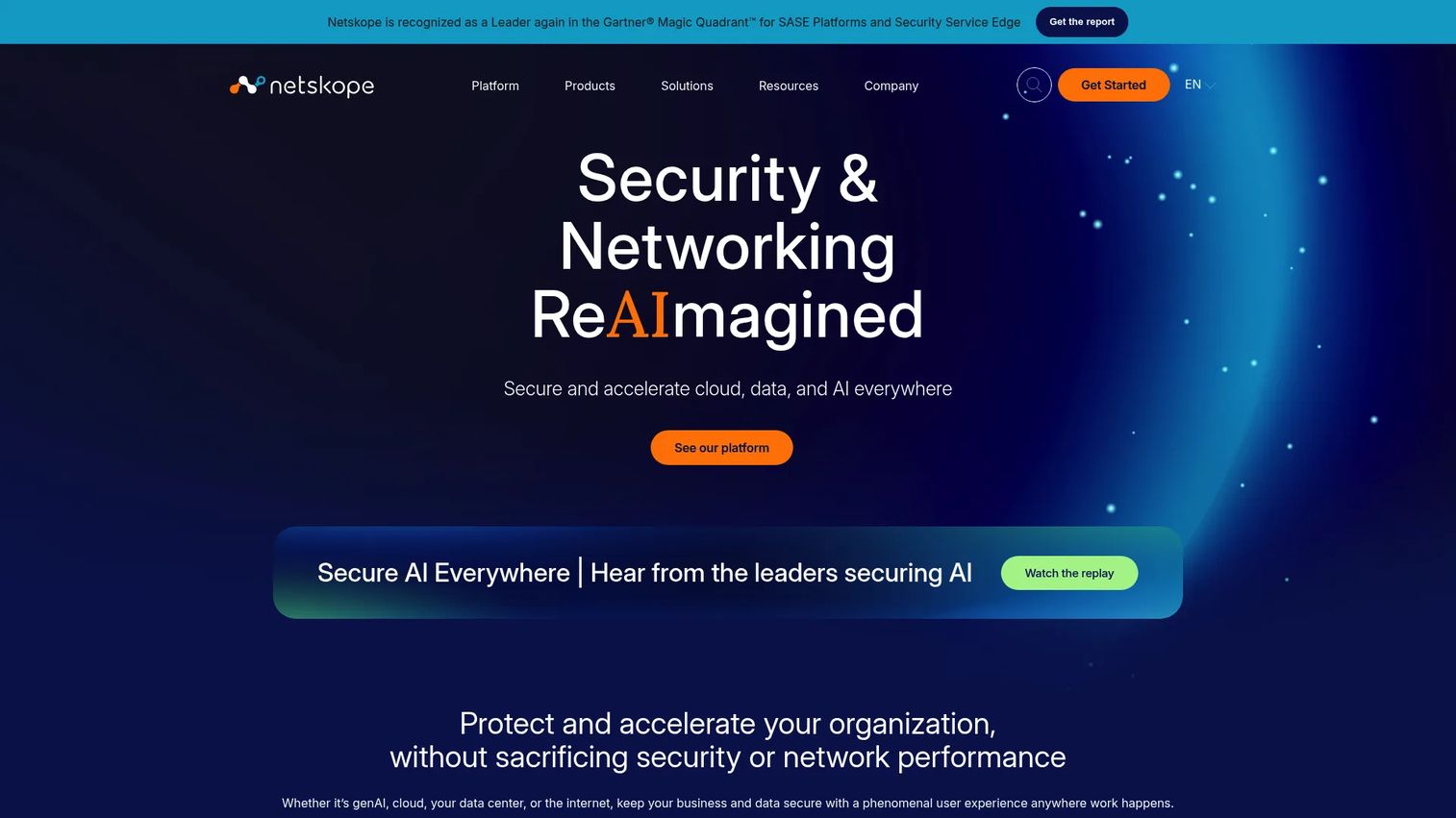
Netskope Security Service Edge is a cloud-delivered security platform that covers SaaS visibility, web security, private app access, and data protection through a context-aware policy engine. Its CASB and DLP capabilities are particularly strong, making it a fit for buyers whose primary concern is how data moves across managed and unmanaged devices. Netskope listed on Nasdaq under the ticker NTSK in September 2025, so it now reports as a public company rather than a venture-backed private one.
Best for: Security teams that put SaaS control and data protection at the center of their cloud security program.
Key features
- Cloud access security broker with app risk scoring
- Data loss prevention with unified policy across web and cloud
- Next-generation secure web gateway
- Zero trust private app access
- Remote browser isolation and continuous monitoring
Why choose Netskope Security Service Edge: Netskope's context-aware policy engine goes beyond simple allow/deny rules. It evaluates user behavior, app risk, device state, and data sensitivity together. Buyers evaluating DLP or SaaS control will find the policy granularity useful during POC validation.
Netskope Security Service Edge pricing: Netskope does not currently publish numeric pricing on its website, and its subscription pages describe billing units rather than prices. Packaging is structured as annual per-user subscriptions, tiered by capability level (Professional and Enterprise), by the number of SaaS app integrations covered, and by whether the organization sits above or below 1,000 users. The most recent published Netskope price list, dated August 2024, showed SSE Professional at $213.16 per user per year and SSE Enterprise at $257.00 per user per year for organizations under 1,000 users, with broader CASB and SWG bundles ranging from $299 to $507 per user per year. Those figures are now more than two years old and should be treated as historical reference points, not current quotes. Ask Netskope for current pricing.
G2 rating: 4.4/5 from 97 reviews, listed on G2 as Netskope One Platform
4. Palo Alto Networks Prisma Access
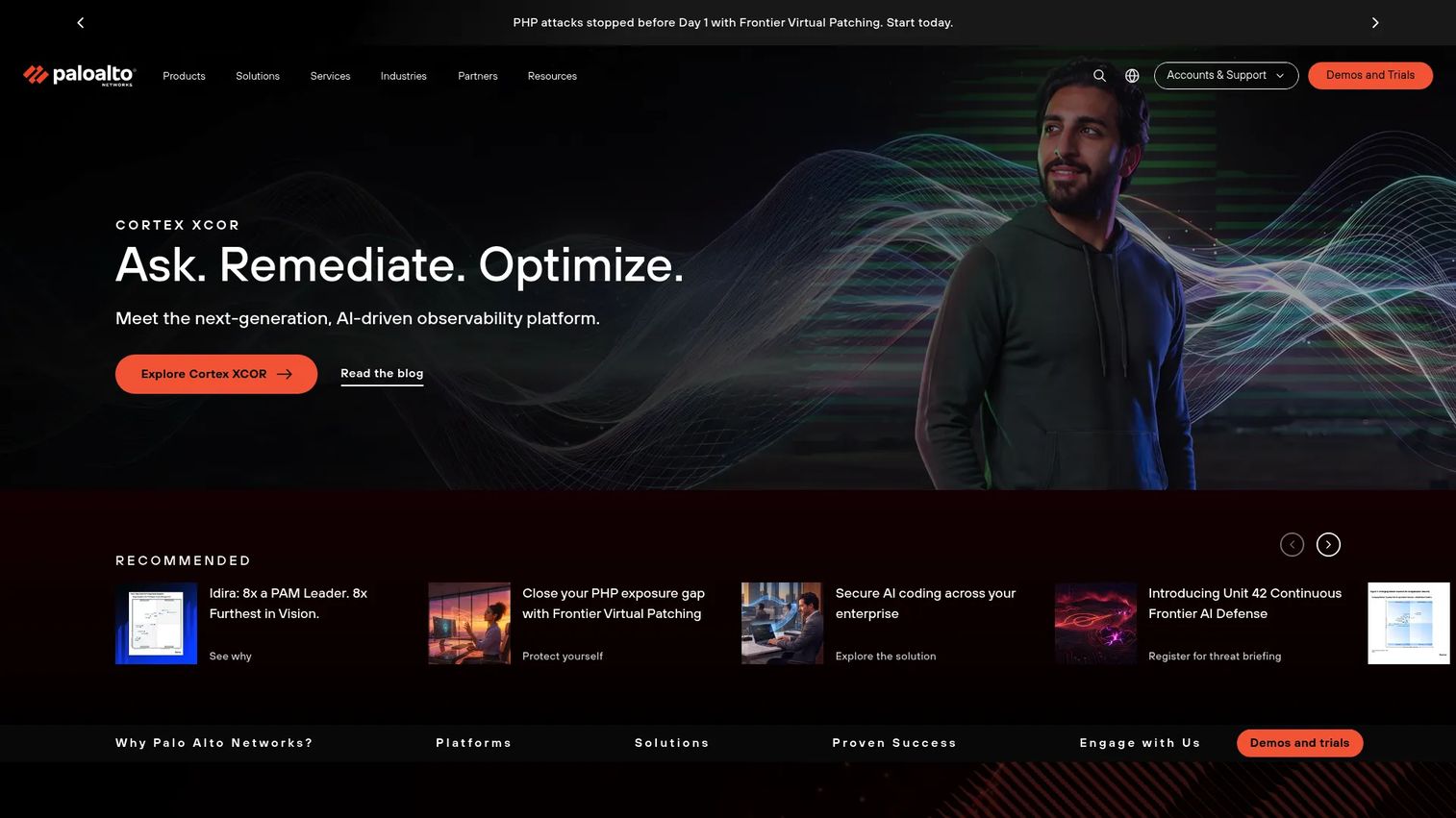
Palo Alto Networks Prisma Access is the cloud-delivered SASE platform from Palo Alto Networks. It brings together firewall as a service, ZTNA, threat prevention, CASB, and digital experience monitoring in one platform. Teams already using Palo Alto firewalls or NGFW policies will find the control plane familiar.
Best for: Enterprises that want firewall-led SASE with deep threat prevention depth, particularly those already running Palo Alto infrastructure.
Key features
- Firewall as a service with cloud-delivered threat prevention
- ZTNA connector for private application access
- SD-WAN integration for branch and remote sites
- CASB for application and data visibility
- Digital experience monitoring for user path analytics
Why choose Palo Alto Networks Prisma Access: Prisma Access is the right call when security architecture consistency with an existing Palo Alto environment matters more than a fresh-start deployment. Teams should validate licensing tiers, operational ownership model, and rollout planning during early conversations, since Prisma Access involves more architecture coordination than lighter ZTNA tools.
Palo Alto Networks Prisma Access pricing: Pricing is sales-led. Palo Alto Networks publishes license edition names but no numeric prices. The cost structure is per user, driven by which license edition you buy, which add-on modules you enable, and the length of the committed term, which means two organizations of the same size can land on very different figures. Request a quote from Palo Alto Networks.
G2 rating: 4.3/5 from 73 reviews
5. Fortinet FortiSASE
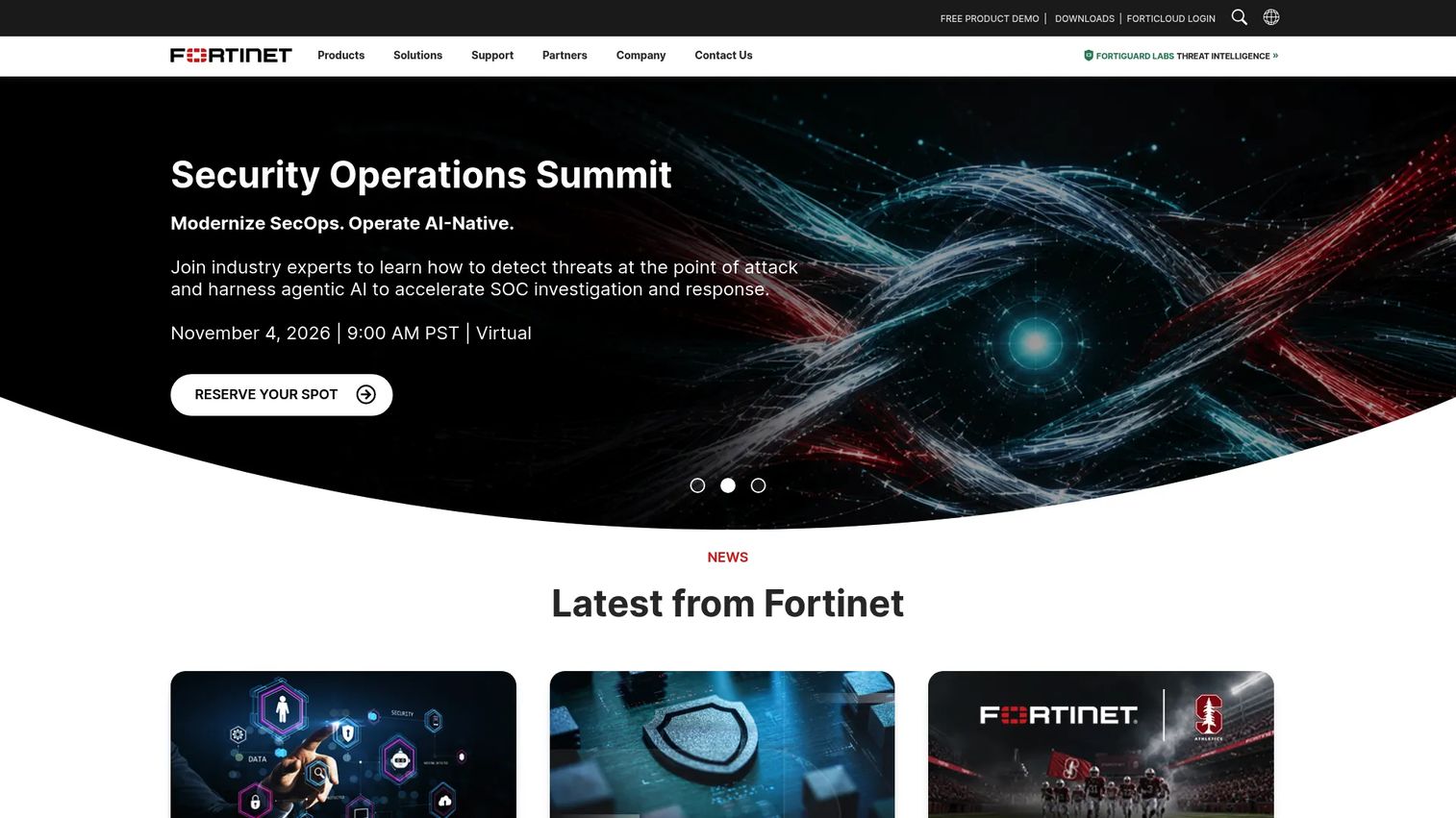
Fortinet FortiSASE is Fortinet's cloud-delivered SASE platform, extending the Fortinet Security Fabric to cover remote users, branch connectivity, private app access, and SaaS security. For organizations already running Fortinet firewalls or SD-WAN, FortiSASE adds cloud-delivered security controls through a familiar management interface.
Best for: Fortinet-centric organizations that want to extend their existing security fabric to remote and hybrid users.
Key features
- Secure web gateway, FWaaS, CASB, DLP, and ZTNA in one platform
- Universal ZTNA for private application access
- FortiClient endpoint integration for device posture enforcement
- SD-WAN alignment for branch and remote network security
- FortiGuard threat intelligence and intrusion prevention
Why choose Fortinet FortiSASE: Stack continuity is the main argument here. If your buyer already manages Fortinet firewalls and endpoints, FortiSASE reduces the number of management consoles and policy frameworks to maintain. Organizations without existing Fortinet infrastructure should validate integration fit before committing, since the platform's value increases substantially with existing Fortinet investments.
Fortinet FortiSASE pricing: Fortinet documents tiered subscription packages for FortiSASE but does not publish numeric prices. Pricing is subscription-based and scales with the tier selected and the number of users covered. Contact Fortinet sales for current pricing.
G2 rating: 4.3/5 from 18 reviews
6. Cisco Secure Access
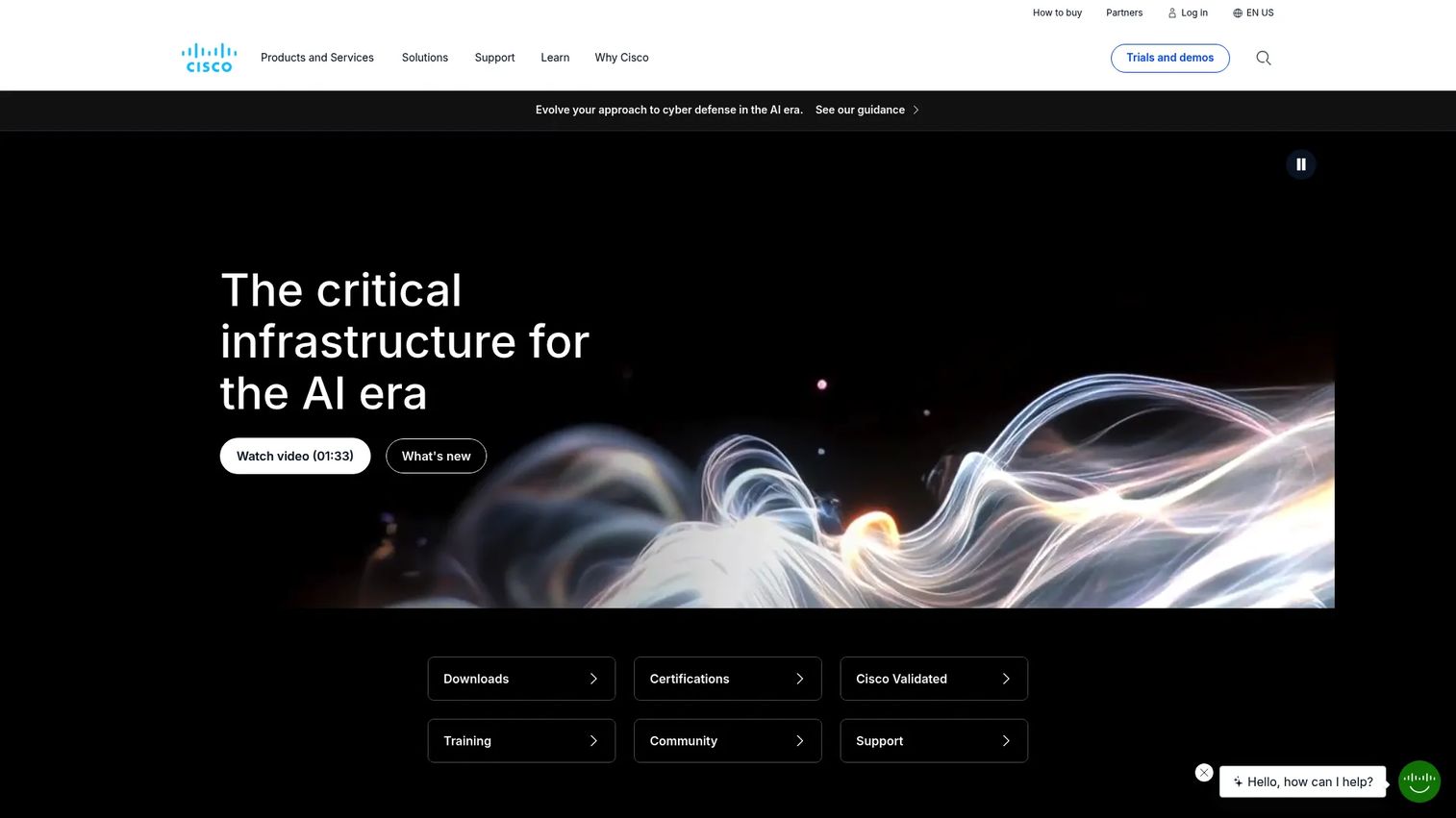
Cisco Secure Access is Cisco's cloud-native security service edge platform, providing zero-trust access to internet, SaaS, private applications, and AI services. It is positioned within Cisco's broader security portfolio, making it a natural fit for enterprises that already rely on Cisco networking and security infrastructure.
Best for: Cisco-centric enterprises consolidating secure access and internet security controls across a hybrid workforce.
Key features
- Zero trust network access for private app connectivity
- Secure web gateway with DNS security and web filtering
- Cloud access security broker for SaaS visibility
- Firewall as a service and remote browser isolation
- VPN as a service for legacy access scenarios
Why choose Cisco Secure Access: Cisco Secure Access earns its place in shops where existing Cisco investments create strong incentives for platform consolidation. The SSE packaging covers a broad capability set across internet, SaaS, and private access. Teams should validate user experience during a POC, particularly around agent behavior, policy migration from existing Cisco tools, and subscription term flexibility.
Cisco Secure Access pricing: Cisco sells Secure Access as a tiered subscription priced by covered-user count and contract term, with multi-year commitments available. Prices are not displayed on Cisco's public pages and are quoted through Cisco Commerce. There is no free tier. Check the current Cisco ordering guide or your Cisco account team for tier names and figures, since Cisco revises packaging regularly.
G2 rating: 4.3/5 from 81 reviews
7. Check Point Harmony SASE
Check Point Harmony SASE is a hybrid SASE platform combining zero-trust private access, secure internet access, SaaS security controls, and SD-WAN in a unified management console. Two naming points matter before you put this on a shortlist. The platform is built on Perimeter 81, the SASE vendor Check Point acquired in 2023, so buyers who evaluated Perimeter 81 previously are looking at the same lineage under new ownership. Check Point also now presents the product as "Check Point SASE" on its own site and on G2, having previously branded it Harmony SASE.
Best for: Teams that want network access, threat prevention, and branch connectivity delivered from one SASE program.
Key features
- Zero-trust private access with full-mesh connectivity
- Secure internet access with web filtering, malware protection, and on-device inspection
- SaaS security including DLP, API scanning, and posture management
- Secure SD-WAN with automatic link steering and sub-second failover
- Unified cloud management for users, networks, and policies
Why choose Check Point Harmony SASE: The combination of threat prevention depth and SD-WAN integration in one management plane makes this appealing to buyers who want to collapse network and security operations. Security buyers with Check Point firewall heritage will find the policy model familiar. Verify current product naming and packaging before including it in a customer-facing shortlist, since both the brand and the tiers have shifted since the Perimeter 81 acquisition.
Check Point Harmony SASE pricing: Check Point does not publish pricing on its website. Packaging is sold as annual per-user subscriptions whose cost depends on the modules enabled and the number of users, with figures provided only on quote. Contact Check Point sales.
G2 rating: 4.5/5 from 231 reviews, listed on G2 as Check Point SASE
8. Akamai Guardicore Segmentation
Akamai Guardicore Segmentation is a microsegmentation platform, not a general SASE replacement. Its job is limiting lateral movement within networks, enforcing zero-trust policies at the workload level, and mapping application dependencies across cloud and on-premises environments. The product reached Akamai through its 2021 acquisition of Guardicore, so older evaluations and reviews may still refer to it under the standalone Guardicore name.
Best for: Security teams prioritizing workload isolation, lateral movement reduction, and granular east-west traffic control.
Key features
- Process- and service-level microsegmentation policies
- Real-time and historical east-west traffic visibility
- AI-assisted, template-driven policy creation
- Agent-based and agentless enforcement across cloud, legacy, and IoT environments
- Breach detection and threat intelligence integration
Why choose Akamai Guardicore Segmentation: This is the honest trade-off to name: Guardicore Segmentation does one job extremely well. If your buyer needs to contain lateral movement, isolate workloads, or demonstrate application-layer segmentation to a security review board, this is the right tool. It is not a substitute for SWG, CASB, or remote-user access controls. Pair it with a broader SSE or SASE platform when the full cloud edge security stack is needed. For presales teams, this is worth knowing when buyers raise workload isolation requirements during access review software or zero-trust architecture discussions.
Akamai Guardicore Segmentation pricing: Akamai does not publish product pricing publicly. Contact Akamai for current enterprise packaging.
G2 rating: 3.8/5 from 2 reviews. Treat this number with care: the acquisition left two overlapping G2 listings, one showing 3.8/5 from 2 reviews and a legacy Guardicore entry showing 4.2/5 from 3 reviews. Neither sample is large enough to compare against the 100-plus review counts elsewhere in this table.
9. Forcepoint ONE
Forcepoint ONE is a cloud security platform that delivers unified data protection across web, SaaS, and private application access. Two ownership and naming details are worth knowing. Forcepoint has renamed the platform Forcepoint Data Security Cloud, which is the name G2 and Forcepoint's own materials now use, so verify the current product name before using it in prospect conversations. The CASB layer also came from Forcepoint's 2021 acquisition of Bitglass, and Forcepoint itself is held by private equity owner Francisco Partners, which sold the company's separate government and critical infrastructure business to TPG in 2023.
Best for: Organizations that lead their cloud security evaluation with data protection requirements, including DLP, SaaS control, and ZTNA.
Key features
- Secure web gateway with inline data inspection
- Cloud access security broker for SaaS visibility and control
- Zero trust network access for private application connectivity
- Data loss prevention with unified policy management
- Agentless reverse proxy for unmanaged device access
Why choose Forcepoint ONE: Forcepoint's data-centric approach to SSE means policy starts with the data classification, not the network perimeter. Teams with strict data governance requirements or compliance mandates around data movement across SaaS apps will find this framing useful. Validate current product packaging and feature scope before building a POC plan, since the platform has been through both a rebrand and an acquisition-driven feature consolidation.
Forcepoint ONE pricing: Forcepoint sells the platform as annual per-user subscriptions across several editions, with cost driven by which capabilities you license and how many users you cover. No numeric prices are displayed. Reach out to Forcepoint sales for current pricing and edition names, which changed with the rebrand.
G2 rating: 4.2/5 from 103 reviews, listed on G2 as Forcepoint Data Security Cloud
10. Twingate
Twingate is a modern zero-trust network access platform designed to replace VPN with identity-based access to private resources. It is narrower in scope than full SASE suites, which is part of its appeal for teams that need secure private app access without a full architecture transformation. Twingate remains an independent, venture-backed company, which makes it one of the few genuinely unconsolidated options in this comparison.
Best for: Teams that want lightweight, developer-friendly private app access as a direct VPN replacement.
Key features
- Zero-trust remote access with identity provider integration
- Split tunneling and peer-to-peer connectivity for low latency
- Automated least-privilege policies and device posture enforcement
- Single sign-on support across major IdPs
- Relay and gateway infrastructure with no inbound firewall changes required
Why choose Twingate: Twingate is the strongest fit when the primary job is securing access to internal apps, staging environments, demo infrastructure, or customer evaluation tools. The rollout is genuinely lighter than most SASE platforms, and a free Starter tier supports up to five users for testing or small teams. For presales engineers who need to explain secure demo environment access to security-conscious buyers, Twingate is worth adding to your vocabulary. It is not trying to replace a full cloud edge security suite, and it says so plainly.
Twingate pricing: Twingate is the other vendor here that publishes real numbers. Starter is free for up to five users. Teams starts at $5 per user per month on monthly billing and covers up to 100 users. Business starts at $10 per user per month on monthly billing and covers up to 500 users. Annual billing carries a discount. Enterprise pricing requires a sales quote. Confirm the current figures on Twingate's pricing page before quoting them to a buyer, since the published tiers have been revised during 2026.
G2 rating: 4.6/5 from 79 reviews
Considerations when choosing cloud edge security software
Match the tool to the security job
"Cloud edge security" describes a range of distinct functions, from broad SASE suites to focused ZTNA tools to microsegmentation platforms. The wrong shortlist happens when buyers compare Cloudflare One's full SASE scope against Twingate's focused ZTNA without naming the actual job first. Start by asking: is the primary need user access, data protection, workload isolation, or a combination?
Validate user experience and latency
Security tools that create noticeable latency generate adoption problems. Ask every vendor about regional points of presence, traffic steering behavior, and fallback when a PoP is unavailable. Tools like Cloudflare One and Zscaler have large global networks; smaller vendors may have coverage gaps that matter for specific buyer geographies.
Check identity, device, and policy integrations
Most buyers already run an identity provider and endpoint management tooling. Validate integration fit with Microsoft Entra ID, Okta, CrowdStrike, Splunk, Sentinel, and ServiceNow before shortlisting. A tool that cannot connect to the existing IdP creates a deployment blocker that will surface late in the POC.
Account for consolidation and rebranding
This market has consolidated heavily, and that shows up in procurement. Several products here arrived inside a larger vendor through acquisition, and two are mid-rename. When you inherit a shortlist or an older RFP response, check whether the product still exists under the name on the page, who owns it now, and whether the tier you priced last year survived the transition. Review sites lag behind these changes, which is why a single product can carry two separate listings with different ratings.
Inspect reporting for security review
Procurement and compliance teams need exportable evidence. Ask whether each tool produces access logs, policy change history, DLP incident reports, and admin activity trails in formats your buyer's SIEM can consume. This question alone can differentiate platforms during a technical evaluation.
Model deployment effort before committing
Some tools require traffic forwarding architecture changes, certificate deployment, endpoint agents, or connector infrastructure. Build a lightweight deployment checklist early in the POC planning process. For presales teams supporting security-heavy deals, having this checklist ready shortens the technical validation cycle and reduces late-stage surprises. Related tools covering security operations workflows appear in our guide to best AI security posture management tools.
Conclusion
Cloud edge security is not one category with one obvious answer. The right tool depends on whether the primary job is user access, SaaS control, data protection, workload segmentation, or all of the above.
For most enterprise buyers, start with this shortlist structure: Cloudflare One or Zscaler Internet Access for broad SSE coverage, Netskope for data and SaaS-centric organizations, Palo Alto Networks Prisma Access or Fortinet FortiSASE for teams with existing infrastructure investments, Twingate for lightweight private app access, and Akamai Guardicore Segmentation when microsegmentation is the specific requirement.
The next step is not to schedule demos with all ten. Build a shortlist of two to three based on the buyer's primary security job, existing identity infrastructure, and deployment constraints. Validate access architecture, data controls, and reporting during a focused POC. For presales teams, a standard security validation checklist for each vendor prevents the same questions from stalling every technical review.
Security buyers ask detailed questions about access boundaries and data handling during technical diligence, and answering them live on every call is slow. Interactive demos let presales teams show how those controls work in a format buyers can revisit on their own, and a Demo Center keeps the security and integration demos in one place for a buyer working through a security review.
Start your journey with Guideflow today!
FAQs
Cloud edge security software delivers security controls through the cloud, applied closer to where users, apps, and data actually operate rather than routing everything through a central data center. It typically includes combinations of zero trust access, secure web gateway, CASB, DLP, and cloud firewall capabilities. The category overlaps with SASE and SSE frameworks.
Not exactly. SASE (secure access service edge) combines network security with networking capabilities such as SD-WAN in a unified cloud-delivered model. Cloud edge security software is a broader term that can include SASE platforms, SSE tools (security only), focused ZTNA products, and microsegmentation platforms. Some tools in this category are full SASE suites; others cover a narrower slice.
SSE (security service edge) covers the security functions: secure web gateway, CASB, ZTNA, and DLP. SASE adds networking capabilities, primarily SD-WAN, to the same cloud-delivered model. An organization deploying SSE handles networking separately. A SASE platform consolidates both. Vendors like Zscaler and Netskope are positioned as SSE; Cloudflare One and Palo Alto Networks Prisma Access target the full SASE scope.
Security architects, IT leaders, and network engineers buying for distributed enterprises are the primary buyers. Presales and solutions engineering teams engage with this category when supporting deals where a buyer's security team needs to validate how access, data controls, and policy enforcement work before approving a procurement. Remote and hybrid workforce growth is the most common trigger for evaluation.
Start with the primary security job: user access control, internet traffic inspection, SaaS and data protection, private app access, or workload segmentation. Then check whether the tool integrates with the existing identity provider and endpoint stack. Validate deployment effort during a POC, confirm reporting capabilities meet audit requirements, and test latency from the locations where users actually work.
Almost nobody in this category publishes list prices. Of the ten tools here, only Cloudflare and Twingate post numeric per-user figures, and both do it for self-serve tiers rather than enterprise deployments. Everyone else quotes per user, with the figure driven by which modules you license, how many users you cover, and how long you commit. That means published prices you find elsewhere are usually either self-serve tiers or outdated list sheets, and the only number that matters is the one in your own quote. Budget for a procurement cycle rather than a credit card.
Large enterprises typically need broad SASE or SSE suites because they have the infrastructure complexity and compliance requirements to justify the investment. Smaller teams can start with a focused ZTNA tool like Twingate, which offers a free tier and a lightweight rollout path, then expand to a broader platform as access and data control requirements grow.
"CloudEdge" is the name of a consumer home camera application, which means some search results reflect branded camera-app intent rather than enterprise security software. This guide uses the enterprise definition: cloud-delivered security controls for distributed users, applications, and networks. If you found this article after a camera-app search, you've landed in a different category.
Presales teams should understand how buyers secure their evaluation environments, private staging apps, demo access paths, and SaaS tools during a technical review. When a buyer's security team asks whether a POC environment is isolated from production systems, or whether demo access requires VPN, knowing this category helps you answer confidently. It also helps you anticipate when a security questionnaire will slow the deal and prepare responses in advance. For more on presales tooling, see our guide on best presales software tools.