Quality measures live in one system. Claims sit in another. Care gaps accumulate in a third. Financial risk lives in a spreadsheet someone updates monthly, if it gets updated at all.
Value-based reimbursement breaks exactly at that seam. When the data, contract terms, care workflows, and quality measures do not meet in time for teams to act, reimbursement suffers. The operational window to close a care gap, correct a risk score, or dispute an attribution decision closes fast.
The shift is accelerating. According to the Health Care Payment Learning and Action Network, 39.2% of commercial healthcare payments were in value-based care arrangements in 2023, up from 34.6% in 2022. And a 2025 Sage Growth Partners survey found that 77% of hospital and health system executives plan to increase value-based care participation within two years.
That makes platform selection consequential. The wrong tool gives you a dashboard. The right one gives you an operating rhythm that connects finance, clinical, and operations before year-end deadlines hit.
This guide maps 21 value based reimbursement software platforms and services across analytics, quality reporting, risk adjustment, care management, revenue-cycle operations, and contract performance.
What's inside
This guide is for health plan executives, ACO and provider group leaders, revenue-cycle teams adapting to value-based payment models, population health and quality leaders, and healthcare founders mapping a complex vendor landscape.
Tools were chosen based on:
- Relevance to value-based reimbursement workflows (quality, risk, claims, care management, contract performance)
- Depth of healthcare data coverage and integration capability
- Fit across payer, provider, ACO, and implementation contexts
- Whether the product is software-first, services-first, or infrastructure
Pricing and G2 ratings reflect verified sources at generation time.
TL;DR
- Best overall value-based care operating layer: Arcadia, for organizations that need unified data, analytics, and care management in one platform
- Best for evidence generation: Atropos Health, for teams making clinical and program decisions from real-world data
- Best for cloud data infrastructure: Snowflake, for organizations building a governed analytics foundation across claims and clinical feeds
- Best for quality reporting: Medisolv, for hospitals and health systems managing eCQM and regulatory submissions
- Best for RCM-linked reimbursement: Waystar or R1 RCM, for provider organizations where claims execution drives financial performance
- Best for contract and risk performance analytics: Cedar Gate Platform or HealthQx, for payers and risk-bearing providers tracking value-based contract results
What is value based reimbursement software?
Value based reimbursement software helps healthcare organizations manage payment models where revenue depends on cost, quality, outcomes, risk, and patient experience rather than only service volume.
Unlike generic EHR, CRM, or business intelligence tools, this category connects claims, clinical, quality, financial, and patient data to support payment model operations specifically. The distinction matters because value-based payment models require workflows that standard administrative software was not designed to support.
Payment models the software supports:
- Shared savings programs (Medicare ACOs, commercial ACOs)
- Bundled and episode-based payments
- Capitation and global budget arrangements
- Pay-for-performance and quality bonus programs
- Downside risk contracts
Core operational workflows covered:
- Risk stratification and patient attribution
- Care-gap identification and closure
- Quality measure tracking and submission
- Contract performance monitoring
- Claims review and payment integrity
- Payer-provider reporting and collaboration
- Predictive financial modeling
- Audit-ready reporting exports
Buyer types using this category:
- Health plans and managed care organizations
- ACOs, clinically integrated networks, and population health programs
- Provider groups and health systems in risk-bearing contracts
- Revenue-cycle and finance teams in value-based arrangements
- Quality, analytics, and population health teams
Key features to evaluate:
- Claims and clinical data integration
- Risk adjustment and stratification engines
- Quality measure tracking aligned to HEDIS and eCQM standards
- Contract performance dashboards
- Care management workflow support
- Payer-provider collaboration tools
- Predictive financial modeling
- Exportable, audit-ready reporting
When to use value based reimbursement software
Move from fee-for-service reporting to risk-based performance
Spreadsheets and static reports break once payment depends on outcomes, total cost of care, and attribution logic. You need software that tracks quality, utilization, care gaps, and financial exposure in the same operating rhythm. That is the gap fee-for-service tools cannot fill.
Coordinate payers and providers around one version of performance
Payer-provider friction often comes from different data sources, delayed claims, unclear attribution, and disputes over measure performance. Strong platforms give both sides cleaner contract, quality, and patient-level visibility, reducing the back-and-forth that delays action and erodes trust.
Manage quality, care gaps, and reimbursement risk before year end
Retrospective reporting arrives too late to change outcomes. The software should flag gaps while teams can still intervene, document action, and protect reimbursement. A dashboard that shows last quarter's performance is useful. One that shows this week's exposure is an operating tool.
Value based reimbursement software comparison
The table below maps 21 tools to their primary buyer, key differentiator, pricing model, and G2 rating. Use it as a shortlist map, not a final purchasing decision. Every buyer's contract structure, data sources, and workflow requirements are different enough that the right answer varies.
Pricing and G2 ratings were verified against vendor pricing pages and live G2 listings at generation time.
| # | Product | Best for | Key differentiator | Pricing | G2 rating |
|---|---|---|---|---|---|
| 1 | Arcadia | Value-based care operating layer | Unified data, analytics, and care management | Quote-based | 5.0/5 |
| 2 | Atropos Health | Evidence generation | Rapid real-world evidence from clinical data | Quote-based | Not rated |
| 3 | HealthHelper | AI-assisted patient access and care coordination | AI agents embedded in practice workflows | Flexible / usage-based | Not rated |
| 4 | Snowflake | Healthcare data infrastructure | Governed cloud data foundation with $400 trial credit | Consumption-based | 4.6/5 |
| 5 | Socially Determined | Social risk analytics | Person- and community-level SDOH risk scoring | Quote-based | Not rated |
| 6 | Quest Analytics | Provider network analytics | Network adequacy, compliance, and access analysis | Quote-based | Not rated |
| 7 | Medisolv | Quality reporting | eCQM, MIPS, and ACO quality submission workflows | Quote-based | Not rated |
| 8 | Vim | Point-of-care payer-provider enablement | EHR-embedded care-gap workflows with read/write integration | Quote-based | 4.4/5 |
| 9 | N1 Health | Population engagement and targeting | Predictive member models with consumer data integration | Quote-based | Not rated |
| 10 | J2 Interactive | Healthcare interoperability services | FHIR consulting and HIE Accelerator packages from $46,000 | Project-based | Not rated |
| 11 | Omega Healthcare Management Services | Managed RCM operations | Technology-led clinical and revenue-cycle outsourcing | Quote-based | Not rated |
| 12 | R1 RCM | Enterprise revenue cycle management | AI-powered Phare OS for prior auth, denials, and recovery | Quote-based | Not rated |
| 13 | athenahealth | Ambulatory EHR and revenue operations | Collections-based pricing tied to EHR and billing workflows | Collections-based | 3.4/5 |
| 14 | Cotiviti | Payment integrity and risk adjustment | Claims analytics, risk adjustment, and quality programs for payers | Quote-based | 4.2/5 |
| 15 | Inovalon | Healthcare data and analytics | All-payer claims management and eligibility workflows | Quote-based | 4.4/5 |
| 16 | FinThrive | Revenue management | AI-powered revenue cycle across patient access and integrity | Quote-based | Not rated |
| 17 | HealthEdge | Payer core administration | AI-embedded claims administration with GuidingCare and Wellframe | Quote-based | 4.3/5 |
| 18 | Waystar | Claims and payment workflows | Starter to Premium claim-management packages | Quote-based | 4.4/5 |
| 19 | Cedar Gate Platform | Contract performance analytics | Predictive VBC analytics with bundles and capitation adjudication | Quote-based | Not rated |
| 20 | Aver Operationalize | Bundled payment operations | Episode analytics and alternative payment model workflows | Quote-based | Not rated |
| 21 | HealthQx | Value-based payment analytics | Cost, quality, and episode-of-care grouping analytics | Quote-based | 5.0/5 |
Best 21 value based reimbursement software tools for 2026
1. Arcadia
Arcadia provides healthcare data, analytics, AI, and workflow capabilities for providers, payers, ACOs, life sciences organizations, and government agencies. The platform unifies EHR, claims, social determinants, and other healthcare data into a normalized foundation, then layers analytics, care management, contract performance, and quality tracking on top. It supports standards-based interoperability across FHIR, HL7, CMS APIs, and TEFCA. For organizations moving from fragmented point tools to a single operating layer, Arcadia is the broadest fit in this list.
Best for: Health systems, ACOs, and health plans that need unified data, analytics, and care management workflows in one platform.
Key features
- EHR, claims, and SDoH data unification
- Population health analytics and dashboards
- Care management and workflow tools
- Contract performance monitoring
- Standards-based interoperability including FHIR and CMS APIs
Why choose Arcadia: Choose it when your organization needs more than a reporting layer. Arcadia works best for teams ready to operationalize value-based performance across clinical, financial, and operational functions. Validate implementation scope, source-system requirements, and data feed cadence before signing.
Arcadia pricing: Pricing is quote-based. Ask sales for module pricing, covered lives, data source integrations, implementation timeline, and support terms.
G2 rating: 5.0/5 (based on 1 review)
2. Atropos Health
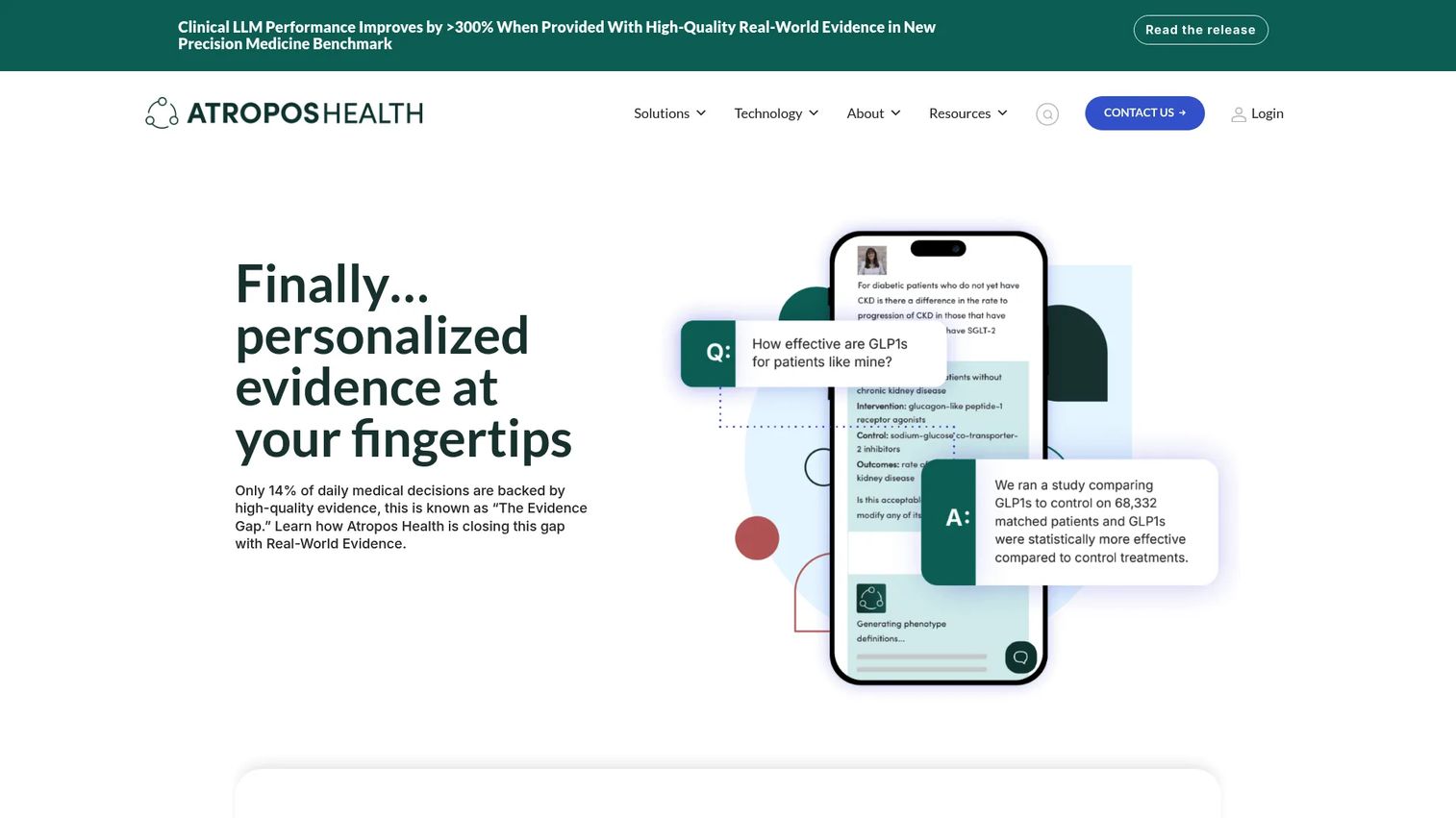
Atropos Health provides personalized, publication-grade real-world evidence and evidence-generation tools for healthcare and life sciences teams. Its AI-powered ChatRWD platform lets clinicians and researchers generate cohort-based evidence quickly from multimodal healthcare data. The Forge low-code research platform supports rapid cohorting and observational study design. Atropos also offers no-cost access for verified U.S.-based medical professionals and students. For value-based reimbursement programs where clinical evidence informs pathway design and population strategy, Atropos functions as an evidence layer rather than a full reimbursement platform.
Best for: Healthcare organizations that need fast clinical evidence to support value-based program design and outcomes measurement.
Key features
- AI-powered ChatRWD for real-world evidence generation
- Forge low-code research platform with rapid cohorting
- Atropos Evidence Network with multimodal healthcare data
- Observational study design support
- Data fitness scoring across sources
Why choose Atropos Health: Use it when your value-based strategy depends on turning clinical data into credible, publication-grade evidence fast. Pair with a broader analytics or reimbursement platform if you also need contract tracking and care-gap management.
Atropos Health pricing: Enterprise access is sales-led. Contact Atropos to discuss scope, data access, and contract terms. Verified U.S. medical professionals and students can access a no-cost tier.
3. HealthHelper
HealthHelper is an AI-powered care coordination platform that combines automation and staff support for healthcare practices. AI agents answer inbound calls 24 hours a day, document interactions in the EHR, manage scheduling and reminders, and drive care-gap outreach, chart review, and post-discharge follow-up. The platform covers referral tracking and closed-loop coordination alongside data analytics. For value-based programs where reimbursement depends on patient action before quality deadlines, HealthHelper addresses the execution layer that dashboards alone cannot reach.
Best for: Healthcare practices, health systems, ACOs, and community health centers seeking AI-assisted patient access and care coordination at scale.
Key features
- 24/7 AI agents for inbound calls and EHR documentation
- Appointment scheduling, reminders, and wait-list management
- Care-gap outreach, chart review, and documentation
- Post-discharge follow-up workflows
- Referral tracking and closed-loop coordination
Why choose HealthHelper: Choose it when the reimbursement challenge is patient follow-through and care-gap closure, not only visibility into which gaps exist. The platform reduces staff burden on repetitive outreach while keeping EHR documentation current.
HealthHelper pricing: Pricing is flexible and varies by scope of work, with performance-based and usage-based models available. Contact HealthHelper for a quote tied to patient volume and program scope.
4. Snowflake
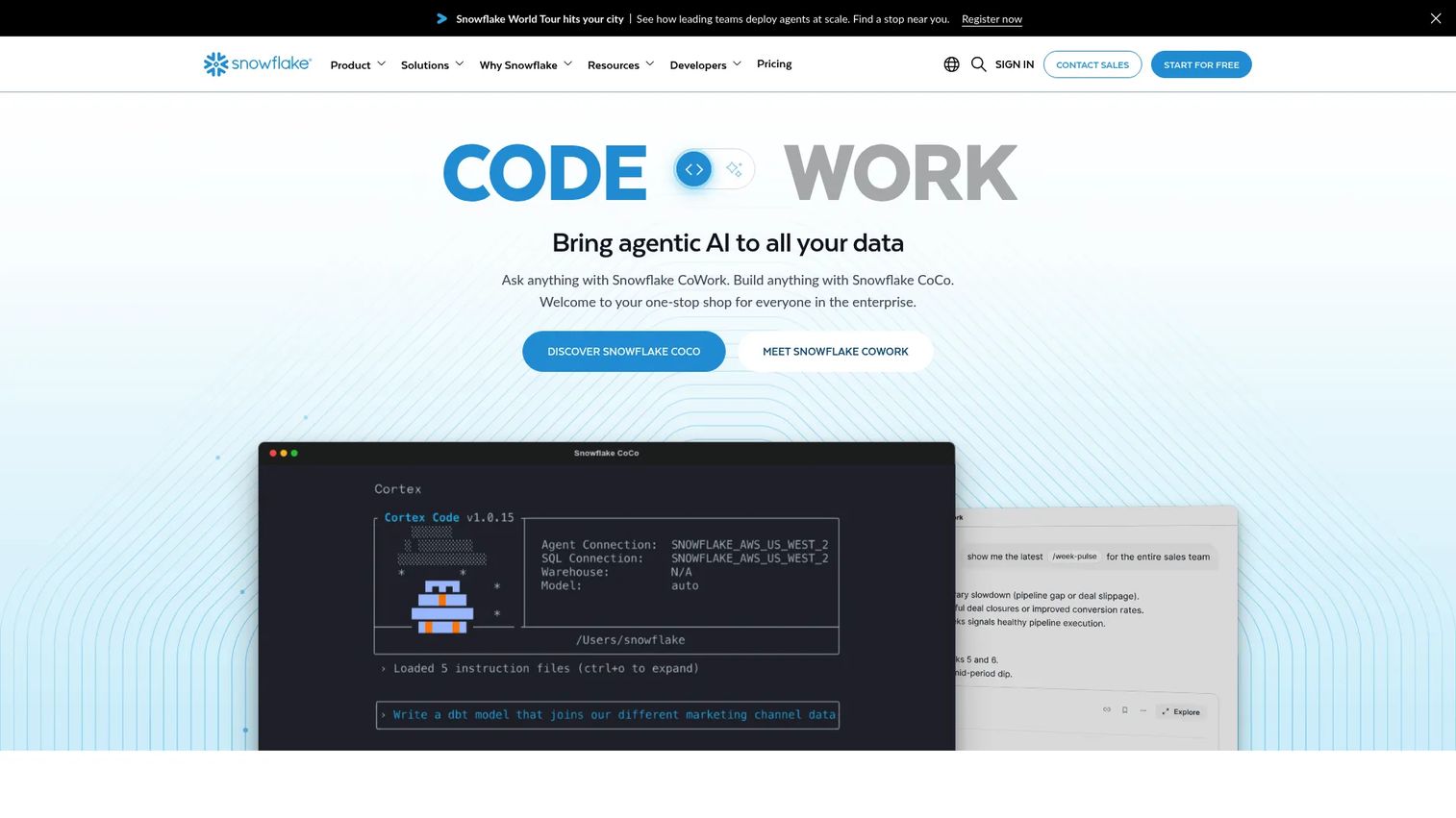
Snowflake is a fully managed AI Data Cloud platform built for data engineering, analytics, AI, and cross-cloud data sharing. In healthcare, it serves as the infrastructure layer that consolidates claims, clinical, and partner data into a governed foundation for downstream analytics and applications. It supports HITRUST and HIPAA-aligned workloads. A 30-day free trial includes $400 in usage credits. Snowflake does not replace care-management or quality-reporting workflow tools by itself. It earns its place when the organization's bottleneck is fragmented data infrastructure rather than missing software functionality.
Best for: Healthcare organizations building a scalable, governed data foundation to support value-based analytics and multi-partner data collaboration.
Key features
- Cloud data warehouse with consumption-based pricing
- Secure cross-cloud data sharing
- Healthcare data marketplace
- Snowflake Cortex AI and ML capabilities
- Security, governance, and HITRUST-aligned compliance controls
Why choose Snowflake: Choose it when your analytics teams spend more time extracting and reconciling data than analyzing it. Organizations that have invested in BI, analytics, or AI tooling but lack a clean data layer get the most out of Snowflake.
Snowflake pricing: Consumption-based pricing across Standard, Enterprise, Business Critical, and Virtual Private editions. The 30-day free trial includes $400 in credits. Contact sales for negotiated capacity pricing.
G2 rating: 4.6/5
5. Socially Determined
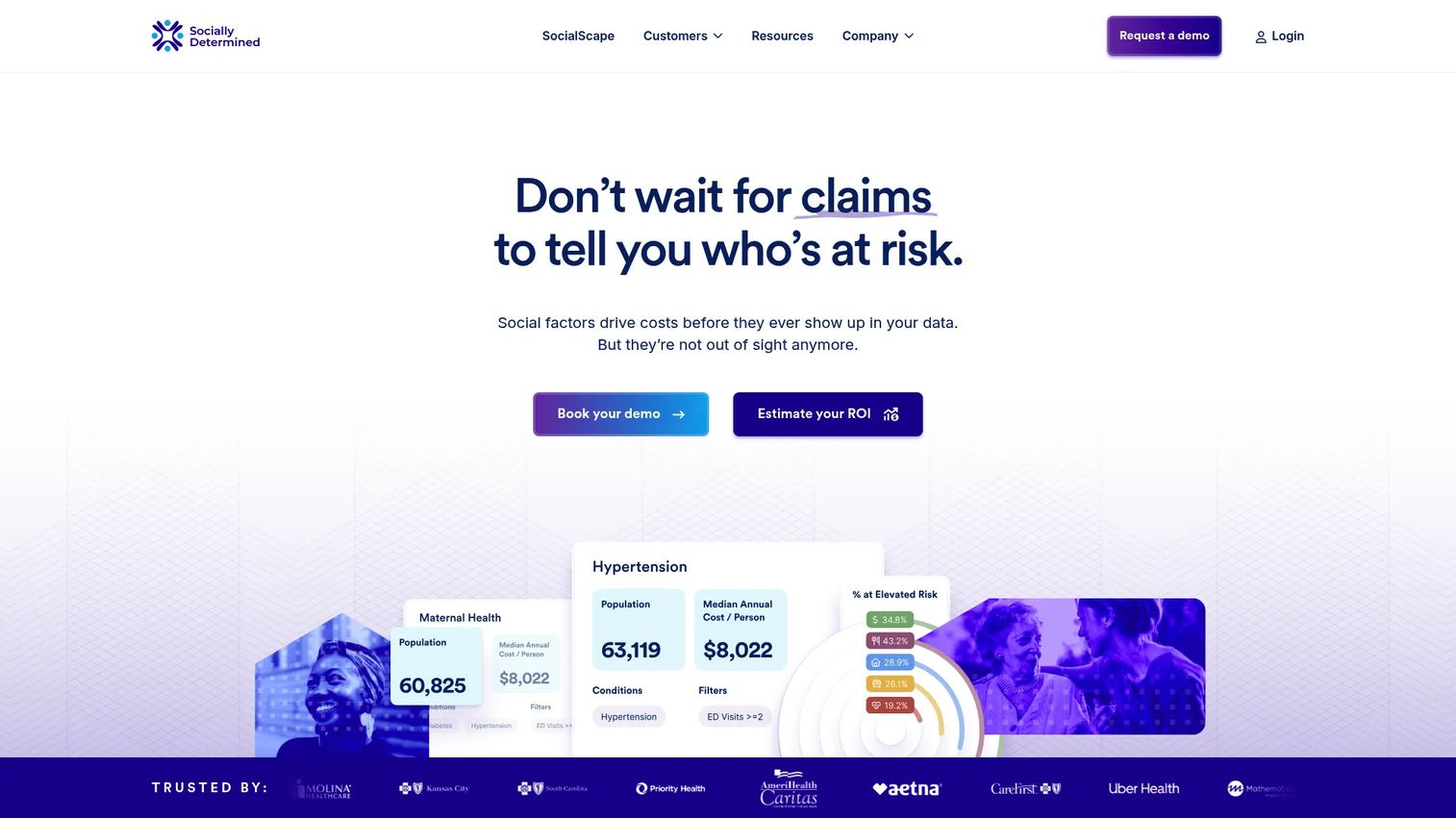
Socially Determined provides social-risk data and analytics that help payers and providers understand the non-clinical factors driving outcomes and cost. The HITRUST-certified platform delivers person- and community-level social-risk scoring at 200-meter geographic resolution, integrates with claims and EHR data, and helps teams prioritize members, target interventions, and measure program ROI. When clinical and claims data explain only part of a population's cost and outcome pattern, social determinants analytics fill the gap.
Best for: Healthcare payers, providers, life sciences organizations, and community health programs that need social risk intelligence inside their value-based care strategy.
Key features
- Person- and community-level social risk scoring
- Interactive geographic visualization at 200-meter resolution
- Claims and EHR data integration
- Member and intervention prioritization by clinical and financial impact
- SDOH program ROI measurement
Why choose Socially Determined: Use it when your population health strategy needs to account for housing, food access, transportation, and economic stress alongside clinical risk. The platform helps teams target limited intervention resources where social risk and clinical need converge.
Socially Determined pricing: Pricing is quote-based. Ask sales about data licensing, covered lives, geographic scope, and integration fees.
6. Quest Analytics
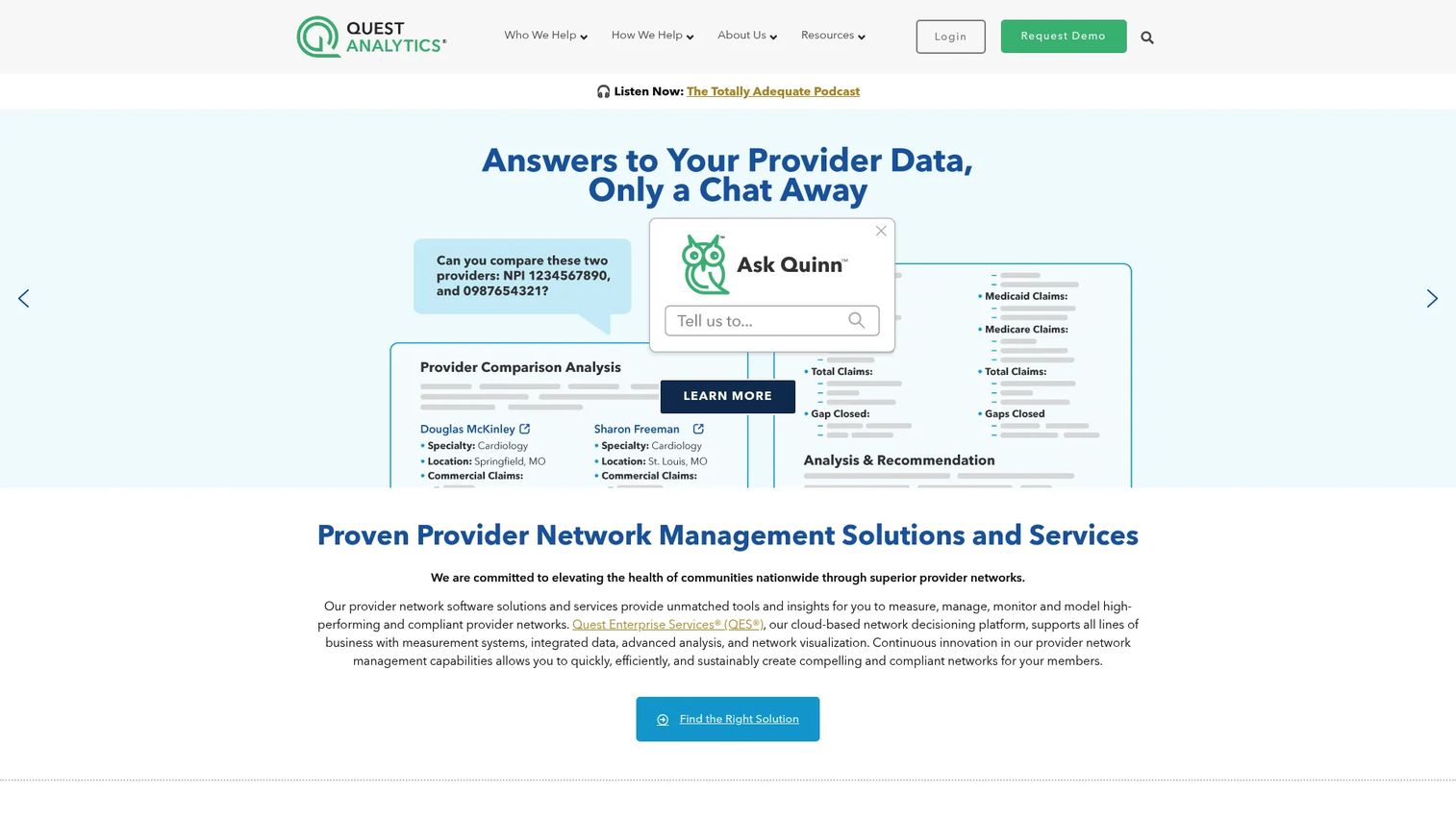
Quest Analytics provides provider network management software and services for healthcare organizations, supporting network adequacy, compliance, performance analysis, and provider data integrity. The platform helps health plans evaluate access gaps, model network changes, verify provider data, and meet regulatory adequacy requirements. Because network design affects which providers patients see, the cost and quality of care delivered, and ultimately reimbursement results, network analytics sits closer to value-based reimbursement than it might initially appear.
Best for: Health plans and managed care organizations managing provider network adequacy, accuracy, performance, and compliance reporting.
Key features
- Network adequacy and compliance analysis
- Provider data accuracy and verification
- Network performance and competitive insights
- Provider claims and affiliation data
- Network modeling and exception management
Why choose Quest Analytics: Choose it when reimbursement performance depends on having the right providers in the right locations with the right access. It fits payer teams more naturally than provider-only organizations, particularly those under state or federal adequacy requirements.
Quest Analytics pricing: Pricing is quote-based. Ask about network size, product modules, compliance program requirements, and data refresh terms.
7. Medisolv
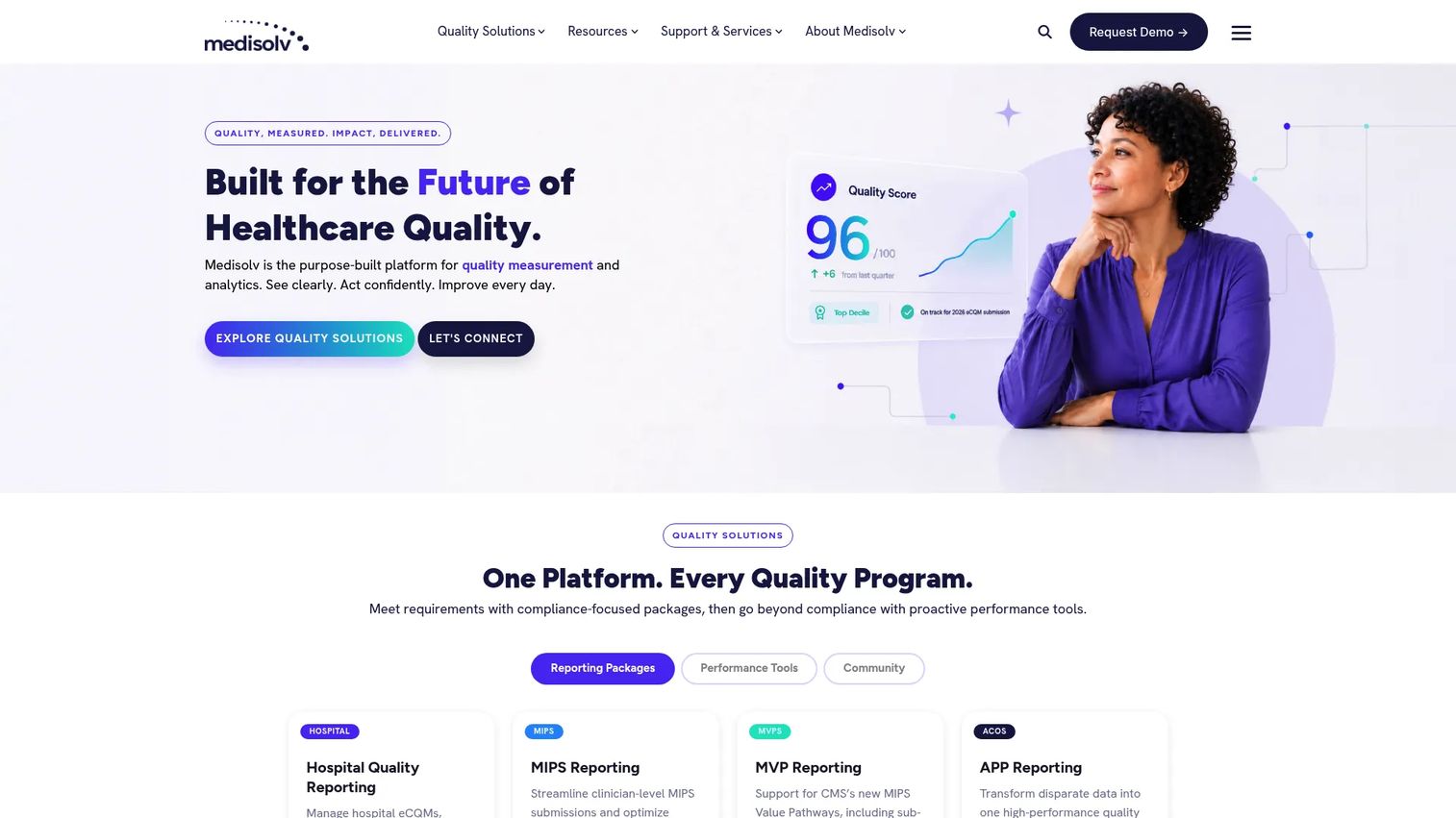
Medisolv provides healthcare quality measurement, reporting, analytics, and performance improvement tools. Its ENCOR platform supports eCQM reporting, MIPS, MVP, and ACO/APP quality programs with data aggregation, validation, performance monitoring, and submission support. The QualityIQ dashboard delivers trends, case-level detail, benchmarking, and goal tracking. For organizations where reimbursement ties directly to quality measure performance, Medisolv functions as the reporting infrastructure that makes submission accurate and auditable.
Best for: Hospitals, health systems, physician practices, and ACOs managing regulatory quality reporting and measure performance.
Key features
- eCQM reporting and regulatory submission support
- QualityIQ dashboards with benchmarking and case-level detail
- MIPS, MVP, and ACO/APP program coverage
- ENCOR data aggregation and validation
- Performance monitoring and goal tracking
Why choose Medisolv: Choose it when quality reporting accuracy has direct financial consequences and the team cannot afford missed submissions or measure errors. Pricing varies by facility net patient revenue and includes implementation and hosting fees.
Medisolv pricing: Pricing is quote-based and varies by facility revenue. Ask about annual subscription fees, one-time implementation costs, hosting, and program coverage.
8. Vim
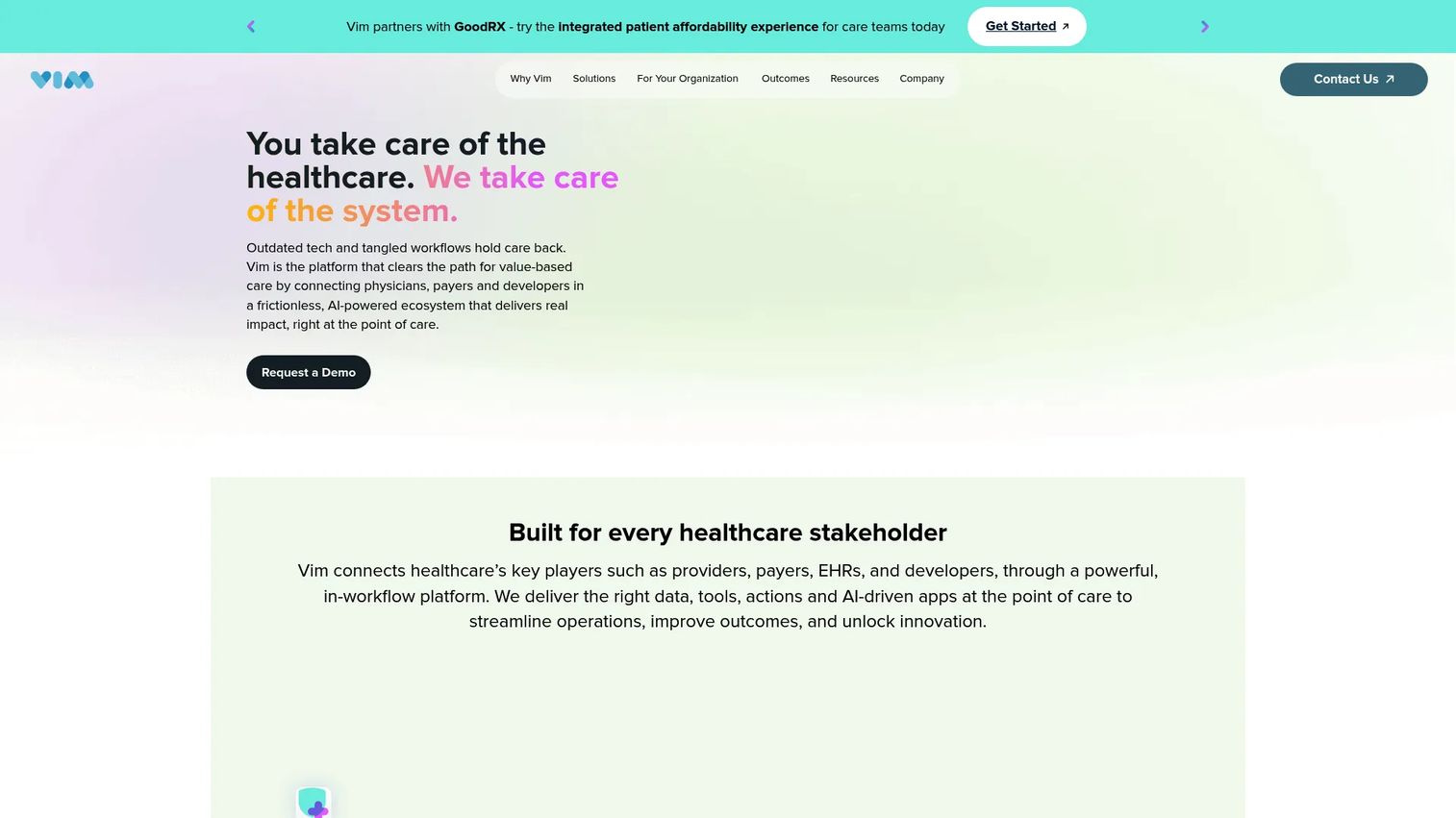
Vim is a healthcare infrastructure platform that embeds clinical tools, data exchange, and actionable insights directly into EHR workflows. For value-based reimbursement, Vim surfaces care gaps, payer program prompts, and performance signals inside the provider's existing system, with read/write integration that can push documentation back into the EHR automatically. The developer platform and marketplace extend Vim's reach across supported EHR environments. When the operational problem is getting value-based actions into the provider's daily workflow rather than into a separate application, Vim addresses that specifically.
Best for: Payers and risk-bearing organizations that need provider action on care gaps and payer programs inside existing EHR workflows.
Key features
- Embedded real-time clinical insights and care-gap management
- EHR read/write integration with automated code write-back
- Point-of-care payer program prompts
- Developer platform for deploying applications across supported EHRs
- Payer-provider connectivity at point of care
Why choose Vim: Choose it when workflow adoption matters as much as the quality of the analytics. Vim's embedded approach reduces the friction of requiring providers to leave their primary system.
Vim pricing: Pricing is quote-based. Ask about provider footprint, payer programs, EHR compatibility, and implementation support.
G2 rating: 4.4/5
9. N1 Health
N1 Health is an applied AI platform that predicts which individuals to engage with the right interventions at the right time. It integrates customer data with more than 30 consumer data sources to build predictive member-level risk and engagement models, then generates targeted outreach lists with recommended content hooks and enhanced contact information. For value-based programs where outcomes depend on proactive patient engagement, N1 Health helps care teams prioritize limited capacity toward the members most likely to benefit.
Best for: Health plans and healthcare providers running targeted engagement programs for value-based populations where limited care-management resources need to be directed precisely.
Key features
- Predictive member-level risk and engagement models
- Integration with 30+ consumer data sources
- Targeted outreach lists with recommended content hooks
- Enhanced contact information for outreach
- Population analytics and segmentation
Why choose N1 Health: Choose it when a care team needs to decide who to reach first and why, not just who appears on a care-gap list. The platform connects predicted engagement propensity with social and behavioral signals.
N1 Health pricing: Pricing is quote-based. Ask about member volume, data source integration, engagement channel coverage, and analytics modules.
10. J2 Interactive
J2 Interactive is a healthcare-focused software development and IT consulting firm specializing in interoperability, health information exchange, analytics, patient and provider engagement, virtual health applications, terminology services, and managed cloud services. The firm offers a packaged HIE Accelerator product with pricing published for Base, Silver, Gold, and Platinum tiers. For value-based reimbursement programs where the core challenge is technical integration rather than missing software, J2 helps organizations build, connect, or repair the data infrastructure that reimbursement analytics depends on.
Best for: Healthcare organizations that need expert implementation support for data integration, interoperability, and analytics infrastructure projects.
Key features
- Healthcare interoperability and health information exchange
- FHIR consulting and HL7 integration
- Healthcare analytics implementation
- Patient and provider engagement applications
- Cloud deployment and managed services
Why choose J2 Interactive: Choose it when the stack needs to be built or integrated before reimbursement software can function properly. Particularly useful for organizations with complex source systems and limited internal engineering capacity.
J2 Interactive pricing: HIE Accelerator packages start at $46,000 (Base), $101,640 (Silver), $119,430 (Gold), and $163,440 (Platinum) as one-time package prices. Separate Settings Framework products carry annual subscription and setup fees. Contact J2 for project-specific scoping.
11. Omega Healthcare Management Services
Omega Healthcare Management Services provides technology-led, clinically enabled healthcare services for providers, payers, life sciences organizations, and health technology companies. Services span revenue cycle management, care coordination, health data curation, registry management, and AI-enabled digital RCM through its platform. Omega serves as a managed services partner rather than a self-serve software platform. For provider organizations where staffing, process capacity, and revenue-cycle execution are larger constraints than software selection, Omega provides operational scale.
Best for: Provider organizations needing managed revenue-cycle and administrative operations at scale, particularly those with limited internal capacity for complex RCM functions.
Key features
- Revenue cycle management services
- Nurse-led care coordination
- Health data curation and clinical trial data services
- Registry management
- AI-enabled digital revenue cycle platform
Why choose Omega Healthcare Management Services: Choose it when the reimbursement challenge is operational execution, not only analytics visibility. Omega handles the workflow and staffing that makes coding, claims, and documentation work at volume.
Omega Healthcare Management Services pricing: Pricing is quote-based and varies by service line, transaction volume, and staffing model. Contact Omega for engagement terms.
12. R1 RCM
R1 RCM provides AI-powered revenue cycle management and revenue performance solutions for healthcare providers. Its Phare OS operating system automates prior authorization tracking, insurance discovery, denial management, accounts receivable recovery, and underpayment recovery across the revenue cycle. R1 combines technology with managed services, making it suited for large health systems that need both platform capability and operational support. For value-based reimbursement, improved revenue-cycle performance translates directly to financial outcomes.
Best for: Large provider organizations and health systems seeking enterprise RCM operations, reimbursement optimization, and payment recovery across front, middle, and back-end functions.
Key features
- AI-powered Phare OS revenue operating system
- Prior authorization automation and real-time tracking
- Insurance discovery and verified coverage updates
- Denial management and accounts receivable recovery
- Underpayment recovery workflows
Why choose R1 RCM: Choose it when reimbursement improvement requires operational change across the full revenue cycle, not only reporting visibility. Strongest fit for large provider environments with complex payer mixes.
R1 RCM pricing: Pricing is quote-based. Ask about managed-service scope, technology module options, volume, and any performance-based contract terms.
13. athenahealth
athenahealth provides AI-native healthcare software for ambulatory practices, covering EHR, practice management, medical billing, patient engagement, and revenue-cycle workflows through its athenaOne platform. Pricing is based on a percentage of collections rather than a flat subscription, which aligns the vendor's incentive with the practice's financial performance. For medical groups and physician practices moving into value-based arrangements, athenaOne provides reimbursement operations tied closely to clinical workflows. Dedicated VBC analytics tools may still be needed for complex risk contracts.
Best for: Ambulatory medical groups that want EHR, practice management, and billing workflows integrated in one environment.
Key features
- EHR with specialty-specific workflows and AI documentation support
- Medical billing, practice management, and claims operations
- Patient engagement through portals, messaging, and mobile apps
- Authorization and revenue-cycle support
- Reporting dashboards
Why choose athenahealth: Choose it when the practice wants reimbursement operations tightly connected to clinical workflows and prefers collections-based pricing over fixed subscription fees. Organizations in complex risk contracts should plan to supplement with population health or contract analytics tools.
athenahealth pricing: Pricing is individualized and based on a percentage of collections. Contact athenahealth for a quote tied to specialty, provider count, and module selection.
G2 rating: 3.4/5 (rating is for athenaOne)
14. Cotiviti
Cotiviti provides data-driven healthcare and retail solutions focused on payment accuracy, interoperability, risk adjustment, quality improvement, member engagement, and audit recovery. For health plans, Cotiviti's payment integrity programs identify overpayments and coding errors, while risk adjustment analytics and medical record retrieval support accurate risk scores. Its Stars intelligence and quality programs connect performance measurement to reimbursement outcomes. Cotiviti serves payers, providers, government organizations, and retailers.
Best for: Health plans that need payment integrity, risk adjustment analytics, quality program support, and claims review in an enterprise platform.
Key features
- Payment accuracy and policy management
- Risk adjustment analytics and medical record retrieval
- Quality and Stars intelligence
- Healthcare interoperability including EDI and FHIR gateways
- Retail audit, recovery, and contract compliance
Why choose Cotiviti: Choose it when the payer's reimbursement risk connects to claims accuracy, risk coding, and quality performance at the same time. Distinct from provider-facing care management tools, Cotiviti operates primarily on the payer side.
Cotiviti pricing: Pricing is quote-based. Ask about covered lives, product modules, audit program scope, and service components.
G2 rating: 4.2/5 (rating is for Cotiviti Medical Intelligence)
15. Inovalon
Inovalon provides cloud-based healthcare software for revenue cycle management, claims, eligibility, payments, and healthcare analytics. Its all-payer claims management platform handles claims correction, eligibility verification, workflow automation, and revenue cycle intelligence. Inovalon earns its place on this list through its combination of data scale and operational workflow coverage across providers and payers. Teams that need broad healthcare data analytics plus claims and eligibility execution in a connected platform will find more coverage here than in narrow point tools.
Best for: Payers, providers, and life sciences teams that need large-scale healthcare data, claims management, and analytics in a connected environment.
Key features
- All-payer claims management and claims correction
- Eligibility verification and workflow automation
- Revenue cycle intelligence and dashboards
- Risk adjustment analytics
- Quality measurement capabilities
Why choose Inovalon: Choose it when data scale and analytics breadth matter alongside operational claims workflow. Ask which module fits your specific reimbursement workflow, since Inovalon covers a wide surface and the relevant capability depends on your buyer type.
Inovalon pricing: Pricing is quote-based. Ask about modules, data access, covered lives, implementation scope, and contract length.
G2 rating: 4.4/5
16. FinThrive
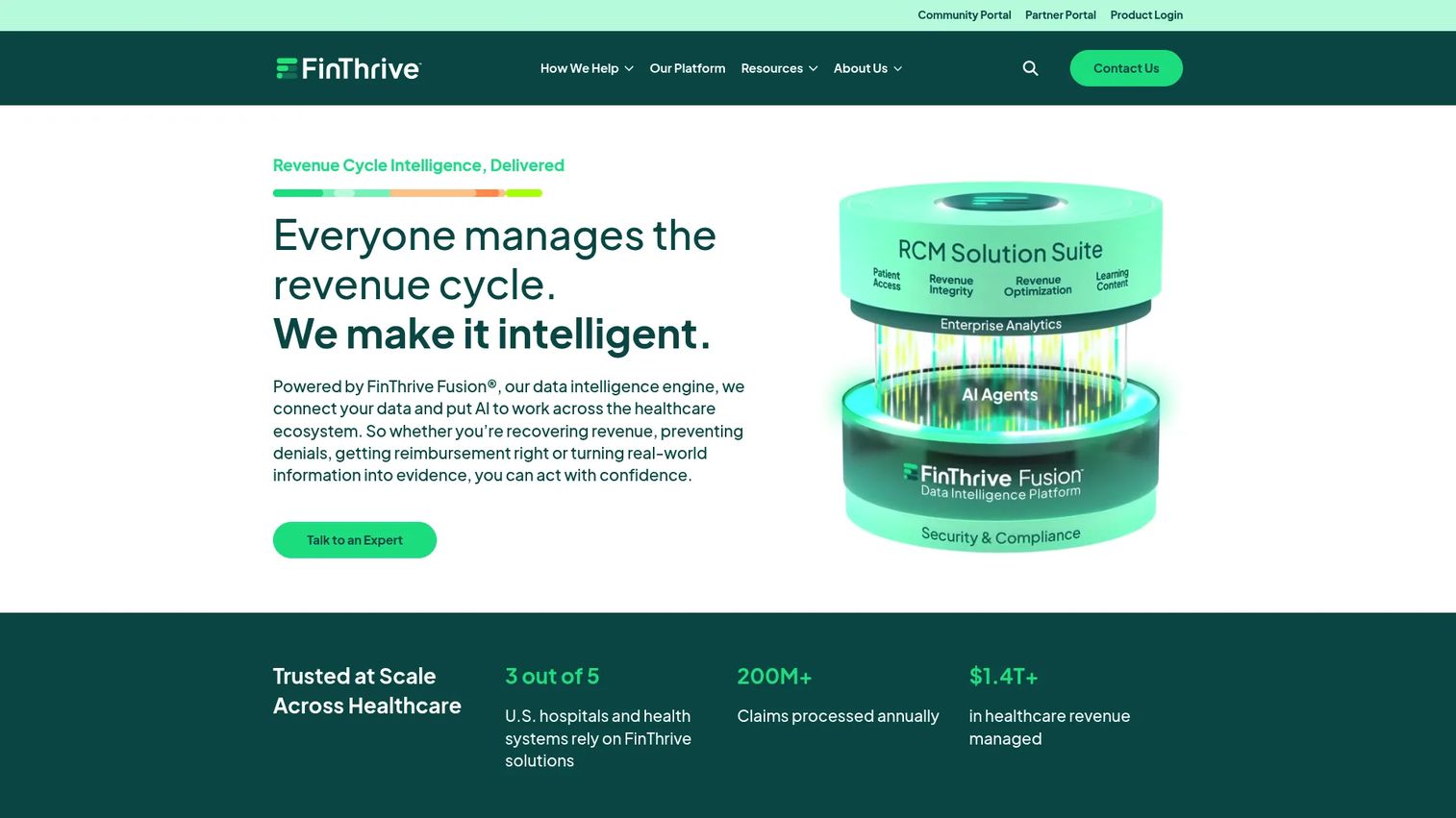
FinThrive provides AI-powered healthcare revenue cycle management technology across patient access, revenue integrity, revenue optimization, analytics, automation, and workforce learning. Its unified FinThrive Fusion data intelligence platform connects revenue performance data across the cycle. For value-based reimbursement, FinThrive addresses the financial operations layer where revenue leakage, denials, contract performance, and payment accuracy directly affect reimbursement outcomes.
Best for: Provider finance and revenue teams managing reimbursement performance, revenue integrity, and financial operations in complex payer environments.
Key features
- Unified Fusion data intelligence platform
- AI and agentic workflow automation
- Patient access, eligibility, authorization, and estimation
- Revenue integrity and chargemaster management
- Predictive analytics and revenue-cycle insights
Why choose FinThrive: Choose it when the reimbursement challenge sits inside financial operations: Denials, contract performance, charge capture, and revenue leakage. Useful for teams that need better visibility into revenue performance across payers before that data ages.
FinThrive pricing: Pricing is quote-based. Ask about module mix, claim volume, facility count, and implementation fees.
17. HealthEdge
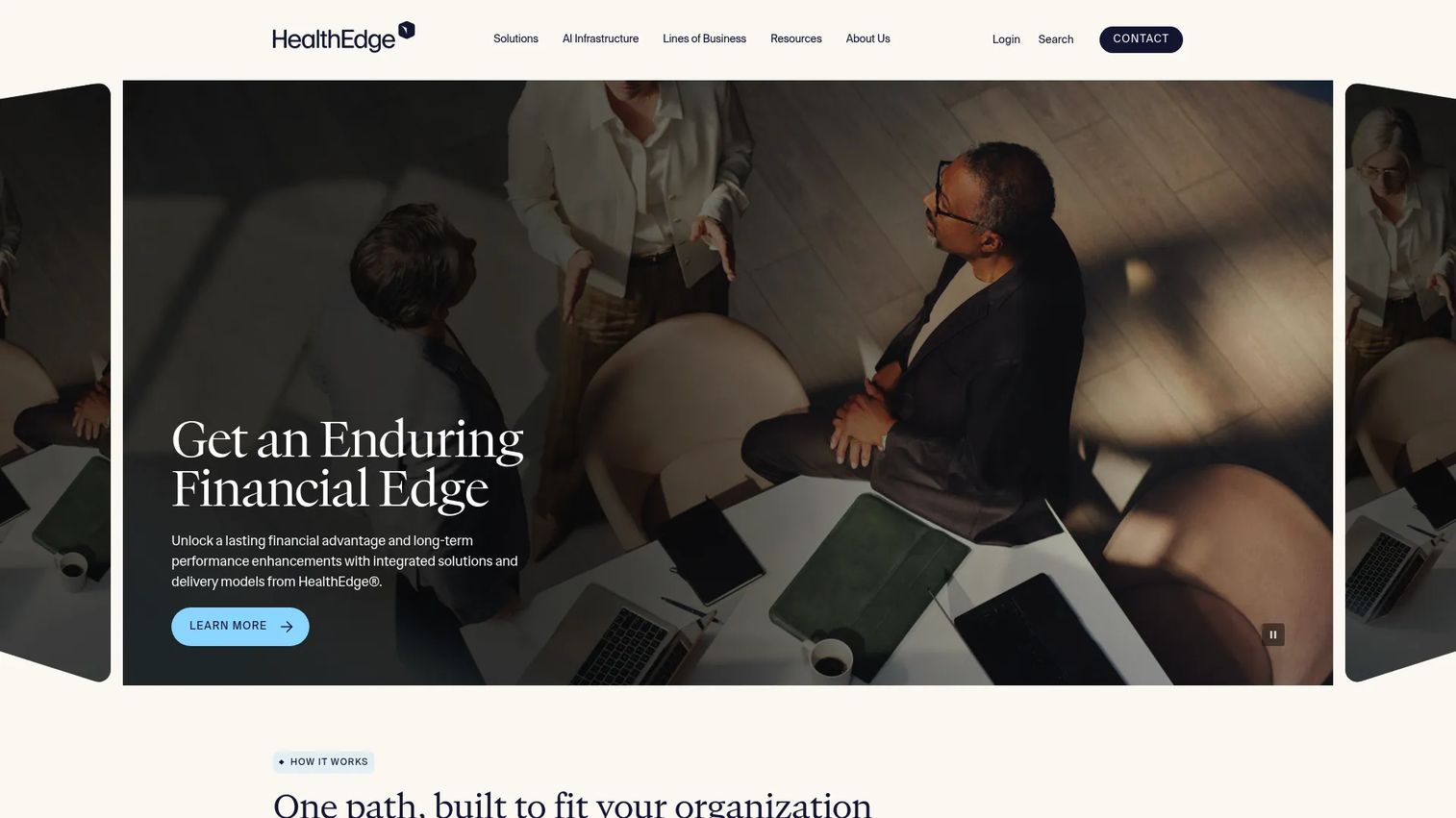
HealthEdge provides AI-powered software and managed services for health plans, covering core claims administration through HealthRules Edge, payment integrity, risk adjustment, care management through GuidingCare, and member engagement through Wellframe. For health plans modernizing core administration alongside value-based payment programs, HealthEdge connects the claims system to care management and payment integrity in a platform designed for payer operations. It is payer infrastructure, not a provider-facing reimbursement tool.
Best for: Health plans modernizing core administration, care management, and payment integrity workflows in a connected payer platform.
Key features
- AI-embedded core claims administration with HealthRules Edge
- Payment integrity, claims editing, pricing, and auditing
- Care management and utilization management through GuidingCare
- Member engagement through Wellframe
- Risk adjustment and provider data management
Why choose HealthEdge: Choose it when value-based reimbursement requires modernizing the payer's core administration alongside the care programs tied to it. The platform works best for health plans where operational speed and accuracy in claims processing affects both financial performance and member experience.
HealthEdge pricing: Pricing is quote-based. Ask about covered lives, modules, implementation scope, and core-system migration requirements.
G2 rating: 4.3/5
18. Waystar
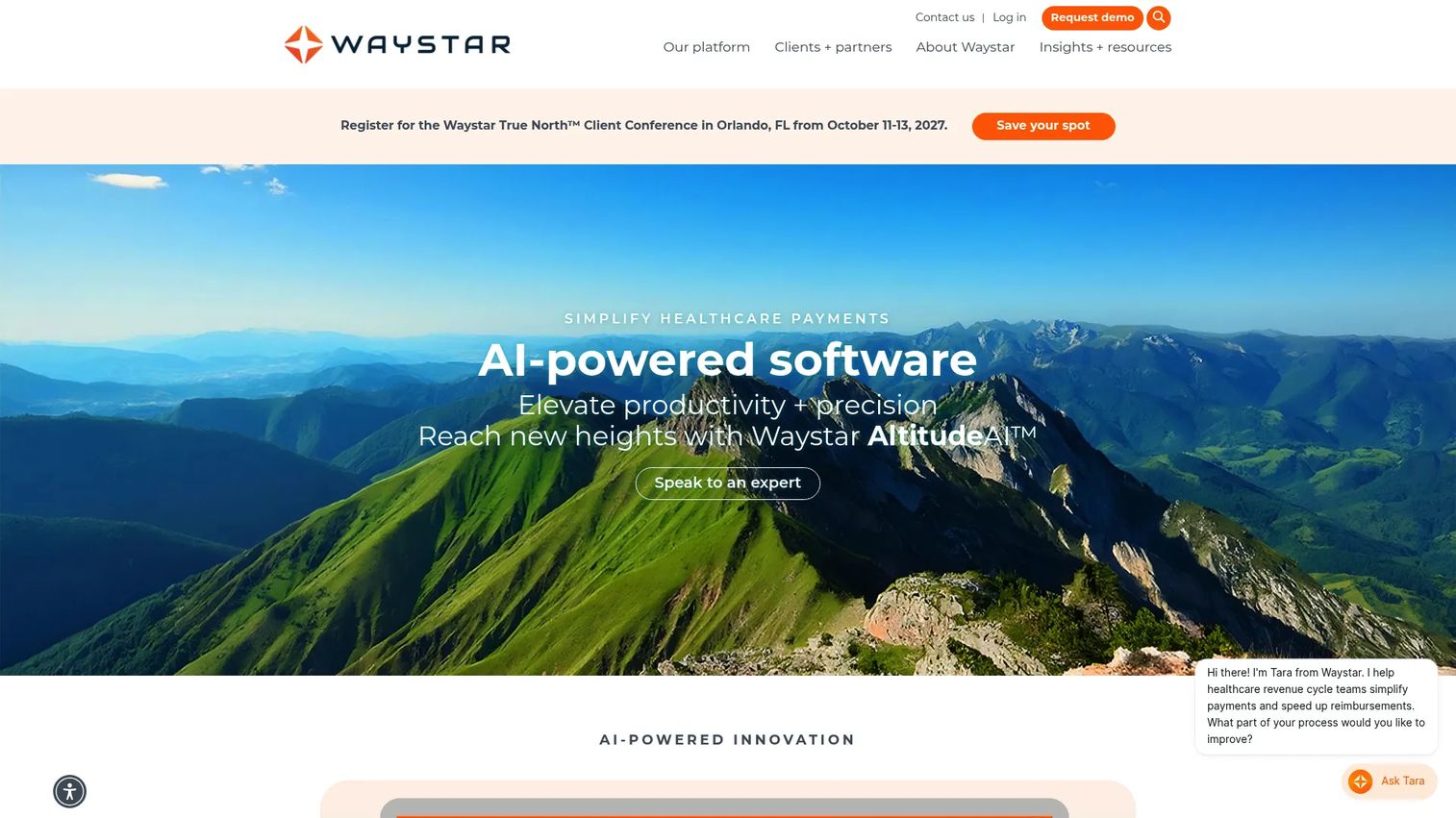
Waystar provides AI-powered healthcare revenue cycle management and payment software for providers, hospitals, physician practices, ambulatory surgery centers, billing services, and clinical laboratories. The platform covers financial clearance, claims management, denials prevention and recovery, patient financial care, and payment reconciliation. Waystar packages its claim-management capabilities into Starter, Core, Performance, and Premium tiers, though pricing requires contacting sales. For provider organizations and billing teams where claims execution drives reimbursement results, Waystar addresses that operational layer directly.
Best for: Provider organizations and billing teams automating claims, denials, and payment workflows to improve reimbursement performance.
Key features
- Financial clearance including eligibility verification and prior authorization
- Claim monitoring, attachments, and remittance management
- Denial prevention, tracking, appeals, and recovery
- Patient financial care and payment workflows
- Revenue cycle analytics and reporting
Why choose Waystar: Choose it when the reimbursement bottleneck is claims execution and payment workflow rather than population health or contract analytics. Pair with population health software when care-gap and quality operations are also required.
Waystar pricing: Packages include Starter, Core, Performance, and Premium tiers. All pricing requires contacting sales.
G2 rating: 4.4/5
19. Cedar Gate Platform
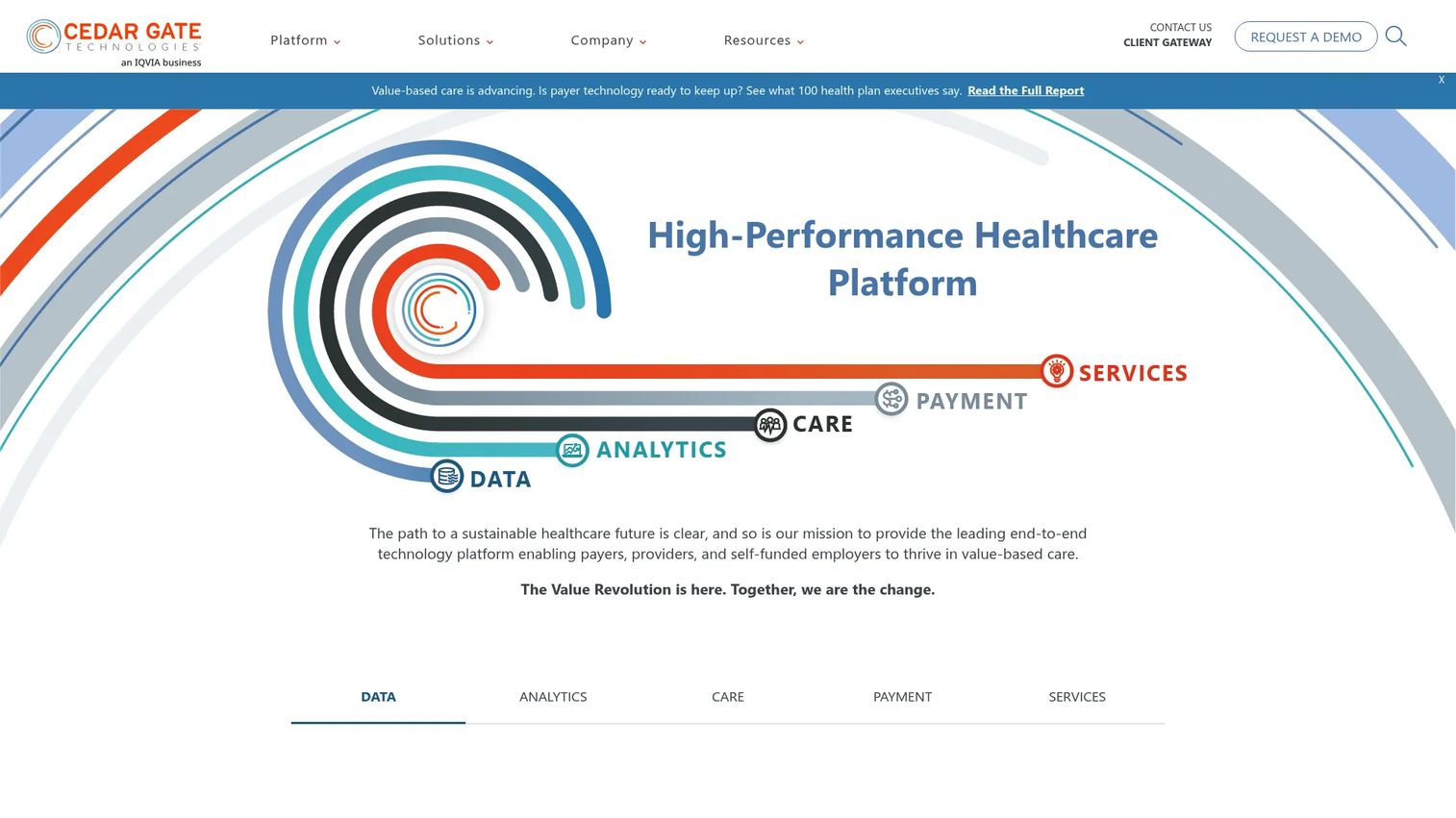
Cedar Gate Platform is an integrated, composable healthcare technology platform for payers, providers, and self-funded employers pursuing value-based care. The platform covers enterprise data management, predictive and prescriptive VBC analytics, care management and clinical decision support, utilization management, bundles and capitation adjudication, and configurable dashboards. For organizations managing value-based contracts, Cedar Gate provides the analytical and operational infrastructure to understand whether contracts are performing financially and clinically before it is too late to act.
Best for: Organizations managing value-based contracts, downside risk, cost performance, and ACO or population health programs where contract-level visibility is the priority.
Key features
- Enterprise data management and unified data lake
- Predictive and prescriptive value-based care analytics
- Care management and clinical decision support
- Bundles and capitation adjudication
- Configurable dashboards and cohort identification
Why choose Cedar Gate Platform: Choose it when leaders need to see whether value-based contracts are working, not just whether care gaps are closing. The platform connects financial performance, clinical quality, and attribution logic in analytics built for contract-level accountability.
Cedar Gate Platform pricing: Pricing is quote-based. Ask about contract volume, populations served, analytics modules, and implementation scope.
20. Aver Operationalize
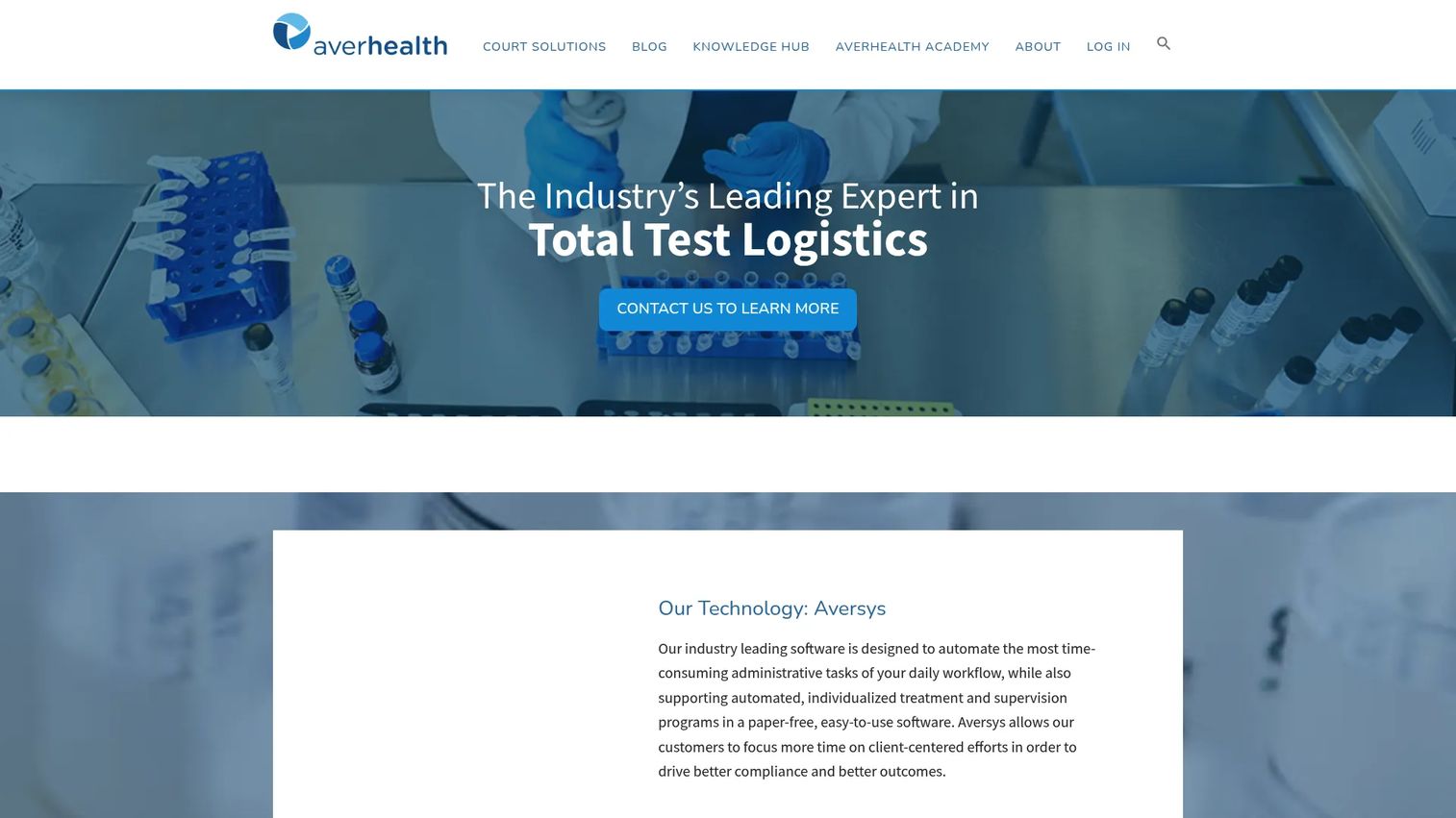
Aver Operationalize supports bundled payment and episode-based payment operations for organizations managing alternative payment models. Where most analytics platforms show aggregate performance, Aver Operationalize focuses on the operational and financial workflows specific to episode-based reimbursement models, including episode analytics, contract operations, cost tracking, and performance reporting. For organizations where the reimbursement model is specifically episode-based, this targeted focus on bundled payment execution distinguishes Aver from general-purpose VBC platforms.
Best for: Organizations managing episode-based payments and bundled reimbursement models who need operational discipline and cost visibility at the episode level.
Key features
- Episode analytics and grouping
- Bundled payment workflow operations
- Contract performance tracking
- Cost measurement by episode
- Reporting for alternative payment model performance
Why choose Aver Operationalize: Choose it when the reimbursement model is episode-based and teams need more than a dashboard. The operational focus on bundle execution, cost tracking, and episode-level reporting makes it a fit for organizations with active bundled payment programs.
Aver Operationalize pricing: Pricing is quote-based. Ask about payment model scope, episode volume, and operational support terms.
21. HealthQx
HealthQx is a healthcare cost and quality analytics platform designed for payers, providers, and health systems operationalizing value-based reimbursement. The platform provides value-based payment analytics, healthcare cost and quality analysis, and episode-of-care grouping and pricing. G2 lists HealthQx at 5.0/5 based on one review, with Change Healthcare noted as the seller, so confirm current product availability and ownership directly with the vendor before proceeding. For teams analyzing reimbursement model design and payment performance, HealthQx offers purpose-built analytics for that specific question.
Best for: Teams analyzing cost, quality, and provider performance across value-based payment models where episode-level and population-level financial visibility are both needed.
Key features
- Value-based payment analytics
- Healthcare cost and quality analysis
- Episode-of-care grouping and pricing
- Provider performance measurement
- Payment model evaluation and comparison
Why choose HealthQx: Choose it when leaders need analytical clarity on how payment models are performing financially and by provider. Confirm current product status and ownership before purchasing.
HealthQx pricing: Pricing is quote-based. Contact sales about modules, users, data feeds, and implementation terms.
G2 rating: 5.0/5 (based on 1 review; confirm current product status with the vendor)
Considerations when choosing value based reimbursement software
Start with the reimbursement model
Identify whether your organization manages shared savings, capitation, bundles, pay-for-performance, ACO contracts, or a mix. The model determines whether you need contract analytics, care management, quality reporting, claims automation, or implementation services first. A capitation program has different operational requirements than a bundled payment program.
Validate the data integration burden
Value-based reimbursement performance fails when claims, clinical, pharmacy, social risk, and quality data arrive late or mismatched. Before selecting a platform, ask about supported data feeds, refresh cadence, attribution logic, and data quality controls. The first-year cost of data engineering often surprises buyers who focus only on the software license.
Separate analytics from operational workflow
A dashboard can reveal risk. It does not automatically close a care gap, change provider behavior, or fix a denial. Before buying, identify which tools in this list provide insight layers and which support frontline execution. Most mature programs need both, and the budget allocation between them matters.
Ask how performance turns into action
Strong platforms route the next step to the right team: Care managers, providers, quality staff, revenue-cycle teams, or payer partners. The difference between a board-ready report and an operating system is whether anyone acts on the output. Ask vendors to walk through a specific workflow from data signal to completed action.
Price the implementation, not just the license
In this category, services, integration work, data onboarding, training, and change management regularly dominate first-year costs. Ask every vendor for a total first-year cost estimate and a 90-day implementation plan. A platform that takes 18 months to integrate data fully is not delivering value in year one regardless of its feature list.
Conclusion
This landscape covers more ground than most buyers expect. Arcadia is the broadest fit for organizations that need unified data, analytics, and care management in one operating layer. Medisolv is the clearest choice for quality reporting accuracy tied to regulatory submissions. Snowflake earns its place when the foundational problem is fragmented data infrastructure rather than missing software. Cedar Gate Platform and HealthQx address contract and risk performance analytics for organizations that need financial clarity at the program level.
For revenue-cycle-heavy reimbursement operations, R1 RCM, FinThrive, and Waystar each address a different segment: Enterprise health systems, provider finance teams, and billing operations respectively.
The practical advice is to shortlist by workflow, not by brand familiarity. Identify the reimbursement model first, then map the operational gap, then evaluate the vendors that close it. Most buyers end up combining an analytics platform, a care management layer, and an RCM tool.
If you sell complex healthcare software and your buyers struggle to understand your workflows before booking a call, Guideflow helps SaaS teams turn products into interactive demos that show dashboards, care-gap workflows, reimbursement analytics, and reporting flows in a guided, self-serve format. Buyers can explore your product before they ever talk to sales.
Start your journey with Guideflow today!
FAQs
Value based reimbursement software helps healthcare organizations manage payment models where revenue depends on cost, quality, outcomes, risk, and patient experience rather than service volume alone. The category connects claims, clinical, financial, and quality data to support the operational workflows that value-based contracts require, including care-gap management, risk stratification, quality reporting, and contract performance tracking.
Primary users include health plans and managed care organizations, ACOs and clinically integrated networks, provider groups and health systems in risk-bearing contracts, and revenue-cycle, quality, and population health teams. Healthcare founders and executives studying the vendor landscape also use these tools to map competitive or partnership opportunities in the value-based care space.
The most important capabilities depend on the payment model, but commonly include claims and clinical data integration, quality measure tracking aligned to HEDIS or eCQM standards, risk adjustment analytics, care-gap identification, contract performance dashboards, and workflow routing to frontline teams. Audit-ready reporting exports matter for any organization submitting to CMS or payer programs.
The terms overlap significantly, but value-based care software is the broader category, covering population health, care management, patient engagement, and clinical workflows. Value-based reimbursement software focuses specifically on payment models, financial performance, quality measurement, and the operational steps that protect or improve reimbursement. Many platforms serve both functions, and the distinction is useful primarily when identifying which specific capability gap to fill.
It helps teams monitor cost, utilization, attribution, care gaps, and quality measures while there is still time to intervene. Organizations in downside risk contracts cannot afford to wait for year-end reports. Software that flags rising costs, unfavorable attribution, or care-gap accumulation mid-year gives teams an operational window to act before financial performance is locked.
Analytics identifies risk, opportunity, and performance gaps across a population or contract. Care management software helps teams act on those findings through outreach, care coordination, provider interventions, and follow-up workflows. A dashboard that shows a high-risk patient cohort is analytics. The tool that assigns a care manager, schedules outreach, documents the interaction, and closes the loop is care management. Strong value-based programs need both.
Compare by payment model compatibility, data source coverage, workflow ownership (insight versus execution), reporting requirements, implementation effort, and total first-year cost. Two vendors may both claim to support ACO performance, but one may require 12 months of data integration before producing useful output. Ask for a reference from an organization with a similar contract structure and data environment.
Most enterprise platforms in this category are quote-based. The price typically depends on covered lives, modules selected, data feed volume, implementation scope, and whether managed services are included. Subscription licenses are rarely the largest cost item in year one. Ask every vendor for a total first-year cost that includes implementation, data onboarding, training, and ongoing support, alongside the annual software fee.