A wire hits the queue at 3:47 PM. Someone has to key it, someone else has to screen it against OFAC lists, a third person has to approve it, and it all has to clear before the Fedwire cutoff. Miss the window and the customer waits until tomorrow. Fumble the screening and you have a compliance problem.
That is the daily reality of payment operations at most financial institutions. The work is high-stakes, deadline-bound, and still running through manual handoffs and legacy screens that were built before browser-based access was standard.
The remittance and money transfer software market sat at roughly USD 18.21 billion in 2024 and is projected to reach USD 30.5 billion by 2032, according to WiseGuy Reports. The money is flowing toward better tooling. The question for a bank or credit union is not whether to modernize. It is which wire transfer system actually fits how your team works, screens, and posts.
This guide compares four wire transfer software options for 2026. It weighs each against the criteria that matter in real payment operations: Fedwire and FedLine support, OFAC screening depth, core banking integration, audit trails, and browser-based access. No hype, just what each wire processing solution is built to do.
What's inside
This guide is for treasury operations leaders, core banking teams, and payment operations managers who are comparing a wire transfer solution or trying to justify replacing a legacy one. We picked these four based on real evaluation criteria, not marketing polish.
Here is how we chose them:
- Compliance controls: OFAC screening, denied-party checks, audit trails, and role-based approvals
- Core banking integration: how deeply the system posts, syncs, and hands off transactions
- Browser-based access: whether teams can work across devices and locations
- Automation: rules, alerts, one-click actions, and auto-processing for fees and posting
- Fedwire and FedLine support: confirmed compatibility with the rails and connection models you use
TL;DR
Short on time? Here are the decision shortcuts:
- Best for Fedwire compatibility and vendor mapping: the Federal Reserve Bank software vendors directory, a reference for verifying interface support and FedLine connections.
- Best for core banking institutions that want secure wire automation: CSI, with integrated banking, screening, and compliance tooling.
- Best for browser-based banking modernization: FPS GOLD, built for device-agnostic wire operations with ISO 20022 readiness.
- Best for treasury teams that want practical wire and payment workflows: Treasury Software, focused on ACH, wire, and reconciliation operations.
Match the tool to your operating model, not to the loudest feature list.
What is wire transfer software?
Wire transfer software is the system a financial institution uses to create, screen, approve, route, and audit wire payments. It sits between your core banking platform, the payment rails like Fedwire, your sanctions screening tools, and the online banking channels where customers and staff initiate transfers.
Think of it as the control layer for high-value payments. A customer or teller initiates a wire, the software validates routing details, runs OFAC screening, routes the request through an approval workflow, posts to the general ledger, and pushes the payment to the rail. Every step leaves an audit trail.
Key capabilities to expect from a modern wire transfer system:
- Fedwire and FedLine support: connection to Fedwire Funds Service through FedLine Direct or FedLine Advantage
- OFAC screening: real-time sanctions and denied-party checks before a wire clears
- Approval workflow: role-based, multi-step sign-off with segregation of duties
- Audit trail: a complete, timestamped record of who did what and when
- Browser-based access: device-agnostic operation for distributed teams
- Core banking integration: posting, general ledger sync, and data handoffs
How wire transfer software fits banking operations
The wire lifecycle is a chain, and each link is a control point. It starts with initiation, from a teller, a business customer on the online banking platform, or an internal operator. The system captures the beneficiary, the amount, and the routing details, then validates the ABA routing number.
Next comes screening. Before anything moves, the wire runs against OFAC and denied-party lists. A hit stops the payment and kicks it to an exception queue for review. Clean wires move into the approval workflow, where a second or third person signs off depending on the amount and your segregation-of-duties rules.
Once approved, the software posts the transaction. This is where core banking integration earns its keep: the debit hits the customer account, the general ledger posting happens, and the wire is transmitted to Fedwire for settlement. A Fedwire credit lands at the receiving institution, and the audit trail captures the full sequence.
The connections around this workflow matter as much as the workflow itself. Wire transfer systems tie into teller systems for branch-initiated transfers, digital banking platforms for customer-initiated ones, and security layers for authentication and screening. When those connections are shallow, staff end up rekeying data and reconciling by hand. When they are deep, the wire moves without friction.
What to look for in wire transfer software
Core banking integration
Integration depth beats integration claims. A vendor can list your core banking platform as "supported" and still require manual rekeying at posting. What you want is a system that writes posted transactions directly, syncs balances in real time, and hands off cleanly at every step.
Ask how the software posts to the general ledger, how it validates ABA routing against your existing records, and how it handles reversals. APIs and prebuilt connectors to your core provider tell you more than a logo on a compatibility page.
Compliance and screening controls
OFAC screening is table stakes, but usability separates good systems from painful ones. You need real-time sanctions and denied-party checks, an exception queue that surfaces hits clearly, and a review process that documents every decision.
Beyond screening, look at the audit trail. Can you reconstruct exactly who initiated, screened, and approved a wire, and when? Role-based approvals with genuine segregation of duties protect you during exams and reduce internal fraud risk. Traceability and control matter more than raw automation speed.
Browser-based access
Browser-based access matters because your team is not always in one place. Distributed operations, remote reviewers, and multi-branch institutions all need consistent access without installing software on every machine.
Device-agnostic access also supports teller and digital banking workflows, letting branch staff and back-office reviewers work from the same system without friction. Check whether permissions and approval routing follow the user across devices.
Workflow automation
Automation is where manual wire operations either shrink or stay painful. Look for configurable rules, alerts on high-value or flagged wires, one-click actions for repetitive tasks, and auto-processing for fees and general ledger posting.
The goal is fewer keystrokes and fewer errors. Every step a rule handles is a step a person cannot fat-finger at 3:50 PM before cutoff.
Standards and readiness
ISO 20022 readiness is no longer optional planning. The global shift to ISO 20022 messaging affects how wire data is structured and exchanged, so a wire processing solution that is ready today saves you a scramble later.
Confirm which FedLine connection the software supports. FedLine Direct suits high-volume institutions with dedicated infrastructure, while FedLine Advantage fits browser-based access needs. The right match depends on your volume and your operating model.
Comparison table
Here is how the four options stack up. Because this is a niche banking category, several vendors do not publish public pricing, and ratings are thin or unavailable. We note that clearly rather than guess.
| # | Product | Best for | Key differentiator | Pricing | G2 rating |
|---|---|---|---|---|---|
| 1 | Federal Reserve Bank software vendors directory | Verifying Fedwire and FedLine compatibility | Official reference for interface support and vendor mapping | Not applicable (reference resource) | Not rated |
| 2 | CSI (Computer Services, Inc.) | Core banking institutions wanting integrated wire automation | Banking, compliance, and managed IT under one provider | Quote-based | 3.0/5 |
| 3 | FPS GOLD | Browser-based banking modernization | Browser-based wire software with ISO 20022 readiness | Tailored pricing | 3.5/5 |
| 4 | Treasury Software | Treasury teams wanting practical payment workflows | ACH, positive pay, and reconciliation alongside wire tooling | Subscription and license options | Not rated |
Read this table as a starting point, not a verdict. The right pick depends on whether you are verifying compatibility, modernizing core operations, moving to browser-based access, or building out treasury workflows.
Best 4 wire transfer software for 2026
1. Federal Reserve Bank software vendors directory
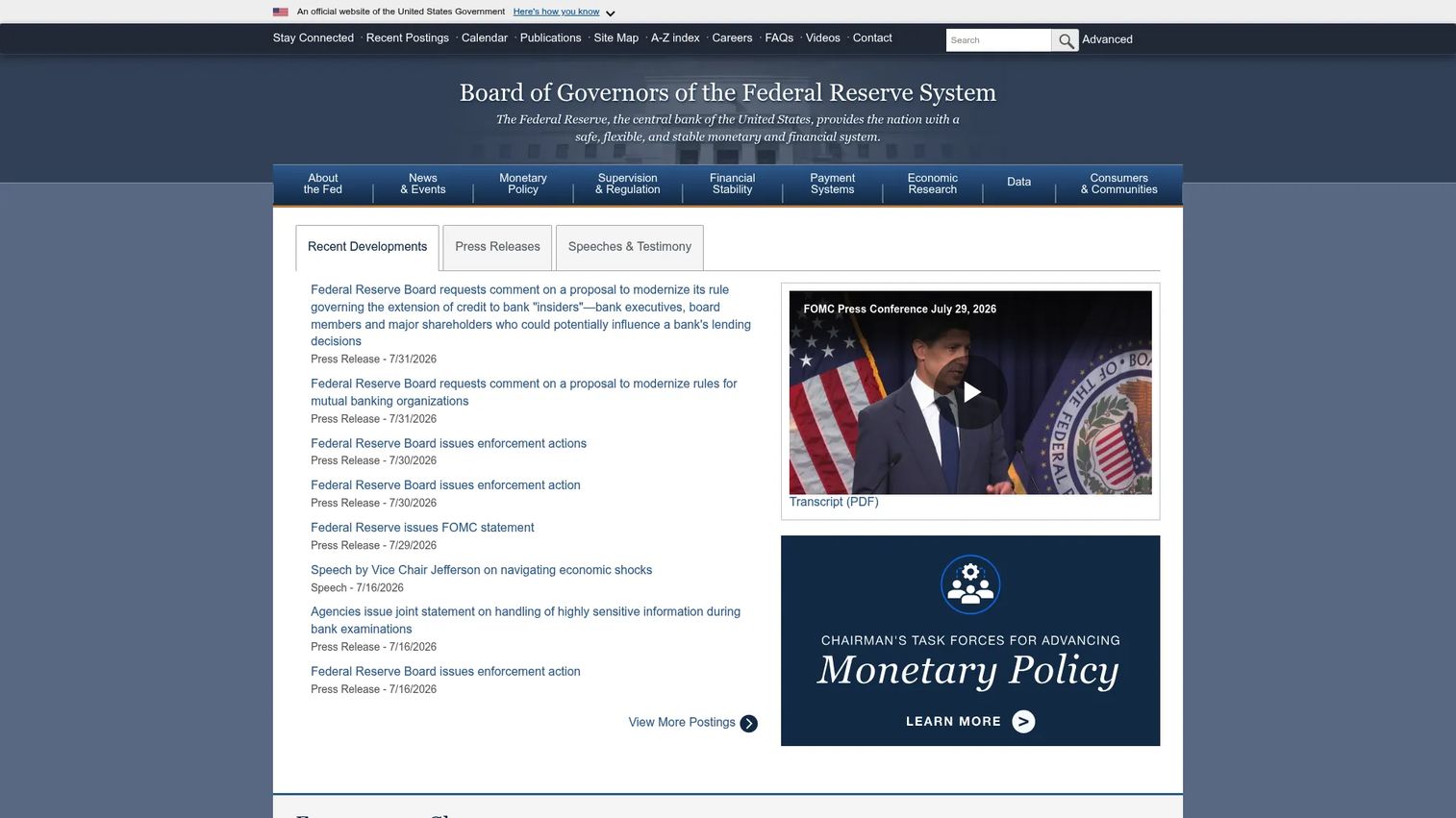
Federal Reserve maintains resources for vendors and financial institutions that work with the Fedwire Funds Service. This is not a software product you buy and install. It is a reference and compatibility layer that helps banks verify how a given vendor connects to Fedwire and which FedLine access model applies.
Before you commit to any wire transfer solution, this is where you confirm the fundamentals. It helps institutions verify interface support, understand vendor segmentation for Fedwire participants, and map how a product ties into FedLine Direct or FedLine Advantage.
Best for: Banks and credit unions verifying Fedwire compatibility and FedLine connection models before selecting a wire processing solution.
Key strengths
- Authoritative reference for Fedwire Funds Service participants
- Supplier registration and procurement information for vendors
- Guidance on FedLine access and interface support
- Trusted source for verifying wire transfer services compatibility
Why choose it: When you are evaluating any wire transfer system, generic payments language is not enough. Use this reference to confirm the specific rail, connection model, and interface support before you sign anything. It is a trust and compatibility check, not a competing product.
Pricing: Not applicable. The Federal Reserve provides these vendor and compatibility resources as part of its public information for institutions and suppliers.
2. CSI (Computer Services, Inc.)
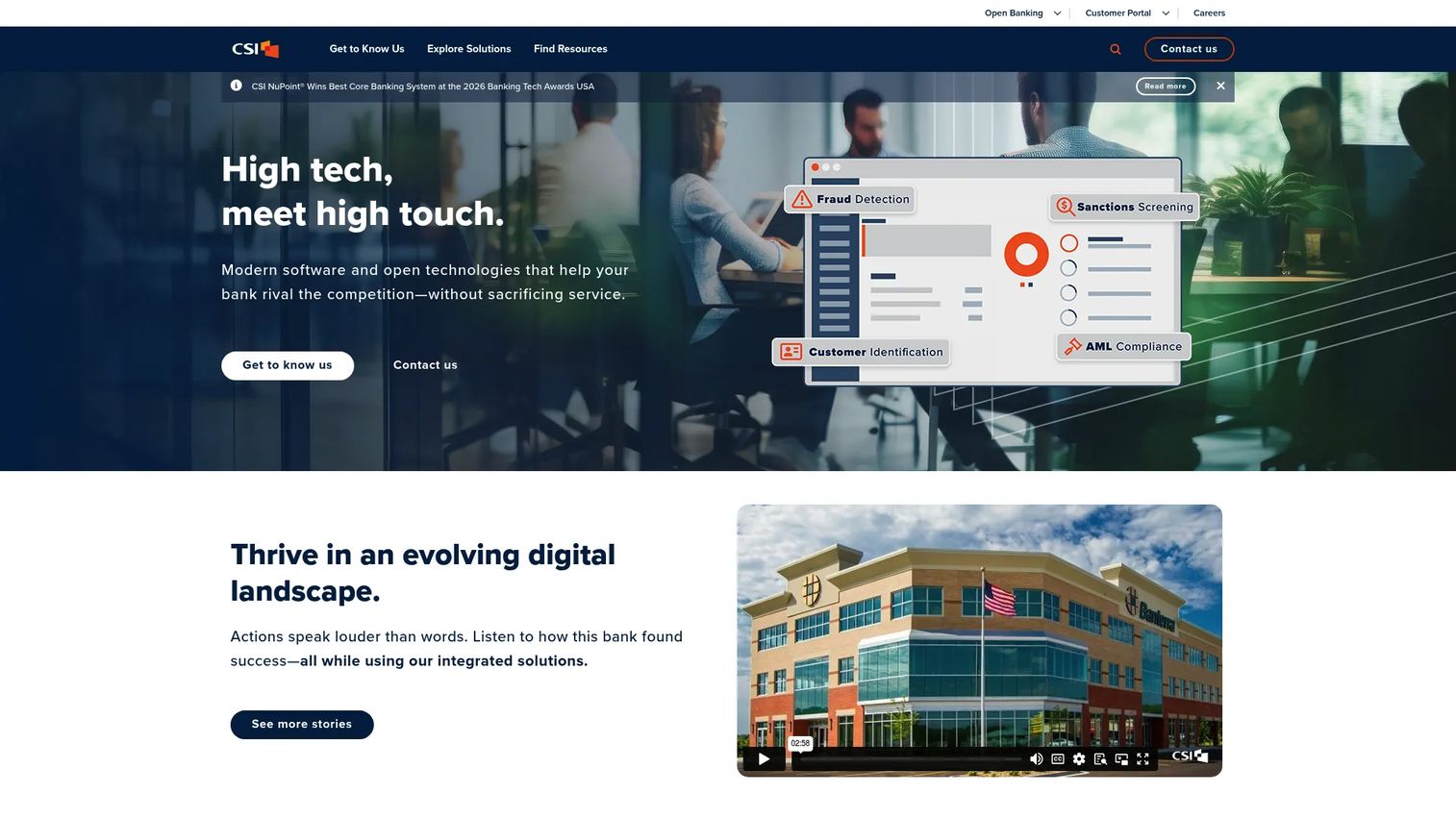
CSI is a financial technology and compliance provider that serves banks and corporate customers with integrated banking, payments, and managed IT. Its wire transfer services sit inside a broader stack, which means wire operations connect directly to core banking, digital banking, and compliance tooling rather than living in a separate silo.
For institutions that want their wire processing solution and their core system from one provider, CSI's integrated approach reduces the number of handoffs and reconciliation points. Wire creation, ABA routing validation, and approval workflow all operate within the same environment as fraud, risk, and compliance functions.
Best for: Financial institutions that want secure wire automation tightly integrated with core banking, compliance, and managed IT.
Key strengths
- Core banking and digital banking software in one platform
- Payments, fraud, risk, and compliance tooling
- Managed IT services for institutions
- Wire creation and approval workflow inside a unified stack
Why choose CSI: If you value core banking integration and want screening, audit trails, and BSA/AML support in the same environment as your wire operations, CSI's single-provider model fits. The tradeoff is that you are committing to a broader relationship, not just a wire module.
CSI pricing: CSI does not publish public pricing. Pricing appears to be quote-based and tailored to the institution. Contact CSI directly for a quote.
3. FPS GOLD

FPS GOLD builds banking software for financial institutions, including core banking, digital banking, and a wire transfer product positioned for modern operations. Its wire transfer software emphasizes browser-based access, so teams can work across devices and locations without installed clients.
The product is built with ISO 20022 readiness in mind, which matters as wire messaging standards shift. It connects to core providers, OFAC screening providers, security modules, teller systems, and digital banking platforms, giving branch and back-office staff a consistent workflow.
Best for: Banks and credit unions modernizing wire operations around browser-based access and current messaging standards.
Key strengths
- Browser-based wire transfer software across devices
- ISO 20022 readiness for messaging standards
- Integrations with core, OFAC providers, security, and teller systems
- One-click actions, custom rules, alerts, and transaction history search
Why choose FPS GOLD: If your priority is device-agnostic operation and future-proofing against ISO 20022, FPS GOLD's browser-based approach and integration breadth make it a strong fit. It suits institutions that want wire automation and modern access in the same product.
FPS GOLD pricing: FPS GOLD tailors pricing to the institution and does not list public prices. Request pricing directly through their site.
4. Treasury Software
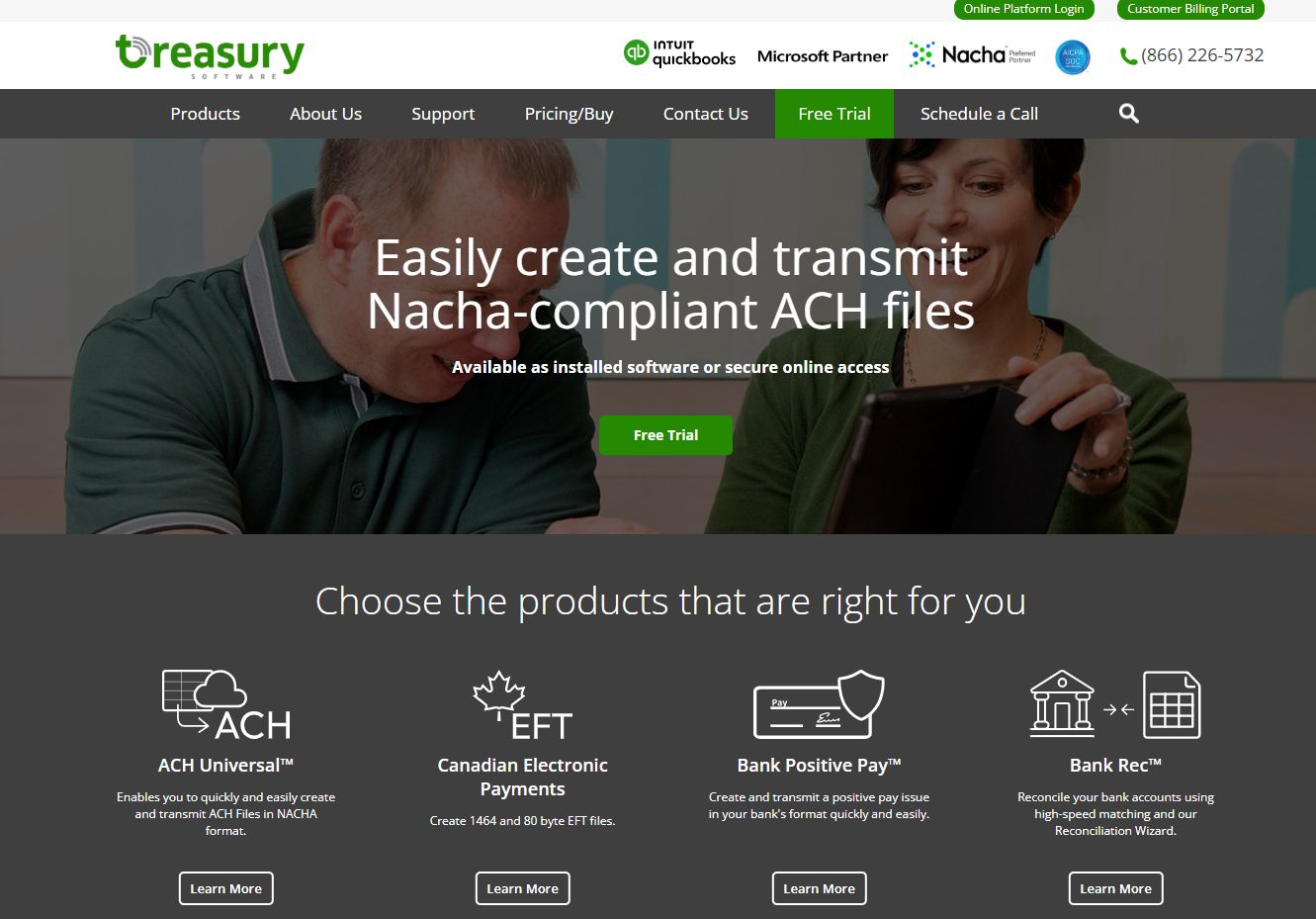
Treasury Software makes payment operations software for businesses, including ACH file creation, positive pay, and bank reconciliation, alongside wire-focused workflows. It fits teams that want a wire transfer solution as part of a broader payment operations toolkit rather than a standalone module.
The practical angle is what stands out. Treasury Software focuses on the day-to-day mechanics of moving money: creating files, transmitting them, and reconciling accounts. For treasury teams that already handle ACH and positive pay, adding wire workflows in the same environment keeps operations consolidated.
Best for: Treasury and finance teams that want wire workflows alongside ACH, positive pay, and reconciliation in one place.
Key strengths
- ACH file creation and transmission
- Positive Pay file creation and transmission
- Bank reconciliation tooling
- Multiple deployment editions with support resources
Why choose Treasury Software: If your operation spans ACH, positive pay, and wires, consolidating them reduces tool sprawl and reconciliation overhead. It fits businesses and treasury teams more than it fits a bank looking for a full core-integrated wire system.
Treasury Software pricing: Treasury Software offers a 30-day full-featured trial. It provides Standard and Corporate editions, with subscription options available and traditional one-time licenses as an alternative. Public dollar amounts are not listed on the site.
Considerations
Before you commit, run each option through this checklist.
Verify Fedwire and FedLine support
Confirm the product supports the exact rail and connection model your institution uses. Do not assume compatibility from generic payments language. Check whether it maps to FedLine Direct or FedLine Advantage, and validate that against your volume and infrastructure.
Check screening and audit depth
OFAC screening, denied-party checks, and audit trails need to be usable in daily operations, not just present on a feature list. Ask how exceptions surface, how reviewers clear them, and how the audit trail reconstructs a wire from initiation to settlement. Auditability during an exam depends on this.
Evaluate core banking fit
Ask precisely how the system posts transactions, syncs data, and handles workflow handoffs. Surface the integration depth, not just the integration claim. A logo on a compatibility page is not the same as real-time general ledger posting.
Test browser access and user roles
Confirm your team can work from different devices and locations without friction. Check that permissions and approval routing map to your operating model, so a reviewer approving from a branch has the same controls as one at headquarters.
Ask about readiness and change management
ISO 20022, Fedwire connectivity, and operational change all shape rollout complexity. Evaluate onboarding, support responsiveness, and update cadence. A capable wire transfer system still fails if the migration stalls.
Conclusion
The right wire transfer software depends on your operating model, not on a ranking. Verify compatibility first, then match the rest to how your team actually works.
If you need to confirm Fedwire and FedLine compatibility, start with the Federal Reserve Bank software vendors directory. If you want secure wire automation tied into core banking and compliance, CSI's integrated stack fits. If browser-based access and ISO 20022 readiness top your list, FPS GOLD is built for that. And if you want wire workflows alongside ACH, positive pay, and reconciliation, Treasury Software consolidates them.
Narrow your shortlist to the tool that matches your Fedwire connection, screening depth, core integration, and access model. Then run a real evaluation against your daily wire volume before you sign. The best choice is the one that survives your busiest afternoon before cutoff.
FAQs
Wire transfer software helps banks and financial institutions initiate, screen, approve, route, and audit wire payments. It manages the full lifecycle of a high-value payment, from capturing beneficiary details and validating ABA routing to running OFAC screening, routing approvals, and posting to the general ledger.
It connects through APIs or prebuilt platform integrations that post transactions and sync data with the ledger. When a wire is approved, the software debits the customer account, handles general ledger posting, and hands off the payment to the rail. Deeper integration means less manual rekeying and cleaner reconciliation.
OFAC screening, role-based approval controls, audit trails, and denied-party checks matter most. Real-time sanctions screening stops flagged wires before they clear, approval workflows enforce segregation of duties, and a complete audit trail lets you reconstruct every decision during an exam.
Both are connection models for Fedwire services, but they suit different institutions. FedLine Direct typically fits higher-volume institutions with dedicated infrastructure, while FedLine Advantage supports browser-based access. Confirming which model your wire processing solution supports matters, because the wrong match creates operational friction.
Browser-based access lets distributed teams work consistently across devices and locations without installed software. Remote reviewers, multi-branch operations, and back-office staff can all operate from the same system, which keeps approvals and screening consistent regardless of where a user sits.
Prioritize integration depth, screening and audit usability, workflow automation, and rollout support. Confirm real-time general ledger posting and Fedwire connectivity, verify that OFAC screening and audit trails work in daily operations, and evaluate onboarding and update cadence so the migration does not stall.