It's Monday, 6 a.m. One tech texts that they're out sick. Two stops from last week never got billed. A customer emails asking why their pool turned green after a service you're pretty sure happened, but the chemistry log lives on a crumpled sheet in someone's truck. You spend the next two hours rebuilding routes, chasing invoices, and apologizing.
That is what running a pool service business on spreadsheets, group texts, and memory actually feels like. The work in the field is the easy part. The mess is in the coordination: who goes where, what got dosed, who got billed, and whether the customer trusts that any of it happened.
The market has noticed. The global pool service software market hit $1.8B in 2025 and is forecast to reach $4.2B by 2034, growing at a 9.8% CAGR, according to Dataintelo (2025). And 68% of pool service shoppers said they want a single all-in-one solution, per the Pool Dial / Skimmer State of Pool Service report (2026). Operators are done stitching five tools together.
The right software collapses that Monday morning into a few taps. Routes balance themselves. Chemistry logs where the reading happens. Invoices fire the moment a stop closes. But not every platform is built the same way, and the differences matter more than the marketing pages admit.
What's inside
This guide compares seven pool cleaning software tools built for the real jobs of running a service company: route management, billing, water chemistry, technician workflows, and customer communication. Some are pool-specific to the chemical level. Others are broader field service platforms that pool businesses adapt.
We ranked and evaluated each tool on five criteria that decide whether software earns its place in your stack:
- Workflow coverage: quote to job to invoice, without gaps
- Chemistry support: LSI, dosing, and readings logged in the field
- Field usability: the technician app and how it behaves offline
- Integrations: QuickBooks Online, payments, and supply ordering
- Business fit: solo route versus a 40-truck operation
TL;DR
Short on time? Here's the fast version.
- Best for deep chemistry and service execution: Pool Service Software, with automatic LSI calculation and dosage costing at every stop.
- Best for guided operational control: Pool Brain, with quote-to-invoice automation and automatic chemical dosing built on LSI.
- Best all-in-one operations hub: Skimmer, with polished route optimization, billing, and customer-facing service reports.
- Best for supply-chain-connected teams: POOL360 PoolService, tied into the POOLCORP ordering ecosystem at $1 per pool serviced.
- Best broader field service platform: Jobber for growing service businesses, ServiceTitan for larger operations, Housecall Pro for simpler stacks.
The right pick depends on whether you prioritize chemistry depth, billing speed, route control, or customer experience. Most operators should shortlist two and trial them on real routes.
What is pool cleaning software?
Pool cleaning software is a purpose-built platform that helps pool service businesses schedule visits, plan routes, log water chemistry, manage technicians, bill customers, and communicate with clients from one system. It replaces the spreadsheet-plus-texting-plus-paper stack most operators start with.
The strongest pool service software combines field execution with back-office control. Instead of a technician texting a reading and an office manager retyping it into an invoice three days later, the reading, the dose, the photo, and the charge all live on the same record.
Core capabilities to expect from modern pool business software:
- Scheduling and routing: recurring service schedules plus route optimization to cut miles, time, and gas cost
- Water chemistry: field readings, LSI and water balancing, dosing guidance, and dosage costing
- Technician app: a mobile app with GPS check-in, photo reports, and offline sync for spotty backyards
- Billing and invoicing: recurring invoices, online payments, and pool service invoice software that fires on service completion
- Service reports: automated customer emails with readings, chemicals added, and before/after photos
- Inventory and alerts: chemical usage tracking, low-stock alerts, and threshold-based triggers
- Integrations: QuickBooks Online sync, payment processing, and supply ordering
Adoption is tilting decisively toward the cloud. 68.4% of pool service software deployments were cloud-based in 2025 (Dataintelo, 2025), and North America drove 41.2% of category revenue in the same year.
When to use pool cleaning software
You don't need software on day one with three pools. You need it the moment coordination starts costing you money or trust. Here's how to tell.
Manage routes without constant rescheduling
When you're manually rebalancing routes every time a tech calls out, or driving crisscross patterns that burn an hour of gas a day, routing has become the bottleneck. Route optimization and workload balancing pay for themselves once you're past a few dozen stops per tech. If you're rebuilding the week by hand every Monday, you're already there.
Standardize chemistry and field notes
When two technicians dose the same pool differently, or a customer disputes a green pool and you have no record of the last reading, manual chemistry logs are creating rework and liability. Software that calculates LSI automatically and logs readings, doses, and costs at the point of service removes the guesswork and gives you a defensible record.
Speed up billing and customer follow-up
When invoices go out a week late, recurring charges get missed, and customers never see proof the work happened, cash flow and trust both suffer. Pool service billing software that generates invoices on completion, takes online payments, and emails a service report with photos closes that gap. Faster billing means faster cash. Better reports mean fewer "did you even come?" calls.
Comparison table
Here's how the seven tools stack up. Read the "intent" column to match a tool to what you're actually solving for, then use pricing and rating as tie-breakers. Pool-specific tools lead the list because chemistry depth is hard to replicate; broader field service platforms follow.
| # | Product | Intent | Key use case | Pricing | G2 rating |
|---|---|---|---|---|---|
| 1 | Pool Service Software | Pool-specific ops | Chemistry, LSI, routing, and recurring billing | Free up to 10 properties; $49.99/mo (11–50) | Not yet rated |
| 2 | Pool Brain | Pool-specific ops | Quote-to-invoice automation and LSI dosing | Base plan + $65 per active tech/mo | Not yet rated |
| 3 | Skimmer | All-in-one pool ops | Route optimization, billing, and service reports | From $1.00/mo per serviced location | Not yet rated |
| 4 | POOL360 PoolService | Supply-connected ops | Routing, water testing, billing, QuickBooks | $1 per pool serviced/mo | Not rated |
| 5 | Jobber | Broad field service | Scheduling, quoting, invoicing, texting | From $49/mo | 4.6/5 |
| 6 | ServiceTitan | Enterprise field service | Dispatch, scheduling, invoicing, reporting | Request pricing | 4.4/5 |
| 7 | Housecall Pro | Simpler field service | Scheduling, recurring jobs, invoicing, mobile | From $59/mo | 4.3/5 |
1. Pool Service Software
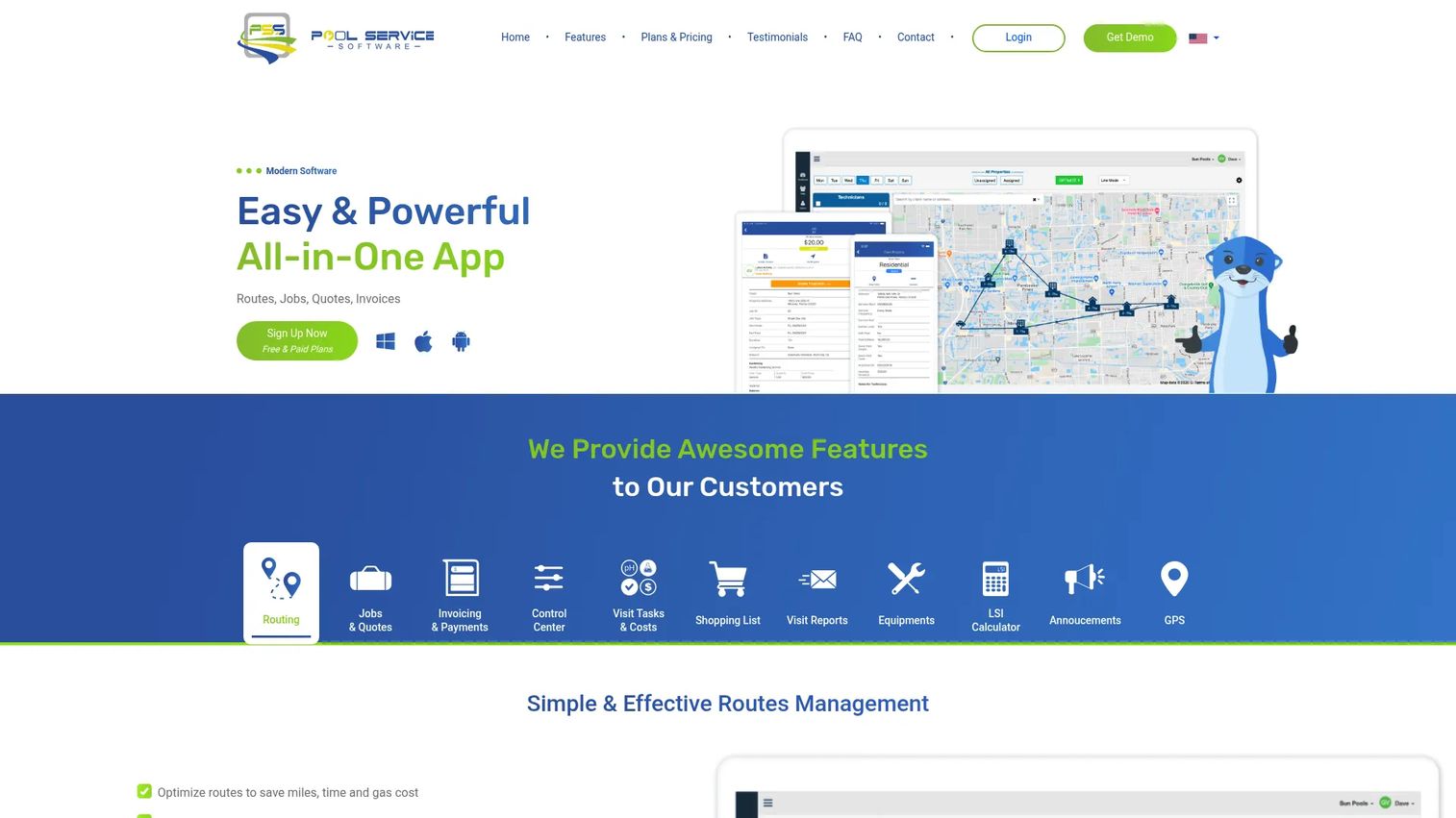
Pool Service Software is an all-in-one platform built specifically for pool service businesses, and it goes deep on the two things pool operators fight hardest: chemistry and execution. It handles routes, jobs, quotes, invoices, water chemistry, inventory, and client communication in one system, which is exactly the all-in-one profile 68% of shoppers say they want.
Where it separates from generalist tools is chemistry automation. LSI is calculated automatically at every service stop, so technicians aren't doing water balancing math in the backyard. You can trigger events on dosage cost, FAC factor, LSI, reading and dosage values, and up/down trends, which turns chemistry data into operational alerts rather than a static log.
Best for: Pool service companies that want the deepest chemistry and service execution workflow in one system.
Key strengths
- Automatic LSI at every stop: water balancing is calculated for the tech, not left to memory or a side app.
- Chemistry-triggered alerts: events fire on dosage cost, FAC factor, LSI, and reading trends so problems surface early.
- Recurring billing with dosage costs: automatic monthly invoices can include dosage costs, and customers pay online.
Why choose Pool Service Software: If chemistry is the part of your operation that generates the most rework and the most customer disputes, this is the tool that treats it as a first-class workflow rather than a field to fill in. Route optimization to save miles, time, and gas cost rounds out the operational side, so you're not trading chemistry depth for weak logistics.
Pool Service Software pricing: There's a genuinely useful free plan for up to 10 properties, which makes it easy to test on a real route before committing. The Dive In plan runs $49.99 per month for 11 to 50 properties, Ripple Effect is $99 per month for 51 to 100 properties, and Wave Maker is $0.95 per property per month above 100 properties. Annual plans are shown with a 15% discount. The pay-per-property model scales cleanly with your book.
2. Pool Brain
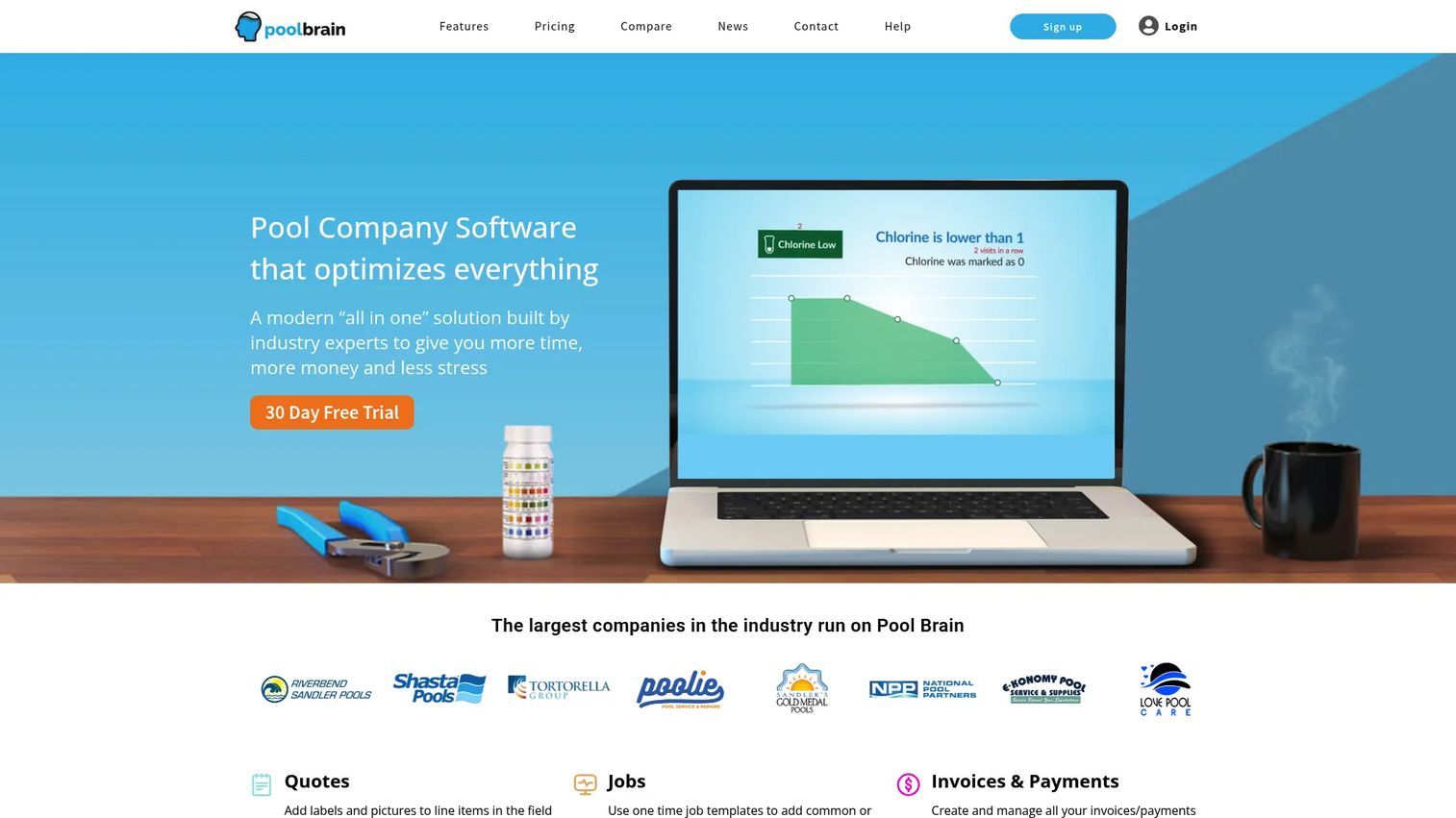
Pool Brain is pool company software built around operational control, from quotes all the way through invoicing. Quotes auto-convert to jobs, invoices and payments are built in, and the platform layers guided workflows, custom alerts, and multi-body-of-water management on top. If you run technicians of varying experience levels, the guided workflows are the point: they walk a tech through each stop in the order you define.
The chemistry engine is the standout. When all required readings for an LSI calculation are entered on a route stop, Pool Brain sets the desired targets to match the readings for that visit, then performs the LSI dosing steps in the Orenda calculator in the order you set. That enables fully automatic chemical dosing using LSI, which removes a huge source of technician-to-technician variance.
Best for: Pool service companies that want an all-in-one ops platform with guided, standardized technician workflows.
Key strengths
- Quote-to-invoice automation: quotes auto-convert to jobs, and invoicing plus payments are built in, so nothing falls through the cracks.
- Automatic LSI-based dosing: the Orenda-powered engine performs dosing steps in your defined order for consistent water balancing.
- In-app scheduling and 24/7 portal: full scheduling management lives in the technician app, and customers can log in around the clock to view job history and photos.
Why choose Pool Brain: The combination of guided workflows and automatic dosing makes this a strong fit for teams that want every technician to execute like your best one. Custom alerts and multi-body-of-water management give owners operational control without micromanaging.
Pool Brain pricing: Pricing is structured around a base monthly plan for unlimited office users plus $65 per active field technician per month, and the vendor advertises a 30-day free trial with free setup. The per-active-tech model means you pay for capacity you actually use, which suits crews that flex seasonally.
3. Skimmer
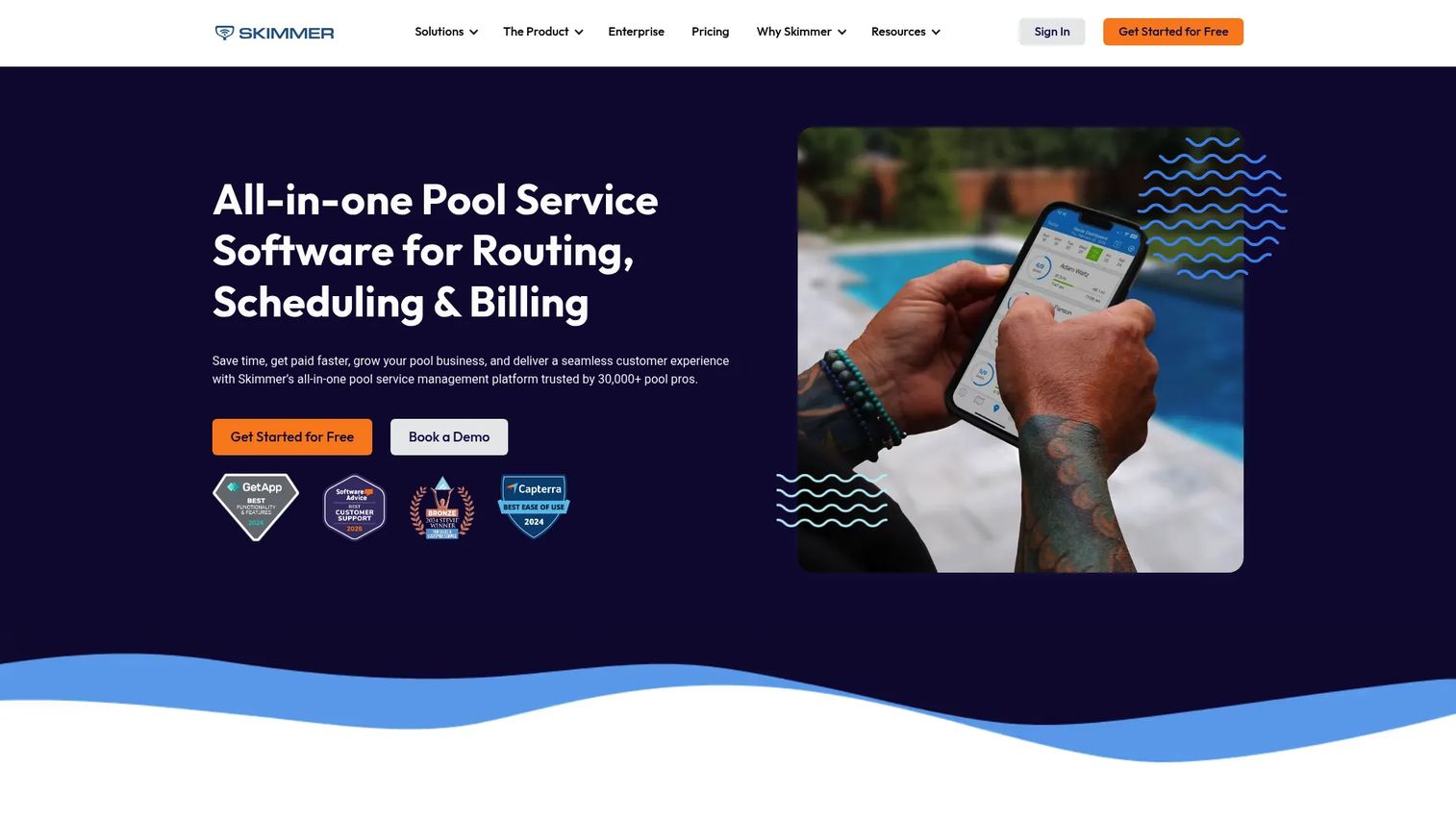
Skimmer is pool service software focused on scheduling, route management, billing, and customer communication, and it's built to be the operations hub for a growing service company. It supports unlimited technicians, admins, customers, and service locations, plus a route builder, one-time work orders, reminders, invoicing, online payments, and financial reporting.
The customer-facing output is where Skimmer earns its reputation. Automated service texts and reports keep clients informed after every visit, which is the single most effective way to cut "did you actually come?" calls. Quotes and estimates, job management, scheduling, and recurring work orders round out a clean, polished pool maintenance software experience, and an AI phone add-on is available for teams scaling their front office.
Best for: Pool service businesses that want a polished all-in-one operations hub with strong customer-facing communication.
Key strengths
- Route builder and scheduling: recurring and one-time work orders with route optimization keep the field organized.
- Billing and online payments: invoicing, online payments, and financial reporting close the cash loop.
- Customer communication: automated service texts and reports keep clients informed and reduce inbound calls.
Why choose Skimmer: If you value a clean interface and want customer experience to be a competitive advantage, Skimmer's service reports and communication tools are hard to beat. Unlimited users and locations mean pricing scales with pools serviced, not seats.
Skimmer pricing: Skimmer prices per serviced location. The Getting Started plan is $1.00 per month per serviced location, starting at $49 per month and including 49 locations. Scaling Up is $2.00 per month per serviced location, starting at $98 per month with 49 locations included, and a 30-day free trial is offered on that plan. Skimmer for Enterprise uses custom volume-based pricing. The per-location model keeps costs predictable as you grow.
4. POOL360 PoolService
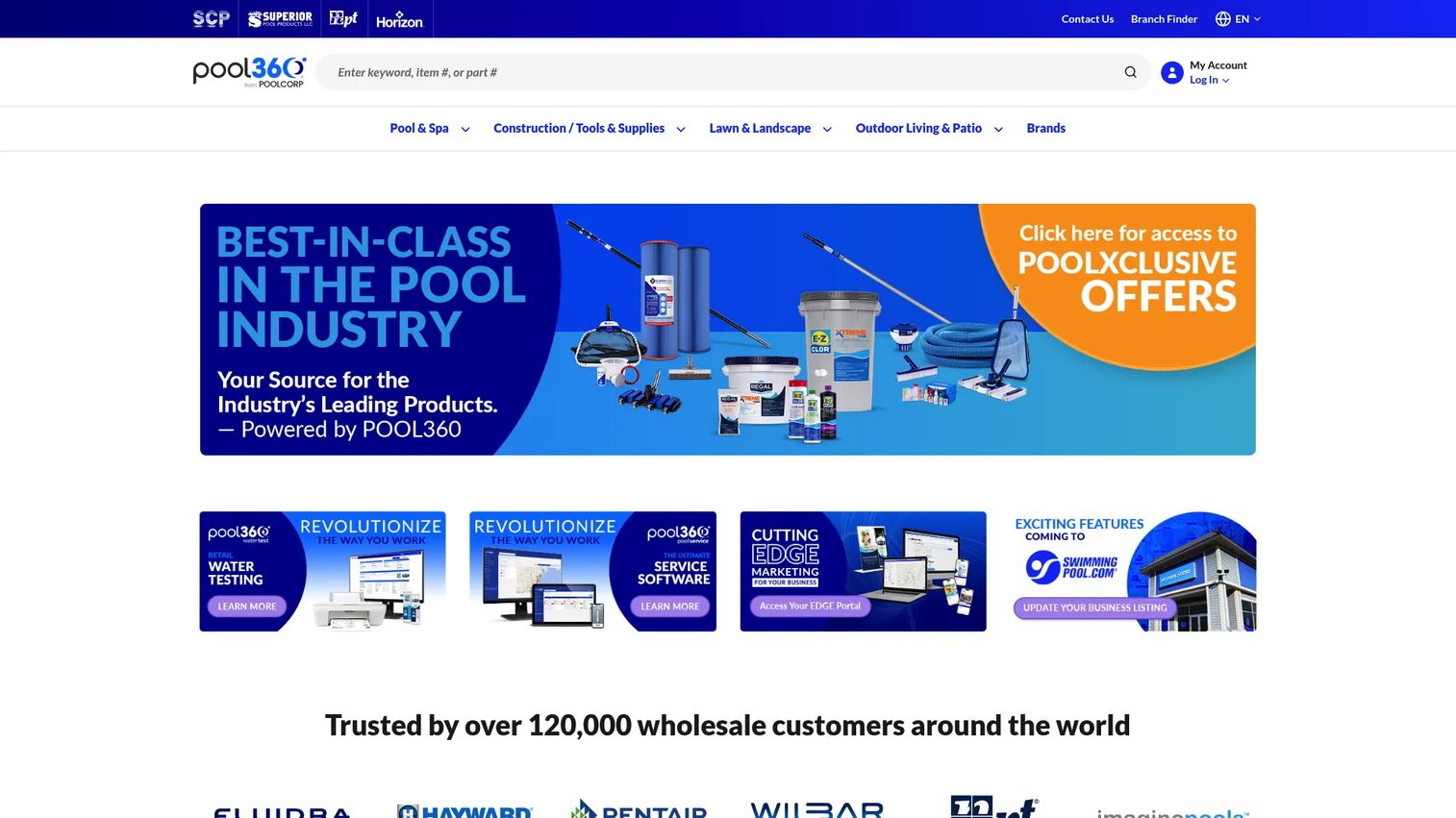
POOL360 PoolService is pool service business software from the POOLCORP ecosystem, covering scheduling, routing, water testing, quoting, billing, and customer reporting. Its differentiator is the connection to POOL360 pricing and ordering, so field operations and supply purchasing live closer together than they do with a standalone tool.
Operationally, it delivers route optimization and scheduling, mobile water testing and analysis, and automated billing with online payments and QuickBooks integration. For teams that already order chemicals and equipment through the POOLCORP network, tying service execution to that supply chain removes a step and keeps pricing consistent.
Best for: Pool service companies that want an all-in-one operations platform tied to POOL360 pricing and ordering.
Key strengths
- Route optimization and scheduling: organizes recurring routes and daily dispatch across your crews.
- Mobile water testing: on-site water testing and analysis feed directly into service records.
- Billing with QuickBooks: automated billing, online payments, and QuickBooks Online sync keep the books current.
Why choose POOL360 PoolService: If your business already runs on the POOLCORP supply chain, the integrated ordering and consistent pricing make this a natural fit. Structured onboarding and account support suit operators who prefer a guided setup over self-serve.
POOL360 PoolService pricing: The model is refreshingly simple: a 60-day free trial, then $1 per pool serviced per month, with no minimums and no monthly platform fees. The long trial gives you a full seasonal window to test it against real routes and real invoices before committing.
5. Jobber
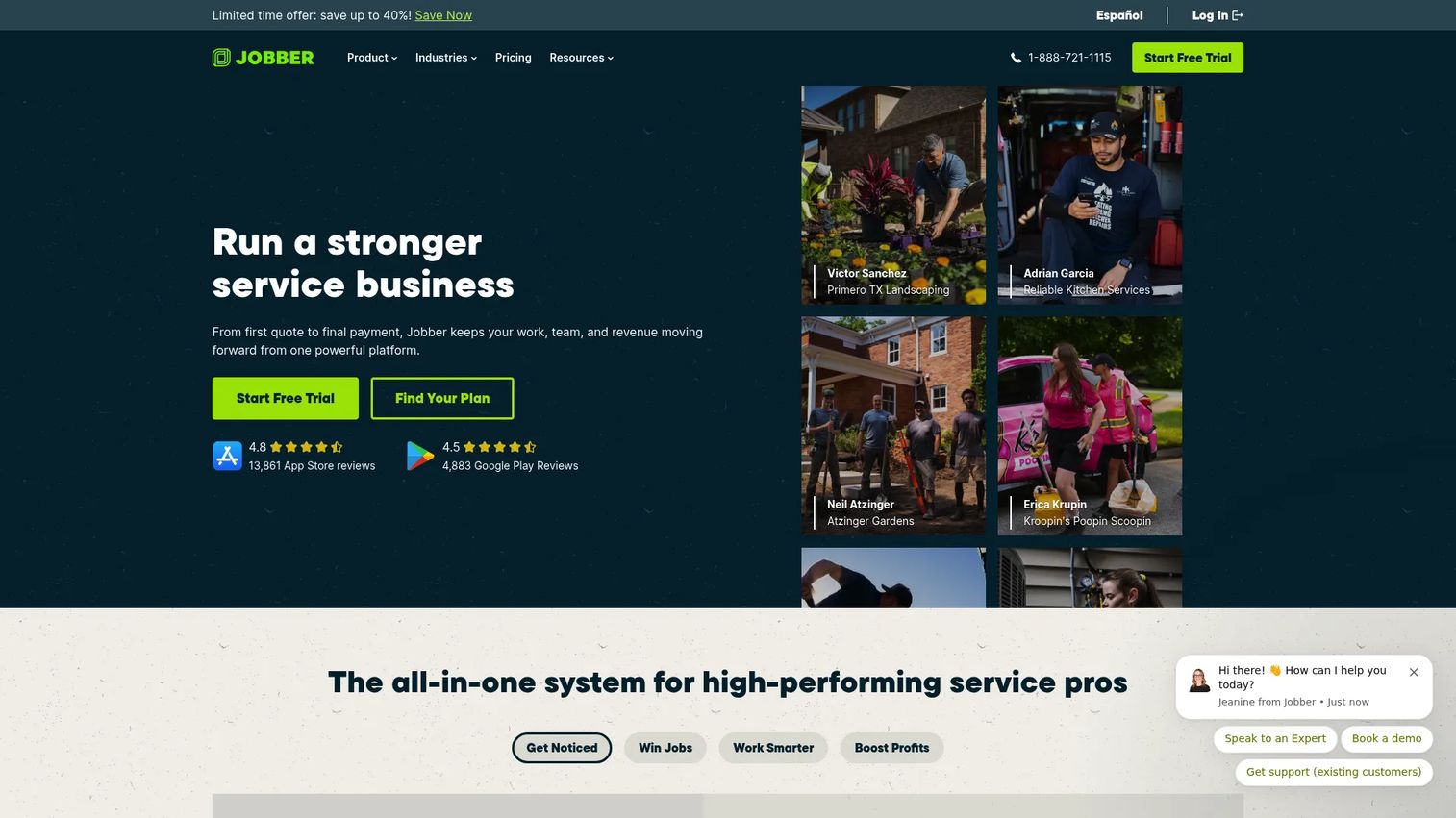
Jobber is field service management software for scheduling, quoting, invoicing, payments, and customer communication. It isn't pool-specific, but plenty of pool businesses run on it because the core quote-to-job-to-invoice workflow is clean and the mobile app is mature. Online booking, job scheduling, quotes, invoices, online payments, automations, reminders, and two-way texting cover most of what a service company needs day to day.
The trade-off is honest: Jobber won't calculate LSI or manage chemistry dosing the way a pool-specific tool does. You'd track water chemistry in notes or a custom field rather than a purpose-built engine. In exchange, you get a flexible, well-supported platform that works across service types if you diversify beyond pools.
Best for: Small to midsize service businesses that want a flexible, all-in-one field service platform beyond pool-specific chemistry depth.
Key strengths
- Online booking and scheduling: customers book online and jobs land on a clean schedule.
- Quote-to-payment workflow: quotes, invoices, and online payments run in one connected flow.
- Automations and texting: reminders and two-way texting reduce no-shows and inbound calls.
Why choose Jobber: Choose Jobber if you want polished field service operations, strong support, and flexibility across service types, and you're comfortable handling chemistry outside the software. For a growing company that values ease of use over pool-specific depth, it's a strong option.
Jobber pricing: Jobber offers Core at $49 per month, Connect at $139 per month, Grow at $199 per month, and Plus at $499 per month, with monthly and annual billing options and a 14-day free trial with no credit card required. It holds a 4.6/5 rating on G2, among the highest in this list.
6. ServiceTitan
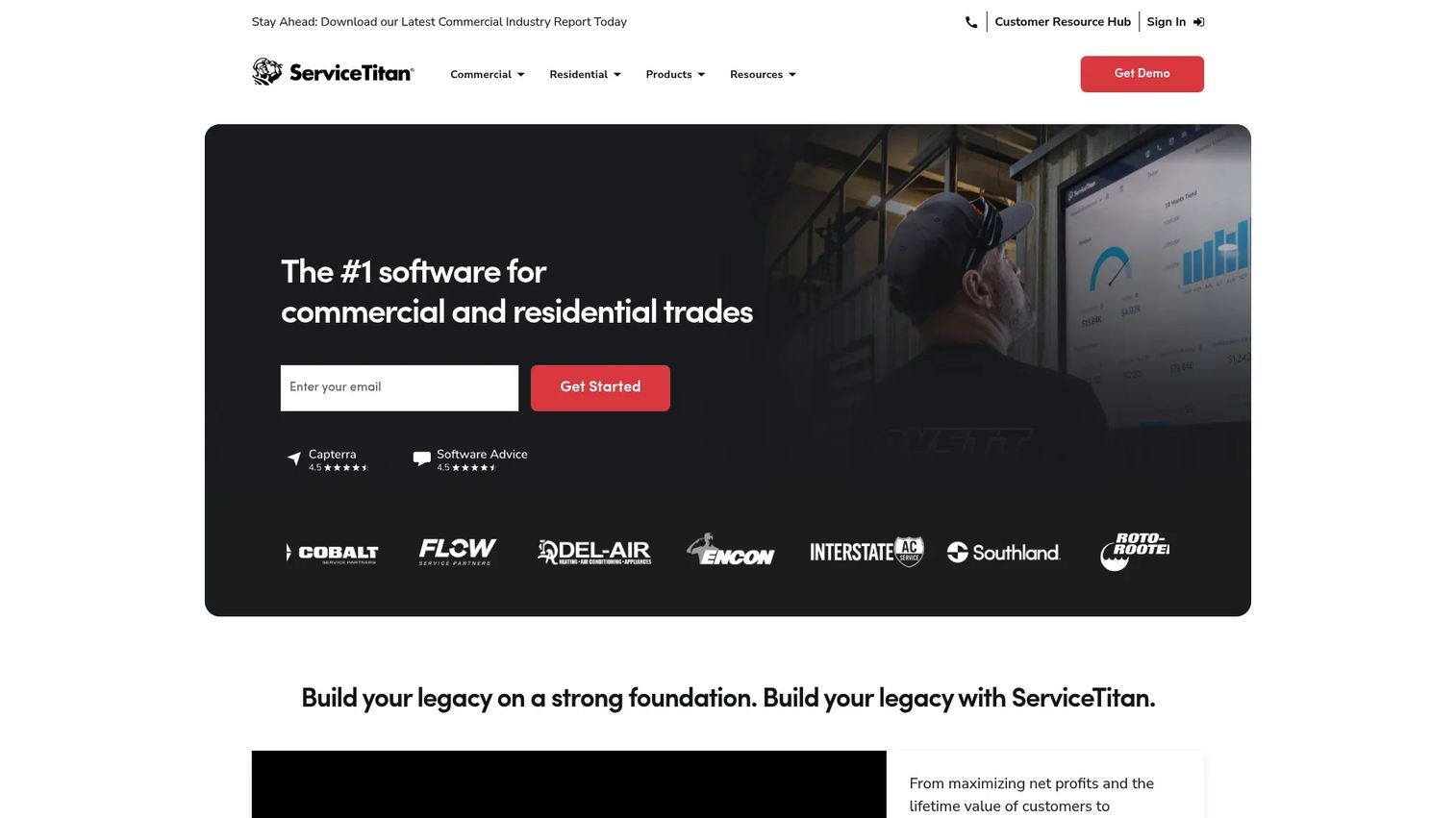
ServiceTitan is cloud-based software for contractors to manage scheduling, dispatch, invoicing, CRM, reporting, and related field service workflows. It's a larger, more complex platform than the pool-specific tools, and it fits pool service businesses that have grown into serious back-office complexity: multiple crews, dispatch coordination, and detailed reporting needs.
For a bigger operation, dispatching, scheduling, and call booking are handled at a depth most pool-specific tools don't attempt. As with Jobber, chemistry isn't a native pool workflow, so LSI and dosing would live outside the platform. The value is operational scale and reporting, not water balancing math.
Best for: Field service and trades businesses that need an all-in-one operations platform for larger, more complex teams.
Key strengths
- Dispatching and scheduling: coordinate multiple crews and dispatch at scale.
- Call booking and CRM: front-office call handling ties into customer records.
- Reporting depth: detailed operational reporting for owners running by the numbers.
Why choose ServiceTitan: Choose ServiceTitan if you're a larger pool operation with complex back-office workflows and multiple crews, and you value operational control and reporting over pool-specific chemistry features. It's built for scale.
ServiceTitan pricing: ServiceTitan lists three packages, Starter, Essentials, and The Works, but shows no public numeric price; each says "Request Pricing," and pricing is described as per-technician. It holds a 4.4/5 rating on G2. Plan for a sales-led evaluation rather than instant self-serve signup.
7. Housecall Pro
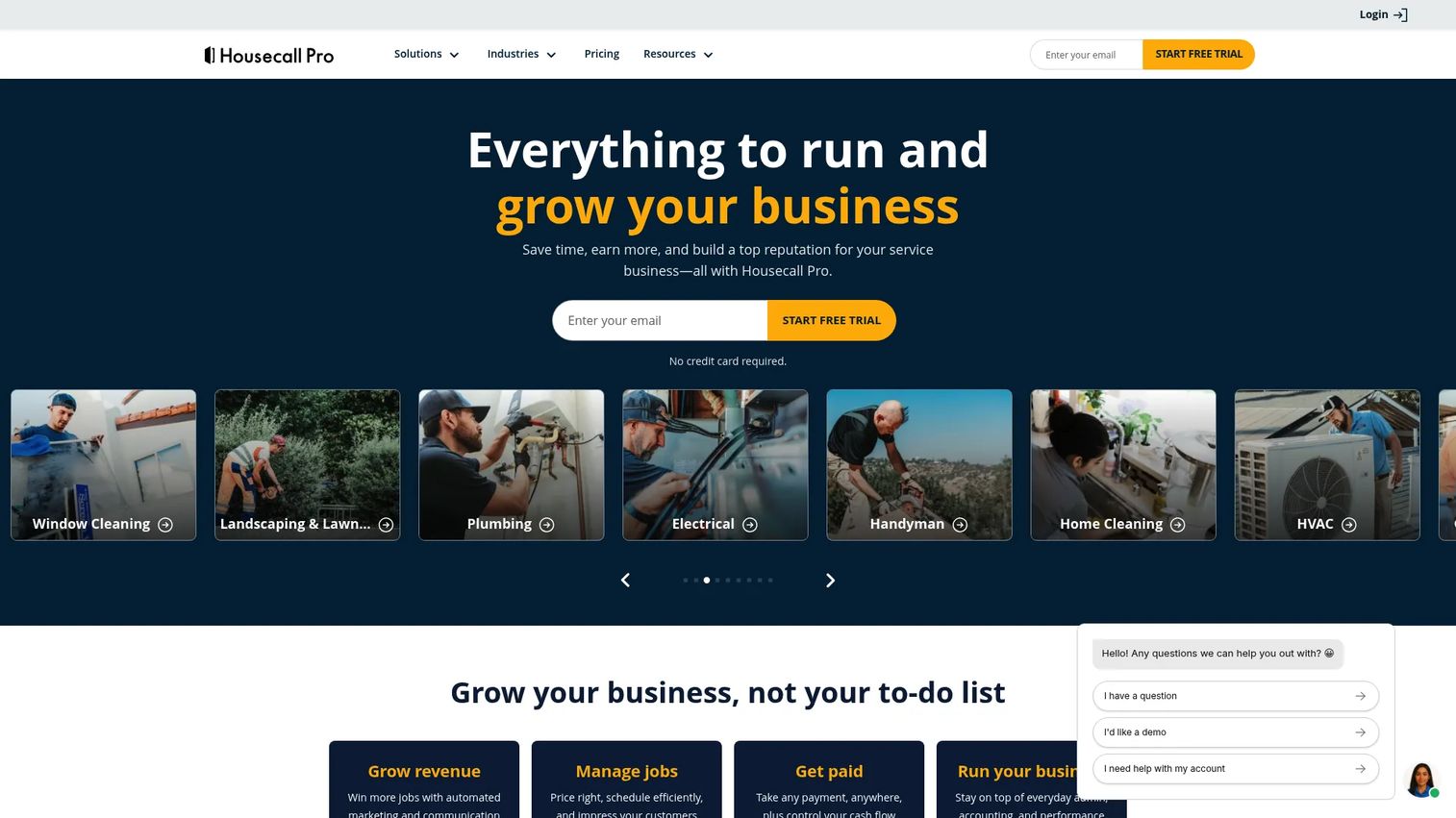
Housecall Pro is field service management software for home service businesses, covering online booking, scheduling and dispatch, invoicing, and payments. For smaller or growing pool businesses that want a simple, well-rounded stack, it's a common pick. Recurring jobs, customer communication, and mobile tech workflows are all handled cleanly.
Like the other broad platforms here, Housecall Pro is not pool-specific, so chemistry logging and LSI aren't native workflows. If you need breadth and simplicity more than chemistry depth, that trade is reasonable. If chemistry disputes are your biggest pain, a pool-specific tool will serve you better.
Best for: Home service pros and smaller pool businesses that want a simple all-in-one tool for scheduling, invoicing, and dispatch.
Key strengths
- Online booking and scheduling: customers book and jobs land on the schedule with dispatch built in.
- Invoicing and payments: clean invoicing and payment collection close the cash loop.
- Mobile tech workflows: recurring jobs and customer communication run from the mobile app.
Why choose Housecall Pro: Choose Housecall Pro if you're a smaller or growing pool business that values a simple, well-supported field service stack over pool-specific chemistry depth. It's approachable and quick to get running.
Housecall Pro pricing: Basic starts at $59 per month, Essentials at $149 per month, and MAX at $299 per month, with those figures billed annually, plus a 14-day free trial. It holds a 4.3/5 rating on G2. The Basic tier makes it an easy entry point for a growing route.
Considerations before you buy
Don't buy on the feature list. Buy on how the tool behaves during a real week. Run this checklist against your two finalists.
Chemistry automation depth
Ask whether the tool calculates LSI automatically at the point of service and whether it supports dosing guidance. If chemistry disputes and rework are your biggest cost, a pool-specific tool with automatic water balancing beats a generalist platform where chemistry lives in a notes field.
Technician app usability and offline support
Backyards have bad signal. Test the mobile app in a real service area with your worst-connectivity stop. Confirm it captures readings, photos, and GPS check-in offline and syncs when the tech gets back online. An app your crew won't use is worse than paper.
Billing and QuickBooks Online sync
Verify that invoices fire on service completion, that recurring billing handles your plans, and that the tool syncs cleanly with QuickBooks Online if that's your accounting system. Ask specifically how payments reconcile, because that's where messy syncs cost you hours.
Service reporting and customer communication
Look at the actual service report a customer receives. Does it show readings, chemicals added, and photos? Automated, professional reports are the cheapest trust-builder you have and directly reduce inbound "did you come?" calls.
Inventory, alerts, and integrations
Confirm the tool tracks chemical usage, triggers low-stock and threshold alerts, and connects to the payment processor and supply channels you already use. Every integration you don't have to babysit is time back in your week.
Conclusion
There's no single best pool cleaning software, only the best fit for what you're solving. If chemistry is your biggest source of rework and disputes, Pool Service Software and Pool Brain go deepest, with automatic LSI and dosing that a generalist tool can't match. If you want a polished all-in-one operations hub with excellent customer communication, Skimmer is hard to beat. If you're wired into the POOLCORP supply chain, POOL360 PoolService ties ordering and service together at a simple $1 per pool.
If you're diversified beyond pools or want the broadest field service platform, Jobber suits growing teams, ServiceTitan fits larger operations with complex back offices, and Housecall Pro works for simpler stacks, with the honest caveat that chemistry lives outside those three.
The practical next step: shortlist two, then trial them on real routes with real invoices for a full billing cycle. Free plans and trials from Pool Service Software, Skimmer, and POOL360 make that easy. The tool that survives one messy Monday is the one to buy.
FAQs
Pool cleaning software is a platform that helps pool service businesses schedule visits, plan routes, log water chemistry, manage technicians, bill customers, and send service reports from one system. It replaces the spreadsheet, text message, and paper stack most operators outgrow, tying the field reading, the dose, the photo, and the invoice to a single customer record.
The features that move the needle are route optimization, automatic chemistry and LSI logging at the point of service, a reliable technician app with offline sync, recurring billing with online payments, and automated customer service reports. Prioritize the ones tied to your biggest current cost, whether that's wasted miles, chemistry disputes, or slow invoicing.
For deep chemistry automation, Pool Service Software and Pool Brain lead. Pool Service Software calculates LSI automatically at every stop and triggers alerts on dosage cost and reading trends. Pool Brain performs automatic LSI-based dosing through the Orenda calculator. Both treat water balancing as a core workflow rather than a field to fill in manually.
Yes. Most modern pool service billing software supports recurring invoices that generate automatically on a schedule or on service completion, plus online payment collection. Pool Service Software can even include dosage costs on automatic monthly invoices, and Skimmer and POOL360 both handle recurring billing with online payments.
Many pool service platforms integrate with QuickBooks Online so invoices and payments sync to your accounting without manual re-entry. POOL360 PoolService lists QuickBooks integration directly. Before buying, confirm exactly how the sync handles payments and reconciliation, since that's where weak integrations cost you time.
A small pool business should look for a low starting cost, fast setup, and pay-per-pool pricing that scales with the book rather than per-seat fees. A free or trial tier to test on real routes matters. Pool Service Software offers a free plan up to 10 properties, and POOL360 runs $1 per pool serviced, both easy entry points.
Critical. The technician app is where the work actually gets recorded, so it needs GPS check-in, photo reports, and offline sync for low-signal backyards. If the app is clunky or drops data when connectivity fails, technicians revert to paper and the whole system breaks down. Always test the app in a real service area before buying.
Automated service reports email customers the readings taken, chemicals added, and before-and-after photos after each visit. They're the cheapest trust-builder available: they prove the work happened, reduce "did you even come?" calls, and make disputes rare. Tools like Skimmer lean heavily on this to turn customer communication into a competitive edge.